Bangkok Life Gentrification And Tourist Hustles
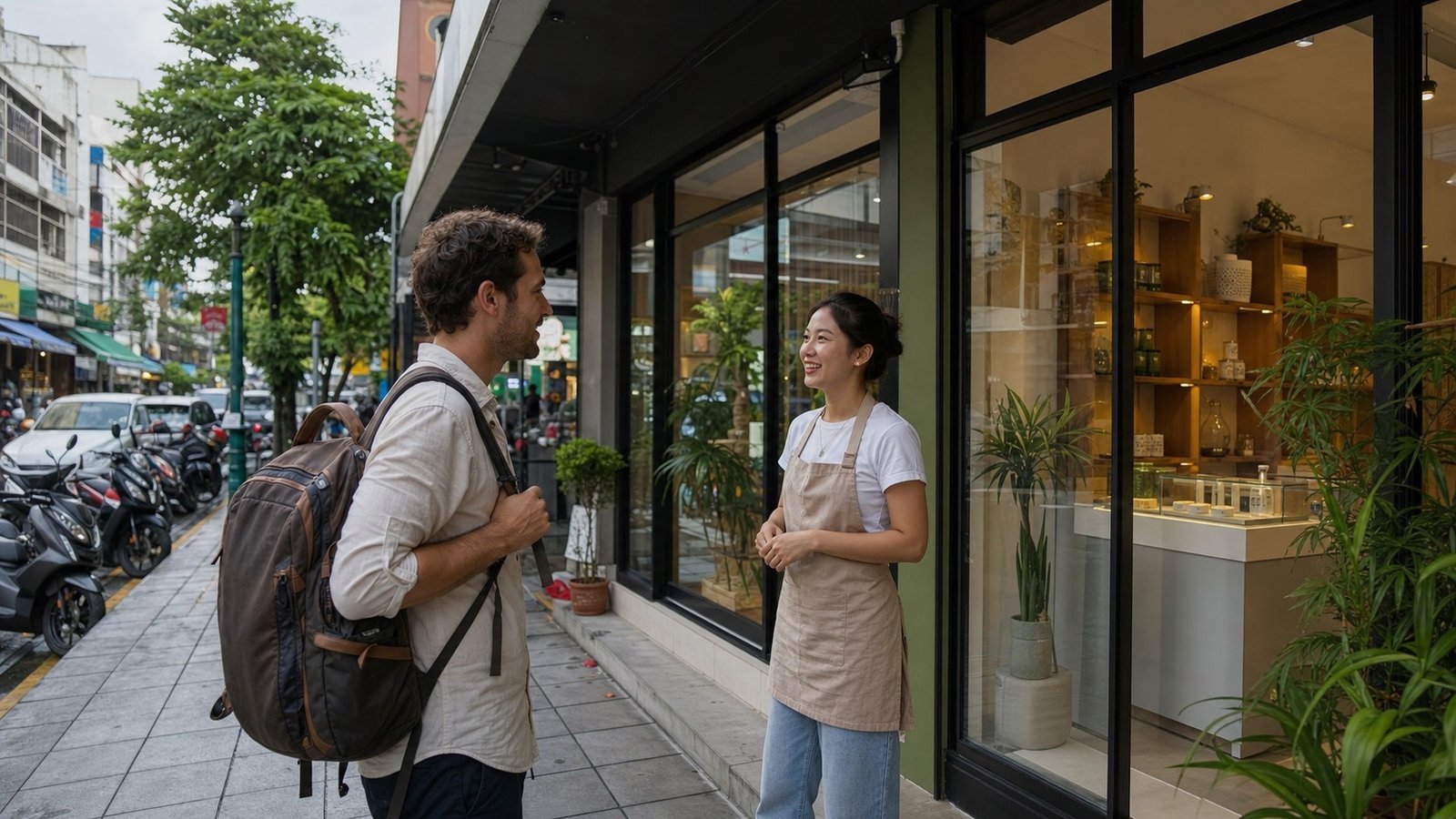
We have one of the many cannabis stores here in Bangkok. We had updates to the new rules and regulations, but on the ground here in Thailand, you won’t notice many differences.
All the shops are operating. Normally, they switched to a prescription only model, but the larger businesses were quick to adjust and they offer a prescription with every purchase.
So, you can simply walk in, you’ll speak with the sales representative who will have the proper licensing, and your receipt is essentially a prescription. So, no big changes there.
Green Mile And Benjakitti Park
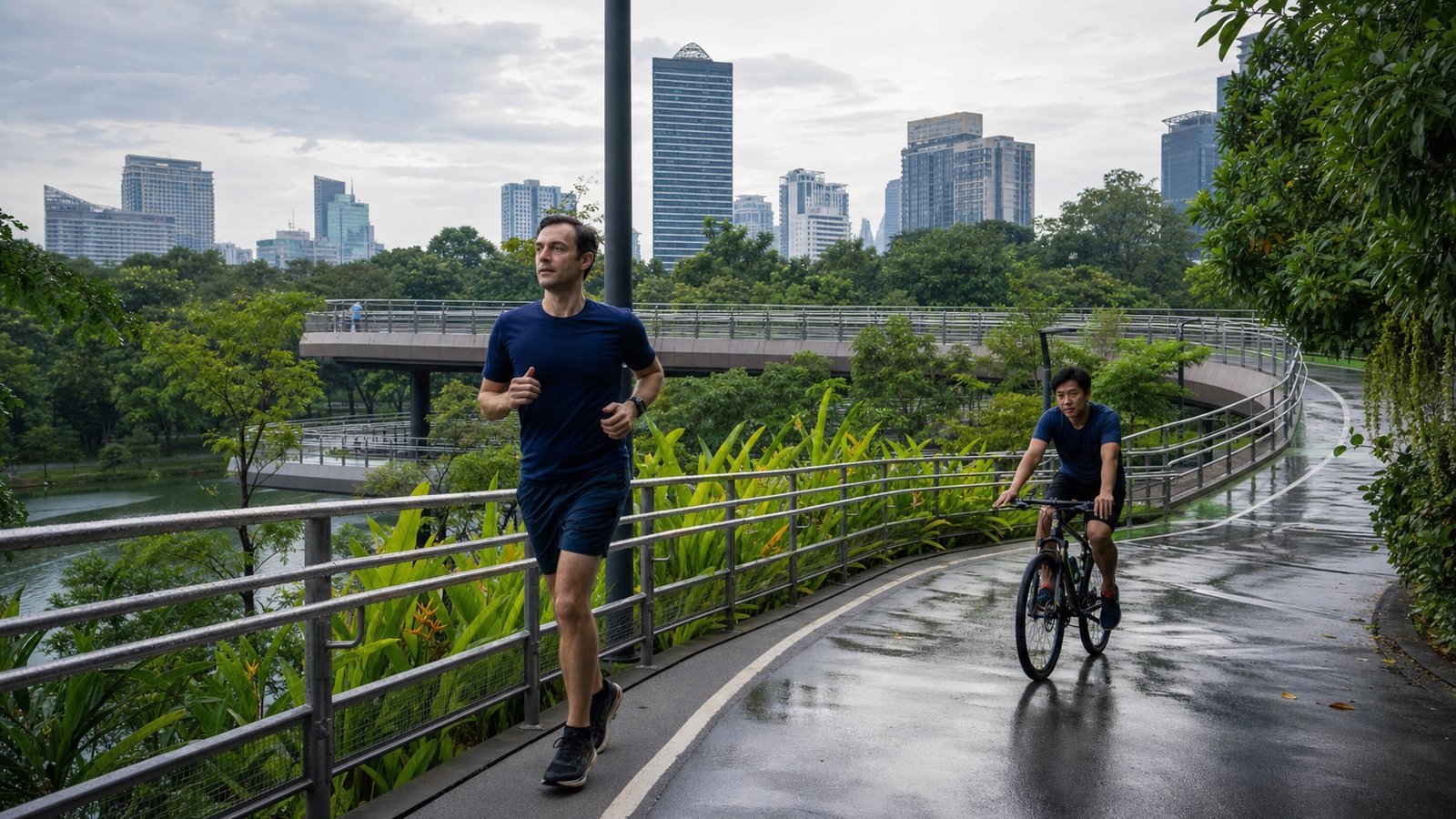
Walking towards Benjakitti Park, but to the right, we have another entrance, and this will bring us over the Green Mile, which connects down to Lumpini Park. So, this is one long space. It is starting to rain. We are in the rainy season and we do get occasional downpours. And to the left here, this is the Benjakitti Dog Park. You can bring your dog down here. Most of the parks in Bangkok do not allow dogs.
So, we’ve got our little bridge and our exit out to Sukhumvit here and our entrance into Benjakitti Park, Benjakitti Forest Park. But we’re going to continue straight. And I’m fortunate it’s not raining anymore. I seem to have walked out of it. One of the interesting aspects of rain in Bangkok is the rain can be falling just over there and then suddenly not falling over here. And on that note, we are now entering the remodeled area of the Green Mile. it is actually blue and green.
And this is the new cycling path. So nearby are the stairs and they’re still renovating those but you can bypass the stairs altogether and take the cycling path. This is the famous Soi 4 entrance which leads up to Nana. And so obviously if you’re cycling you’d want to be careful crossing this particular street. You could be flying down on your bike and you don’t realize this is actually quite a busy roadway. And right over here, that’s Benjakitti Forest Park. And then we have the elevated walkway over here.
But we’re going to skip that. And we can see a cyclist coming towards us. So we’re going to avoid getting run over. There are still plenty of renovations occurring. So I don’t think it’s actually fully finished yet. But this is really nice.
I like jogging along this path and this is a nice addition. I’ll show you a bit later where you can rent a bike as well. So, you can come out here, you don’t have to bring a bike, very inexpensive to rent a bike and come out for an hour, even a whole day of cycling. And you can see over here is where it connects over to the Benjakitti Forest Park skywalks nearby. So this is a massive area with interconnected parks, the green mile and then over in the distance you can actually take it straight over to Lumpini Park in Sathorn. And here we’re entering the elevated green mile which is the skybridge portion. Now if you were to take a left here that’s Benjakitti Forest Park where you’ve got all the elevated skywalks.
So here we still got some scaffolding and building occurring. And here, this used to be steps and now it’s one long ramp. Definitely a little bit more mobility friendly.
Bangkok Gentrification And Local Change
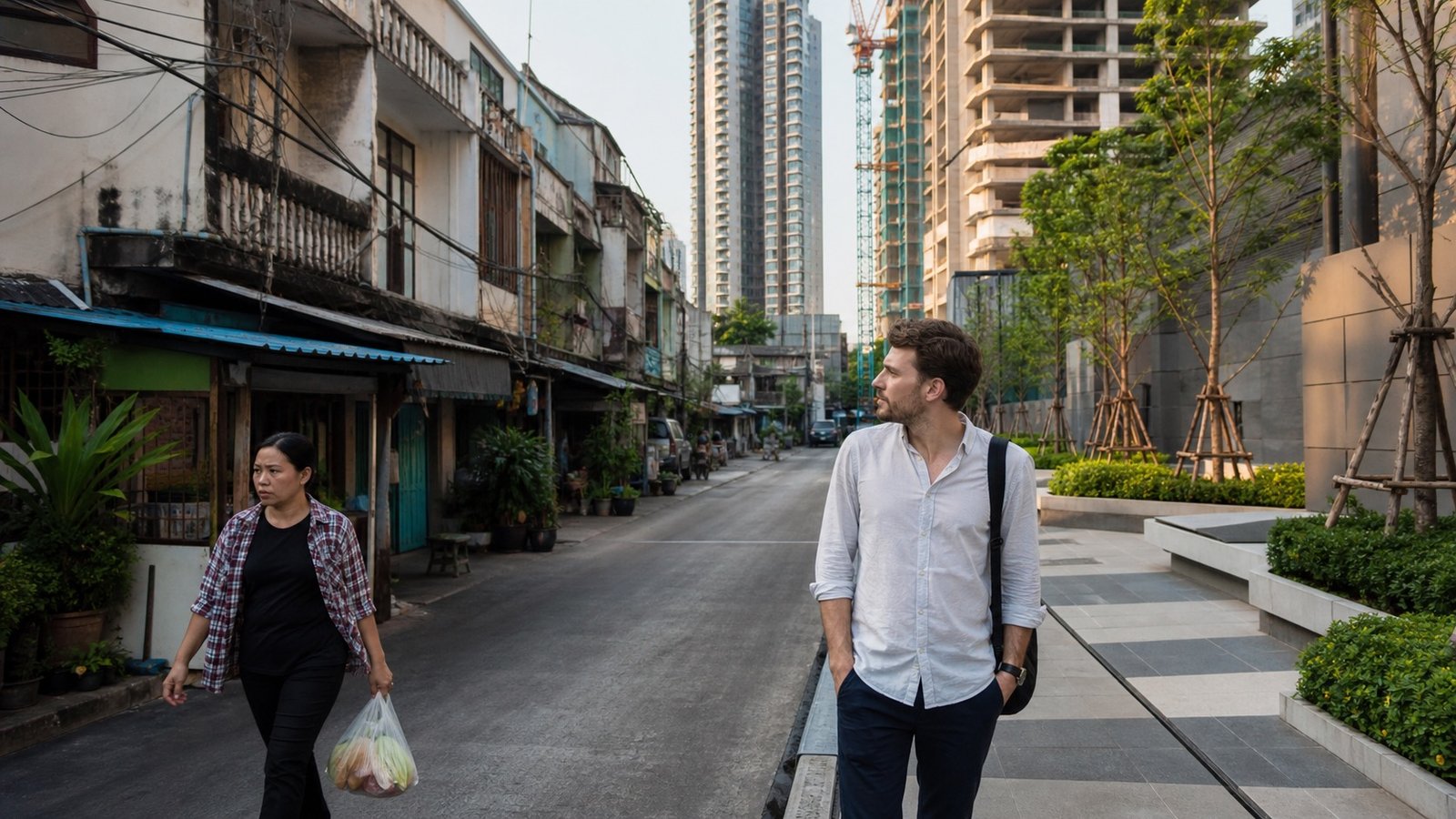
Now you’ll see all the houses next to me. And this is technically still part of the Klong Toei slum. Slum’s a bit of a negative term. We could call it lower income housing. It’s very safe. If you think of a traditional slum, you might think of the favellas of Brazil that are a little bit of a no go zone. That is not the case here. Now, one thing I’m quickly noticing is that it’s quite a bit narrower than it used to be. So, you’ve lost about 50% of the usable space as they’ve added all these planters on the side. You can see over here.
And I suspect that these like this little tree over here will all be lined with trees. So all the soil here, I suspect you’ll have trees running all along providing shade. That’s definitely something that will be beneficial because the green mile gets really really hot during the day normally and it feels a bit abandoned because of how hot it gets and all the planters here will definitely be good spaces for some foliage and trees and shade. But you’ve also given up a lot of the walkable space and it’s not even half You’ve actually lost probably about 55% because you’ve got all of this soil over here and then you’ve also got drainage on the right side. It’s looking great with all the trees. My one concern here is going to be that they’ve added the cycling path and they’re promoting it as a cycling path while also beautifying it significantly and it’s going to turn into a major attraction and it’ll probably get really really busy. You’re going to combine all these bikes riding by, people walking around, people standing around, people taking pictures everywhere. That can be an issue with the gentrification process in Bangkok where you lose the usable space, but it does get beautified. And I think that’s kind of what might be happening here. And over here we’ve got the famous kimono cafe.
It looks like a planter area is now in front of it. So, the Kimono Cafe is definitely one of the famous stop off spots, but it may not be an entirely legal business. It’s just built onto one of the small houses over here, and hopefully it stays open. Bangkok changes very quickly. So, Sukhumvit neighborhood has been changing quite dramatically over the past couple of years, especially around Soi 11 where there’s a lot of new condos going up. And there’s definitely a process of gentrification occurring throughout this area. Now, it’s really, really nice looking, but this is very narrow. I mean, this is only about three body widths. And this is a big issue whenever they redo neighborhoods in Bangkok. They often give up a lot of the walking spaces.
It’s something you’ll notice if you live here for a while. And then they can get super super crowded. So, I like the design style, but at the same time, I think it might lose what made me really love the green mile, and that was that rugged, empty feeling, the hidden gem in the middle of the city that you could come for a jog, and you just didn’t have to be around a lot of people. And this is going to become much more crowded, got lots of seating. I have to come and check it out again once it’s fully reopened and give you my full opinion. There are plants all along here. You can see the new seating spaces here. Looks like we got a wild dog wandering around. That’s something you definitely get here in Bangkok quite a bit. And to be honest, I think most people probably will prefer the new green mile.
The combination of beauty, seating, functionality. I’m probably the minority that likes the rugged emptiness. That’s why it wasn’t very busy in the past. If other people liked that, it would have been more busy. So, you’ll probably like the new green mile more than the old one if you’re a viewer and you haven’t visited before. We got some clouds over here. They’re rolling back in. It’s probably raining over there, actually. But over here, blue skies. That’s what it is living in the tropics.
The rain occurs in one place and it doesn’t occur in another place. And if you look at a weather forecast, it might tell you it’s raining right now and there’s no rain. It makes it a bit unpredictable. All right, we’re going to venture into Benjakitti Forest Park now. Take a little breather among the trees.
Cycling And Bangkok Parks
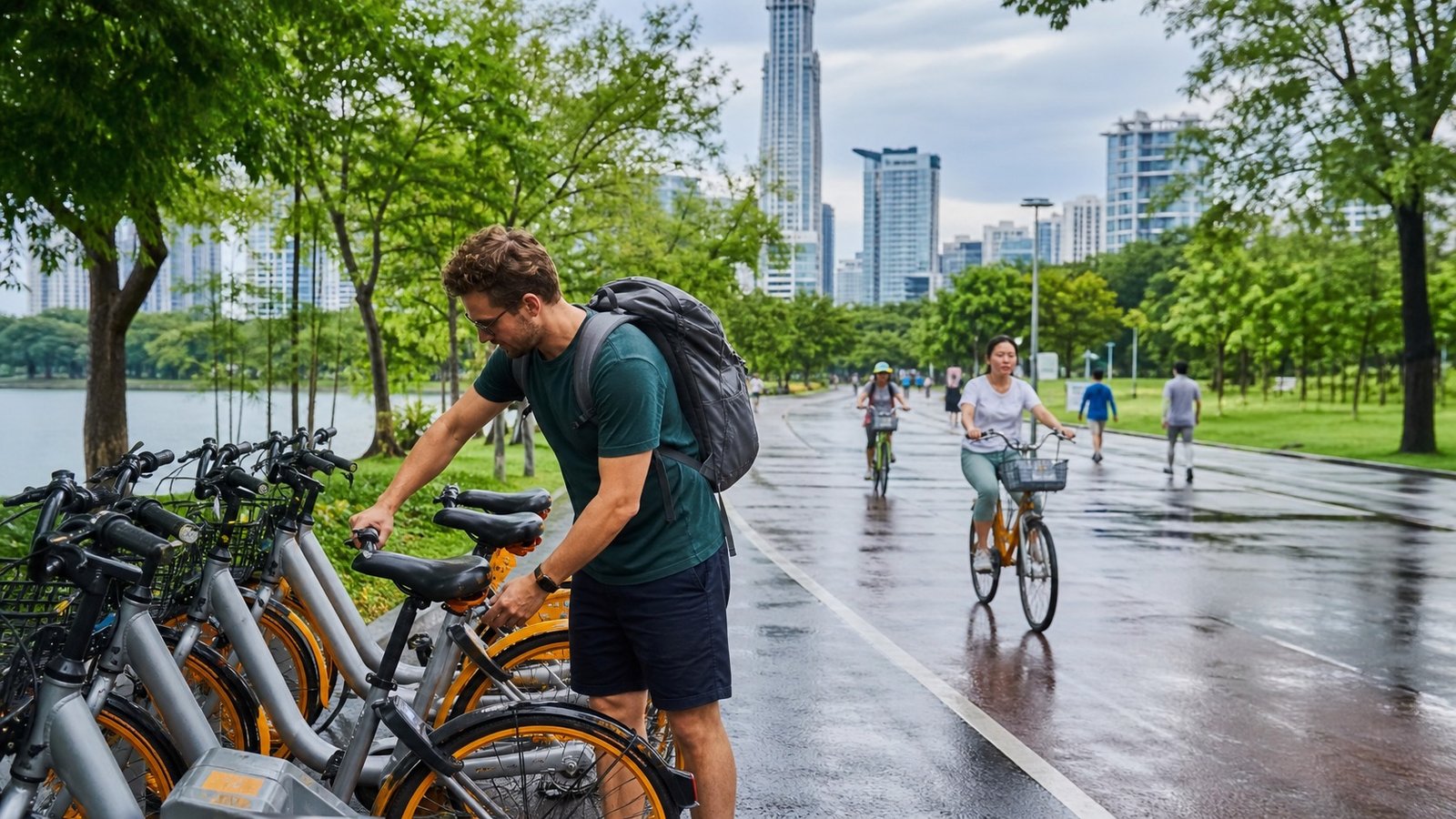
Brian Stadler added a very practical question about bringing a bike. to these types of cycling paths. Can you transport your bike on major public transportation systems, including the BRT, which is the bus rapid transit system? It’s essentially a single bus line, which bypasses traffic. And the answer here is you can only bring foldable bikes on public transportation.
And that definitely is a little bit of a limitation, but my recommendation is to simply rent a bike. And you got these bike rental areas all over the city now, and they’re in the major parks. And they’re called Any Wheels. And you just download the application on your phone. You can rent a bike for 30 minutes for just 10 baht or an hour for 20 baht.
You can also get a full day if you want. So all the bikes. You take them out, you just return them later. All you have to do is go download the Any Wheels application and you can connect it to all major credit cards, international credit cards, and scan to go.
Lots of bikes to rent. We have people taking off on them right now. So that’s definitely your easiest option if you do want to do some cycling. I think this is really a great move by the city. You’ll see these all over the major parks as well as even in some of the public transit areas.
This is part of the big buildout of cycling routes which is occurring all over the city. And so you’ll see more and more of these types of stations as there’s about 50 kilometers of cycling routes currently under construction. That will change Bangkok for the better. Bangkok has a lot of new public transportation, a lot of new cycling paths. These are some of the most positive changes that I’ve seen in Bangkok since I first moved here is the development of all the park spaces.
For example, Benjakitti Forest Park only opened a few years ago and it’s become an anchor to the entire neighborhood. These are the warehouses where you can play lots of different sports, go for a workout. Here we’ve got the indoor soccer.
Clean Air And Tropical City Life
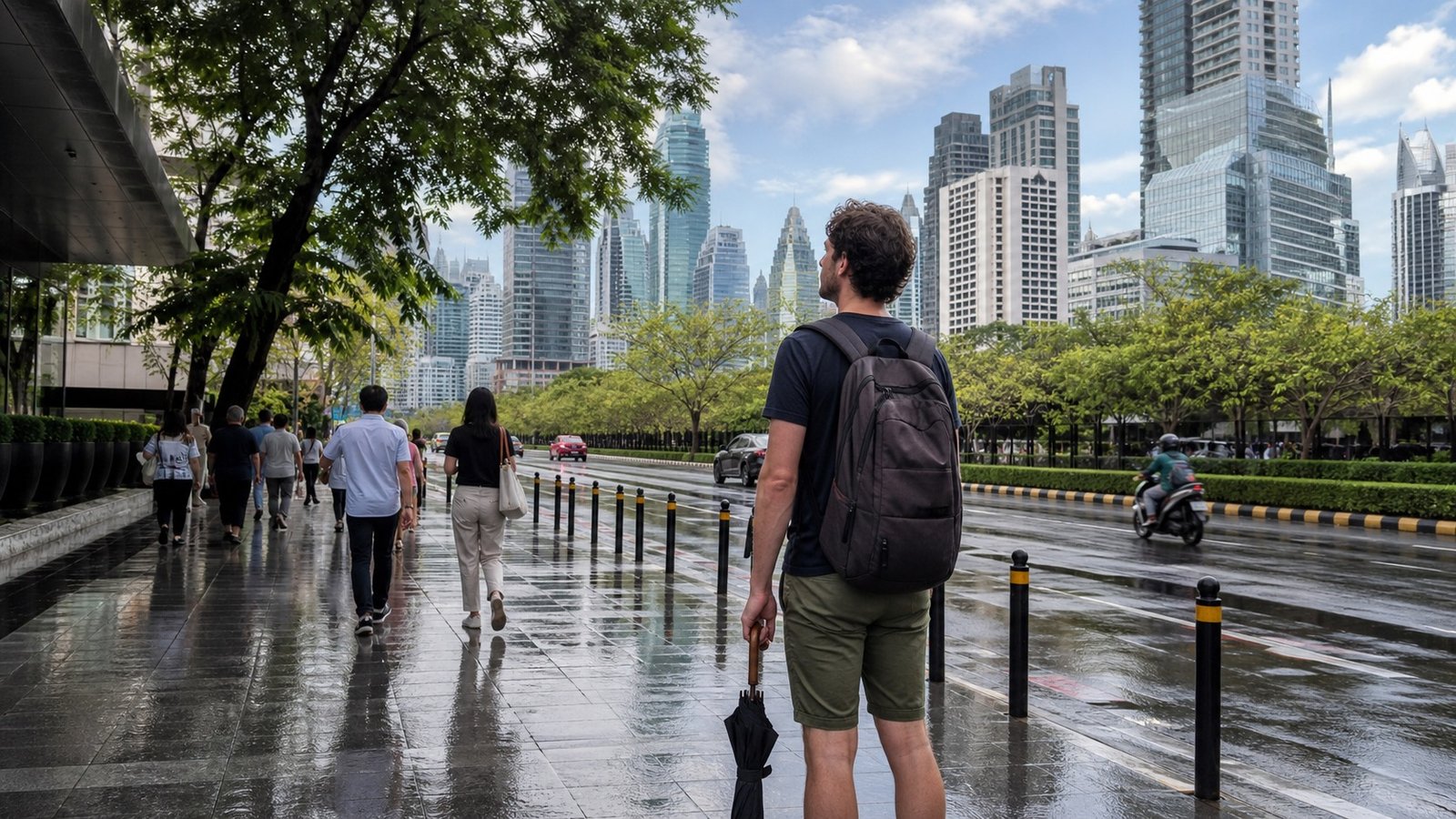
Mark Damon asks where in Asia can you find clean air. This is definitely a major problem here in Bangkok and throughout much of Thailand and continental Asia. It’s mainly the winter months that are problematic when you have a combination of agricultural burning alongside the normal transportation and industrial pollution and stagnant air. But you can escape it if you go to the south. So the islands and coastal areas have much better air flow year round.
Areas like Koh Samui, Phuket, even places like Pattaya and Hua Hin tend to have better air. Or if you go further south and decide to stay in one of the island archipelago countries like the Philippines or Indonesia, you definitely have better air quality with the exception of the major metropolises like Jakarta and Manila where transportation pollution can still be pretty bad. So, you do have a lot of options, but currently the air quality is actually great in Bangkok. We’re in the rainy season and that clears out all the pollution and there’s much better airflow.
It’s windy, breezy. This is actually my favorite time of the year. Another question is where can you go where you will not encounter cockroaches?
Southeast Asia is a tropical environment and cockroaches simply thrive in the tropical environments, especially in densely populated areas. So, they’re almost inescapable here. You could go to the newest, most modern condo or hotel, and technically they could still be living there. But the rule of thumb here is pretty simple.
Newer places, more expensive places tend to have a lot more cleaning and lower occupancy rates. And that does tend to mean less cockroaches. But you can avoid them by simply keeping your own accommodations very clean. If you don’t leave food around, you remove all the garbage.
The cockroaches won’t really bother entering your specific unit because there’s nothing to eat.
Pomegranate Juice And Tourist Hustles
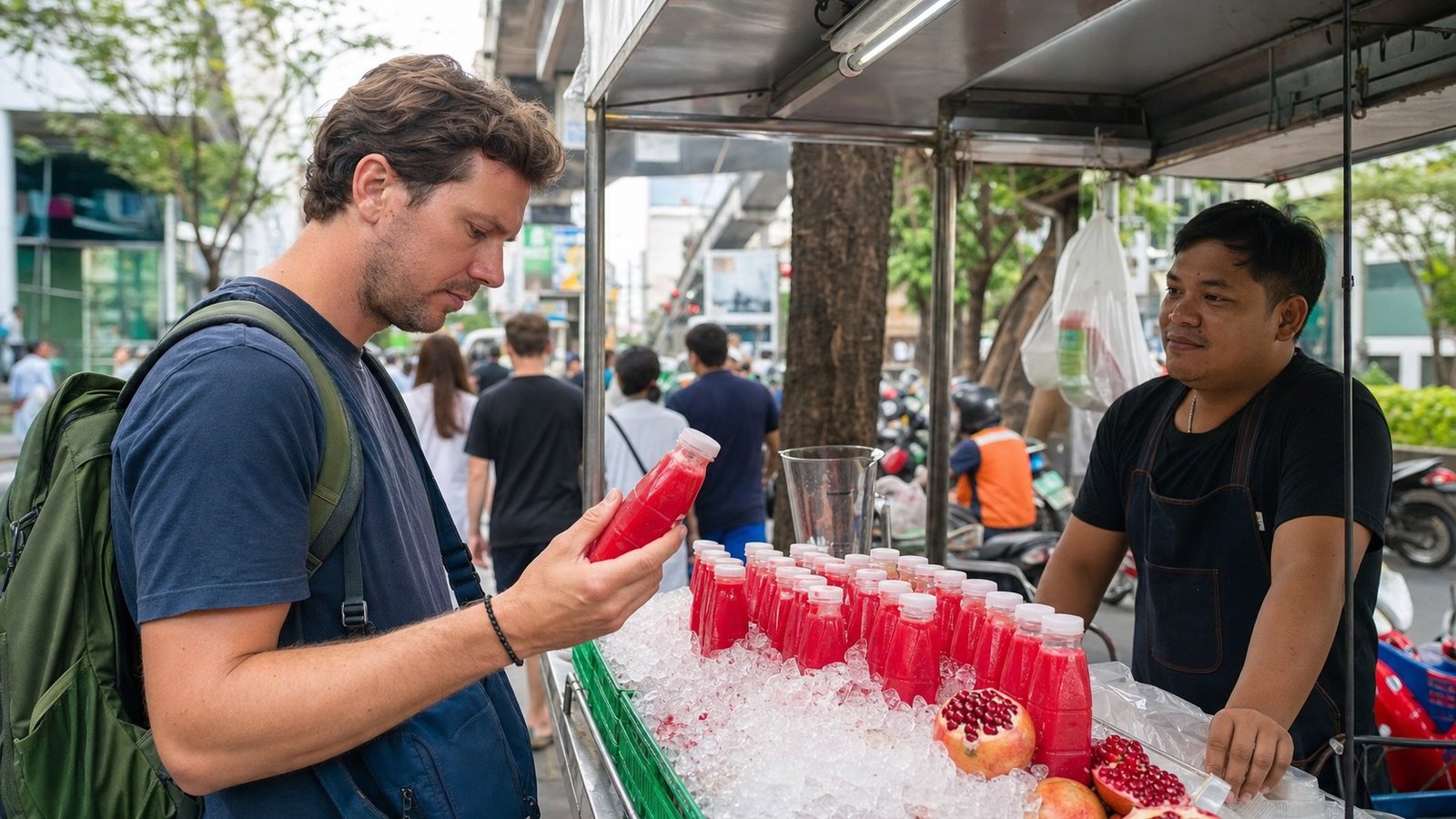
Steve Austin brings up the juice. Here in Bangkok and other major tourist destinations in Thailand, you’ll often see vendors selling juice by the roadside, especially along Sukhumvit. And often it’s pomegranate juice. But there’s one big problem here. Pomegranate juice is actually quite expensive and it’s far cheaper to simply sell colored sugar water.
It is a pretty common hustle and most tourists take a sip. They will probably notice, but they’re not really going to bother with it because it was probably 50 or 100 baht and they just move on with their day. And that keeps it as a fairly lucrative little industry. And it brings up a broader point here in Thailand that you have to understand.
There really isn’t any regulation. There are no bodies that are going around inspecting street vendors to ensure that the products are actually legitimate or that the signs exactly match what they’re selling. That simply does not exist here and it’s a buyer beware scenario. You have to understand this and once you step back you quickly realize that there’s a high incentive to sell the sugar flavored water instead of real pomegranate juice to all these one off tourist customers. And the same logic applies across the board.
You’ll find some seafood restaurants will try to pass off low grade tilapia as sea bass or relatively cheap cuts of meat as premium Angus beef. And there are a lot of inauthentic supplements and that occasionally comes up in the news here. And this is normally connected to online sales on platforms like Lazada and Shopee. So, that’s just something you need to know before you come here that there is a big potential gap between what’s advertised and what’s actually for sale. And you have to be the one to assess whether you think it’s legitimate or not.
And to Steve Austin’s point, the red pomegranate juice that has a neon fluorescent glow, definitely not real. And that’s unlikely to change because there’s really no incentive structure for those vendors to sell the legitimate product. And on the subject of things that will probably never change, an Truuk asks whether 7 Eleven is planning to scrap the toasties. Now, for the uninitiated, 7 Eleven sells croissant style toasted sandwiches. and they have become something of an influencer phenomenon where if you open up reels or TikTok, scroll for about 10 minutes, you’ll suddenly start seeing a lot of 7 Eleven toasty content if you happen to reside here in Thailand.
And 7 Eleven definitely is not scrapping them. And to be totally honest, if they did scrap them, it would probably be even worse PR than all the visa changes that Thailand does.
Thailand Travel Logistics
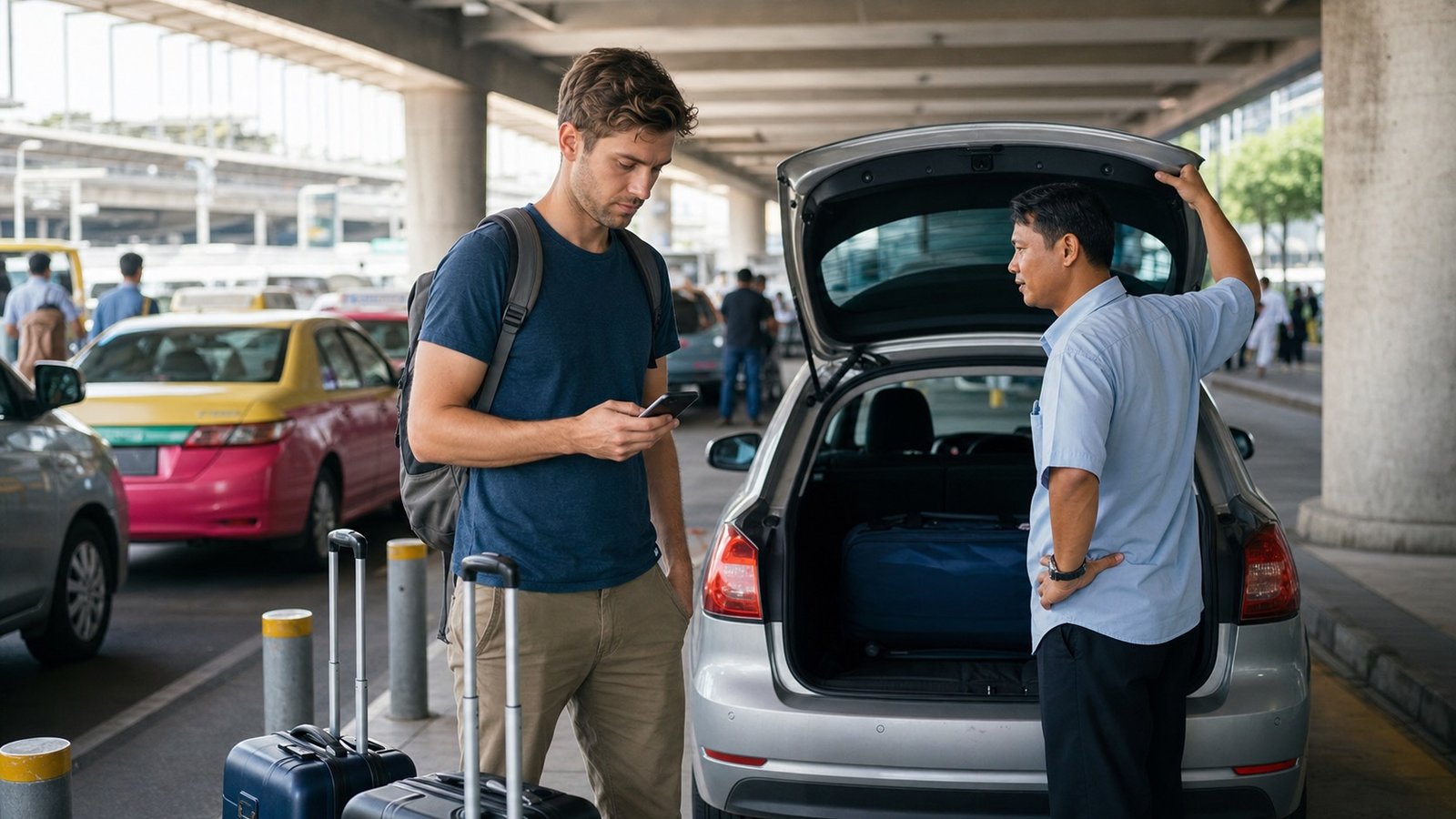
And Paul Howell asks about the cheapest way to get from Don Mueang Airport to Pattaya using a car. So taxi, Grab, or Bolt. And the correct answer here is none of the above. Indrive is the cheapest option.
It’s a relatively newer app, and it operates a little bit differently. It takes a far lower cut from drivers and it allows you, the user, to offer a price with a recommended fare that’s far lower than you’ll find on Grab and Bolt. And that really comes down to the difference in the cut that they’re taking. So, for example, a ride from Don Mueang to Pattaya on Grab will cost about 1,700 baht, whereas Bolt is close, maybe 1,600, and you can get it for 1,300 on Indrive.
Conversely, if you’re going from Suvarnabhumi, which is closer in the main international airport, the Grab ride will be about 1,500 baht, Bolt 1,400, and Indrive 1,000. And of course, some people would rather skip public transportation, taxis, ride hailing apps, and simply rent a motorbike. And propaganda troll asks about the IDP. So the IDP is the international driver’s permit, and it’s legally required to drive a vehicle in Thailand.
And you need to have the correct classification. So in order to ride a motorbike, you should have the A classification. That means you have a motorcycle license in your home country. Whereas the B classification will allow you to drive a car.
But to propaganda troll’s point, the rental shops typically don’t actually care. And they’ll rent you a vehicle, whether it’s a motorbike or a car, regardless of whether you hold the proper licensing. But that doesn’t mean that you’re driving legally. And if the police stop you, they can fine you.
But the bigger issue here is insurance coverage. Because if you’re riding or driving without a proper legal license and you have an accident, your insurance company will normally deny your claim. And this is one of the most common and costly mistakes the travelers make here in Thailand.
Teaching And Working In Thailand
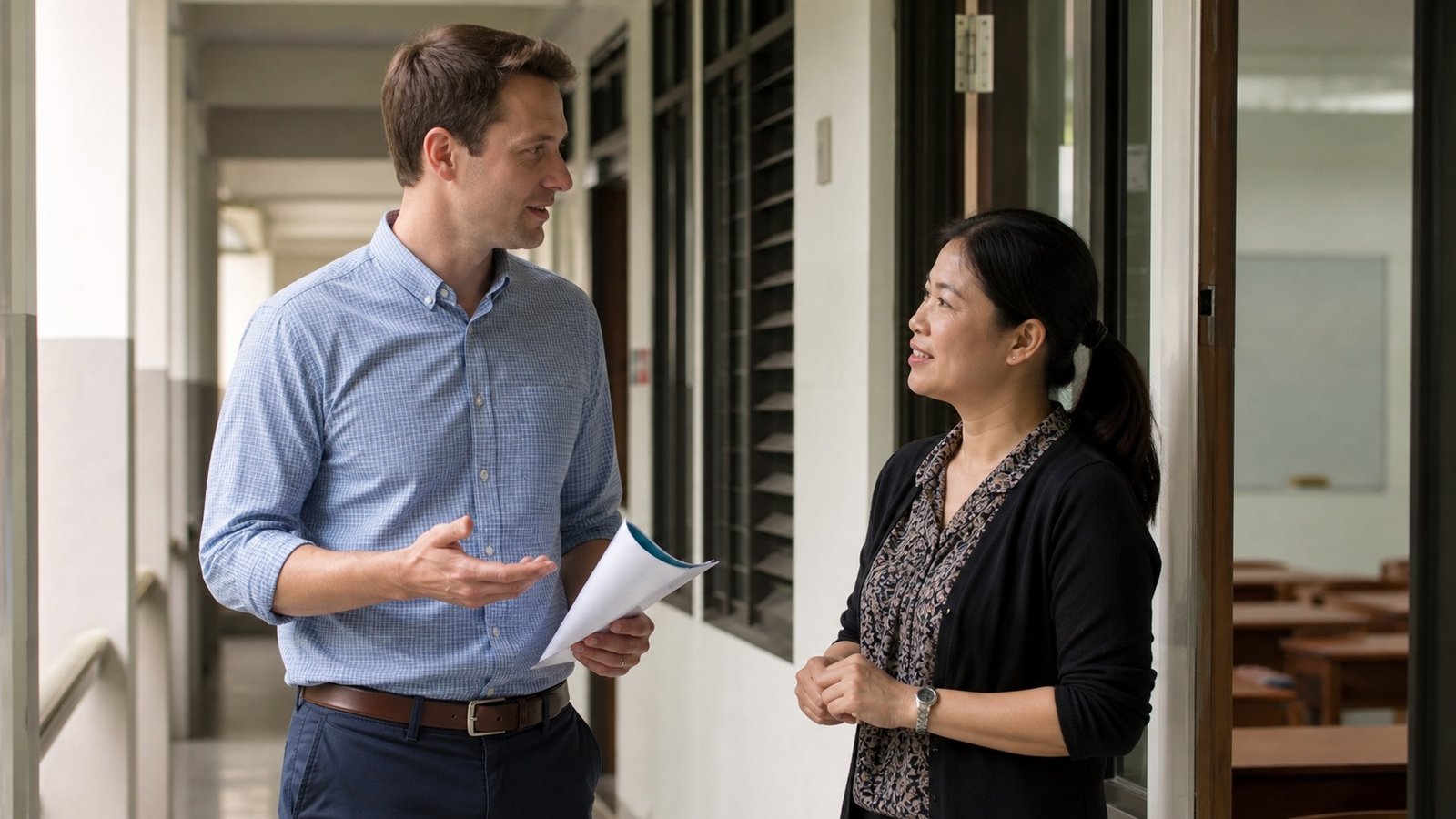
Kevin Lawless has a question. He’s thinking about moving here and he’s a few years away from his pension. Is it sensible to come here and think about doing some teaching on the side to supplement a rental income or is it crazy? And this one really comes down to individual personality and how well you cope or would enjoy living with relative inconsistency. But when we think about what’s crazy, I mean, we all live and then we die. Life itself is actually crazy. It doesn’t make any sense. And I used to work in the government in Canada and I was surrounded by people who were working in cubicles and chasing an idea of security. And the truth is security just doesn’t exist. That’s not what life is. It can end at any time for any reason. So my view is that it’s crazy to not pursue the life that you want. And that’s been what’s guided me.
It’s how I ended up here. So for me, I think it’s a good idea. But that’s just my personality and I think you have to step back, assess yourself and think about whether or not you enjoy comfort and stability or inconsistency and adventure because that’s really probably the difference you’re looking at. But as for teaching itself, I did it for about 9 years here and I thoroughly enjoyed it. Now, one caveat here. If you’re planning to teach in the Thai system, you better be prepared for some culture shock because it is very, very different. Now, if you want something a little bit more relaxed, I’d recommend a gig at something like a language school, as that’ll be a bit more straightforward, but make sure that they sort you out with a proper work permit and non B visa. Otherwise, you would be working illegally. Frank James asks a far more specific question about obtaining a job teaching at a university. And that’s exactly what I did for about two and a half years when I first moved here. It can be trickier to find university positions as they typically don’t advertise on the normal job listing websites. Instead, you’ll want to visit their specific website, their home pages, and go check out the career listings. But honestly, networking can actually be the easiest way to find some of the university jobs.
That’s how I got my position. It was through a friend of a friend who recommended it. And when I went in for the interview, the guy said I was the only person interviewing because they’d never even advertised the job and they basically gave it to me on the spot. So networking in Thailand can actually be one of the better ways to get into a lot of different industries, a lot of different jobs. So, ideally, you want to get your feet on the ground here. Get out, meet new people, see what’s available. And you’ll actually need to be on the ground because most universities and ESL or any Thai oriented jobs will require you to be in the country and available for an interview. It’s really only the international schools that tend to hire from abroad. And then you need a proper teaching qualification. And sticking on the teaching topic, Little Sips asks for a full guide on teaching in high schools. Now, I actually made a full teaching guide. And I talk a lot about how to find jobs at every different level. Money is a continuous theme today.
And Sisapro asked how to earn additional side income as a retiree. XXI asked about my work life balance here in Thailand. And for me, it’s definitely been an arc. Over the past four years, 5 years, I’ll often work 16, 18 hours a day. I enjoy it. I really enjoy what I am doing. I’m excited to get up, think about new ideas, to work on scripting, to work on production, walk around, explore different places. So, I work almost all the time and I really like it.
I finally left my job teaching at an international school in March and my time is actually quite a bit more freed up. It did get a bit exhausting by the end of last year, especially because I have a young son and a family and have to make time there as well. Now, Lucky Logger asked a question which might expand on all the travel content and guides that I do create. That is, am I planning on applying for a work permit to become a guide in Thailand? And no, I am not. You have to be a Thai national to work as a guide in Thailand. This is a restricted occupation and foreigners cannot legally work as guides regardless of whether they’re self employed, they have their own company, or they’re employed by a different company. On the ground guide services must always be done by a Thai national. Now, one thing that I may do over time is set up a consulting business to help expats relocate here. But if I did that, it would involve my wife, my partner, who actually is an immigration police officer. And in that case, it wouldn’t be me providing the direct guide services. And speaking of activities that are restricted to Thai nationals only, the dude Kendrick asks about becoming a Thai citizen.
And this is definitely a lengthy process that typically involves many years. You’ll need to be on the proper visa, which is normally a non B visa with a work permit. You’ll need to have proper house registration, speak the language relatively fluently. You’ll have to pass the testing and it is a lengthy process. I’m personally not looking at doing it right now, but I do know a few people who have gone through the process. I recently interviewed Benjamin Hart. He’s a lawyer here in Bangkok who did become a naturalized citizen. And perhaps when I sit down with him again, I’ll ask him more about the exact steps of the process that he went through.
Meetups And Expat Community
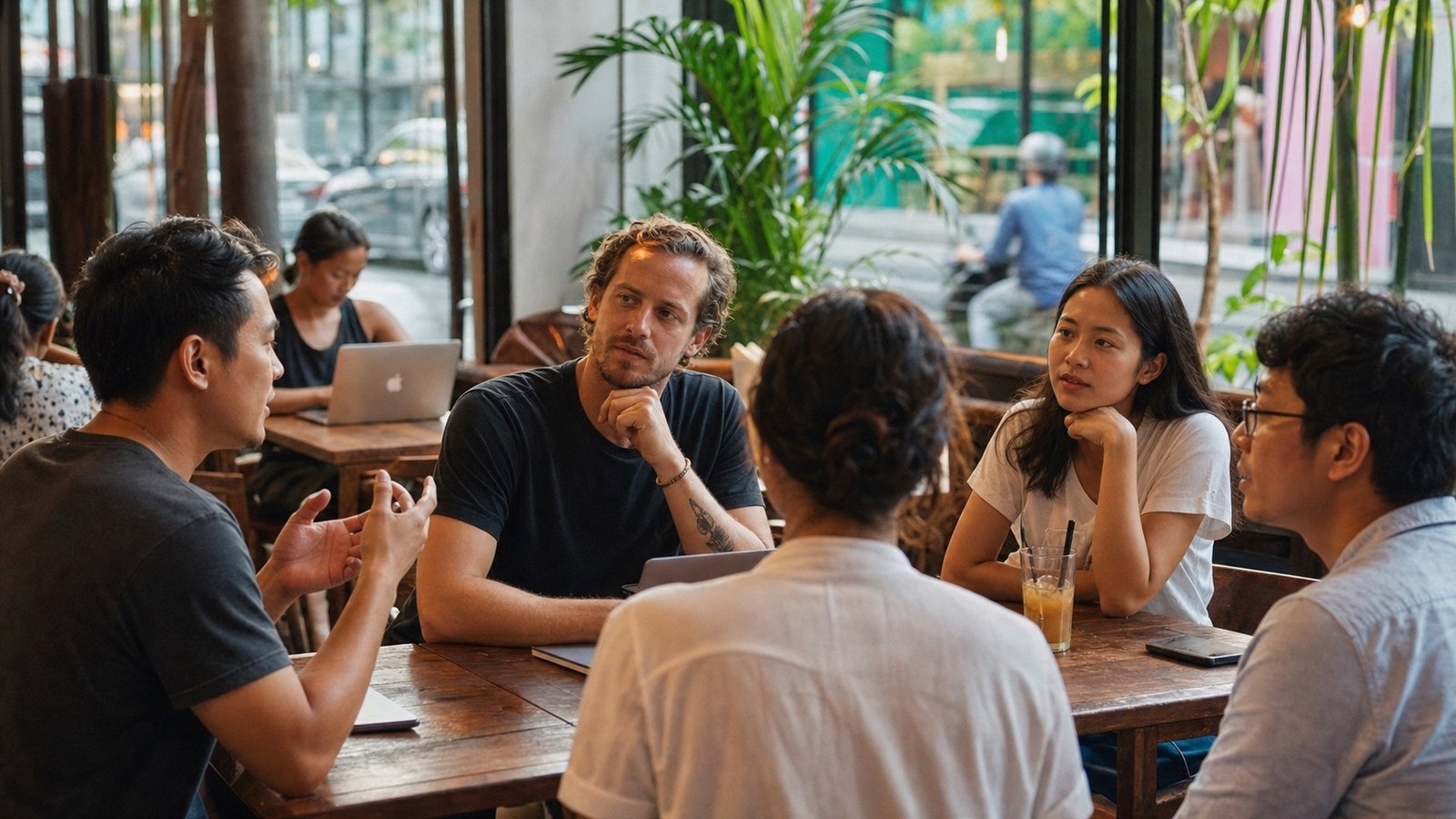
Next, I had three questions about organizing potential meetups, and they had a lot of thumbs up as well. So, that’s something I’m looking at doing. Networking is very valuable for people that are visiting or considering moving to Thailand.
Having a community where everybody can meet each other, come and talk directly, is very beneficial. That’s largely what’s defined my life here. The people I met and the networks that I built provided me with a lot of help over time here in Thailand.
So, I’d like to be able to organize more physical meetups. That can make it easier to get a sense of overall numbers.{prefix}posts
{prefix}posts
{prefix}posts