Don Mueang Arrival Guide For First Time Travelers
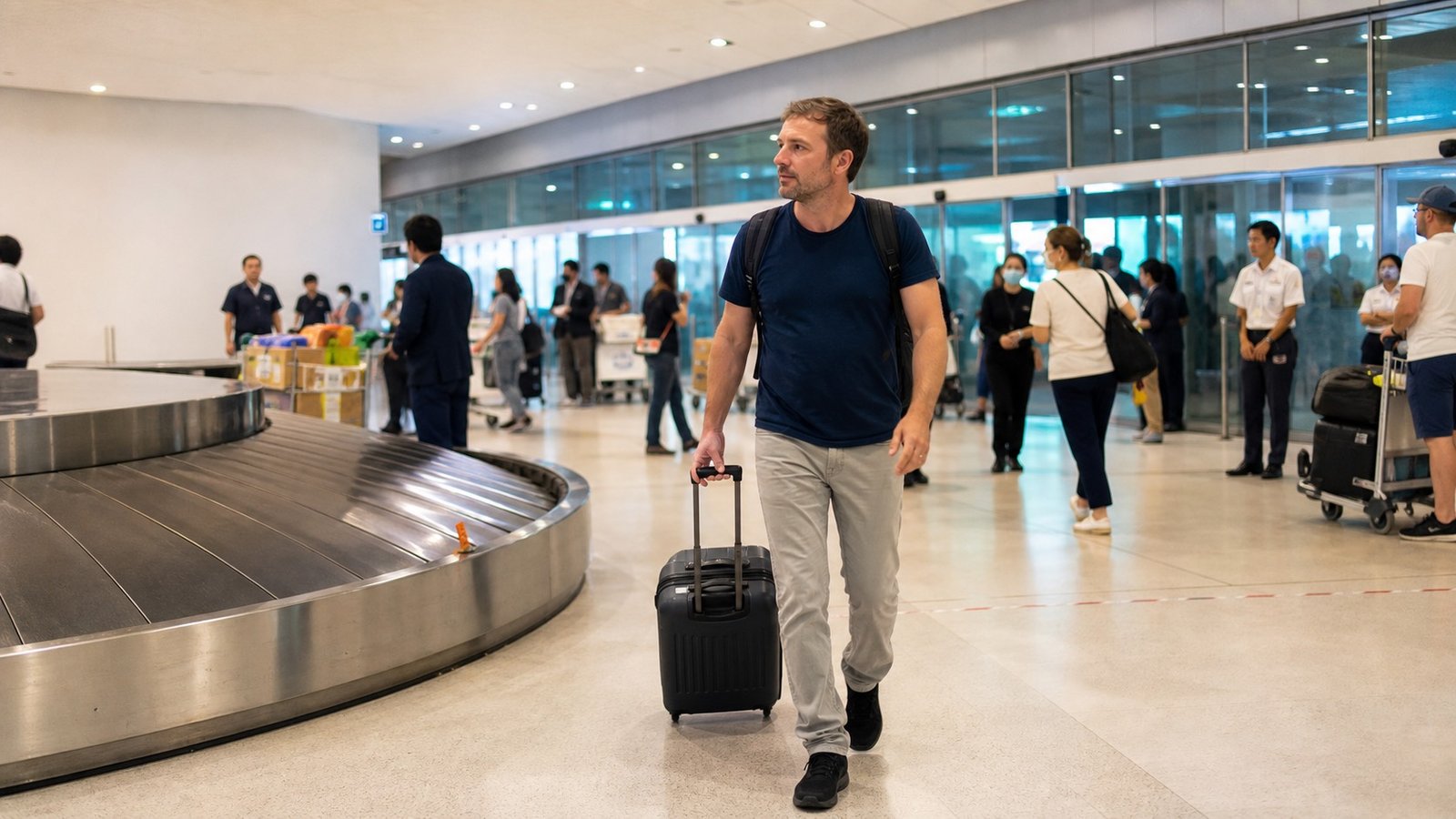
Welcome to Bangkok, Thailand. This is Don Mueang International Airport.
If you’re flying into this city using a low cost airline, chances are you’ll be arriving here in the arrival hall. Before arriving, make sure you’re flying into the correct airport.
Don Mueang has the airport code DMK while the larger Suvarnabhumi Airport has the code BKK. So check your ticket in advance.
It’s also important to note that Don Mueang has two terminals. Terminal 1 is the international terminal, while Terminal 2 is the domestic terminal, a short walk away.
One thing worth knowing: if you arrive on an international flight with a domestic connection, follow the Transfer to Domestic signs and check with your airline whether your luggage is checked through. Otherwise, collect it and take it to the domestic transfer or check-in area.
Thailand Immigration And TDAC
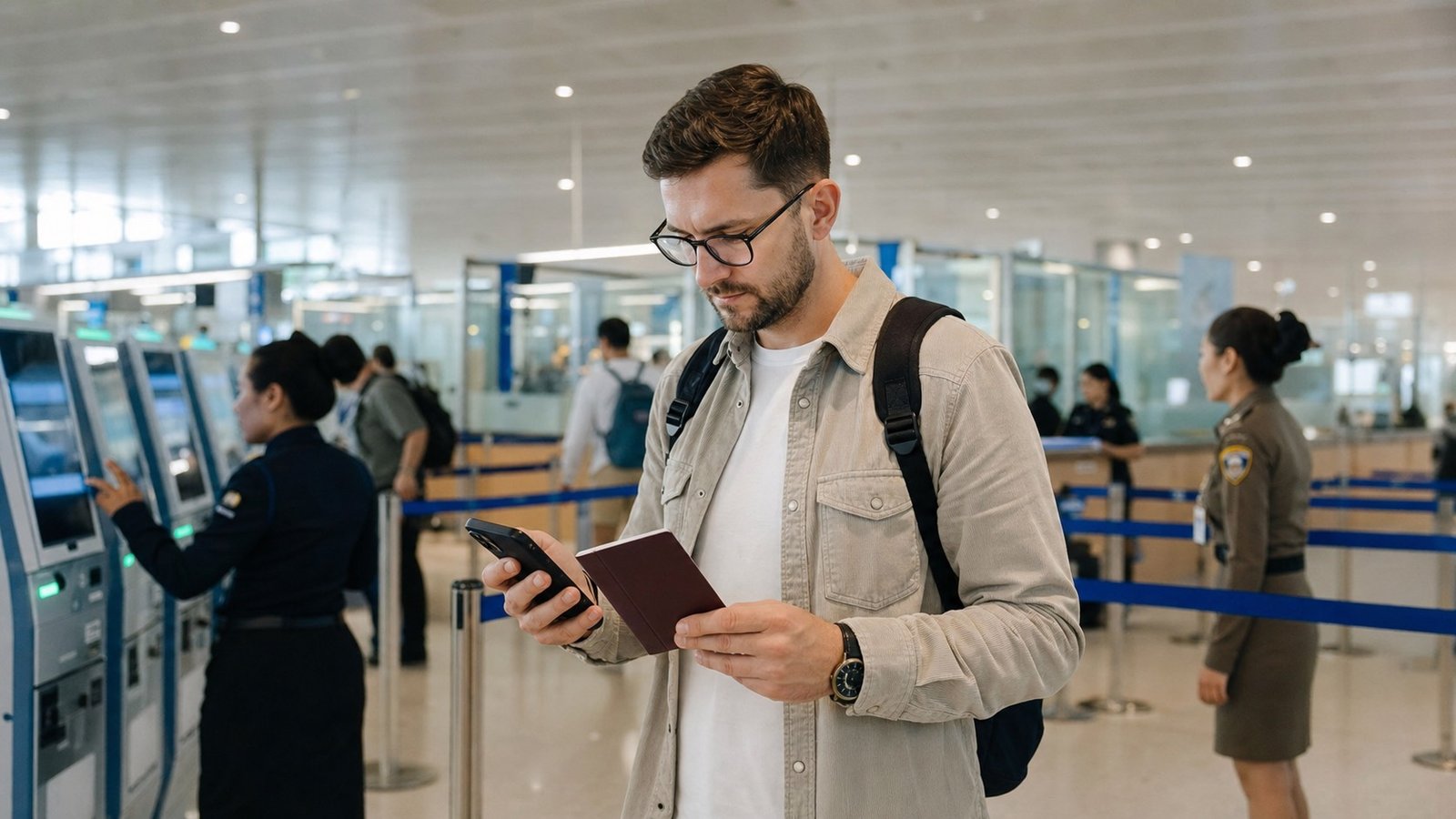
If you forget, Don Mueang has TDAC kiosks, but completing it before you travel avoids delays.
SIM Cards And Mobile Data
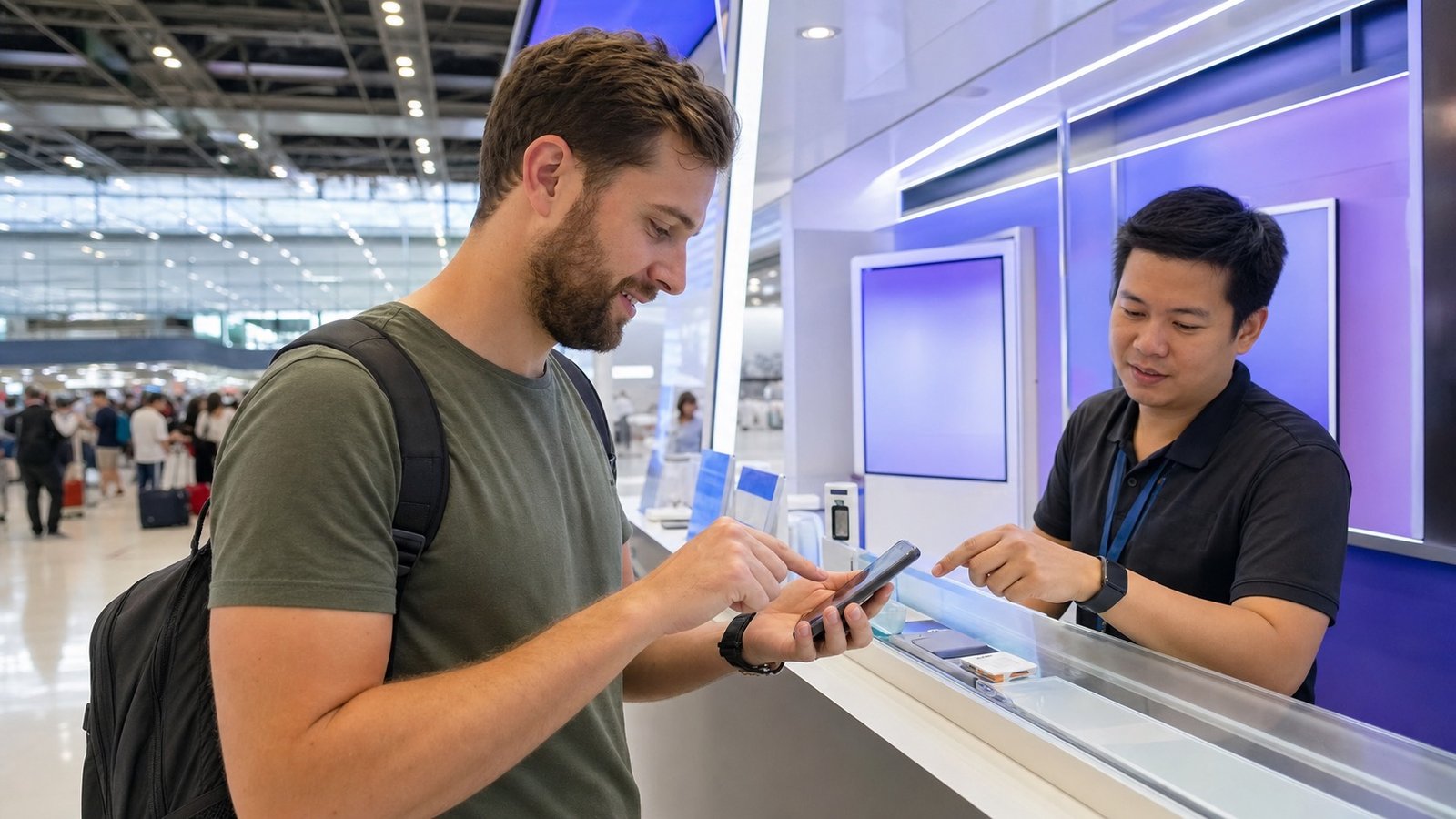
Once you’ve cleared customs, you’ll need access to data, and you have three options. First, you can opt for a tourist SIM, which you can buy from a True or AIS kiosk here at the airport. Prices range from approximately 400 baht for an 8 day package up to 1,200 baht for 30 days.
For longer trips, you can opt for a local prepaid SIM. These are more affordable, typically coming in at under 500 baht per month. Simply visit a service provider shop, which are located in most major malls, and ask a customer service representative for their best promotions.
And 7 Eleven offers a middle ground with a more inexpensive tourist SIM card option. Or if you want continued access to home services, prefer a cross border plan or value privacy, an eSIM may be ideal, and I’d recommend Saily. The setup is straightforward.
You choose a data package before your flight, install the eSIM, and it activates automatically once you arrive, so you can connect to the internet as soon as you land. You keep your home number active for calls and texts, which means you can still receive messages and two factor authentication codes, while Saily handles your data, so you avoid expensive roaming charges. The virtual location feature allows you to access services back home, which are often restricted in foreign countries.
The ad blocker helps reduce wasted data and the regional plans are especially useful if you’re traveling to multiple countries because you don’t need to keep switching SIM cards every time you cross a border. And finally, you don’t need to provide a passport for registration so you maintain your privacy.
Money Exchange And ATMs
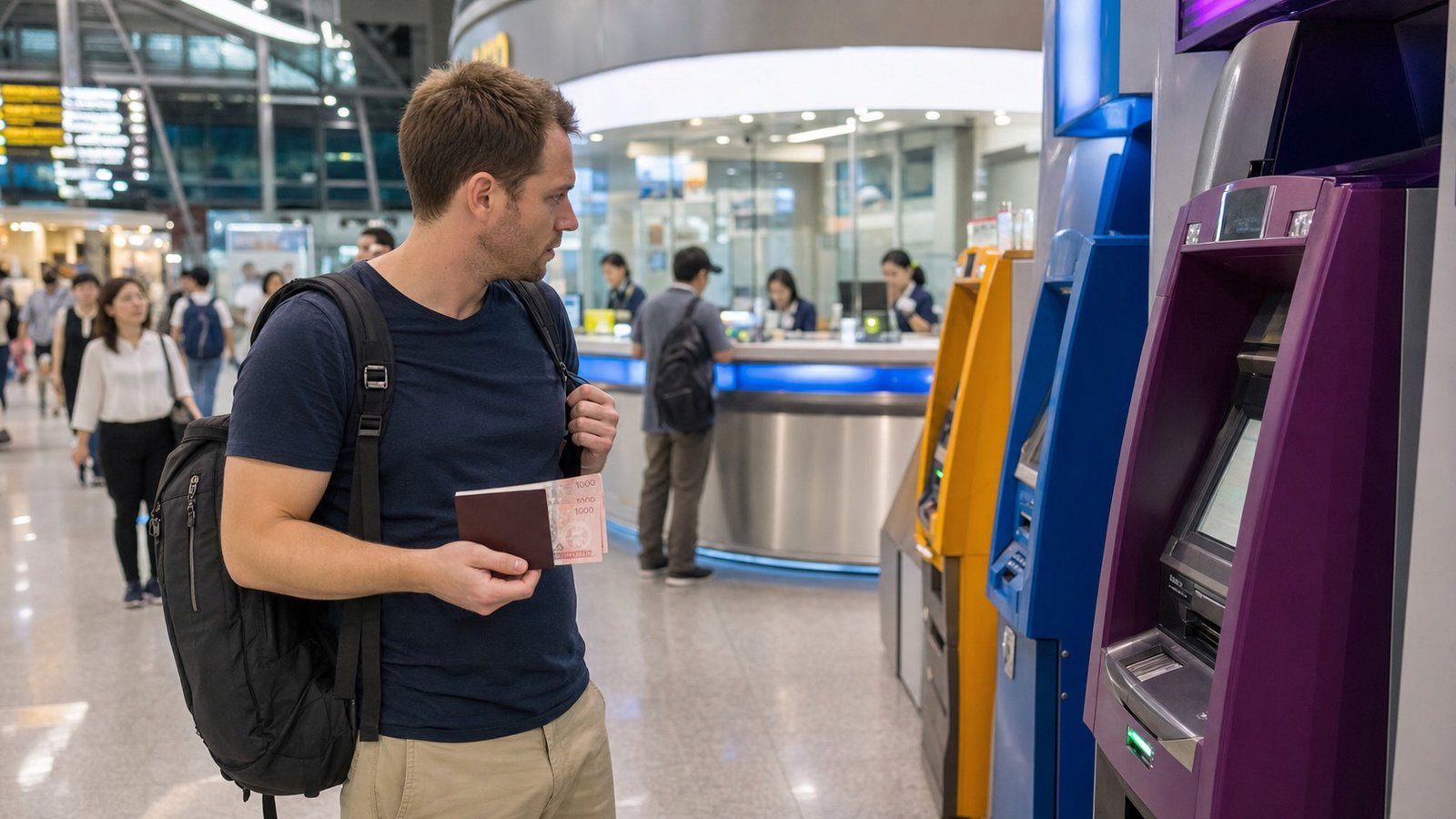
Next, you’ll want to consider money. And you have two options ATMs and currency exchange booths. If you plan to exchange, normally the single biggest mistake is getting Thai baht in your home country. The rates here in Thailand are generally far better than anywhere else in the world, and it’s typically better to wait until after you arrive.
When you walk out into the arrival halls, you’ll see plenty of currency exchange booths, but it’s normally best to skip these if you want the best rates. Instead, you want to walk towards the SRT rail station where you’ll find the Happy Rich Currency Exchange booth. the SRT Red Line is on one side and the Happy Rich Money Exchange is on the other. This is one of Bangkok’s many currency exchange companies which are located throughout the city.
Just remember to bring crisp, clean new notes as booths will reject any old or even slightly worn out bills. And for major currencies, high denomination notes, 100 or $50 bills will also get slightly better rates. And just remember to bring your passport as you’ll need it to complete the exchange. Your second option is ATMs.
And there are a few key mistakes you want to avoid. First, ATMs in Thailand charge a fee to withdraw money using a foreign debit card. As of 2026, that fee is typically 220 baht per withdrawal for a foreign Visa or Mastercard.
If you’re paying these fees, you’re going to want to avoid withdrawing small sums of money as that can definitely add up. Most bank machines have a limit of 25,000 baht per withdrawal, but you can withdraw up to 30,000 from the yellow Krungsri machines. When you withdraw, the machine may also ask if you want the transaction processed in your home currency. This is called dynamic currency conversion, and it allows the ATM to set its own higher exchange rate.
Always decline and select Thai baht. Now, if all these fees sound unpleasant, you can save plenty of money by packing a good travel debit card as the best ones will normally refund all the foreign withdrawal fees. And remember, Thai ATMs dispense the cash first and card second. Many travelers forget their cards because of this reversed order.
Airport Food And Services
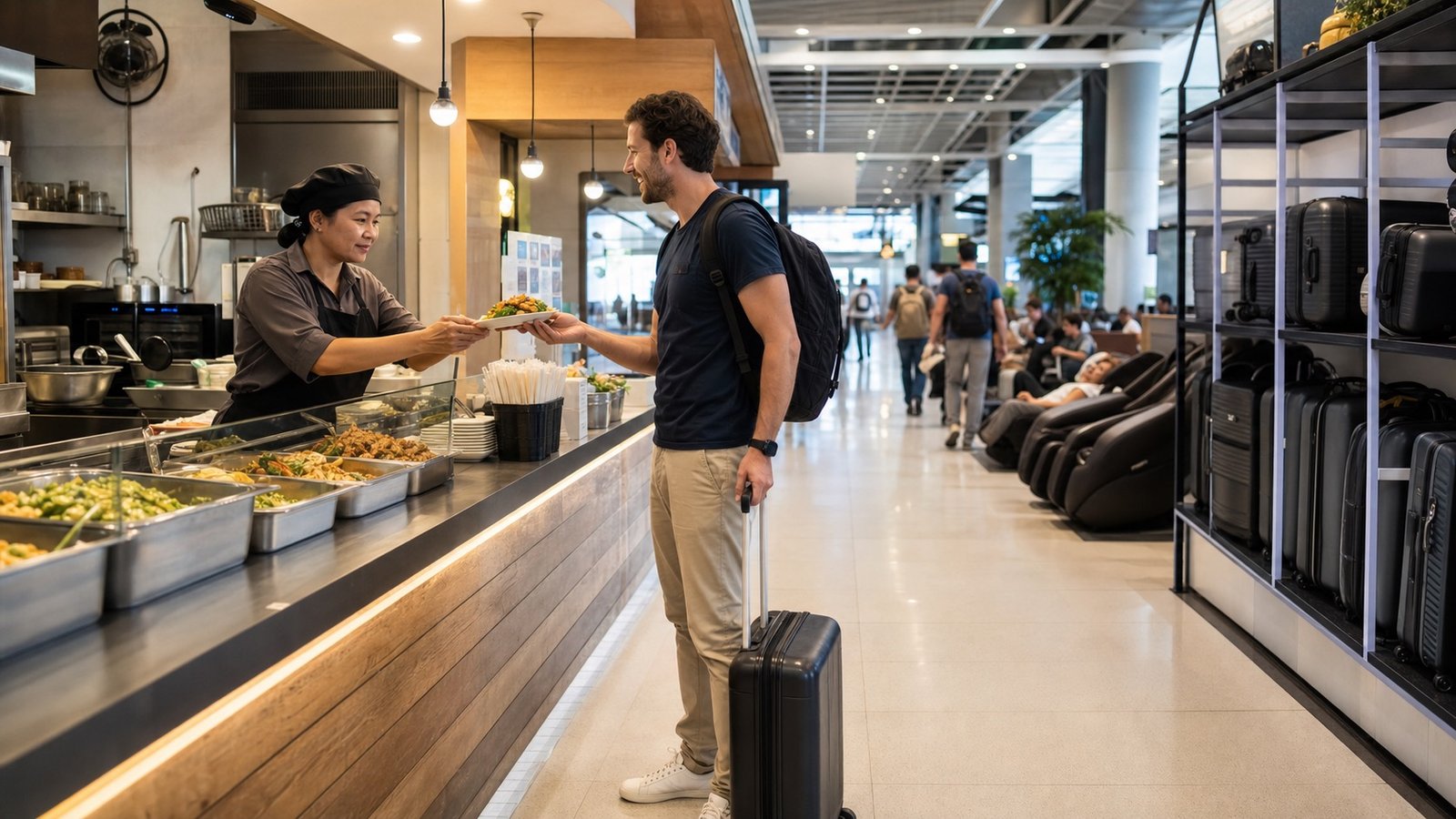
Before you head into the city, you might want to grab something to eat. And you can skip the overpriced airport food by visiting the Magic Food Park, which is on the second floor of Terminal 2, tucked away at the far end near the parking garage, office zone, and SRT Rail Link.
When you walk in, you’ll pick up a cash card, load it up, and order from the stalls. Dishes run between 50 and 80 baht and it’s as close to authentic street food pricing as you’ll find in any airport in Thailand.
The station reaches the airport’s public-transport level, where travellers can access departures and arrivals. The airport layout includes restaurants on the fourth floor, domestic departures and the meeting floor on the third floor, and domestic arrivals with public transportation on the first floor.
Following the signs from the SRT station leads into the airport access area. The floor map helps travellers decide where to go after arriving with luggage.
Taxis Ride Hailing And Public Transport
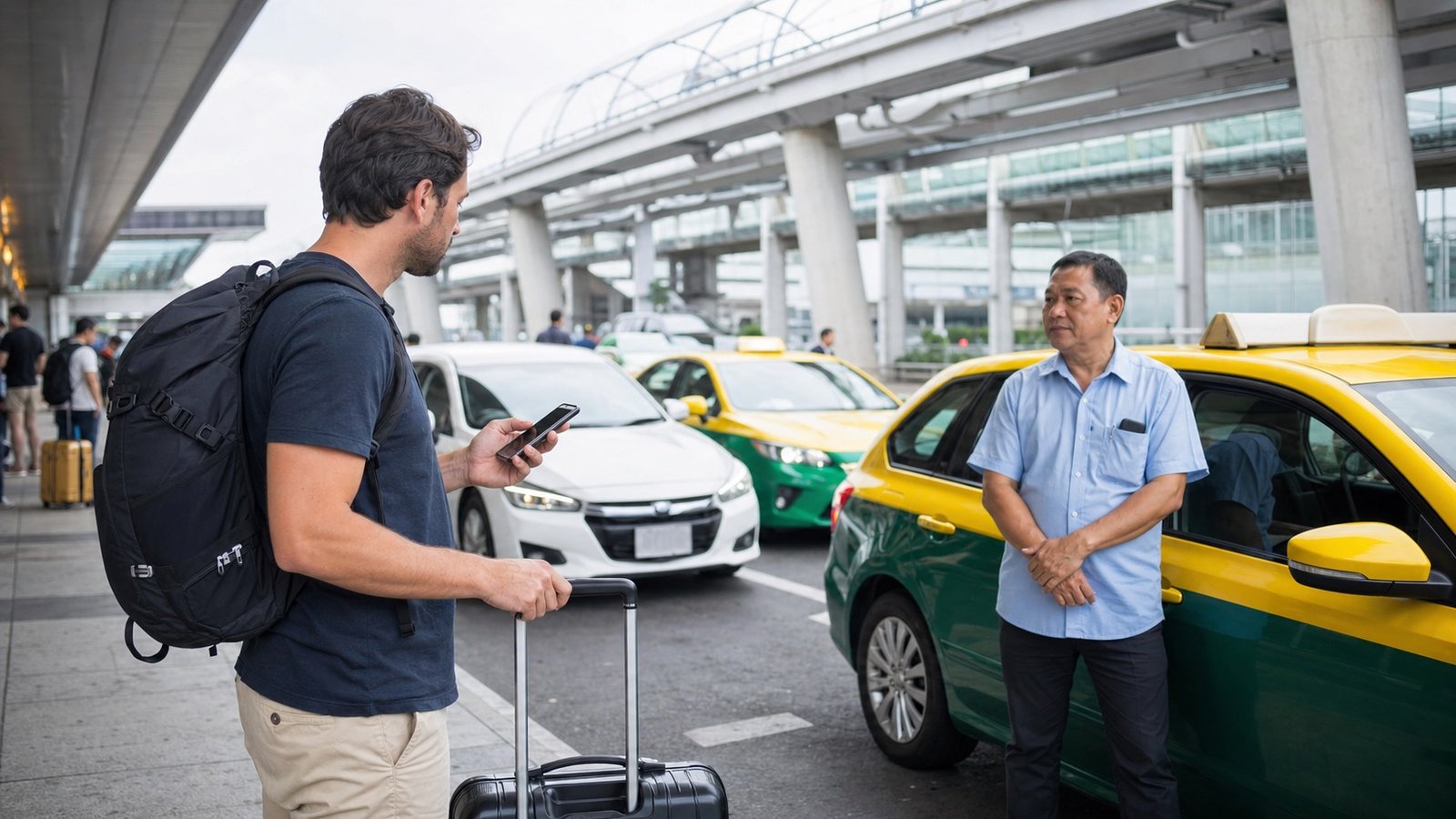
Once you’re ready to depart for your accommodations, you have three options. For the regulated taxi queue, go to Terminal 1, level 1, gate 8 or Terminal 2, level 1, next to gate 15. The attendant will hand you a ticket. Make sure to keep it as it’s your record in case anything goes wrong. Tell your driver the destination and make sure that they turn on the meter. If they refuse, simply walk away and get another cab. You’ll pay the metered rate plus a 50 baht airport surcharge. And if your driver takes the tollway, which for central Bangkok is usually the fastest option, you’ll pay additional toll fees at the booth, which are normally under 100 baht.
When you pay, the driver should hand you the receipt along with any change. And a ride into central Bangkok is typically under 500 Baht. Always keep Google Maps open to ensure that your driver is taking a sensible route and bring smaller bills because if you hand over a larger note, some drivers are known for swapping it and claiming that you gave them the smaller bill. If you have mobility issues, CABB offers wheelchair-accessible London-style taxis. They use a special meter with an additional 100 baht airport surcharge, and you’ll find the counter at Terminal 1, level 1, gate 7. Your second option is the ride hailing apps.
Grab is the most popular option, but you can also use Bolt or Indrive, which are both slightly cheaper. Just open up the app, type in your accommodation address, and they’ll provide you with the closest pickup point. AOT lists the Grab service counter at Terminal 2, level 1, gate 14, but the app will confirm the current pickup point when you book. So follow the instructions there and keep in mind that there can be congestion at peak times. So your driver may take 15 to 20 minutes to arrive. Your third option is public transportation with the SRT Red Line train. If you’re traveling light and solo, this can definitely be your best option.
Trains run from 5 am to midnight every 10 minutes during rush hour and every 15 minutes throughout the rest of the day. The line takes you to Krung Thep Aphiwat central terminal in about 20 minutes for 33 baht and from there you can transfer to the MRT blue line to reach Sukhumvit, Silom or most other central Bangkok destinations. Follow the signs from either terminal. You can buy a single-journey token at the machine or ticket office. Don Mueang also has an excellent bus transportation system with links connecting to different destinations throughout the city. And whether you’re going to Khaosan, Siam, or central Bangkok, this can be the simplest and cheapest option to get into the city. Buses leave from Terminal 1, level 1, gate 6 and Terminal 2, level 3, gate 8.
The A1 and A2 buses cost 30 baht, while the A3 and A4 cost 50 baht, with departures every 15 to 30 minutes. If you’re heading further afield, there are more options for Pattaya. There’s a direct bus service from the airport, which departs from the service counter at gate 1 in terminal 1 or gate 11 in terminal 2 and costs 155 baht. Buses run from 6 thirty in the morning to 5 thirty in the afternoon
with departures every 4 hours. For Hua Hin, you can book a direct bus which runs twice a day at 10:30 or 3 for 205 baht. But always verify prices and times in advance as changes can occur. If you want to rent a car, there are plenty of different rental kiosks in both the domestic and international terminal.
Airport Scams And Tourist Police
And last, there are a couple of scams you should be aware of that are prevalent at airports all over Southeast Asia. The first one involves a stranger who typically claims to be from the Middle East attempting to befriend you very quickly. A short way into the conversation, they’ll ask to see currency from your home country, and if you show them, they’ll try to swipe a few notes using a sleight of hand trick or trade you for counterfeit currency. This scam is extremely common at tourist spots around the city, and it includes the airports. The second is the forlorn traveler, someone who approaches you claiming they’ve lost their ticket or can’t afford a meal and asks for money.
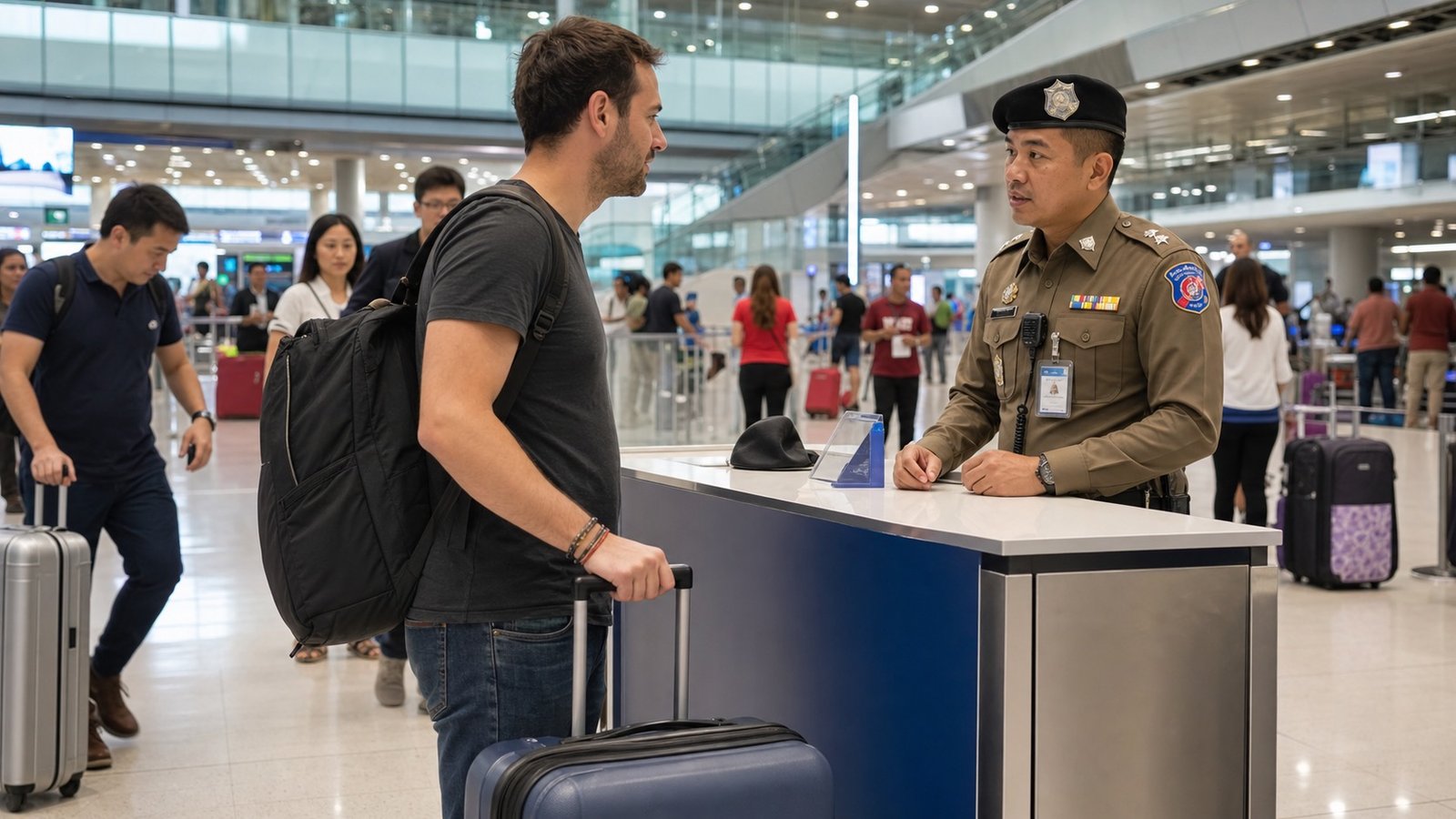
These can be any nationality, including Western travelers, and they’re commonly known as begpackers throughout Asia. Your money is funding their travel, and it’s best to follow one simple rule. If anybody approaches you, just walk away. If you do have any problems, the tourist police station is here on the arrivals level. You can contact them directly for assistance.
And make a note of the tourist police number. 1155. Keep it on your phone just in case anything goes wrong. And you can also download the tourist police app. The airport also has plenty of conveniences.
There’s a massage parlor. There’s also the massage chairs. 50 baht for 15 minutes, 80 baht for 32 minutes, 100 baht for 40 minutes. If you need to store luggage, ask the airport information desk for current operators, locations and rates, as these can change.
The international and domestic arrivals are only about a minute apart, so the same information applies to both terminals. If you’re taking a domestic flight, you’ll be arriving here. This airport is quite small. It only takes you about 10 minutes to walk from the international terminal right through over to the SRT Red Line. And remember, if you’re a senior citizen or you have mobility needs, make sure to book special assistance and you’ll get a wheelchair and an attendant who can bring you all the way through immigration and straight out to your taxi or waiting Grab.