Everything You Need To Know About Transport In Bangkok
With a population of over 11 million people, greater Bangkok is a sprawling metropolis that can be explored by train, taxi, tuktuk, and even boat. But what’s the best way to get around this vibrant city safely and efficiently? And how do you use each form of transportation?
In this guide, I’m going to walk you through all your transportation options in this city from the moment you arrive.
From the Airport: Taxis
When visitors arrive here in Bangkok, the most common choice is to jump straight in the taxi, and this makes perfect sense after a long flight. But if you opt for a taxi, make sure you use the regulated taxi stand on the ground level.
Sounds easy, right? And it usually is. But taxis in Bangkok are infamous for running various scams and hustles or refusing to use the meter, and you need to take a few precautions to avoid any problems even with regulated airport taxis.
So let’s cover four simple taxi rules that will help you avoid problems during your time in this city.
Second, you should track your journey using Google Maps. This will ensure that the driver brings you to the correct destination and takes the fastest route.
Third, make sure to carry small bills, as taxi drivers are notorious for short-changing tourists.
Finally, don’t follow any advice or recommendations from taxi drivers, as these are normally overpriced shops and restaurants that pay a commission to drivers for bringing unsuspecting customers.
Once you’re in the city, if you plan to use taxis, you should avoid taking any taxis that sit idle near popular tourist areas. These drivers normally won’t use the meter and are much more likely to operate scams. Instead, wave one down that’s driving past on the street. You can identify a free taxi if the red light with Thai letters on the windshield is illuminated. If the driver pulls over, you’ll need to tell him your destination, and if he agrees to take you, make sure he turns on the meter and follow all the rules we just discussed.
These are simple rules that you should follow whenever you interact with taxi drivers in Thailand, and this includes the airports.

From the Airport: Ride-Hailing Apps
If dealing with all the taxi problems sounds a bit tiring, you’ve got two alternative transportation options from the airport: you can use a ride-hailing app like Grab or Bolt, or you can use public transportation with the Airport Rail Link mass transit system.
Grab and Bolt are the Ubers of Southeast Asia, and they are very easy to use. Simply download the apps, enter your destination, and you can choose from a wide range of different vehicles with a fixed price. The rates are usually a little bit higher than a meter taxi, but it’s well worth it to avoid the potential scams, especially for newcomers to the city. You can pay for the ride using cash or an international credit card just keep in mind that you may need to pay an additional fee in order to use a credit card. If you opt to take a tollway, you’ll also need to pay that additional fee directly to the driver.
Once you’re in the city, normally I just check the cost of a ride on both apps and book the cheaper option. Or if I’m in a particularly busy area and I don’t mind paying a taxi driver a fixed fare, I normally check the price on Grab or Bolt and offer the same rate or slightly higher to a taxi driver. Many drivers are very reasonable and just want to earn a little bit extra and will accept that price.

From the Airport: Airport Rail Link
But if you packed light or you’re flying solo, you might prefer to use the Airport Rail Link. This is part of Bangkok’s mass transit system. It’s fast, it’s easy, and it’s inexpensive, and it’ll take you straight into the city in about 20 to 30 minutes avoiding all the traffic jams here in Bangkok.

Traveling Between Airports
But Bangkok has two airports, and the second smaller airport is called Don Mueang.
The BTS Skytrain
Bangkok has two main commuter Light Rail networks: the BTS Skytrain and the MRT. Each network in Bangkok is independently operated, so you’ll need to buy separate tickets for each one. One-way fares range between 16 and 62 baht. When it comes to navigating stations, you’ll find English signs, maps, and staff to help you out.
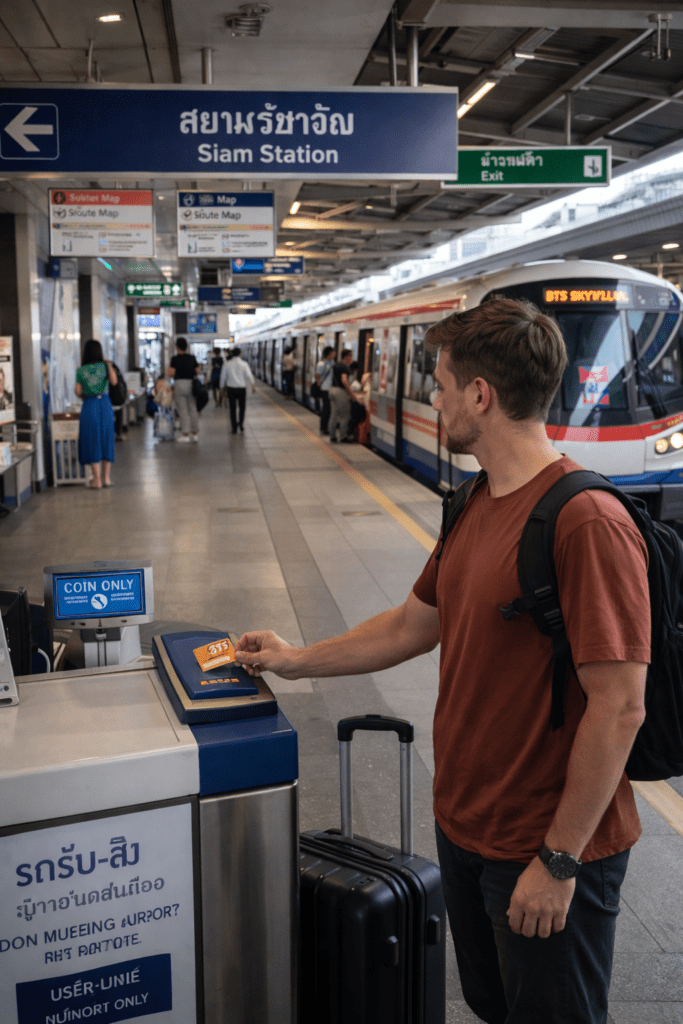
Let’s get started with the BTS Skytrain. That’s centered here at Siam Station. This is Bangkok’s original two-line Skytrain, which opened all the way back in 1999. Siam Station is where the two lines of the BTS system connect. Because both lines are operated by the same company, you won’t need to buy a separate ticket when you transfer between them.
The Sukhumvit Line is the larger network with 47 stations, and you’ll find plenty of hotels, shopping, parks, restaurants, and nightlife along this line. The Silom Line is shorter with only 14 stops; it runs through Bangkok’s Central Business District, Sathorn. You have key interchange points to the MRT Blue Line at Asok, Morchit, Saladaeng, and Bangwa, and to the Chao Phraya River Ferry Network at Saphan Taksin.
Trains on both BTS lines run every 3 to 6 minutes with ticket offices open from 6:00 a.m. to midnight. Single fares on the BTS range from 14 to 62 baht, and you can buy tickets at vending machines or ticket booths.
Getting a ticket here at the BTS is very easy, but you’re going to want to bring some change with you because most of the vending machines are a little bit older and will only accept coins. Once you’ve paid, you’ll get a BTS card. We simply walk over and tap it on the turnstile. Keep your card with you you’ll need it to exit the station. If you lose your card, you’ll have to pay the full fare of 65 baht in order to exit.
When you need to leave the BTS station, have your card with you and you’re going to insert it into the turnstile in order to exit.
If you’re planning a busy day, consider getting a 150 baht one-day pass for unlimited rides. Or if you’re staying longer, a Rabbit Card offers a set number of trips at a fixed price regardless of the distance. To get a pass, you’ll need to go to a ticket booth and you’ll need to bring your passport with you.
The MRT Subway
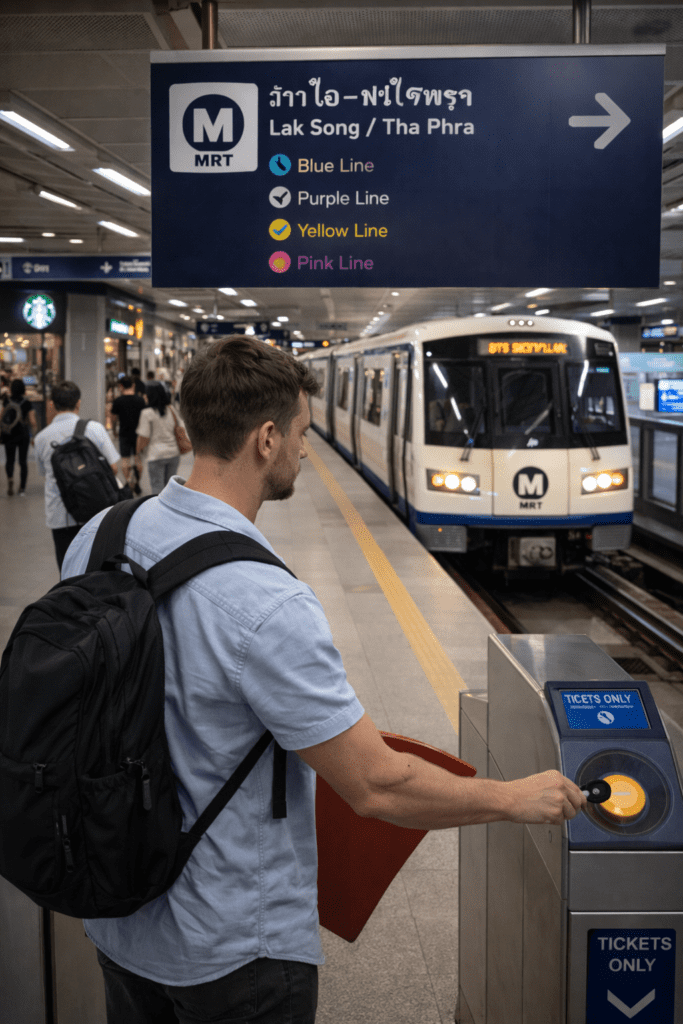
Let’s explore Bangkok’s MRT. This is the underground subway system here in the city. It’s newer and it’s more extensive also very easy to use. It has four lines: Blue, Purple, Yellow, and Pink.
The Blue Line runs from Thapra to Lak Song, looping through Central Bangkok and connecting to major tourist destinations like Chatuchak Park for the weekend market, Wat Mangkon for Chinatown, and Sanam Chai for the Grand Palace.
The Purple Line is predominantly a suburban connection from Nonthaburi Province to Bangkok. The Yellow Line is also suburban and links Lat Phrao to Samrong. The Pink Line travels between Khae Rai and Min Buri, with key stops near the Thai Immigration Bureau in case you need to do a visa extension.
But unlike the BTS, each line requires a separate ticket, so you’ll need to buy a new ticket if you transfer from any of the four lines.
MRT trains run every 5 to 10 minutes from 6:00 a.m. to midnight, and tickets are 17 to 45 baht. As with the BTS, all the signs are in English very easy to navigate and you often have little shops and stores, restaurants. Got a Starbucks right over here next to me, although you cannot drink or eat on the subway trains.
Let’s go grab a ticket. I’ll show you the whole process here at the MRT. All of the vending machines will allow you to pay with bills. You’ll receive a small black circular token, and you have to tap it on the turnstile. Make sure to keep it with you you’ll need it to exit. If you lose it, you’ll have to pay a full fare of 45 baht in order to exit the station.
As you can see, I tapped it on the lower turnstile. The upper turnstile is only for credit cards. These trains get very busy during rush hour I’d avoid it if I were you.
We have our token here, and we’re going to insert it into the turnstile, and that’s it. Nice and simple.
With the MRT system here, you can also buy an MRT Cash Card at a ticket booth for quicker access if you’re staying for a little bit longer. I recommend you go to the booth and you get a cash card. You’ll need to bring your passport, and you’ll pay a 100 baht deposit to get the card. You can top it up, so you don’t have to buy a ticket every time you enter. It’s very easy to use always tap it on that lower card reader.
Here in the MRT, they often have whole little mini malls called Metro Mall. You can stop in for clothes, for food basically anything you might need.
BTS and MRT Tips and Etiquette
Before you hop on a train, there are a few rules and tips that you should be aware of when it comes to both the BTS and MRT.
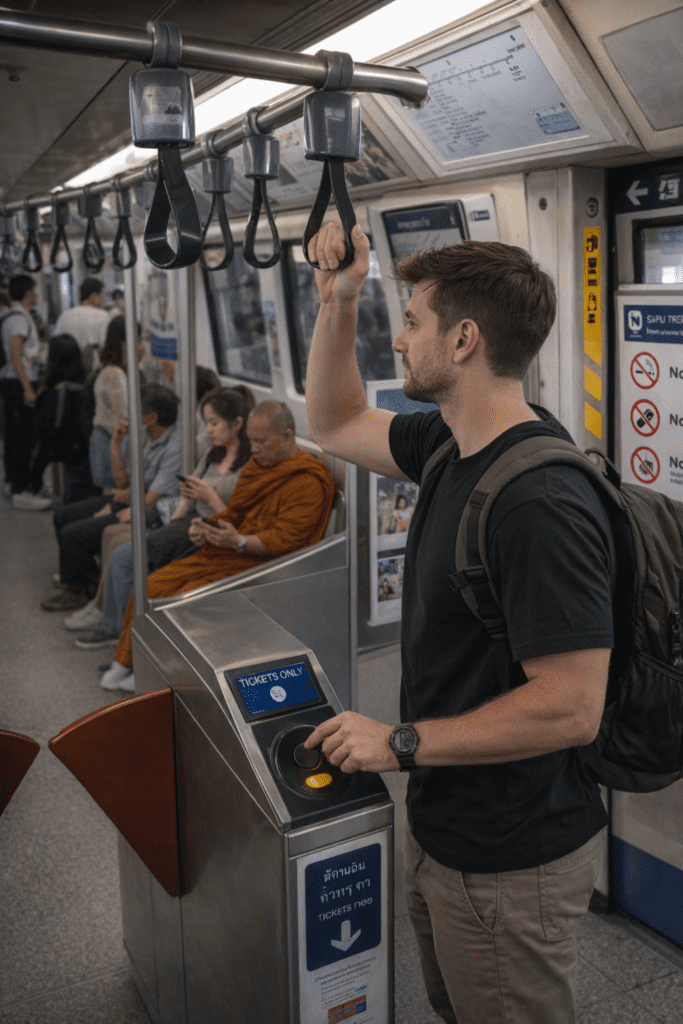
First, eating, drinking, or smoking is forbidden on any of the trains or public transportation.
Second, offer your seat to monks, elderly people, pregnant women, or young children.
Third, avoid rush hour when possible. The busiest times on public transport are around 9:00 a.m. and 5 to 6:00 p.m., and it can get very crowded.
Fourth, keep small change handy. Some BTS vending machine stations only accept coins, and if you don’t have any, you’ll need to wait in a lengthy queue to get a ticket at the booth.
Fifth, remember there’s no unified ticketing system between the BTS, MRT, and Airport Rail Link, or between the four lines of the MRT. You’ll need to purchase a new ticket when transferring between systems.
Sixth, for longer stays, get a rechargeable smart card for the BTS or MRT to skip the ticket queues.
For accessibility, most stations have escalators and elevators, except for Saphan Taksin which only has stairs. And even the stations that have escalators often have a few steps before the escalator.
The Ferry Network
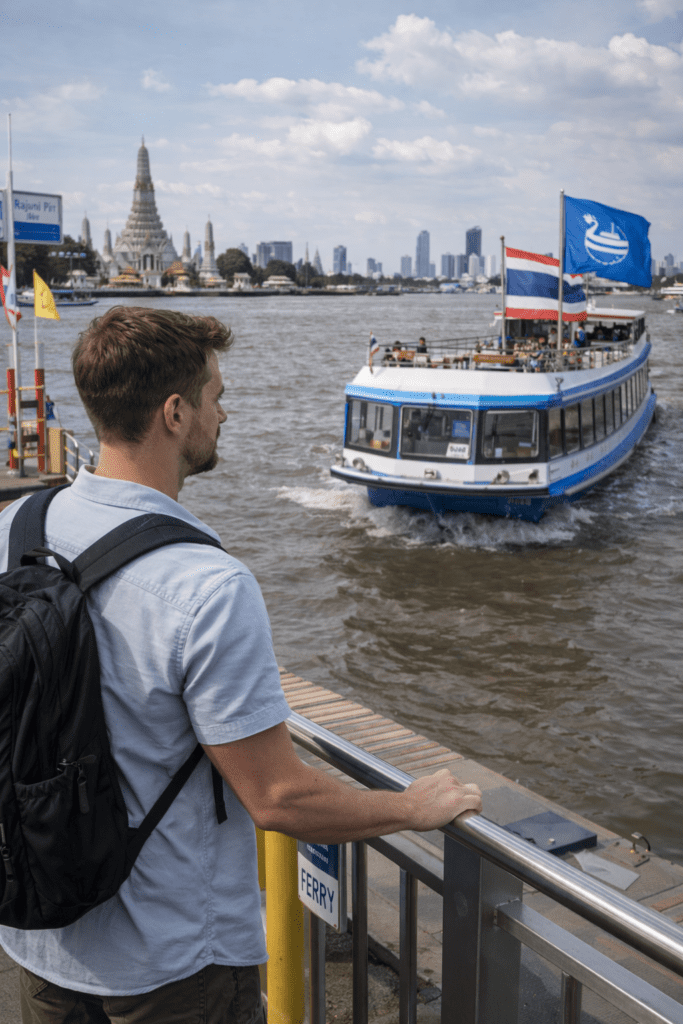
Now that we’ve covered the mass transit system here in Bangkok, if you want one of the most unique and scenic modes of transportation here in the city, you should check out the ferry network. We’re here on the Chao Phraya River. Personally, this is my favorite way to travel here in this city.
For a first timer, navigating Bangkok’s ferry network can seem intimidating, but once you get the hang of it, you’ll find that it’s not only an efficient way to travel but also an unforgettable experience.
The ferries are a major part of Bangkok’s transportation system. They stretch along the entire river with over 30 stops and easy access to major transportation hubs. Passengers can transfer to the BTS at Sathorn Pier or the MRT Blue Line at Rajini. The ferry piers offer convenient access to top tourist destinations like Khao San Road, Chinatown, the Grand Palace, Wat Arun, and modern attractions like Icon Siam alongside plenty of smaller attractions at nearly every stop along the way.
Navigating the ferry system is easy once you understand the flag system, distinguished by the colored flags flown at the back of the boats.
Orange boats run all day, offering a flat fare of 16 baht. Express commuter ferries have four different flags: yellow, green, red, or golden, and run during rush hours, stopping only at main piers, with fares ranging from 14 to 33 baht depending on the flag and the distance traveled.
Blue flag tourist ferries are ideal for sightseeing. These large boats feature an observation deck. A one-way ticket costs 60 baht, or you can opt for an all-day hop-on, hop-off pass for 200 baht. If you’re planning a trip to Bangkok, I recommend you book at least one trip on a blue flag tourist boat in order to take in all the beautiful sites.
Finally, you can take a Mine Smart Ferry, which offers a more modern and eco-friendly option. These battery-powered ferries run from 7:00 a.m. to 5:30 p.m. and cost 20 baht for a one-way trip with indoor, air-conditioned comfort.
If you just need to cross the river, you can take a crossing ferry, which is a small boat that only costs 4 baht.
I go to Rajini Pier. Blue flag that’s tourist boat, observation deck, 40 baht over to Rajini Pier. When you’re at the pier, just ask the staff everybody normally speaks English and can help you out. Now you can take the orange boat for cheaper, 16 baht, but you don’t get the views. The blue boat will give you the best views.
The Khlong (Canal) Ferries
Beyond the main river, Bangkok’s network of canals known as khlongs provide another fascinating way to explore the city. Bangkok’s canal system is extensive, and the khlong ferries are a true local experience.
The Khlong Saen Saep Express Boat is the most well-known service. This ferry runs parallel to Sukhumvit, and if you’re staying along Sukhumvit Road, you can skip the traffic this may be your fastest mode of transportation into Central Bangkok. The ferry costs between 10 and 32 baht depending on the distance traveled. You can normally buy your ticket on the ferry itself the conductor will approach you. Simply tell them your stop, make sure that you have some small change or bills because they can’t provide you with very much change, and keep that ticket as proof of payment.
As you’re departing the ferry, watch your step it’s a little bit bumpy, so if you have any mobility issues, be careful. But the staff will always help you get on and off, and it’s all very inexpensive. My journey from Asok to here at Pratunam was 14 baht.
The Bus Network
Many visitors to the city are hesitant to try the bus network, but with dozens of lines crisscrossing the city, this can be a cheap, comfortable, and convenient method of transportation. If you’re on a budget or you want a more local experience, a little bit of a bus adventure might be for you.
Most buses run from 5:00 a.m. to 11:00 p.m., and there are night buses as well. The red buses are the most common and cost around 7 to 8 baht. These are not air-conditioned, so be ready for some warm rides. But if you need some cool air, you’ll also spot blue buses. These are air-conditioned and charge between 10 and 24 baht depending on how far you travel.
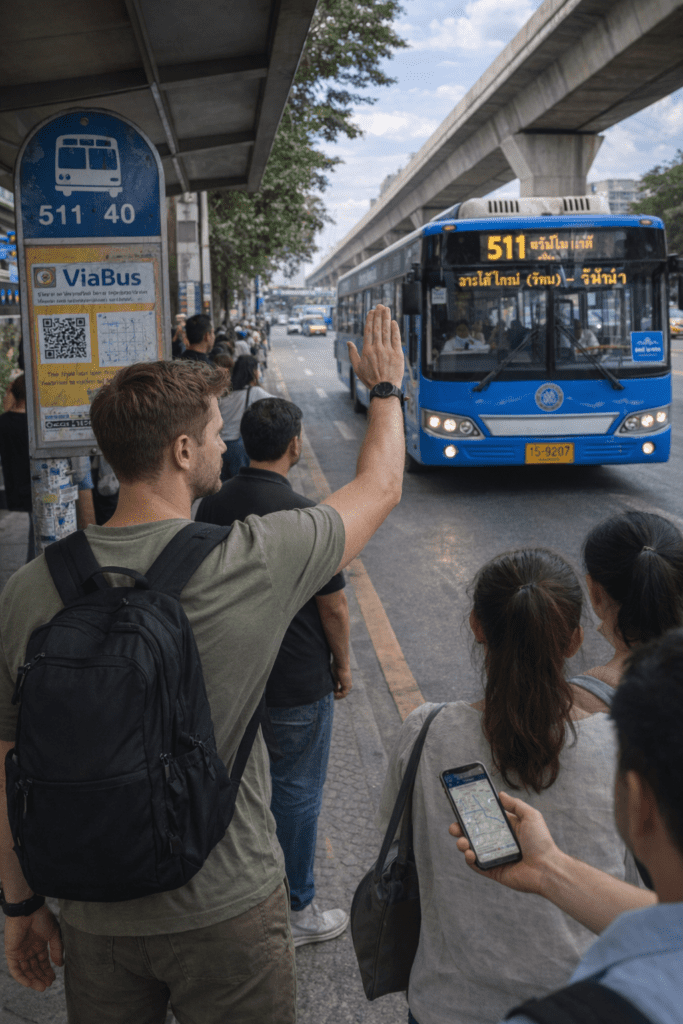
In order to select the correct bus, each has a number displayed on the front, and that number determines its route. If you see a blue sign on the front of the bus, it’s following the regular route, but an orange sign means it’s taking the expressway, skipping stops to save time.
To catch a bus, simply wait at a bus stop with the correct number. When you see your bus approaching, wave to signal that you want to board. Once aboard, a conductor will come to you. Just tell them your destination or show it on Google Maps, and be sure to have small bills or coins as they can only provide small amounts of change. You can press a button to request a stop. Since tourists rarely use the buses, conductors are typically very helpful and will likely tell you when your stop is approaching in advance.
For navigating the bus system, Google Maps is invaluable. It will show you the best routes and the approximate arrival times. The ViaBus app is another great option for real-time tracking and schedules.
But for most tourists and expats, buses are more of a novelty, and you’ll likely end up using Bangkok’s many taxis and ride-hailing apps instead.
Tuktuks and Motorbike Taxis
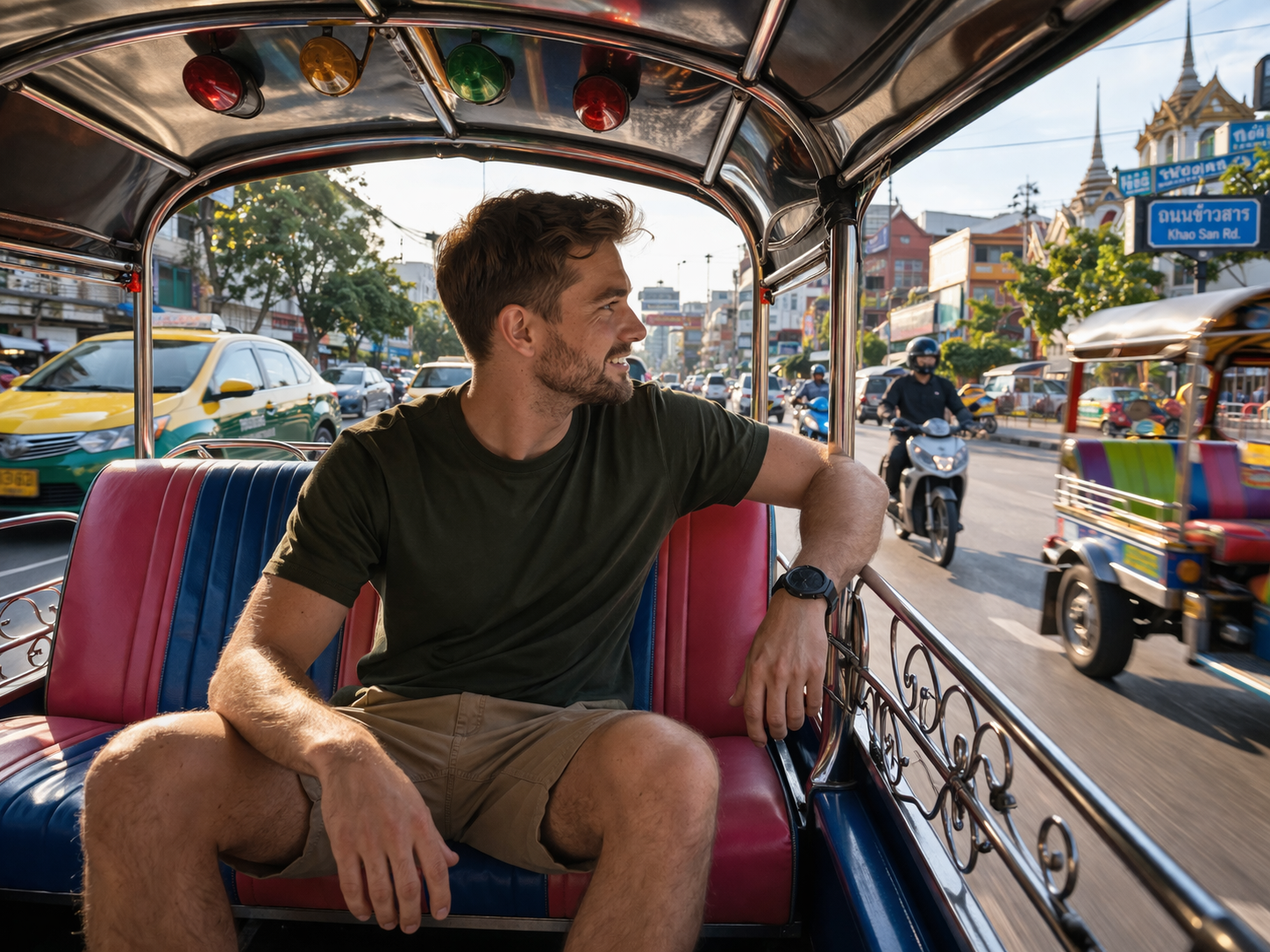
We already covered taxis in Bangkok, and it’s important to note that there isn’t any difference between the different colored taxis. But when it comes to hitching a ride, you can also hail a tuktuk or a motorbike taxi. These vehicles offer a unique experience of the city, but it’s important to remember that neither of them has a meter, and you’ll need to negotiate the fare for both vehicles.
If you don’t establish a price before you start the journey, the driver will demand an exorbitant fare at the end of the ride.
Tuktuks are generally much more expensive than taxis, with fares that are typically 2 to 5 times higher than a metered taxi rate. You also need to be very cautious as tuktuk drivers are notorious for operating scams. As with taxis, never take any advice or follow recommendations from a tuktuk driver, and always pay with approximately the correct change.
But if you’ve always wanted to try a tuktuk but want to skip the haggling, you can use the Muvmi app, which lets you book a ride in advance for a stress-free experience.
If you want the fastest mode of transportation to navigate Bangkok’s gridlock traffic, motorbikes are a very inexpensive option, but this is definitely a much riskier form of transportation. Bangkok has a high rate of traffic accidents and deaths, and most of these involve motorbikes.
Official motorbike drivers wear orange vests and hang around at motorbike stands near the exits of MRT or BTS stations, malls, condos, and busy public areas. These drivers are much less likely to operate scams, but they are notorious for overcharging naive tourists, especially if you flag them down on the street.
If you want to take a motorbike, I strongly recommend ordering one using the ride-hailing apps. It’s generally cheaper, you won’t need to negotiate, and you won’t need to provide directions to the driver.
If you plan to order a motorbike on an app, always avoid setting the pickup location near a motorbike taxi stand, as there have been incidents of violence and intimidation, and many motorbike drivers won’t stop near a stand.

Why Bangkok Rail Transport Saves Time
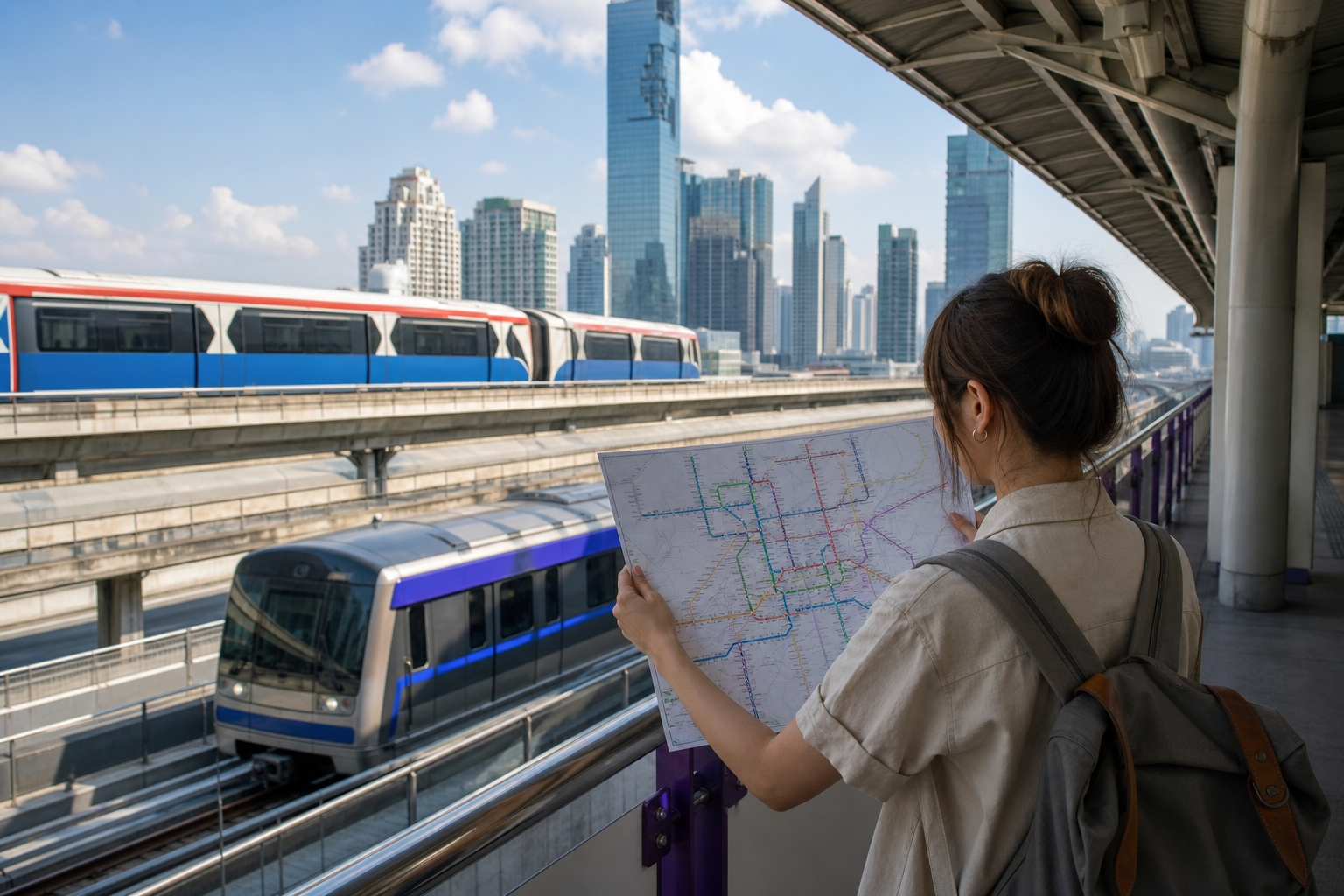
Bangkok’s BTS Skytrain, MRT, Airport Rail Link, buses, boats, and newer rail lines make independent sightseeing easier than relying on taxis for every journey. Rail avoids much of the city’s traffic and connects major shopping, business, historic, and riverside districts.
Plan the route before leaving, check the current operating hours and fares, and allow for interchange walks. A short walk between nearby destinations can be faster than negotiating a vehicle through congested streets.
Sanam Chai for Bangkok Old City Landmarks

Sanam Chai MRT is a practical starting point for Wat Pho, the Grand Palace area, museums, the flower market, and riverside walks. Read the station signs and choose the exit that matches the destination; the wrong exit can add a long walk in the heat.
From the historic district, continue on foot where practical or use an official river boat for a short crossing. Check temple dress rules, opening schedules, ticket procedures, and the current boat fare before setting out, and ignore unsolicited claims that a landmark is closed.
BTS Chit Lom and National Stadium Shopping

The BTS stations around Chit Lom and Siam connect CentralWorld, Siam’s shopping districts, Pratunam’s market edge, and nearby retail streets through walkways and short walks. National Stadium station provides direct access to MBK, while Siam is useful for several major malls.
Use the elevated walkways when they provide a safer, more comfortable route, but check the current map for construction and access changes. Malls are air-conditioned rest points during a long shopping day, while markets require more attention to heat, crowds, and belongings.
Silom and Chao Phraya River Connections
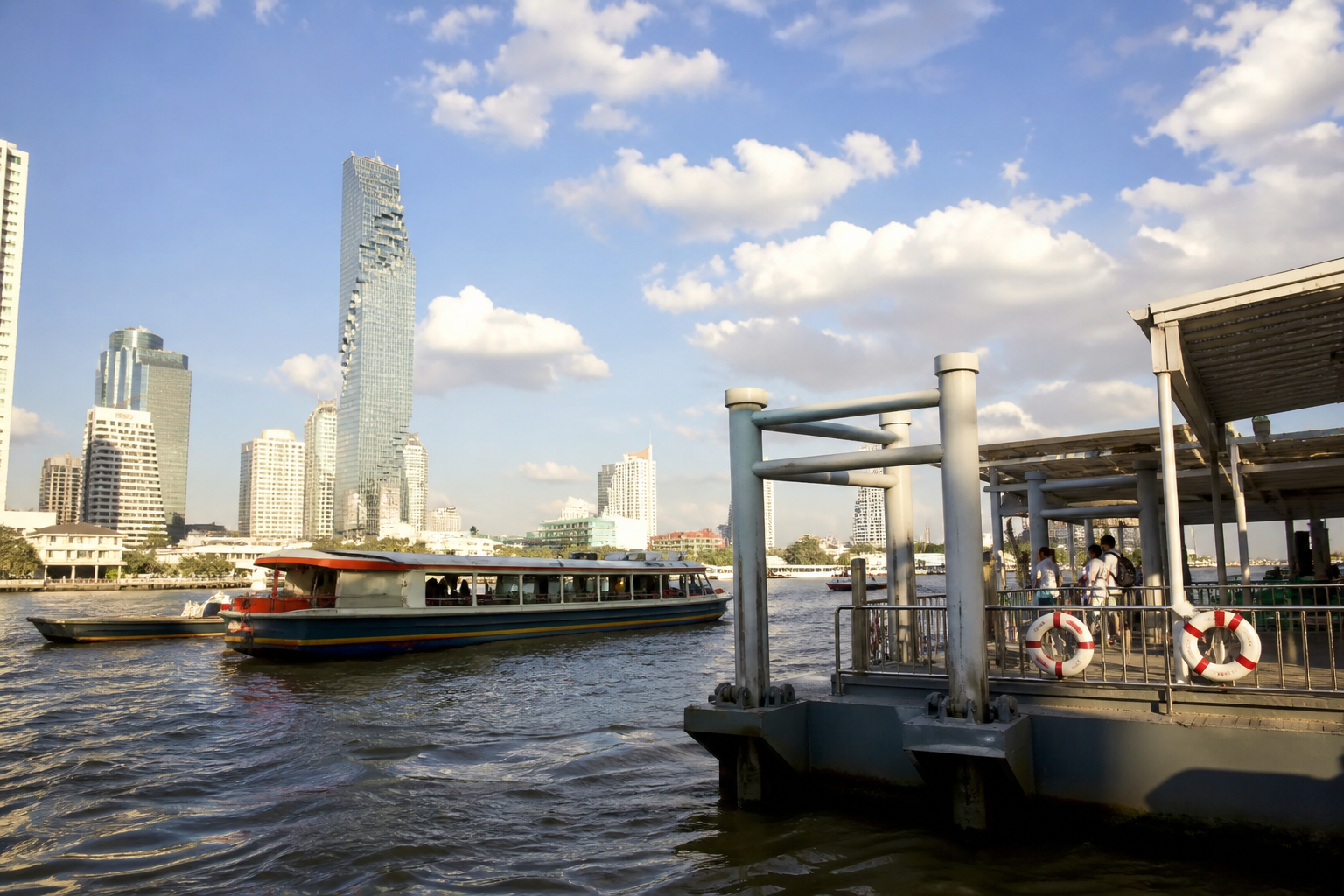
Sala Daeng BTS and nearby MRT access Silom, Lumphini Park, and Patpong’s market area. Saphan Taksin BTS connects with the central river pier, from which official boats and shuttle services can reach riverside attractions and shopping areas.
Confirm the boat route, pier, service type, and fare before boarding. River transport can be scenic and efficient, but services vary by time and weather. Keep phones and passports secure near the water and step carefully on moving piers.
Airport Rail Link Yellow Red and Pink Lines
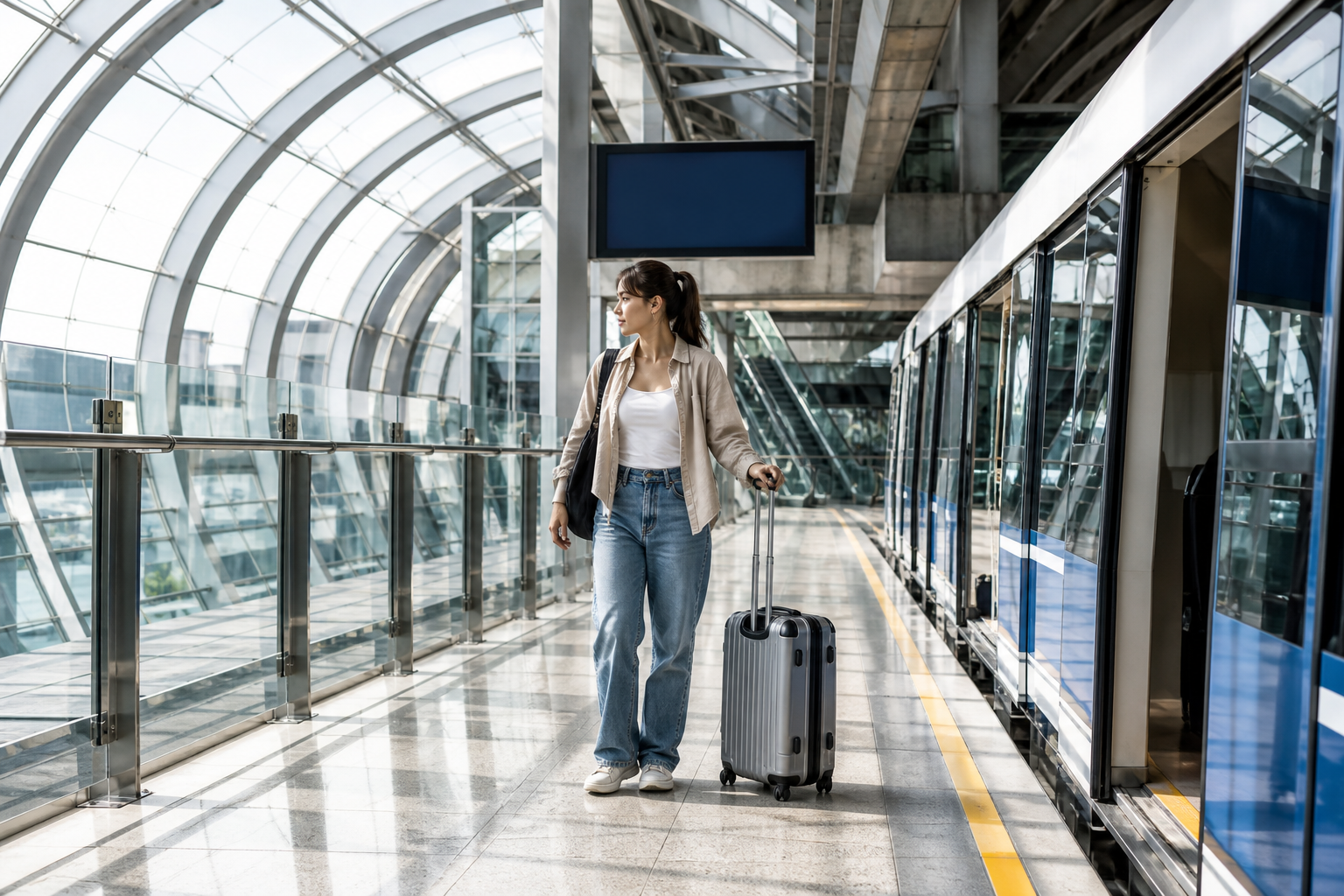
The Airport Rail Link is useful for reaching central interchange stations, while the MRT and BTS continue into many Bangkok neighbourhoods. The Yellow Line adds cross-city connections, and Red Line services help connect Don Mueang and northern rail corridors. Pink Line services extend access toward the north of the metropolitan area.
Routes and interchange arrangements evolve as new stations open. Check an official network map and current service status on the day, especially for early flights, late arrivals, or a journey that requires several changes.
Bangkok Transport Tickets Exits and Safety
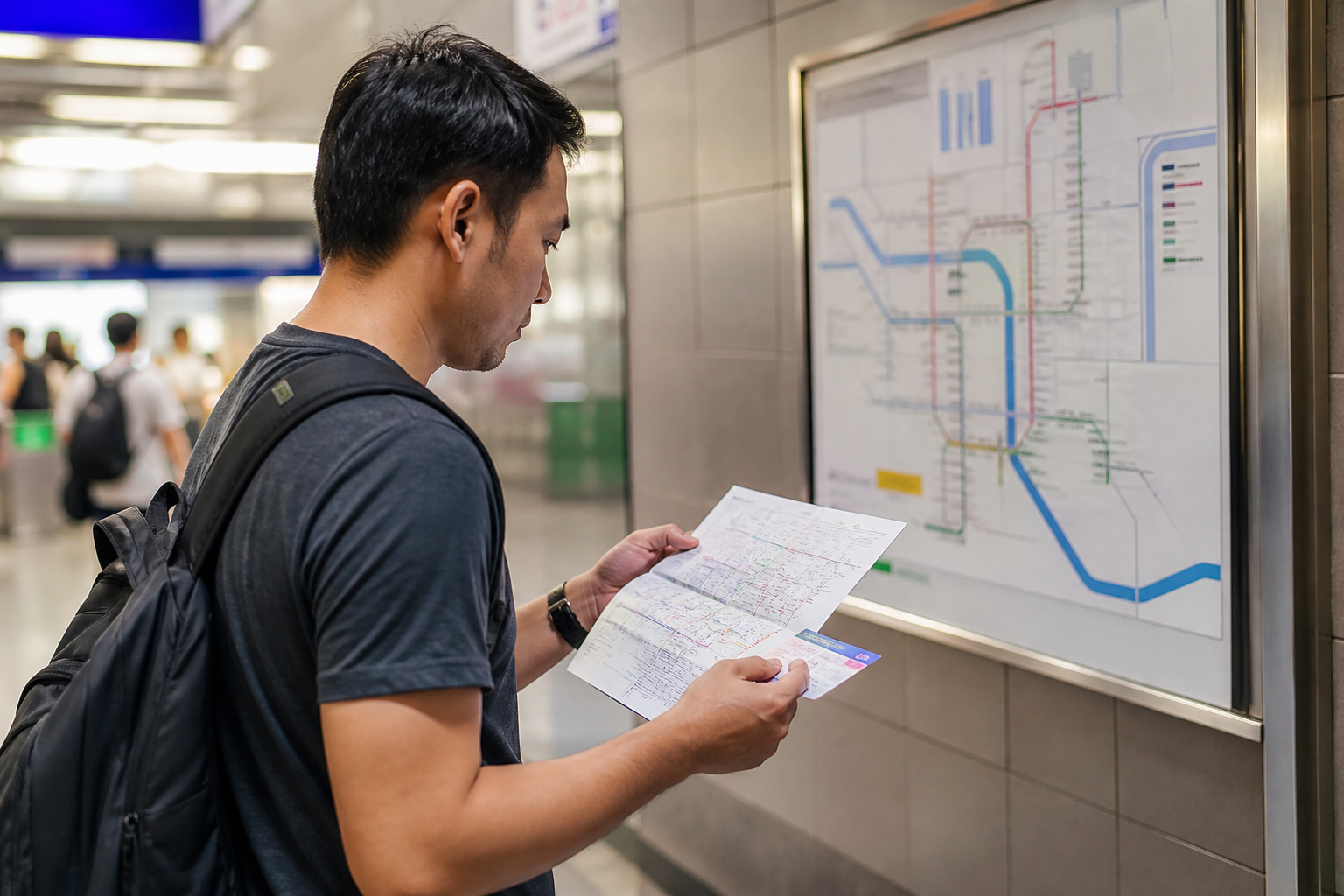
Station exits matter as much as the line itself. Save the exit number, use station maps, and confirm the final walking route before leaving the platform. Keep a small amount of cash available, but use the current ticketing or stored-value options accepted by each system.
Use official taxis or reputable ride services when rail is unavailable, confirm that the meter or fare is agreed, and avoid drivers or touts who pressure you into a detour. During busy periods, hold bags in front, stand behind platform lines, and check the last train before starting an evening itinerary.
Check Tuk-Tuk Prices Near Khao San Road
Khao San Road” />
Khao San Road is only about two kilometres from the landmark area. Tuk-tuk drivers quoted 200, 300, and 150 baht after bargaining, even though the distance was short. Do not be a tourist: check where the destination is, how far it is, and how long the journey should take before deciding what to pay.
If you know these three things, you can bargain more accurately and save money.
Ask Taxi Drivers to Use the Meter

A taxi driver quoted 200 baht and said the trip would take 20 minutes, although Khao San Road was about a ten-minute walk away with no traffic. In tourist areas with famous landmarks, many taxis will not turn on the meter when picking up tourists.
Walk a little away from the tourist area and you can often find taxis that use the meter without bargaining. Never jump into a taxi without asking for the meter.
Check Directions to the Grand Palace

Taxi and tuk-tuk drivers may give honest directions. When asked about the Grand Palace, several drivers pointed to the walking route, and it was only around two minutes away. Not all taxi and tuk-tuk drivers are scammers.
Other drivers may say the Grand Palace, Wat Pho, Wat Arun, or another landmark is closed and offer to take visitors somewhere else. Choose carefully and do not pay more than necessary. Some drivers can take visitors on a tour of places such as the Standing Buddha and Marble Temple for around 100 baht, but check where you are going.
Bargain in Tourist Shopping Areas

Prices around tourist landmarks can be higher than at the right market. An item offered for 800 baht may become 300 baht after bargaining, while it may cost 150 baht elsewhere. If buying near famous places, know what the item should cost and how much to bargain.
Carry Water in Bangkok Heat

Bangkok can be very hot, even when heading into the rainy season. If you feel tired or dehydrated, carry a bottle of water. There are many places along the route where you can buy a drink before continuing the walk.
Use Public Transportation for Short Trips

Know where you are going, how far it is, and how long it should take. Ask for the taxi meter and refuse the ride if the driver will not use it. If a taxi turns around repeatedly, get out; it is your right not to pay much even if the meter is running.
When a destination is accessible by public transportation, use the MRT underground train, BTS SkyTrain, Airport Link, or another public option instead of a taxi or tuk-tuk. These are the main ways to avoid extra cost around Bangkok’s tourist landmarks.
New Bangkok Yellow Line Connection

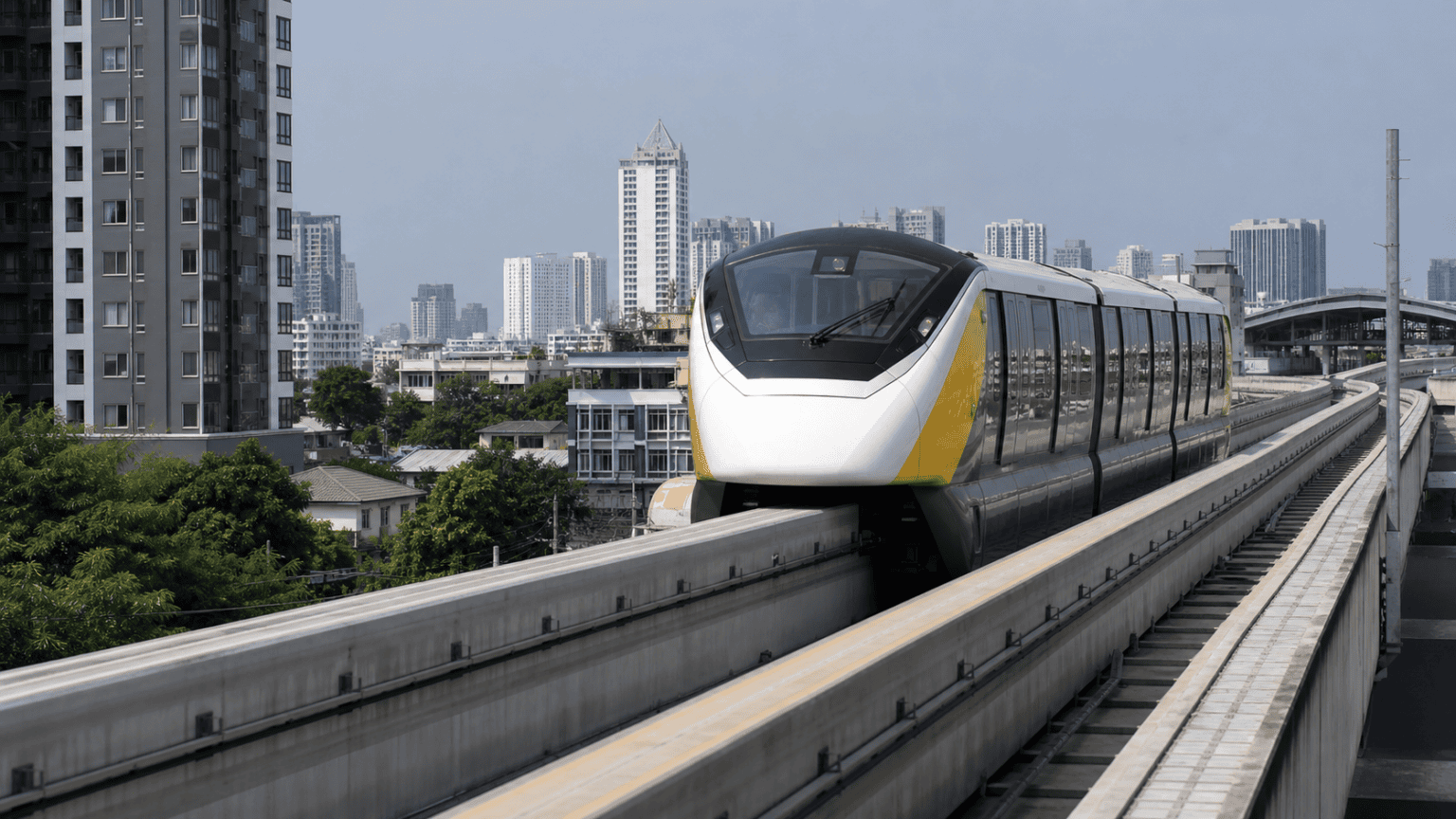
Bangkok’s public transportation network is getting wider, making it easier to reach places away from the main tourist areas. The Yellow Line monorail provides another way to explore the city and connects with existing routes.
From tourist areas, one option is to take the BTS SkyTrain to Samrong station. Another option is to use the Airport Rail Link and other connections, depending on where you are staying. At Samrong, take Exit 3 to interchange with the Yellow Line.
From Samrong, take the MRT Yellow Line towards Suan Luang station. The line has several interesting stops, and the elevated journey provides views along the way. The train can be a little bumpy, but the ride is fast and the air conditioning is cold, as it is on the BTS and MRT.
Reaching the Shopping Mall and Train Market

The station is next to a large mall and market, so reaching the shopping area is straightforward. The Train Market in Srinakarin is also located next to this station, although it is not open every day.
The Train Market opens from Wednesday to Sunday, starting at 5 p.m. and continuing until 1 a.m. It is worth checking the day before travelling because it is closed on some weekdays.
The Yellow Line has many interesting stops along the way, including this market area in Srinakarin. The station makes it possible to combine the train ride with shopping and, when it is open, an evening market visit.
Food, Ground-Floor Deals, and Family Facilities

The ground floor is a useful place to start when exploring a market or mall in Bangkok. It usually has many food options, and promotions are often displayed there before the other floors.
There are children’s clothes at affordable prices, as well as places to eat. Three pieces of food cost 54 baht. Families can also use the ground-floor children’s activity area, where parents can relax while children play and other family members shop on the upper floors.
The mall is a practical stop for families because it combines food, shopping, and activities in one place. It is also quieter than well-known tourist shopping areas, making it easier to move around and look at the promotions.
Discounted Shoes and Clothing on the First Two Floors

The first floor has many promotions, with items marked at 50, 70, 80, 100, 99, and 199 baht. The prices are low enough to make the market worth visiting for affordable shopping.
The sports-shoe section includes original Fila, Adidas, Nike, Converse, and other famous brands. Children’s Fila shoes were shown from about 450 baht, while Adidas shoes were available for about 1,500 baht. Another pair cost about 2,660 baht, and one pair was 895 baht, which is less than 30 US dollars.
T-shirts suitable for Thailand were about 400 baht, and there were large discounts on older collections, sometimes 50 percent. A Converse pair cost 999 baht. The first floor has a wide range of options and sizes, while the second floor also has Vans, with different designs, styles, and colours.
Bring a wallet, credit cards, or cash because every floor has different things to buy. The market has more affordable choices than the most popular shopping areas in Bangkok, and the promotions make it possible to look for clothing and shoes without spending as much.
Food Court, Restaurants, Play Areas, and Cinema

The third floor has many food options, restaurants, and a food court. Japanese and Chinese restaurants are available if you want sushi or other meals, and the cinema is also located on this floor.
There are places for adults and children to play, including several children’s playgrounds. This means a visit can include shopping on the ground and first floors, lunch or dinner upstairs, a movie, and time for the family to play.
A visit can take several hours because the mall has promotions from the ground floor through the second floor and activities on the third floor. It is a relaxing alternative to crowded malls such as MBK or Pratunam, where it can be difficult to walk when the areas are busy.
The Yellow Line makes it easier to reach this kind of shopping and market area without relying on taxis or tuk-tuks. The route is useful for discounted shopping, food, family activities, and a quieter mall experience away from the main tourist areas.
Bangkok BTS Skytrain Lines and Directions

The BTS is the Skytrain and the MRT is the underground train. The BTS has two popular lines: the Sukhumvit Line and the Silom Line, which intersect at Siam station.
It is important to know which direction you are going. On the Sukhumvit Line, the last stations are Kheha on one side and Khu Khot on the opposite side. On the Silom Line, the last stations are National Stadium and Bang Wa. Check the direction before boarding the BTS.
Bangkok MRT Routes and BTS Interchanges

The MRT is also one of the easiest and fastest ways to explore Bangkok. The BTS is the Skytrain and the MRT is the underground train, but the two systems connect at important stations.
Popular intersections include the Sukhumvit Line around Sukhumvit and the Silom Line around Silom. If you want to exchange between the MRT and BTS, it is easy and fast when you use the connecting stations.
Bangkok Station Exits to MBK and Grand Palace

After choosing the train direction, you also have to choose which exit to take. Always check before leaving the station. Large signs show which direction each exit is heading.
For example, Exit 4 takes you to MBK Center. Public transport also gives direct walks to famous malls and destinations. From the MRT, Sanam Chai station gives direct access for walking towards the Grand Palace, so there is no need to take a taxi, tuk-tuk, or motorbike for those routes.
BTS and MRT Cards, Passes, and Tokens

If you do not want to buy a reusable card, you can use a one-journey pass. For the BTS, a one-day pass can be tapped when entering the train and inserted into the machine when leaving at the destination.
For the MRT, you use a token. Tap it when entering the train and put the token into the machine when leaving.
To buy cards for the BTS and MRT, have your passport with you. Without your passport, you cannot buy the cards. At the counter, the cost mentioned for getting a card was around 180 baht, with the money held on the card for use. You can then top it up. A 300 baht top-up example was also given, with the fare deducted after every journey and another top-up added when the card is empty.
Bangkok Station Services and Storage Boxes
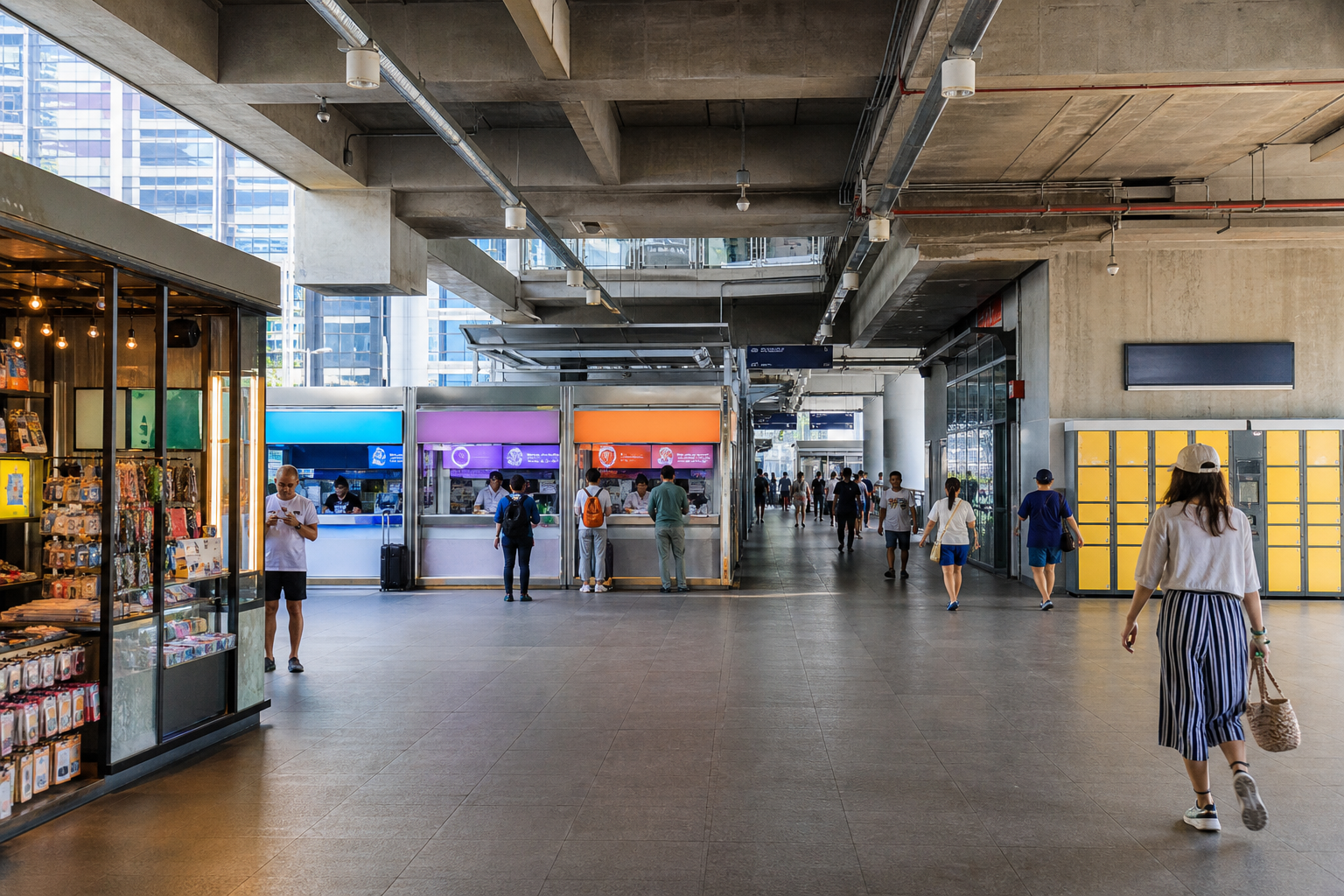
Stations have more services than the train itself. Around the station there can be money exchange, SIM card shops, phone repair, and DHL services. These services can save time while exploring Bangkok.
Yellow boxes are also available at almost every public transportation station. If you have items that you do not want to carry around, you can keep them inside these boxes for a small charge and continue exploring Bangkok.
Bangkok Public Transport Rush Hour Tips

If you are not in a hurry, avoid rush hour. When the train is very crowded, wait for the second train, because the next one may not be as crowded.
Bangkok public transportation is secure, but always be careful with your belongings, especially during rush hours. Keep your cards and tokens safe. Losing them can mean paying extra money to leave the train.
Bangkok City Congestion and the Need for Smart Transport

Bangkok is one of the best cities in the world if you love the hectic hustle and bustle of a noisy, crowded, and lively city. It is big, crowded, busy, noisy, and polluted, and exploring it means choosing between many ways of transportation. The choice needs to be practical and safe.
Walking is the simplest way to explore Bangkok, but it is not always the best way because the city is so busy and crowded that sometimes you can barely walk. It is also very hot, especially in the hot season. Running is not a practical way to explore the city either, although Bangkok has green parks for people who want to run.
Walking, Running, and Biking in Bangkok
Biking is another option, but it is not a good option in most parts of Bangkok because it can be dangerous and there are no bike lanes in many places. The best place to bike is at a park, as with running. Walking, running, and biking are therefore not always practical for exploring the whole city.
Motorbike Taxis and Tuk-Tuks in Bangkok

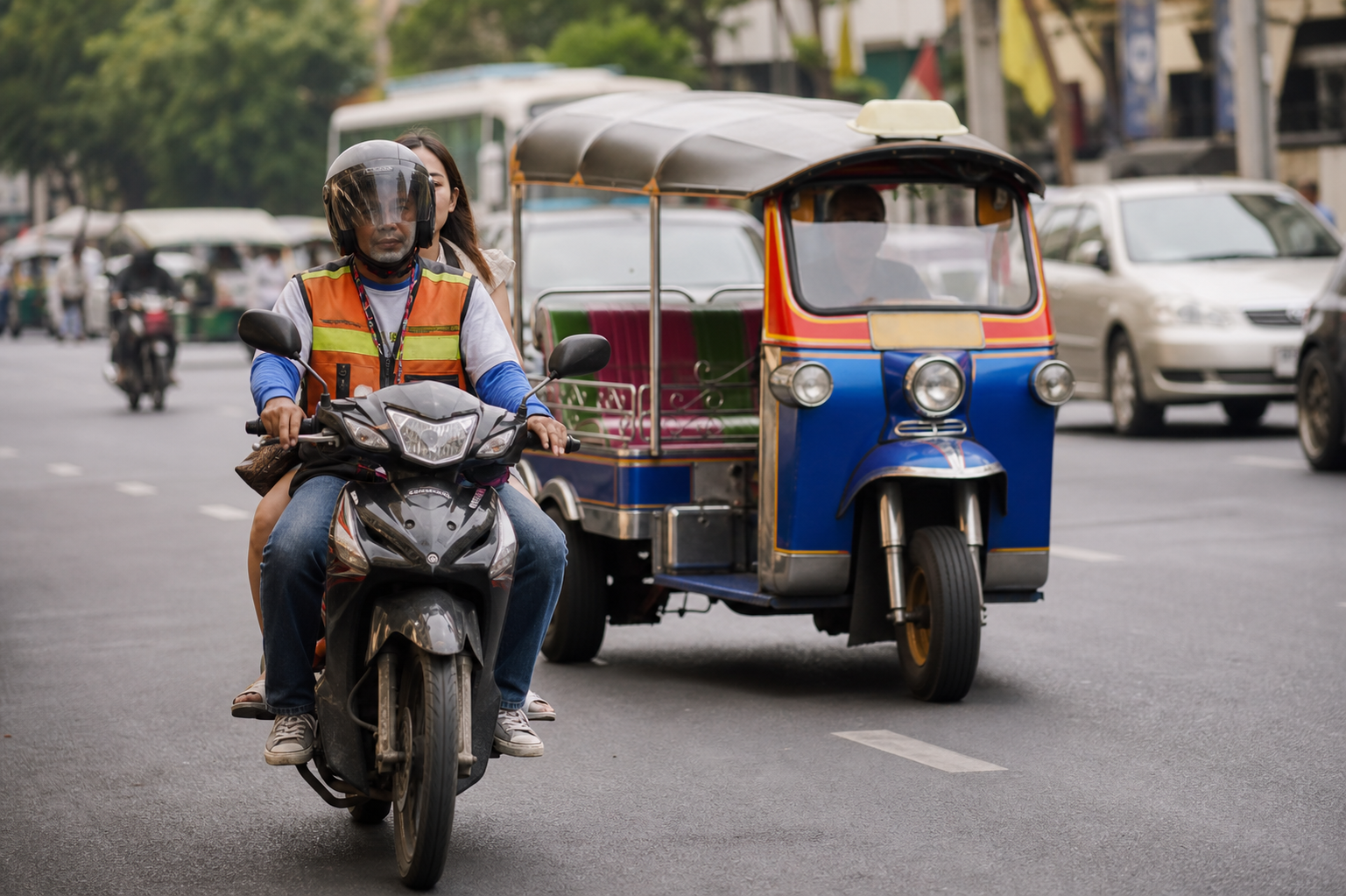
Motorbikes are an adventurous way to explore the city, but they are dangerous if you do not know how to drive a motorbike, especially in an Asian city. A motorbike taxi can be useful for a short trip, such as travelling from the BTS to a condo when it is raining or very hot and sunny. It is a fast way to get somewhere nearby without walking.
Tuk-tuks can be fun, but negotiate the price first so you do not get scammed. Use a tuk-tuk when you need to, although most of the time you do not need to use one in Bangkok.
Buses and Taxis for Exploring Bangkok

A car is a comfortable way to explore Bangkok, but it is an expensive option. Buses are one of the cheapest ways to explore the city and can be fun, but you have to be very careful about which number to take and which route to use. People working on or driving the bus often do not speak English, so check the right number, the right route, and how much to pay. Most tourists avoid buses or do not dare to use them.
Taxis are a good option when you have a lot of stuff. If you are travelling light and want to explore the city in the fastest and cheapest way, public transportation is usually the better option.
BTS SkyTrain and MRT Public Transport

The best way to travel around Bangkok is often the BTS and MRT. The BTS is the SkyTrain and the MRT is the underground train. Both are efficient, fast, and cheap ways to explore Bangkok. They are not always the absolute cheapest option, but they are one of the best ways to cross the city quickly.
When choosing between buses, taxis, tuk-tuks, motorbikes, SkyTrain, and other public transportation, the best option depends on how much luggage you have, how far you are going, the weather, and whether you know the route.
Boat Taxis and Local Trains in Bangkok

Boat taxis are one of the fun, adventurous, and cheapest ways to travel around Bangkok. The longest ride costs no more than about 20 baht, although the boats can be a little tricky and very bumpy. They are a useful alternative when you know where to board and where to get off.
Old local trains are also very cheap, but you have to know how to use them. A local can help if you are using them for the first time. There are many other ways to explore Bangkok, but these are among the most effective and popular options. The city remains noisy, crowded, hectic, and polluted, but the transport choices make it possible to explore it and stay safe.
Finding the Nearest MRT in Bangkok

The public-transport route from central Bangkok to Don Mueang Airport begins with the nearest MRT station. From there, take the underground train toward Bang Sue, where you can change to the SRT Red Line.
This route avoids arranging a taxi and gives travellers a direct connection between the Bangkok MRT network and the railway line serving the airport.
MRT Sukhumvit to Bang Sue Interchange

From MRT Sukhumvit, take the underground train to Bang Sue. Bang Sue is the interchange station for the SRT Red Line, and the signs make it straightforward to follow the connection.
Once you arrive, follow the station signs to the SRT section. The route is designed for passengers to connect with the railway, so allow time to walk through the interchange and reach the counter.
BTS MRT And Monorail Cards

BTS and the monorail lines use station cards. Buy a card from a station vendor by giving the destination and paying the fare, then tap it at the gate and return it at the destination. Ticket machines can also be used, but they require coins rather than paper notes.
MRT uses tokens instead of cards. Tap the token at the entrance and insert it at the destination. Visa cards can also be used on the MRT. The different lines meet at several stations, so a Bangkok transport map helps with directions and changes.
Bangkok Day Pass And Permanent Cards

The BTS one-day pass cost 150 baht and allowed unlimited rides on the date of issue or registration. It was available from BTS offices, was non-refundable, and applied only to travel on the green line.
Passengers can remain in the paid area for a limited time, so check the station rules before using a day pass. Visitors staying more than two or three days and using trains regularly can buy a permanent card for about 100 baht, add credit, and avoid buying a new single-ride card at every trip.
Rush Hours Luggage And Station Exits

Morning and afternoon rush hours are the busiest times, when residents travel to and from work. Crowding can mean waiting for two or three trains, so avoid these periods when your schedule allows.
Travellers with several bags should use a taxi rather than forcing luggage onto a crowded train. When trains are necessary, use the lifts. Check the station map and exit signs before leaving because the wrong exit can put you on the opposite side of the road.
Rules And Courtesy On Bangkok Trains

Eating and drinking are not allowed on Bangkok public transport. Keep conversations quiet and avoid singing or making loud jokes. Seats reserved for monks, older people, pregnant women, and children should be left available, and offer your seat when someone needs it more.
Station services can include money exchange, coffee shops, small markets, and other practical businesses. Paid lockers are useful when you want to leave bags at the station while exploring nearby.
Late Travel And Short Bangkok Connections
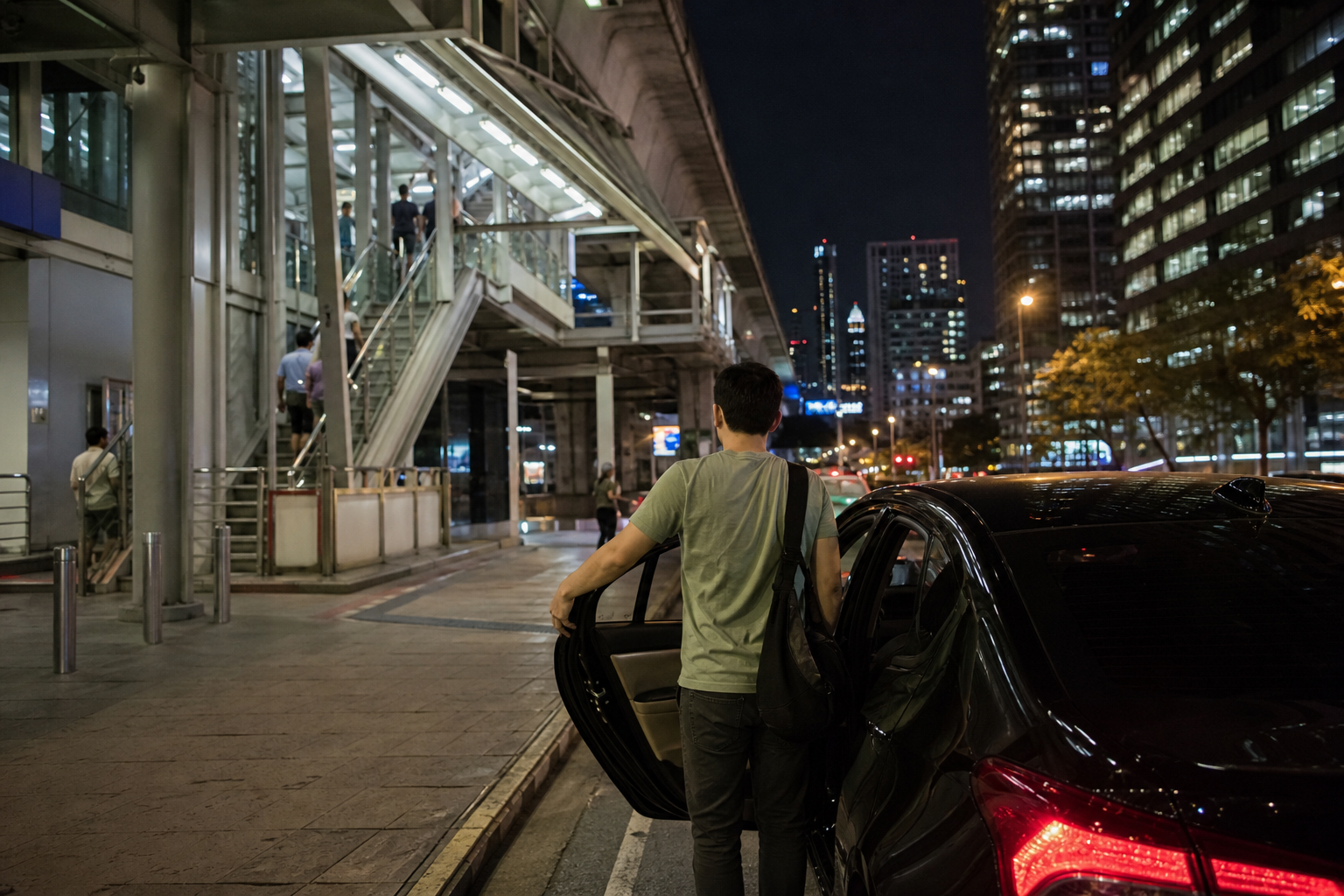
The BTS operates from about 6 a.m. until midnight. For late nights, use Grab or Bolt, or take the train to the nearest station and continue by taxi or another service.
For short distances, the Skywalk can be more pleasant than boarding a train. Walking two or three minutes between connected areas can save time, while combining the train with a short taxi ride can cost less than taking a taxi across Bangkok.

Cheap Domestic Flights in Low Season

Domestic flights can be very cheap during low season. The prices mentioned were about 25 US dollars to Krabi, 30 US dollars to Phuket, and 38 US dollars return for the flight being taken.
Hotels can also cost less in low season, with same-day accommodation sometimes available for about 15 to 20 US dollars. Low season can reduce the cost of exploring Thailand, although weather conditions can vary.
Airlines Carry On Weight and Booking Timing

AirAsia and Nok Air were identified as affordable airlines flying from Don Mueang, while VietJet was described as an affordable option from Suvarnabhumi. Most of these fares include only seven kilograms of carry-on luggage, although some allow an additional 10 kilograms.
Extra weight costs more, so check and weigh the bags before going to the airport. Booking on the same day can sometimes produce a low fare when you are flexible, but booking one or two days earlier avoids leaving everything until the last minute.
Early Flights and Affordable Krabi Trips

Flights departing between about 4 and 6 a.m. were the cheapest part of the day. Choose an early flight if saving money matters and you can reach the airport in time.
The route from Bangkok to Krabi makes it possible to combine a low-cost flight with affordable accommodation and local food. Mango sticky rice and coconut ice cream were among the food choices mentioned after arrival.