How People Live on the Chao Phraya River in Bangkok
The Chao Phraya River in Bangkok might not be the longest, widest, or most famous river in the world, but it might just be one of the most culturally important to its home state and city.
Background and History of the Chao Phraya River
The river is approximately 372 kilometers long, which is about 231 miles, and it begins its journey southwards in Nakhon Sawan Province in northern Thailand. It ends in the Gulf of Thailand in Samut Prakan Province. The river may actually have originally been much longer, originating in the Himalayas, but it was cut off by other rivers.
The river is distinctly linked with the creation of the Thai capital of Bangkok in the late 1500s. The former capital of Ayutthaya was overthrown by the Burmese, leaving the heads of the Thai state to flee for their lives. They were forced to head south to the area now known as Thonburi, on the western bank of the Chao Phraya, to start their new kingdom afresh. This had the added benefit of moving the capital much closer to the coast, shortening the time trade ships had to spend on the river by as much as a week. That, in turn, increased trade and helped Bangkok become one of the most prosperous cities in Southeast Asia.
Wat Arun and Bangkok’s Temple of Dawn
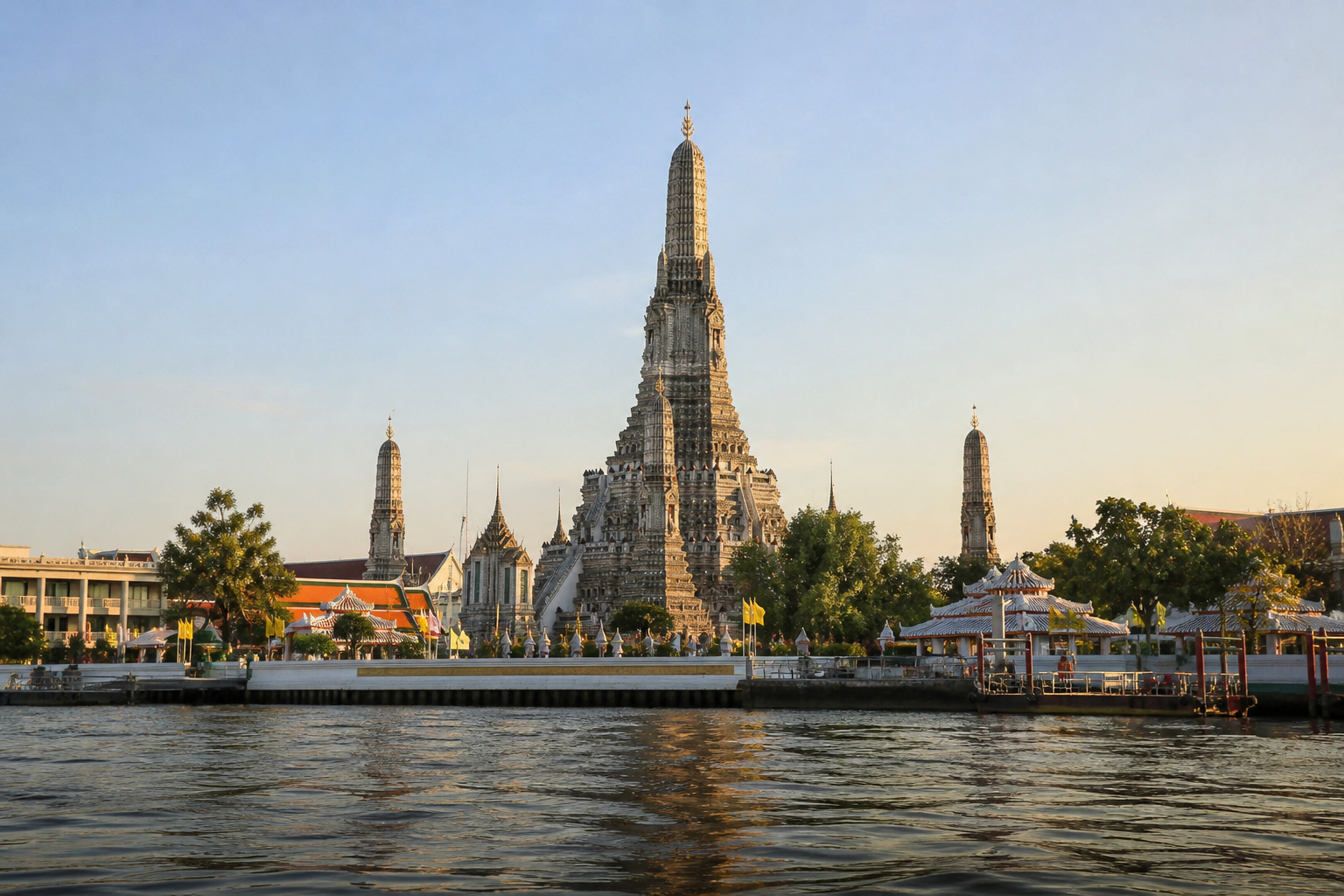
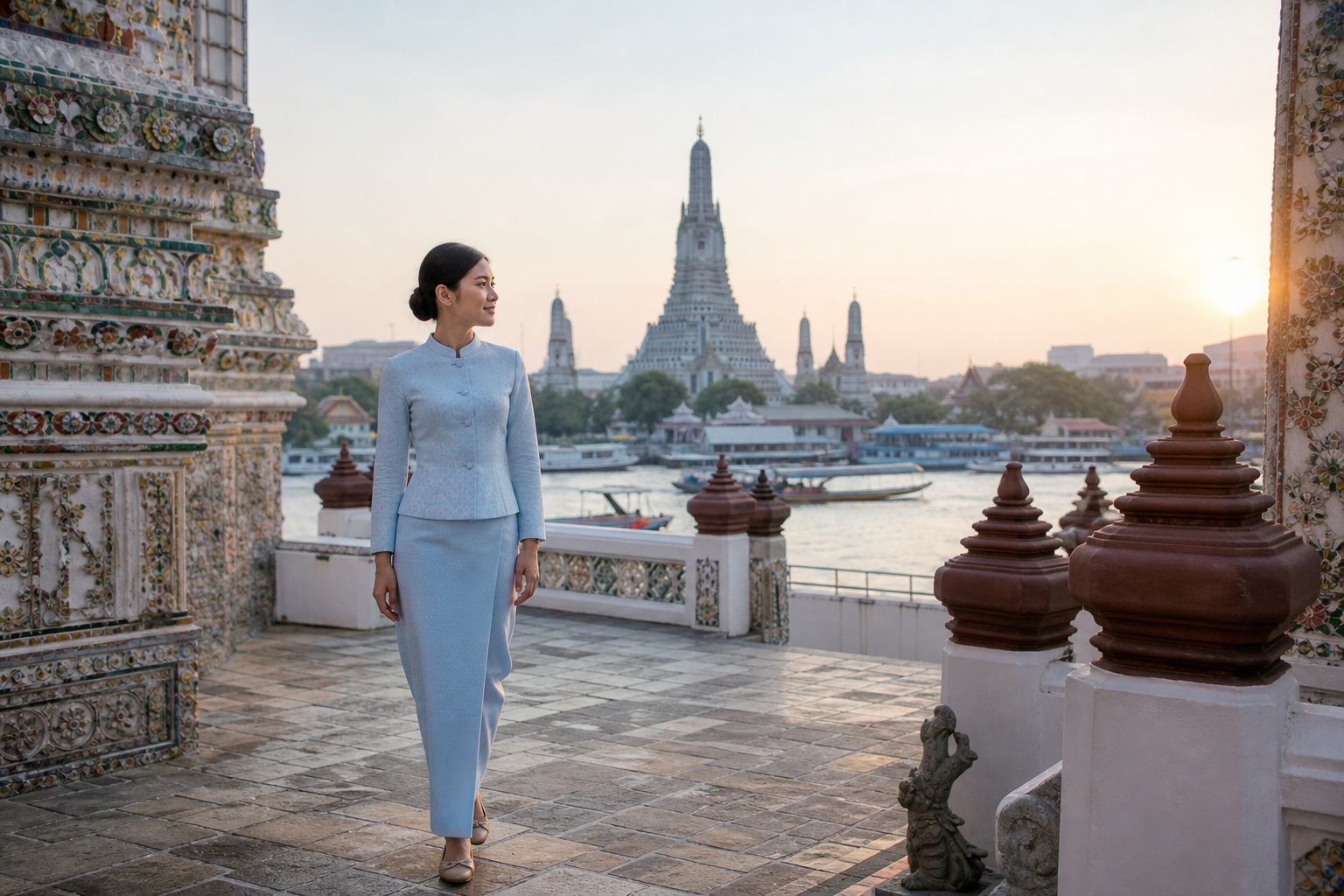
Wat Arun, also known as the Temple of Dawn, is one of the most iconic temples in all of Thailand. The temple was first founded in the 1650s but was not completed until nearly 200 years later. It was built to mimic the temples from the fallen capital of Ayutthaya. The temple is named after Aruna, the Hindu god of dawn.
The temple is built in a Khmer style, meaning that it has one major tower, or prang, surrounded by four smaller ones. Nowadays, the temple serves as one of the biggest tourist attractions in Bangkok, although there are still some monks who live in the quarters of Wat Arun. They live there to pray, teach, and meditate, and they can also be seen relaxing or working around the temple. At night, the temple lights up, giving one of the most beautiful views on the Chao Phraya River.
There are over a hundred different temples on the river in Bangkok alone. Many more monks live and work along the Chao Phraya, and lots of the other temples are dedicated to monks practicing their faith. In temples like these, the monks follow a strictly regimented regime telling them when to wake up, when to eat, and when to pray and meditate. Most monks spend many hours of the day in silent meditation, with some even taking days or months of silent vows. There are also religious monuments for people to come and pay homage to, including a statue of the giant naga, which depicts a giant serpent creature protecting the Buddha from a storm. Nagas are Southeast Asian mythological creatures said to inhabit rivers. Another famous temple along the river is Wat Bang Chak, with a giant golden Buddha statue that also has images of Hindu gods.
Life and Work on the Chao Phraya River
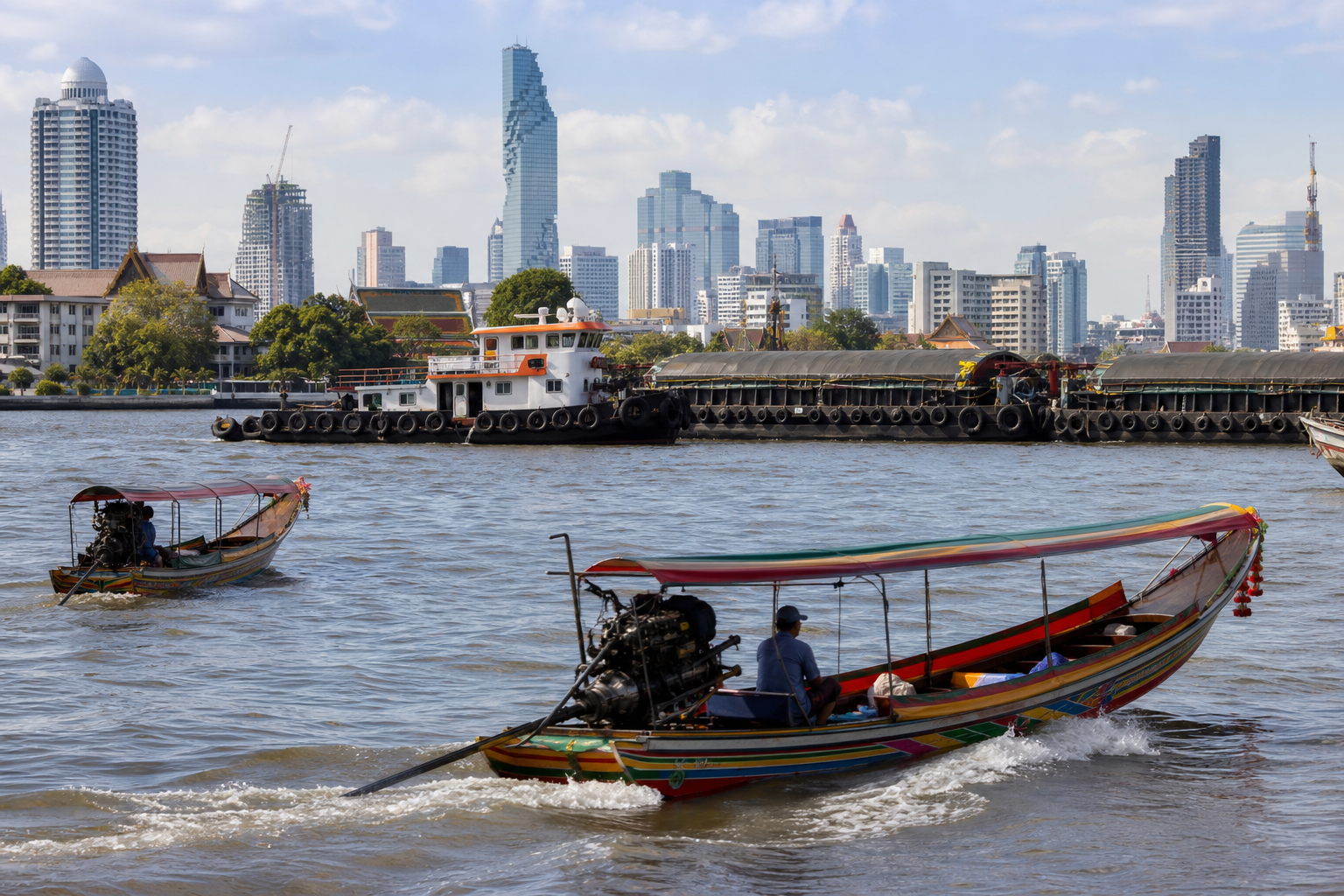
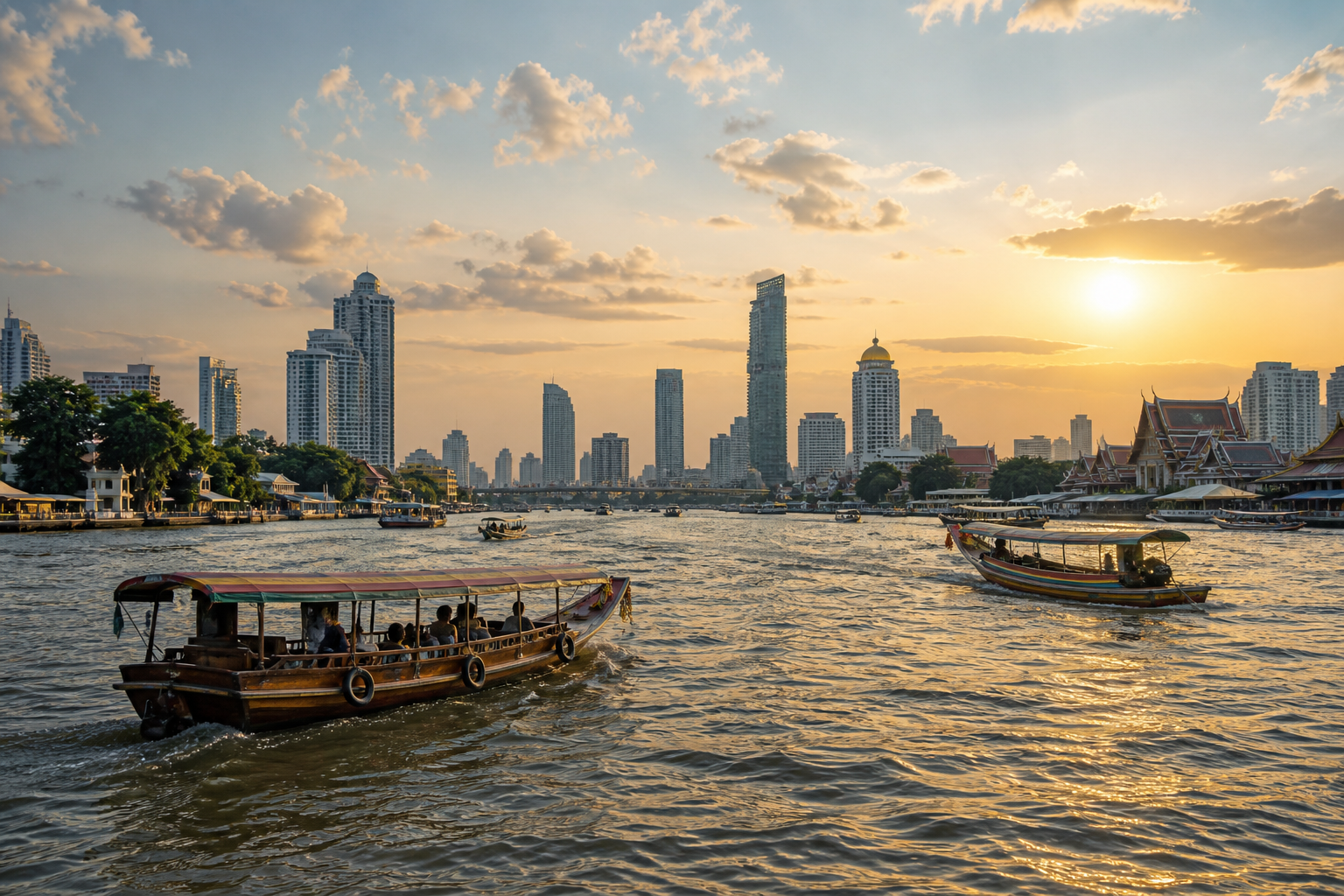
There are many different kinds of boats that can be seen along the Chao Phraya. Among the most distinct are the famous local long-tail boats. They come in all different shapes and sizes, but their defining characteristic is that they use second-hand car or truck engines refitted for the boat, and these things can go pretty fast.
You might see one of the boat taxis, which operate as a bus service along the river. It is estimated that anywhere between 50,000 and 100,000 people use this service every day. Tugboats can be seen pulling giant barges that transport goods along the river. The Chao Phraya is still used as a means to transport goods and people to the north of the country, with thousands of boats using the river each day.
There are many different species of fish that live in the river, and some of them get pretty big. Some of the species include catfish, carp, and snakehead fish. As you travel along the river, you can begin to see the reverence with which the Thai people treat it and the religious significance they attach to it. Nowadays, not a lot of Thai people actually live directly on the river. In fact, many people have been displaced in order to construct boardwalk areas and skyscrapers.
Koh Kret and Riverside Communities
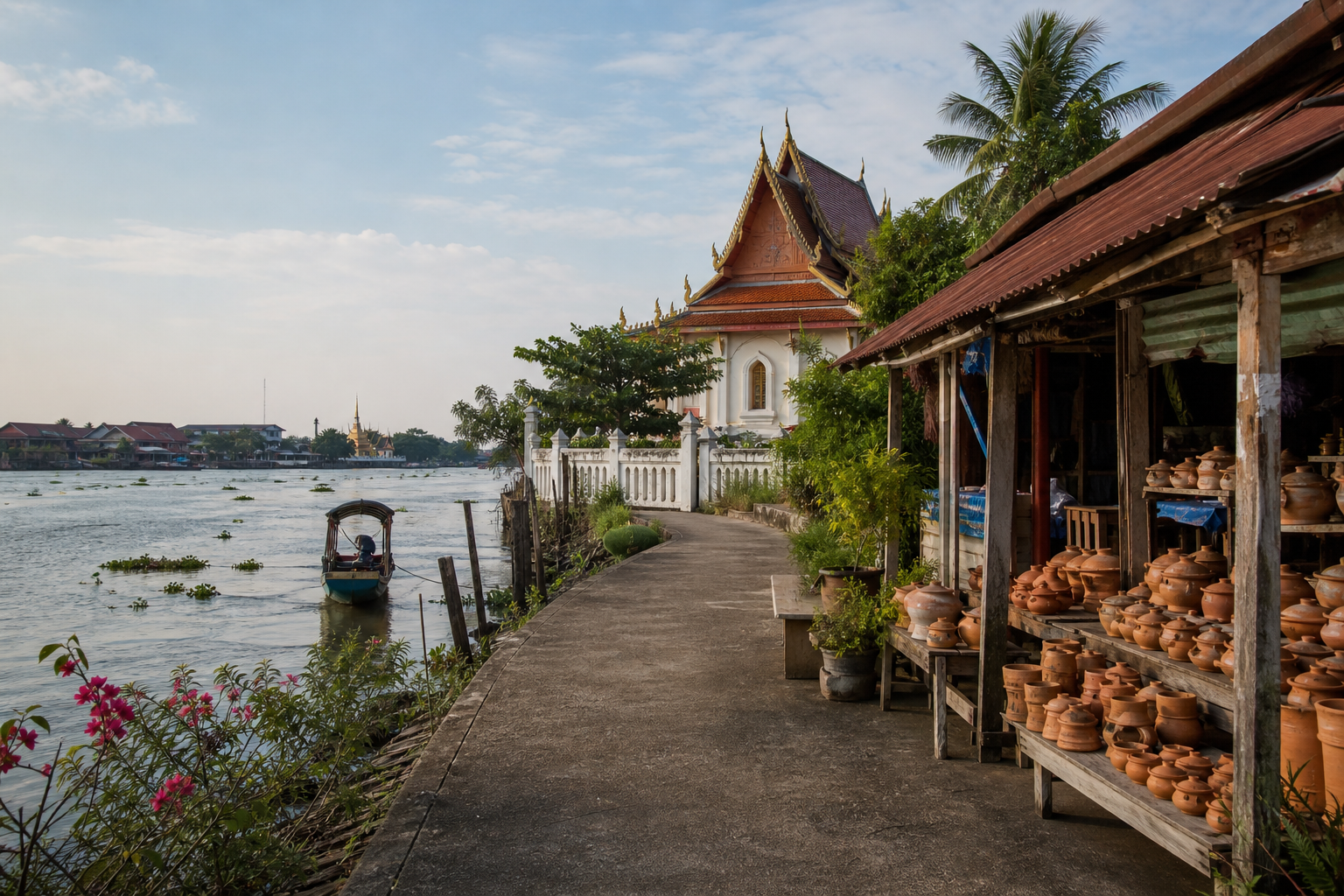
If you travel north on the river, you will come to an island in the middle of the river called Koh Kret. Koh Kret has a population of about 6,000 people, most of whom are part of the Mon ethnicity, an ethnic minority within Thailand. The Mon are famous for their pottery, which they produce on the island. There are also a number of schools and a hospital on the island, as well as different temples and Buddhist monuments. If you visit Koh Kret, you should check out the local street food markets on the weekend.
The Chao Phraya Express Boat and the Chao Phraya Tourist Boat are different services. The Express Boat operator currently lists an 18-baht flat fare for its Orange Line from 24 June 2026; routes and fares can change, so check the operator before travelling. The Tourist Boat is the Blue Flag hop-on hop-off service serving major visitor piers such as Sathorn, ICONSIAM, Wat Arun, Tha Tien, Tha Chang and Phra Arthit. Check its current ticket information rather than relying on an old day-pass price. A separate cross-river ferry can connect the temple piers, but its fare should also be checked locally.
Hotels and restaurants on the river have amazing views of Wat Arun from a distance. Farther upriver are a few more temples and Wang Market, which has excellent Thai street food and is slightly off the beaten path for many Western tourists. Alternatively, you can rent a long-tail boat. The drivers offer options at different prices depending on where you want to go, and some tours take you down the canals, or klongs, for a different side of the city. To visit Koh Kret, take the orange taxi boat to the end of the line at Nonthaburi, which takes over an hour, then take a long-tail boat to the island. Once there, Chip Beer is one of the only craft beer bars in all of Bangkok.