Wat Bandam Temple Guide for Northern Thailand and Chiang Rai
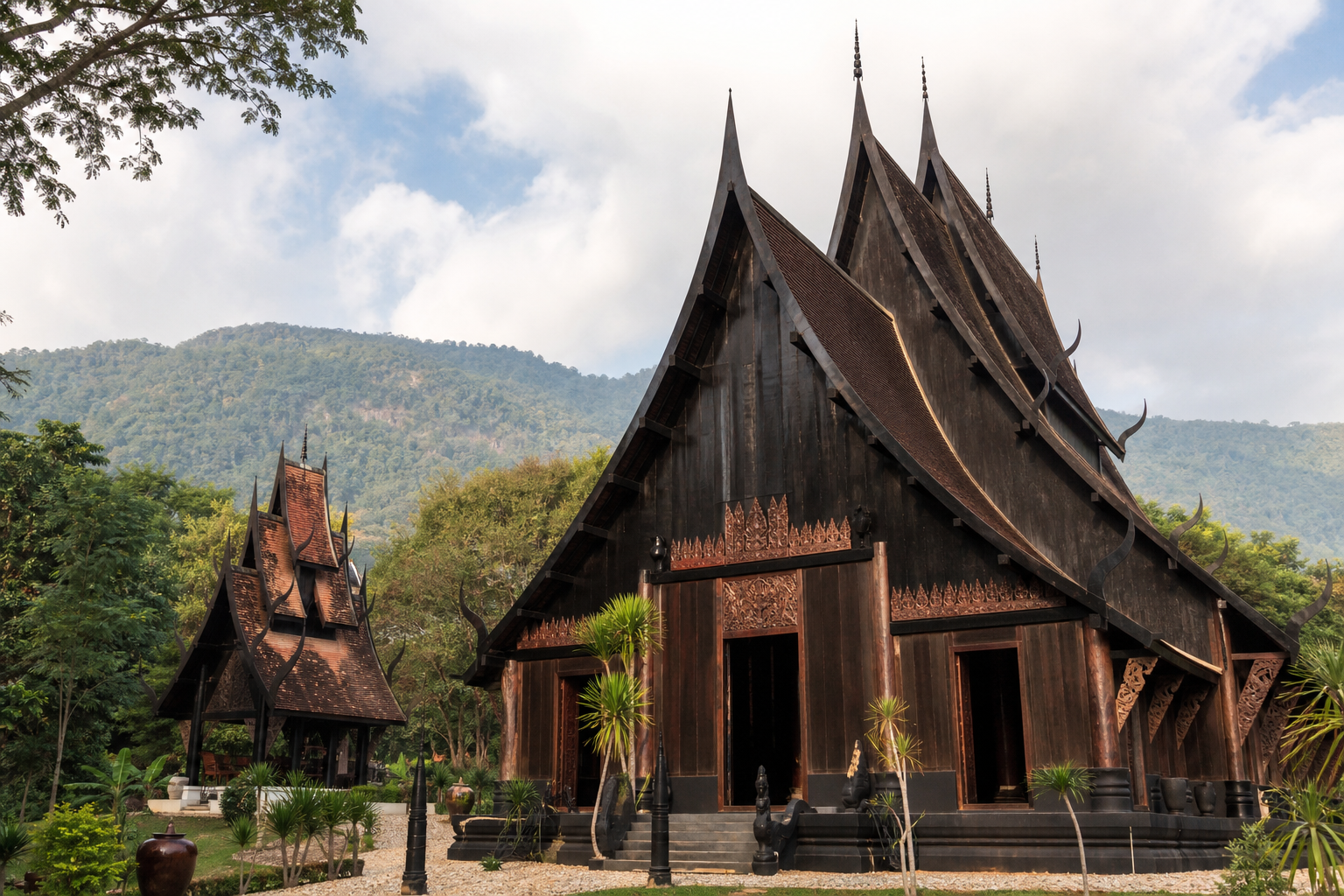
Wat Bandam, usually shortened to Wat Bandam, is the most underrated temple in all of Thailand. Despite only being an hour’s drive away from Chiang Rai, this temple does not feature in any list of must-see temples or experiences and is often overlooked in favor of the temples of Chiang Rai or the Chiang Rai old town. This temple has a stunning mountain background, magnificent Buddhist sculptures and a beautiful mix of traditional and modern Lanna architecture.
Wat Bandam was founded in the 1800s but has been renovated much more recently into the temple that you see today. The site of the temple lies about 50 km from Chiang Rai on the way to the mountain town of Chiang Dao and can be visited as a half-day trip on its own or as part of a multi-stop trip to Chiang Dao.
Every corner of Wat Bandam tells a story, from the chedis to the main hall to the statues of mythological creatures. Every inch of this temple has something to look at.
Five Features That Make Wat Bandam Stand Out
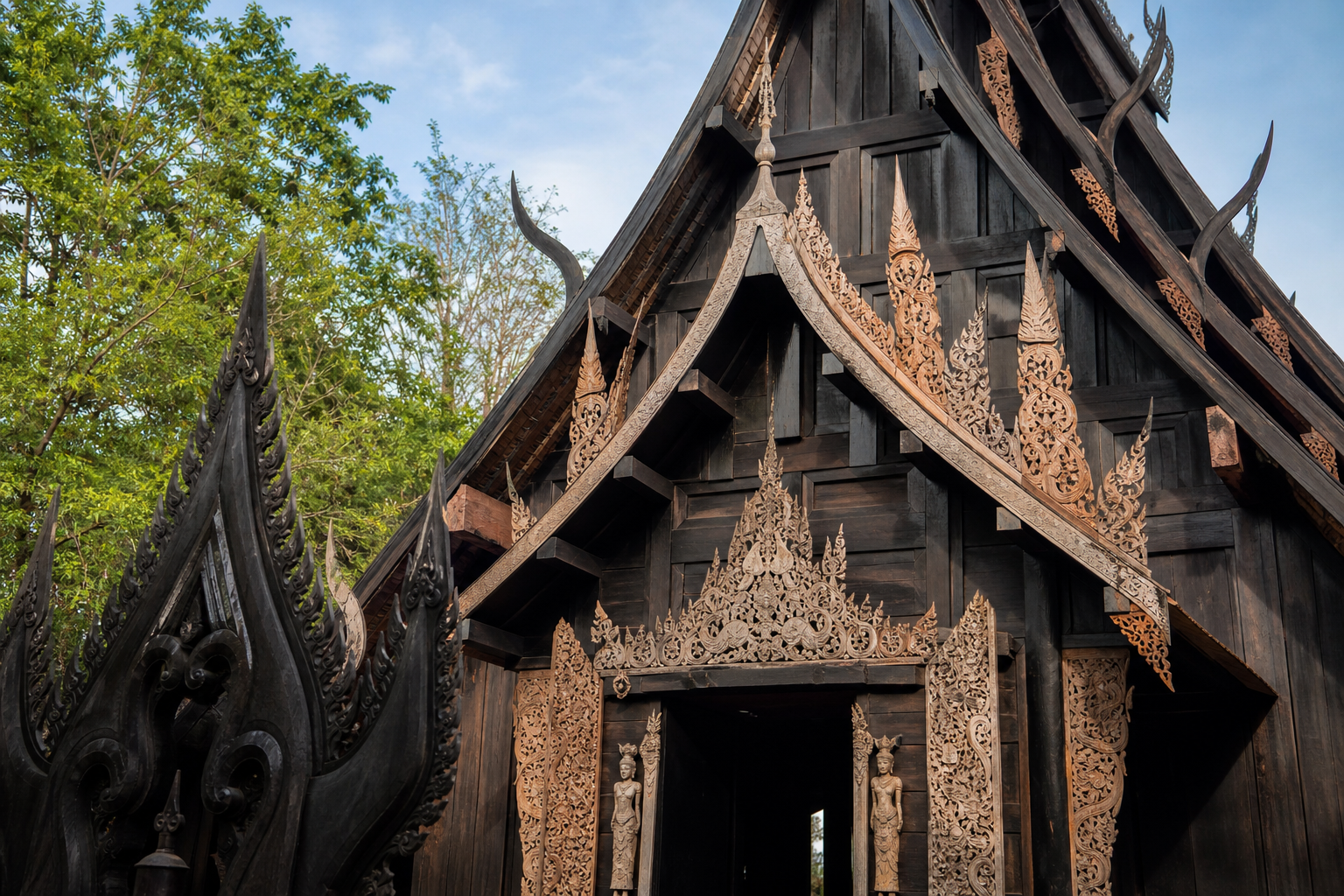
The following are five things that make this temple really stand out.
Number one, the chedis. The most prominent feature of the temple is the tower of chedis, which rise gracefully from behind the temple. The chedis at Wat Bandam are crafted in the traditional Lanna architectural style, which is characteristic of northern Thai temples.
In Buddhism, stupas symbolize the physical presence of enlightened beings and serve as the focal points for devotion and worship.
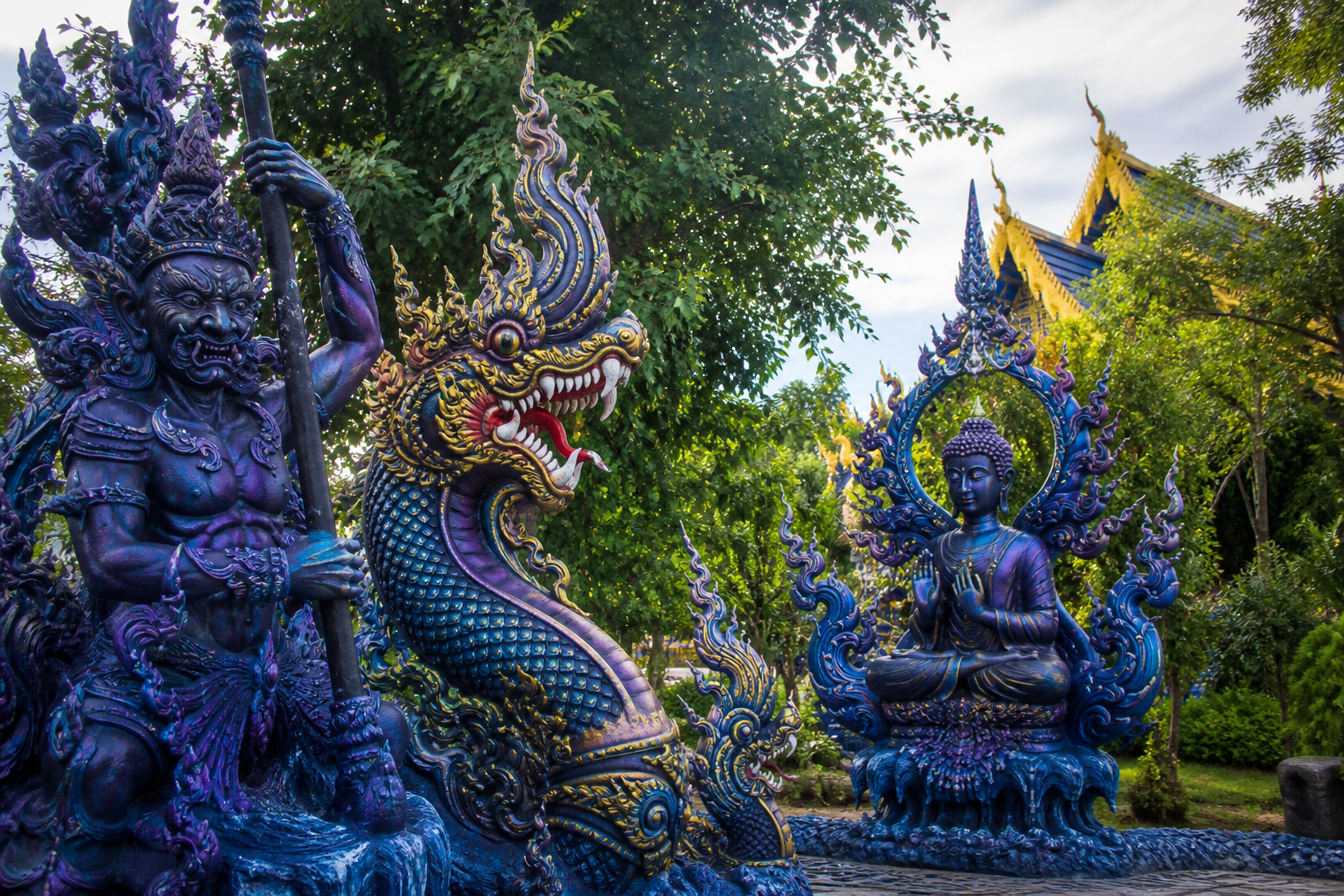
Number two, its colors. Wat Bandam has a fascinating mix of colors, with blue, purple and gold being the most prominent. In Buddhist mythology, blue is used to represent the vastness of the universe, purple represents spirituality and wisdom, and gold represents purity and enlightenment. This symphony of colors paints a tranquil and regal atmosphere unlike any other temple in Thailand.
Number three, the statues. What makes a temple stand out compared to other temples is the creativity with which its statues have been designed. In this temple, you see lots of representations of mythological creatures that are common to Buddhist mythology, although much grander in scale and more carefully designed.
For example, these snake-like creatures called nagas, or these deities known as yakshas. There are also some fantastical representations that I’ve never seen before in any temple in Thailand, like these intricately designed peacocks and chickens, or these elephant-headed serpents. This temple has a level of creativity unlike that of any temple that I’ve ever seen in Thailand.
Wat Bandam Prayer Halls and Reclining Buddha
Number four, the main hall. There are a series of different prayer halls, also known as the ubosots, where people come to pray and meditate. These halls are characterized by their traditional Lanna-style curved, pointed roofs.
Again, these halls are filled with intricate images of deities and the Thai monarchy. Unlike some of the more famous temples in the region, these halls are still used for prayer and meditation, giving a more authentic temple experience.
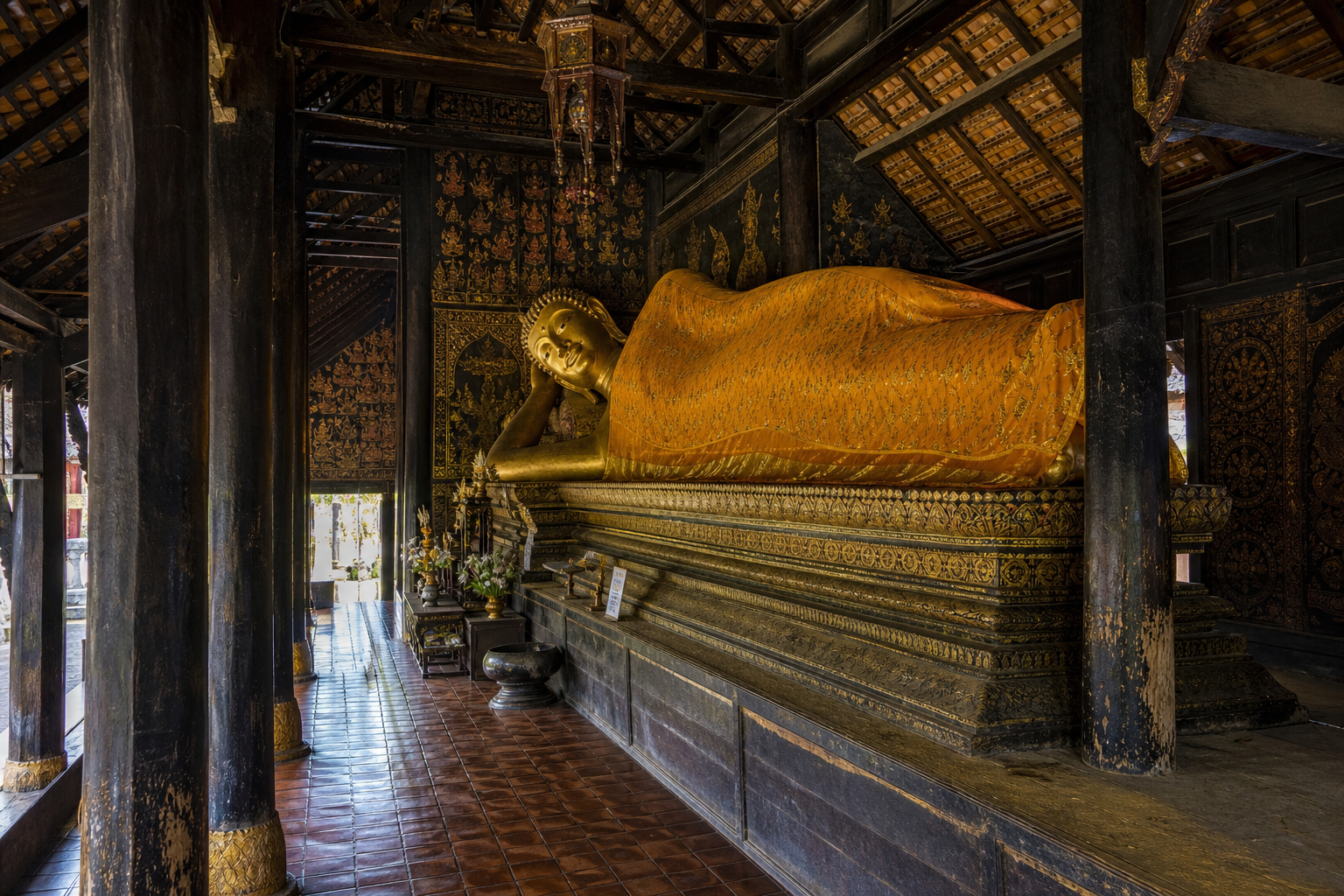
Number five, the reclining Buddha. In the prayer hall to the east side of the building, there’s a giant reclining Buddha. The reclining Buddha is an important image in Buddhist mythology, as it depicts the Buddha’s final moments before reaching Nirvana and symbolizes acceptance of impermanence and the inevitability of death.
The most famous example is the one in Wat Pho in Bangkok. This statue is a little bit smaller than the one at Wat Pho, but just as striking.
Wat Bandam Compared with Northern Thailand Temples
Now that we’ve toured Wat Bandam, I want to discuss how it compares to some of the more famous temples in the region of northern Thailand. Like I said at the beginning, this temple is not often visited by foreign tourists, and in fact most people are unaware that it exists.
Honestly, I think it might be a better option to visit than some of the more famous northern Thailand temples. The other temples of northern Thailand that I’m referring to are the temples of Chiang Rai, which include the White Temple, the Blue Temple and Wat Plang, and also those of Chiang Mai, which include the ancient temples of the old town and the golden stupa of Doi Suthep.
Visiting Wat Bandam and Exploring Northern Thailand
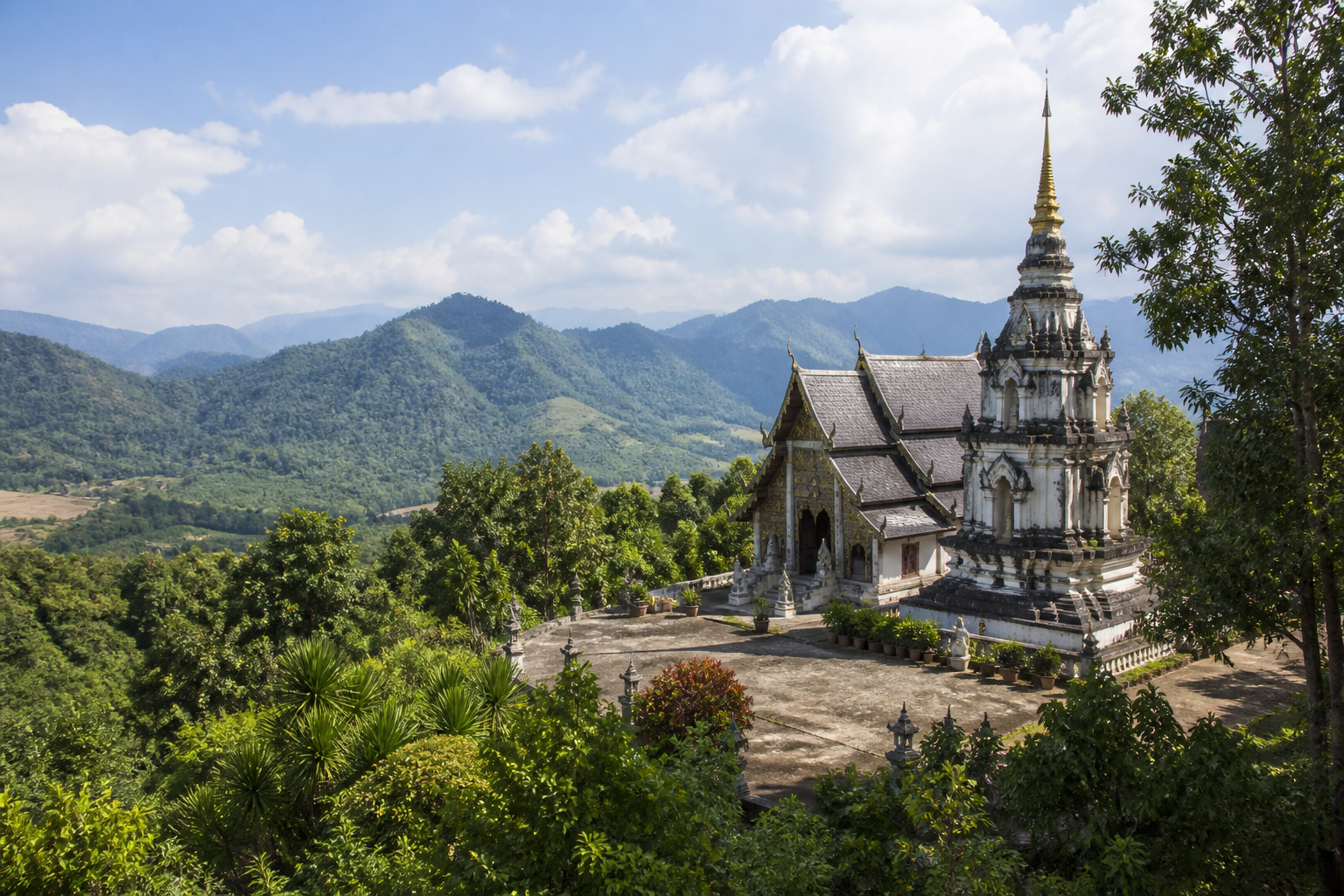
The main disadvantage of visiting Wat Bandam is that it’s not quite as easily accessible as the other temples. There is no regularly scheduled public transport, and there aren’t many tours that run here. You have to either drive yourself or hire a driver for the day.
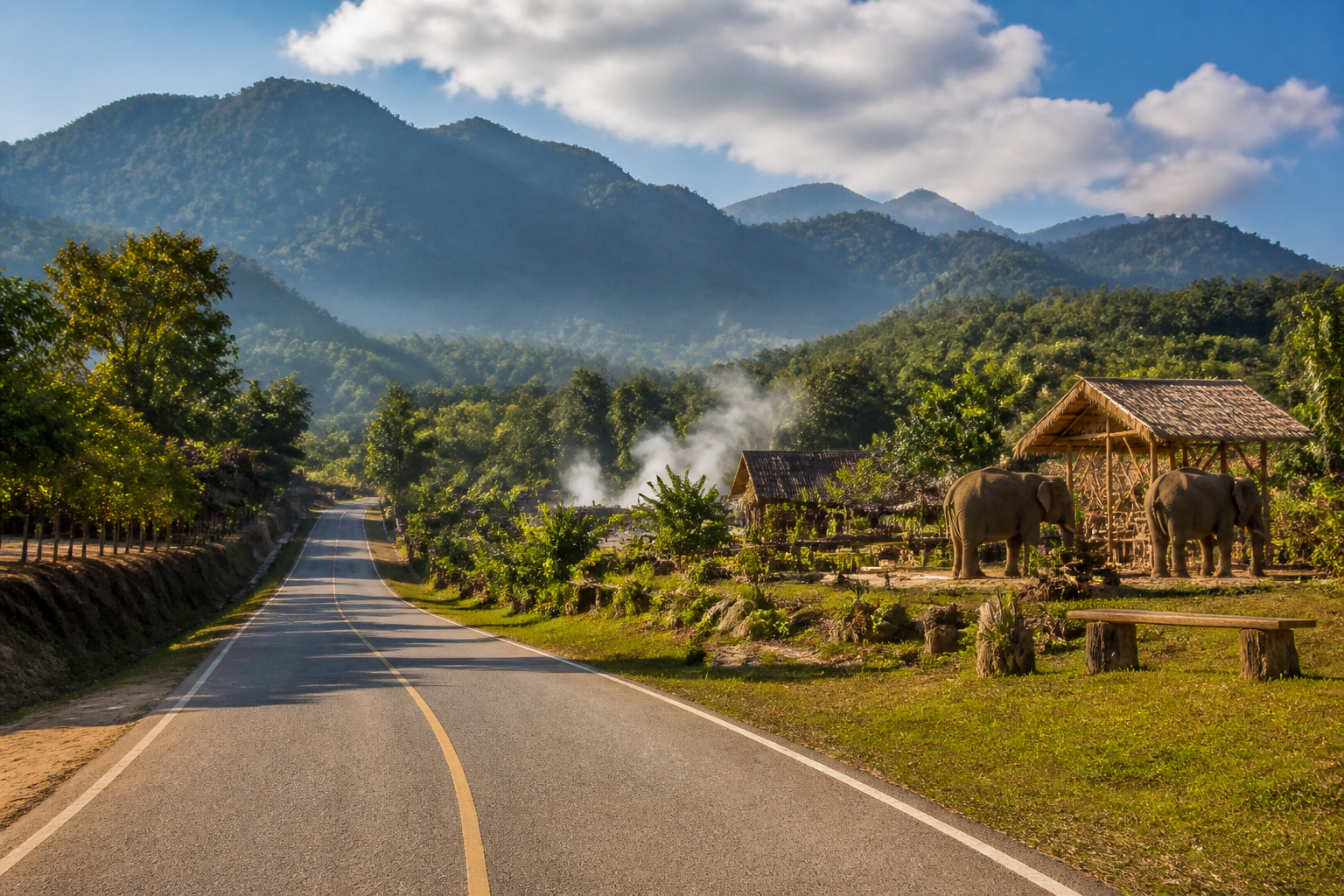
This disadvantage can quite easily be turned into an advantage, though. On the day that we visited this temple, we also visited another stunning temple on the way, an elephant cafe with three roaming elephants, a hot spring and one of the deepest caves in Thailand, before watching the sunset behind the third-biggest mountain in Thailand, Doi Chang.
There were plenty of other interesting spots along the way that we didn’t visit. My point being, when visiting Wat Bandam, you get to see a more real and less explored area of the country among stunning natural beauty.
Why Wat Bandam Is Worth Visiting
This is as opposed to seeing temple after temple after temple.