Chiang Rai Itinerary Temples Tea Plantations and the Golden Triangle
There is a town in northern Thailand that is famous for having some of the most stunning temples in the whole country, but there is so much more of this region that most visitors completely miss. The misty temples leave you speechless, secret villages make time stand still, and the area is the ultimate playground for adventure travellers.
Chiang Rai Temples
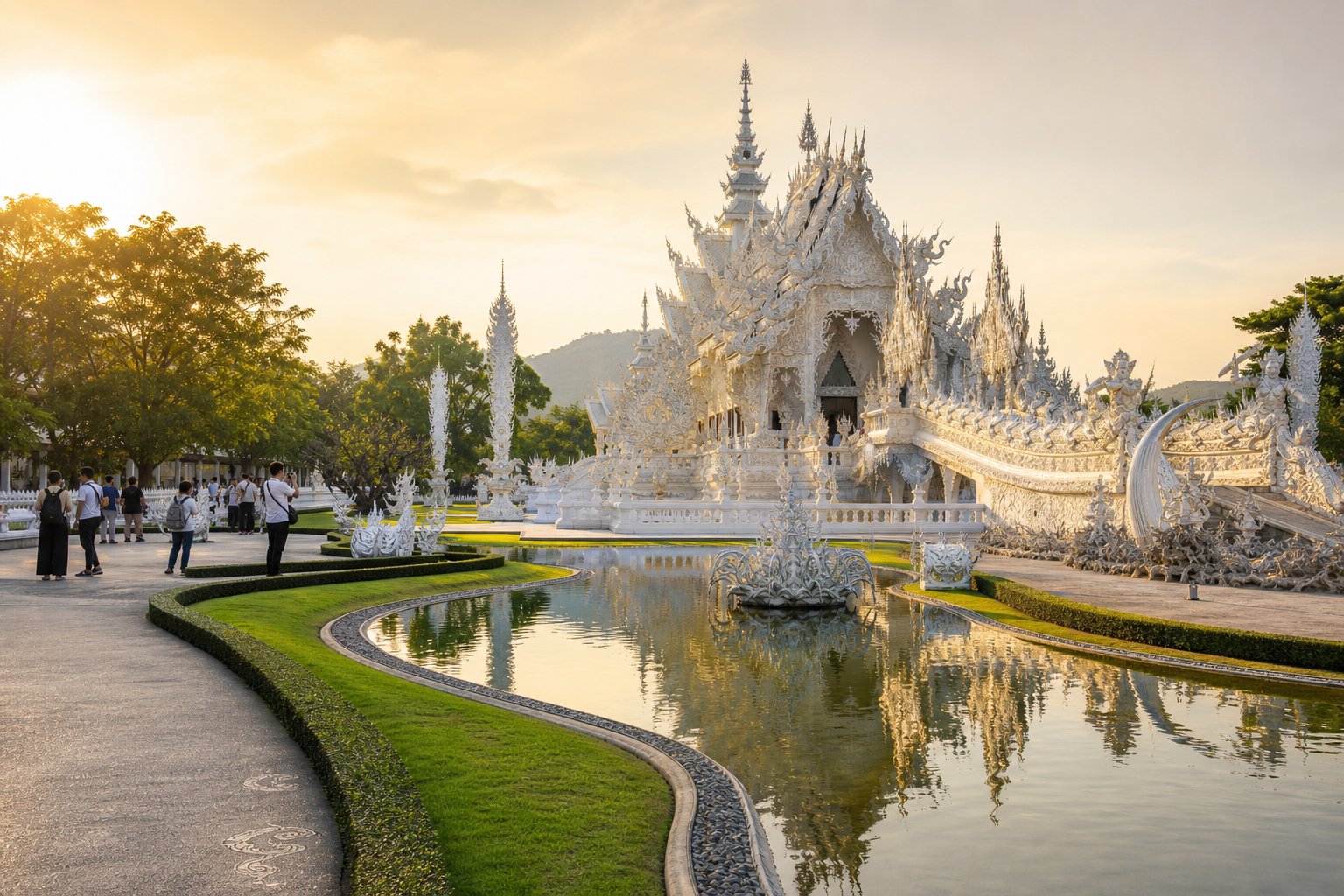
On your first day in town, you are going to need to visit some of the most iconic temples in Thailand. The most famous temple of all is actually not even completed yet. Construction started in 1997 and it is still being built to this day, which just goes to show you the level of detail involved in the structure. Wat Rong Khun, or the White Temple, has a mix of traditional Thai Buddhist art and something a bit more weird and contemporary. On the one hand, you will see the traditional Buddhist prayer hall with curved, pointed roofs and traditional mythological creatures like nagas and yakshas, but you will also see a range of cartoon and movie characters like the Avengers and Predator. The white colour is a symbol of purity in Buddhism.
For me, the most striking aspect of this temple is its haunting, almost otherworldly vibe. This is best seen in what is called the Bridge of Rebirth, which leads over the main hall. As you cross the bridge, it arches over a sea of outstretched hands clawing open the depths of hell, symbolising tormenting souls, and it is pretty creepy to say the least.
This is one of the most famous temples in Thailand, but there are actually three more famous sites that you can visit on this first day. Just a short ride away from Wat Rong Khun is another gem with a signature hue: Wat Rong Suea Ten, also known as the Blue Temple or Temple of the Dancing Tiger. Why blue? In Buddhist tradition, blue represents purity, wisdom and the boundless nature of the sky and sea. Pair that with the temple’s shimmering gold accents and you get a visual masterpiece. This is easily one of the most stunning and trippiest temples in all of Thailand, with mesmerising patterns covering every wall, vibrant depictions of Buddhist mythological creatures and, at its heart, a radiant white Buddha statue that glows from within. Completed in 2016, the Blue Temple is another modern creation but still feels like it could be ancient.
You can easily spend 45 minutes to an hour here exploring this fascinating temple. Baan Dam, also known as the Black House, is a stark contrast to the ethereal blue and white temples. This dark and moody complex blends art, philosophy and a touch of the macabre into a truly unique experience. The Black House is not actually a temple; it is more like an art installation with Buddhist influences, comprising over 40 black teak wood buildings scattered around lush grounds. The structures are inspired by traditional Lanna architecture, a style native to northern Thailand known for its steep-tiered roofs and intricate wood carvings, but this one has a darker, edgier twist. Inside, you find a collection of eccentric and eerie artefacts: buffalo horns, animal hides, bones, skulls and weirdly, penises. This is one of the most unsettling art installations I have ever visited, but it makes a nice change from being in temples all day. Make sure to check out their famous black ice cream before leaving.
The final stop on this epic day trip is a spot that offers one of the most unforgettable sunsets in the city. Wat Huay Pla Kang, often referred to as the Big Buddha, is a breathtaking hilltop temple that is impossible to miss thanks to its massive white statue dominating the skyline. Despite the fact that it is known locally as the Big Buddha, it is actually a 23-storey depiction of Guanyin, the Chinese goddess of mercy, watching over the city. The temple itself is a fusion of traditional Chinese and Thai architectural styles. As you approach the tower and statue, you pass intricate dragon sculptures winding along the grand staircases. Surrounding Guanyin is an expansive complex that includes a nine-tier pagoda and a gleaming white temple hall. The real magic happens at sunset, as the sun dips behind the hills and the entire complex glows in warm golden light.
Hill Tribes and Tea Plantations
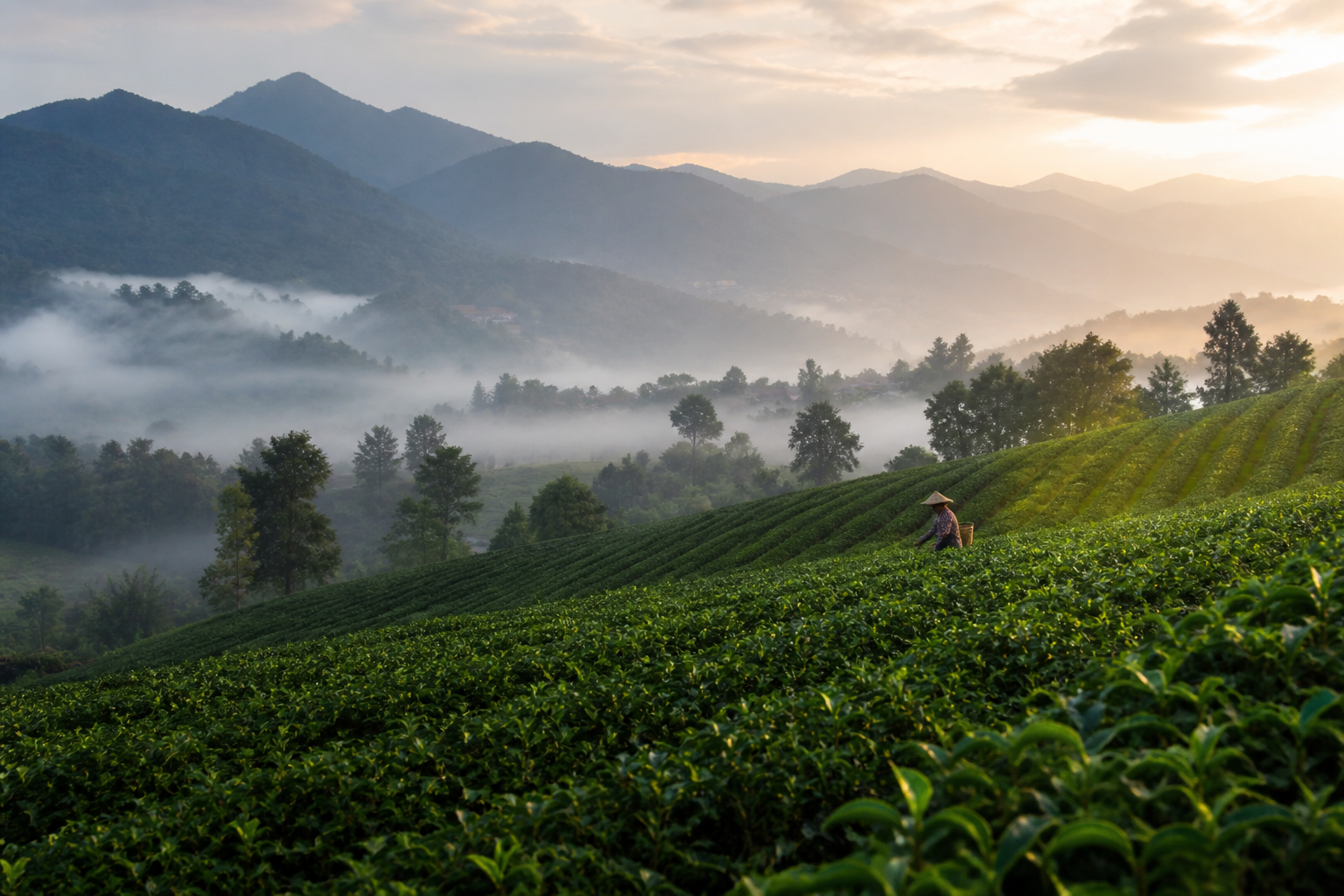
Welcome to the town of Chiang Rai, a town that does not get nearly as much love as its more famous sibling Chiang Mai. In fact, most people treat this as a day trip on a quick visit from Chiang Mai just to visit the temples, but if you are going to make the three-hour-plus journey, I think it is worth sticking around and seeing everything else this region has to offer. On the second day of the Chiang Rai adventure, it is time to venture beyond the town and dive into the region’s fascinating culture, lush landscapes and scenic villages.
Start your day by diving into the unique cultures of northern Thailand, home to a variety of hill tribes that are indigenous communities with distinct languages, customs and traditions. These groups, including the Karen, Hmong and Lahu, have shaped the region’s history and continue to preserve their unique way of life. In rapidly modernising Thailand, Chiang Rai is one of the best places in the country to learn about these fascinating cultures, and your journey can begin at the hill tribe museum in the centre of the city. This small but informative museum provides an overview of the region’s hill tribes, their origins and the challenges they face today. Surrounding the city are a number of hill tribe village communities that encourage visitors to come and learn about them.
The long-neck Karen, also known as the Kayan people, are among the most iconic hill tribes in Thailand. One of the most striking and well-known traditions is the brass neck rings worn by the women, a practice that begins in childhood. These rings create the appearance of an elongated neck, which is considered a symbol of beauty, strength and cultural identity. As you step into the village, you will notice the intricate weavings of the Karen women, who create vibrant handwoven textiles as well as hand-carved wooden statues. It is likely that you will be encouraged to buy some of these handicrafts, and my only complaint about some of these communities is that they can be a little pushy to buy. However, the Karen people have faced long challenges as refugees from Myanmar, where they fled due to conflict, and the communities in Thailand rely on sustainable tourism to preserve their way of life, so I think it is worth supporting them.
Chiang Rai’s cool climate, high altitudes and fertile soil make for an ideal location for tea cultivation, a tradition that has flourished in the region for decades. Introduced by Chinese communities who settled here, tea farming quickly became a cornerstone of the local economy. The area’s unique conditions allow for the production of high-quality oolong, green and black teas that are sold all over the world. At Choui Fong Tea Plantation, you can stroll through rows of tea bushes while learning about the industry and its historical importance. Before leaving, you need to get a bite to eat in the modern cafe. Treat yourself to a cup of freshly brewed green tea and indulge in famous tea-flavoured desserts like green tea cheesecake.
Mae Salong and Wat Santikhiri
As you wind your way through the misty mountains in northern Thailand, you will come across a town that feels like it belongs in another country entirely. The street signs are in Chinese, the locals chat in Mandarin, and the aroma of dumplings and tea shops fills the air. It is a stark contrast to the rest of Chiang Rai, and that is what makes it so special. Welcome to Mae Salong, a town with a fascinating story that bridges the cultures of Thailand and China.
Mae Salong’s unique character dates back to the late 1940s, following the end of the Chinese Civil War. Soldiers from the Kuomintang fled to the region after their defeat by the Chinese Communist Party, trekking for weeks and months over the mountains and through the forests of Laos and Myanmar to reach it. Many of these soldiers settled in Mae Salong, transforming it into a Chinese colony. Over time, the town became known for its Chinese-style tea cultivation, food and architecture, creating a one-of-a-kind town.
Food in Mae Salong is a highlight for many visitors. If you have never been to China, this is the place in Thailand to eat authentic Chinese cuisine, with dishes like steamed buns, dumplings and noodle soups being staples in the small-town restaurants. Be sure to try khao soi Mae Salong, a local twist on the northern Thai classic with hand-pulled noodles and a rich, savoury broth. For a sweet treat, pair your meal with a pot of locally grown oolong tea brewed to perfection. Several family-run tea houses dot the town, offering tea-tasting sessions for you to have a try. There are also a number of Chinese-style temples as well as a museum exploring the history of the town if you want to learn more.
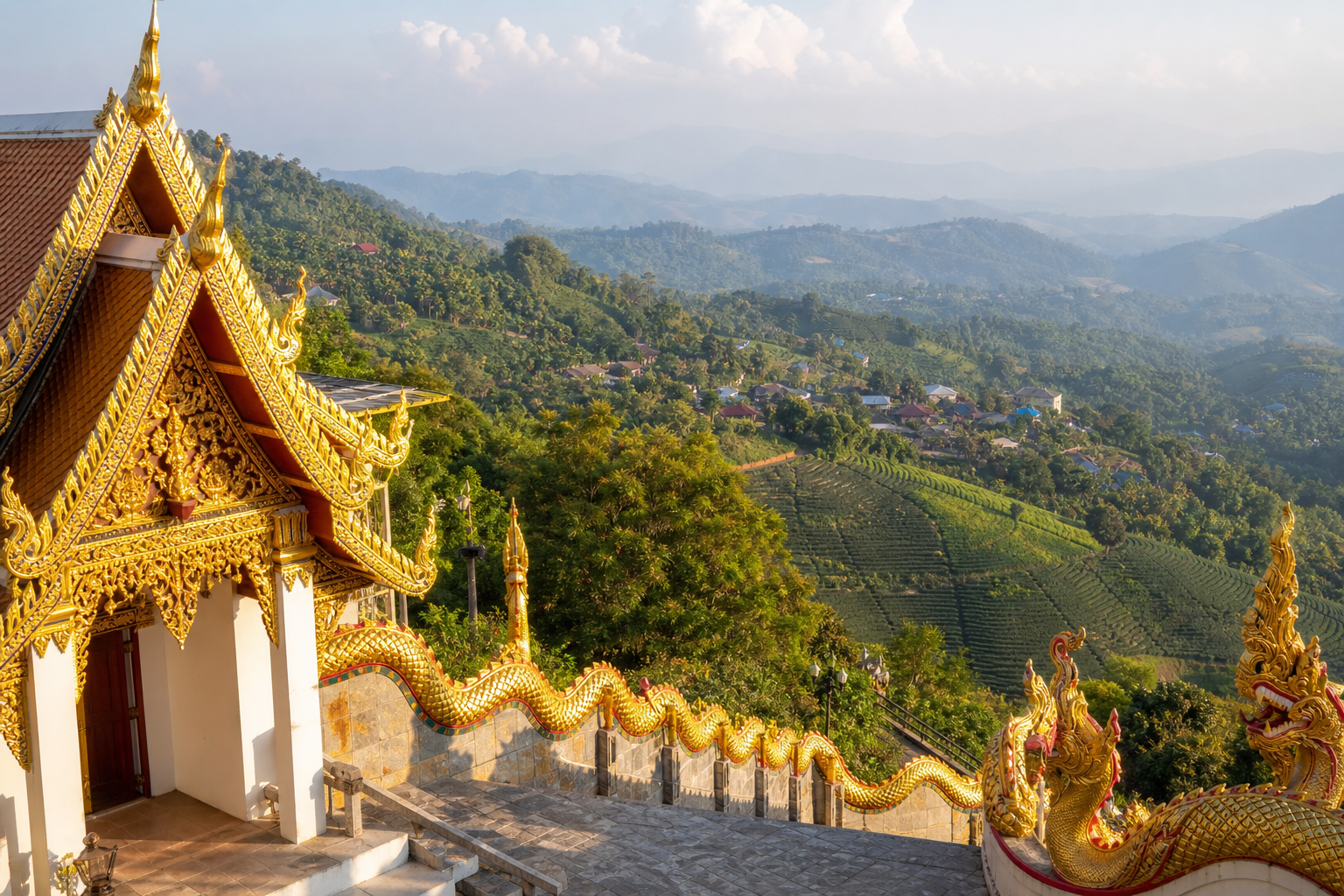
For one of the best views of this town, you need to visit one of the town’s most stunning mountain temples overlooking Mae Salong. From its hilltop porch, Wat Santikhiri is a peaceful escape that rewards visitors with panoramic views of the surrounding valleys and tea plantations. The temple’s golden stupa shines against the lush green backdrop, creating a stunning sight that is worth the climb. As you ascend the steps, you encounter ornate dragon sculptures, and at the top you are greeted with some of the best views in the country. Mae Salong is about an hour and a half’s drive away from Chiang Rai, so you will either need to rent a car or hire a driver for the day to get back.
The Golden Triangle
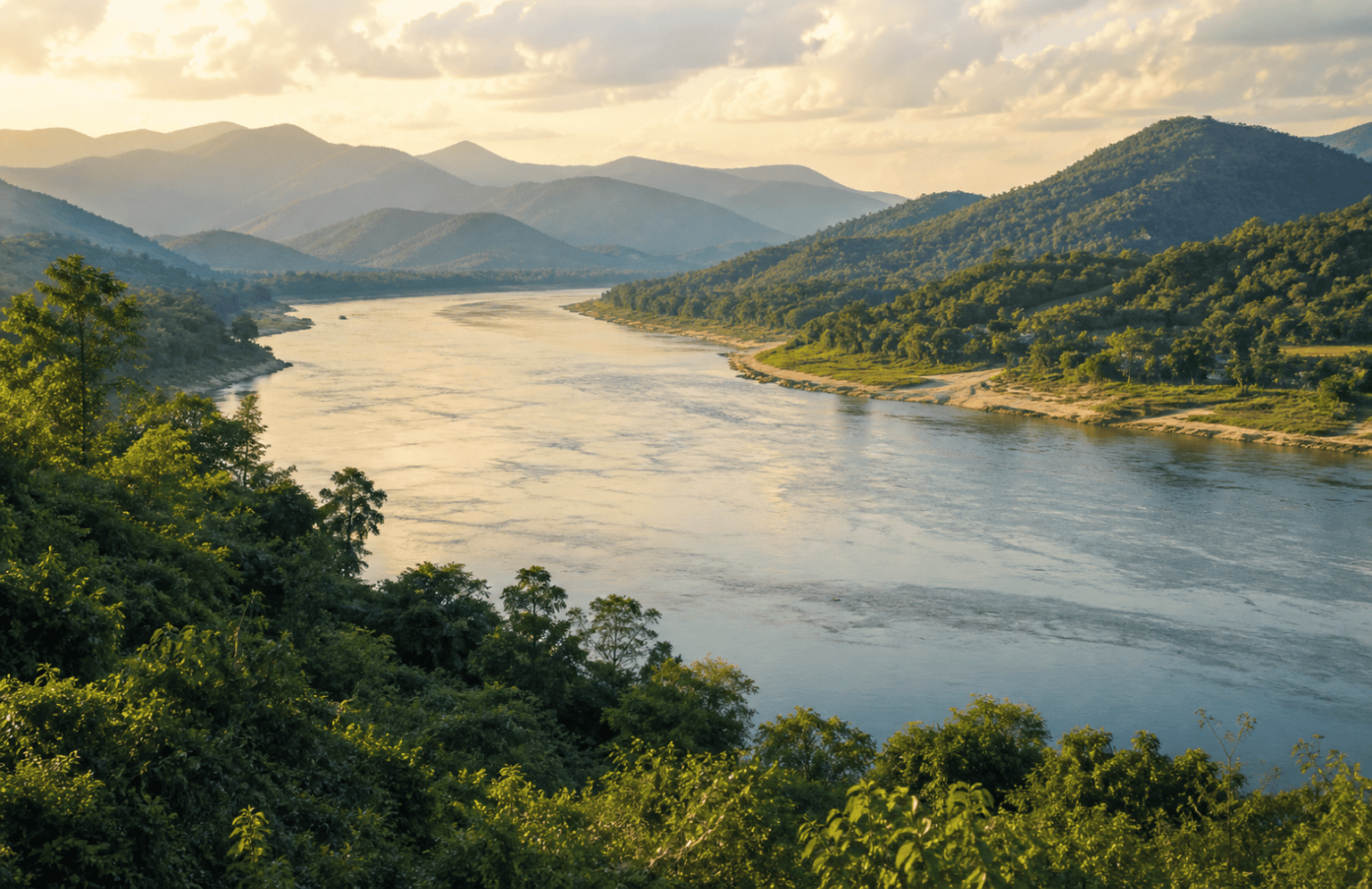
On day three, it is time to head to the towns and villages and into an area known as the Golden Triangle, which is home to some of the most stunning nature spots Thailand has to offer, where you can trek through dense jungles, bathe in waterfalls and see a side of Thailand most tourists will never see.
The Golden Triangle refers to the area where the borders of Thailand, Laos and Myanmar meet, with the mighty Mekong River marking their shared borders for centuries. This region was infamous as a hub for the global opium trade, earning its nickname during the 20th century because of the immense wealth created by the drug industry and the yellow hue of similar flowers. Today, the Golden Triangle is a much more peaceful area, as much of the large-scale production has moved away from the Thailand side at least and into Myanmar. For those who want to learn more about the region’s complicated history, you can visit the Hall of Opium, which is located right where the three countries meet on the Mekong River and offers a comprehensive look at the Golden Triangle’s past, from its opium trade routes to its transformation through tourism and agriculture.
For me, what makes this area truly stand out is its nature. Trekking in the Golden Triangle is about immersing yourself in untouched wilderness. You will need a guide from the local area, not only to make sure you do not get lost in the jungle but also because you will want to learn as much as possible about the local area and its people too. When I went trekking in Chiang Rai, this is where I learned the most about life in the Golden Triangle. Our guide functioned as a translator, and we got to hear stories about how the drug trade had affected the region and learned about the local traditions of some of the villages.
Jungle Trekking and Hot Springs
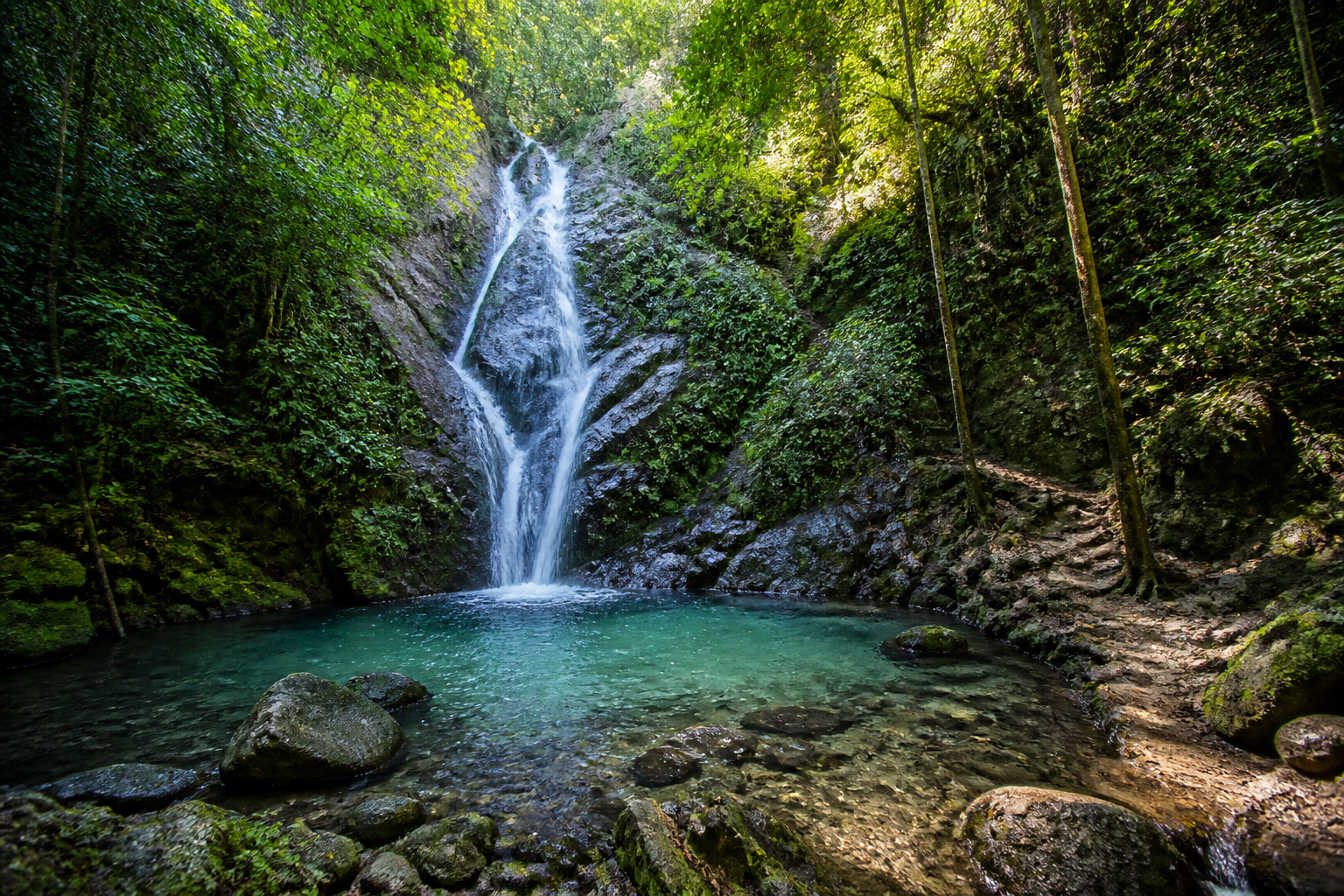
Our trek started in a small village, where we set off through the rice paddy fields before heading into the jungle. There are lots of different options for hiking trails in Chiang Rai. You can take shorter or easier hikes or longer, more difficult ones. I always prefer the long ones, and this was a pretty tricky hike to be honest. We had to make our way over the mountains through the forest and even encountered a few snakes and spiders along the way too. It made it all worth it when we got to cool off in a secluded waterfall in the middle of the jungle.
Our guides were expert jungle chefs, and a highlight for me was watching them prepare a campfire and then cook our food right there in the jungle. Later, we visited Ban Fu Village, an Akha tribe village in the middle of the jungle. It was fascinating to see a much more rural way of life here. The traditional homes are made of bamboo and wood, built on stilts to adapt to the hilly terrain. The Akha people speak the Akha language, which is completely different from the Thai language. It has no written form, and our guide told us that it is at risk of dying out.
It was here that we learned about the history of the drug trade and how it transformed the region. We met many people who used to work in it but have since moved to subsistence farming, showing us how they grow their own pineapples, raise livestock and grow other crops. We spent the night here, but there are plenty of single-day hikes if you are pressed for time.
After trekking through the jungle, you absolutely cannot leave without washing that jungle dirt off and relaxing in a Chiang Rai hot spring. Chiang Rai’s mountainous terrain sits atop natural geothermal activity, which heats underground water and brings it up to the surface. For centuries, locals have taken advantage of these mineral-rich hot springs, believing in their ability to soothe sore muscles and improve circulation. Honestly, after trekking through the Golden Triangle, you are simply going to need it.