Bangkok Temples: Wat Pho, Wat Arun, Grand Palace and Hidden Temples
Wat Phra Kaew and the Grand Palace
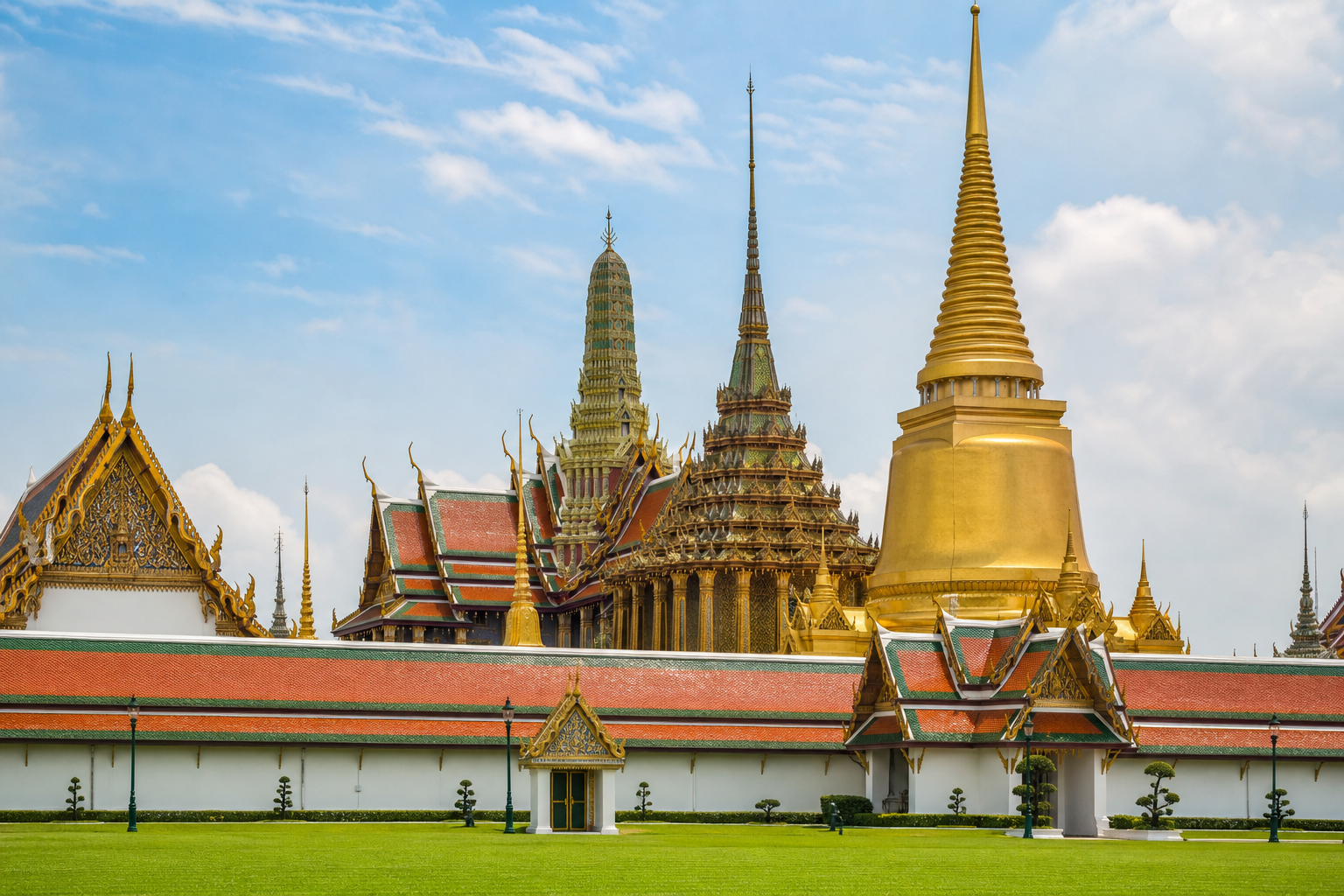
Wat Phra Kaew is inside the Grand Palace, so the same ticket covers both places. Foreign admission is 500 THB. General opening hours are 08:30–16:30, with ticket sales from 08:30–15:30. The ticket also includes the Queen Sirikit Museum of Textiles.
The palace was constructed in 1782 when the king moved the palace to this side of the Chao Phraya River. It is modeled after the former capital of Ayutthaya. Inside you can see Thai Buddhist architecture, statues of Buddhist mythological creatures and a large golden chedi. Wat Phra Kaew is deeply associated with the Thai monarchy and is one of the most revered temple sites in the country.
The highlight is the Emerald Buddha, a small statue inside the temple. It can take approximately two to three hours to make your way around the Grand Palace and Wat Phra Kaew.
Wat Pho and the Reclining Buddha
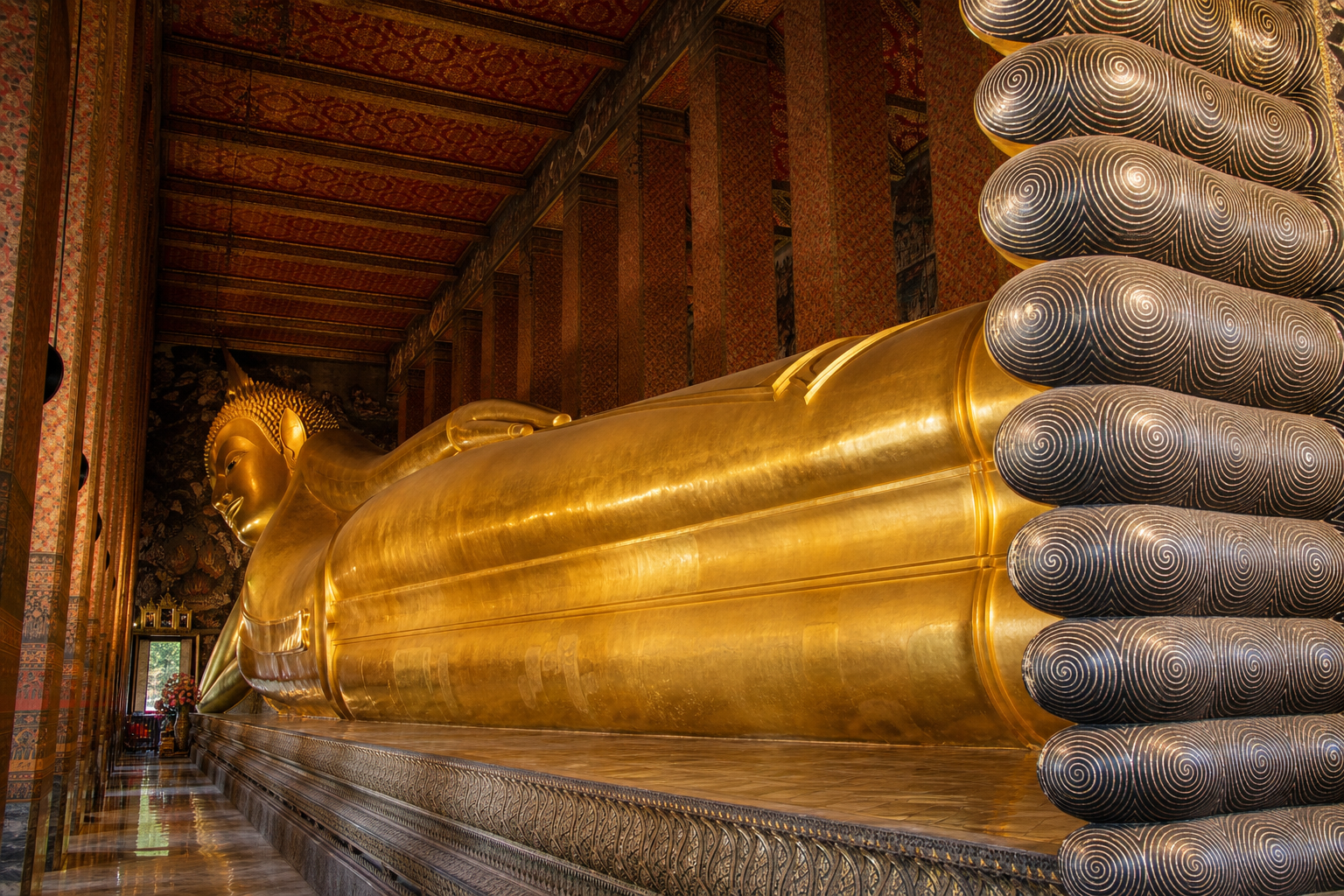
Wat Pho existed as an older monastery from the Ayutthaya period. King Rama I ordered its restoration beginning in 1788 and re-established it as a royal monastery. You can see beautifully designed stupas, buildings and gardens as you walk around the temple.
Probably the most famous item here is the large reclining Buddha. The gold-leaf statue is approximately 46 metres long and 15 metres high, with lots of smaller golden Buddhas dotted around the temple too.
Current foreign admission is 300 THB and visit-plan hours are 08:00–19:30. Wat Pho is about a five-minute walk from the Grand Palace and takes approximately one hour to explore.
Wat Arun Across the Chao Phraya River
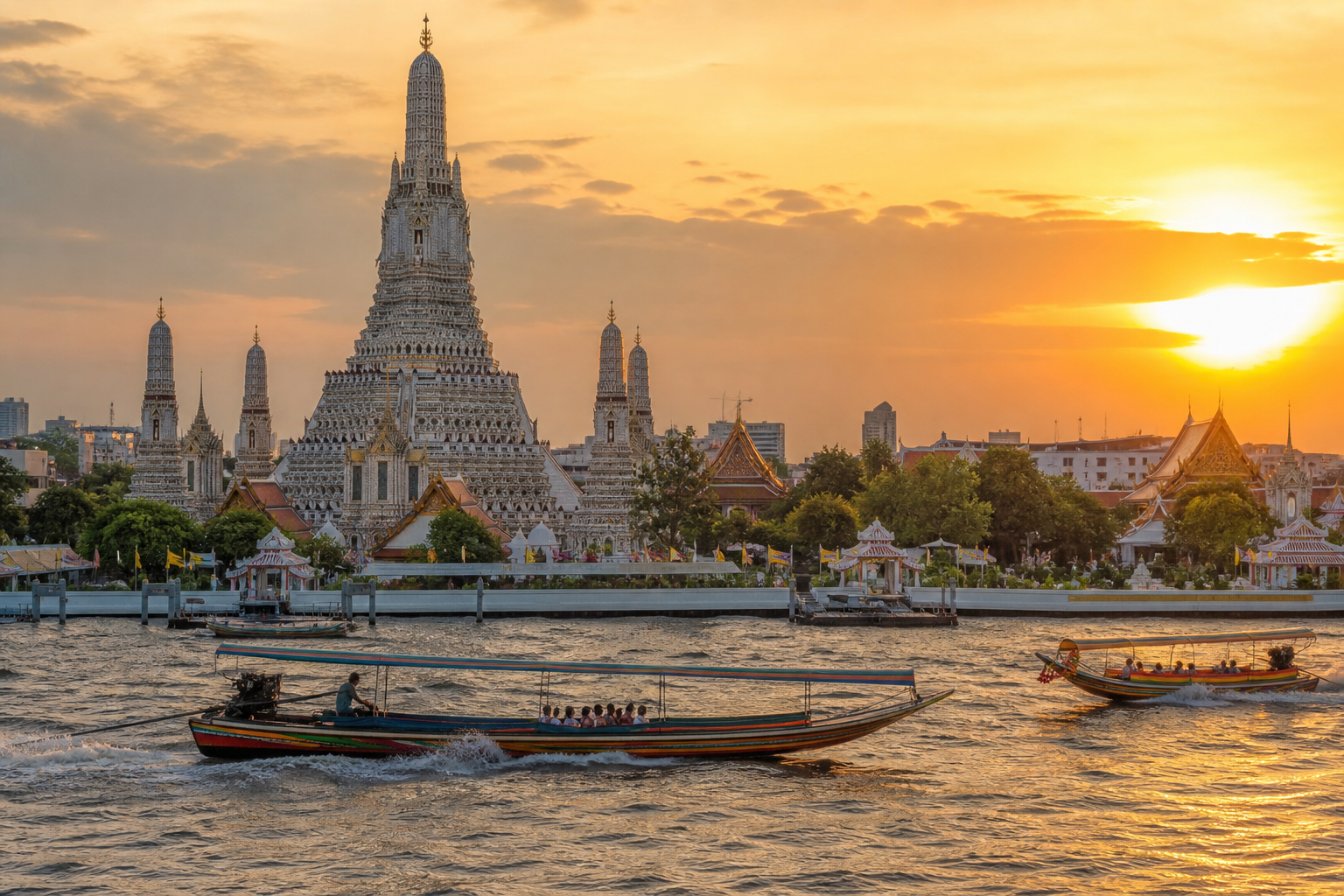
The last of the Bangkok Big Three is Wat Arun. It lies across the Chao Phraya River from the other two temples and can be reached by crossing the river from the Wat Pho / Tha Tien area. Wat Arun was first established in the 17th century but has gone through major changes to become the temple that stands today.
Despite being a Buddhist temple, Wat Arun is named after the Hindu god Aruna. Its main feature is the central prang, embellished with colourful ceramics and seashells. Wat Arun is open from 08:00–18:00 daily and current admission is 200 THB. It takes about one and a half hours to explore.
In my opinion, the best view comes from across the river. You see boats going past and the sun setting behind it, and I think this is probably my favourite temple.
Planning a Bangkok Big Three Temple Day
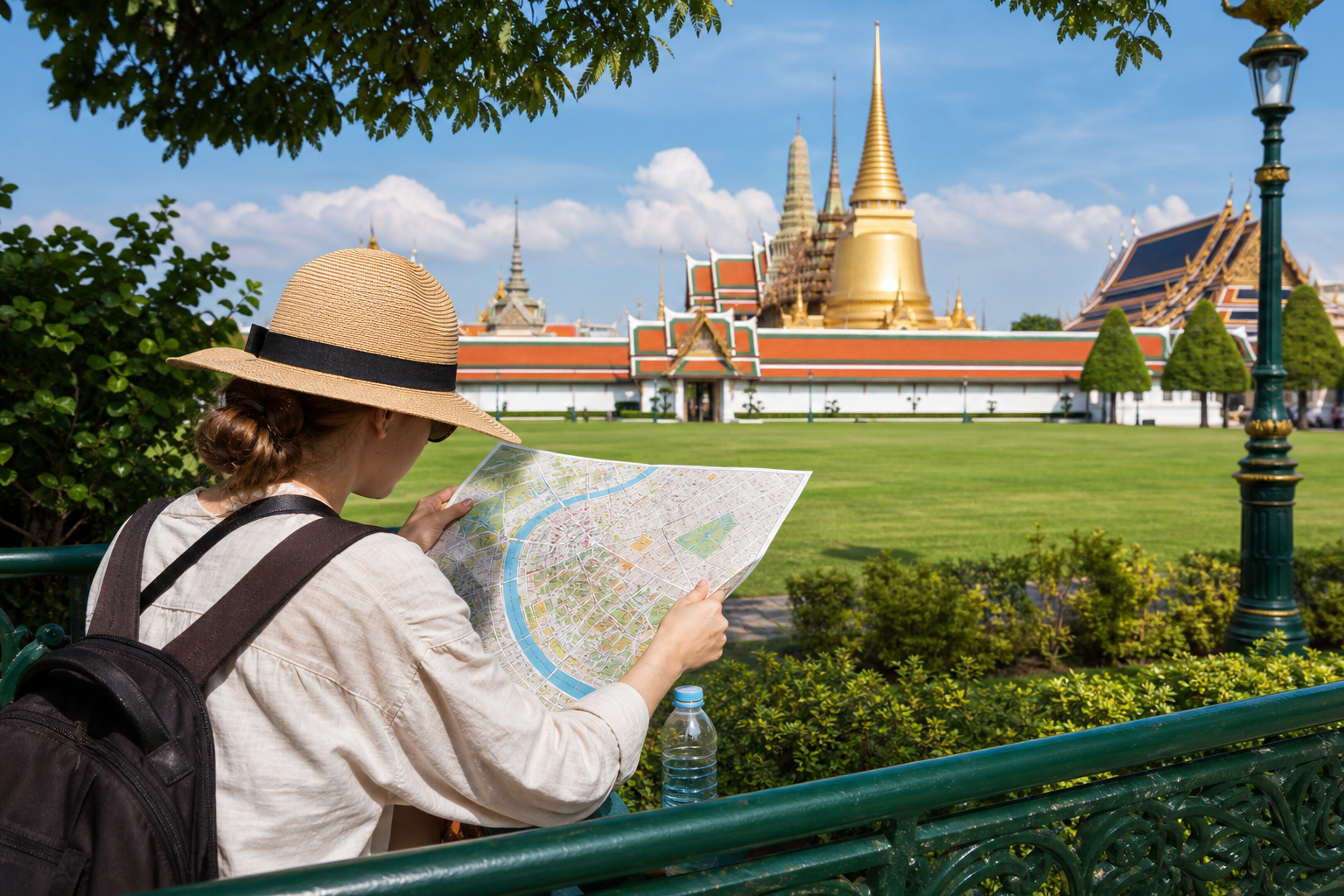
The Bangkok Big Three are quite a lot of temples to visit in one day. Visitors often complain of being “templed out” from visiting so many temples.
It is a really hot area because there is not much shade, there are no skyscrapers nearby and the light reflects off the pale buildings and paving. Every time I walk around this area I notice how hot it is, with tourists dripping with sweat from walking around all day.
My solution is either to split this into two sessions or to take a big break in the middle of the day. You could visit the Grand Palace and Wat Pho first, then return another time for Wat Arun. Alternatively, look at Wat Arun from across the river if crossing over feels like too much. There are lots of restaurants where you can sit down, eat, get a cold drink or an ice cream, and recharge.
The order I suggest is Grand Palace → Wat Pho → Wat Arun. There is more to see in the Grand Palace and it gets the busiest, so get there as early as possible to beat the crowds and the heat. The Grand Palace opens at 08:30.
Bangkok Temple Dress Code
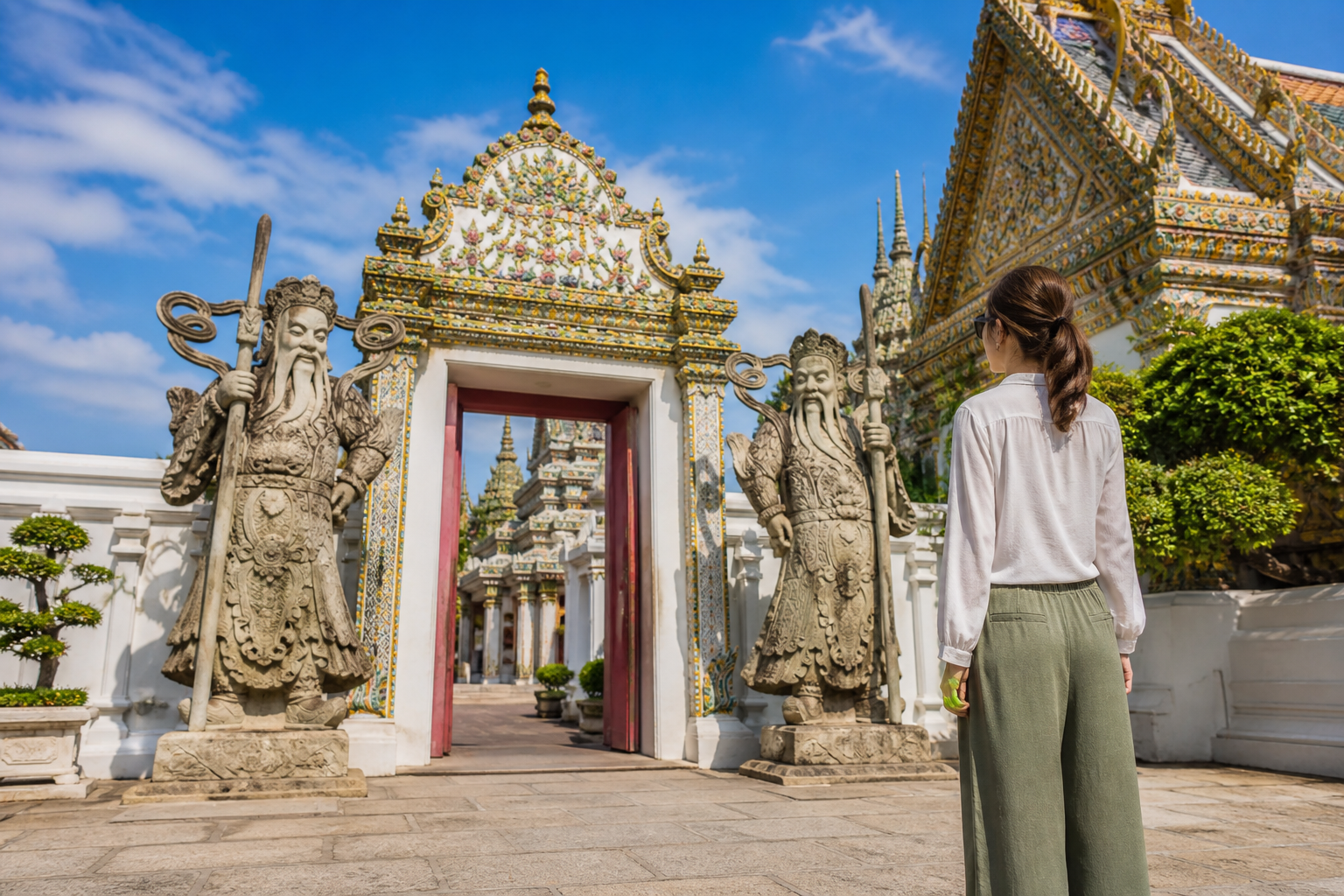
There is not one universal dress code for every temple in Bangkok. At the Grand Palace, restrictions include sleeveless shirts or vests, short tops, see-through tops, short pants or hot pants, torn or very tight pants, bike pants and mini skirts. Wat Pho asks visitors to dress politely and says women should not wear shorts above the knee.
A simple approach is to wear clothing that covers the shoulders and reaches at least to the knees, while avoiding anything see-through, torn or very tight. You do not have to stay covered up all day, but dress appropriately when entering the temple grounds and religious buildings.
Removing Shoes at Bangkok Temples
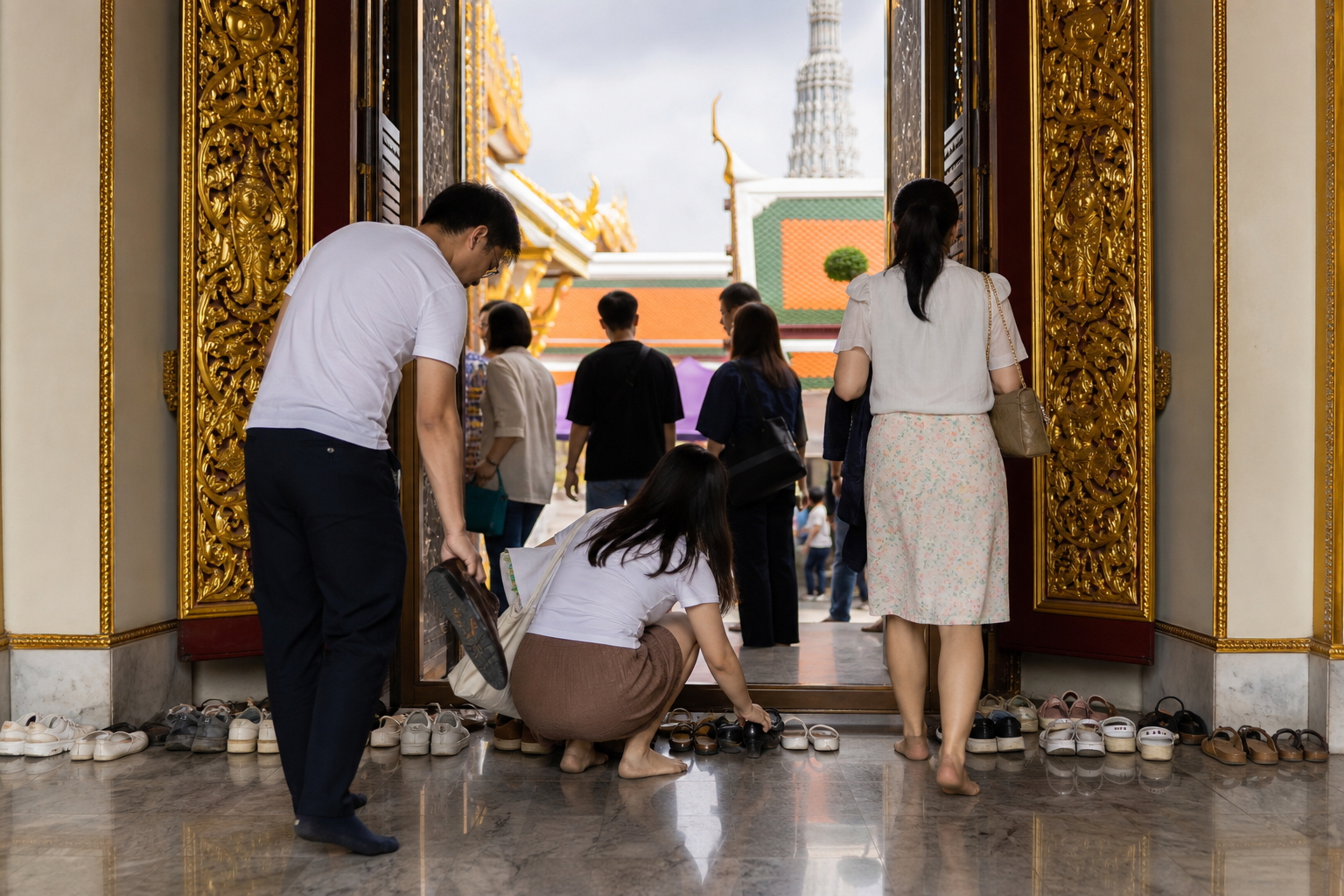
At Wat Pho, remove your shoes before going inside religious buildings. It is disrespectful to walk in with your shoes on. You will usually see lots of shoes beside the entrance, which makes it clear when to take them off. Wear footwear that is easy to remove and keep your belongings together.
Bangkok Temple Scams and Pickpockets
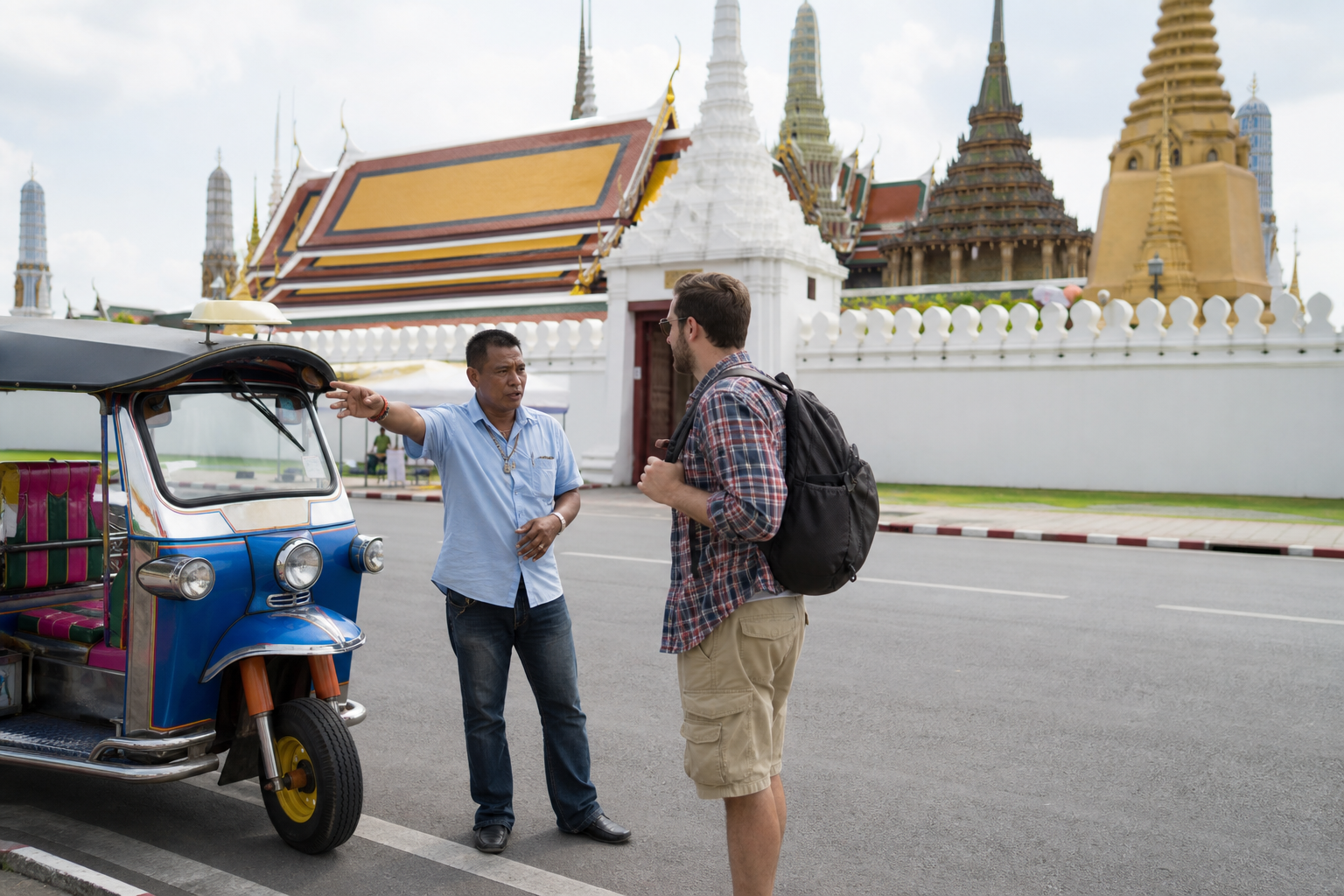
Near the Grand Palace, someone may falsely tell you that the attraction is closed and try to steer you into a tuk-tuk. Check the official entrance or website yourself. For broader examples, see the Thailand scams to watch out for in 2026 guide.
Less Touristy Temples in Bangkok
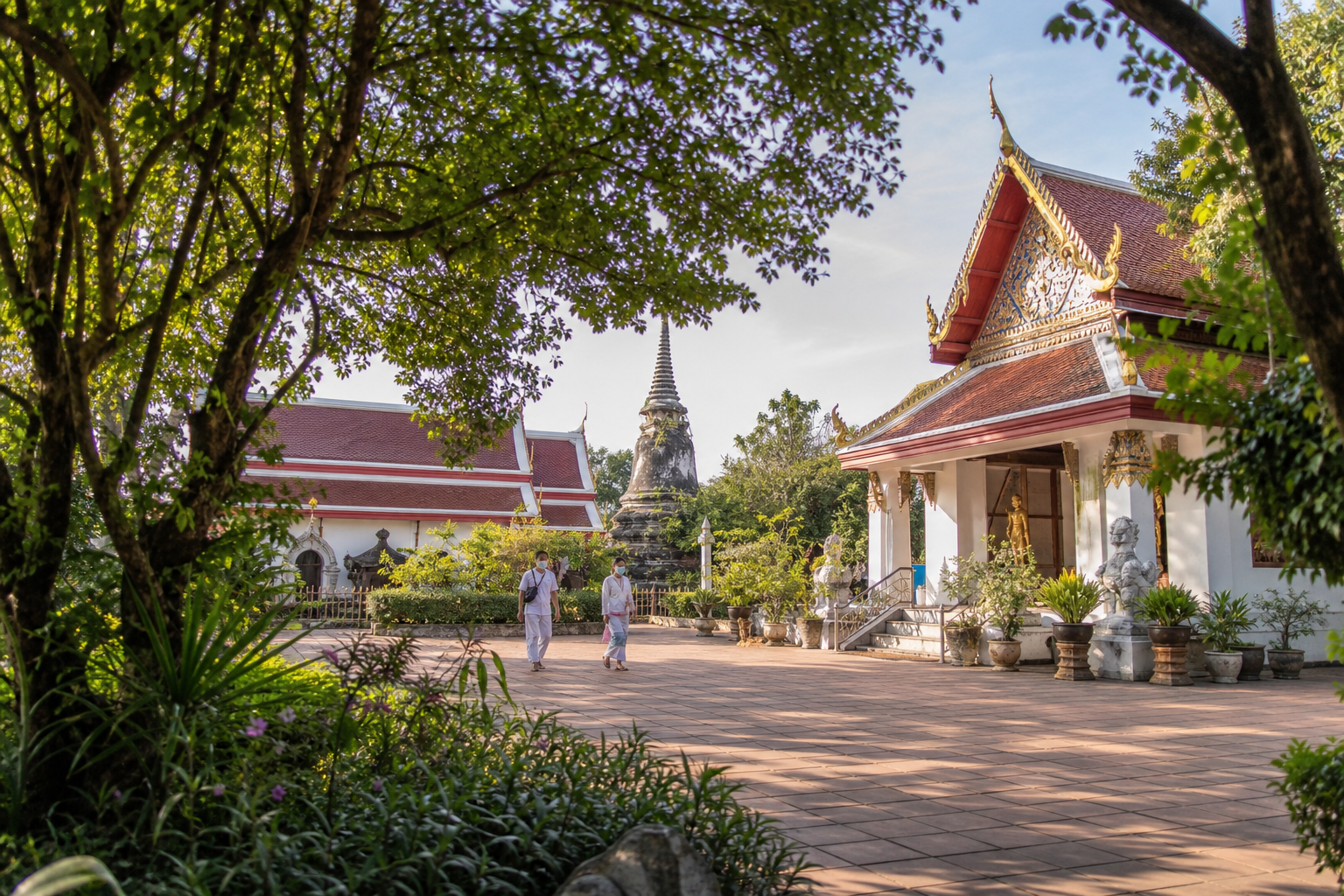
These temples are still largely used as temples rather than tourist attractions, which can give you a more local and unique experience when you stay in Bangkok.
Wat Paknam and the Giant Golden Buddha
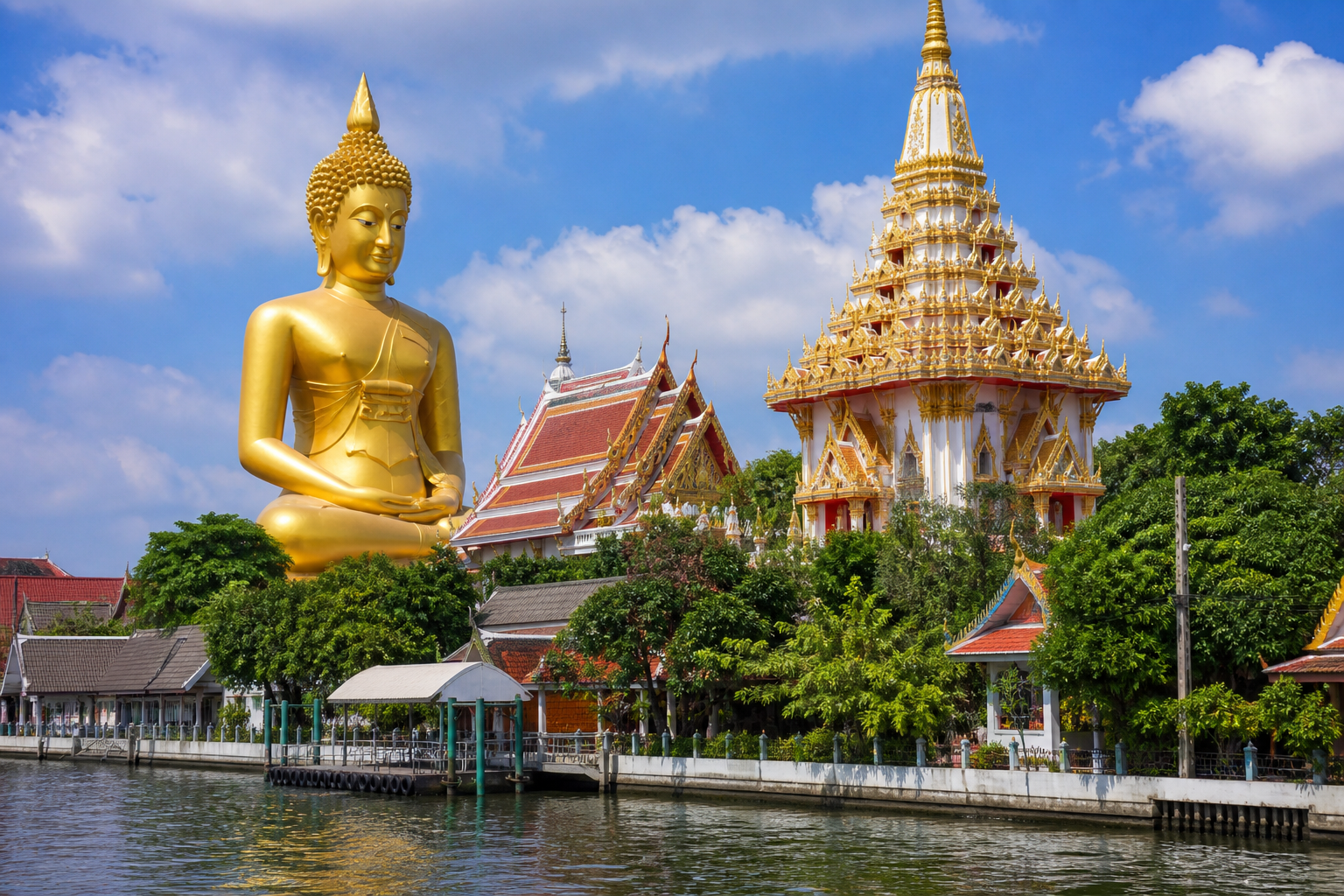
One of my favourite temples is Wat Paknam Phasicharoen, beside the Bangkok Yai canal. The highlight is the giant bronze Buddha, which is 69 metres tall and was completed in 2021.
There is also a massive chedi that you can enter and admire, with a striking ceiling and Buddhist artwork. Wat Paknam is near Bang Phai MRT. Visit-plan hours of 08:00–18:00 are commonly published, but check locally before setting out.
Wat Benchamabophit Marble Temple
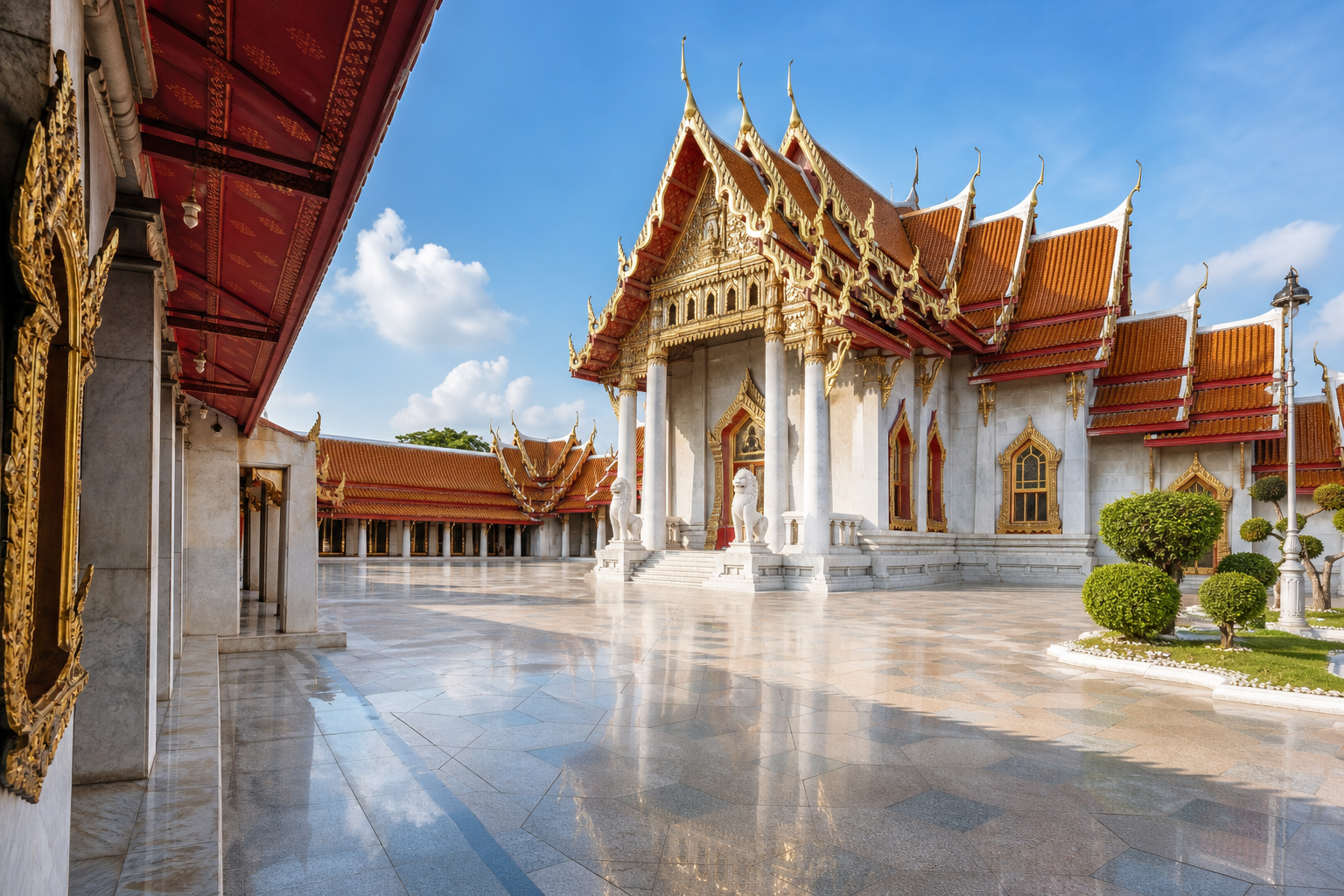
Wat Benchamabophit, also known as the Marble Temple, is a beautiful temple in Dusit, not Chinatown. It is associated with Italian marble and distinctive architecture, and has a beautiful garden area. It was constructed in the 19th century.
This spot is not particularly busy, although it is popular with the Instagram crowd. There is a certain framing where you see one of the arches and the temple, and several people may queue for a picture at a particular time of day.
Wat Saket Golden Mount
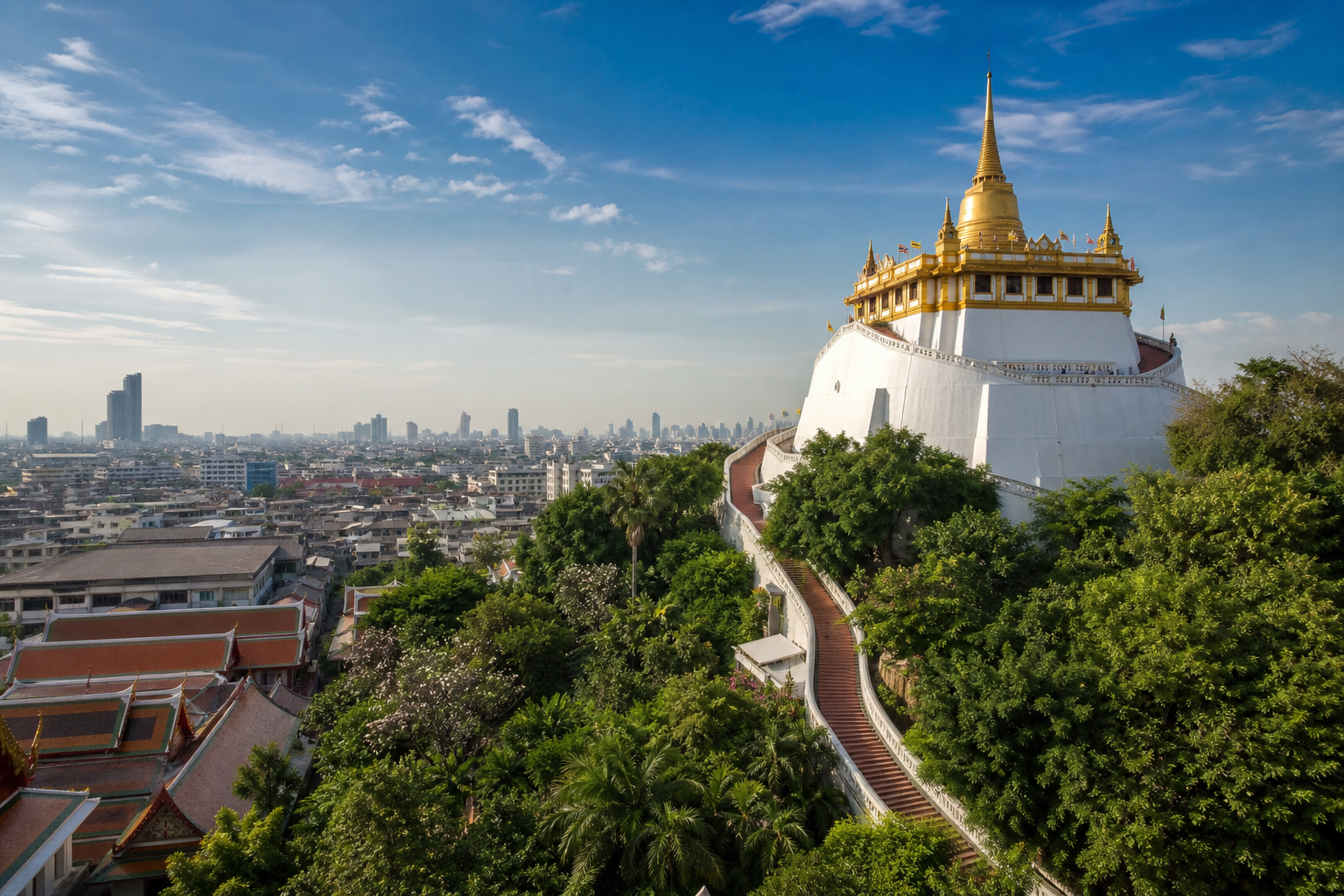
Wat Saket, also known as Golden Mount, is a chedi not far from Khao San Road on top of a hill. The climb follows a 344-step spiral ascent, but at the top you have a 360-degree view of Bangkok and can see the Big Three in the distance.
Current visitor information lists admission at 50 THB and hours of 08:00–18:00. There is also plenty of great food in the side streets near this temple.
Wat Mangkon Kamalawat Chinese Temple
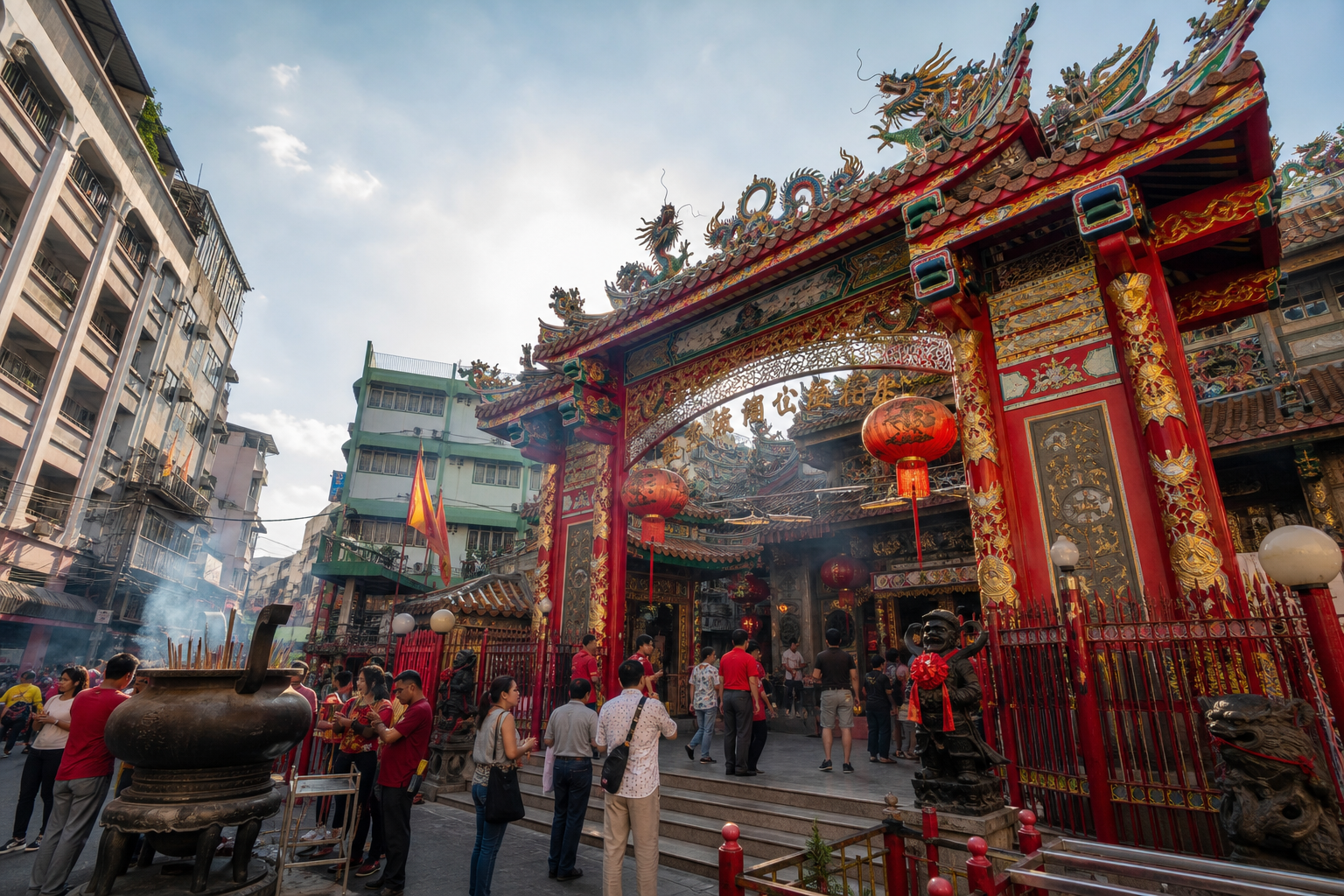
Wat Mangkon Kamalawat is in Chinatown and has a completely different feel because it is a Chinese temple rather than one of the Thai Buddhist temples. If you are not visiting other Asian countries, I would definitely check out a temple like this while you are here.
Its Chinatown location also means there is plenty of great food nearby. The distinction between this Chinese temple and Bangkok’s Thai Buddhist temples is one of the main reasons it is useful to include in a temple trip.