Bangkok Itinerary for 3 Days Food Temples Nightlife and Day Trips
In Bangkok, most tourists hit the same old spot everyone tells you to go to online and end up missing the hidden gems that transform trips into unforgettable experiences. There’s just way too much to see and do. Fitting everything into a 3-day trip is impossible. I’ve gone through hundreds of Bangkok tours, thrown out the other ones that suck, and narrowed it down to the top three. You can choose whichever best fits your travel style.
Bangkok Tours for Food Cycling and Nightlife
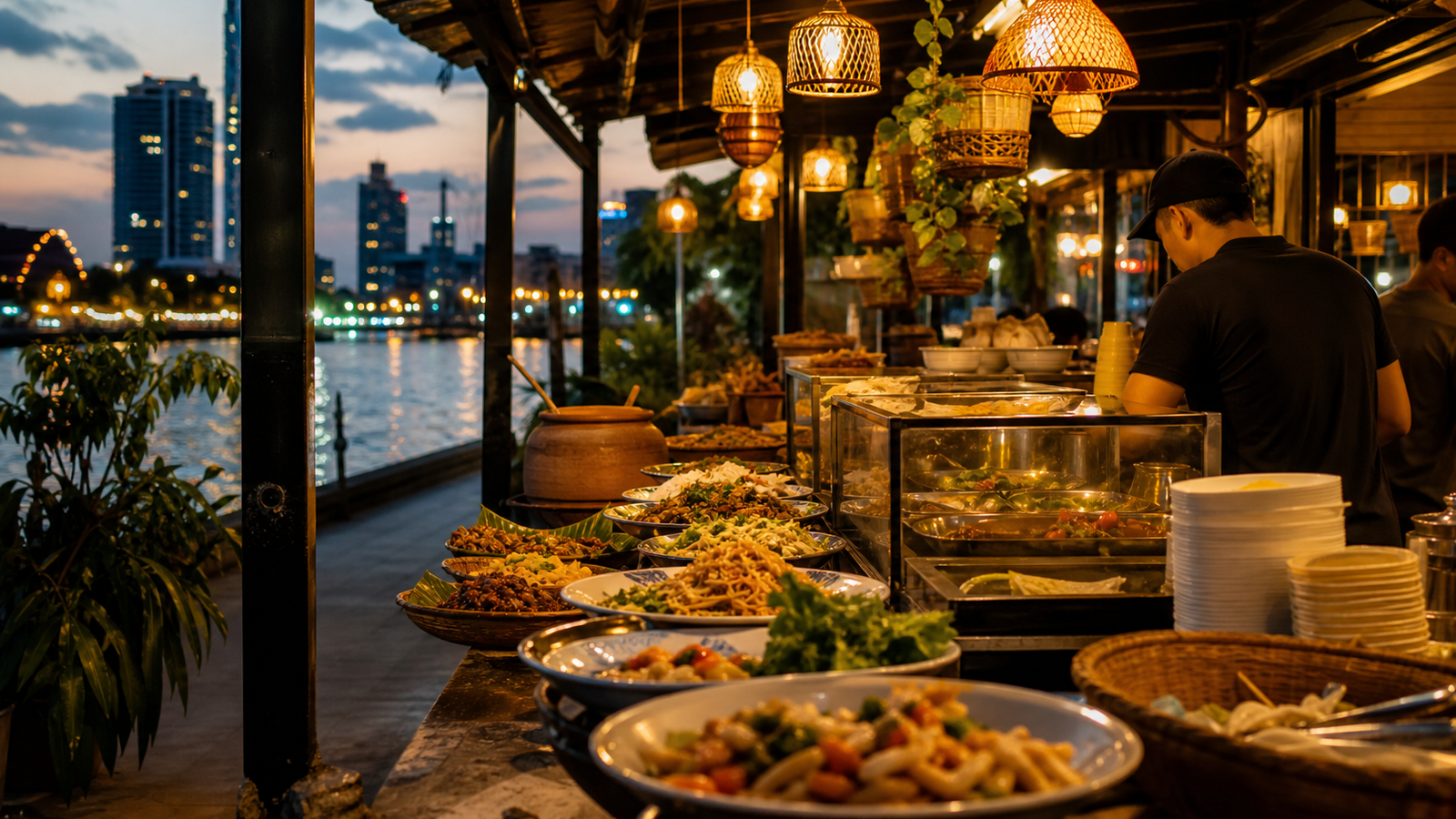
If you came to Bangkok for the food, there’s no better way to experience the city than on a guided food tour. These tours take away all the stress of trying to pick a place to eat, and they plan ahead so you’re guaranteed to see some of the most famous street food stalls in the city. Plus, you’ll end up eating way more variety than you could ever manage on your own whilst learning about the dishes and the chefs that make them.
I’ve done a bunch of food tours in Bangkok at this point, and honestly, most of them kind of suck. But there is one tour that stands out above all others. You’ll scoff your way through 15 dishes including some Thai classics like hoy tod or oyster and tom yum soup, as well as some dishes from the city’s international residents who’ve set up shop here from places like Vietnam and China. You’ll also visit several green bowl restaurants, which is kind of like Thailand’s version of the Michelin star, as well as hidden street food markets that you would never find on your own. But the best part isn’t even the food. You’ll zip across the city by longtail boat, public bus, and tuk-tuk. So, you get to see what it’s really like to travel across Bangkok. This is the All Siam Tour from Chef’s Tour, and it’s the best in the city. If food is your passion, this is one you can’t miss.
But what if you want something a little bit more energetic, something to shake off the jet lag and get your body moving? Well, the next adventure takes you all across the city on a cycling adventure like no other. Bangkok is famous for its hectic traffic, but somehow this trip just works. Your guides navigate you through tiny backstreets of Chinatown, past local markets, street food stalls, and everyday neighborhoods. Then you’ll go across the Chao Phraya River to explore hidden temples that most tourists miss before hopping on a longtail boat to ride through the city’s most important canal, Bangkok Yai. What I love most about this tour is how it slowly transitions from the hectic megacity into something completely different and more peaceful. By the end, you’re cycling through areas most tourists will never see, places with banana trees, tiny wooden homes, and quiet little lanes. What surprised me most was the locals were so friendly. And in a city that gets millions of visitors, that kind of felt special. For me, this is the most visual of all the trips I’m recommending. It doesn’t rely on long explanations from the guide. You’re just seeing Bangkok mile after mile, and you’ll cover more ground than most tourists cover in weeks. Plus, you’ll really earn that evening beer. You can book this trip at Ko Van Kessel, which is the best place for bike tours in the city, and I recommend doing the 5-hour boat and bike combo. But you can’t leave Bangkok without riding in one of the city’s iconic tuk-tuks. A tuk-tuk is basically a three-wheel motorbike taxi, and they’re the most fun way to travel around the city. The problem though is that they’re notorious for scams. Some drivers massively overcharge tourists for short rides, and others will take you to random shops so they can earn a commission from the owners. So, hopping in with a random tuk-tuk on the street can be a bit risky if you don’t know what you’re doing. But by joining the Bangkok by night tuk-tuk experience, you avoid the scams entirely because the price is set ahead of time, and you follow a route with a licensed driver.
For me, this is the best tour for travelers who want to learn more about Bangkok’s culture, history, and temples without spending the whole day walking in the heat.
On this tour, we stopped at several lesser-known temples including Wat Prayoon at night, which is absolutely stunning when it’s lit up. And we also visited some of the major landmarks like the Grand Palace and Wat Arun, but they have a completely different and mystical feel to them when they’re lit up at night. The food side of things is covered too. You explore a local market with amazing street food, wander through Chinatown for more snacks, and visit one of the most interesting spots in the city at the midnight flower market. This tour runs in the evening so you avoid the traffic and stay cool as well as learn lots about the city’s history.
These three experiences all show you a side of Bangkok that most people never see. You can’t do all three of these in a day, although you could if you wanted to squeeze in two. So, I would simply choose the one that sounds most appealing to you and go with that one.
Bangkok Muay Thai at Rajadamnern Stadium
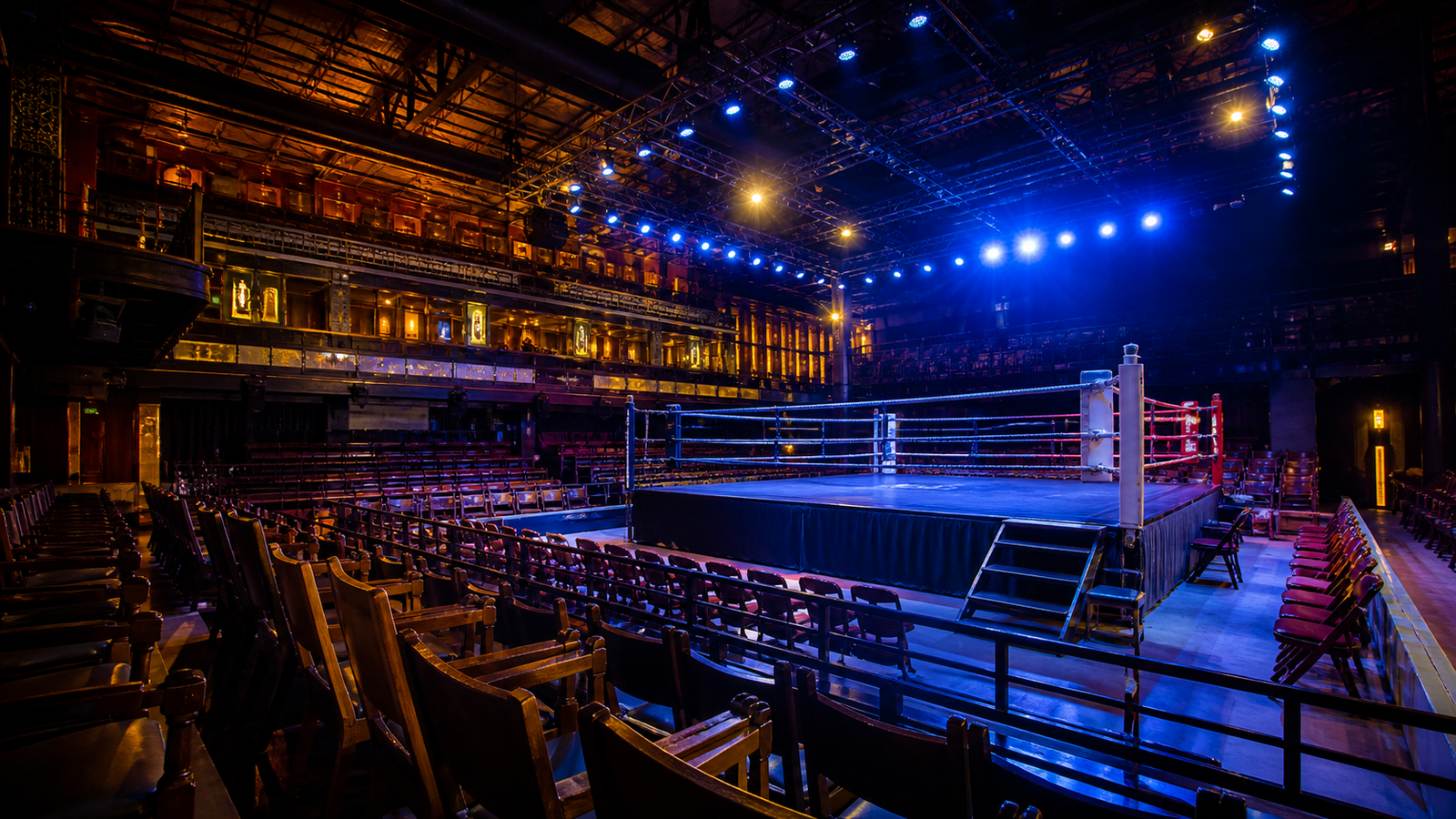
Bangkok is a city that comes alive at night. You can’t leave Bangkok without watching a Muay Thai fight, right? But the question is, where is the best place to see one? Luckily, Bangkok has a stadium that was completely revamped in 2025 and is now considered one of the best Muay Thai stadiums in the country. It’s also the oldest Muay Thai stadium on the planet, Rajadamnern Stadium.
For most visitors, Rajadamnern is the perfect choice. It’s centrally located, easy to get to, and you don’t have to trek all the way across the city to go to the other famous venue in Lumpinee. Some of the best fighters in the world compete at Rajadamnern, but what really makes it stand out is the atmosphere. Every night the stadium puts on an epic light show and creates this big fight energy that you don’t get in most other Muay Thai stadiums. Sure, you can watch Muay Thai all over Thailand, but there are very few places where it feels this electric, this immersive, and this authentic. So, if you’re only going to watch one Muay Thai fight during your trip, make sure it’s at Rajadamnern Stadium.
Bangkok Landmarks and Canal Life
On day two, we’re diving into the most iconic landmarks in the city. I mean, you wouldn’t visit London without seeing Buckingham Palace, right? Bangkok is no different. There are a few places you have to see at least once.
Start your morning early and head straight to the Grand Palace. One of the most famous landmarks in the entire country, the Grand Palace has been the official residence to the King of Thailand since 1782 when Bangkok was founded. Inside the complex, you’ll find the Emerald Buddha, one of the most sacred religious icons in Thailand, and the architecture here is stunning. Expect to spend around 2 hours exploring the grounds. It does get extremely crowded later in the day, which is why I always recommend doing this first.
But your next landmark is literally right next door, Wat Pho, home to the famous Reclining Buddha. This thing is massive. It’s one of the largest Buddha statues in the world, stretching 46 m long, and it barely fits inside the hall around it. But Wat Pho isn’t just about the Buddha. The whole temple complex is stunning with colorful stupas, detailed mosaics, and beautiful carvings everywhere you look. It’s about 300 baht to enter, and you’ll need a little under an hour to explore it.
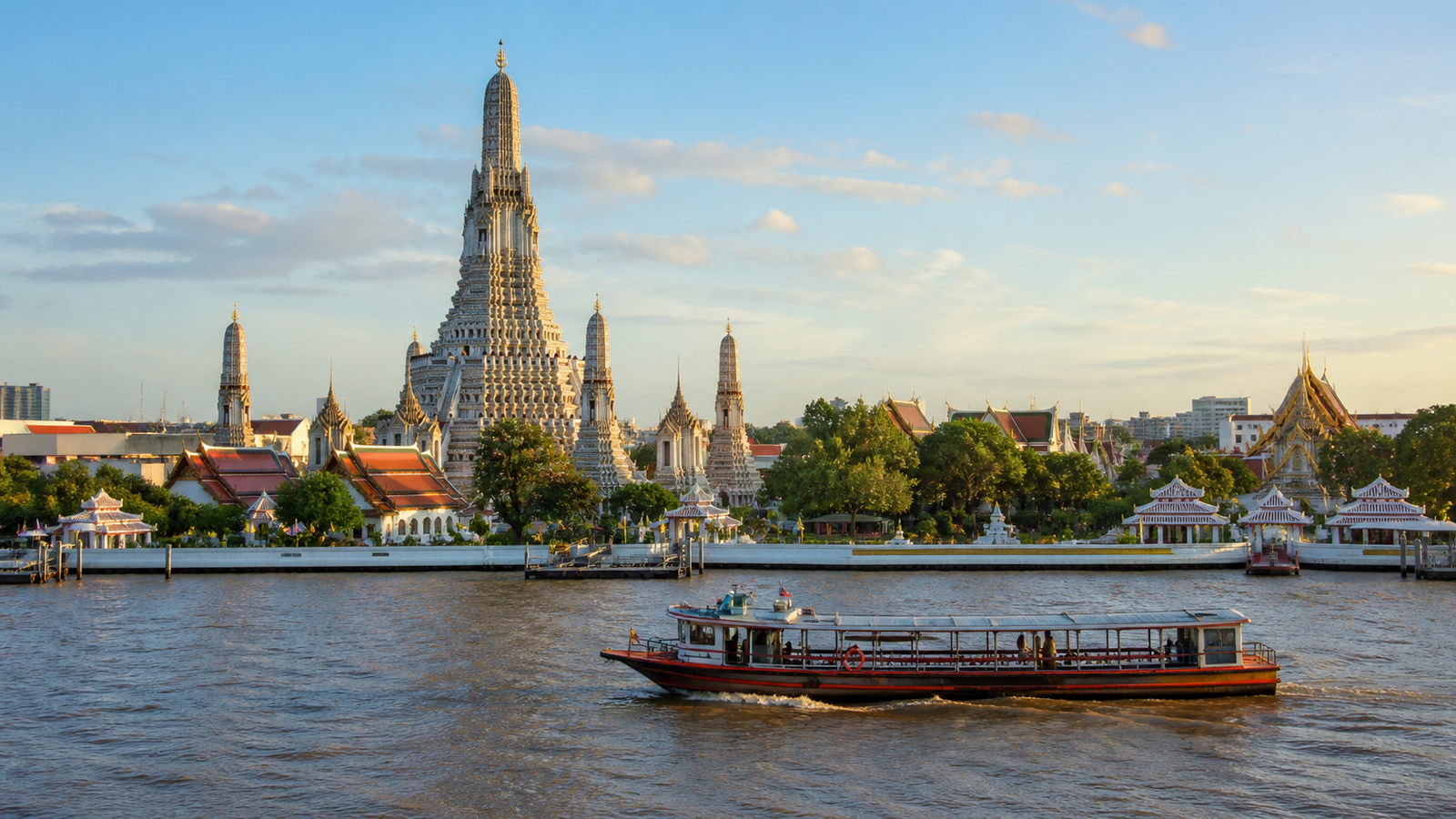
By this point, you’re probably starting to feel the Bangkok heat catching up with you. There are tons of restaurants nearby, but don’t just duck in the first one you see. Since you’re here, you may as well get lunch with a view overlooking the Chao Phraya River. And the next stop is on the other side of that river. Hop on the little public ferry for just 5 baht, and in a couple of minutes, you’ll arrive at one of the most beautiful temples in the country, Wat Arun. Wat Arun blends Hindu and Buddhist influences and is instantly recognizable thanks to its towering prangs. What makes Wat Arun really stand out is its riverside location. Entrance here is just 100 baht, and this is absolutely a temple you don’t want to miss.
And if you want to explore a more traditional and historic side of Bangkok, you can continue from Wat Arun straight into the city’s canal system. I mentioned this briefly on day one during the bike tour, but right near Wat Arun is the starting point of Bangkok Yai Canal, one of the oldest and most culturally important waterways in the city. Hop on a longtail boat here, and you’ll glide into neighborhoods that still hold on to Bangkok’s old riverside way of life. They have wooden houses on stilts, peaceful temples, locals fishing by the water. It feels like stepping back in time compared to the chaos of downtown. Along the way, you’ll pass the stunning Wat Paknam Golden Buddha. This statue absolutely towers over the canal and is one of the most jaw-dropping sights in Bangkok. You can also stop at the nearby Artist Village, a quiet little creative community along the water where you can grab a coffee, check out local crafts, and enjoy a slower, more relaxed pace of life.
Chinatown and Bangkok Nightlife
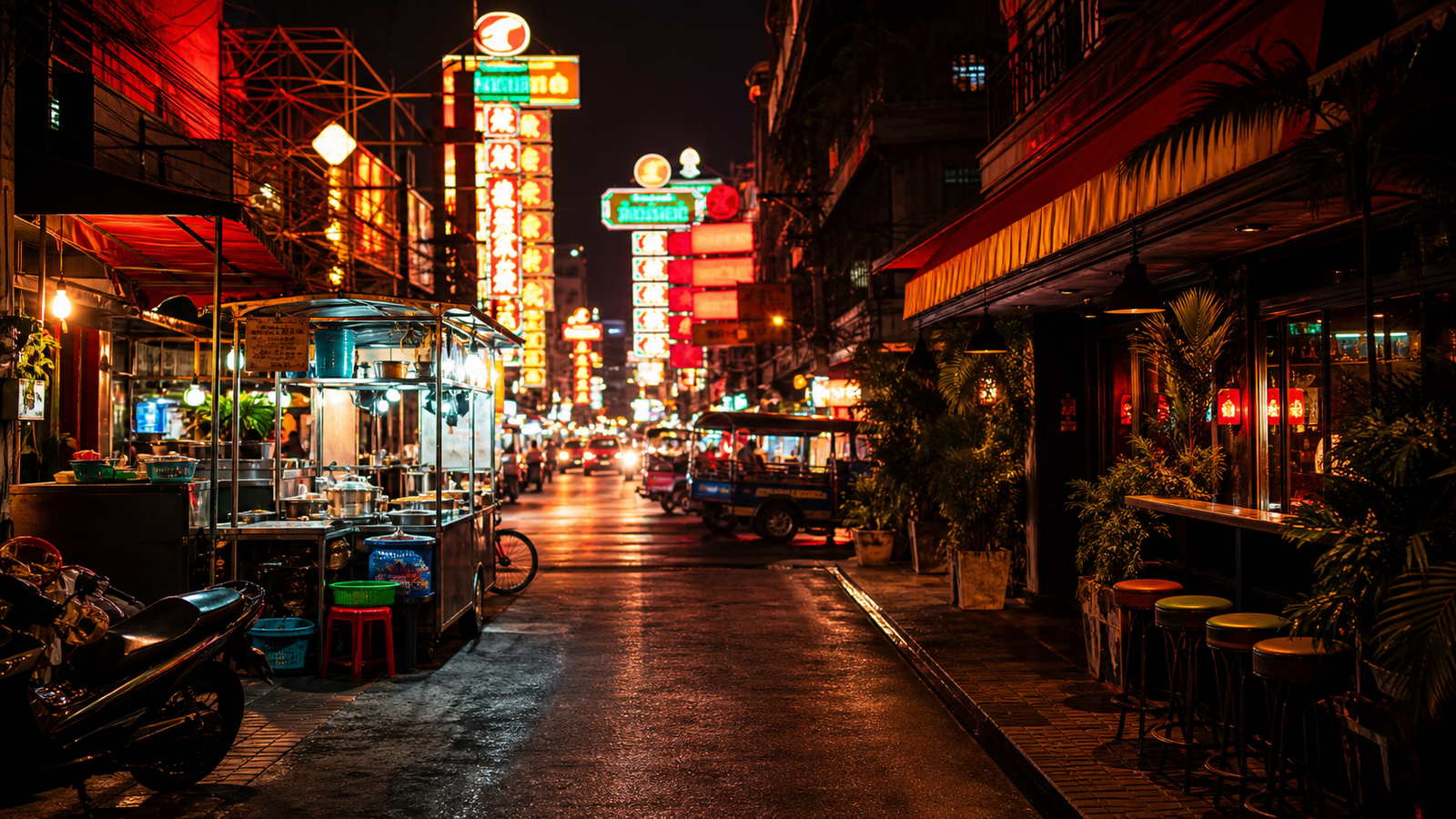
In the evening, it’s time to hit one of the most iconic streets in all of Bangkok, Yaowarat Road, the heart of Chinatown. This place is famous for its neon lights, its unbelievable street food, and total chaos. There are tuk-tuks, motorbikes, food trucks, and people weaving around each other. It’s complete madness, but that’s why it’s one of the coolest places in the city. Yaowarat has the highest concentration of street food stalls in the entire country, and you could spend hours hopping between them. Sure, you could come prepared with a list of top 10 must-try dishes, but honestly, part of the fun here is just wandering around and seeing what catches your eye. Even if you do plan ahead, you never really know what will be open, or what will be sold out, or which stalls have just have massive queues. So, the best approach is just explore and let the smells guide you.
When it comes to Bangkok nightlife, there’s one place most tourists have heard of, Khao San Road. Well, if I’m honest, I think it’s one of the most overrated parts of the city. It’s by far the most touristy, the most scammy, and call me an old man, but the music is too loud. It can be fun for a quick walk-through, but I think there are better options for a good night out.
One of those is actually right where you already are, in Chinatown. Before leaving the area, head over to Soi Nana. This is not to be mistaken with Nana Plaza, which is the city’s red light district, but Soi Nana is packed with some of the best cocktail bars in Bangkok like Teens of Thailand and Asia Today. What I love most about these places is how they use Thai and Chinese flavors like pandan, ginger, and local botanicals to create cocktails that have a real local flavor.
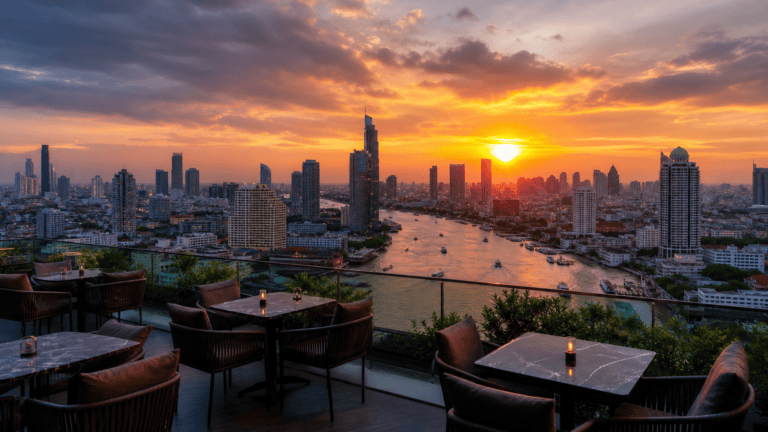
You also can’t leave Bangkok without visiting at least one sky bar. There are dozens across the city, and honestly, it’s probably best to pick one near your hotel to avoid extra travel. Along the riverside, you’ve got some incredible options like TAWN Club, but Sukhumvit is where you’ll find the highest concentration of rooftop bars in the city. Watching the sunset from up here with cocktail in hand is one of the best moments you’ll have in Bangkok.
Bangkok Day Trips to Amphawa and Ayutthaya
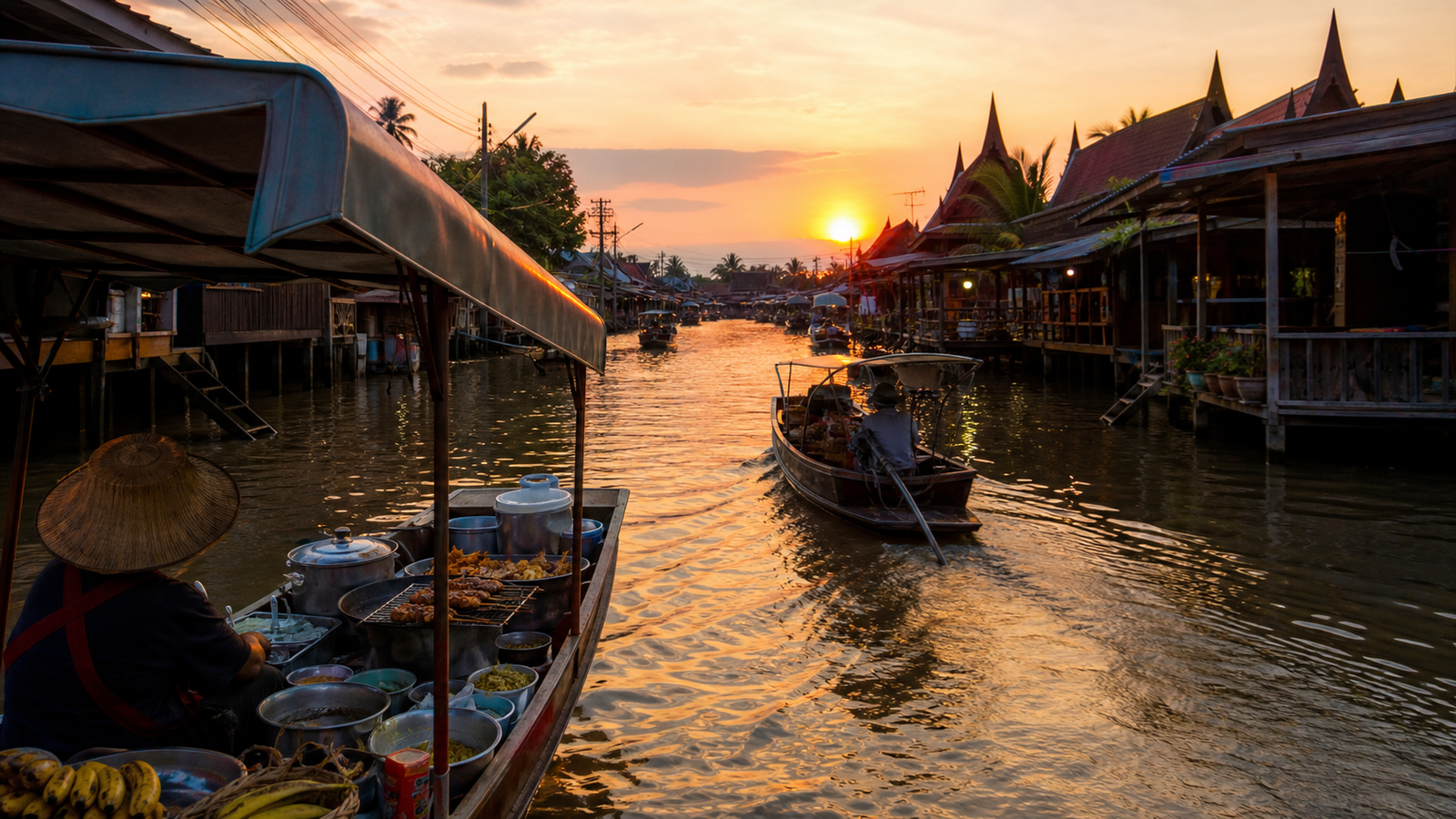
First up, everyone wants to see a floating market when they visit Thailand. But here’s the problem. Most tours take you to the tourist trap versions, the ones where the traffic jams on the water are almost as bad as the traffic jams on Sukhumvit Road. So, let me point you to one of my favorite floating markets near Bangkok. It’s one of the oldest in Thailand, and unlike the overly commercial ones, this place has actually kept its traditional charm. The food here is unreal. The vendors cook right on their boats in front of you with sizzling seafood, Thai snacks, and noodles, and the whole canal fills with the smell of fresh grilling. You can wander along the walkway for even more restaurants and street food stalls, or sit by the water and just take it all in.
But here’s what makes it really special. It’s the only floating market that stays open in the evening, so you can watch the sunset over the water with a cold craft beer in hand. This is Amphawa Floating Market, and one of the best parts is it sits right next door to another of the most fascinating markets in Thailand. I’m talking about Maeklong Railway Market, the one that’s built directly on top of a working train track. So, you have to time your day properly. About four times a day, a train comes rumbling through the middle of the market. The vendors pull up their umbrellas, pull their baskets in, and clear the tracks with seconds to spare. The train passes literally a few feet from the stalls, and it’s pretty wild to see. Maeklong is one of the most unique markets in the world, and since it’s about a 20-minute drive from Amphawa, these two make the perfect day trip combo.
But, did you know that Bangkok hasn’t always been the capital of Thailand? Just outside the city lies the ancient ruins of the former kingdom of Siam, a place that was once the political and cultural heart of the entire country. This ancient capital is now a UNESCO World Heritage Site, and it’s one of the best places to learn about Thailand’s past. These temples have been standing for over 500 years, and for centuries the city was the royal residence of the Thai monarchy. Everything changed in the late 1700s when the Burmese invaded and the city was left in ruins.
One of the highlights is the famous Buddha head in the banyan tree. During the invasion, the statue was decapitated, and over the centuries, the roots of the tree slowly grew around it, creating one of the most iconic images in all of Thailand. This ancient city is called Ayutthaya. It’s free to enter the city, but each temple charges a small entrance fee, usually around 50 baht, making it one of the best value day trips you can take.
More Bangkok Sightseeing and Day Trip Options
Siam Paragon Elephant Bus Tour Start
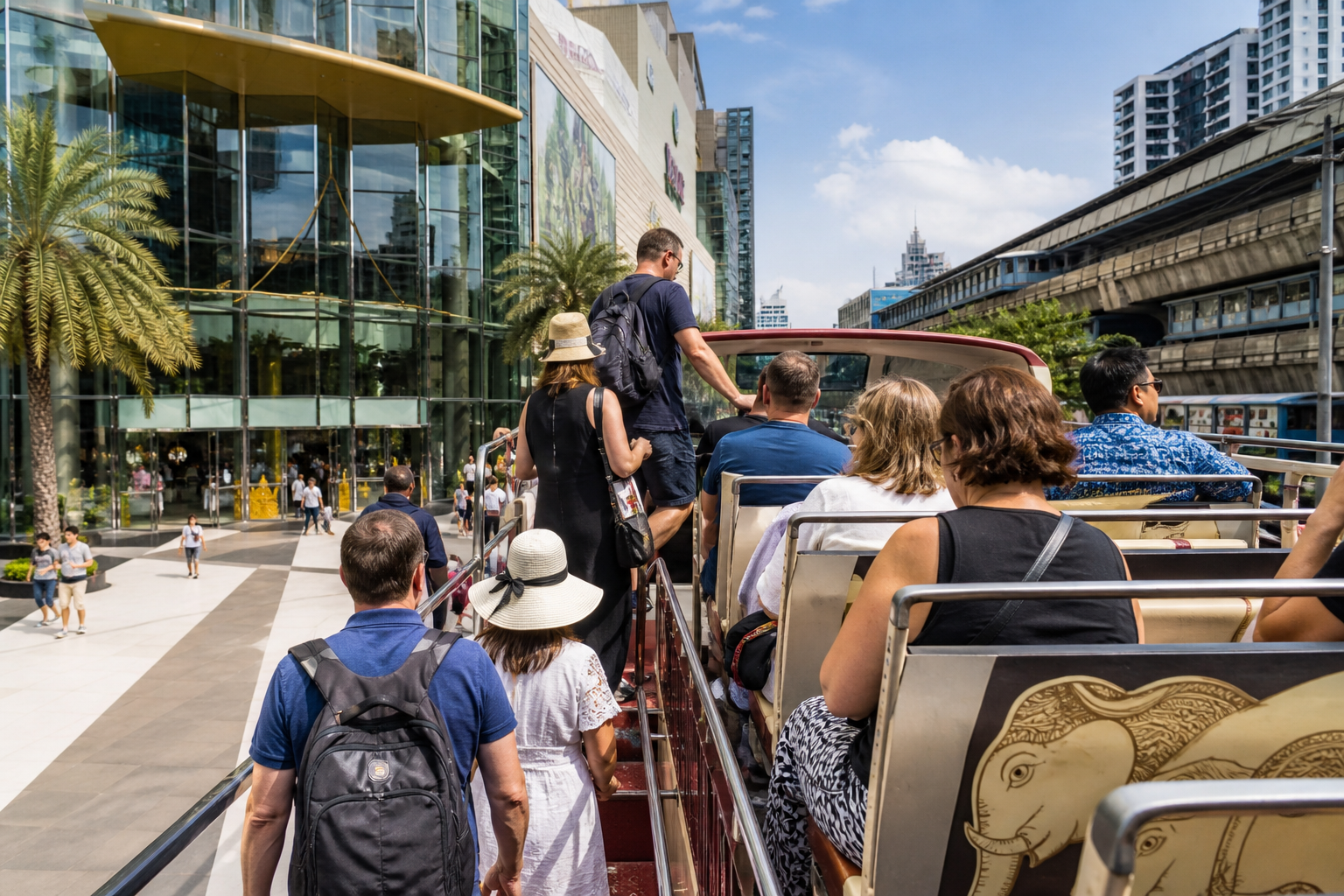
The bus offers a way to see major Bangkok sights in less than four hours without arranging tuk-tuks, taxis, motorbikes, or other transport between stops.
Elephant Bus Deck Audio Guide and Timetable
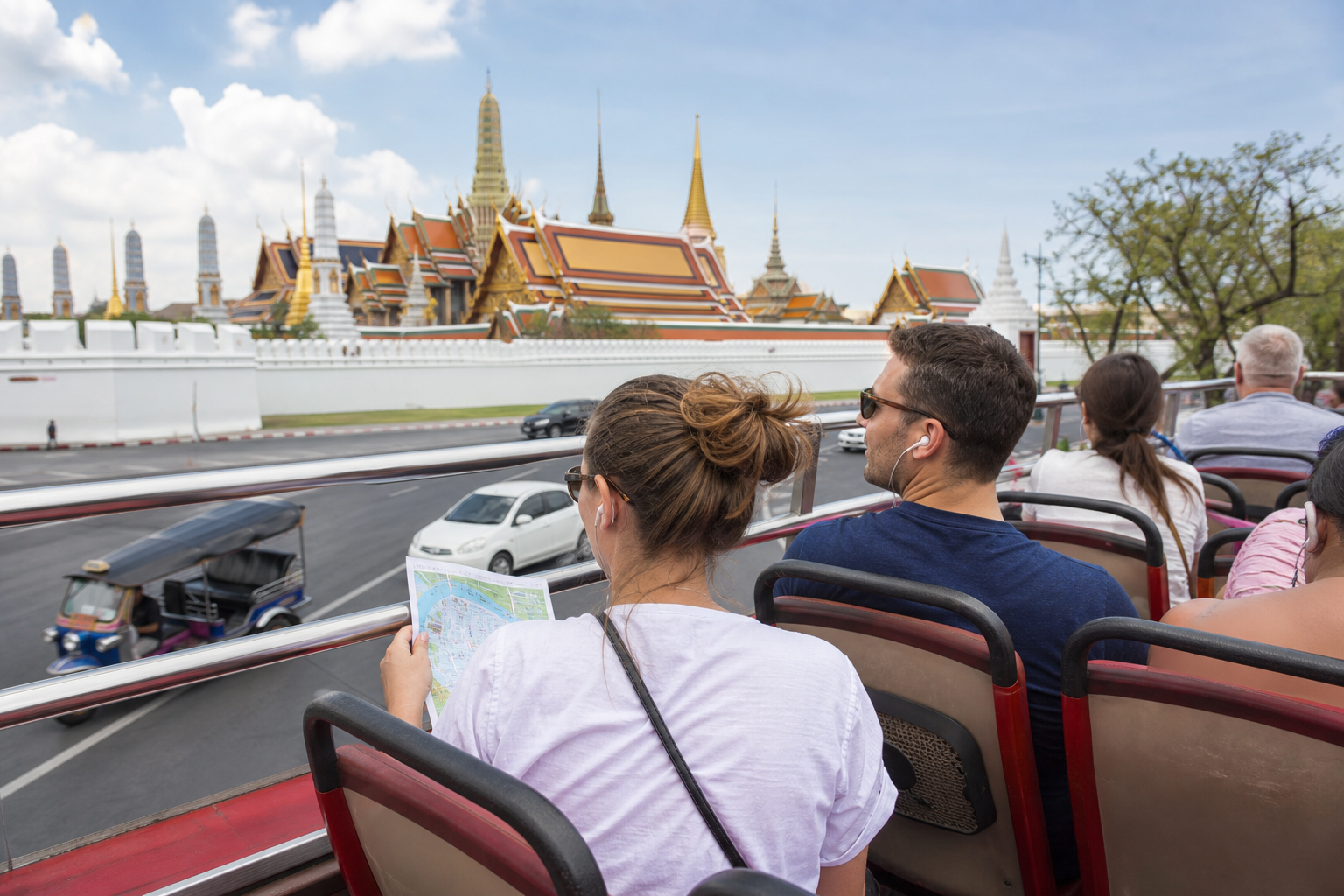
The bus has three sections, including an upper deck, a partly covered section, and an open front section for panoramic views. The open section is the preferred place for seeing the city.
Shopping Stops and Chinatown
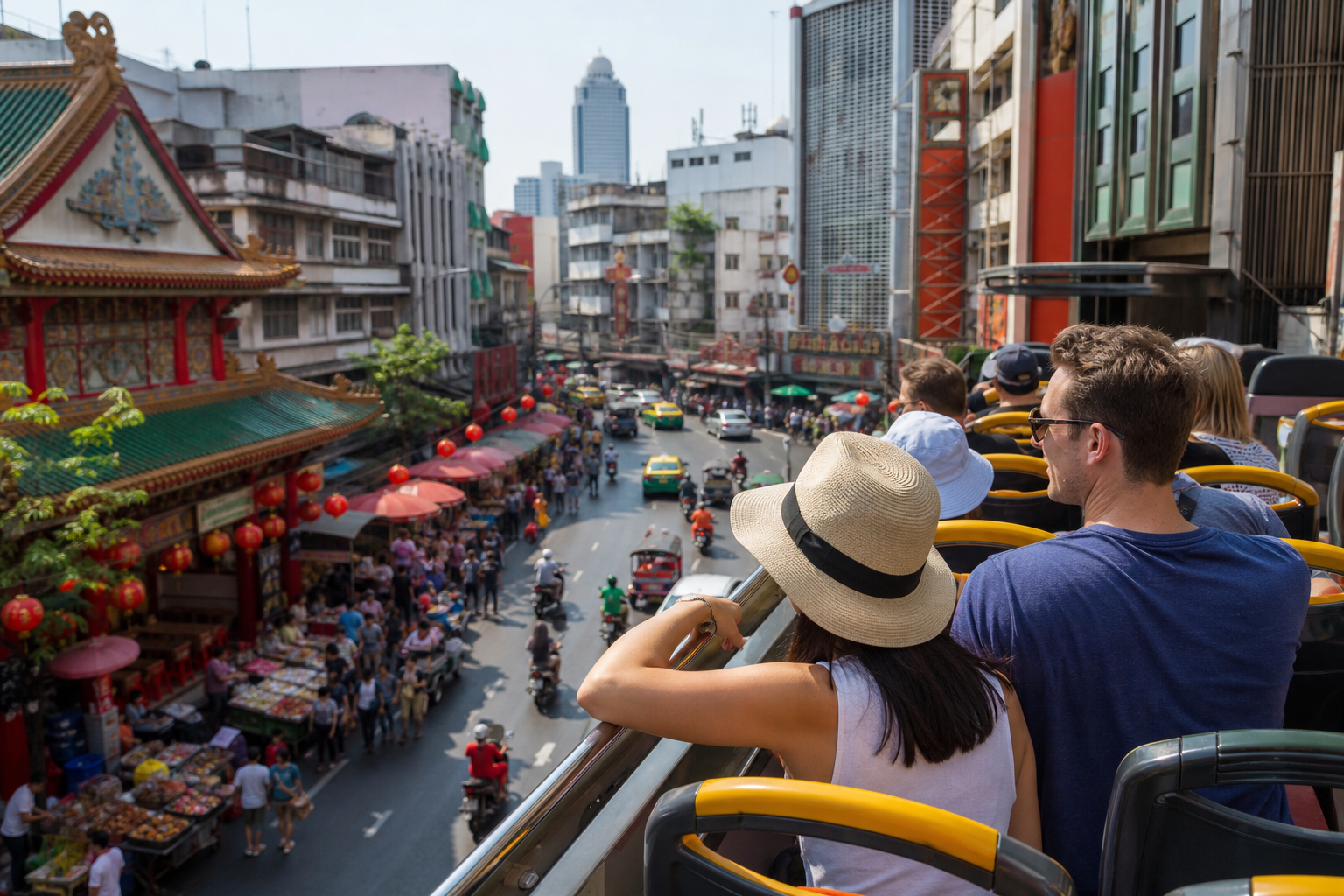
The first stops are Siam Paragon, MBK Center, and Samyan Mitrtown. These malls and markets are within walking distance of one another, so shoppers can get off, explore, and rejoin the bus later.
Chinatown follows the shopping stops. From the upper deck, visitors see the street-food activity and crowded lanes from above without needing to walk through every narrow street. The view provides a different way to experience Chinatown.
Historic Stops Wat Pho Grand Palace and Wat Arun
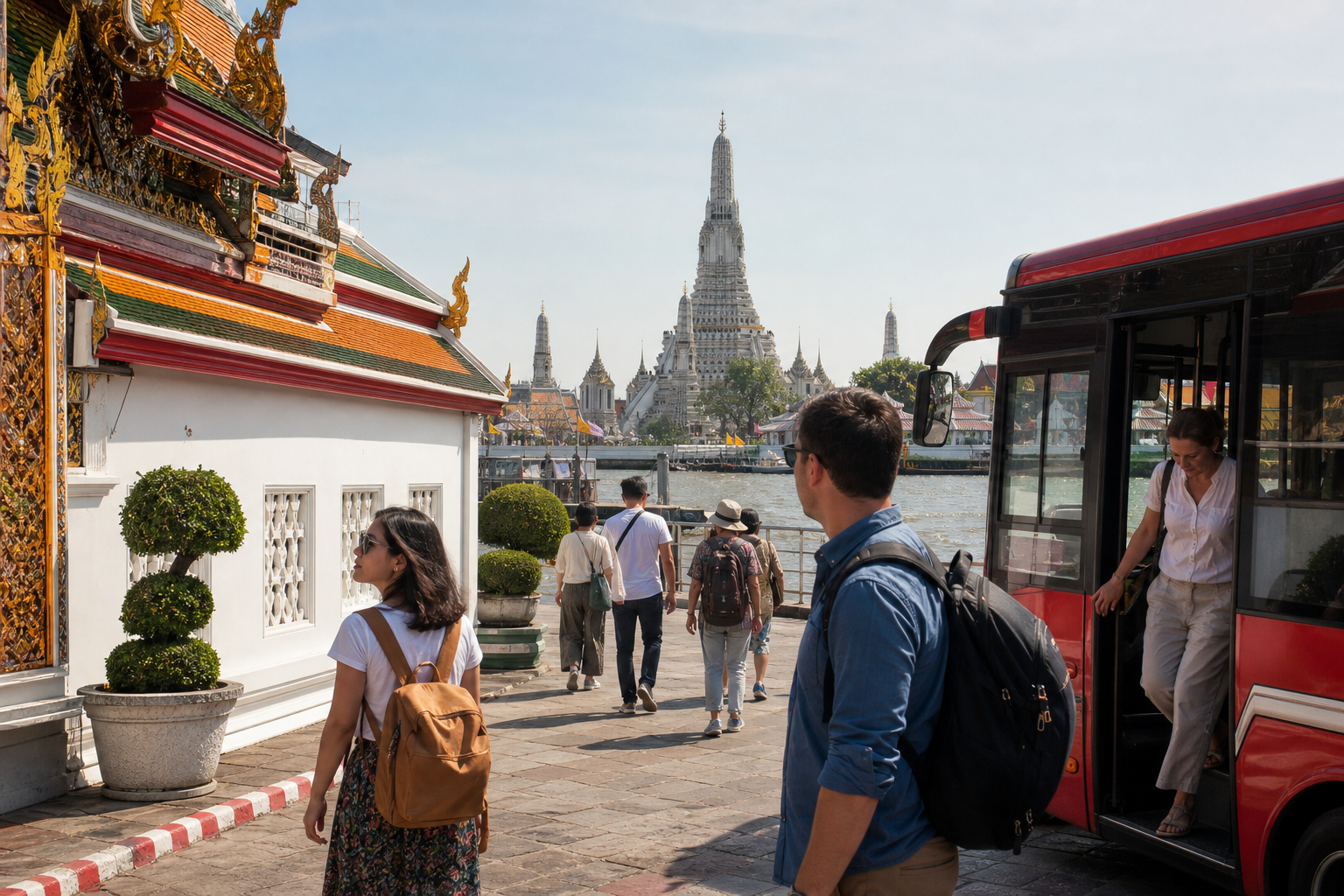
The route includes the Dragon Temple, Khaosan Road, the Giant Swing, and Wat Pho with the reclining Buddha. Wat Pho is a good place to hop off, then walk to the Grand Palace before returning to the bus.
Wat Arun is another essential stop for photographs. Khaosan Road is worth visiting during the day for food, massage, and a different atmosphere. The map and audio guide help visitors decide which stops deserve their limited time.
Iconsiam Mahanakhon and Silom
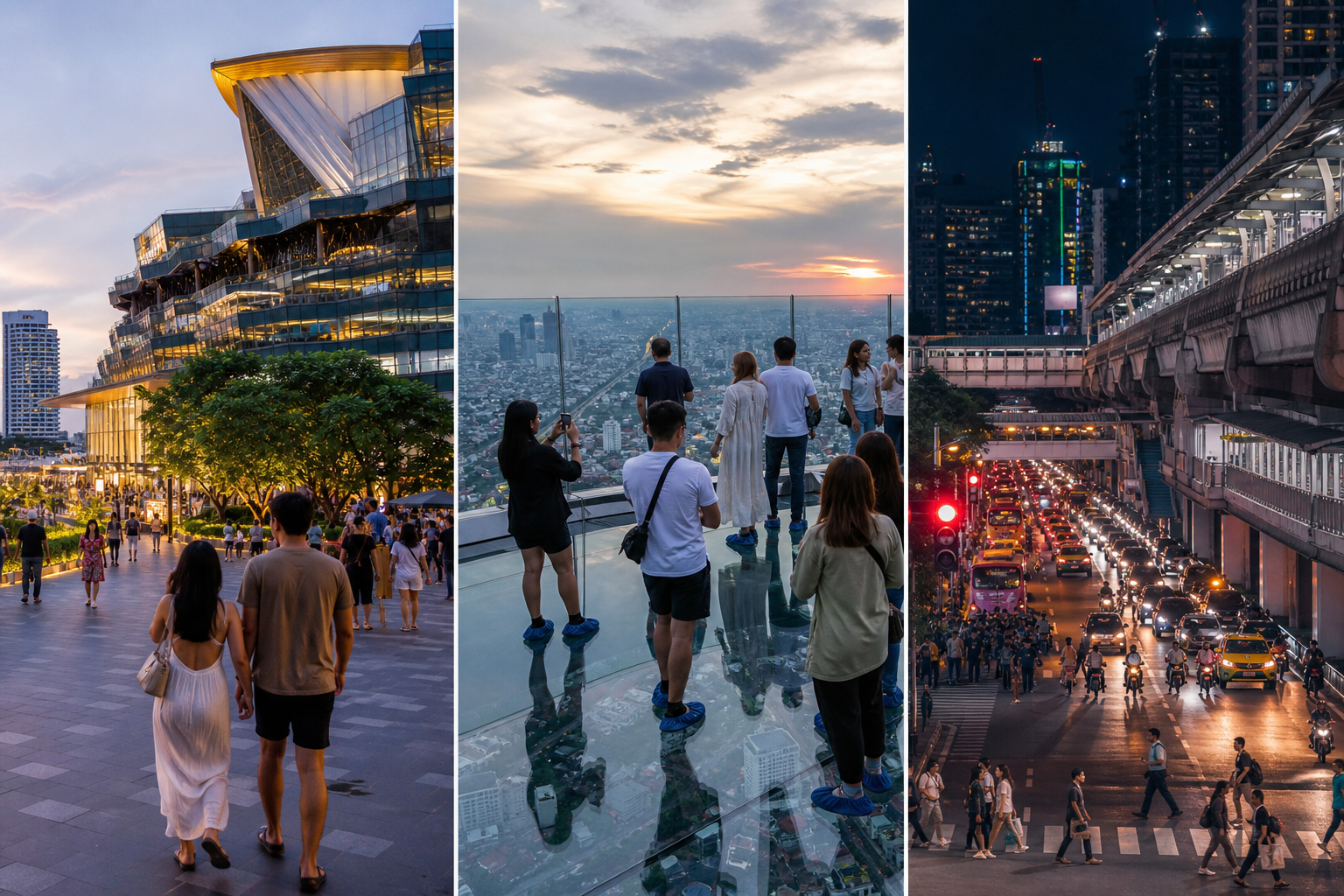
The final stops before returning to the start include Silom and Patpong. If it is near sunset, hopping off can be worthwhile; if it is still early, the area may be better at night. For a short visit, the hourly hop-on bus combines shopping, markets, temples, riverside views, and central Bangkok without the hassle of arranging separate transport.
Bangkok to Saraburi Day Trip
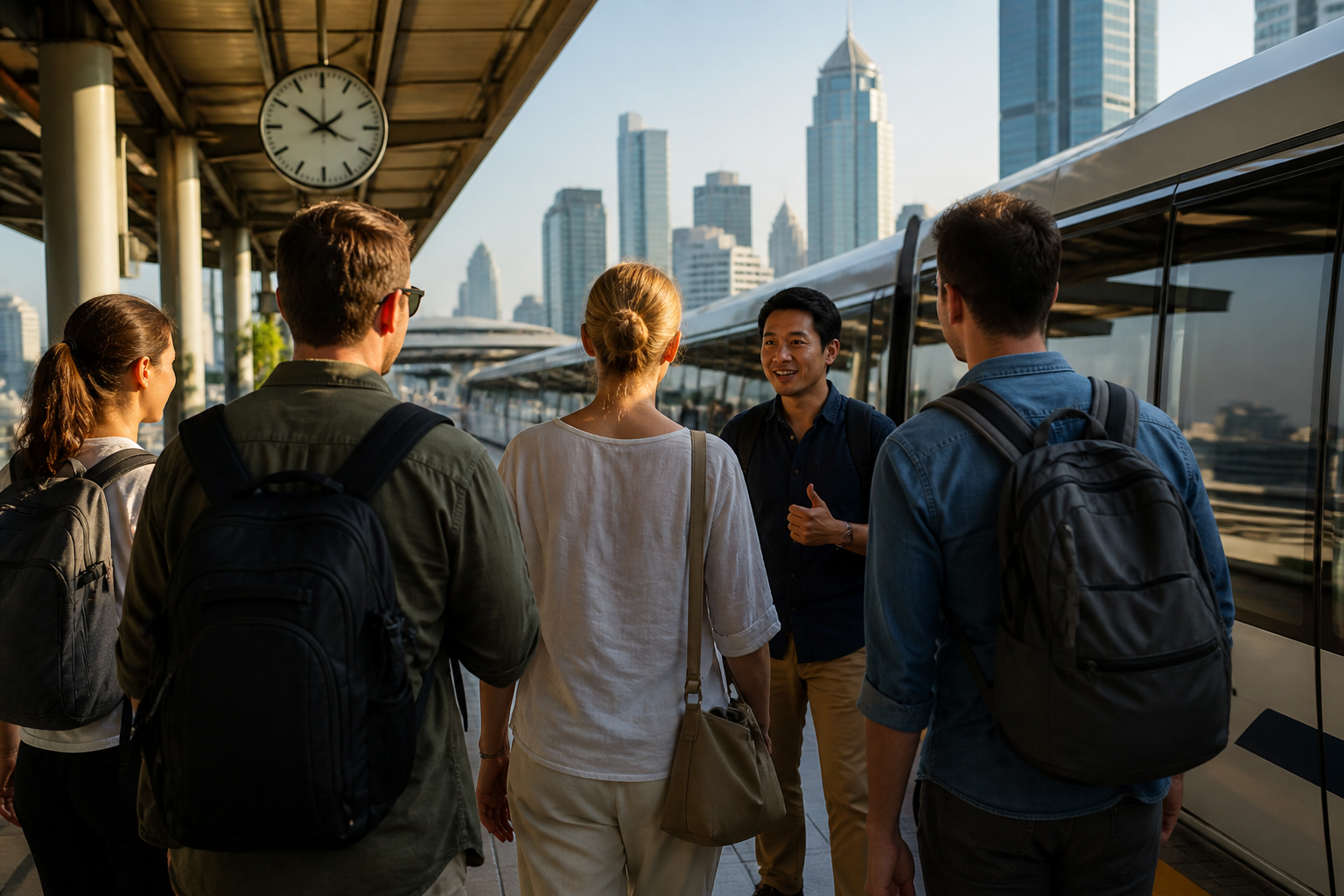
Saraburi is about two hours from Bangkok and makes a day trip for visitors who want a quieter place than the capital. The journey began at Phaya Thai, where the guide and group met before travelling into central Thailand.
Saraburi’s name means the city near the water. The area has local markets, historic buildings, green spaces, and places where Thai families spend time together.
Saraburi Riverside Market Food
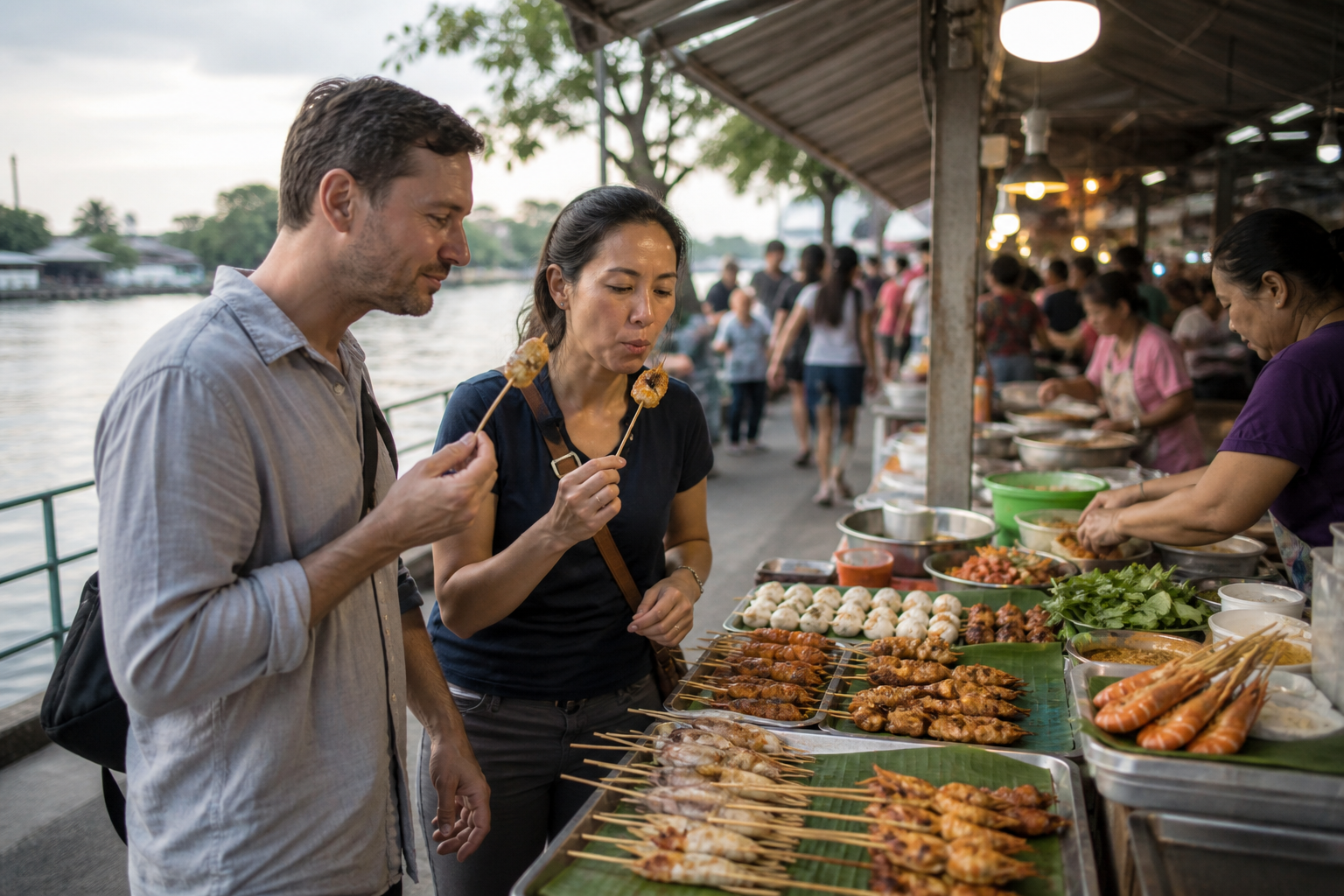
The first stop was a large market beside the river. It had Thai street food and dishes that are not always available in smaller local markets, giving visitors a chance to try regional food.
The market is also a weekend meeting place where local people eat, relax, and spend time with friends and family. Coconut-based sweets and other fresh food were available around the market.
Traditional Thai House Museum
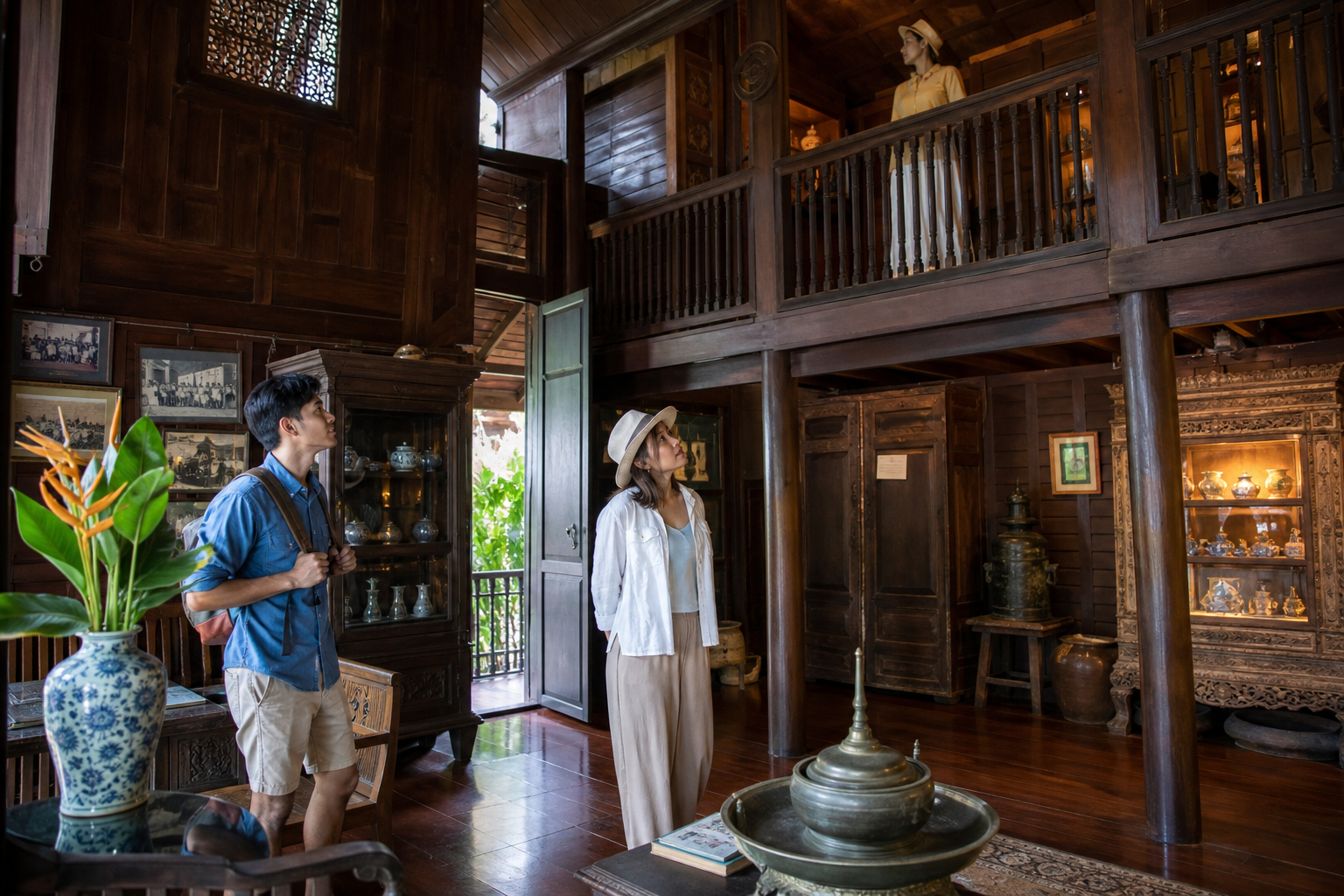
The museum is in one of Thailand’s old traditional houses and contains antique objects and cultural displays across two floors.
It is a useful stop for visitors interested in older buildings, local history, and the way traditional Thai homes were arranged. Allow time to explore both floors and the objects inside.
Saraburi Lake Green Spaces and Animals
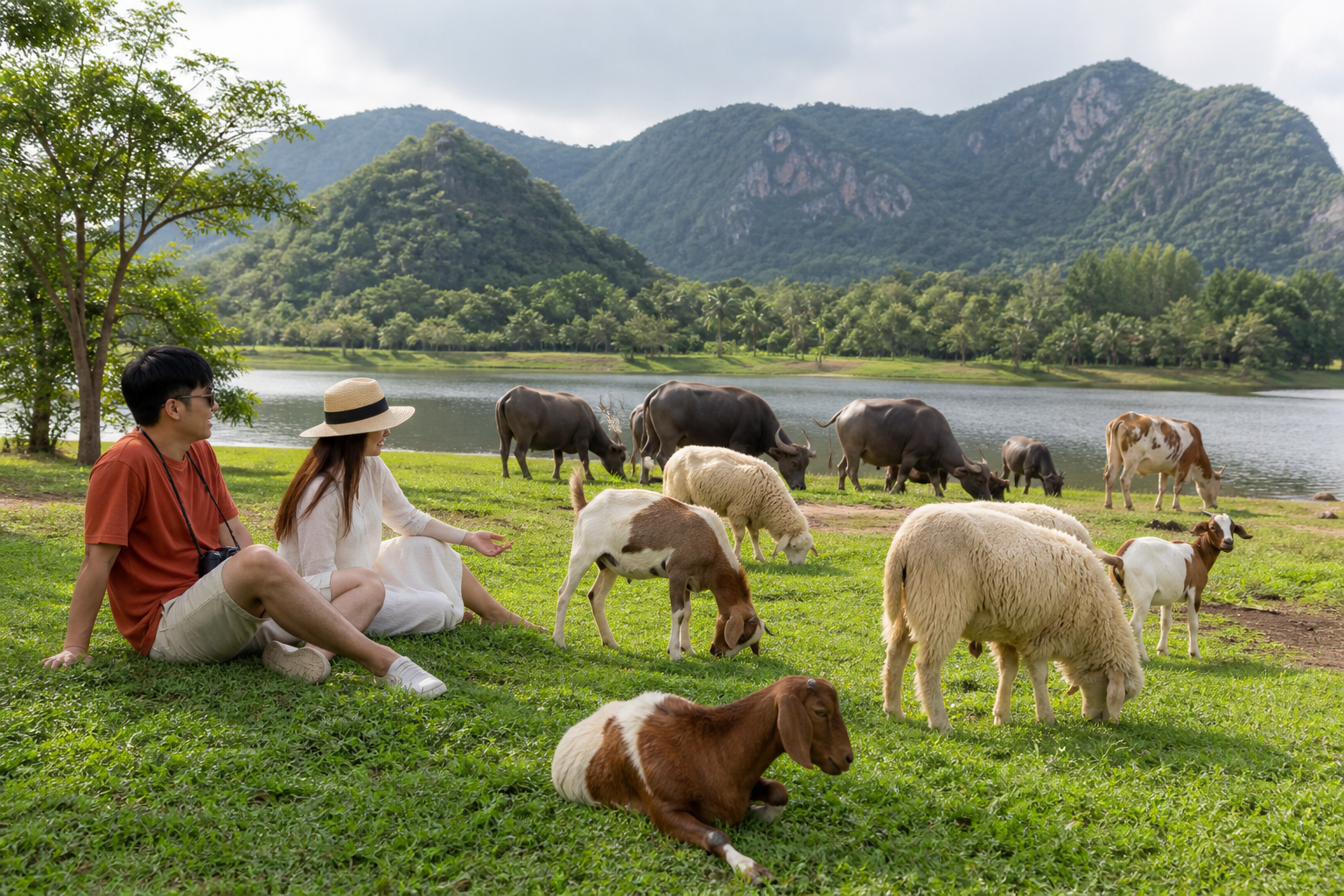
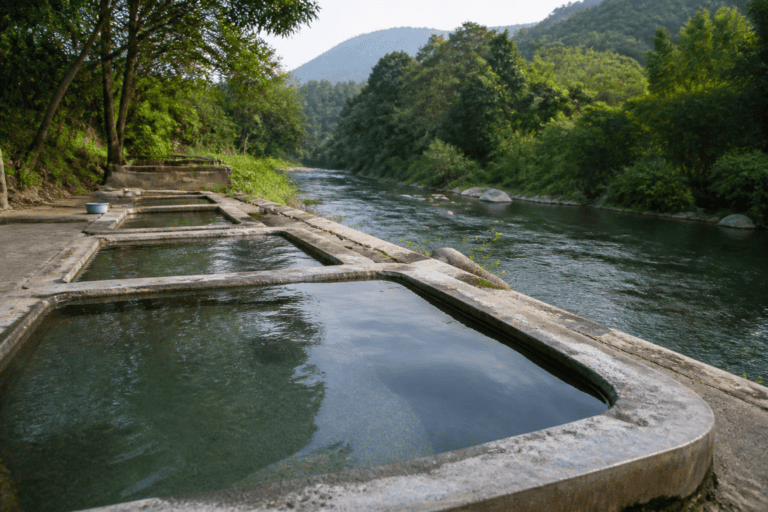
One of the most scenic stops is beside a lake with wide green spaces and hills opposite the water. Goats, sheep, buffalo, and cows are found around the area, creating a rural landscape close to Bangkok.
Visitors can take photographs, relax beside the lake, and camp overnight. The open setting is a contrast to Bangkok’s busy streets and dense city centre.
Planning a Local Saraburi Trip
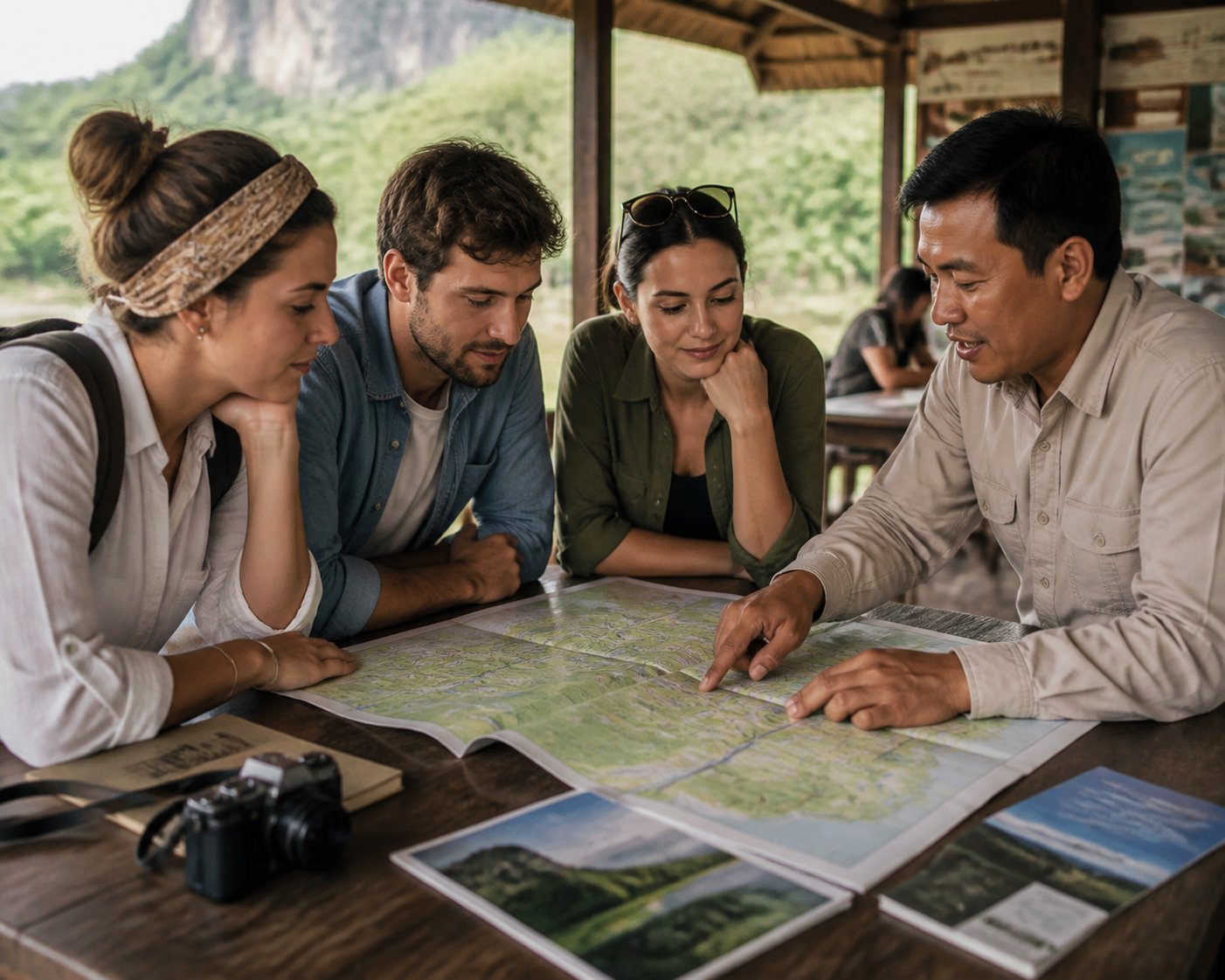
A day trip can be arranged around the market, museum, lake, and other local stops. Choose a ready-made route or plan a private itinerary around the places and activities that interest you.
Travelling with a local guide can make it easier to find smaller attractions and understand the area. Saraburi suits visitors who want local food, history, open countryside, and a slower day outside Bangkok.