Things to Do in Northern Thailand in 2026
Pai and the Mae Hong Son Loop
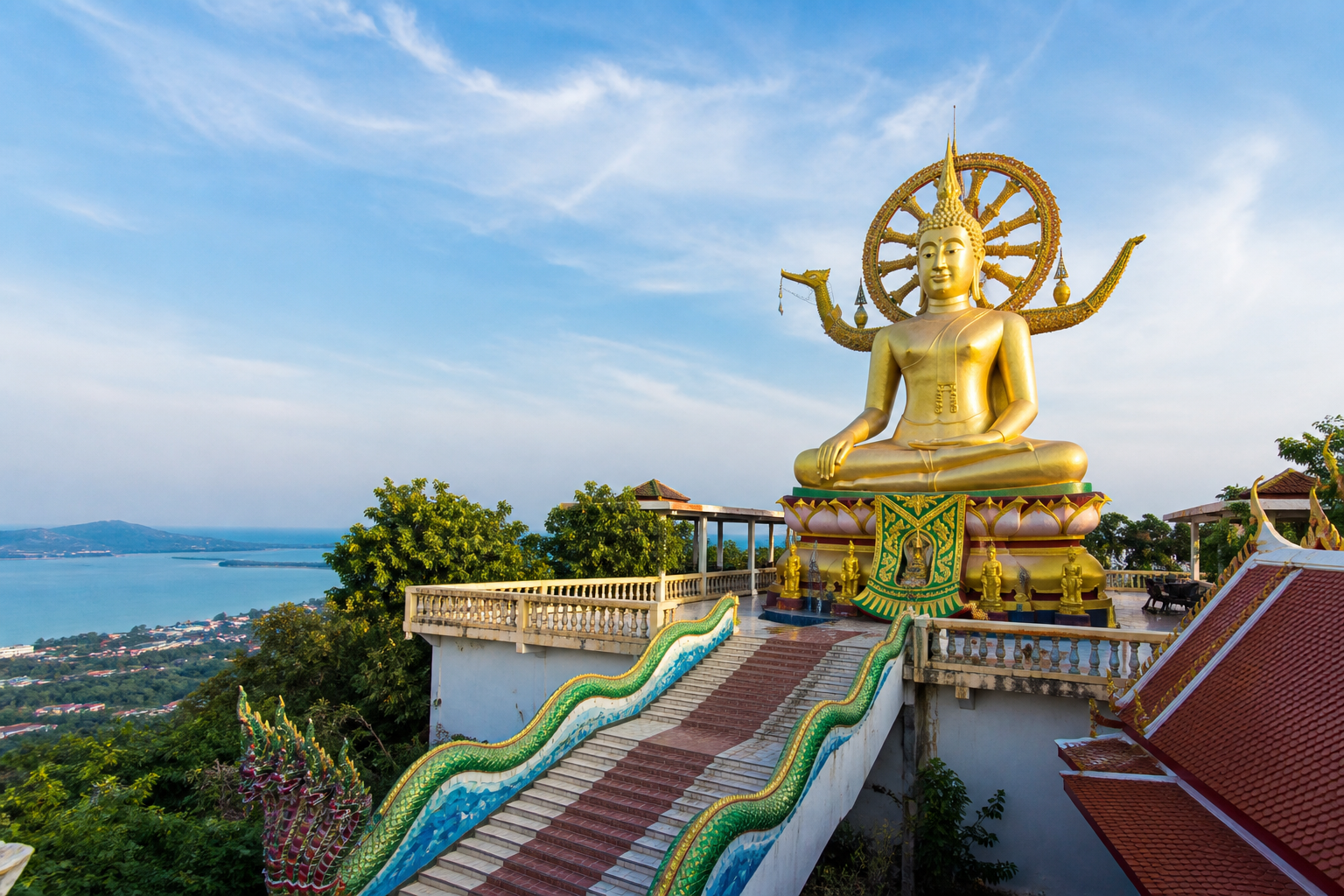
Most tourists only ever scratch the surface of what northern Thailand is all about. Missing out on hidden temples, insane waterfalls, and food you’ll dream about for years. I’ve spent over 10 years tracking down the region’s best-kept secrets. Let’s start with the town of Pai, a small laid-back mountain town about a three-hour drive from Chiang Mai. Once you arrive, you’ll find misty mountains, bubbling hot springs, and golden sunsets that light up the whole valley. If you want the best views, climb the stairs to the giant white Buddha just outside the town. From the top, you’ll see epic mountains and stunning rice fields stretching below you. Make sure to get there for golden hour to see it like this. If you’re looking for an adventure, Pai Canyon is a wild maze of narrow ridges and steep drops that feels like something out of another world. You get intense views of the rugged landscape below.
There are no fences, so one wrong step could send you tumbling down the ravine. It’s kind of risky, but that’s part of the fun. Skip the flip-flops and wear some proper shoes so you don’t break your neck. If you’ve ever wanted to try riding a scooter in Thailand, Pai is the perfect place. I’m usually pretty cautious about recommending scooter riding. Thailand can be a dangerous place for it after all, and accidents happen all the time. But Pai is a little different. Unlike most of the country, the roads here are quiet, well paved, and surrounded by stunning rice fields, mountains, and tiny villages, all with barely any traffic. The scooter will allow you to easily reach some of the other destinations on the list which can be miles apart. But in Pai, the journey is usually just as much fun as the destination.
But if you want to relax, soak up the sun, and maybe enjoy a few beers, try tipsy tubing in Pai. Just hop on a big inflatable tube with a bunch of fellow travelers and float down the river surrounded by epic scenery. It’s one of the best ways to meet other travelers. Just outside Pai, Tanlord Cave puts on a wild show at sunrise and sunset. Thousands of birds swoop in and out the cave all at once. And inside, you can raft along an underground river, drifting past massive chambers and surreal rock formations. One of Pai’s hidden gems is along a bamboo walkway stretching out over bright green rice paddy fields in the countryside. It’s super photogenic and perfect for a quiet stroll. Best of all, you’ll often spot water buffalo wandering the fields just below you. For a slice of rural Thai life and some epic photos, don’t miss Pai Bamboo Bridge.
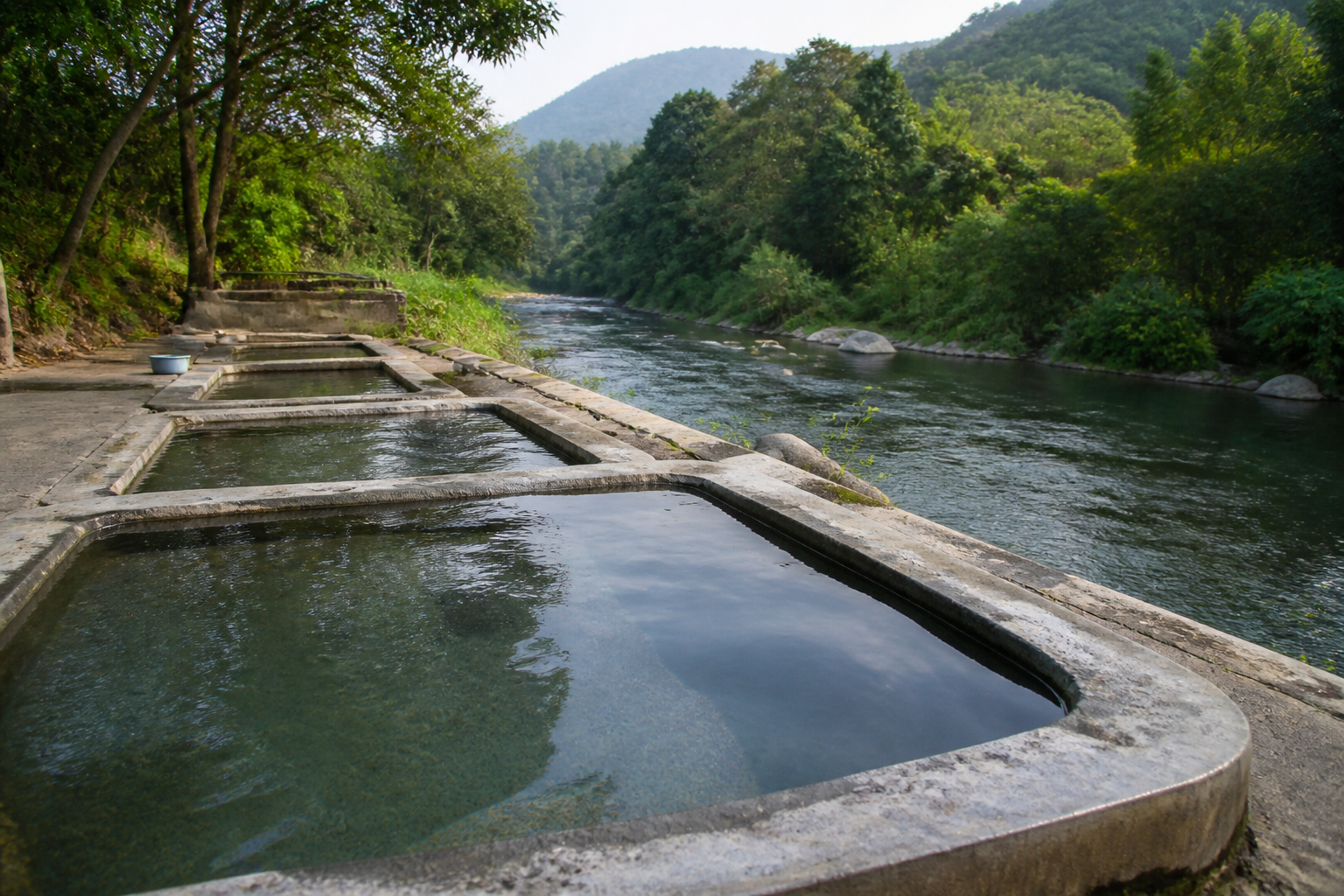
And just outside of town, you’ll find the PI Memorial Bridge, a historic steel bridge first built by the Japanese army during World War II. Despite its dark history, it’s a surprisingly scenic spot with mountains in the background and the river below. And after a hot day exploring Pai, nothing beats a soak in the town’s natural hot springs. The water stays a toasty 35 to 40° C thanks to geothermal activity. You can relax in a big public pool, rent a private tub, or even find hotels that pipe the hot spring water straight into the baths. It’s the perfect way to unwind after a day outdoors. But don’t let Pai’s size fool you. This tiny town has one of the best nightlife scenes in northern Thailand. By day, it’s all temples and quiet cafes, but at night, the walking street comes alive with bars, food stalls, live music, and a buzzing backpacker vibe. If you’re looking for a fun night out up and off, Pai Walking Street is the place to be.
And on the complete opposite end of the spectrum, meditation is a huge part of northern Thai Buddhist culture. And on the way to Pai is one of the best meditation centers in the area. Paipe Meditation Center is located in the mountains, far away from distractions. You can come here and do multi-day meditation retreats with monks and beautiful surroundings. Best of all, it’s completely free.
Chiang Dao Mountain Adventures
For the ultimate northern Thailand adventure, try the Mae Hong Son route. This legendary motorbike route takes you from Chiang Mai through Pai Mae Hong Son, and back to Chiang Mai. This is 4 days of winding mountain roads, hill tribe villages, waterfalls, and jaw-dropping views. If you crave open roads and epic scenery, this is one of the most beautiful road trips in the country. One of the highlights of the Mae Hong Son Loop is Ban Rak Thai, a tiny Yunnanese village set around a peaceful mountain lake near the Myanmar border. Early mornings here are magical with mist drifting across the water. The village looking like something out of a storybook.
Chiang Dao Caves and Hidden Temples
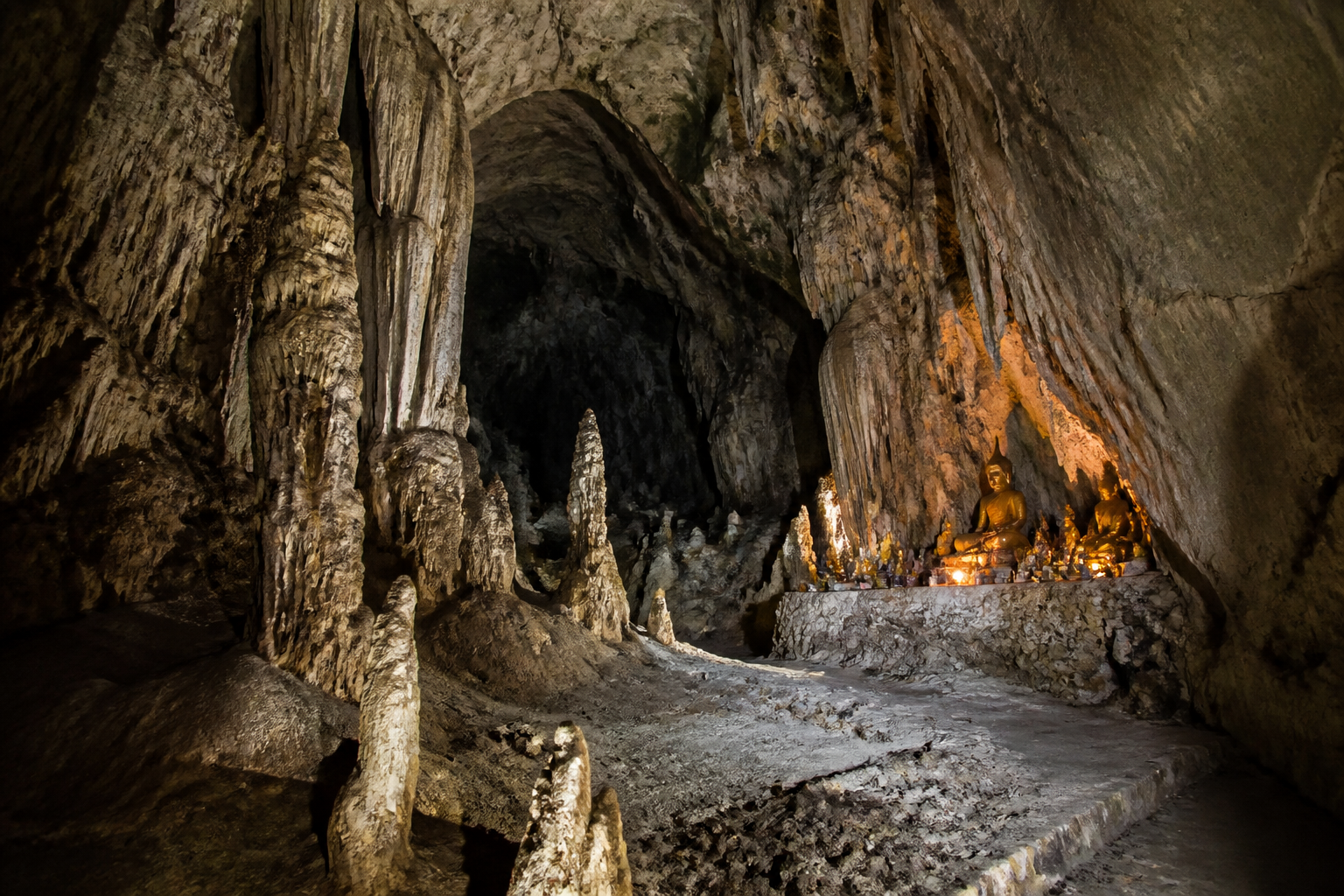
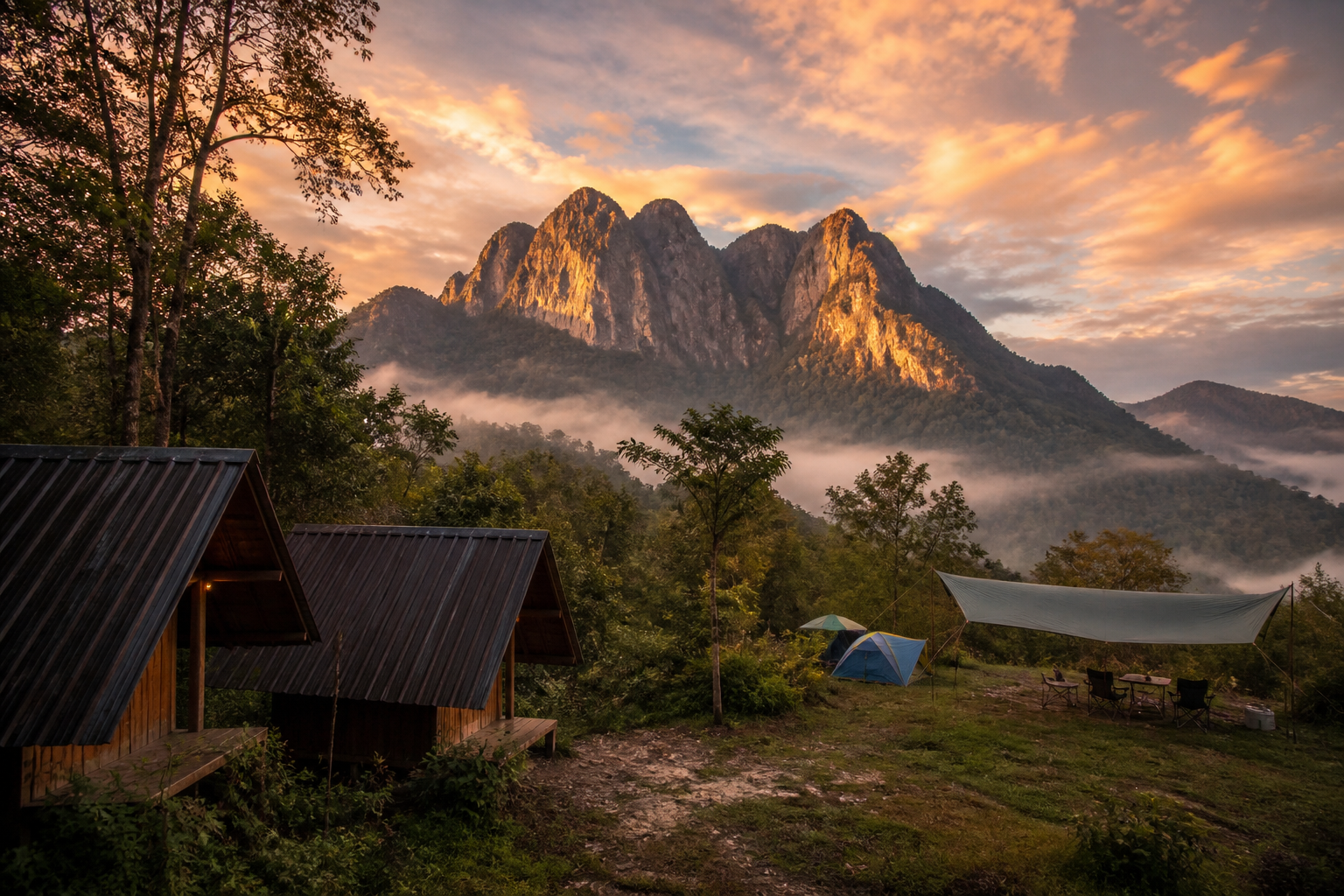
If you want Thailand’s most epic mountain views, Chiang Dao is the place to visit. Its jagged peak looks straight out of a fantasy movie towering over lush northern landscapes. And in this section, I’ll show you the best things to do in this incredible mountain town. If you want to wake up to those incredible mountain views in serious style, try a glamping stay at the Campion or Yatika Boutique. You’ll get all the comforts of a boutique hotel, plus jaw-dropping scenery right outside your accommodation. Make sure you get a mountain facing room for the best experience. Okay, so this next one though is not for anyone who’s claustrophobic, but you can actually explore inside the mountain itself. I had no idea what I was getting myself into when I did this. When you first walk into the cave, it seems harmless. There’s a paved path, some lights, nothing too dramatic.
Then they ask you if you want to go deeper with a guide. Now, I kind of thought at first this was a scam. I didn’t really want to go in there with a guide, so I almost said no. But thank God I didn’t. The deeper section here is a kilometer long trek through the underground cave system. You’re squeezing through tight rock passages, ducking under low ceilings, and shuffling along narrow ledges. And you really want to be careful that you don’t slip. In the end, you definitely need a guide because you could easily get lost in here and I don’t even want to think what would happen if you did. What? Ban Den is one of Thailand’s most underrated temples and it lies just outside Chiang Dao.
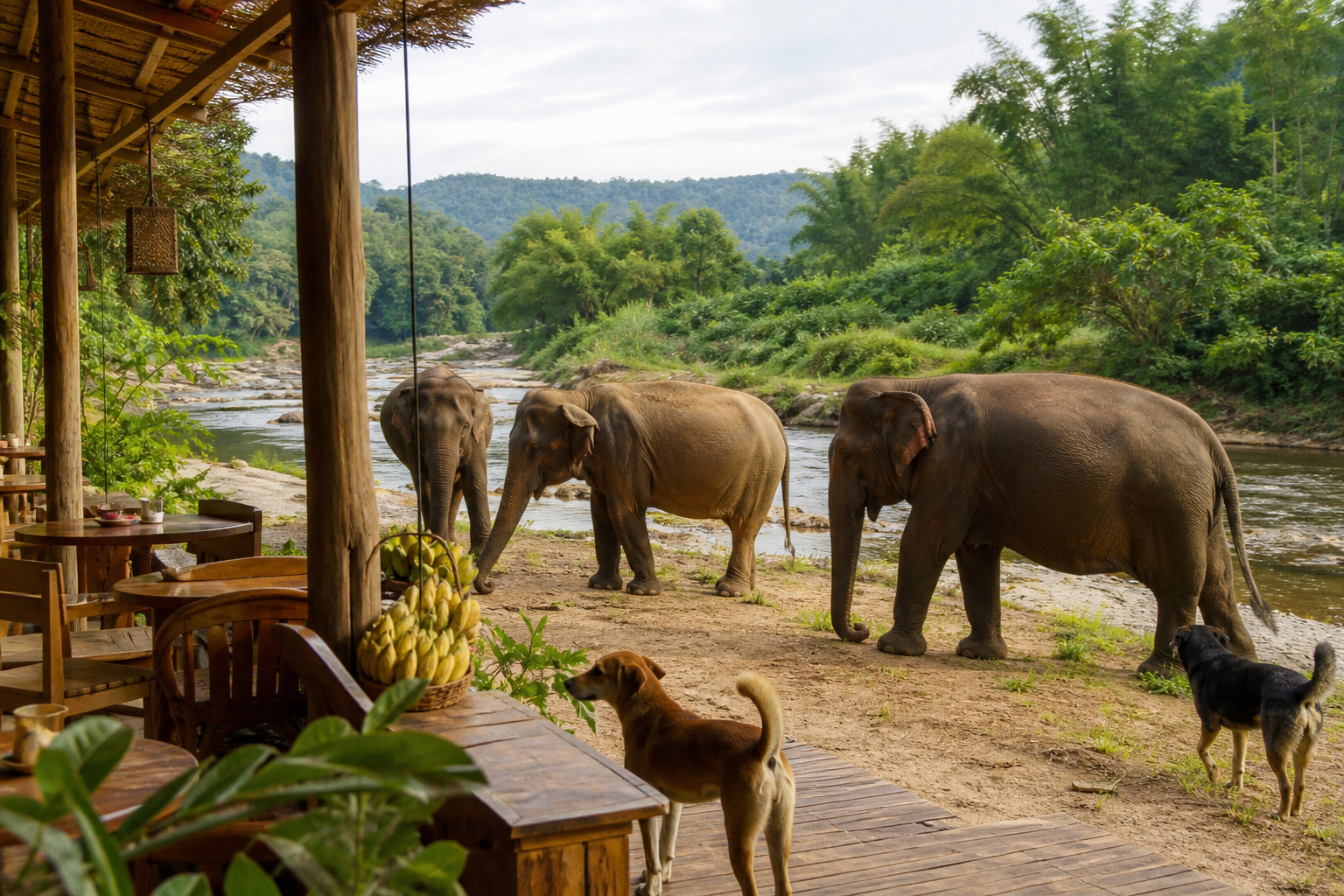
Perch in the hills, you’ll get gorgeous skyline views of distant mountains. The entire place glows with deep blue and purple colors and its massive temple grounds are filled with intricately designed monuments like giant chickens, dragons, and mythical creatures. It’s a true hidden gem temple. Also outside Chiang Dao, you’ll find one of Northern Thailand’s quirkiest natural wonders, the sticky waterfalls. Thanks to mineral-rich limestone, the rocks here have a rough, grippy texture, so you can literally hike straight over the waterfall while water rushes over your feet. Araksa Tea Garden is one of the most upscale tea plantations in the region and is known for its organic tea and beautiful setting. It’s the perfect way to slow down between all the temples and trekking. So, this is Thailand. Whereas some places have cat cafes, others have dog cafes, in Chiang Dao, they actually have an elephant cafe. Elefin Cafe is on the banks of a river by an open field where you can watch the elephants freely roam.
There is a feeding station, so you can also buy bananas to feed them.
Northern Thai Food
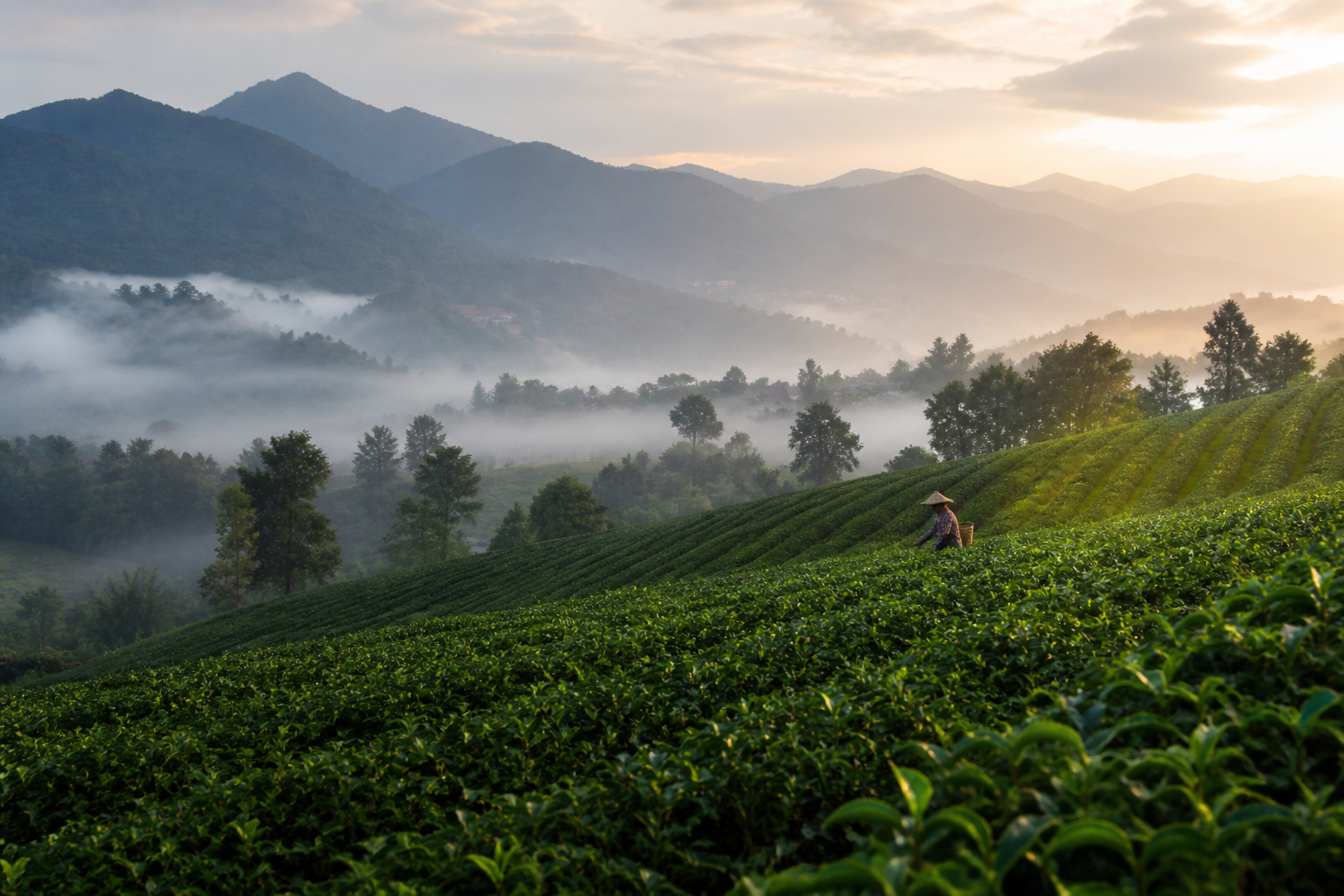
My favorite dish in all of Thailand comes from the north. It’s a rich creamy noodle curry called khao soi. What makes it unique is the mix of flavors and textures. Soft egg curry noodles, crunchy fried noodles, and a curry that’s sweet, spicy, and a little bit sour. You absolutely cannot leave Thailand without trying khao soi. Another northern dish you have to try is sai ua. A super flavorful herbal sausage that’s nothing like when you get back home. It’s packed with lemongrass, kaffir lime leaf, galangal, and chili. One of Chiang Mai’s most famous street food stalls was put on the map by Anthony Bourdain. And it’s easy to spot.
Just look for the woman in the cowboy hat standing behind a giant pot of braised pork. She’s legendary for cooking cow camu. Slow braised pork leg over rice with pickled greens and a soft boiled egg. The stall only opens at night, so swing by for an evening snack and check out the other street food stalls nearby while you’re at it. Fried insects are actually a local delicacy. So, if you’re brave enough, you can also give fried silkworms or crunchy crickets a go. One of the weirdest but surprisingly tasty dishes that I tried recently in Northern Thailand was water buffalo larb. Larb is a classic northern dish. Minced meat mixed with herbs, lime, and lots of chili. But this version swaps out the usual pork or chicken with water buffalo, giving it a totally different flavor and a chewier texture.
If you’re feeling really adventurous, this is usually eaten raw, but I played it safe and went for the cooked version. Now, if you ever find yourself out in the Kai countryside, keep an eye out for local moonshine. This is homemade rum distilled from sugarcane and sold right in the villages. The quality can vary. Some batches are smoother than others, but it’s always strong. I’ve had it after a long day hiking in the jungle, and trust me, it hits the spot. But one thing that makes Northern Thai food unique is that it’s not just influenced by Thailand. You’ll also find amazing Shan Burmese cuisine thanks to the large Shan community from Myanmar’s border province. Years of conflict have brought many Shan refugees to the region and they’ve integrated by sharing their incredible food. Look out for Shan restaurants serving specialties like Burmese tea leaf salad and other unique dishes.
If you want to taste something different and delicious, definitely give Shan Burmese food a try. Another major influence on northern Thai food comes from the Yunnan province of China. Yunnanese communities have been here for generations, especially around Chiang Mai and in mountain towns like Mae Salong. Expect dishes like steamed buns, braised pork noodles, hot pot style soups, and perfectly seasoned meats, all with a signature Yunan flavor. And if you really want to experience the full range of northern Thai cuisine, the best way to do it is with a food tour. You’re not just eating at random places. You’re being guided to do the best local spots while learning the stories behind the dishes and the cultures that shape them. The best one, in my opinion, is a chef’s tour where you’ll sample 15 different dishes over a few hours. But with so much packed in in these ancient walls, what are the must-visit spots that you can’t miss?
Chiang Mai Old Town
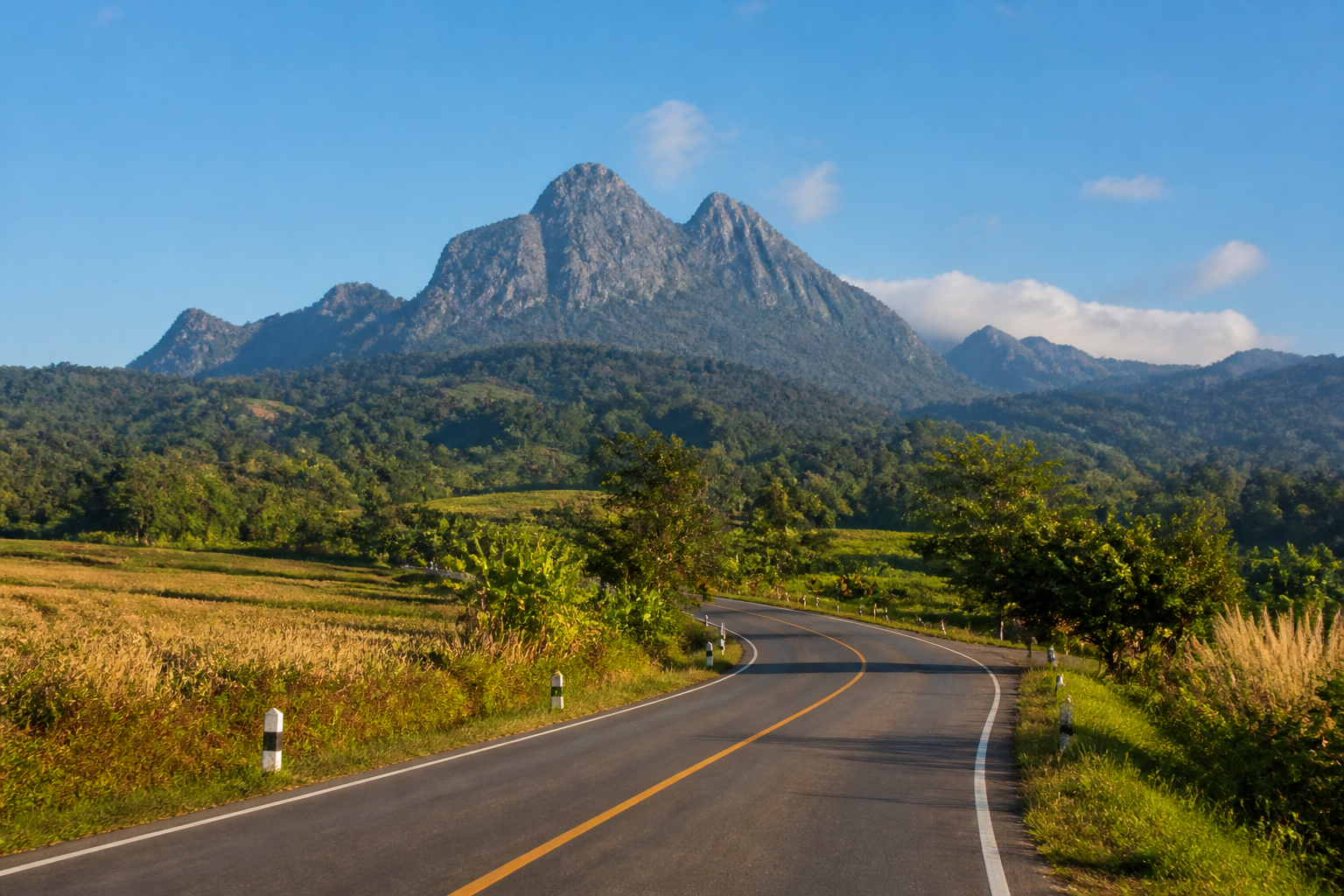
Tha Phae Gate might look like a giant brick wall, but it’s the heart of Chiang Mai’s old town. Once the main entrance to the ancient city, it’s now where all the action happens. Festivals, parades, and cultural shows that almost always center around this spot. Just outside Tha Phae Gate, you’ll find a cafe lover’s paradise. There are hundreds scattered around Chiang Mai’s Old Town, each with its unique vibe. There are so many cool ones that I don’t even need to give you my top picks. Half the fun is wandering streets here and discovering your own favorites. From tiny artsy spots to modern Instagrammable cafes. This area is a gold mine for coffee lovers and slow travelers. For one of the most random and unexpectedly fun places I found on my last visit to Chiang Mai was the jigsaw puzzle shop in Old Town.
I’m not really sure how this guy makes money, but the owner waved us into a room that was filled wall-to-wall with jigsaw puzzles and invited us to play a few games. He was really friendly and it was a lot of fun. If you just want to take a relaxing stroll, walk the path around Chiang Mai’s Old Town moat. It’s well paved and lined with trees with plenty of shops, cafes, and sites to check out along the way. It’s the easiest way to take in the city’s relaxed atmosphere. But you can’t leave Chiang Rai without getting a massage. Whilst Thailand is known for its massages, Chiang Mai, in particular, has some unique massage experiences. First, try a blind massage. These centers employ therapists who are visually impaired, which gives them a heightened sense of touch, meaning they can find the spots that need the most work. This makes for an incredible massage while supporting the blind community at the same time.
Next, there’s the prison massage. These programs help women who have left the prison system, training them as professional therapists so they can rebuild their lives. Plus, if your back is as messed up as mine is, you might want someone kind of mean and strong to get in there and set it right. But instead of a spa or a massage parlor, you can actually get your treatment right inside a temple complex. And if you want to take a Thai massage home with you, Chiang Mai is packed with schools offering short massage courses. Spend a few hours or a day learning from the pros and you’ll walk away with a new skill and a deeper connection to Thai culture.
Chiang Mai Temples
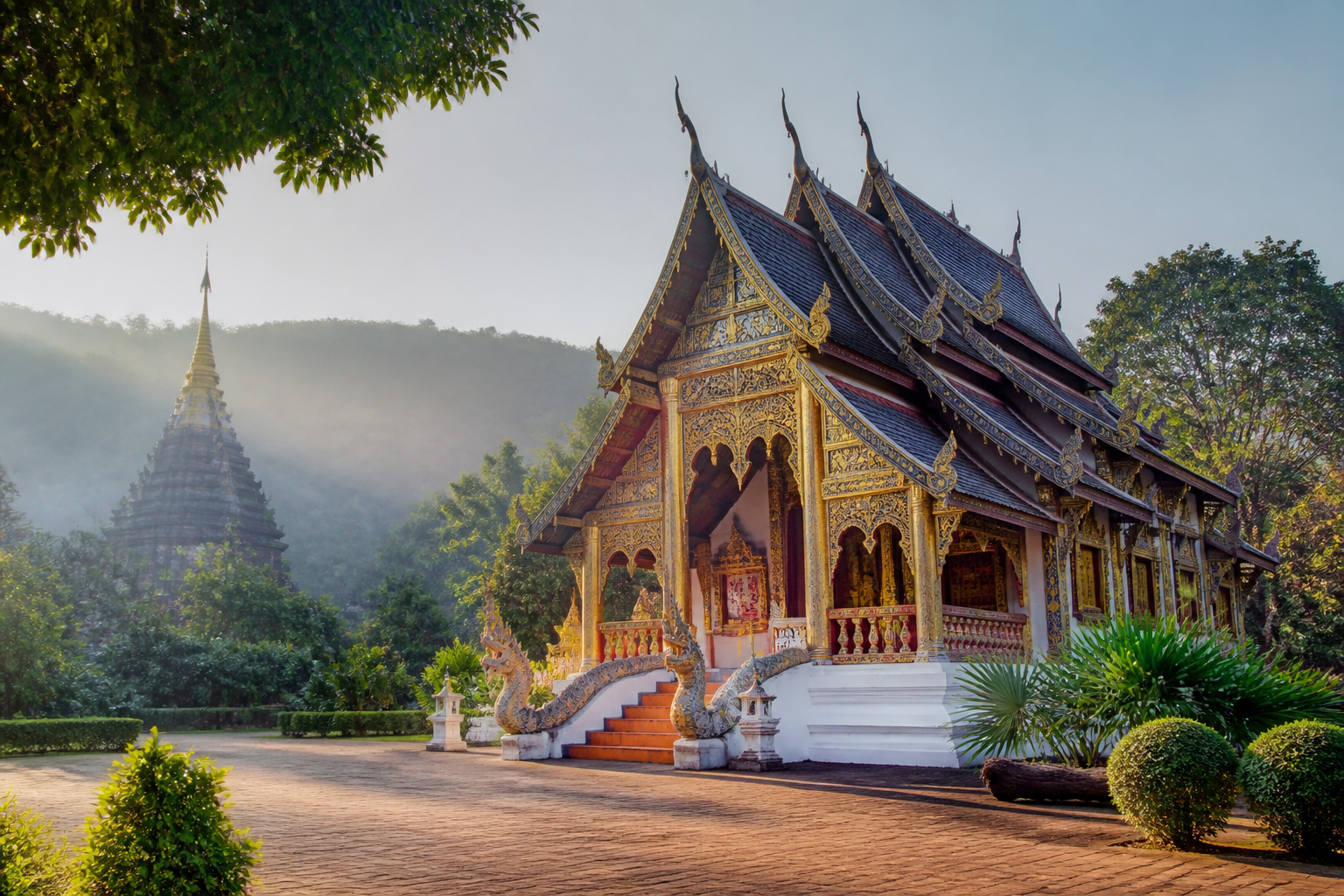
There are so many temples in Chiang Mai’s Old Town that you could easily spend an entire day wandering between them. But let’s be honest, after a while, they’ll all start to blend together. That said, a handful of temples really stand out from the crowd, and they deserve a spot on every traveler’s list. Right in the heart of the old town stands a massive ancient brick chedi that looks like it was pulled straight out of a lost civilization. Wat Chedi Luang is one of Chiang Mai’s oldest religious sites and at its peak it was nearly 80 meters tall making it the tallest structure in the Lanna kingdom. An earthquake in the 1500s partially destroyed the upper section but nowadays that gives it this dramatic ruin look. If you only visit one temple in the old town I’d make it this one. If you’re looking for a quieter less visited temple in the old town Wat Lok Moli is a hidden gem. It’s one of the best examples of traditional Lanna architecture in Chiang Mai. It dates back to the 14th century and several royal family members are buried here.
I’ve seen a lot of temples in my time, but every so often one just really surprises me, like the silver temple just south of Chiang Mai Old Town. This place is covered almost entirely in silver inside and out, and it absolutely stands out from the crowd. Unfortunately, women aren’t actually allowed inside, but you can still admire its incredible design from the outside. It’s a unique stop that’s well worth a look. Just around the corner from the Silver Temple, you’ll find a silver making workshop where you can get your hands on. Here you can watch local artisans at work, then try your hand at carving or hammering your own silver design. They’ll teach you everything you need to know, and it’s a fun, creative way to dive deeper in a Chiang Mai traditional crafts. On the outskirt of Chiang Mai’s old town, Wat Umong feels like a peaceful forest monastery until you step inside and discover its eerie side. Built in the 14th century, this temple is famous for its network of underground meditation tunnels designed so monks could meditate in silence and darkness. Perched high above Chiang Mai on a mountain.
Wat Phra That Doi Suthep is one of the city’s most iconic temples and the place everyone goes for those panoramic views of the city. For the ultimate experience, visit at sunrise and watch the city light up below. You can even join a guided tour led by ex-monks for some fascinating insight into Buddhist history and culture. The most iconic way to get around Chiang Mai is by songthaew. These are bright red shared pickup trucks with benches in the back. They’re cheap and they go almost everywhere in the city. This is one of the best ways to temple hop around Chiang Mai. But there’s much more to Chiang Mai than just temples and cafes, though. And this section is all about the city’s best nightlife spots.
Chiang Mai Nightlife
The heart of Chiang Mai nightlife lies to the east of Old Town. Loi Kroh Road is the heart of the action around here. There are plenty of bars and restaurants to explore in the evening. This is where you should stay if you’re more interested in night life than temples. This street is also home to Loi Kroh Boxing Stadium and Kalare Muay Thai Stadium, which are the best places in Northern Thailand to watch a Muay Thai event. Between them, there’s an event on pretty much every night of the week. If you’re looking for the perfect spot to grab a beer and unwind, head to Ploen Ruedee Market, formerly known as Ploen Ruedee Night Market. This lively spot has live music every night and a huge range of street food stalls serving dishes from around the world. It’s the ideal place to chill out after a day exploring. And if you’re looking for some of the more classy establishments in the sea, check out Tub Bar for the best cocktails in Northern Thailand.
Their menu is full of drinks inspired by northern Thai ingredients like Thai basil, lemongrass, tamarind, and even dried mushroom infusions. Chiang Rai’s night markets are legendary, and the night bazaar is the biggest of them all. Every evening, right next to Loi Kroh Road, the streets filled with a huge stretch of stalls selling everything from clothes and handmade crafts to souvenirs and northern Thai treats, as well as a few knockoff handbags. If you want something a little bit more unique than the Night Bazaar, though, don’t miss Chiang Mai’s weekend markets. They only have them once a week, and the vibe is totally different. They’re a bit more local, more cultural, and packed with character. The Saturday night market lies to the south of the old town on Wua Lai Road, right next to the Silver Temple that I mentioned earlier. And the Sunday night market runs right through the heart of the old town along Tha Phae Road. So, you’re shopping and snacking in one of the city’s most historic areas. These are some of the best night markets in the whole country.
And if you’re looking to celebrate a special occasion, have a romantic dinner, or you just want to try some of the best restaurants in Chiang Mai, then head to the riverside. The Paing River is a perfect setting for a romantic meal to watch the sunset over Chiang Mai. And a number of the city’s best restaurants are located here.
Chiang Mai Festivals and Day Trips
One of the most beautiful festivals in the world is Yi Peng Festival. Every November, the skies light up with stunning lanterns. The best place to witness this is at the CAD Festival, which takes place in the mountain setting just outside of Chiang Mai. You have to buy a ticket in advance, but this ticket includes transportation, musical celebrations, your meal, and a handful of lanterns for you to release into the sky. This is by far the best place to witness this event. And in April, you can experience the world’s biggest water fight. Every year, Thailand celebrates the Thai New Year festival known as Songkran. And Chiang Mai is probably the best place to experience it. April is usually the hottest month in Thailand, so it’s the perfect way to cool off. For 3 days straight, the streets are filled with locals and tourists going at it with super soakers, water bombs, and buckets.
But really, part of the fun of Chiang Mai is not just in the old town, but in some of its surrounding nature and day trips. The following items are a list of the best day trips and activities you can take from the sea.
Jungle Adventures and Doi Inthanon
If you really want to learn about the local hill tribe cultures, one of the best things you can do in Chiang Mai is take a class at the Thai Akha cooking school. The Aka people are less wellknown than the Karen tribes, but they have their own unique food traditions, ingredients, and cooking techniques. And this class is an amazing way to experience them firsthand. You’ll learn about their culture, cook a full spread of dishes, and eat an unbelievable amount of delicious food along the way. One of the best ways to see Chiang Mai is by bicycle. On my most recent trip, I joined a cycling tour that took us through the maze of Chiang Mai alleyways and hidden streets before taking us out into the countryside to explore the beautiful rice paddy fields and hidden markets. The company is called Kulan Castle, and this is one of the best and most active day trips you can have from the city. If you are looking to do a motorbike or scooter trip in Chiang Mai, but don’t want to commit to a 4-day trip, you can ride the Samoeng Loop. This will take you to some of the most scenic spots around Chiang Mai. The loop itself is a 100 km scenic route starting and ending in Chiang Mai.
But if scooters aren’t your thing, you can take a scenic ride through the Paing River. The Anantara Hotel Chiang Mai runs a cool upscale afternoon tea cruise on the river each day. But for a truly once in a-lifetime experience in northern Thailand, nothing beats hot air ballooning at sunrise. Floating silently above rice fields, villages, and mountains as the sky turns gold. The experience is run by Balloon Adventure Thailand, the country’s first and only licensed hot air balloon operator. So, this is actually the only place in Thailand that you can do this. Chiang Mai is home to a few natural onsen style hot springs. But one of the most unique experiences is staying at an onsen hotel in the Monjam area in the mountains of Chiang Mai. Here you can soak in hot mineral pools while looking over the misty hills, forest, and farmland. It feels a bit more like Japan than Thailand, but it’s an incredible way to relax after a few days exploring.
But if you’re looking for something a little bit more intense, there are a number of extreme sport activities around Chiang Mai. For example, you can fly over the jungle like a bird on Thailand’s longest zipline at Skyline Jungle Chiang Mai. White-water rafting near Chiang Mai is an exciting option during the rainy season especially. The rivers get fast and wild, taking you through jungle landscapes and narrow gorges with plenty of rapids along the way. And if you prefer to be on four wheels, you can also take an ATV adventure. You’ll ride powerful quad bikes through jungle trails, river crossings, and dirt tracks all through the Chiang Mai jungle. One of the best operators for this is Eight Adventures, who run well organized trips. They also combine with white water rafting that I just mentioned. But some of my favorite experiences in Thailand have come from getting out of the cities and heading straight into the countryside. But not just for a day.
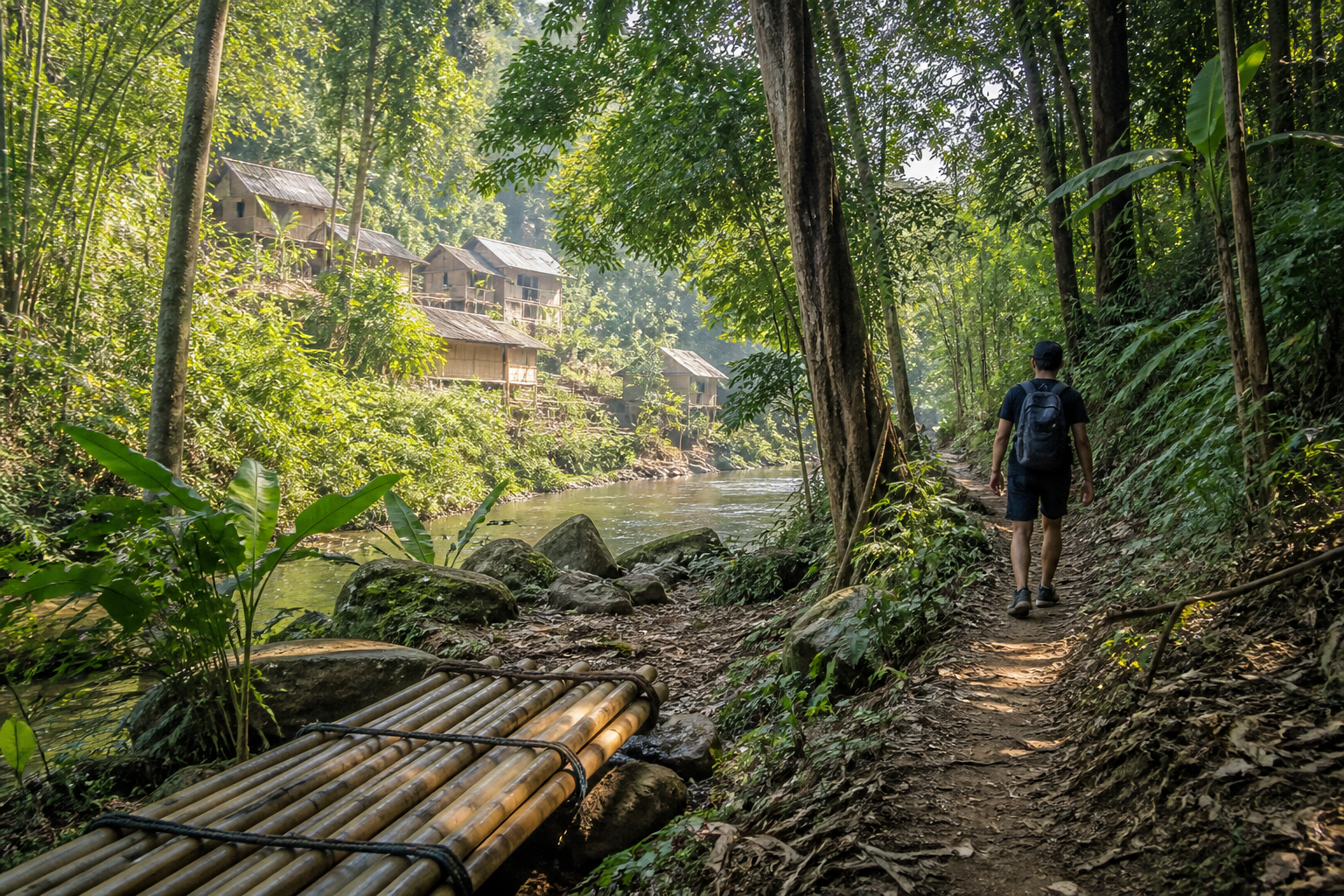
I mean, actually spending a few days trekking through the northern Thai jungle. Now, trekking is not for everyone. It can be quite intense to trek for 6 to 8 hours a day in the Thailand sun. Plus, when you’re staying in the local villages, the accommodation here is pretty basic. But if you’re looking for a real adventure where you can experience a completely different way of life, this is the best way to do it. I’ve done multi-day treks all over northern Thailand and other parts of Southeast Asia. One of the most intense was near Chiang Rai in the Golden Triangle, where we learned about the region’s opium history and stayed overnight in small wooden huts deep in the countryside. Doi Inthanon is where you can experience those rugged misty mountains northern Thailand is famous for. The park is full of beautiful hiking trails, epic viewpoints and waterfalls. One of the most powerful waterfalls that I’ve ever seen in northern Thailand is tucked inside Doi Inthanon.
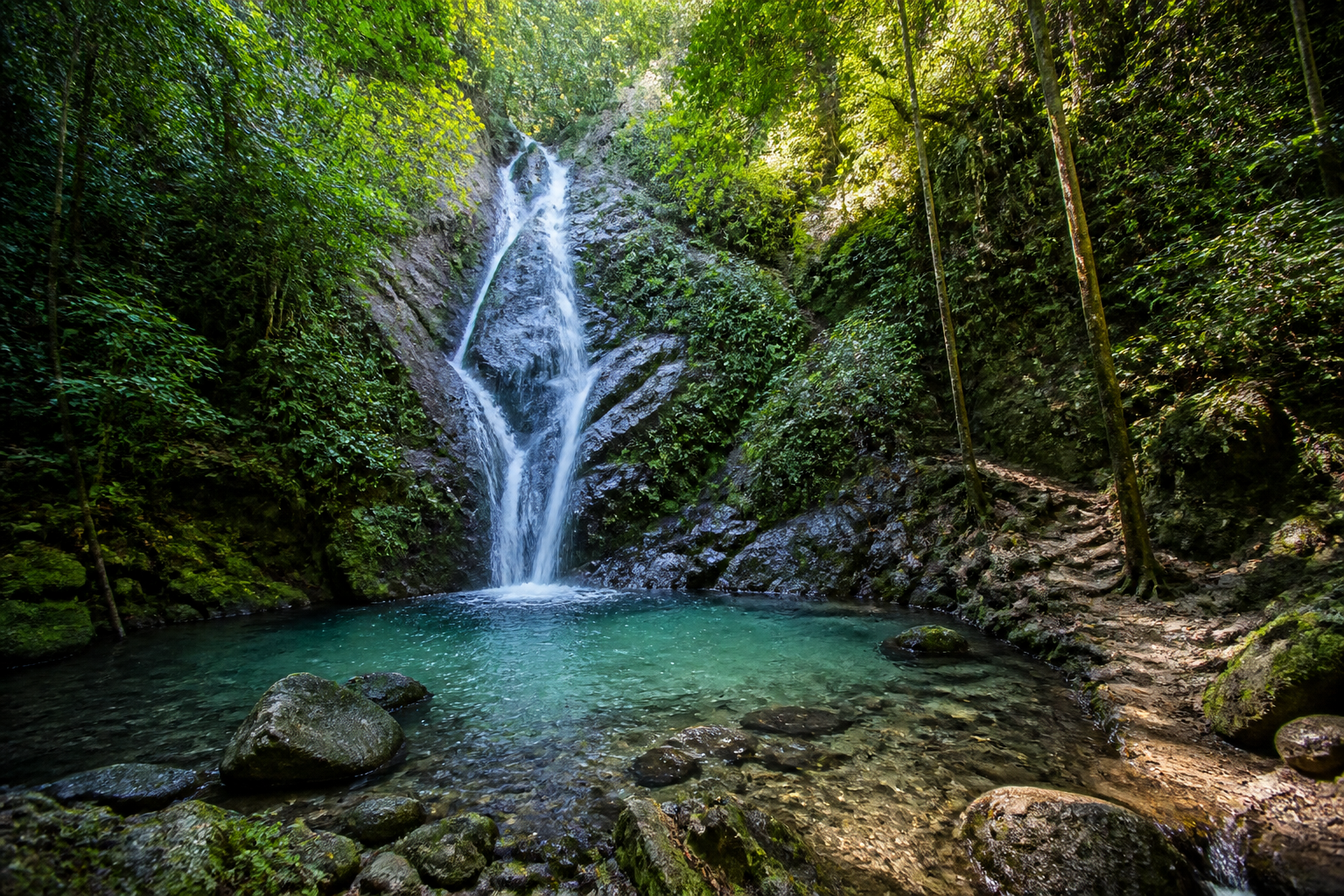
When I visited at the start of the rainy season, it was in full force. Only once when you get close, do you realize how huge and intense this thing is. This beast is called Wachirathan Waterfall and it’s an absolute must-see. Right near the summit of the mountain sits what is for many people the absolute highlight of the national park. Two massive, beautifully designed monuments stand above the clouds. One dedicated to the king, one to the queen. These are the famous twin pagodas, and they’re one of the most iconic sites in Thailand. Another highlight is the Pha Dok Siew Nature Trail. The trail takes you past waterfalls, rice patties, and traditional hill tribe villages with incredible viewpoints along the way. It only takes about 1 and a half to two hours, and it’s easily one of the most beautiful short hikes you can do in Thailand.
The trail finishes at Mae Klang Luang Village, a traditional Karan Hill tribe village surrounded by rice terraces and misty mountains. But whilst I is one of the most beautiful places in Northern Thailand, it is very much on the tourist trail and one of the most popular places to visit. Recently, I found a much more authentic and off thebeaten path experience that took me up into the mountains of the national park with a local guide where we saw no other tourists that day. The Hill Tribe coffee tour took us to a tiny village up in the mountains where they specialized in grown coffee. This tour is set up by Jack, a local coffee enthusiast with ties to the Karen villages. here. He’ll show you how coffee is produced in the region, as well as explain the history and culture of the local car population. He has one of the best levels of English of any guide that I’ve ever traveled with in Thailand. So, this was a really insightful experience.
Mae Kampong and Mountain Coffee
Speaking of coffee though, there is another town that is also famous for its coffee production, as well as its unique wooden houses stacked along the hillside. This town is known as Mae Kampong, and it lies about an hour’s drive east of Chiang Mai. When you arrive, you’ll see a long winding road climbing up the mountain lined with little shops, snacks, stalls, and most importantly, coffee stands. every 20 m. This is one of the most picturesque walking streets in Thailand. The road leading up to the top of the hill is steep, so you can take your time snacking your way up. This town is littered with scenic cafes that you can stop at to take a brever in. But make sure you don’t overcaffeinate and save room for one more. Once you reach the top of the hill, there is one more stunning cafe that overlooks the entire village known as Chongmok Chongai. From here, you get a bird’s eye view of the wooden village below. And if you want to continue the hike even further, at the top of the hill is Mae Kampong Waterfall, a quaint little waterfall with a hiking trail that takes you to the top.
And if you want to spend the night, there are a number of home stays operating in the area where you can stay with someone from the Karen community. You can stay in one of these cool wooden houses.
Lampang and Nan Province
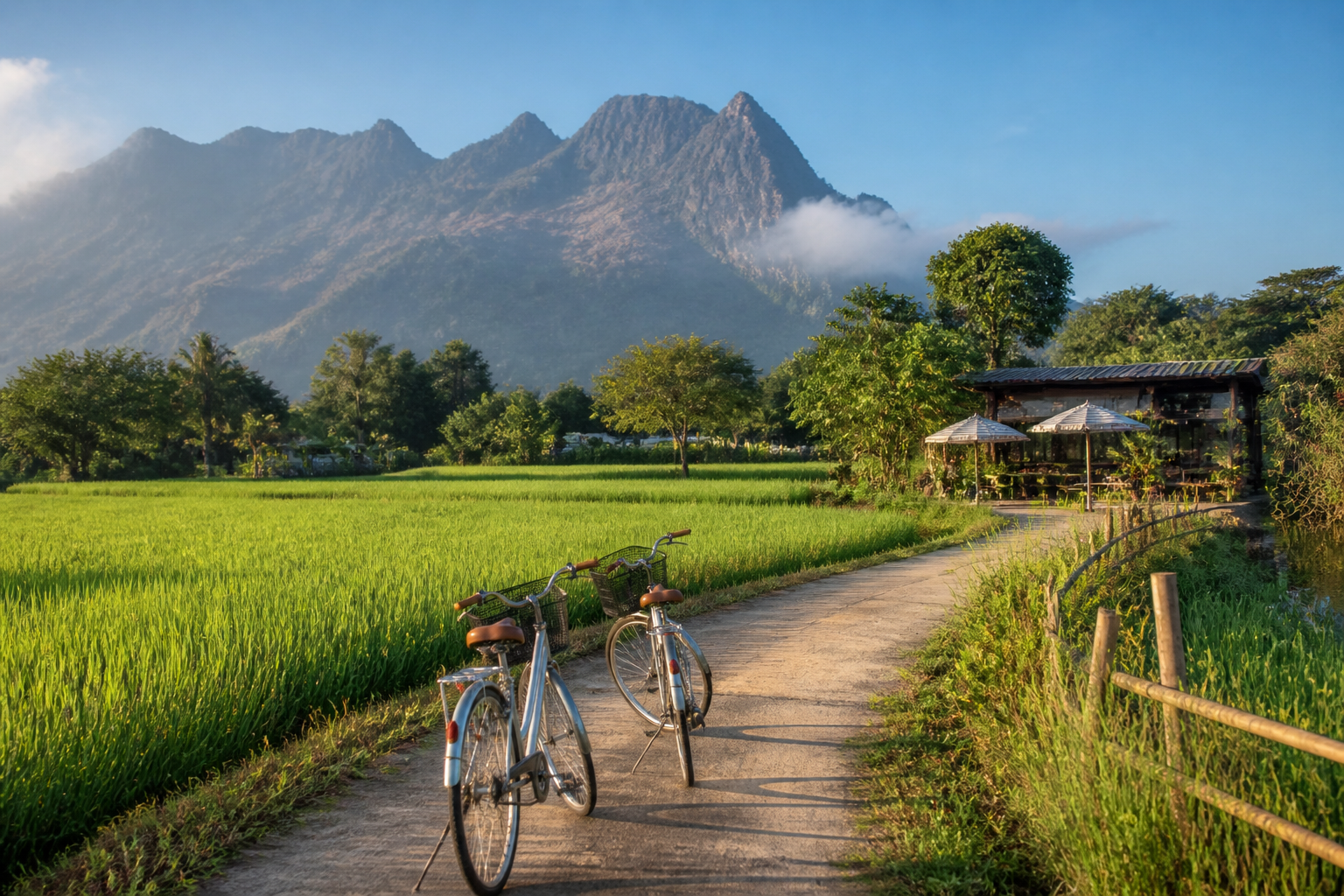
But northern Thailand is filled with picturesque small towns. And another that is filled with ancient temples and has a very traditional feel to it is the town of Lampang. Probably the most important landmark there is Wat Phra That Lampang Luang. One of the most important and best preserved Lanna style temples in northern Thailand. This temple feels like stepping back in time. Watch is one of the most jaw-dropping temples in all of Thailand. It’s famous for its white cherries perched on top of sheer limestone cliffs creating an almost unreal skyline above the clouds. This is easily one of the most dramatic temple locations in the country. But Lampine Town itself has a very traditional feel to it and it’s one of the only cities in Thailand where horse-drawn carts are still used regularly and taking a ride around feels like stepping back in time. Okay, now to one of the least explored but one of my favorite provinces in Thailand, Nan Province.
If you’re looking for a multi-day trip that really takes you off the beaten path, this is an excellent option. One of the most famous artworks in Northern Thailand is the whispering lovers mural inside W Pumain in the center of Nan City. The painting shows a man leaning in to whisper to a woman, and it’s become the iconic symbol of the Nan region. One of the most underrated bike loops in Thailand is the Nan Loop. A few years ago, some friends and I rode the 4-day journey through Nan Province, taking you through quiet mountain roads, remote valleys, and beautiful small towns. The roads here are epic, and there is minimal traffic, so you can just enjoy the mountain views with the best part being some of the most beautiful villages you can stay at along the way. One of those towns was Pua, a small village known for its stunning rice paddy fields. Here we stayed in the home state right in the middle of the rice patties. So when we woke up we were surrounded by nature. One of the longest sections of the loop took us on a winding road over Doi Phu Kha, the biggest mountain in the region.
This was a scenic mountain road that took us directly through the forest. We broke up this drive with a stop at Deukar National Park. The next town on the loop is Bo Kluea which is famous for its ancient salt mines. People here have been extracting salt from the underground wells for hundreds of years using traditional methods that are still in use today. It’s a great example of how remote communities in northern Thailand have survived and thrived. But it was this stretch of the loop around Bakla that had the most beautiful roads in my opinion.
Flying from Bangkok to Nan on a Cheap Domestic Flight
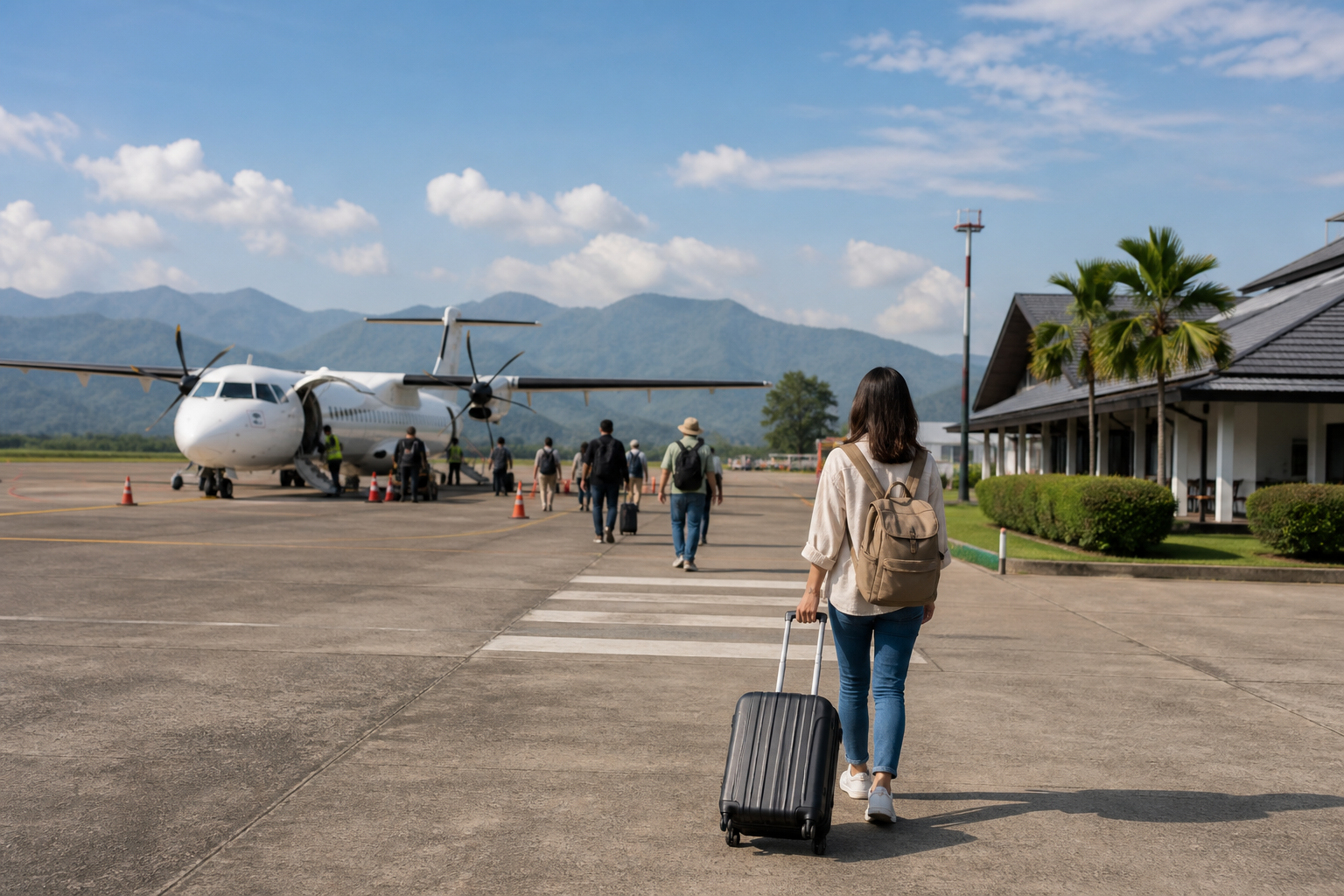
Nan is a peaceful northern Thailand destination reached by a short domestic flight from Bangkok. The flight took about an hour, and the narrator noted that the fare was so low that a coffee stop cost more than the ticket. The journey was arranged for an overnight stay outside the city, with a second location planned for the following day.
Arriving at Nan Nakhon Airport
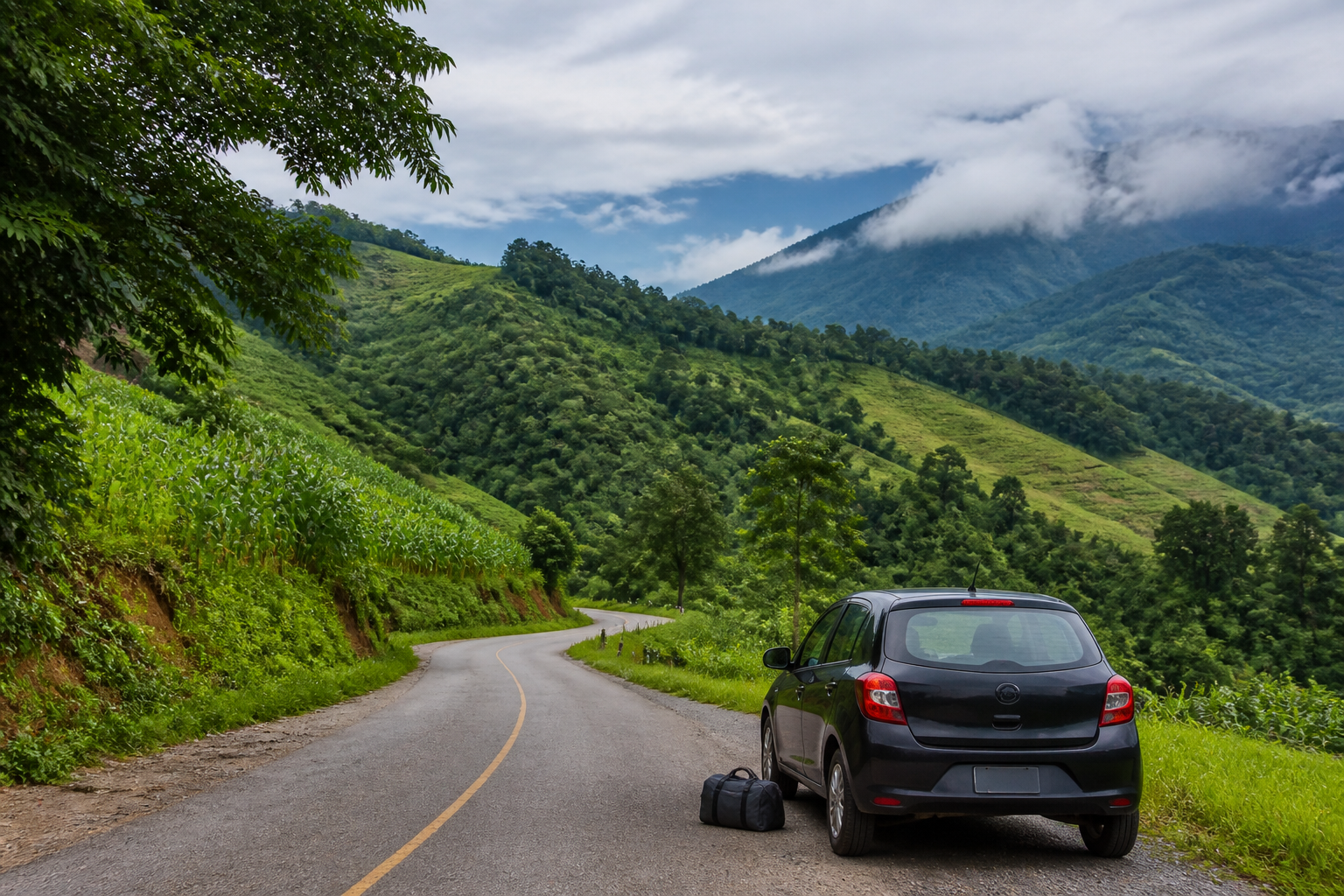
The arrival point was Nan Nakhon Airport. A car was arranged for the countryside journey, at a quoted cost of around 800 Thai Baht per day, with insurance also mentioned. The drive from the airport was expected to take about two hours and cover roughly 100 kilometres. Supplies were bought on the way because there were no 7-Eleven stores near the remote accommodation.
Mountain View Stops Before the Remote Homestay
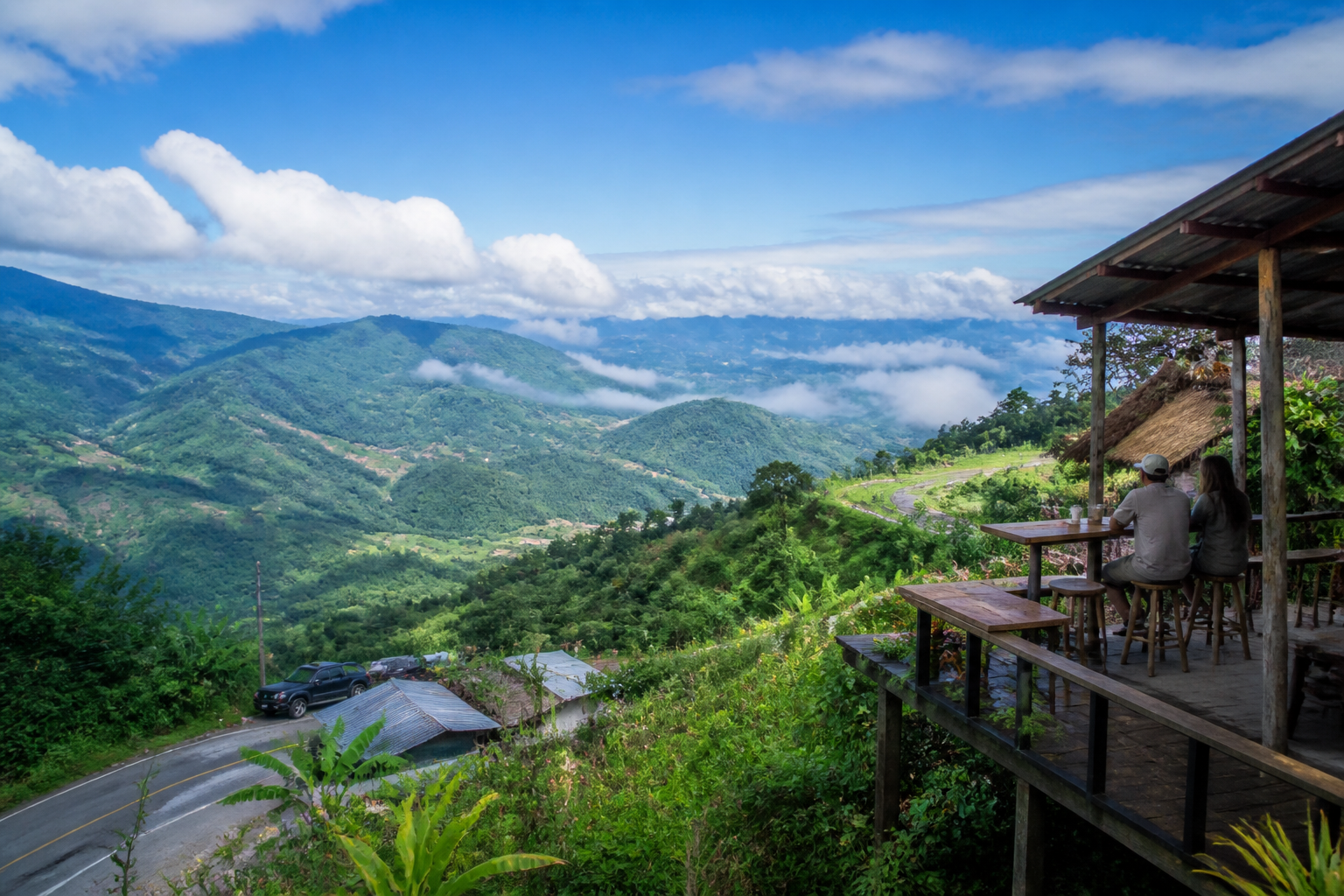
The road into the hills was more interesting than expected, with scenic viewpoints and a stop for coffee or something refreshing. The final stretch was about 19 kilometres from one of the roadside stops. The mountains, changing weather and open views made the drive part of the trip rather than just a transfer to the accommodation.
A Cool Nan Homestay with Simple Amenities
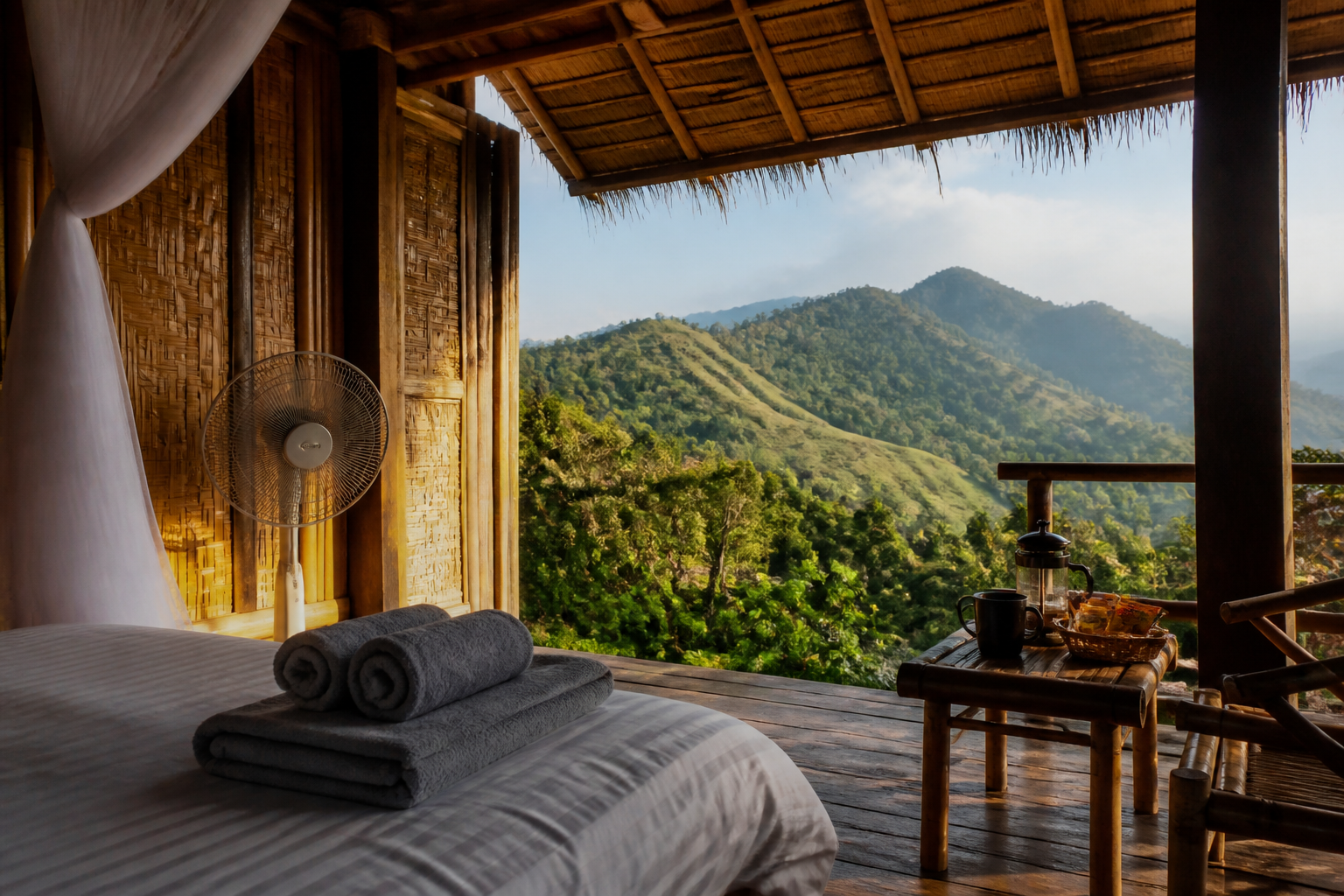
The remote homestay had a simple room with a bed, extra beds, towels, a fan and a bathroom. There was no air conditioning, but the mountain weather became cooler after a little rain. Coffee, complimentary snacks and water were provided, although there was no kettle. The best feature was the place to sit and look over the landscape. The property was described as fully booked for a year, showing how popular this kind of peaceful stay had become.
Rice Fields, Privacy and a Mountain Dinner
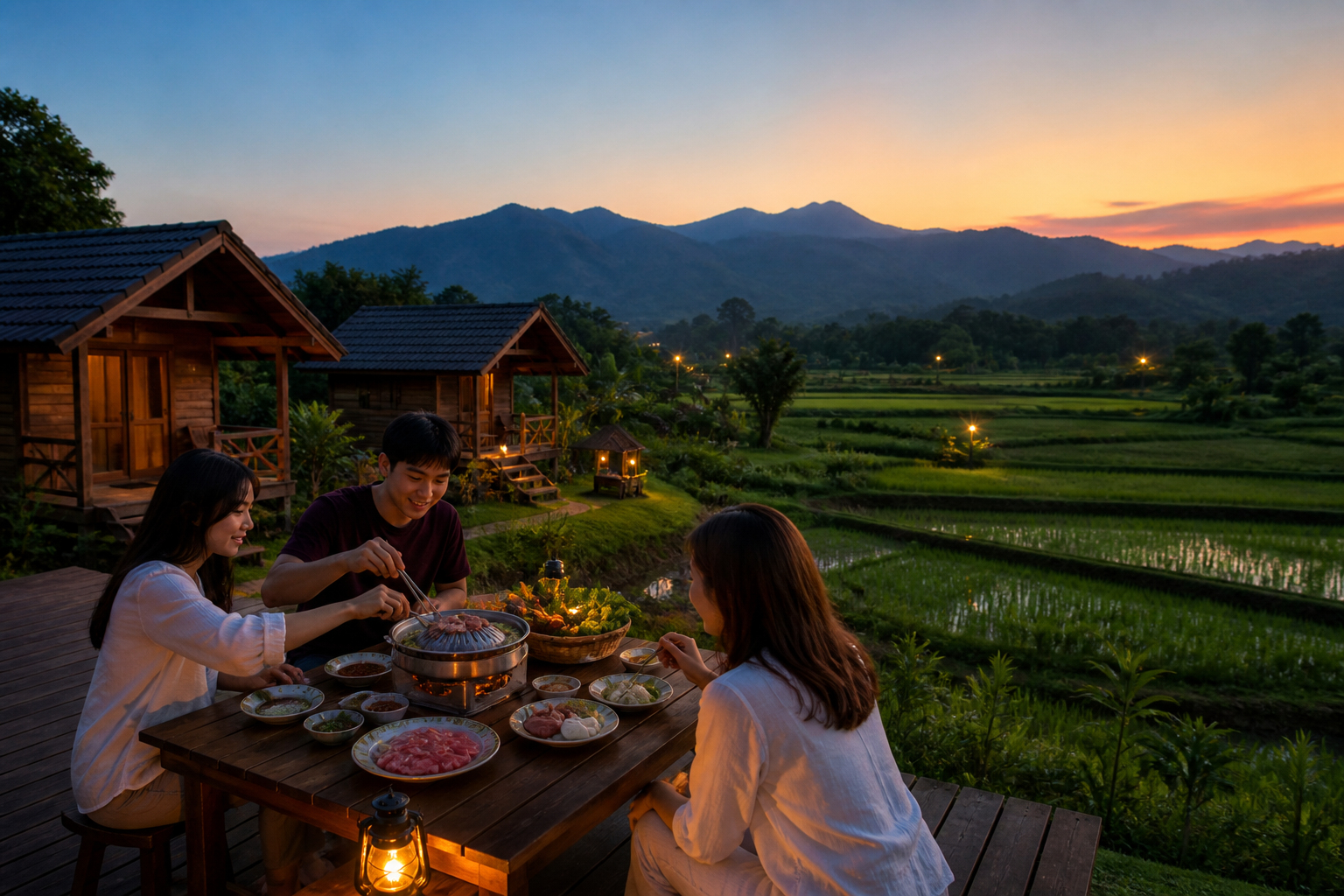
Rice fields surrounded the houses, with different colours visible where sections had already been cut. The homes were spaced apart, giving each one a strong sense of privacy. Food could be ordered for an additional charge, including a Thai barbecue-style meal, and the evening became cooler as darkness arrived. For travellers who want quiet scenery, simple facilities and a remote mountain setting, Nan offers a very different pace from Bangkok.
Chiang Rai Temples
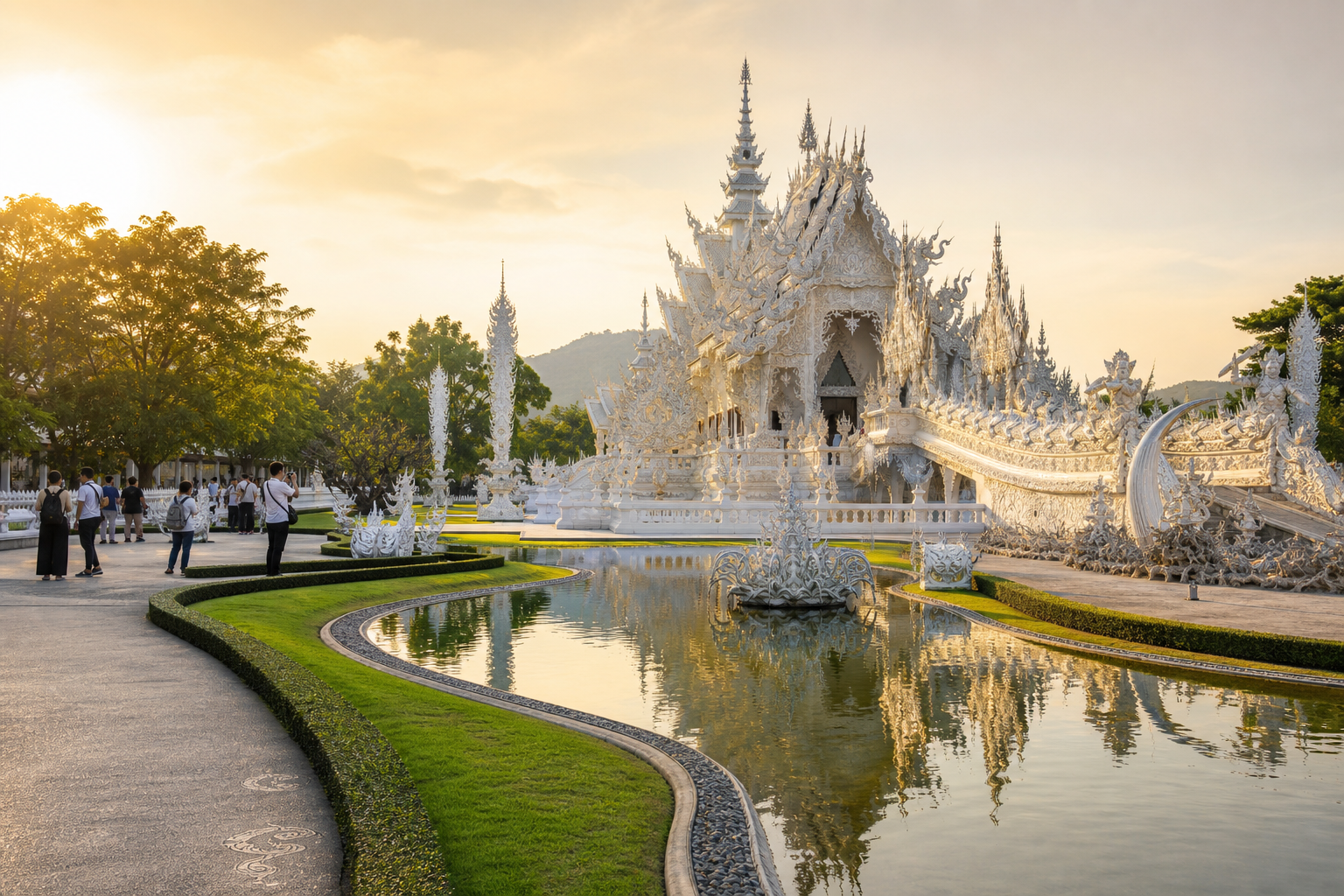
But there’s still one amazing city that we haven’t covered yet. Known for its jaw-dropping temples and rugged mountain scenery, Chiang Rai is Thailand’s northernmost province, and it’s packed with epic things to see and do. Chiang Rai’s most iconic landmark is the White Temple, a place that’s even wilder in person than it looks at in photos. Step through the gates and you find an explosion of surreal art. This is one of the most intricately designed temples in the world, and it isn’t even finished yet. The artist expects construction to go on until 2070. What fascinates me most is just how weird the temple is. There are some really dark images of tortured souls and schools, but weirdly mixed in with David Beckham, Mickey Mouse, and the Avengers. There’s nothing else like it in Thailand, and you really have to see it. Just a short drive from the White Temple, the Blue Temple is an instant showstopper.
Blue isn’t a common color in Buddhist temples, so the deep blues, gold trim, and swirling patterns make this place pop the moment you walk in. Inside a massive Buddha sits surrounded by vivid blue murals that seem aglow. This is a truly psychedelic temple and it’s probably my favorite in Chiang Rai. Next up, don’t be fooled by Bandam or the Black House. This might look like a temple from the outside, but it’s actually an art museum created by Thai artist Thawan Duchanee. The traditional northern Thai buildings are packed with surreal and provocative art, animal skulls, crocodile skins, strange sculptures, and even some massive hand-carved penises. Don’t leave without trying their black ice cream. Another of Chiang Rai’s most impressive sites is the massive white statue known as the Guan Yin goddess, Lady Buddha, or simply just the big Buddha. Put on a hill, you can see it from miles away. There’s more to Chang than just temples, though.
Chong is one of the most beautiful tea plantations in Thailand with perfectly sculpted green terraces stretching out across the hills. You can walk around the fields, learn how the tea is grown, and sample some of their signature brews at a panoramic cafe overlooking the valley.
Chiang Rai Art and Tea
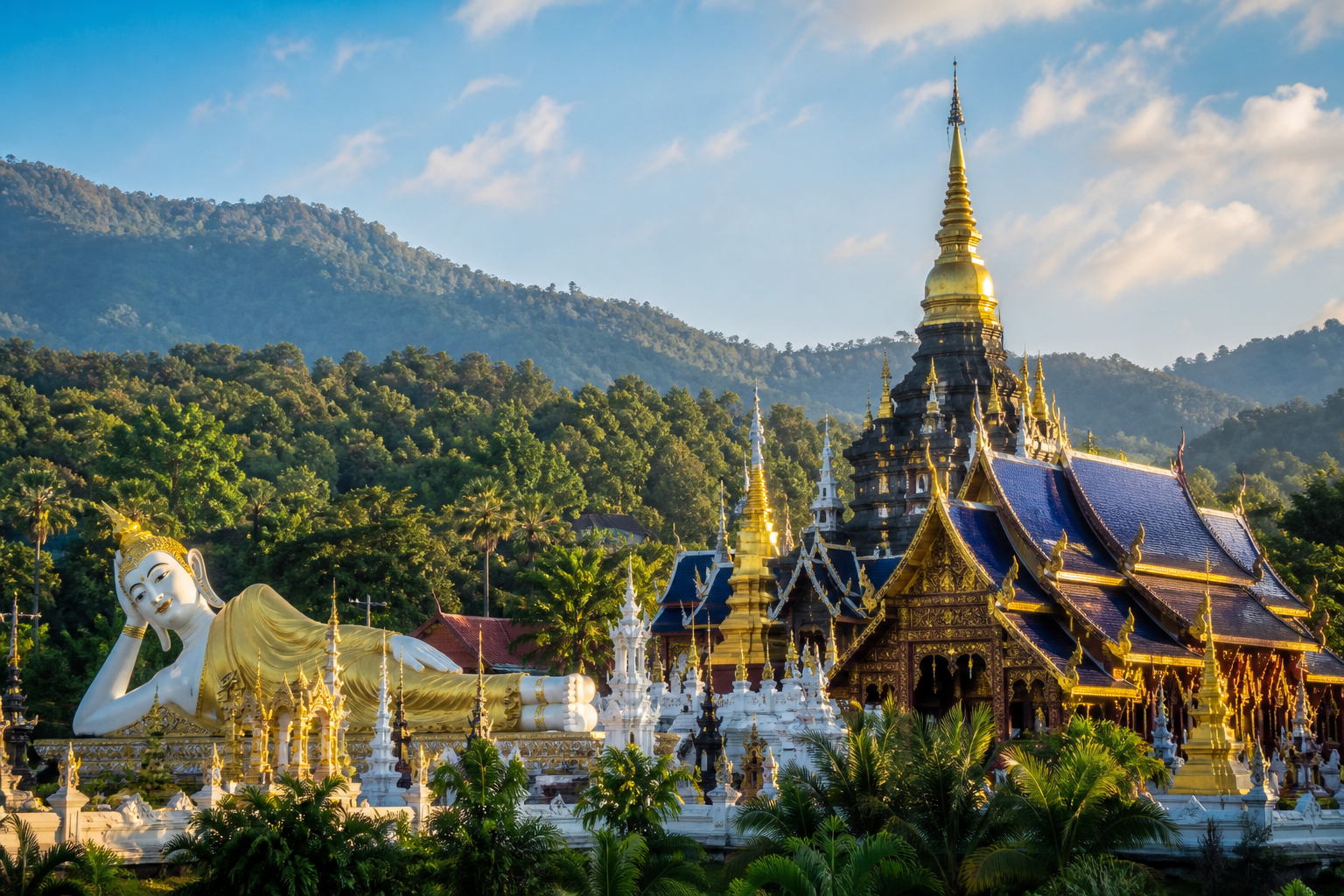
One of the most unique villages in Northern Thailand is a mountain town shaped by Chinese history. After the Chinese civil war, soldiers from southern China crossed the mountain border into Thailand and settled here, bringing their unanese culture, food, tea, and traditions with them. That’s why Mae Salong feels like a slice of southern China hidden in the Thai mountains. You’ll find Chinese style homes, noodle shops, tea plantations, and mandarin signs everywhere. It’s definitely one of the most unique villages in Thailand.
Mae Salong and Wat Santikhiri
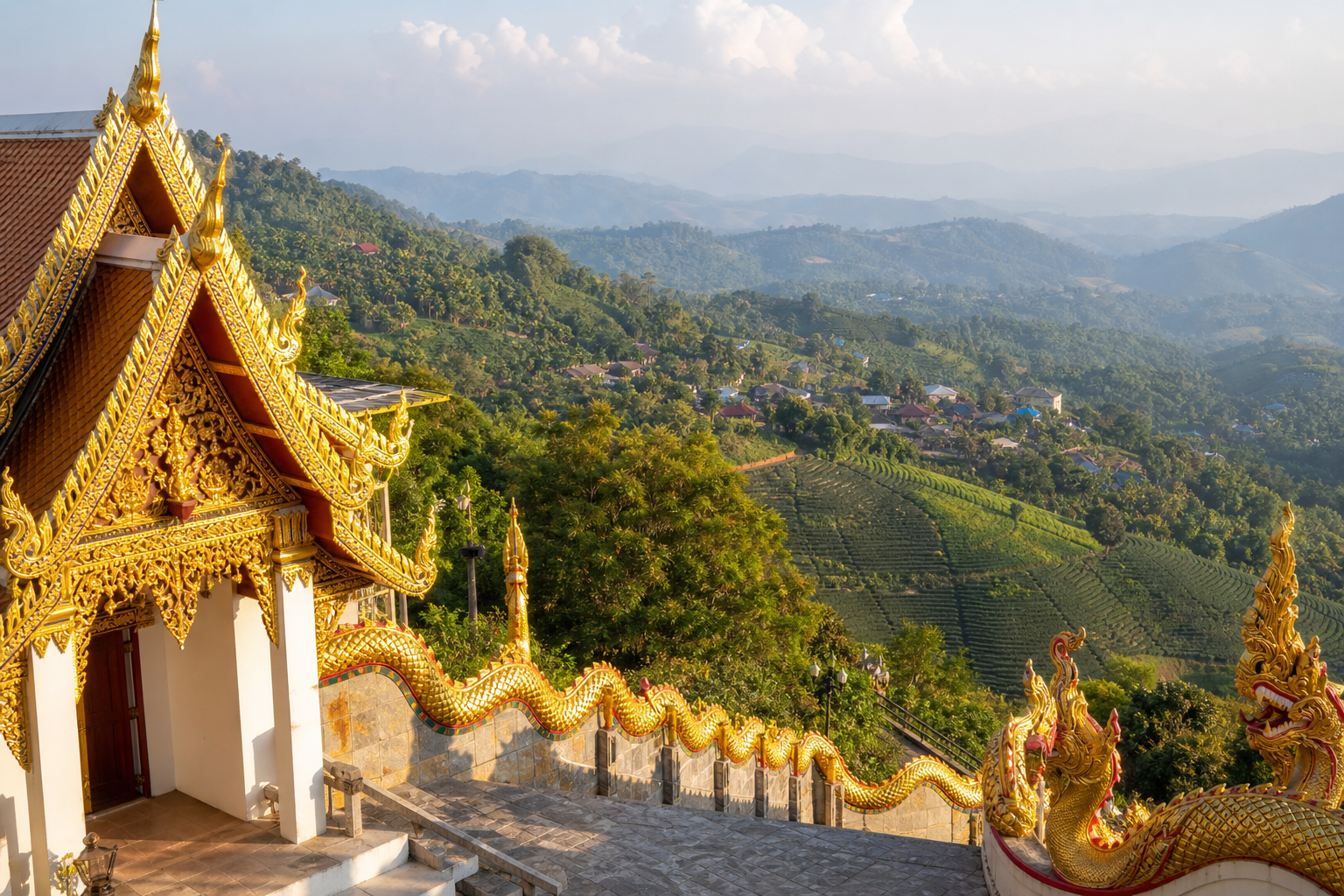
Just outside the Chinese influenced town of Mae Salong, you’ll find what? Santikhiri, a beautiful hilltop temple with jaw-dropping views, perched high in the mountains. It overlooks rolling hills, tea plantations, and a valley that goes on forever.
The Golden Triangle and Leaving Northern Thailand
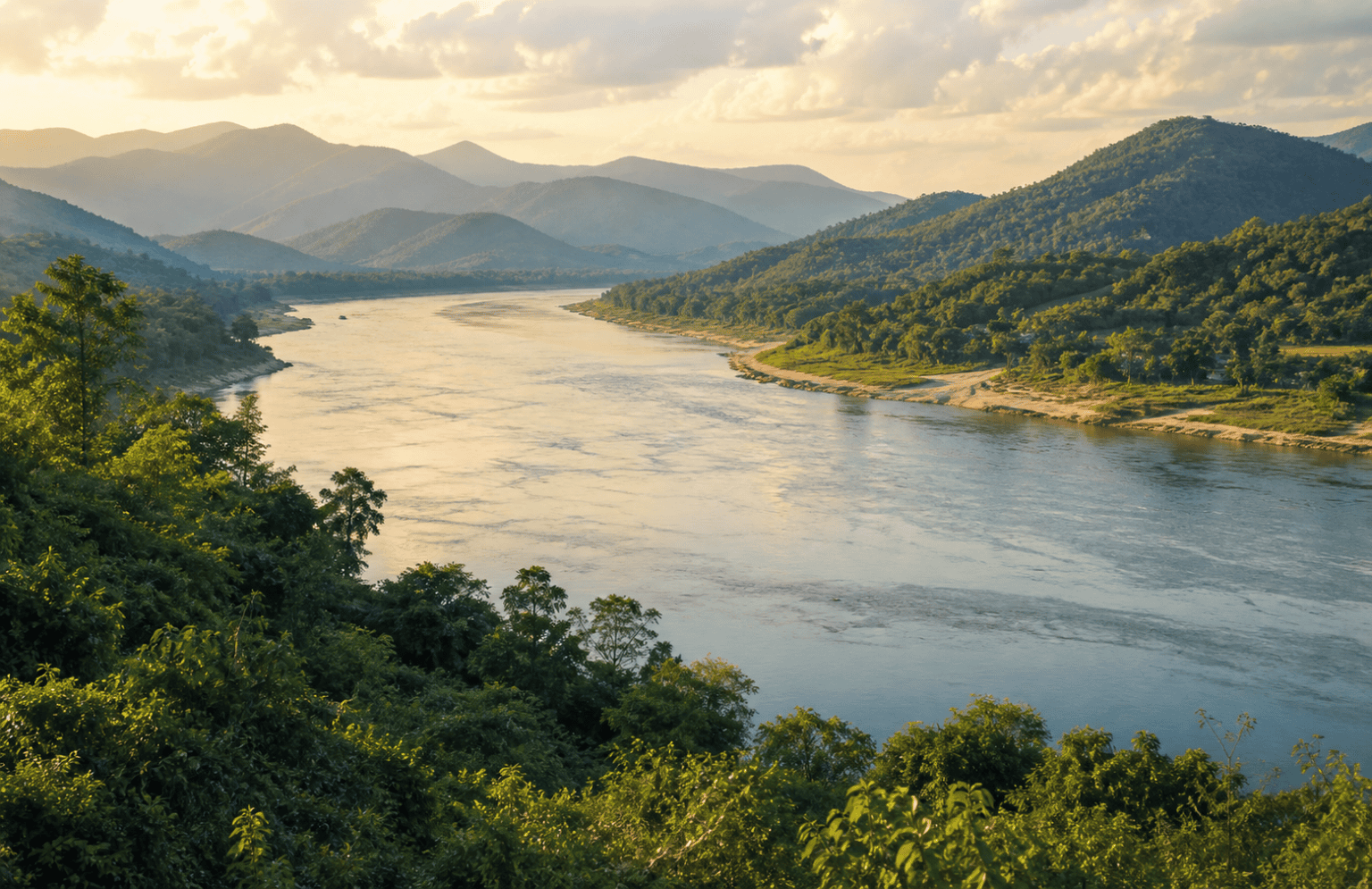
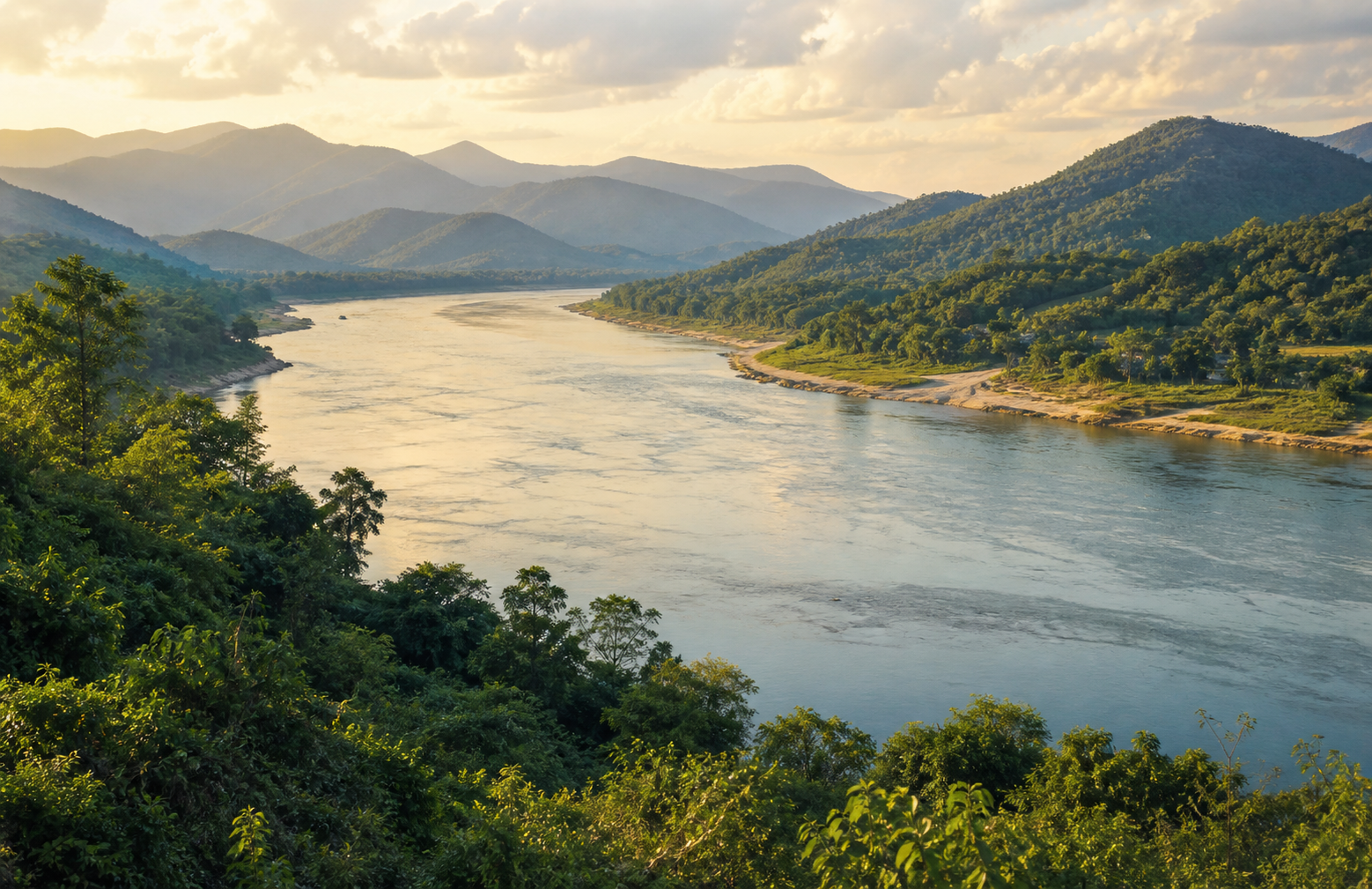
Head even further north to the northern border of Thailand, and you’ll find the Golden Triangle, a famous spot where Thailand, Lao, and Myanmar all meet. It’s a rare chance to see three nations from a single spot, making it a must visit. And if you’re curious to learn more about the Golden Triangle’s past, don’t miss the House of Opium Museum. This is a small but fascinating spot that dives into the history of the drug trade. For a unique adventure in the Golden Triangle, hop on the Mekong River Cruise. The river marks the border between Thailand, Lao, and Myanmar. And you’ll get incredible views of all three countries as you float along it. In some cases, you might even be able to step ashore in the neighboring countries. But maybe don’t mention that to the immigration officials. And one of the most memorable ways to leave Northern Thailand is by taking the slow boat to Lao along the Mekong River.
The journey takes 2 days drifting past jungle-covered mountains, remote villages, and everyday life along the riverbank. And it’s the perfect way to end your northern Thailand adventure. But if you only have a short time in Thailand, knowing all this is useless unless you know how to put it all together.