The Taxi Ride That Became My Most Embarrassing Thailand Story

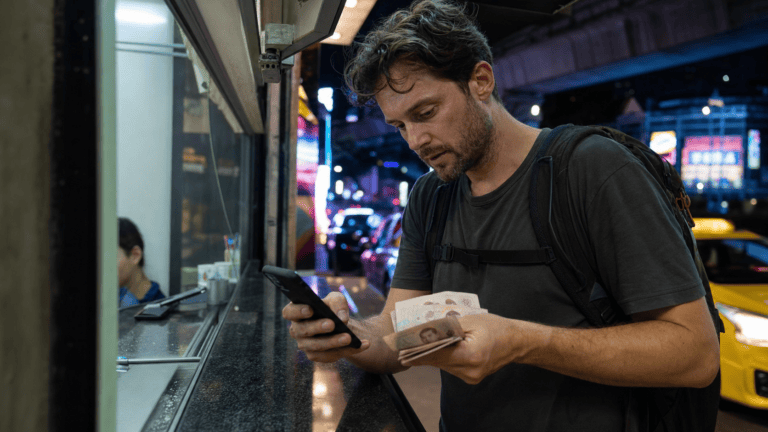
This actually happened to me on one of my first visits to Thailand. I landed late at night and hopped in a taxi to take me to my hotel. It took a little longer than I expected as we wound through unfamiliar streets. Finally, I arrived, but when I went to pay, the driver demanded twice as much as shown on the meter. Before I knew it, he had started shouting, and people were beginning to gather around.
The situation got a lot more embarrassing for me, but what I’m really ashamed of is that I’ve spent the majority of the last five years—almost 2,000 days—in Thailand, yet I speak almost no Thai. It’s not even that I’m bad at languages. I actually studied Spanish at university and went on to learn it to a high level. After four years in China, I passed the HSK 4 exam, so my Chinese isn’t too bad either.
I know how embarrassing it would have been in that taxi situation, but I’ve since had to learn how to navigate difficult situations without using the Thai language, and you’d be surprised how often they can occur. I didn’t speak Thai, so I tried to use Chinese, even though that wasn’t going to help anyone. Speaking in slow motion, shouting, or making noises that the other person can’t understand will just make you look like a crazy person. Trust me, I know.
The Communication Mistakes I Made
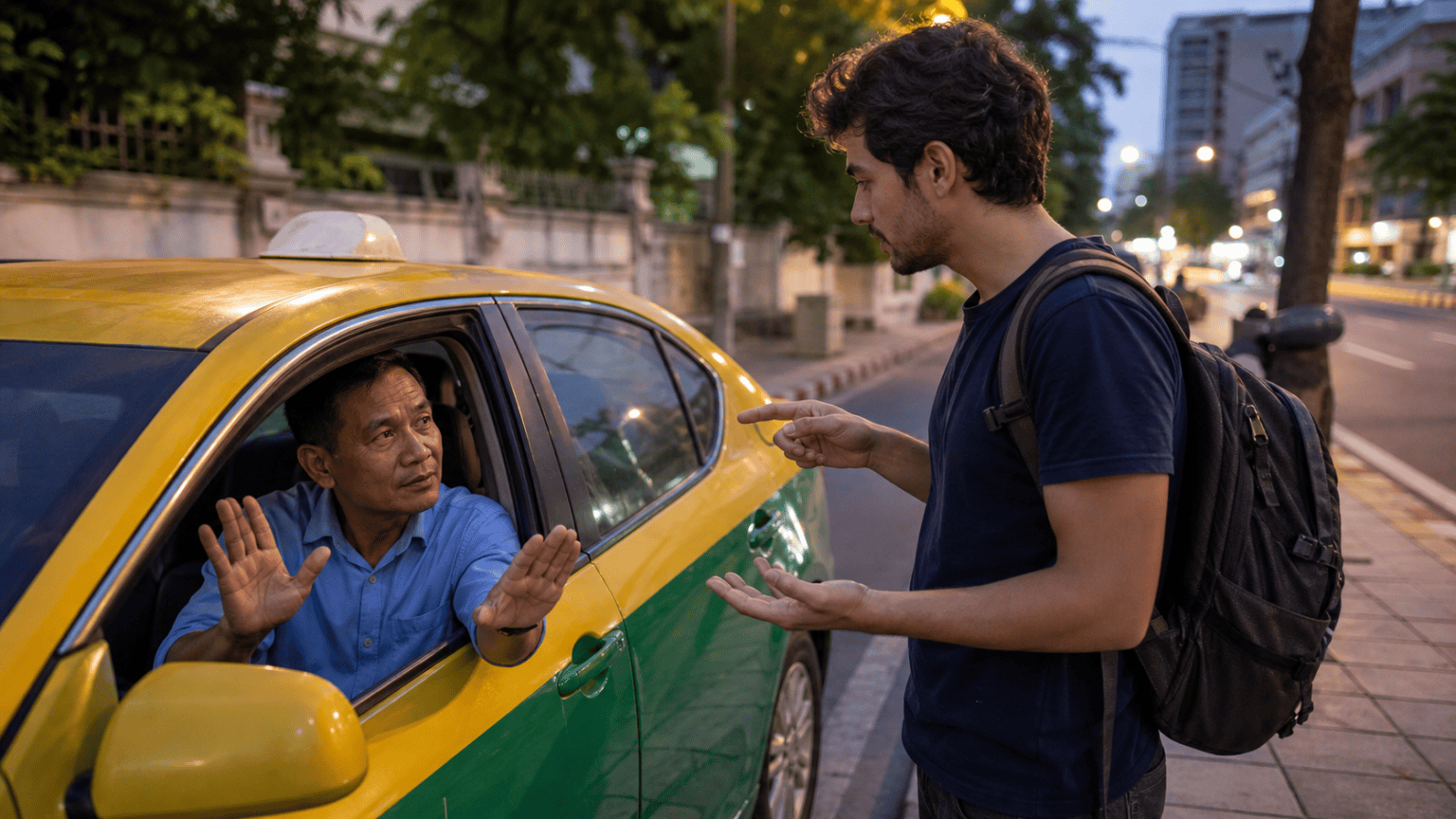
This is the land of smiles, after all. In Thai culture, a smile isn’t just a way to show you’re happy; it’s a tool to diffuse a situation and show respect. Looking back, the biggest mistake I made in that taxi wasn’t raising my voice or failing to simplify my language. It was that I didn’t show respect. Instead, I got frustrated, which made the driver lose face, and in Thai culture, that’s a big deal.
So how can you avoid making things worse? Here are a few simple communication tips I’ve learned. You don’t need to use fancy words. Most ideas can be conveyed with just 2,000 basic words, so keep it simple and skip the thesaurus. If you’re struggling to communicate, just say what you need in as few words as possible. Your hands are your best tools: point at things, show numbers with your fingers, or use universal gestures like a thumbs-up or a wave.
Why I Should Not Have Assumed Bad Intentions
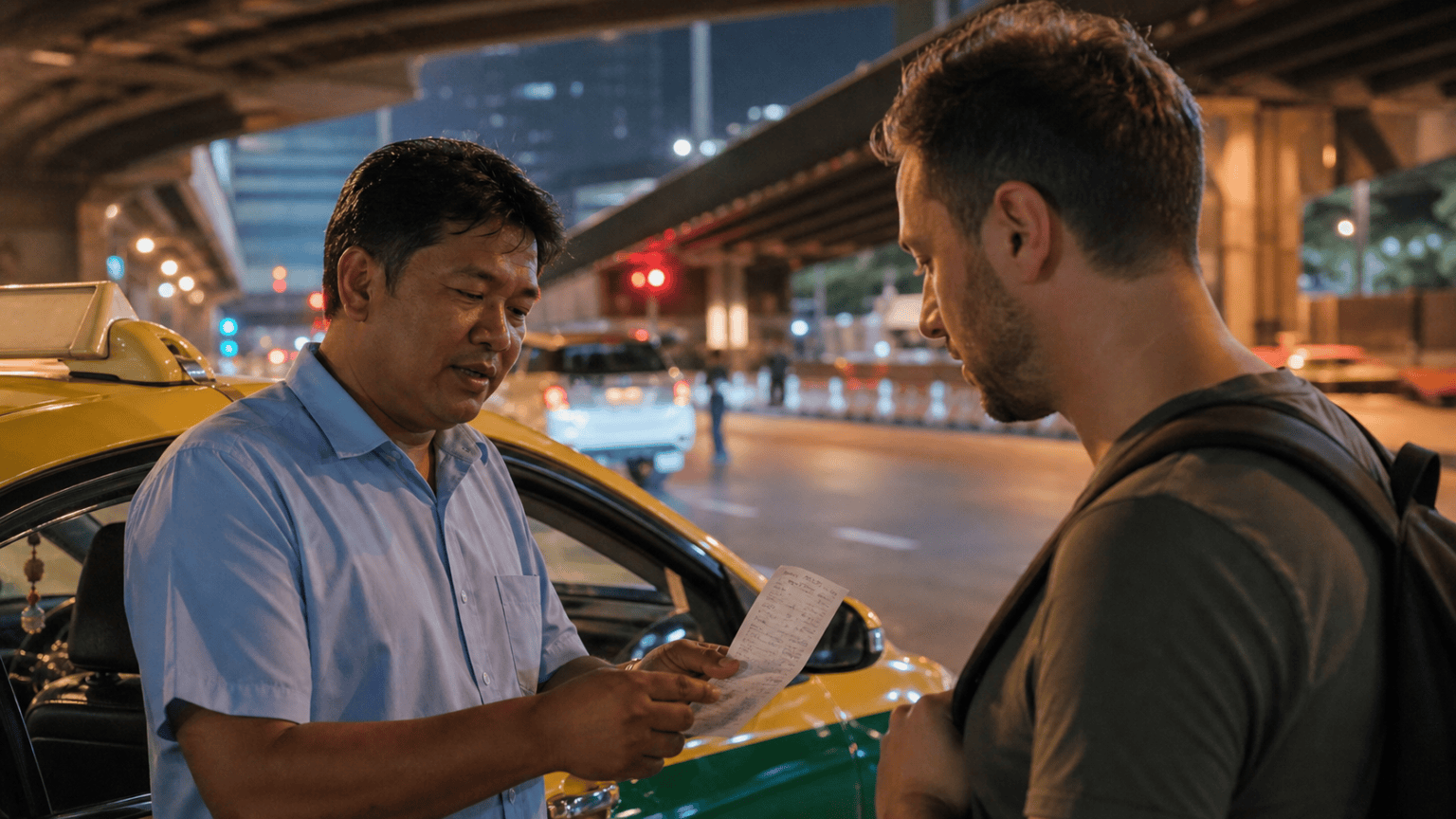
The next mistake was the most embarrassing by far. After I refused to pay, things escalated quickly. The driver started shouting, and I had no idea how to get out of the situation. To make matters worse, people began crowding around us. I started to panic and wondered if I was actually going to get into a fight. Eventually, someone came over to translate. It turned out the extra charges were highway tolls, an airport taxi fee, and a luggage tariff. At the time, this sounded like a rip-off to me. I mean, how can you charge extra for luggage at an airport? But I ended up paying and walking away.
In the years since, I’ve found that all those fees are real and that I was completely in the wrong. I had made an embarrassing public scene because I wasn’t aware of the rules. The mistake was assuming bad intentions.
Before coming to Thailand, I watched countless YouTube videos and read blogs about scams. But a problem I’ve since learned about Thailand travel YouTube is that a lot of people are nervous about traveling to Thailand for the first time, so they’re more likely to click on videos about scams or the dangerous aspects of traveling. I think a lot of creators realize that scam videos do well, so they make more videos about scams. People become more paranoid, so they watch more videos about scams, which means more YouTubers make videos about scams.
This can give the impression that Thailand is dangerous, which is simply not true. After my time here, I’ve seen that the country is extremely safe. There’s very little violent crime or robbery, and because it’s a Buddhist culture, there’s a belief in karma, so it’s important to give out goodwill and kindness. I can’t tell you the number of times I’ve lost my phone and the person who found it has gone well out of their way to help me get it back.
That’s not to say scams don’t exist. Unfortunately, tourists are a target because scammers know it’s unlikely that they’ll report them to the police, but I just don’t think scams happen anywhere near as often as they’re sometimes made out to. If you think about this situation from the driver’s point of view, he paid these highway tolls out of his own pocket. If I hadn’t paid, he would have lost money for dropping me off at my hotel. On top of that, I was trying to accuse him of trying to rip me off. I’d be pissed off too.
This experience taught me not to assume bad intentions, and it’s something I’ve seen other travelers struggle with as well. For example, some guided tours don’t include national park fees in the price. When travelers find out, they assume they’re being scammed, when really they just didn’t read the fine print on the tour.
How Translation Tools Can Help in Thailand
It’s the year 2025, damn it. We live in a time when rocket ships land themselves, drones do your shopping for you, and AI can write novels and probably will take your job by the end of the year. Technology is solving problems we didn’t even know we had, and here’s how it can keep you out of trouble in Thailand.
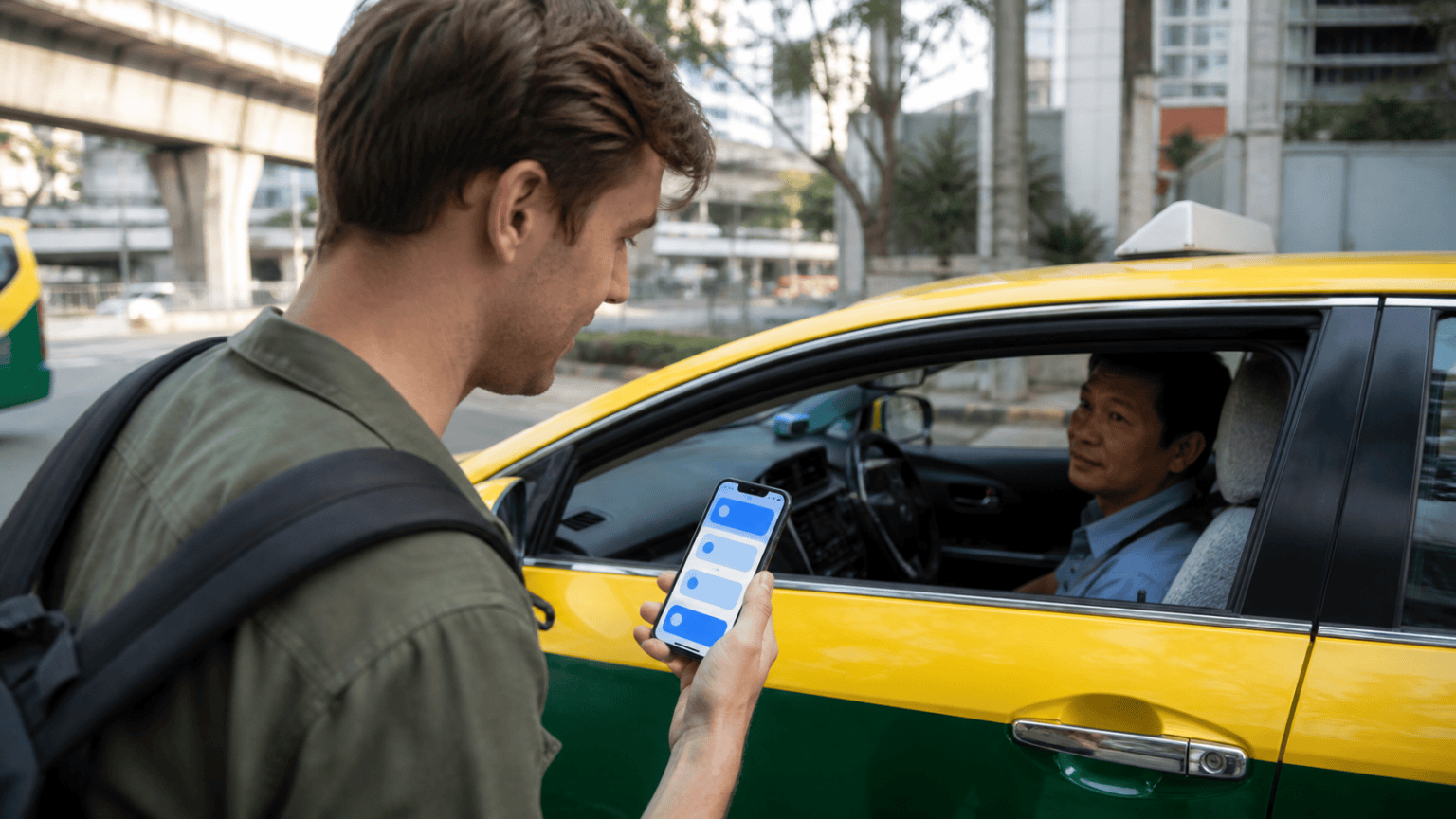
The most obvious function that I think most people are aware of at this point is Google Translate. But what happens if you don’t have a SIM card or internet access when you arrive in the country? Most people don’t know that you can download the Thai language pack before you arrive, so the app can translate for you without the internet. This can be especially useful for your first few days if you don’t have a SIM card or get lost in a remote area.
The major problem with Google Translate is that it lacks a bit of nuance. It’s very difficult to translate with the exact tone you’re looking for, and sometimes it can come across as too direct, making you sound like a bit of a dick. When I type, “Why is the price so high?” it can sound accusatory, which might have made the driver want to take a swing at me.
That’s why I’m turning more and more to ChatGPT for my translations. What I like most is that you can specify the tone of voice you’re trying to convey, which will make it use better word choice rather than just directly translating. “Can you politely ask the taxi driver why the price is so high?” On top of that, the voice functions sound a little nicer too.
What Thai Smiles and the Wai Taught Me

But here’s the most important thing that I’ve learned about situations like this in Thailand: it’s not about what you say; it’s about how you say it. I’ve experienced it firsthand myself. Sometimes I’ve had a complaint—for example, if my hotel room wasn’t up to scratch—and the staff would usually start by smiling and offering a little wai, which is like a polite bow. They might actually have no intention of helping you solve the problem, but it’s surprisingly disarming. While this mistake almost cost me my teeth, it wasn’t the biggest mistake you can make when visiting Thailand.