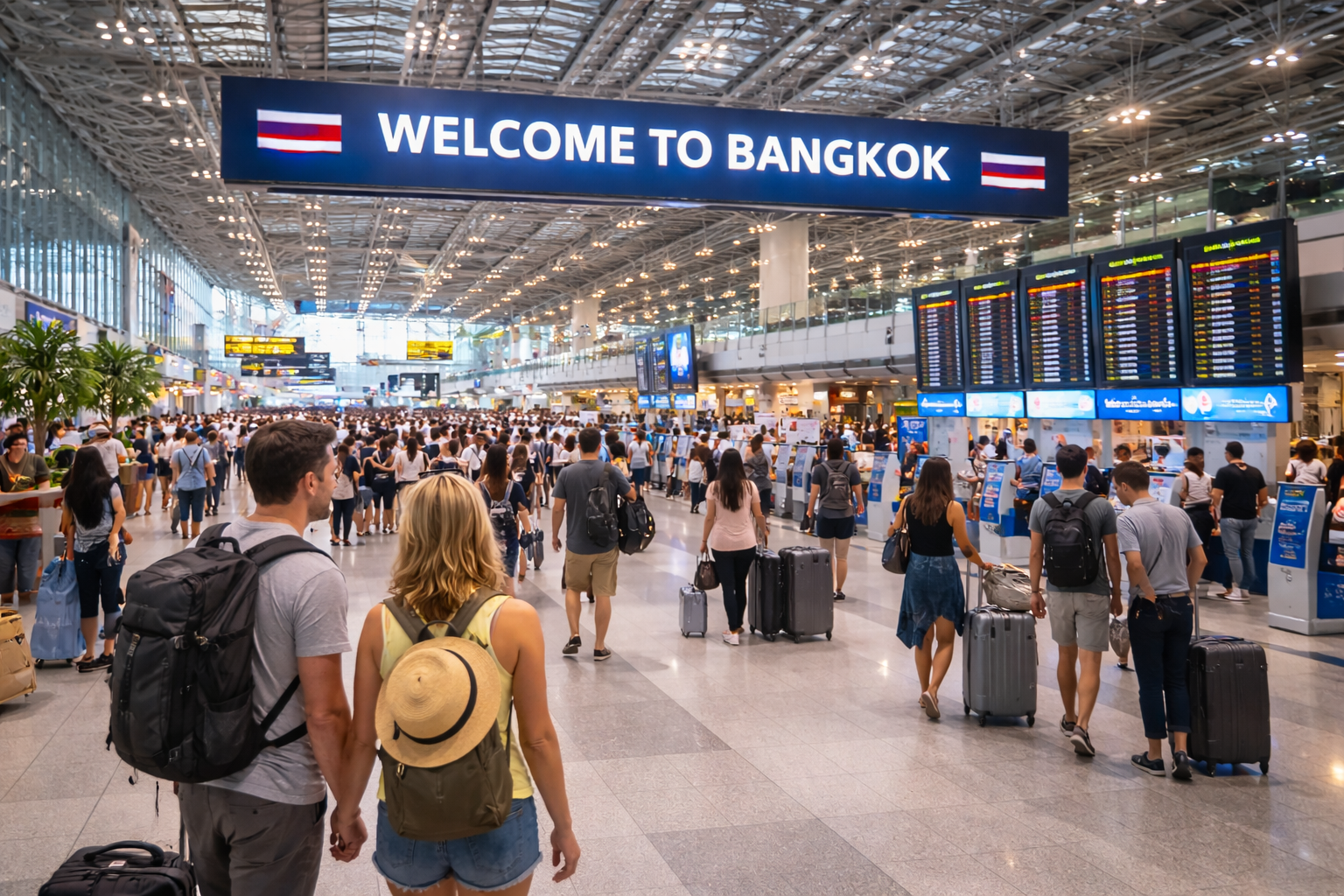
Arriving in Bangkok: Suvarnabhumi Immigration, Money, SIM Cards and Transport
If you’re planning a trip to Bangkok, your journey may begin at Suvarnabhumi International Airport. It’s massive, modern, and confusing for newcomers.
Bangkok also has Don Mueang Airport. If your ticket says DMK, use the Don Mueang arrival guide; the airport locations below are for Suvarnabhumi (BKK).
In this updated guide, I’ll walk you through the biggest mistakes that travelers make in their first hour in this city. From immigration and money, customs, SIM cards, transport, and scams, I’ll cover it all so that you can start your trip with ease.
Immigration & The Thailand Digital Arrival Card
Your first challenge is the immigration entry process. Thailand’s visa-exemption and Visa on Arrival rules are nationality-specific, and revisions approved in 2026 are due to take effect only after the relevant official announcements. Check the current rules before you fly; the Thailand entry, visa and TDAC guide keeps the formal details in one place. All non-Thai nationals entering Thailand must complete the Thailand Digital Arrival Card (TDAC) within three days before arrival, including the arrival date. Transit passengers who do not pass through immigration and airline crew are exempt.
But it’s very simple. Go to the official TDAC website and enter your personal information, including your name, passport details, date of birth, country of residence, and occupation. For the country where you boarded and the flight number, use the flight sector that actually brings you into Thailand. Departure information is optional. Enter the accommodation where you genuinely plan to stay, not a random hotel copied from Google. For the health section, list the countries you’ve stayed in during the previous two weeks; the system requests extra health information when relevant.
Double-check everything and submit. Save the confirmation and QR code where you can access them offline, because immigration staff may ask to see them.
If you forget to do the arrival card or make a major mistake like your name or passport number, don’t worry. You can fill in a new card at kiosks before immigration, but it may lead to delays.
The TDAC is free of charge. Use tdac.immigration.go.th, because unofficial sites may charge unnecessary fees or collect personal data.
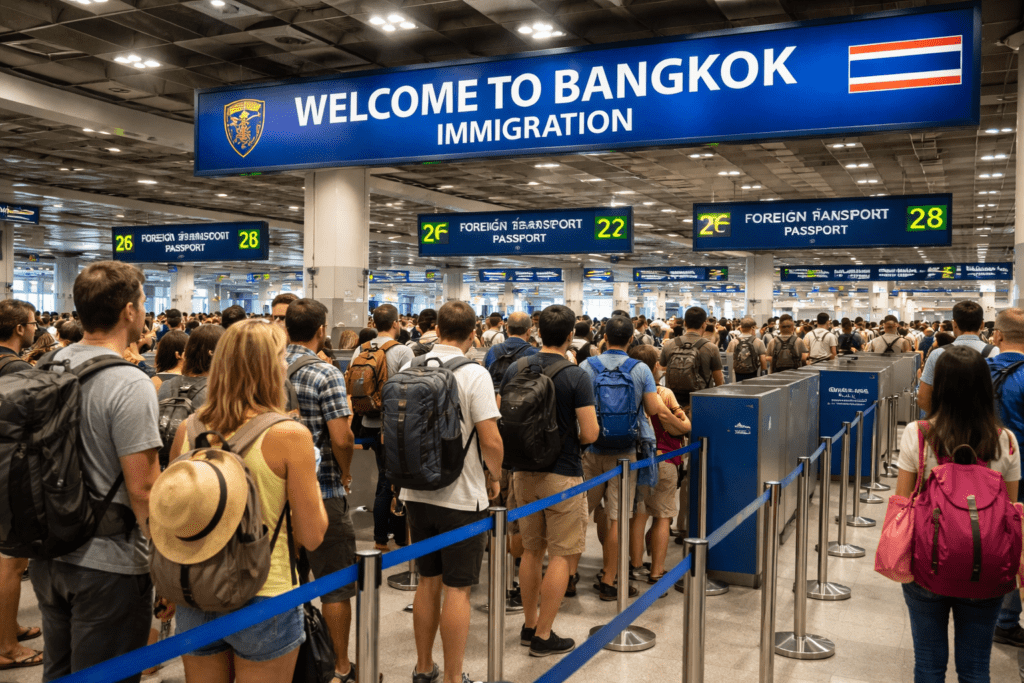
At the Immigration Counter At Bangkok Airport
Suvarnabhumi arrivals can be crowded in high season. The walk from the gate to immigration depends on where the aircraft parks, so allow roughly several minutes and do not assume every route is the same.
If your priority is speed, keep moving toward immigration rather than stopping for a SIM, currency exchange, or other services before passport control. Follow the signs and official instructions for your arrival lane.
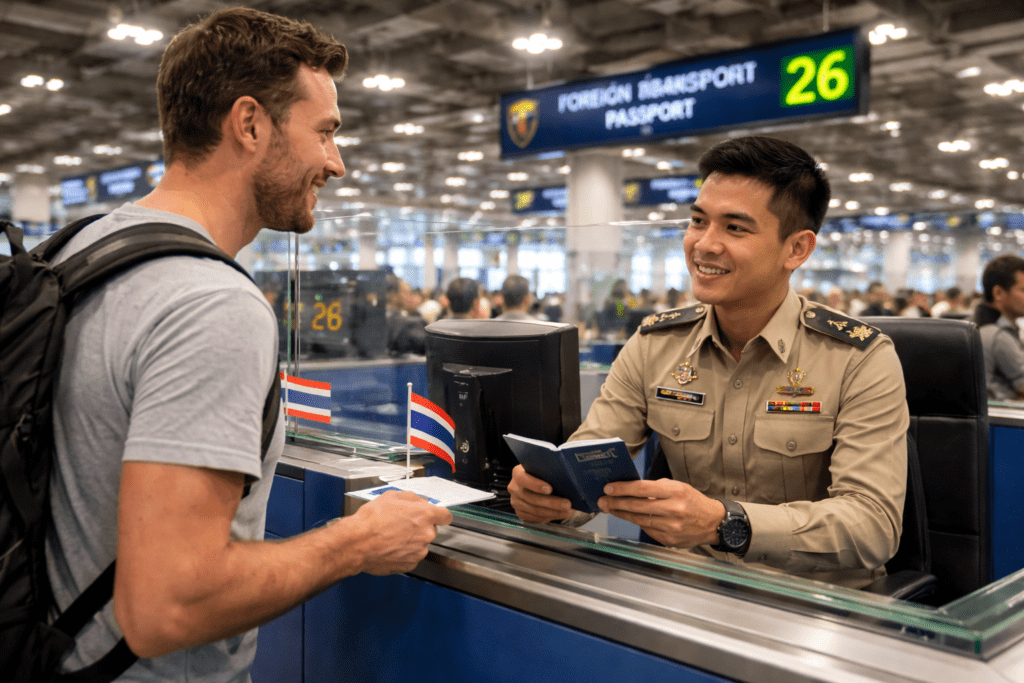
When you arrive at the immigration counter, have your passport, boarding pass, and TDAC confirmation ready. Officers may not ask for every item, but keeping them together avoids delays. You’ll also be photographed and may be asked for fingerprints as part of the entry checks.
And normally, that’s it. But officers can ask about your length of stay, itinerary, onward travel, accommodation, and evidence of sufficient funds. The documents and amounts depend on your entry category and immigration discretion, so keep current evidence accessible. If you’re questioned, answer politely and consistently. The immigration mistakes guide covers the compliance issues in more detail.
If you’re older or have a disability, select assistance when you book your ticket and you’ll be brought through immigration with a wheelchair and priority access.
And one more thing: if you carry medication containing a controlled narcotic or psychotropic substance, check the Thai FDA traveler guidance well before departure. Whether you need a permit depends on the substance, schedule, and quantity; some applications must be made at least 15 days before travel.
Baggage Claim, Customs and Airport Exit
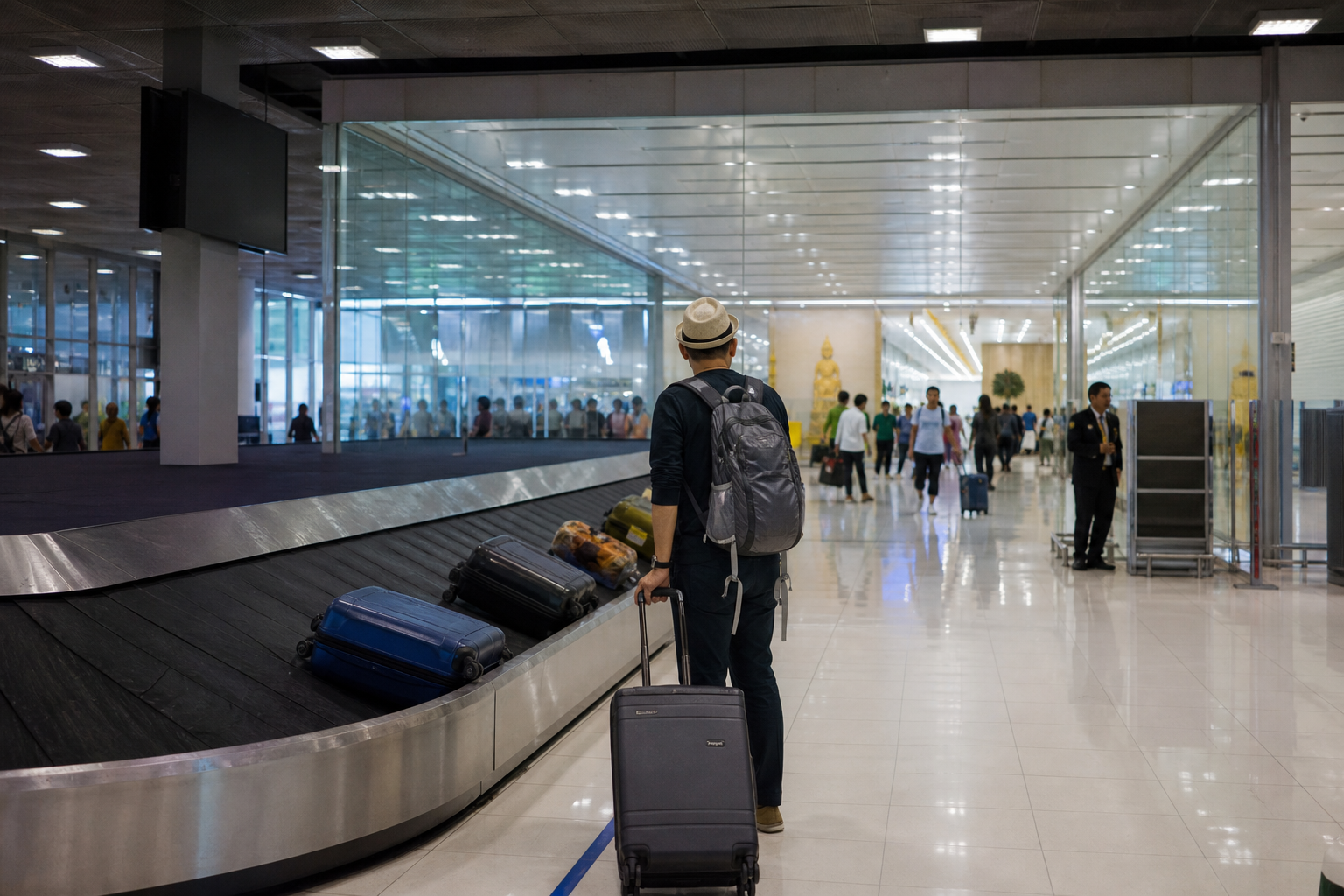
After immigration, collect your luggage and continue through customs. Keep passports, medication, electronics and valuables in hand luggage. A photo of your suitcase and a visible luggage tag can make collection easier in a crowded hall.
Thailand applies customs limits to items such as tobacco, alcohol and large amounts of foreign currency. Check the current Thai Customs guidance before travelling if you are carrying anything close to a limit or declaration threshold rather than relying on older figures.
Once you have your luggage, follow the official exit and arrivals signs. There are several exit points, so there is no need to panic if you do not emerge beside the exact door you expected.
Meeting Points and Prebooked Drivers
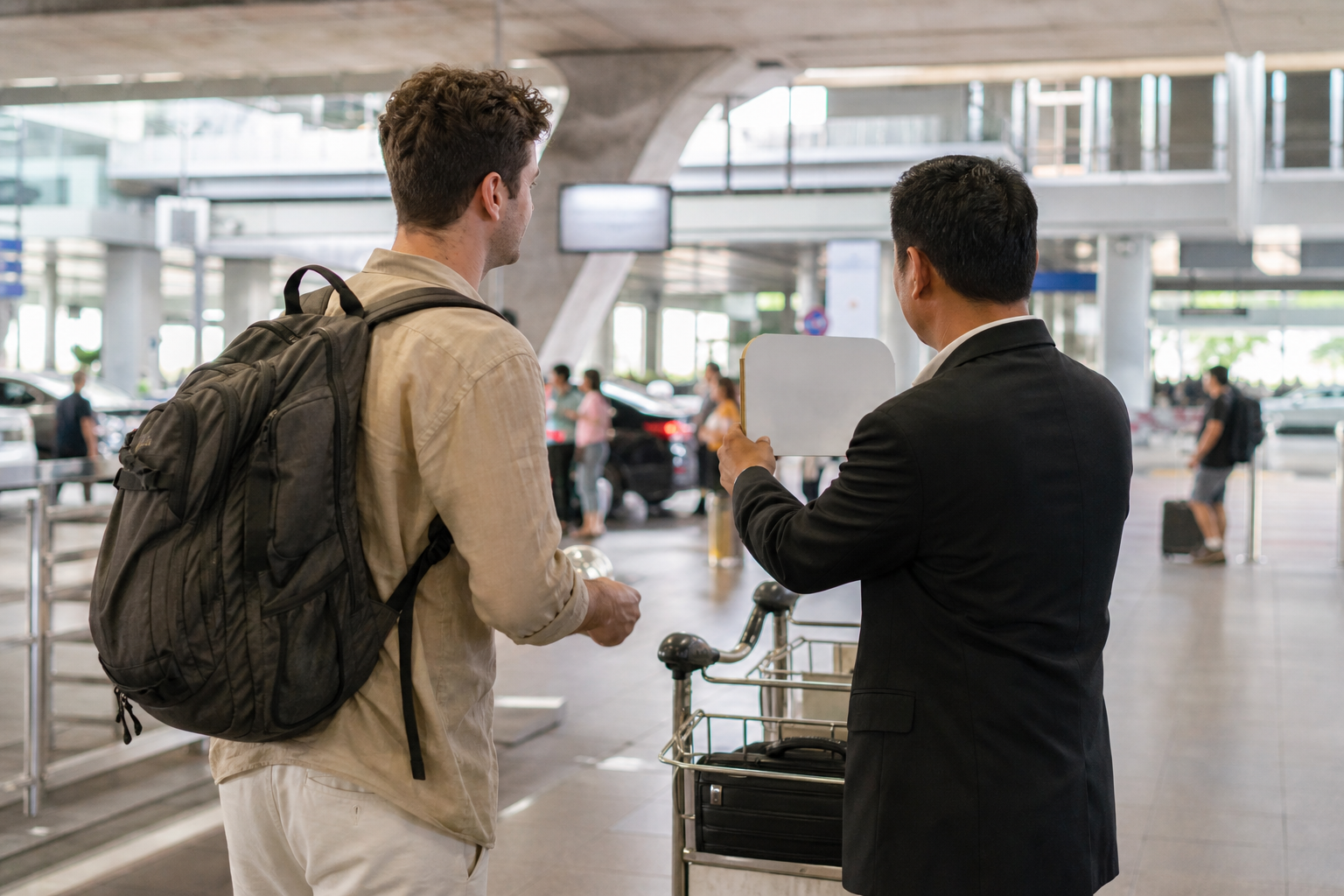
If a hotel or transfer company is collecting you, confirm the meeting floor, exit, driver name, vehicle details and emergency contact before landing. Follow the current signs to the agreed meeting area and use the airport’s free Wi-Fi if you need to message the driver.
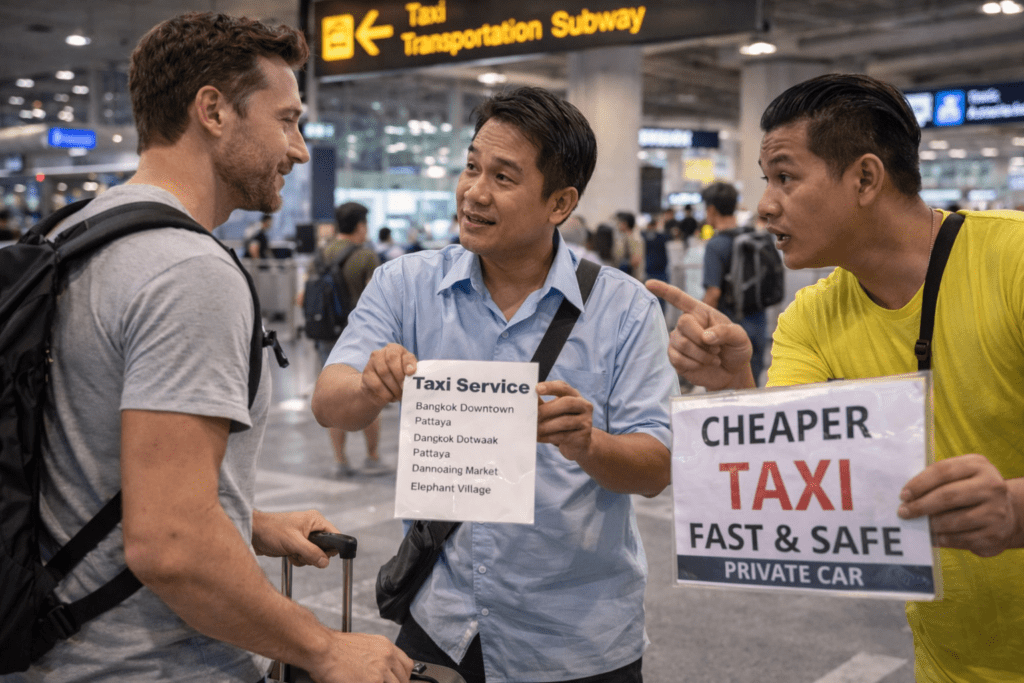
Passengers meeting someone should carefully read the names on pre-booked taxi, bus or service signs. After a long flight, finding a name in a busy arrivals area can be difficult. Pre-booked private taxis and guides also wait around the official meeting areas. Do not accept an unsolicited ride from someone who approaches inside the terminal.
Use Airport Wi-Fi Carefully
Free airport Wi-Fi is convenient while you wait for a flight or a pickup, but public networks deserve basic caution. Avoid entering sensitive information on an unfamiliar network unless you are confident you are connected to the official airport service.
Use strong, unique passwords, keep device software updated, enable two-factor authentication, and prefer mobile data or a trusted secure connection for banking and other sensitive tasks. Remove saved public networks when you no longer need them.
Getting Baht – ATMs vs Exchange In The Airport
Once you’re through arrivals, you’ll need to get your hands on some baht. That’s the currency here in Thailand. In my experience, exchanging a large amount in your home country is usually a mistake because rates in Thailand are often better.
You have two options: ATMs or currency exchange booths.
ATMs accept foreign cards, but local fees now vary by bank and card network, and your home bank may add its own charges. Check the fee shown on screen before confirming. To reduce per-withdrawal costs, take out a larger amount within your budget, or consider a travel debit card that refunds foreign ATM fees.
When you withdraw money, if the ATM asks to charge you in your home currency, always decline. That’s the hidden dynamic currency conversion scam and it almost always results in a worse rate. Choose to be charged in baht instead.
And remember, many Thai ATMs dispense the cash first and card second. Travelers sometimes forget their cards because of this order. Make it a habit to wait at the ATM for a few moments, and bring a backup payment method in case you make this mistake.
There’s one last useful hack: always withdraw an uneven number like 3,900 instead of 4,000 and you’ll get smaller bills for taxis and street food.
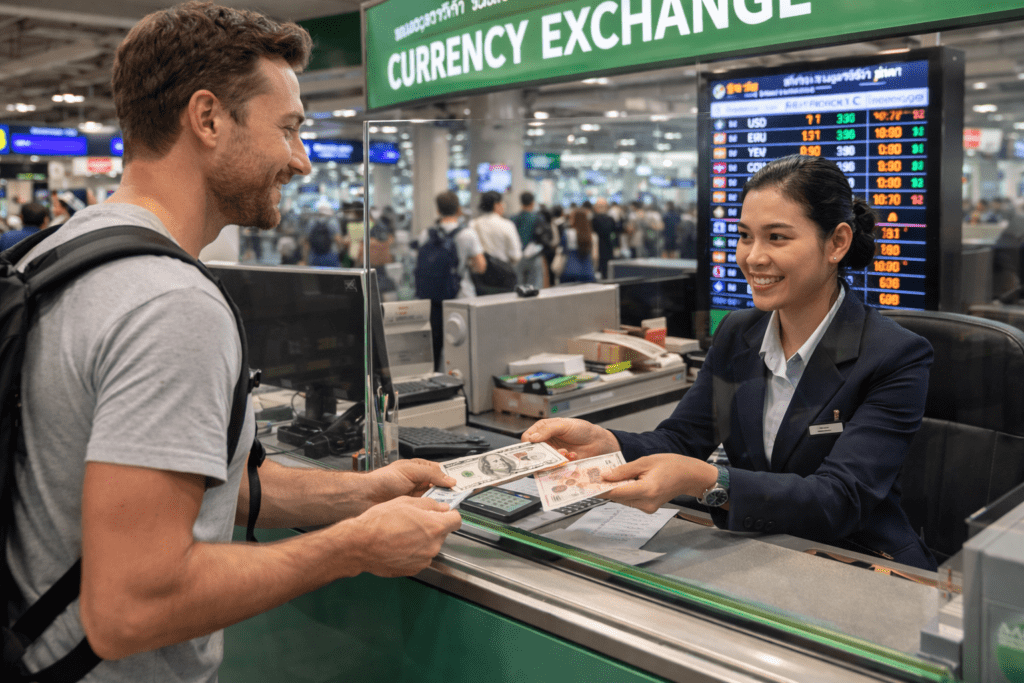
If you prefer exchange counters, don’t assume every booth offers the same rate. The basement near the Airport Rail Link often has competitive counters, but providers and opening hours change. Compare the displayed rate, bring your passport, and count the cash before leaving.
SIM Cards & Getting Connected
Let’s talk about getting connected. The good news is that you can hop onto the airport’s free Wi-Fi the moment you land. But you’ll definitely want mobile data for the rest of your trip.
The biggest mistake travelers make here is arriving with a locked phone, because if your device isn’t unlocked, you won’t be able to use a Thai SIM or eSIM. In that case, you’ll have no choice but to use international roaming, which can get expensive quickly.
If your phone is unlocked, you’ve got three easy options: an eSIM, a tourist SIM, or a prepaid SIM.
eSIMs can be very convenient and affordable, but be careful because some cards are massively overpriced. My personal recommendation is Saily. The markup is small, and the regional plans are particularly useful to skip the hassle of sorting out a new SIM every time you cross a border.
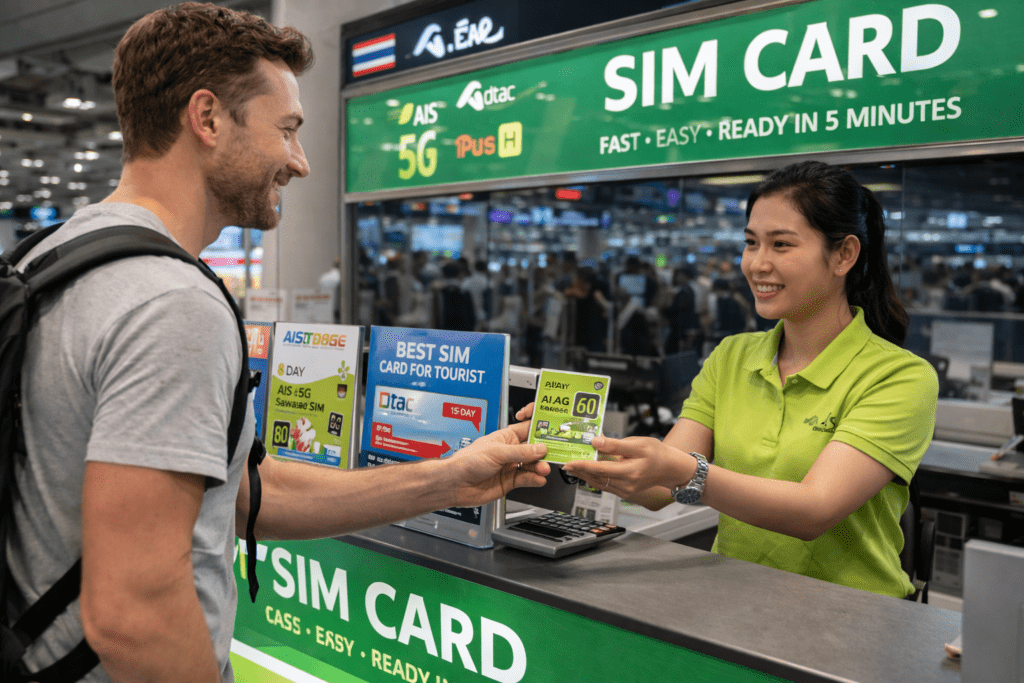
Alternatively, airport telecom counters sell tourist SIM plans with different validity periods and data allowances. Compare the current AIS and True packages rather than assuming every counter offers the same deal; staff can usually set you up in a few minutes.
If you’re staying longer or want a cheaper option, compare prepaid plans at an official provider shop or authorized retailer in the city. Availability at individual 7-Eleven stores varies, so don’t rely on a particular branch having the SIM or package you want.
Whether you do it in store or online, you’ll need your passport to register a Thai SIM card. Keep it secure and use an official provider or authorized retailer.
Essential Apps For Thailand
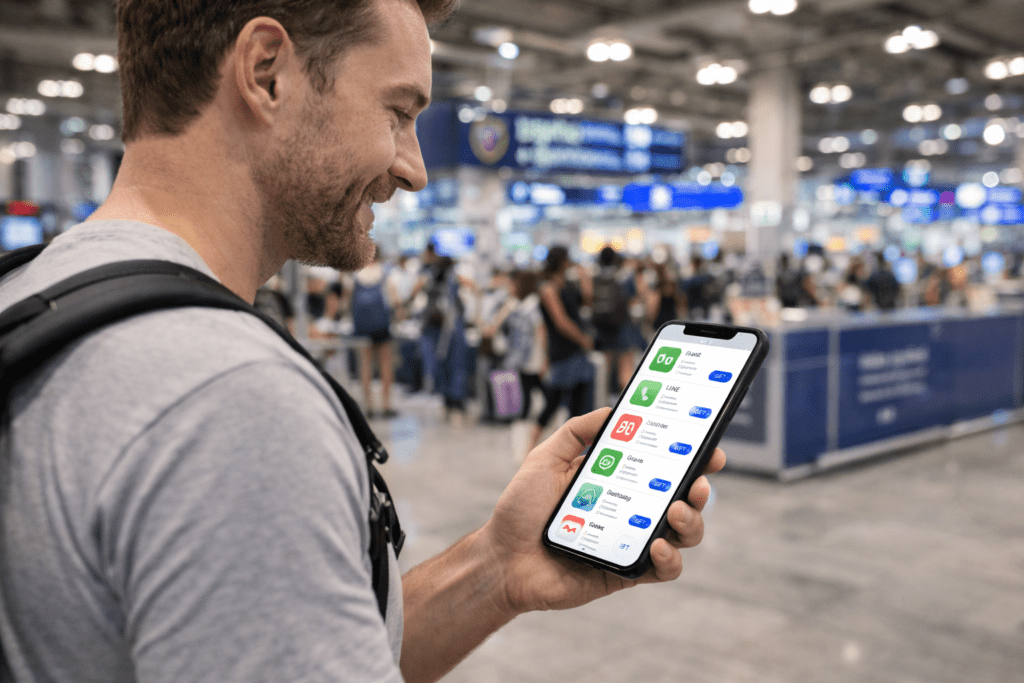
Speaking of data, download a few key apps before you fly. Grab, Bolt, and InDrive are popular ride-hailing apps in Thailand. I prefer seeing the fare estimate, pickup point, driver details, and available payment options in the app instead of negotiating a ride after landing.
Line is Thailand’s most used messaging app, while Grab Food and Lineman handle food delivery. If you want discounted tours and attraction tickets, check out Klook, and Rain Viewer keeps you up to date on sudden weather shifts. Install them all in advance so you’re ready once you land.
Transportation Into Bangkok
What about transportation to your accommodations?
For many travelers with manageable luggage, the Airport Rail Link is the cheapest and most predictable way into the city. Follow the signs to Level B1. The airport currently lists operating hours of 5:30 a.m. to midnight; fares vary by destination, and the line connects with the MRT at Makkasan and the BTS at Phaya Thai. You can buy a ticket from the vending machine or counter.
At an interchange, follow signs carefully and allow time for elevators or stairs with luggage. For a late arrival or a hotel far from rail, compare the official taxi or verified ride-hailing option instead of forcing a complicated transfer.
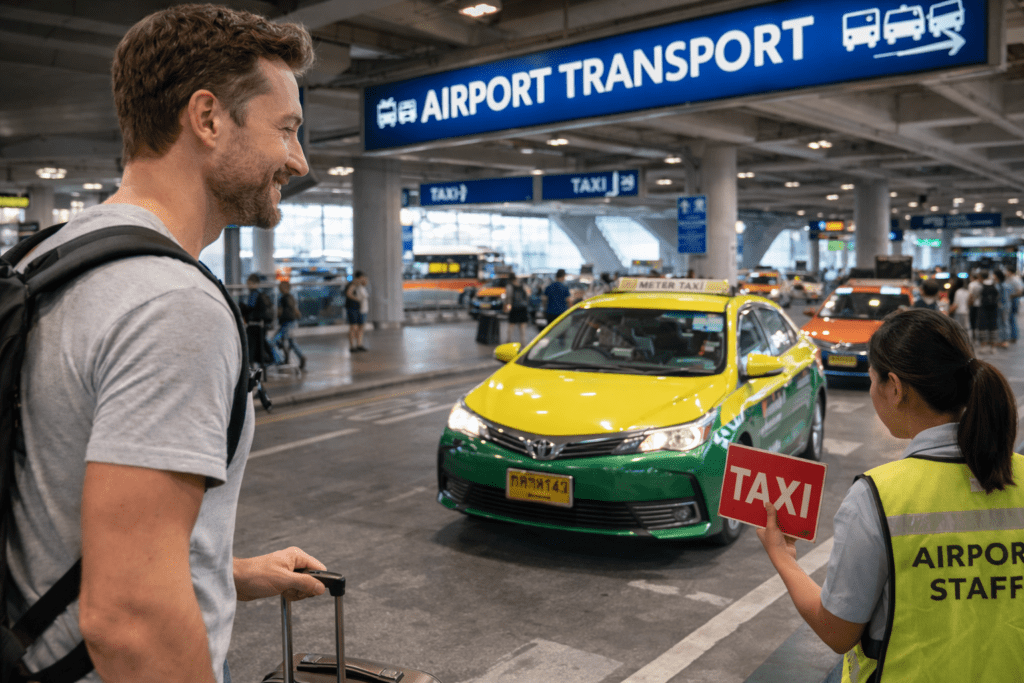
If you’ve got luggage, arrive late, or simply want more convenience, you have two options: an official taxi or a ride-hailing app. Both are here on the first level.
For an official taxi, head to the taxi queue machines and take a printed ticket. It’ll show your assigned parking bay. Just walk over, show the driver your destination, and hang on to that ticket. Your ticket will have all your driver’s information on it. Make sure to keep it in case you have any issues or problems, because they do happen.
An airport service charge applies, and regulated luggage fees may also apply. The driver may ask if you want to take the expressway; passengers pay the tolls separately. Check the current official airport taxi tariff before travel because published airport information can change.
Before leaving, make sure the driver switches on the meter, as some try to quote inflated flat rates instead. It’s also smart to carry small bills to avoid wrong-change tricks. The total depends on distance, traffic, tolls, and luggage, so don’t treat an old flat estimate as guaranteed. Once you’re on the road, keep Google Maps open so you can spot if your route starts getting suspiciously long.
If that sounds like a hassle after a long flight, opt for a ride-hailing app instead. Suvarnabhumi currently designates Level 1, Gate 4 for Grab pickups; for other apps, follow the live pickup instructions shown in the app. Match the vehicle, plate, and driver before getting in.
Other Transport Options
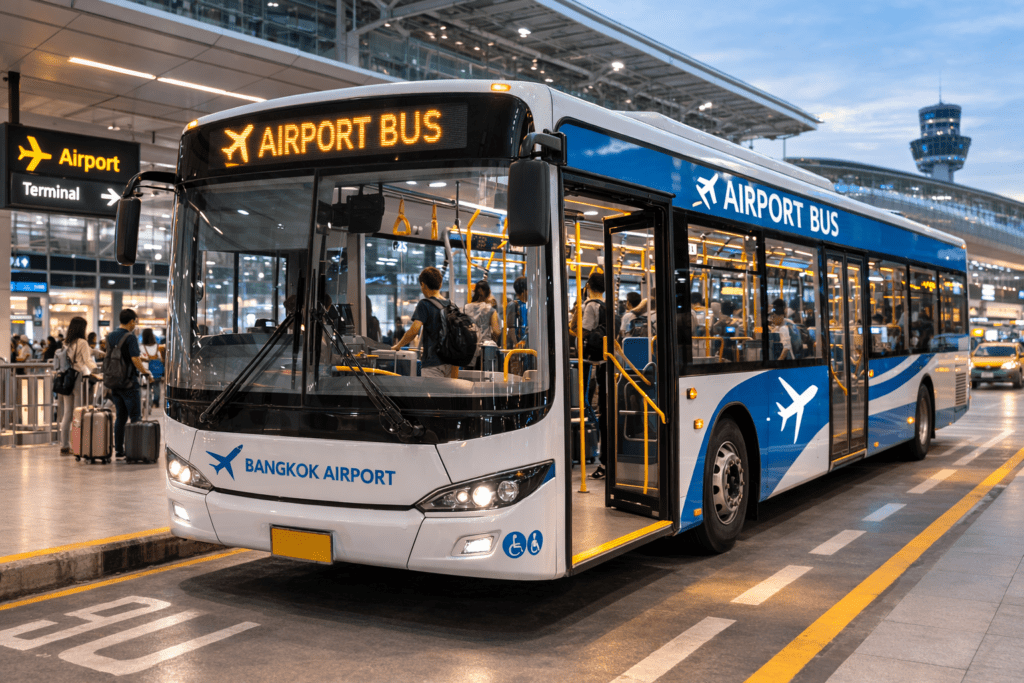
There are direct air-conditioned coaches to Pattaya, Hua Hin, and other destinations from the Level 1 transport area. Routes, fares, and departure times change, so check the current airport counter or official directory before relying on an old schedule.
If you’re going to Khao San Road, the airport’s current route is the S1 bus from Level 1, Gate 7. Airports of Thailand currently lists service from 6:00 a.m. to 8:00 p.m. with an approximate fare of 60 baht. Check the current airport information before travel because schedules and fares can change.
There are information desks throughout the airport. If you’re struggling to find anything, stop and ask. Luggage-storage operators and counter locations can change, so check the current airport directory instead of assuming the basement counter is still operating.
Lower-Level Services, Luggage Storage and Airport Hotels
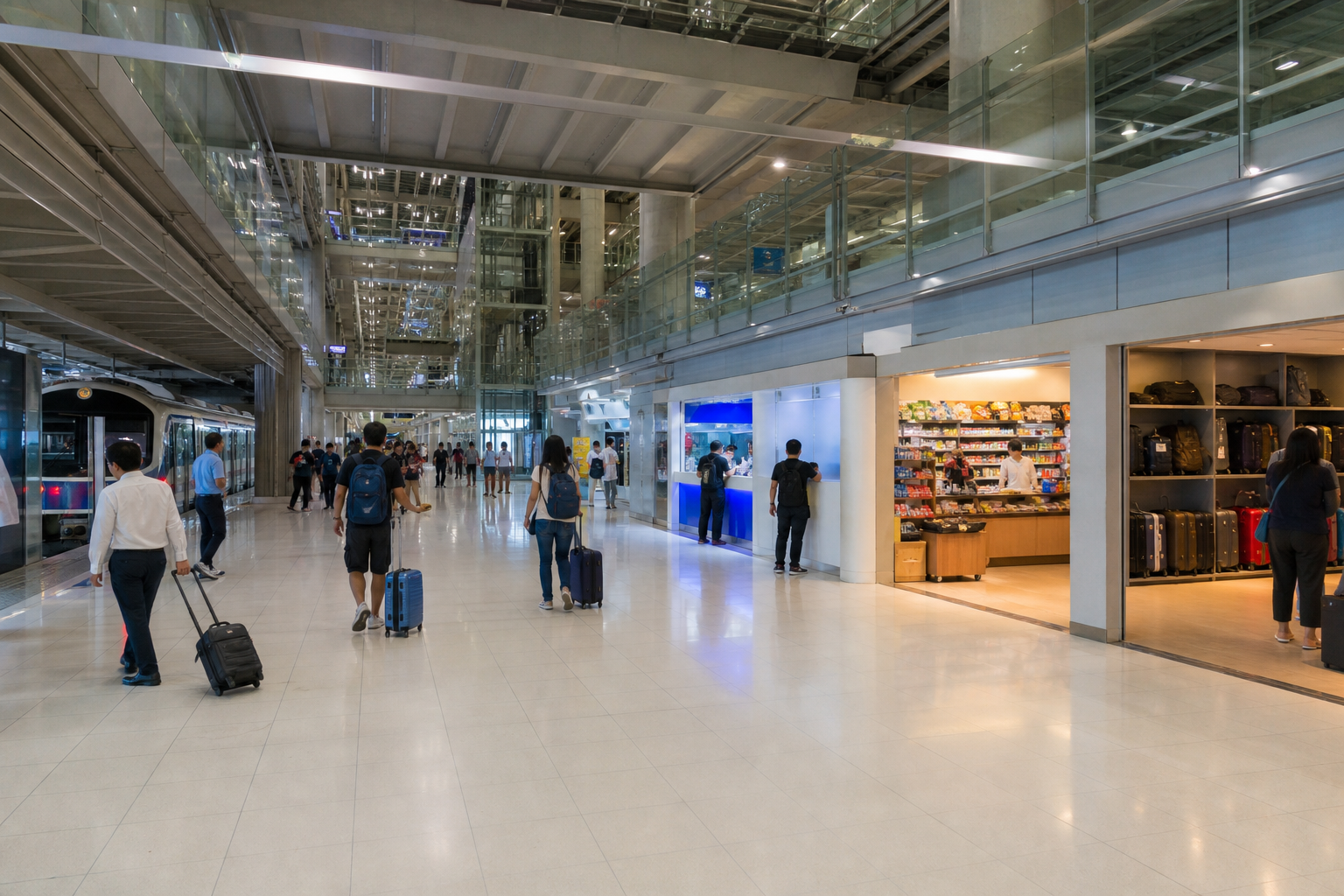
The lower level contains several useful services travelers can easily miss. It is where the Airport Rail Link is located, along with money exchange, SIM and eSIM services, food, luggage services and other transport facilities.
There are airport and capsule-style hotels for travelers with long connections or an overnight wait. Some facilities charge by the hour, while conventional rooms are available for travelers who want more space. Luggage storage can help if you need to arrange your belongings between flights or spend time in Bangkok before continuing your journey. A 7-Eleven is also available on the lower level for basic supplies.
Confirm current prices and opening hours before relying on any storage or accommodation service.
Long Layovers at Suvarnabhumi
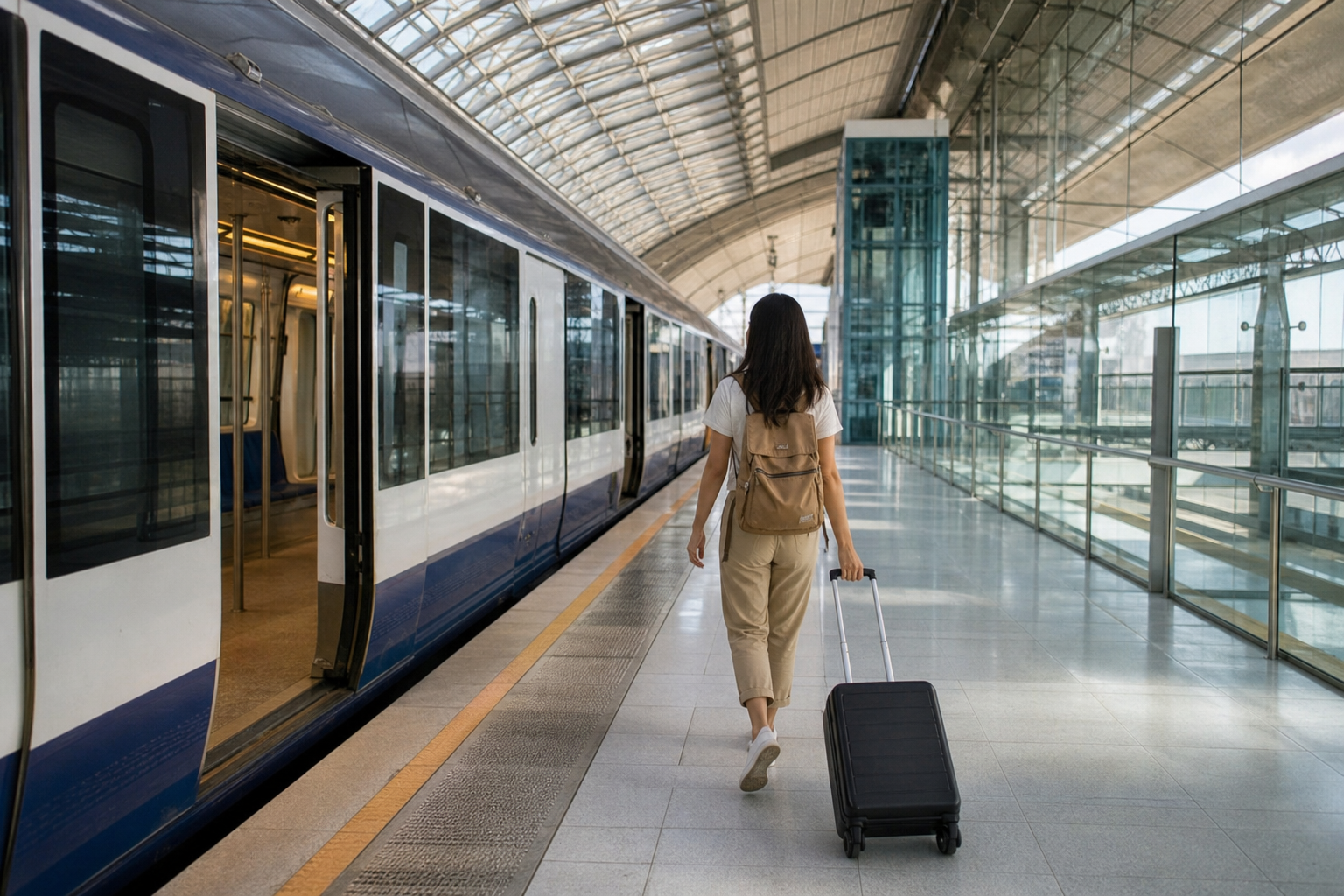
Leaving Suvarnabhumi Airport during a long connection can be possible, but it is a calculated risk rather than a casual sightseeing plan. You need enough time for immigration, transport in both directions, security and unexpected delays. An international connection deserves a much larger buffer than a domestic flight, and a short layover is usually better spent inside the airport.
If you do leave, keep the route simple. The Airport Rail Link is the practical choice for a quick trip toward central Bangkok because it avoids much of the road traffic. Luggage storage can make a short city visit easier, but keep valuables, travel documents, medication and electronics with you.
Bangkok traffic, train waits, rain, crowded platforms and navigation mistakes can all consume the time that looked comfortable on paper. Return to the airport with a large safety buffer.
Airport Food
Before you head off to your accommodations, you might want to stop for a bite to eat. There are plenty of international restaurants, but for good value, head to the Magic Food Point food court on Level 1. The airport currently lists it as open 24 hours.
You’ll find excellent Thai food at very reasonable prices. Just pick up a prepaid card at the counter (the vendors don’t accept cash) and return it to collect your refund before you leave.
Airport Scams to Avoid
Before we wrap up, there are a couple of scams worth watching for.
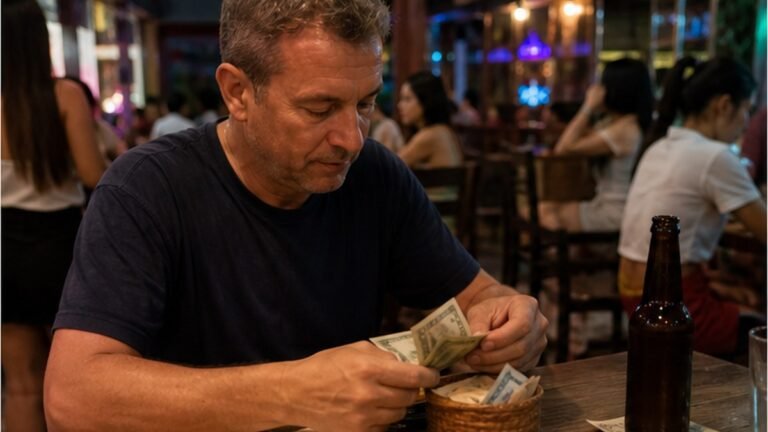
One of the more common tricks is the friendly foreigner scam. Often involving a seemingly polite individual, couple, or even a family, often working in groups or pairs, they’ll strike up a friendly chat, maybe ask about your trip or where you’re from, and before long, find a reason to ask about your currency. If you hand it over, they use sleight of hand to swap or pocket your cash or try to exchange it for counterfeit bills. This scam is prevalent throughout the country, including at the airports.
The forlorn traveler scam happens too. Usually a Western backpacker with a sob story about a lost wallet and needing cash for food or a ticket. Just walk away.
If you face any issues, call the tourist police at 1155 or visit their office inside the airport. Keep the number with you throughout your trip.