Thailand Arrival Guide: Immigration, TDAC, Visas, and Airport Planning
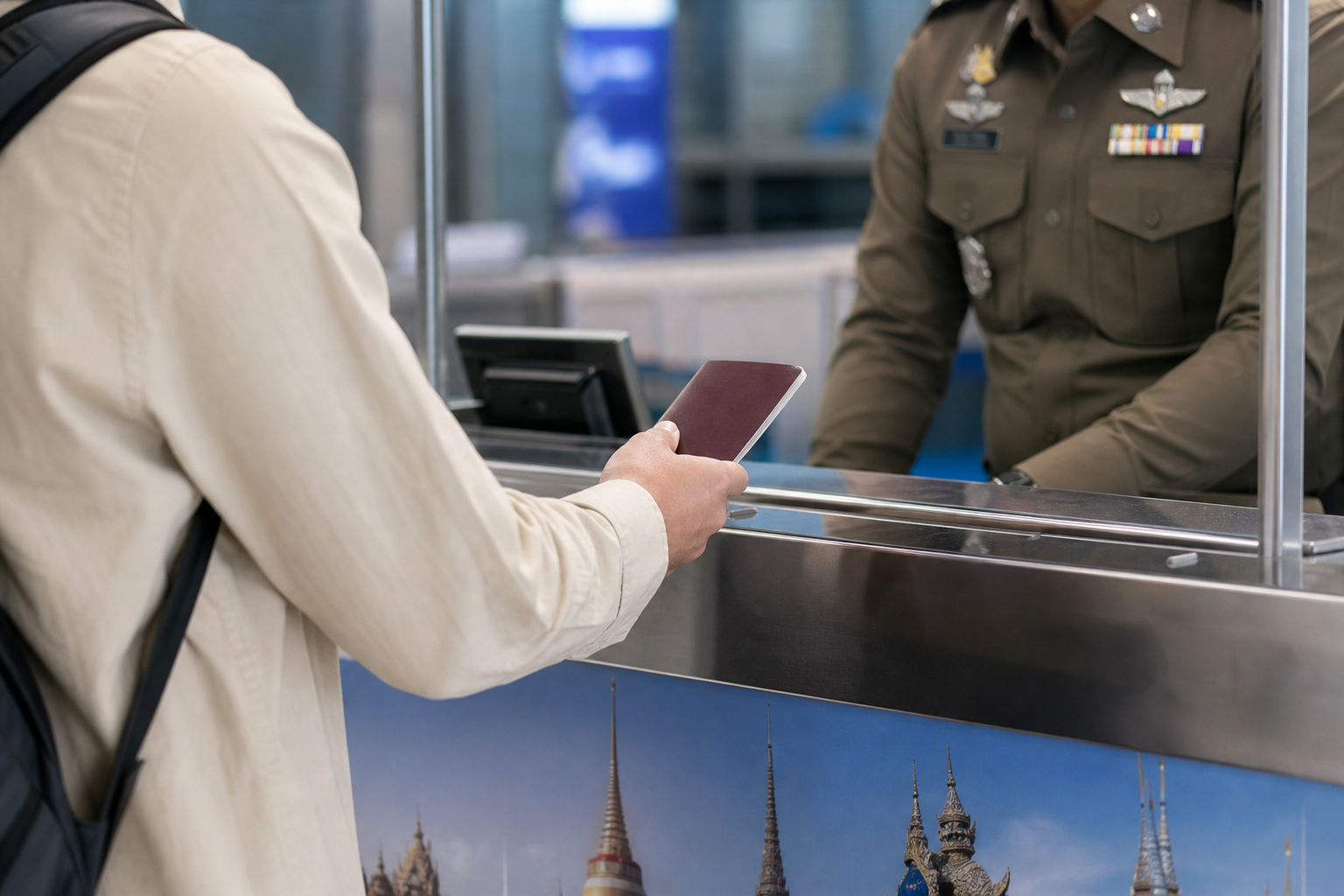
Before booking, check the rules for your passport and the purpose and length of your trip. Thailand’s official e-Visa portal explains the available categories and notes that applications can require supporting documents, interviews, or additional review. Start with the official Thai e-Visa website or the Royal Thai Embassy responsible for your location.
Do not use a tourist entry permission for work or another activity that requires a different category. A visa, visa exemption, or visa-on-arrival arrangement does not guarantee entry; the immigration officer decides permission at the border.
Keep Accommodation and Travel Evidence Ready

An officer may ask where you are staying, how long you plan to remain, and how you will leave Thailand. Keep your accommodation address, onward or return itinerary, travel insurance details if relevant, and proof of funds available in a format you can access without an internet connection.
Answer truthfully and consistently. Frequent in-and-out travel, unclear plans, or documents that do not match your stated purpose can lead to more questions. A border crossing is not a way to guarantee a new period of stay.
Complete the Thailand Digital Arrival Card Through the Official Site

All non-Thai nationals entering Thailand are required to complete the Thailand Digital Arrival Card online within 3 days before arrival.
You’ll need to provide your personal information, flight arrival details, the purpose of your visit, and accommodations.
Thailand’s Digital Arrival Card requirements and timing should be checked on the official immigration portal before departure. Use tdac.immigration.go.th or a government-linked page, and be wary of unofficial sites that add unnecessary service charges.
Save the confirmation and make sure the information matches your passport and accommodation details. A digital arrival form does not replace a visa or change the conditions of your entry permission.
Thailand THIM Immigration Management System
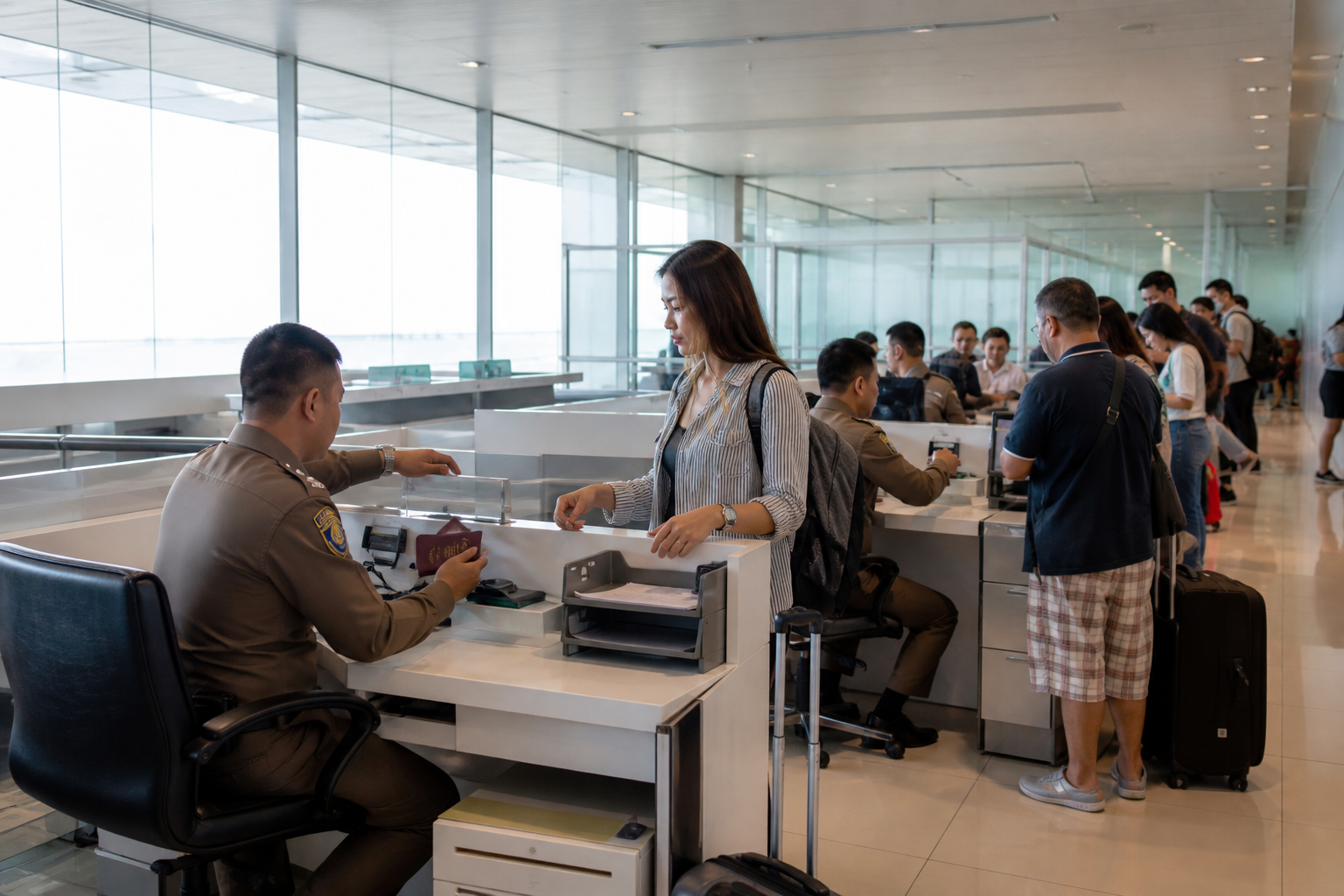
THIM stands for Thailand Immigration Management System. It is designed to make immigration services and repeat travel easier by connecting traveller information with digital immigration services.
For frequent travellers, the main advantage is reducing the need to enter the same basic information again and again. Passport and traveller profile information can be reused while trip-specific details such as travel dates are updated.
THIM and Immigration Services for Expats

The system is also relevant to expats who deal with immigration for 90-day reports, visa extensions and re-entry permits. The aim is to move more immigration processes online and reduce unnecessary visits to immigration offices.
Travellers should still follow the current TDAC requirements and use official immigration channels.
Thailand TDAC and Fast Track Warnings
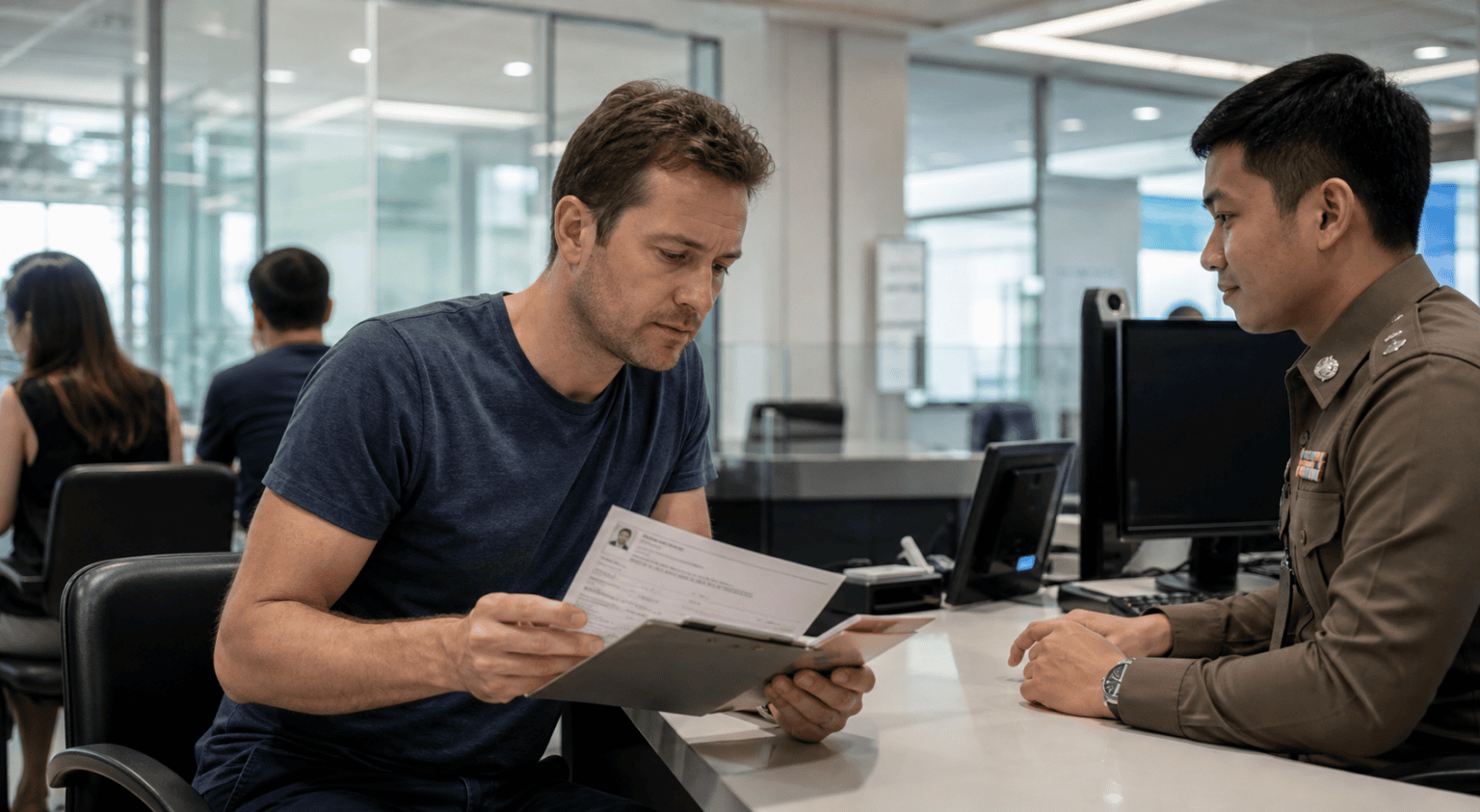
A lot of people are getting scammed by unofficial fast-track and arrival-service websites. Before paying anyone, check only official airport or government channels.
Extensions, Long-Stay Options, and Visa Advice

From 15 September 2026, Thailand’s revised visa-exemption scheme reduces the standard visa-free stay for eligible travellers from 60 days to 30 days. The Thai government announced that 59 countries and territories would receive the 30-day exemption under the revised system, while other nationalities may fall under separate bilateral arrangements or visa-on-arrival rules. Always check the current rule for your passport before travel.
Eligible visa-exempt travellers can generally apply for an additional 30-day extension at a local immigration office, subject to immigration approval and the current rules. The extension fee remains 1,900 Thai Baht. A tourist visa, visa on arrival, and visa exemption are separate arrangements, so do not assume the conditions are interchangeable.
If you need a longer or different stay, research the appropriate category before arrival. The official e-Visa portal lists tourist visas and the Destination Thailand Visa for eligible applicants. Never overstay, work without permission, or rely on old entry-rule information.
Follow Airport Rules

Follow instructions around immigration and do not photograph, film, or argue in controlled areas. Be polite, answer questions clearly, and ask an official information desk if you need help. Rules, fees, and entry procedures can change, so verify them immediately before travel.\n\nFrom 20 June 2026, Airports of Thailand (AOT) charges a 1,120-baht Passenger Service Charge for outbound international passengers at its six airports. It is normally included in the airline ticket price and is a passenger service charge, not a tax.
Thailand Visa Exemption: 30-Day Stay from 15 September 2026
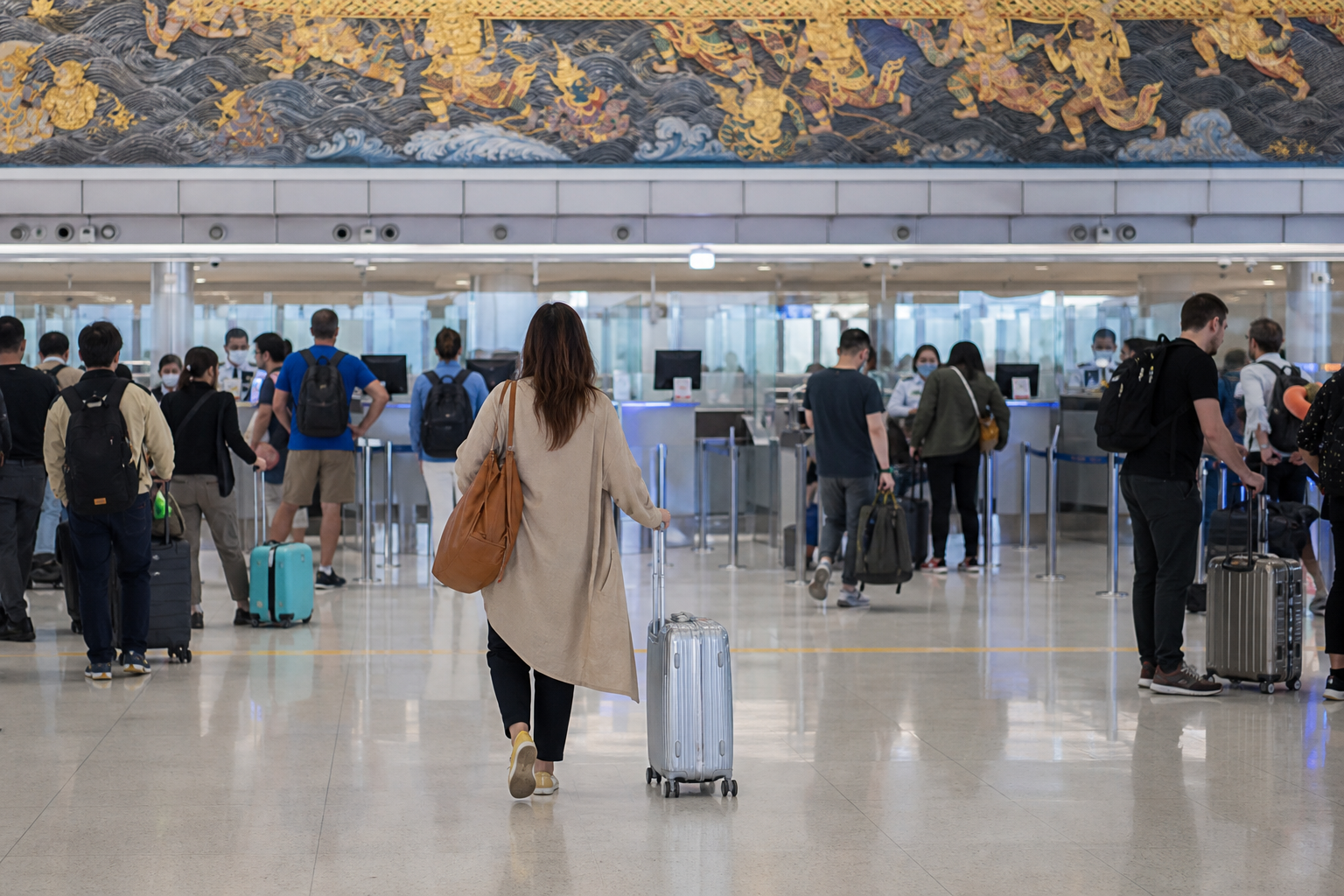
Thailand’s revised visa-exemption rules take effect on 15 September 2026. Under the new system, eligible travellers receive up to 30 days visa-free instead of the previous 60 days. The Thai government announced 59 countries and territories under the new 30-day exemption, with some other nationalities covered by separate bilateral arrangements or visa-on-arrival rules.
Travellers who entered before the new rules took effect keep the period of stay already granted under the previous system. For new arrivals, check the latest official guidance for your passport before travel because the exact entry category depends on nationality.
Immigration may ask to see proof of onward travel, accommodation and sufficient funds. These documents are not requested from every traveller, but carrying them can help, especially if your recent travel history includes repeated entries.
Eligible visa-exempt travellers can generally apply for one additional 30-day extension at a local immigration office, subject to immigration approval and current rules.
Thailand Visa on Arrival Rules and Fees
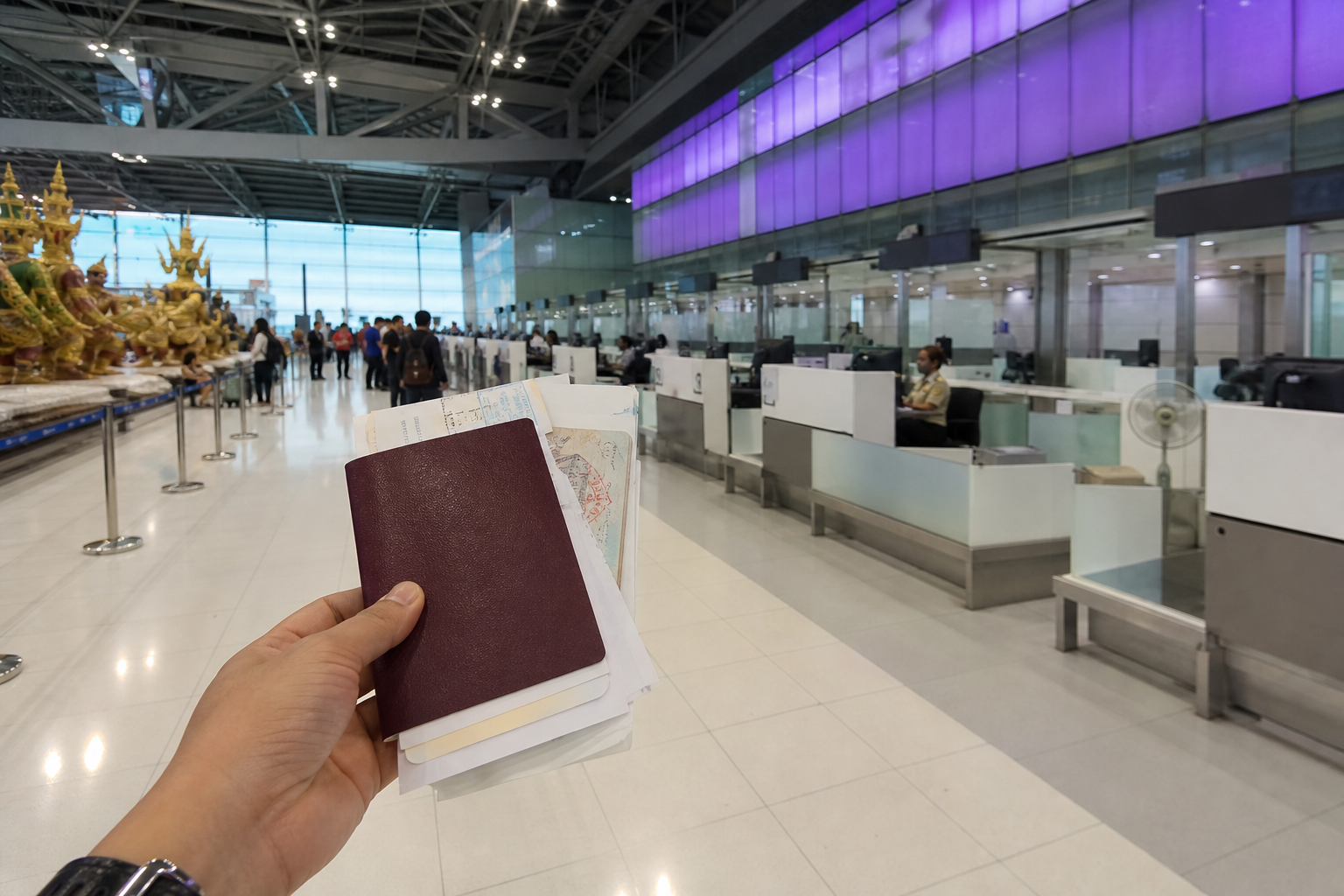
The visa on arrival is for the nationalities that can obtain a visa after arriving in Thailand. The published Visa on Arrival guidance allows eligible nationalities to stay for up to 15 days, with a visa fee of 2,000 baht.
Return-flight and accommodation details may also be requested.
Thailand Tourist Visa and Entry Process

The classical tourist visa can be obtained from a Thai embassy or consulate in your country. The tourist visa allows a 60-day stay, followed by a possible 30-day extension subject to immigration approval.
These three visa types are tourist visas, not long-stay visas, and are for tourism. The arrival process was described as fast when the papers are correct: immigration, baggage collection, and the journey to taxis or public transport can be smooth.