Thailand Rewards Control More Than Confidence
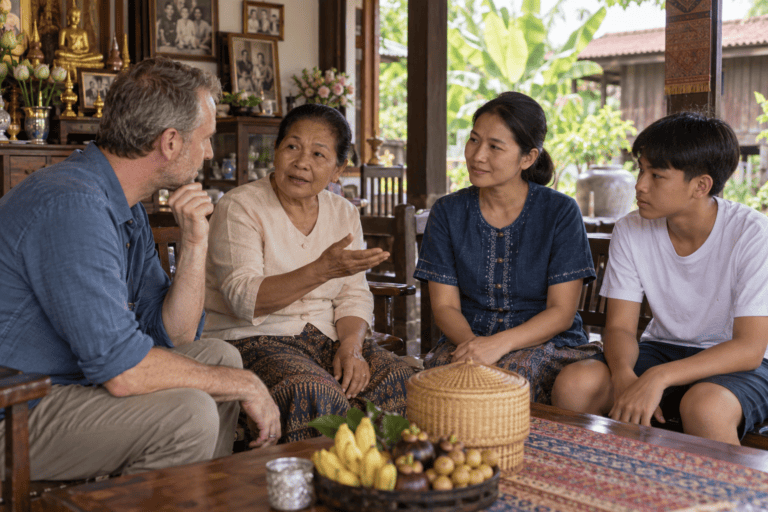
If you have spent any amount of time in Thailand, you have probably noticed something that feels different. It is not the food, it is not the weather, and it is not even the language. It is the people. You will often meet someone here who is incredibly polite, speaks softly, smiles constantly, and almost never raises their voice.
At first, a lot of foreigners mistake that for being shy, passive, or lacking confidence, but that is actually one of the biggest misunderstandings you can make in this country. Because Thailand does not necessarily reward confidence, it rewards control. And once you understand that subtle difference, so many things about Thai society suddenly begin to make a lot of sense.
I am obviously not saying every Thai person is exactly the same. Thailand is a huge country with different personalities, different generations, and different ways of thinking. But there are certain deeply ingrained cultural patterns that appear over and over again and are well worth understanding if you want to look at Thailand beyond just the beaches and the bars.
Confidence Looks Different In Thailand

In many Western countries, we are taught from a young age that confidence is everything. We are told to speak up, stand out, sell yourself, be assertive, challenge people, and have an opinion about everything. The loudest person in the room is often assumed to be the leader, and the person dominating the conversation is thought to be the most knowledgeable.
Whether that is actually true or not is another discussion entirely. But in Thailand, things work very differently. The person who stays completely calm while everyone is losing their head is the one who earns the most respect. That does not mean Thai people do not get angry. Of course they do. They are human. But publicly losing control of your emotions usually costs you far more than it gains you.
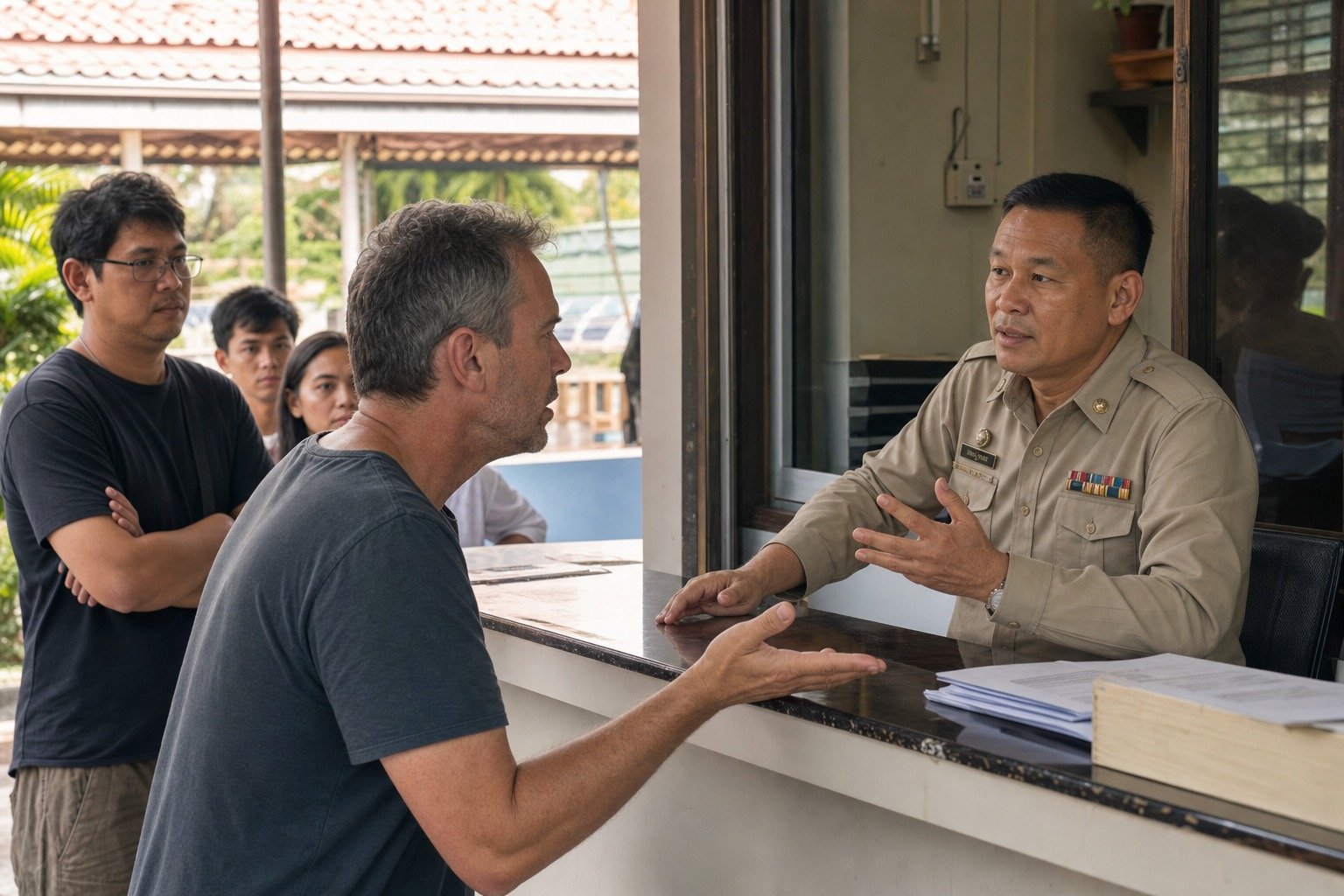
I have seen situations where an expat starts shouting because a food order was wrong, because a taxi driver took a wrong turn, or because immigration asked for yet another document. The foreigner thinks they are showing strength and standing their ground, but to the Thai people watching, they are actually showing weakness. Because if a tiny everyday inconvenience is enough to make you explode, who is actually in control? Definitely not you. Your emotions are.
It is just a completely different way of measuring strength. In the West, confidence is often measured by how much space someone takes up. In Thailand, it is measured by how little they need to prove themselves. Someone who is constantly announcing how successful they are, how much money they have, or how connected they are, often ends up looking far less impressive than the quiet person who simply gets on with life.
The Thai Smile And Calm Disagreement

You see this idea show up everywhere. Walk into any government office and watch the experienced locals. They are patient, they are polite, and they do not argue because they know getting frustrated rarely speeds anything up. Now, compare that to the foreigner who is banging on the counter because things are not moving fast enough. Who do you think usually walks away from the better outcome?
This also ties into something else many people misunderstand, the famous Thai smile. People often assume that if someone is smiling at them, they must agree with what is happening. Not necessarily. Sometimes a smile means they are being polite. Sometimes it means they are uncomfortable or they are trying to avoid a conflict. And sometimes it simply means they are choosing not to embarrass you.
It is just another form of emotional control. Instead of creating unnecessary confrontation, they would rather keep the interaction pleasant. Westerners sometimes mistake that for weakness, but it is not. It is discipline.
One of the biggest lessons Thailand teaches you is that not every disagreement needs to become a battle. In a lot of Western countries, people seem almost addicted to conflict these days. And social media has only made it worse. Everyone has to win. Everyone has to be right. And everyone has to have the last word. But Thailand feels different. Not because people do not disagree, they absolutely do, but because harmony is usually considered far more valuable than proving a point.
When Calmness Reaches Its Limit
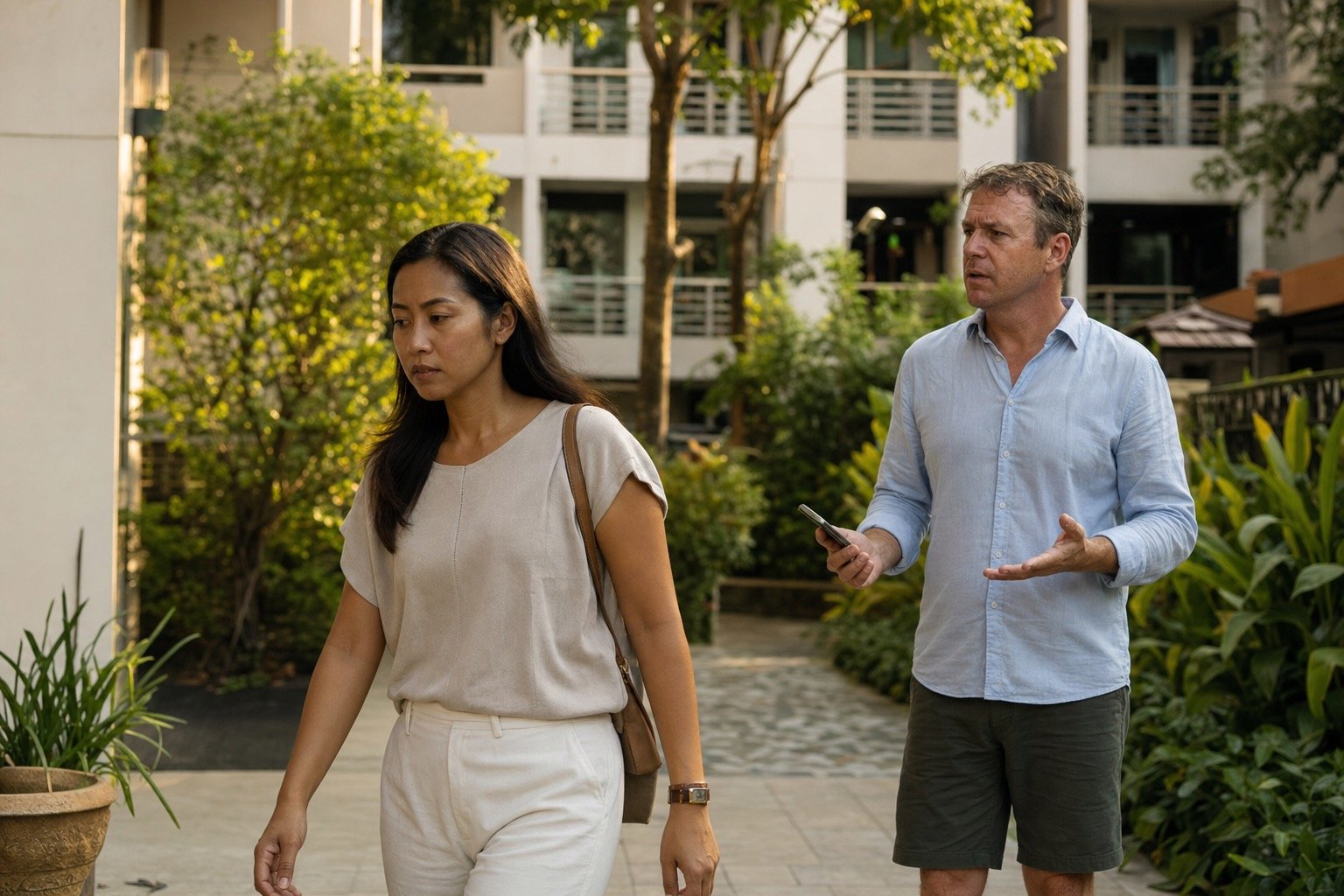
With saying that, there is another side to this that catches a lot of foreigners completely off guard. Just because someone stays calm does not mean they have accepted your behavior. Thai people often have an incredibly long fuse. But once that fuse finally burns out, that is usually it.
You might not get a dramatic argument or a shouting match. You might simply find that your phone calls stop being answered, your messages get ignored, opportunities disappear, and the relationship quietly comes to an end. In the West, people will usually tell you exactly what their problem is with you. In Thailand, sometimes the final decision has already been made before you even realize there was a problem to begin with.
That is why reading the room and understanding behavior is so important here. You cannot always judge a situation solely by what is being said out loud.
Quiet Authority In Thai Communities
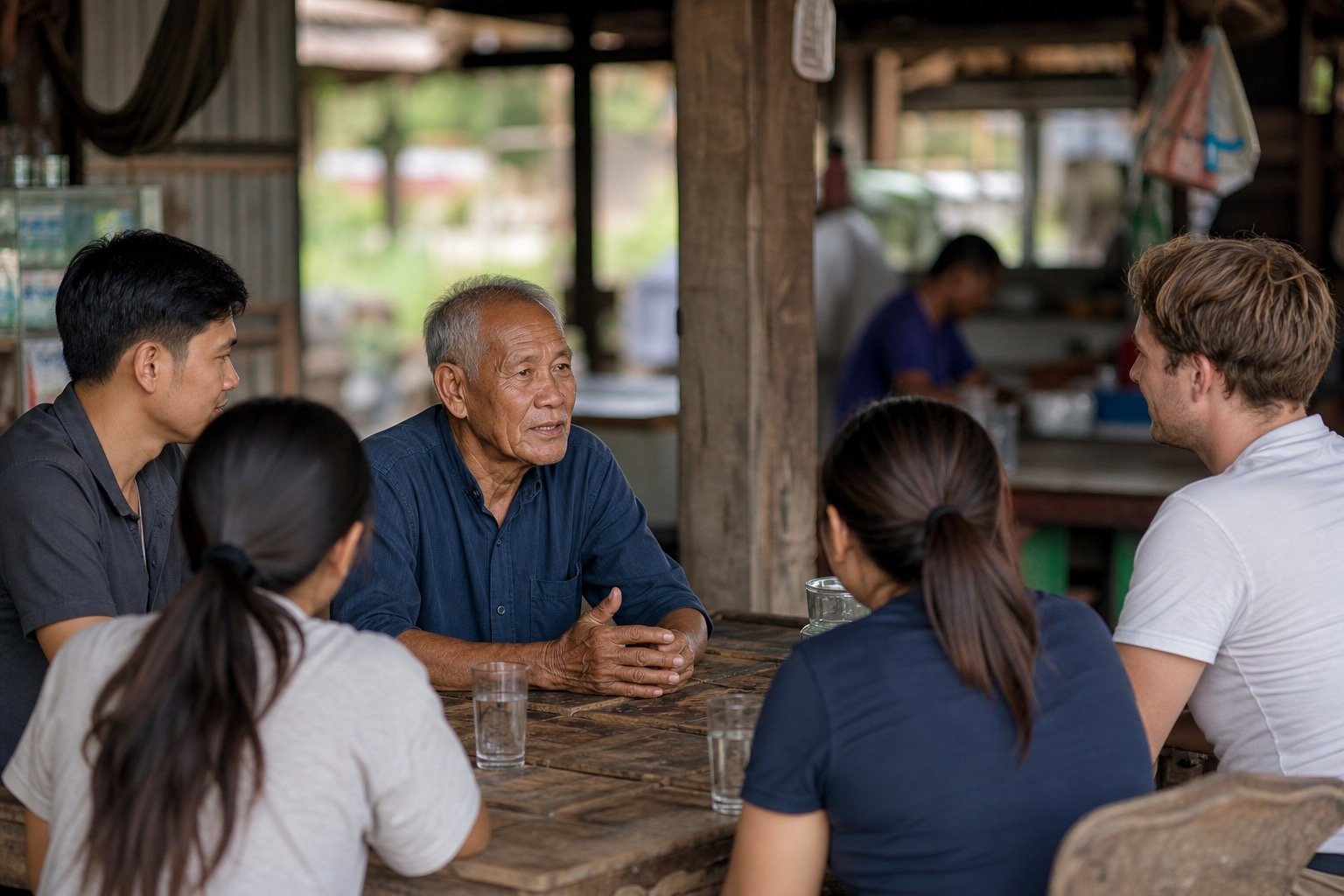
I noticed after living here for a while how often calmness creates genuine authority. Think about the people who truly command respect in communities, whether it is village elders, successful business owners, or senior officials. Many of them never need to raise their voice. And they do not need to remind everyone who they are every 5 minutes.
Their behavior simply speaks for itself. There is an old saying that real power does not need to announce itself and Thailand reflects that beautifully. It is true in everyday conversations, too. If two people disagree, the one who remains composed walks away looking stronger every single time. The person who starts shouting loses respect from everyone watching, not because their argument was wrong, but because they simply lost control.
A lot of foreigners arrive here believing confidence means being completely fearless and assertive. But I have met some incredibly confident Thai people who are also deeply humble. They do not need to dominate the room. They do not interrupt and they spend a lot of time listening and observing. Then when they finally do speak, everyone pays attention and that is a quieter type of confidence, but it is often far more effective.
There is also a very practical reason emotional control in Thailand matters so much here. Thai society is highly connected. People talk, families talk, and business owners all know one another. One single emotional outburst can damage your reputation far more than you realize, especially once you step outside the big tourist areas. In smaller towns and villages, your reputation travels a lot faster than Facebook, and people will often know exactly who you are before you have even met them.
Learning Emotional Control In Thailand
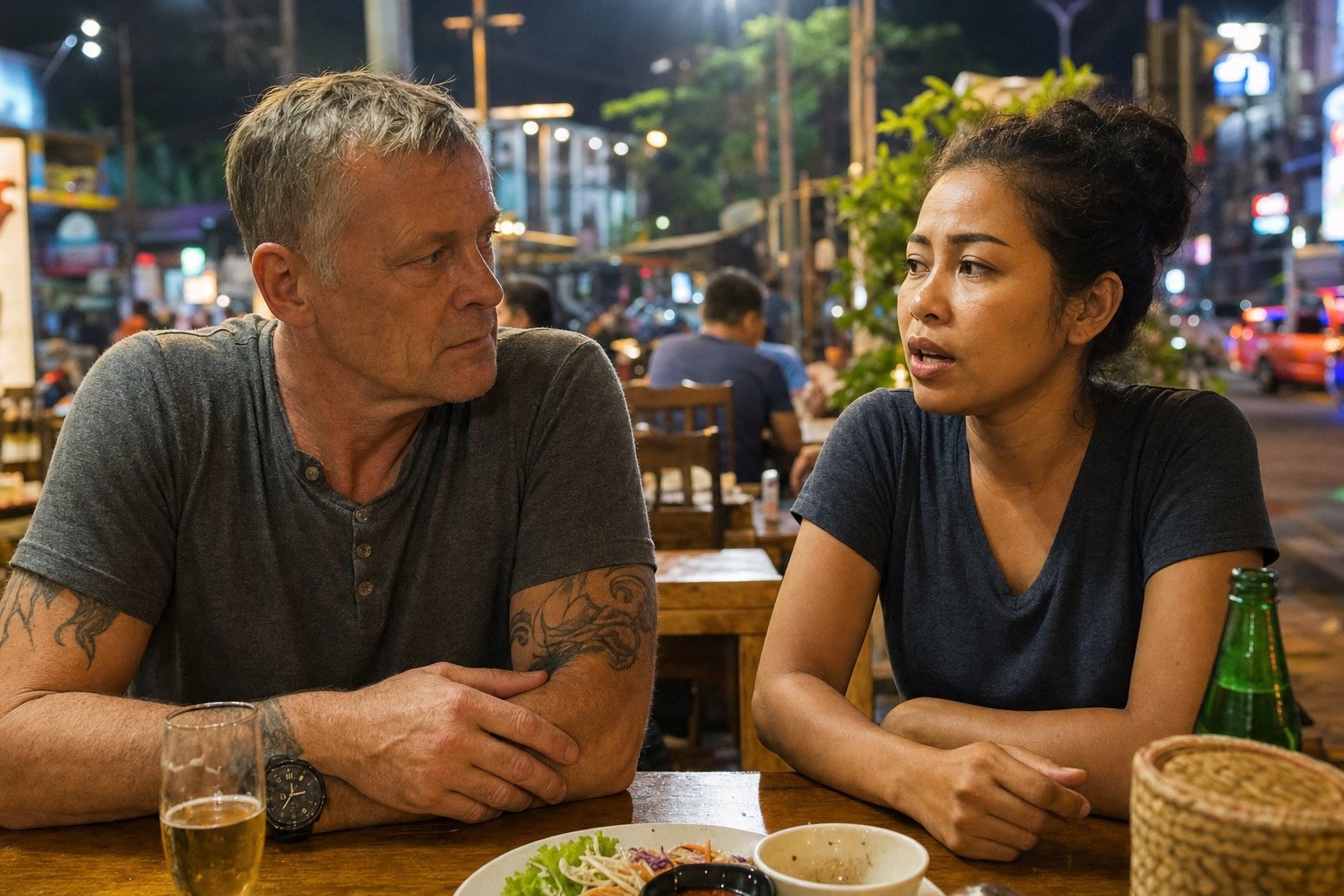
None of this means Thailand is perfect. Far from it. Sometimes avoiding confrontation means that underlying problems take a lot longer to actually get solved. Sometimes people will not tell you directly what the issue is and you are left guessing. That can be incredibly frustrating if you have grown up in a culture where everything is out in the open. But every society has its tradeoffs and no culture gets everything right.
The interesting part is learning to recognize those differences instead of just assuming our own way is automatically better. Personally, one of the biggest changes Thailand had on me was making me realize that reacting emotionally rarely improves the situation. Most problems become a whole lot easier to handle when you just stay calm. You think clearer, you communicate better, and you make fewer mistakes.
Whether you are dealing with immigration, a relationship, a business deal, or just ordering dinner, control creates options, emotion usually removes them. And perhaps that is the ultimate lesson Thailand quietly teaches us. Real confidence is not about being the loudest person in the room. It is not about winning every argument and it is not about making sure everyone knows how important you are. Real confidence is knowing you do not need to prove any of those things.
It is remaining calm when everyone else is panicking, thinking before you speak, and understanding that respect is earned through consistency, not volume. Anyone can lose their temper. Anyone can shout and react, but very few people can stay completely calm when life gives them every reason not to. And in Thailand, that calmness is worth far more than confidence ever will be.