Bangkok Heat and Air Quality: Chatuchak, Weather, and Safety
Understanding Bangkok Heat and Air Quality
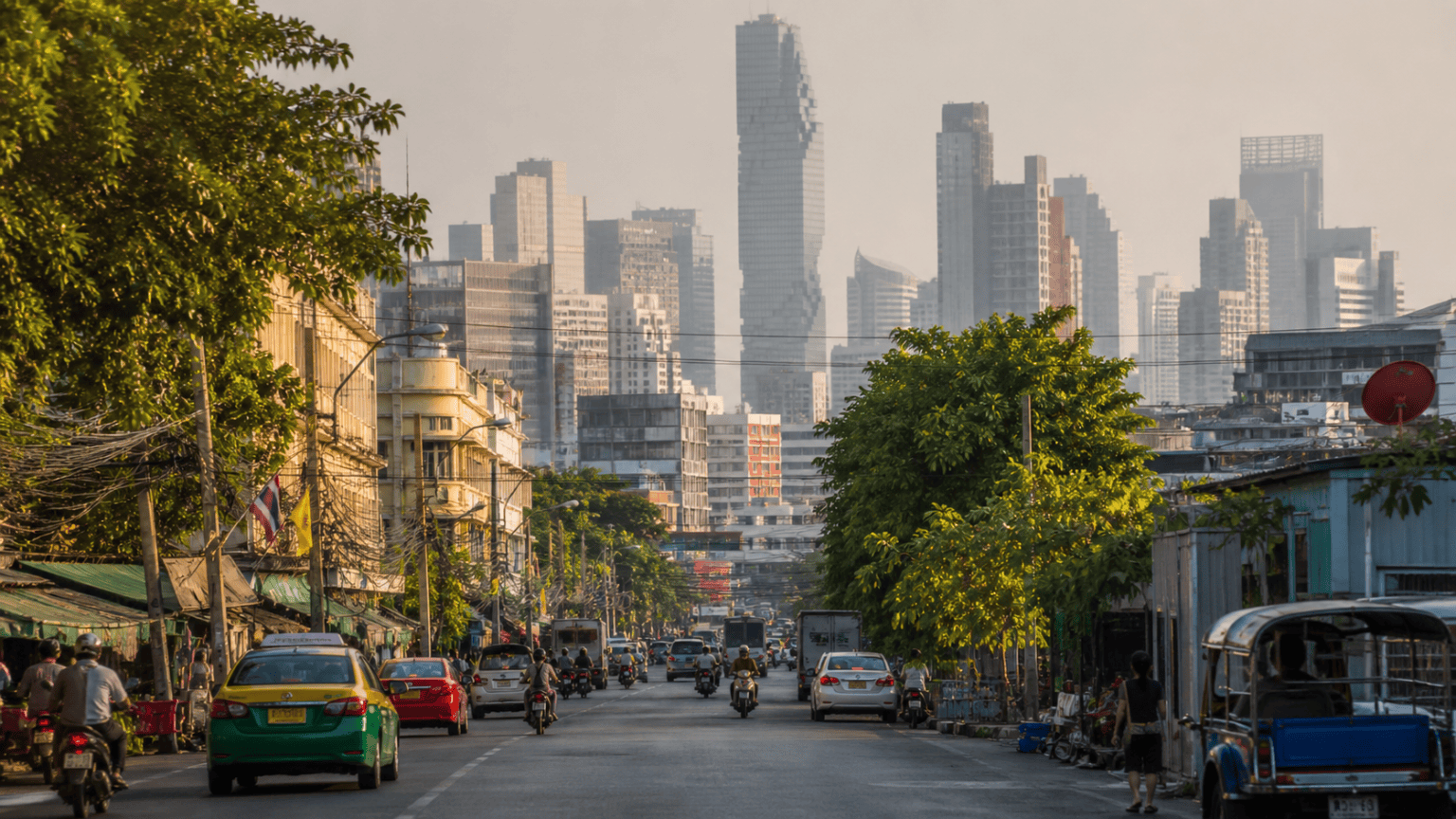
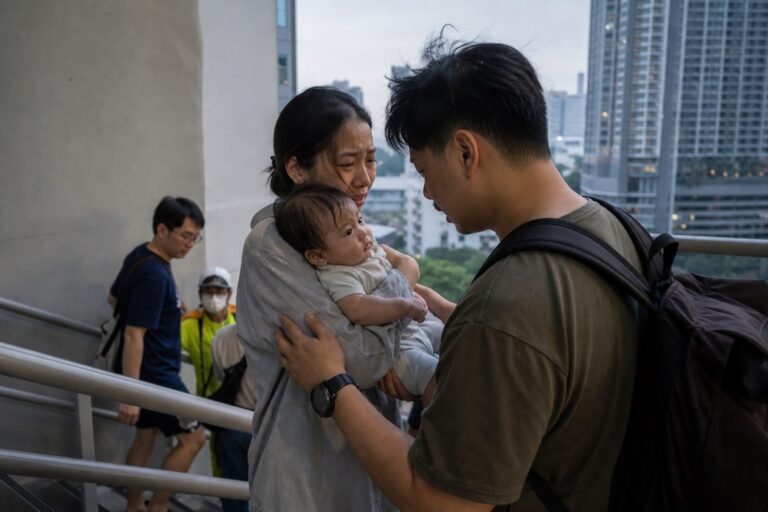
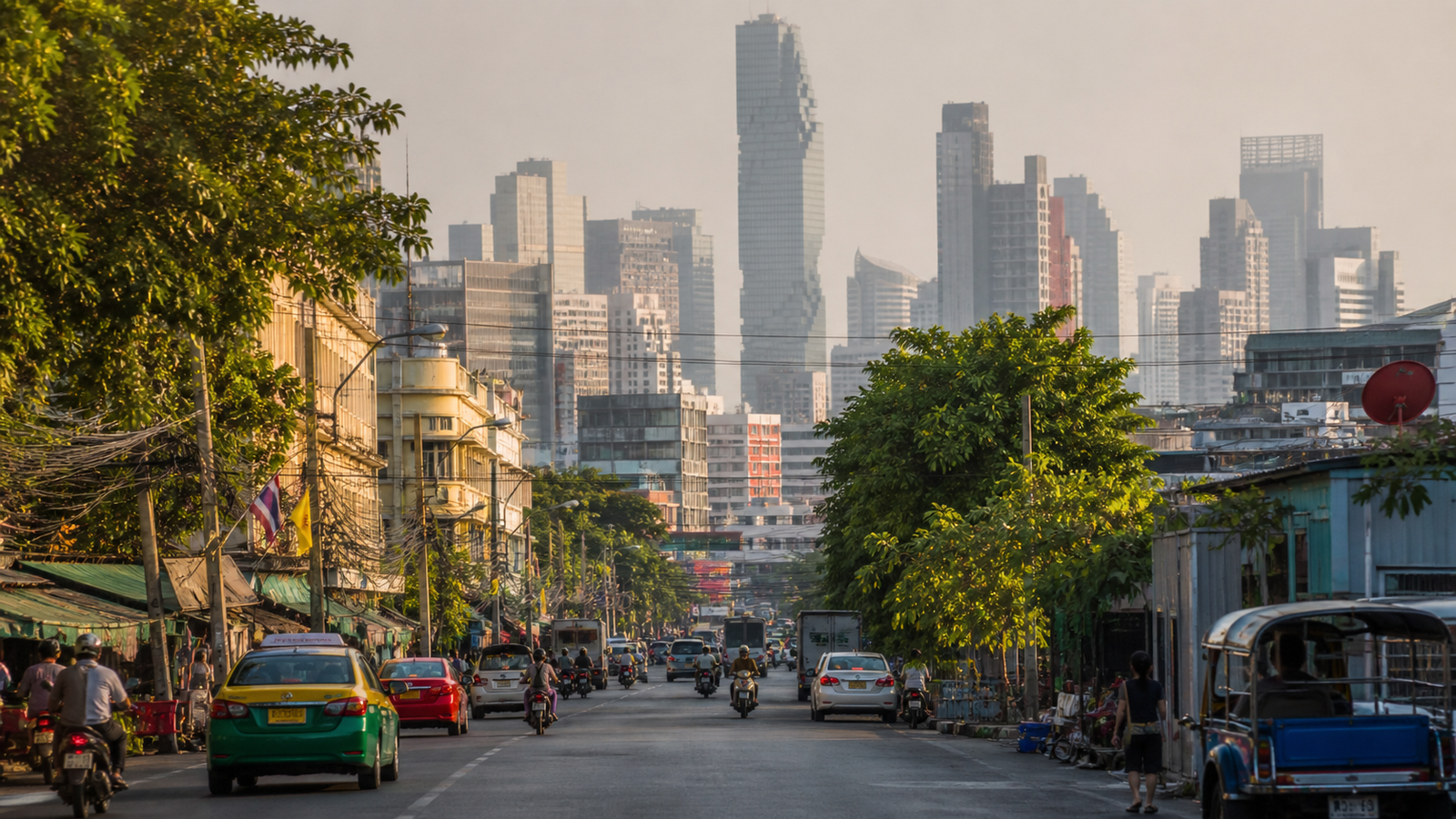
Bangkok’s heat and air quality can change how comfortable a day feels, especially during still weather. Check current air-quality readings and heat conditions before planning long walks, and take warnings about smoke or pollution seriously.
Use water, shade, breathable clothing, and a well-fitting mask when local conditions call for extra protection. If breathing becomes difficult or symptoms develop, move indoors and seek medical advice rather than treating poor air as a sightseeing challenge.
Using Chatuchak Park Clean Air Space
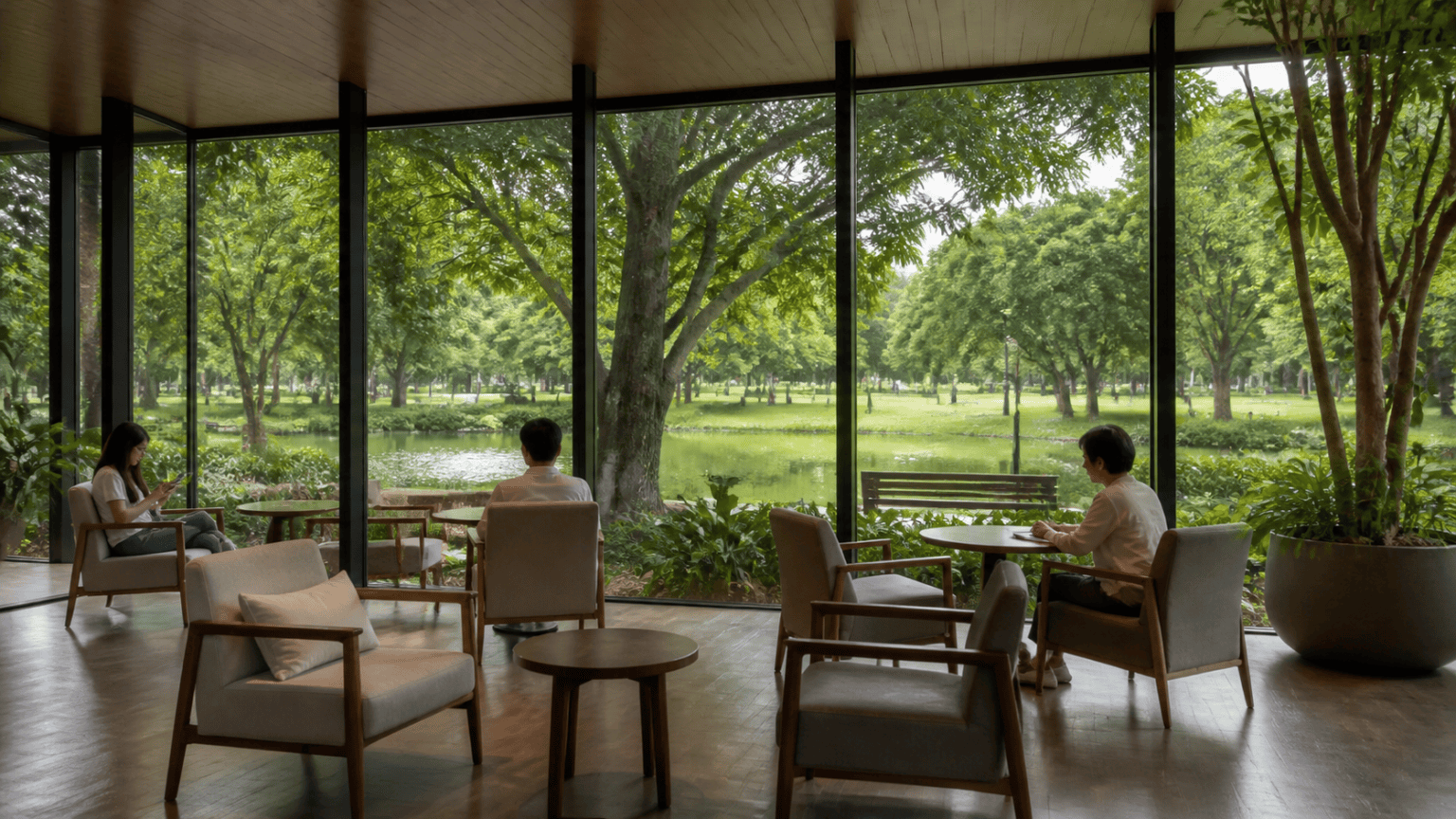
Chatuchak Park includes a small clean-air space designed as a temporary refuge from outdoor conditions. It can provide a short break, but it is not a substitute for broader pollution controls or a plan to reduce time outside during unhealthy periods.
Follow the posted rules, keep the area quiet and clean, and do not smoke, drink alcohol, fly drones, or bring restricted animals into the space. Treat the room as a practical pause before continuing to a shaded or indoor destination.
When to Visit Chatuchak Weekend Market
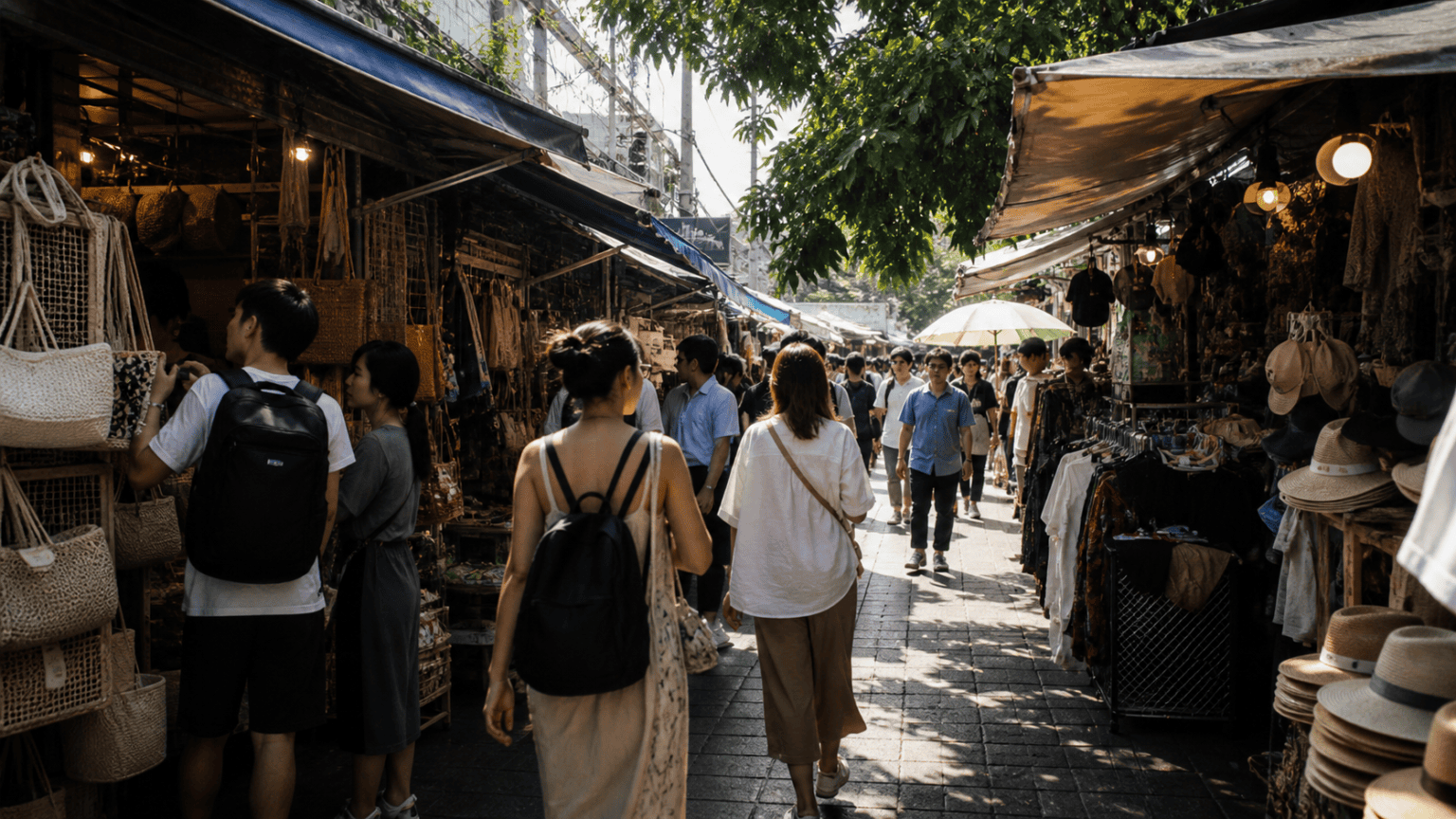
Chatuchak Weekend Market is easier to browse when the strongest heat has eased. Late afternoon can be more comfortable than the middle of the day, although opening hours and stall availability vary by market section and day.
Wear a hat and sunglasses, use sunscreen, carry cash in a secure bag, and plan regular drink breaks. If the weather is severe, prioritise indoor shopping or postpone the open-air sections rather than forcing a full market circuit.
Cooling Down at Mixt Chatuchak
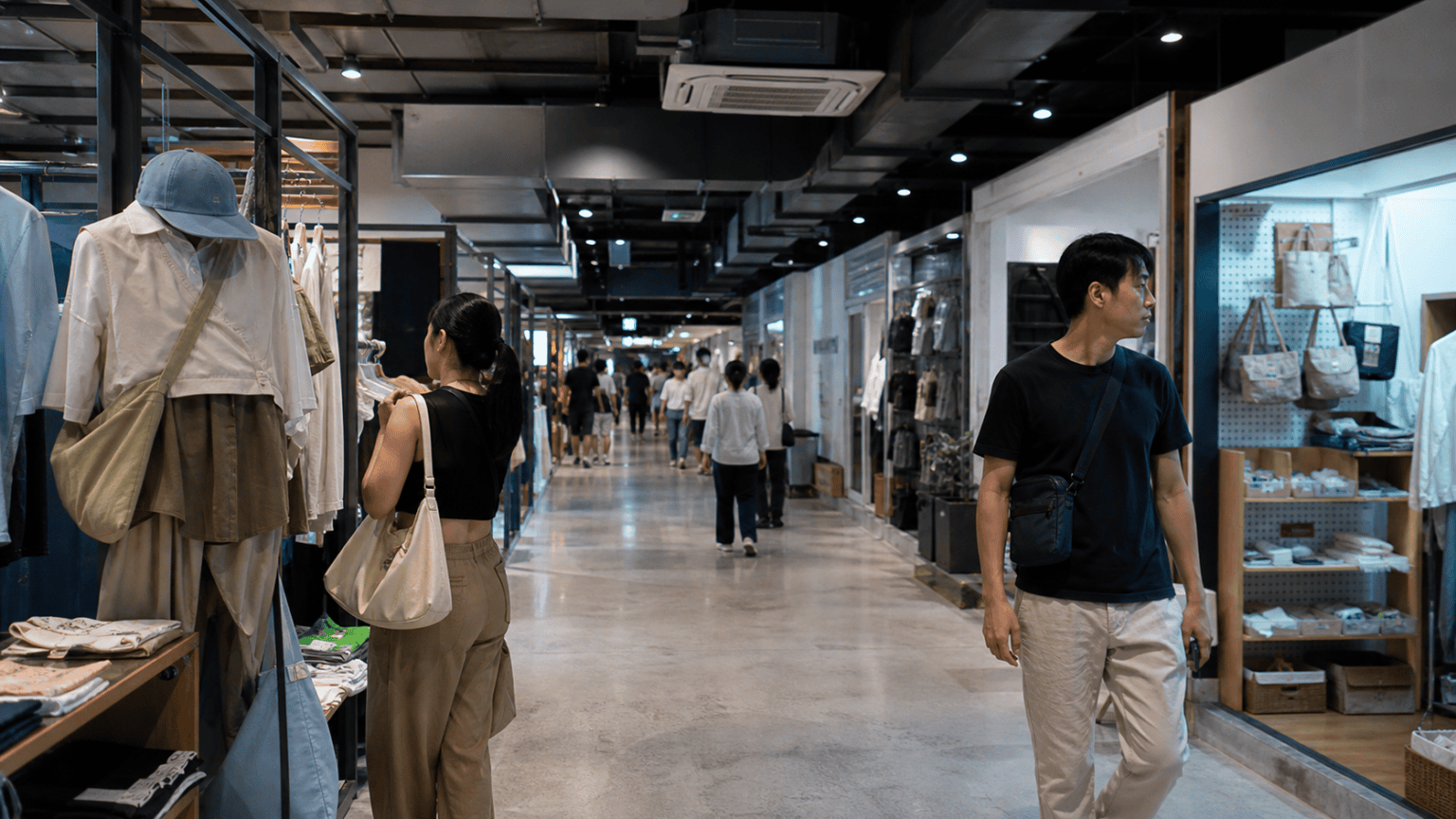
Mixt Chatuchak provides an air-conditioned alternative near the market, with shops, food, and places to sit. It is useful for cooling down, checking prices, and planning the next part of a shopping route without leaving the district.
Fixed-price stores can make budgeting easier than open market bargaining. Compare materials and return policies, keep receipts, and choose legitimate products instead of counterfeit branded goods or items whose origin and quality are unclear.
Shopping for Plants Food and Local Goods
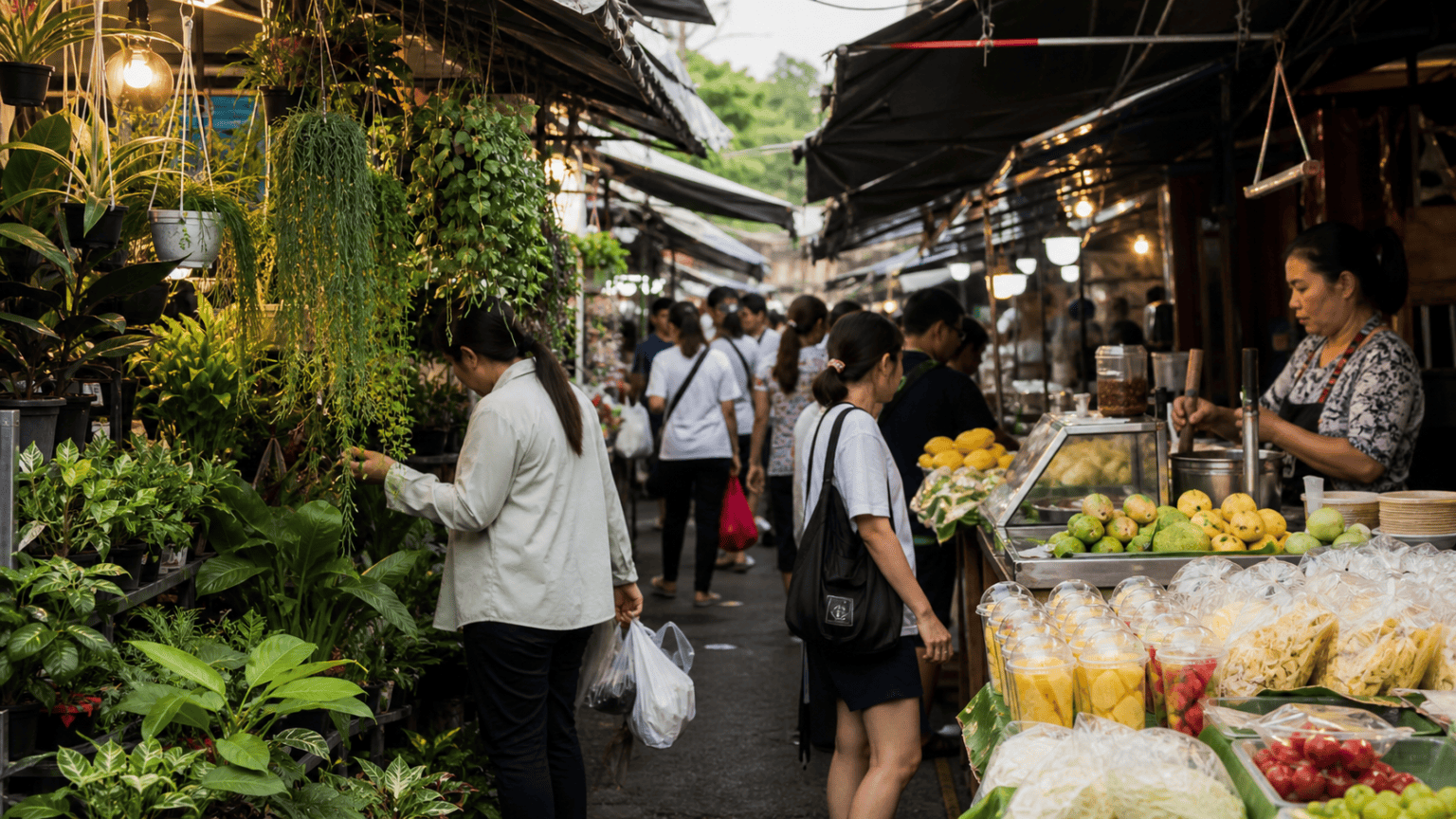
The market area includes plants, flowers, local foods, drinks, clothing, household goods, and small souvenirs. Plant purchases need extra thought because heat, soil, airline rules, and import restrictions can make an impulsive purchase difficult to transport.
A cold fruit drink or a simple local meal can be a sensible break between stalls. Confirm prices before ordering, keep food and cash separate, and choose hygienic vendors with clear turnover when the weather is especially hot.
Getting Around Safely in Bangkok Heat
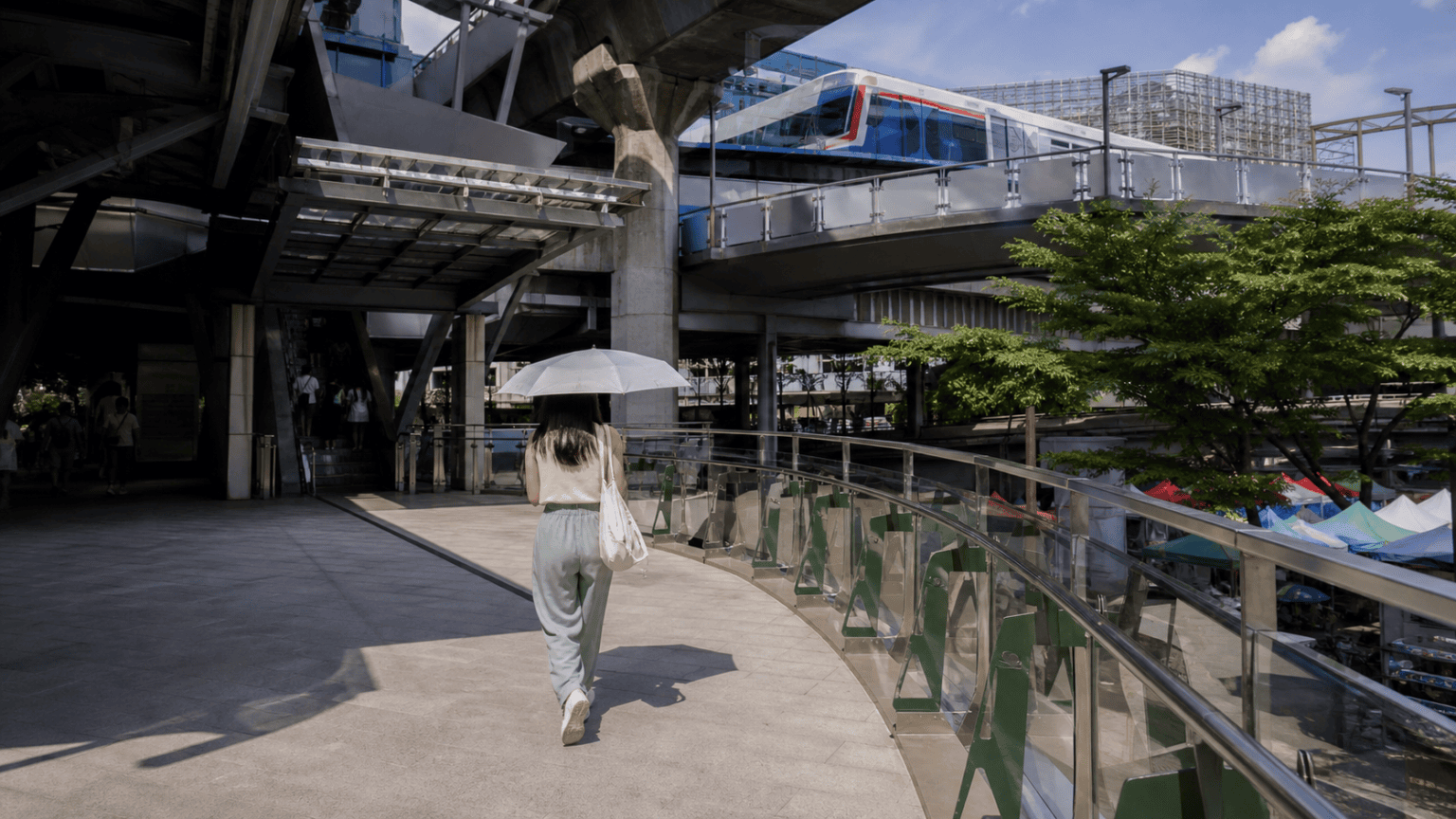
BTS and MRT connections make Chatuchak easier to reach than relying on a taxi through heavy traffic. Use the station route that best matches your entrance, and consider a taxi only when you have bulky purchases or a mobility reason.
Avoid unofficial touts and negotiate transport only when the service and fare are clear. A tuk-tuk can be part of the experience, but rail is often more predictable for longer journeys. Keep shopping bags closed and take a shaded route back to the station.
How Bangkok heat affects everyday travel
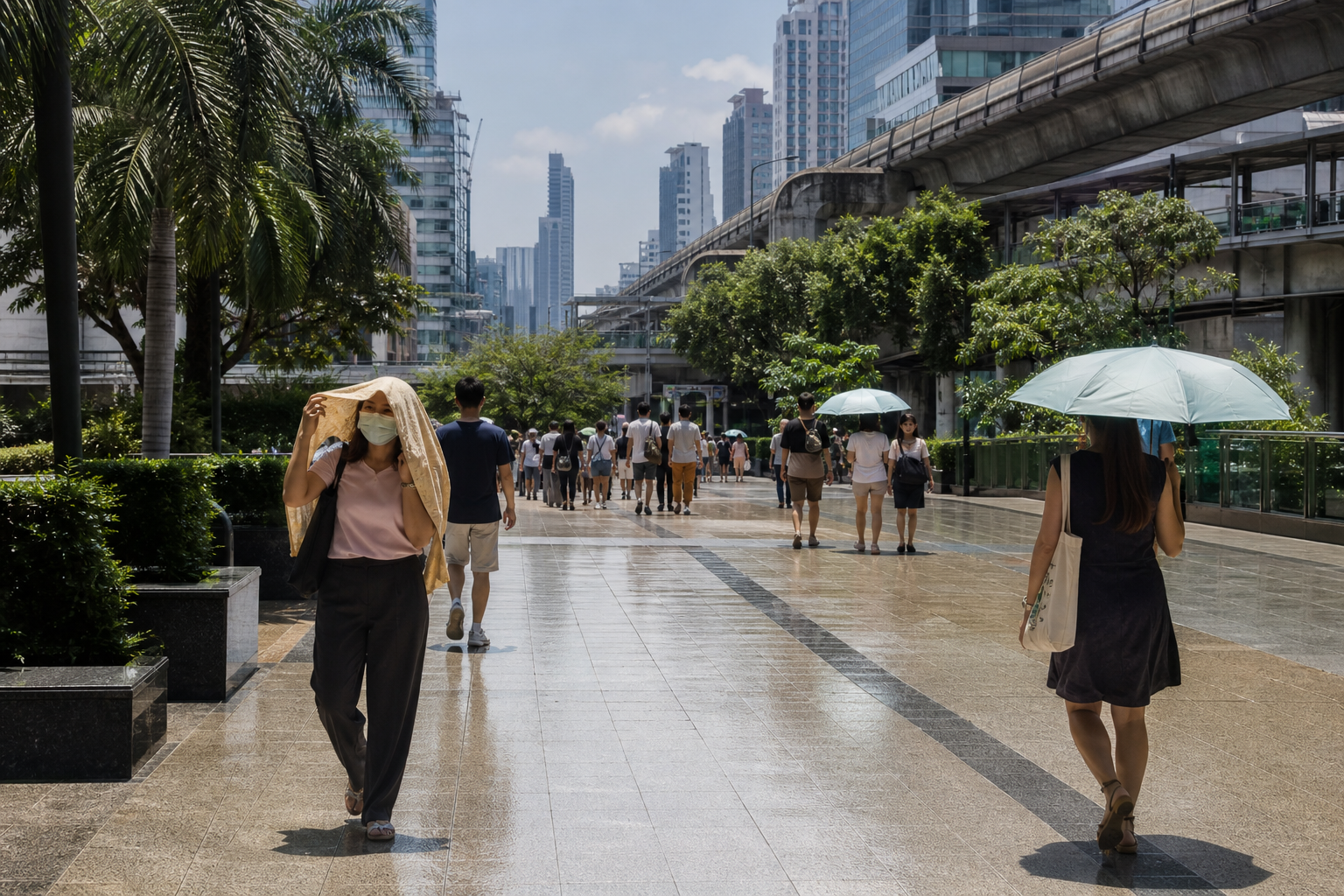
Bangkok can feel demanding during periods of extreme heat because high humidity makes even short walks tiring. Heat is amplified by exposed pavements, traffic, and reflected sunlight, while long outdoor visits to temples or busy streets leave little opportunity to cool down.
Build the day around shorter outdoor stretches and deliberate indoor breaks. Walking early, choosing shaded routes, and checking current official heat and air-quality advisories before leaving make sightseeing more manageable than trying to cover every attraction at midday.
Light, breathable clothing, sun protection, and comfortable footwear are practical essentials. Treat unusual fatigue, dizziness, or confusion as reasons to stop, cool down, and seek appropriate local help rather than continuing with an itinerary.
Stay hydrated and protect yourself outdoors
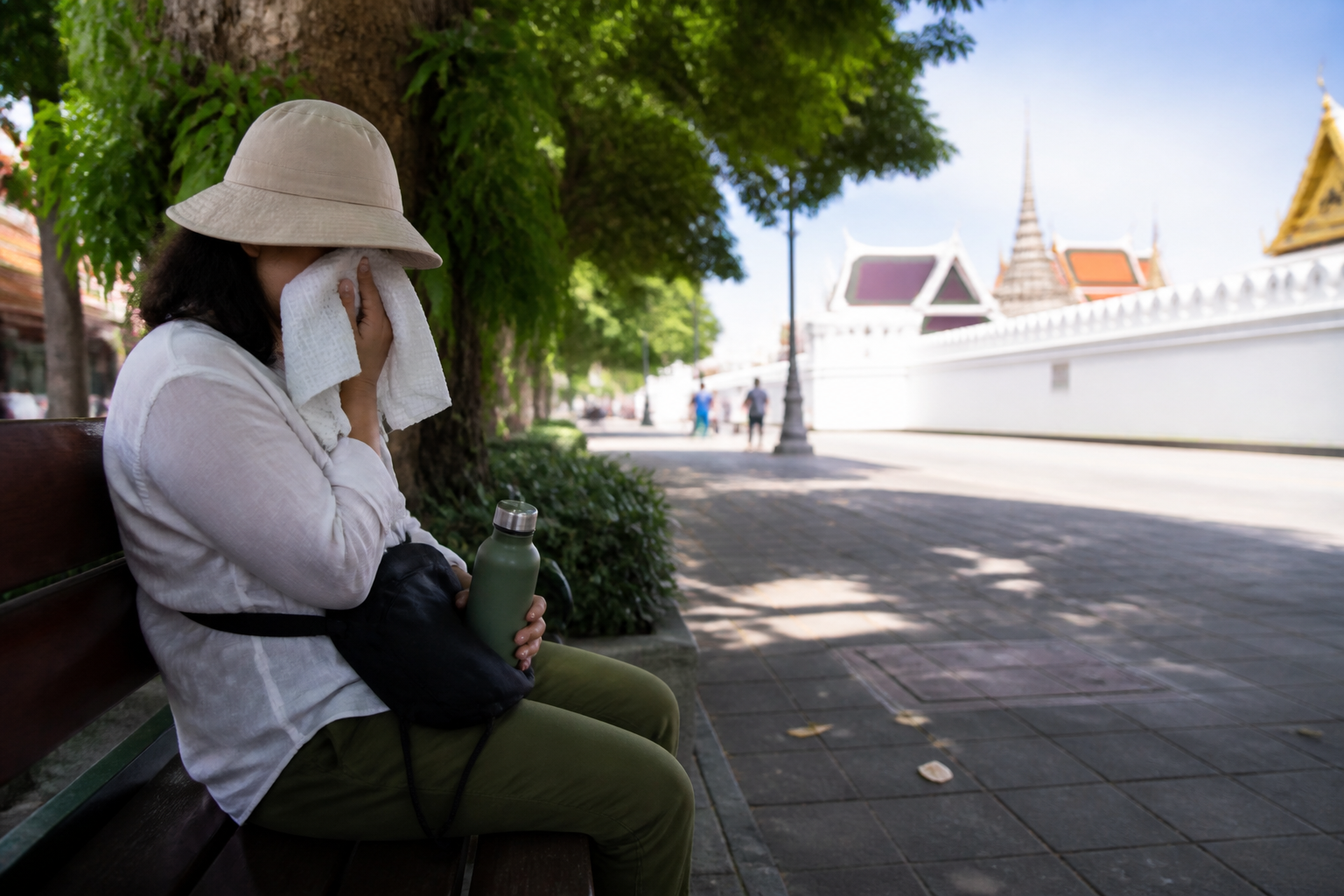
Carry drinking water whenever you leave an air-conditioned building, and keep it within easy reach instead of waiting until you are already thirsty. A reusable bottle is convenient for refills; a separate small bottle or a clean towel can help with cooling your face during a hot walk.
Bangkok does not always provide a bin exactly where a visitor needs one. Keep empty containers with you until you find a suitable disposal or recycling point, and avoid leaving plastic on pavements, at markets, or beside transport stations.
Schedule pauses in shade, cafés, stations, and shopping centres. These breaks are especially useful before crossing large roads, joining a queue, or continuing to a landmark where shade and seating may be limited.
Use the BRT and BTS to travel in air conditioning
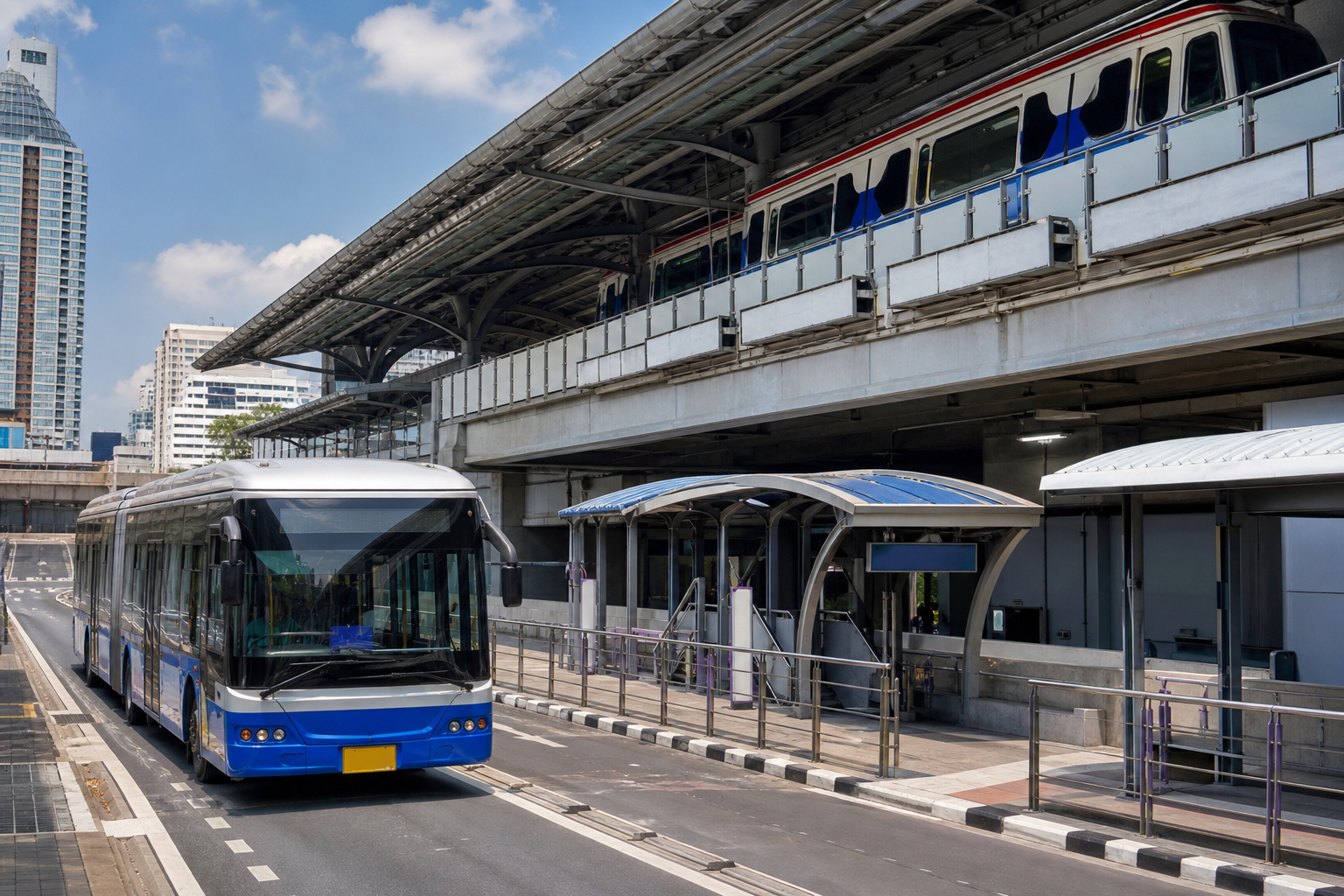
The Bus Rapid Transit system offers a useful connection from the Sathorn area toward the BTS interchange at Chong Nonsi. The vehicles are air-conditioned, and the dedicated route can be more comfortable and predictable than sitting in a traffic jam during the hottest part of the day.
Use official stations, check the current route and fare information before travelling, and allow time for the transfer to the BTS. Promotions or fare arrangements can change, so current details should come from the transport operator rather than informal touts.
The BTS and other rail services also reduce the amount of time spent on exposed roads. For journeys outside the rail network, choose a metered taxi or a reputable ride service, confirm the destination before boarding, and keep outdoor waiting time as short as possible.
Cool down in Bangkok markets and shopping malls
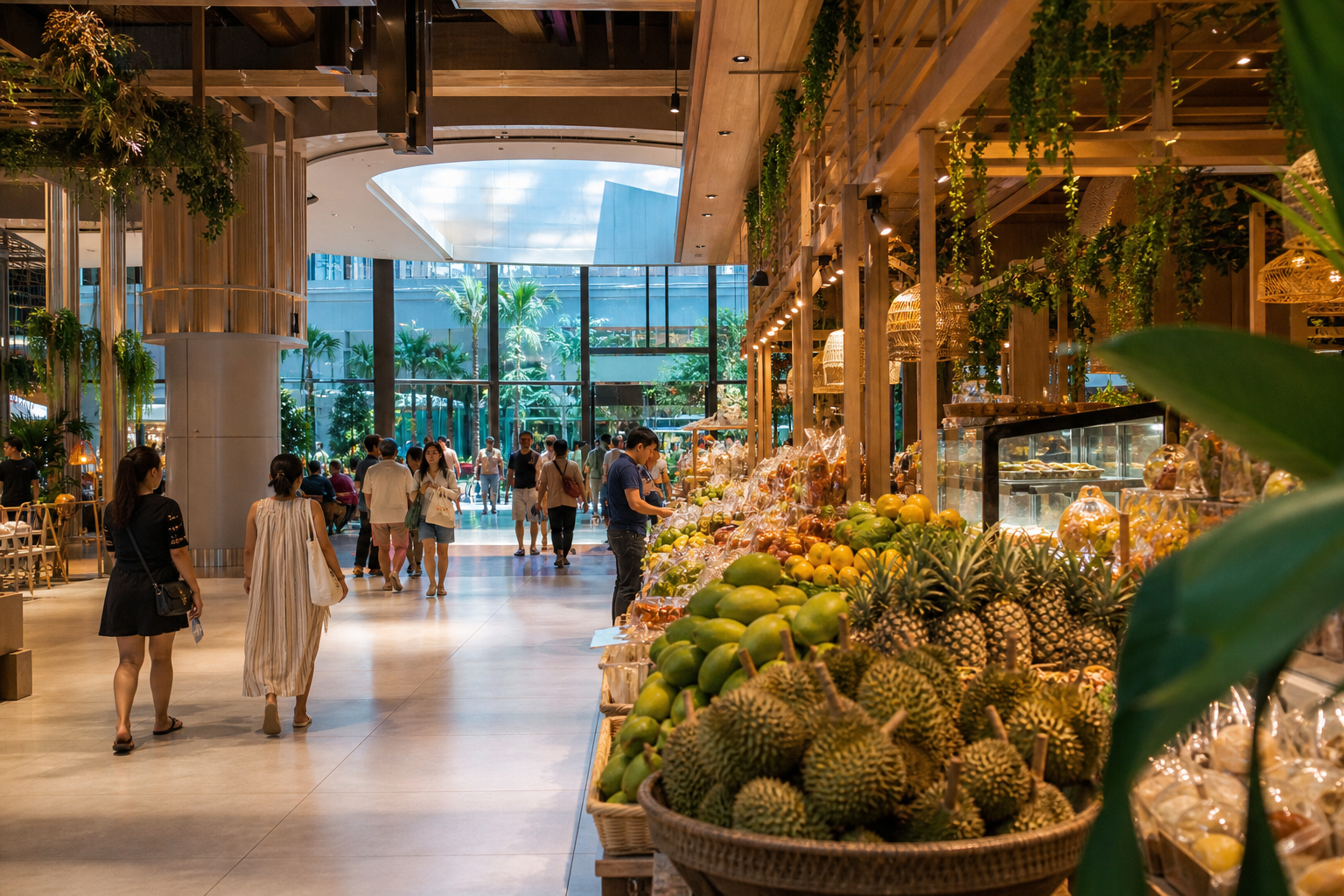
Air-conditioned malls and covered markets are more than shopping stops during a heatwave. They provide toilets, food courts, seating, and reliable places to cool down before the next outdoor section of a route.
Major centres around Phrom Phong and Rama 9 combine restaurants, fruit counters, clothing, electronics, and everyday services under one roof. Indoor markets and large retail complexes can therefore replace several separate street journeys when the weather is oppressive.
For electronics, cameras, memory cards, and phones, use established retailers and check the receipt, warranty, specifications, and return policy. Authentic products from legitimate sellers are safer long-term purchases than heavily discounted goods of uncertain origin.
Choose Thailand destinations for seasonal relief
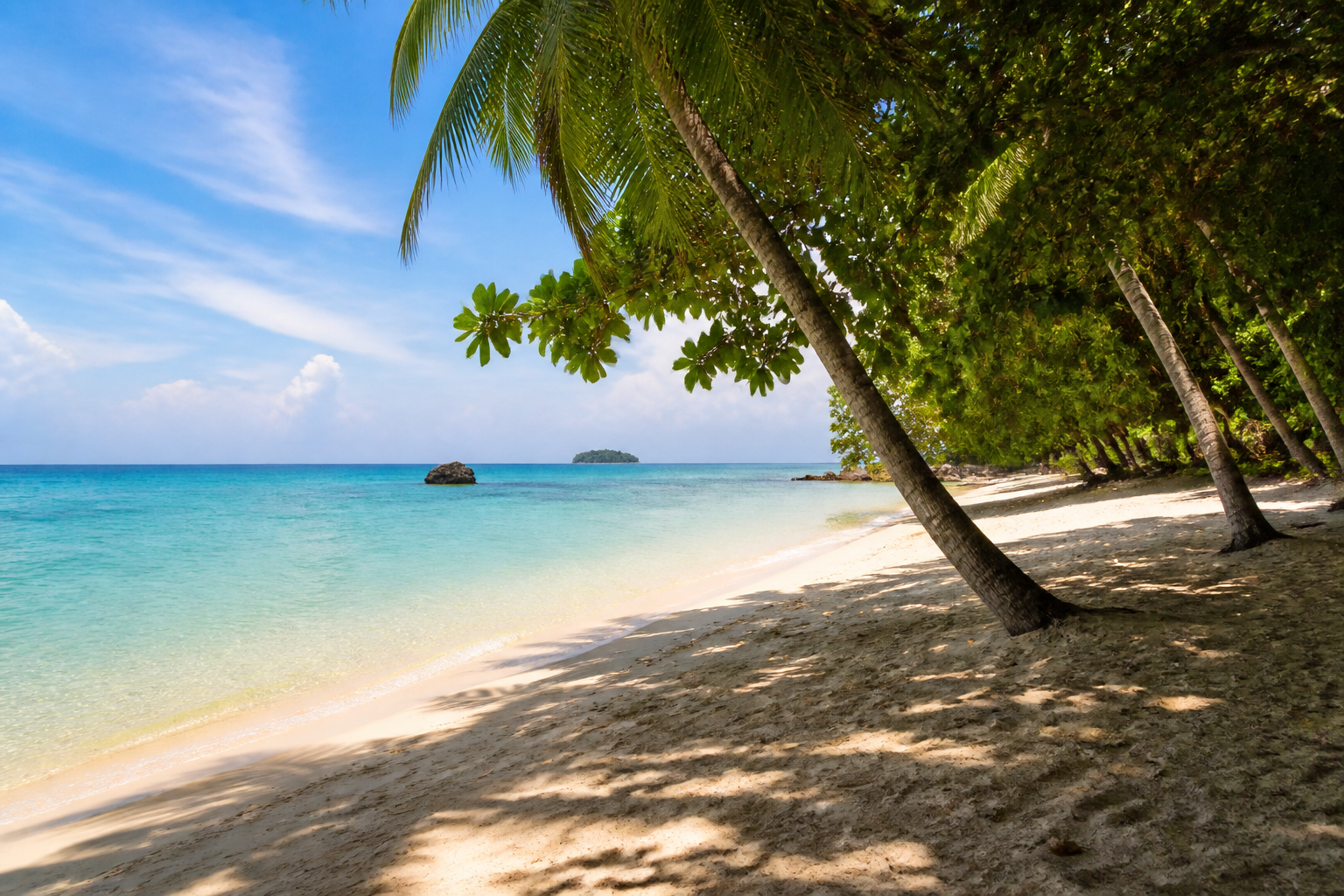
When Bangkok is exceptionally hot, a southern or coastal itinerary can offer a more comfortable rhythm, with beaches, sea breezes, and opportunities to alternate between shade and water. Coastal destinations are not automatically cool, so compare the forecast before changing plans.
Travelers considering the north should also check current air-quality information. Seasonal smoke can affect parts of northern Thailand, and a destination that looks attractive on a map may be less pleasant when pollution and heat combine.
Use current weather and air-quality reports to choose between Bangkok, the coast, and northern cities. A flexible plan makes it easier to move beach days earlier, shift city sightseeing to mornings, or add indoor activities when conditions deteriorate.
Plan temple visits, food stops, and local shopping wisely
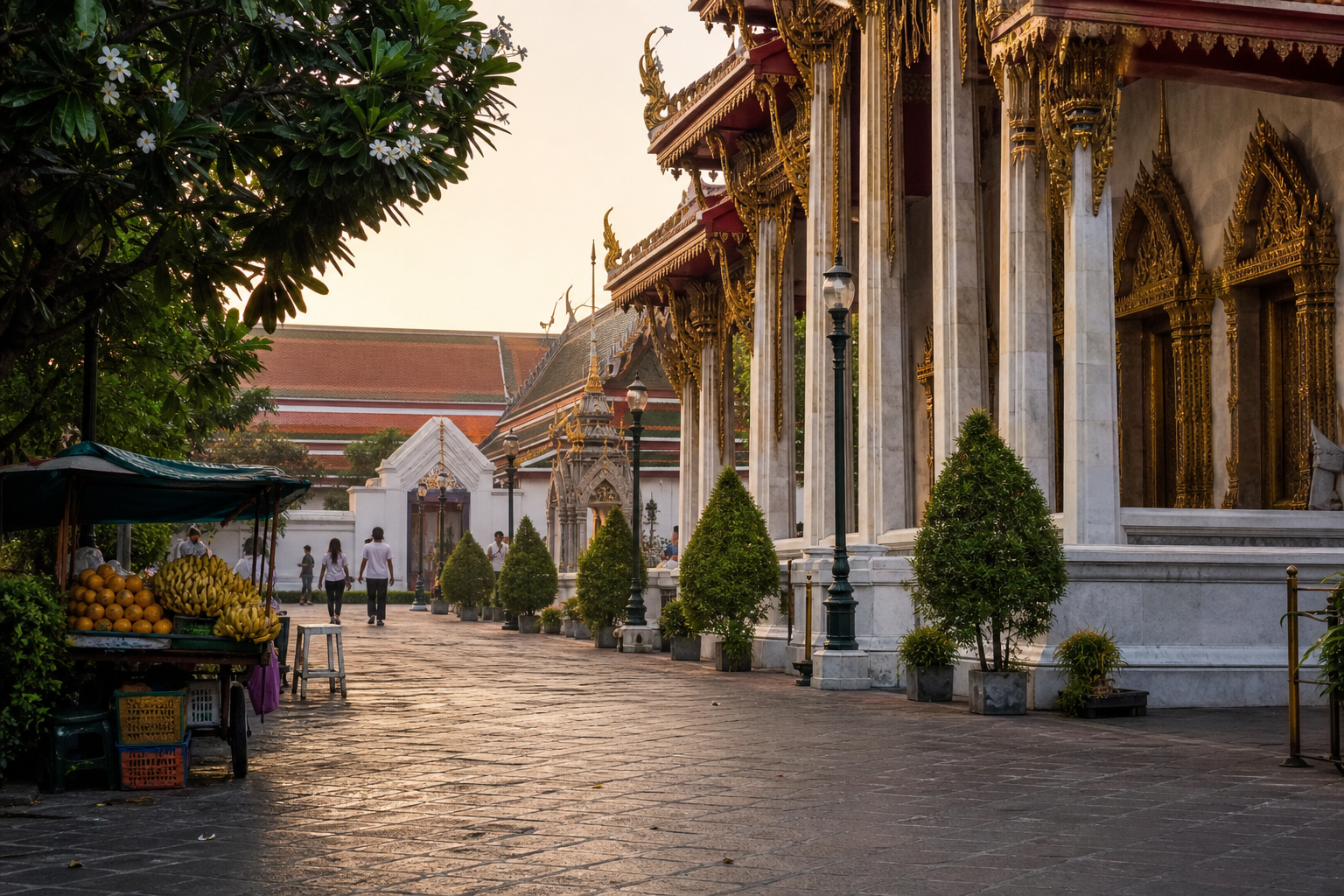
Grand Palace, Wat Arun, and other historic sites can be intensely exposed to the sun. Visit as early as practical, dress respectfully, carry water, and take shaded pauses; the stone courtyards and open approaches can remain hot even when the visit itself is brief.
Seasonal fruit is one of Bangkok’s pleasures, and durian is widely available at the right time of year. Its strong smell means that trains, hotels, and other enclosed places may restrict it, so check local rules and transport it only where it is permitted.
Markets and malls are useful places to buy fruit, clothing, and souvenirs while staying cool. Choose legitimate retailers, respect local cleanliness rules, and leave enough time for a meal or rest before returning outdoors.