Bangkok First Visit Guide For Beginners
Bangkok is a city that divides opinions. Some people love it and some can’t wait to leave. And normally which camp you fall into comes down to decisions you make before you even arrive.
The truth is that Bangkok has something for everyone. But the sheer size of the city and scale of options can make it harder to plan. Bangkok was founded in 1782 and is known locally as Krung Thep or the city of angels.
That’s short for the full ceremonial name, which is the longest place name on Earth with over a hundred letters. We’ll skip pronouncing that, but sometimes you’ll hear or see the term Krung Thep in Thailand and just know that it refers to the capital. And then there’s the size.
Bangkok is a sprawling mega city of more than 11 million people across 50 districts. On a map, that can look overwhelming, but here’s what matters for your trip. Of those 50 districts, visitors typically experience only a handful clustered tightly along the river and the public train lines.
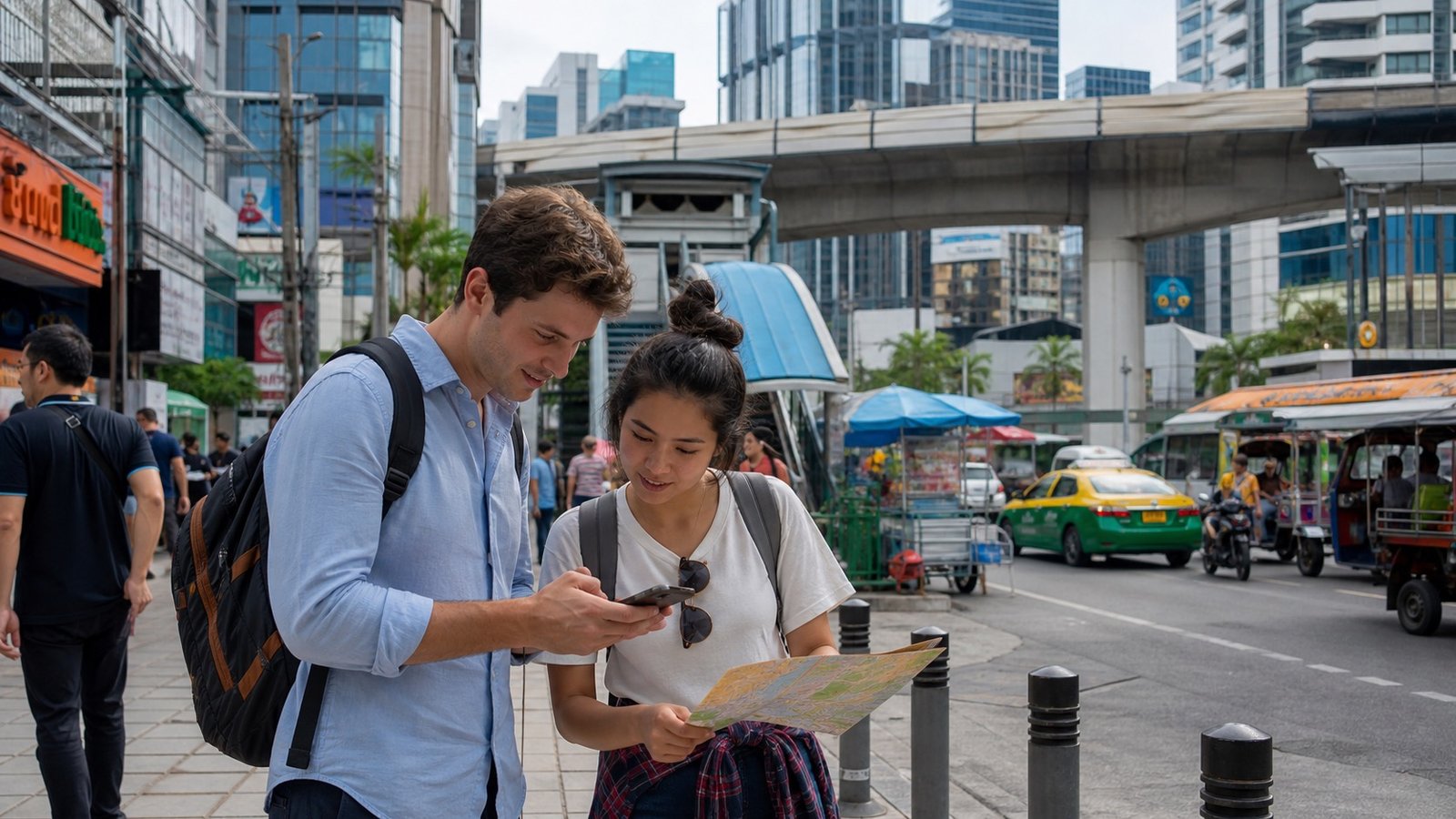
One quick word on navigation because newcomers commonly get confused by the street names and directions. In Thailand, a main road is called a thanon while a side street running off it is a soi. And the sois are numbered with odd numbers on one side and even on the other.
Sukhumvit Soi 11 just means the 11th side street off Sukhumvit Road. Once that clicks, locations make a little more sense.
Best Areas To Stay In Bangkok
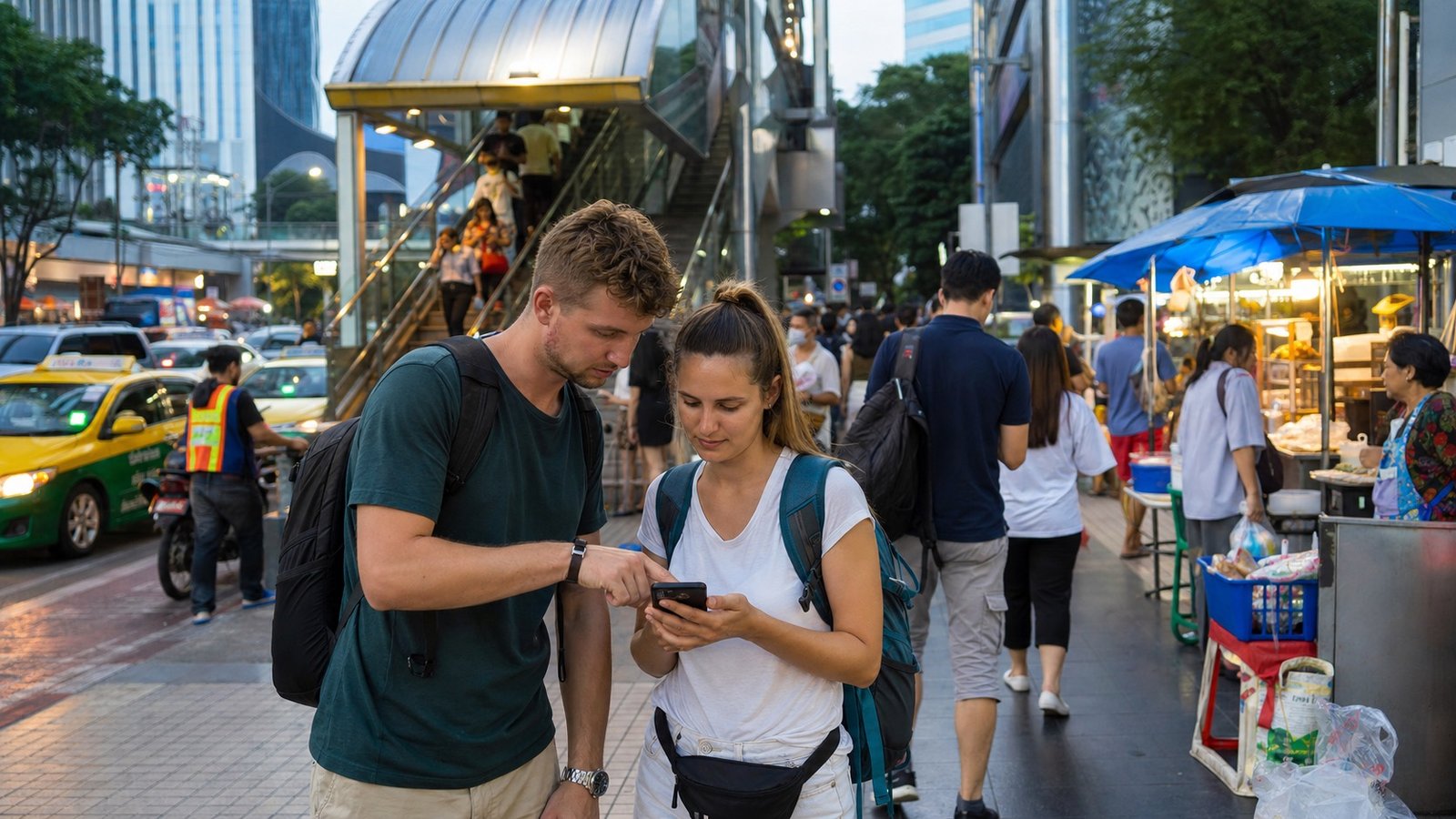
Where you stay shapes a Bangkok trip because the city is huge, congested, and spread out. Traffic can turn a short distance into a long journey, so location matters more than many first-time visitors expect.
For an easy first visit, choose a hotel within a short walk of the BTS or MRT. Lower Sukhumvit around Asok is central and convenient for food, malls, Benjakitti Park, and interchange access. Silom is a calmer, balanced alternative with BTS and MRT access, everyday food and services, and Lumpini Park nearby.
Siam is useful if shopping and central connections matter, while riverside, Chinatown, Thong Lor, and Khao San suit more specific travel styles. For detailed area comparisons and real hotel examples, see the dedicated Bangkok where-to-stay guide. Short-term rentals, condo rules, leases, and deposits belong in the specialist rental guide rather than this beginner overview.
Booking Traps And Best Seasons
Now that you’re thinking about where to stay, there are a few traps that you need to be aware of before you book. Be careful with Airbnb. Short term condo rentals under 30 days are technically illegal in Thailand, and many buildings restrict access to common areas with biometric face scans, or you may even be questioned by security. Bait and switch listings are also common, and the truth is that the pricing doesn’t differ much from hotels anyway. If you’re planning a slightly longer stay from a few weeks to a couple of months, a far better option is a service apartment. Unlike condos, which typically require a minimum six month lease, these buildings have single owners that offer far more flexible rental terms.
While the prices tend to be far better than Airbnb, you’ll find thousands of them on RentHub, and they make a great affordable base. Just keep in mind that you pay electric and water rates separately, and these are typically higher than normal city rates, but they still offer the best overall value for those medium term stays. You’re considering your neighborhoods, and you know what to look out for before you book. But the next key decision is when to visit, and it ties directly into where you stay. Thailand is a tropical country and many first time visitors assume that means hot and relatively consistent weather year round, but there are actually three distinct seasons. And for a trip to Bangkok, there are two micro seasons that can be worth avoiding.
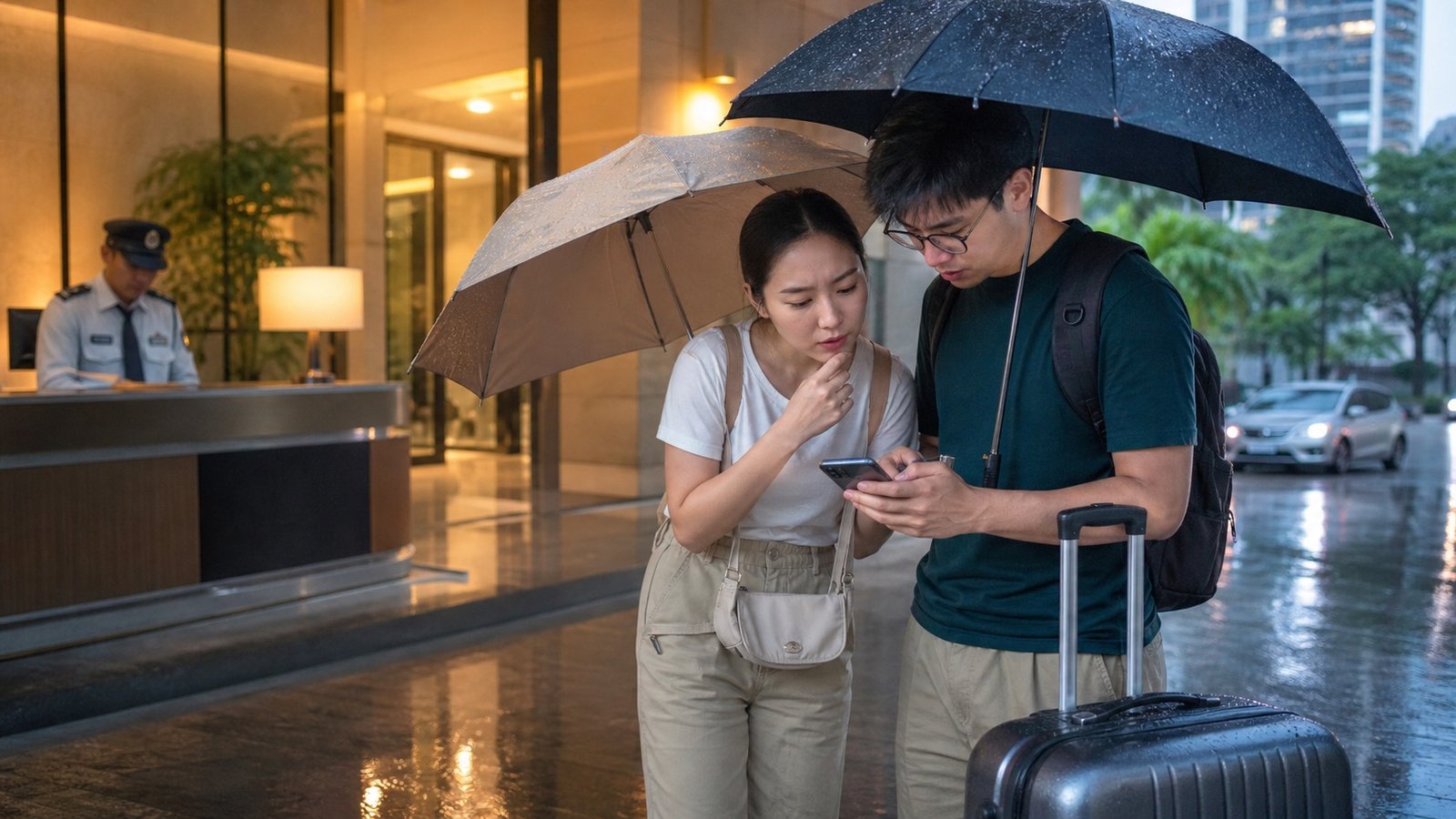
The rainy season runs from around June to October, and the rain usually arrives in short, heavy bursts rather than all day. It’s not a deal breaker, but you should avoid booking in low lying areas as flooding is a recurring issue and the rains are heaviest in September and October. It’s also best to stay right next to a train line so you don’t lose time waiting for a downpour to pass. And most stations sit near a mall, which makes an ideal escape to wait out the rain. The hot season runs from March to May, and despite the very different conditions, the same logic applies. Temperatures regularly exceed 40 degrees.
Being close to air conditioned trains and malls matters just as much for a little reprieve. Take regular breaks and avoid long outdoor itineraries as heat stroke and dehydration are very common. Finally, there’s the cool season from November through February where you’ll have a little more flexibility. This is the most comfortable weather, but it’s also the peak tourism season with the highest prices and biggest crowds. Booking hotels in advance is essential to avoid excessively high prices. But there’s a catch as January through March is also known for high levels of pollution.
If you visit during those months, it’s important to check that your accommodation has a proper air purifier and limit strenuous outdoor activity when pollution is high. The key takeaway here is a little more complicated than it first appears. For comfort, November and December are the winners, while the early rainy season months from May to July offer the best value. Conversely, high levels of pollution from January to March and heavy rains during September and October are less ideal. Finally, there are the holidays worth considering. Songkran is the Thai New Year festival and the world’s largest water fight.
It’s a giant celebratory party, but it can also be intense, especially in designated water fighting zones like Khao San and Silom. It runs from April 13th to 15th with the highest prices and thickest crowds of the year.
Bangkok Holidays And Festivals
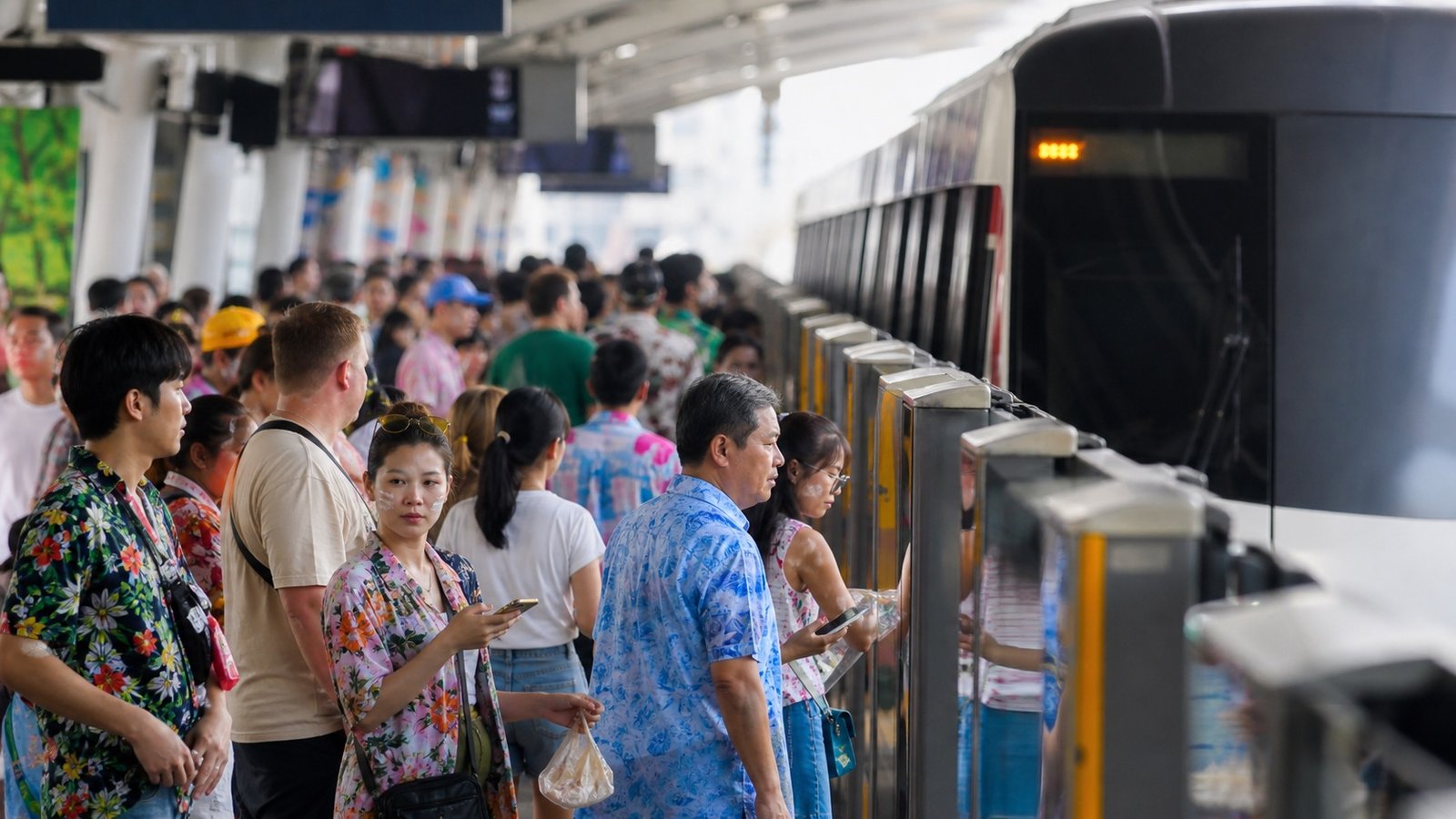
Beyond Songkran, the calendar is full. Loy Kratong is in November when people float candlelit offerings down the rivers and canals. And it’s one of the most beautiful nights of the year. And the city also embraces western holidays, so you can enjoy a full Christmas, a New Year’s Eve celebration, and even Halloween parties.
Bangkok Riverside Itinerary
You’ve got all your logistics sorted, but now we need to plan your itinerary because getting the balance right on this one will shape your entire trip. We’ll cover the major attractions, and you can see them in any order you like.
the single biggest mistake most first timers make is bouncing between distant neighborhoods, which can burn much of your holiday commuting and stuck in traffic. So instead, I’ve grouped them by area so you can build a daily plan that keeps each day in one part of the city, which maximizes your time.
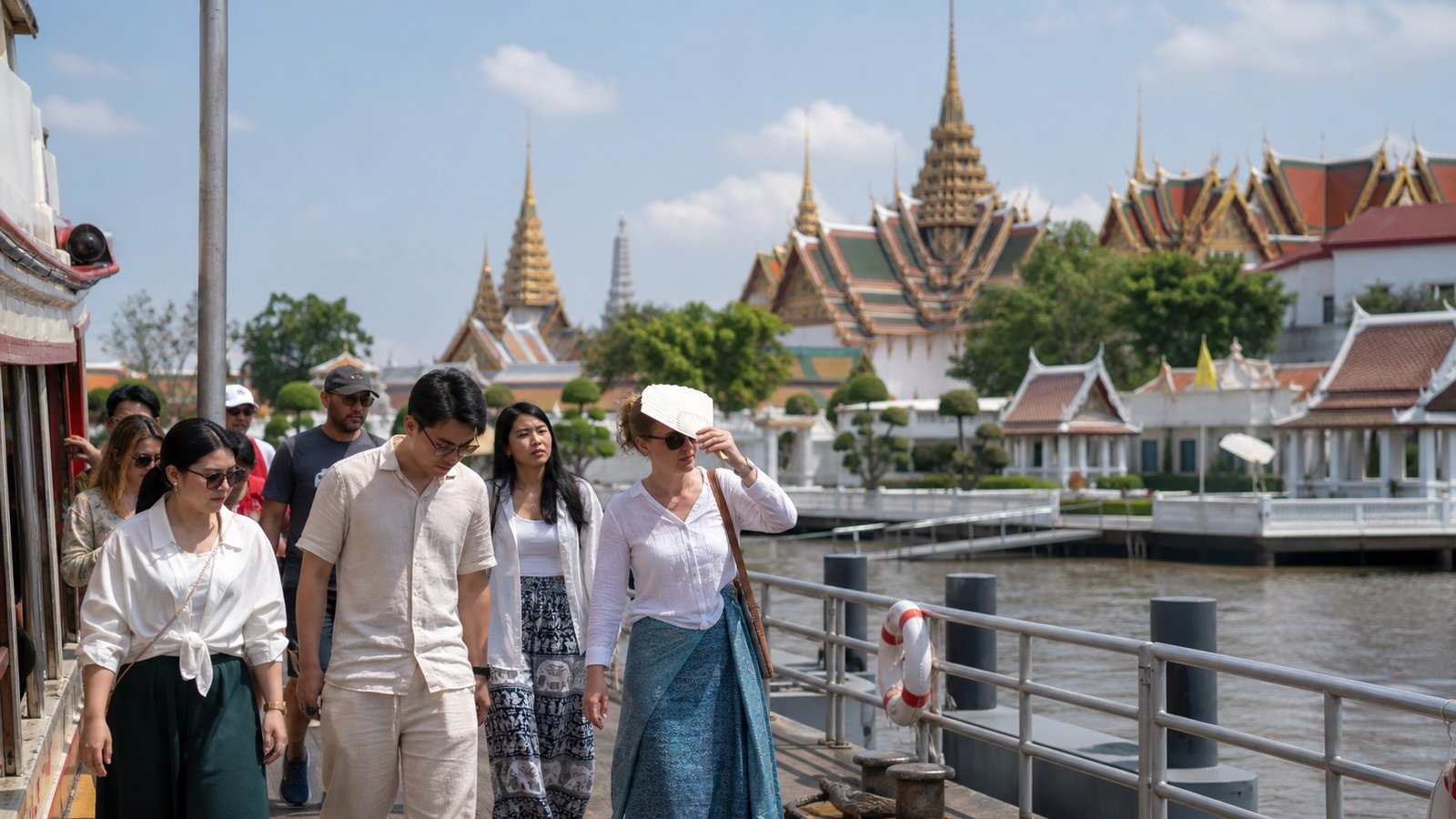
if you have just one day in Bangkok, the riverside is the core area for any first time visitor. This is a temple heavy day, so make sure to dress modestly with long pants or a skirt over the knees and shoulders covered.
It starts with the Grand Palace. Once you’re finished, head to Wat Pho, which is a 5 minute walk away. If you want just one more, cross the river to Wat Arun, the temple of dawn.
Bangkok Itinerary By Area
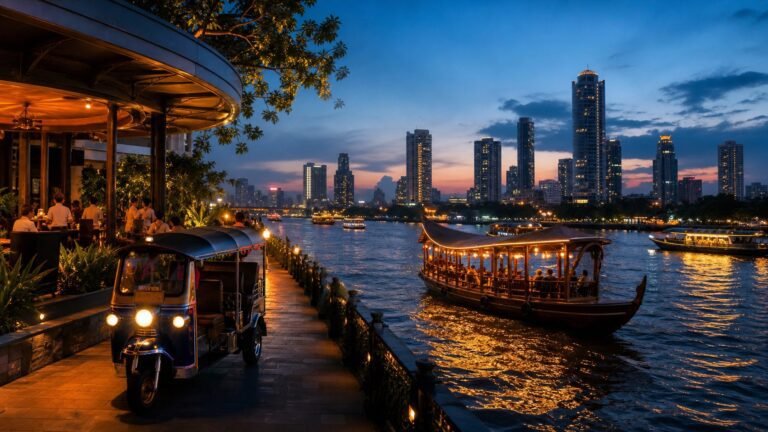
Once you’re ready to explore, nearby you’ll find the old lanes of Talat Noi and Song Wat Road on the edge of Chinatown. And as evening sets in, head to Yaowarat Road. From there, head north to Khao San Road if you still have energy left.
Remember, this is just a suggested schedule. You can re order it however you like and easily stretch it out over 2 to 3 days. But the core idea is to keep individual days within one area because hopping between distant ones will quickly erode your whole holiday. The second area works best on a weekend because it centers on Chatuchak in the north of the city. If you’re visiting midweek, head to Pratunam Market instead near Central World. And from either one, the next stop is easy. Hop on the BTS to National Stadium.
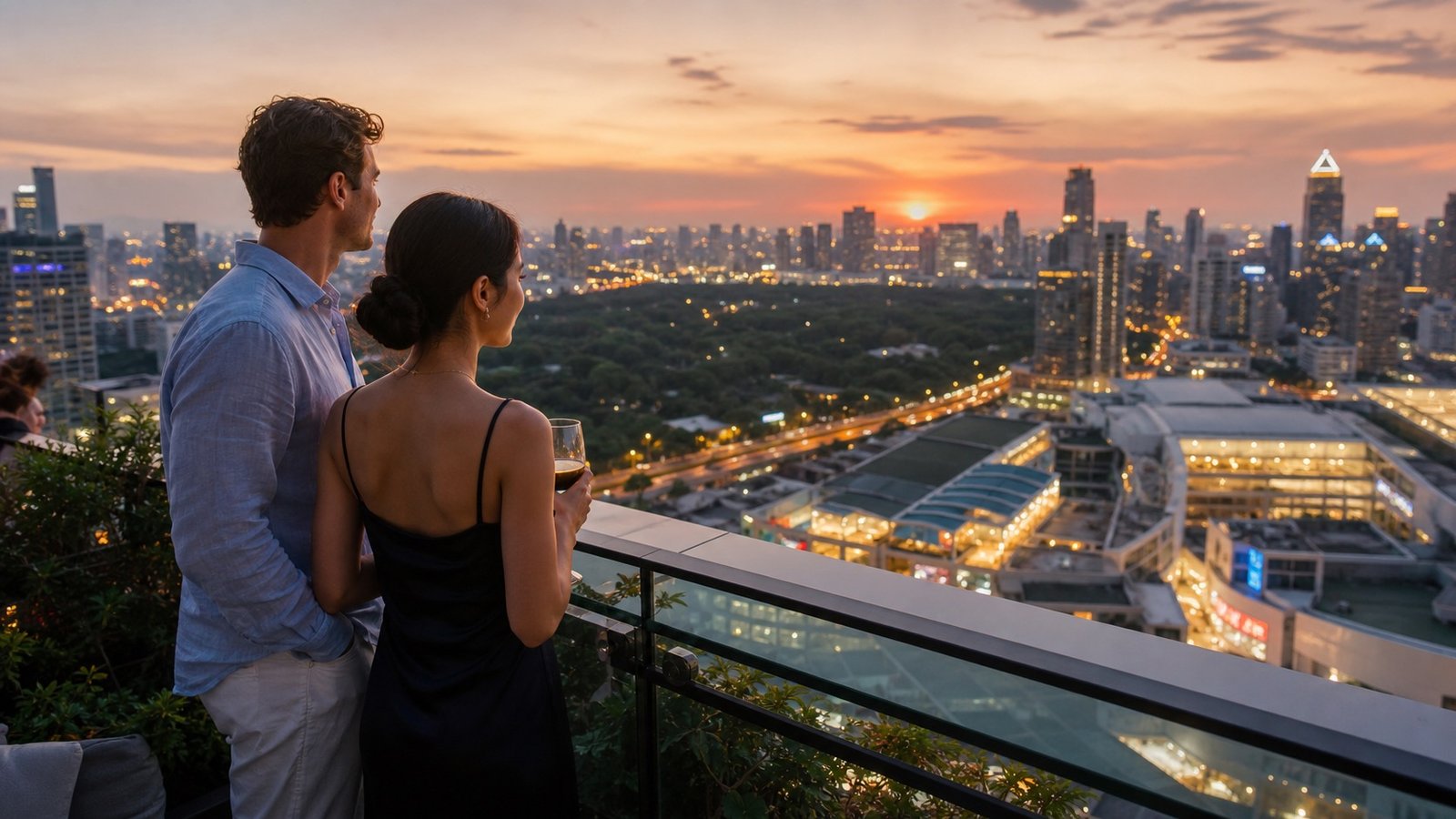
From there, you’re in Siam, the modern walkable shopping core of the city. MBK, Siam Paragon, Central World and Siam Square are all in the same general area. To finish, stop at a rooftop bar for sunset and a drink. Again, this can be a full day or you can mix it up. Just keep the general areas in mind when planning.
Your third area is slower. Start with a morning in Lumpini Park, then walk through Silom and the historic Charoen Krung Road. From there, you can eventually wind your way back up to Talat Noi and Song Wat Road. And this is where you can see how the areas start to intersect. So, feel free to mix and match. So, how long do you really need to fully experience Bangkok? 3 to 4 days will cover the whole itinerary, but it’ll be a bit rushed.
It’s really better to spread it over five or six, which gives you room to explore. If you have more time, there’s plenty more to see. You have two more green spaces in the green lung and Benjakitti Park. Thong Lor has trendy restaurants and nightlife. And Phrom Phong is another fantastic shopping district. Ari is full of tree lined cafes and a slower pace, while the old capital across the river in Thonburi makes for a quaint, idyllic afternoon. The truth is that the more time you give yourself, the more you’ll come to appreciate the city and discover the version that you love.
Street Food And Useful Thai Phrases
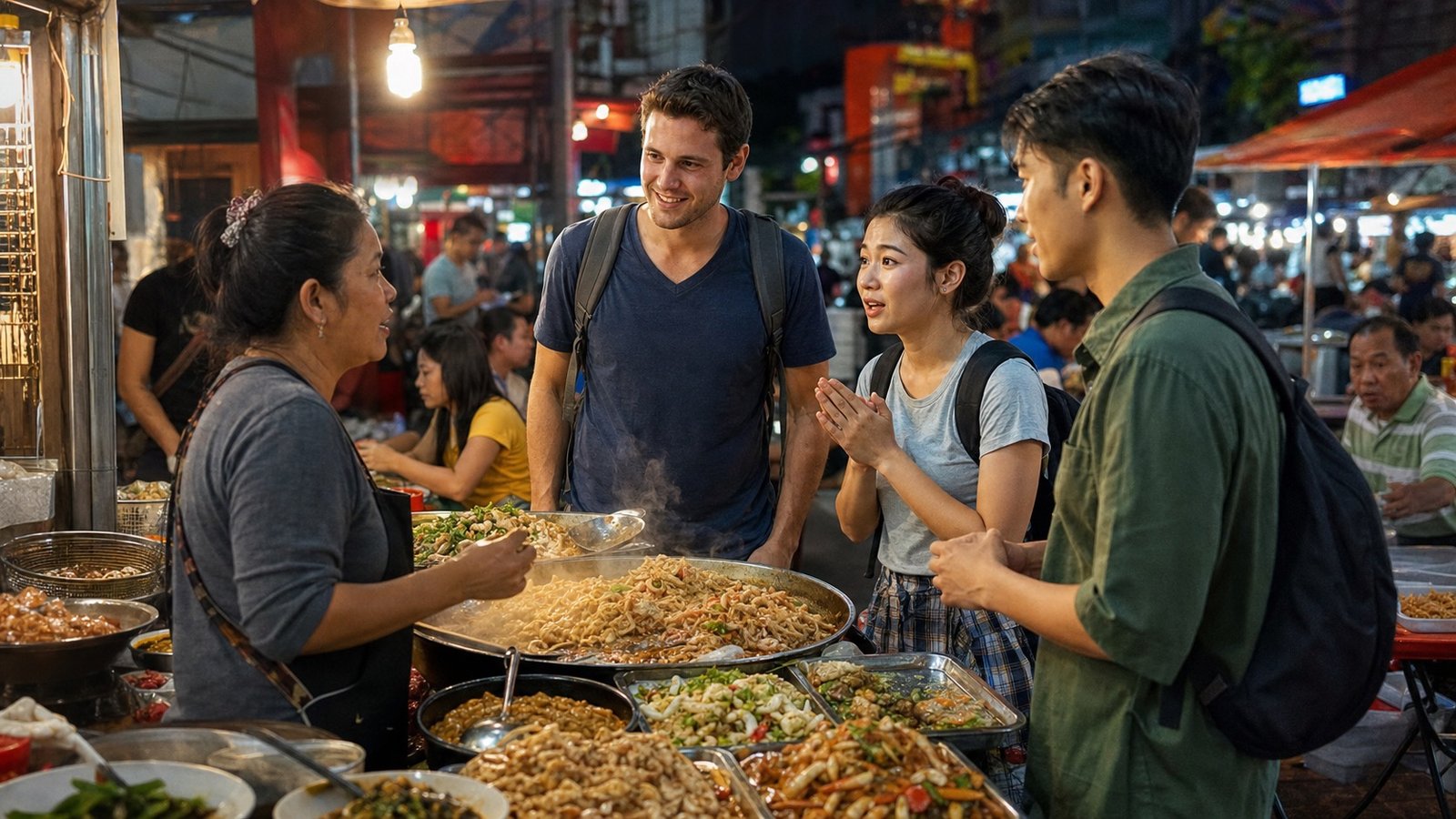
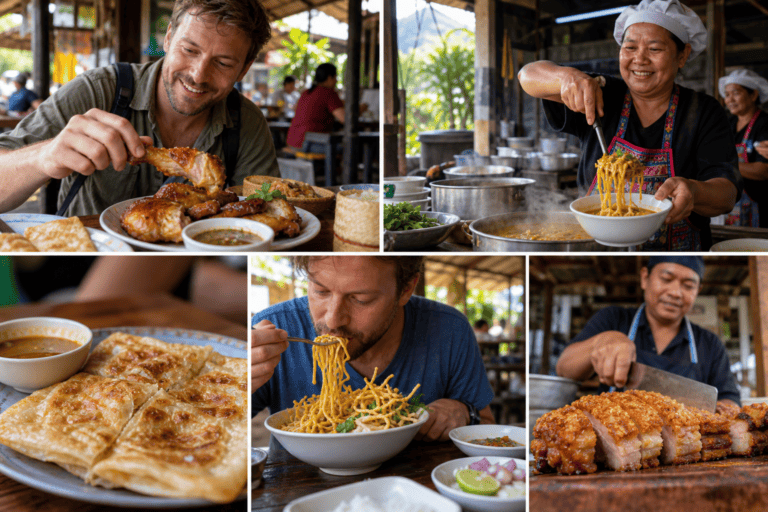
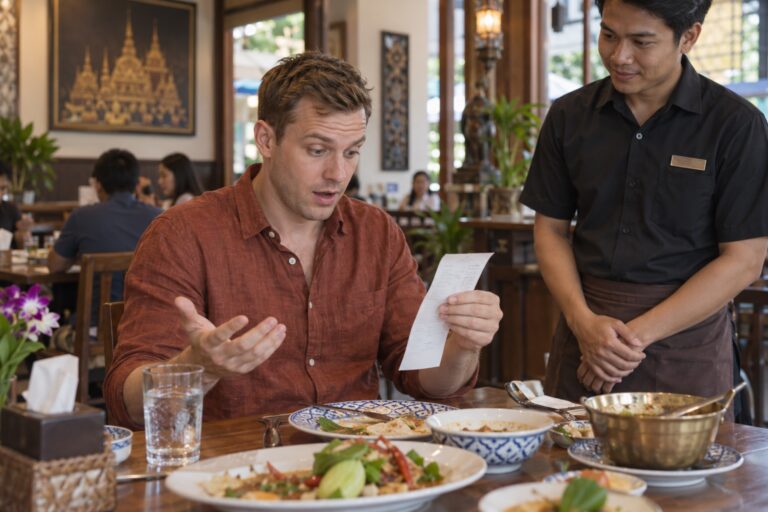
We touched on food, but it deserves its own conversation because Bangkok is a globally renowned street food city, and there are a few things that first time visitors need to be aware of. The heart of it all is Chinatown, but you’ll find small vendors and shops on nearly every corner. The trick to eating well here is simple. Eat where the locals eat. A stall packed with Thai customers means fresh ingredients and fast turnover, while an empty tourist facing place has far less reason to keep quality up. If you are traveling with friends or family, order Thai style and share several dishes between you, both to taste more and because the food often arrives at very different times. If everyone orders separately, there’s a good chance you’ll all be eating at different moments.
On safety, street food is generally safe, especially at busy stalls cooking fresh in front of you. Avoiding it out of fear is a mistake, but be a little selective. Skip anything that may have been sitting out in the heat. Go easy on raw dishes and treat fresh fruit and smoothies with some caution since dirty prep surfaces and unclean water are the usual culprits behind an upset stomach. Cook to order food is always your safest bet. But be careful with heat because Thai spice hits differently when you order say mai pet for not spicy or pet nit noi for just a little which is wise for first timers. Sugar often gets added liberally as well, especially to drinks and smoothies.
Mai wan means not sweet or wan noi for just a little. Learning a little Thai goes a long way as vendors love it when you try. Say sawatdee for hello, khop khun for thank you, tao rai for how much, and alloy for delicious. None of it has to be perfect. The effort alone changes how people will view you. You will often hear gang mack, which means very good, even when you’re absolutely butchering the tones.
Bangkok Safety Accessibility And Healthcare
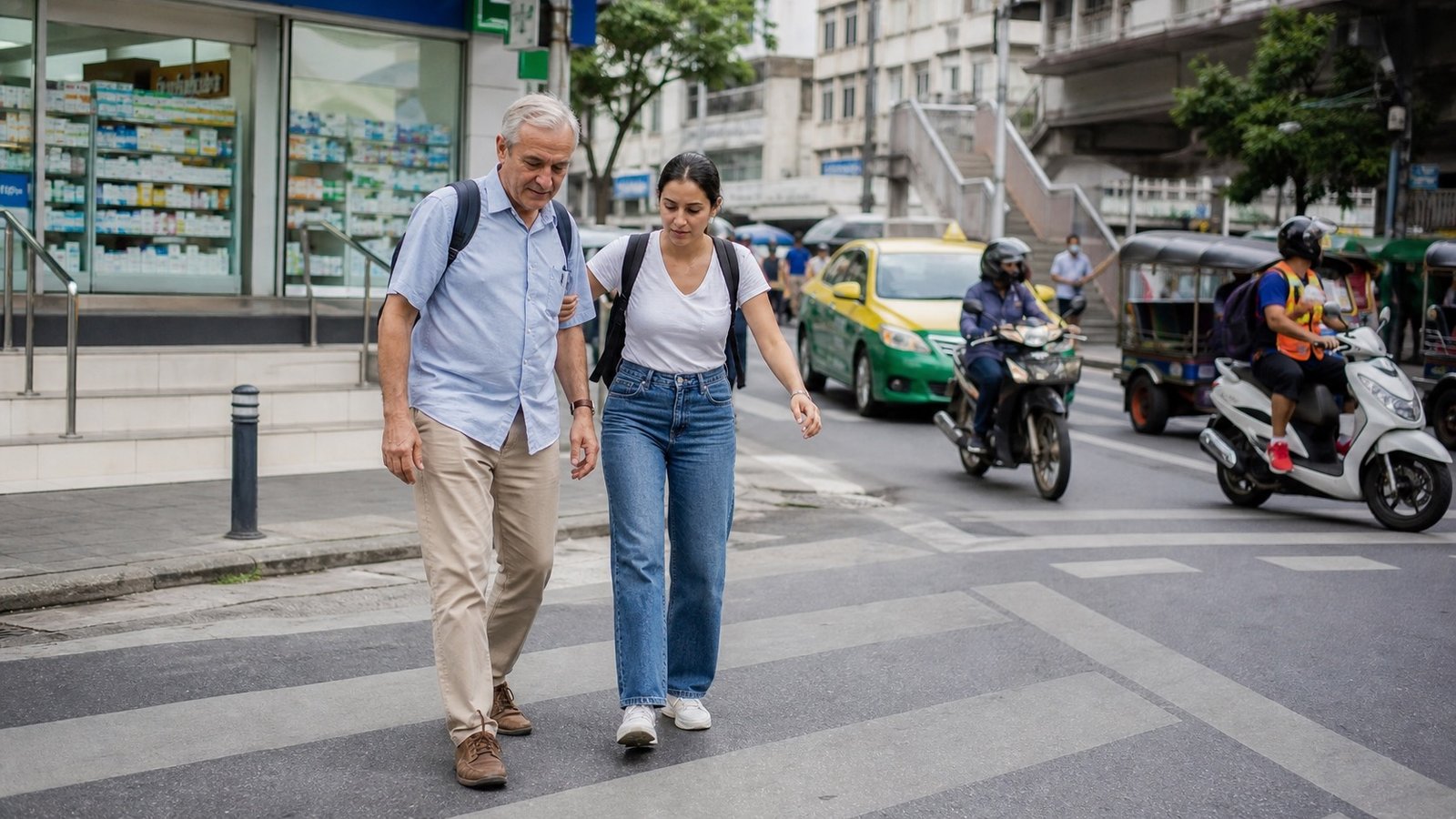
Bangkok is remarkably safe for a city this size, but when it comes to safety, there are still a few things you need to know. The roads are the big one. Even crossing the street can be dangerous, so never assume a vehicle will stop and look both ways. Remember that traffic drives on the left. Sidewalks are another issue and may be damaged or missing, so watch your footing.
If you’re mobility impaired, stay in a very central area with good accessibility. Sukhumvit and Silom are good, but Chit Lom and Siam have better overall sidewalks. The heat is also a factor as dehydration and heat exhaustion are common. Drink plenty of water and take air conditioned breaks.
Be careful with distances because maps can be deceptive. It’s easy to set off walking and soon find it’s much farther than you expected. Or you may need to cross several busy streets with poor crossings or find that the sidewalk simply disappears. Older travelers or anyone with mobility issues should plan routes carefully.
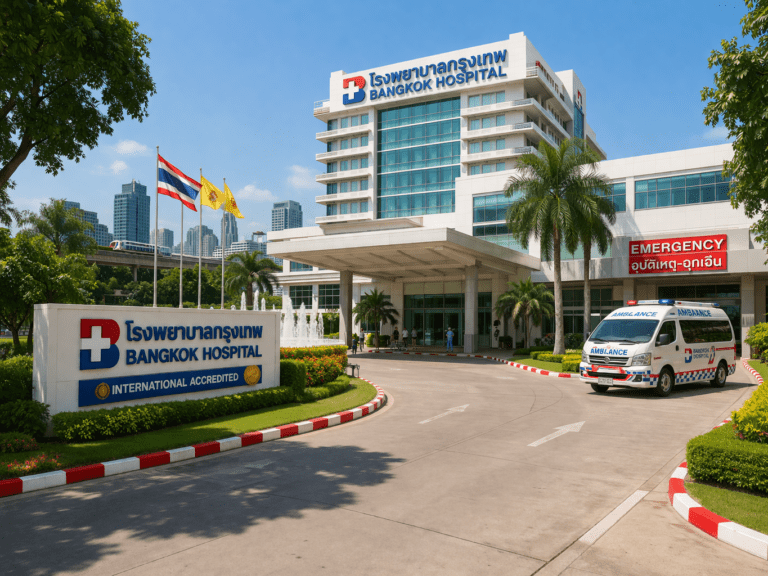
Healthcare awareness is also essential. If you’re injured or need care, Bangkok has excellent international hospitals, but treatment isn’t always cheap, so travel insurance is important. Public hospitals can also offer good quality care, but the experience and wait times vary. For minor issues, there are smaller clinics around the city. For an ambulance, dial 1669.
Seeing The Real Bangkok
You’re fully planned and ready for Bangkok. But it brings us to our final and biggest mistake. This is a theme we’ve touched on already multiple times. The truth is that most visitors leave Bangkok without ever really seeing the city at all. They hop from one tourist hotspot to the next. The Grand Palace, Khao San, the malls, a rooftop, and almost everywhere they go, they meet the same thing. Other tourists, transactional encounters, inflated prices, and hustlers working an angle. So, they leave thinking that’s Bangkok. But what they experienced couldn’t be further from the actual city, the one where local people live.
Because that hustle is the opposite of normal Thai culture. The tourist zones attract the small slice of people working the tourist system and that’s it. But it’s entirely unrepresentative of the broader society. Step into a local neighborhood and the whole feeling flips. Nobody’s aggressive and nobody approaches you. You get smiles, patience, and a quiet warmth that defines the real country. The only way to find it is to leave the bubble, even for an afternoon. So, plan your trip, stay somewhere central that makes the city easy to move through and see all the famous attractions because they’re genuinely worth it. But take a little time to step away from all of it and just explore a local area because that’s when you start to understand this city and the different layers that exist here.