Bangkok Food and Grocery Prices: Supermarkets, Food Courts, and Daily Costs
Bangkok food costs vary enormously depending on whether you eat at local food courts, shop at supermarkets, buy imported products, or choose international restaurants. The prices below are useful for planning, but supermarket promotions, store location, season, package size, and exchange rates can change the total.
Terminal 21 Food Court Prices
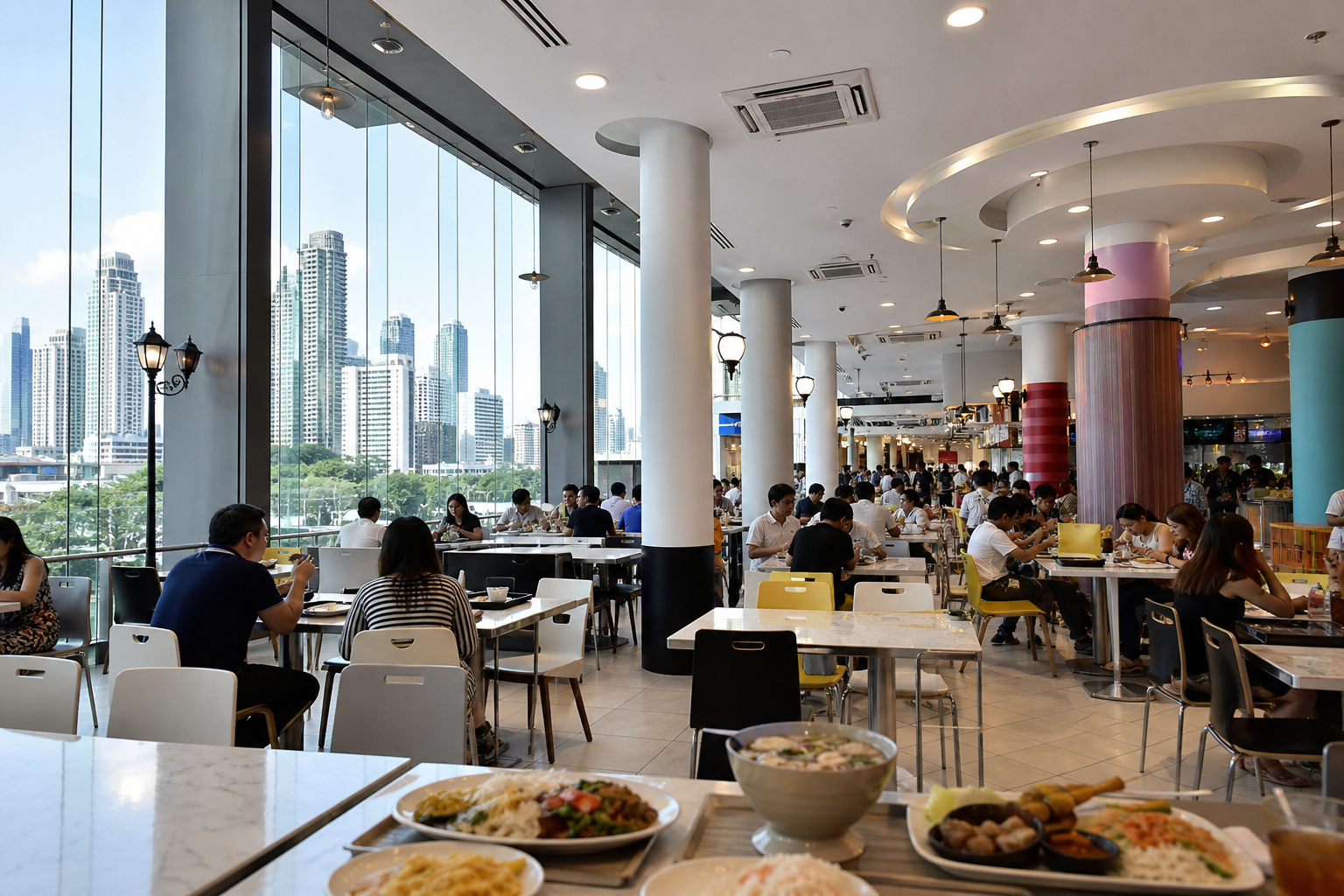
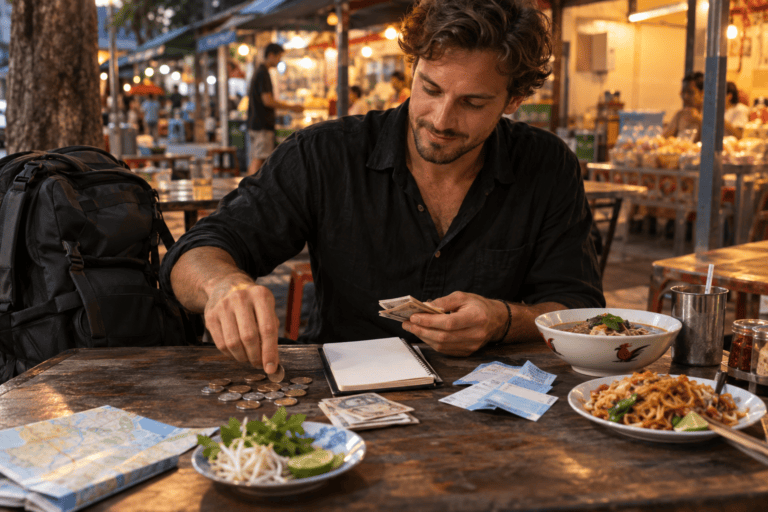
Terminal 21 in Asok has the Pier 21 food court on the fifth floor. Dishes commonly fall around 20 to 80 baht, with meals such as chicken rice, Pad Thai, and curry dishes often costing well under 100 baht.
Pier 21 uses a prepaid card. Load the card at the cashier, pay for food with it, then return the card to receive the remaining balance. A few hundred baht can cover multiple dishes and drinks for two people, depending on what you choose.
Street Food and Local Eating Costs
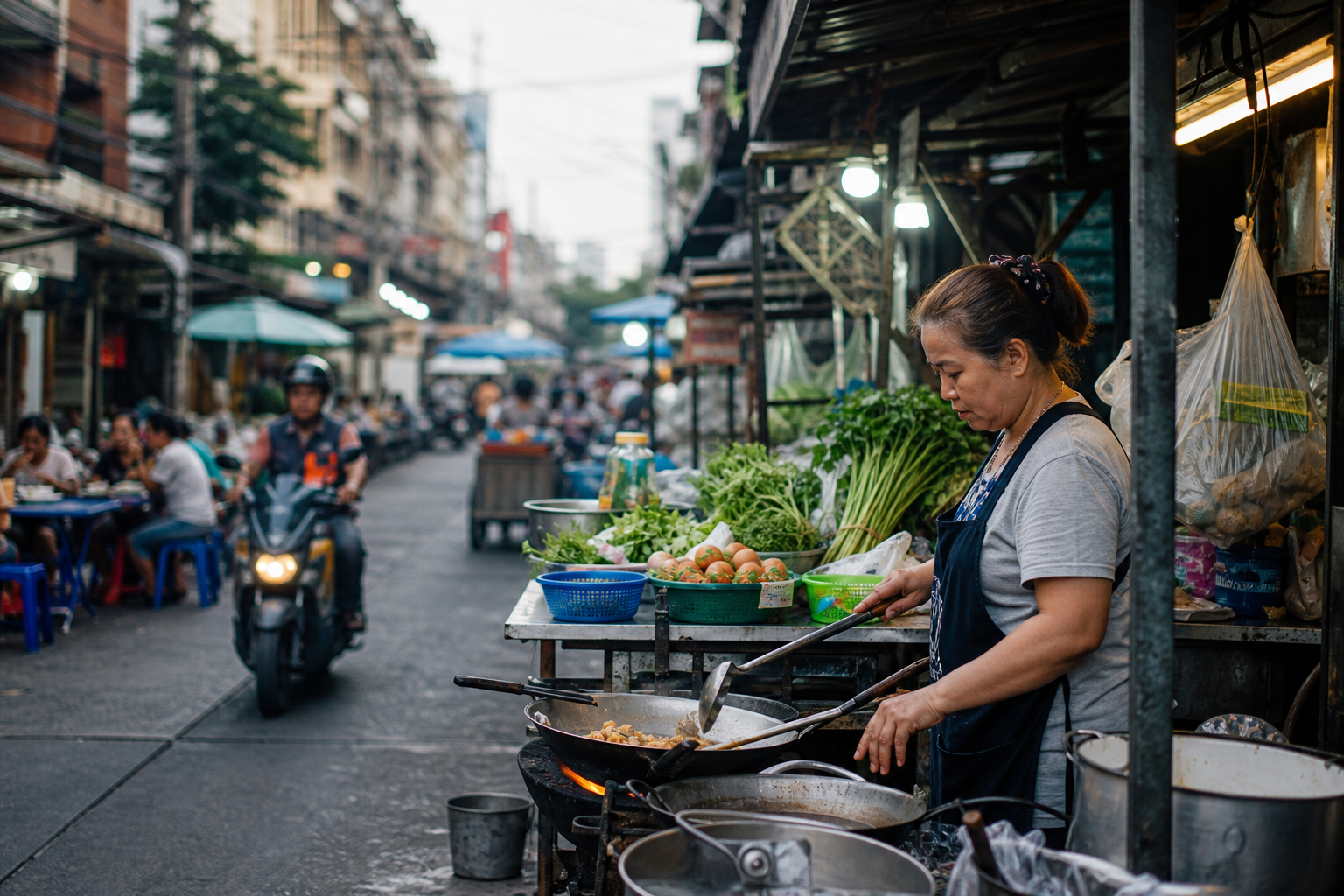
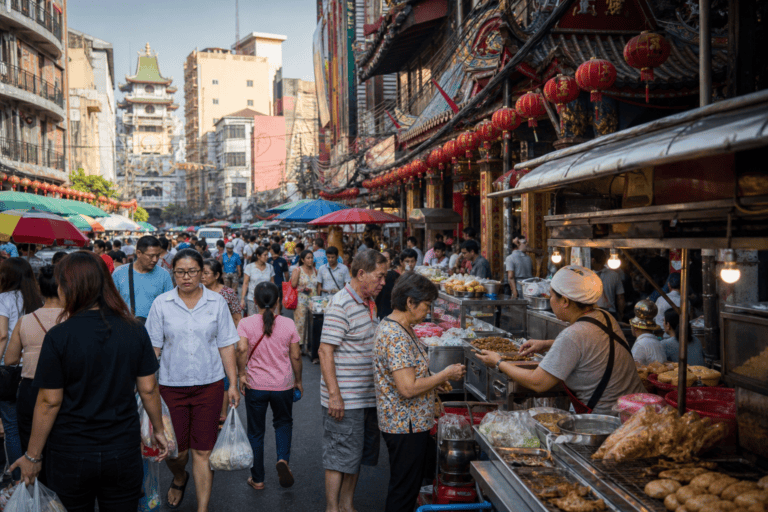
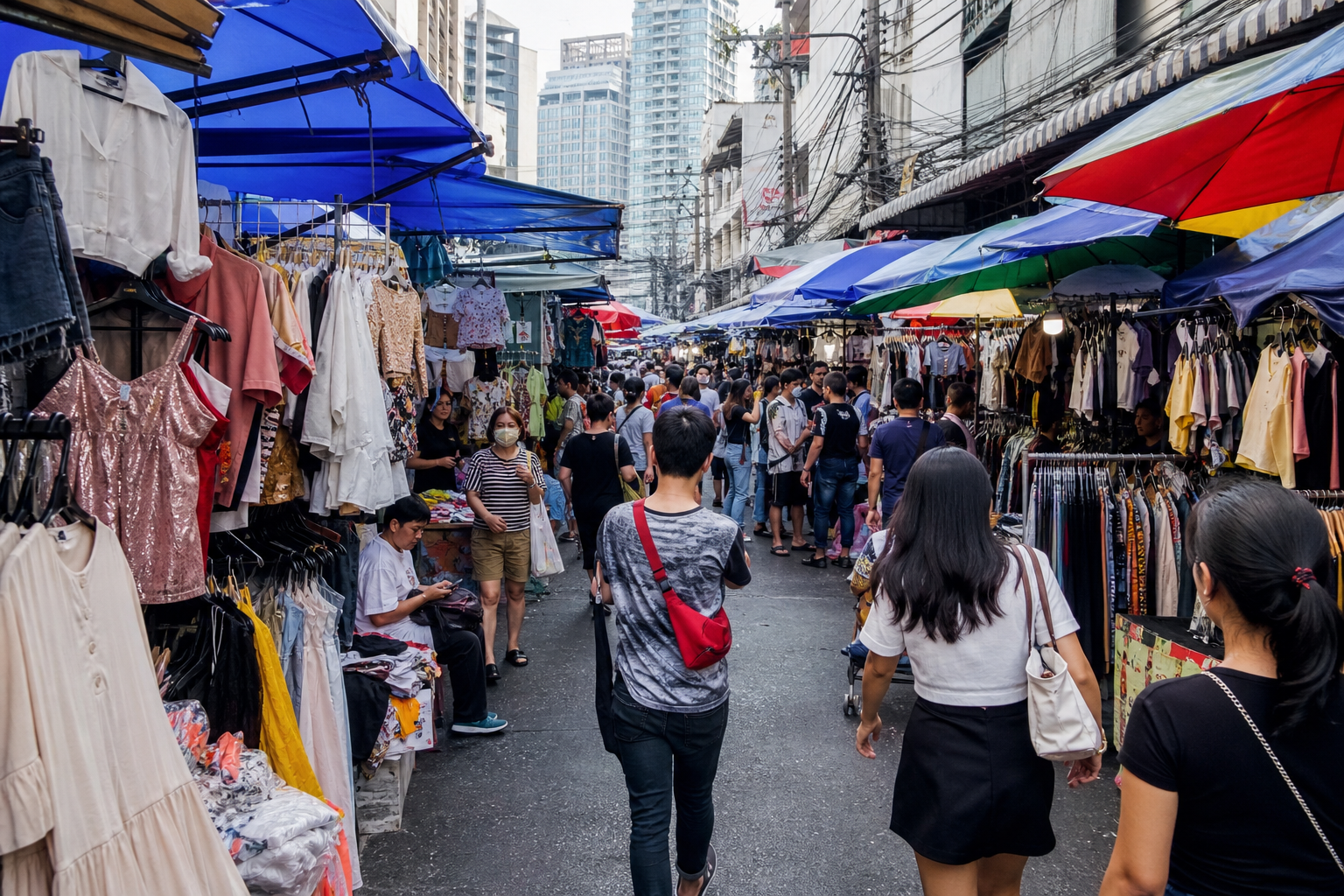
Local street food remains one of the cheapest ways to eat in Bangkok. Prices are usually lower away from the main tourist entrances to malls and attractions. Small local restaurants, side streets, and market areas can offer rice, noodles, soups, grilled meat, fruit, and snacks at much lower prices than international restaurants.
Tourist-heavy locations can charge considerably more for food that looks similar, so compare menus and avoid assuming that every outdoor stall is a low-cost local option.
Big C and Weekly Grocery Shopping
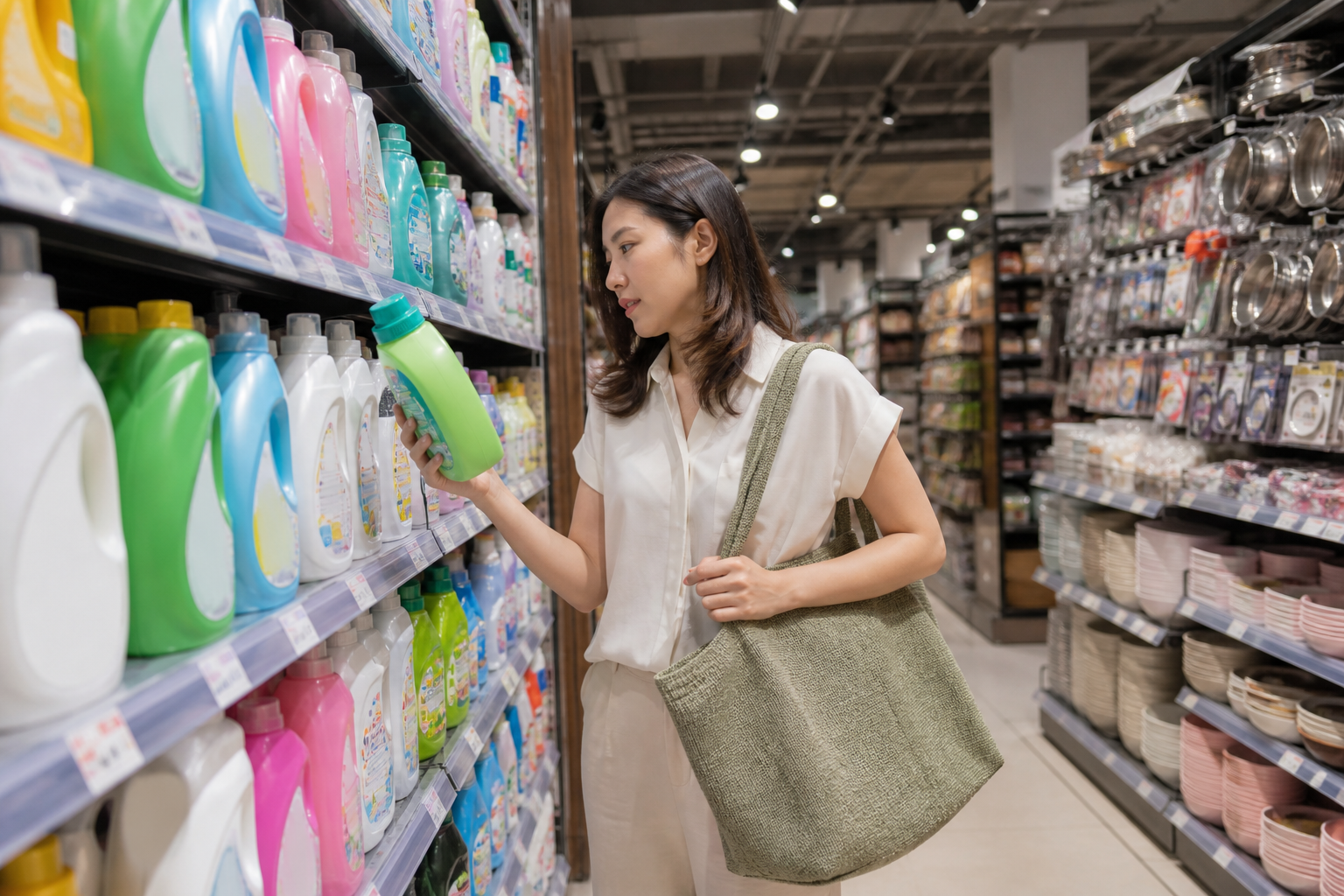
Big C Extra is useful for weekly shopping in Bangkok because it combines food, household goods, toiletries, drinks, clothing, and other everyday items in one place. One weekly shop was around 1,000 baht, while another trip covering food and household supplies came to about 890 baht.
Those totals depend heavily on what you buy. Local products are generally cheaper than imported brands, and promotions can reduce selected items substantially. Larger supermarkets are usually better suited to bulk groceries, while convenience stores are useful for small top-up purchases.
Another personal shopping routine cost around 2,000 to 3,000 baht per trip for groceries, meat, vegetables and coffee. Shopping once or twice each week produced a monthly grocery total of roughly 8,000 to 10,000 baht. That is a personal example rather than a fixed Bangkok average.
Bakery, Drinks, and Snacks
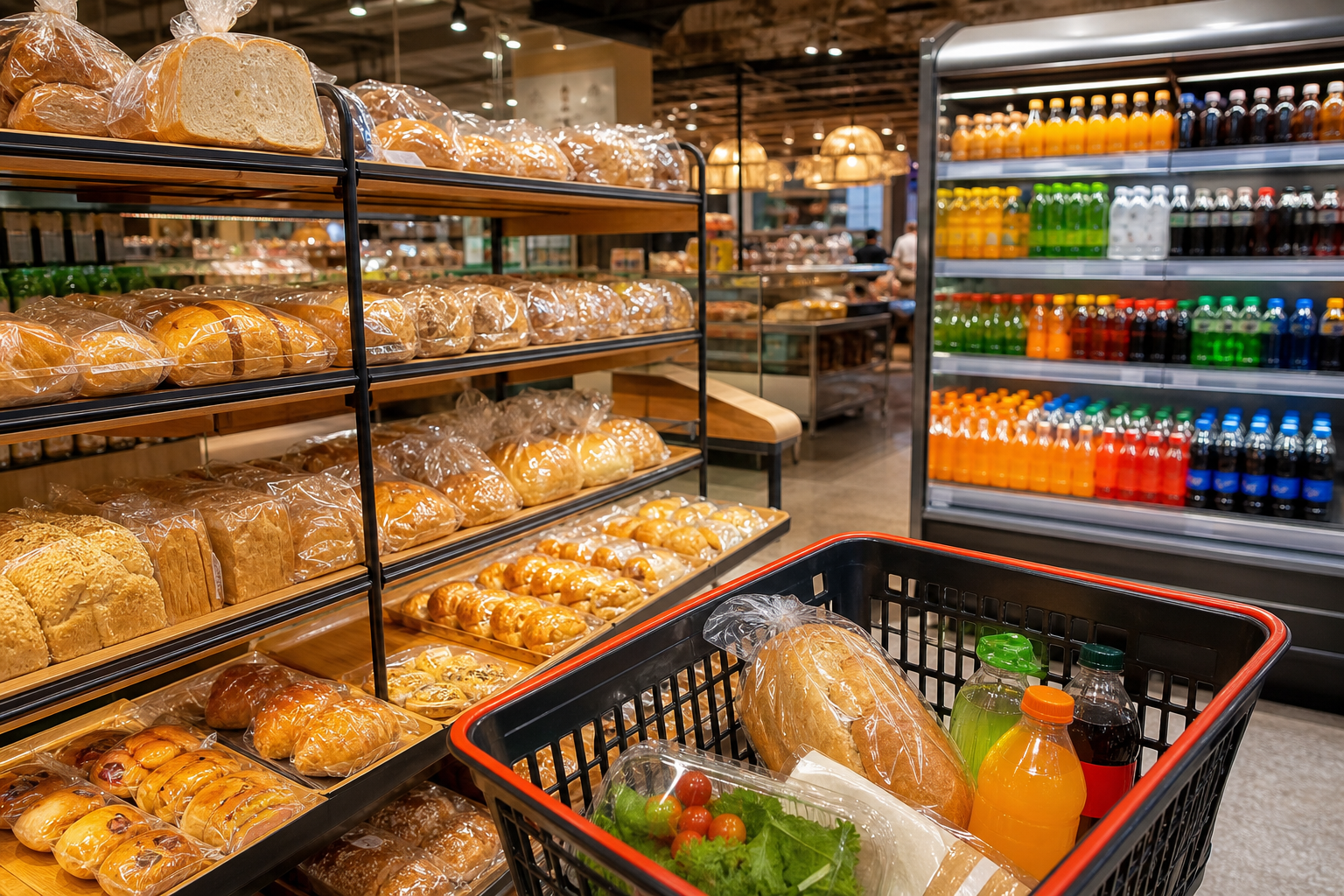
Basic bread is widely available at modest prices, while pastries and imported snacks cost more. Observed prices put standard loaves roughly in the 30 to 45 baht range, while packaged pastries were often around 80 to 100 baht.
Soft-drink multipacks commonly sat below 100 baht, while nuts and imported snacks varied much more. Local beer was noticeably cheaper than imported beer in the same supermarket comparisons. Brand origin can make a large difference to the final grocery bill.
Fruit and Vegetable Prices
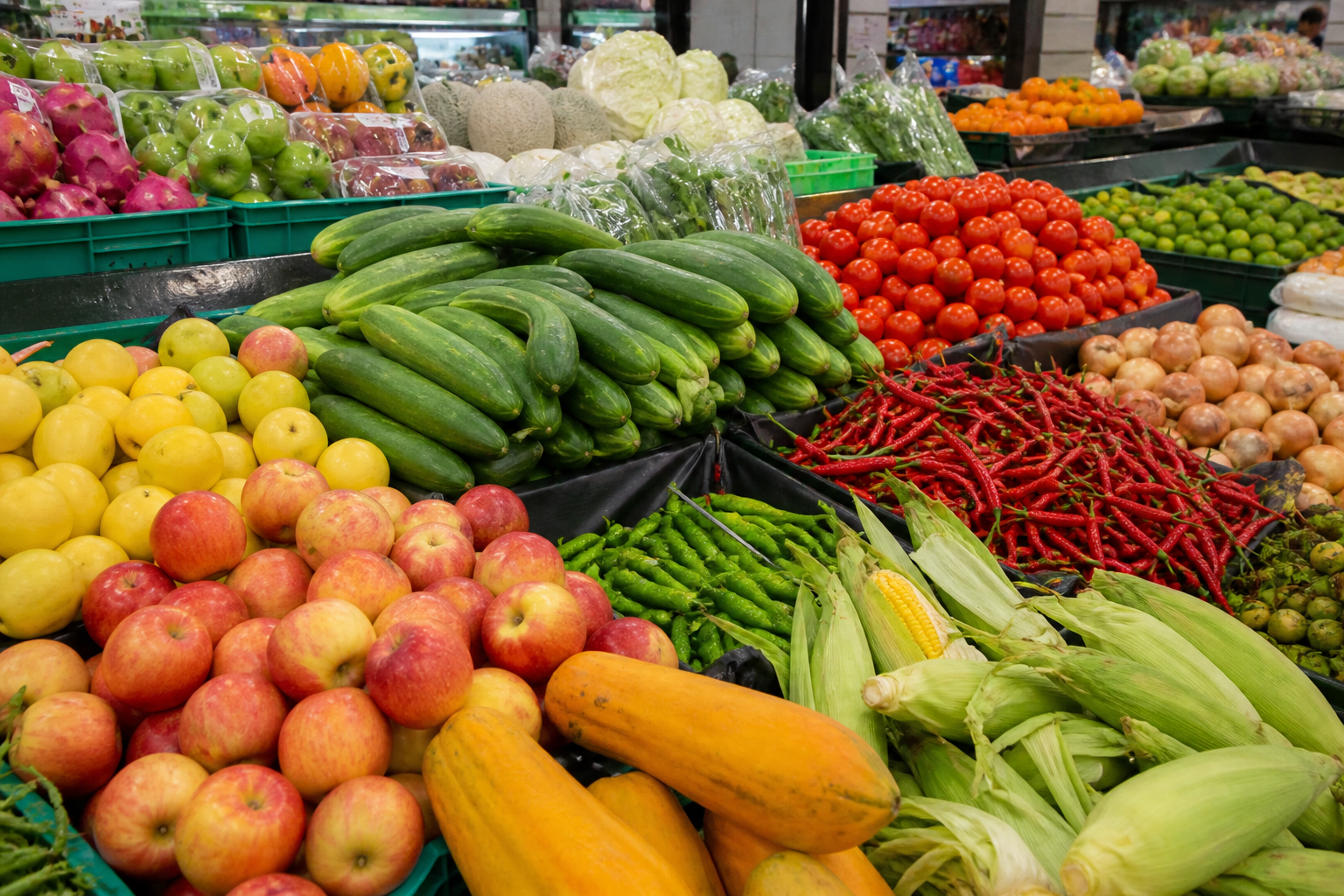
Local produce is often one of the cheapest parts of a Bangkok grocery shop. Examples included cucumbers, corn, papaya, lettuce, onions, chilies, carrots, pineapple, and watermelon at relatively low prices.
Two bananas were observed at around 22 baht, while one pineapple was around 39 baht. Package size, ripeness, season and store can all change the total.
Imported fruit was more expensive. Apples, pears, imported oranges, and imported melons tended to cost more than local seasonal fruit. Compare loose and packaged produce, check ripeness, and buy Thai fruit in season when possible.
Chicken, Seafood, Beef, and Other Proteins
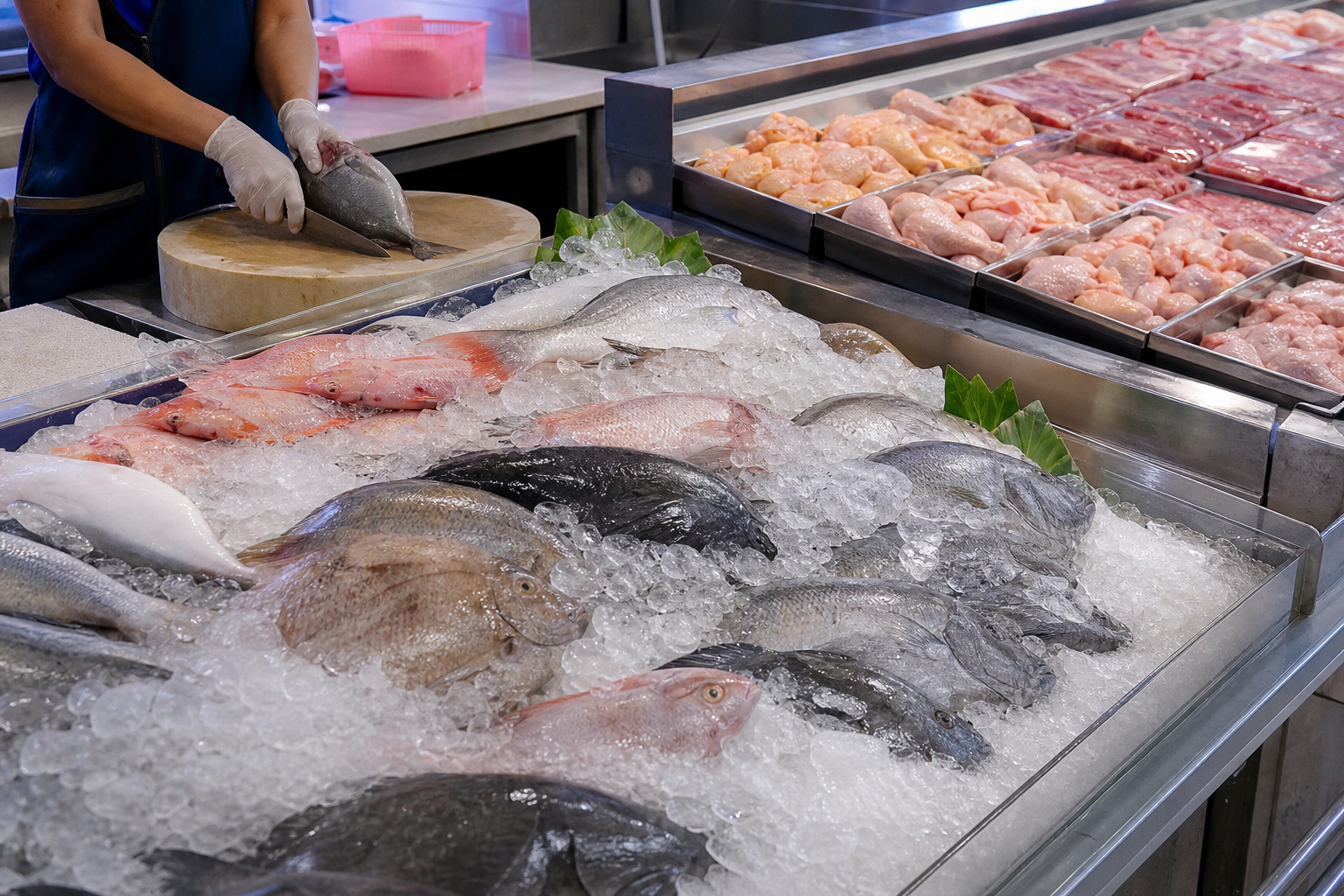
Chicken was among the least expensive proteins in observed supermarket prices, and pork could also be inexpensive. Fresh seafood covered a wide price range depending on species, weight, and season, while beef was generally much more expensive.
Supermarket seafood counters can be practical for anyone cooking in a condo or serviced apartment because fish can often be cleaned or prepared after purchase. Compare the price per kilogram rather than only the package price.
Eggs, Milk, Yogurt, and Dairy
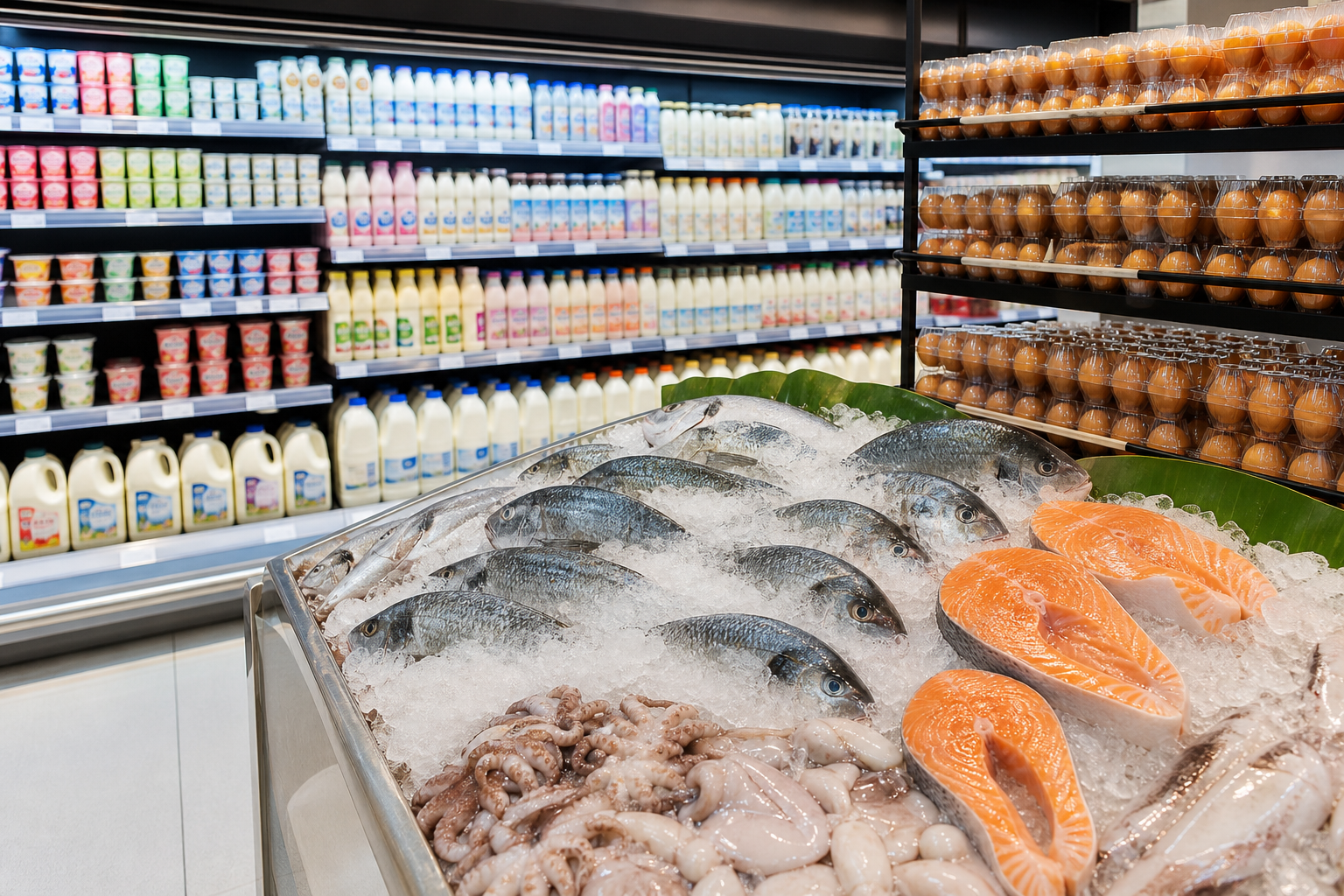
Eggs, fresh milk, and yogurt can be inexpensive when choosing local brands. Observed examples included fresh milk around the mid-40-baht range, yogurt below 50 baht for some packs, and larger egg trays at relatively low prices.
Imported and specialty dairy products cost much more. Cheese and premium dairy are good examples of products that can raise a grocery bill quickly compared with local milk or yogurt.
Instant Noodles, Sauces, Coffee, and Pantry Items
Instant noodles, Thai sauces, rice, cereal, coffee, and cooking ingredients are widely available across supermarkets. Local noodles and sauces are usually inexpensive, while imported coffee, olive oil, cereal, and specialty products cost more.
Coffee made at home was estimated at about 25 baht per cup. Local-vendor coffee could be around 25 to 40 baht, while branded coffee shops were around 90 to 130 baht in the personal examples.
Ordinary cooking oil was observed around 48 to 50 baht, while extra virgin olive oil was around 670 baht. Check the unit price and package size rather than assuming a larger-looking pack is cheaper. Local brands are often the easiest way to keep a weekly food budget under control.
Ready-to-Eat Meals and Convenience Food
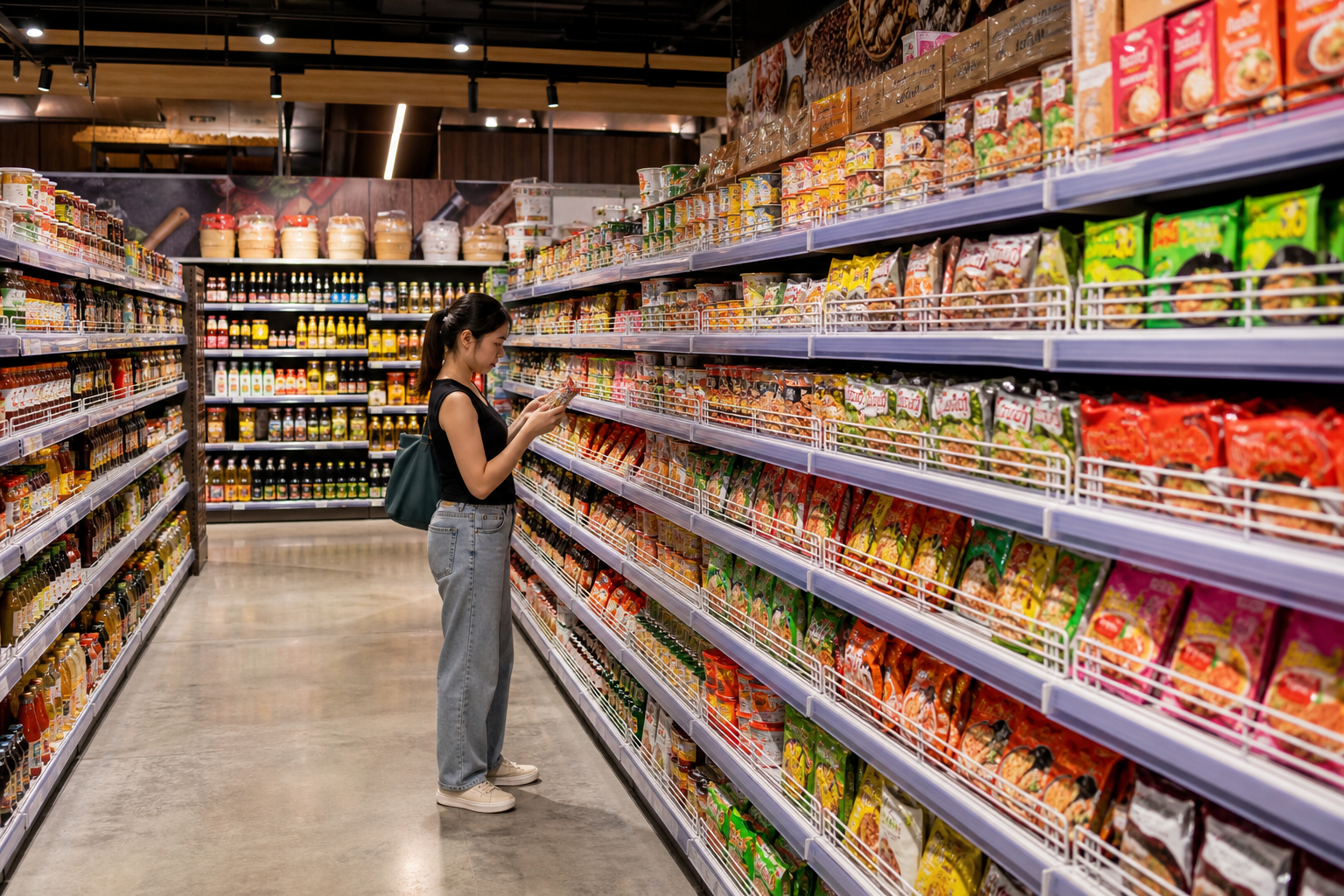
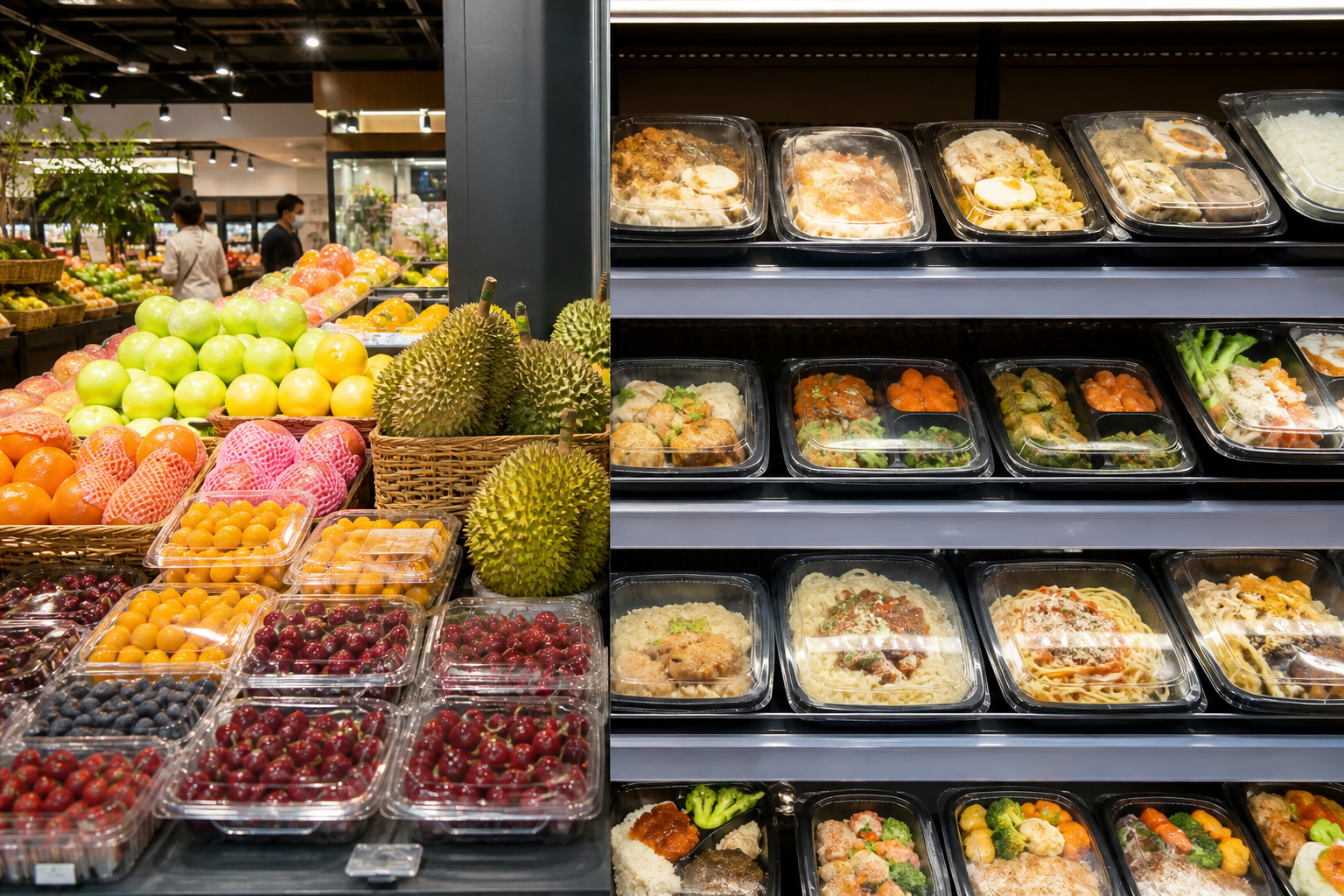
Large supermarkets sell a wide selection of ready-to-eat and microwave meals. Prepared dishes could cost roughly 20 to 60 baht, making them useful for travelers or residents who do not want to cook from scratch.
Convenience stores also fill this role, but supermarket packs can offer better value for larger shops or multi-day stays.
Household Essentials and Checkout Costs
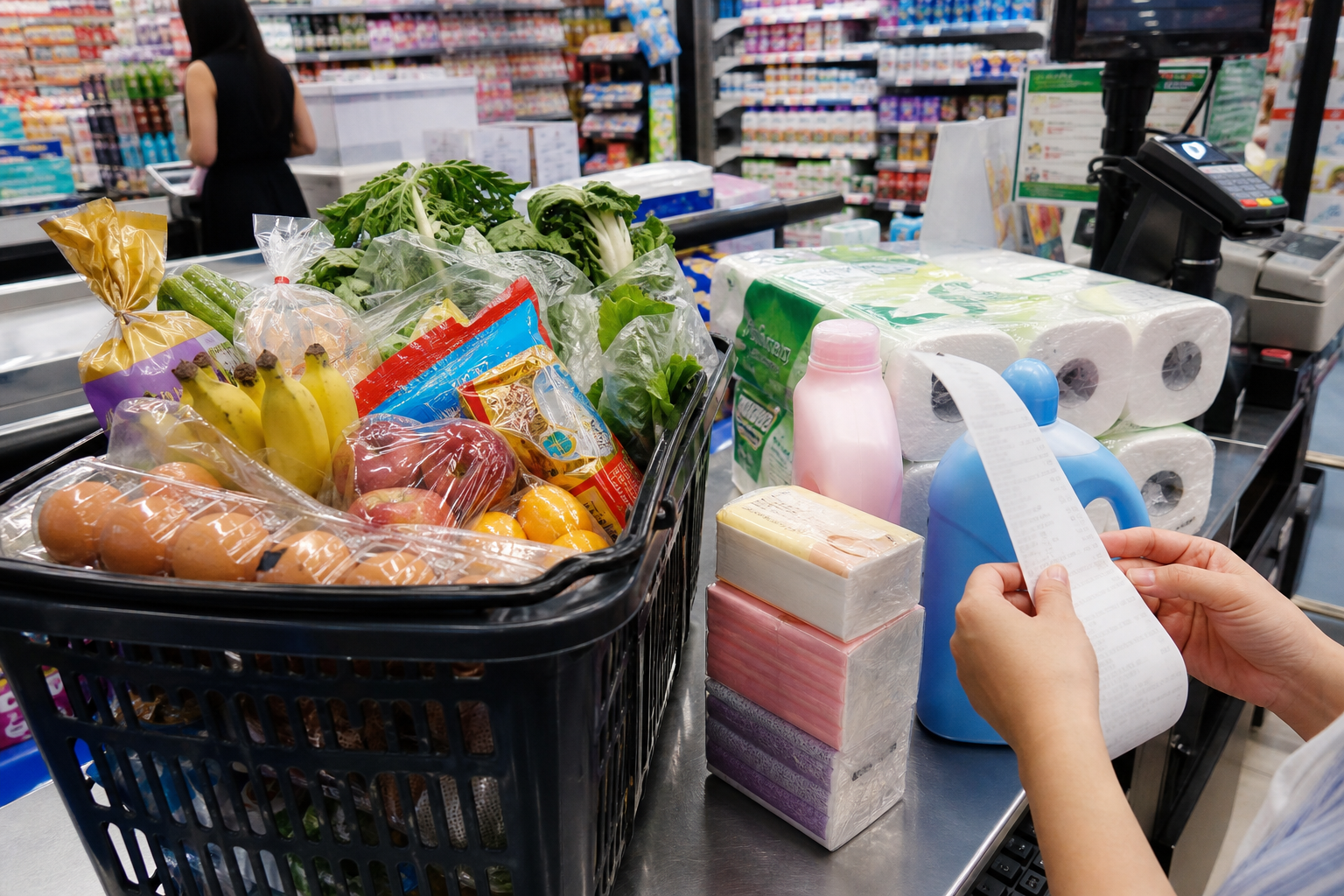
Food is not the only cost in a weekly supermarket shop. Tissue, toilet paper, detergent, kitchen supplies, toiletries, and reusable bags can add a noticeable amount to the total.
A local toothpaste was observed at around 59 baht, while one pack of Sensodyne was around 215 baht. This is another example of how imported or international brands can cost much more than local alternatives.
Compare local and imported versions, check package size, and keep the receipt until you leave the store. Some supermarkets may verify purchases at the exit.
How Much to Budget for Food in Bangkok
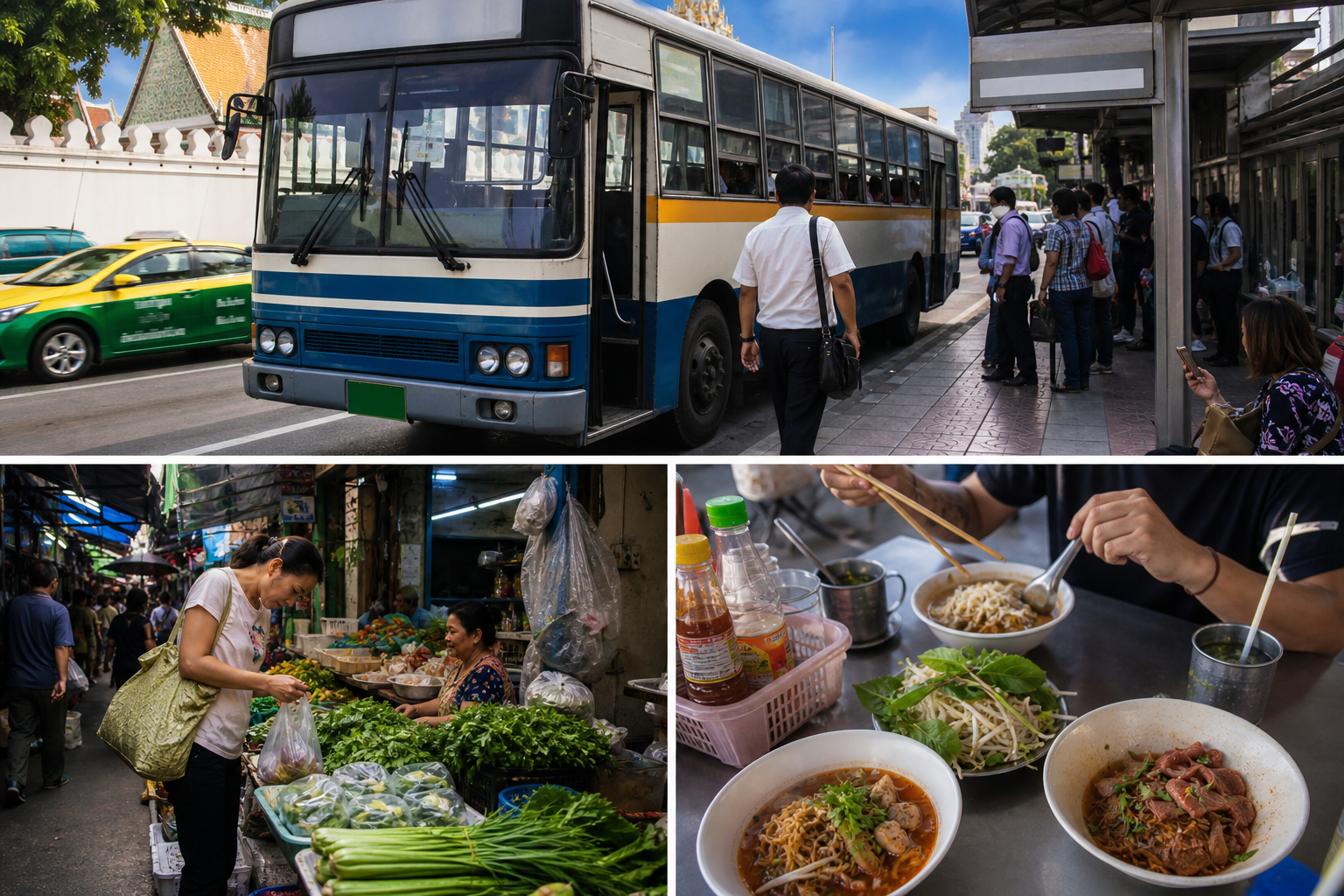
A realistic Bangkok food budget depends far more on habits than on one fixed daily number. Someone eating local food, using food courts, and buying Thai supermarket brands can spend relatively little. Someone choosing imported groceries, western restaurants, rooftop dining, alcohol, and premium products can spend several times more.
The monthly grocery example of roughly 8,000 to 10,000 baht covered meat, vegetables, coffee and other household food for a particular shopping routine. Eating outside, alcohol, imported cheese, premium beef and branded cafés would raise the total.
Use the prices in this guide as planning examples rather than guaranteed current rates. Check current supermarket shelves and restaurant menus when you arrive, then build your own weekly or daily range around the way you actually eat.