Thailand Jungle Trekking Guide with Best Trails
Thailand is a trekking paradise, with mountains, waterfalls and dense jungle, and that’s not to mention the amazing wildlife that you can’t see anywhere else in the world. I spent a lot of time in the Thai jungle, including completing numerous multi day treks in Chiang Mai, Khao Sok and Chiang Rai, so I know that it can be a life changing experience. I also know that there’s so much that can go wrong if you’re not properly prepared.
Every year there are stories of tourists getting lost or injured in the jungle, and that’s without mentioning the thousands of people who make simple mistakes that lead to an underwhelming jungle experience. Before you strap on your hiking boots, there are definitely a few things you need to know.
Best Thailand Jungle Trekking Destinations
First, let’s talk about the best places to trek in Thailand. Before we dive into specific locations, it’s important to understand that there are two main types of treks you can experience in the country. The first type of trek is all about stunning views and challenging heights. These are perfect for people who love covering long distances and want to be rewarded with some of the most breathtaking vistas Thailand has to offer.
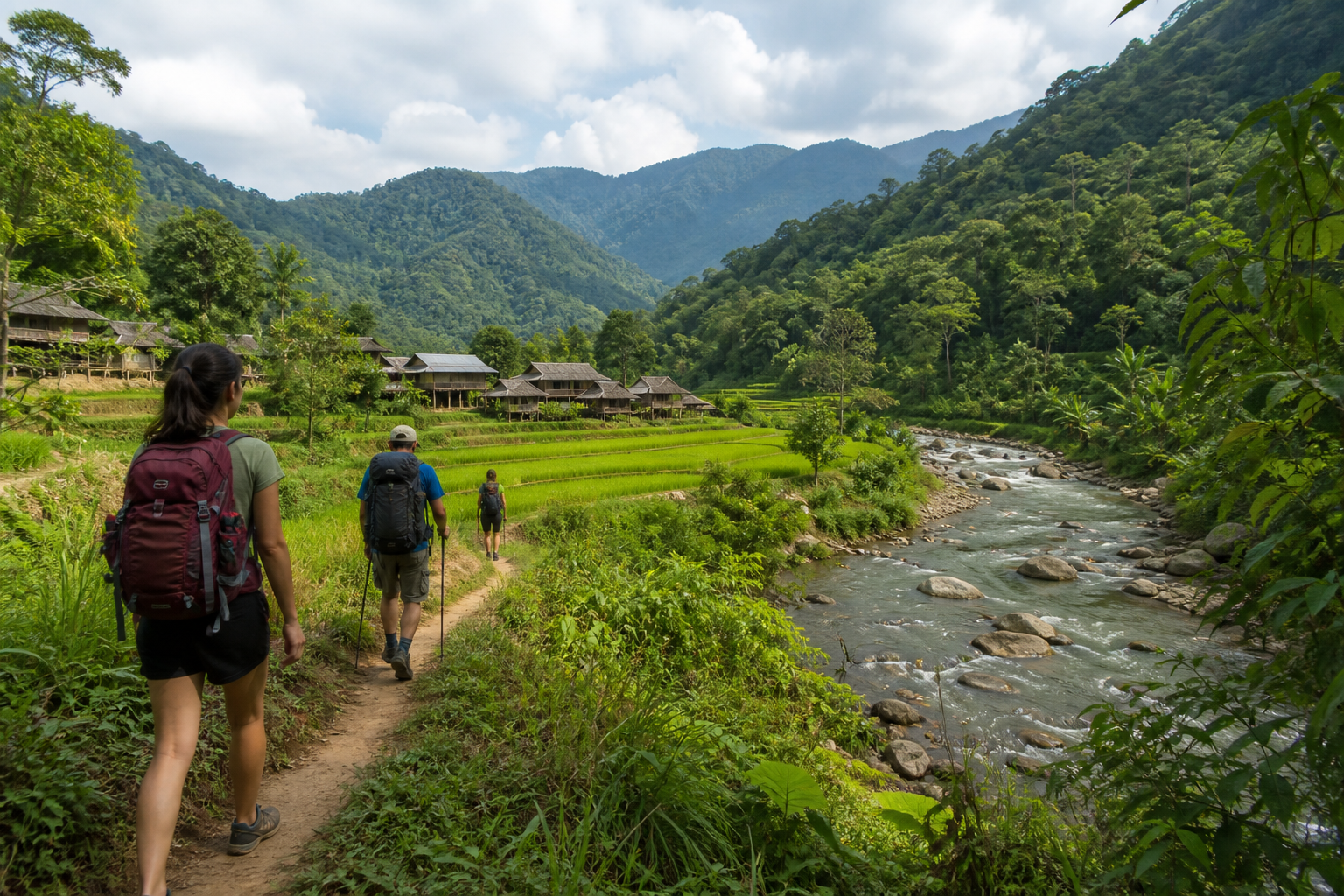
Two of the best areas for these types of treks are in Northern Thailand. Chiang Mai is a hub for multi day treks that take you through rice paddies, over mountains and across rivers. Along the way, you’ll also have the chance to stay in some rural villages, giving you an opportunity to learn about the local people and their culture in a truly immersive way.
For a more daring adventure, you can trek in the Golden Triangle near Chiang Rai. This region, once known for its role in the opium trade, sits at the meeting point of Thailand, Myanmar and Laos. When I trekked here, I stayed in a village that used to cultivate opium and got to learn about the impact of the illegal drug trade on the region and the people who worked in it.
The second type of trek is focused on wildlife. These trails might not offer the panoramic views of the northern treks, as you’ll mostly be navigating through dense jungle, but they give you the best chance to encounter Thailand’s incredible wildlife.
If you only have a short time in the country, the biggest rainforest in Thailand actually lies just a few hours’ ride away from Bangkok. In this jungle, you’ll have the chance to see wild elephants, gibbons and deer. This is Kaeng Krachan National Park, and it makes for the perfect escape into nature from the city.
Another rainforest is home to one of the oldest rainforests in the entire world, one that has remained unchanged for hundreds of millions of years. The jungle is also home to elephants and monkeys, but you can find an array of brightly coloured lizards and snakes too. It’s called Khao Sok National Park, and this jungle is more remote and tricky to get to, but it’s well worth it, especially when combined with a visit to nearby Cheow Lan Lake, another one of Thailand’s most beautiful spots.
Short Wildlife Treks on Thai Islands and in Krabi
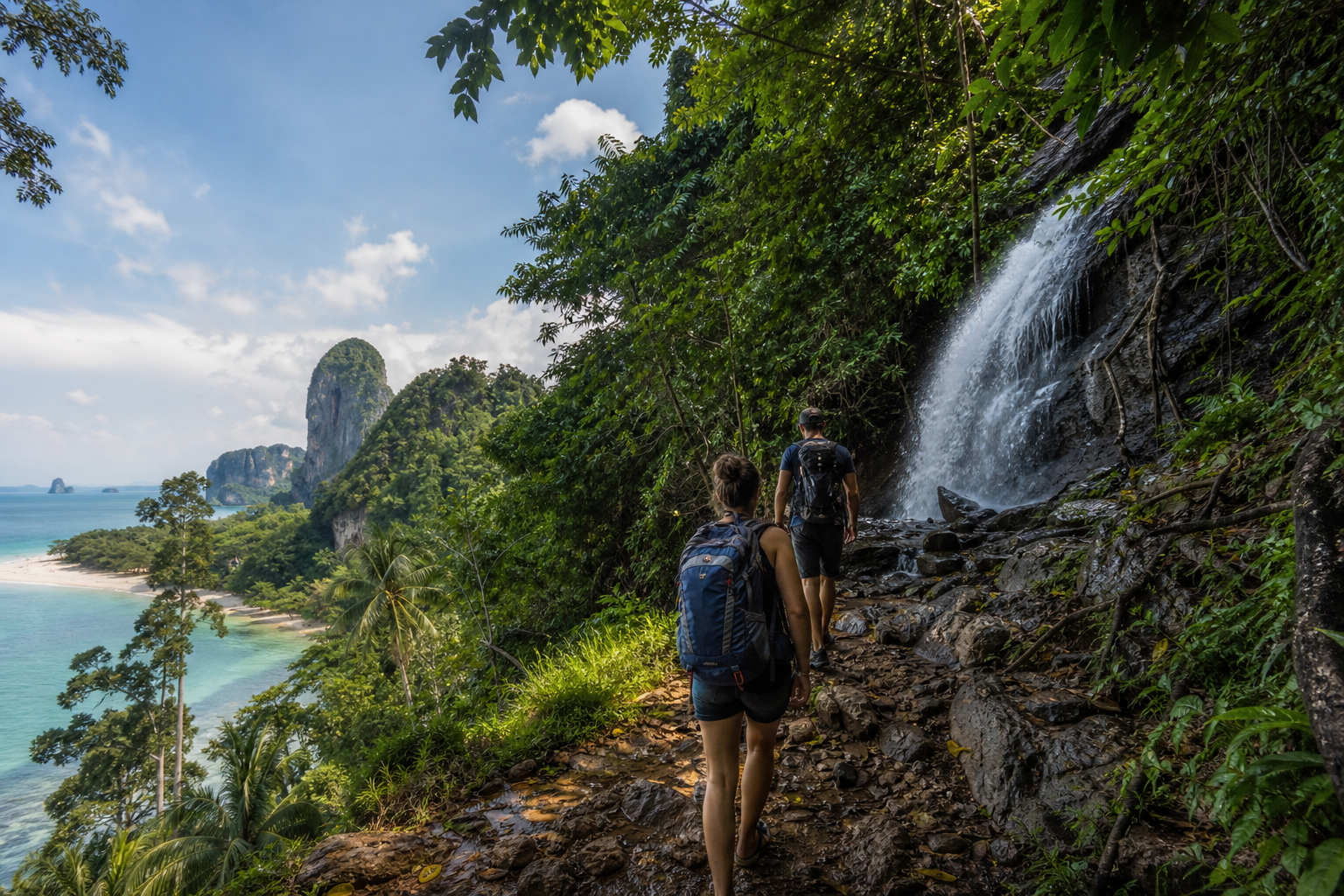
If you don’t have time to venture into these national parks, there are still plenty of opportunities for short wildlife treks. The islands of Koh Chang, Koh Samui and Koh Tao, as well as the Krabi region, offer single day hikes where you get to enjoy Thailand’s natural beauty and wildlife.
Why You Should Hire a Thailand Jungle Guide
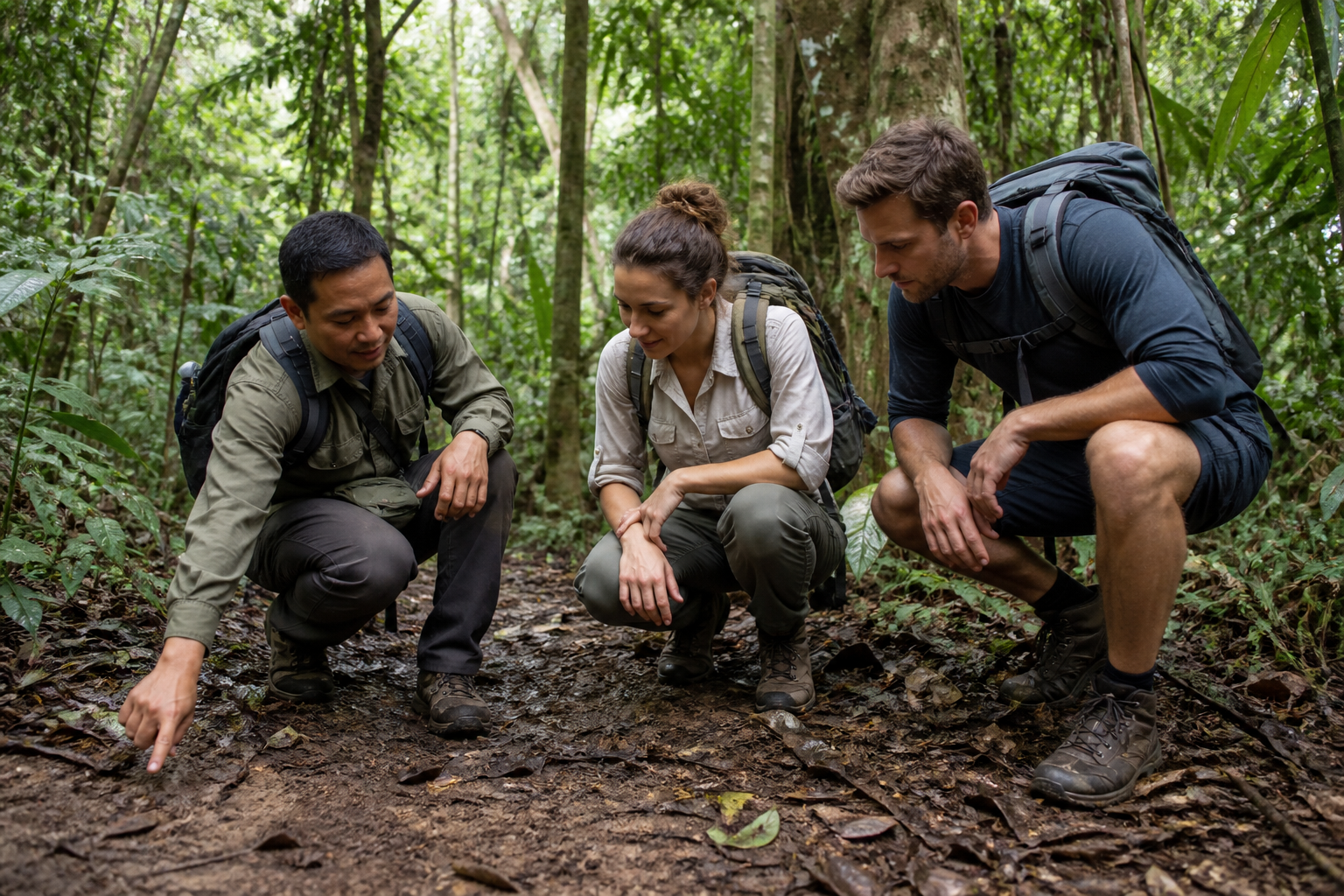
The last thing you want when trekking in the Thai jungle is to end up like the tourists who got lost and had to be rescued. The Thai jungle is not just a simple walk in the park, and it’s very easy to get lost. Hiring a guide will not only make sure you stay safe and don’t get lost, but it will also allow you to trek much deeper into the jungle and give you the chance to learn more about the local wildlife, cultures and people who live there.
Whenever I go on longer treks in Thailand, I always hire a guide. Personally, I’m not really interested in just strolling along the path. I want to venture deep into the heart of the jungle, far from the beaten track, and guides make that possible.
Local guides are not only experts on the terrain, they’re often fascinating people who have spent their entire lives exploring and sharing their love for the jungle. They’ll point out wildlife that you never would have spotted on your own, share insights about the local hill tribes and, most importantly, keep you safe from unexpected dangers like sudden weather changes or snakes. Local guides don’t just know the routes, they know the jungle. You’ll get so much more out of your trek by hiring a guide who can transform the experience from just a hike into an unforgettable adventure.
What to Pack for Trekking in Thailand
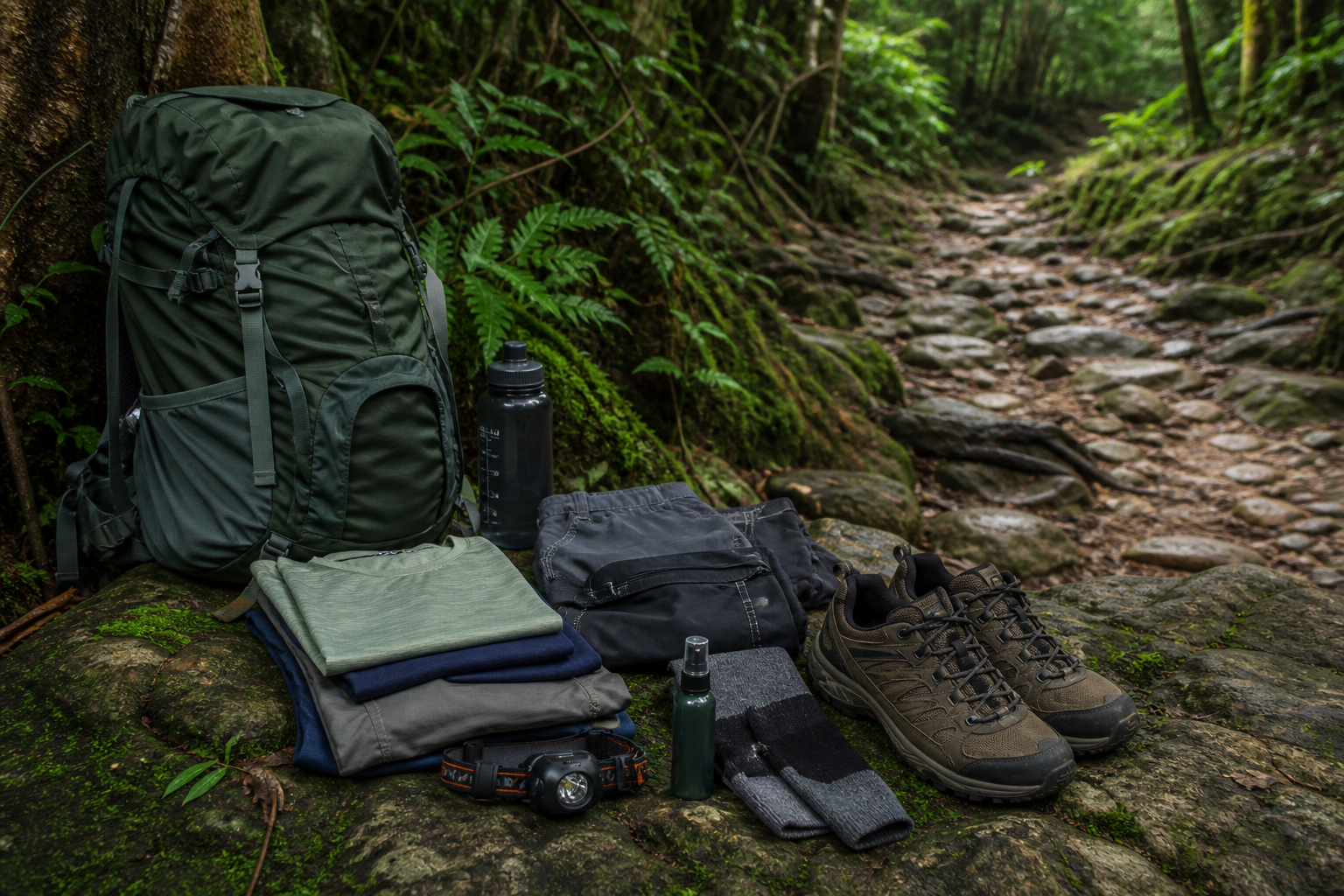
One of the biggest challenges when planning a trek in Thailand is how to pack everything you need without overpacking. Fortunately, you really only need a few essentials from home.
The jungle is hot and humid, so you want to pack light, breathable clothing that dries quickly. A light sports T shirt or rash guard is ideal if you want extra protection for your arms. For your legs, I recommend investing in a pair of stretchy hiking pants. They help protect you from branches and keep you cool, and they’re definitely a better choice than shorts in my opinion.
Now the biggest decision is whether or not to bring hiking boots. If you’re doing a multi day trek, sturdy hiking boots are invaluable for protecting your feet, but they do take up a lot of space. If you can’t fit them, at least pack durable sports shoes. Definitely leave the flip flops at home.
Some treks start or end in the dark, and the jungle at night is pitch black. A headlamp is essential to avoid stumbling through the terrain. You really don’t want to end up in a ditch in the middle of the night.
Thailand Trekking Seasons and Leech Socks
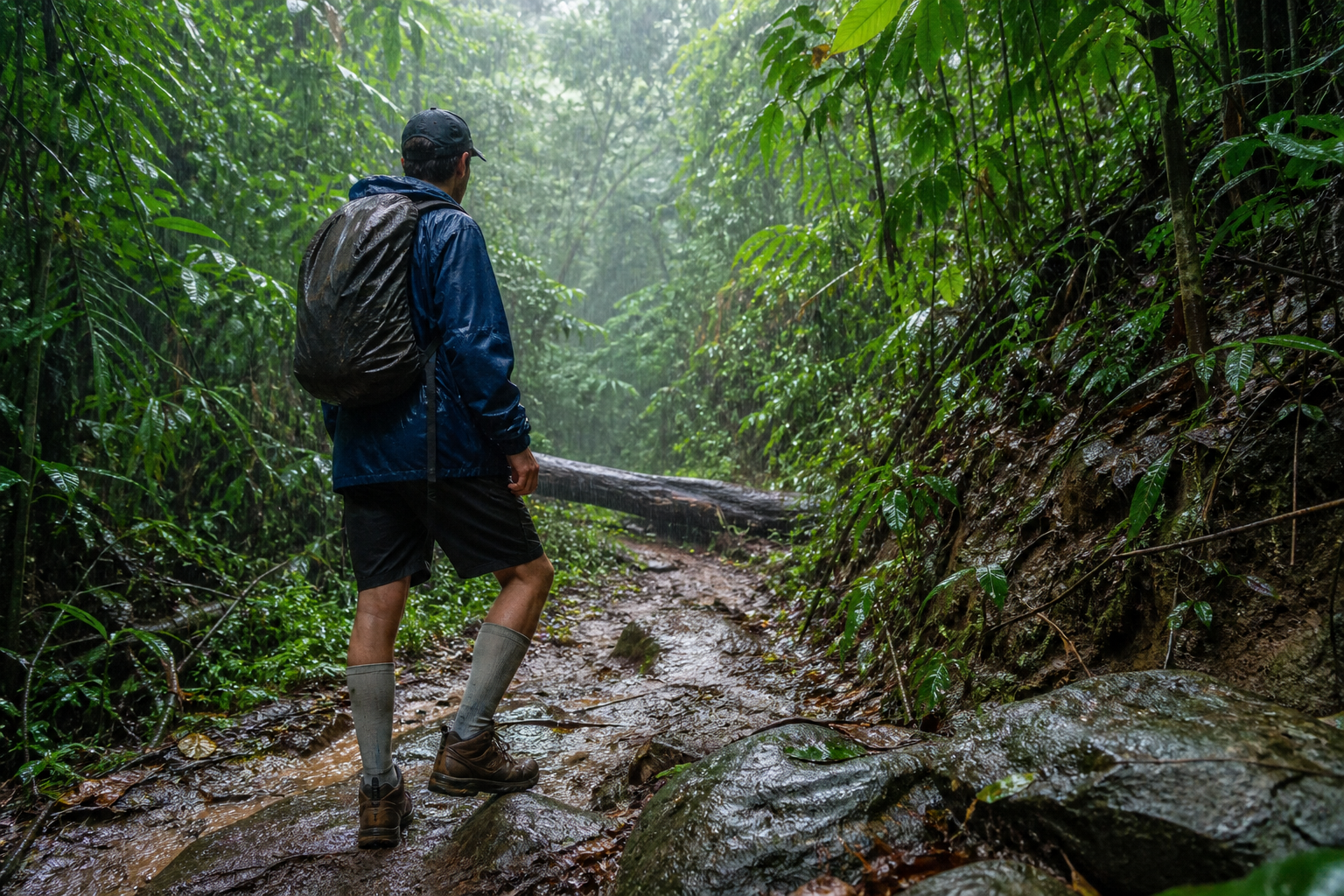
There is one item of clothing you must bring to avoid turning your trek into a nightmare, something that most people overlook. Before I get to that, I need to tell you about some of the dangers of hiking at the wrong time of year.
The Thai jungle has two moods: green and lush during the dry season, or soggy and slippery during the wet season. So when is the best time to trek? The dry season between November and February is ideal. The weather’s cooler, the skies are clear and the trails are much easier to navigate.
While this is Thailand’s peak tourist season, trekking in the snake infested jungles isn’t actually most people’s idea of fun, so it doesn’t get overcrowded unlike the country’s beaches. If you’re thinking of trekking during the rainy season, you’ll face a few extra challenges. The trails are muddier and slipperier, so investing in a good pair of hiking boots is essential, plus the humidity will be intense, like trying to breathe through a wet towel.
But that’s not even the worst part. There is one creature that thrives in wet conditions, and trust me, it’s the stuff of nightmares. Thai jungle leeches love moisture, and during the rainy season they multiply fast. They’ll latch onto your shoes and crawl up your legs, searching for a warm, dark spot to hide.
I once trekked in Chiang Mai during the rainy season, and it was intense. If you stood still for even a moment, the leeches would latch on and start filling their bellies. They’re harmless, but trust me, it’s not a pleasant experience. Some people call Thailand the land of smiles, but these people have never had to pull blood sucking leeches off their testicles.
Which brings me to the most important item to pack: leech socks. These handy socks prevent leeches from finding a home between your toes. Pair them with some bug spray and you’re good to go. The rainy season varies across Thailand, but the wettest period is generally from August to October, so if possible, avoid trekking during that time.
Jungle Accommodation and Hill Tribe Experiences
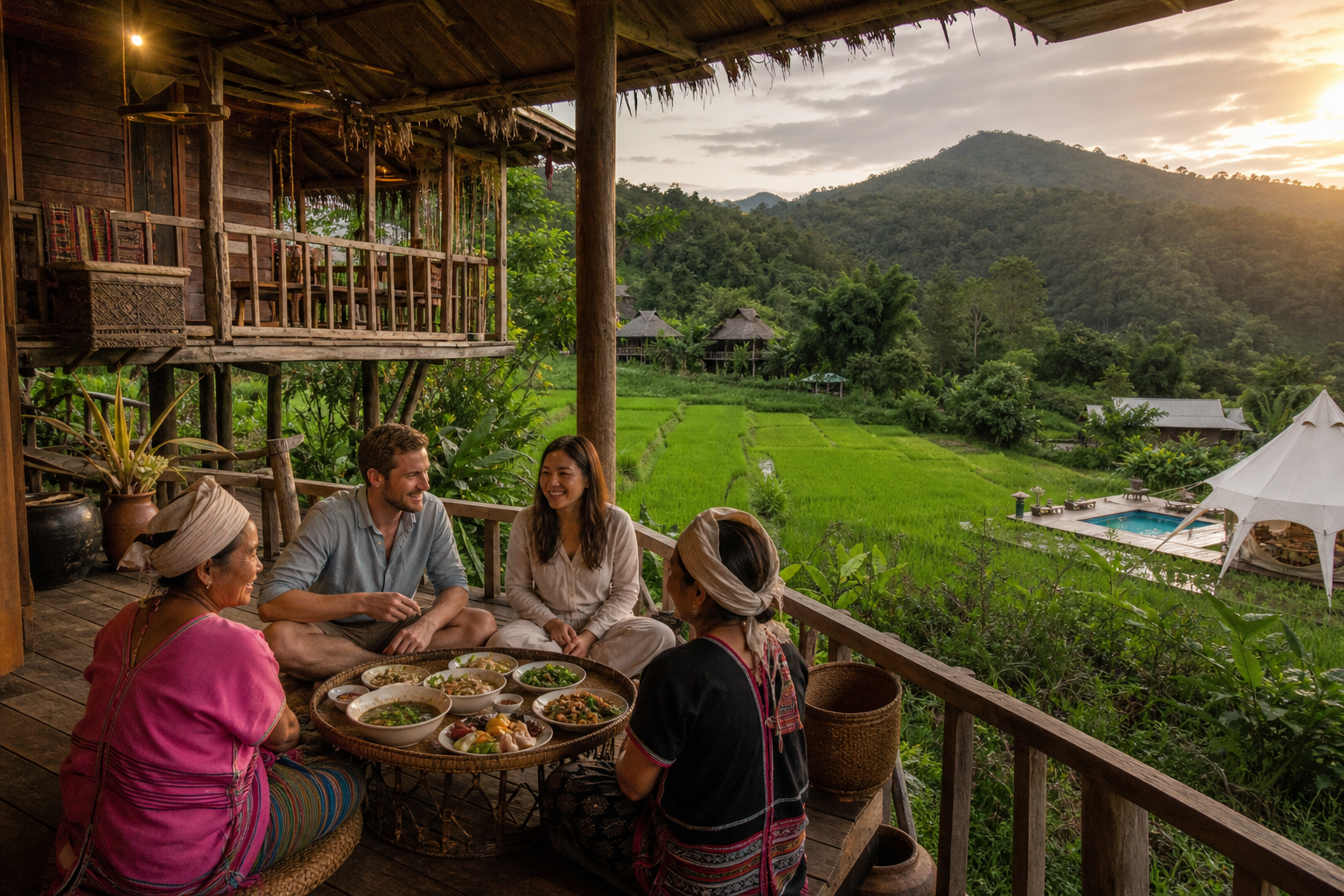
Some of the best nights’ sleep I’ve ever had have been in the middle of the jungle. The jungle accommodation isn’t always the most comfortable, but after a whole day hiking, your body’s going to be ready to relax.
What makes these stays even more fascinating is the cultural experience. Many Thai jungle treks pass through hill tribe villages like those of the Karen and Hmong. These communities have lived in the mountains for generations, and staying with them can be a highlight of your journey.
I once stayed in a wooden stilt house in an Akha village near Chiang Rai. It was just a wooden house built on stilts, but what I liked most about this place was that we got home cooked food that was grown on the neighbouring farm and got to meet people from the local area who welcomed us there.
You could be forgiven for thinking that all jungle accommodation is this basic, but Thailand is home to some of the most creative and luxurious stays. In Khao Sok, for example, you can find beautiful glamping accommodation with spacious tents, air conditioning, pools and even TVs. If you’re looking for a little luxury after your trek, it’s definitely worth treating yourself to a night or two in one of these stunning setups.
Wildlife You Can See in the Thai Jungle
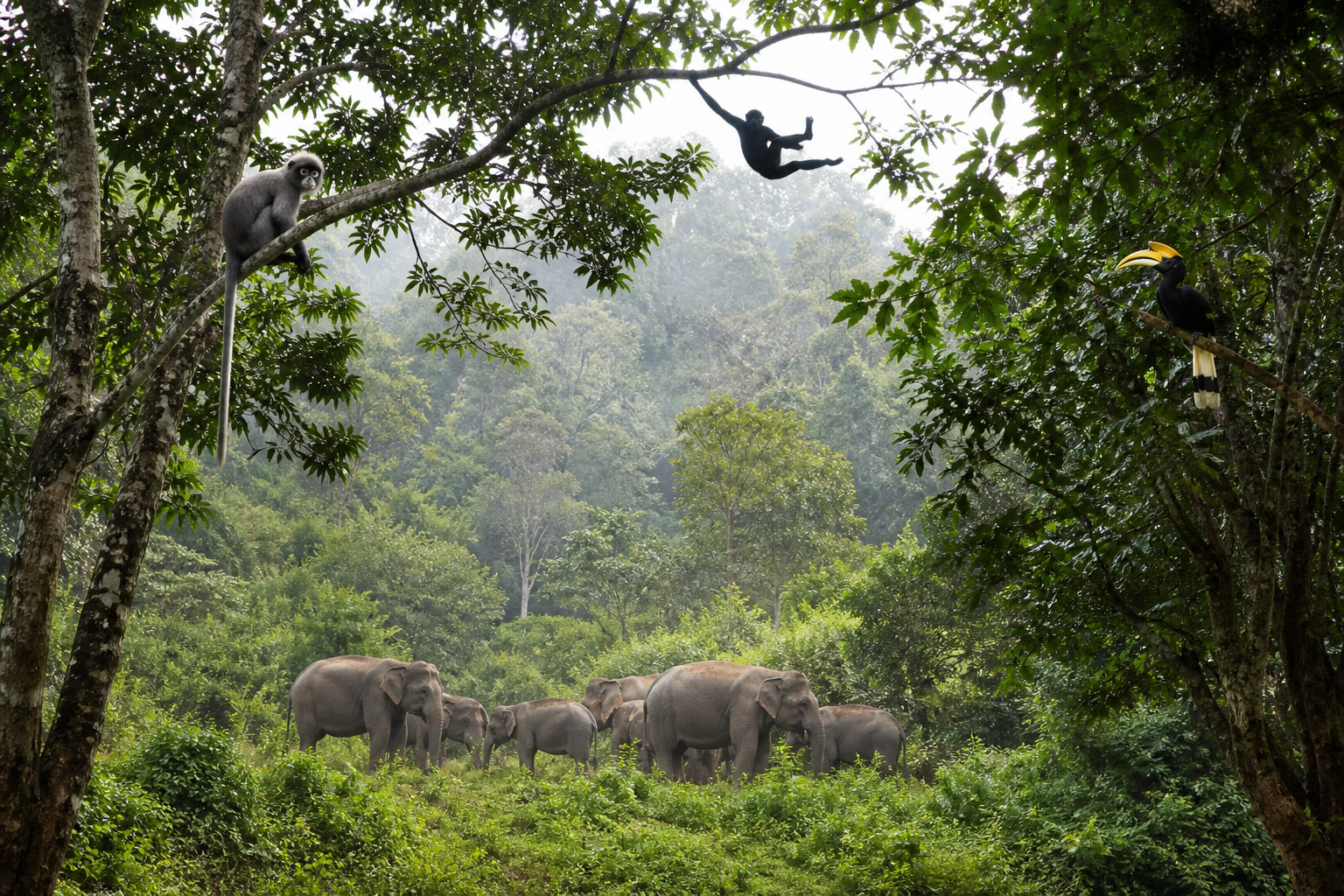
For me, the true highlight of trekking in the Thai jungle is the wildlife. So what animals can you expect to encounter? Monkeys are often the first creatures to come to mind. Long tailed macaques, a species that many travellers are familiar with, can be found all over Thailand, especially in tourist areas where they’re notorious for stealing food.
Personally, I’m not a fan of these macaques. They can be aggressive, and they often carry diseases like rabies. However, venture deeper into the jungle and you’ll have the chance to see some rarer and more enchanting monkeys.
The dusky leaf monkey is one of my favourites, with distinctive white fur around its eyes and mouth. These creatures are much more playful than macaques. You’ll often hear them rustling through the tree tops as they chase each other around. Keep an ear out for the sound of branches breaking. They’re a lot of fun to watch in the wild.
It’s trickier to spot a gibbon, as these shy monkeys stay high up in the trees, avoiding human contact. In the early morning, you can hear their calls echoing across the jungle to each other.
Many people come to Thailand dreaming of visiting an elephant sanctuary, but spotting these creatures in the wild is a completely different experience. In places like Kaeng Krachan and Kui national parks, wild elephants roam in herds. Park guides often track their movements, increasing your chances of seeing them in their natural habitat.
If you’re trekking with a guide, tigers are another iconic species in Thailand, although they are incredibly rare. Thailand is one of the few countries where the wild tiger population is growing. We’re estimating around 200 tigers in the wild, and most are found in Huai Kha Khaeng Wildlife Sanctuary in the northwest. Seeing a tiger in the wild is highly unlikely, but if you’re determined to try, you need to hire a specialist guide with expertise in tiger tracking.
Dangerous Animals and Snakes in Thailand
Thailand is home to over 200 species of snake, but only about 60 of them are venomous. Before I tell you about the two that you need to be cautious of, let me tell you about one of the most beautiful creatures that I’ve ever seen.
It was late at night in Khao Sok National Park. We’d been having a few beers after a full day’s hike in the jungle. The whole day I’d been asking our guide about snakes in the hope of spotting one. On that day, we managed to see monkeys, lizards and wild boar, but no snakes. On the way back home, we could see something moving in the moonlight. As we turned our phone lights on, we realized it was the biggest snake we’d ever seen: a 3 metre reticulated python.
What I didn’t realize at the time was that this is actually the world’s longest snake, and the one we had seen was just a baby. They can grow up to 10 metres long. If you’re looking for something a little less terrifying, the jungle is home to some spectacular species of bird, none more so than the Great Hornbill. It has a striking yellow beak and a wingspan that can reach over 5 feet.
Bird watchers from all around the world travel to Thailand to catch a glimpse of these incredible creatures. The Thai jungle is also home to the world’s largest flower, and it’s one of the rarest and most elusive plants you can ever encounter. This flower can grow up to an astonishing 1 metre in diameter and is known as the Rafflesia flower because it has a strong smell of rotten flesh to attract insects and help it pollinate. It blooms for only a few days each year in Khao Sok, and people come from all over the world to try and witness it.
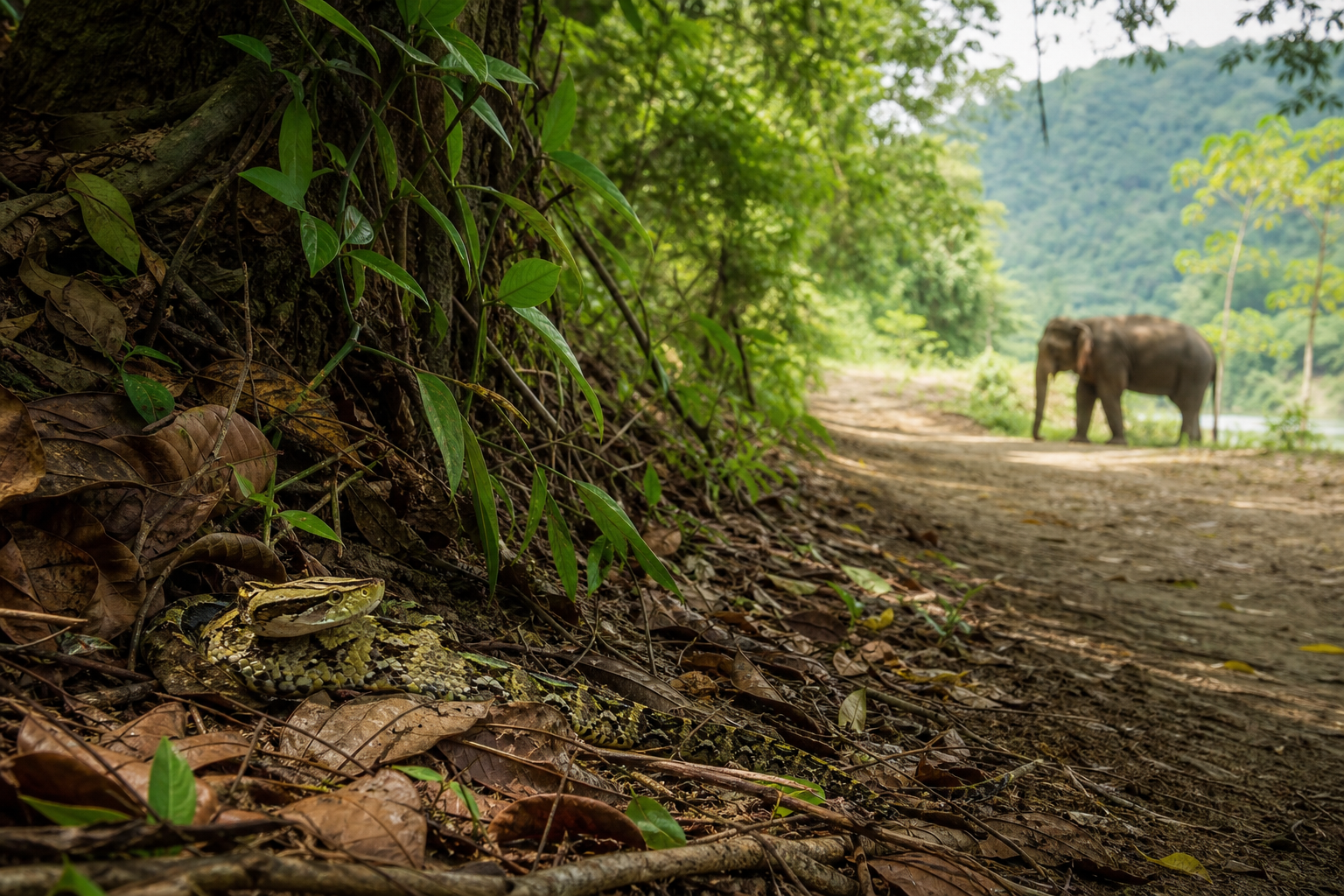
So aren’t some of these animals dangerous, and how can you know which ones you need to avoid? While it’s unlikely that you’ll be seriously harmed while trekking in the jungle, there are a few animals you need to be cautious of. Elephants, for example, though generally peaceful, can be dangerous if you get too close. Between 2017 and 2022, more than 135 people in Thailand were trampled by wild elephants. These incidents often happen when elephants encounter humans, particularly on roads that cut through national parks. Elephants can react aggressively if they feel threatened, so if you come across one, keep your distance and never block their path.
You should also watch out for the Asian black bear and the smaller, stockier sun bear. Both species are generally shy and prefer to avoid human contact, but bear attacks do occur. Over the past decade, several incidents have been reported in northern and western Thailand. Bear attacks are rare but can be serious, and they usually occur when the bear is startled or you come between it and its cubs. Also, I don’t really think I need to say this, but I’m going to say it anyway: if you do manage to see a tiger, don’t piss it off.
Thailand Snake Encounters and Venomous Creatures
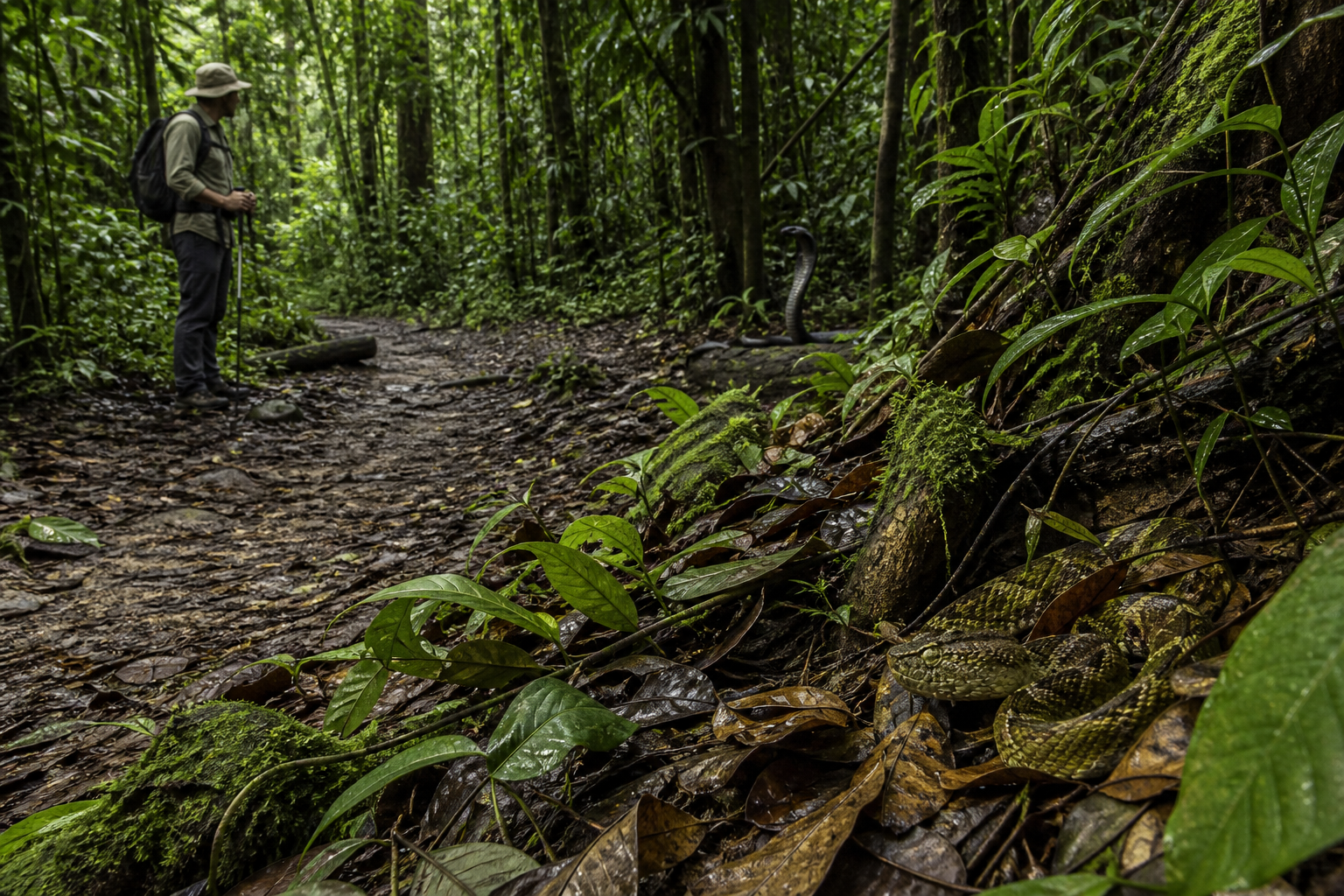
As for snakes, most species are harmless, but there are a few you need to look out for. Every year, thousands of snake bites are reported in Thailand, with a small number being fatal. One of the most dangerous is the Malayan pit viper, responsible for many snake bite related deaths. It has a distinctive triangular head but excellent camouflage, which makes it difficult to spot on the jungle trails. Be careful where you step, especially in dense foliage.
The king cobra, the world’s longest venomous snake, is another one to be wary of. It can grow up to 5 metres in length, and its bite delivers a large dose of neurotoxic venom that can cause paralysis, respiratory failure and death within hours if untreated. Fortunately, king cobras are shy and prefer to avoid humans, but if you do see one, back away slowly.
Snakes aren’t the only venomous creatures in the jungle. You should also be aware of the Asian forest scorpion and the giant centipede, both of which can give painful stings or bites if disturbed. The good news is that all national parks in Thailand are stocked with antivenom for their local poisonous species. This is one more reason to trek with a guide. Not only can it help you identify potentially dangerous animals, but guides are also trained to treat bites and stings if needed.