Bangkok Chinatown A Complete Travel Guide
Bangkok’s Chinatown is one of the best places in the city to explore, but most people stick to the main street and miss the hidden temples, incredible street food, and nightlife spots that make it unique. I spent the last 24 hours here exploring one of Bangkok’s coolest areas.
Chinatown Shopping and Local Food
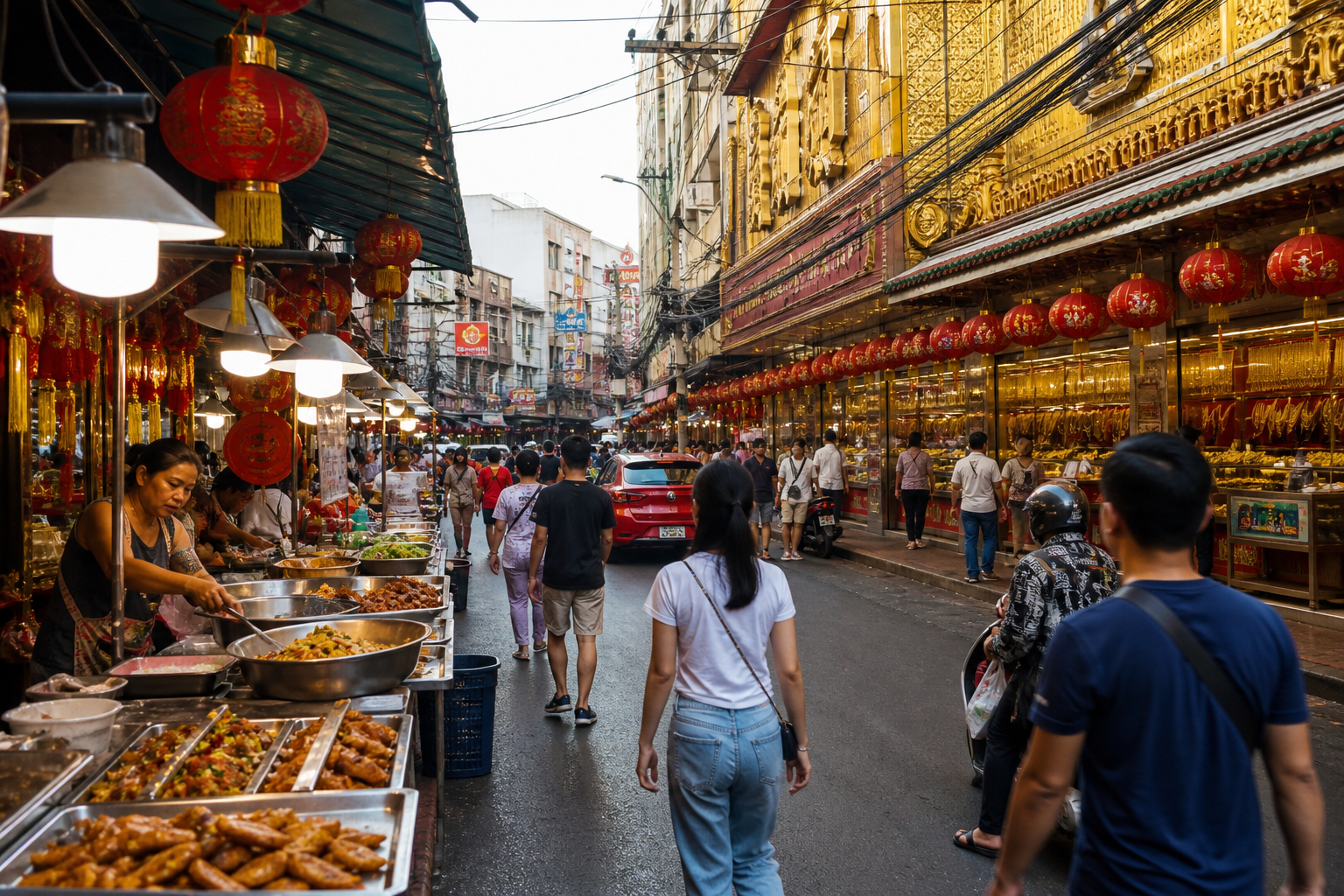
$3 combines gold shops, busy local streets, and food stops such as grilled banana. Gold prices and queues can change quickly, so check current rates and shop credentials. Chinatown is also easy to explore on foot, but keep a map or offline location available because the lanes can be confusing.
Hong Sieng Kong and Talat Noi in Bangkok Chinatown
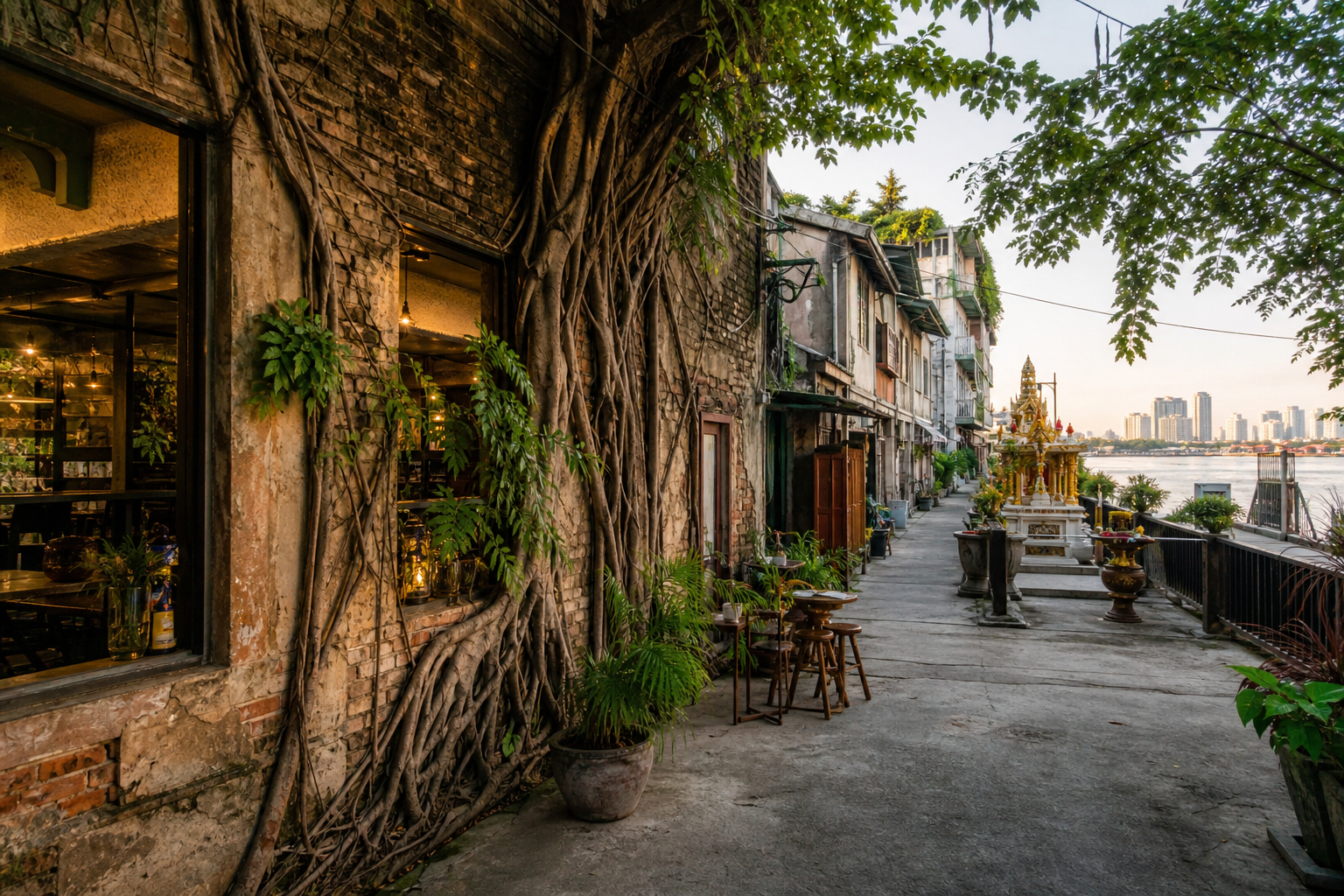
Rather than arriving only at night, when Yaowarat Road is at its most hectic, I started the day in one of the lesser-known but most photogenic parts of Chinatown. One reason to come here in the morning is the number of excellent coffee shops. I found one right on the riverside, in a really beautiful setting.
This was one of the coolest finds we made all day, and it’s one of the best cafes I’ve ever been to in the whole of Bangkok. It’s set inside a completely refurbished old warehouse building. Banyan trees have intertwined with the old bricks where the roof had fallen in. It’s called Hong Sieng Kong, and the space has been filled with incredible artifacts from Bangkok’s historic Chinese community, giving it a really unique atmosphere.
Get here early so you can grab a seat by the stunning Chao Phraya River and watch the boats go by.
Talat Noi is one of Bangkok’s oldest and most underrated neighborhoods. More than 200 years of history are packed into a few little streets, with old Chinese shrines, hidden temples, and traditional shop houses that most people never see because they only come to Chinatown at night. One of the big highlights is the Chao Sue Kong Shrine, one of the oldest Chinese temples in Bangkok.
Part of the fun here is exploring the smaller temples. I stepped into the temple behind me, which I think is called Chao Sue Kong Shrine. The guy was really friendly, invited me in, and I watched a ceremony with people chanting. He even gave me a cup of tea. It was really cool. Talat Noi’s alleyways are an outdoor gallery with murals inspired by the neighborhood’s Chinese roots and old river trade days. Don’t stick to the main road; cut into the side alleys and take your time because the best artwork is hidden just around the corner.
The quirkiest aspect of the area is the old machine shops and scrapyards tucked into the narrow alleyways, sometimes right next to small shrines and temples. This mix of gritty industry, historic buildings, and modern street art gives Talat Noi a uniquely Bangkok feel. The Talat Noi Neighborhood Museum is worth a look if you want to learn more about the area.
Soi Wat Road and Ba Hao in Bangkok Chinatown
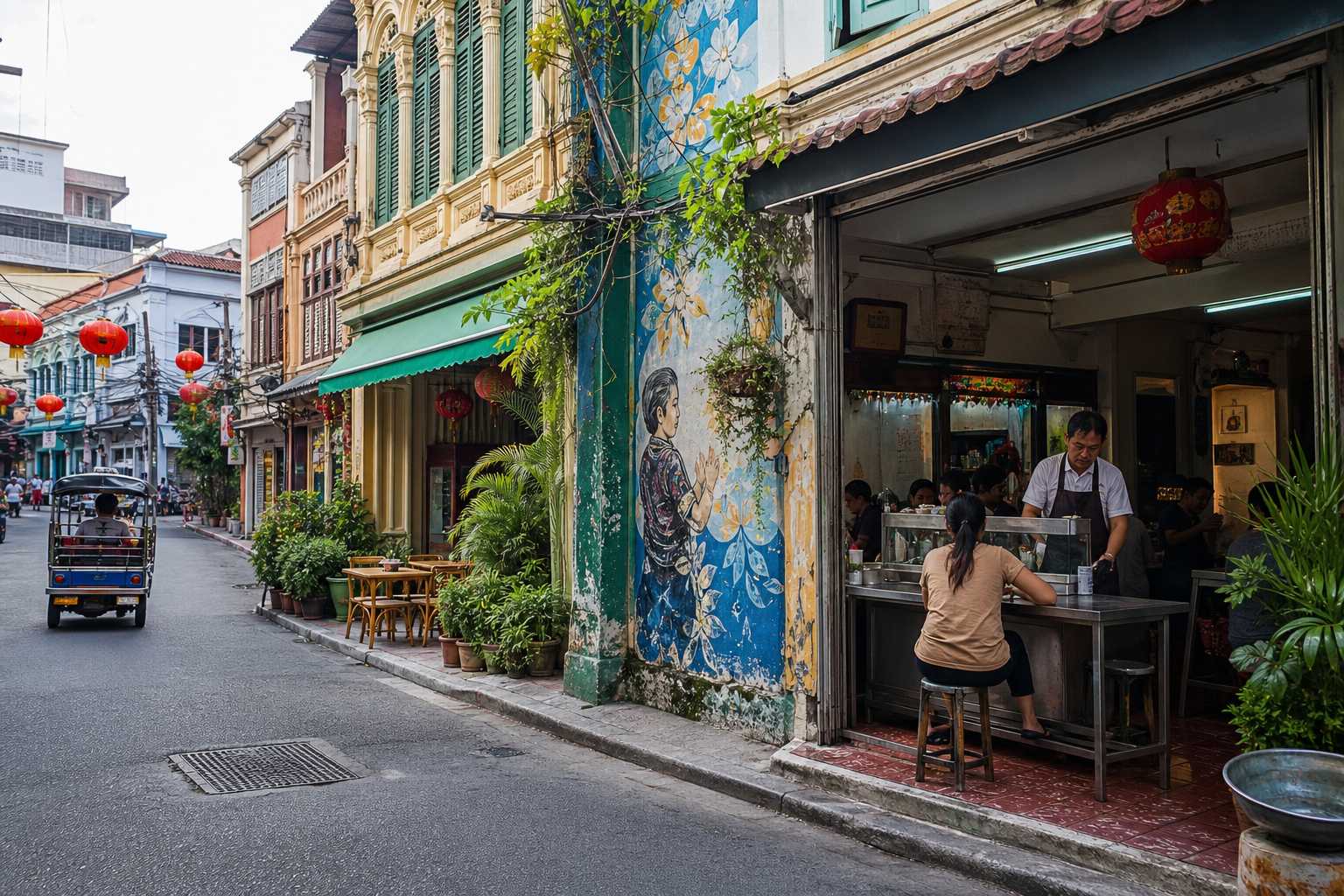
Soi Wat Road is the hipster district of Bangkok’s Chinatown. It still has historic shop houses, but many have been restored and turned into cafes, little boutique shops, and creative studios, so the street attracts a much younger crowd.
The street is decorated with stunning graffiti and artwork. When I visited, I could see the elephant parade, with beautifully designed elephant statues scattered throughout the neighborhood. Soi Wat is also where the food starts to get seriously good. You’ll find steaming Chinese dumplings, traditional street food stalls, and even a few Michelin Guide spots.
Soi Wat has huge queues of people lining up outside. We stopped at Ba Hao, a beef noodle shop, for a break and some air conditioning. The food looked really delicious. It was a little cleaner than other parts of Chinatown, so if you’re nervous about trying the food here, I think it might be a good place to start.
What made the place unique was the little donuts you put into the beef noodles. We tried them with the noodles, and it was a fun change from the usual bowl.
Sampeng Market and Wat Mangkon in Bangkok Chinatown
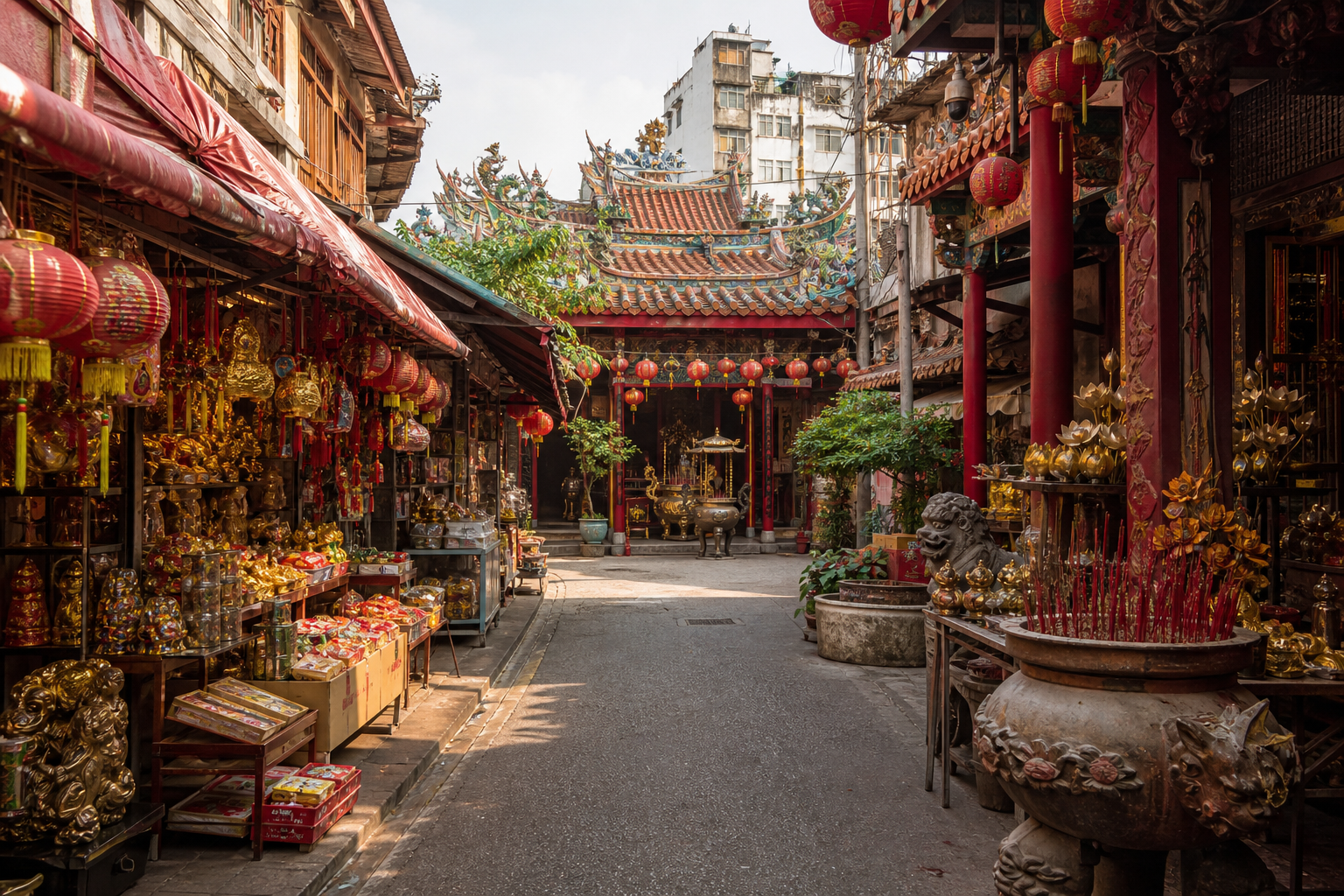
Just behind Yaowarat Road, Sampeng Market is one of the oldest trading areas in Bangkok. Back in the late 1800s, this area had a wild reputation, filled with gambling houses, opium dens, and brothels hidden inside the narrow alleyways.
Nowadays, it’s one of the cheapest markets in Bangkok. You can find some of the best deals on cosmetics, phone accessories, clothes, toys, and souvenirs in the city. What makes the market stand out from others is the Chinese Buddhist artifacts, like red lanterns, incense bundles, and lucky charms stacked from floor to ceiling.
You’ll also probably smell the Thai Chinese wet markets nearby, filled with raw meat and fish. These are some of the most interesting markets in the city, and it’s worth looking out for the Chinese medicine stands filled with mysterious dried mushrooms, herbs, and other items. Sampeng Market is unlike any other in Bangkok.
Wat Mangkon is the biggest Chinese style temple in Bangkok and one of the most fascinating temples in the city because it doesn’t feel like a typical Bangkok temple. This is the city’s most important Chinese Buddhist temple. Instead of golden spires, you’ll see red lanterns, dragon sculptures, and intricate Chinese detail everywhere you look.
Even if you’ve already done a few temples in Bangkok, this one feels completely different. Inside, locals light incense, make offerings, and pray for good fortune at different altars dedicated to Chinese deities. During Chinese New Year, the temple becomes a spiritual hotspot, with crowds coming for good luck and prosperity in the year ahead.
Staying at Shanghai Mansion in Bangkok Chinatown
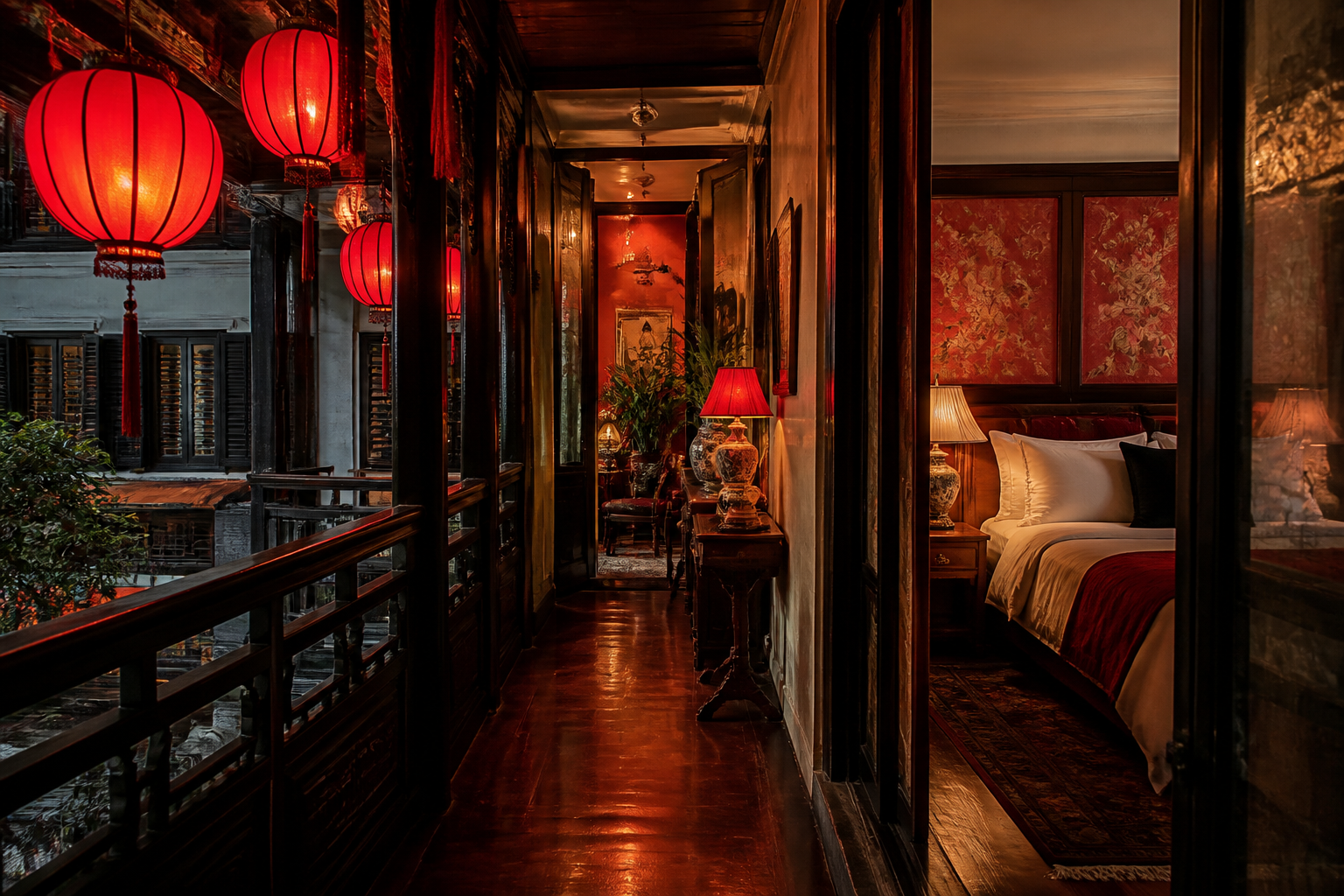
If you’re going to spend a full 24 hours here, you need a place to stay. We checked in at Shanghai Mansion, one of the most beautiful hotels in Chinatown, right at the end of Yaowarat Road. It’s a very convenient location, and we chose it because it’s beautifully designed.
From the entranceway, there are Chinese red lanterns and a strong Chinese Qing Dynasty aesthetic. The hallway outside our room was one of the most interesting hotel designs I’ve seen in Thailand. We upgraded to one of the suite rooms, and it had a huge open space with Chinese style paintings.
There was a living room area with traditional Chinese beds, old school lanterns, and a cool little chair. The bedroom was beautifully designed, with Chinese dragons and flowers in the background behind the bed. I actually lived in China before I lived in Thailand, and it almost looked more like China than China does in some ways.
There was also a huge bathtub, although the bathroom was a bit see through. If you’re in the bath, you can see who’s on the toilet, so that’s not ideal.
The beautiful Chinese design continued into the breakfast area, one of the most stylish breakfast rooms I’ve seen anywhere in Bangkok. It had an elegant old Shanghai aesthetic with vintage decor, rich colors, and old Chinese posters lining the walls. The bar area felt like stepping into a 1930s Shanghai speakeasy, with dim lighting, plush seating, and intricate Chinese details. They served Chinese inspired drinks and creative cocktails, and most nights there was live music. You don’t need to be staying at the hotel to visit the bar, so it’s worth stopping in for a drink.
After two nights at Shanghai Mansion, I saw many positives: the beautiful design, the excellent location, and the cool bar area. The drawback is the hotel experience between outings. In Sukhumvit or the riverside area, newer hotels often have nicer places to relax, mainly around the pool. There are a few hotels with pools in Chinatown, but I don’t think they have the nicest pool areas. When we came back between exploring, our room was quite dimly lit, with not too much to do. Compared with skyscraper hotels and rooftop pools elsewhere in town, the hotels in Chinatown are not as nice to come back and relax in.
Yaowarat Road at Night
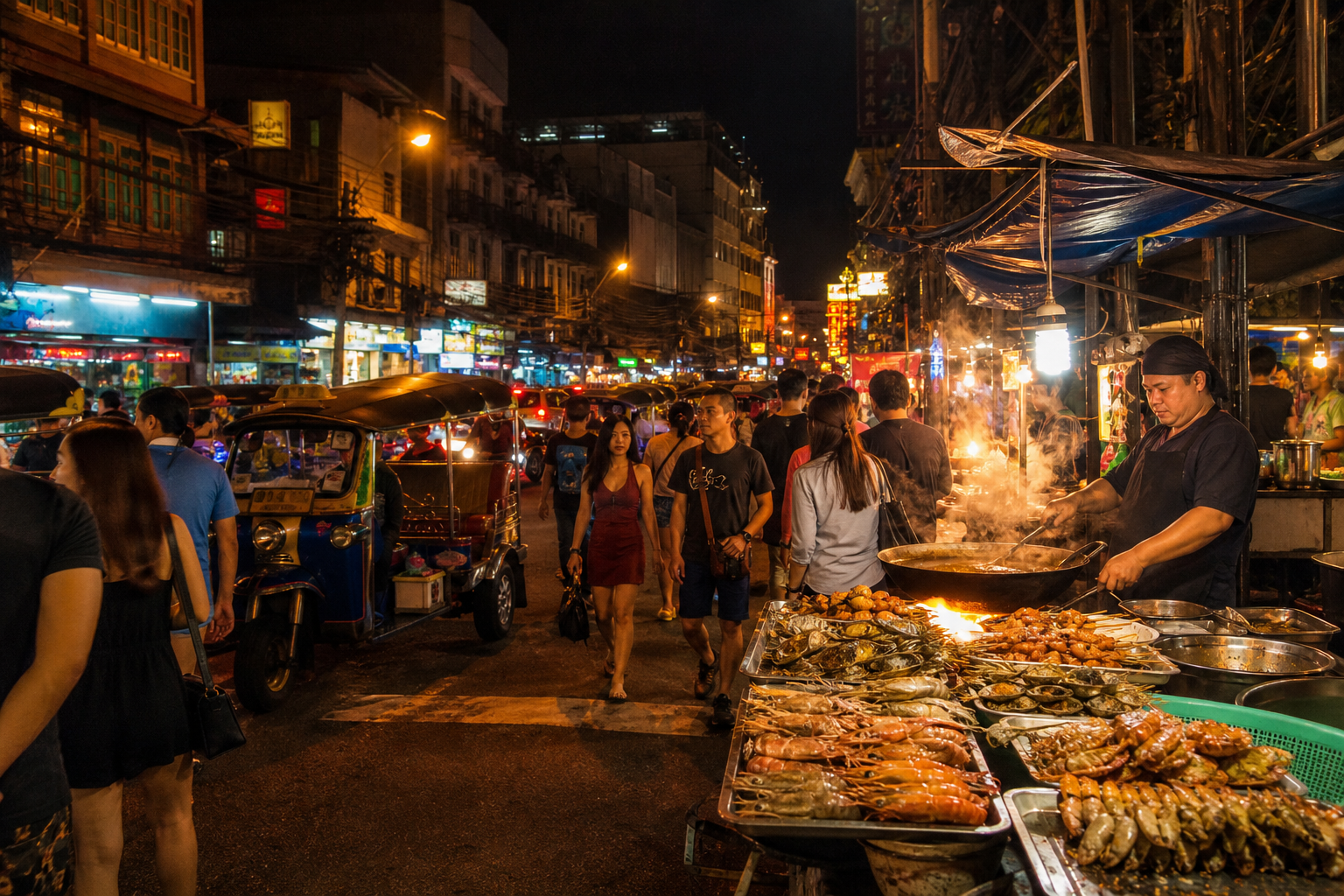
Yaowarat Road is one of the craziest and busiest streets in Thailand. The first time you hit Yaowarat, it feels like walking into a movie set. Neon signs are stacked on top of each other, tuk tuks squeeze through traffic, shopfronts blast light onto the street, and the smell of sizzling woks and grilled seafood hangs in the air.
As you walk, you’ll notice restaurants advertising shark fin soup and bird’s nest, two old school Chinese luxury dishes that you see a lot in this area. Between 8:00 and 10:00 p.m., the street hits peak chaos and is absolutely packed.
Even though Yaowarat is one of the most famous food streets in the world, I don’t recommend trying to sit down for a full meal right on the main road. Unless you’re part of a food tour, it can be almost impossible to get a seat, and even if you do, crowds squeeze past you every few seconds.
If you want to eat here, you have two options. The first is to head into one of the traditional Chinese restaurants, usually upstairs, for classic dumplings and noodles. We went into a place called Shanghai Dumpling, or Shanghai something like that. We ordered sheng jian bao, pan fried Chinese dumplings filled with soup, one with pork and one with shrimp, plus a shigua salad, a spicy cucumber salad.
The shigua salad had that spicy mala flavor, which is a numbing spice. I’ve had it in a few Chinese places recently, and it was never as good. Here, it seemed like the most authentic version. If you don’t plan to visit China, Thailand is a lot easier to visit, so definitely eat some of the food around Thailand’s Chinatown. I think it’s the best Chinese food I’ve had outside China.
Soi Yaowarat 15 for Seafood and Dumplings
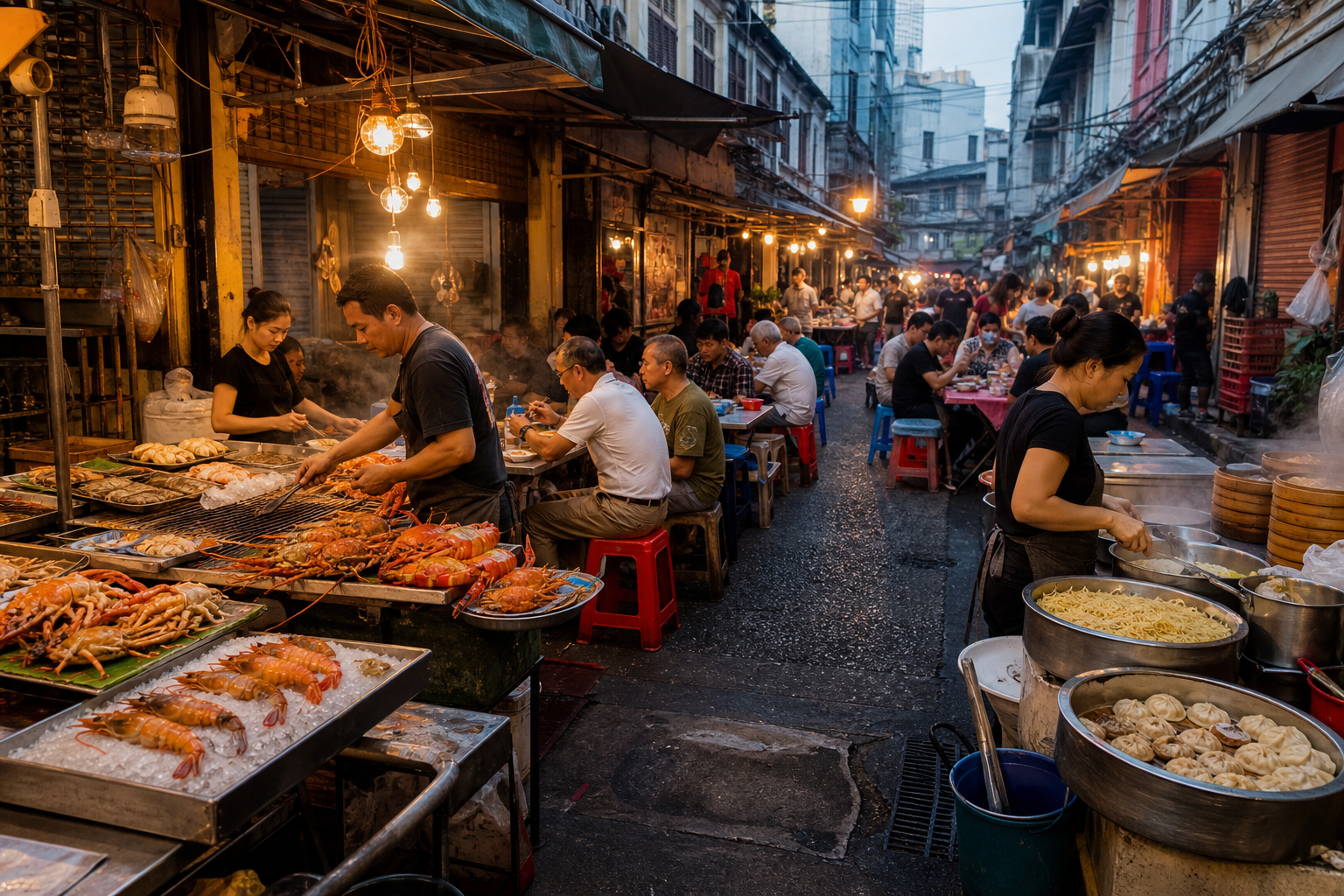
Yaowarat Road is one of my favorite streets in Chinatown and Bangkok, but it can be hectic if you’re trying to eat there. I like to hop down the side streets because they have a more relaxed vibe and are more likely to have somewhere to sit and eat.
Near the end of Yaowarat Road, Soi Yaowarat 15 is loaded with food. Unlike the main road, you can grab a seat and enjoy it. The headline here is the seafood: giant prawns on the grill, fresh lobster, and piles of seafood cooking over open flames.
It’s not just seafood. There is wonton noodle soup, dumplings, and sizzling satay skewers packed into one strip. Most stalls are set up in front of old shop houses, and inside, rows of woks run nonstop with chefs cooking at full speed. The smell is absolutely unreal, and the street is a bit more relaxed than Yaowarat Road itself.
Plaeng Nam Street for a Slower Evening
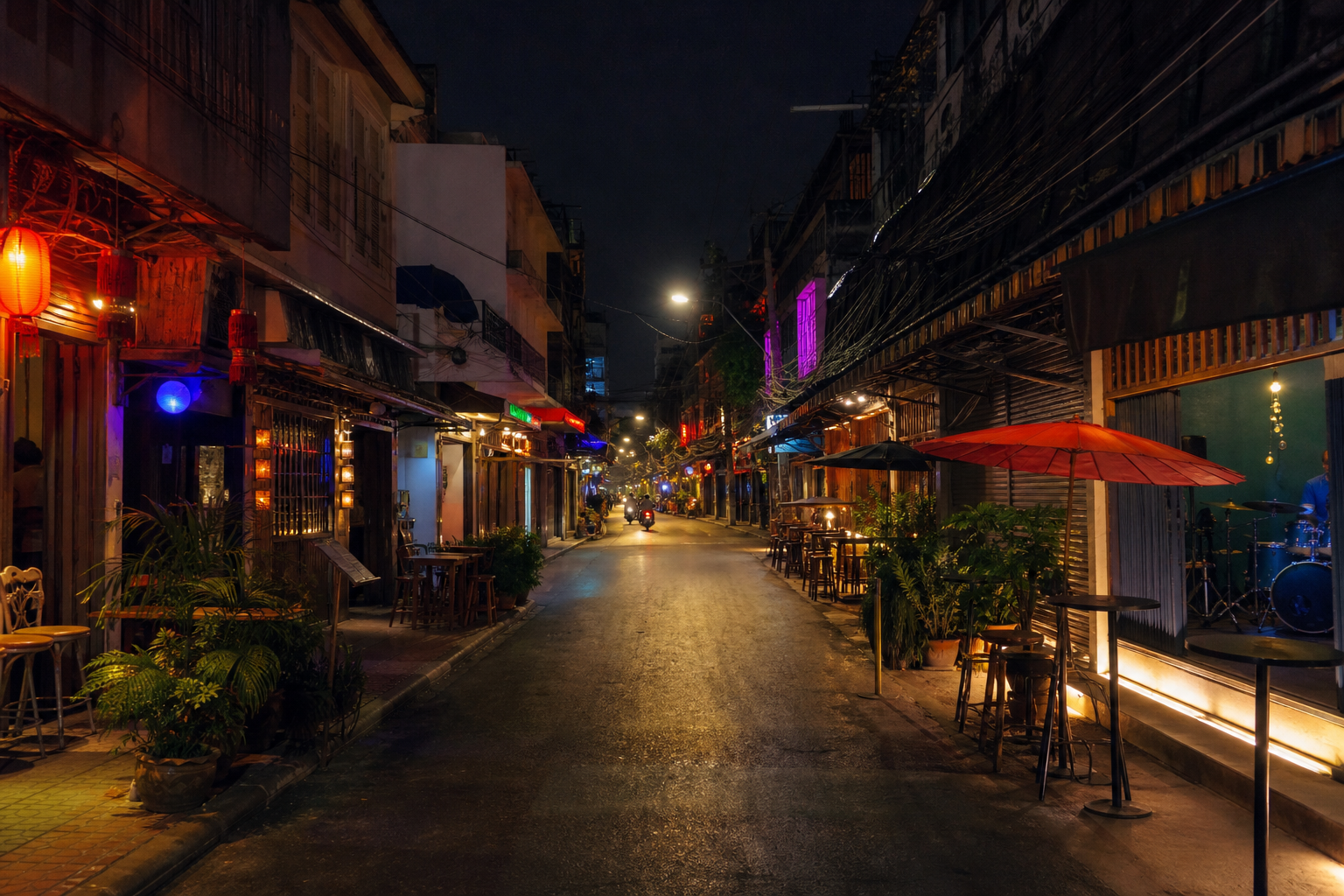
Plaeng Nam Street is my favorite street off Yaowarat. It’s a bit more relaxed than Yaowarat itself, with street food vendors, neon lights, and a few places to grab a drink.
It’s not as food focused as Yaowarat, although you can still grab a bite to eat. This is where I come to slow things down. It’s still super photogenic with neon glowing everywhere, but the vibe is more relaxed and you can actually breathe a little.
Walk a little further down and you’ll find massage parlors, which are perfect after a full day of exploring. If you want to try something a little weird, there are fish foot massages. You put your feet in a tank and tiny fish nibble away the dead skin. It feels strange at first and a little gross, but it does leave your feet incredibly smooth afterwards. Plaeng Nam Street is also a great place to grab a beer and listen to live music.
Soi Nana and Chinatown Cocktail Bars
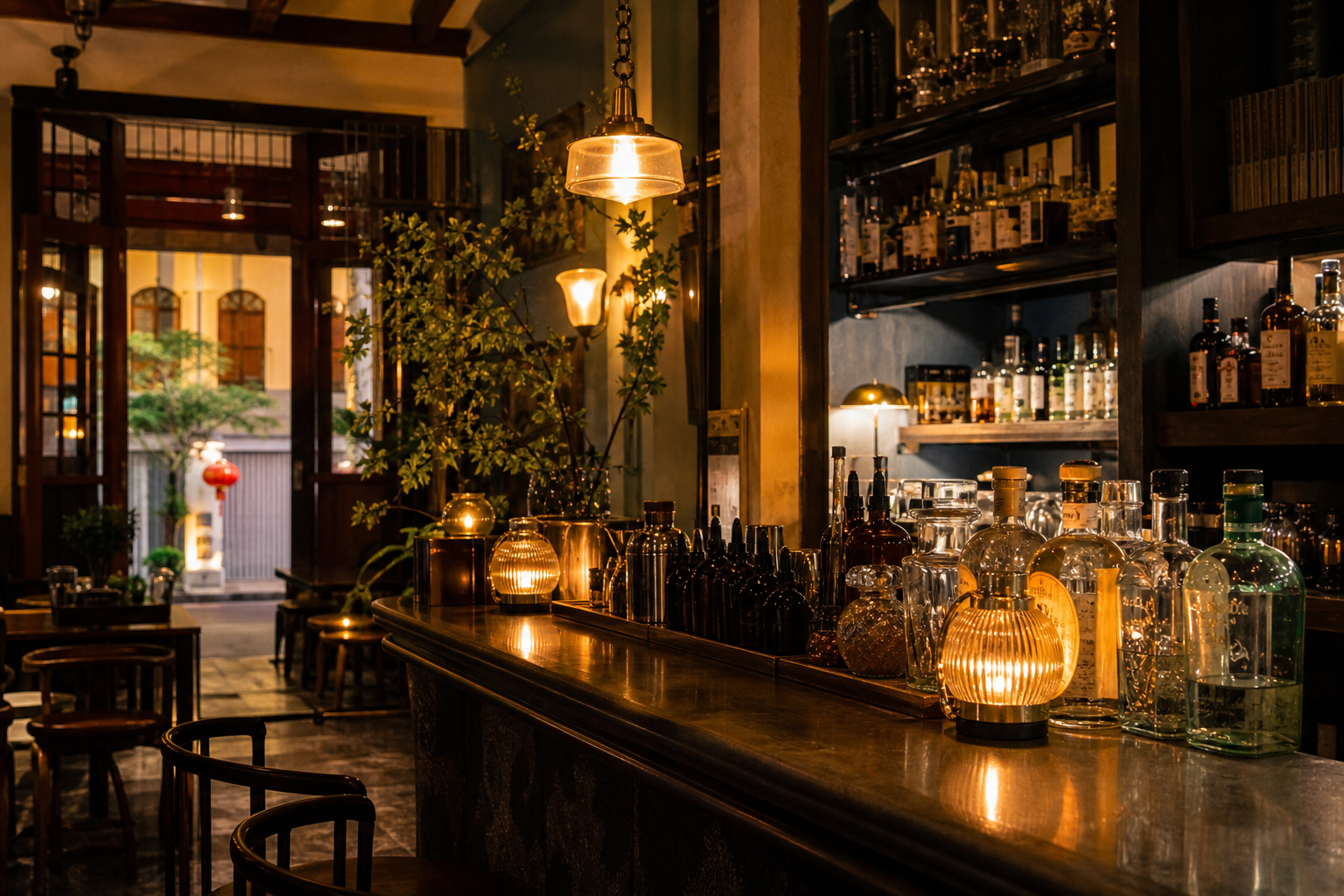
Chinatown is not just about street food. It’s also one of Bangkok’s best bar districts. Everyone talks about Khao San Road, Soi Cowboy, or Sukhumvit, but Chinatown has some of the coolest and most refined bars in the city. If you’re into creative cocktails with Thai and Chinese flavors, Soi Nana is one of the best places in the city to experience them.
I stumbled upon Chinese Alfie Bar, a cool neon lit bar in one of the old Chinese shop houses. Outside, there was a great view of one of the Chinese gates. I tried some Chinese style cocktails and had a drink with a view of Chinatown Gate before heading to a more established cocktail bar.
Teens of Thailand is one of the coolest bars in Bangkok and helped kick off the craft cocktail scene in Chinatown. It’s Thailand’s first gin bar, with a huge selection of gins from around the world. In fact, it doesn’t serve anything else but gin. The bar is tucked away in a narrow alley with a gritty atmosphere, dim lighting, concrete walls, and an open bar where you can watch the bartenders mix drinks in front of you.
The owner of Teens of Thailand has opened a cluster of cocktail bars nearby, each built around a different key ingredient. Just around the corner is Asia Today. Where Teens is all about gin, Asia Today is known for honey based cocktails using different types of honey sourced from around Thailand. It’s a small, buzzing room, and the bartenders constantly experiment with new flavors.
The wildest concept is Tax Bar, a cocktail bar with insect infused drinks. Some of the spirits are infused or distilled with grasshoppers, silkworms, and even spiders. I ordered the grasshopper margarita, served with a side of crickets and mayonnaise. It was exactly as unhinged as it sounds, but it was actually really good. This is one of the craziest cocktail bars I’ve ever visited, and a must try if you’re brave enough.
Wat Mangkon Fresh Market
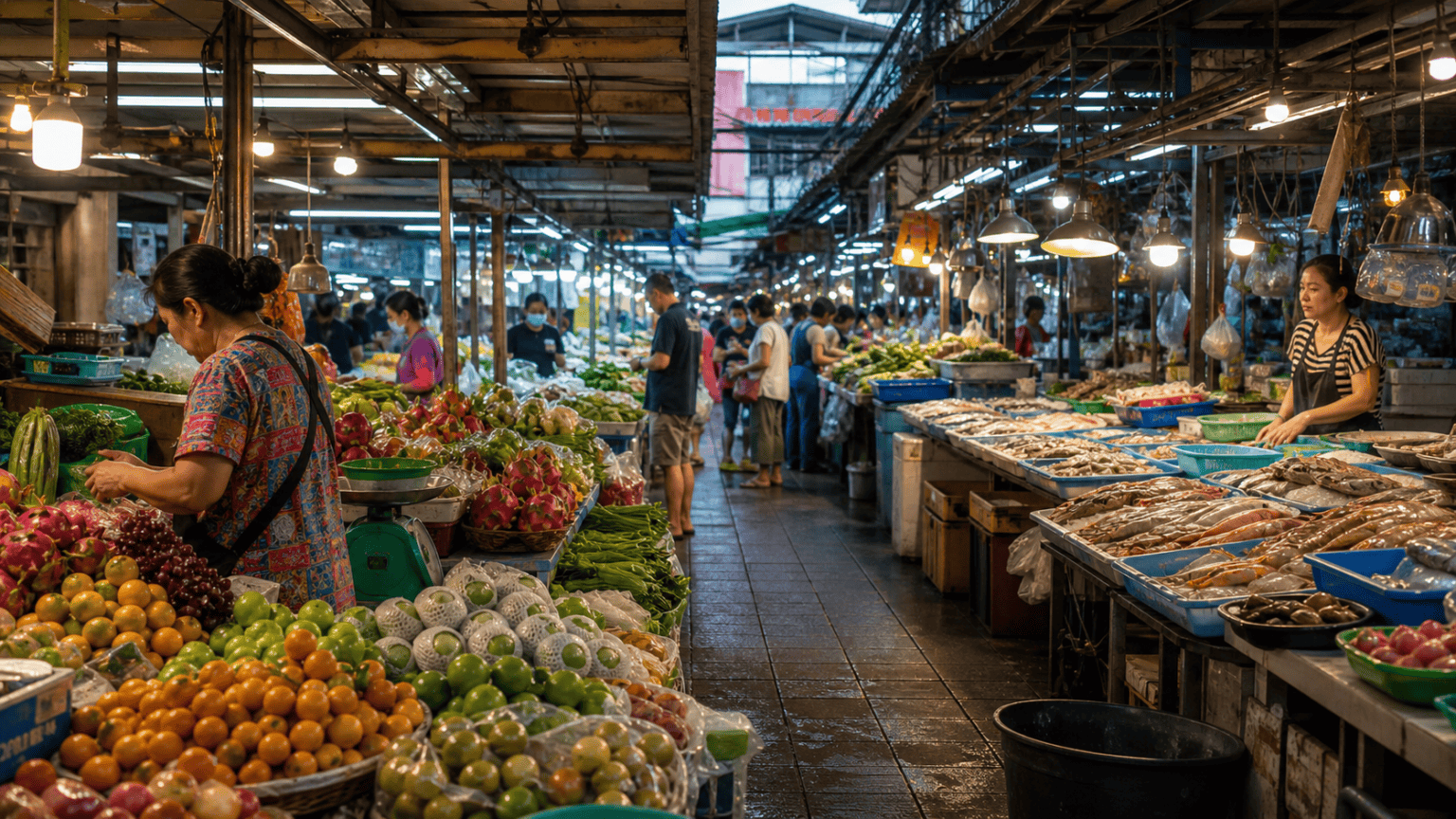
The fresh market is only about two minutes walk from Wat Mangkon MRT station. The action starts at 5 am and continues until 2 pm, so visitors should come early to see the market at its busiest. It is covered, so it can also be explored during the rainy season.
This is a fresh market with fruits, vegetables, chickens, ducks, fish, and other fresh products. Duck is one of the dishes to try in Chinatown, Yaowarat. There are also many things that visitors may not know, which is part of the fun of exploring new food.
Yaowarat Road Gold Shops and Street Food
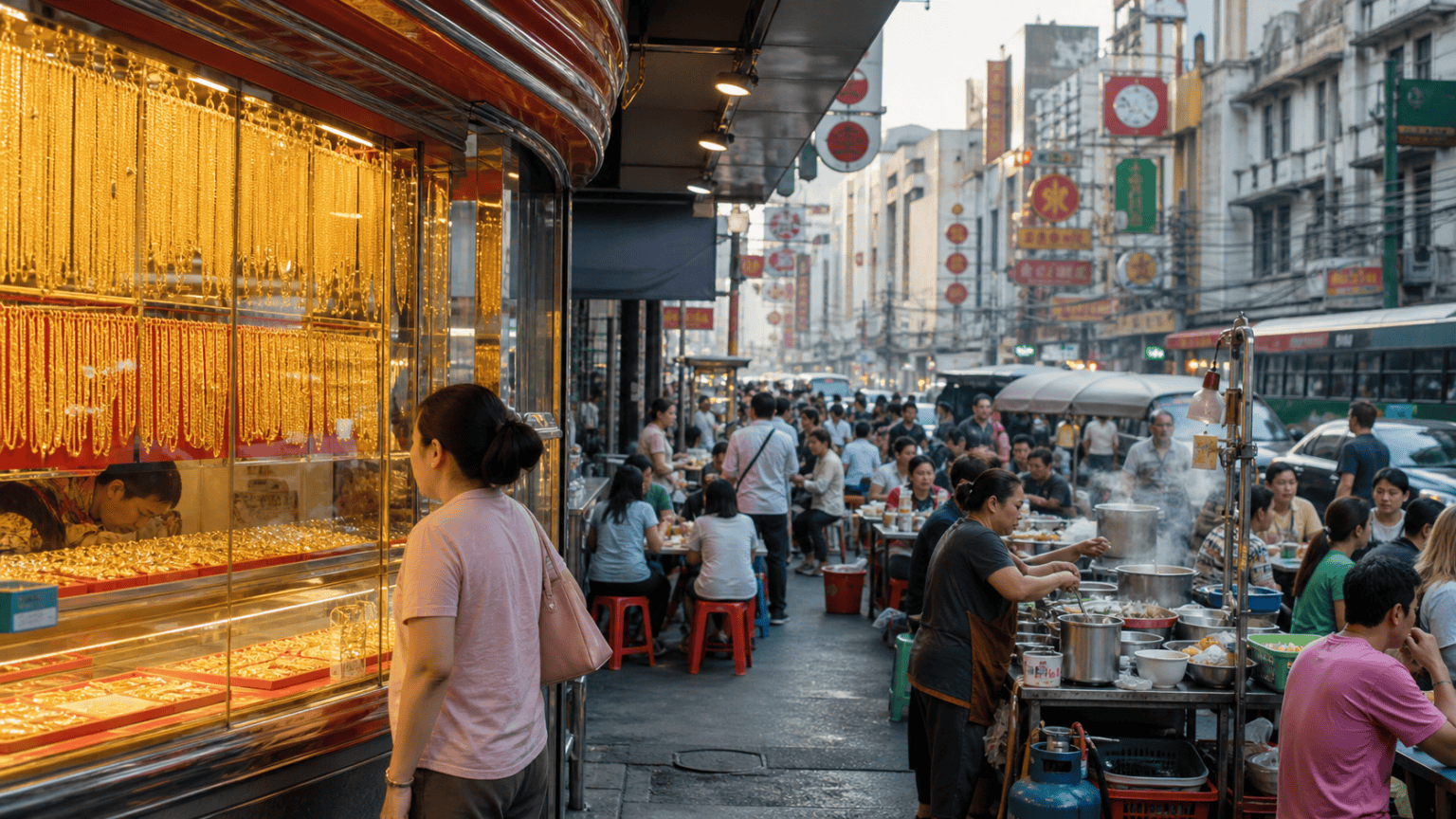
Once you reach Yaowarat Road, there are lots of gold shops. Thai people love to buy gold, and these places are usually crowded. Yaowarat Road is also known for street food, which becomes more crowded in the afternoon. Roasted chestnuts are one of the famous things to try, and the price mentioned was 320 Thai baht for one kilogram.
Sampeng Market Bangkok Shopping
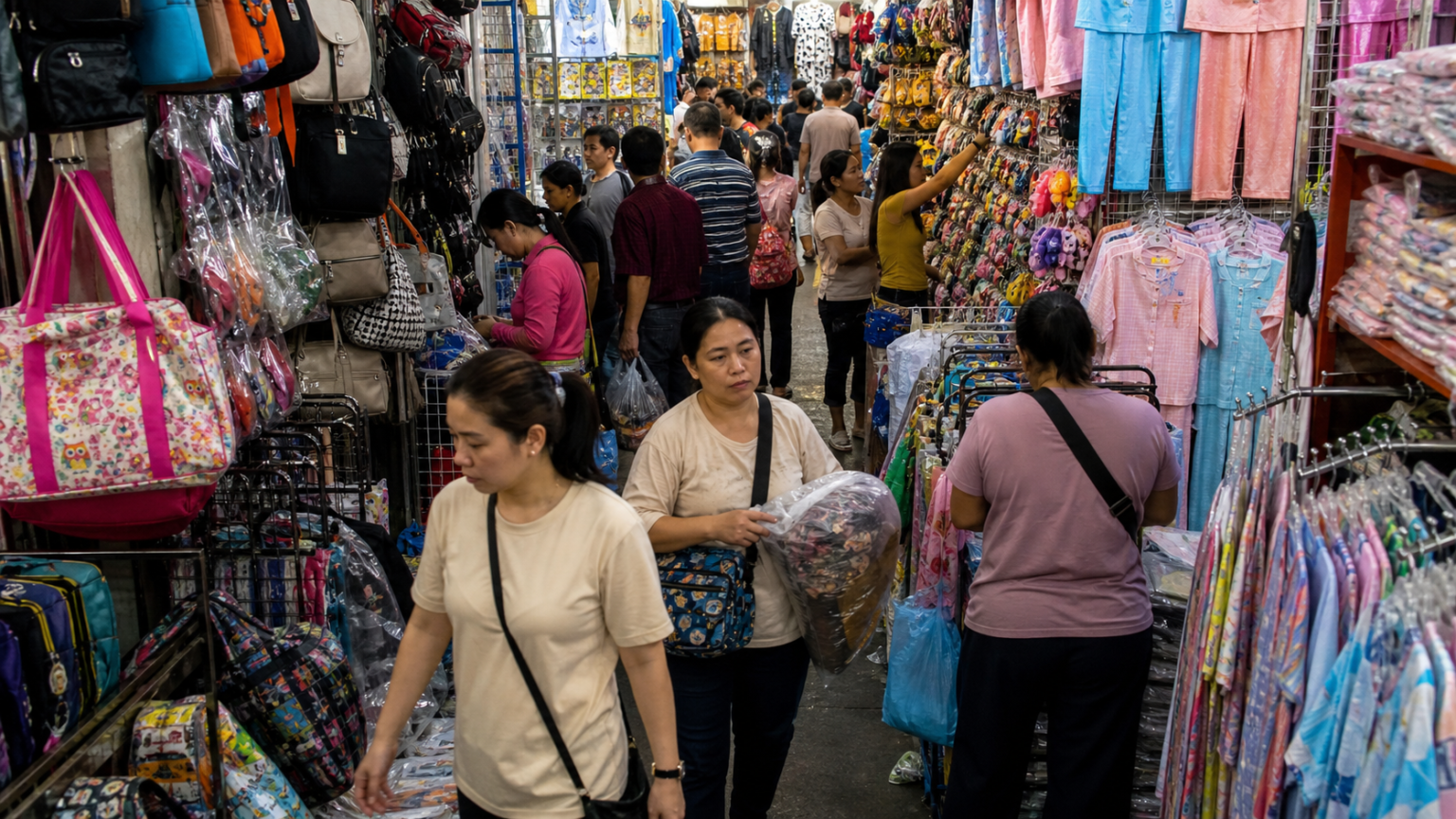
The route continues on foot, with no need for transport between the Chinatown stops. Sampeng Market is one of the cheapest wholesale and retail markets in Bangkok, different from Pratunam and Chatuchak. Premium fruit vendors are near the entrance, including mangosteen and rambutan, although the prices are high because the quality is premium.
Sampeng Market Prices and Shopping Tips
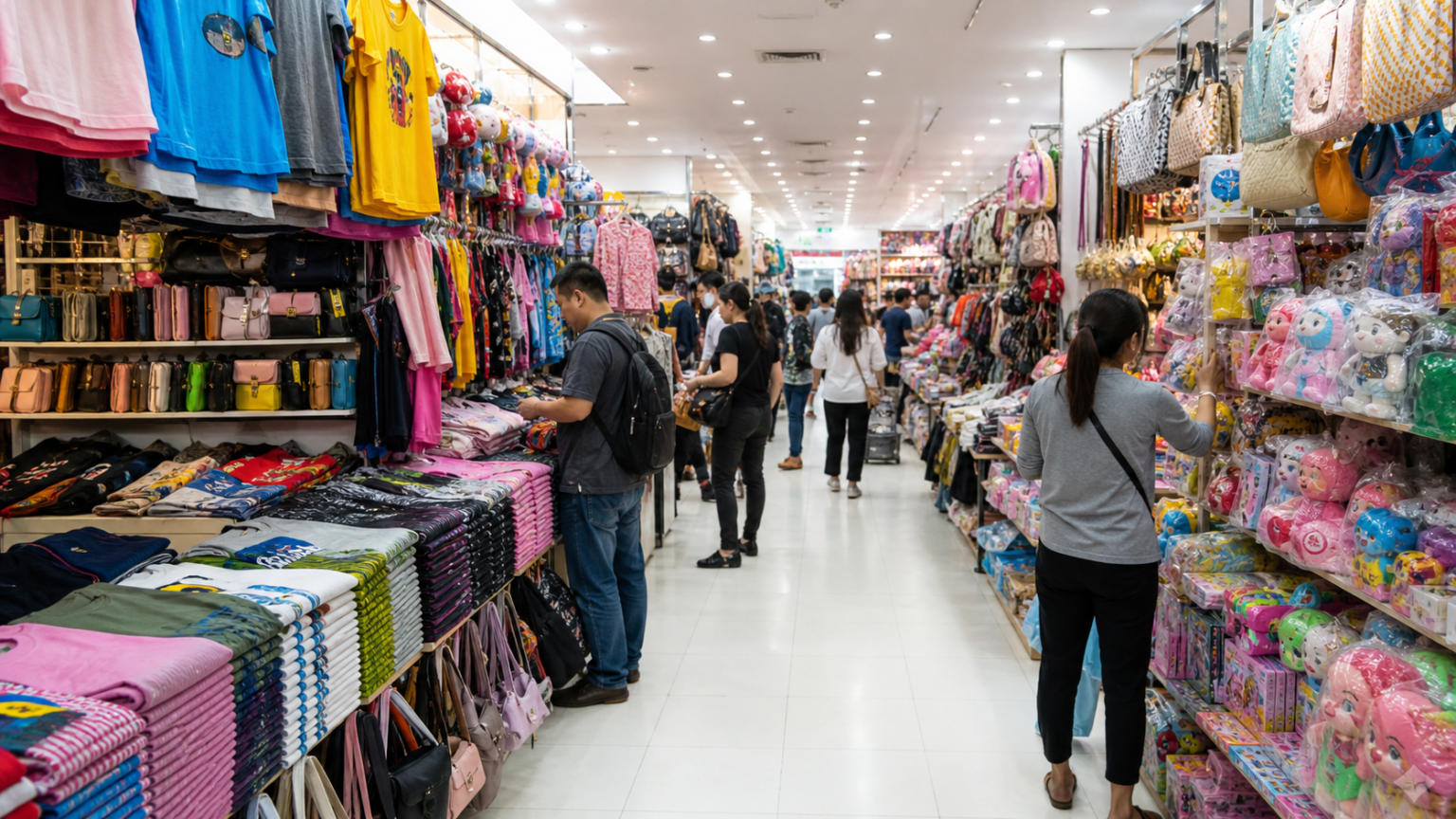
Sampeng Market has toys for about 100 Thai baht, other items for 180 baht, pajama sets for 50 Thai baht, and wallets for 80 or 100 baht. Prices are usually fixed, although some places require bulk purchases. The market has air conditioning, and visitors can follow the main path and enter other malls along the way.
Khlong Ong Walking Street and Old Chinese Alleys
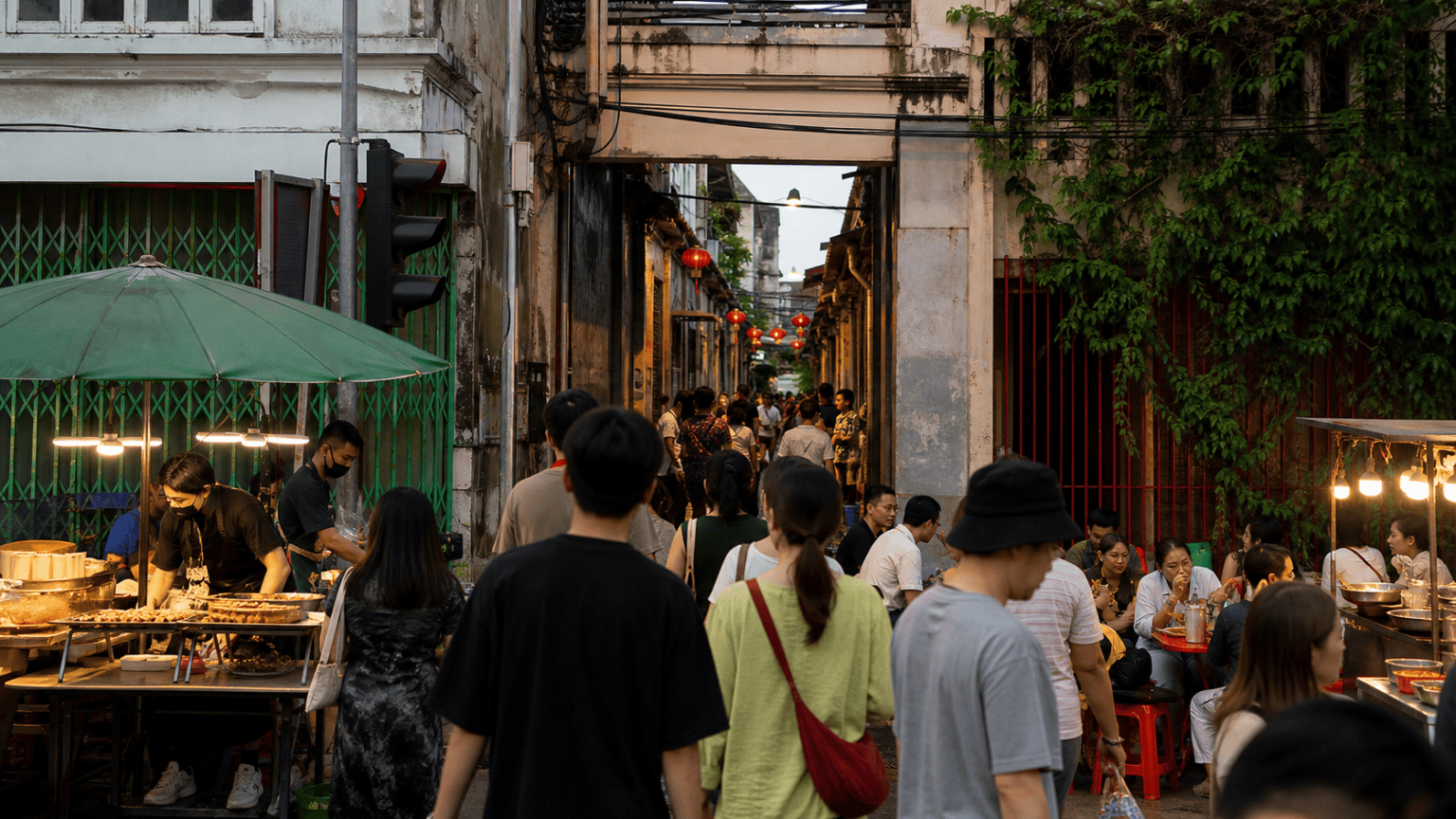
Bags and accessories are also cheap. Items costing 50 baht in the market could cost 150 or 200 baht in Sukhumvit after bargaining. Goods are delivered through the crowded market path, where there are no cars or motorbikes. Small shops sell items from 20 or 10 baht, and some offer buy-one-get-one-free deals.
Khlong Ong Walking Street is near the end of Sampeng Market and is popular on weekends. It has food options and activities, making it a place to eat after shopping. Near Wat Mangkon station, old Chinese-style alleys provide another place to walk around and take pictures. These places can all be explored in the same area without taking transport.
Chinatown Massage Workshop Route
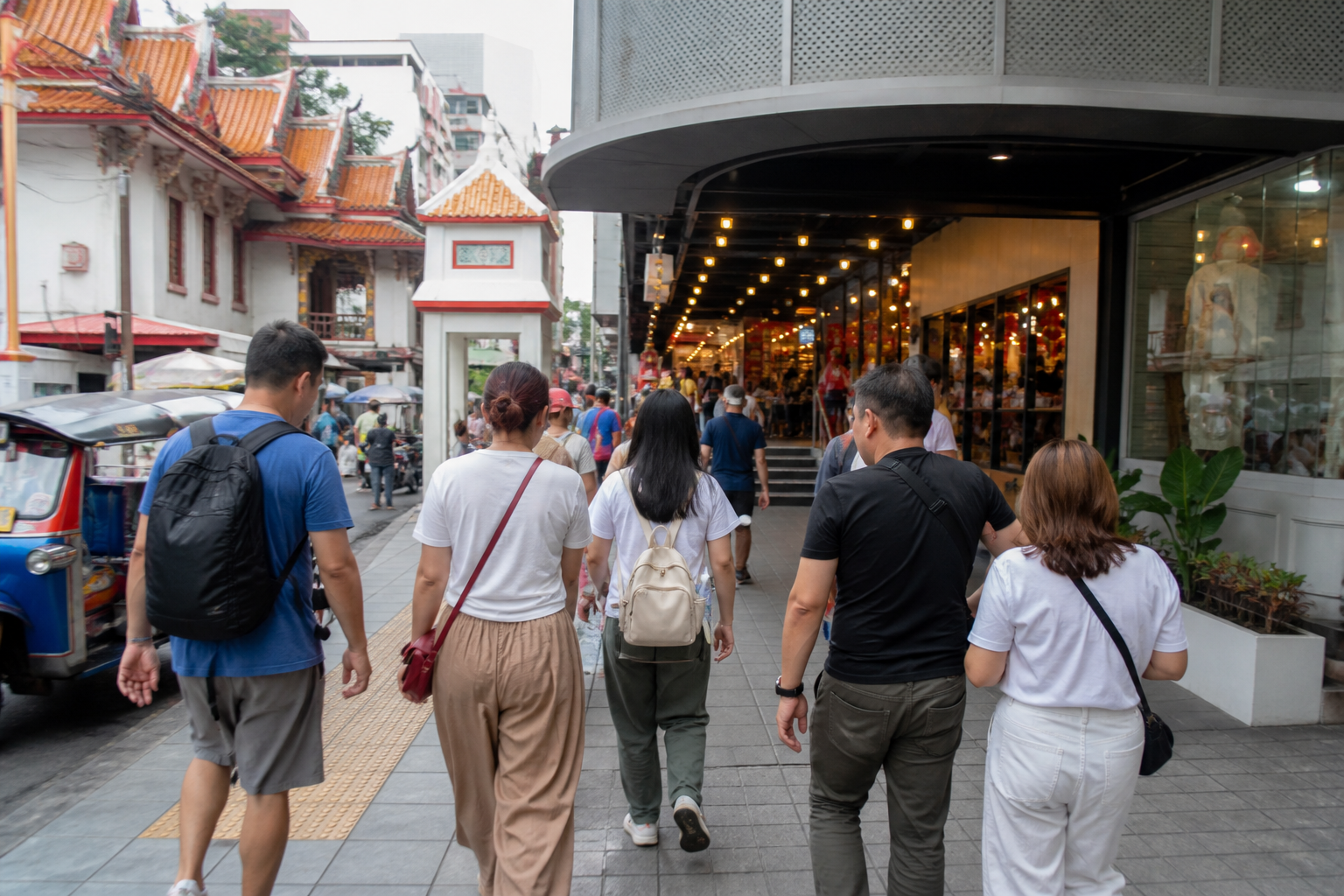
The Thai massage workshop is in Chinatown and is easy to reach by MRT. Get off at Wat Mangkon Station, use Exit 1, and walk about two minutes to the I am Chinatown shopping centre. The workshop is on the ground floor.
This is a teaching workshop rather than a massage parlour. Spa therapists with experience teach the techniques, so participants can learn what a Thai massage session involves and practise the basics themselves.
Thai Massage History and Workshop Preparation
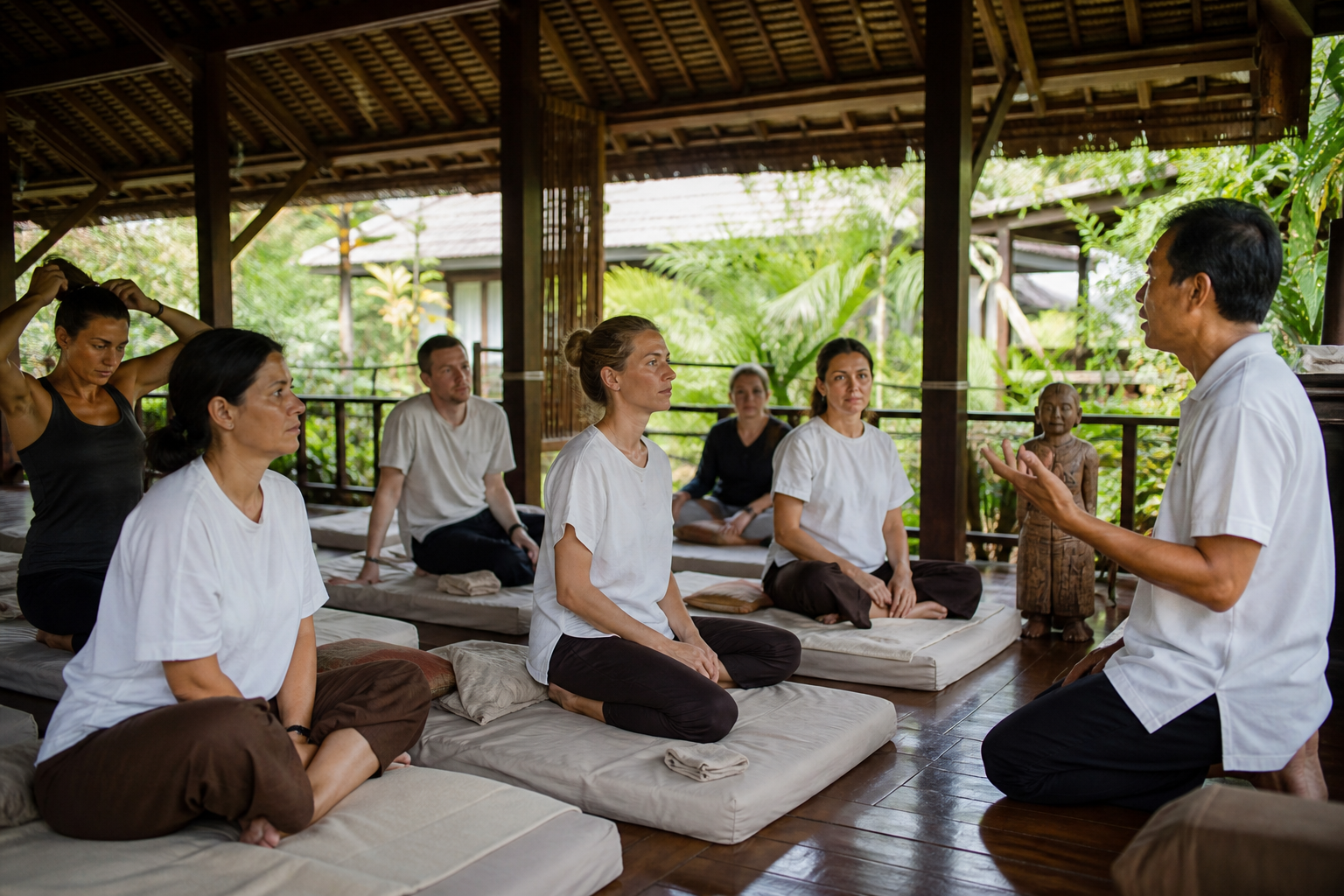
The class began with changing clothes, writing names on tags, meeting the instructors, and learning about the history and origins of Thai massage. The instructor explained that massage was originally connected with healing, meditation, and religion, and that the tradition has influences from India.
The introduction lasted about 10 minutes before the practical lessons began. Learning the background first made the techniques easier to understand during the rest of the workshop.
Facial Massage Techniques
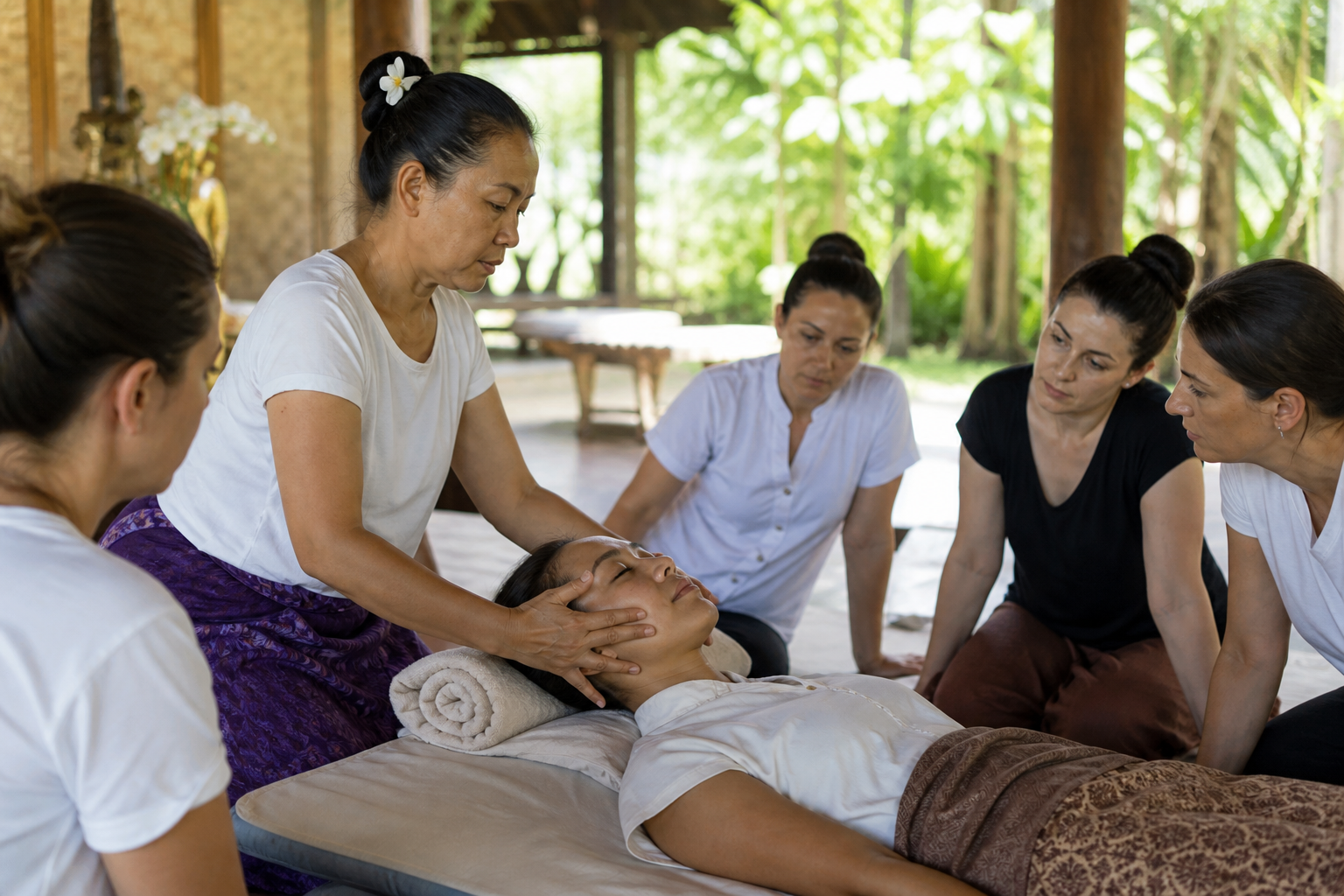
The first practical lesson covered facial massage and simple techniques for relaxation. The instructor demonstrated pressure around the face and explained how long to hold a point, with some pressure held for about five to ten seconds.
These techniques were presented as basic skills for personal practice at home. Work gently, communicate with a partner, and stop if any pressure feels painful or uncomfortable.
Thai Herbal Compress Ingredients and Steam
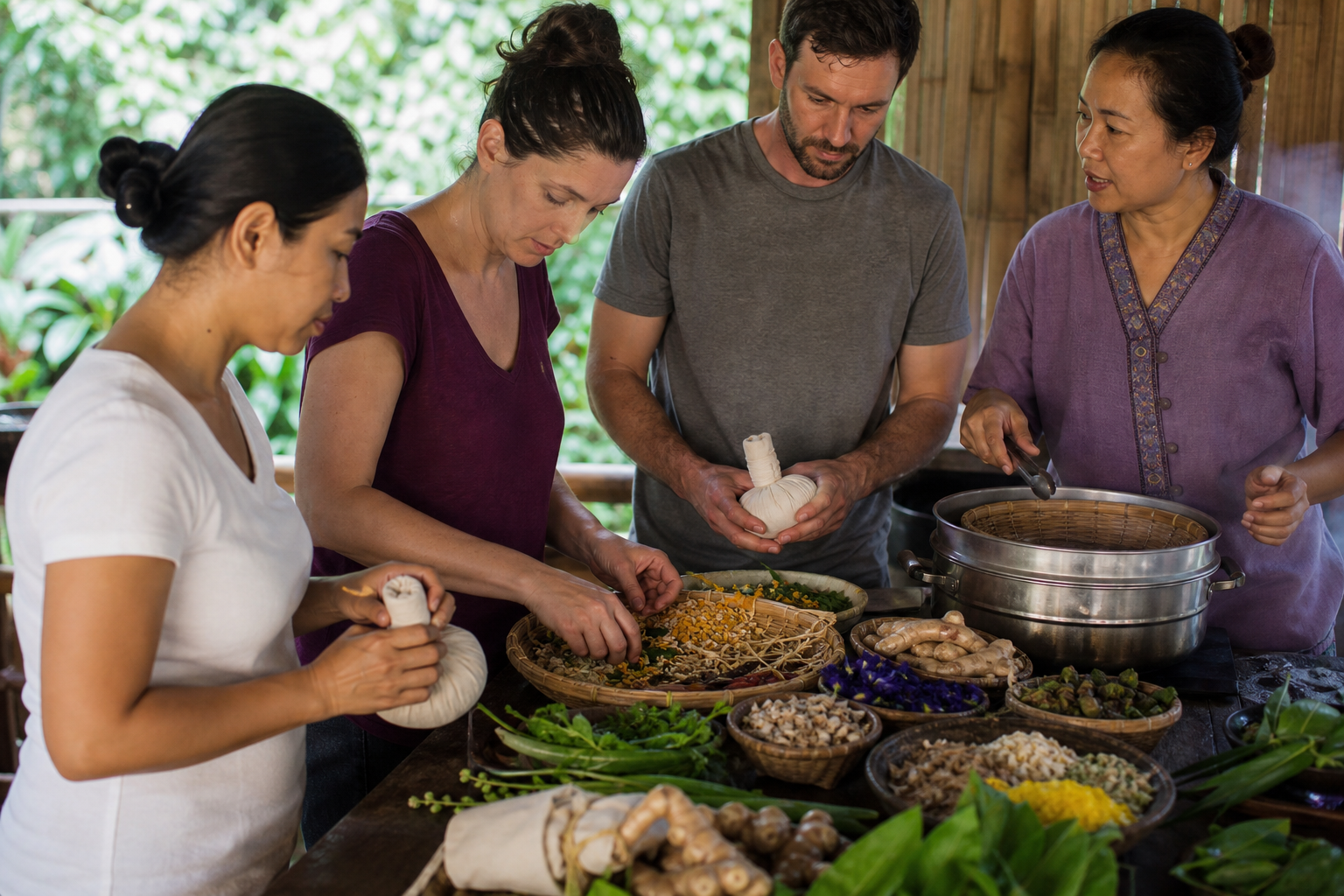
The workshop also explained what goes into a Thai herbal compress, where the ingredients come from, what they are used for, and how to mix and pack them. Participants prepared their own compress balls rather than only watching a demonstration.
The finished compress was placed in water and then steamed before the instructor showed how to use it. The lesson included ingredients such as camphor and other herbs, along with the correct way to handle the heated compress.
Massage Pressure and Joint Safety
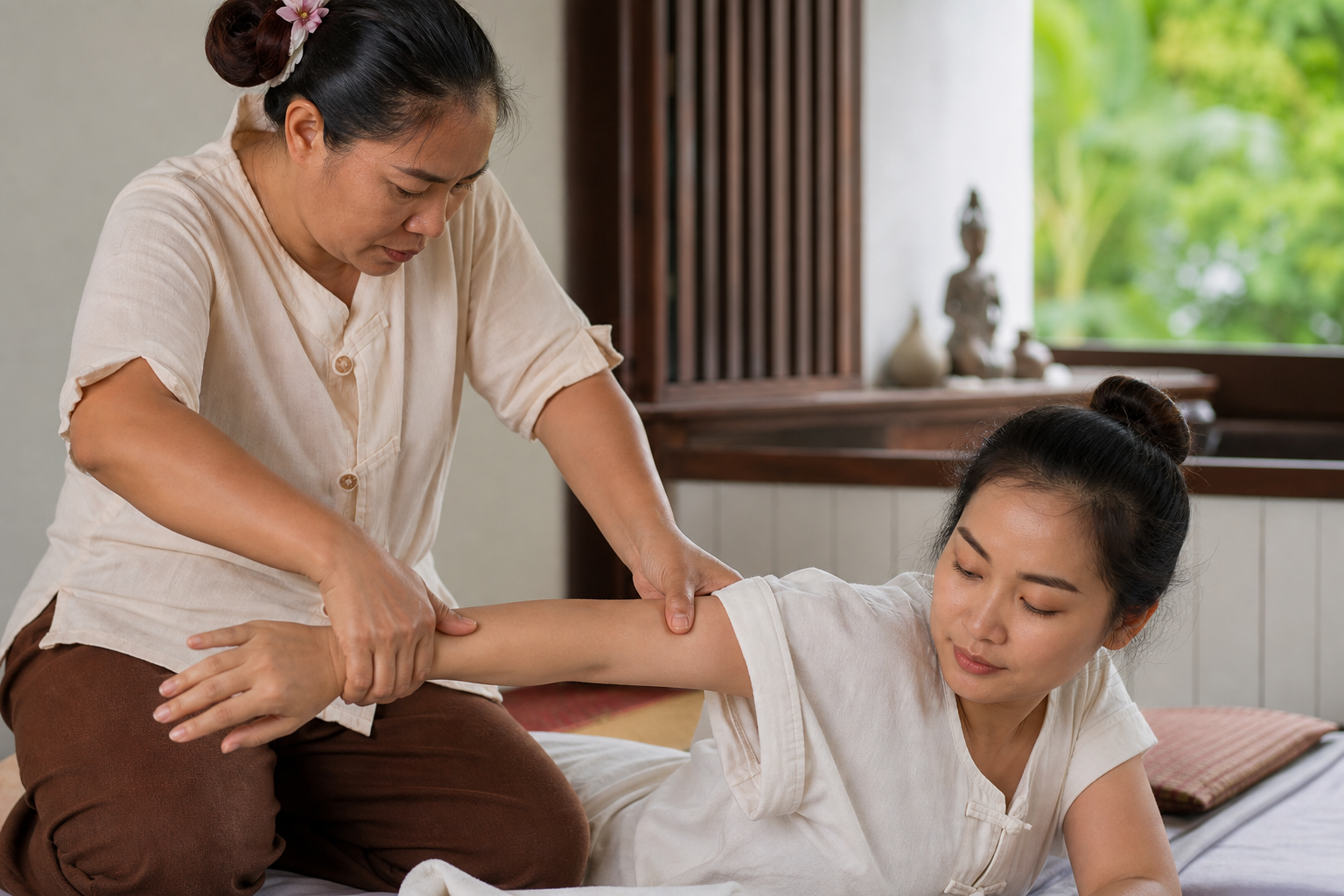
The workshop described three pressure levels: soft, medium, and hard. Tell the therapist what your body can comfortably take before the session and ask for the pressure to be changed at any time if it is uncomfortable.
Basic safety guidance included avoiding direct pressure on bones and skipping joints. The instructor demonstrated controlled movements on the hands, arms, and other areas, with the learner’s body supported during each technique.
Practice Certificates and Follow Up Session
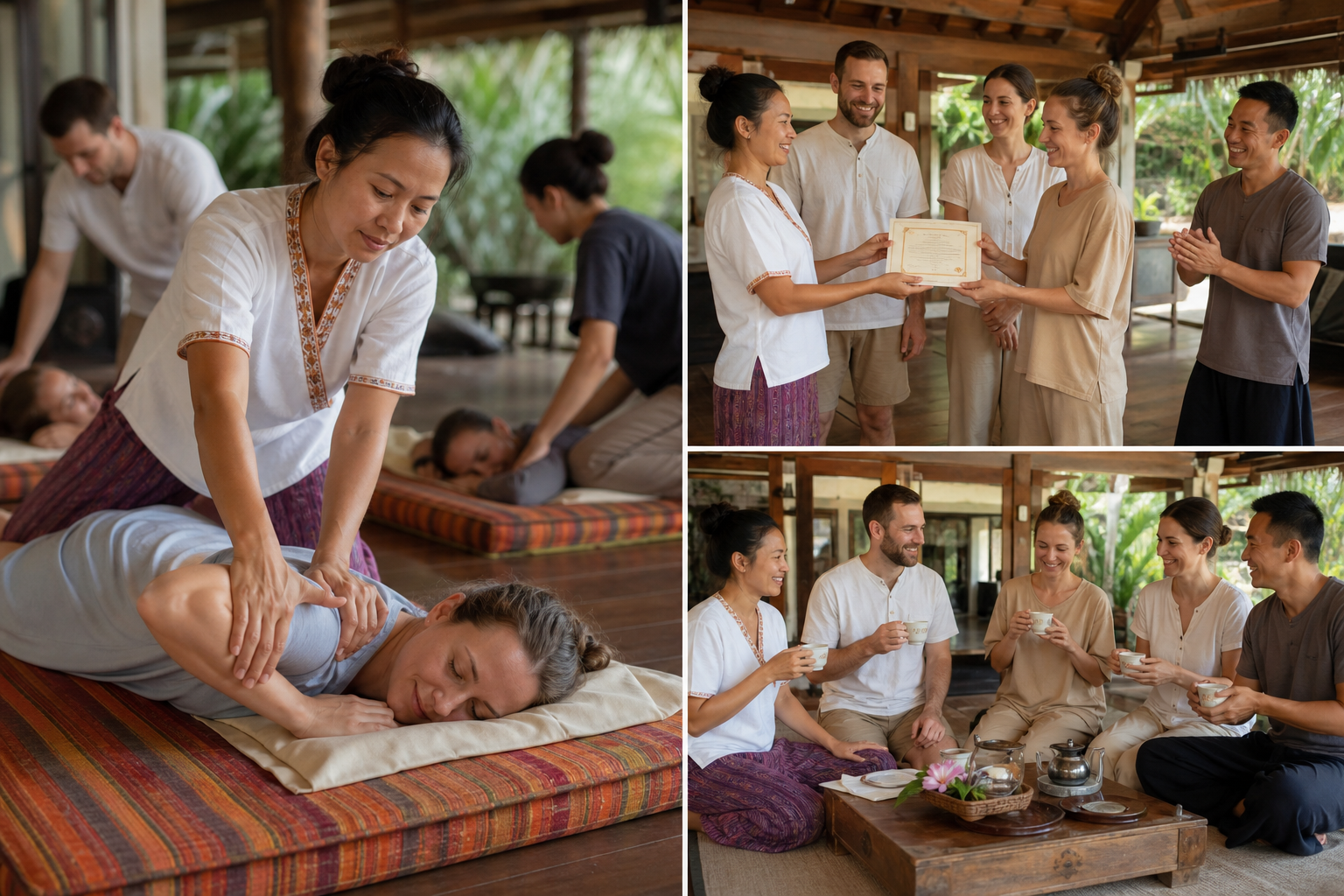
After learning the techniques, participants practised on a partner. The practical work showed that a proper massage requires experience, repetition, and control. The workshop lasted about two hours and ended with certificates and tea, including coconut, strawberry, and ginger flavours.
A later full-body session provided an opportunity to compare the techniques with a professional massage. The visit included changing clothes, a quiet treatment room, hot tea, and a session lasting about two hours. The workshop made it easier to recognise the pressure, joint, and technique details during that treatment.
Guided Chinatown Bangkok Food Tour at Night
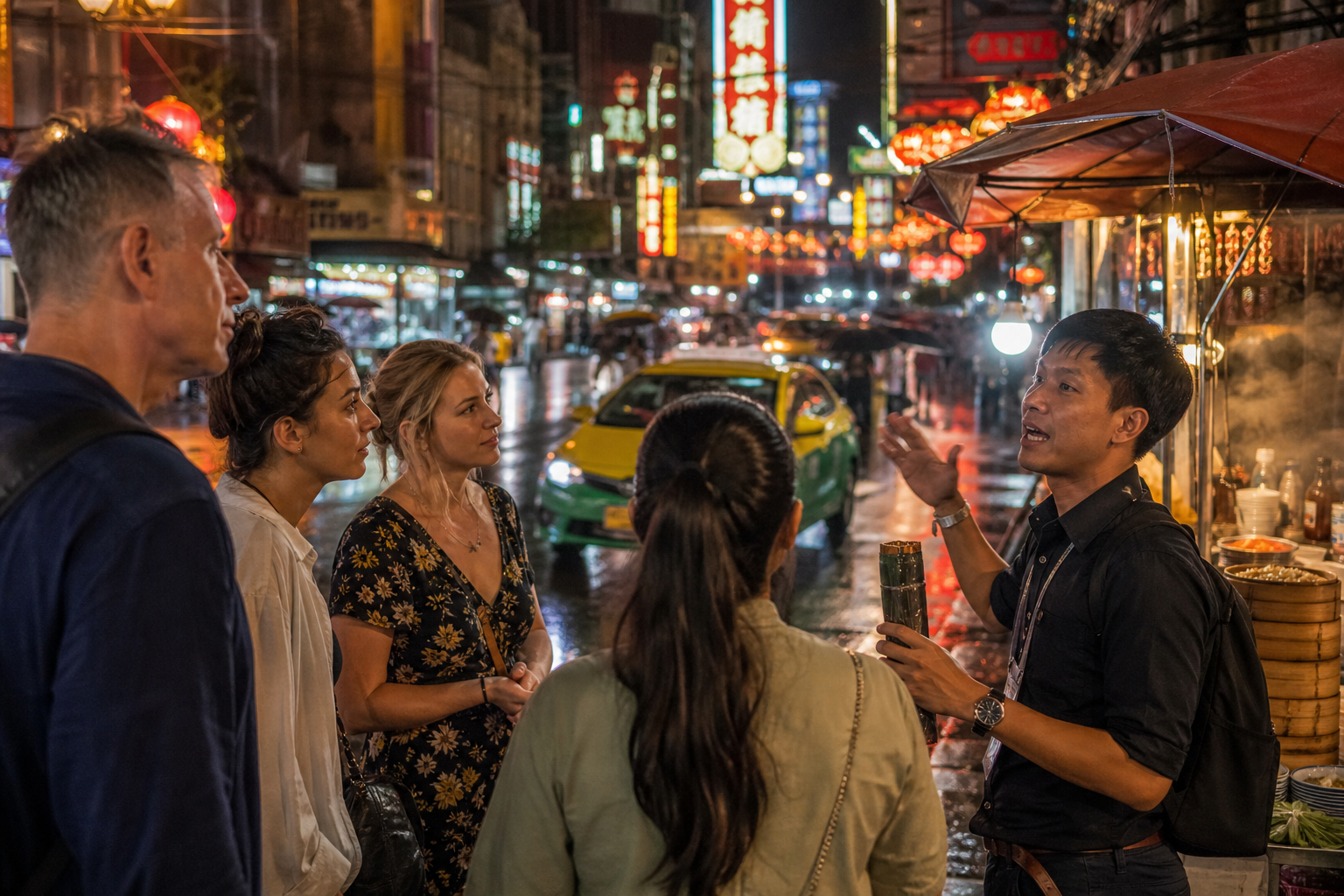
Chinatown, or Yaowarat, is one of the best places to explore after sunset. A local guide makes it possible to go beyond the main street and find hidden food places that are difficult to locate when exploring alone.
The three-hour food tour focused on Chinatown street food, local atmosphere, and hidden streets. The area was busy after sunset, and light rain made the weather breezy and cool while the streets remained lively.
Shrimp Dumplings and Dim Sum in Chinatown
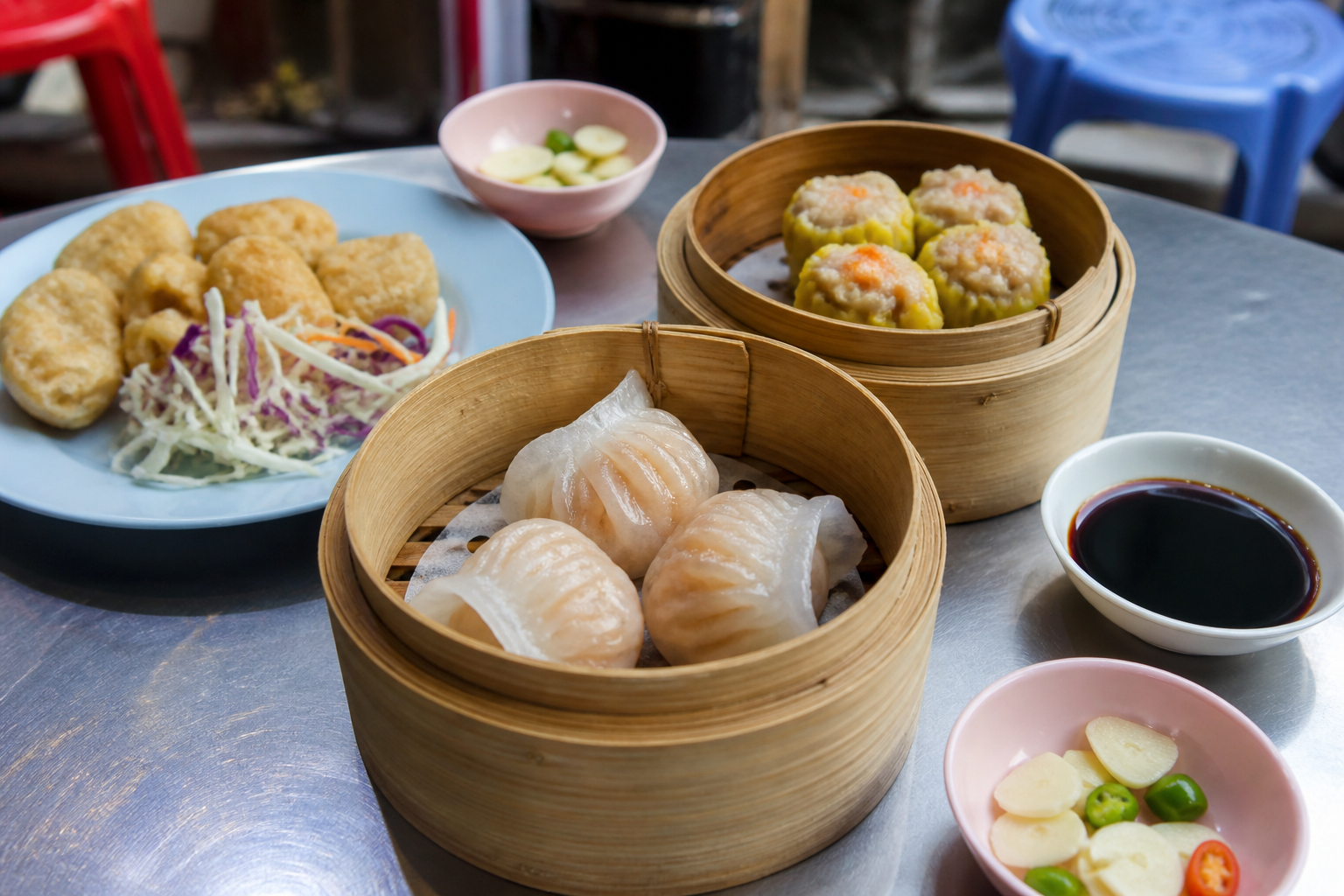
The first stop served shrimp dumplings and other dim sum. The shrimp dumplings were soft and were served with garlic and soy sauce. Adding garlic and soy sauce gave the dumpling more flavour.
The tour chose places that were tucked away in Chinatown rather than only the obvious restaurants on the main road. The food tour was designed to try recommended dishes in locations that are difficult to find without a local guide.
Hidden Chinatown Restaurants and Thai Curry Rice
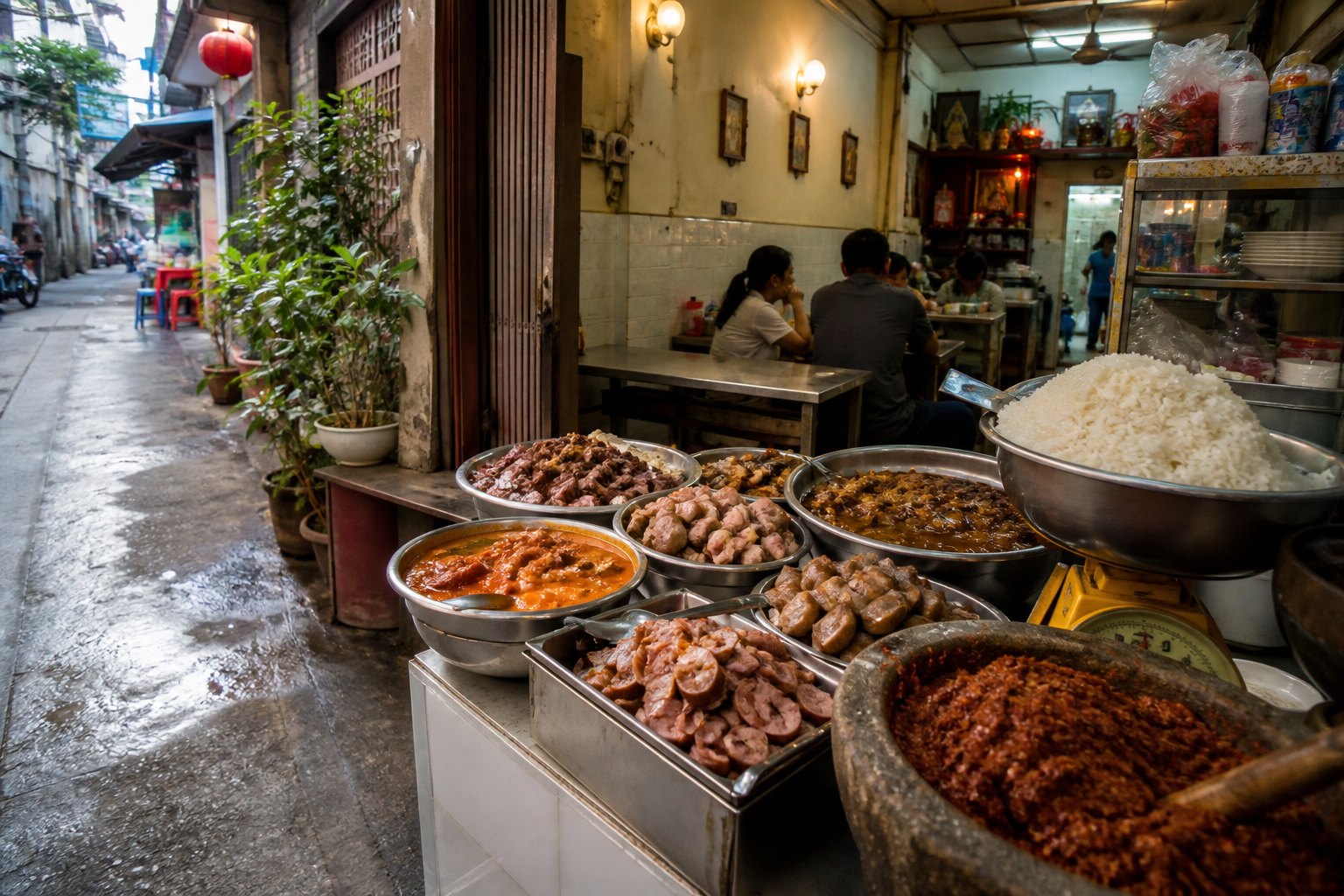
One hidden stop, Jack Pu Curry, had already received a Michelin star in 2021. The restaurant had a traditional Thai style, and people could sit and eat on the street.
The curry paste could be mixed with rice and a choice of pork or chicken. Other dishes included beef, Chinese sausage, chicken, pork, fish balls, curry, and bamboo shoots. An egg darkened with soy sauce was also part of the meal.
Chinatown Pad Thai with Shrimp for 70 to 80 Baht
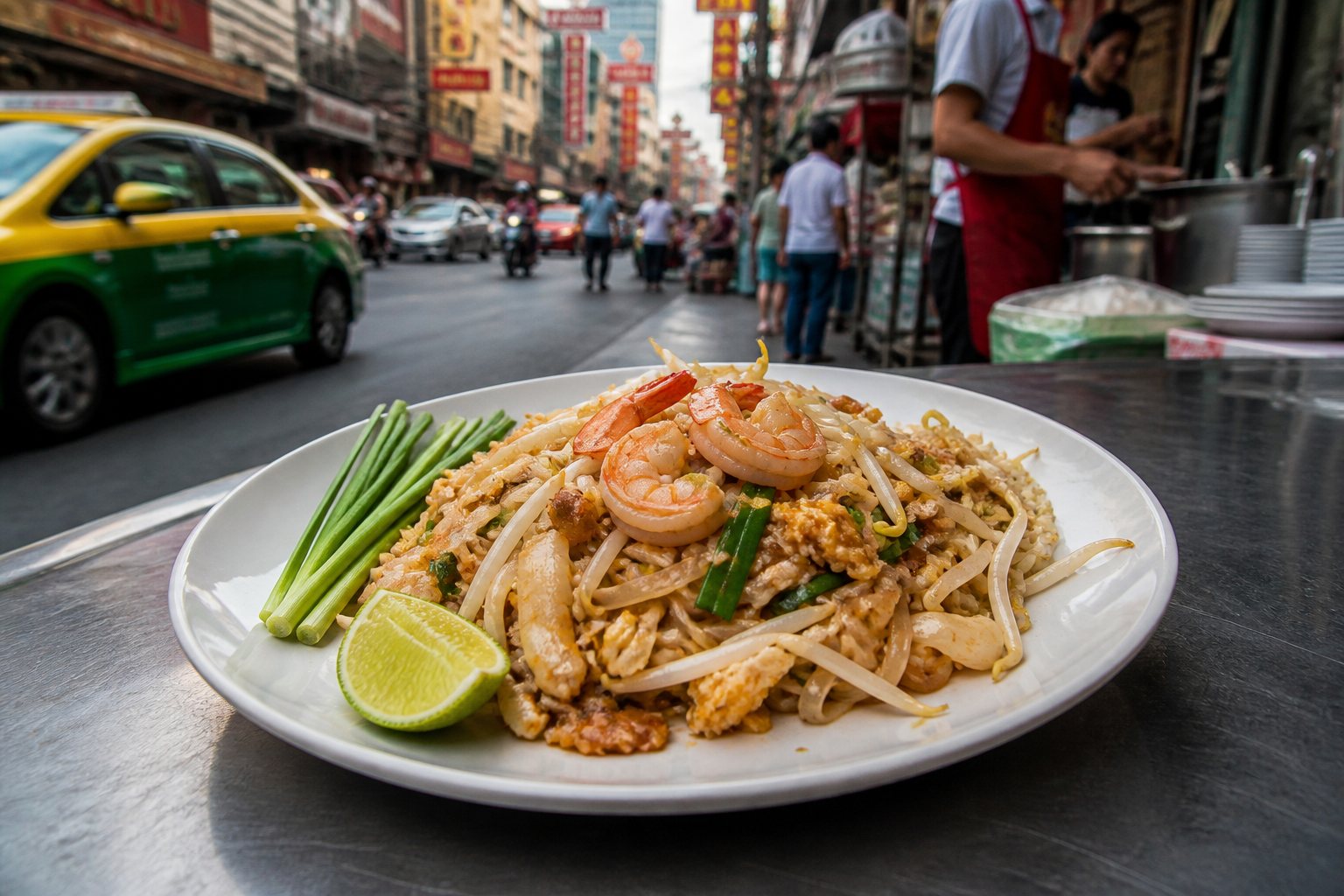
Pad Thai with shrimp was another stop. The dish cost about 70 to 80 baht, and the noodles were different from standard rice noodles. The tour described them as glass noodles.
The restaurant was on a street where many people usually walk for Chinatown street food. A local guide can take visitors deeper into the area instead of keeping them on the main road. The shrimp pad Thai was one of the recommended dishes.
Fish Maw Soup and Handmade Noodles in Chinatown
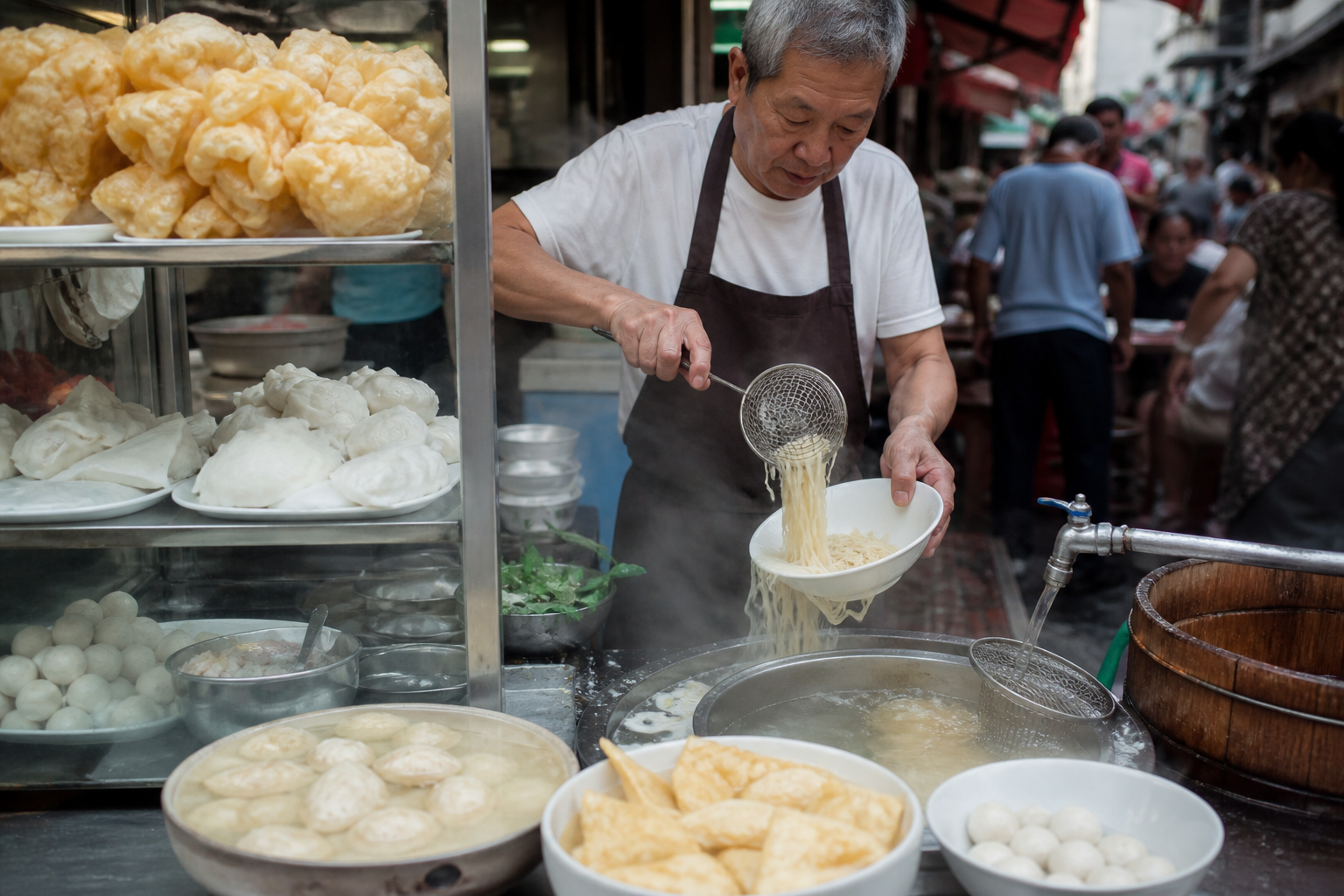
Another stop served fish maw soup for about 70 baht. The food included fish dumplings, fish balls, fish sausage, and noodles made by the restaurant.
The handmade noodles looked similar in size because they were produced at the restaurant. Trying fish dumplings and fish balls was part of the tour, and the old streets around the stop provided as much of the experience as the food.
Magical Trip Bangkok Tour Schedule and Meeting Point
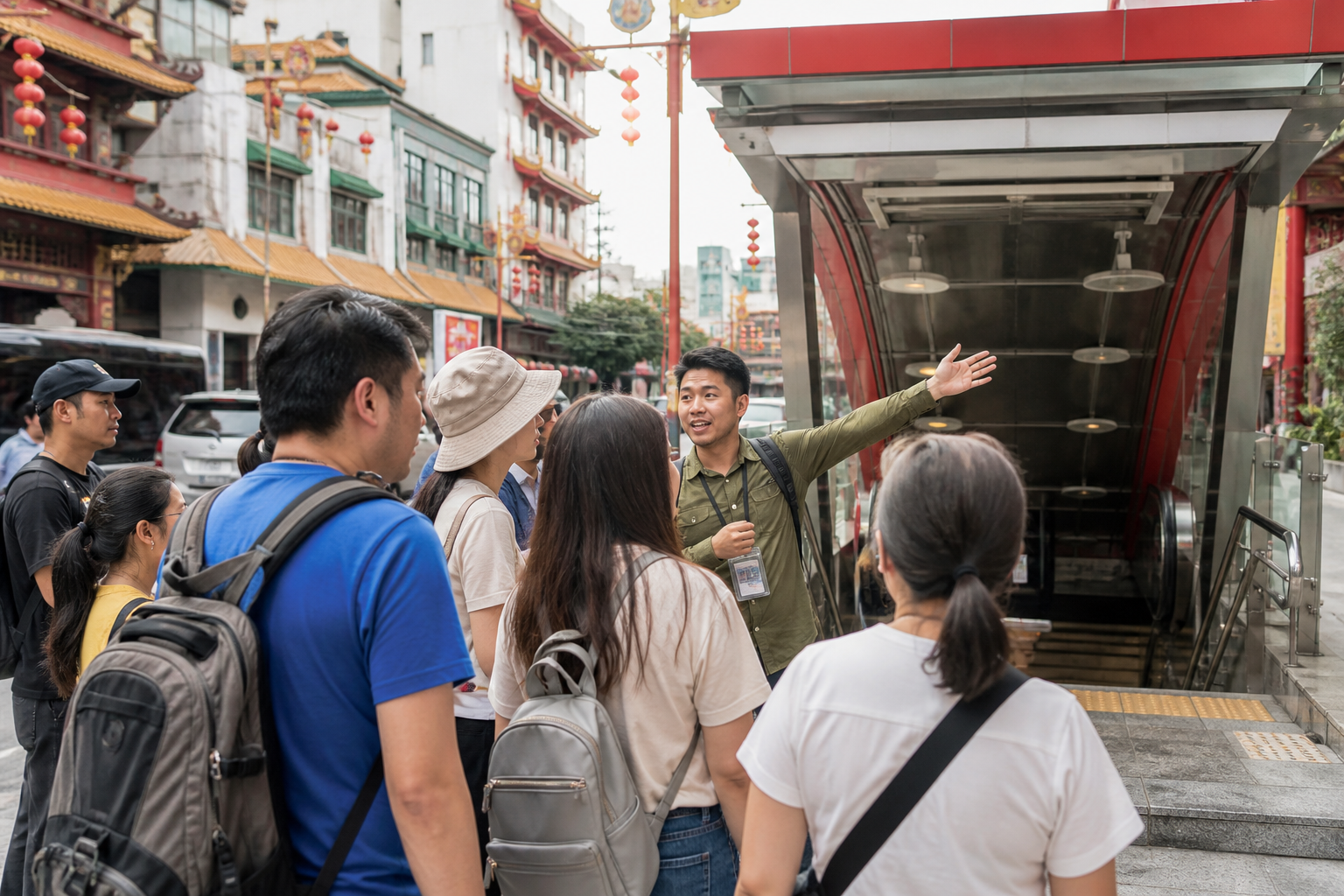
Magical Trip offers local tours in Bangkok, including walking tours, night tours, and cycling tours. The Chinatown food tour was available every day except Monday, with the exact time depending on the tour.
The tour started at 5:30pm and lasted about three hours. The meeting point was near Wat Mangkon and could be reached using the MRT underground train. The tour finished at the same place where it started, but visitors could continue exploring Chinatown afterward.
Magical Trip had received a TripAdvisor Best of the Best award in Japan and had opened a new Bangkok branch. Prices were discounted while the Bangkok operation was new, although prices could change after it became established. Tours could be booked online.
Thai Donuts and Continuing Around Chinatown
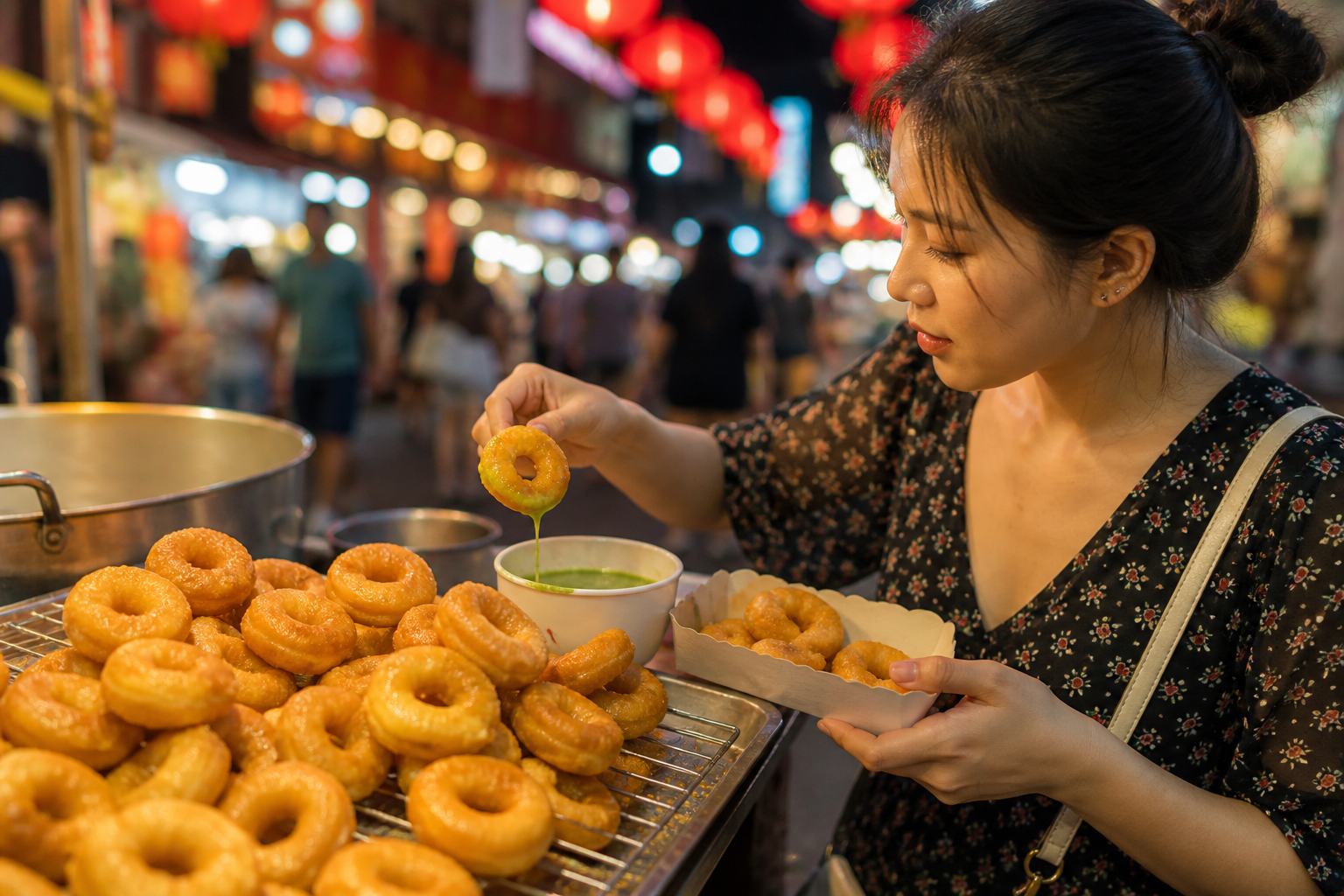
The final food stop included fresh Thai donuts served with sauce. The tour guide returned visitors to the meeting point, but there was no need to end the evening there.
Chinatown can continue after the tour with more food, old streets, local buildings, and night-market atmosphere. Exploring with a local guide makes it easier to find hidden places, while the MRT provides a straightforward way to reach the area.