Why Pattaya Can Feel Lonely Even When You’re Never Alone
Last year, I sat at a bar on Soi Buakhao at 3 p.m. on a Tuesday. The guy next to me, let’s call him Dave, had been in Pattaya for 8 years. He knew every mama-san’s name. His phone buzzed constantly. He was also the loneliest person I’ve ever met. And I couldn’t stop thinking: how does someone surrounded by everything he wanted feel more isolated than a lighthouse keeper?
This is the Pattaya paradox. You’re planning your first trip. You’ve seen the videos. Endless nightlife, beautiful women, non-stop parties. But here’s what no one warns you about, and what you absolutely need to know before you go to the city that promises you will never be alone.
Thousands of men are experiencing crushing loneliness. Surrounded by crowds, yet feeling more empty than they ever did back home. This isn’t just sad. It’s dangerous. If you’re heading to Thailand without understanding this psychological trap, you could find yourself caught in it too.
The Dopamine Trap
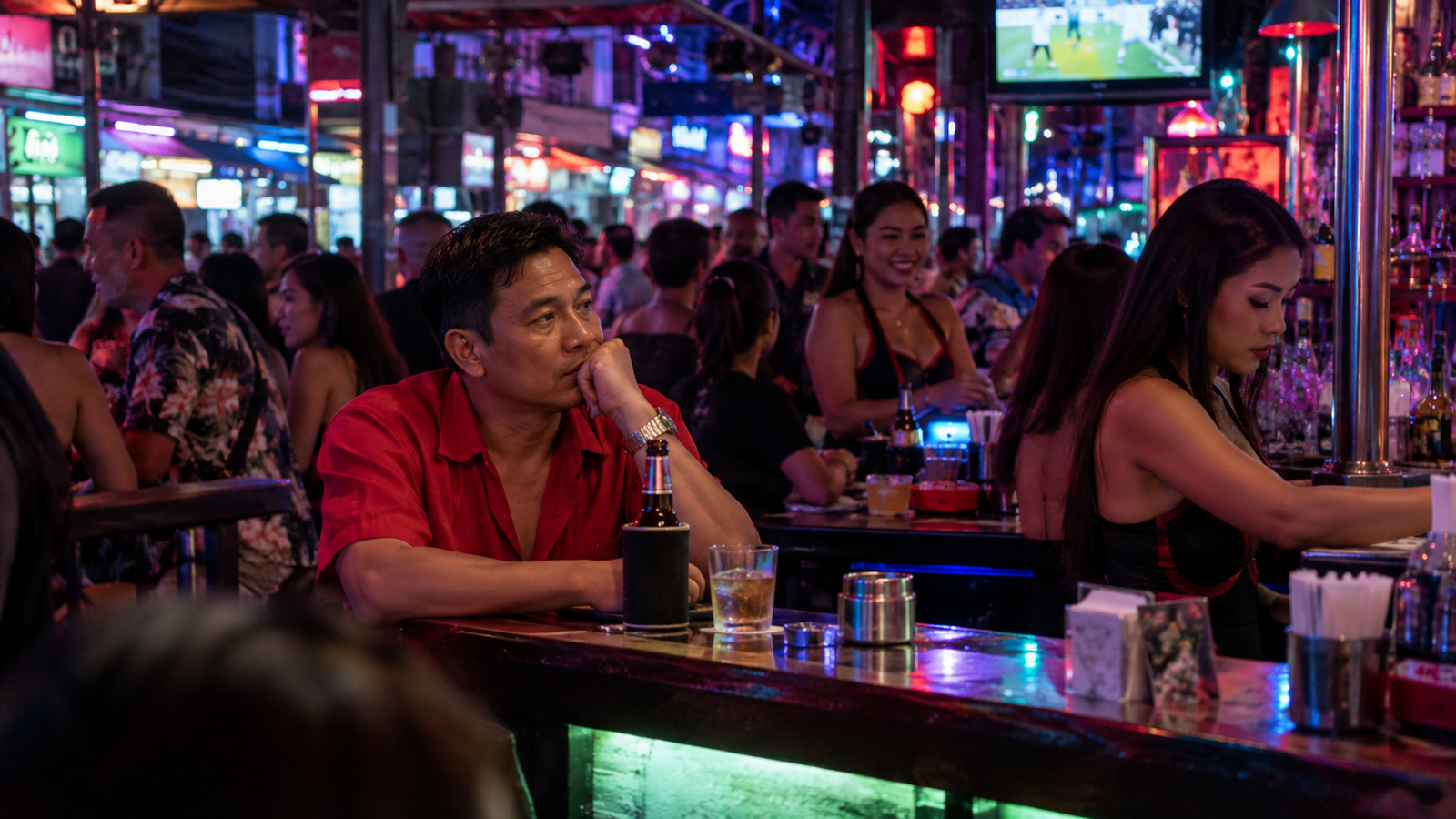
Let’s start with what happens in your brain when you first come to Pattaya. Picture a 55-year-old guy from Oklahoma. Let’s call him John. Back home, he’s working, struggling with dating, and stuck in a boring job. Maybe recently divorced. And then he steps into Soi 6. Suddenly, he’s James Bond. Beautiful women in underwear are approaching him. His debt doesn’t matter. His social awkwardness is gone.
This is what psychologists call a massive dopamine flood. Your brain’s reward system is going absolutely haywire. One Reddit user described it perfectly: “I lived in PA for a couple of months. Cured my depression. Life was great.”
But here’s the thing about dopamine. It’s not actually the happiness chemical. It’s the want-more chemical. And this is where the trap begins. Your brain adapts to this new baseline incredibly fast. Scientists call it the hedonic treadmill.
That first night that blew your mind becomes routine by day seven. You need something newer, more exciting, more extreme to get the same high. Soon you’re chasing novelty like an addiction. More, wilder, anything to recapture the initial rush. But each hit satisfies a little less.
As one long-term expert put it, always needing something new to get excited is dopamine-driven behavior. Eventually, even novel experiences stop giving a high, leading to boredom. This is how paradise becomes prison. You are literally rewiring your brain to need constant stimulation. A normal life both in Pattaya and back home starts feeling unbearably dull.
The Transaction Problem
But the dopamine trap is just the beginning. Next, I need to show you the transaction problem because this is where the loneliness really starts to bite. It’s the elephant in the room, right?
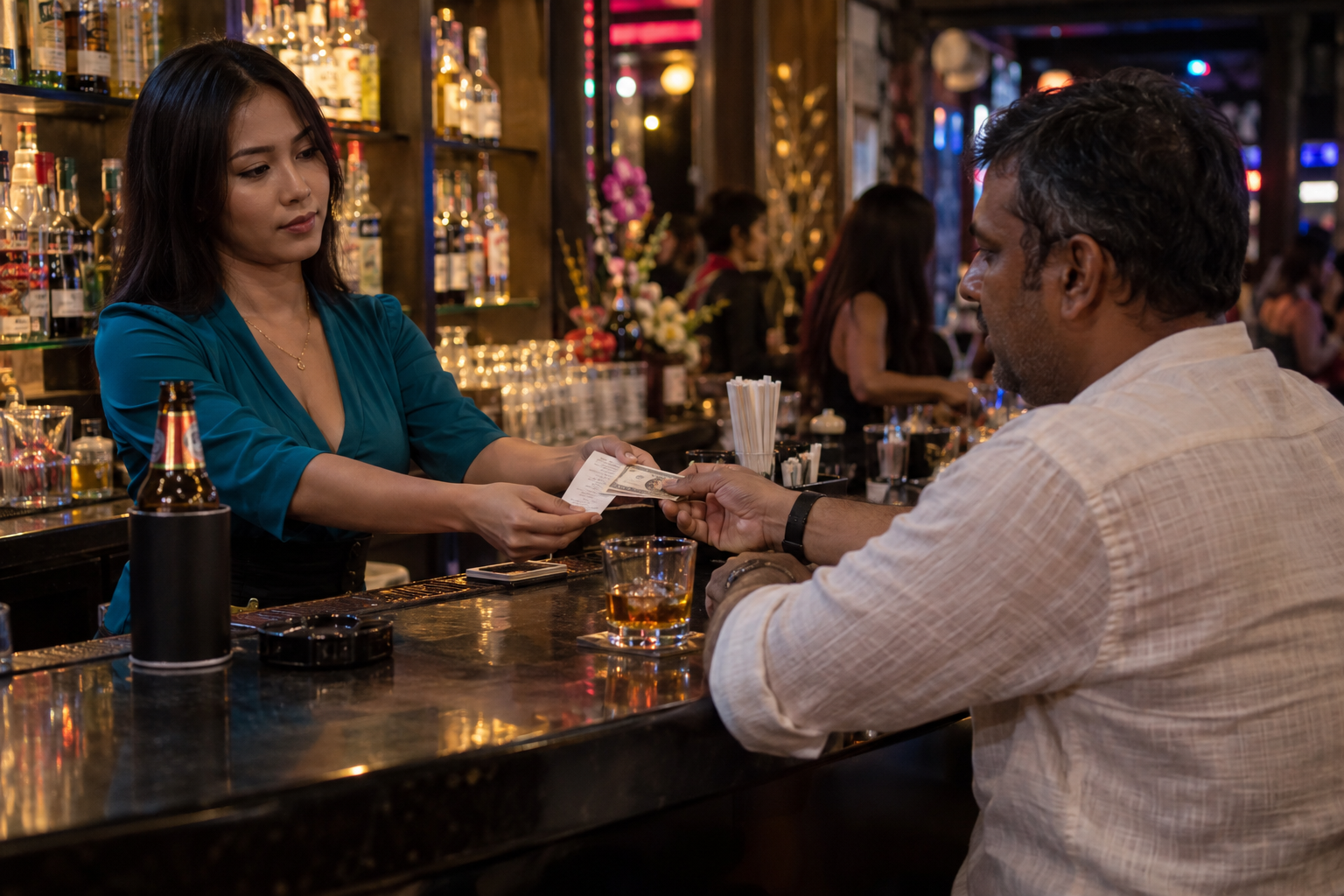
The transactional nature of most interactions in Pattaya, in the bar scene, will make you feel desired, attractive, and loved. So you order more. For many men, especially those coming from divorce or dating struggles, this feels like a miracle. But deep down, everyone knows it. Everyone knows it’s a paid performance.
Think about what this does to your psychology. You’re experiencing all the physical and emotional cues of intimacy, cuddling, sweet words, and apparent affection. But your logical brain knows it’s fake. You will simultaneously experience connection and disconnection.
The emotional need for genuine connection remains untouched, maybe even deepened. This creates what psychologists call cognitive dissonance. That internal conflict is exhausting and isolating. A therapist who works with expats in Thailand put it bluntly: “Many expats are seduced by the illusion of a lifestyle reminiscent of a James Bond character. In reality, once the novelty wears off, they find themselves isolated, relying on fair weather drinking buddies.”
Here’s what I’ve observed. Many men know this on some level, yet they can’t fully accept it. They hold on to the possibility that maybe, just maybe, this girl is different. The tragic part is that sometimes real affection does develop. Of course, spending intimate time together, sharing stories, and having fun blurs the lines. Humans aren’t machines.
Lines get blurred, but the underlying economic foundation remains. Thai culture has a saying: no money, no honey. However sweet she is, however much she seems to care, the financial support is non-negotiable. Nothing is free. Western men who forget this cultural contract often end up heartbroken when their loyal girlfriend disappears with a richer customer. This creates a cycle of mistrust that poisons future relationships. Either men become cynical about Thai women, believing they all just want more money, or worse, they lose faith in their own ability to be loved authentically.
Loneliness in a Crowd
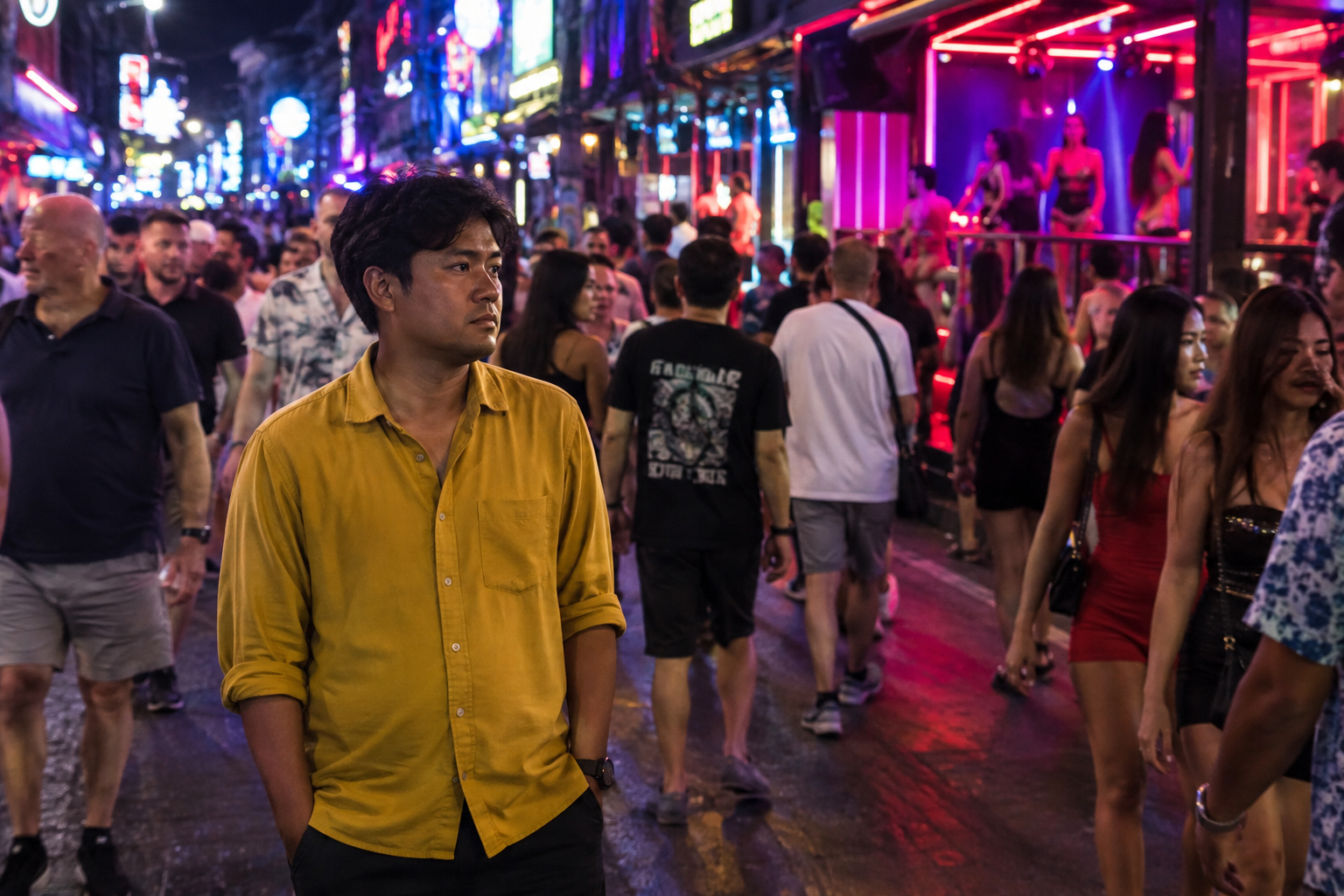
So, we’ve got dopamine driving you to chase more and transactions leaving your emotional needs unmet. But here’s where it gets really strange. Pattaya is never quiet, never empty. Walking Street, Soi 6, Soi Buakhao, Soi Boomerang, music, bars, people, smiles, lovely girls. You’re constantly surrounded by fellow travelers, expats, bar staff, and beautiful women. So how can anyone be lonely?
Welcome to what psychologists call loneliness in a crowd. Being socially surrounded but emotionally isolated. It’s not about being physically alone. It’s about meaningful connection.
You might spend every night bar-hopping with the same group of guys, sharing drinks and war stories, high-fiving over conquests, but how often do those conversations go deeper than surface-level banter? How many of those drinking buddies know your fears, your dreams, what’s really going on in your head and in your life?
In Pattaya‘s party culture, everyone’s performing a role: the fun guy, the player, the successful businessman. Nobody talks about depression, divorce, trauma, or the fear that they’re wasting their life. The party mask stays on, so you end up with this surreal situation. You’re never physically alone, but you might have zero people who actually know you.
When the party ends and you’re back in your hotel room at 4:00 a.m., the silence hits like a truck. The Harvard Making Caring Common Project calls this existential loneliness, a fundamental sense of disconnection even when surrounded by people. In their 2024 survey, 65% of lonely people said they felt fundamentally separate from others or the world.
You can be at a packed beer bar at midnight and feel like you’re the only human being on Earth. One expert on a forum captured it perfectly: “If you’re lonely in PA, you’d probably be lonely wherever you are.” He meant it as a criticism, but it’s actually the key insight. Pattaya doesn’t create loneliness. It reveals it and then amplifies it by stripping away all the structures that used to mask it.
The Difference Between Visiting Pattaya and Staying There
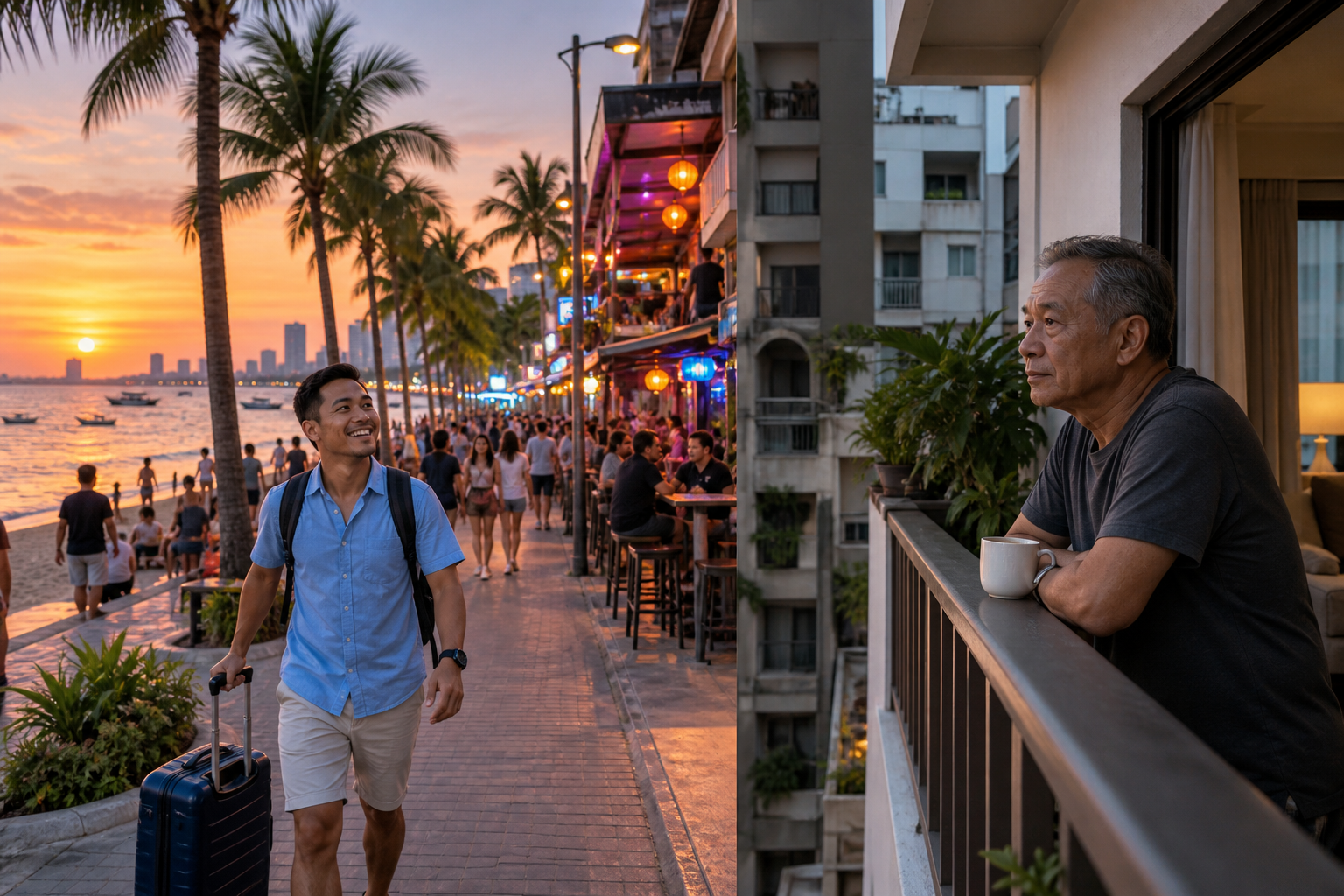
First-timers often describe Pattaya as life-changing. After years of feeling invisible to women back home, suddenly they’re the center of attention. One user wrote: “I just played video games, went to the beach, and had a different girl every other night. Now I have had to return to a society that sees me as a loser.”
That contrast is addictive. Back home, he’s overlooked and unsuccessful, but in Pattaya he’s a rock star. No wonder he’s planning his return before he’s even left.
But talk to expats who’ve been there for years, and you hear a very different story. The wide-eyed wonder fades. What was once magical becomes mundane and sometimes toxic.
Some people burn out on both sides. After years of traveling here, I’ve noticed three types of men.
Three Types of Men
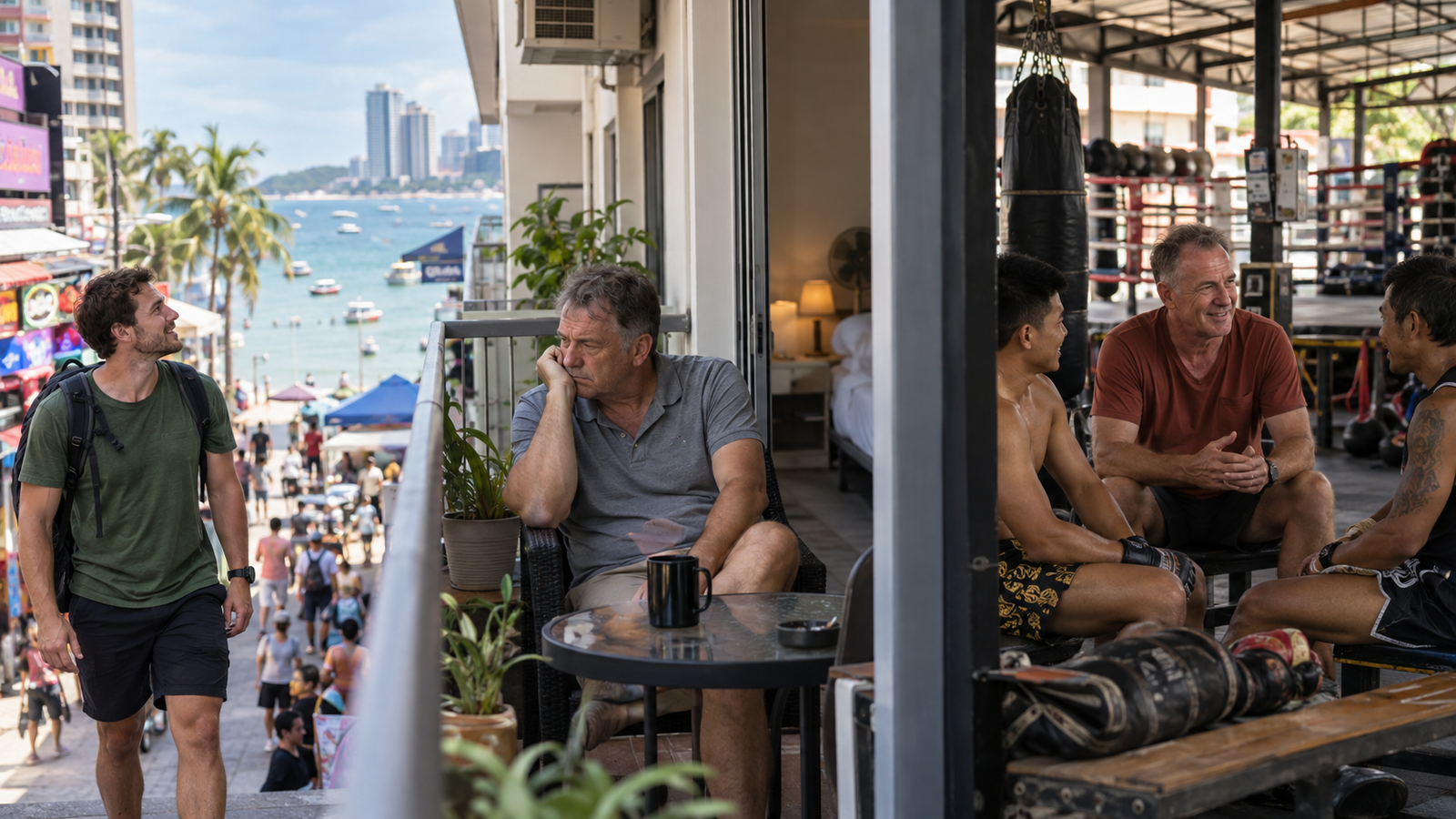
One, the temporary tourist. He arrives for two weeks, has a blast, goes home with stories and a tan. He never stays long enough for the illusion to crack. This is actually the healthiest approach.
Two, the hopeful immigrant. He moved here believing paradise would fix something. He joined the migration with dreams of cheap living and endless partying. By year two, he’s drinking too much and posting bitter comments on Facebook expat groups. He doesn’t have Thai friends because he never learned Thai. He doesn’t have deep expat friendships because everyone else is running from something too.
Three, the integrated veteran. This guy figured it out. He learned the language, at least conversationally. He joined activities that have nothing to do with bars. He has Thai friends who aren’t transactional relationships. He understands that Pattaya is just a place, and places don’t fix people. The difference between types two and three is purpose. The guys who thrive have reasons to get up beyond, “What bar should I hit tonight? Which girl am I going to love tonight?”
The Difference Between Pleasure and Meaning

You know, at its core, the Pattaya loneliness epidemic comes down to one fundamental psychological principle: the difference between pleasure and meaning. Pattaya offers hedonic pleasure in abundance. Excitement, novelty, and ego validation create immediate gratification like a sugar rush for your brain.
But just like sugar, they spike your mood temporarily and then leave you crashing and craving. What Pattaya struggles to provide is fundamental well-being, deeper satisfaction that comes from purpose, authentic relationships, personal growth, and meaningful contribution to something larger than yourself.
This is junk food for your soul. It tastes good, but it doesn’t nourish you. After the initial high fades, you are left emotionally malnourished. I myself am at a point where I say 5 days is enough. It’s just too much.
The most tragic cases involve men who become so overstimulated by the constant novelty and intensity that they lose the ability to appreciate normal intimacy. Like any addiction, tolerance builds. What once thrilled them becomes boring. They need increasingly extreme experiences just to feel something.
Some report that after extended time in Pattaya, holding hands with a loving partner back home feels too tame. They’ve accidentally rewired their brains to need constant stimulation, making genuine relationship-building nearly impossible. Dave from the beer bar at the beginning, the one with 8 years in Pattaya and three girlfriends, told me something on my last night in town: “I thought I wanted freedom. But it turns out I wanted connection, and they are not the same thing.”
Here’s What Works in Pattaya
He was right. Pattaya offers unlimited freedom. Freedom to do whatever you want, to meet someone new every night. Freedom from judgment, responsibility, and accountability. But freedom without connection is just another kind of prison.
And I’m going to be direct. If you’re considering moving to Pattaya to escape loneliness, don’t. Seriously, the same patterns that made you lonely at home will follow you here. Except now you don’t have the safety net.
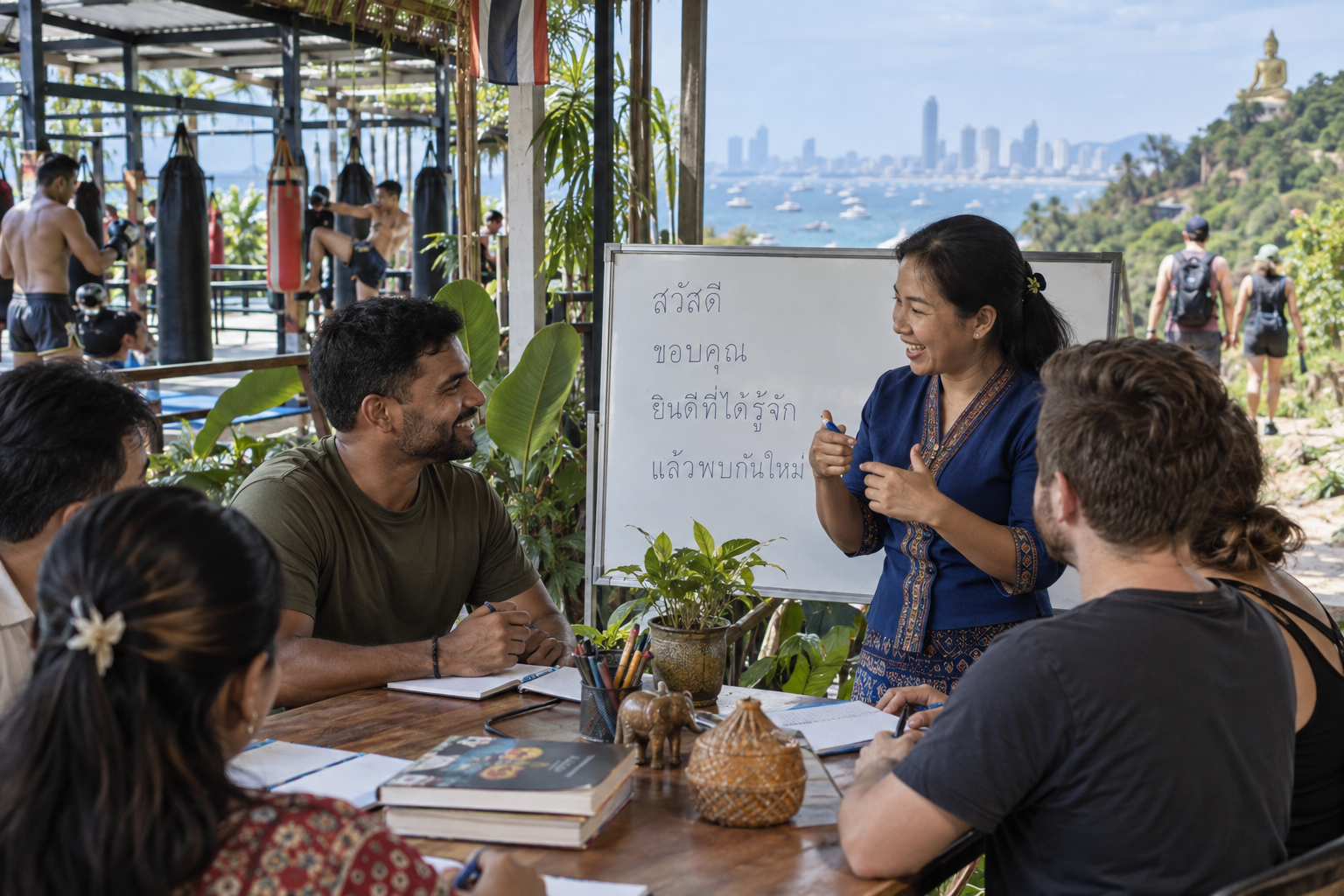
If you’re already here or if you’re coming anyway, here’s what works. Learn Thai. Even basic phrases change everything. You’re no longer just a walking wallet. People see you making an effort. Conversations open up. You become a person, not just another farang.
Find purpose outside nightlife. Hiking, the gym, Muay Thai, volunteering, cooking classes, golf, literally anything with structure and progression. The guys who thrive in Pattaya have hobbies that don’t involve bars. Build relationships with expats who aren’t running from something, who aren’t drunk. They exist. Look for the few ones with hobbies and not just bar tabs.
Accept what Pattaya is. It’s not a family-friendly resort. It’s a beach town with excellent food and complicated social dynamics. It’s not a solution to anything. It’s not a substitute for working on yourself. Set boundaries before you arrive. Limit your time and money. Don’t mistake performance for genuine affection. Leave your heart at home.
Pattaya Isn’t Evil
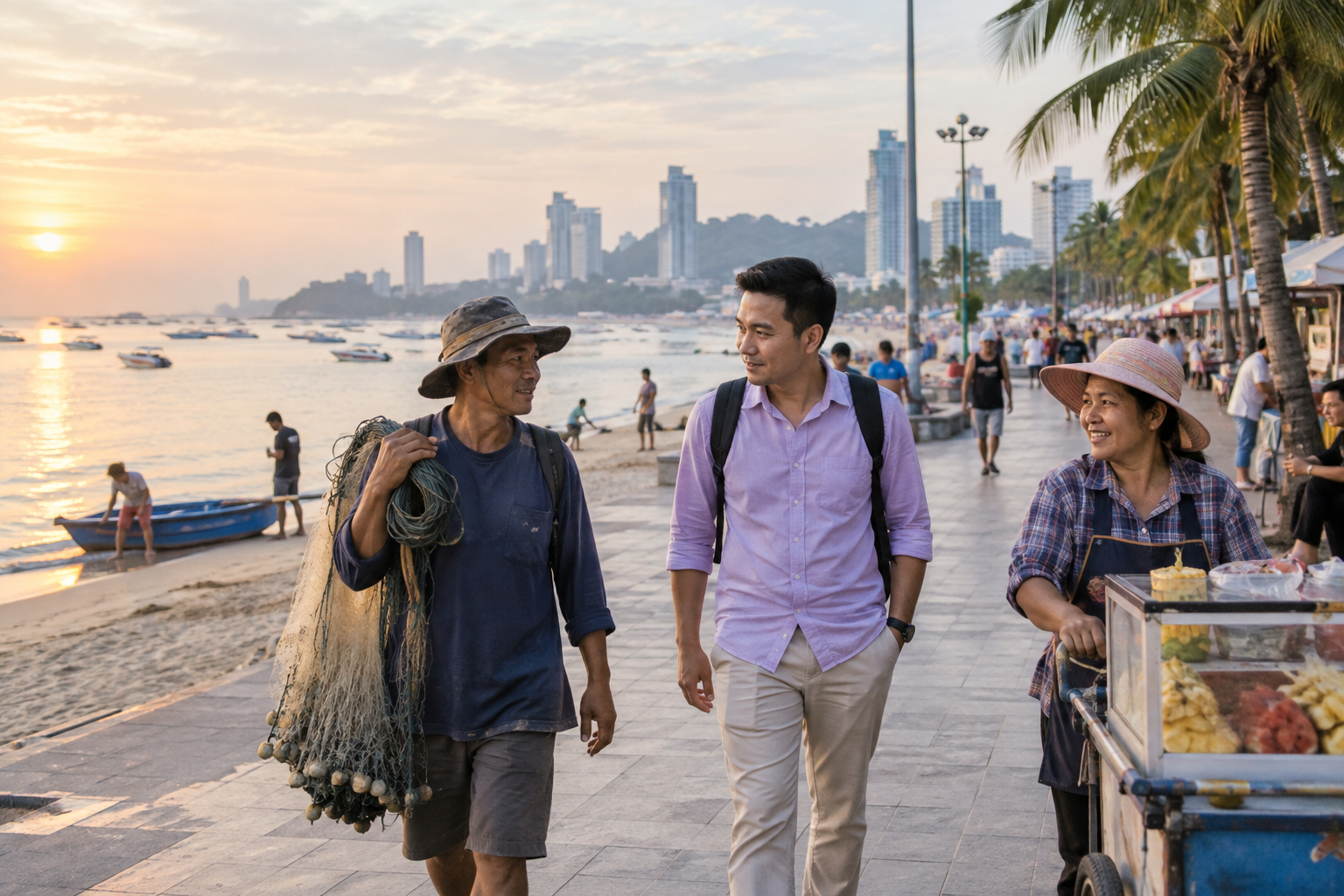
And most importantly, remember that if you’re struggling with loneliness, depression, or a lack of purpose before Thailand, those issues will still be waiting for you.
The bottom line is that I love Pattaya. Pattaya isn’t evil, and neither are the men who go there or the women who work there, but it is a psychological minefield that catches thousands of unprepared travelers off guard every year.
Go in with your eyes wide open. Understand that the initial high is temporary and chemically driven. Recognize that transactional relationships can’t substitute for genuine connection. Be aware that the party atmosphere can mask deep loneliness both in yourself and others.
The truth is the only real antidote to loneliness is authentic connection, first to yourself and then to others. Paradise can make you feel alive, but only you can make your life meaningful because in the end, we are all just looking for someone to love us for who we are.
That’s a need that can’t be bought in any bar anywhere in the world.