Thailand Rainy Season Travel Mistakes
In December of last year, over 100 passengers boarded the night ferry to the tropical island of Koh Tao, but this was a crucial mistake that turned their dream trip into a travel nightmare. In the middle of the night, a huge thunderstorm occurred, causing towering waves to batter the boat and eventually sinking into the bottom of the ocean. Luckily, all of the passengers survived, but what they didn’t know is that if they had just planned a little better, this terrifying ordeal could have been completely avoided.
How Thailand’s Rainy Season Forms
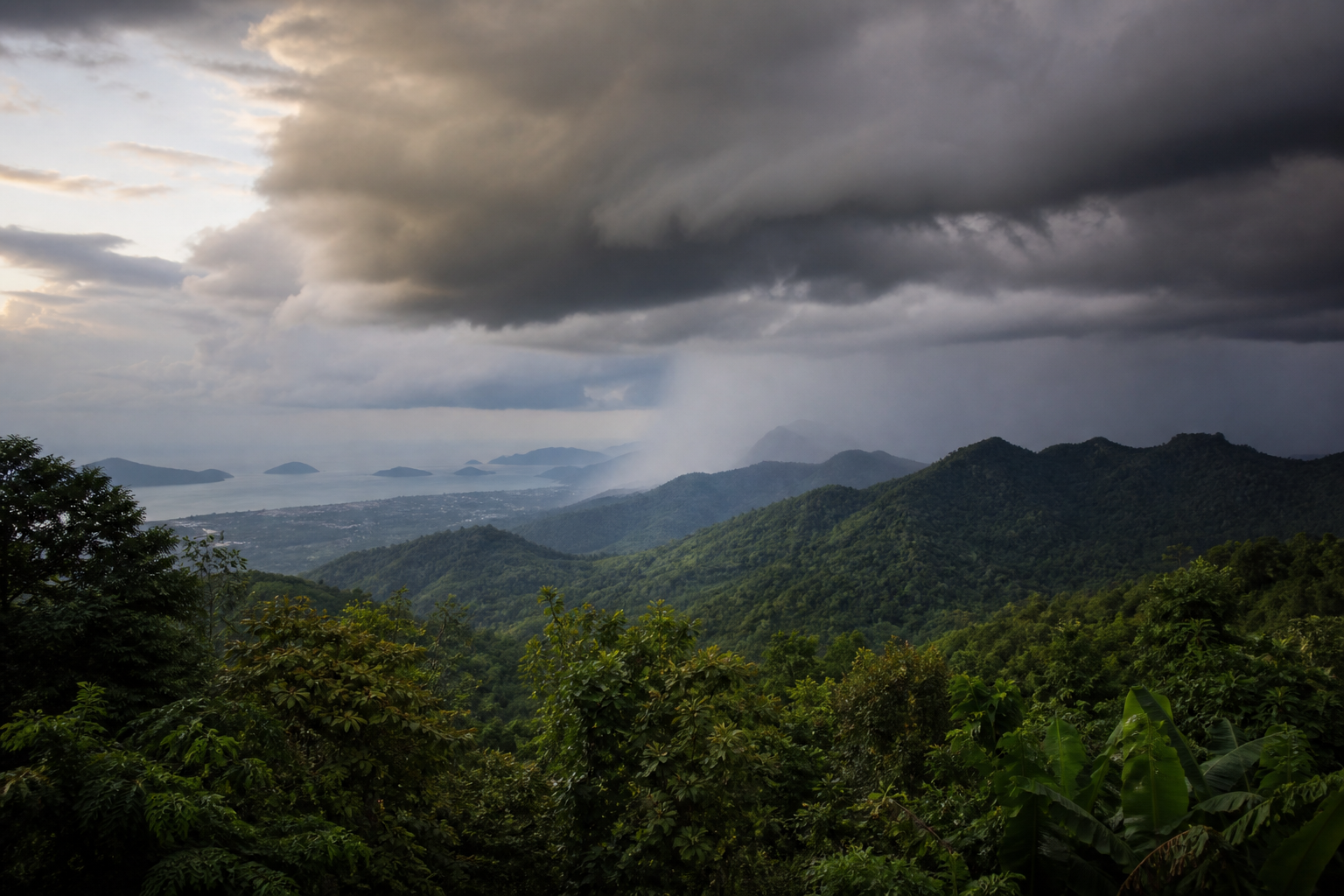
India is a hot tropical climate. The air in India is warm and full of water as it collects moisture from the Indian Ocean and the water vapor over the vast jungles and rainforests. The air, like many Indians, likes to travel to Thailand once a year for its annual holiday. However, the warm Indian air has an ancient enemy.
On the other side of the battlefield stands the cold air from Northern Asia, a fierce opponent hailing from the distant lands of Russia, Mongolia and Northern China. This air mass can reach temperatures as low as -49°C and carries these freezing cold temperatures over the mountains and plains of Northern Asia and pushes southward with relentless determination towards Thailand.
As the warm air of India collides with the cold air of the north, a battle unfolds in the skies of Thailand. The epic clash between these two weather patterns creates some of the most fearsome thunderstorms, monsoons and even tornadoes seen anywhere in the world, or as Freddy Mercury once put it, “Thunderbolts and lightning, very, very frightening.”
This annual meeting between these natural forces is known as the rainy season, and it takes place for up to 6 months of the year between May and October.
Why Thailand’s Rainy Season Is So Unpredictable
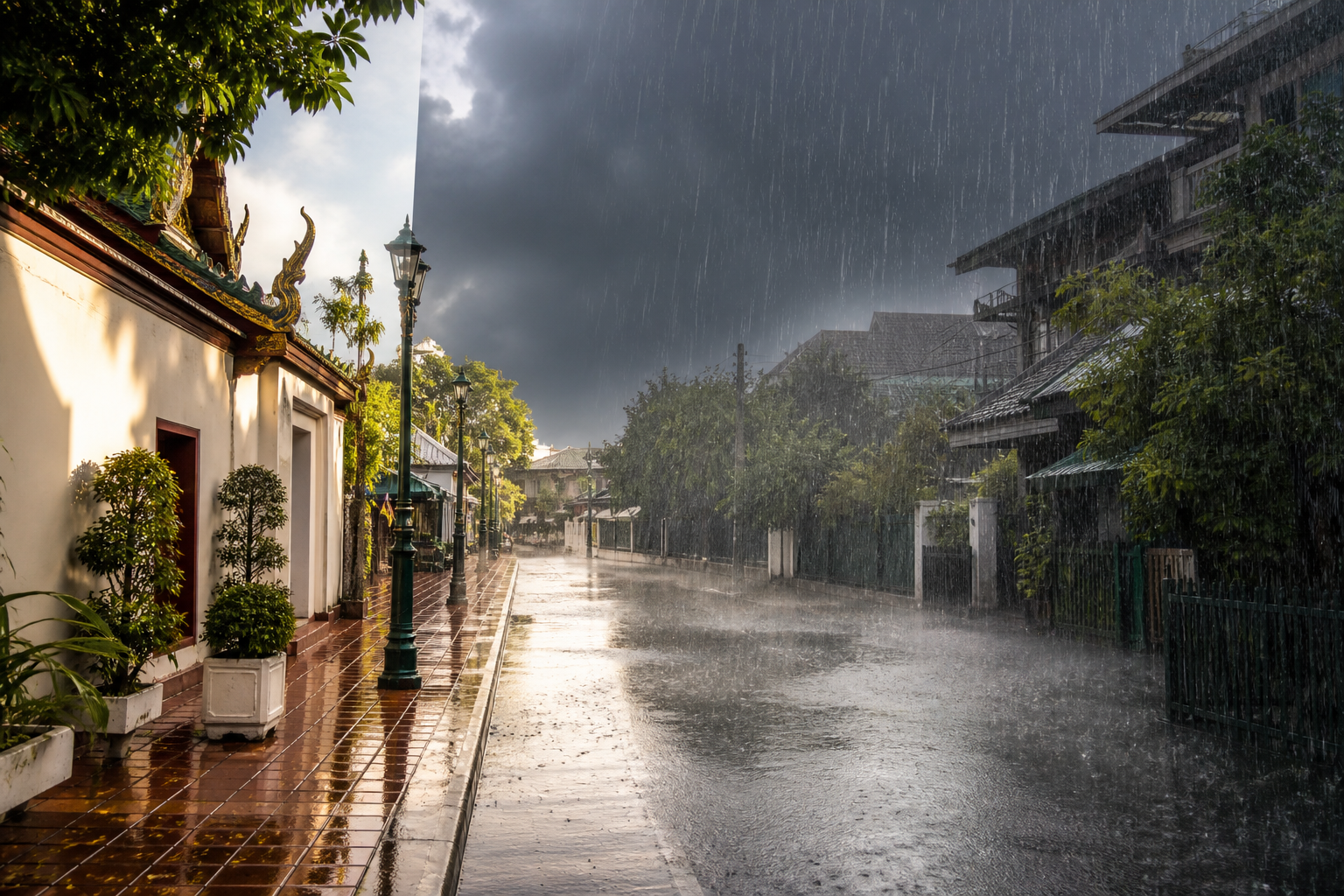
What does this mean for you as a traveler? Well, this can be summed up in one word: unpredictability. The rainy season is notorious for sudden, intense thunderstorms that can turn a sunny day into a stormy one in minutes. Plan to go trekking through the mountains of Chiang Mai? I hope you brought a rain jacket and some sturdy hiking boots. Hoping to take a longtail boat to explore some hidden islands? Think again. The weather in Thailand can scupper any plans pretty quickly, so it’s always best to have a backup plan.
The extreme weather can also lead to other problems. Take Bangkok, for example. Despite rainy season being an annual event, the city itself is not designed to handle a lot of rain. This means that during storms the streets can flood to above knee level, bringing traffic to a standstill and making it very difficult to explore. On the islands, the storms can churn up a lot of rubbish from the ocean and bring it to shore, turning pristine beaches into cluttered coastlines with debris.
The weather might be the least of your problems, though. The storms can increase the likelihood of you getting into real danger. I’m sure you’ll all recall the example of the Thai cave boys who were rescued from a cave in Northern Thailand. They got stuck because they were hiding in a cave when a flash flood occurred, blocking them inside the cave for weeks. On top of that, road accidents tend to increase during rainy season, and since Thailand already has some of the most dangerous roads in the world, this is not ideal.
The Biggest Danger Is Traveling at Sea

The most common and most dangerous aspect of traveling during rainy season in Thailand is traveling at sea. Remember the example I gave you from the beginning? Well, I was actually on the boat that left before that one, and it was one of the worst experiences of my life. The ship was rocking in a way that felt like it could break at any moment. Everyone around me was throwing up, and a few people even passed out and were immediately rushed to hospital once we arrived. Yet they did not cancel the next boat, and it ended up sinking in the middle of the ocean.
None of this compares to what happened in July of 2018, when a tour boat decided to ignore the government’s warnings of stormy weather and took a large group of tourists onto the seas of Phuket. The boat ended up capsizing, and with it 33 Chinese tourists lost their lives.
The Rainy Season Travel Hack That Works
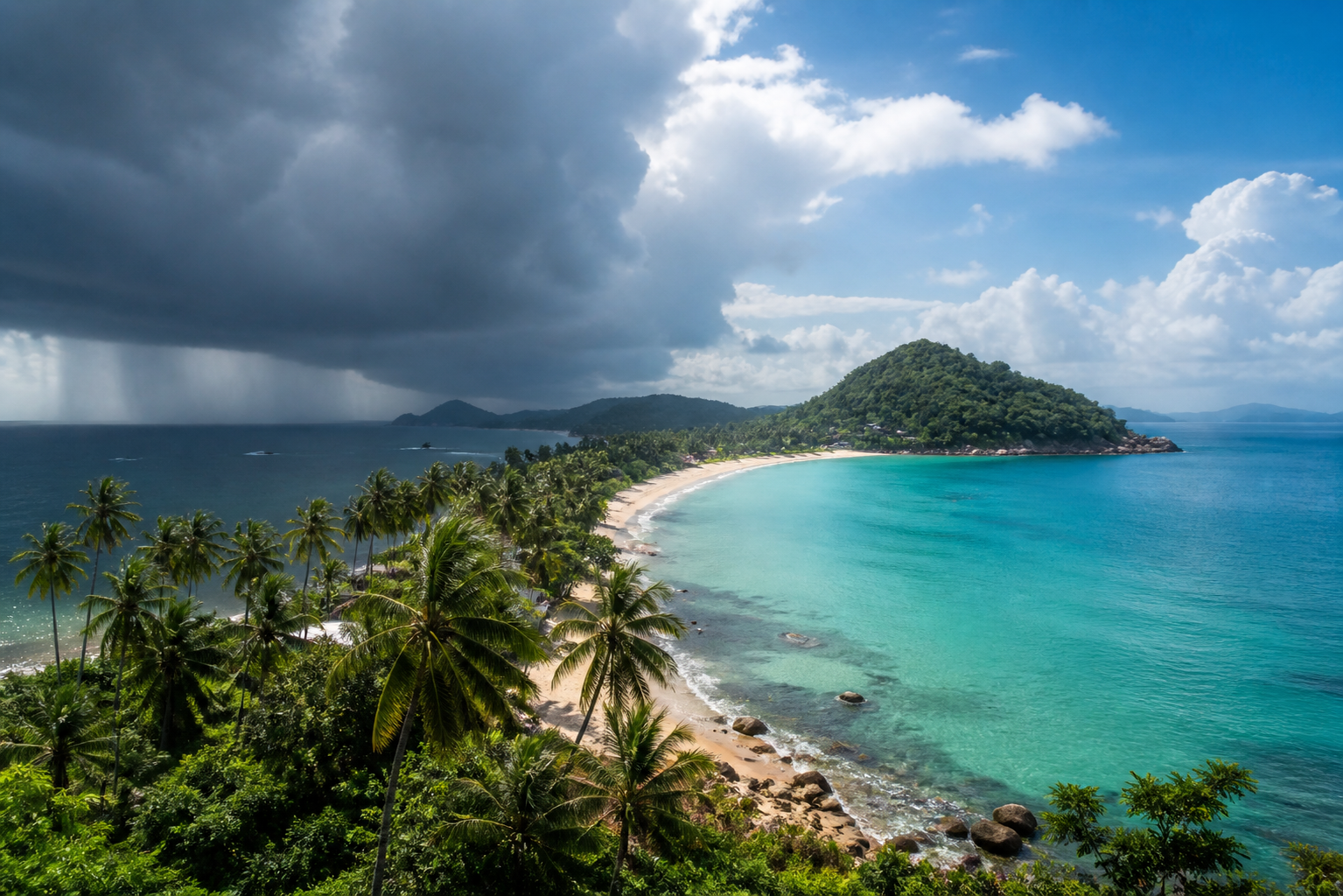
All of these effects could be completely avoided with one simple travel hack. It’s actually possible to spend a whole year in Thailand without ever experiencing the worst effects of rainy season. Although the rainy season generally lasts from May to October, it actually hits different areas at different times, meaning that if you’re careful about where you visit and when, you can avoid the worst effects of the season and still soak in the beauty of Thailand.
Let’s start with Northern Thailand. Cities like Chiang Mai and Chiang Rai experience their rainy season from May to October. This is the area that has the longest season. In central Thailand, including Bangkok, the season is a little shorter, starting around mid-June until the end of September.
But for those of you worried about having your beach holiday ruined, here is the biggest travel hack you can use to make sure that you get to experience the best that Thailand has to offer, even if you’re traveling during rainy season. If you look a little closer at Thailand on a map, you’ll notice that the main beach destinations are grouped into two distinct areas. The beach towns of Phuket, Krabi, Koh Phi Phi and Koh Lanta are all grouped here on the West Coast of Thailand. Then, if you look over here, you can see that the islands of Koh Samui and Koh Tao are all grouped together on the East Coast of Thailand.
The West Coast experiences its peak rainfall from May to October. However, the rainy season on the East Coast takes place between October and December. This means that the worst months on the East Coast occur at different times from the rest of the country, allowing you to use it as an escape from Thailand’s monsoon season. If you’re visiting Thailand from May to October, I would consider spending the bulk of that time on the East Coast. Here you can enjoy the beautiful tropical weather that Thailand is famous for as the year rolls on. If you’re traveling in October to December, you should spend your time on the West Coast, allowing you to avoid the worst effects of the rainy season altogether.
Why Rainy Season Can Still Be Beautiful
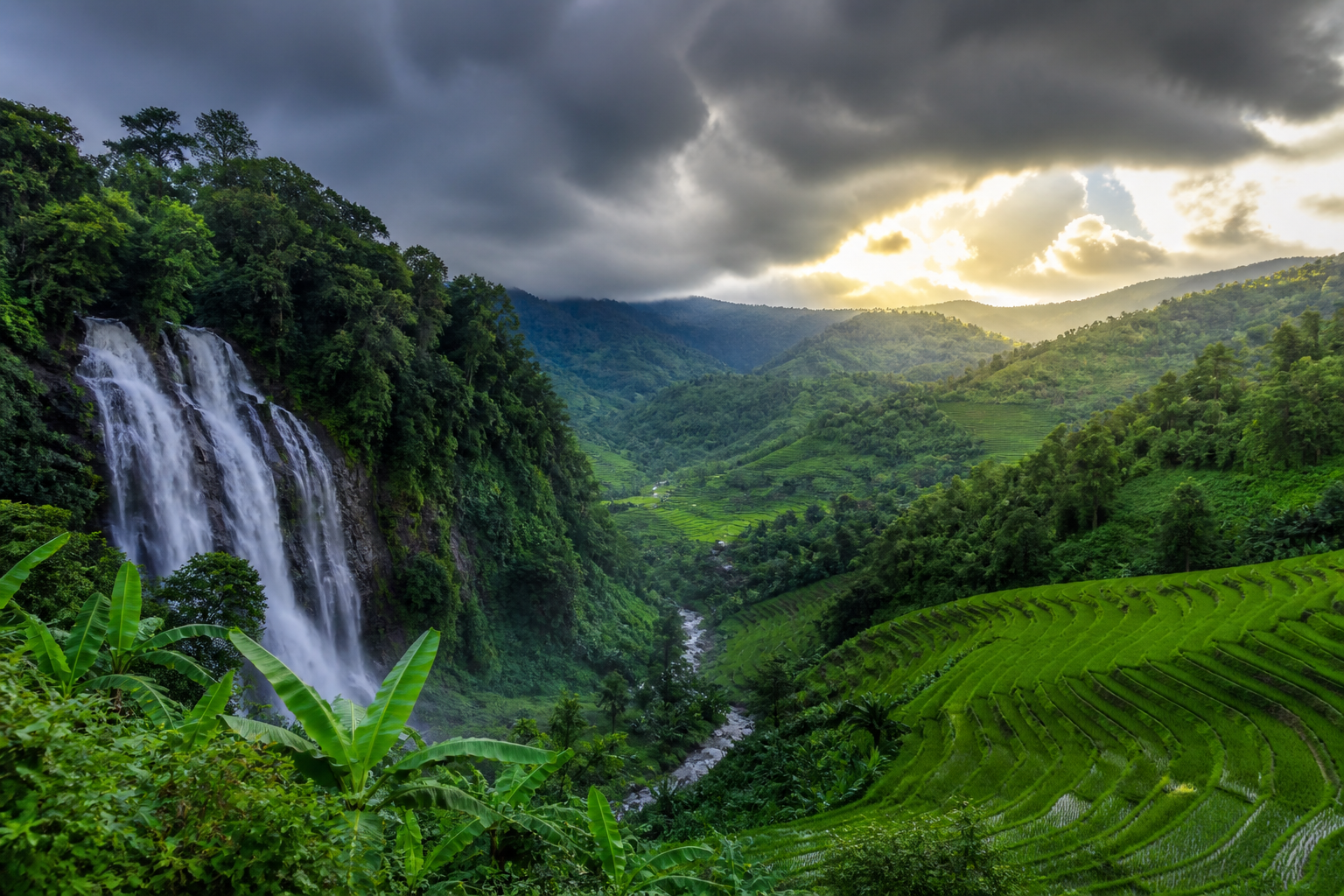
What if you’ve already booked your flight and accommodation and can’t change it? Well, you can still have a great trip to Thailand during rainy season. There’s a lot more to the country than sunny beaches for you to explore, and in fact there are actually some hidden benefits to traveling at this time.
For starters, fewer tourists brave the rainy season. This means fewer crowds and lower prices. On top of that, rainy season offers a respite from the extreme heat, cooling down the temperatures and making the air feel fresher.
In fact, some places are actually better to visit during the rainy season, as the heavy rains breathe life into the landscapes, turning the countryside into a lush, vibrant green paradise. Take Northern Thailand, for example. When it rains, it takes on a whole new level of beauty as the rainfall replenishes the jungle. The rice paddies in particular are at their most beautiful towards the end of the rainy season, and that’s not to mention the stunning waterfalls of Thailand. During the dry season these waterfalls slow down to just a trickle, but during the rainy season they’re at their most powerful and majestic, making them some of the most beautiful sights in the whole country.
If you’ve never seen a tropical thunderstorm, you’re missing out. They are some of the most fearsome and terrifying in the world. On top of that, these storms rarely last more than a few hours, so most of the day can still be enjoyed. We’re in rainy season right now, and you completely can’t tell: the sky is blue. It’ll probably rain later, but you can still enjoy your trip.