Important Things To Know BEFORE Visiting Thailand
I first visited Thailand 8 years ago, and as I stayed in the country for longer, I realized that I made a lot of mistakes when I first came here. I’ve now lived in Thailand for 7 years.I’m going to provide you with tips that will help you to avoid making those same mistakes.
Tip #1: Understand Thailand’s Seasons
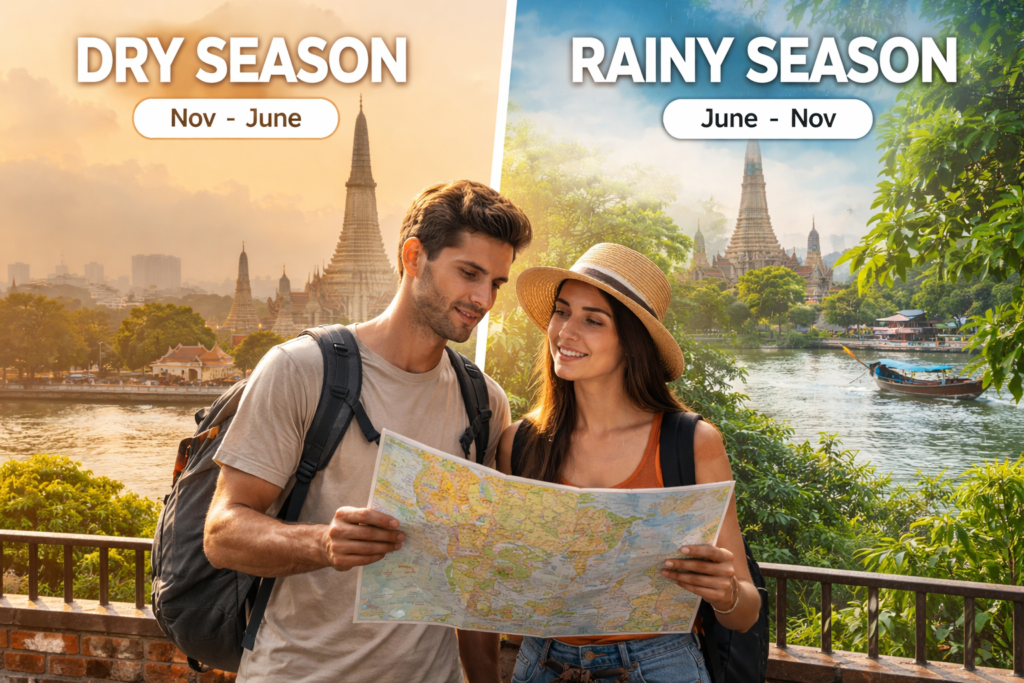
Thailand has two seasons: the dry season which lasts from November to around June, and the rainy season which lasts from June until November. The dry season is the tourist high season.
I arrived in the middle of dry season, but I made a mistake because Thailand also has a pollution season. The pollution is caused by crop burning which occurs between December and March and affects Northern Thailand particularly badly. Of course I didn’t know any of this. I traveled north to Chiang Mai in February. You could practically taste the smoke. It also gets pretty bad here in Bangkok.
My favorite time to travel is actually early in the rainy season around June and July. There are less tourists, prices are lower, and the weather is pleasant. The air quality is good, and it actually doesn’t rain that much. You normally get a downpour in the early evening, and the rest of the time it’s very nice.
Tip #2: Vaccinations and Health Risks
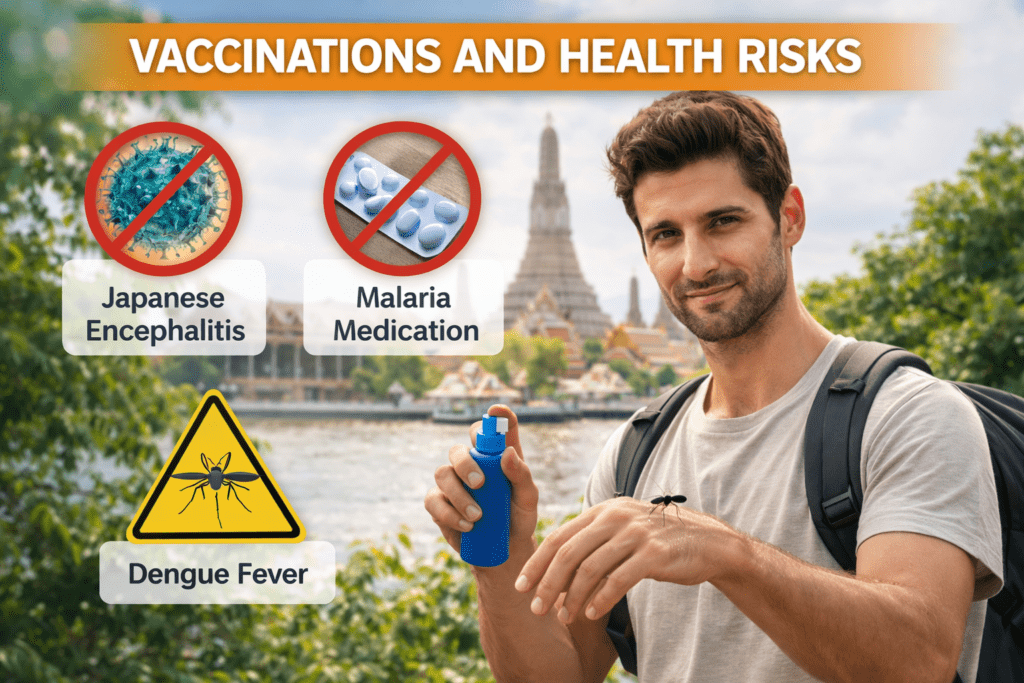
When I first came to Thailand, my doctor advised me to get a long list of vaccinations. But the truth is that your risk level in large cities and built-up tourist areas here in Thailand is actually very low. Expensive vaccines for much rarer infections like Japanese encephalitis are usually unnecessary. I’ve still not met anybody who’s had Japanese encephalitis after being here for 7 years.
In fact, I haven’t really met anybody who’s had malaria either. Antimalaria medications are another thing that your doctor might recommend for you to take. I met one guy who took them and he was having hallucinatory dreams and ideations. This is the side effect of taking antimalaria pills, and here in the built-up cities and tourist areas, malaria is actually quite rare.
You’re much more likely to catch dengue fever. I’ve actually met more than a few people who’ve had dengue fever, and your best defense against dengue fever and any other mosquito-borne illness is a good bug spray.
Tip #3: Pack Light
You don’t need to pack bug spray or bring it with you. You can buy bug spray anywhere here in Thailand. Actually, you don’t need to pack a lot of stuff at all. It’s very, very easy to find almost anything here, and you can normally find it for cheaper than you will in your home country.
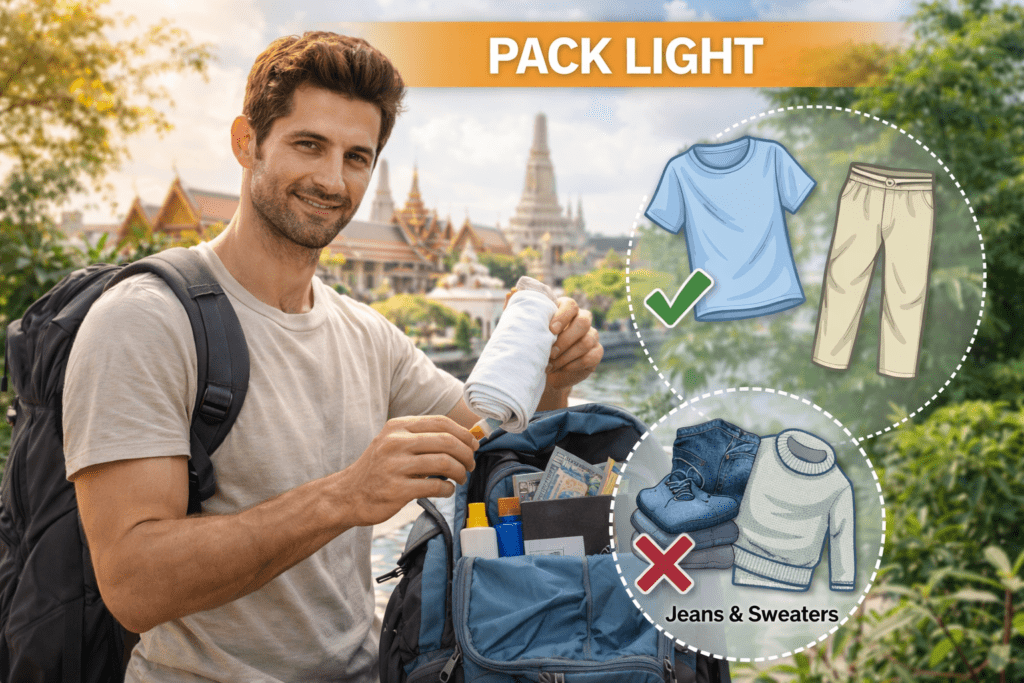
When I first came to Thailand, I packed way too much stuff, and it made it much harder for me to travel because budget airlines charge you extra for bringing more luggage. This is a very hot climate, and you should avoid bringing things like jeans or sweaters or any heavy garments.
My recommendation is to pack light clothes that will dry very quickly, and make sure to pack a pair of light pants as you’ll need them to get into temples and religious sites. You’ll also need shirts that cover your shoulders.
Tip #4: Budgeting for Thailand
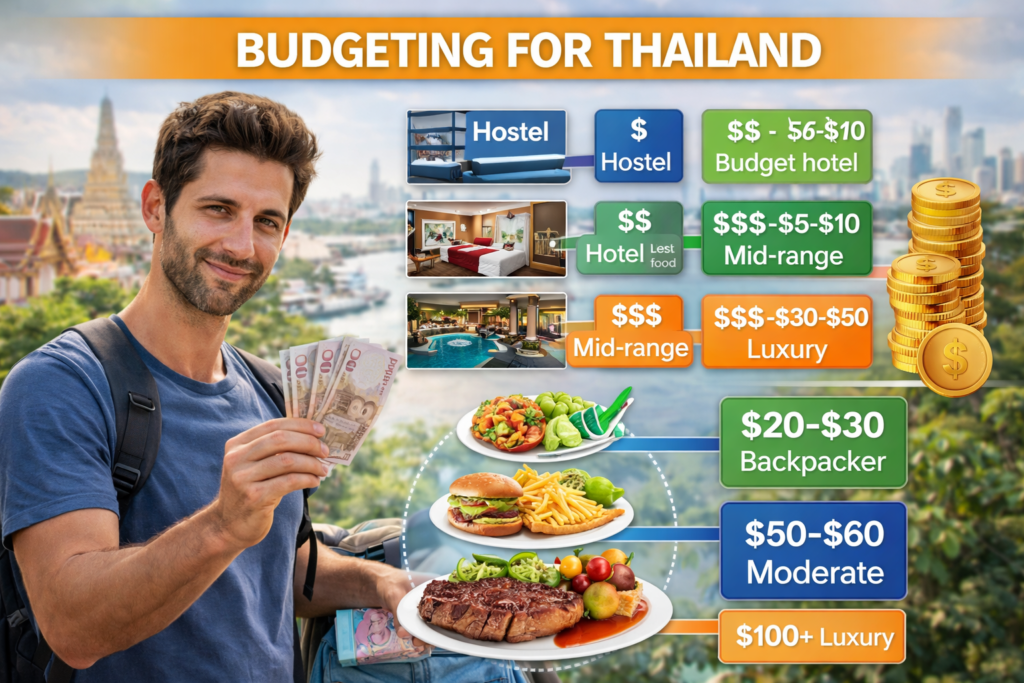
How much money will you spend? Thailand has great options for every budget. You can stay in great hostels for as little as a few dollars a night, find budget hotel rooms for $5 to $10 a night, jump up to the mid-range hotels for $30 to $50 a night, or go full luxury and spend hundreds of dollars a night.
The same is true for your food options. You can eat locally and find great small restaurants, food vendors, and mall food courts and spend $1 to $2 per meal. Or you can eat more Western food at $5 to $10 a meal, and you can spend hundreds of dollars a meal.
It also depends where you choose to travel and spend the most time. The south of Thailand is significantly more expensive than the north of Thailand, so the more time you spend traveling around all those beautiful islands, the more money you’ll spend.
Personally, when I was traveling I spent between $50 and $60 per day, and I would recommend a minimum budget for a backpacker style traveler of $20 to $30 per day. You can definitely spend much more if you want to live a luxury lifestyle. Just don’t blow all that money too quickly and become one of the infamous “travelers who run out of money” of Asia.
Tip #5: Getting Thai Baht
You’ll see lots of ATMs all over the country, and it’s very easy to withdraw money using a foreign ATM card here in Thailand. But just know that you’ll be paying pretty high fees for the privilege of doing it. ATM machines here in the country normally charge 220 baht per transaction, and your home bank may charge additional fees.
If you need to use ATMs, you’re better off making a few large withdrawals rather than lots of small ones. And if the ATM machine asks you if you want to do a currency conversion, always select no conversion. The conversion will always be more expensive.
If you want to avoid the ATM fees altogether, you can go into a bank branch with your bank card and your passport, but you might need to try a few banks before you find a teller who knows what you’re talking about. Personally, I’d recommend that you try Krungsri Bank. They seem to have the best track record at this.
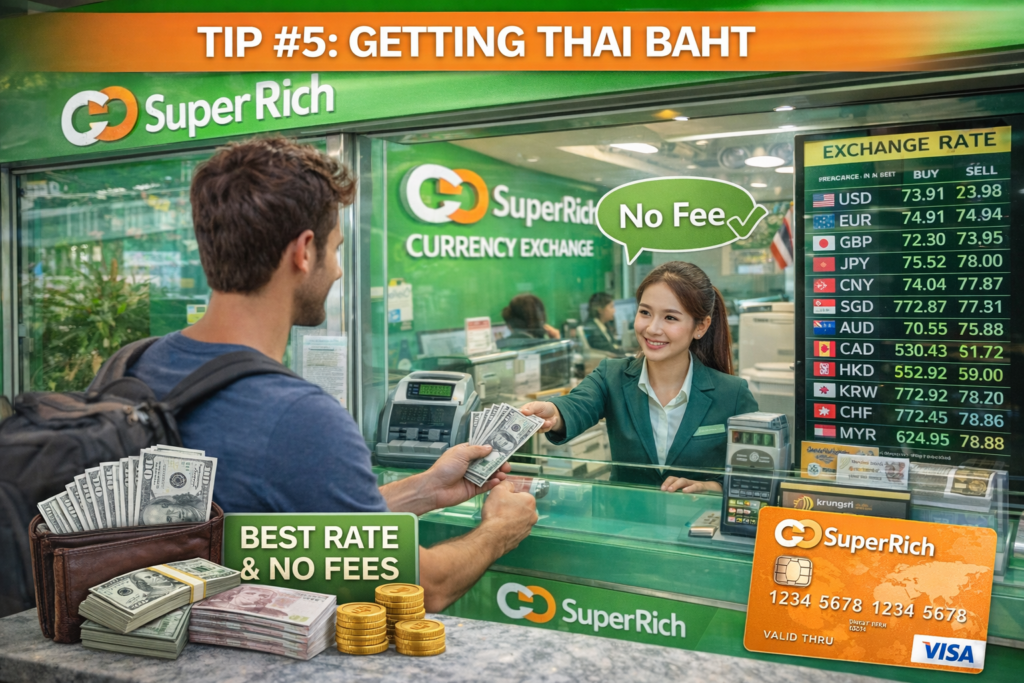
But the cheapest way to get Thai baht—that is the currency here in Thailand—is actually to bring cash directly with you from your home country and exchange it here in Thailand. You can bring up to $20,000 USD without declaring it at customs, and the best place to exchange it for Thai baht is a place called SuperRich. It has the best rates here in Thailand and no additional fees.
Because you probably don’t want to be carrying around $20,000 in cash, you can also get a SuperRich debit card.
Tip #6: Getting Around Thailand
It’s really easy to travel here in Thailand. There are lots of sleeper buses and an excellent train and rail network, but it can often be cheaper to fly as long as you’re not carrying a lot of extra luggage—which you shouldn’t be. Travel lightly.
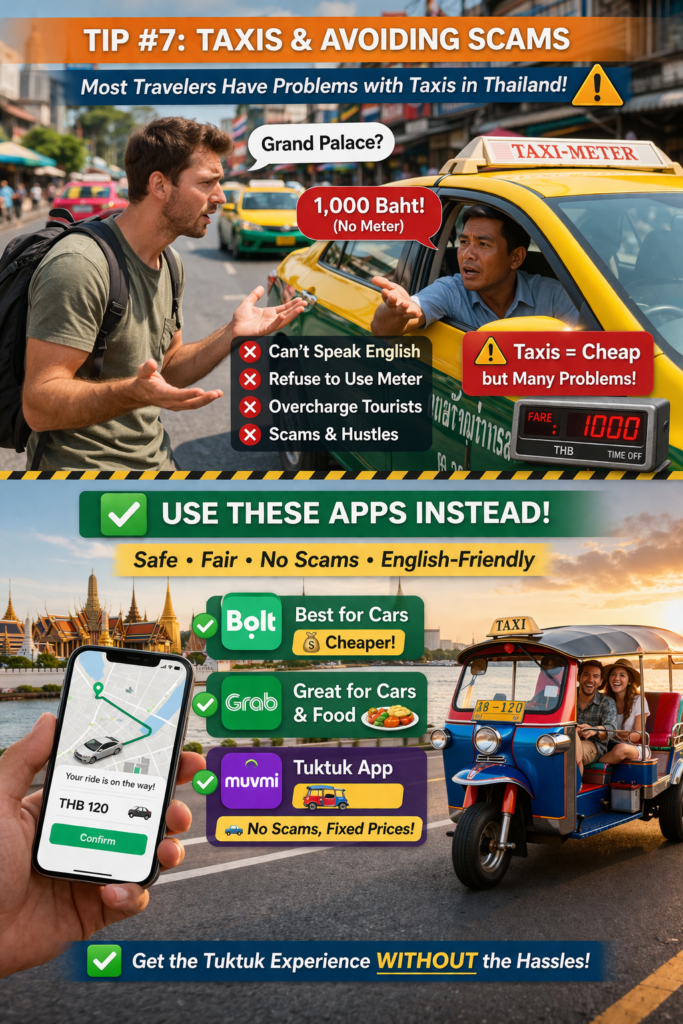
One of my favorite ways to travel is to hire a car from one of the ride-sharing apps. Bolt and Grab are the Ubers of Thailand, very inexpensive especially if you’re sharing the ride with a couple of friends. I personally prefer Bolt because it is a little bit cheaper. You can travel from Bangkok to Pattaya for only 1,200 baht.

Tip #7: Taxis and Avoiding Scams
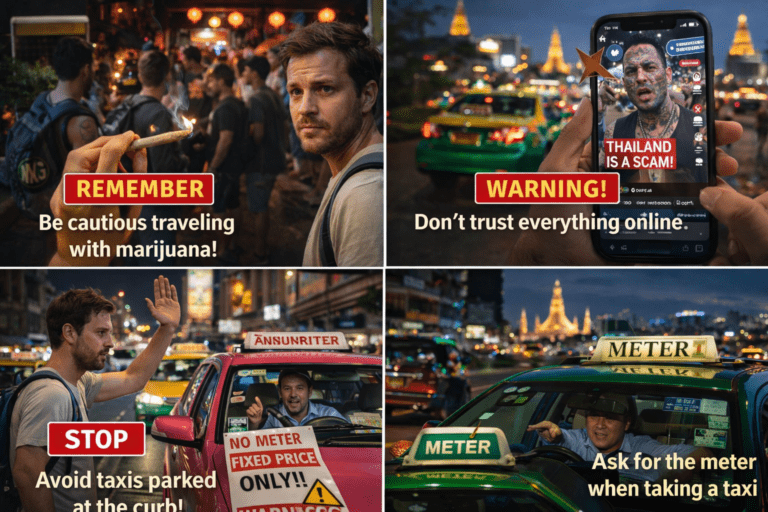
Speaking of taxis, most travelers make mistakes with taxis and taxi drivers. Taxis are quite cheap here in Thailand, but you’ll also encounter a lot of problems. Drivers often can’t speak English and won’t understand your directions, or they refuse to turn on the meter and overcharge tourists. Sometimes they push outright scams and hustles.
For that reason, I recommend using Bolt and Grab over taxis whenever you can. You can even order a tuktuk using an app called Muvmi to get the famous tuktuk experience without all the scams and hassles.
Tip #8: Booking Hotels and Accommodation
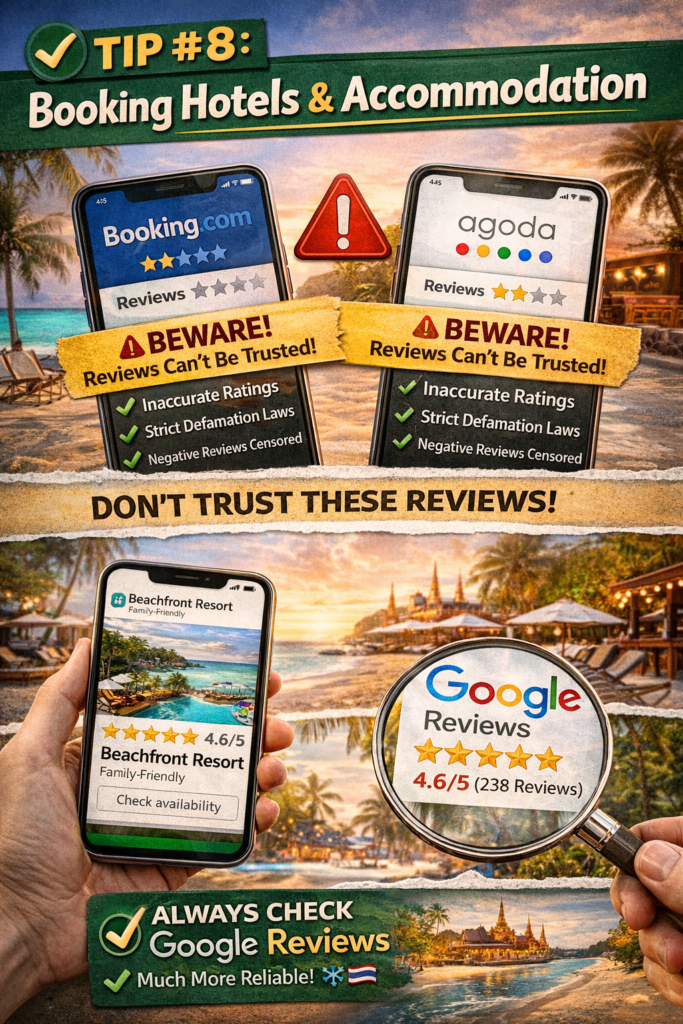
When I’m traveling, I normally use Booking.com or Agoda.com to book hotels. They have great discounts especially in the low season, but their reviews are often inaccurate. Thailand has very strict defamation laws, and that means it’s very easy to get sued if somebody leaves a negative review on a website like Agoda.com or Booking.com.
You should look at Google reviews instead. My parents recently visited me here in Thailand and we went to Koh Samet and stayed at a family-friendly hotel. I read all the reviews on Agoda.com, except when I arrived I realized that the rooms were located immediately next to the biggest nightclub on the island. Music and yelling went all through the night. I checked Google reviews and I found an entirely different set of reviews than I saw on Agoda.com. Do yourself a favor: before you book a hotel, make sure to check the Google reviews first.
Tip #9: Airbnb vs. Serviced Apartments
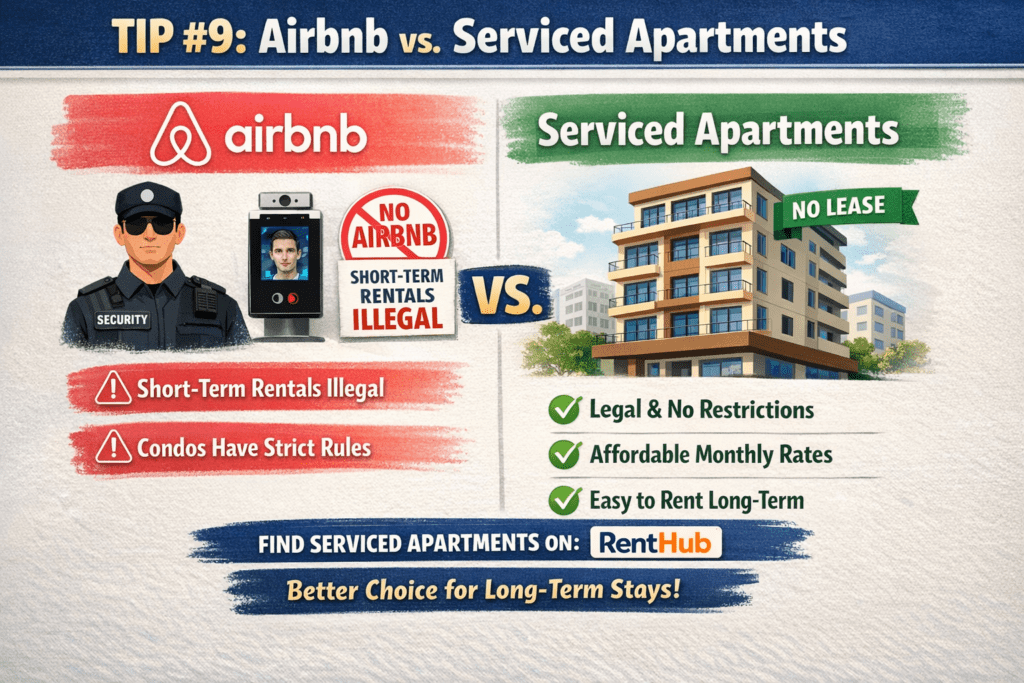
But what about Airbnb? Short-term rentals that are under 30 days are actually illegal in Thailand without a hotel license. This has caused lots of problems for Airbnb guests staying at condos, as many condos have policies against Airbnbing, and you’ll see signs everywhere telling you that it’s illegal.
In addition, condos often have face scanners in the common areas to prevent Airbnb guests from accessing the facilities. A friend of mine booked an Airbnb a few months ago. The owner sent him instructions telling him to walk through the parking lot to avoid being seen by security. I don’t know about you, but that doesn’t sound like a great holiday—sneaking past security like you’re some kind of criminal.
Your experience with Airbnb will depend highly on the condo itself and whether it has policies that are explicitly against Airbnb. Make sure to read those reviews closely for any sense that you’re going into an anti-Airbnb condo.
But here in Thailand, you also have something called serviced apartments. If you plan to stay in a city for a month, you should check out serviced apartments as they are much, much cheaper and normally don’t require you to sign a lease. In addition, serviced apartments are buildings that are owned by a single owner, so you won’t have any problems with policies against short-term rentals.
The best place to find serviced apartments is on a website called RentHub. I’ll put the link in the description so that you can check them out for yourself. And like hotels, always check those Google reviews before booking.
Tip #10: Renting a Condo as a Home Base
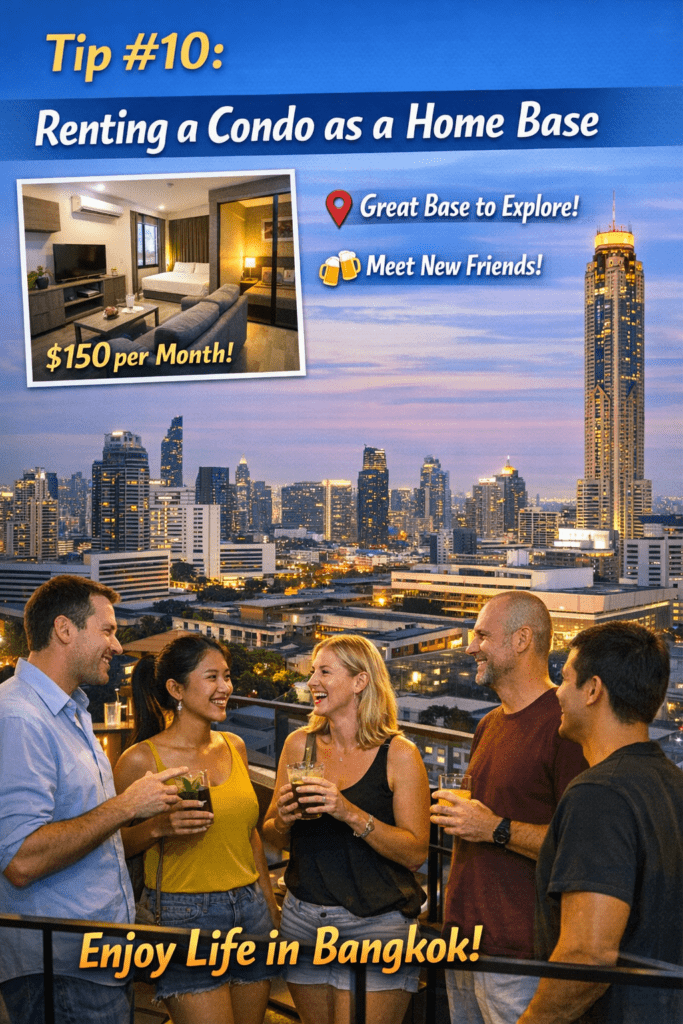
If you’re planning on traveling for a while, you may want to rent a condo and use it as a home base to travel around the region. You can rent condos here in Bangkok for as little as $150 a month, and there’s a huge surplus of empty condos all over the city, so it’s very, very easy to find one.
That’s exactly what I did. After a couple of months of traveling, I decided to rent a condo. Much nicer to have a place to leave my stuff and come back and rest and relax a little bit, and also allowed me to spend more time in the city. And I met lots of friends, and it did lead to me staying here long term.
If you spend some time in a city and get to know locals and expats, you’ll have an entirely different experience.
Tip #11: Getting a SIM Card
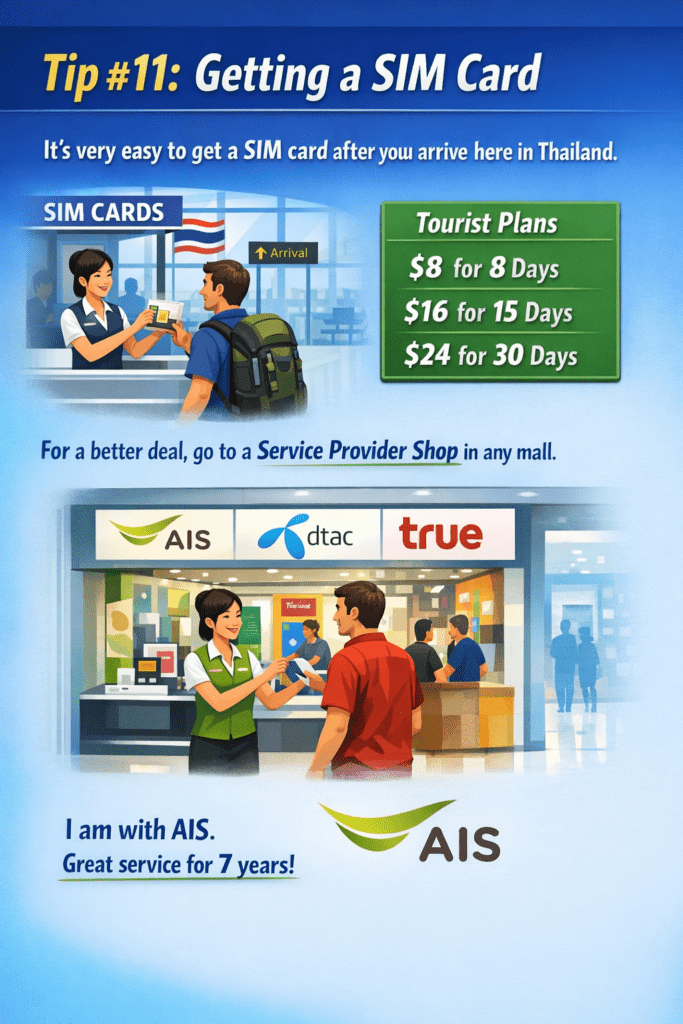
It’s very easy to get a SIM card after you arrive here in Thailand. You can pick one up directly at the airport and get it set up within minutes. The tourist plans are very affordable at about $8 for 8 days, $16 for 15 days, and $24 for 30 days.
For a better deal, you can go directly to the service provider shop that you’ll find in any mall and set up a pay-as-you-go plan. I am with AIS. I’ve had great service with them for all seven years that I’ve lived here.
Tip #12: Renting a Scooter
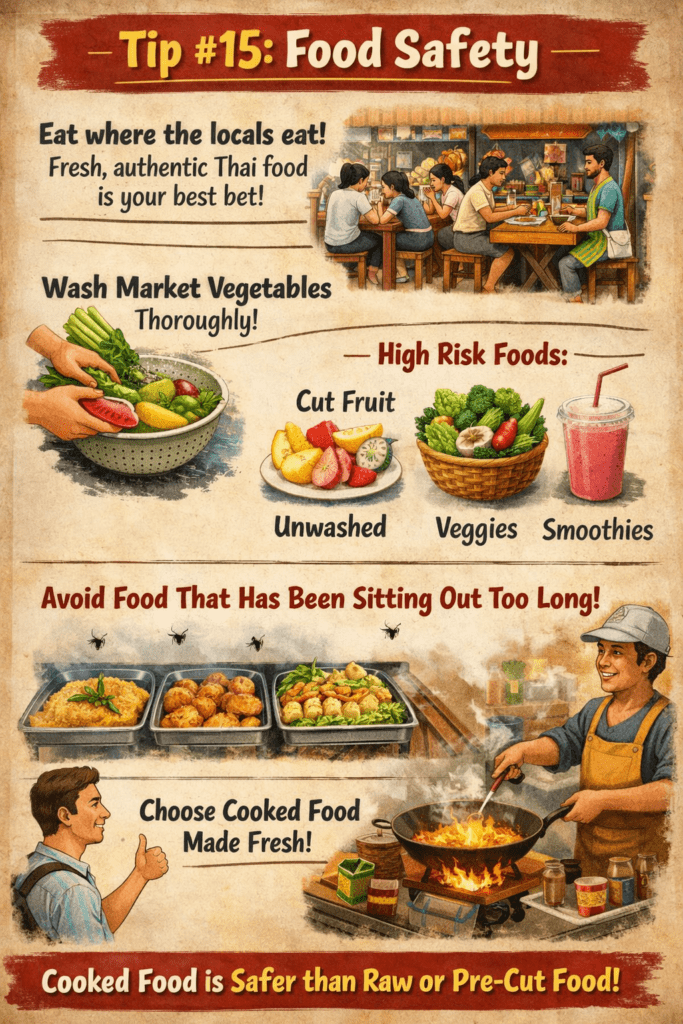
When you’re traveling in Thailand, a scooter will definitely make your life easier. They are very inexpensive—they normally cost only about 200 Thai baht per day. Just make sure to document any damage by taking photos of the bike before you take it out. There are a few scams where shops will try to charge you for pre-existing damages, but personally, I’ve never had a problem dealing with scooter shops.
You can rent one without an international license, but if you don’t have an international license, the insurance will not cover you. Always wear a helmet—it will help protect your head in case of an accident, and it will also help protect your wallet in case the police pull you over. It is very common for police to pull over tourists that don’t have a helmet, and you may receive a fine.
If you’ve never ridden a scooter before, don’t let your first time be in a city like Bangkok where you have very chaotic traffic. Thailand has one of the highest road death rates in the world, and this is almost all scooters.
Tip #13: Alcohol Laws
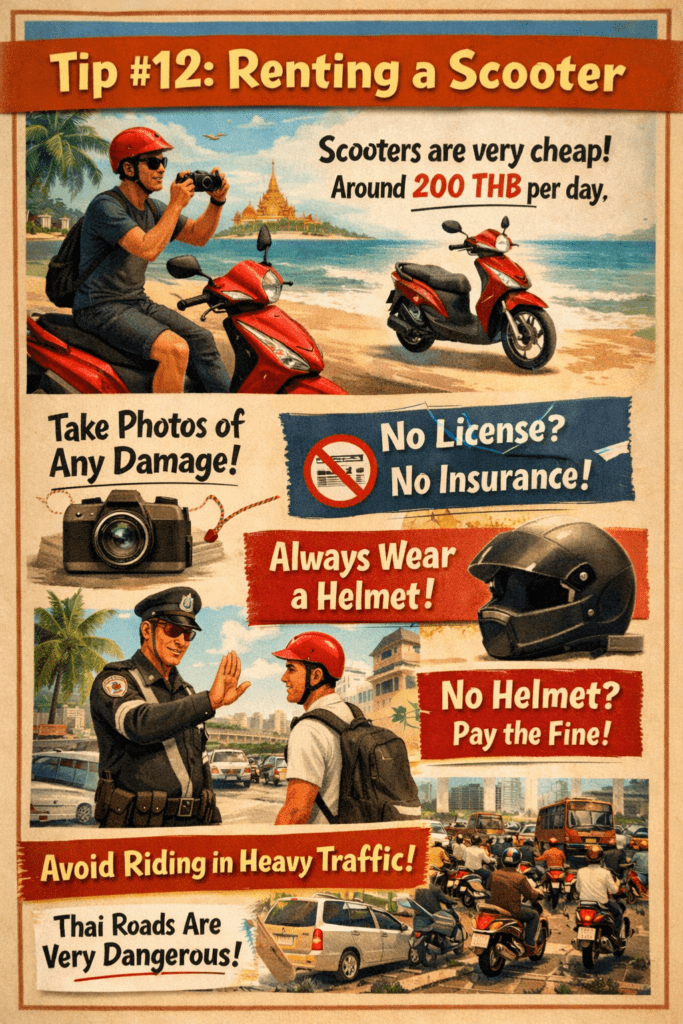
One thing that surprises tourists is that you can’t buy alcohol between 2:00 PM and 5:00 PM. Shops like 7-Eleven will simply block off the alcohol sections, but you can still have a drink at a bar or a restaurant. They banned alcohol sales at this time because this is when schools are let out and they don’t want kids drinking.
Shops like 7-Eleven that are in the proximity to schools are also banned from selling alcohol at any time. Alcohol sales are also banned on Buddhist holidays as well as on election days. So if you’re planning a night out, make sure to check that calendar.
Tip #14: Marijuana Laws
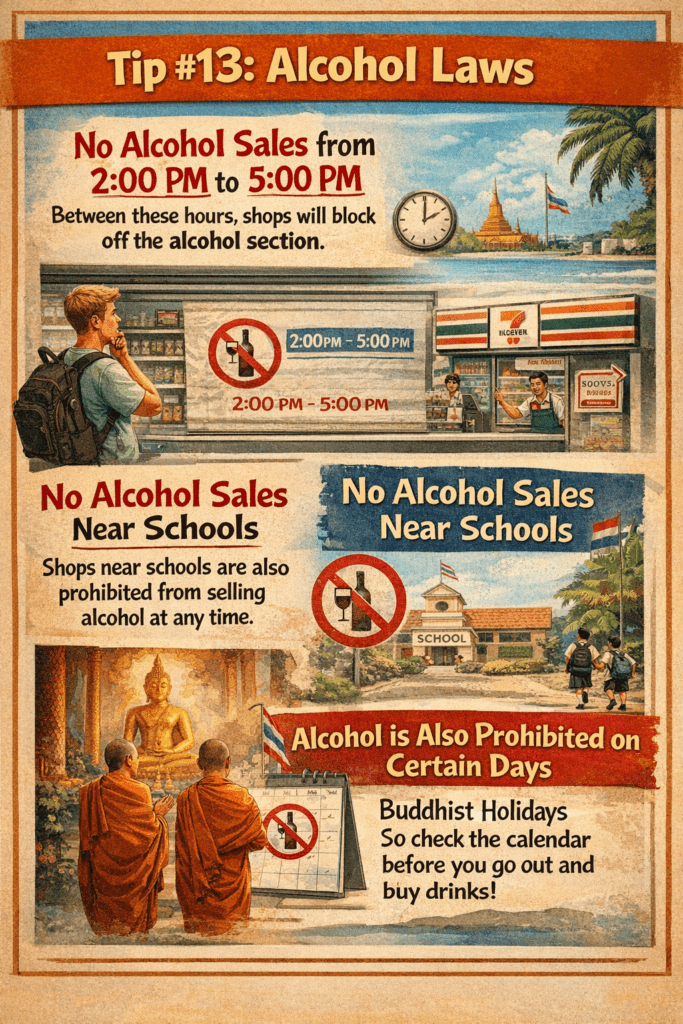
While alcohol sales are limited at certain times of the day, those laws haven’t been applied to marijuana, which was decriminalized in 2022. You’ll find shops on every single street corner, but you have to remember that unlike alcohol, you can’t consume marijuana in public.
It’s also important to remember that it’s only marijuana that has been decriminalized. Other drugs remain highly criminalized. This is not the country to get caught in with illegal drugs.
You also have to remember that marijuana is still highly criminalized in the neighboring countries in this region. Make sure to double and triple check your bags if you’re leaving Thailand and flying to another country in this region.
Tip #15: Food Safety
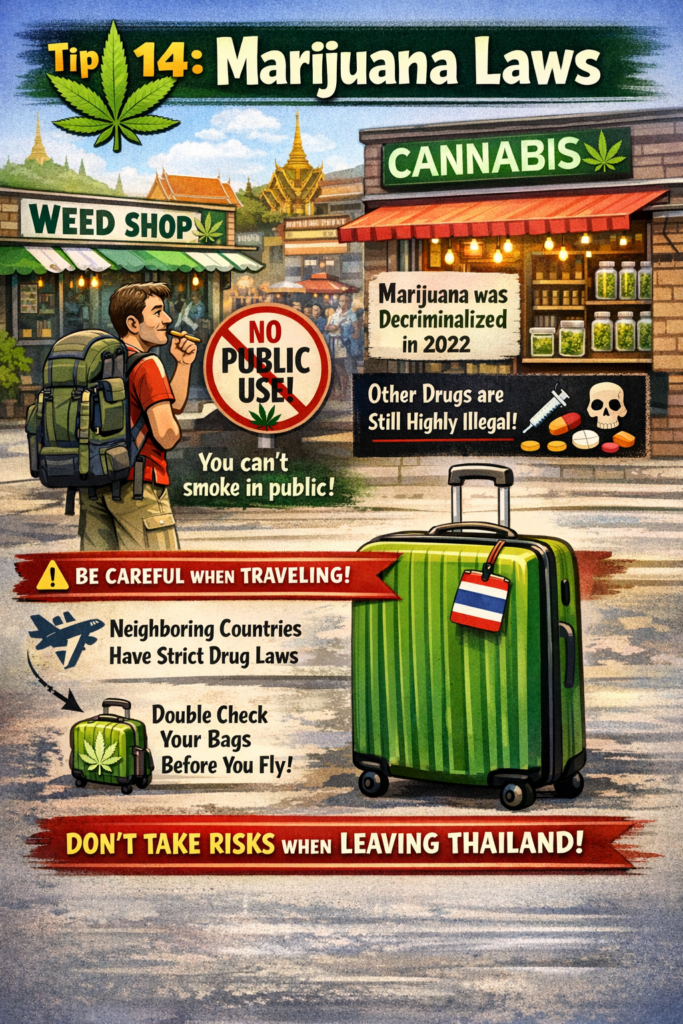
My recommendation is to eat at places where you see lots of local customers. Shops that serve local customers day after day are depending on repeat business; they will serve fresh and authentic Thai food.
In my 7 years of living in Bangkok, I’ve had food poisoning three times. The first time I had food poisoning, I got it from a smoothie—the area around the smoothie stand was not very clean. The second time I had food poisoning, I got it from market vegetables. I didn’t wash them sufficiently well. If you buy local vegetables in a market, you have to wash them. You can have bacterial residues on those vegetables.
The last time I had food poisoning was from Chinese food—that is pretty similar to one of the times I had food poisoning in Canada.
You’re much less likely to get food poisoning from cooked food. Cut fruit, vegetables, and smoothies have the highest risks. And then you have the street food that sits out for a while. When food sits out for too long, it will disrupt your stomach. So if you want to avoid stomach issues altogether, you should avoid eating street food that’s been sitting out on the street and make sure it’s cooked in front of you.
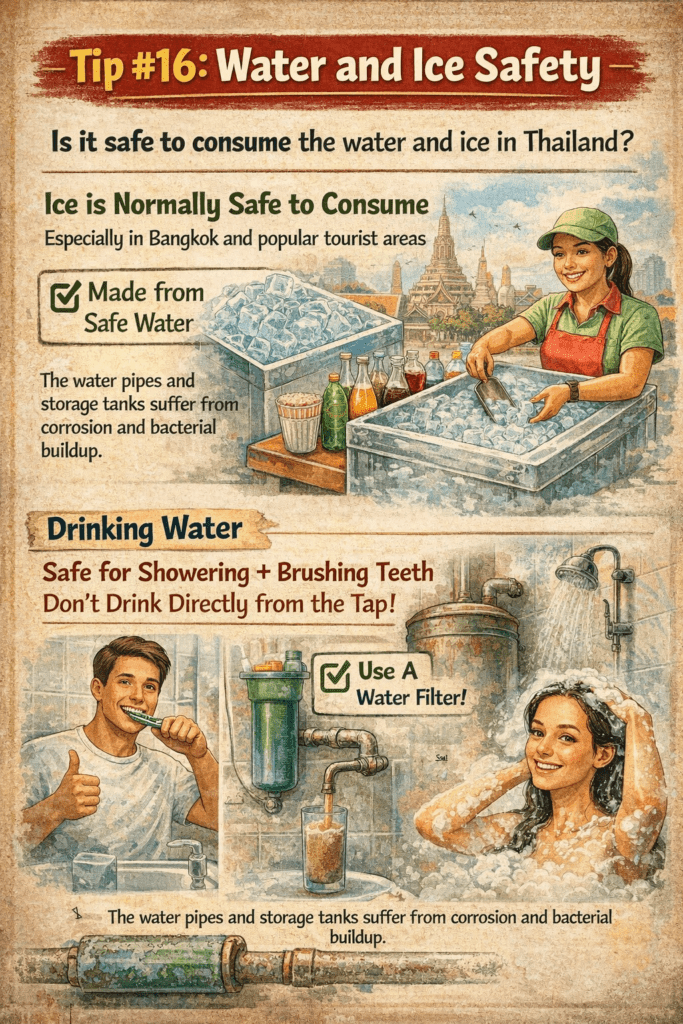
Tip #16: Water and Ice Safety
You might also be concerned about the water and ice here in Thailand. Is it safe to consume? First of all, the ice is normally totally fine, especially in Bangkok and very touristy areas, as it’s made from safe water sources.
In Bangkok, the water is actually safe to consume, but the pipes and the storage tanks are normally quite old and have problems with corrosion and bacteria buildup. That means you shouldn’t drink it without using a water filter, but for showering and brushing your teeth, it’s totally safe.
I actually had a friend—who is a bit of a strange guy—he decided to drink the water for 6 months to see if it would mess him up, and he was totally fine.
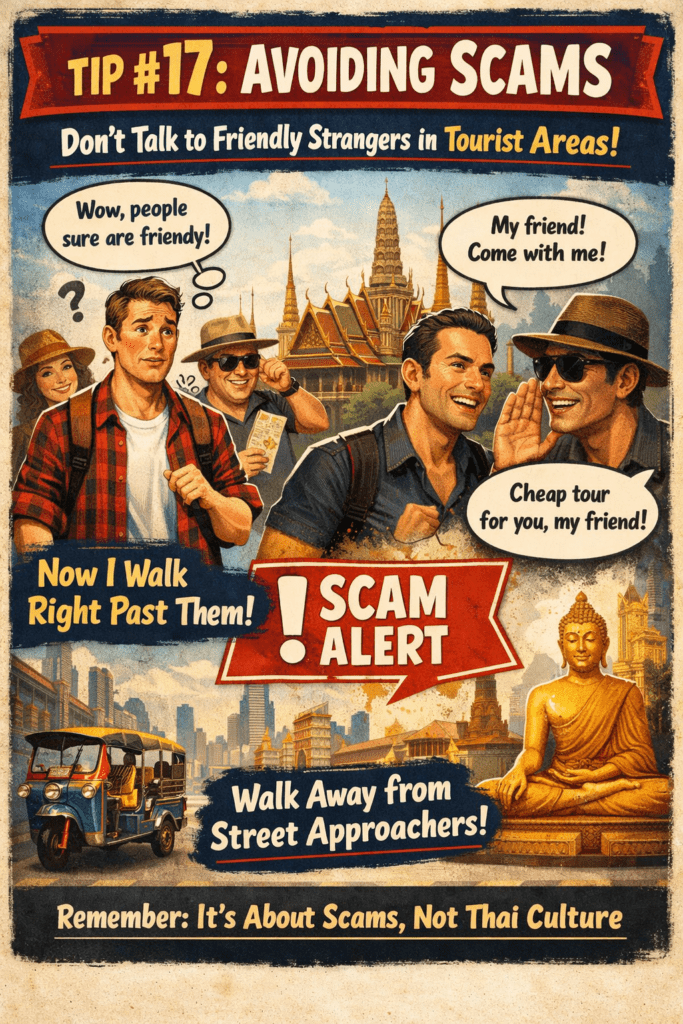
Tip #17: Avoiding Scams
Hey you guys! This is the most visited city in the world, and with that title you do get plenty of scams. There is one rule that you can follow to avoid 90% of the scams: when you’re in very tourist areas, don’t stop and talk to any overly friendly stranger.
When I first arrived in Thailand, I wasn’t used to people stopping and talking to me on the street all the time. I’m from Canada, and we don’t even have people on the street. I thought maybe it’s just the friendly culture. I stopped to talk to everyone. After 7 years of living here, I walk straight past anybody who starts talking on a street in a touristy area, and you should too.
Don’t let the scammers ruin your trip. This is simply something that you’ll encounter in every major tourist city in the world, and it is not indicative of the actual Thai culture.
Tip #18: Get Out of the very tourist-heavy areas
For that reason, it’s important to get out of the very touristy areas of Thailand and experience some of the real local Thai culture. Many tourists come to a city like Bangkok and stay in areas like Khao San and Sukhumvit for their entire trip. these are very tourist-heavy areas
Spend some time in local Thai areas. You’ll find that Thai culture is actually one of the warmest and friendliest and most welcoming cultures that you’ll encounter. You won’t find any scams. It’s a totally different experience. It’s a totally different culture.
Tip #19: Respect Thai Culture and Religion
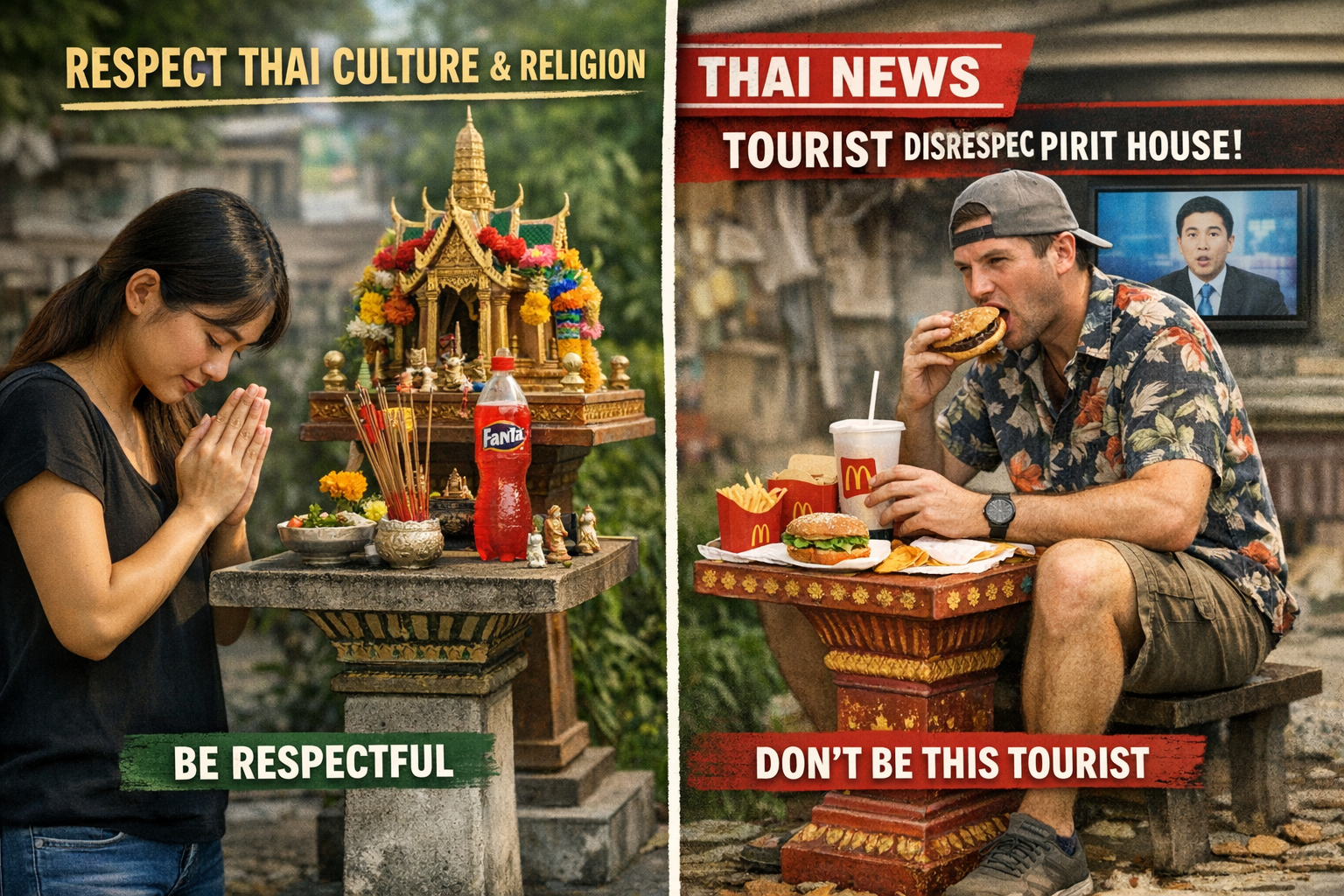
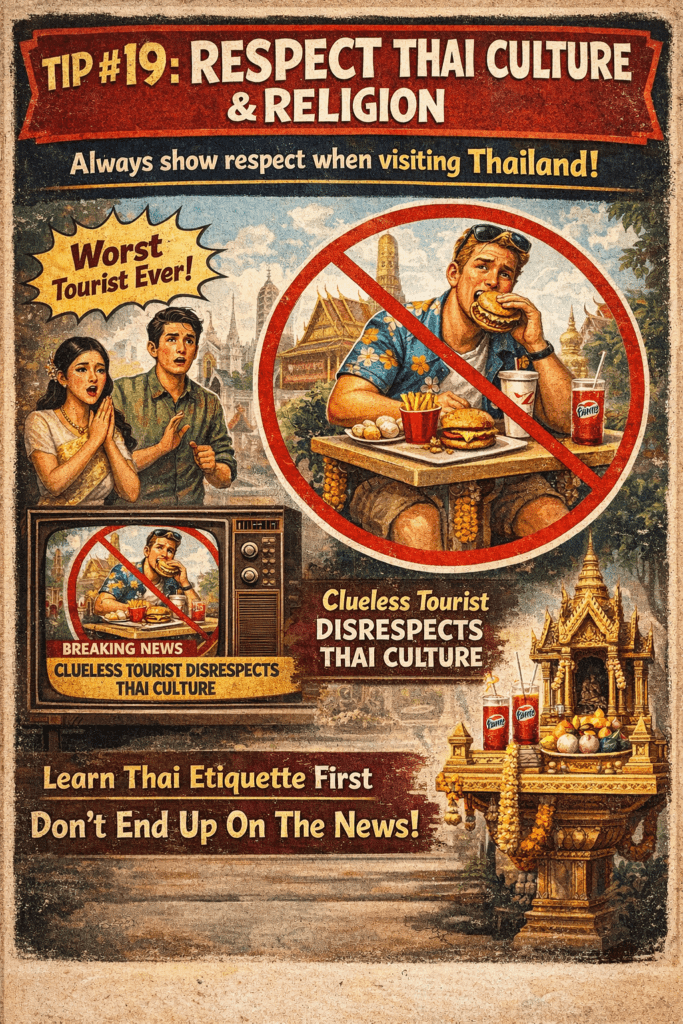
It’s very important to be respectful of Thai culture and religion when you’re here in the country. For example, you’ll find small houses on every corner, and normally there’s a red Fanta sitting on it. These are actually Thai spirit and deity houses.
A couple of years ago, one tourist seemed to think they were a table and decided to sit down and eat their fast food meal there. That one ended up on Thai news. There’s always an oblivious traveler that shows up on Thai news for doing something totally idiotic and disrespectful of the culture. Don’t be that tourist.
It just means learning a little bit of Thai etiquette first.
Tip #20: Feet Etiquette
It’s very important to avoid pointing at things with your feet, as the feet are considered the lowest part of the body in Thai Buddhist culture. It’s also inappropriate to put your feet up on things like chairs, and you should even avoid pointing your feet at Buddhist statues.
Tip #21: Head Etiquette
You should avoid touching people’s heads. The head is considered the highest part of the body.
Tip #22: Buddha Etiquette
Remember to avoid taking selfies with Buddha statues or images, as this is considered disrespectful.
Tip #23: Learn Some Thai
If you want to show respect, nothing’s better than learning a little bit of Thai. It’s very easy to learn some simple Thai phrases, and Thai people are extremely gracious when you attempt to speak Thai, even if you’re totally butchering the tones of the language.
Tip #24: Avoid Talking About the Royal Family
While speaking Thai is great, speaking about the royal family of Thailand is not. In fact, it’s actually illegal to criticize or say anything negative about the royal family. You should avoid this subject altogether. Avoid, avoid, avoid. Did I say avoid?
Tip #25: Embrace the Slower Pace
Thailand moves a little bit more slowly than most Western countries, and you’ll quite literally notice that people walk a lot more slowly. If you have a problem, people might say “mai pen rai”—don’t worry about it, relax, leave it alone. And that can be a little bit frustrating if you actually have a problem, but it’s very important to always stay calm.
Thailand is a face-saving culture, and engaging in a confrontation leads to a loss of reputation. If you start yelling or getting angry, everybody around you is going to view you as the problem. There isn’t really any easy way around this part of Thai culture. Sometimes things simply don’t get done, and you don’t solve a problem that you have. You just need to accept it and move on.
Thailand Seasons and the Best Time to Visit
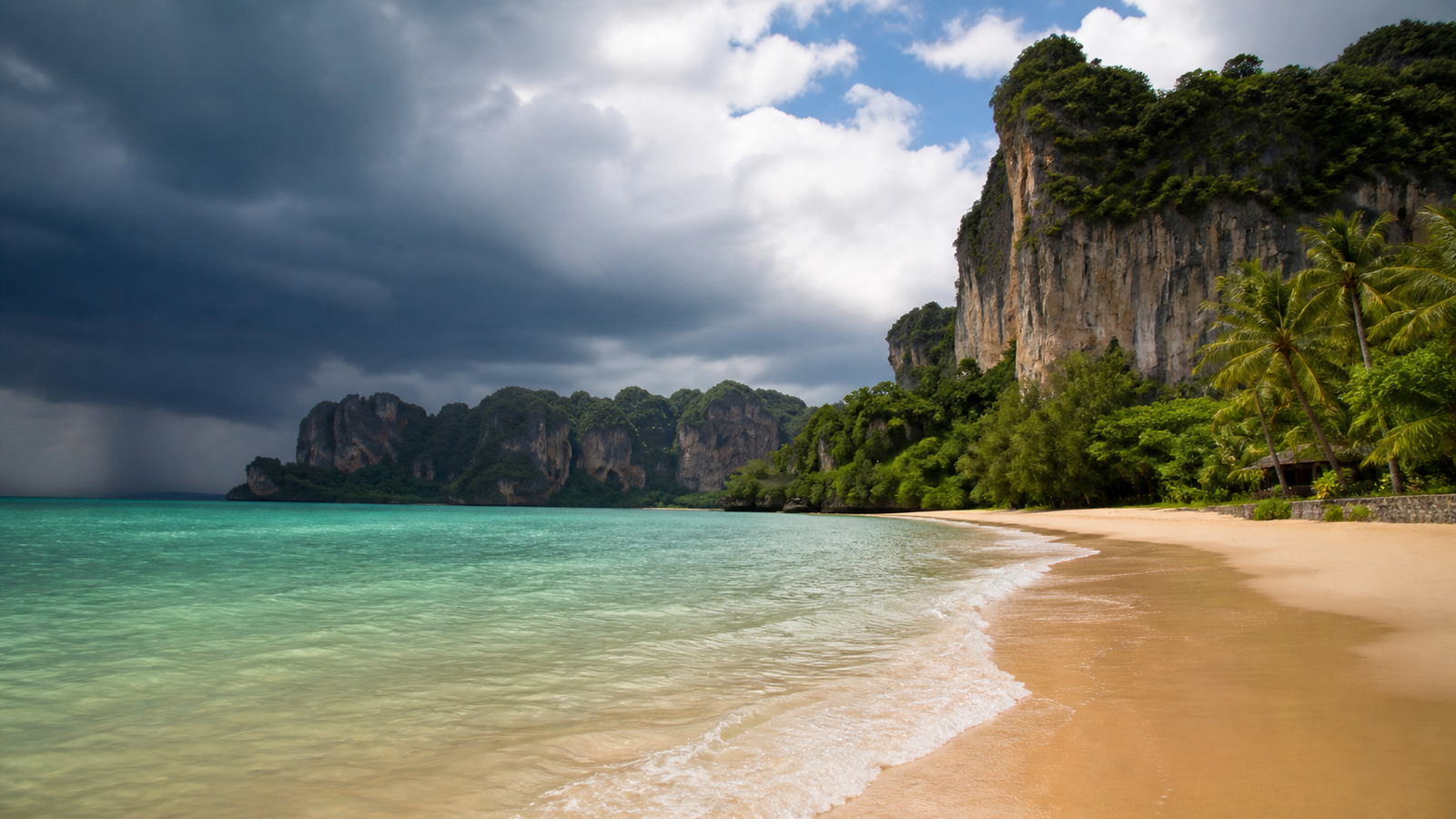
Thailand has a high season, which is the cooler season, a low season, which is the rainy season, and a dry or hot season. The seasons differ slightly in southern, western, northern, and central Thailand. In general, high season is November to February, hot season is March to May, and rainy season is June to October.
The weather from mid-November to February is often considered the best, but every season can be a good time to visit if the weather is not a concern. The best choice depends on the province and the type of trip.
Booking Thailand Tours and Finding Hotel Deals
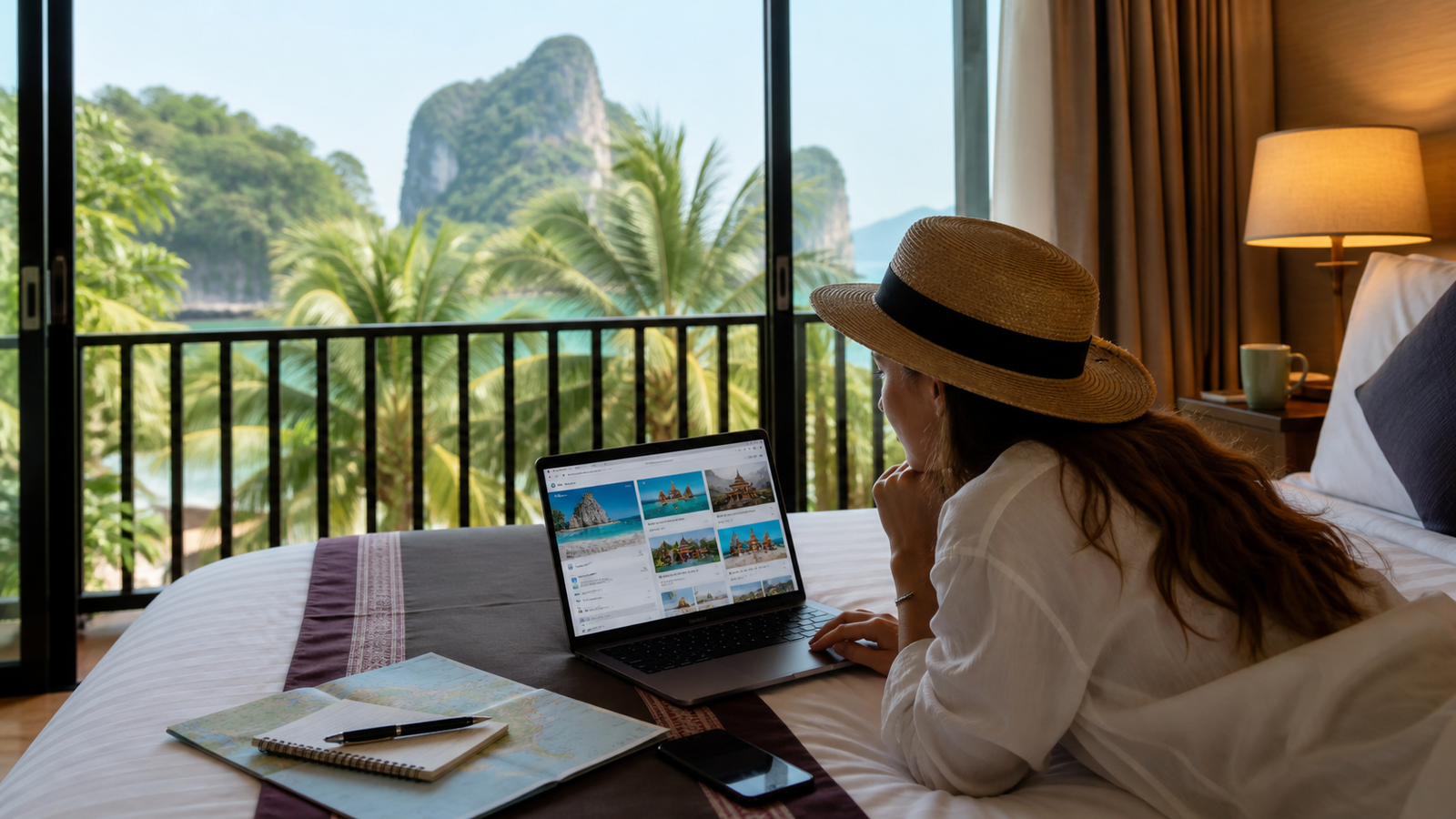
If travel is during high season and the schedule is limited, tours can be booked online before arriving. If there is plenty of time and it is not high season, booking after arrival can bring better offers and more choices. Booking the first one or two trips before arrival and the rest locally can save money.
Thailand has many hotels at different prices and locations. Five-star or four-star hotels can sometimes cost less than two-star or three-star hotels because of offers. A room with a view and breakfast was described as sometimes available for about 50 US dollars, so check higher-rated hotels before assuming they are outside the budget.
Thai Clothing, Culture, and Temple Etiquette
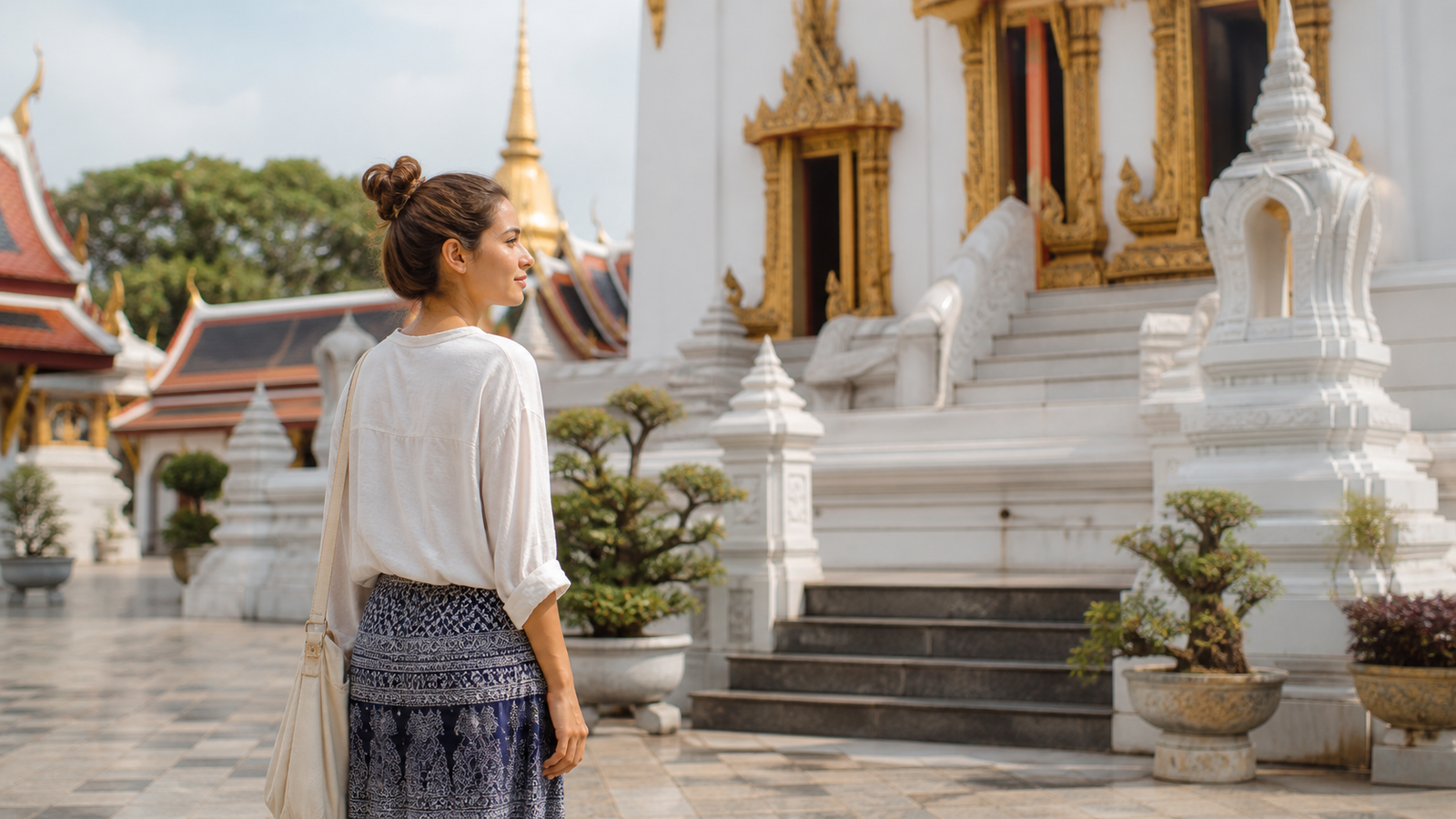
Thailand is hot, but visitors should not assume that any clothing is suitable everywhere. Dress properly and accordingly, especially when visiting temples. Swimsuits are not appropriate on Bangkok streets, and shorts or skirts may not be suitable in temples.
Respect Thai traditions, Thai people, beliefs, and local culture. Being humble and respectful makes the vacation easier and avoids problems.
Thailand Shopping and Bargaining Tips
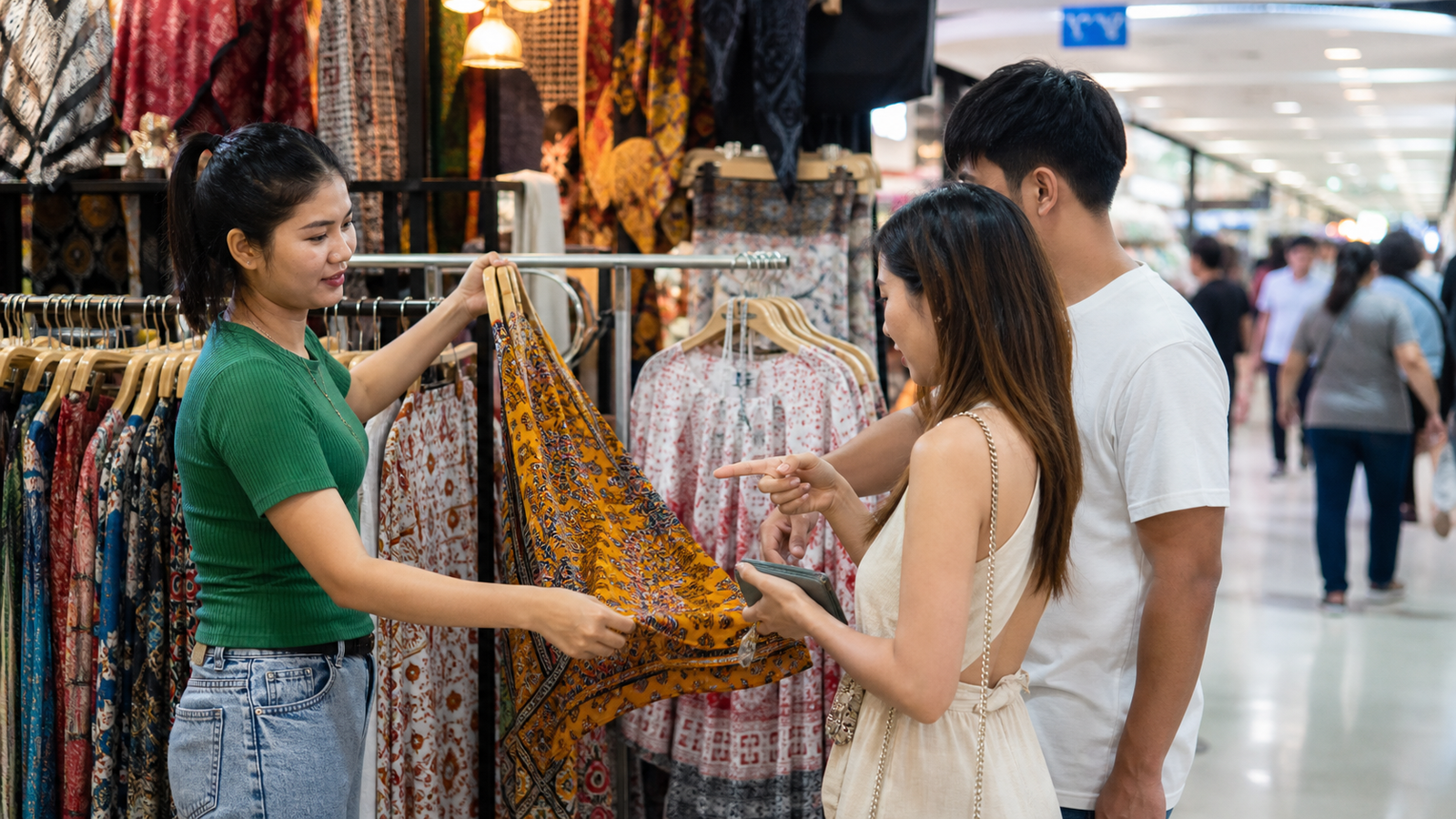
Bangkok has shopping malls, weekend markets, night markets, promotions, and many shopping opportunities. Choose where to shop according to the item, offer, and price. Some places are for fixed prices and others are for bargaining, so do not bargain where it is not expected and do not pay the first price where negotiation is normal.
Knowing where to buy and where not to buy can save money. The same kind of item can have very different prices in tourist areas, markets, and malls.
Thailand Activity Safety and Public Transportation
Tours, island trips, jungle activities, city walks, and other adventures are part of a Thailand vacation, but each traveler is responsible for personal safety. If an activity is beyond your ability or does not feel suitable, do not do it. An accident can turn a vacation into time in hospital.
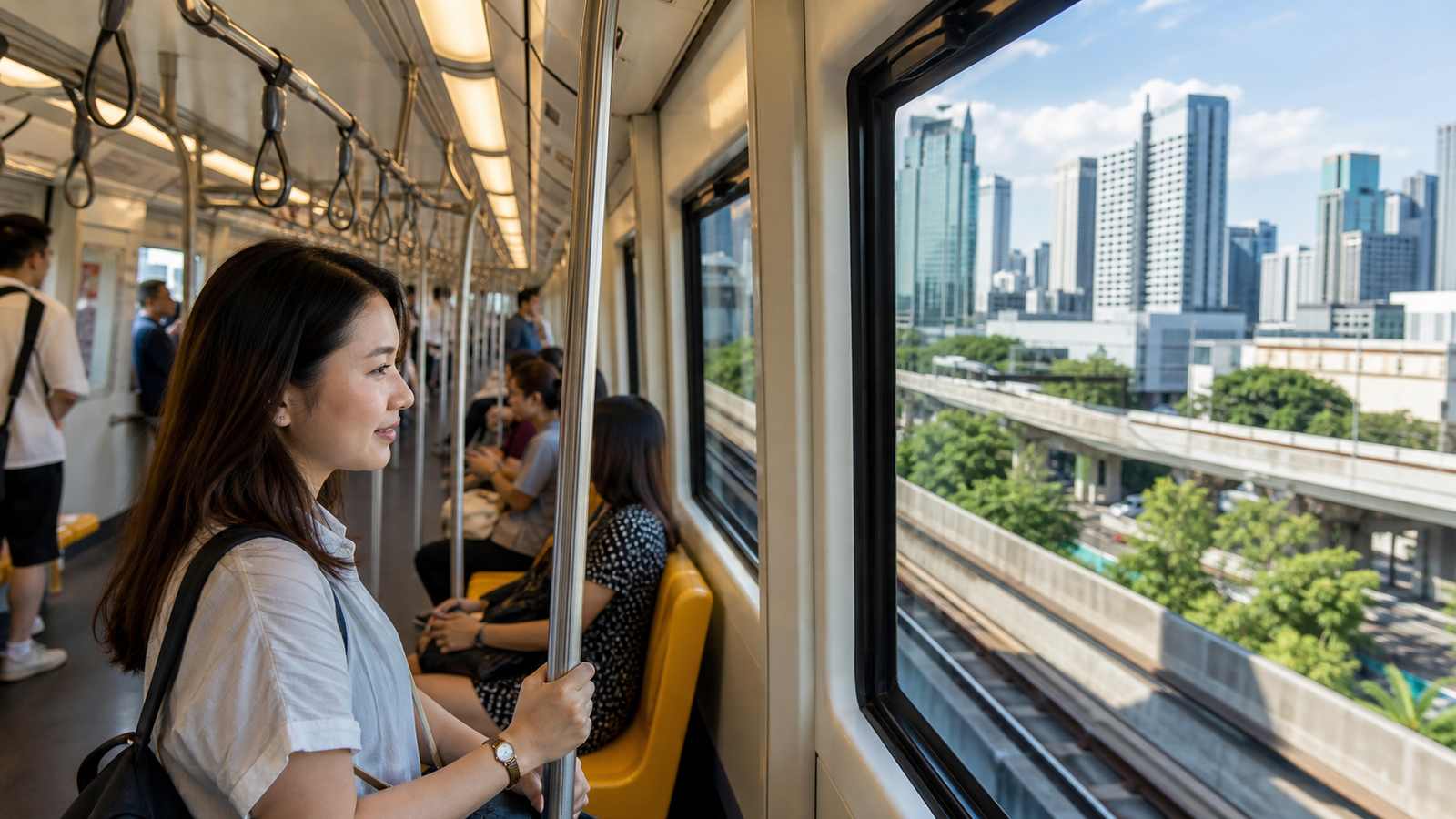
Public transport is often the faster and cheaper way to explore Bangkok and can help avoid scams. Use BTS, MRT, buses, boats, taxis, tuk-tuks, or motorbikes according to the destination. Check where you are going and how much the trip should cost before choosing transport.
Street Food, Ordering, Nightlife, and Respect
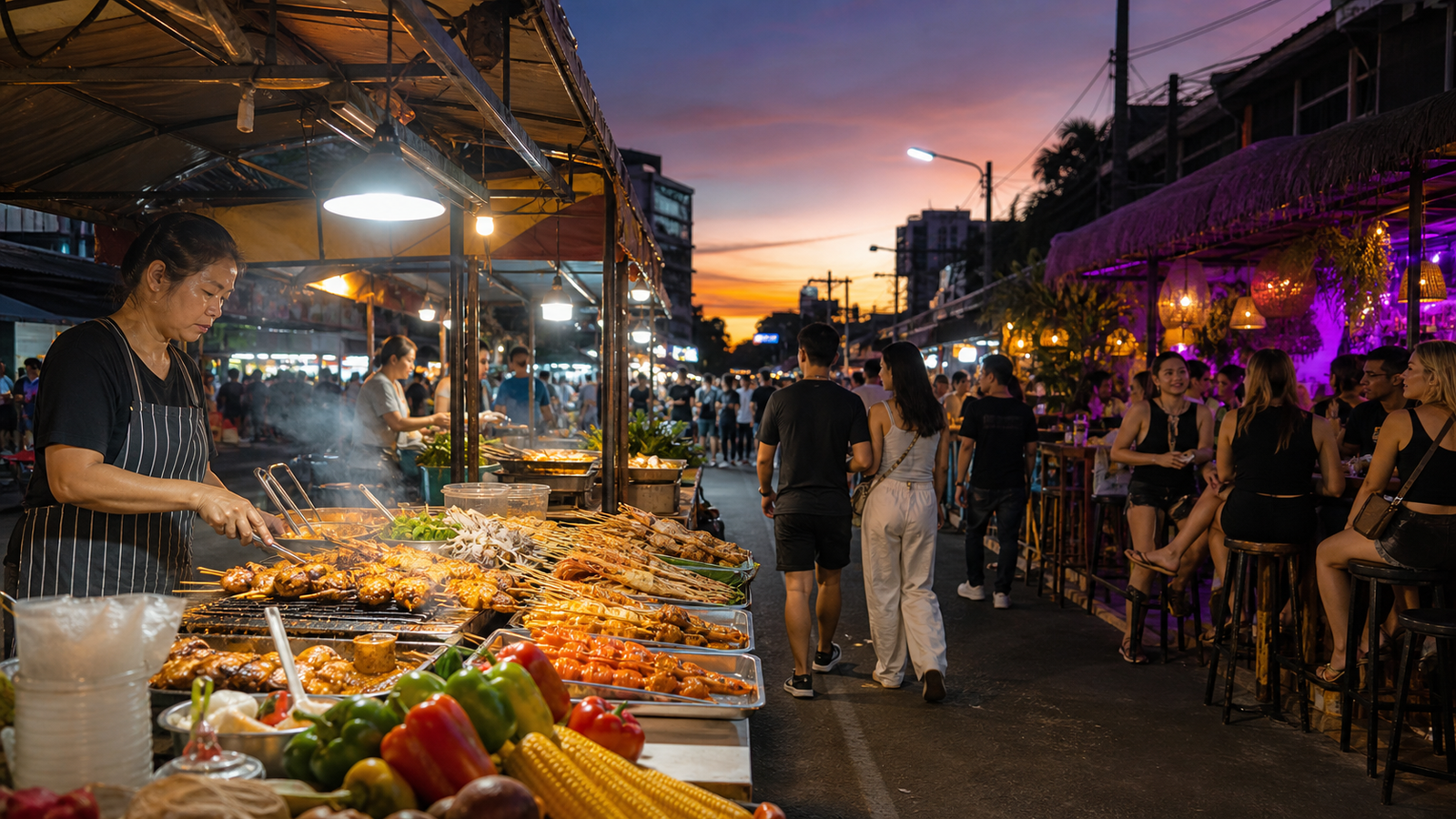
Do not ask taxi or tuk-tuk drivers in tourist areas to choose destinations or give tours, because they may offer time-wasting or expensive suggestions. Use taxis or tuk-tuks when you know the destination and expected price.
Street food is fresh, cooked daily, and often better value than Thai food in international or expensive restaurants. In local restaurants, be clear when ordering, including whether food should be spicy or well done. Use a picture or menu number if English is not understood.
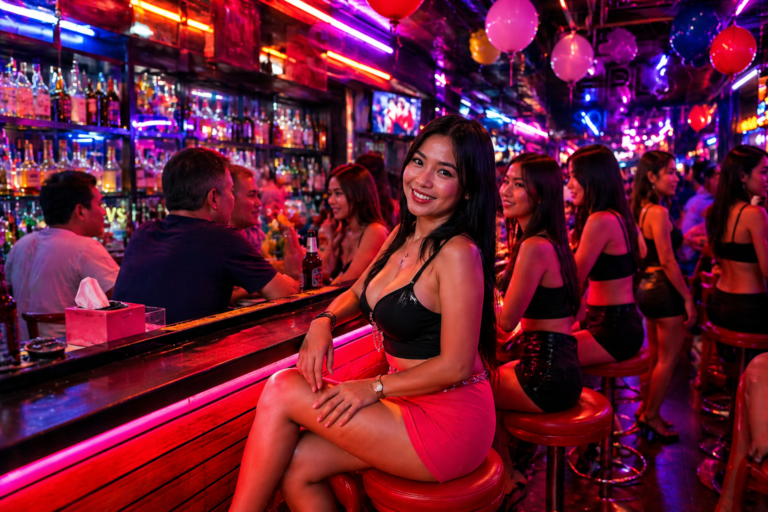
Thailand nightlife includes walking streets, pubs, bars, and other venues. Choose carefully because some places offer a good evening while others can empty a wallet and create problems. Thailand also has diverse gender identities and presentations. Respect people’s choices, do not point or make comments, and avoid assumptions.
Choose Local Areas for Accommodation in Thailand
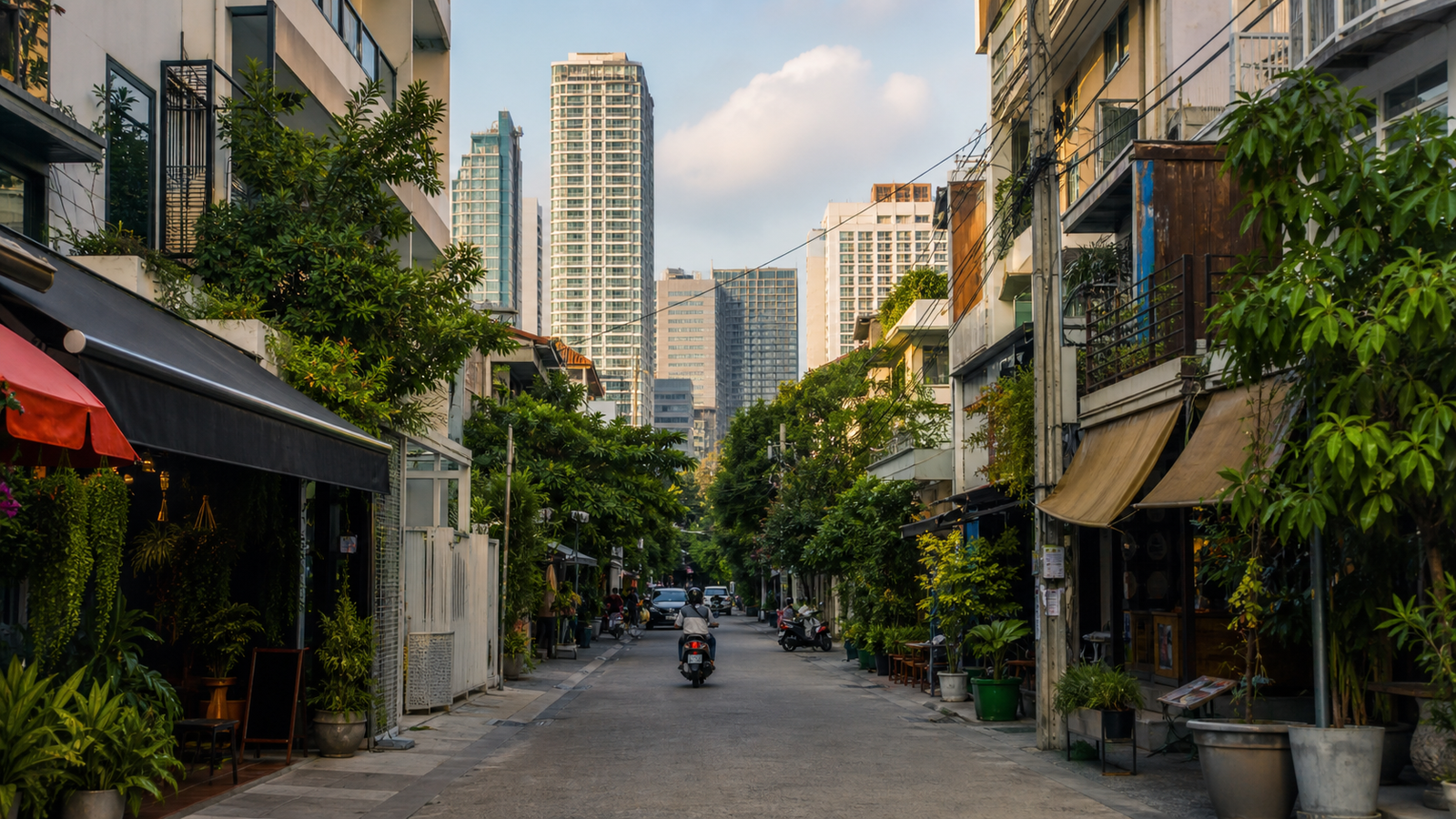
Staying in famous tourist areas is convenient, but trying something different and local can be better, cheaper, and calmer. In Bangkok, Lower Sukhumvit, Pratunam, Siam, and Silom are popular, but nearby local areas may offer better value and less crowding. In Phuket, Patong is popular, but the areas around it can offer better shores, hotels, and options. In Pattaya, Jomtien Beach can show more of the real Pattaya with cheaper options and fewer scams. Avoiding the main tourist areas can save money and help visitors see local life.
Choose the Right Transport in Bangkok
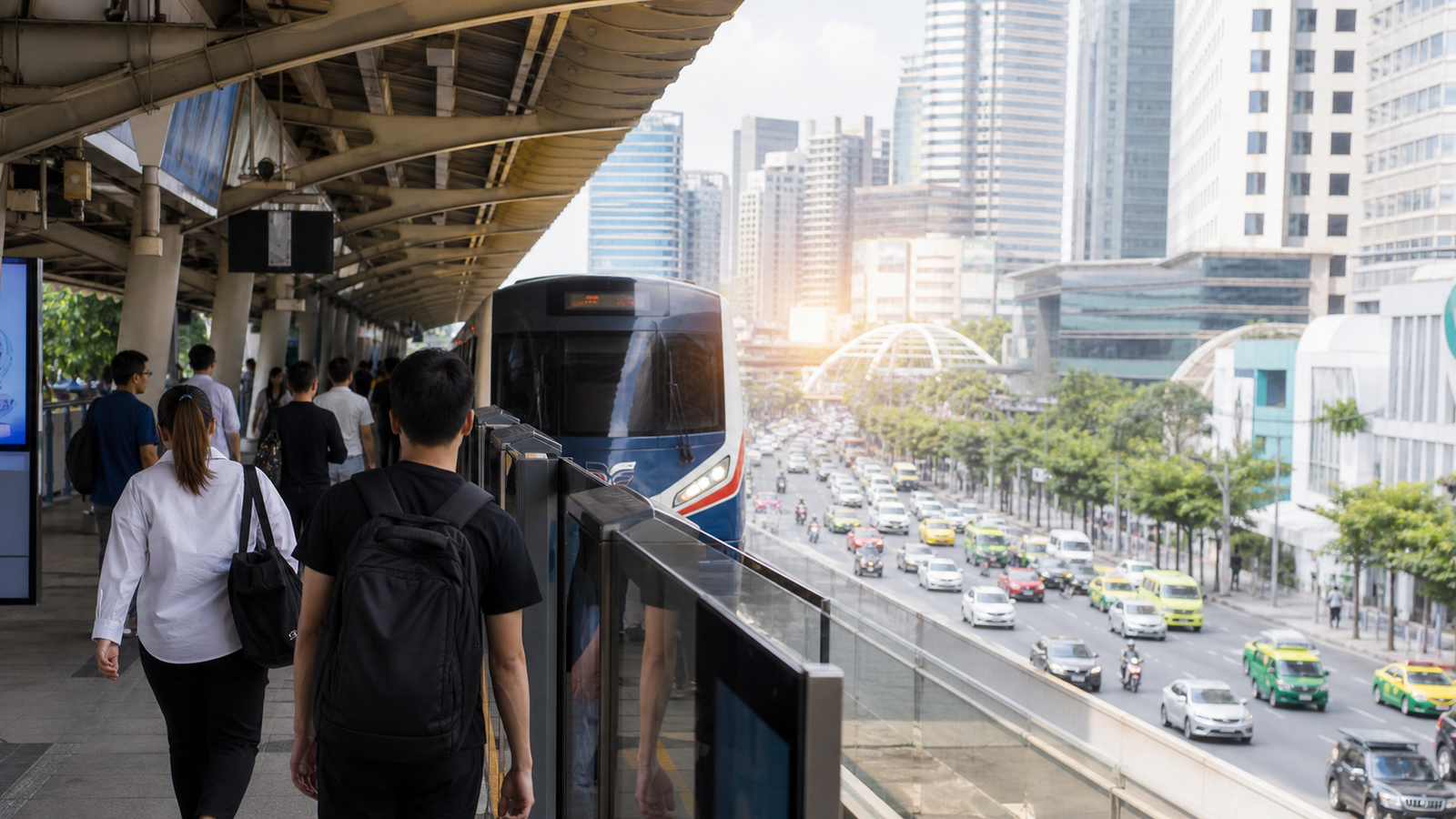
Do not jump into any transport before checking where you are going and the best way to reach it. Walking can often be the best option. Otherwise, check the nearest SkyTrain or underground train, or take a taxi or tuk-tuk to the nearest station. Tourists can waste a day in traffic or get caught in taxi and tuk-tuk scams, so public transport is often faster and cheaper.
Eat Thai Street Food and Visit Local Markets
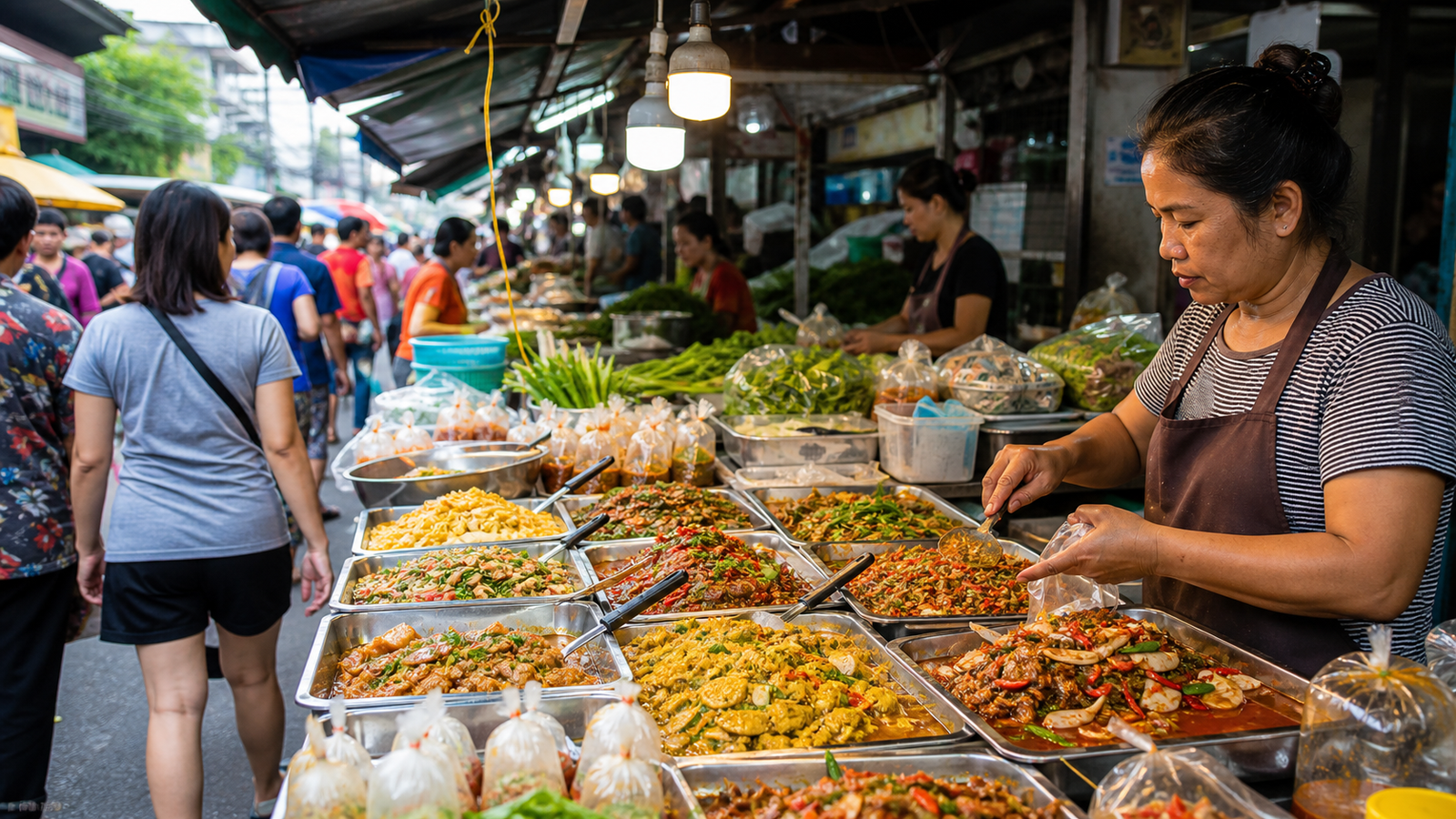
Thailand is a place to try street food instead of spending money at international fast food chains or fancy, overpriced restaurants. Street food is fresh, clean, and prepared by people who know the real taste of Thailand. Local markets and night markets offer a way to taste Thailand at cheap prices.
Shop at the Right Markets in Bangkok
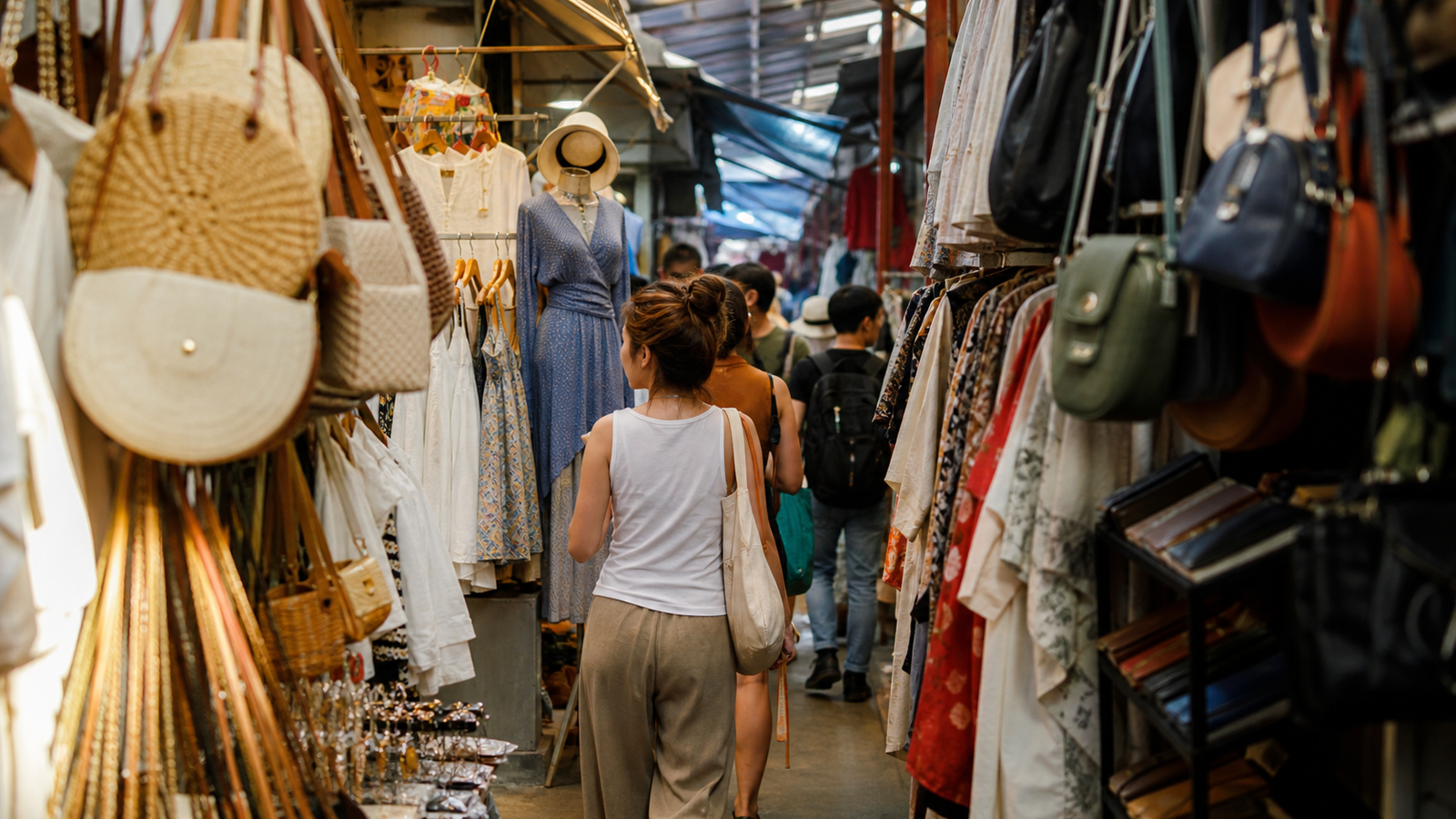
Shopping in Bangkok is worthwhile, but the wrong places can mean tourist traps, scams, and prices that are double or triple those at a proper market. Street vendors near famous hotels may charge more for items that do not work well. Find the right market, get the right item at the right price, and save money without needing to bargain as much.
Respect Thai Culture and Keep Your Voice Down
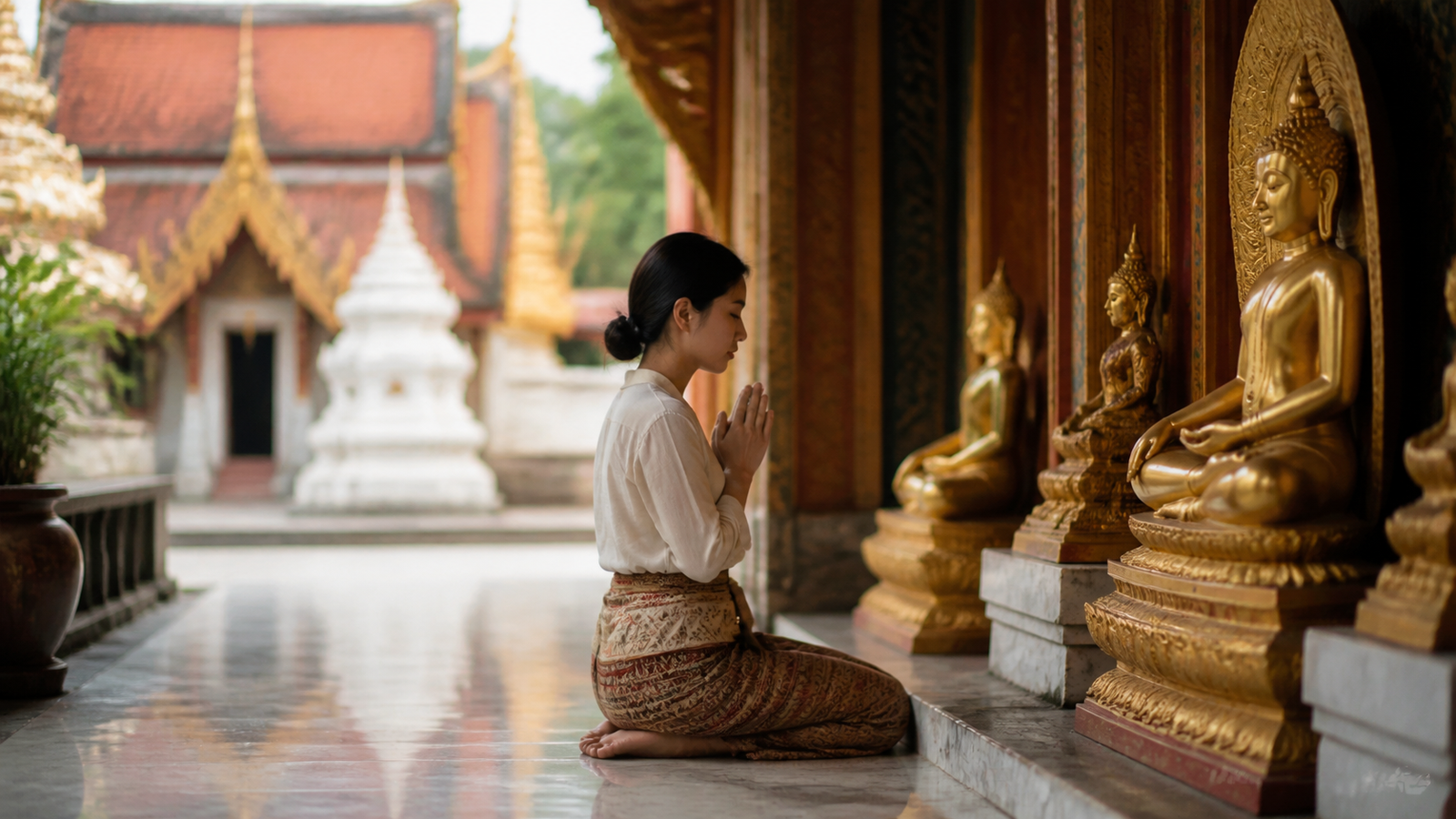
Learn about Thai culture, beliefs, traditions, and lifestyle before visiting. Do not be loud or rude. Thai people are generally calm and respectful, and visitors should keep their voice down where appropriate and respect the people around them. Accept differences in weather, smells, customs, and daily life instead of comparing everything with home.
Explore Thailand Beyond the Main Tourist Cities
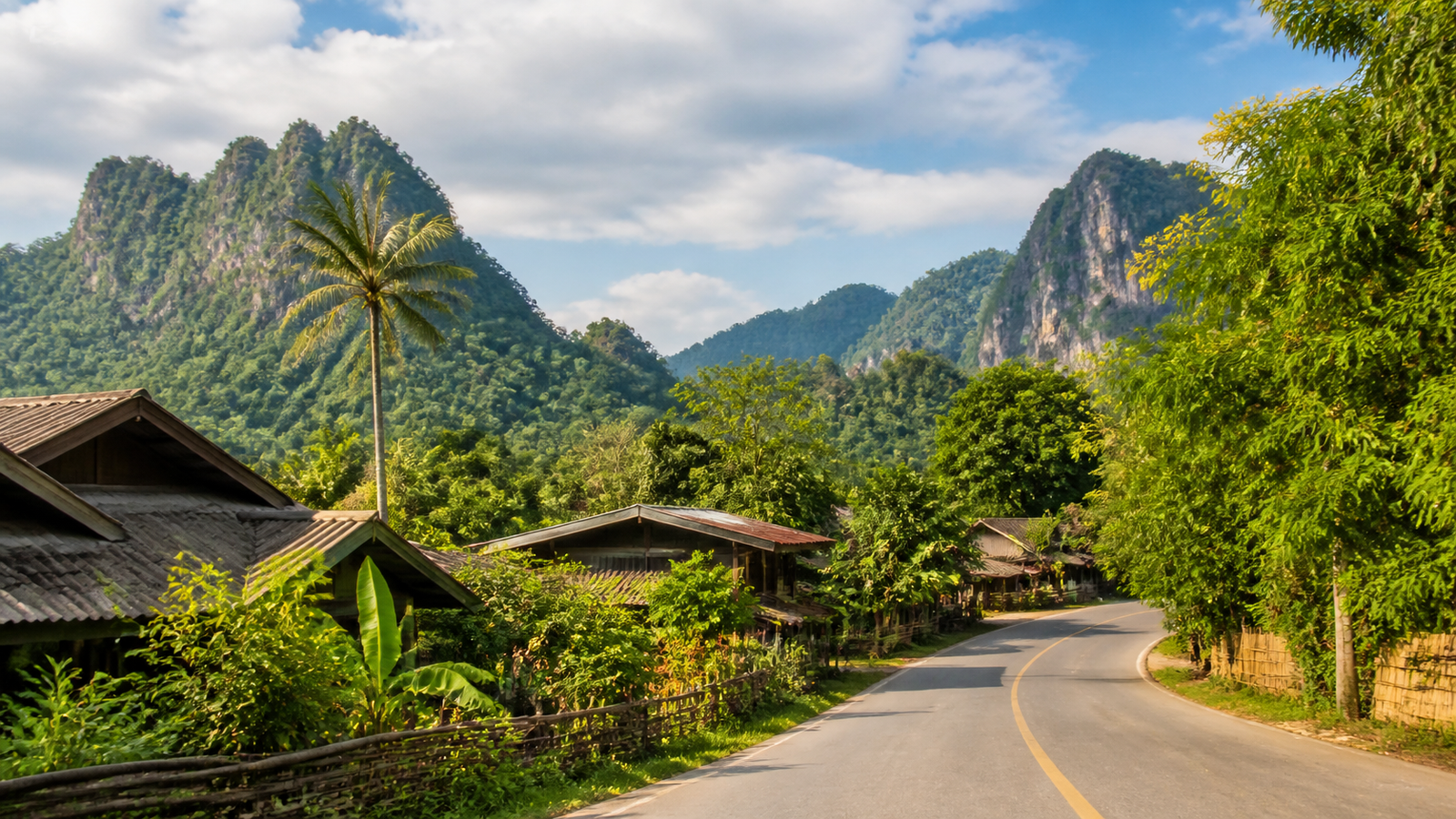
Thailand is more than Bangkok, Phuket, Pattaya, and Chiang Mai. Those places can be worth visiting, but there are also quieter provinces that can feel like paradise. Domestic flights are often cheap, and car trips can reach places beyond the crowded tourist spots. Explore more of Thailand and experience it like a local.