Is Thailand Really Safe To Visit In 2026?
Is Thailand a safe country? This is a question that I’ve commonly been asked, and in today’s video I’m going to do my best to cover everything you need to know about safety in Thailand. From street crime to road accidents, scams, and risky behaviors, I’m going to discuss the main risks that you face when you come to Thailand and how it compares to Western countries in order to help you stay safe during your time in Thailand.
Let’s get started.
Public Safety: Thailand vs. Western Cities
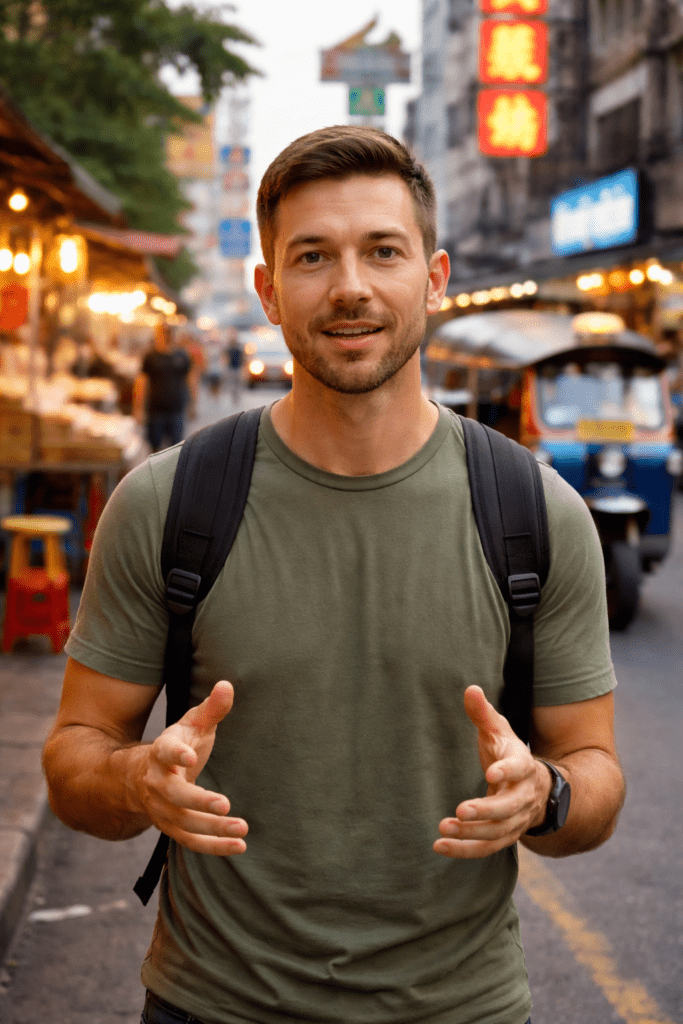
When it comes to public spaces, Thailand is a very safe country. You’re very unlikely to encounter overt criminality such as violence, robberies, or aggressive homeless people. This can differ substantially from the prevailing norms of public behavior in many Western cities.
My friend recently returned to his home city of San Francisco for a visit. Two days into his trip, he was chased by a homeless guy with a baseball bat. In my 8 years living here in Bangkok, I’ve never encountered anything remotely similar to this. And yet, it can be very commonplace in Western cities.
Thailand doesn’t have a street gang culture. Back in Toronto or most Western cities, we tend to have a lot of street gangs and a much higher level of general criminal behavior amongst young people. And you simply don’t find much of that type of behavior on public display here.
I’ve never actually felt uncomfortable walking around anywhere in Thailand. But don’t get me wrong this doesn’t mean that there isn’t any crime here. There definitely is. You can tune in to Thai news and find stories about crime on any given day. But public spaces generally have much lower levels of criminal activity than you might be accustomed to in Western cities. And much of this does come down to a difference of behavior amongst the young people.
Road Safety: Thailand’s Most Dangerous Risk
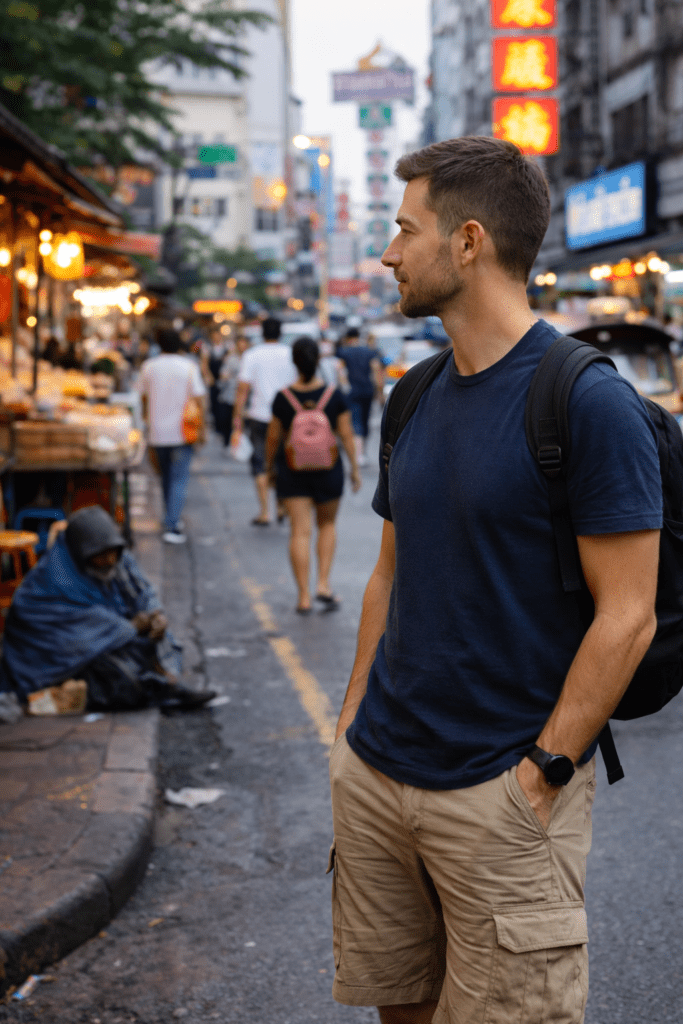
However, where Thailand can be less safe is on the roads. With a road death rate of 32 per 100,000 people per year, Thailand has some of the most dangerous roads in the world. This is largely due to a combination of a lot of scooters and cars on very busy streets, along with a general lack of adherence to the road rules and a lack of police enforcement.
In contrast, the road death rate is about 13 in the United States, 5 in Canada, 4 in Australia, and 3 in the UK. This extends to basic activities like crossing the street. It’s very common to encounter stories about pedestrians getting run over even while they’re crossing at designated crosswalks. So you definitely need to be more careful when it comes to the roads.
But if you avoid riding motorbikes, your risk drops significantly. And if you choose to ride a motorbike, take some time to learn, get some experience before you ride in a place like Bangkok. Or you can simply take advantage of the great public transportation system, inexpensive taxis, and ride-hailing services.
Scams: A Reality of Mass Tourism
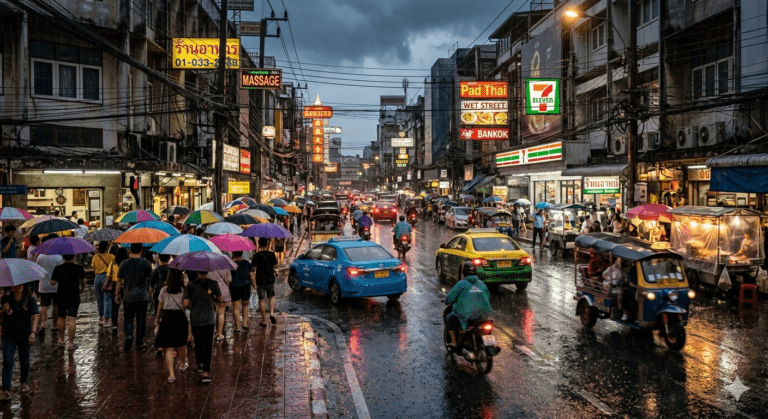
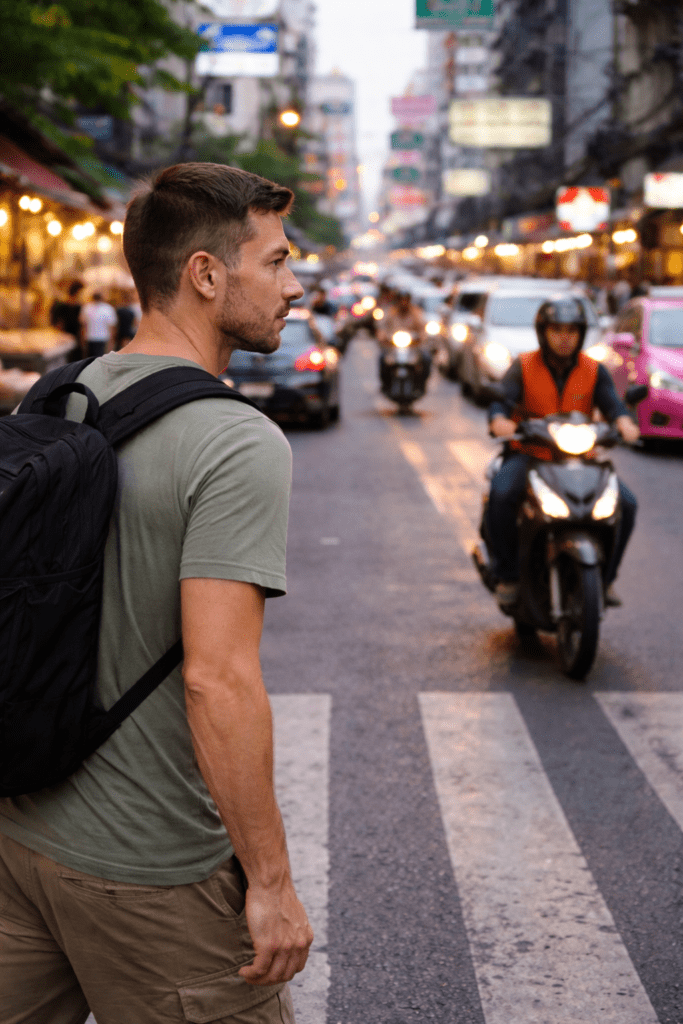
But speaking of taxis, the second issue that you need to watch out for when it comes to safety is scams. Thailand is one of the most popular tourist destinations in the world, and cities like Bangkok, Phuket, and Pattaya all rank in the global top 20 most visited cities. And with all that tourism, you have a lot of scams in the popular tourist areas. Cities like Bangkok attract scammers from around the world, so you’ll find scams that are operated by a wide range of different nationalities.
I have a lengthy video that covers 34 scams that you might encounter I recommend that you check that out before you come to Thailand. But it’s very easy to avoid most scams by following two simple rules.
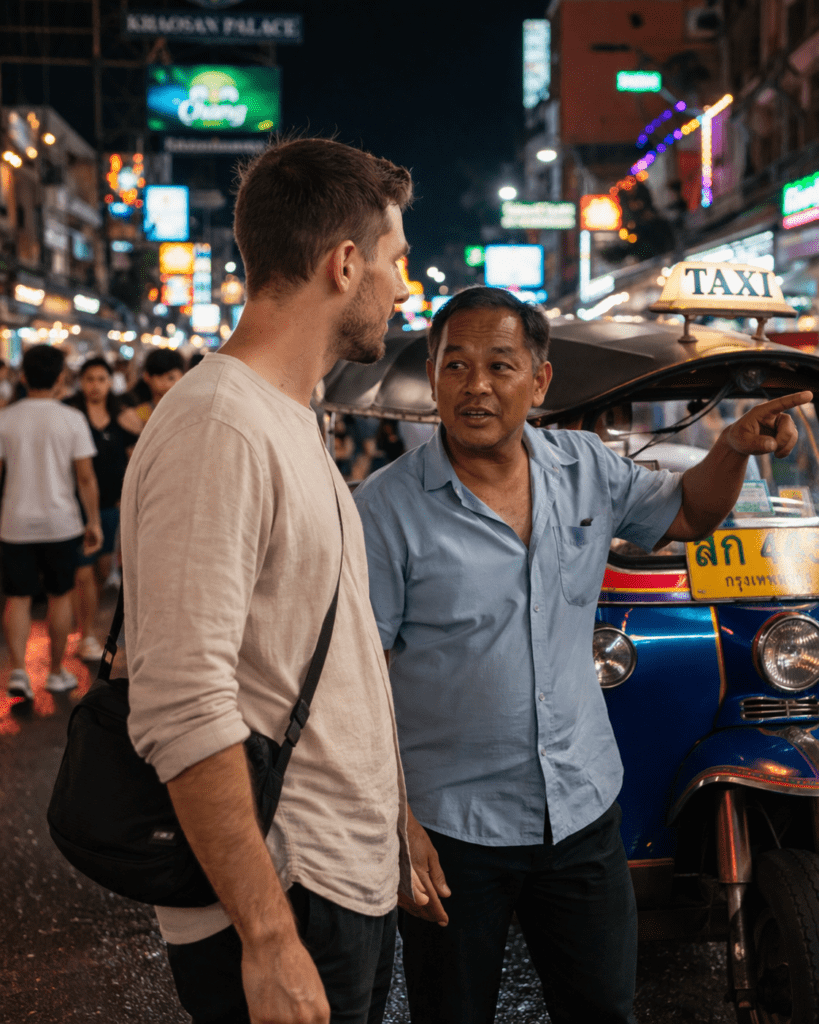
First, never trust a taxi or tuktuk driver. Both are notorious for operating scams, and it makes sense they interact with a lot of tourists. Be wary of the taxi and tuktuk drivers, or better yet, download the ride-hailing apps Bolt and Grab and avoid them altogether.
And second, never trust a friendly stranger who approaches you in a tourist area. It’s best to just ignore them altogether and keep on walking.
And keep in mind that once you get out of those popular tourist areas, it’s very rare to encounter scams. It’s an entirely different environment with some of the friendliest people in the world.
Nightlife and Confrontations: The Importance of Respect
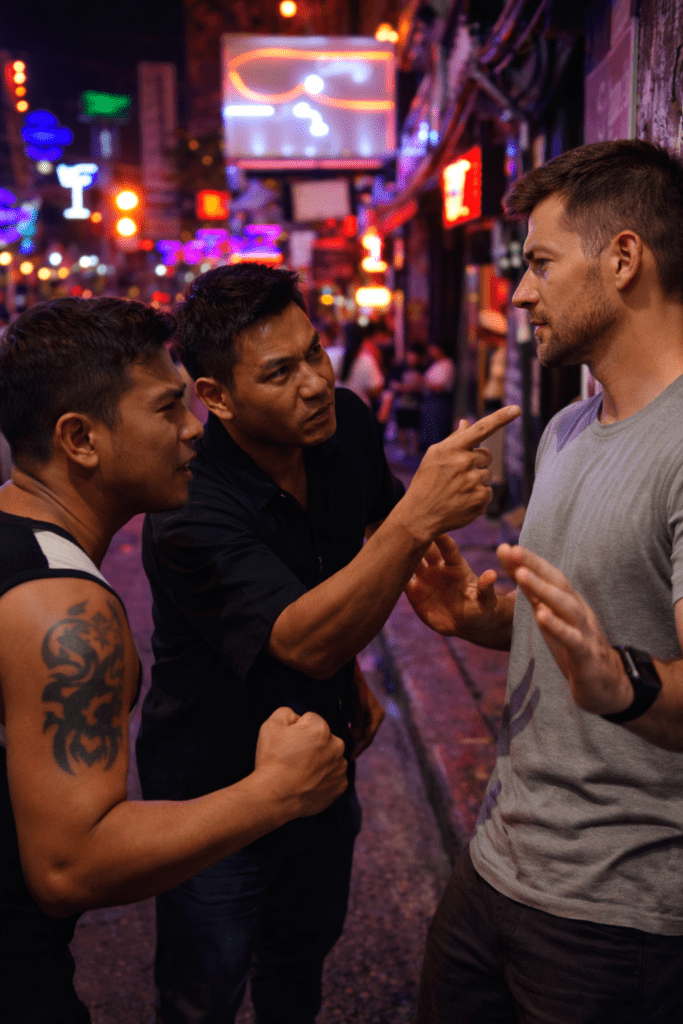
Like anywhere in the world, it’s important to exercise caution in the nightlife areas and avoid getting into an altercation with a local Thai person. Thai people are generally very relaxed and respectful, but if you get into an actual physical altercation, it will probably go very badly. This is the country where Muay Thai was developed, and it’s practiced pretty widely. But even if you think you might win a fight, you probably won’t. If there’s an altercation between a Thai person and a foreigner, the foreigner will often find themselves fighting multiple people.
But this type of incident is actually quite rare. Violent incidents here generally occur as a result of disrespectful behavior. This can happen all too often in some nightlife environments, but it can also happen if a scam occurs and the foreigner attempts to escalate the situation in order to get some type of redress. This is not a good approach.
This is why it’s important to take a little bit of time to learn about potential scams and simply avoid them. And if you find yourself in a scam, it’s best to walk away or call the Tourist Police at 1155. They’ll be very familiar with any scams that you encounter.
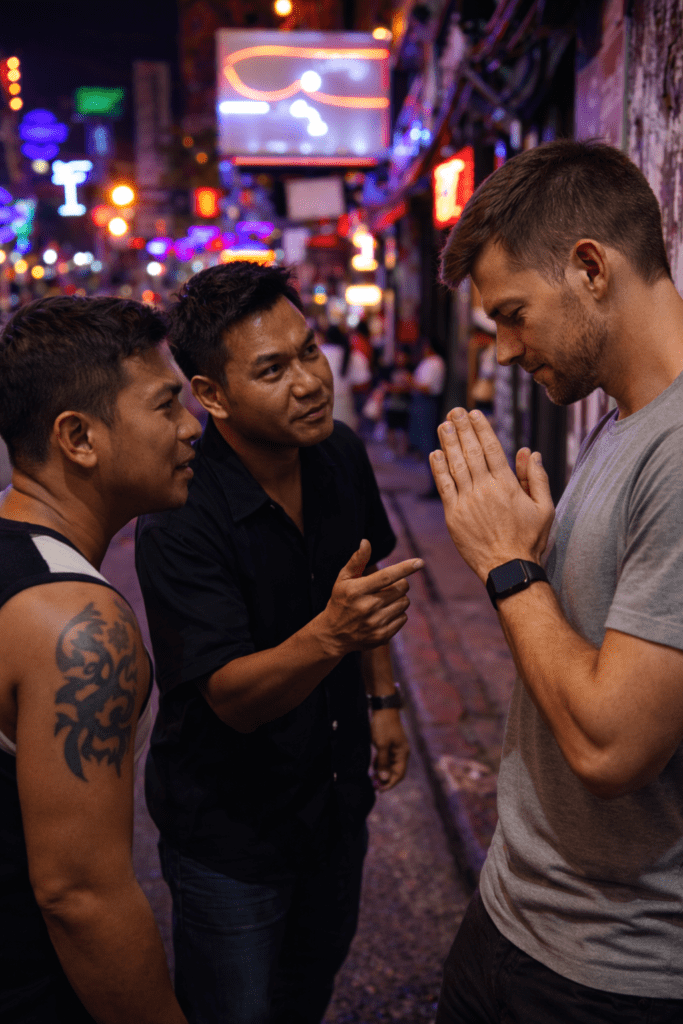
And if you find yourself in a negative situation that’s escalating whether it’s in a nightlife environment or related to some type of scam you can normally easily end it with a wai. This is a display of respect by putting your hands together in front of you.
The Concept of Face: De-escalating Conflict
The truth is that it’s actually much easier to avoid confrontation here than in most Western countries, as there’s a code of behavior that’s based on respect. This is the concept of face, and it underpins much of Thai society. Saving face means to avoid disgrace or embarrassment, and this is why de-escalating a conflict is actually very straightforward. A wai or an apology means that respect is given face is given. Once that apology is offered, refusing it would be a loss of face and communal harmony.
Arguing or yelling in public is something that you should strongly avoid. The reality is that you could be absolutely justifiably upset about something. Maybe somebody has given you the wrong bill or the wrong change, or you have another valid complaint. As soon as you get upset and start yelling, you lose face. People will view you as the problem. And this can definitely be frustrating, but it is a reality of the culture here. Maintenance of harmony within the society is prioritized.
Self-Regulation: Thailand Is Not a Nanny State
It’s important to consider another one of the key societal differences between Western countries and Thailand. Thailand is not a nanny state. Despite authoritarian tendencies on the political side of things, there’s actually a lot of individual freedom in Thailand and a lot less rules and regulations than exist in Western countries. Personally, this is one of the aspects of life that I enjoy here. But it also requires a certain level of self-regulation.
And for people that are accustomed to being told what they’re allowed to do, the shift to a more self-regulated society can actually be quite dangerous.
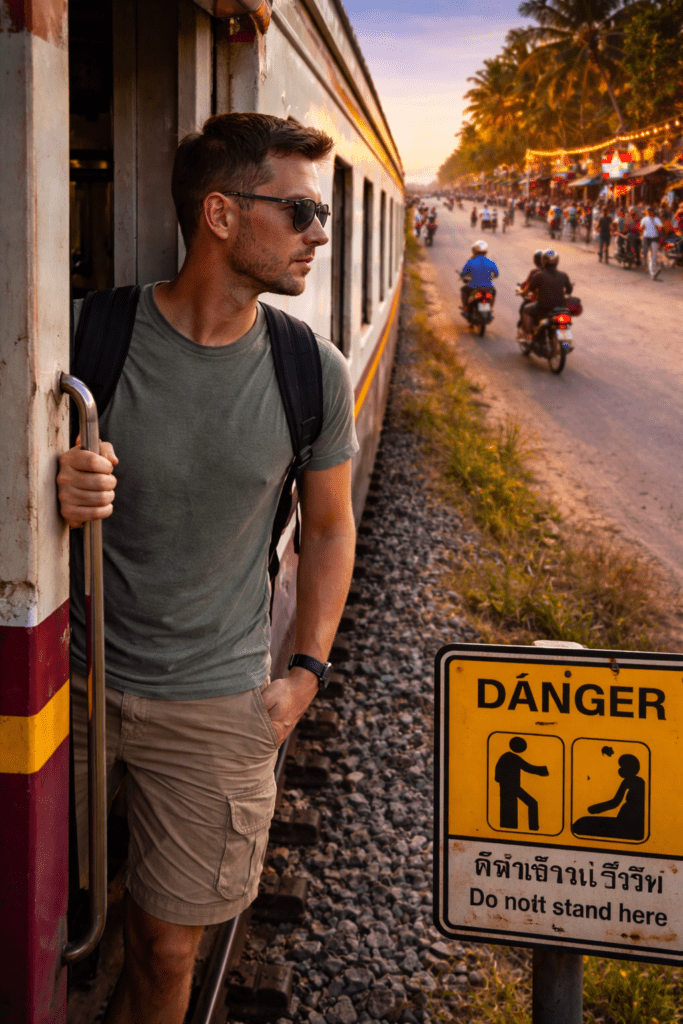
Just recently I traveled to Hua Hin by train. This is a beach resort city that’s about 2 hours away from Bangkok. And while I was on the train, I heard a story about a fellow Canadian traveler who had died the night before after falling off the back of the train. He had snuck outside in between the carriage cars to smoke a cigarette, where a concrete pillar had hit his leg, knocking him off the train. And unfortunately, tragedies like this are not uncommon amongst newcomers to Thailand.
I recall another incident back in 2017 when I attended a Full Moon Party on Koh Phangan, where another Canadian drowned when she went for a swim at night and was swept away by a current. These are truly tragic stories, and it’s important to exercise caution when you come to Thailand. Just because you can do something, it doesn’t mean you should.
I recall another incident more recently when I rented a motorbike. There was a young fellow in front of me who had just rented a bike, and immediately after starting the bike, he jerked from side to side and flipped straight over the front bars. Fortunately, he survived, but he was injured. He clearly wasn’t experienced using a motorbike and probably lacked a license. But it’s very easy to rent a bike regardless of your experience or licensing here in Thailand, even if your insurance won’t cover you if you lack the license.
I could go on with a lengthy list of stories like this. The point is that if you’re accustomed to more strict regulations within a nanny state, Thailand will feel like a very free place. I remember my early days here, and it was definitely a wild ride.
I think there’s often a trajectory for people when they first arrive: embrace all the adventure and total freedom, and then over time the brain adapts to a certain normalcy and a recognition that all this freedom can also enable very bad decision-making, and that you need to self-regulate.
So my advice for any newcomers is to exercise caution, especially in the early days.