Planning a Holiday in Thailand – Everything You Need to Know
Stunning beaches, friendly people, amazing food Thailand is one of the most visited countries in the world. But planning the perfect trip can be a complicated task. From choosing when to visit and planning your travel itinerary to arranging vaccinations and health insurance, budgeting and accessing money, getting the best SIM card, booking flights and arranging transportation you have plenty to think about.
Let’s get started with choosing the best time of the year for your vacation.
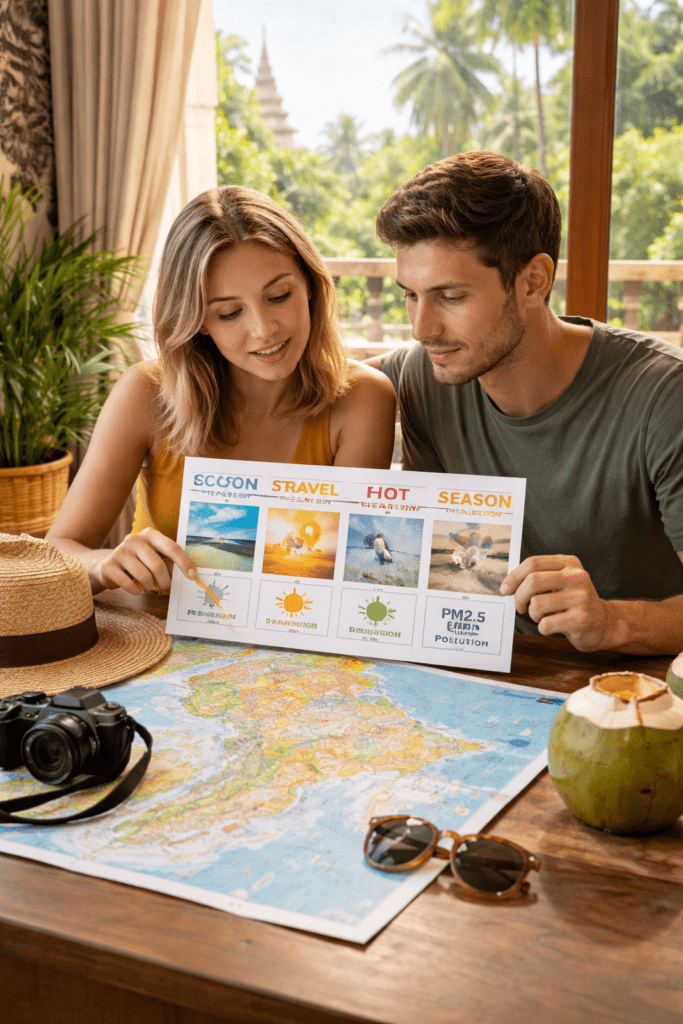
Choosing the Best Time to Visit
It’s a mistake to follow generic recommendations about the best time to visit. You want to choose the best time that matches your preferences and budget.
Thailand has three main seasons:
- The hot season which runs from March through to the end of May
- The rainy season from June to October
- The cool season from November to February
These seasons generally apply for most of the country, with the exception of the Gulf of Thailand islands of Koh Samui and Koh Phangan, where the rainy season occurs between October and December.
The tourist high season occurs during the cool months from November through February, as the weather is dry and temperatures typically range between 20 and 30° during the day. These are ideal conditions for travelers, and this means that prices are significantly higher and the crowds are thicker.
But as January begins, much of central and northern Thailand is blanketed by harmful PM2.5 pollution. The pollution is caused by regional agricultural crop burning, unfavorable wind patterns, and a lack of rain. If you’re planning to travel in central Thailand (including Bangkok) or the north (like Chiang Mai or Chiang Rai), this isn’t an ideal time to visit.
As March rolls in, the hot season begins and it runs until late May, with daytime temperatures that reach into the 40s. It gets very hot. Heat stroke is very common for travelers, and you should avoid excessively long daytime itineraries.
If you’re looking for some excitement, mid-April can be one of the best times to visit. You can take part in Songkran, which is the Thai New Year festival from April 13th to 15th. It’s the world’s largest water fight, which occurs all over the country. This is definitely a bucket list experience, but you’ll also face the largest crowds and highest prices.
As June begins, so too does the monsoon rainy season. The early rainy season months of June and July can offer one of the best value time periods to travel in Thailand. The rain is quite limited, with a daily downpour at around 4 or 5:00 p.m. The weather is pleasant, the air is clear, and the crowds are thin.
But as September begins, the heavy monsoon rain season starts. From September through to the end of October, most of the country experiences heavy rain on a daily basis, which can last many hours. The timing of the rain is unpredictable, and widespread flooding is common. This is the cheapest time of the year to travel but for good reason.
Choosing the right time to travel based on your preferences and budget is essential. But overall, I’d advise against:
- The pollution season in January and February if you plan to travel in northern or central Thailand
- The heavy monsoon months of September and October (or November and December if you’re planning to travel to Koh Samui or Koh Phangan)
The early rainy season is actually one of my favorite times of the year. If you’re not a huge fan of crowds and you don’t mind the occasional downpour, you want to save some money—it might be perfect for you too.
Visa Requirements
What about visas? Do you need a visa to enter Thailand?
Citizens of most Western and Asian countries don’t require a visa to enter Thailand for up to 60 days. This is called a visa exemption. Simply hop on a plane and you’ll be stamped into the country upon arrival.
The Thai government is currently considering changing the visa exemption period to 30 days. So make sure to check for any updates before you fly.
But if you plan to stay in Thailand for longer than 60 days, you can extend the visa exemption for an additional 30 days by visiting an immigration office and applying for an extension. This costs 1,900 baht. Bring your passport, photo copies of your passport, and two passport photos along with the money.
If you plan to do a visa extension, you may also be asked for proof of registration at your accommodations. This is called the TM30, and you should ask the hotel or owner of your accommodations for the TM30 receipt and bring it with you.
You’ll need to fill out the extension form, take a queue ticket, and wait for your extension to be processed within a couple of hours. Just remember that immigration offices are closed on weekends and public holidays. So check the calendar well in advance to ensure that you get the extension prior to the expiry of your visa.
Otherwise, you’ll be overstaying your visa and this is a big mistake. You’ll need to pay 500 baht per day that you overstay, and it can cause you problems when re-entering Thailand at a later date. Lengthy overstays can also result in being banned from the country for set periods of time.
Planning Your Itinerary
Let’s move on to planning your itinerary. And the most common mistake that travelers make is trying to see too many places in too little time. This leads to a very generic experience, rushing from one tourist hot spot to the next.
The single biggest mistake often comes down to spending only 2 days in each location, as this leads to a constant rush and waiting around to check in and out from hotels or Airbnbs. Instead, it can be more enjoyable to spend at least 3 days in larger locations to slow the pace a little. It allows you to rest, relax, and enjoy the experience. While 2 days is sufficient for smaller island destinations.
If you want an even deeper experience, it can be best to add some guided activities or classes to your itinerary. Perhaps a walking or bicycle tour, a Muay Thai or cooking class, an ethical animal sanctuary.
But you should be cautious when booking tours. Unfortunately, there can be plenty of scams and subpar experiences on offer in the tour sector. I recommend using two websites to book tours in advance: Klook and Viator. These websites allow you to compare a wide range of different options with clearly listed prices and thousands of reviews which is your best protection against signing up for a subpar or even scam tour. You can find links in the description for both sites.
Health, Vaccinations, and Medications
Before you come to Thailand, you may plan to check in with your doctor for any health advice and vaccinations. If you do, your doctor will likely advise a lengthy list of vaccines and medications. This may include typhoid, cholera, hepatitis A and B, polio, measles, mumps and rubella, and Japanese encephalitis, as well as anti-malaria medication.
But these recommendations can be excessively broad. Your actual risk level depends on the specific locations and time of year that you plan to visit and what you plan to do. For example, if you plan to stay in the large cities and built-up tourist areas during the dry season, your overall risk level for mosquito-borne illnesses like malaria or Japanese encephalitis will be much lower than if you plan to engage in activities like jungle treks or cave exploring during the rainy months.
It’s normally best to get basic boosters, but do your own research and talk to your doctor.
If you take any medications, make sure you have enough for your trip, and you shouldn’t have any issues bringing them into the country without permission or declaring them at customs. And if you need a refill, you can buy most medications that are prescription-only in Western countries very easily in Thailand and normally over the counter. Or you can visit a clinic or hospital for any checks or prescription updates.
With one very notable exception: opioids and opioid derivatives. Opioid medications are very strictly controlled in Thailand, and this even includes basic codeine. In order to bring opioid medications into the country, you need to get permission from the Thai FDA. The link for the online form is in the description. And you can also use the form to look up the entry requirements for any prescription medication that you take.
Health Insurance
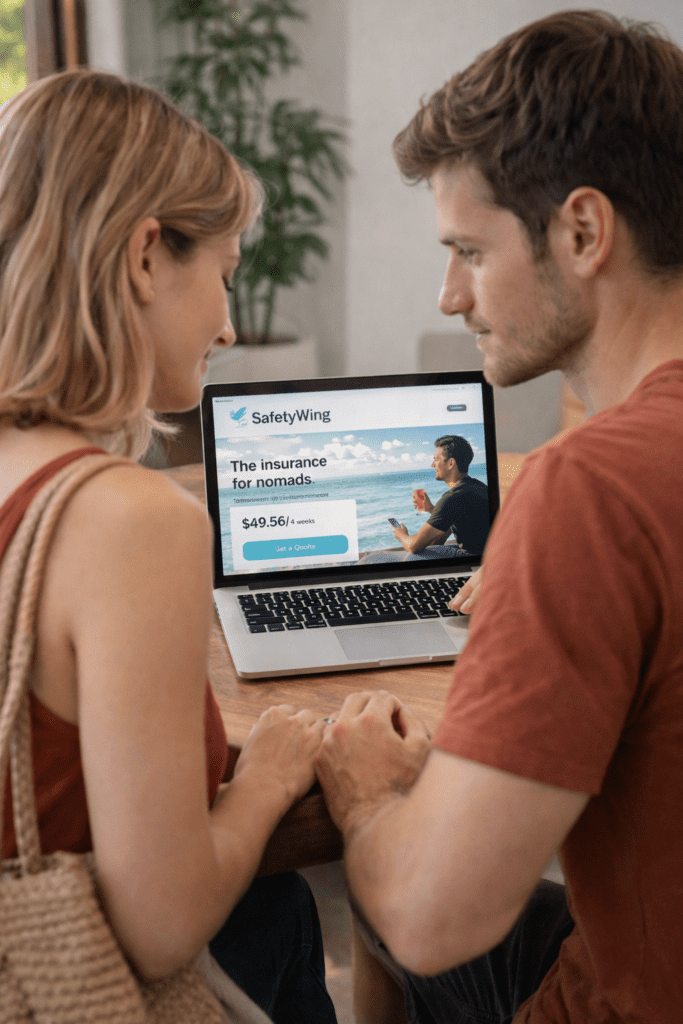
Before you travel, make sure to get health insurance. Thailand is a global medical tourism hub where you’ll find world-class facilities and English is widely spoken, but it can be pricey if you have an accident or serious illness and these are common occurrences for travelers.
Make sure to take out a health insurance policy before you travel. Personally, I use Safety Wing. It’s very easy to set up, and it cost me around $50 a month for coverage based on my age and health metrics.
Transportation in Thailand
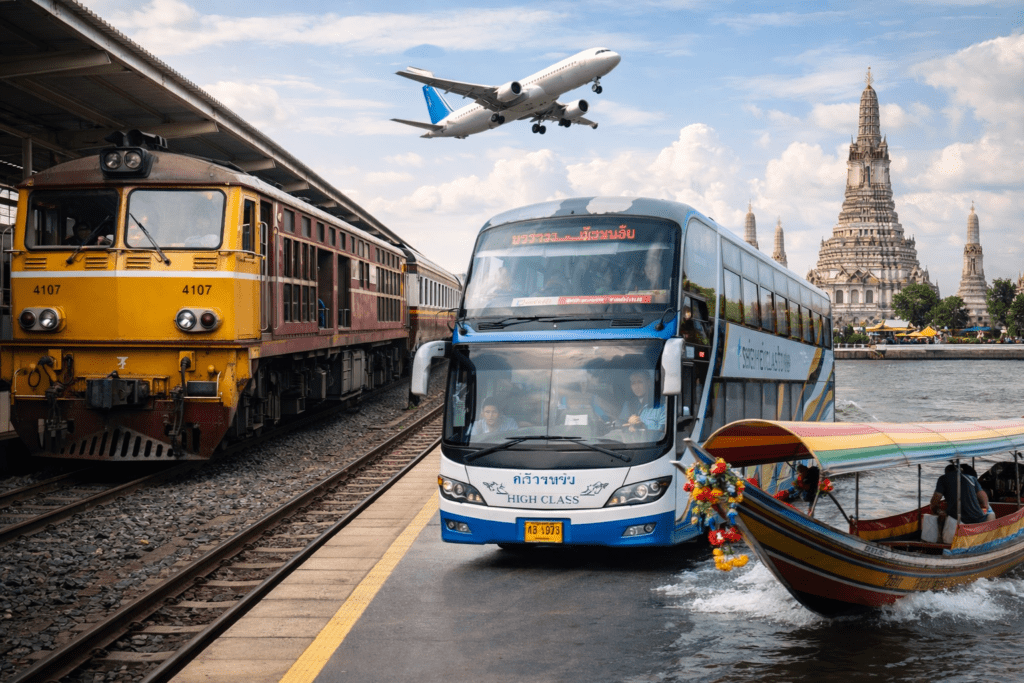
Thailand is a relatively large country, and you have a wide range of transportation options to choose from: planes, trains, buses, vans, private car, or ferry.
The ideal transportation method comes down to your budget and the length of your holiday. If you only have a week or two, it’s normally best to travel by plane. It’s the most expensive option, but if you’re short on time, you definitely want to avoid spending a large chunk of time traveling between locations. Flight prices in Thailand are normally quite reasonable, especially between major tourist destinations like Bangkok, Chiang Mai, Phuket, or Krabi.
I use Skyscanner to find the cheapest flights, which are normally between $30 and $50 on low-cost airlines.
But for shorter trips, it definitely makes sense to take a bus, train, or van. This includes routes like Bangkok to Pattaya, Hua Hin, or Ayutthaya.
The train can be especially enjoyable. Thailand has an extensive rail network which operates throughout the country. If you have a little bit more time, you can also add a long-distance train, for example from Bangkok to Chiang Mai in the north or Surat Thani in the south. This will allow you to see more of the countryside and experience the local culture. Standard seats are very inexpensive on all the routes, or you can book a full cabin and enjoy traveling in luxury which is normally best for long journeys.
I use the website 12Go to check routes and book tickets.
If you’re traveling with a few friends, you may also want to book a taxi or private car between cities. This can be very convenient and inexpensive. You can check prices on the ride-hailing apps Grab or Bolt, or you can book a car using Klook or Viator.
Accommodations: Hotels, Airbnb, and Serviced Apartments
What about accommodations? Travelers generally have three choices: hostels and hotels, Airbnb, or apartments.
Hotels and hostels are the most straightforward option. When I’m traveling, I normally use Agoda to book hotels. If you’re planning to travel during the tourist high season between November and February, it can be best to book accommodations well in advance. If you wait until the last minute, you’ll find it difficult to book a room in popular destinations and you’ll pay much higher prices.
Airbnb is your second option, but it’s important to be aware that short-term rentals of under 30 days are actually illegal in Thailand without a valid hotel license. Police have been cracking down on Airbnb, and many condos have strict policies against short-term rentals. These condos will have signs informing you that short-term rentals and Airbnb are illegal, and you may be questioned by security when entering. Common areas like the pool and gym may also have face scanners installed that limit access to tenants that are registered at the condo.
Personally, I advise against using Airbnb for short-term rentals as the prices are very similar to hotels, and you risk walking into an anti-Airbnb condo where you definitely won’t feel welcome.
Bait and switch scams are also very common on Airbnb. Prospective guests book a specific unit. Normally they’re instructed to pick up the keys from a mailbox, but when they open the door it’s a different and inferior unit. If you choose to use Airbnb, only book with Superhosts that have a large number of reviews, and make sure to read the reviews to check for any negative experiences with either the unit or the condo policies.
In Thailand, you have a third short-term rental option: serviced apartments. These are buildings that have a single owner for all the units, and they offer daily, weekly, and monthly rentals. This can definitely be the best option for visitors that plan to stay a little bit longer in a single location without the need to sign a longer lease. The best place to find serviced apartments is a website called RentHub. The link is in the description alongside a full guide for short-term rentals.
I highly recommend checking Google reviews before you book any accommodations. In my experience, the reviews are much more accurate than on booking sites.

Budgeting for Your Trip
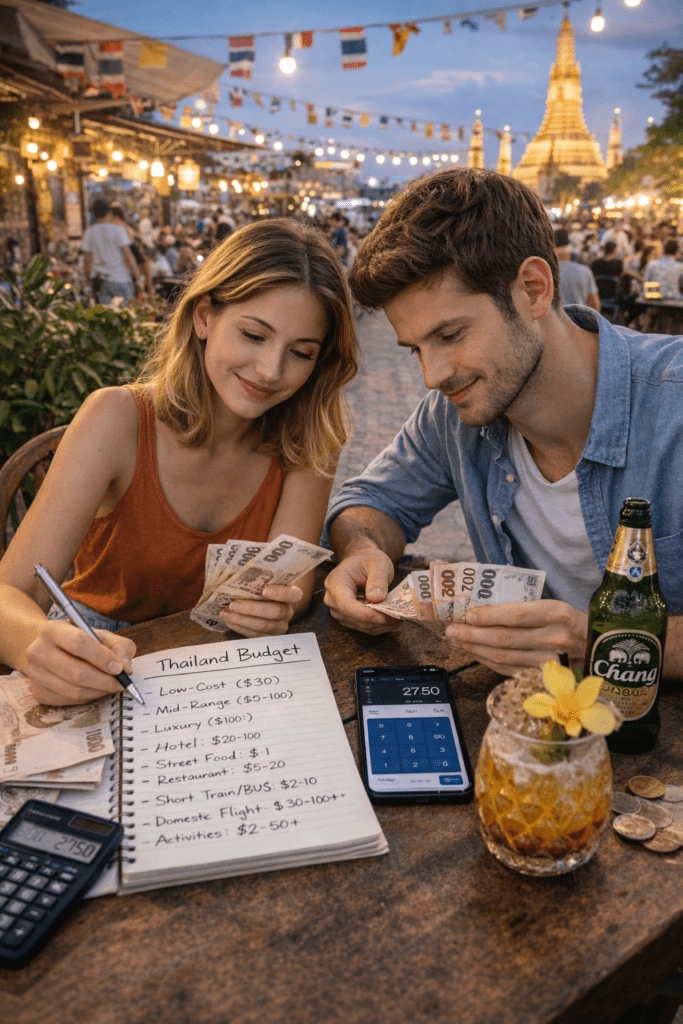
How much money do you need for your trip? Thailand is a country which caters to a wide range of budgets.
- Hotels and guest houses can cost as little as $10 to $20 per night, while four or five-star hotels can cost hundreds.
- Street food or a meal at a local restaurant can be as little as $1 to $2, whereas a meal at a high-end restaurant will normally cost well over a hundred.
- Flights are normally two to three times more expensive than train or bus travel.
There are also regional cost disparities. The southern islands are typically the most expensive areas of Thailand. This includes places like Koh Samui, Phuket, and the smaller islands throughout the Gulf of Thailand and Andaman Sea. The north is typically the cheapest part of the country, while Bangkok, Pattaya, and Hua Hin, along with nearby islands of Koh Chang and Koh Samet, are generally in the middle.
And of course, your budget will be significantly shaped by when you opt to visit. The tourist high season from November through February is the most expensive time of the year, whereas you’ll save significant cash if you opt to travel during the rainy season.
Finally, activities and entertainment can increase your budget significantly. You’ll need to factor in costs like paying entrance to national parks, the Grand Palace, jungle treks, and zip lining. And of course there’s the nightlife, where you’ll often encounter prices which can be as high as in Western countries. A drink at a popular sky bar in Bangkok can easily cost $10.
As a general rule:
- A low-cost traveler can spend as little as $30 a day
- A mid-range traveler should aim for $50 to $100
- The sky’s the limit for luxury travel
Excessive nightlife spending is definitely the easiest way to blow a budget, as it’s generally much more expensive than other aspects of life in Thailand. And of course, intoxication can lead to a loss of inhibitions when it comes to spending.
Accessing Money: Currency Exchange and ATMs
You’ll want to plan how to access money during your trip. The currency in Thailand is the baht, and you have two options to get your hands on baht: exchange for your home currency, or withdraw baht from an ATM.
If you choose to exchange for baht, it’s normally a mistake to do it in your home country. The Thai baht isn’t a major global currency, and the overhead costs for exchanges are generally lower in Thailand, where you’ll get the best rates.
You can bring up to $20,000 US into Thailand without declaring it. But you’ll normally need to declare anything over $10,000 to customs in your home country.
You’ll get the best currency exchange rates from several different exchange companies here in Thailand. This includes Super Rich, Happy Rich, and Oh Rich. The rates at these exchange booths are much better than bank exchanges, and they’re located throughout the country, including at the main international airport, Suvarnabhumi. Make sure to bring your passport as you’ll need to show it at the booth, and bring large denomination bills that are in pristine condition. Currency exchange booths normally won’t accept bills that are even slightly damaged or worn out.
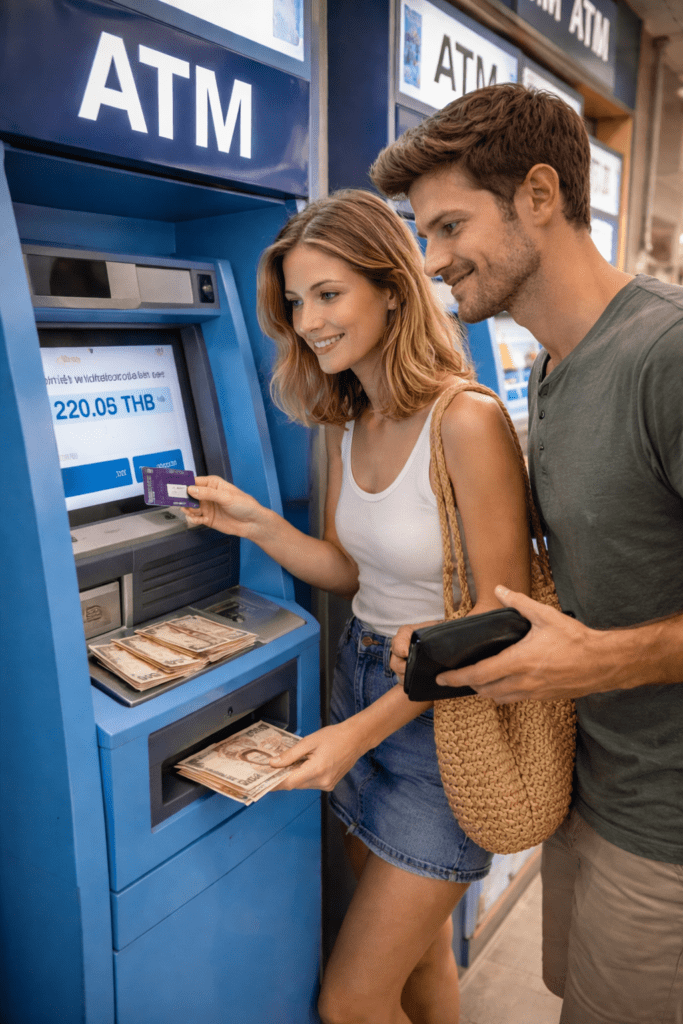
You can also use ATMs in Thailand to withdraw money using a bank card from your home country. There are ATMs located on nearly every corner in cities throughout the country, but convenience comes with added costs. ATMs in Thailand typically charge 220 baht per transaction. Your home bank may charge additional fees.
If you opt to use ATMs, make sure to bring a travel card as they’ll reimburse the 220 baht fee. For Americans, Charles Schwab and Chase have the best cards. Brits can also opt for Chase. For Canadians, the Wealth Simple Cash Card and Wise cards provide the best option, while Aussies should check out the 28 Degree Mastercard.
When you use an ATM, it may ask if you want to do a currency conversion. This allows the ATM to convert the currency using its own rate, which is almost always worse. You should normally select no.
Credit cards are also very handy as they’re widely accepted in restaurants, stores, hotels, and on popular apps like Grab, while offering excellent exchange rates.
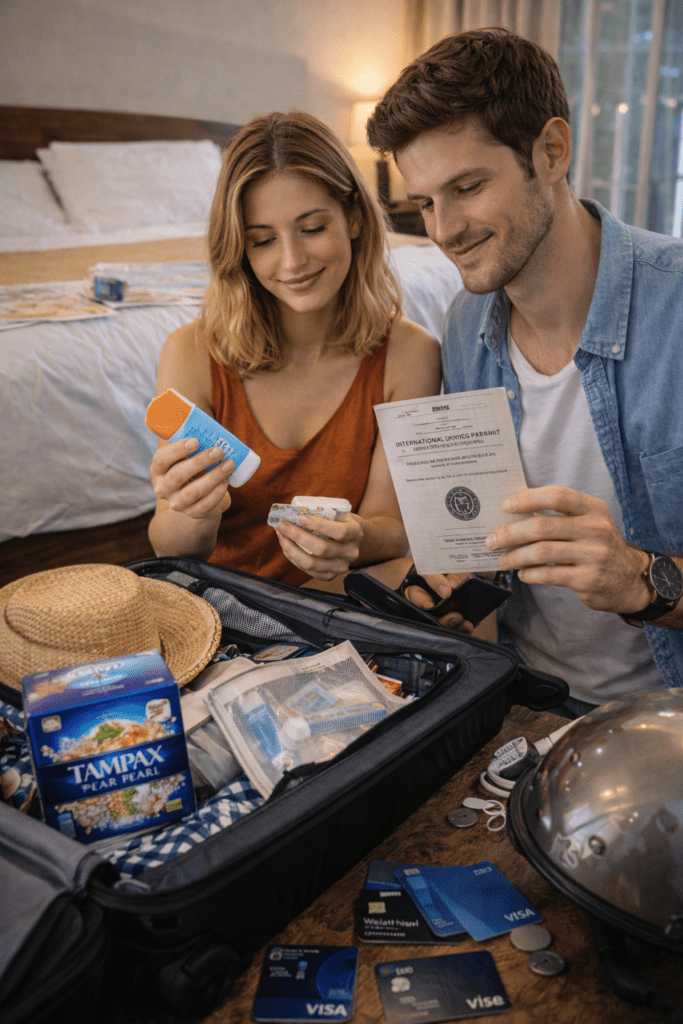
When you’re packing, make sure to bring along a couple of extra debit and credit cards. The order of operations for ATMs in Thailand is reversed: cash comes first, then a delay before the card is returned. This difference causes many travelers to forget their card in the ATM. Having a couple of extra cards on hand will ensure that you always have access to your money in case a card is lost.
Booking Flights
You’re well planned for your trip, but you need to book a flight. I normally use Skyscanner to find the cheapest flights, and I set an alert to notify me when the prices drop. I found this works well, especially if you start checking about 6 months in advance.
Packing Essentials
As your flight nears, you’ll need to think about packing. And the single biggest mistake that travelers make is packing too much. You can buy almost everything you need here in Thailand. It’s high quality and inexpensive. But there are a few things that you may want to bring.
If you’re female, it can be difficult to find insert tampons, and sunscreen can be quite expensive. It can be useful to pack these with you.
If you travel heavy, you’ll need to pay a lot more for any low-cost airline flights, as they normally charge extra for checked bags, and these extra charges can be almost as much as the ticket.
If you plan to drive or rent a scooter, you’ll also want to pack an international driver’s permit. Your national license isn’t valid in Thailand. And you can normally rent a scooter without a valid license, but police can stop and fine you, and your insurance may not cover you in case of accident.
If you’ve never ridden a motorbike, you may want to avoid planning to rent one here in Thailand to get your first experience. Thailand has one of the highest road fatality rates in the world, and it’s quite a dangerous place to learn to ride. Think twice before making the motorbike an integral part of your plan.
Essential Apps for Thailand
Finally, you should download a set of apps that will make life easier once you arrive in Thailand.
- Grab and Bolt are the Ubers of Thailand. These are very useful throughout the country, as you often want to avoid taxis due to the prevalence of scams and hustles.
- If you feel like ordering in, Grab Food and FoodPanda will allow you to order food, much like Uber Eats.
- Line is the main communication app in Thailand.
- Klook and Viator are excellent for booking tours, cars, and experiences.
- 12Go allows you to buy train, bus, and ferry tickets in advance.
- Agoda is generally optimal for hotel bookings, and apps like Skyscanner and Trip.com offer the best flights and package deals in Thailand as well as other countries around the world.
- And of course, the Google suite of apps is exceptionally useful, especially Maps and Translate.