Why Most Thailand Trips Slowly Go Wrong
If you’ve never been to Thailand before, it’s very easy to assume that things will just work out on your trip. And for the most part, that’s true. But small mistakes here can quietly cost you hours of your time and far more money than you might expect. And most people don’t even realize they’re making them.
We’re going to look at some of the patterns that quietly trip people up during their time here, and they start to show up as soon as you land.
The Arrival Window Small Mistakes Add Up
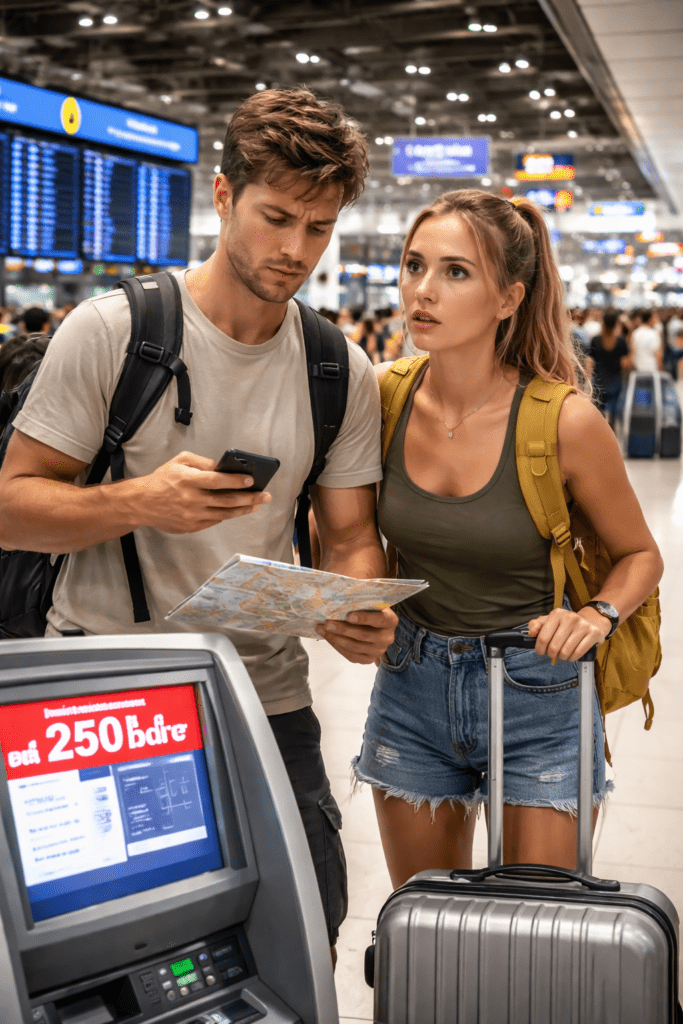
I recently watched a vlog by a young British couple who arrived here at Suvarnabhumi International Airport in Bangkok, and they detailed their long and costly trip to Khao San Road. First with the Airport Rail Link, then the MRT, and finally taking a taxi. But the reality is that they could have gone directly to the S21 bus in the airport transport area, sat back and relaxed, and arrived within about 40 minutes for 60 baht per person.
After that, they withdrew a small amount of money from an ATM without realizing there’s a 250 baht fee for using foreign cards at Thai machines, effectively paying a 25% surcharge.
And all of this highlights one of the biggest early mistakes that travelers make: failing to do a little bit of research prior to arrival. Because after a long flight, that’s also when you’re most likely to make poor decisions. But it’s very easy to avoid with just a little bit of preparation. Even something like a short YouTube airport arrival guide can save you half a day and a pile of cash.
Time vs Money
Once you get past that arrival window, another problematic pattern starts to show up: people trying to optimize everything. Some visitors arrive with the mindset of trying to get the best deal all the time. But in practice, that often creates more friction than it removes.
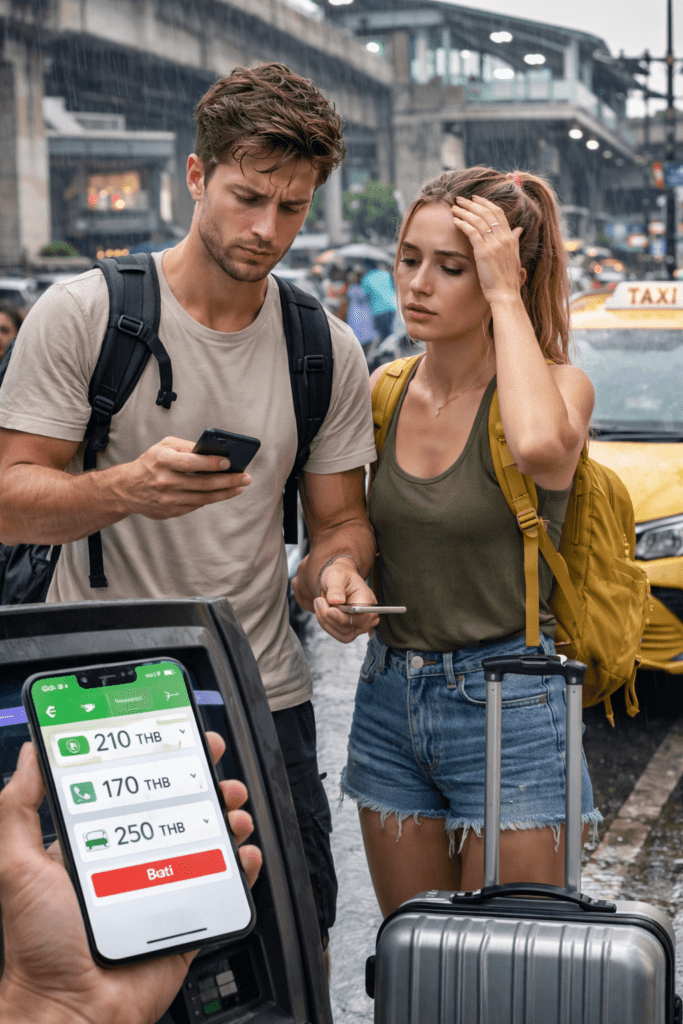
You save 200 baht on a hotel room, but now you’re 25 minutes from the nearest BTS or MRT station. And every day starts with a long and uncomfortable journey in the heat or rain. Or someone spends 10 minutes comparing prices on Grab, Bolt, or taxis just to save 40 baht. Over the course of a long trip, these inefficiencies add up. And optimizing for efficiency can be far better.
And when it comes to transportation, one of the simplest ways to do this is to check the price on the Grab app and simply offer that fare to the nearest taxi driver. Because optimization is about balancing time, money, and convenience.
Tourist SIMs vs eSIMs
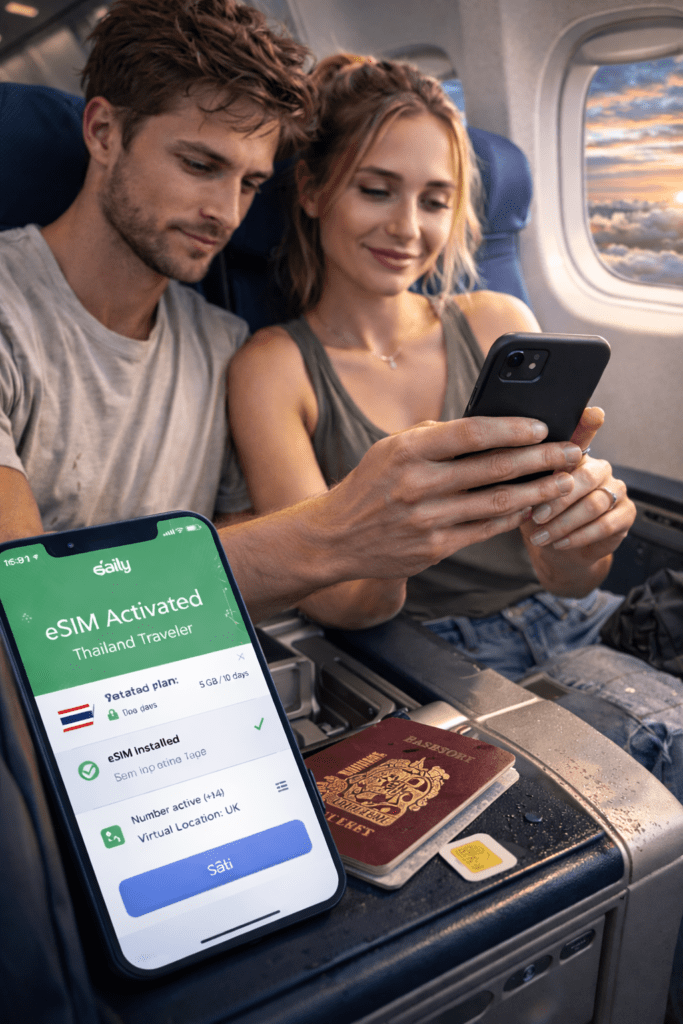
And that same tendency to overthink small decisions shows up again when it comes to staying connected. Visitors generally have three options: tourist SIMs, local SIMs, and eSIMs. But when it comes to shorter trips, the actual price difference between these options is usually just a few dollars.
And the better approach is to optimize for efficiency, not tiny savings. The simplest way to do that is with an eSIM, and Saily is a good option. The setup is straightforward. You choose a data package before your flight, install the eSIM, and it activates when you arrive. You keep your home number active for calls and texts, which means you can still receive messages and two-factor authentication codes, while Saily handles your data so you avoid expensive roaming fees.
The virtual location feature allows you to access services back home. The ad blocker helps reduce wasted data, and the regional plans are especially useful if you’re traveling to multiple countries because you don’t need to keep switching SIM cards every time you cross a border. And overall, it’s just one less thing to think about before you land.
Local vs Tourist Pricing
Once you start moving around the city, expectations around cost are another area where people get caught off guard. Thailand can definitely be affordable—street food, local transport, and certain types of accommodation are still very inexpensive.
But if you’re staying in central Bangkok, Koh Samui or Phuket, eating in tourist-heavy areas, going to rooftop bars, or booking last-minute hotels during peak tourism season, prices can be surprisingly high and in some cases very similar to what you’d pay in Western cities.
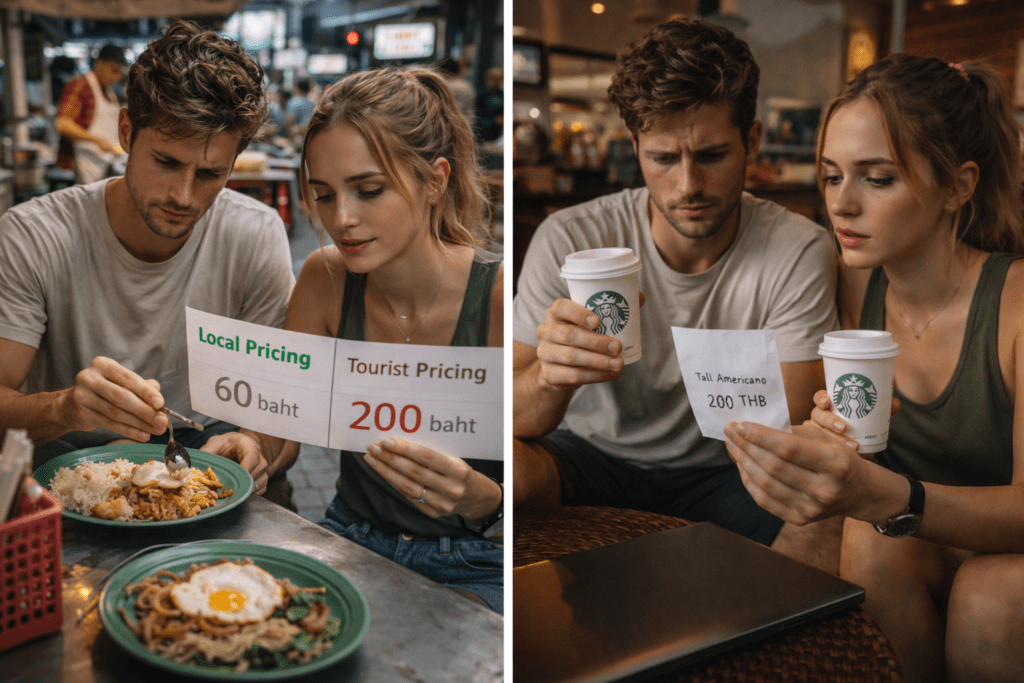
That’s because Thailand operates with two parallel economies. One built around local pricing and the other around tourism and international brands. You can spend 60 baht for a local Thai meal at a shop and then pay 200 baht for a coffee at a Starbucks a few steps away.
And one of the best ways to get maximum value from your trip is to balance higher-end experiences with more inexpensive local options. So over the course of a few nights, you might budget a bit more for a rooftop sky bar experience, then spend another evening at a place like Khao San Road, which is cheaper and more social, and round things out at a local jazz bar. This way, you’re not just chasing lower prices or getting caught in higher-end tourist traps. You’re seeing the full range of what Thailand has to offer.
Curated vs Real Experiences
But where this really shapes your experience is how you choose where to go. Because a lot of those decisions are shaped before people even arrive. Many travelers come in with a mental checklist that’s shaped by Instagram, TikTok, or YouTube: specific cafes, viewpoints, night markets, and so-called “hidden gems.”
And while some of these places are genuinely good, a lot of it is driven by marketing. Influencers are often paid to showcase restaurants, bars, or hotels, which means that the experiences you see on social media might not be as organic as they appear. And many of these places end up being overpriced, underwhelming, and designed for tourists who’ve probably seen the exact same clips as you.
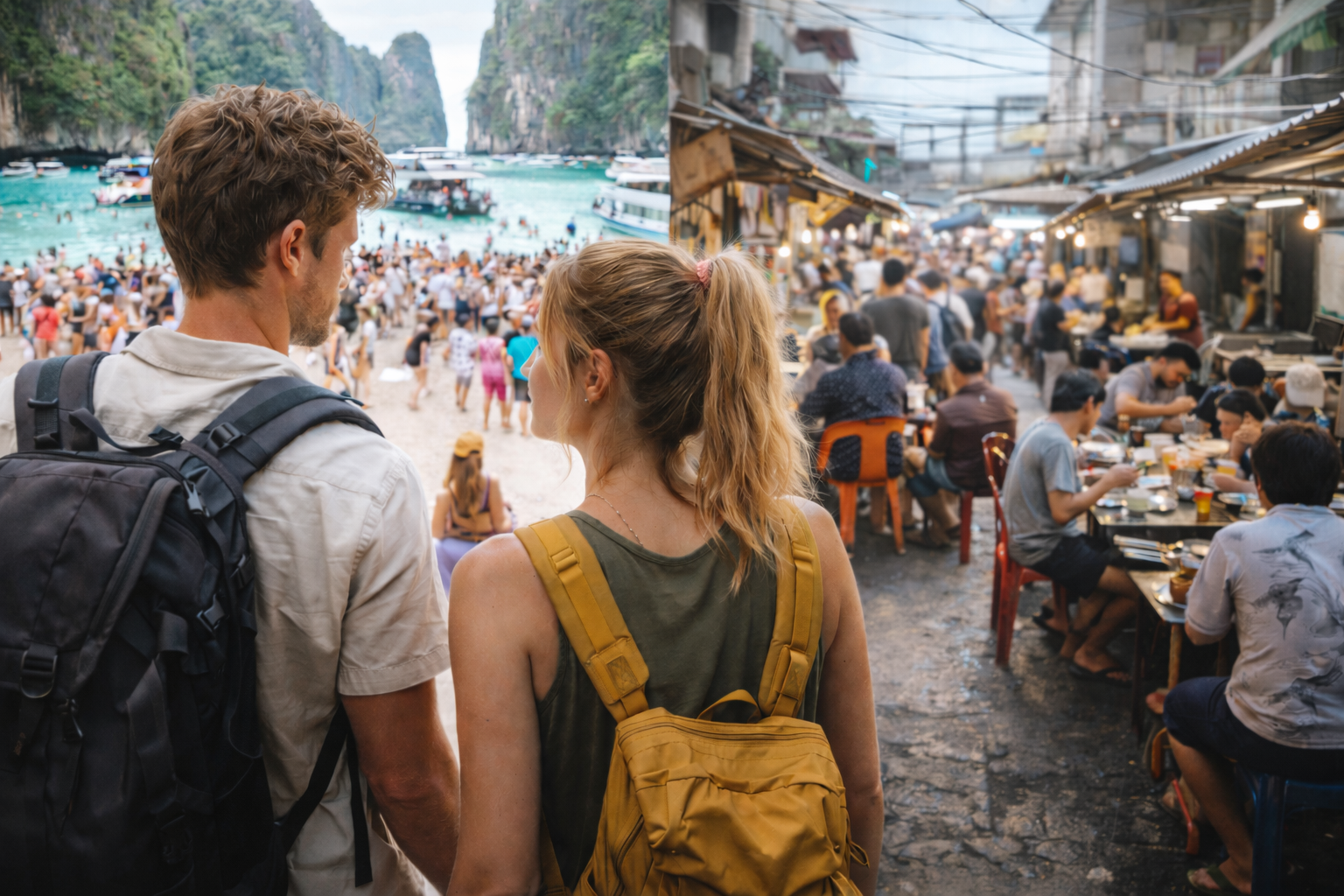
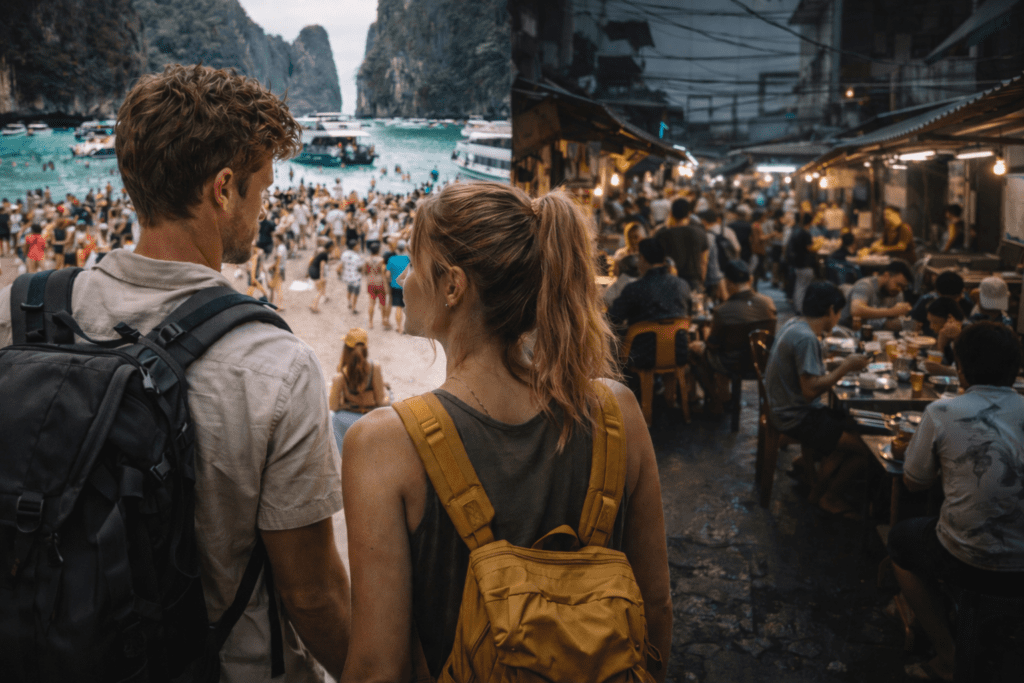
And this also applies to many well-known destinations. Places like Maya Bay are undeniably beautiful, but they can also be extremely crowded. And the reality can feel very different from what you see online.
And over time, this leads to a very subtle effect where instead of discovering Thailand for yourself, you’re being moved between pre-selected locations that thousands of other people are visiting for the exact same reason.
First Impressions Can Be Deceptive
This can lead to a very distorted perspective of the country. Someone spends a few days in a very specific area—often a nightlife district, or a tourist-heavy island, or just one part of Bangkok—and then they build their entire perception of Thailand around that experience. But the truth is that Thailand is incredibly diverse.
Bangkok alone can feel like a very different city depending on where you are. And once you move outside the main tourist zone, the pace, the pricing, and even the way people interact changes significantly. And each different region of the country is entirely distinct with different cultural, social, and geographical characteristics.
So, it’s important to recognize that your first impression is just one version of this country. If something feels off, overwhelming, or not quite what you expected, it’s often worth changing the environment before forming a final opinion.
Because most of the mistakes that people make in Thailand aren’t the big or obvious ones. They’re small patterns that subtly shape how you experience the country, often without you even realizing it.