First Week Thailand Mistakes to Avoid
Check Your Visa Length and Entry Rules
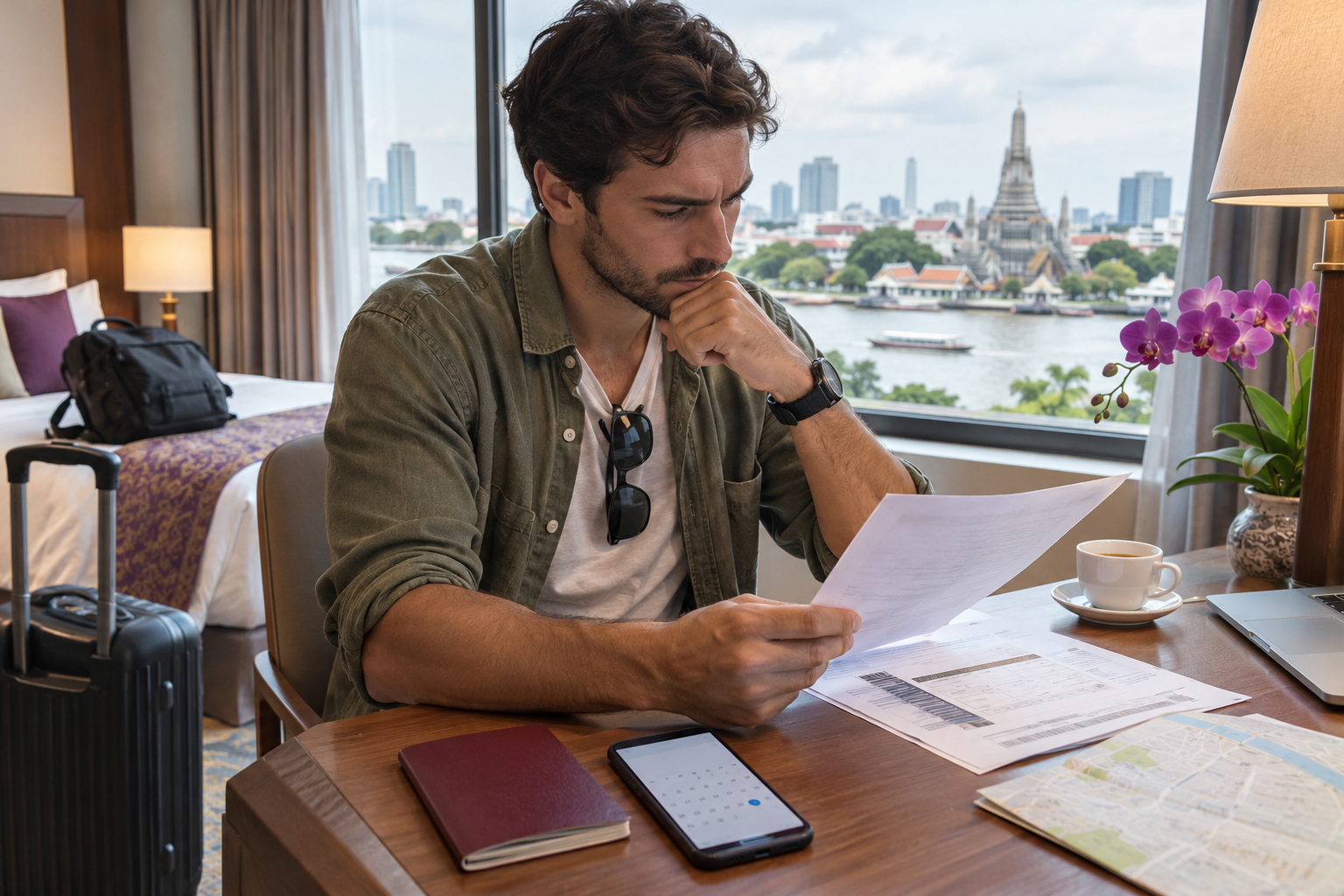
Thailand changed its entry rules again in September 2026. For travelers eligible under the current 30-day visa-exemption scheme, the permitted stay is up to 30 days. An extension of up to 30 days may be granted at a local immigration office, at the immigration officer’s discretion. Eligibility and permitted stays vary by passport, so check the current official requirements before booking.
If your trip is longer than the period permitted by your visa or visa exemption, you risk overstaying. The fine is 500 baht per day, and violators may face entry bans or blacklisting. Plan ahead and make sure your trip aligns with the rules that apply to your passport.
Ride Only if You’re Properly Licensed
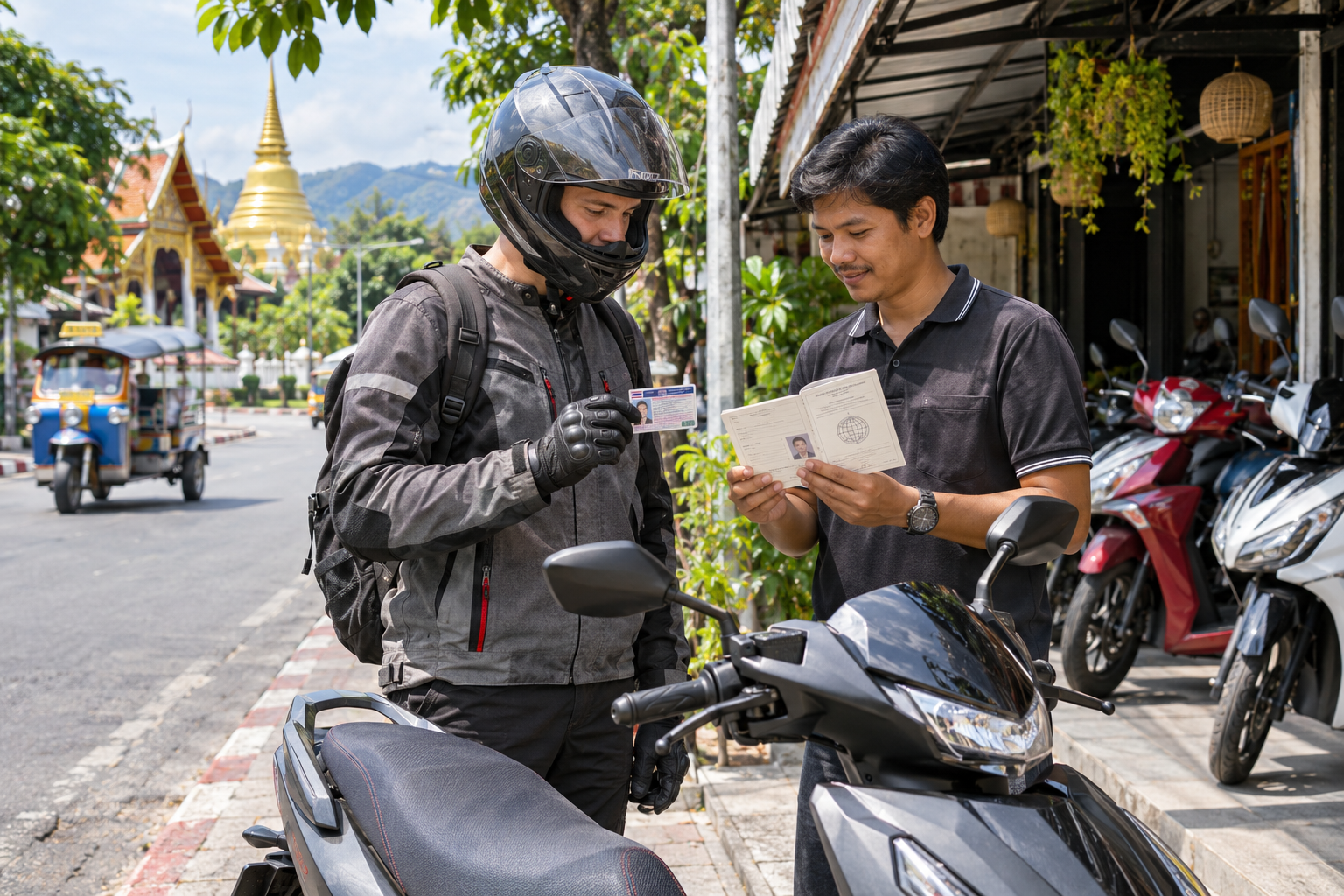
First-time travelers in Thailand tend to make the same mistakes over and over again, and for good reason. On holiday, risk feels further away, and in unfamiliar territory we tend to follow the herd. That can lead to some of the riskiest mistakes of all, especially when choosing transportation.
Within a few days, you’ll probably notice plenty of people riding motorbikes, often without helmets. You’ll see rental shops everywhere advertising daily rentals for under $10. If you walk in, they often won’t ask for a license, and many travelers who rent may never even have ridden a scooter. The temptation is real, but there’s nothing to stop you from making a bad decision.
Thailand’s roads are some of the most dangerous in the world. The World Health Organization estimates around 50 road deaths a day, and more than 80% involve motorbikes. Tourists are among those killed, and road deaths are routinely reported in local media. I personally know several people who have died in accidents over the years.
If you heed one lesson, exercise caution when renting scooters, especially if you lack riding experience. Just because a shop doesn’t ask for a license doesn’t mean you don’t need one. To ride legally in Thailand, you need a motorcycle license from your home country and an international driving permit that covers motorcycles. Without these documents, police can fine you, and insurance normally won’t cover an accident.
If you choose to ride, make sure you’re properly licensed, wear a helmet at all times, and never leave your passport as a deposit. If it gets lost or stolen, you’re in a difficult position. Keeping your passport can also leave you vulnerable to a common scam where a shop claims the bike is damaged and charges excessive repair fees. If the shop holds your passport, it has a lot of leverage.
Legitimate shops will normally accept a copy of your passport along with a cash deposit. It’s best to rent from established businesses with plenty of positive reviews online. Be especially cautious when renting a jet ski, where fake damage scams are even more common in places such as Phuket and Pattaya.
Travel With Medical Insurance

Thailand is a safe country, but you still face plenty of risks. Even when you exercise caution, it’s easy to have an accident or get sick. Thailand’s private hospitals are excellent, but treatment, surgery, and overnight stays get costly. Hospitals can ask visitors without insurance for a deposit of tens of thousands of baht before admitting them.
Nearly every month, you’ll come across fundraising pages from travelers who needed medical care but lacked adequate insurance. Travel medical insurance can cover treatment for new, unexpected illnesses and injuries, hospital stays, and emergency evacuation. Compare the terms before you travel, including where and how long the policy covers you.
Plan Around Thailand’s Heat
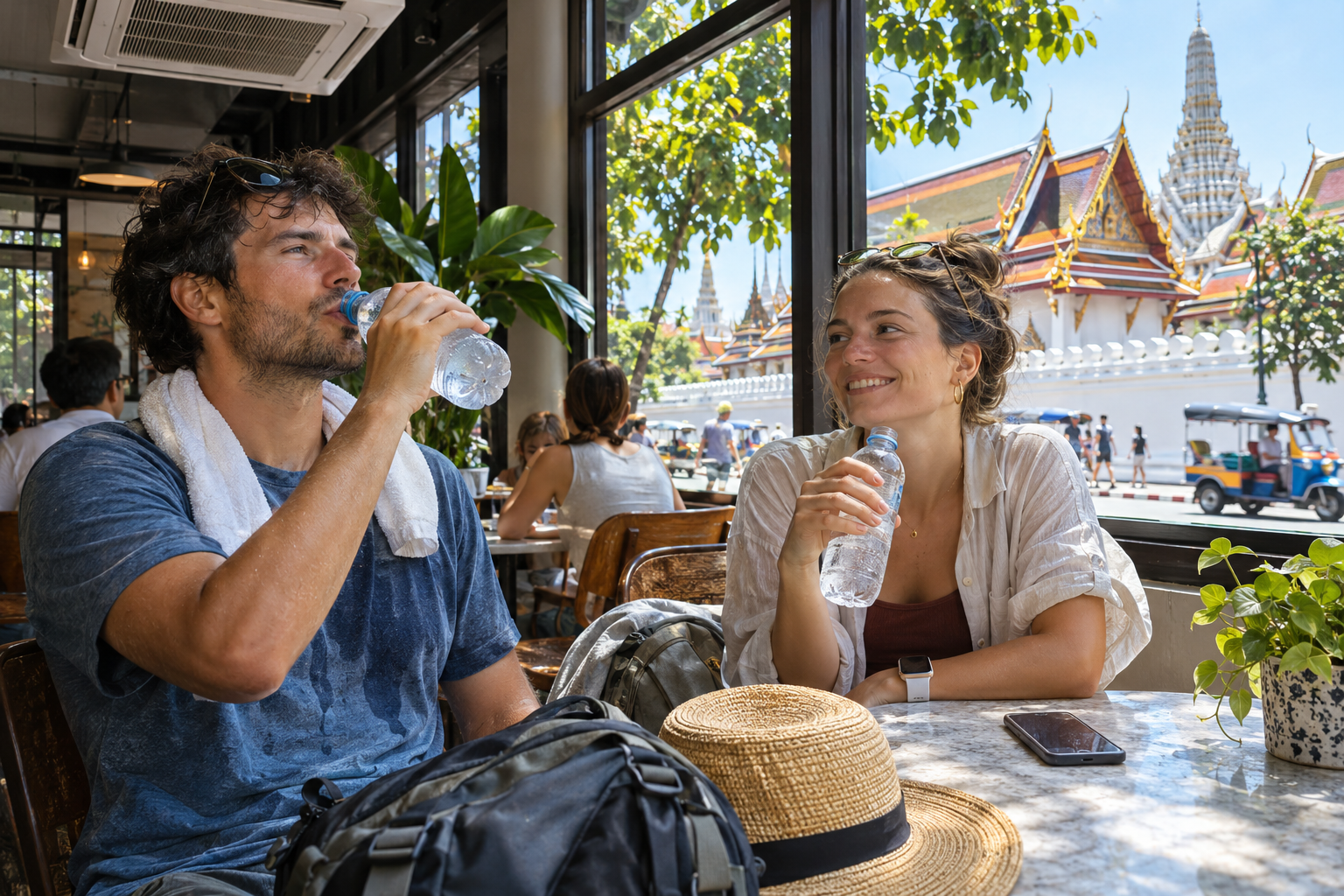
One of the biggest safety risks doesn’t come from an accident or illness, but from the environment. Thailand is hot, the food is different, and it takes time to adjust. Most people plan their itinerary the way they would back home: temples at noon, walking everywhere, and packing everything into busy days.
In the hot season, midday temperatures can reach 40°C and even higher in direct sun. Distances between attractions are often larger than expected, with uneven sidewalks and difficult road crossings for first-time visitors. Heatstroke and dehydration are real risks.
Locals avoid the midday sun from 11 a.m. to 3 p.m. for good reason. Build air-conditioned breaks into your itinerary and actively monitor how you’re feeling. During the first week, the heat can take you by surprise and disrupt your plans. Start with a temple visit early in the morning, then stop somewhere air-conditioned for lunch around noon, whether that’s an iconic mall or simply a café. Drink plenty of water, and choose bottled water rather than tap water.
Choose Food Carefully While You Adjust
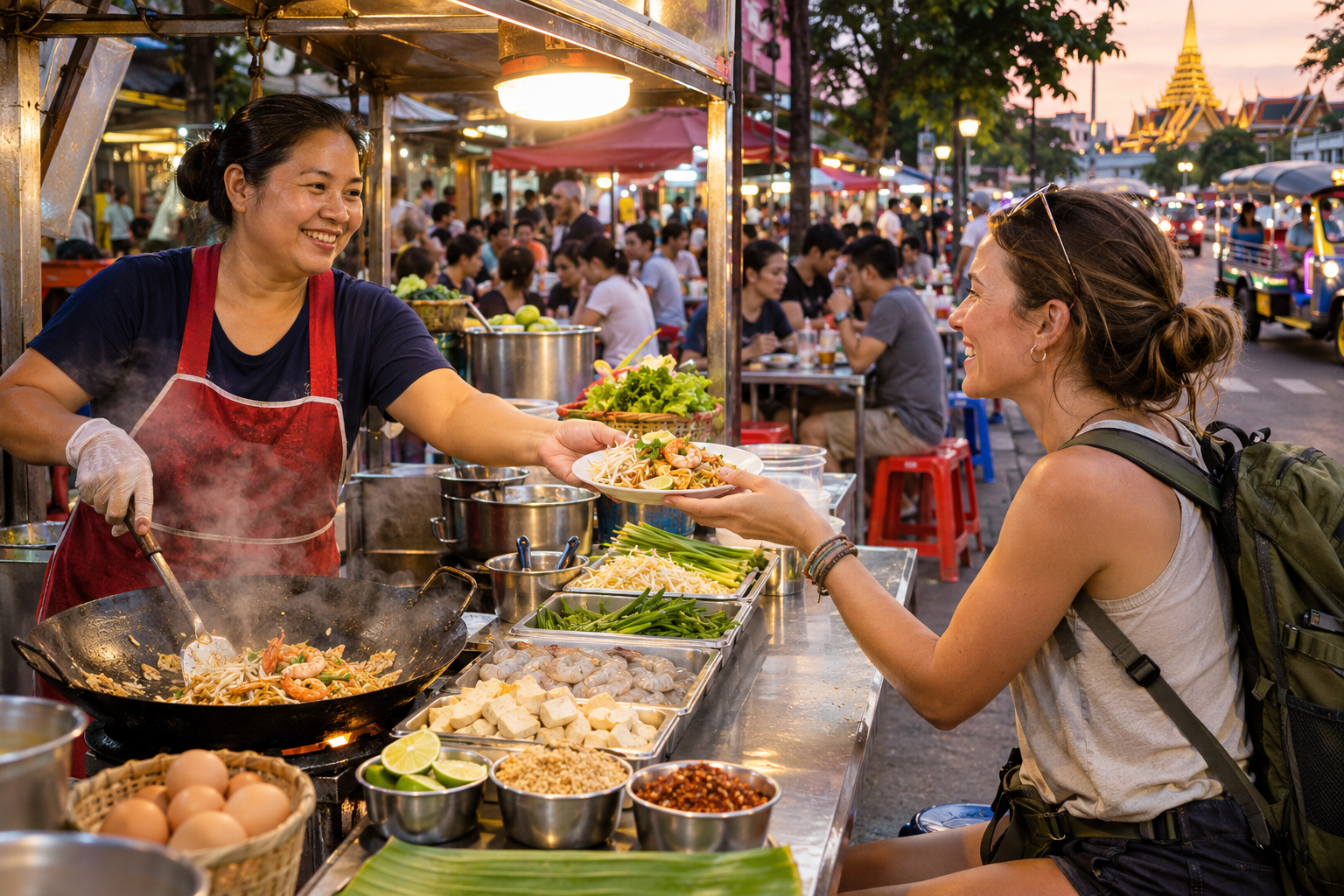
Thailand is world-famous for its cuisine. You’ll often see vendors with trays of food or meat hanging out, but in the tropical heat that can lead to a proliferation of bacteria. For many Thai people it won’t cause significant stomach issues, but for visitors it can lead to an upset stomach and diarrhea, which can be difficult with a busy travel schedule.
To avoid problems, order food that’s cooked right in front of you. Choose busy stalls with plenty of customers, which means higher turnover and fresher food. Go easy on the spice: Thai food can be hot, and chilies can wreak havoc on your stomach. When ordering, say “mai phet,” which means “not spicy,” though there’s a good chance it’ll still be a little spicy.
If your stomach turns on you, don’t push through it. Take a break and drink plenty of fluids. There are clinics and pharmacies on every street.
Don’t Overload Your Itinerary
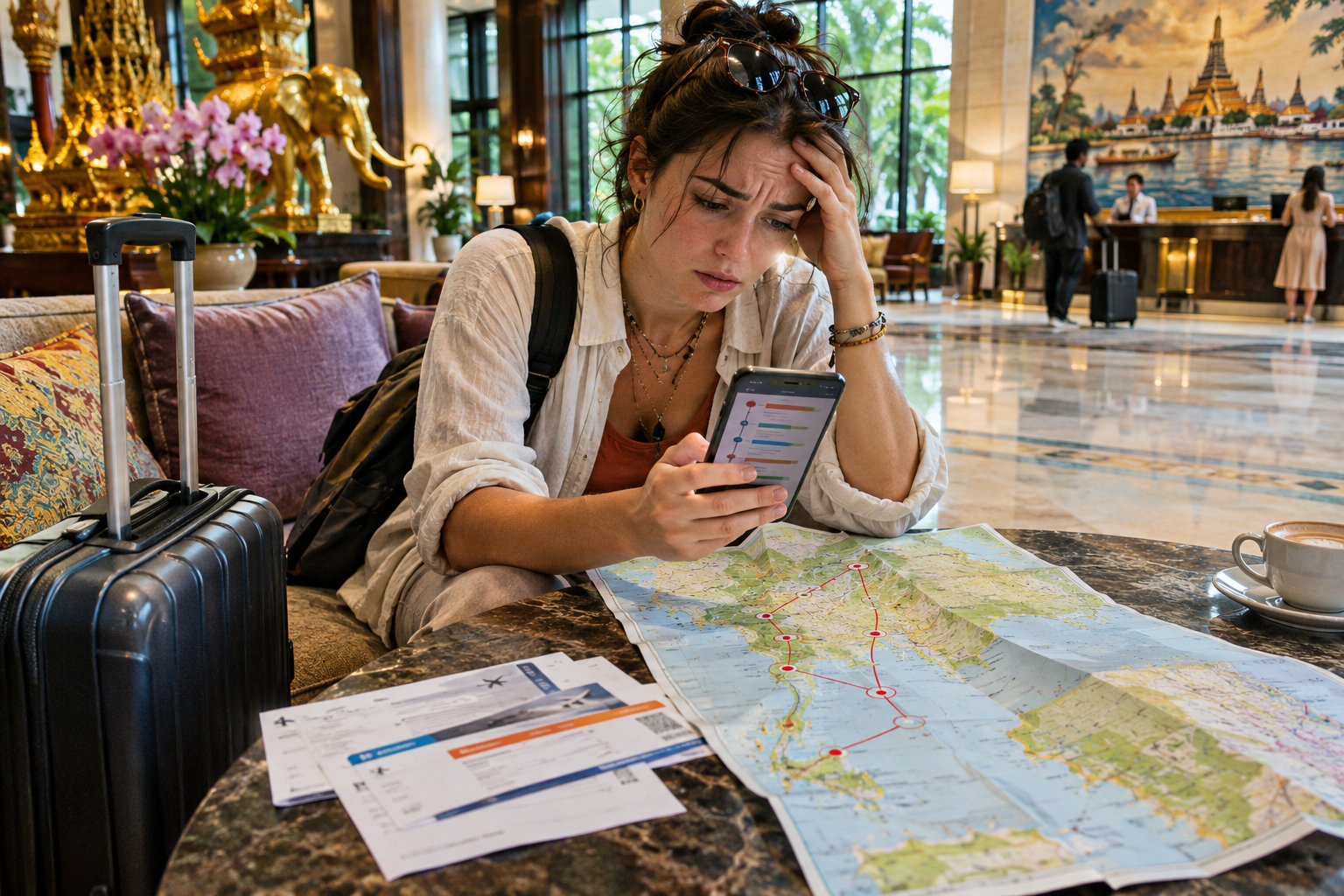
Many visitors want to see and do as much as possible: Bangkok, Chiang Mai, an island, a few days in each, and five sights a day, all crammed into a week and a half. On a map, it can look doable, but flights between destinations and traffic within them will eat up much of your time.
By day three, all that travel, plus the heat and perhaps an upset stomach from poor food choices, can leave you exhausted. Another flight may be on the horizon, which means commutes to and from airports, check-in, security, and the inevitable low-cost airline delays. Rather than cover as much as possible, pick one main base per week of travel and budget two or three things per day. You won’t see everything, but you’ll actually enjoy your trip.
Avoid Costly ATM and Card Mistakes
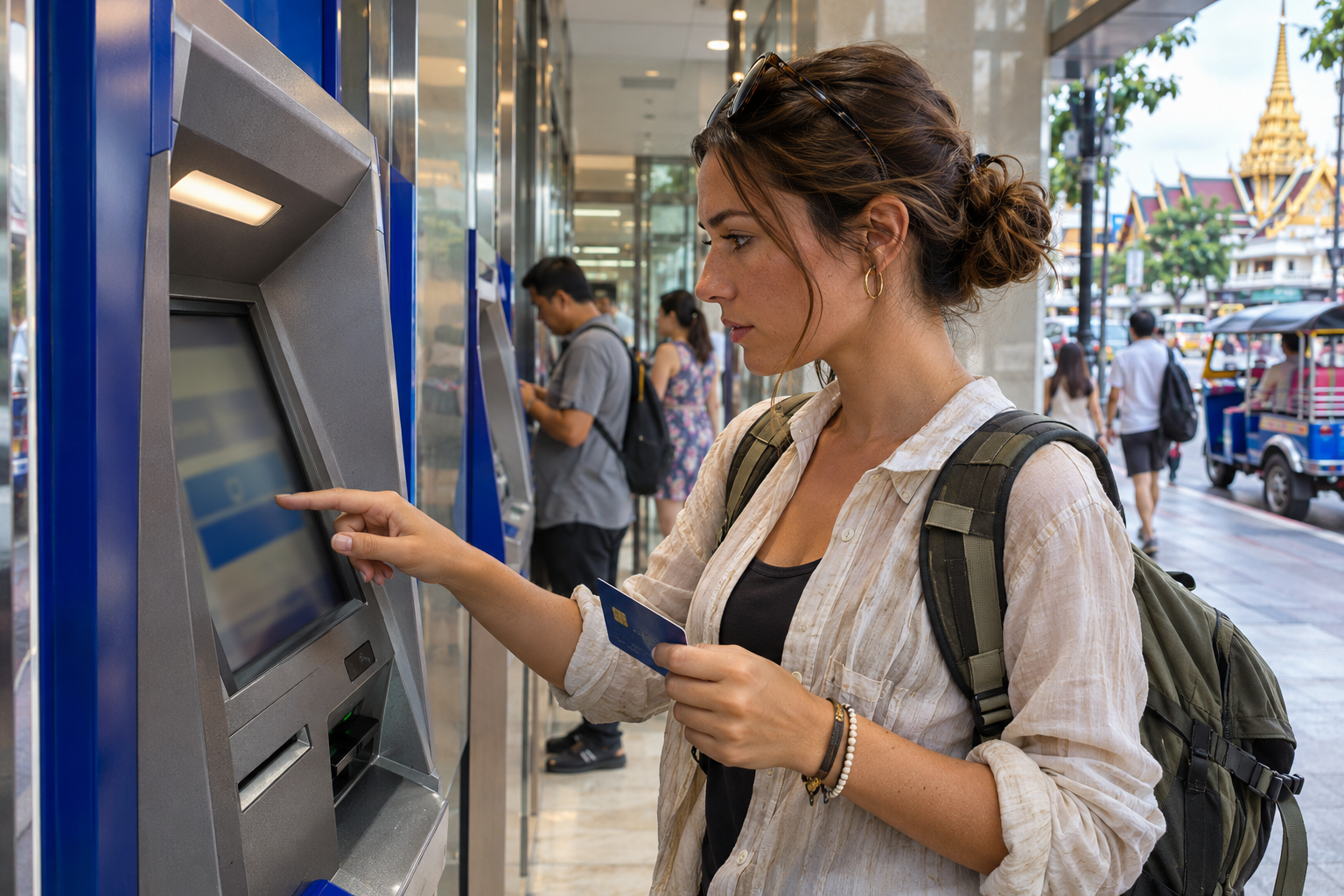
Most visitors rely on ATMs to access cash, and mistakes are common. Thai ATMs charge foreign cards a flat fee every time. Current fees vary by bank and card network; one current bank schedule lists 250 baht for Visa and 350 baht for Mastercard per withdrawal. Taking out a little every day for a week can easily add up to well over 1,000 baht in fees, before your own bank charges anything.
Take out more cash less often, or bring a travel debit card that refunds the fees. That step before arrival can add up to serious savings over a longer trip. It can also let you withdraw at a more natural rate, so you’re not carrying around an excessively large quantity of notes, which comes with risks of its own.
The ATM may ask if you want to be charged in your own currency. It looks helpful because you can see the amount in dollars, pounds, or euros, but this is dynamic currency conversion and the rate is almost always worse than your bank’s. Choose baht. The same goes for card machines in shops and restaurants.
Finally, don’t forget your card. Thai ATMs give you the cash first and the card comes out afterward, whereas in many Western countries it’s the other way around. Make it a habit to wait for your card before walking away, and pack at least one backup. I made this mistake on my first trip and had to rely on a credit card for over a month.
Check Your Change and Avoid Confrontations
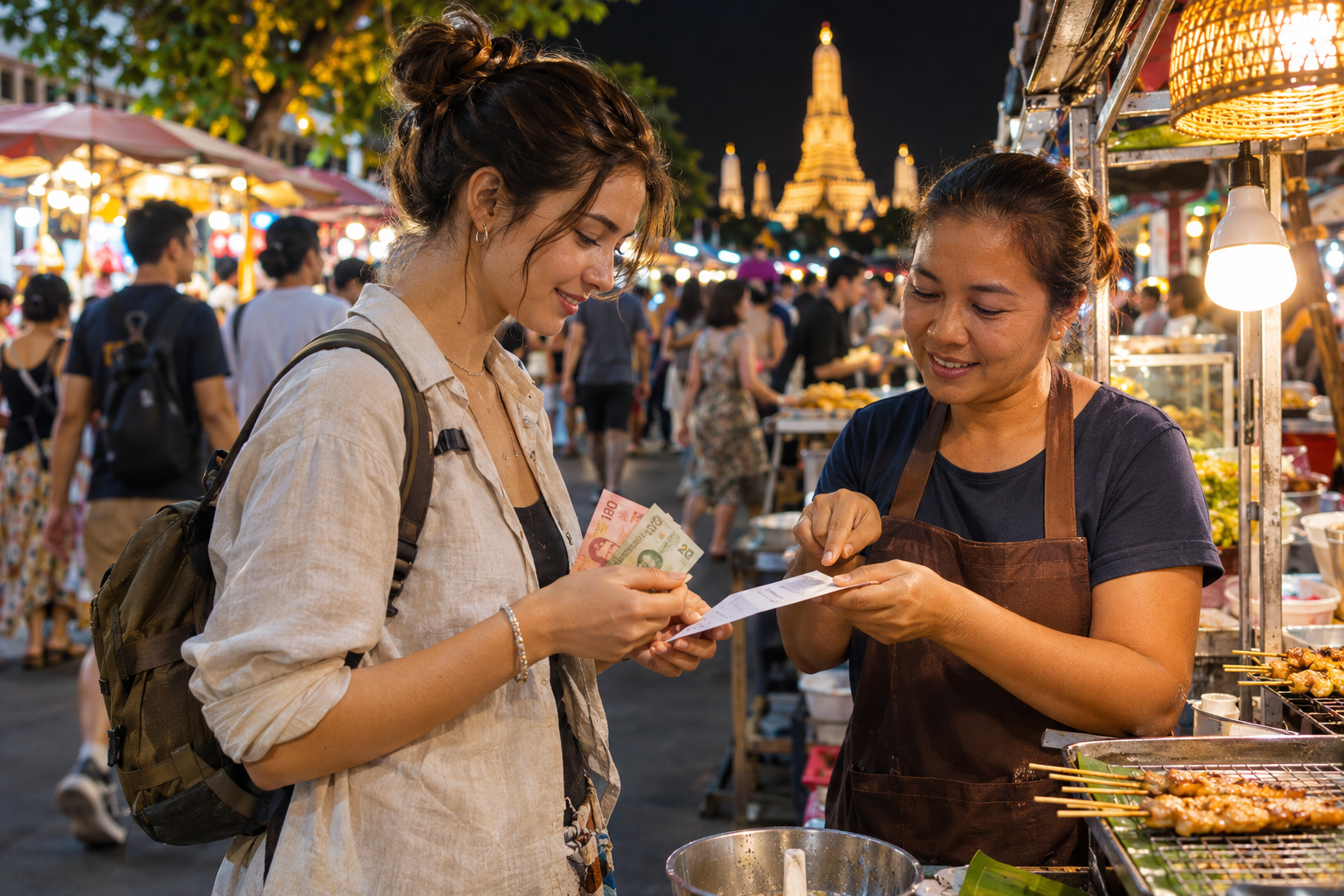
Pay attention to your spending. In tourist hotspots, wrong-change scams or bill padding can occur, especially in nightlife areas. For example, you might hand over a 1,000-baht note and get change for 500. The best strategy is to carry smaller bills, especially on a night out.
If you’ve only got 1,000-baht notes, pop into a 7-Eleven or an established convenience store and get change. Most staff and vendors are honest, but this is a simple pre-emptive step to avoid potential problems. An ounce of prevention is worth a pound of cure.
Scams can happen. If one happens to you, it’s normally best to take it as a lesson learned and move on. Some visitors get into confrontations after claiming that a bill was padded or they received the wrong change. Nightlife zones often have a large security presence, and staff may know each other. When altercations occur, it can go very badly for the foreign tourist.
If a scam happens, you have two choices: walk away or call the tourist police to attempt a resolution. Don’t escalate or engage in a direct confrontation.
Use Ride-Hailing Apps for Transport
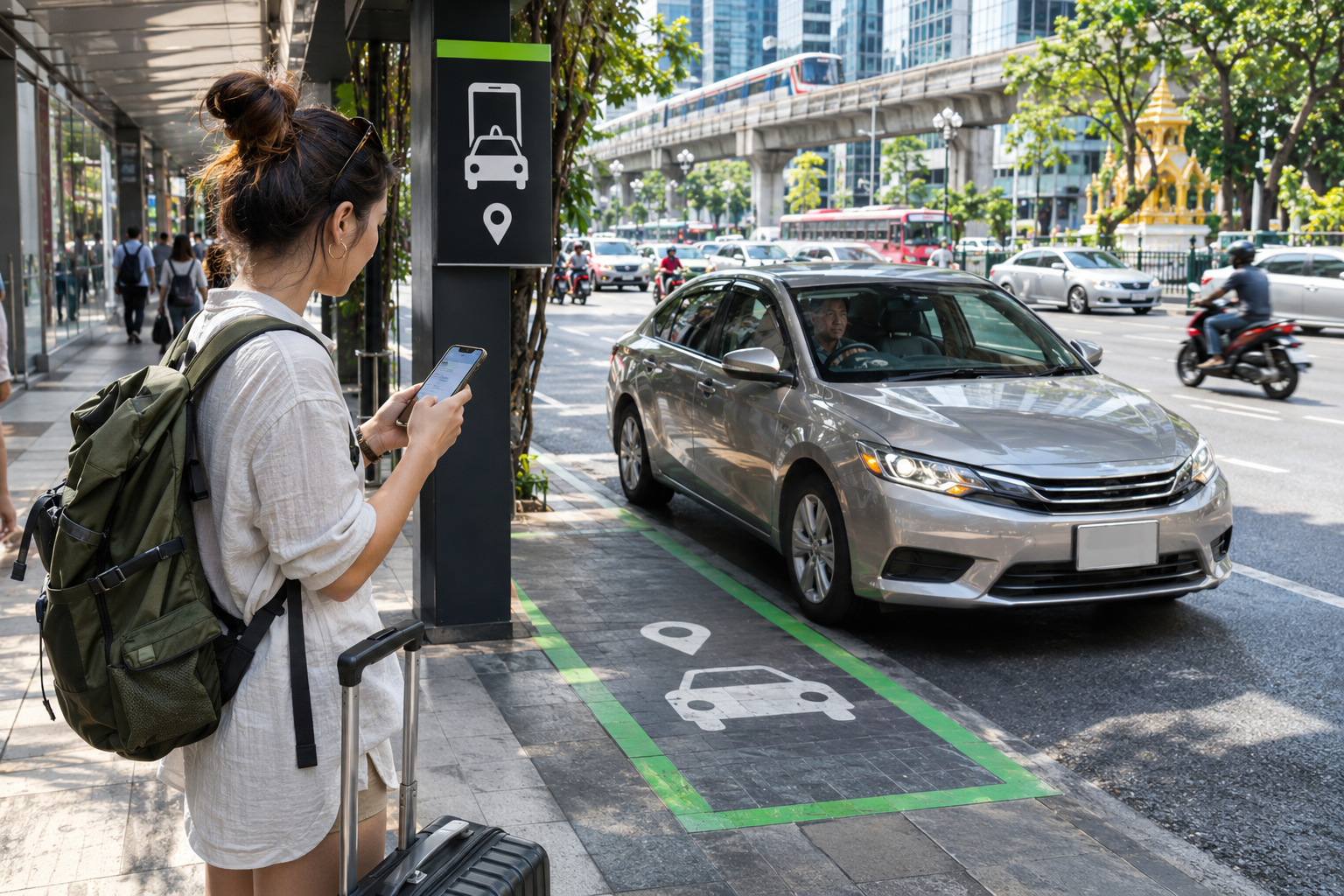
In your home country, it may be common to take taxis, but in Thailand it’s typically better to use ride-hailing apps. Taxis are known for running a wide range of hustles and scams, and simply skipping them bypasses many potential problems. This applies even more to tuk-tuks.
Download Grab, Bolt, and inDrive when you arrive. The rides are tracked, drivers are rated, and you’ll normally have an option to pay by credit card.
Watch for the Grand Palace Tuk-Tuk Scam
Scammers target newcomers because they make easy targets. You’re jet-lagged, it’s hot, and everything is novel and unique. These are ideal conditions for making a bad decision.
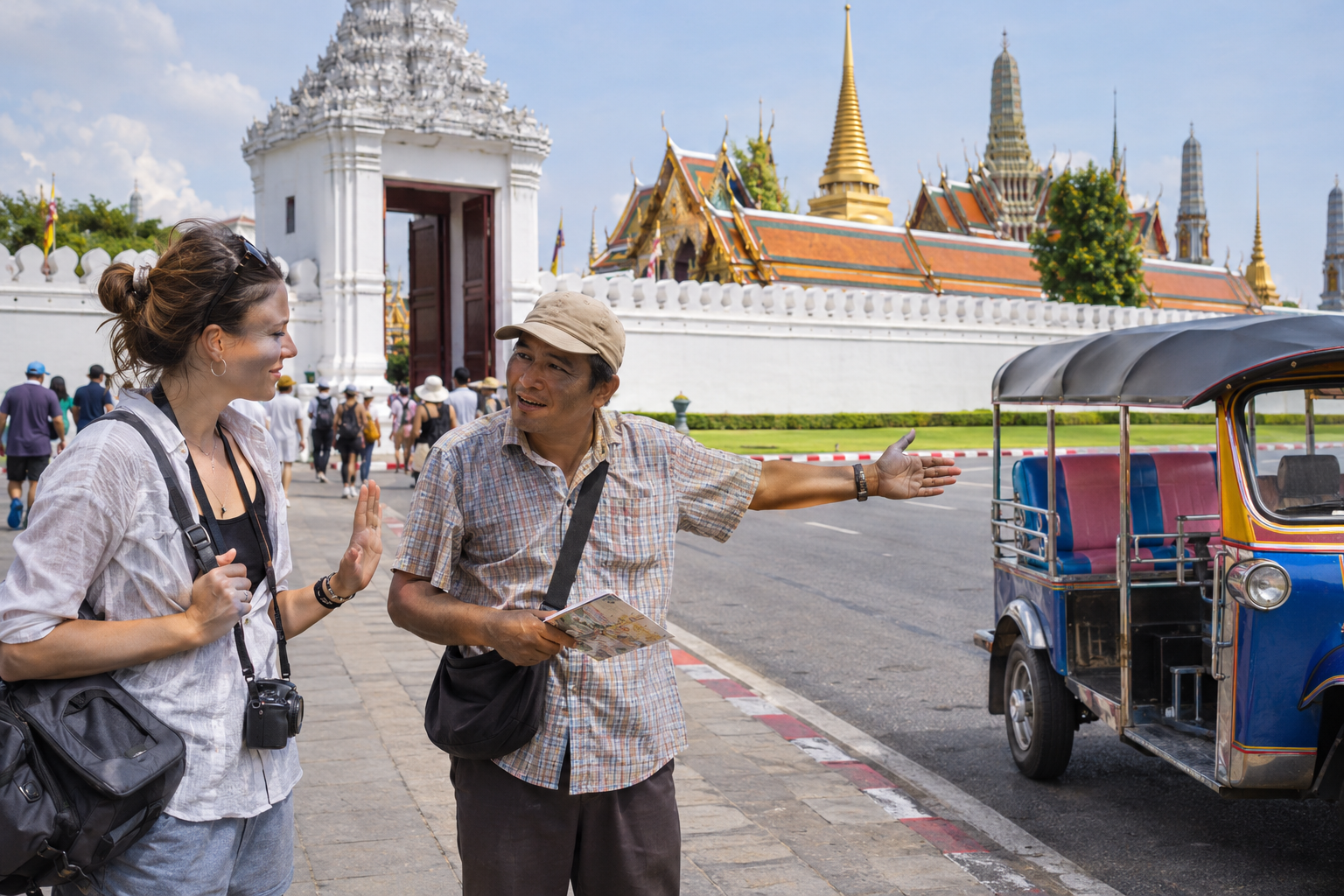
Around the Grand Palace, you may be approached by people claiming the attraction is closed for a ceremony or holiday. They’ll offer an alternative tour in a tuk-tuk that happens to be sitting nearby. The driver may promise to take you to a few other temples for almost nothing, but instead you’ll be taken to overpriced tailor and gem shops. Drivers make a commission on anything you buy.
If you want an inexpensive tuk-tuk ride around overpriced shops, it may not be the worst deal in the world. But most visitors will be aiming to see the Grand Palace, and the tour becomes a wasted day. If somebody near the palace says it’s closed, ignore them and keep walking to the entrance.
Ignore Friendly-Stranger Scams
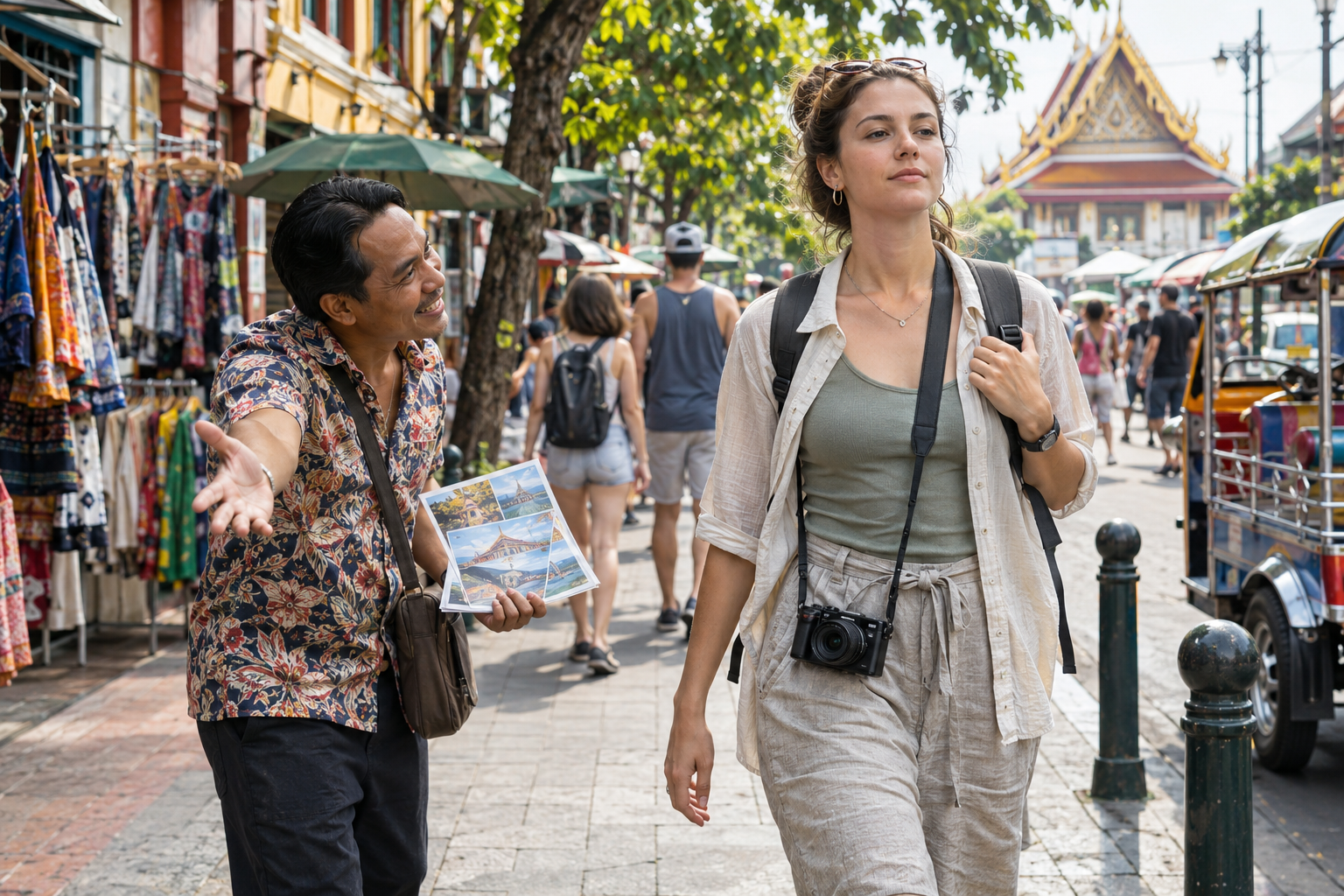
The Grand Palace scam is one variation of a common hustle: a friendly stranger approaches, builds rapport, and then uses that to extract money. Other approaches may involve unsolicited fortune-telling, supposed cures for baldness or obesity, or requests to see currency from your home country or Thai baht.
These scams use different tactics to get money, but avoiding them is easy. Don’t stop to talk with overly friendly strangers in tourist areas. The pattern can be hard to spot during your first week, but after a few days you’ll recognize it.
Respect Thai Customs in Public and at Temples
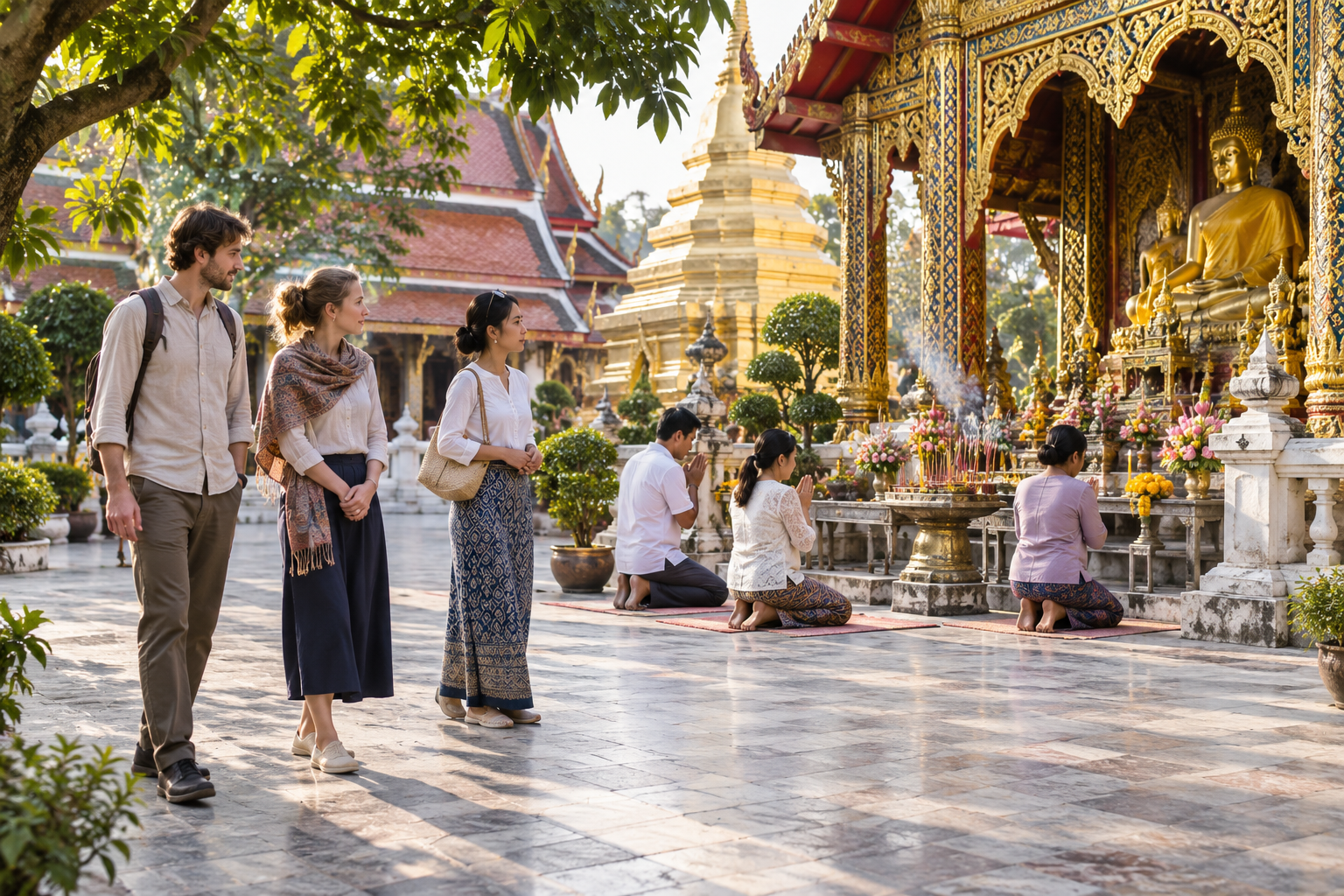
Thailand is very welcoming to visitors, and most people don’t expect foreigners to know every custom. There are a few things to avoid, and it comes down to an important concept in Thai culture: “kalatesa,” the idea that there’s a time and place for each behavior and norm.
Thailand is a deeply Buddhist country, and temple grounds are sacred. When visiting a temple or the Grand Palace, dress appropriately in a shirt that covers your shoulders and pants or a skirt that covers your knees. Avoid climbing on statues, posing provocatively, or doing anything that could be considered disrespectful.
This also applies to shrines and spirit houses, which you’ll see on virtually every corner, often adorned with red Fanta sodas left as offerings. Don’t sit there for a bite to eat. If something looks deliberately placed, or you see people bowing or doing the wai greeting with palms together, leave it be.
The concept also extends to less obvious places. On public transportation in Bangkok, people are expected to be quiet, and eating or drinking is forbidden. Keep a shirt on in public unless you’re at the beach or swimming.
Take a look around, observe what locals are doing, and mirror the setting. Learning a little Thai can earn smiles and shape your experience throughout your trip.