Best Time To Visit Thailand In 2026 livelovethailand (MERGED)
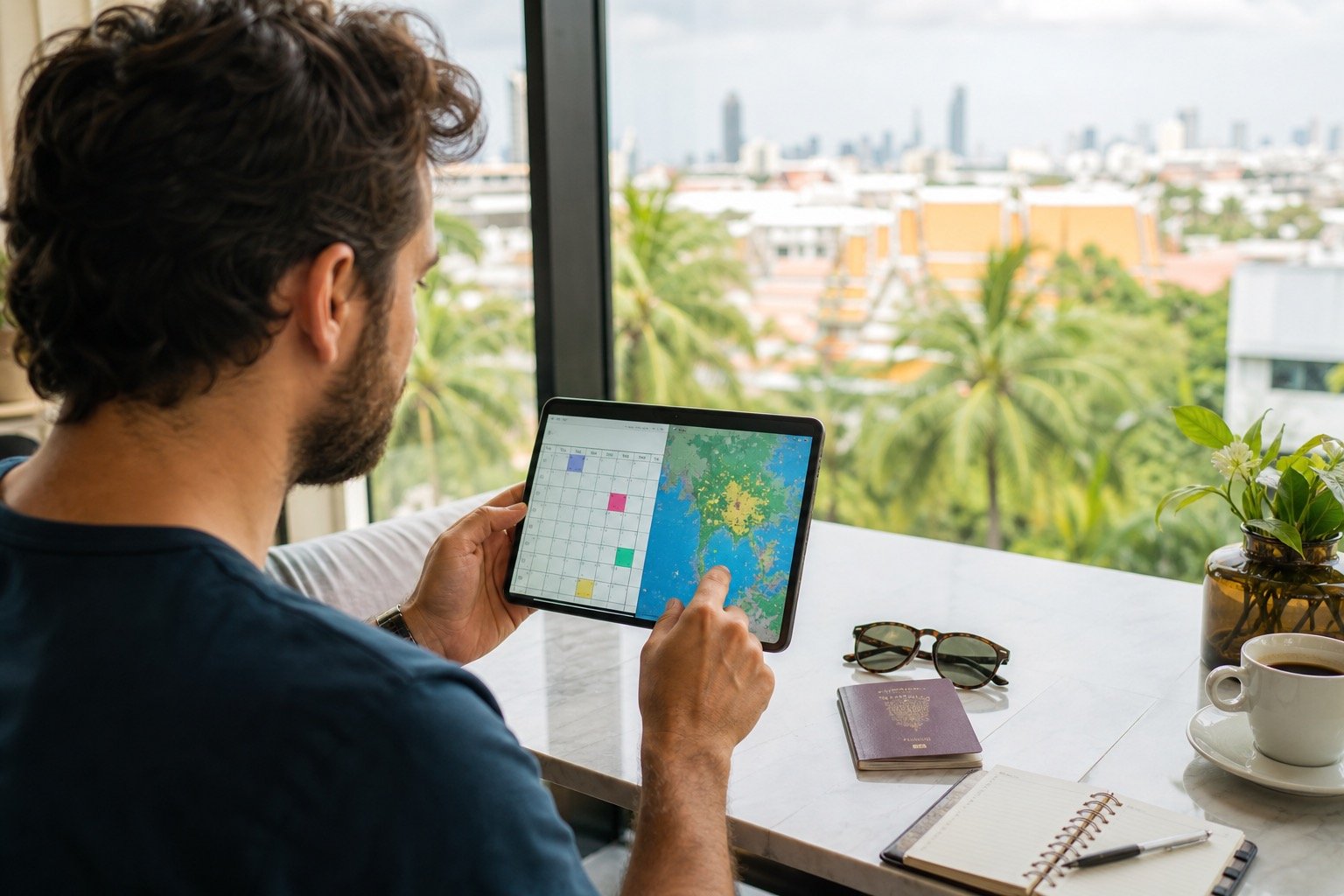
Before you book anything, let’s talk about timing because this is one of the most common planning mistakes. phuket/”>Thailand has three seasons, but the truth is that there isn’t one ideal time to visit. It all depends on your specific preferences, itinerary, and budget. The cool, dry season runs roughly November through February with clear skies and temperatures averaging 25 to 32 degrees celsius. This is often the most comfortable time of year to visit. But there are two important caveats. First, it’s the peak tourism season, so expect higher prices and bigger crowds. And second, from late February through April, northern and central Thailand, including Bangkok and especially Chiang Mai, get blanketed by PM2. 5 smog from agricultural burning. With the haze peaking in March and April. Conversely, the southern islands tend to keep clean air, so plan your route wisely. The hot season runs March through May.
Temperatures can push into the 40s. Heat exhaustion is common among travelers who don’t pace themselves and people who are heat sensitive should be cautious with long outdoor afternoon itineraries. Keep your days shorter, stay in the shade, hydrate constantly, and take plenty of breaks in air conditioned venues. Finally, the rainy season runs from June through October across most of the country. But here’s where things get interesting because it really splits into two distinct phases. In June and July, the rain is usually limited to a downpour in the late afternoon or early evening. Otherwise, the air is clean and fresh. Temperatures are moderate, and both tourist numbers and prices drop. September and October, by contrast, are the heavy monsoon months with rain that can be unpredictable, last all day, and cause widespread flooding in some areas. But there’s one important regional exception. The Gulf of Thailand islands run on their own weather pattern with a wet season that lands October through December. So, here’s an honest summary for weather. November to early January is the easiest time overall,
Where To Visit In Thailand
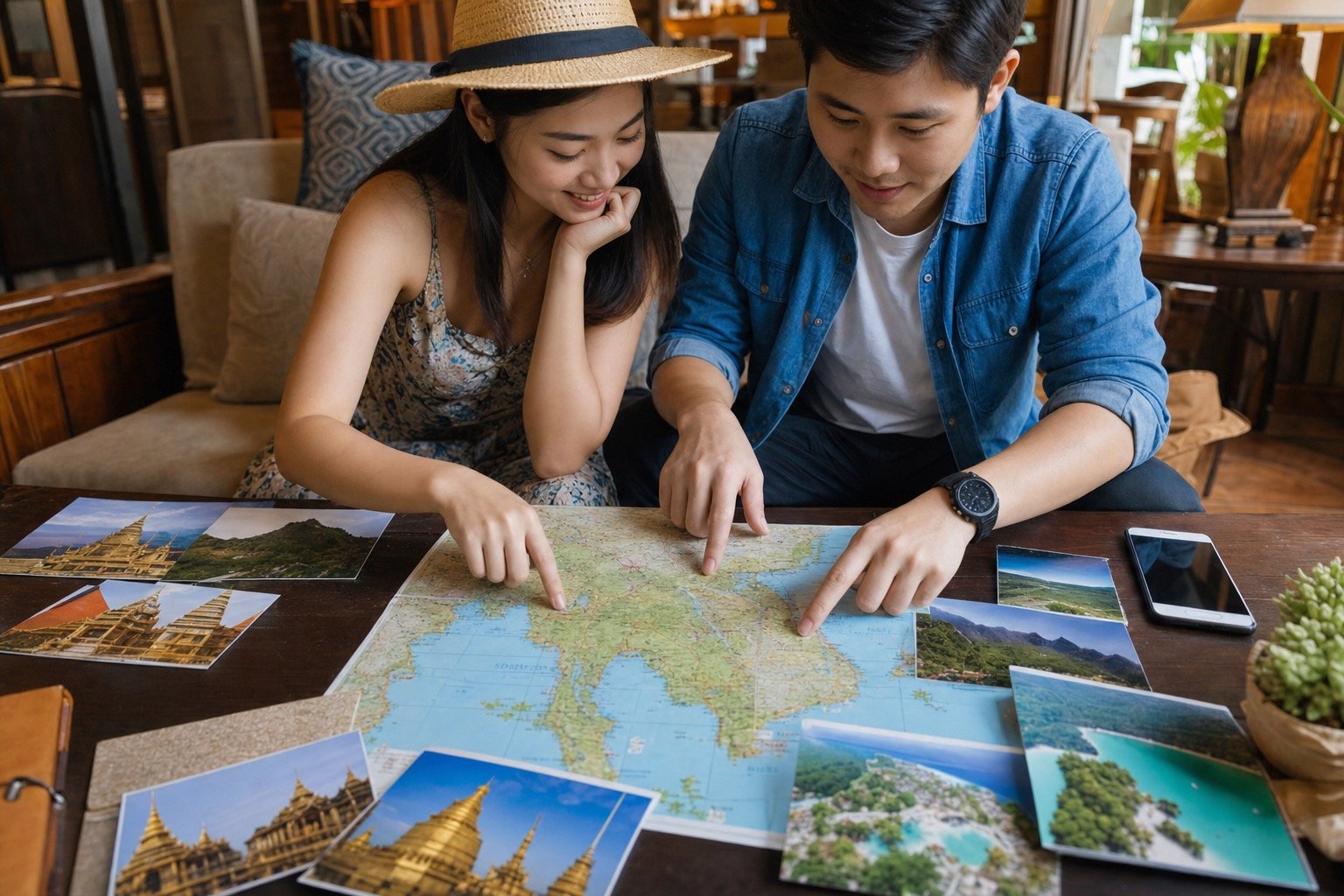
Once you’ve decided on when to go, the next key question is where to visit. Thailand has three main regions, and each one offers a very different environment, culture, and experience. Central Thailand, anchored by the capital, Bangkok, is where almost every first timer starts. And for good reason. It’s the main transport hub connecting the whole country. And it throws you into the deep end immediately. world class temples, incredible street food, rooftop bars, chaotic markets, mega malls, and a nightlife scene that goes until morning. It’s fast, loud, and completely alive. And many people spend a few days in the city before jetting north or south. But that can be a mistake because the region has more to offer. Ayutthaya is the ancient capital of Siam, full of crumbling temples and towering brick stupas.
Hua Hin is a relaxed beach resort town long favored by Thai royalty and city weekenders. Pattaya is an adult-oriented nightlife beach town. Brash and busy but undeniably convenient. While Koh Samed and Koh Chang provide perfect island escapes that are a little bit removed from the tourist trail. They’re all within a few hours of the capital, and central Thailand alone could easily occupy 2 weeks or more if you want a complete experience. Next is northern Thailand, and this is the crown jewel. It’s cooler, slower paced, and packed with temples, markets, jungle adventures, cooking classes, and ethical elephant sanctuaries. Chiang Mai serves as the hub. It’s a magnet for digital nomads, long term travelers, and has an underlying wellness vibe. The old town is the tourism hub with temples, cafes, and an idyllic setting, while Nimman is the modern district to the west, home to beautiful pavilions, and European inspired squares. Nearby Pai in the mountains offers more hippie vibes, riverside tubing, and stunning canyon views. Van or bus journeys take just under 3 hours through windy mountain passes and motion sickness pills are recommended.
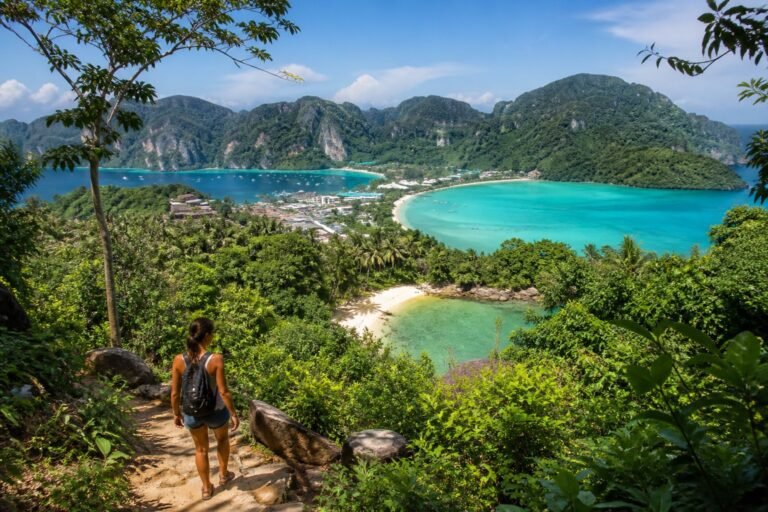
Chiang Rai is a similar distance and is home to the famous white and blue temples or you can stop in at Doi Inthanon, the highest mountain in the country. To the south lies Sukhothai where you’ll find serene streets and a 700 year old pagoda. The north is Thailand‘s peaceful escape. But just remember around late February to early April the pollution can be overwhelming. The south offers an entirely different experience with two coastlines that have very different personalities. The Andaman side including Phuket Krabi and the laid-back Koh Lanta has dramatic limestone cliffs and the clearest water. These are the postcard views that made Thailand a famous beach destination. Phuket is the hub of the south and Patong is the party zone while Kata and Karon are more relaxed resort style areas while the old town is famous for its Portuguese influenced architecture and weekend markets. And one of the biggest draws are the boat trips with snorkeling and visits to Maya Bay which was made famous by the movie The Beach along with Phi Phi and the Similan Islands. It’s best to book a full day trip and go early. Just keep in mind that Maya Bay operates under strict conservation rules with a visitor cap, 400 baht entry fee, restrictions on swimming, and a seasonal closure from August through September. And even then, it’s typically packed with tourists.
Krabi is the more relaxed alternative to Phuket. The town has plenty of activity, while Railay Beach is perfect for scenic views and vibes. Conversely, over on the Gulf side, Koh Samui, Koh Tao, and Koh Phangan, the islands are less dramatic, but equally beautiful and perfect for island hopping. Samui is the most developed and comfortable, while Koh Phangan is famous for the full moon parties. And Koh Tao is the scuba diving capital of Thailand. Just remember that the Gulf Islands have a different wet season from October through December. So, factor that into timing. Now, while these are the three major tourism regions, Thailand has more to offer that most visitors miss. Kanchanaburi lies in western Thailand and is famous for its World War II history, stunning waterfalls, and beautiful river scenery. Khao Sok is a stunning national park in Phang Nga. And the Isan region in northeastern Thailand has a distinct culture that is closely linked to neighboring Laos with major cities like Khon Kaen and Udon Thani. If you’re looking to escape the tourist crowds and experience more of local life, this can be the perfect addition.
The calendar is also worth building around because Thailand has two festivals that belong on any bucket list. Songkran is the Thai New Year festival and is often billed as the world’s largest water fight which officially runs from April 13th to 15th but often starts early and extends through to the 19th in Pattaya for Wan Lai. What began as a gentle water-pouring blessing has evolved into a multi-day nationwide celebration where everyone tourists and locals alike gets in on the fun. Major tourism oriented areas become water fighting zones and large EDM festivals are organized for party goers. But come prepared to be wet from the moment you leave your room until you return. And one thing to keep in mind, Songkran brings the largest crowds and highest prices of the year, while road accidents spike significantly during this period. So use grab or bolt rather than renting anything yourself. Or if you want a more serene holiday, Loy Kratong and Yi Pang, known as the festival of lights, occurs on the date of the full moon in November, which changes annually. And this is arguably the most beautiful festival in Thailand. Loy Kratong involves floating small decorated baskets of banana leaves, flowers, a candle, incense down rivers and waterways as an offering to the goddess of water. While Yi Peng is celebrated simultaneously in the north with thousands of paper sky lanterns released into the night sky at once, Chiang Mai is the place to be to experience both. But make sure to book accommodation months in advance as rooms typically sell out early.
How Long To Stay In Thailand
With destinations in mind, the next key topic is planning your timeline and ensuring it matches your itinerary. So, how long do you actually need? A lot of people try to cram Bangkok, Phuket, Koh Samui, Chiang Mai, and Krabi into 10 days. Thailand looks manageable on a map, but constant travel will quickly erode your actual experience of the country. They end up spending half the trip in airports, boats, and vans. arriving at each place exhausted, leaving before they’ve felt settled, and never seeing anything beyond the major tourist areas. The better approach is to pick fewer places, stay longer, and give yourself enough time in each destination to stop ticking boxes and start to live there. This allows you to interact with the real local culture rather than the tourist hustler hotspots, and it really is a world of difference. A one-week trip is tight, but workable. Bangkok plus one other destination is ideal. For example, 4 days in Bangkok plus two on Koh Samet provides big city vibes plus an island escape.
Or you can hop over to Chiang Mai, Phuket or Koh Samui and do an even 3-day split with the metropolis. But anything more ambitious and you’ll spend much of your trip in transit because every halt between regions quietly eats a good chunk of the day. So on a single week, two stops is the sweet spot. Add a week and you can double your itinerary covering all three regions safely. Three days in Bangkok, Chiang Mai, and Phuket, plus a few days to add regional trips from the hubs. Or you can settle into one region, use it as a hub, and explore for a more local experience. Finally, 3 weeks or longer really opens up your options, allowing you to spend time in each hub and explore. The longer you stay, the more you can get off the beaten path and discover the local culture for yourself. And honestly, having lived in Thailand for 11 years, I personally recommend a slow travel approach if possible. The tourism hubs have a lot to offer, but you’ll often find yourself surrounded by other travelers and businesses catering to tourists, and they can be pretty detached from the actual society. Balancing that with local exploration provides a much better overall experience.
Thailand Travel Budget
Before we jump into logistics, it’s important to ensure that your budget matches your planned itinerary because this is where things can easily start to go wrong. And the honest answer is that it depends on the version of Thailand you plan to visit. You can spend as little as $30 a day or $500 before you hit lunch. So, let me break down exactly what to expect and the three hidden multipliers that decide whether your budget survives the trip. Let’s start with the baseline. For backpackers, you can get by on as little as $30 a day. You’re staying in hostel dorms or basic fan cooled guest houses, eating street food pretty much every meal, and you’re commuting with public transit and the cheapest long distance train and bus tickets for inner city travel. This is adventure travel at its finest and living locally on the ground. And while it might sound a bit tight, this is an experience that many people will enjoy. But if you plan to go with an ultra- low budget, make sure to track your costs closely because it’s very easy to overspend. And don’t cut things too close. Keep a cushion of extra funds just in case you absolutely need it. Next, we have a more mid-range budget, and this can be anywhere from $50 to $150 a day. This is the sweet spot for most people and far more doable.
You’ve got a private air conditioned room at minimum. You’re mixing night market dinners with casual cafes or restaurants using ride hailing apps within the city flights or sleeper trains for intercity travel. And you can enjoy proper tours and nights out. Finally, the luxury tier ranges from $250 to $500 a day, but the sky really is the limit. four or five-star hotels and resorts, fine dining, premium excursions, plenty of nightlife, and flights between cities. But before we move on, three factors will heavily influence your underlying costs. At the luxury end, this is likely irrelevant, but for more modest spending travelers, making a mistake here can blow your budget. First is the regional multiplier, because where you choose to go will heavily impact your costs. The southern islands are the most expensive destinations in Thailand. Everything from your accommodations to a plate of pad thai or a short taxi ride has an added island tax. And if you’re planning to spend significant time in the south, add 30 to 40% to your underlying daily budget. Conversely, northern Thailand is far cheaper. If you spend more time in Chiang Mai, Chiang Rai, or Pai, you’re saving 15 to 25% and the value is incredible, especially for mid-range boutique hotels and excellent local food. And it can easily be 30 to 40% cheaper.
And then there’s Bangkok and Central Thailand. The capital fits any budget and has the widest range of prices for accommodations and food. You can survive on $30 a day riding the BTS and eating in mall food courts, or you can drop $500 in one night on a Riverside Suite and cocktails in Thong Lor. The second cost multiplier comes down to when you book. And this one mostly hits your accommodation. You’ll find the highest prices across the cool season from November through February with sharp spikes around major holidays like Christmas, New Year’s Eve, Loy Kratong in November, and Songkran in April. Expect rooms to run 30 to 50% more than the rest of the year, and you’ll often need to book well in advance. Conversely, prices drop from June through October during the wet low season. If you don’t mind a heavy afternoon downpour, high-end resorts often cut prices by 30 to 50% to fill empty rooms. And finally, there’s night life. Alcohol in Thailand is relatively expensive. A single beer from 7-Eleven can cost as much as a meal from a local restaurant or street food vendor. And drinks at a Bangkok Sky Bar can easily rival the prices of any Western city. This is where it’s very easy to lose track of your spending and blow a budget. Establishing a budget is important, but
Travel Insurance And Packing
don’t forget health insurance. Thailand has world class private hospitals, but if something goes wrong, costs can add up quickly. An unexpected illness, a fractured ankle on a boat trip, or an accident on the road. These aren’t rare occurrences. They happen to travelers every week. So, before you fly, make sure you have proper coverage. And I recommend the Nomad Insurance Essential Plan from Safety Wing. You can sign up before you leave home or at any point during your travels, even if you’re already abroad. And you’re covered across 180 countries. For as little as $2 a day, you get up to $250,000 in medical coverage, including hospital stays, diagnostics, ambulance, nursing care, and extended care after discharge. There’s also emergency dental up to $1,000. Medical evacuation to a better equipped hospital up to $100,000.
And if you’re properly licensed and geared up, motor accidents are covered, too. On top of that, you get lost luggage cover, trip interruption, travel delay costs, and even evacuation from local unrest. Claims are simple with 247 live chat support. And you can check your cost of coverage using the calculator by scanning the QR code here or clicking the link in the description. Once you’ve established a budget and secured health insurance, you’ll need a way to access your money once you arrive here in Thailand because getting this right will save you a lot of fees. Thailand‘s currency is the baht. And while hotels, malls, chain restaurants, and even some public transportation will accept credit cards, cash is still essential. To get your hands on baht, you have two options. ATMs are everywhere and easy to use, but fees have crept up. Most now charge around 250 baht per transaction for foreign cards. And if your card runs on the Mastercard network, you may see fees as high as 350 baht on top of whatever your home bank charges. This means that you should minimize the hit by withdrawing larger amounts less often.
Most machines have a 25,000 baht cap. But the yellows machines allow withdrawals of up to 30,000. And your best option is to avoid the fees altogether by packing a good travel debit card as many will reimburse the ATM charges. For Americans, Charles Schwab, Fidelity, or Betterment are good options while Canadians can opt for Wealth Simple. And if you use a specific card for your country, drop it in the comments to help your fellow compatriots. Finally, if an ATM asks if you want the transaction processed in your home currency, always decline and select Thai baht. This is called dynamic currency conversion and it almost always results in a worse exchange rate. And remember to bring at least two cards and keep one in a safe location. Thai ATMs have a reversed order of operations when compared with most Western countries. The cash comes first and the cards second. And this causes many travelers to forget their card. Your second option is currency exchange. And for the best rates, never exchange money in your home country and skip the local bank booths.
Instead, go to the dedicated currency exchange company kiosks, including Super Rich, Happy Rich, Oh Rich, and Vasu. They are located throughout Bangkok, including at the main international airports. And you’ll find booths in other major cities as well. Just remember to bring your passport and make sure your bank notes from home are clean and undamaged as any worn out or damaged bills will be refused. Next is packing. And while this might seem like a relatively unimportant planning topic, mistakes here can quietly shape your entire trip. And the single biggest mistake that first time travelers tend to make is bringing too much stuff, hauling around clothes they never wear and products they never use. All of this will weigh you down and can add significant costs. Flights on low cost airlines within Thailand are very inexpensive, but extra luggage will often double the cost of a ticket. And the truth is that Thailand is genuinely one of the most convenient countries in the world to travel in. There’s a 7-Eleven on virtually every corner stocked with toiletries. Pharmacies provide ready access to most major medications with low cost over the counter generic drugs.
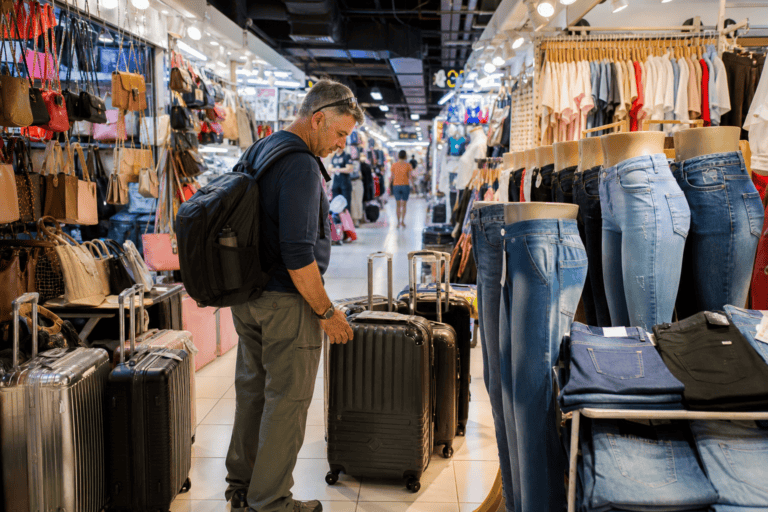
While markets and malls are everywhere with very inexpensive clothes, Thailand has a very globalized marketplace, and it’s very easy to buy almost anything you need after you arrive. But there are a few specifics worth thinking about before you leave. Thailand uses type A B and C power outlets, which means travelers from North America and Europe don’t need an adapter for phones or electronics. Conversely, visitors from the UK and Australia will need one. Power banks are also essential for long days out, but remember they must go in carry-on luggage, not checked bags. And these days, keep it under 20,000 milliamp hours and clearly labeled as Thai Airways and Air Asia no longer let you use or charge them in flight. And for women, tampons can be worth bringing from home if you use them, as they’re hard to find outside major cities and significantly more expensive. Sunscreen can also be pricier, while razors can differ a little bit, so these may all earn a spot in your luggage. Finally, always make sure to have at least one outfit that covers your shoulders and knees for temples and religious sites as it’s non-negotiable for entry. Whether you bring that with you or pick it up during your travels is entirely up to you. Beyond that, remember to keep it light. Thailand is hot and breathable fabrics tend to be the most comfortable. While you should avoid heavy garments like jeans or sweaters, even if you’re planning a trip to Pai or the Northern Mountains during winter, you can pick up very inexpensive cold weather clothes at local markets.
SIM Cards And Travel Apps
Before you fly, you’ll want a strategy to get connected here in Thailand. And you’ll also want to set up a few key apps that will help you navigate life. For trips of 1 to 3 weeks, you can opt for an eSIM or tourist SIM card. With an eSIM, you download it prior to travel and activate it by switching networks the moment you land, so you’re connected immediately. And this is a particularly good option for multi country trips as you don’t need to swap the SIM each time you cross a border. you can opt for a tourist SIM, which is marginally cheaper. Just visit one of the AIS or true kiosks in the airport after you land and the staff member will set you up. Finally, for longer stays or if you want the best value, you can pick up a local prepaid SIM card at a service provider shop which are located at most major malls or in 7-Eleven stores. For first time visitors, this can be a little bit less ideal. You’ll be offline the moment you land until you can get to a shop in the city and the savings over a tourist SIM are fairly minimal. But for longer trips, a good strategy can be to download an eSIM and use that to get settled in and then visit a service provider shop in the first couple of days and get a prepaid SIM, which provides the best blend of convenience and overall value. Just remember that both tourist and local SIMs require you to present your passport for registration. And one important note, if you switch to a Thai SIM, you’ll lose access to your home phone number.
So, make sure to move two factor authentication over to an app before you leave home to avoid getting locked out of accounts mid trip. Next up, you’ll want to download a few key apps. Grab is the main ride hailing app for taxis, bikes, and food delivery. across the country. While Bolt is usually a slightly cheaper ride hailing option, but with fewer drivers, these are essential as taxis are notorious for overcharging tourists and running a wide range of hustles. For inner city travel, In-drive is best. It’s an app that allows you to negotiate a fair directly and it’s normally around 30% cheaper for long distance trips. Or you can book trains, buses, and fairies in advance with one to go. While Klook and Vitor are ideal for booking tour packages and excursions as you can read thousands of reviews to ensure that you avoid any underwhelming or misleading experiences. Rain viewer helps track rain while air visual allows you to monitor poor air quality. Line is the primary communication app while Google maps and translate are essential. Of course, you can download many of these apps after you arrive, but planning in advance will ensure that you’re ready to go as soon as you land. Your phone is sorted and ready to go.
Where To Stay In Thailand
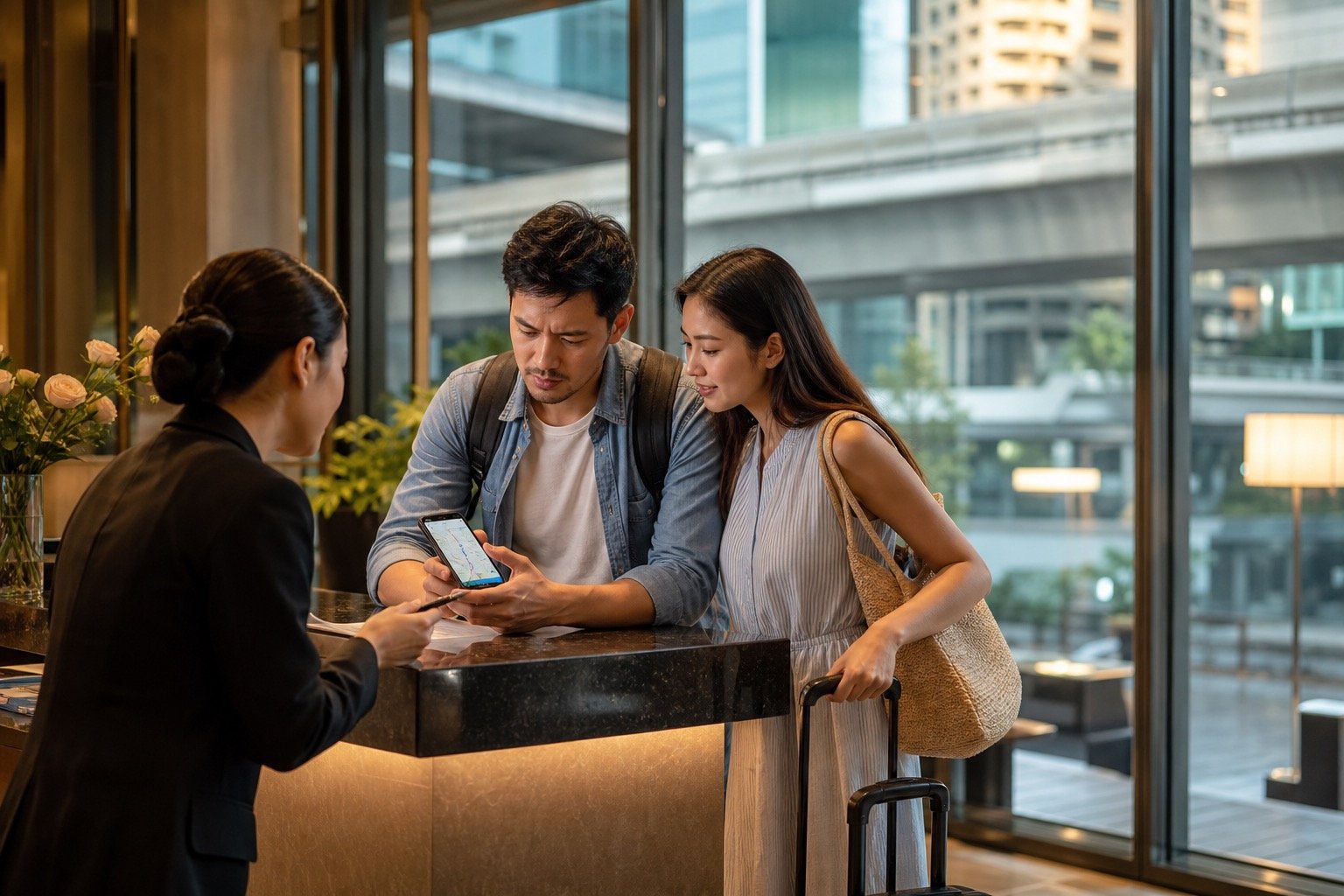
So, let’s talk a little bit about where to stay. We’ve covered budget already, and it’s important to remember that Thailand caters to nearly every travel style, but there’s a few practical things worth knowing before you book. Thailand has strict defamation laws which means negative reviews on a Booking. com can be removed or suppressed as hotel owners can threaten legal action against reviewers. Google is generally far less filtered. So cross reference both before you book. Check the recent reviews and look for recurring issues, especially common problems like noise or nearby construction. If you plan to use Airbnb, exercise caution. Short-term condo rentals are technically illegal in Thailand, and bait and switch scams can be common. You book one unit, arrive, and find the keys are for a different inferior room. Some buildings also have active anti-airbnb policies, which commonly include restrictions on pool and gym access or even questioning by security. So, for a short trip, hotels are usually the simpler option as there often isn’t a significant price difference anyway.
But if you do use Airbnb, always book with a super-host who has plenty of recent reviews and check for any mentions of building friction before committing. And for longer stays of a month or more, look at service department. These are single owner buildings offering daily, weekly, and monthly rentals without the Airbnb complications. The best place to find them is on the website RentHub. Just be aware that you need to pay for electricity and water and rates are typically higher than normal metered fees, but this can be an ideal option for a slightly longer stay as condos normally require a minimum six month lease. Finally, choose your location wisely. In Bangkok specifically, it’s always best to stay near a BTS or MRT station, which makes it easy to get around the city and visit major attractions. And one area stands out in particular. Many younger first time visitors choose the Khao San Road area. This is the traditional backpacker ghetto, but it actually lacks public transportation access, so you’ll be overly reliant on taxis and ride hailing apps to get around. My advice is to do a little research in advance rather than defaulting to the most popular options and aim for optimal locations. And remember the seasonality we covered earlier in the peak months and especially around Songkran or Loy Kratong. Book as far ahead as you can since rooms vanish and last minute prices spike significantly.
Transport And Motorbike Safety
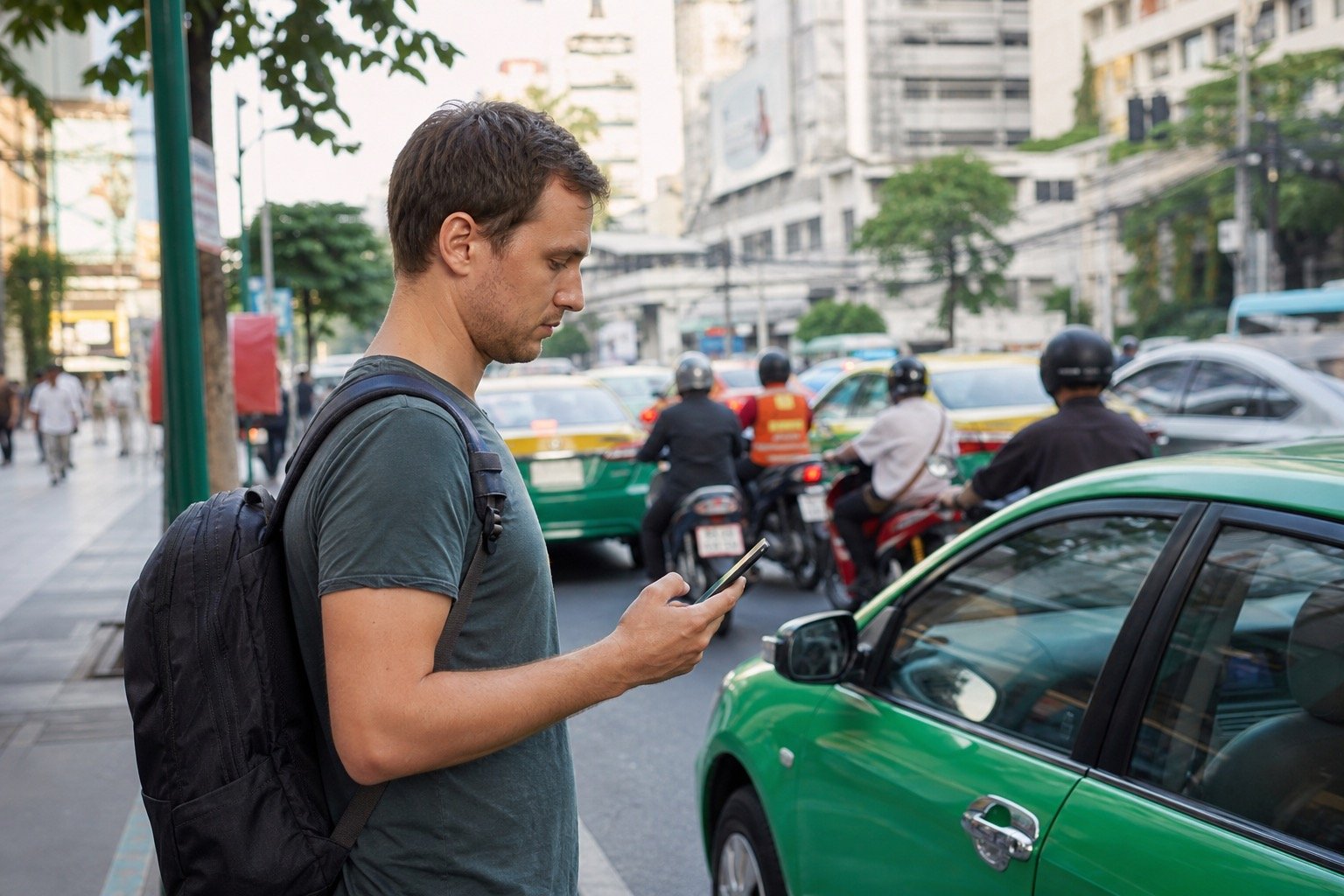
Let’s shift gears and talk about actually moving around Thailand because you have plenty of options to travel between cities. You can choose from domestic flights, trains, buses, vans, or ride hailing apps and private cars. Budget carriers like Air Asia connect Bangkok, Phuket, Chiang Mai, and Krabi for $30 to $100 if you book in advance. This tends to be the ideal option for shorter trips. And I normally use Sky Scanner and set an alert for price drops. The train is another excellent option as Thailand has an extensive network that covers nearly the entire country with connections throughout the region. This can be one of the most interesting modes of transportation as you’ll experience the local culture and move at a slower pace. The overnight sleeper train from Bangkok to Chiang Mai is particularly popular and takes around 12 to 13 hours, but you can also take a sleeper to the south or even cross into neighboring countries for regional travel. Second-class tickets are very affordable, but they sell out days or even weeks ahead on the popular routes, so book early, especially around holidays. And when you do, try to grab a lower berth. They’re wider, they have a window, and the main cabin lights can stay on later than you’d like, which makes the upper bunks harder to sleep in. VIP and luxury buses are also comfortable and affordable for intercity routes, but avoid leaving valuables stowed in the luggage compartment as thefts have occurred in the past. Conversely, vans can be cramped and make for a less enjoyable overall ride, especially for longer trips. And of course, you can always opt for a private car, which can be very affordable, especially for groups. Now, let’s step back for a moment because motorbikes deserve their own conversation. Many visitors opt to rent a bike during their trip, but for inexperienced riders, this can be an extremely consequential mistake. Thailand has one of the highest road fatality rates in the world, and the vast majority of serious accidents involve motorbikes. If you’ve never ridden a scooter before or have minimal experience, Thailand is not the place to start learning. Traffic in cities is dense and chaotic, and even experienced riders can find it demanding. But if you do plan to ride, the single most important thing to sort before you leave home is an international driving permit with a motorcycle classification, which is a legal requirement to ride in the country. And one important catch, the permit only carries the motorcycle category if your home license already covers motorbikes, as it simply translates an entitlement you already hold. Plenty of tourists pick up an IDP, assume they’re covered, and find out too late that they were never licensed for a bike at all.
Most rental shops will hand over a bike without asking for one. But riding without a valid permit can have two real consequences. First, if police stop you, and checkpoints targeting tourists are common, you’ll be fined on the spot. And second, insurance is normally void without a valid license, which means that any costs related to an accident, hospital bill, or repairs will fall entirely on you personally. Beyond the license, always choose the rental shop carefully as scams can occur, especially with shops charging exorbitant fees for pre-existing damages. Only rent from large established shops with plenty of positive reviews. Make sure to film a video of any existing damage on the rental bike before you ride away. And never leave your passport as a deposit. Legitimate shops will accept a photocopy and cash instead. For travel inside cities, you have plenty of options, and a little bit of planning and research will go a long way to ensure that you have the best possible experience. In Bangkok, public transportation is ideal as the BTS and MRT train systems cover most of the areas you’ll want to visit. They are airond conditioned, reliable, and they completely bypass Bangkok‘s notoriously bad traffic. The bus network is also extensive and very cheap, but it can be confusing for first timers. If you want to check it out, download the Via Bus app to help you navigate. And the river and canal boats are one of the most underrated ways to get around Bangkok. Cheap, scenic, and genuinely fast. For everything else, Grab and Bolt are the standard, and this should be your go-to option throughout Thailand. You can see the price before confirming, watch your route on the map, and avoid the hassles of negotiating fairs or providing directions that come with flagging down street taxis. But if you do take a regular taxi, insist on the meter. If the driver refuses, get out. Thailand is also famous for the tuk tuks, and they are worth doing once as an experience. But treat them as a novelty rather than practical transport, as they’re almost always extremely overpriced.
If you wave one down, make sure to negotiate the fair before you start the ride and ensure that it’s for the entire journey, not per person. Tuk tuks are notorious for running hustles and you need to be very explicit when establishing the price. If you want the experience without the hassle, Muvmi operates electric tuk tuks across 12 zones in Bangkok and you can order a ride using the app. Finally, Song towels are shared pickup trucks with benches in the back. While they exist in Bangkok, they’re mainly used by locals and they’re far more popular as tourist transportation options in smaller cities like Pattaya and Chiang Mai. They run fixed routes and are very cheap. Simply flag one down from the roadside, hop in the back, ring the bell near your stop, then pay the driver at his window. Just research the major routes in each destination prior to arrival as they are very convenient once you’re familiar with the routes. Now for one of the best parts of any trip to Thailand, the food. Thailand is one of the great culinary countries in the world and extraordinary meals exist at every price point. From a 50 baht bowl of noodles at a street stall to Michelin starred restaurants. You don’t need to spend a lot of money to eat incredibly well here. And my top recommendation is to try as many different dishes as you can. If you’ve ever visited a Thai restaurant in the West, chances are you only sampled a small fraction of the cuisine. Night markets are the best way to sample a wide variety in one sitting. And if you’re traveling in a small group, my advice is to eat Thai style. Picking a range of dishes for the middle of the table and sharing it lets the whole group try more. And it solves a second very practical problem. In Thailand, plates often arrive in no fixed sequence. So, if you each go solo, one person can be left waiting while the rest have already eaten. Order a shared spread, though, and the food lands for everyone to enjoy as it comes. But be cautious with the spice. Thai cooking can be significantly hotter than many first time visitors expect.
And even if your taste buds can tolerate the heat, often your stomach won’t. To tone it down, say, “mai pet for not spicy.” Or if you just want a gentle kick, try pet nit noi. Most tourists won’t want to venture much further than that, and the majority of restaurants and vendors will aim to avoid serving you anything punishing. Food safety is also important. It’s normally best to eat where you see lots of local customers. A spot feeding the same neighborhood day after day is built on repeat business. High turnover means fresh ingredients and they’d never risk making their regular sick. Conversely, more tourist oriented places can be hit or miss. Most diners are one-off, so the cost of serving lower quality food simply isn’t very high. But there’s a second factor at play. Be careful with any food that may have been sitting out in the heat. You’ll spot plenty of stalls with pre-cooked dishes, but those trays can become an ideal breeding ground for bacteria. Locals may be tucking in happily, but their stomachs are more adapted to the conditions. You, on the other hand, could end up spending a lot of time in the bathroom, which is far from ideal, especially on a travel day. So stick with cook to order food whenever possible. And avoid experimenting with anything risky if you’re moving on the next day. And when it comes to more severe food poisoning, the highest risk actually comes from cut fruit, fresh smoothies, and raw vegetables, as these are never cooked and can be contaminated at any point along a long supply chain. From shipping and transportation to storage, a cutting board, or even the water or ice, the vast majority are still safe, but just take a quick glance at the sanitary conditions surrounding the vendor before you order. Finally, it can be best to limit deep fried foods for health reasons. Oil may be reused for many days and it can be carcinogenic. Speaking of health, there are a few basics that genuinely matter for first time visitors.
Dengue fever is the health risk worth taking most seriously. It’s mosquito-born and while malaria is more famous, deni is far more common. The mosquitoes that carry it are most active around sunrise and sunset. Cover up with light long sleeves and use repellent at these times, particularly during the rainy season from June through October when mosquito activity peaks. Repellent is cheap and available everywhere in Thailand. Pedestrian crossings are another major safety risk. In many western countries, drivers are expected to yield to pedestrians, but in Thailand, this doesn’t always happen. Even at designated zebra crossings, always be cautious when crossing the street, even if you have a green light or the right of way. And remember that traffic drives on the left hand side, but always look both ways because it’s not uncommon to encounter motorbikes traveling in the wrong direction. Heat and sun exposure can also catch many first time visitors by surprise. The hot season from March through May regularly pushes temperatures above 40° C. If you’re planning a busy sightseeing itinerary, pace yourself. Take breaks, find shade, and drink water consistently throughout the day rather than waiting until you’re thirsty. Heat stroke can creep up before you realize it’s happening, and this is especially true for older travelers or young children. And stick with bottled water throughout your trip. It’s safe to shower or even brush teeth, but avoid directly consuming any tap water. If you need medical attention, there are inexpensive clinics absolutely everywhere. In more tourism oriented areas, staff will normally speak English and can provide basic diagnostics and treatment while the international hospitals have world class facilities. Pharmacies are also very common and most medications are sold over the counter. Just keep in mind that opioids and opioid derivatives are strictly regulated and require a prescription from a Thai doctor. or if you bring a supply, you’ll need to apply for permission from the Thai FDA in advance. It is a simple online form.
Before you arrive, it’s important to be aware of a few rules so that you can avoid any problems. Vaping is illegal in Thailand, and enforcement is common. Fines typically run between 10,000 and 30,000 baht on the spot and police often search for the devices at late night checkpoints in nightlife oriented areas. Smoking is also banned in most public spaces, including at beaches and parks, while dropping cigarette butts or littering can result in fines. Cannabis is legal in Thailand. But while access is straightforward, it’s technically a medical-only framework and public consumption is prohibited. It also remains severely criminalized in every neighboring country in the region. So check your bags extremely carefully when leaving Thailand and never travel with cannabis. Other recreational drugs are strictly criminalized and penalties are often severe. Entrapment setups can occur in nightlife areas or on dating apps, and you should never accept any illegal drugs from anybody. Alcohol is acceptable in most public spaces with the exception of parks, public transportation, and government spaces, but Thailand strictly enforces no alcohol days during Buddhist holidays. So, always check the calendar in advance. Finally, defamation is a serious offense in Thailand. Leaving negative comments, making posts, or uploading videos that could cause reputational harm to an individual or business is punishable by significant fines or even imprisonment. And this is especially true when it comes to the monarchy. Don’t engage with this subject in any form. Understanding the law will help you avoid problems, but understanding the culture will help you to actually enjoy your trip. In part because locals recognize when tourists actually demonstrate this awareness and that leads to an overall positivity that can quietly shape your entire experience. When visiting temples, always cover shoulders and knees before entering. Remove shoes to enter temple buildings. Keep your voice low. Don’t point at statues or sacred objects with your feet. and avoid posing irreverently for photos with religious imagery as all of these acts are actually offensive.
Thai Culture And Scam Awareness
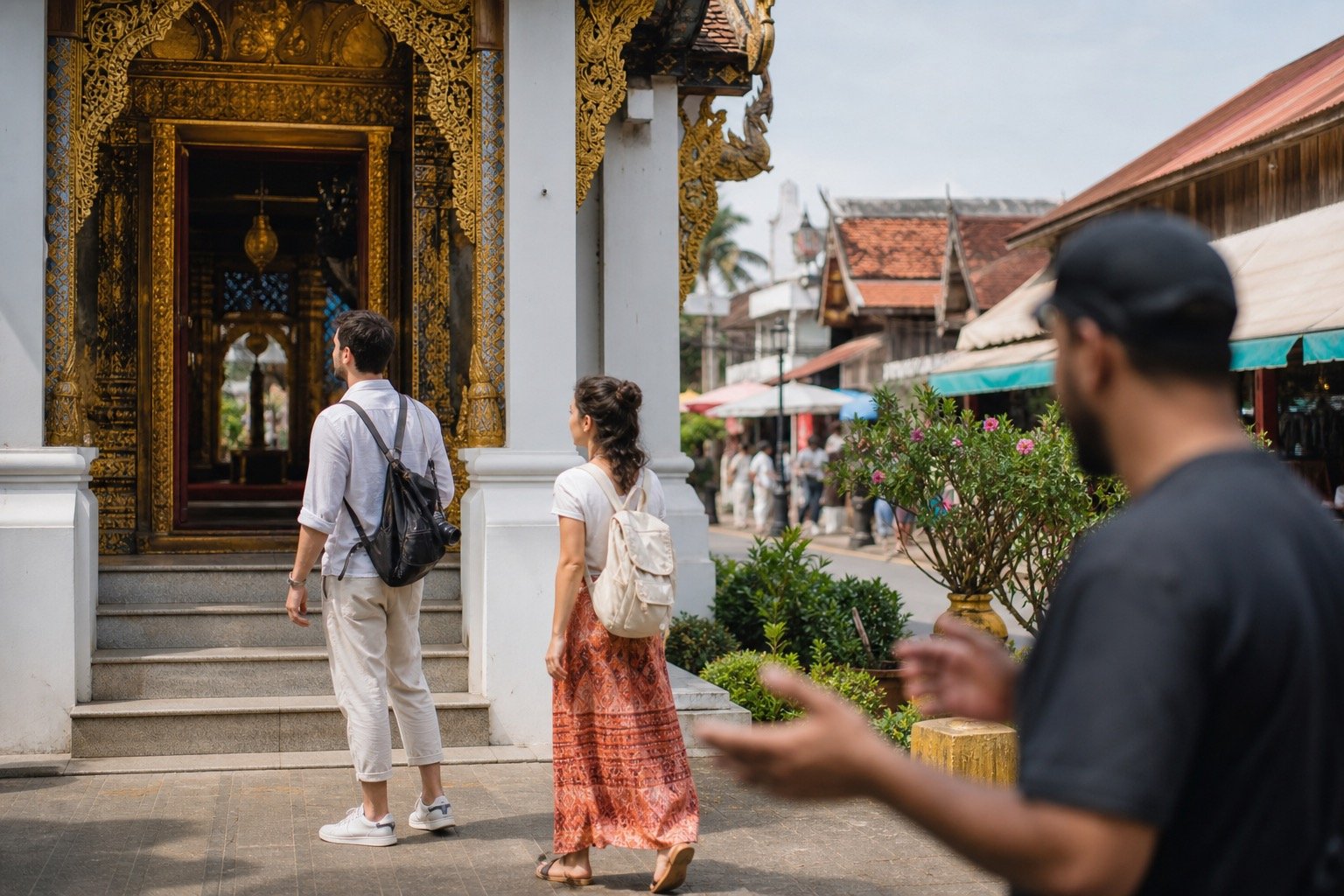
Most tourists lack awareness of this and Thai people are very tolerant, but it makes for a far more pleasant trip when you aren’t inadvertently offending all the locals. Monks occupy a particularly important role in Buddhism, and you should never touch a monk directly, while women should never hand anything straight to one. The head and feet also have particular importance in Thai Buddhist culture. The head is the most sacred part of the body and the feet the lowest. Touching somebody’s head can actually be considered offensive. While pointing at anything with your feet or putting them up on furniture is similarly frowned upon. You’ll also see small ornate houses on pedestals outside almost every building in Thailand, often with offerings including red Fanta. These are Thai spirit houses, shrines for protective deities, and they’re considered sacred objects, not decoration. Treat them with the same respect you’d give a temple, and never sit down and eat at one. While Thailand is a hot country, and it can feel like an anything goes environment, the underlying culture is actually quite conservative. Avoid walking around in public places without a shirt on, especially in cities. Finally, it’s important to understand how Thailand really works and the face saving culture is central to interpersonal communication. The goal in any interaction is to resolve an issue while avoiding a loss of face or status.
This means maintaining your composure, a calm voice, and avoiding gesturing with your hands. If you have a problem and raise your voice or get visibly angry, you’ll actually become the issue in everyone’s eyes as these acts lead to a loss of face. Too much aggression can also lead to direct confrontation, which is never advisable. Sometimes things don’t get fixed and you simply have to accept it and move on. Or if the situation is more serious, contact the tourist police at 1155. But normally it’s best to adopt a my pen rye attitude which roughly translates to never mind or don’t worry about it. Adopt that energy in Thailand and it will serve you far better than frustration. But here’s the thing. Many disputes can occur as a result of being caught up in a scam. Thailand is a warm, welcoming country and the overwhelming majority of interactions you’ll have here are genuine, friendly, and memorable. But scams do exist, as they do in every major tourist destination, though they’re almost entirely concentrated in heavily touristed areas, and they’re very easy to avoid once you understand the pattern. In tourist hotspots, if a friendly stranger approaches you on the street, it’s almost always a scam. And this applies to both locals and foreigners. If you follow along, you may be brought to a shop to buy a fake miracle product, taken on an overpriced tour, or simply have somebody ask to see your money and attempt to swipe a few notes.
And once you step back and think about it, that makes sense because why else would a random person be walking up to tourists and trying to become best friends? This same pattern is global and exists in tourist traps all over the world. Just ignore it. Don’t even make eye contact and keep walking. And remember that this is not indicative of Thai culture. Once you’re off the tourist trail and venture into real neighborhoods, it disappears entirely. And that’s the best reason to get out of the tourist bubble and explore more local areas. The second set of scams is heavily connected to taxis and tuk tuks as over the years these have evolved into organized groups with a hustler mentality. And the easiest way to avoid any issues is to use ride hailing apps instead. But in some areas like Phuket or Samui, it can be hard to avoid as these groups have very strong influence. In that case, always agree on a fare and never take any advice or recommendations. Finally, carry small bills with you. Wrong change scams can occur, especially with transportation and night life. Avoid handing over large denomination notes whenever possible as this is a simple preventative step to avoid any issues.
Arrival Cards And Visa Rules

All of this brings me to one final thing, and it’s the single biggest mistake that most first time visitors make when they plan a trip to Thailand. All visitors to Thailand are required to complete the digital arrival card within the three days before their arrival. The form is free to submit and can be completed through the official website or the THIM mobile app. Be sure to use only the official platforms as scam websites often imitate the service and attempt to charge unnecessary processing fees. Your passport must have at least six months validity and must not be worn out or damaged.
Finally, keep a close eye on the expiry date of your permitted stay. Before booking your trip, check the Thai embassy or consulate website for the latest entry requirements as visa policies can change. Avoid overstaying your visa or visa exemption period. The penalty is 500 baht per day and longer overstays can lead to adverse immigration records, detention, deportation, or even a temporary ban from re-entering Thailand. And that’s not a great way to end your first trip.
\n\n
Understanding Thailand’s Regional Seasons
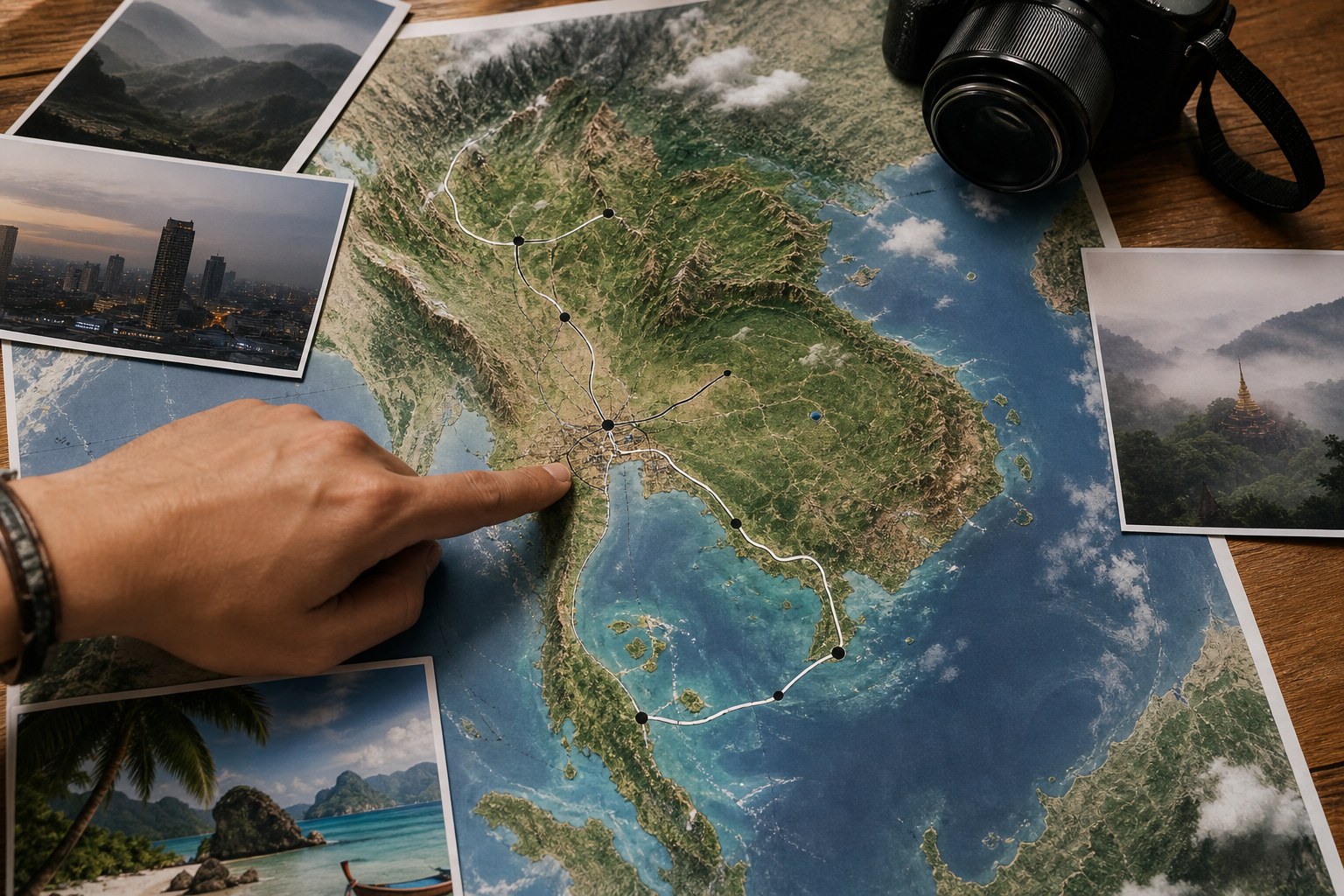
Thailand does not have one uniform travel season. Bangkok, the Andaman coast, the Gulf islands, and northern provinces can experience different rain patterns, heat, and sea conditions. Check a current regional forecast instead of choosing dates from a single nationwide label.
Shoulder and rainy periods can still provide enjoyable travel, but plans need more flexibility. Pack for sun and rain, and leave time between weather-sensitive activities.
What Bangkok Rainy Days Feel Like
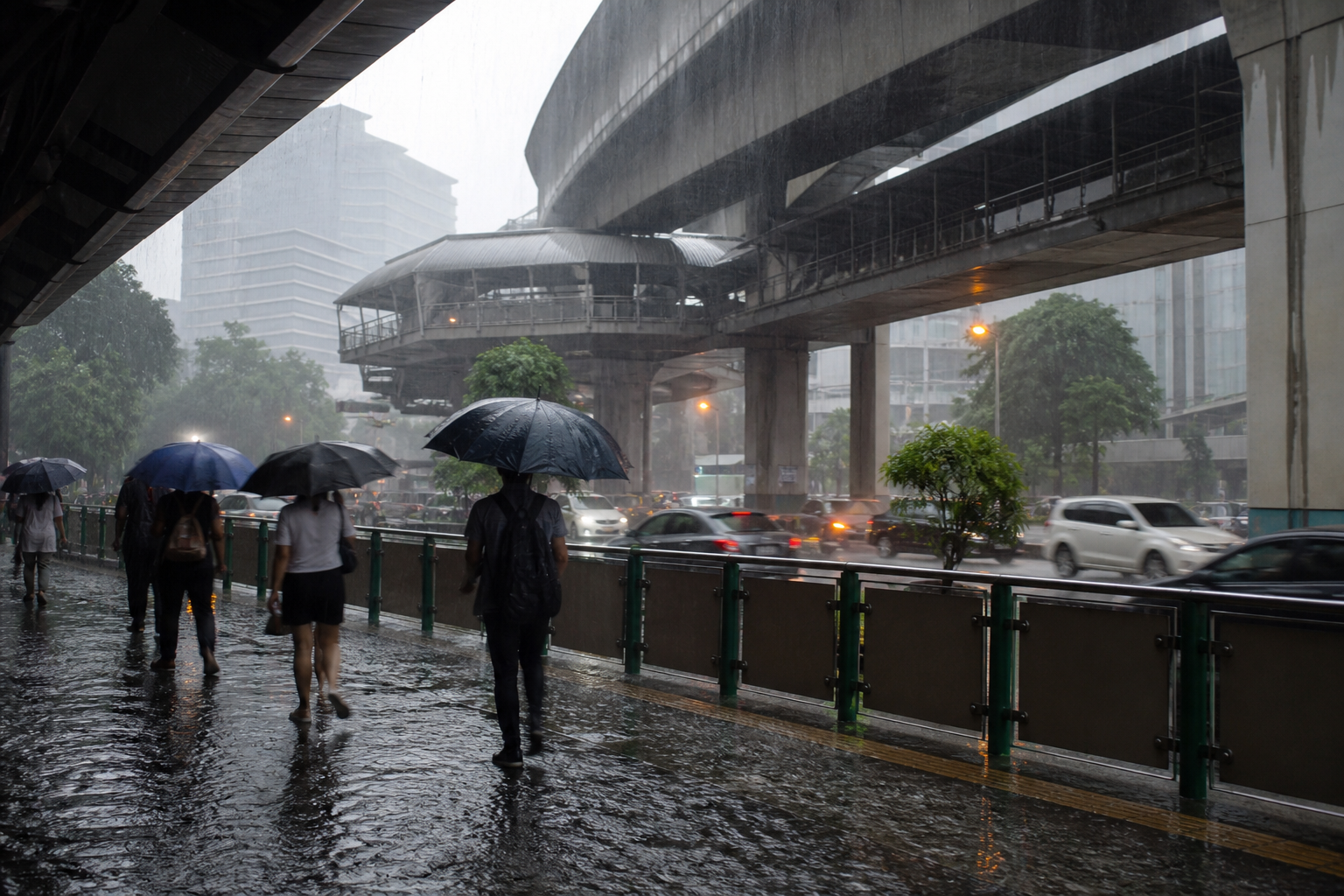
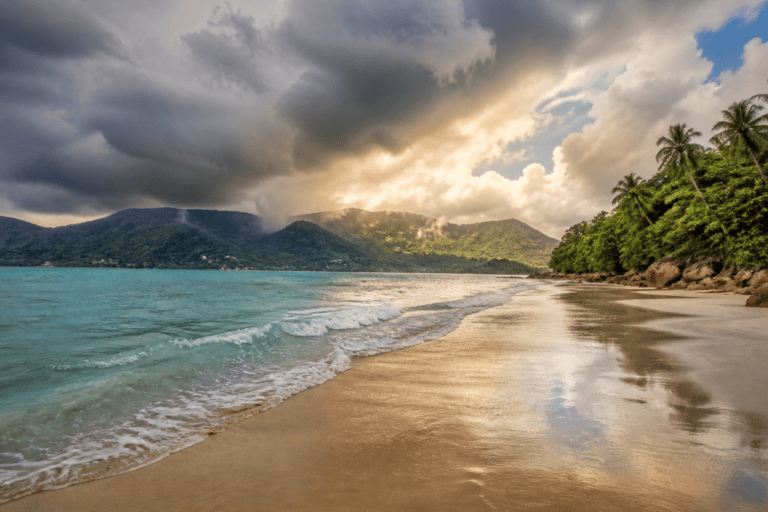
Bangkok showers can be brief or intense, with thunderstorms, flooded pavements, slower roads, and crowded station exits. A heavy downpour can temporarily make walking difficult even when the rest of the day is warm.
Carry a compact rain jacket or umbrella, protect electronics, and check the route before leaving a station. Do not walk through water of uncertain depth, and allow extra time for traffic and crowded covered areas.
Indoor Activities During Heavy Rain
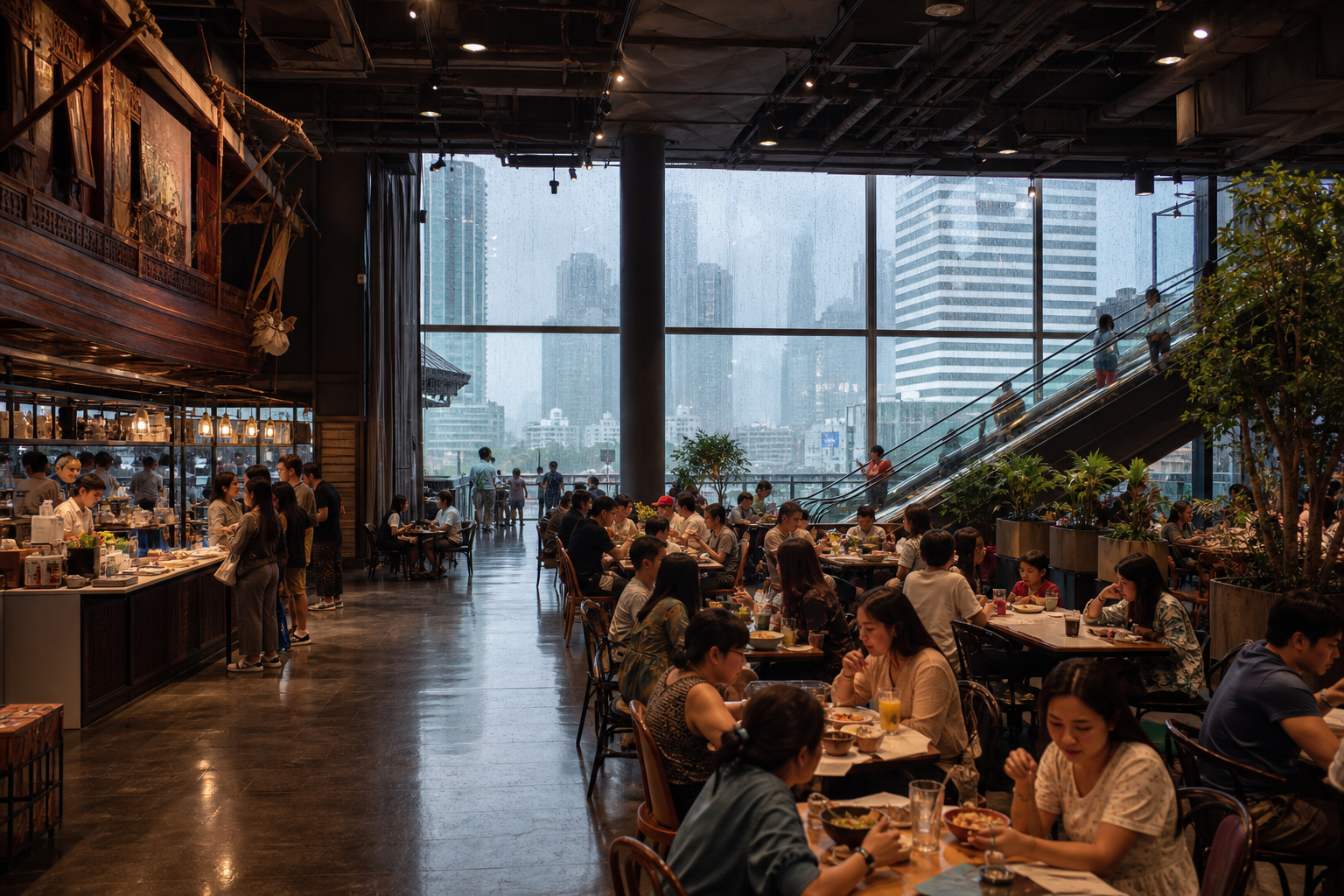
Large malls, covered markets, museums, cinemas, food courts, cafés, spas, and cultural venues make it possible to keep exploring during rain. Group indoor activities near a BTS or MRT station to avoid unnecessary outdoor transfers.
Check opening times and current event information, especially during holidays. A flexible indoor plan is more useful than trying to force an outdoor market visit during a thunderstorm.
Lower-Season Flights Hotels and Costs
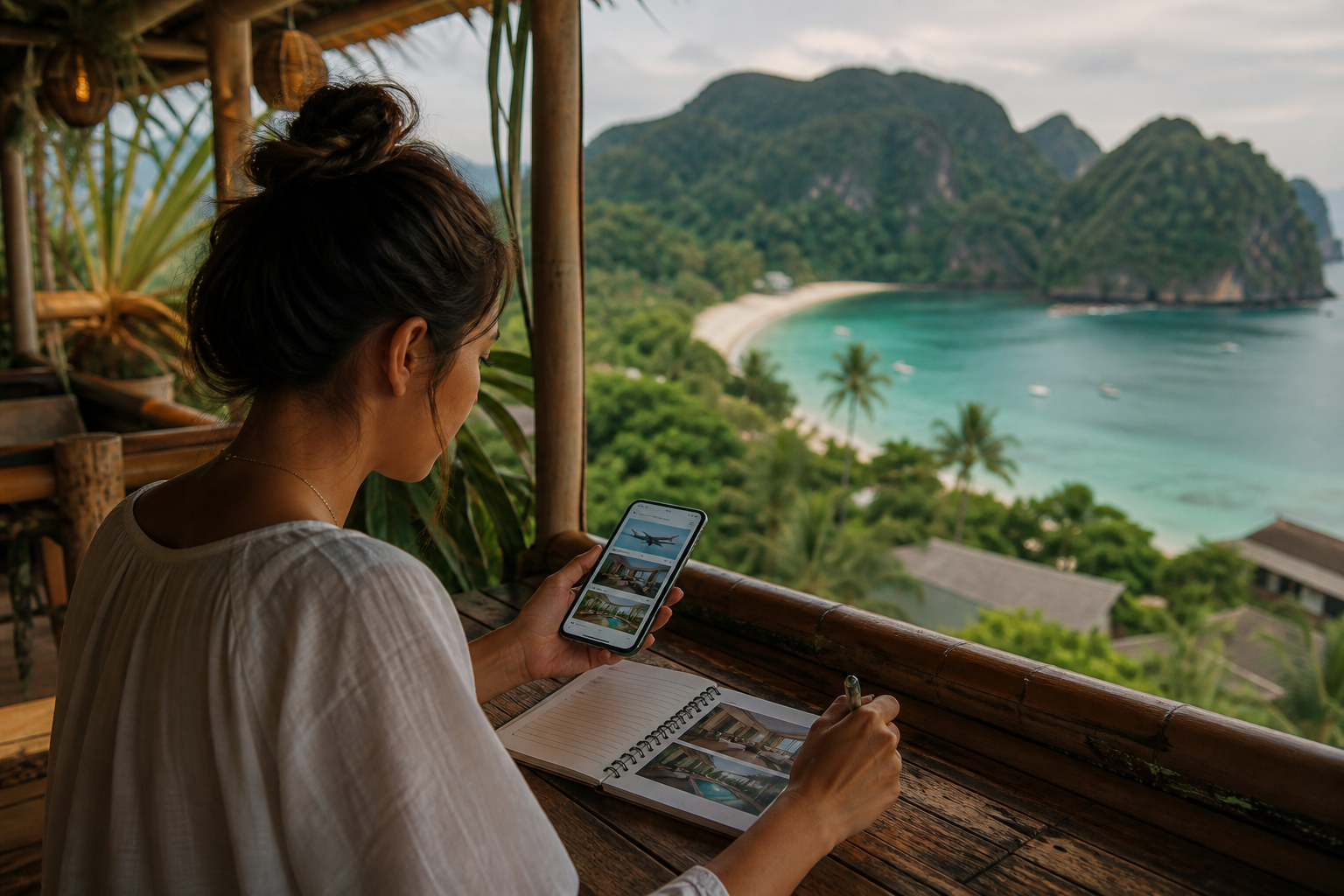
Lower-demand periods can offer better availability and sometimes lower prices for hotels, domestic flights, and tours. Savings are not guaranteed, so compare the full total, baggage, cancellation terms, transfers, and weather trade-offs before booking.
Book essential connections through official airlines, hotels, or reputable platforms. Keep a buffer for delays and avoid sacrificing safety or comfort for a small headline discount.
Planning Cheap Domestic Trips Responsibly
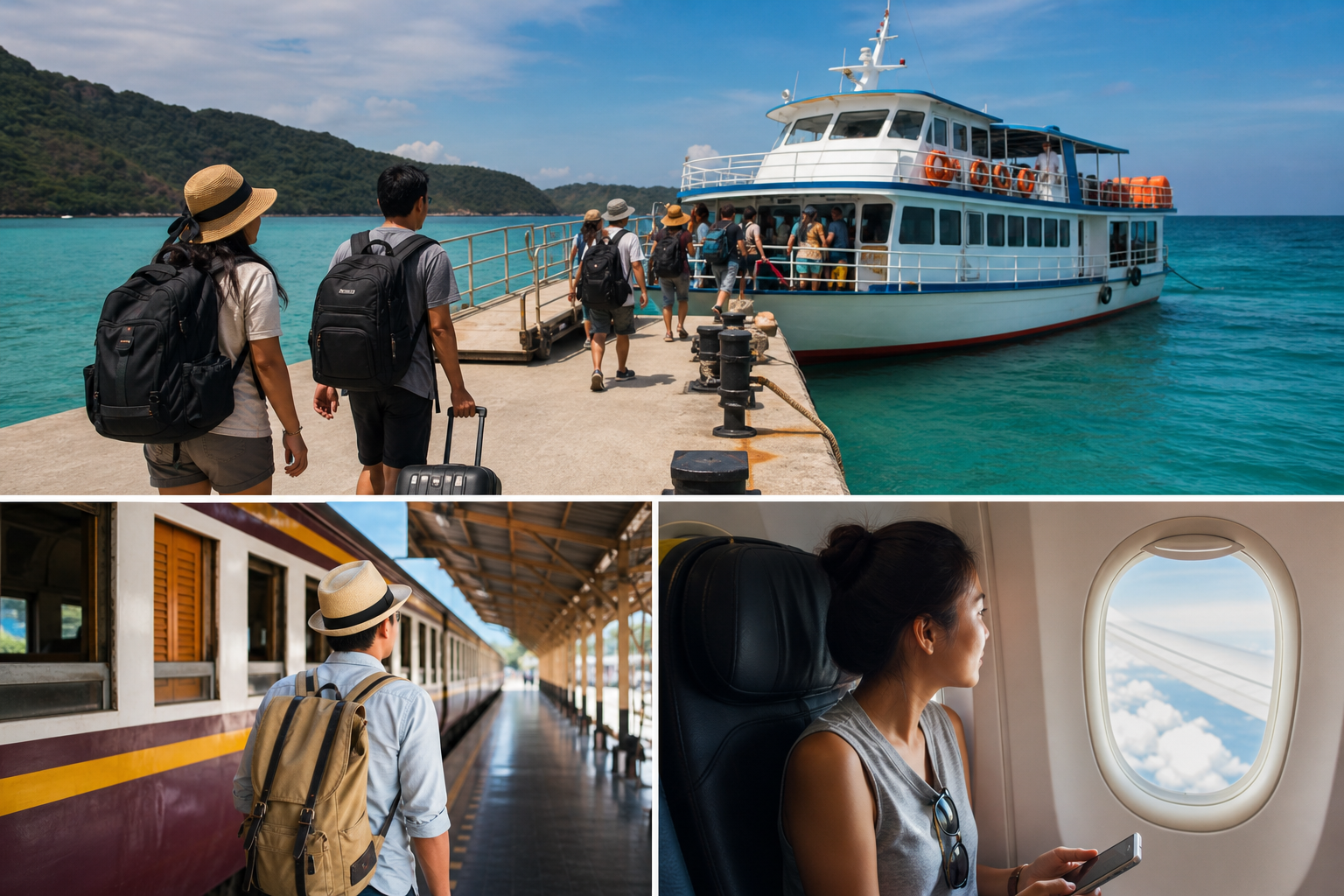
Thailand’s domestic flights, trains, buses, ferries, and minivans can make short trips affordable when dates are flexible. Compare the complete journey, including airport transfers, luggage, pier fees, and the time spent traveling.
Boat and mountain routes are weather-sensitive. Use licensed operators, check local conditions, and avoid a tight same-day connection between a ferry and a flight.
Choosing Travel Dates with Flexibility
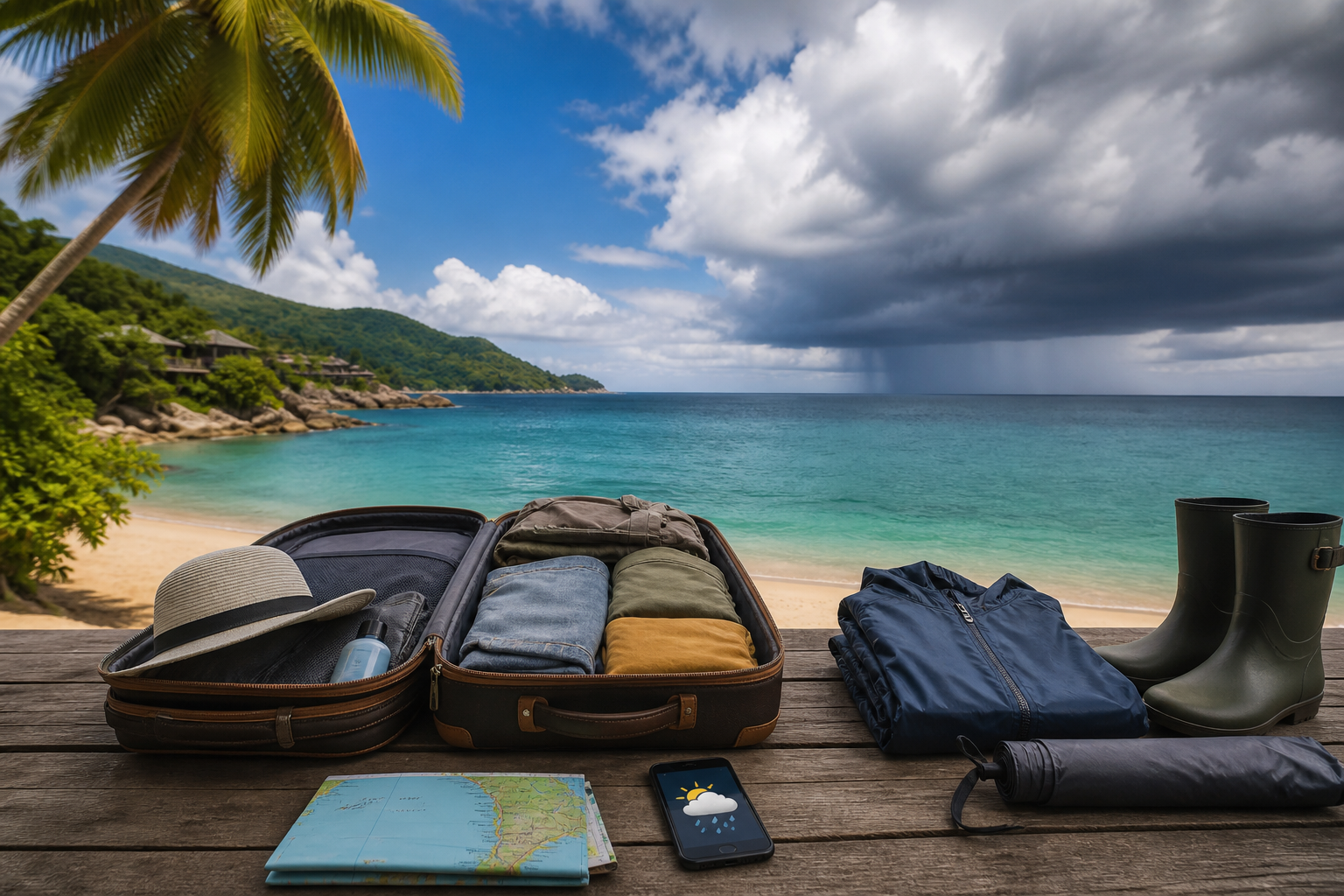
The best time to visit depends on your priorities: predictable beach weather, lower costs, fewer crowds, festivals, or cooler city walks. A traveler who accepts some rain may gain better value and more availability.
Choose cancellable options when the forecast is uncertain, monitor official weather alerts, and build a simple backup itinerary. Sun and rain can both be part of a successful Thailand trip when the plan is realistic.