Best Historical Places in Thailand
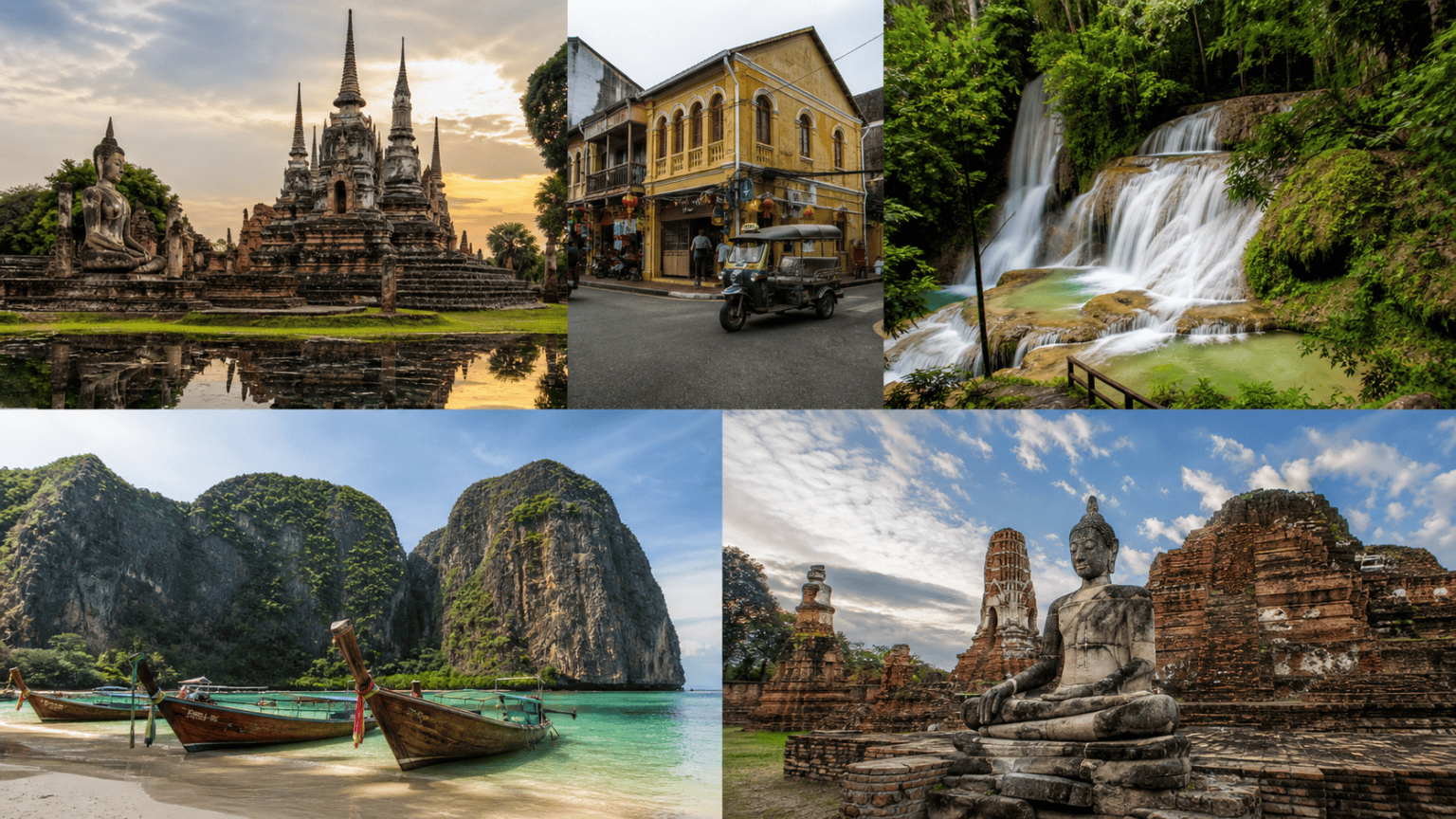
Southeast Asian history is not something most tourists know a lot about, so there is a deep and rich history to be explored in Thailand. Luckily, some of the ancient sites have been well maintained, and you can still explore them today.
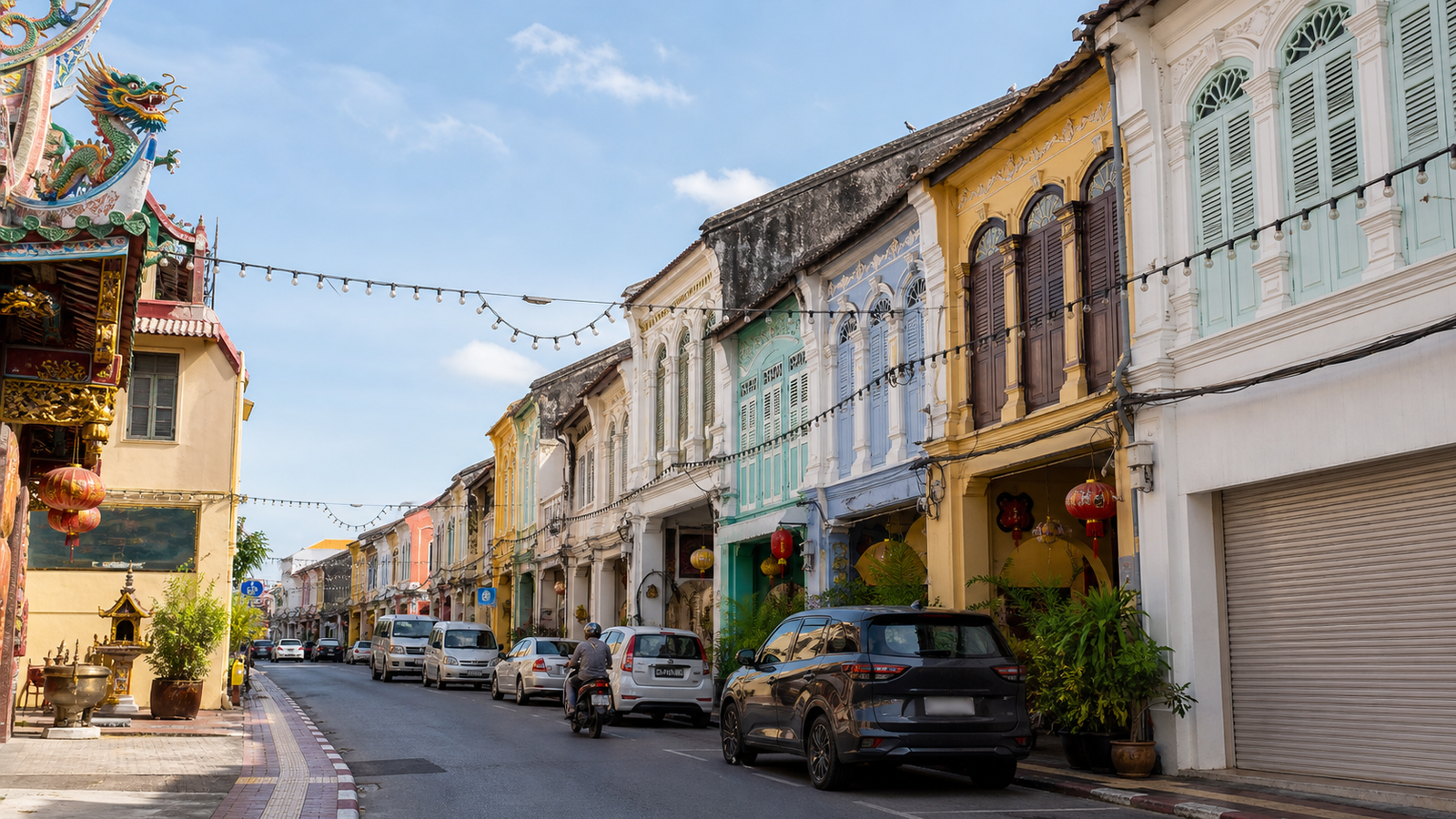
Phuket Old Town History and Sino Portuguese Architecture
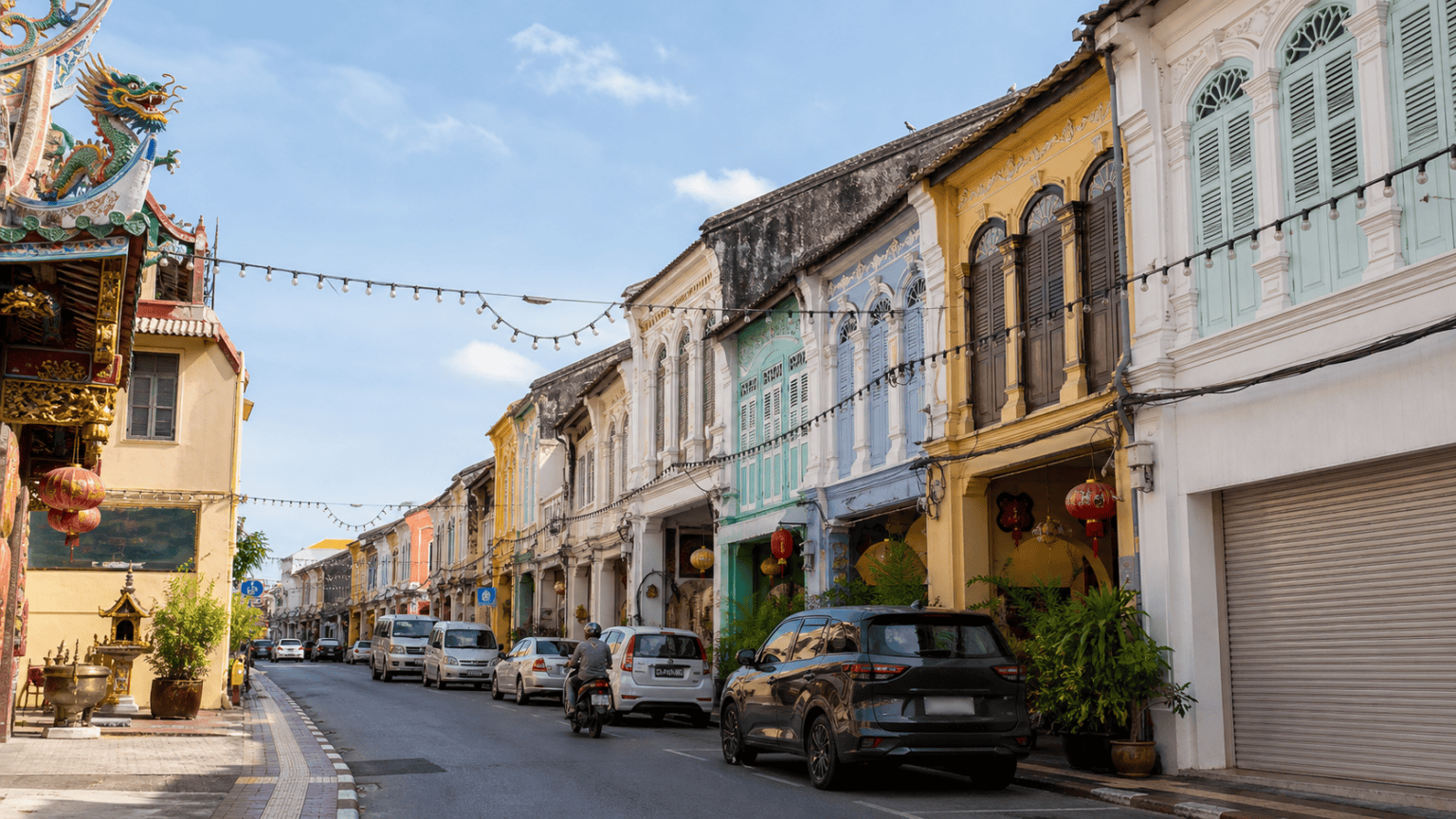
Located at the center of the island of Phuket, Phuket Old Town is a historical gem that reflects the island’s multicultural past.
Thailand is quite unique in that it is one of the only countries in Southeast Asia that was never colonized by Europeans. Phuket Old Town was established during the 19th century by Portuguese explorers and went on to flourish as a trading hub, attracting merchants from China, Portugal, Arabia and beyond.
The thing that stands out the most is the architecture, which is a captivating blend of Sino Portuguese buildings characterized by colorful facades, ornate shutters and intricate carvings that reflect the diverse cultural influences shaping the area.
Strolling through its charming streets, visitors can explore bustling markets, ornate temples and quaint cafes, immersing themselves in the town’s rich heritage. Phuket Old Town serves as a testament to the island’s history as a melting pot of cultures.
Khao Sok Ancient Rainforest
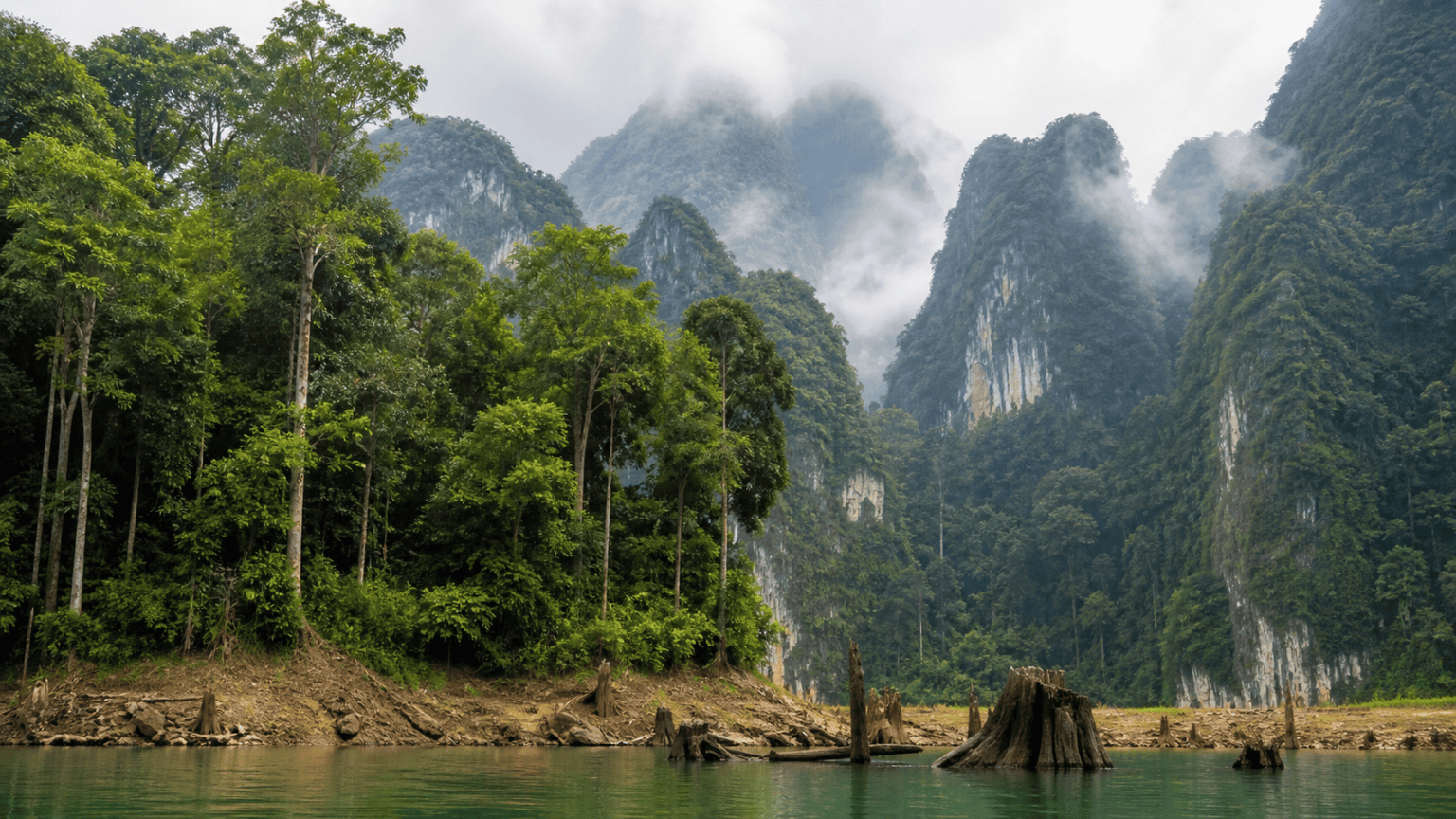
The next item on the list has no temples or monuments. It was not the site of an ancient kingdom or a famous battle, so why is it on the list? It is the oldest site on the list by a few hundred million years. Welcome to Khao Sok, one of the oldest rainforests in the world, even older than the Amazon rainforest, with an estimated age of 160 million years.
Due to Thailand having remained in a similar equatorial position throughout the last 160 million years, the climate has been relatively unaffected by ice ages. While other regions of the planet were suffering severe droughts, the Khao Sok region still received enough rainfall to sustain the rainforest.
Although it might not be exactly what you would expect from a historical site, you will be blown away by the natural beauty of this place and the ecological diversity that resides within it.
Chiang Mai and the Lanna Kingdom
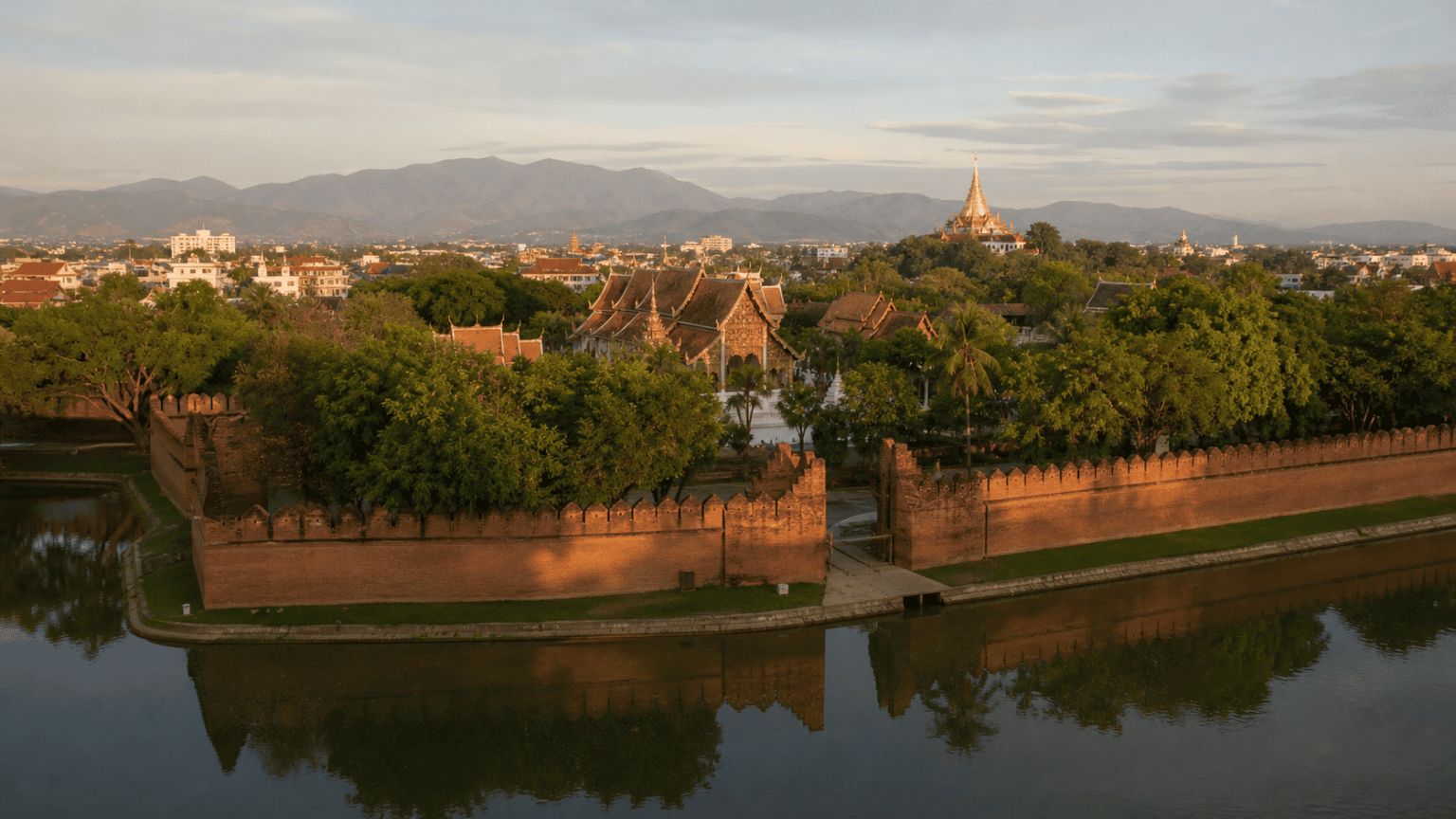
Next I want to take you to the northern Thai city of Chiang Mai. Chiang Mai is the former capital of the Lanna Kingdom, a powerful and prosperous kingdom located in modern-day northern Thailand, Laos and Myanmar.
Established in the 13th century, the Lanna Kingdom flourished with its own language, culture and art. The kingdom’s name, Lanna, translates to the land of a million rice fields, and this is still reflected in the outskirts of Chiang Mai today.
The remnants of the Lanna Kingdom can still be seen in the culture, traditions and architecture of northern Thailand. This is most evident in Chiang Mai Old Town, which was constructed over 700 years ago. You can still see the city’s defenses, along with the moats that surround the Old Town.
Within the city walls, you can see ancient structures and temples, including Wat Chedi Luang. Outside the Old Town is the sacred site of Wat Phra That Doi Suthep, which was constructed in the 1300s and overlooks the city, famous for its golden stupa.
In the surroundings of Chiang Mai, you can still see beautiful mountain temples constructed in a Lanna style. Finally, if you want to catch a glimpse of what life must have been like during the Lanna Kingdom, you can visit the surrounding areas of Chiang Mai, where life has developed at a much slower pace. The hill tribes of the region have done a lot to maintain their culture and history and still live in a similar way to how they did in the past, minus the motorbikes. The area still relies heavily on rice cultivation.
Sukhothai Historical Park and the First Thai Kingdom
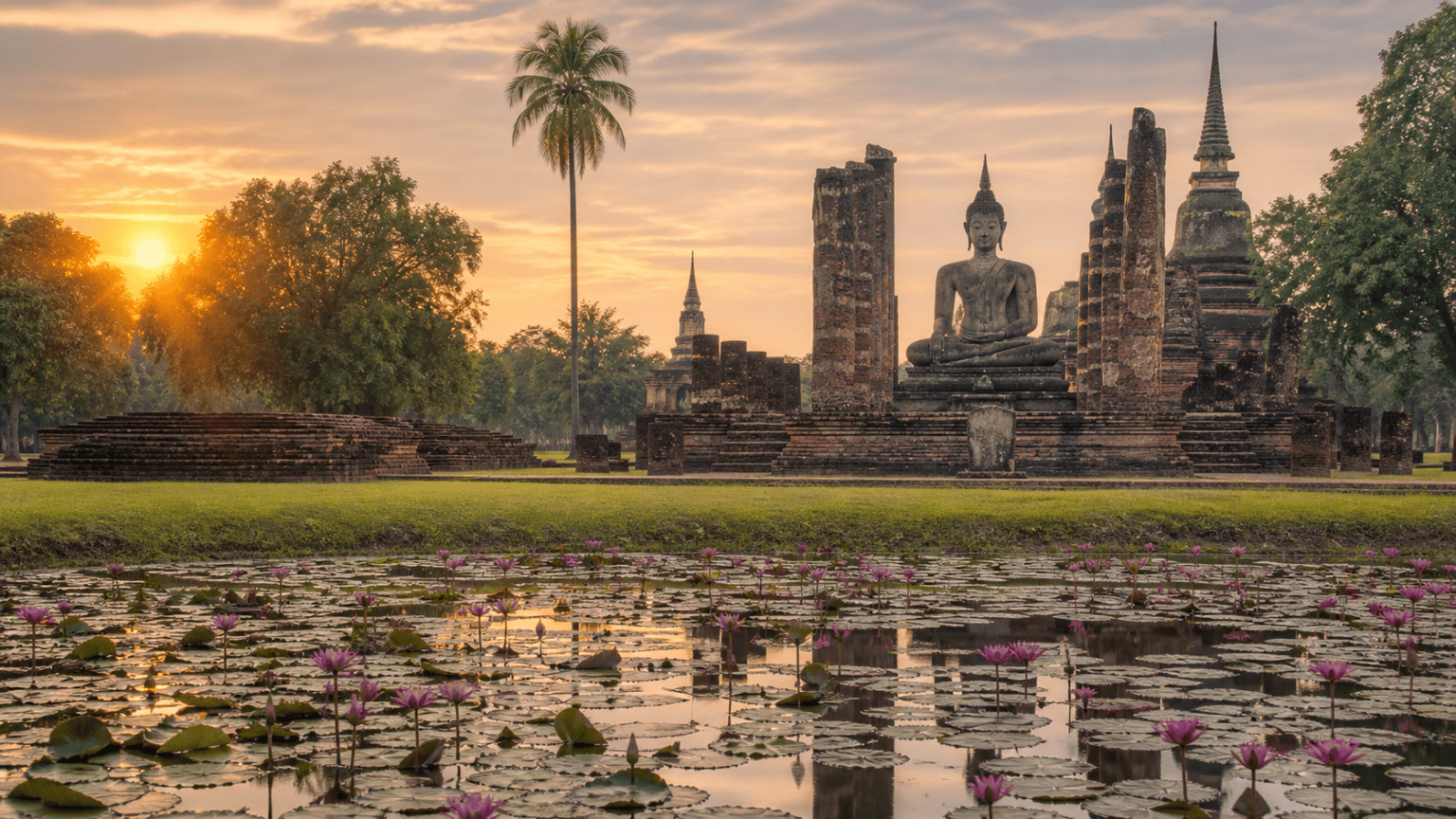
Next up is another location in northern Thailand, not too far from Chiang Mai. Sukhothai holds immense historical significance as the first capital of the Sukhothai Kingdom, which flourished between the 13th and 14th centuries.
Designated as a UNESCO World Heritage Site, Sukhothai Historical Park boasts well-preserved ruins of temples, palaces and Buddha statues, offering a glimpse into the golden age of Thai civilization. The park’s iconic image of the seated Buddha at Wat Mahathat symbolizes Sukhothai’s cultural and religious prominence.
Beyond its architecture, Sukhothai is still revered for its influence on Thai culture. It was during this period that the national Thai identity began to take shape, with the adoption of Theravada Buddhism and the introduction of the Thai writing script that they still use today. Exploring Sukhothai allows visitors to soak up the roots of Thai culture and identity.
Kanchanaburi Death Railway and Hellfire Pass
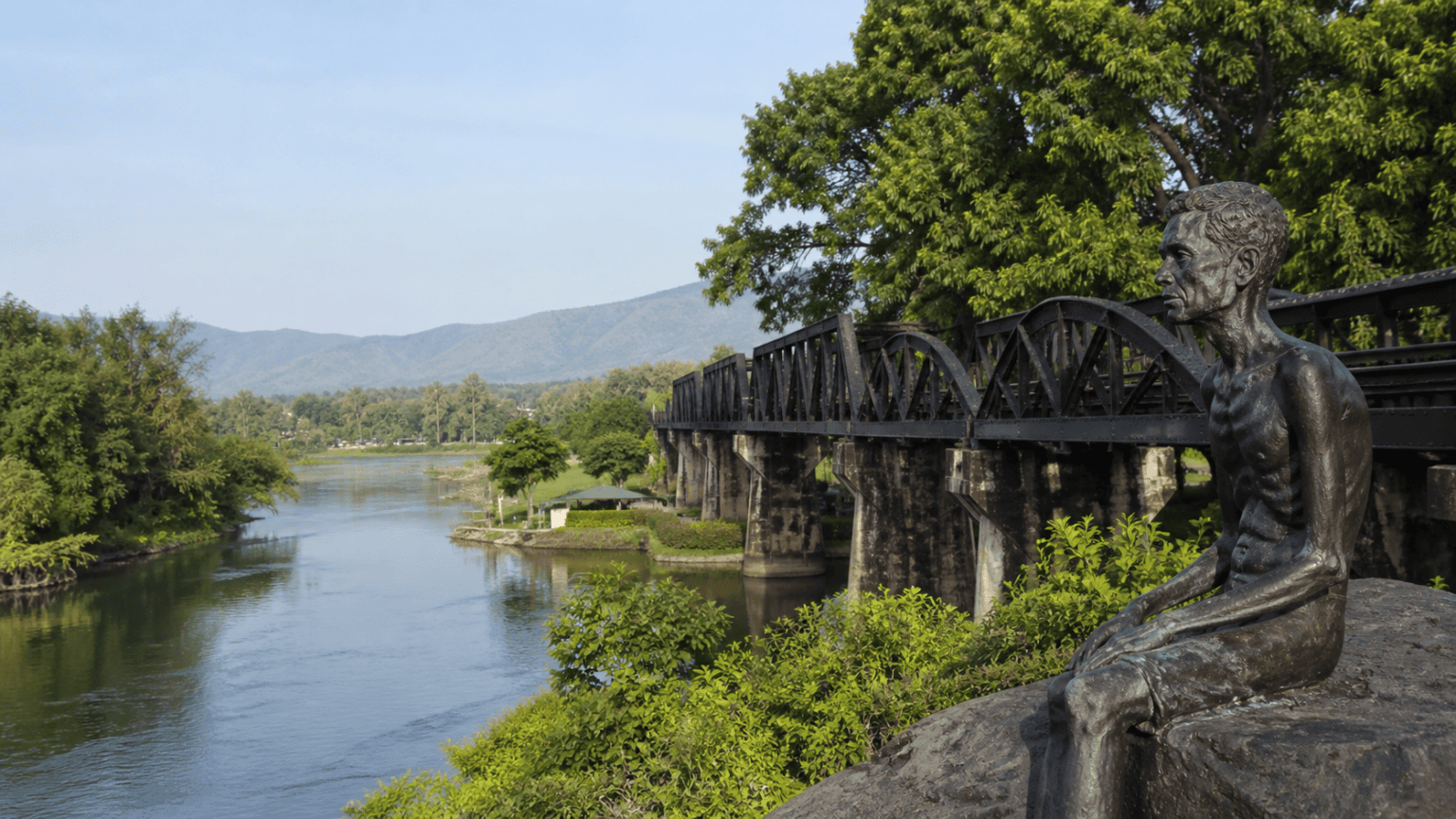
At the number two spot is the area most associated with the tragedies of World War II. Nestled among the banks of the scenic River Kwai, Kanchanaburi bears witness to the human spirit amidst the ravages of war and conflict.
Kanchanaburi is the site of the infamous Death Railway and Hellfire Pass. During World War II, thousands of Allied prisoners of war and Asian laborers were forced to construct the Death Railway under harsh conditions. Many suffered and died due to disease, malnutrition and mistreatment by their captors.
The prisoners were forced to work day and night, making a gap through the mountain in order to construct a railway track to Burma. Around 100,000 prisoners died constructing the track. Thanks to the Australian government, there is now a museum at the site of Hellfire Pass where you can learn about the atrocities of the war.
There are also a number of war cemeteries where you can pay your respects to the dead. Visiting Kanchanaburi can be a sobering experience that starkly contrasts with the stunning surroundings of the area.
Ayutthaya Ancient Temples and Ruins
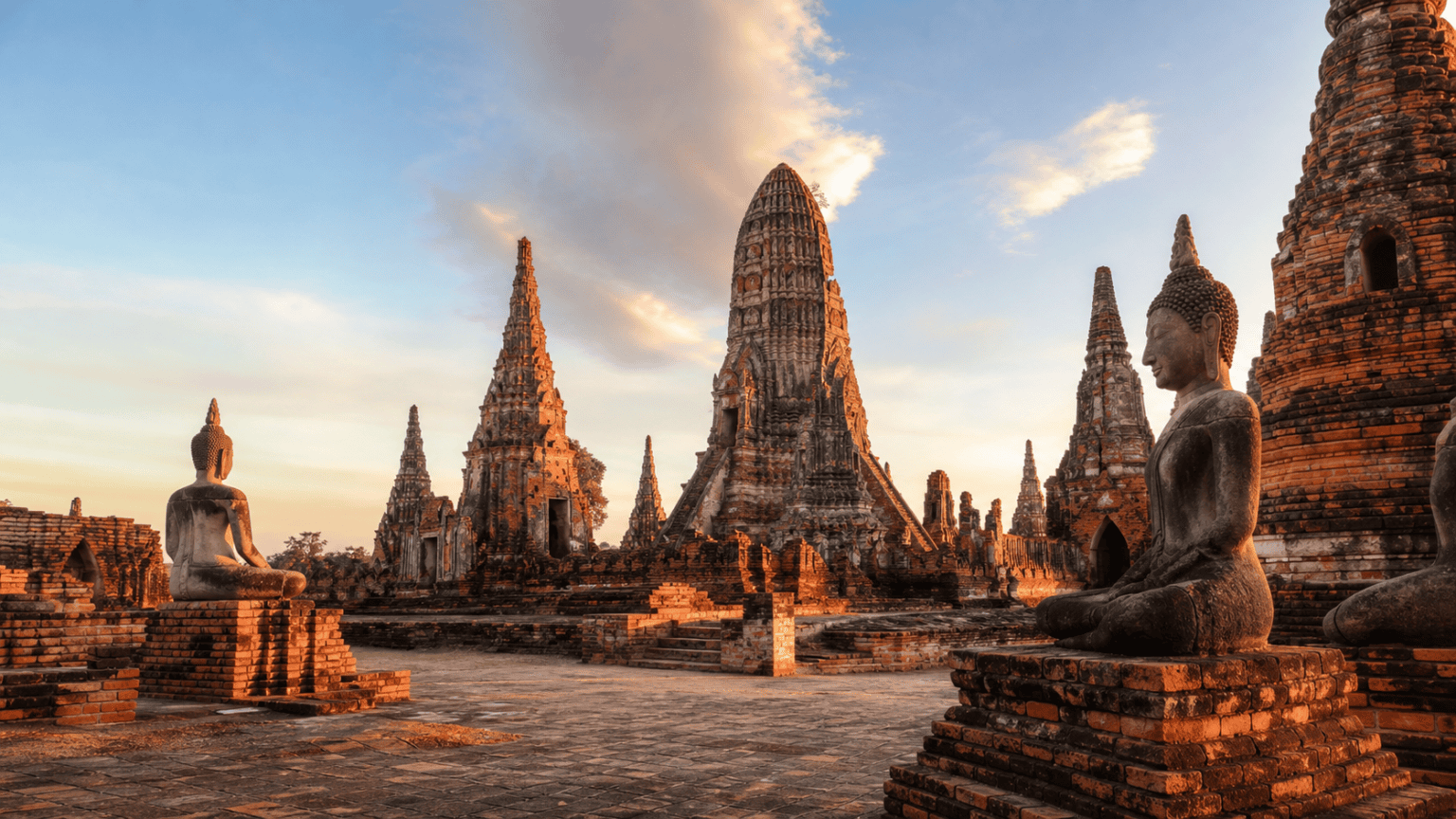
Finally, let us take a look at the number one destination for history nerds, Ayutthaya. Situated about an hour and a half’s drive from Bangkok, Ayutthaya holds immense historical significance as the former capital of the Ayutthaya Kingdom.
Founded in the 14th century, Ayutthaya flourished as a major trading hub and political center for over four centuries, exerting influence over Southeast Asia. Its strategic location along international trade routes brought cultural exchange and prosperity to the region, evident in the city’s diverse architectural styles and religious monuments.
Some of its most famous temples include Wat Chaiwatthanaram, one of the best-preserved ancient royal monasteries, Wat Phra Mahathat, the royal ceremonial ground for religious affairs, and Wat Phra Si Sanphet, which served as the Royal Monastery from 1350 to 1448. This structure is defined by its three towers and chedis.
In 1767, Ayutthaya fell to invading Burmese forces, marking the end of its golden age, after which the Thai monarchy moved the capital to its current site of Bangkok. Despite its eventual decline, Ayutthaya’s ruins stand as a testament to the architectural brilliance of the era, and this is why it is recognized as a UNESCO World Heritage Site.