Thailand Social Media Posts and Visa Fraud Risk

A video circulating widely online shows a fellow content creator interviewing an American man who talks about getting married within weeks of arriving in Thailand to secure a long-term marriage visa.
“I’ve been married here in Thailand, fresh off the boat, put a ring on it. I need that visa.” He posted a quick follow-up where he claimed he was joking, but it received considerably fewer views.
For anyone living in Thailand on a marriage visa, posting this type of content is extremely risky. Immigration may consider this type of admission to be visa fraud, which has already been the subject of an intense crackdown over the past year. It could be used as evidence of admitting fraud, which can carry severe penalties including visa revocation and deportation.
This is part of a broader trend as social media gives people another way to incriminate themselves. A few weeks ago, a Canadian who had been filmed fighting people in Pattaya uploaded a video saying he couldn’t be deported because he would pay off the police to stay.
It appears he voluntarily left the country shortly afterward. Shortly after that post, police publicly stated they were investigating the claim, and his departure may not be a coincidence.
I have no doubt there are plenty more instances. These two examples are very different, but both involve people incriminating themselves voluntarily online.
Thailand’s Online Monitoring and Deportation Rules

Thai authorities do monitor social media. The Anti-Fake News Center under the Ministry of Digital Economy and Society actively monitors online activity.
So far, its work has mainly targeted Thai social media posts spreading misinformation, including the arrest of a Thai woman for spreading false reports during the war with Cambodia. There have also been recent incidents involving foreigners.
In the south, an Israeli woman was deported following social media attention concerning disruptive behavior. French and Israeli nationals were also deported after a conflict at a zoo in Koh Samui spilled into the online space with threats.
Thailand brought a new deportation regulation into force on 28 August 2026. It sets out cases involving illegal entry or overstaying, unauthorized work, violations of foreign-business law, forged official documents and certain serious offenses. The government says deportation can begin once a foreign national completes a prison sentence.
Social media is under scrutiny across the board. Think twice before posting anything that might incriminate you.
Police Raids and Nightlife Checkpoints
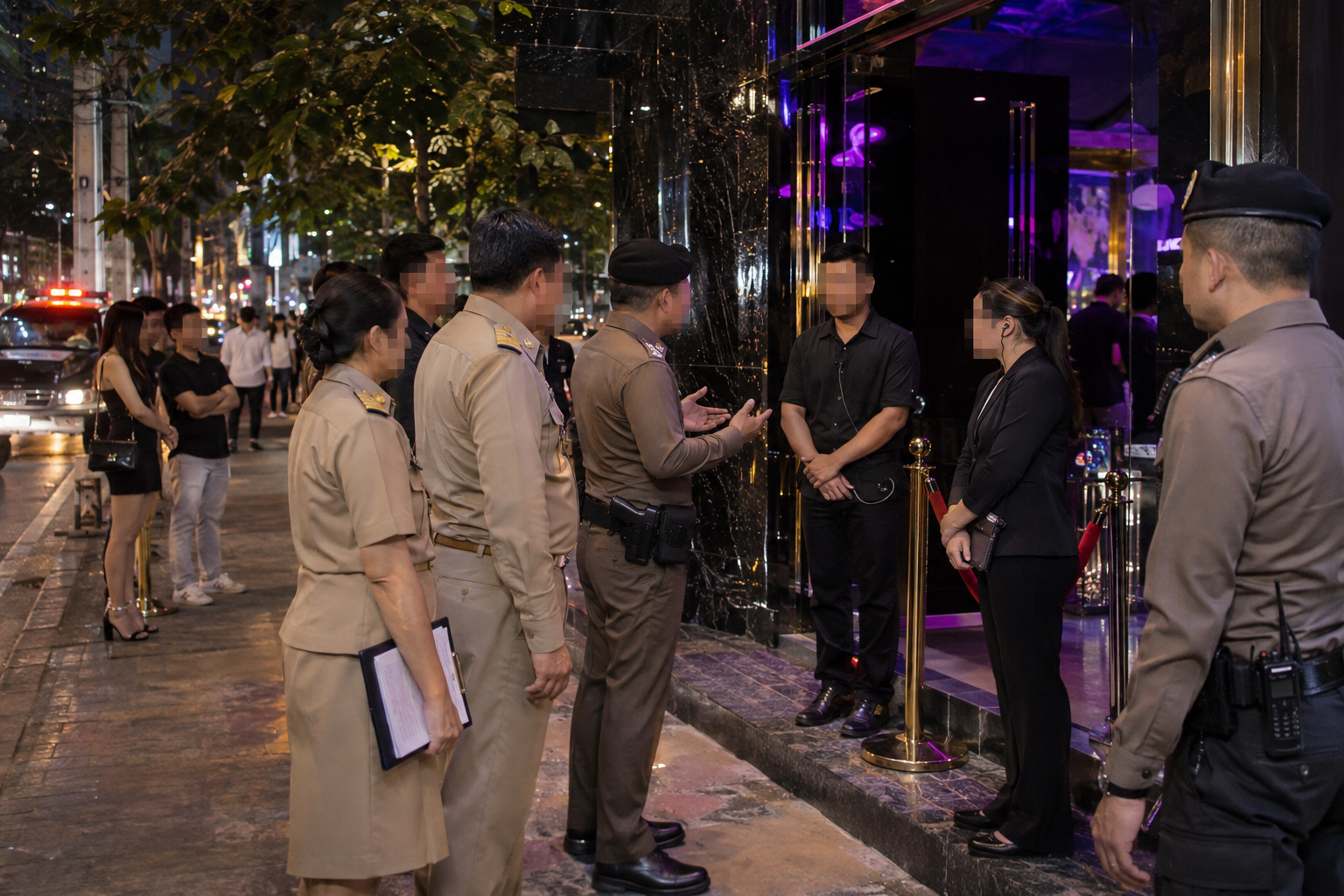
In recent months, Thai authorities have ramped up scrutiny of nightlife areas with raids on bars and clubs, as well as increased police checkpoints.
On 21 November, more than 130 people tested positive for drugs in initial screening during a raid on a nightlife venue in Bangkok’s Chom Thong district. About 340 people were inside. It was a more Thai-oriented club, but a similar raid took place in the popular backpacker district of Khao San Road earlier in the month.
There has also been a significant uptick in checkpoints in popular nightlife areas such as Lower Sukhumvit Road.
Police Checks and Visitor Rules
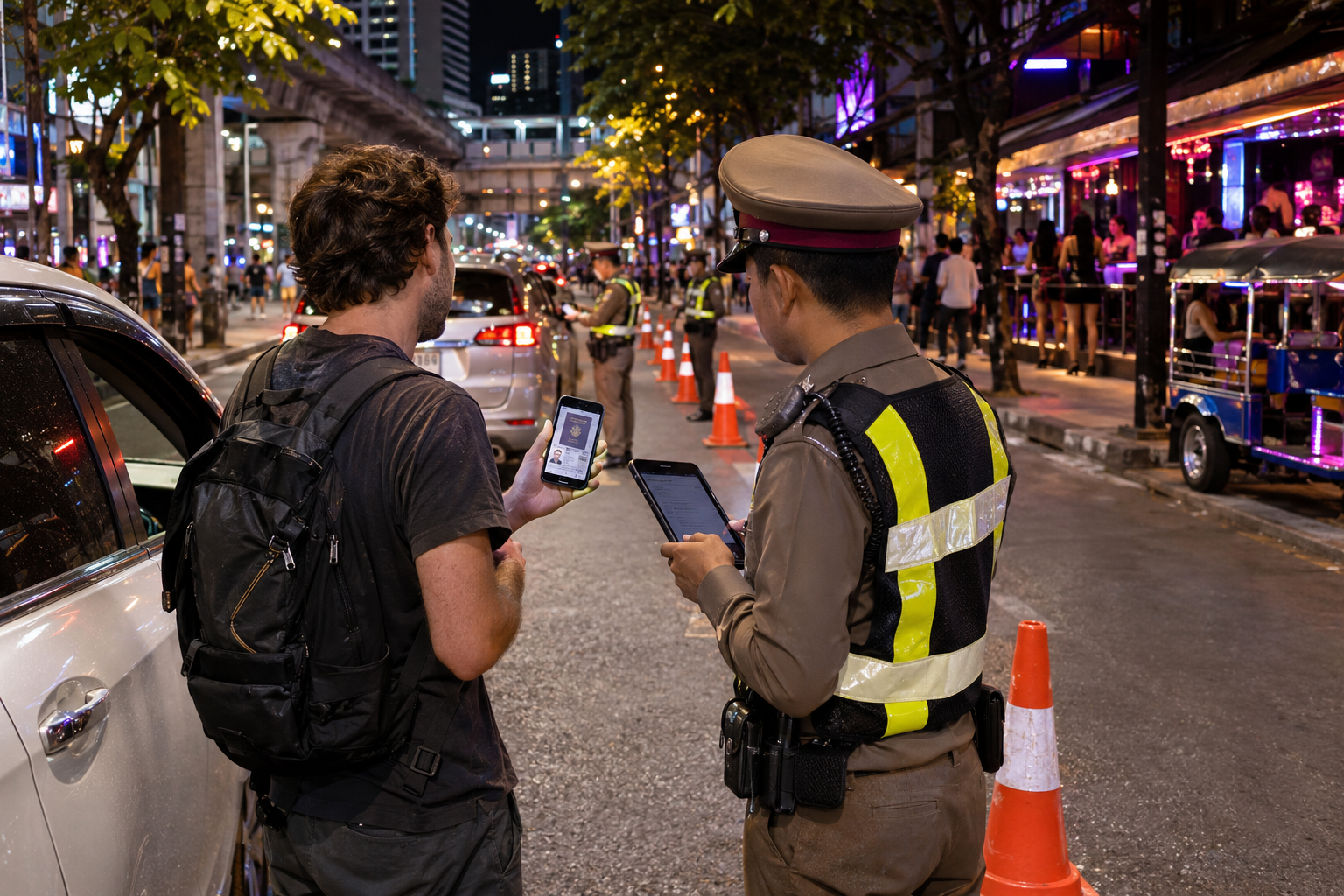
Police may stop traffic at checkpoints and request identification. Under Section 93 of Thailand’s Criminal Procedure Code, searches of people in public require reasonable grounds to suspect that the person has an item used in or obtained through an offense, or an item whose possession is illegal.
Electronic cigarettes are illegal in Thailand. Penalties vary with the conduct involved; importing them can carry a fine of up to 500,000 baht, and other offenses have separate penalties.
Visitors should keep identification accessible. Canadian travel advice recommends carrying a photocopy of the passport bio-data page and Thai visa or entry stamp.
Authorities may request urine drug testing from people suspected of taking illegal drugs. A positive result can lead to arrest, and penalties for illegal narcotics can be extremely serious even for simple possession.
Drinking alcohol in a vehicle on a public road is prohibited, even if you are in the back seat of a taxi or car. Fines can be high, so stay on the right side of the law when heading out for the night.
Nominee Shareholders and Rental Enforcement
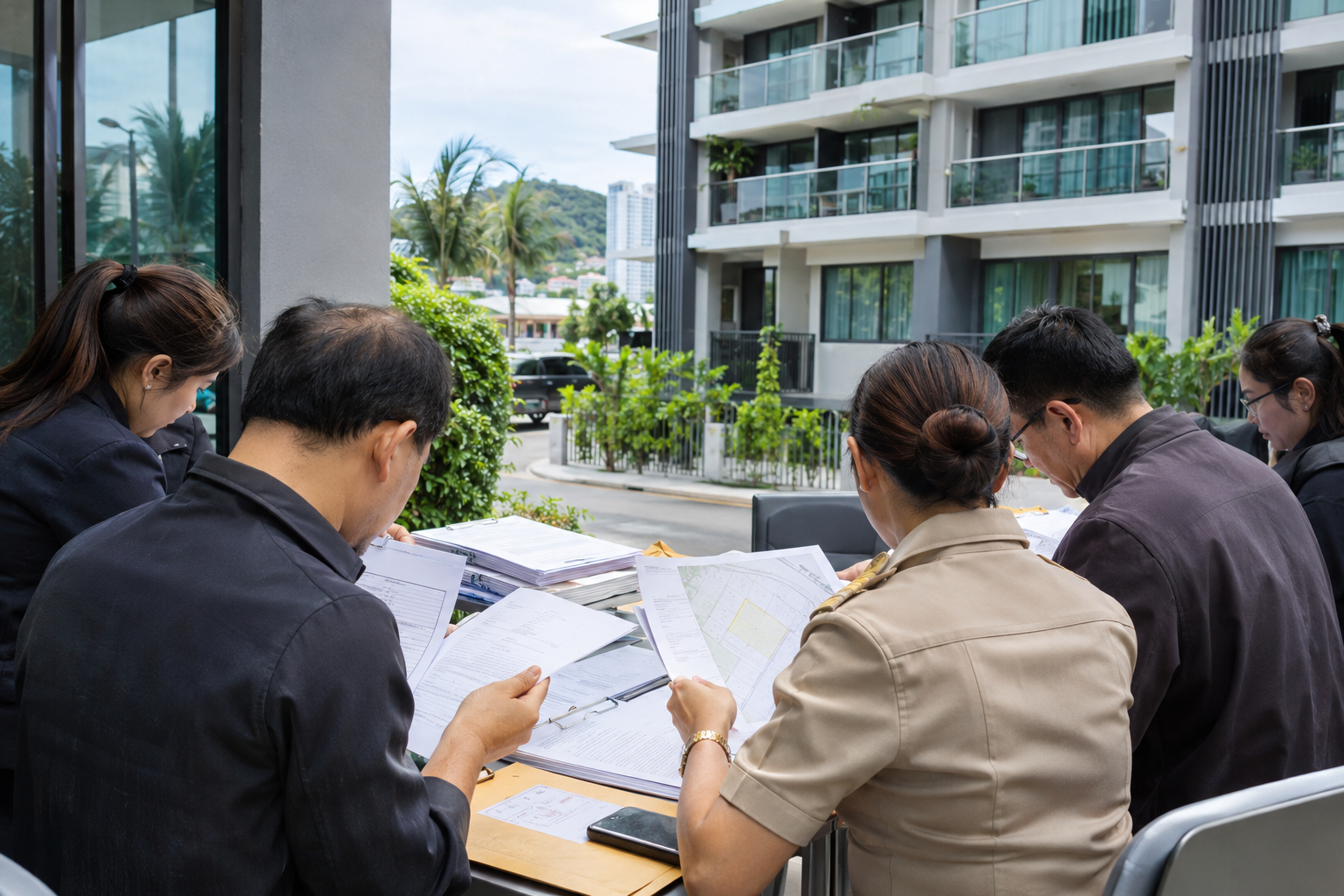
Enforcement is also reaching property as the nominee crackdown continues. In Chonburi, police arrested seven of 26 people named in warrants over companies said to use Thai nominee shareholders, Thai names put on paper to get around limits on foreign ownership.
Last week, Bangkok’s Criminal Court jailed the Chinese director of a contractor behind the government tower that collapsed in last year’s earthquake for three years. The court found that foreigners had controlled the company through Thai nominee shareholders. While this was a serious case, similar scrutiny is being applied to smaller actors in the sector.
In Chiang Mai, tourist police arrested a 40-year-old American on 23 November, accused of running accommodation without a license and working without a valid permit. Police say inspections are continuing.
This may extend to Airbnb subletting. Renting a room or house by the night generally requires a hotel license, subject to limited exemptions, while many condominium rules separately bar stays under 30 days.
These requirements may also be relevant to Airbnb rentals, so foreigners operating one should check the applicable licensing and work-permit rules.