The Sacred Thai Tattoo Rules Every Tourist Must Know
Step off the plane in Thailand, and within hours you will see them everywhere on taxi drivers, street vendors, Muay Thai fighters, and even backpackers at beach bars: Sak Yant.
These aren’t random tattoos. They are ancient sacred symbols that have protected warriors for over two millennia.
Don’t be a tourist with fake ink and zero understanding. This guide reveals the hidden meanings, spiritual power, and sacred traditions that 99% of visitors completely misunderstand.
The Spiritual Machinery Behind Sak Yant
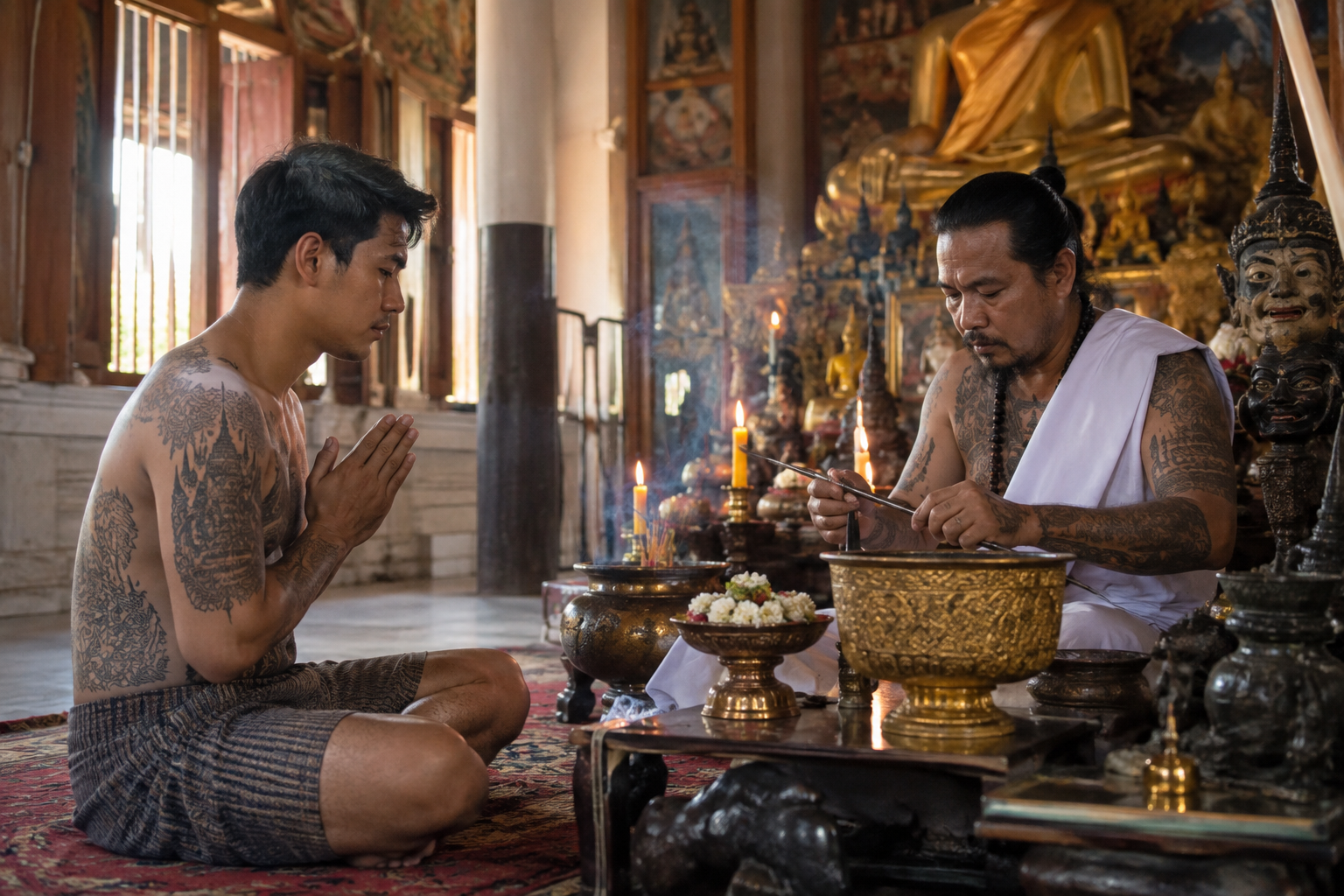
Sak means to tattoo, while Yant derives from the Sanskrit word Yantra, meaning spiritual instrument or machine. Think of it as mystical technology designed to harness cosmic energy.
The spiritual machinery blends three distinct traditions into working elements: sacred geometric patterns channelling spiritual energy from Hindu tradition; ancient mantras in Pali, Khmer, or Lanna scripts, not the Thai language; and divine images of animals, Buddhas, or deities providing specific protections.
The invisible element matters most: sacred prayers and blessings woven into every line during the hand-poked tattoo process.
Without these authentic spiritual components, you have decorative skin art with zero protective power. Ancient warriors relied on these for supernatural advantages, believing proper Sak Yant granted battle invulnerability, enemy invisibility, or irresistible attraction. The Thai army earned the nickname Ghost Warriors through their blessed tattoos.
Certain Designs Carry Legendary Power
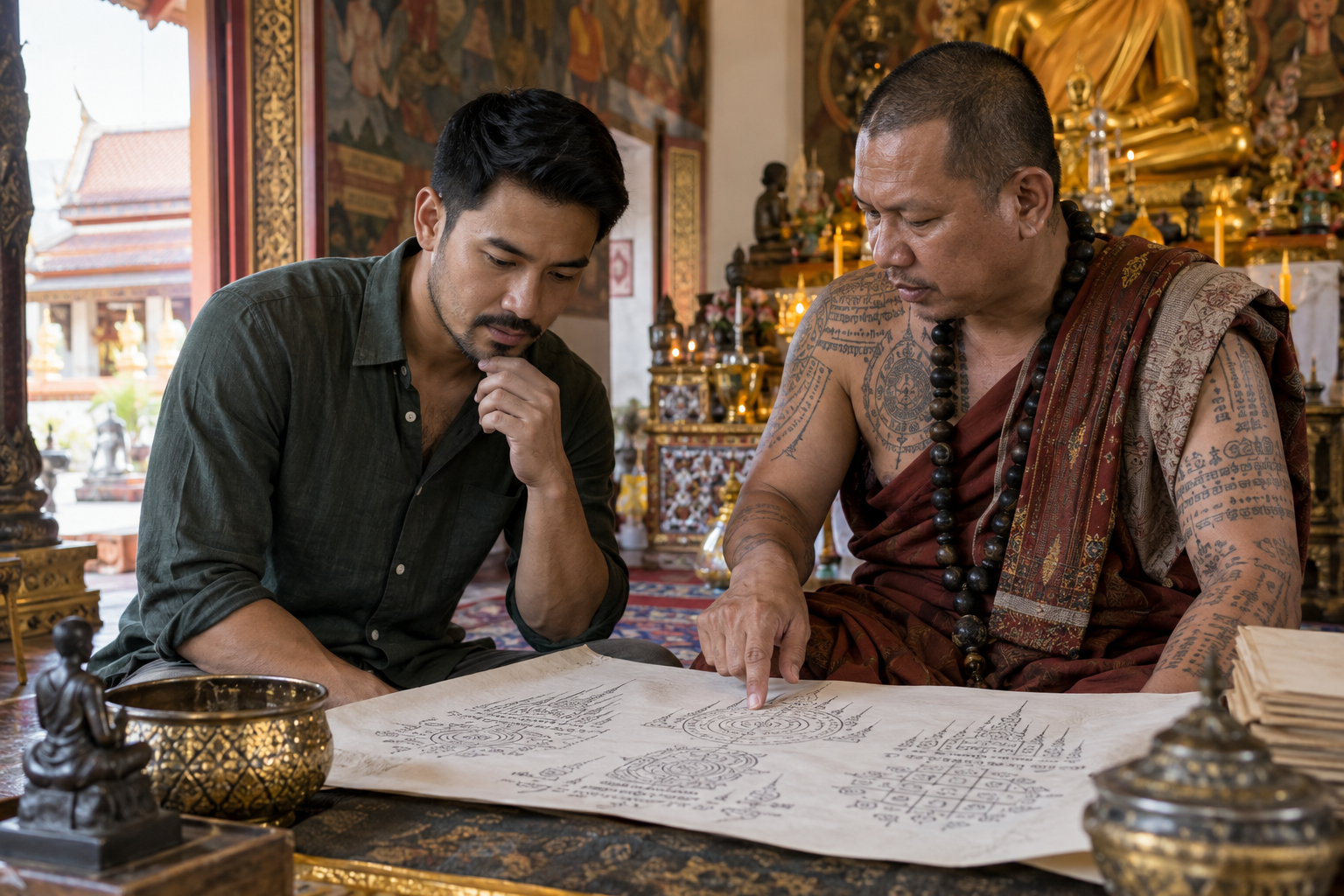
Hah Taew, five lines, is a universal shield. Five horizontal lines contain blessings for wealth attraction, protection from unjust punishment, defence against bad luck and negative horoscopes, black magic immunity, and enhanced charisma.
Nine Spires is the master protection. Consider it spiritual body armour against danger and fatal accidents, making it essential for those in high-risk professions.
Paed Tidt, the universal shield, is a circular design that radiates protection through all eight cardinal directions against negative energy, accidents, and enemies. Back placement allows complete 360° spiritual coverage while guiding the wearer towards enlightenment.
Those famous twin tigers represent ultimate strength, courage, and fearless dominance. Muay Thai fighters choose this for combat superiority and psychological advantage over opponents, while business people use it for enhanced authority and status elevation.
Hanuman, the unstoppable force, represents loyalty, strength, and obstacle destruction. The Ramayana epic describes Hanuman leaping oceans and moving mountains. This tattoo channels the same unstoppable energy for overcoming any challenge.
Sak Yant Designs Must Match Your Life Circumstances
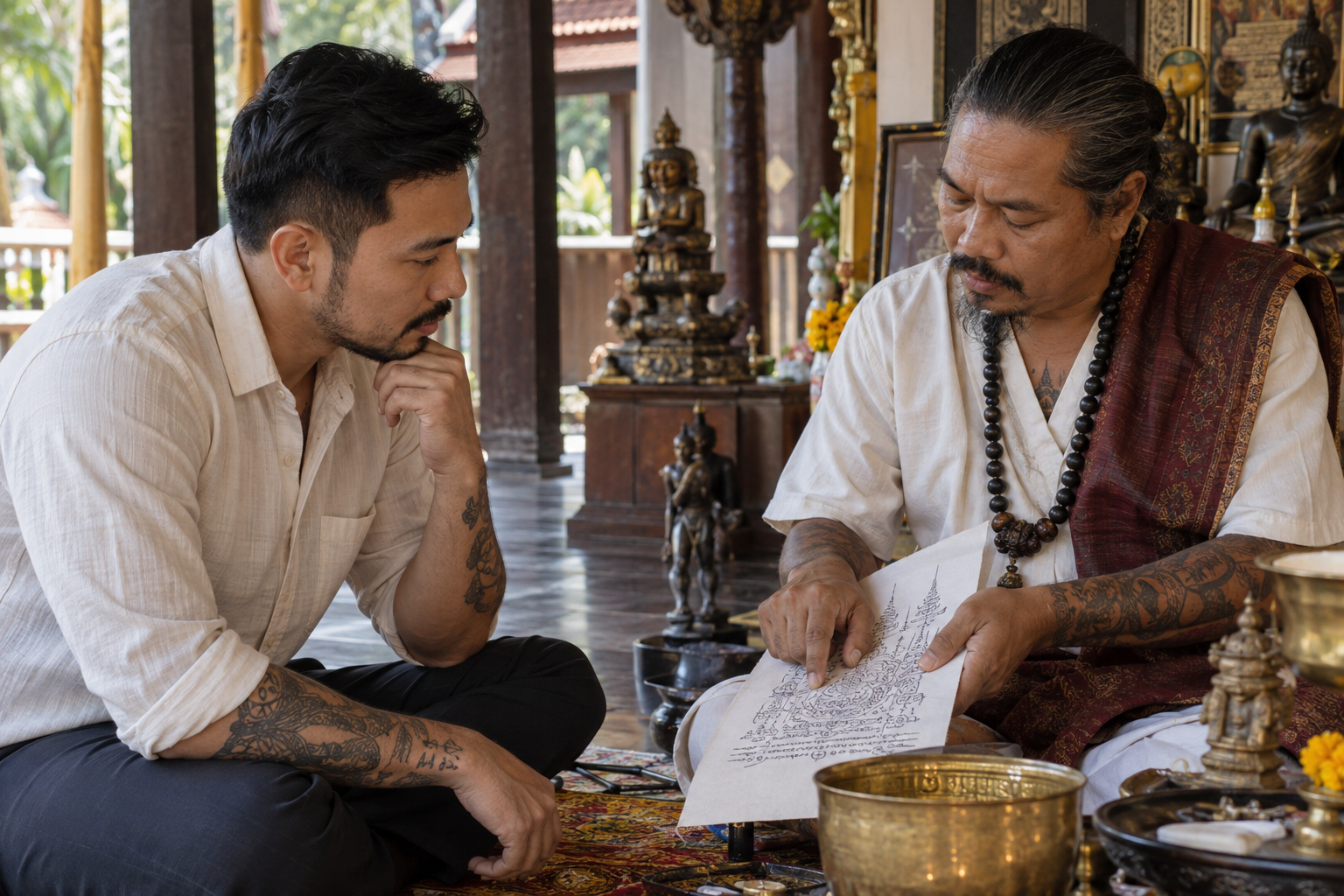
Critical insight: Sak Yant designs must match your specific life circumstances, challenges, and spiritual needs. Authentic masters conduct detailed interviews about your situation before recommending appropriate designs. It’s spiritual matchmaking based on wisdom, not aesthetic preference.
An authentic Sak Yant is a spiritual ceremony, not a casual tattoo shop visit or a walk-in.
Understanding this process prepares you for potential life transformation. Bring lotus flowers, incense sticks, and candles. These demonstrate respect and acknowledge entry into a sacred space, usually costing 20 to 100.
Masters usually want to know about your age, birthday, life values, current challenges, future goals, and spiritual needs. This wisdom-based matching connects your circumstances with appropriate protective designs.
The Traditional Hand-Poked Method
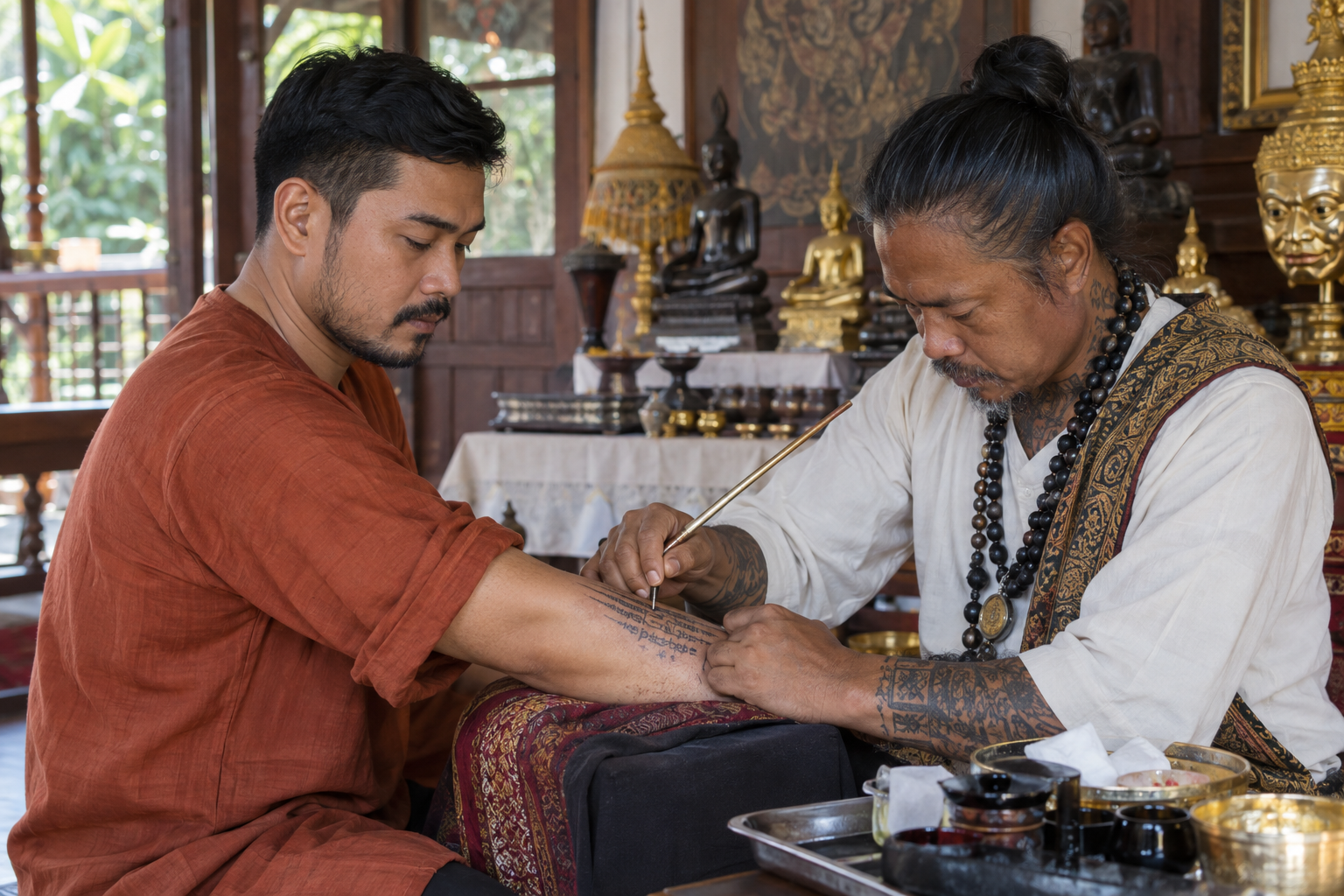
Authentic Sak Yant uses a traditional hand-poked method that has evolved over centuries.
Originally, masters used long bamboo sticks as tattooing instruments, but these presented problems. Bamboo can splinter, break, and create inconsistent lines.
Today’s masters use Khem Sak, elongated metal rods specifically designed to mimic the bamboo stick shape while providing superior durability and precision.
These Khem Sak needles aren’t purchased from suppliers. They are often handcrafted by masters and passed down through generations from teacher to student, carrying spiritual significance beyond their practical function. Each needle holds the lineage and blessing of its previous owners.
The Ink Represents Alchemical Artistry
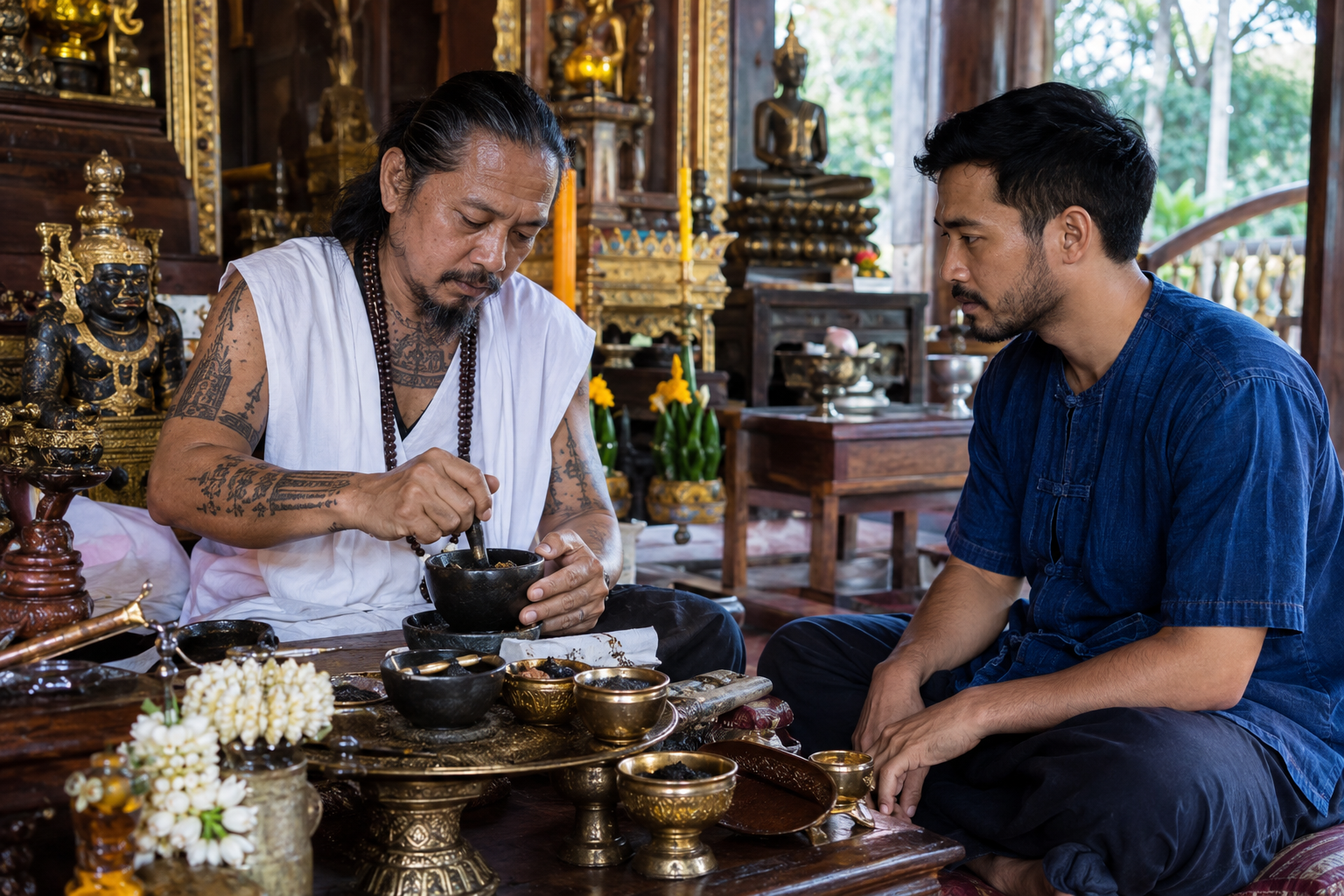
Unlike commercial tattoo ink, Sak Yant ink is never mass-produced. Each Ajarn, or trained student, handcrafts unique formulations using closely guarded secret recipes, often family knowledge passed down through generations or personally adapted by the master through years of experimentation.
These sacred inks blend natural ingredients like specially prepared charcoal, blessed oils, and flower essences. Many ingredients serve as natural antiseptics, providing both spiritual and physical protection.
Each batch receives specific blessings and prayers during preparation, transforming simple materials into spiritually charged substances.
Continuous prayers in ancient Pali, Khmer, or Lanna scripts transform ink and skin into living talismans. These aren’t casual words, but spiritual formulas passed through generations, often unreadable to modern Thais. This chanting creates the actual protective magic.
Multiple blessings conclude the process, including holy water from Nam Mon to wash away bad luck and, sometimes, the application of gold leaf.
Pain Is Part of the Spiritual Journey
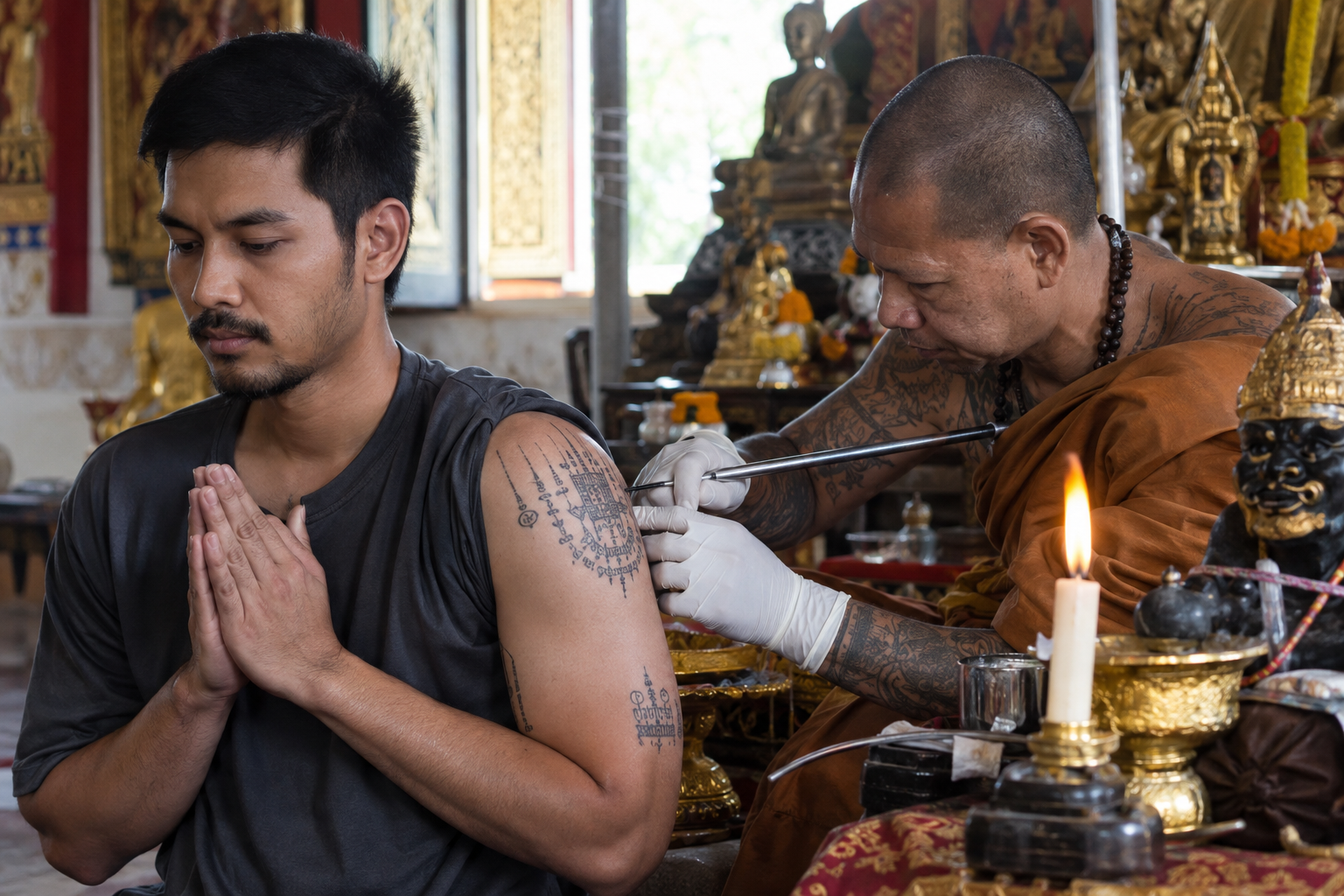
The hand-poked method creates a different sensation from machine tattoos. Pain levels vary widely. Some find it equal to machine tattooing, while others find it less or more intense.
Areas closer to the bone cause more discomfort. Pain is viewed as part of the spiritual journey, teaching patience and endurance while demonstrating your commitment to the sacred process.
Duration ranges from 30 minutes to several hours, depending on design complexity. You’re undergoing spiritual transformation, linking you to millennia of sacred tradition.
Hand-poked tattoos typically heal faster, in approximately three days, because they cause less skin trauma than machine tattoos. During healing, avoid soap and sun exposure for the first three to seven days, using pharmaceutical antiseptic ointment to prevent infection.
Legitimate Ajarns Are the Best Choice
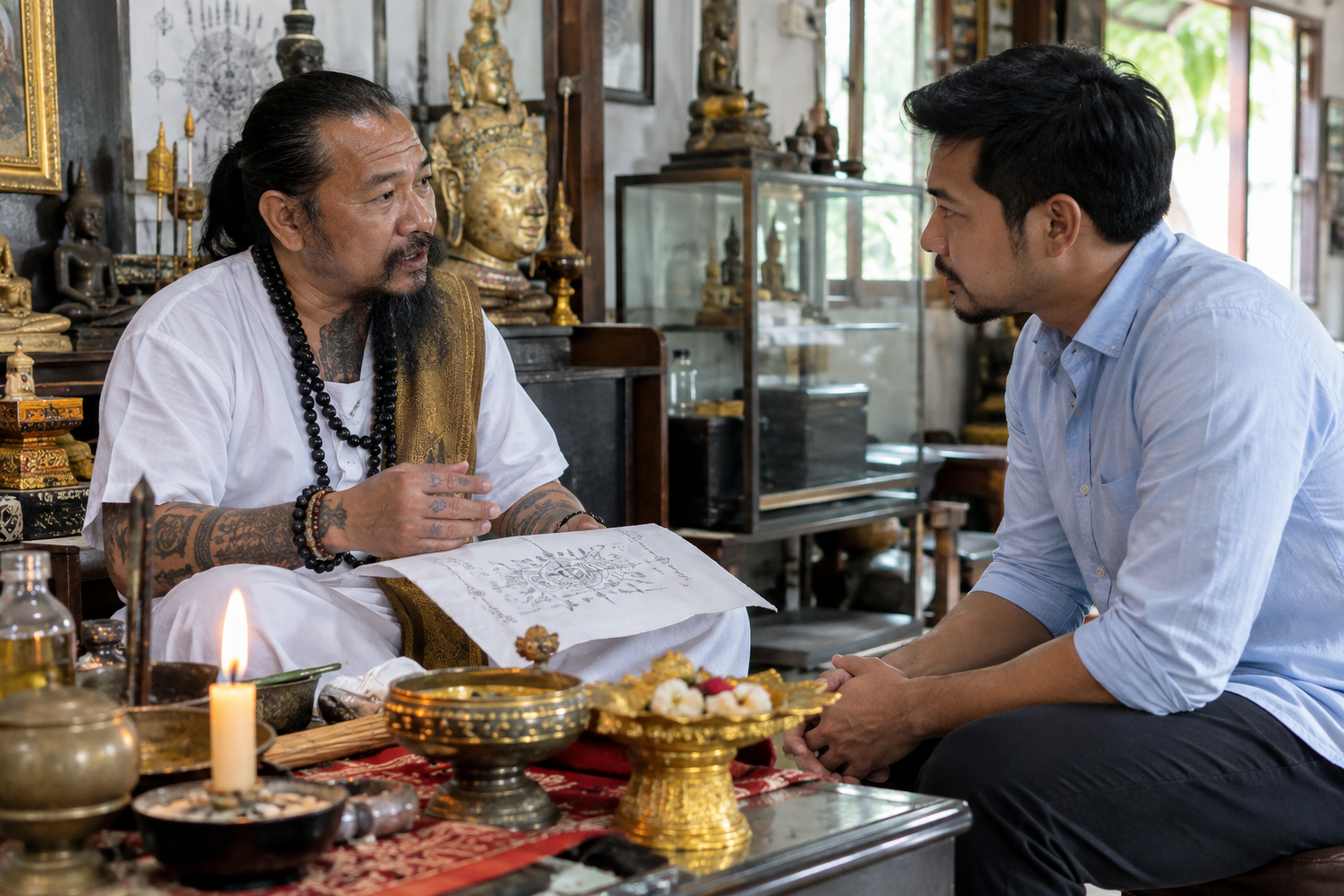
This separates life-changing spiritual practice from a costly tourist scam. The difference determines whether you receive blessed protection or meaningless decoration.
Legitimate Ajarns are the best choice. Most are former monks who left monastic life to pursue magical arts, gaining power through meditation, pure living, and high moral standards.
They maintain hygiene standards, use fresh needles and blessed ink, provide translation services, and conduct proper spiritual consultation.
But Wat Bang Phra, located 50 km from Bangkok and famous for its annual Wai Kru festival, processes 4,200 daily visitors, creating rushed experiences with minimal consultations.
Donations are only about $5, and hygiene can be compromised. When I went there, I did it on my own and came much too late, and I didn’t get a tattoo.
Sak Yant Pricing Reality
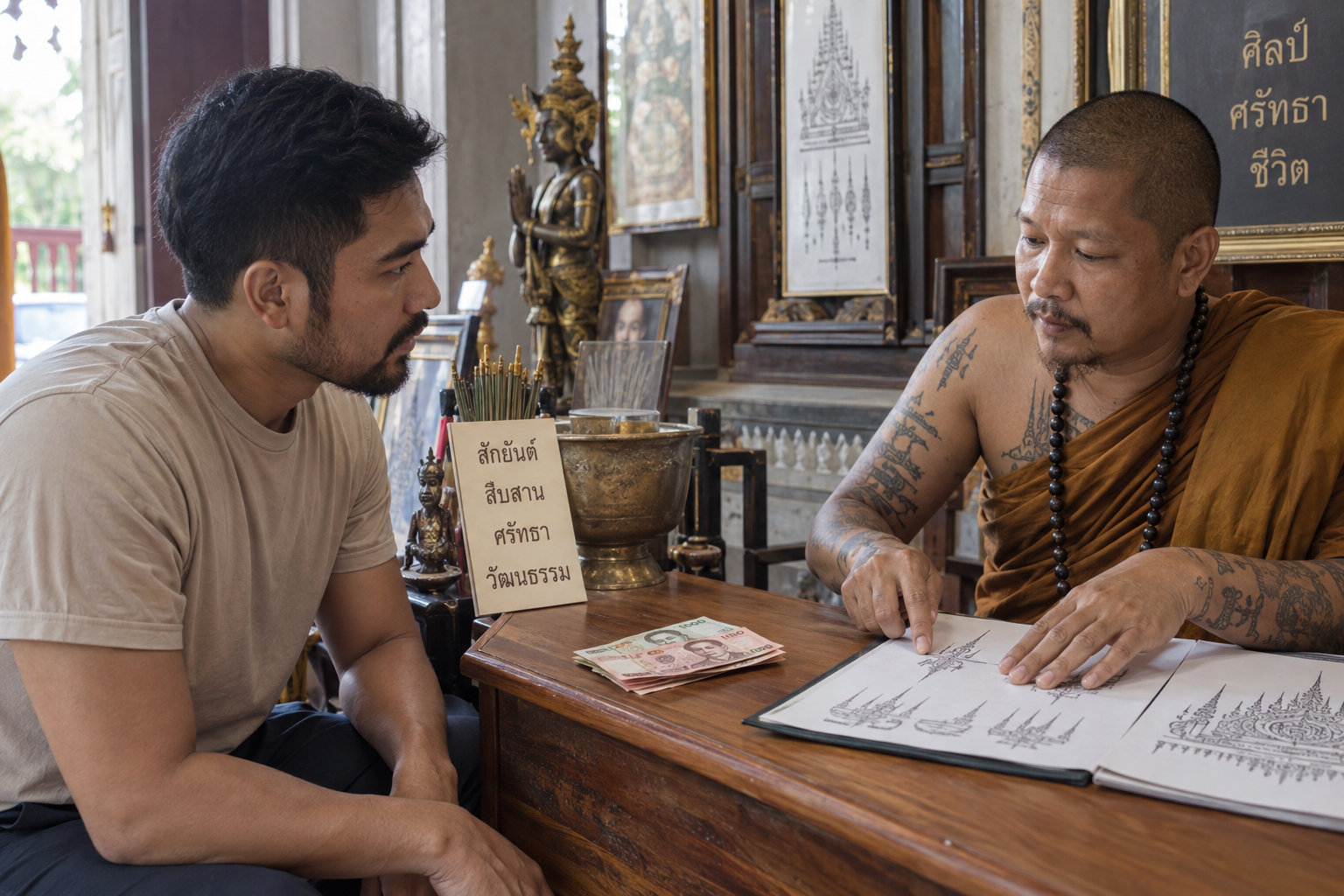
Pricing reality ranges from $60 to $200 for smaller designs to $330 for temple experiences.
Islands, Phuket, and Koh Samui: $120 to $600, with fewer available masters.
Bangkok Ajarns: $150 to $800 for quality masters. Famous masters: $1,000 to $5,000 for private sessions.
Regular tattoo shops: $200 to $1,000 for spiritually meaningless copies.
Sak Yant Carries Lifelong Spiritual Obligations
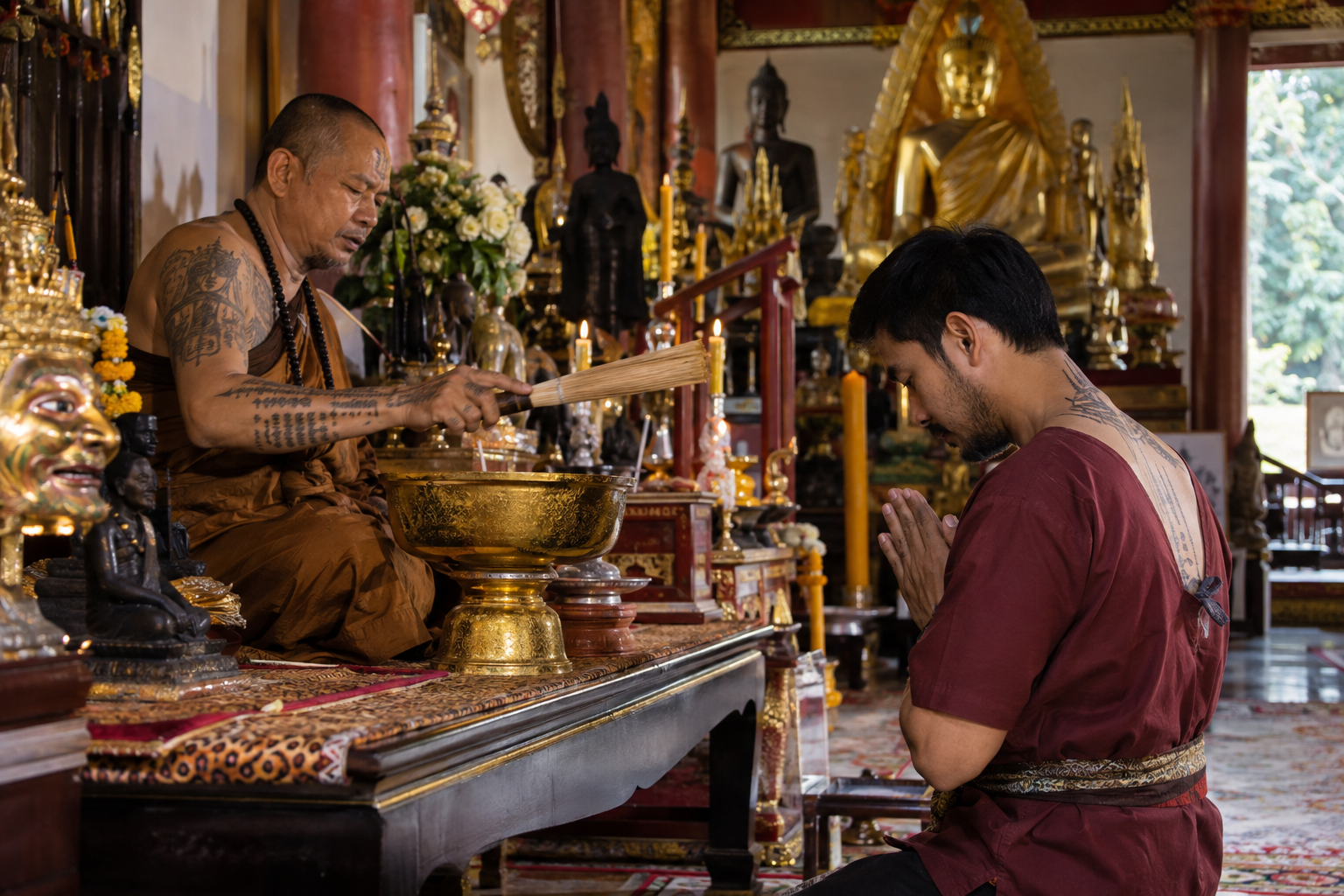
Sak Yant carries lifelong spiritual obligations essential for maintaining protective power. Understanding these prevents magic loss and cultural offence.
Here Are the Five Buddhist Precepts
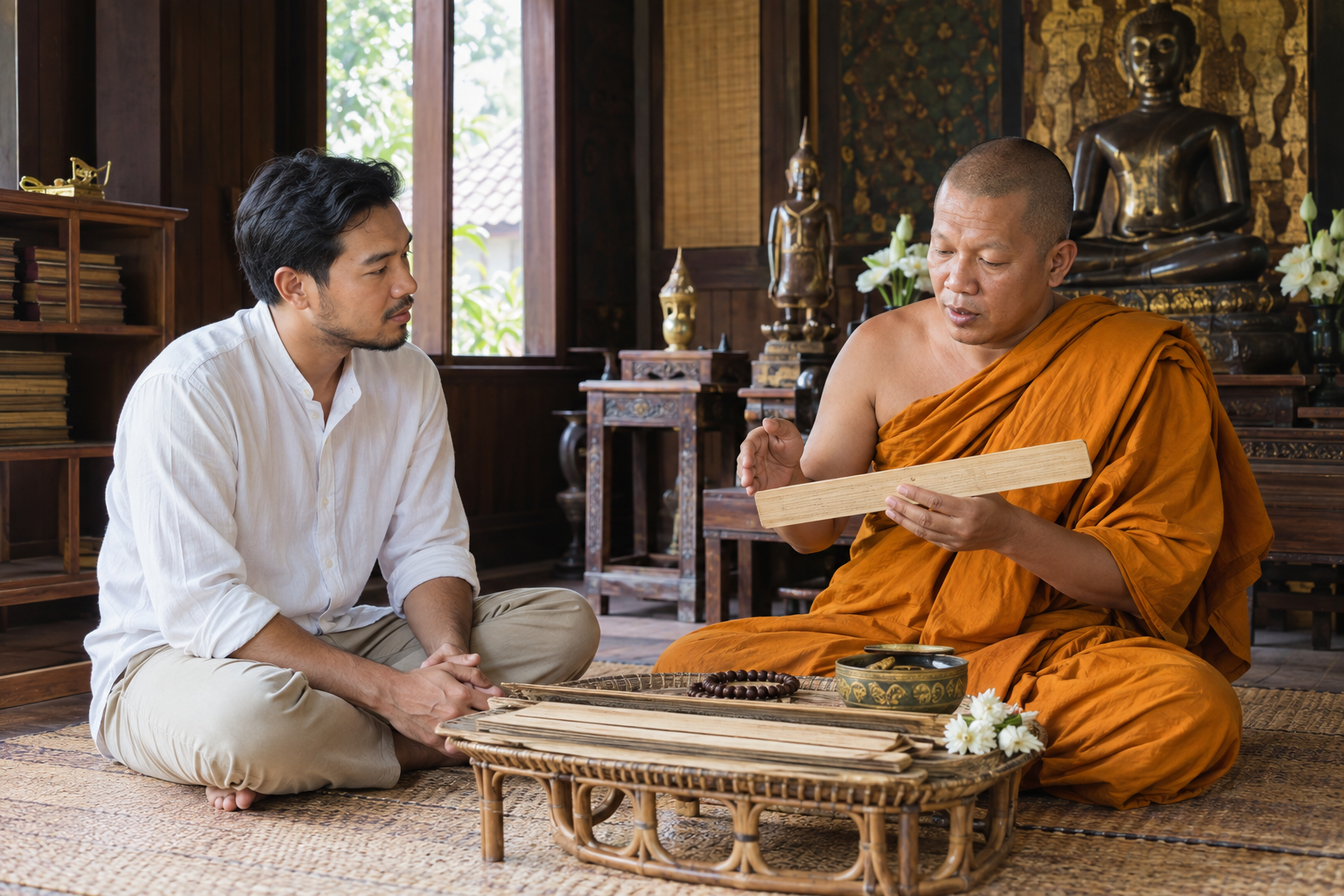
Here are the five Buddhist precepts.
Don’t kill living beings, including humans, animals, and insects.
Don’t steal or deceive, covering manipulation through lies or withholding truths.
Don’t commit adultery. Maintain partner faithfulness. Honest, open relationships are acceptable.
Don’t lose control through intoxication. Moderate consumption is acceptable. Losing control is forbidden.
Respect parents and elders.
Sacred Placement Rules for Sak Yant
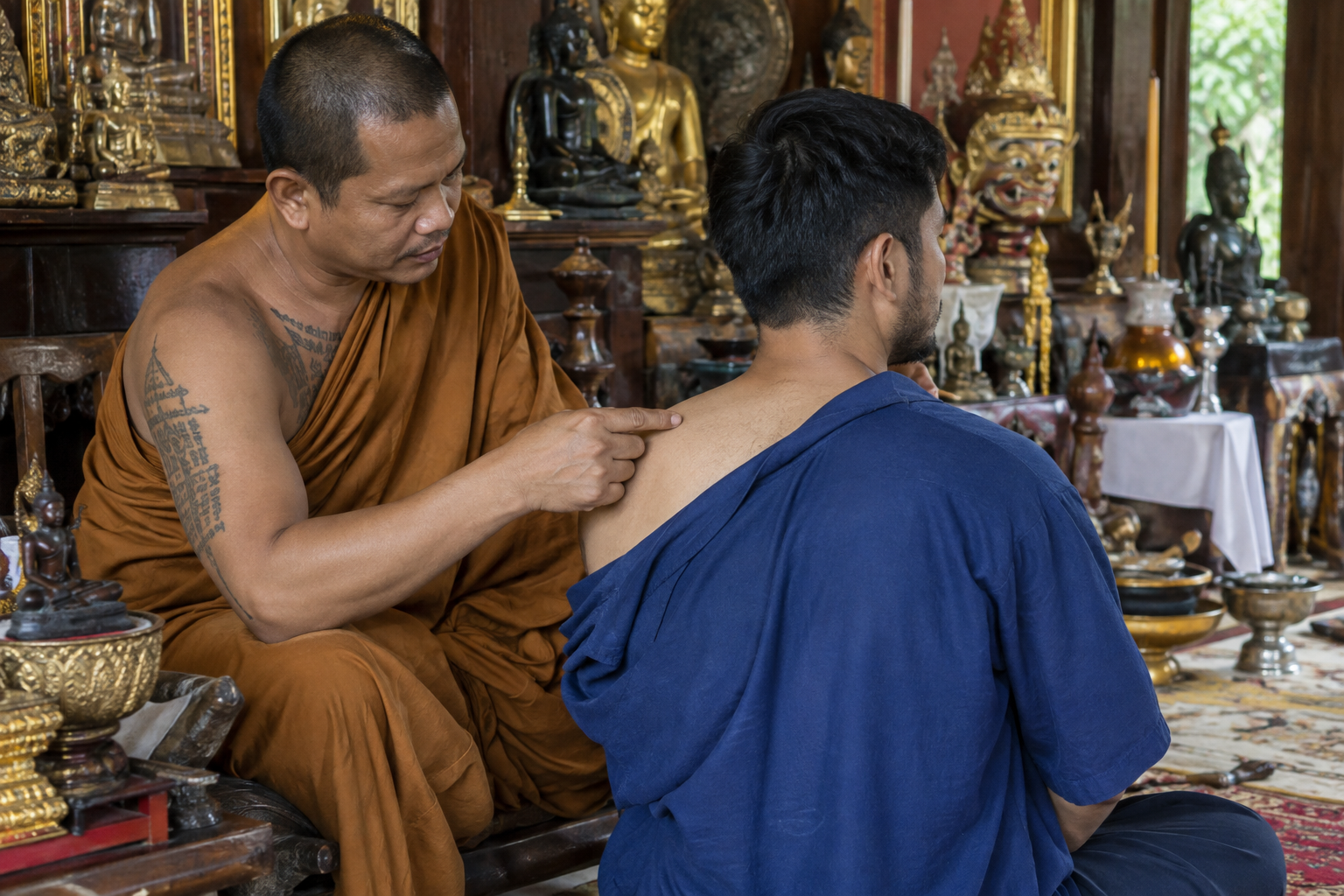
Sacred placement rules are non-negotiable. Sacred designs must stay above waist level and never be placed on the feet. This is the most disrespectful body part in Thai culture.
Women cannot have them on the breasts or below the waist. Higher placements show greater respect for sacred symbols.