Thailand Scuba Diving Guide with Koh Tao Dive Sites
Scuba diving in Thailand takes you from vibrant coral reefs to mysterious shipwrecks and even whale sharks. It’s got it all, but if you’re planning a dive trip, there are some crucial things you need to know before plunging into the water.
I learned to dive in Thailand around seven years ago. While I’m not an expert diver, I’ve taken multiple dive trips around the country’s best dive sites. These tips will help you stay safe, save money, and have the best diving experience possible.
Where to Learn to Dive in Thailand
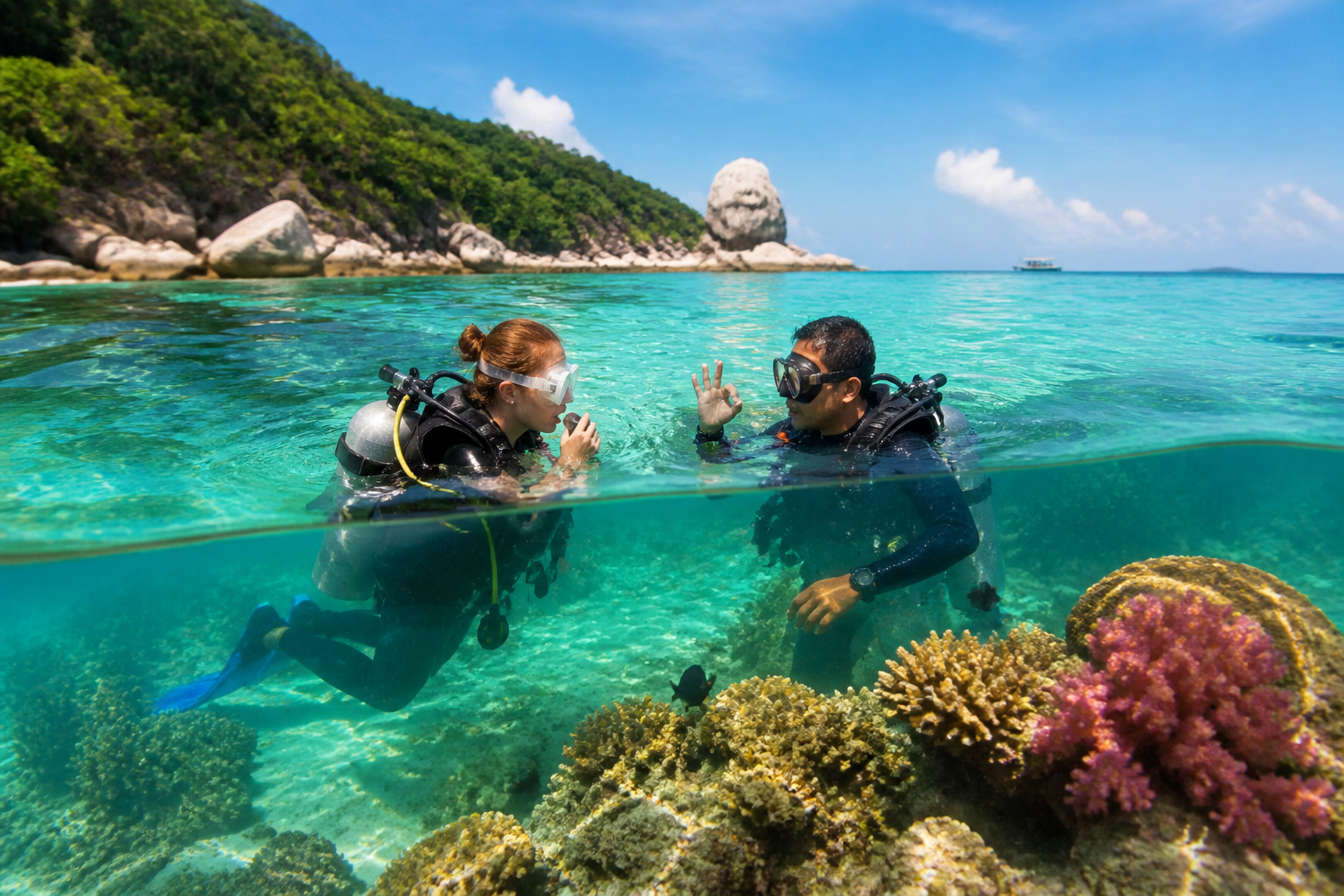
If you’ve never dived before, there’s one spot in Thailand that’s practically made for beginners. It has calm, warm waters with excellent visibility, making it ideal for those who are just starting out. It’s also home to some of the most affordable dive schools in the world, where you can get your PADI Open Water certification for as little as 9,000 to 12,000 Thai Baht.
You’ll need this certification to be able to dive anywhere in the world, and it’ll allow you to dive to 18 m. Most packages include everything: equipment, expert instruction, and four open-water dives. You’ll be fully certified to dive in just three to four days. The best place in Thailand to learn to dive and get your certification is the island of Koh Tao in the Gulf of Thailand.
It’s not just the cheap prices that make it the best place to learn to dive. The island’s unique geography means that at least one side has calm waters almost all year round, so conditions are almost always perfect for learning. When I learned to dive here, I found everything so straightforward, and I’ve since learned that it’s not always that easy. There was also an abundance of underwater wildlife to experience.
What’s more, because it’s such a popular diving spot, expert dive instructors from all around the world are located here. You can learn to dive from instructors who’ve had hundreds or even thousands of dives, and they’ll make sure that you feel safe and secure throughout the process. This is why Koh Tao is known as Thailand’s dive factory.
But what if you don’t have a certificate and don’t have time on your trip to do a diving course? Can you still dive? Absolutely. If you just want to try a dive to see what it’s like, you don’t have to commit to a three-day PADI Open Water course. You can do what’s usually known as a fun dive or a discover dive. This is a one-day experience where a certified instructor teaches you the basics and takes you on a shallow dive of no more than 12 m. Sometimes these are even done by walking from the shore, so you don’t actually have to dive from a boat. It’s perfect for those who want to get their feet wet, water-joke intended, without needing full certification.
After that one dive, you’ll need a guide for any future dives you do until you’re certified. Some of the best dive sites in Thailand can only be accessed with an Advanced Open Water certificate. With this certification, you can dive to 30 m, which opens the door to deeper, more exciting dive sites. A lot of the bigger creatures in the ocean like to live closer to the seabed, so you have a better chance of seeing the best marine life if you take the advanced course. You’ll also get to undertake speciality dives like night diving, wreck diving, cave diving, and underwater photography. The course takes just a couple of days and costs around 8,000 to 10,000 Thai Baht. If you’re serious about diving, it’s totally worth it. When I first did my PADI Open Water course, I loved it so much that I went straight ahead and enrolled in the advanced diving course just a few days later. At the time, I felt that this extra experience really improved my skills and comfort level in the water. If you actually want to get paid to dive, Thailand is the perfect place to undertake the Dive Master course. Not only will you get to dive every day in some of the most beautiful spots on the planet, but you’ll also gain in-depth knowledge of the local marine life and have plenty of chances to improve your skills as you help thousands of people come to Thailand every day to undertake their first dives.
The Best Dive Sites in Thailand
Thailand has lots of world-class dive sites, but here are a few that you don’t want to miss. In the Gulf of Thailand, there’s one legendary dive site that stands above all others, known as Sail Rock. This site is located between Koh Tao and Koh Phangan and takes over an hour by boat from either island.
One of the highlights of this dive is the chimney, a vertical rock formation that you can swim up through. It starts at 18 m below sea level and brings you up to 8 m. This is the dive where I saw the most fish I’ve ever seen, with huge schools of barracuda swimming together in unison and a massive group of fish in the valley. For me, this dive site was like an underwater safari. If you’re there at the right time of year, this site is one of the best in the country to swim with whale sharks as well. The site can be done with just the Open Water certificate, but it’s best experienced at around 30 m, so it’s better to have the Advanced Open Water certificate.
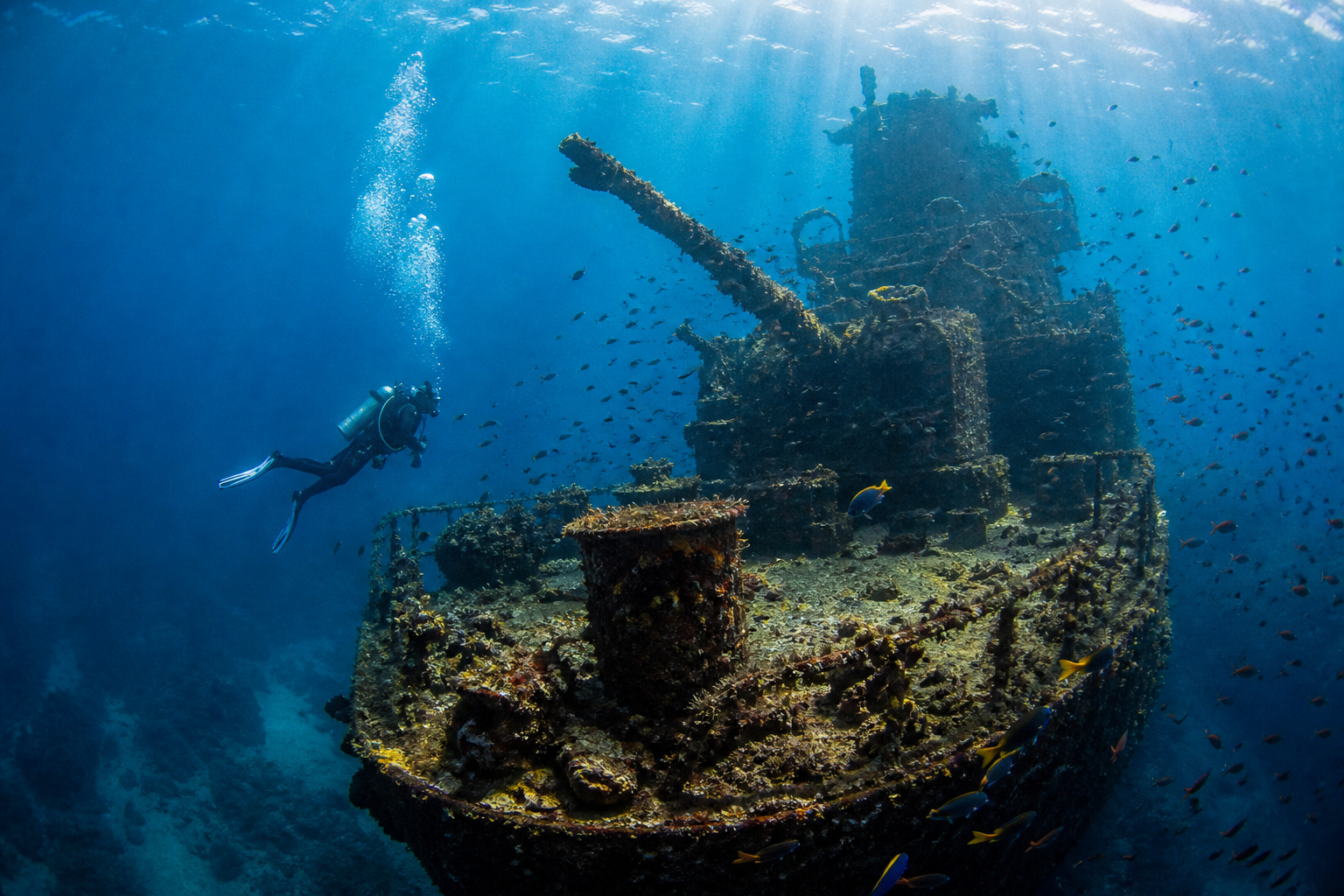
The Andaman Sea is home to a number of fascinating and frankly eerie wreck dive sites. By far the biggest wreck at the bottom of the Thai ocean lies up the coast of Koh Chang. The HTMS Chang is a former US naval ship that served in both the Korean and Vietnam wars before being donated to the Thai Navy in 2012. It was sunk to create an artificial reef and has since become one of the most famous wreck dives in Thailand.
Resting at depths between 20 and 30 m, you can explore two vast decks, swim through the eerie cargo holds, and spot marine life that has made the ship its home. What stood out most to me when I did this dive was spiralling around the mast as we ascended, which made me feel like I was flying above the ship. This is the HTMS Chang, and it’s the biggest diveable wreck in Thailand.
If you’re serious about diving, you should try a liveaboard boat experience, where you’ll live on a boat for a few days, diving at multiple pristine sites each day. The best location in Thailand to do a liveaboard is the Similan Islands, which are located in the Andaman Sea over 80 km away from Phuket. The Similans are consistently ranked among the top 10 dive sites in the world. You’ll see everything from massive coral gardens to manta rays and leopard sharks.
These trips are a bit more expensive, ranging from 30,000 Thai Baht for a few days to 80,000 Thai Baht for longer expeditions.
Andaman Sea vs Gulf of Thailand
What most first-time divers in Thailand don’t realise is that the country is actually surrounded by two completely different bodies of water, and they each offer a totally unique diving experience. If you look at Thailand on a map, you can see that these two bodies of water are separated by the entire Thai Peninsula. This means that they have their own distinct marine ecosystems, water conditions, and even dive seasons.
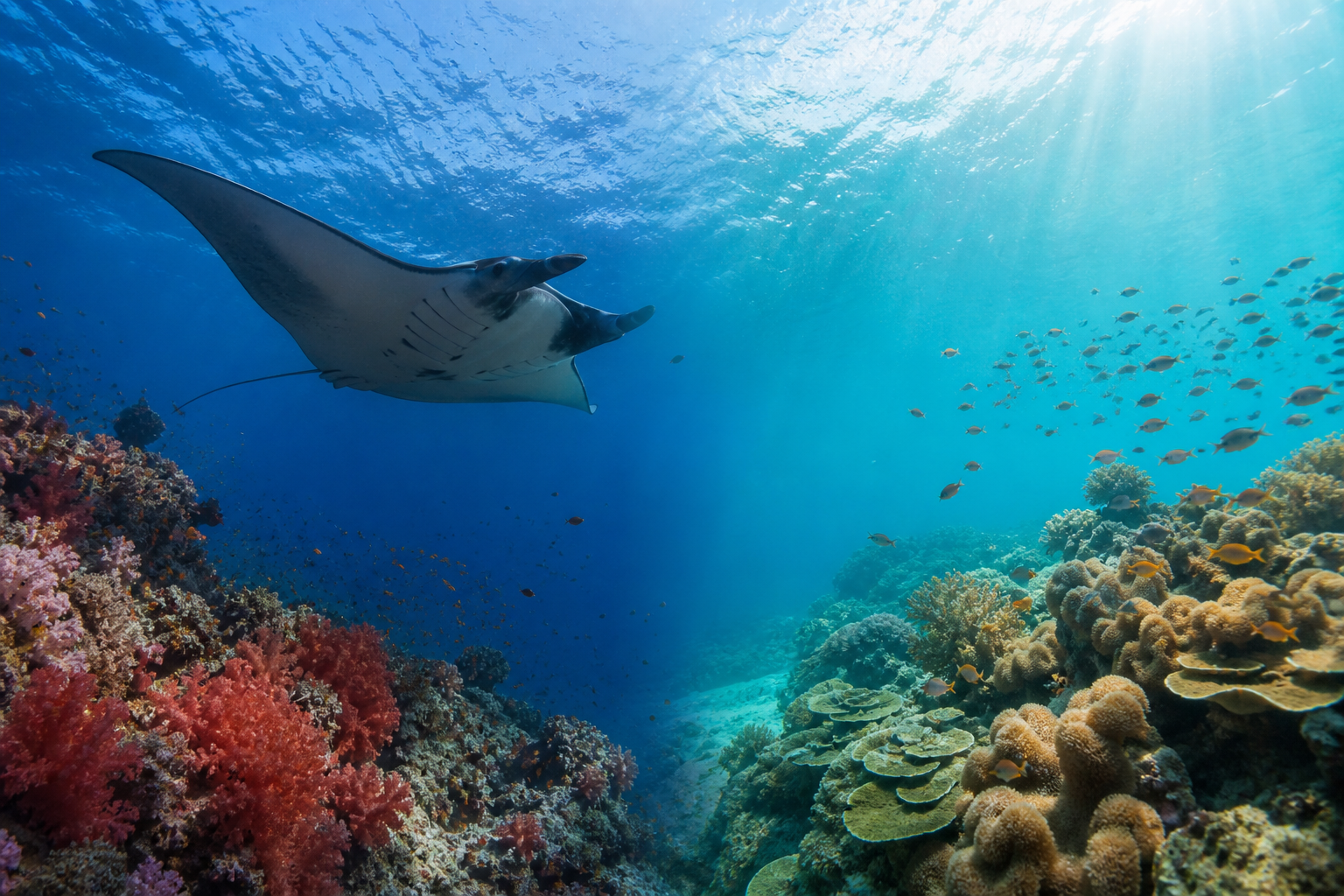
Choosing between the Andaman Sea and the Gulf of Thailand can have a big impact on your diving experience. So what are the differences? The Andaman Sea is famous for bigger species of fish. If you’ve ever dreamt of diving alongside manta rays, whale sharks, or leopard sharks, this is the place to be.
There is also more soft coral in the Andaman Sea, which is home to some species of fish that you can’t see in the Gulf of Thailand. But it’s not just about the sights. The Andaman Sea also offers a bit more of a challenge. Dive sites like Richelieu Rock and the Similan Islands are known for their strong currents and deeper dives, making them ideal for more experienced divers looking to test their skills and push their limits.
I actually had a bit of a scary moment in the Andaman Sea when diving on Koh Lipe. It was the first time I’d experienced strong currents. Our instructor signalled for us to get down below the current, but I was unable to manage it. I ended up getting caught in the current and was blown away like Mary Poppins. The instructor came and got me, but we had to surface.
If you’re a beginner diver or just looking for some easy, laid-back dives, the Gulf of Thailand is your best bet. I’ve already spoken about the benefits of learning to dive in Koh Tao. It’s known for shallow, easy dive sites with little current, and it’s one of the cheapest places to learn.
The biggest deciding factor for which side to dive on might be the time of year, because these two seas are on opposite sides of the country, so their best dive seasons are completely opposite too. The Andaman Sea is at its best between November and April, when the water is calm and the skies are clear. This is also when larger marine life like manta rays and whale sharks are most likely to appear. From May to October, the monsoons roll in, making diving in the Andaman Sea rougher. Meanwhile, the Gulf of Thailand has the best weather between May and September, just when the Andaman Sea is getting hit by storms. Depending on when you’re visiting Thailand, your choice might already be made for you.
Scuba Diving Safety and Emergencies in Thailand
How safe is it to dive in Thailand, and what happens in an emergency? With so many people coming to the country to dive, accidents can happen, and there are a number of scuba-diving-related deaths every year. Reputable dive companies will always make dive safety the number-one priority.
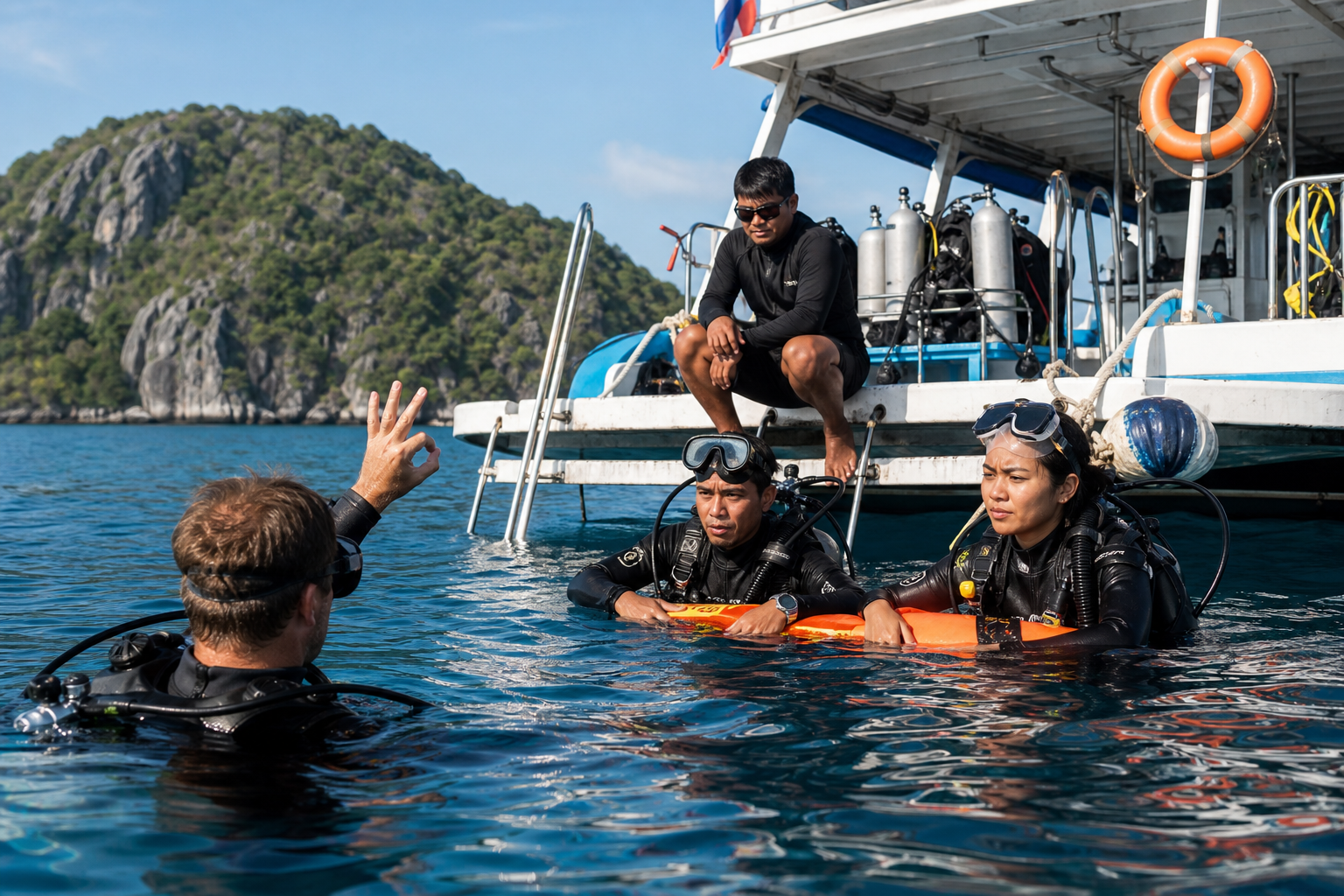
Before every dive, you’ll have a dive briefing with your instructor, where they’ll go over specific instructions for things to do if things go wrong, including entry and exit points, maximum depth, dive time, and potential hazards specific to that site, such as strong currents.
If something goes wrong on a dive, even if it’s just with one diver, all divers have to prepare to ascend immediately. There’s no way around it if you want to finish your dive and get your money’s worth. One of the most dangerous aspects of diving comes from decompression sickness, or what divers call the bends. This happens when you ascend from a dive too quickly, and it can be really dangerous.
If you are suspected of having the bends, you need to get to a pressurised room known as a hyperbaric chamber quickly. This room can help the nitrogen leave your body safely. Luckily, despite being expensive pieces of kit, Thailand is well equipped with hyperbaric chambers. They can be found in Phuket, Koh Samui, and Koh Tao, as well as other places.
You probably won’t think you need it until you do, but dive insurance is an absolute must. Diving accidents can be expensive. Hyperbaric chambers alone cost upwards of $10,000, not to mention medical evacuations if you’re far from a hospital. Make sure you’re covered for diving-related accidents and emergency treatments. Most dive schools will offer this as part of their package because diving accidents and incidents are not covered by most medical insurance.
Where to Stay on a Thailand Dive Trip
One thing that’s especially important to consider on a dive trip is choosing the right place to stay. In most major diving spots, you’ll be faced with an interesting dilemma: should you book your own accommodation or book a stay at the dive school?
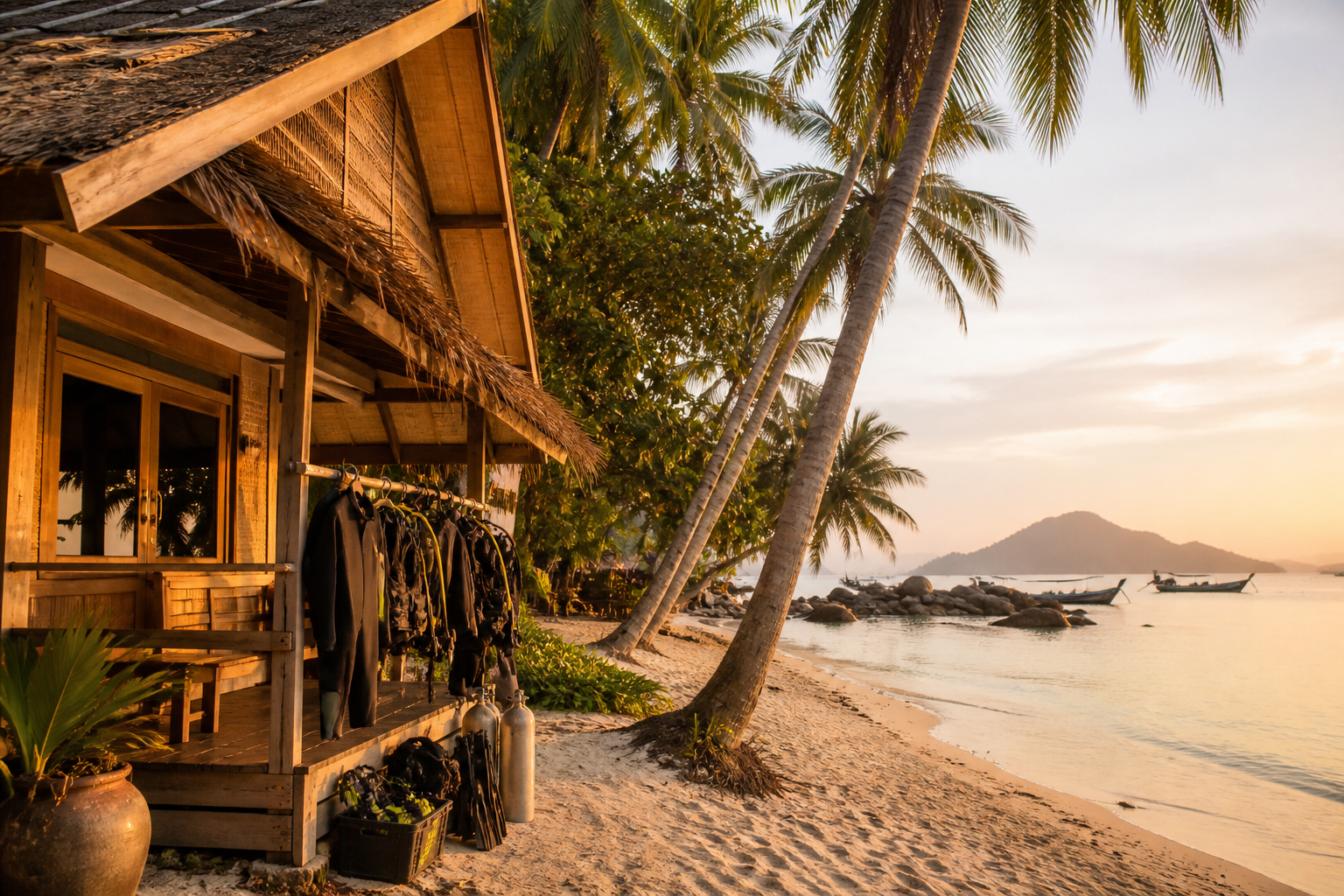
There are some obvious advantages to booking a stay at a dive school. Some of them actually offer discounts on dives, so PADI courses can be cheaper if you book a few nights at the hotel too. It also makes getting ready for the dives really convenient: just wake up, get dressed, and you’re already at the dive school.
It also makes it easy to meet new people because you’ll be surrounded by other divers who you’ll be spending the day with on boats. The only potential disadvantage is if you’re the kind of person who wants a bit of space from the people that you meet and spend time with during the day.
Personally, I like my space, so I might not want to be with the people from the dive school in the evenings too. Dive-school accommodations also tend to be quite basic, so if you’re looking for more luxurious hotels, you might want to skip them.
Marine Life You Can See While Diving in Thailand
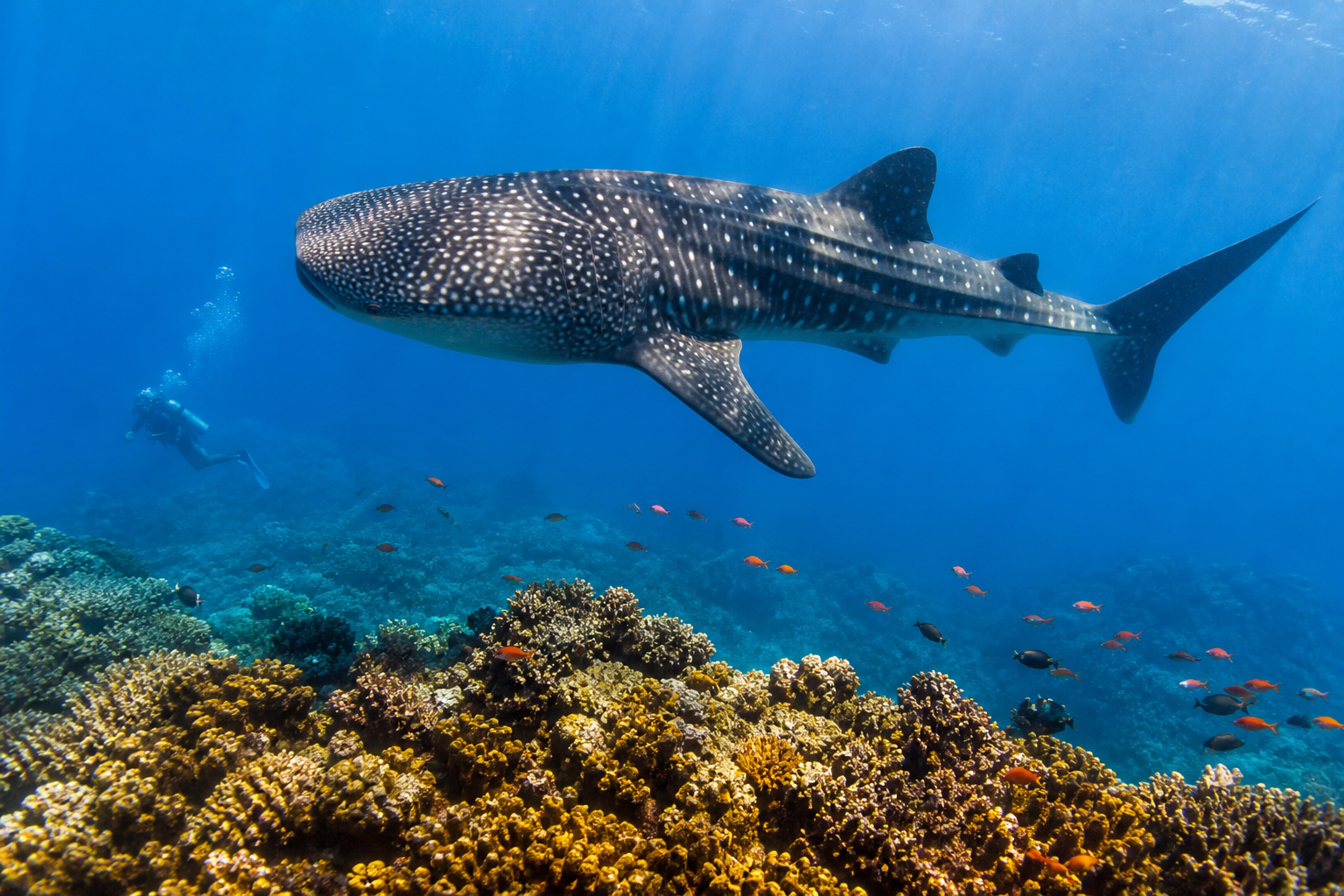
But what every diver wants to know is what kind of wildlife you can see beneath the waves. Here’s a list of some of the coolest creatures you can see in the Thai ocean.
Thailand is one of the few places where you can swim with whale sharks. They are the largest fish in the sea, growing up to 12 m. They might be massive, but they’re harmless to humans, and swimming alongside them is a once-in-a-lifetime experience. Manta rays, with wingspans of up to 7 m, are often spotted in the Similan Islands and Koh Bon. The best time to see them is between February and April.
Have you ever wanted to swim with sharks? Don’t worry, there are no great whites here; the water is far too warm for them. In fact, there’s only been one fatal shark attack in Thailand since records began in the 1970s, so there’s no need to worry — well, unless you were that one guy who died. So what sharks can you see? Now, with their striking spotted patterns, leopard sharks are common in the Andaman Sea, especially around the Phi Phi Islands and Shark Point. You can also find blacktip reef sharks, which grow up to 1.5 m, in both the Andaman Sea and the Gulf of Thailand. Check out the dive sites around Shark Bay and Koh Tao.
Also around Shark Bay and Koh Tao is one of the oldest and largest creatures on the island. He’s been named George by the local dive experts, and you can find him pretty much every day swimming around the southern tip of the island. He is one of a number of green turtles that populate the oceans of Thailand. Green turtles are some of the biggest turtles in the world, growing up to about 1.5 m long. Now that’s a big turtle. They can live up to 80 years old and are especially active around their nesting season, which takes place between May and August.
While it’s rare to get hurt by marine life in Thailand, there are a few creatures you should be cautious around. One of the main ones to keep an eye on is the sea snake. These snakes are highly venomous, but luckily they’re not aggressive and usually swim away if they see you. Another one to watch out for is the lionfish, easily recognised by its long, flowing fins and bold stripes. Though beautiful, its spines can deliver a painful sting. However, the one creature you absolutely must avoid is the box jellyfish. Its sting causes excruciating pain and can be deadly, so steer clear of jellyfish at all costs. Despite their intimidating appearance, giant moray eels are actually harmless to divers. These impressive creatures grow up to 3 m long and are often found hiding in crevices throughout Thailand’s waters. If you want the best chance of spotting one, go for a night dive. That’s when these eels are most active and come out to hunt.
One of the smallest animals in the ocean is the tiny but eye-catching nudibranch, which comes in neon colours and intricate patterns. These vibrant sea slugs are perfect for practising macro photography. The Thai ocean is also filled with a range of stunning, colourful tropical fish, including parrotfish, clownfish, butterflyfish, triggerfish, and pufferfish. Diving is just one piece of what makes the Thai islands amazing. Every island has its own unique vibe and things to offer.