Bangkok First Visit Guide For Beginners
Bangkok is a city that divides opinions. Some people love it and some can’t wait to leave. And normally which camp you fall into comes down to decisions you make before you even arrive.
The truth is that Bangkok has something for everyone. But the sheer size of the city and scale of options can make it harder to plan. Bangkok was founded in 1782 and is known locally as Krung Thep or the city of angels.
That’s short for the full ceremonial name, which is the longest place name on Earth with over a hundred letters. We’ll skip pronouncing that, but sometimes you’ll hear or see the term Krung Thep in Thailand and just know that it refers to the capital. And then there’s the size.
Bangkok is a sprawling mega city of more than 11 million people across 50 districts. On a map, that can look overwhelming, but here’s what matters for your trip. Of those 50 districts, visitors typically experience only a handful clustered tightly along the river and the public train lines.
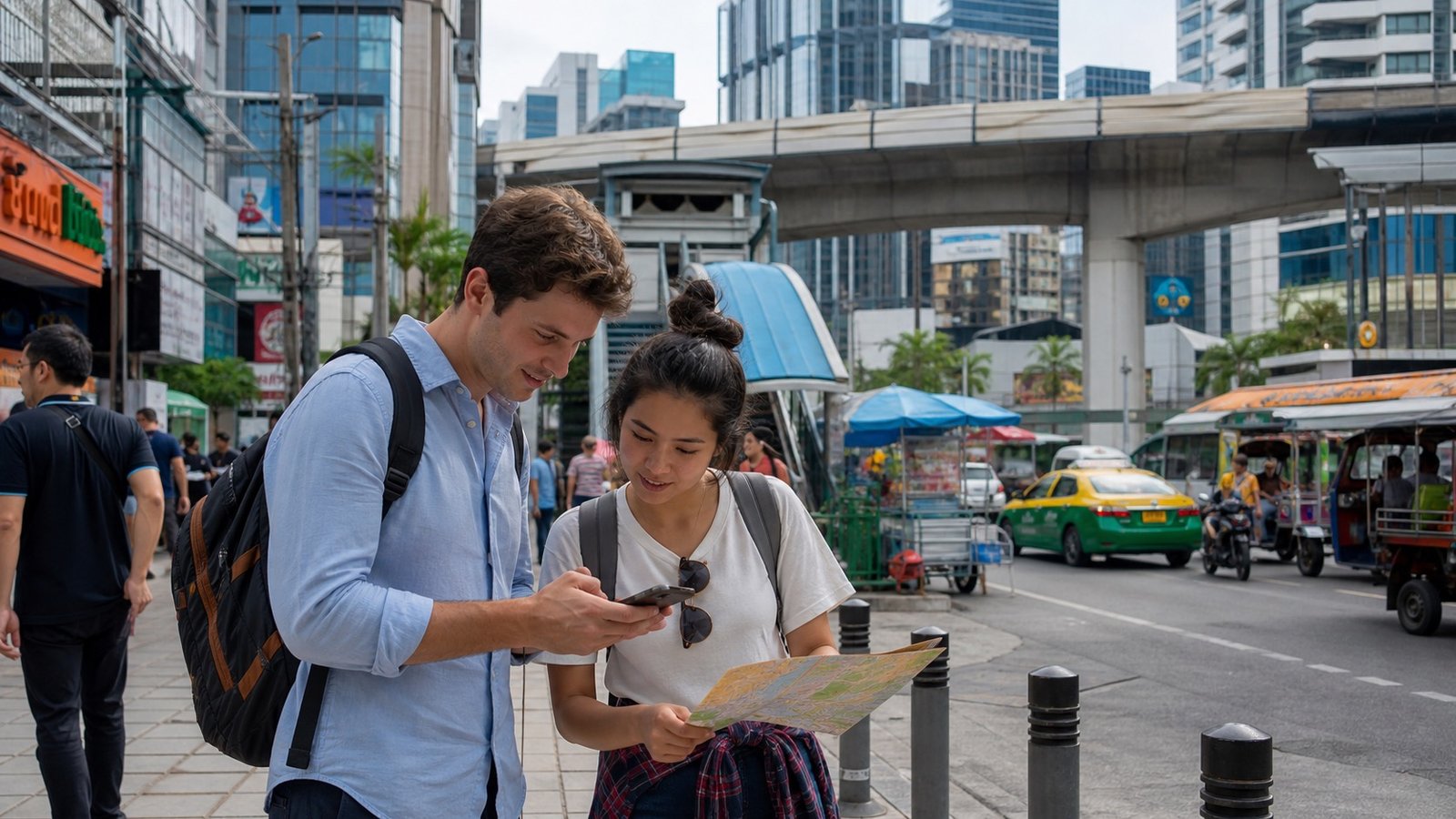
One quick word on navigation because newcomers commonly get confused by the street names and directions. In Thailand, a main road is called a thanon while a side street running off it is a soi. And the sois are numbered with odd numbers on one side and even on the other.
Sukhumvit Soi 11 just means the 11th side street off Sukhumvit Road. Once that clicks, locations make a little more sense.
Best Areas To Stay In Bangkok
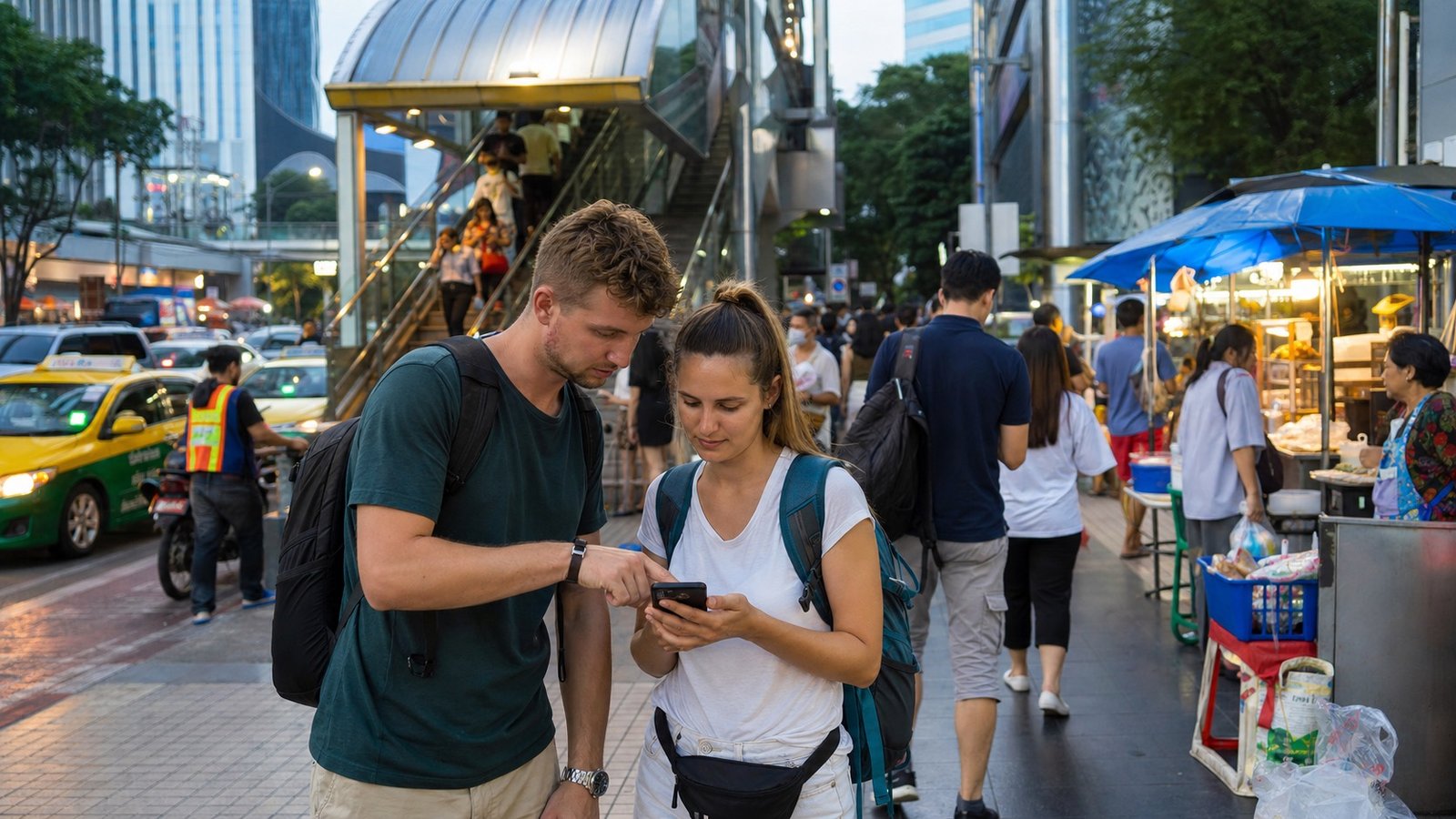
Now that we’ve laid out the city, let’s talk about where to stay because this is the single most important decision that you’ll make because nothing will shape your trip more than where you base yourself. It defines how almost every visitor experiences the city. And it comes down to one thing, traffic. Bangkok is huge, congested, and spread out. And if you stay in the wrong spot, you’ll lose hours commuting.
Stay in the right spot, and the rest of the trip gets easy. The key for first time visitors is optimizing public transportation access while remaining centrally located. Stay within a short walk of a train station, but for the best possible trip, aim to be near both a BTS sky train and an MRT subway. That combination unlocks the major sites with the least friction. And two areas stand out for exactly this.
Lower Sukhumvit centered around Asok at Sukhumvit Soi 21 sits on both lines and puts you in the middle of the food, the malls, and the night life with a serene park space at Benjakitti to the south. When it comes to public transportation, it’s ideal, but it can be a little chaotic. And for a little more calm stay east of Sukhumvit 21 towards the Phrom Phong neighborhood. Or if you want a calmer but similarly well connected alternative, opt for Silom, the city’s old central business district and its most balanced neighborhood, more walkable streets, less chaos, and Lumpini Park nearby for a little escape. Just keep in mind that the BTS and MRT stations are a little further apart, so it’s slightly less optimal for transport, but still excellent.
Those are the two I’d point a first timer to, but they aren’t the only options. Siam is the bright walkable shopping district at the center of the city and an easy, safe introduction with an interchange station accessing both lines of the BTS. This is a strong option. But the missing MRT access hits because while Bangkok is more famous for the sky train, it’s actually the subway that connects most of the major tourist hotspots. If you don’t mind being a little bit less connected and you want calm serenity, the Riverside can be ideal and work well for shorter stays built around the core tourist attractions, which mainly lie along the Chao Phraya and are accessible by the river ferry.
Chinatown is a foodie’s dream with decent access to the MRT, but it can be a bit overwhelming to actually stay in. Thong Lor is the trendy center with plenty of restaurants and bars alongside BTS access, but the actual area is a bit distant from the major attractions and lacks the subway. And probably the most common error first time visitors make is staying at Khao San Road, the popular backpacker district. It’s cheap and social, but it’s entirely cut off from the public train system and doesn’t reflect the actual city. Many first time visitors who stay here end up with a distorted impression of Bangkok and miss out on exploring what the city really has to offer.
Finally, you may come across more outlying areas like On Nut, Phrakanong, or Lat Phrao. And it’s best to skip these for a first trip. They may offer cheaper accommodations, but you’ll pay a far higher cost in lost time, frustration with excessive commuting, and added transportation costs. And the best advice stands, stick to the core and ideally lower Sukhumvit or Silom for an easy first time trip.
Booking Traps And Best Seasons

Now that you’re thinking about where to stay, there are a few traps that you need to be aware of before you book. Be careful with Airbnb. Short term condo rentals under 30 days are technically illegal in Thailand, and many buildings restrict access to common areas with biometric face scans, or you may even be questioned by security. Bait and switch listings are also common, and the truth is that the pricing doesn’t differ much from hotels anyway. If you’re planning a slightly longer stay from a few weeks to a couple of months, a far better option is a service apartment. Unlike condos, which typically require a minimum six month lease, these buildings have single owners that offer far more flexible rental terms.
While the prices tend to be far better than Airbnb, you’ll find thousands of them on RentHub, and they make a great affordable base. Just keep in mind that you pay electric and water rates separately, and these are typically higher than normal city rates, but they still offer the best overall value for those medium term stays. You’re considering your neighborhoods, and you know what to look out for before you book. But the next key decision is when to visit, and it ties directly into where you stay. Thailand is a tropical country and many first time visitors assume that means hot and relatively consistent weather year round, but there are actually three distinct seasons. And for a trip to Bangkok, there are two micro seasons that can be worth avoiding.
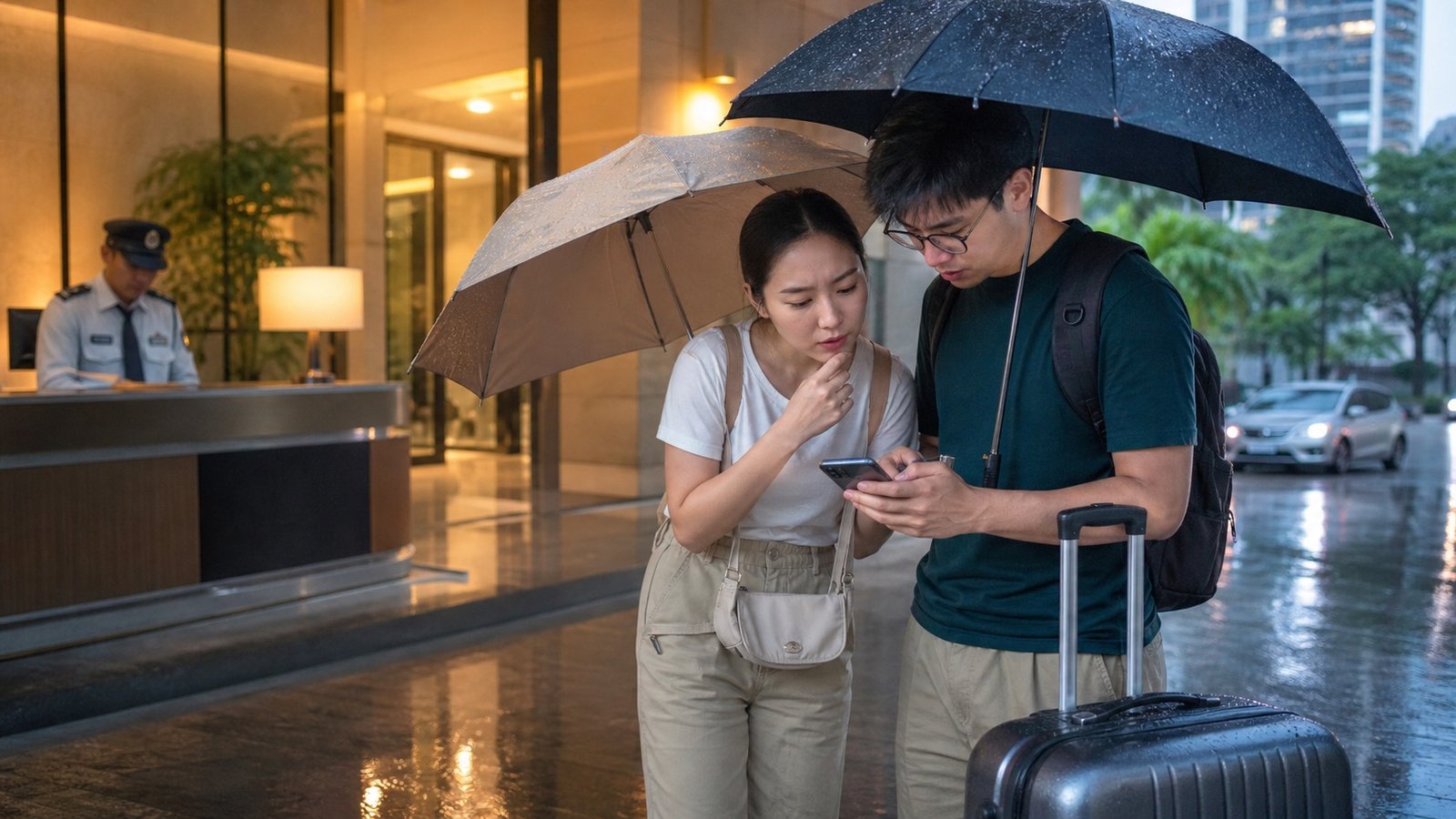
The rainy season runs from around June to October, and the rain usually arrives in short, heavy bursts rather than all day. It’s not a deal breaker, but you should avoid booking in low lying areas as flooding is a recurring issue and the rains are heaviest in September and October. It’s also best to stay right next to a train line so you don’t lose time waiting for a downpour to pass. And most stations sit near a mall, which makes an ideal escape to wait out the rain. The hot season runs from March to May, and despite the very different conditions, the same logic applies. Temperatures regularly exceed 40 degrees.
Being close to air conditioned trains and malls matters just as much for a little reprieve. Take regular breaks and avoid long outdoor itineraries as heat stroke and dehydration are very common. Finally, there’s the cool season from November through February where you’ll have a little more flexibility. This is the most comfortable weather, but it’s also the peak tourism season with the highest prices and biggest crowds. Booking hotels in advance is essential to avoid excessively high prices. But there’s a catch as January through March is also known for high levels of pollution.
If you visit during those months, it’s important to check that your accommodation has a proper air purifier and limit strenuous outdoor activity when pollution is high. The key takeaway here is a little more complicated than it first appears. For comfort, November and December are the winners, while the early rainy season months from May to July offer the best value. Conversely, high levels of pollution from January to March and heavy rains during September and October are less ideal. Finally, there are the holidays worth considering. Songkran is the Thai New Year festival and the world’s largest water fight.
It’s a giant celebratory party, but it can also be intense, especially in designated water fighting zones like Khao San and Silom. It runs from April 13th to 15th with the highest prices and thickest crowds of the year.
Holidays And Public Transport

Beyond Songkran, the calendar is full. Loy Kratong is in November when people float candlelit offerings down the rivers and canals. And it’s one of the most beautiful nights of the year. And the city also embraces western holidays, so you can enjoy a full Christmas, a New Year’s Eve celebration, and even Halloween parties.
You’ve booked your accommodations near a public train station, but before you visit, you’ll need to understand how it all actually works. The Sky Train and Subway are essential, and they’ll take you to almost every major attraction in the city. And you’ll mainly use the MRT blue and the light green Sukhumvit BTS lines, but they’re operated by different companies, so you need to buy separate tickets when you switch between them with single fares running roughly 14 to 62 baht. Just walk up to a machine and you can buy a ticket on the spot or you can visit the booth or on the MRT you can tap to pay with a major international credit card while the BTS offers a prepaid rabbit card.
If you’re staying for a few days, just visit a booth and ask for the options, but you’ll need your passport to register the card. And there are a few subtle tips worth knowing. First, some BTS machines only accept coins, while MRT machines are often very finicky and reject the new polymer notes. So, regardless of which line you’re using, it’s generally best to carry some change with you.
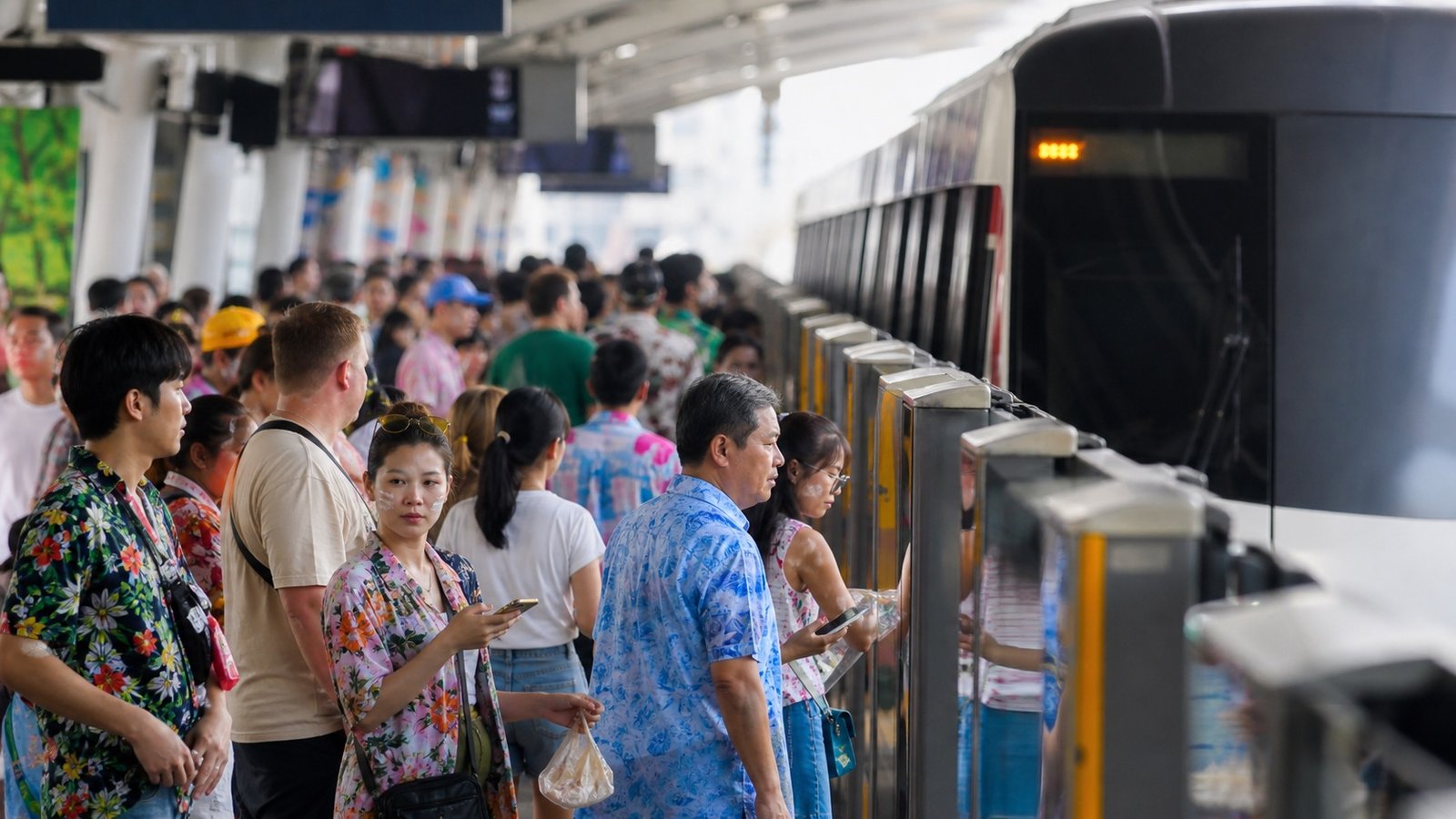
if possible, you should avoid rush hour altogether. Trains get exceptionally busy from 7 to 9 in the morning and 5 to 8 in the evening. So, plan your journeys outside those hours whenever you can for a far calmer ride. And when it comes to those long lines, there’s a little hack that saves a lot of time.
Each station typically has two or three entrances. And the busiest can have a line of 50 people, but walk just 2 minutes through the station to the other side, and you’ll often find it empty. Conversely, people with mobility issues should be aware that not every station has elevators or escalators. Finally, for arrivals and departures, there are two airports in Bangkok and both are linked to the city by public transportation.
The main international airport at Suvarnabhumi is linked by the airport rail link which connects to the MRT at Makkasan and the BTS at Phaya Thai. The smaller regional Don Mueang airport is linked by the SRT red line to the MRT at Krung Thep Apiwat Central Station. For more personalized journeys, you can also use the ride hailing apps. Grab is the easiest and most reliable with the widest coverage, but it’s usually the priciest.
Bangkok Boats Taxis And Motorbikes

Bolt is often cheaper, but with fewer drivers and more reported issues. And InDrive lets you offer your own fare, which makes it the money saver on longer trips, as it’s often around 30 percent less than Grab for trips to nearby cities like Pattaya. Normal taxis are widely available, too. But over the years, they’ve earned a reputation for overcharging and running plenty of hustles. So, use them with caution. Make sure they turn on the meter when you get in.
Keep Google Maps open to avoid scenic routes, ignore any recommendations, and carry small bills to dodge short change issues. But in reality, it’s far simpler to use the apps in part because you won’t need to explain where you’re going or give directions. Most visitors will mainly use a mix of the trains and the ride hailing apps. But one of the most underrated options is the river and canal ferries. The Chao Phraya is the spine the whole city was built around. Lined with more than 30 piers and a handful of express boat lines.
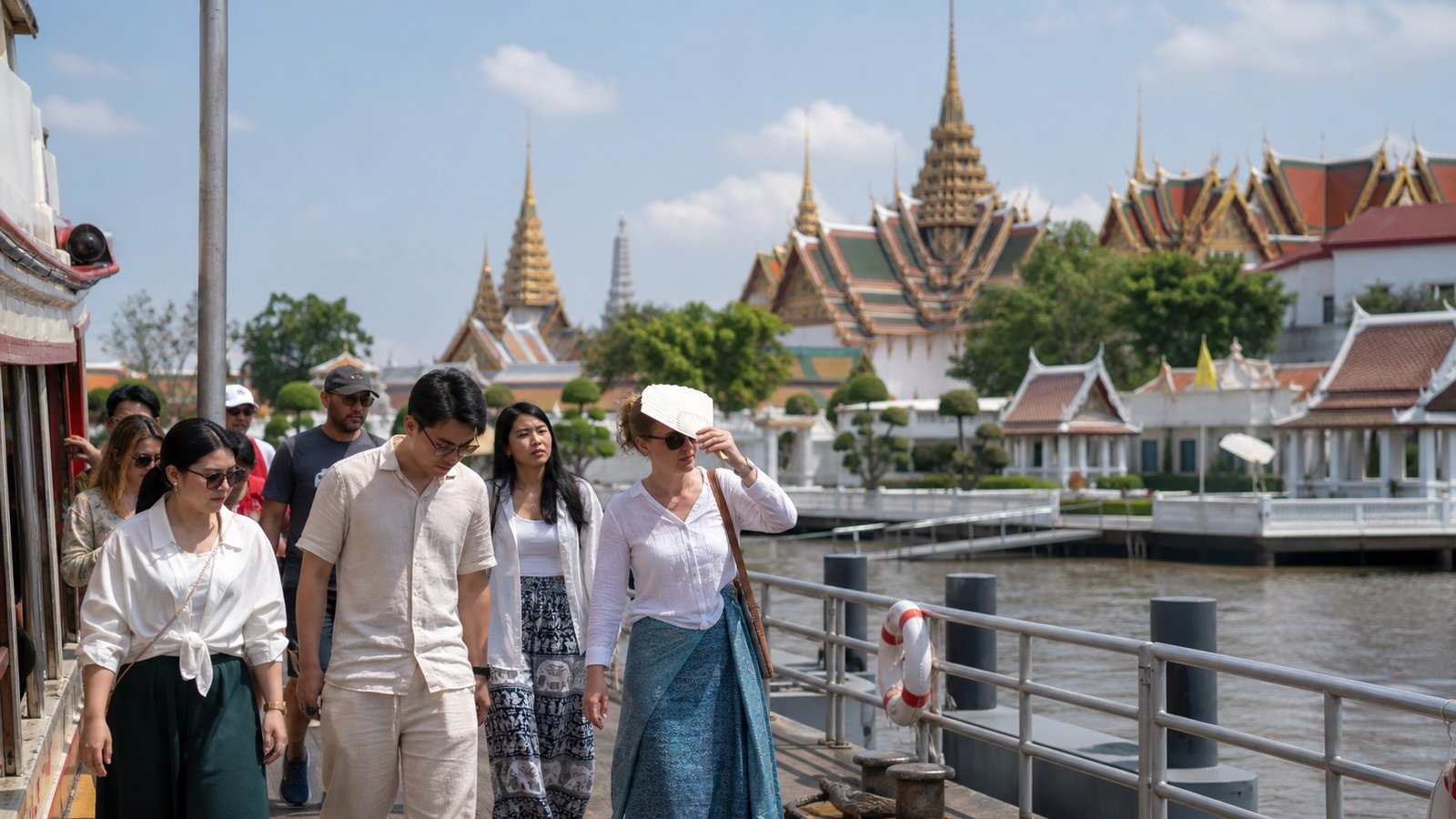
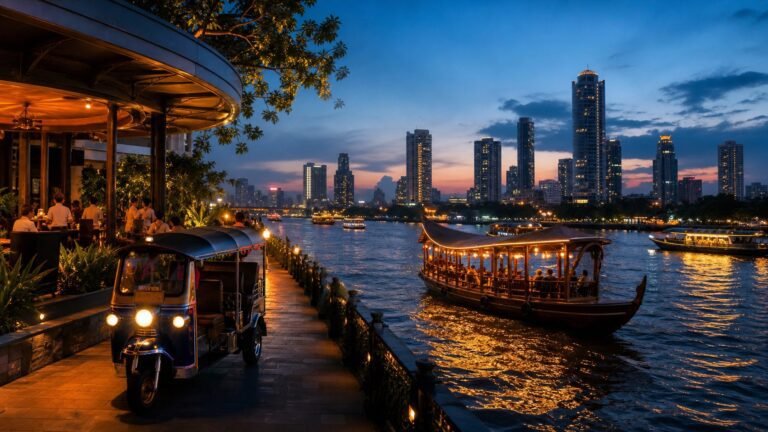
It’s cheap, fast, and for a first timer, it’s an attraction in its own right. And it’s where many of the major attractions sit. For a first trip, hop on the Blue Flag Tourist Boat, which hits the temples and markets along the water without the traffic while offering scenic views. You can buy individual tickets or a day pass if you’re planning a day along the river. There’s also a network of canals called khlongs with smaller boats running parallel to Sukhumvit, which can actually be the quickest way into the center. You pay directly on the boat with fares starting at only 15 baht.
Just make sure to carry small bills or change and watch your step getting on and off. Next are the iconic tuk tuks. And while they’re a bucket list experience, they’re typically very overpriced. If you take one, you’ll need to negotiate the fare upfront, which is normally two to five times a standard taxi ride. Much like taxis, you’ll encounter plenty of hustles, so it can be better to book through the MuvMi app to get the tuk tuk experience without the headaches. Finally, there are the motorbike taxis, which often surprise first time visitors.
Official orange jacketed drivers sit outside condos and stations. Most run fixed routes at very affordable prices. Just check the fare before you hop on because some have been known to overcharge tourists. You can also book a motorbike through Grab or Bolt, but avoid setting the pickup right next to an official stand as altercations can occur between drivers. It’s also best to exercise caution. Motorbikes cut through the traffic far faster than cars, and it can make for a more efficient ride, but that comes with real risk.
Thailand has some of the most dangerous roads in the world. While the vast majority of serious injuries and deaths involve motorbikes, and statistically, riding one is the single biggest risk most travelers take during a trip.
SIM Cards Apps And Thai Baht

You have plenty of transportation options to choose from, but you’ll need Google Maps and a handful of other apps to make it all work. And for that, you’ll need to get connected. And one of the easiest ways to wreck your holiday budget is to leave your phone on roaming. Leaving data roaming on without thinking can lead to a costly bill. Big mistake. You can buy a tourist SIM card at the airport when you arrive and staff will help you with the setup, but they’re a little bit more expensive and you’ll often need to wait in a queue, which isn’t ideal after a long flight. Nowadays, most travelers use an eSIM. Services such as Yesim make the process straightforward.
The whole process is extremely simple. You pick a plan, install it in a few minutes, and you’re online the second you land. No kiosks, contracts, or nasty surprises on your bill. It covers you in over 200 destinations with fast, reliable data and no hidden fees. And the best part is that you can buy it right now and activate it later when you actually travel. So that’s one less thing to stress about. Once you’re connected, download a few apps. Grab, Bolt, and Indrive are the ride hailing essentials that we already covered. But it’s also worth noting that Grab doubles as the major food delivery app if you feel like ordering in.
Line is the most popular messaging app in the country, which you’ll need to deal with locals and many businesses. Klook is the best way to book tours and attraction tickets with plenty of discounts and thousands of reviews, so you get exactly what you pay for. Rain Viewer and IQ Air track the weather and pollution. And Google Maps and Translate are extremely useful for navigating your travels and everyday life. You probably already have them, but download the offline maps and language pack for access anytime. You’ve got your data and apps sorted. But before we’re finished with logistics, you’ll need to get your hands on Thai baht, which is the currency here in Thailand. And there are two ways to get it. The first is to exchange currency.
If that’s your plan, don’t do it in your home country. You’ll get better rates after you arrive. But skip the bank booths and use the dedicated exchange chains. You can pick between Super Rich, Oh Rich, Happy Rich, and Vasu. They all offer excellent rates. If you want the absolute best, you can compare individual branches on their websites. Or for sheer convenience, they have kiosks at both major airports, though the rates there are slightly worse. Just bring crisp, undamaged notes because torn or marked bills usually get rejected and have your passport with you. Your second option for cash is an ATM.
Foreign cards are widely accepted, but expect a 250 baht fee per withdrawal, and some Mastercard backed cards will incur an even higher 350 baht charge. So, plan ahead to avoid excessive fees. Take out larger sums at once rather than lots of small ones. The yellow Krungsri machines let you withdraw 30,000 baht while most others are capped at 25,000. But your best option is to pack a travel focused debit or credit card that refunds those foreign fees. Americans have Charles Schwab, Fidelity or Betterment, while Canadians get the best deal with Wealth Simple. Two habits also matter at the machine. First, if it asks whether to charge you in your home currency, always decline and choose Thai baht. This is called dynamic currency conversion, allowing the machine to set its own rate, which is typically worse than your bank’s.
second, remember that Thai ATMs return your card after they dispense the cash, which reverses the order of operations for machines in most Western countries. So, don’t walk off and leave it behind. This is an extremely common mistake for first time visitors, and it’s best to bring at least two cards just in case. Keep a small amount of extra cash separate, too. Lastly, pack a good travel credit card. Major cards work at most stores, restaurants, and even on the MRT. So, set one up to collect the rewards and keep your cash on hand to use when necessary at smaller vendors and shops.
Bangkok Riverside Itinerary

You’ve got all your logistics sorted, but now we need to plan your itinerary because getting the balance right on this one will shape your entire trip. We’ll cover the major attractions, and you can see them in any order you like.
the single biggest mistake most first timers make is bouncing between distant neighborhoods, which can burn much of your holiday commuting and stuck in traffic. So instead, I’ve grouped them by area so you can build a daily plan that keeps each day in one part of the city, which maximizes your time.
if you have just one day in Bangkok, the riverside is the core area for any first time visitor. This is a temple heavy day, so make sure to dress modestly with long pants or a skirt over the knees and shoulders covered.
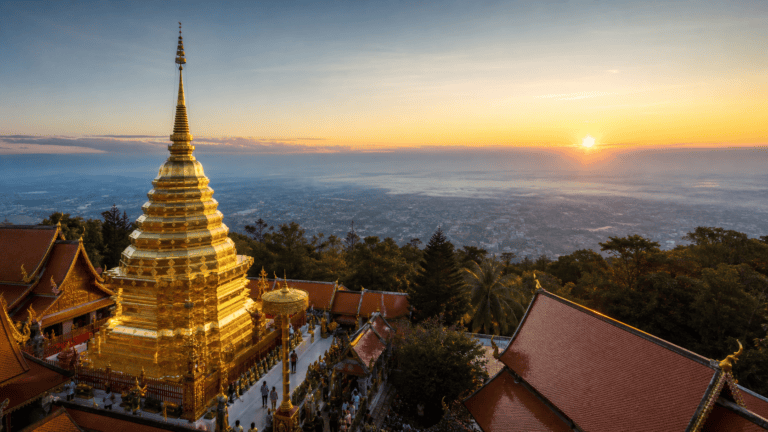
it starts with the Grand Palace, Bangkok‘s crown jewel, and a must see for first time visitors. It’s been the ceremonial seat of the monarchy for well over two centuries since Rama the first laid the first stone in 1782.
it’s an overwhelming complex of gold leaf painted spires and mirrored mosaic. Tucked inside is the Emerald Buddha, a small revered figure carved from a single block of jade.
Bangkok Shopping Parks And Rooftops

The best advice here is to visit early in the day before the tour buses roll in and the temperatures climb. If anyone approaches you on the walk in telling you it’s closed, it’s a common scam and they’re trying to divert you onto a private tour instead. Once you’re finished, head to Wat Pho, which is a 5 minute walk away. It’s one of the oldest and largest temples in the city and home to the enormous reclining Buddha, a goldplated figure 46 m long, depicting the Buddha passing into Nirvana. It’s also considered the birthplace of traditional Thai massage, and you can still take a session at the school on the grounds. You can do both attractions in a few hours, and for shorter trips, just these two temples is often enough. Anymore, and it starts to blur together with temple fatigue setting in as the heat takes its toll. But if you want just one more, cross the river to Wat Arun, the temple of dawn. Its central spire is encrusted with thousands of pieces of porcelain and sea shell that catch the light differently throughout the day. Alternatively, if you want a break, you can enjoy the view from afar with a coffee or drink at Vivi the Coffee Place right across the water.
once you’re ready to explore, nearby you’ll find the old lanes of Talat Noi and Song Wat Road on the edge of Chinatown. Full of street art, restored shop houses and riverside cafes. This is a great area to simply wander and take it all in. And if you skipped Vivi the coffee shop, Hong Sieng Kong is a beautiful spot for a riverside drink with live music. If the heat or rain starts to hit or you just want a modern break, take the ferry to Icon. Siam, which is a vast riverside mall with beautiful pavilions, views of the Chao Phraya, and a basement market modeled on Thailand’s regional cultures. It can make for a perfect stop off to rest and reset for the day. And as evening sets in, head to Yaowarat Road, the beating heart of Chinatown and one of the most famous street food stretches on Earth. Sample everything and stop in at the Guan Yim Shrine for a prayer and incense ceremony. From there, head north to Khao San Road for the chaotic backpacker night life or stop in at the Le Bua Tower made famous by the Hangover 2 movie, assuming you have any energy left.
remember, this is just a suggested schedule. You can re order it however you like and easily stretch it out over 2 to 3 days. But the core idea is to keep individual days within one area because hopping between distant ones will quickly erode your whole holiday. The second area works best on a weekend because it centers on Chatuchak in the north of the city. It’s the largest weekend market in the world with more than 15,000 stalls across 35 acres and the perfect place to experience Thailand’s market culture, sample street food, pick up souvenirs, and just wander. But if you’re visiting midweek, don’t fret. Head to Pratunam Market instead near Central World. It’s a little more chaotic, but the prices are actually lower. And from either one, the next stop is easy. Hop on the BTS to National Stadium.
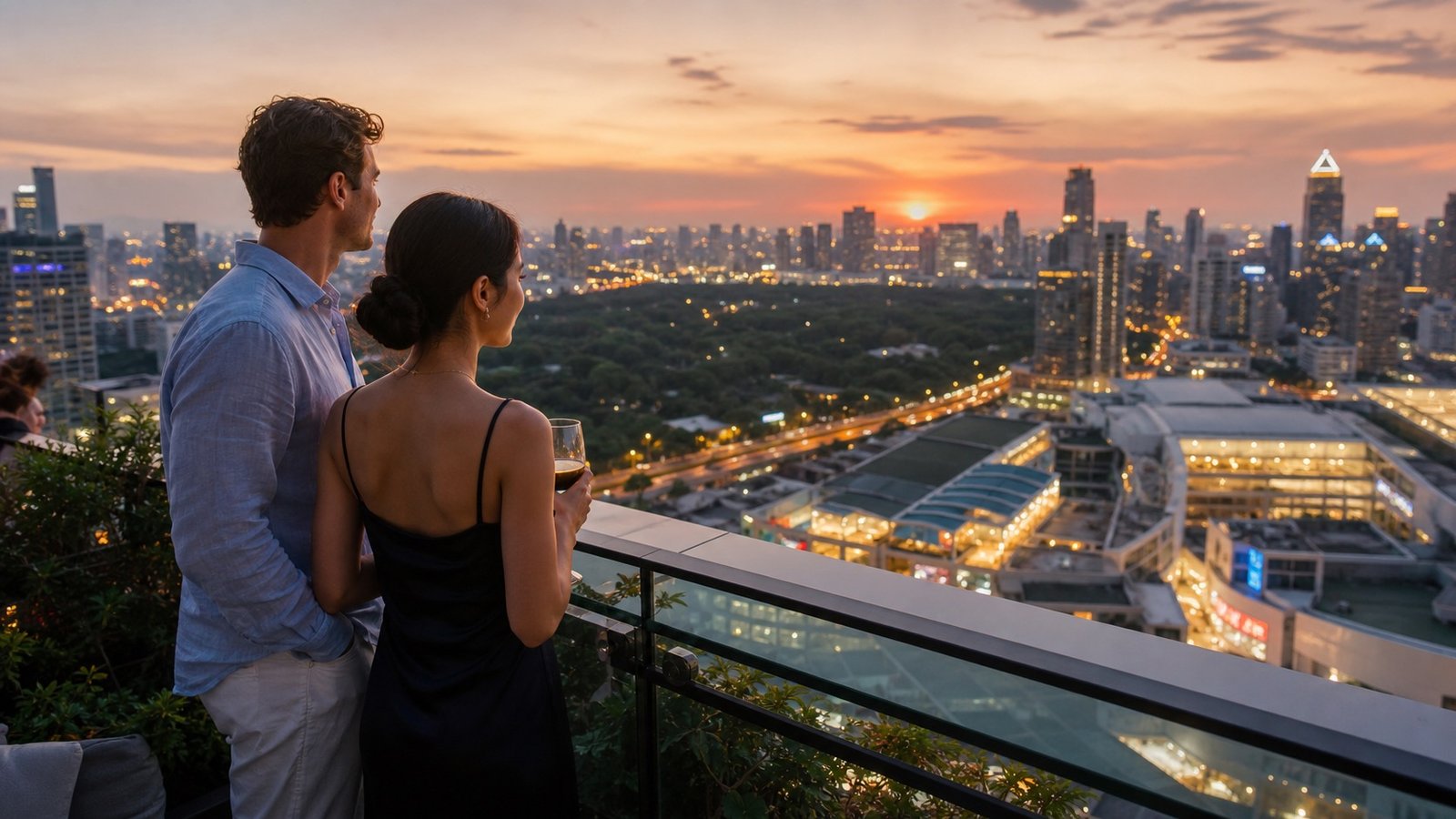
from there, you’re in Siam, the modern walkable shopping core of the city. On one side is MBK, an eighth floor maze of electronics, clothing, and souvenir stalls with a great local food court. On the other, the far more upscale Siam Paragon and massive Central World with the Seoul inspired Siam Square in between where you can often catch events and music performances. This is modern Bangkok where you’ll experience day to day life in the city. To finish, stop at a rooftop bar for sunset and a drink. There are plenty to choose from, but Red Sky on the 55th and 56th floors at Centara Grand means no time lost commuting, which matters most in those early evening hours. If you are in the mood for live jazz, head north to Victory Monument for a night cap at Saxophone Pub. Again, this can be a full day or you can mix it up. Just keep the general areas in mind when planning. Your third area is slower.
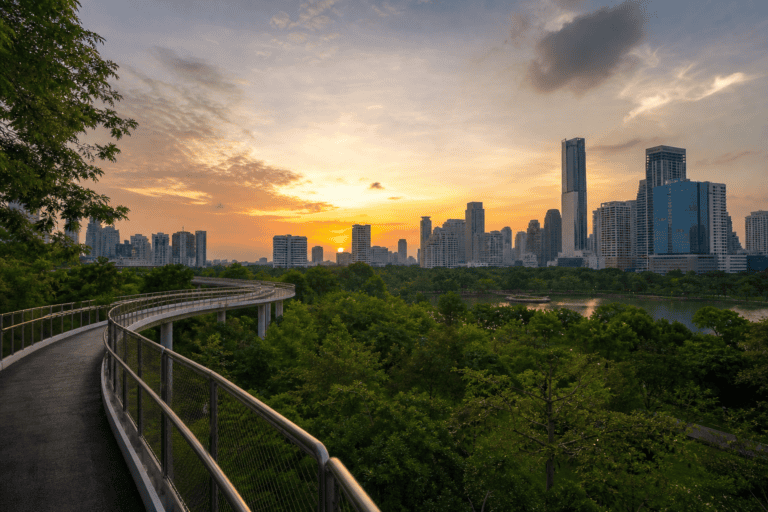
Starting with a morning in Lumpini Park, the city’s first public park and its green breathing space. If you’re early, there’s a morning open air aerobic session around 6 and another in the evening around 5. Afterwards, head to the rooftop gardens at Dusit Central Park, Bangkok‘s newest mall for a little serenity above the city and beautiful views of the park. And from there, go to the King Power Mahanakhon where Thailand’s highest observation deck sits at 314 meters. When you’ve had enough, walk through Silom and the historic Charoen Krung Road, one of the most interesting old stretches of the city with photo worthy spots almost everywhere you turn and plenty of excellent street food. Pop into Jack’s Bar, a quaint riverside local favorite, and the Assumption Cathedral for a glimpse of 19th century French influence, and you’ll eventually wind your way back up to Talat Noi and Song Wat Road. And this is where you can see how the areas start to intersect. So, feel free to mix and match. So, how long do you really need to fully experience Bangkok? 3 to 4 days will cover the whole itinerary, but it’ll be a bit rushed.
it’s really better to spread it over five or six, which gives you room to explore. If you have more time, there’s plenty more to see. You have two more green spaces in the green lung and Benjakitti Park. Asiatique is a riverside market modeled on Singapore’s Clark Quay. Thong Lor has trendy restaurants and nightlife. And Phrom Phong is another fantastic shopping district. Ari is full of tree lined cafes and a slower pace, while the old capital across the river in Thonburi makes for a quaint, idyllic afternoon. The truth is that the more time you give yourself, the more you’ll come to appreciate the city and discover the version that you love.
Street Food Thai Phrases And Shopping

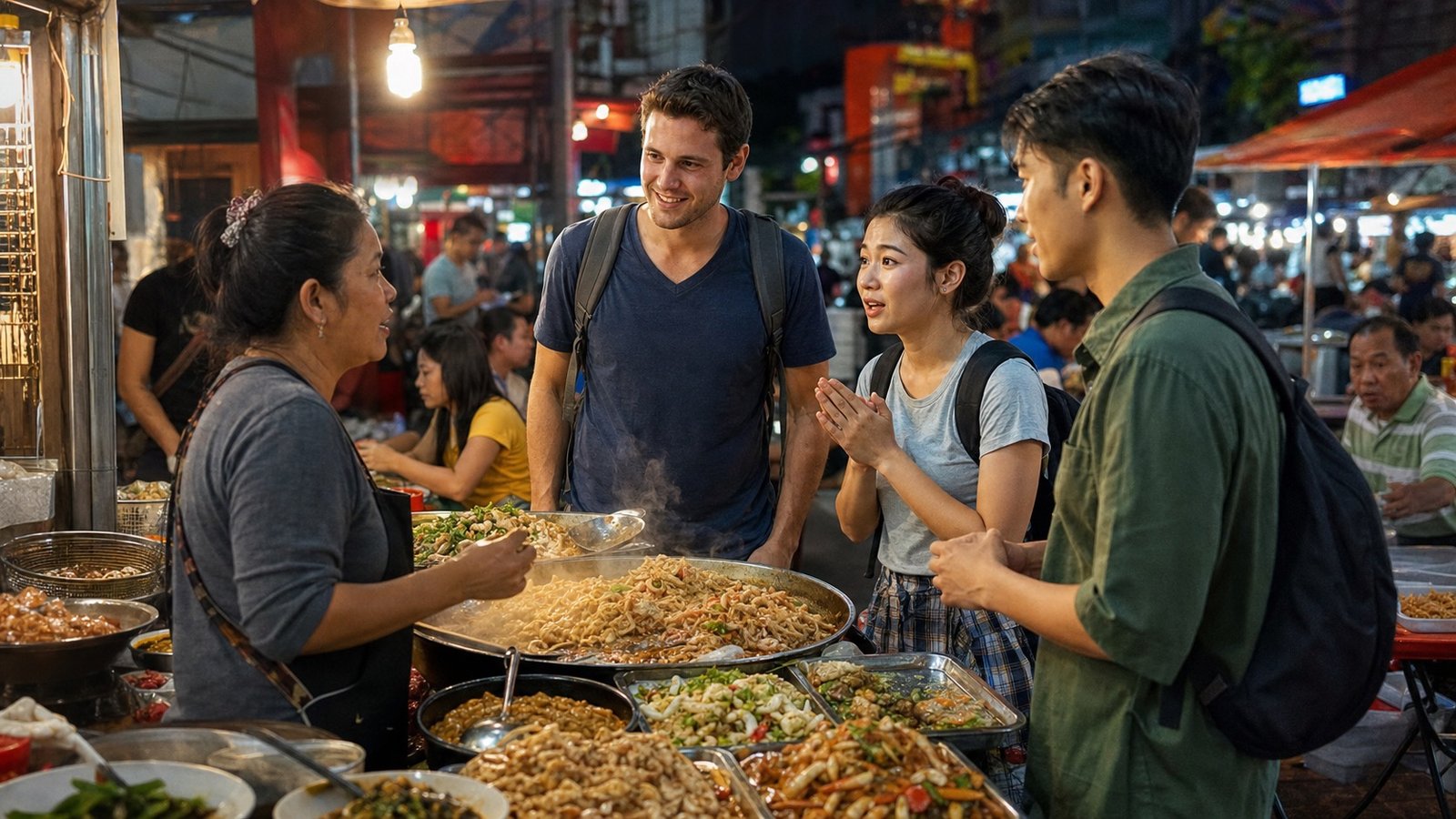
We touched on food, but it deserves its own conversation because Bangkok is a globally renowned street food city, and there are a few things that first time visitors need to be aware of. The heart of it all is Chinatown, but you’ll find small vendors and shops on nearly every corner. The trick to eating well here is simple. Eat where the locals eat. A stall packed with Thai customers means fresh ingredients and fast turnover, while an empty tourist facing place has far less reason to keep quality up. If you are traveling with friends or family, order Thai style and share several dishes between you, both to taste more and because the food often arrives at very different times. If everyone orders separately, there’s a good chance you’ll all be eating at different moments.
On safety, street food is generally safe, especially at busy stalls cooking fresh in front of you. Avoiding it out of fear is a mistake, but be a little selective. Skip anything that may have been sitting out in the heat. Go easy on raw dishes and treat fresh fruit and smoothies with some caution since dirty prep surfaces and unclean water are the usual culprits behind an upset stomach. Cook to order food is always your safest bet. But be careful with heat because Thai spice hits differently when you order say mai pet for not spicy or pet nit noi for just a little which is wise for first timers. Sugar often gets added liberally as well, especially to drinks and smoothies.
Mai wan means not sweet or wan noi for just a little. Learning a little Thai goes a long way as vendors love it when you try. Say sawatdee for hello, khop khun for thank you, tao rai for how much, and alloy for delicious. None of it has to be perfect. The effort alone changes how people will view you. You will often hear gang mack, which means very good, even when you’re absolutely butchering the tones. There is one exception, though.
Taxi and tuk tuk drivers can get chatty, and it’s rarely because they’re enamored with your terrible pronunciation. Normally, it’s the beginning of a hustle, and many will ultimately recommend a specific restaurant, shop, or venue. They get a commission, and you get a very overpriced bill for a very underwhelming meal or service. The famous MBK mall is a useful example for shopping. Not where to go, but what you need to know. In the big malls, everything is 100 percent authentic, but prices on branded goods often run higher than back home thanks to import tariffs.
Do not expect to save money on luxury. In the markets, it’s the opposite. Always assume that brand name goods are fake. One thing that surprises a lot of first time visitors is that most stores won’t accept returns, including many large brand name shops, as it’s simply not the norm in Thailand. Another common mistake is over or under negotiating. Malls like Siam Paragon work exactly like they do back home. The listed price isn’t moving and any attempt to haggle will be met with blank stares and secondhand embarrassment.
The same goes for food and that includes street vendors. Just make sure to ask for the price upfront if it isn’t listed as you can run into overpricing if you don’t. Conversely, negotiation is more normal at markets, but even then ask yourself whether it’s worth bothering.
Market Negotiation And Tourist Scams

For low priced items like shirts or shorts, which often sell for 100 or 120 baht, you’re usually haggling over less than a dollar. These vendors don’t earn very much, so it’s often better to just pay the listed price. Their shops operate with very reasonable margins and discounts are typically offered when buying multiple items. But before you buy, make sure to try on the clothes as sizing in Thailand often runs small. There is one place where negotiation is an absolute must, and that’s fake products. You’ll find counterfeits in places like MBK, often with no listed prices, and that’s because the vendors are out to maximize profit from naive tourists.
The first number they offer is often absurdly high when it comes to fake products. Counter at 50 to 70 percent below the asking price and see what they say. Start to walk away and you’ll often get their final price. And you’ll usually see the exact same goods in nearby stalls. So take a little time to walk around and hear a few prices before you buy anything. But just remember to keep it respectful.
Negotiation is a fun part of Thai culture and it should always be done with a smile. Bangkok‘s a very safe city, but there are a few common scams that you need to be aware of because once you’re familiar with how they operate, you can spot them from a mile away. They typically cluster in three areas around the Grand Palace, Khao San Road, and lower Sukhumvit between Asok and Nana, while the rest of the city is largely scam free. In these spots, you can face a constant stream of hustlers. If you only ever stay in them, you might start to assume this is representative of Thai culture, but it isn’t. It’s representative of a global hustler culture that gathers in tourist hotspots all over the world, running slightly different versions of the same handful of scams.
A friendly stranger approaches you, builds a little rapport, and then uses it to extract money one way or another. The common versions here are simple. Around the Grand Palace and Khao San Road, locals with excellent English may ask where you’re from or where you’re headed. They’ll tell you the attraction you’re going to is closed, take a great interest in making your trip wonderful, and ultimately steer you toward a tour where you’ll be shuttled between overpriced shops, and some will even claim to work for the tourism authority of Thailand or a special tourist police branch. Conversely, in lower Sukhumvit, you’ll more often get approached by men from South Asia, some point at your stomach, your hairline, or your skin, say their cousin had the exact same problem, and quickly recommend a miracle cure. If you follow them, you’ll end up in an overpriced shop.
Others say you’re lucky and offer to read your fortune or ask about your home country and act curious about what the currency looks like. You can probably see where that one goes. Hand it over and they’ll palm a few notes with a distraction and a sleight of hand trick. The logic behind the scams is always the same. A friendly stranger approaches you unsolicited in a tourist area and they all lean on false coincidence. They happen to bump into you, spotted the same blemish as their cousin, or are planning a trip to your country.
The reality is far simpler. Anyone who spends all day hovering in tourist areas befriending fresh arrivals has an agenda. The solution is simple. Ignore them entirely and keep walking. Don’t even make eye contact because they’re not just after your money. They’re stealing your valuable time.
Safety Healthcare And Arrival Rules

The second set of scams is tied to taxis and tuk tuks. Overcharging, wrong change, scenic routes, and overly friendly recommendations. We covered these already and the fix is simple. Use the ride hailing apps whenever you can. But if you do need a taxi, make sure the meter is on or agree to a price upfront. To be fair, most drivers are reasonable, hardworking people, and taxis can be handy now and then. And the core underlying problem is that the metered rates in Thailand are brutally low, barely moving in decades despite soaring living costs. So, you can’t entirely blame a driver for trying to earn a little extra. And there’s a simple win win solution that actually works with most drivers. Open the Grab app, check the price for your journey, and offer that as a fixed fare, and many will accept.
The last common scam is short change, especially in nightlife areas. So, before you head out, stop at a convenience store, break a big note, and carry a stack of hundreds. Pay for drinks with the small notes and avoid running a tab since some servers will quietly sneak an extra drink on. It is very easy to avoid the vast majority of scams in the city. But just remember, if you do get caught in a scam, don’t escalate. A direct confrontation never goes well, and it’s usually best to chalk it up as a lesson and move on. Or call the tourist police at 1155. Now, you might run into a few scams here in Bangkok, but for a city this size, it’s actually remarkably safe. But when it comes to safety, there are still a few things you need to know. The roads are the big one.
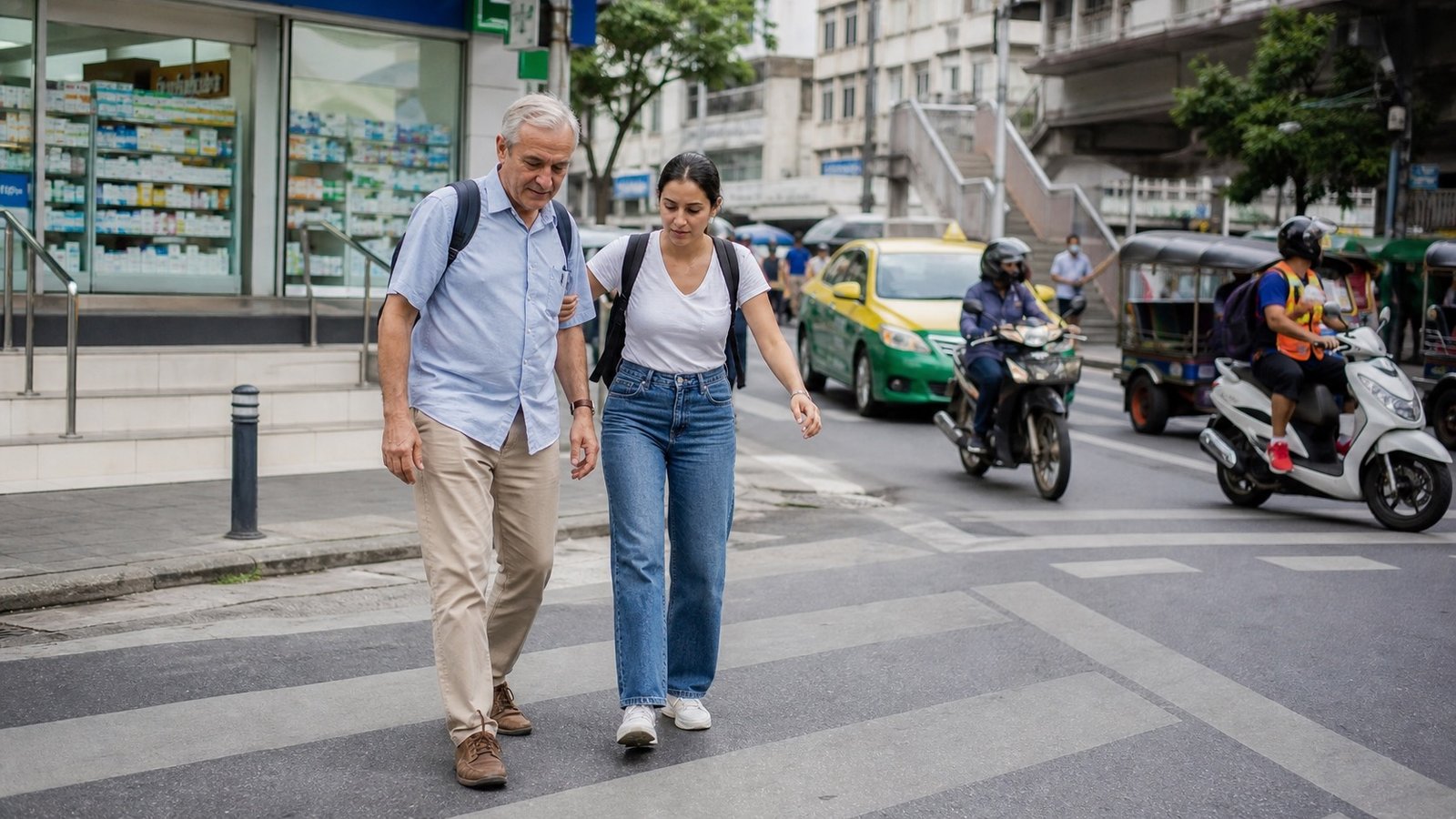
As mentioned earlier, Thailand has among the deadliest roads in the world, especially for motorbike riders. But even crossing the street can be dangerous as cars and motorbikes routinely ignore crosswalks. So, never assume a vehicle will stop and look both ways, even on a green. Be especially careful at zebra crossings as many drivers don’t actually know what they are. Remember that traffic drives on the left. Sidewalks are another issue and may be damaged or missing. So, watch your footing. If you’re mobility impaired, stay in a very central area with good accessibility. Sukhumvit and Silom are good, but Chit Lom and Siam have better overall sidewalks. The heat is also a factor as dehydration and heat exhaustion are common.
Drink plenty of water and take air conditioned breaks. Just make sure it’s bottled as old pipes and poor storage maintenance means that tap water isn’t entirely safe. And be careful with distances because maps can be deceptive. It’s easy to set off walking and soon find it’s much farther than you expected. Or you may need to cross several busy streets with poor crossings or find that the sidewalk simply disappears. Older travelers or anyone with mobility issues should plan routes carefully. Healthcare awareness is also essential. If you’re injured or need care, Bangkok has excellent world class international hospitals, but treatment isn’t always cheap, so travel insurance is a must. But for more affordable care, the public hospitals also offer good quality, but your experience will vary significantly by hospital. Generally, the best option is Chulalongkorn, which is one of the premier research hospitals, though wait times can be significantly longer than the private hospitals.
Or for minor issues, there are smaller clinics all over the city. Just walk in and you can see a doctor on the spot. Finally, for medications, you’ll see plenty of big chains like Boots and Watson’s in the malls, but those mainly sell toiletries and supplements. And it’s normally best to use the street level pharmacies, especially around big public hospitals like Chulalongkorn in Silom or Siriraj. The staff are generally very knowledgeable, and you can usually get a refill over the counter without a new prescription. Or for an ambulance, dial 1669. We’ve walked through how to plan your trip and what to expect once you arrive here on the ground. So, let’s go through the arrival process. Before you fly, make sure your passport is valid for at least 6 months and physically undamaged. Check the entry rules for your nationality.
Most people can enter without a visa, but check the exact number of days you’re allowed as overstays are charged 500 baht per day, and you must complete the Thailand digital arrival card or TDAC within the 72 hour window before you arrive. You can do it on the official website or through the THIM app. Remember that it is free, so ignore any site trying to charge you and save the QR code to your phone. When you actually arrive, you’ll need to pass through immigration. Hand over your passport and boarding pass. And normally your TDAC pops up automatically when the officer scans your passport. But if it doesn’t, they may ask for the QR code. You’ll also take a photo and give your fingerprints.
Airport Arrival And The Real Bangkok

Normally that is it. But officers can ask questions if they want. You should have proof of an onward flight and accommodation. Technically, you should also have proof of funds, which is 20,000 baht per person or 40,000 per family in cash in any currency. It’s rare, but if you are asked anything, just answer politely and you’ll normally be waved through. If you are older or have a disability, make sure to select assistance when you book your ticket and you’ll be brought through with a wheelchair and priority access. But one more thing, if you take an opioid medication, you need to apply for import permission from the Thai FDA before arrival. It’s free, quick, and helps to avoid any issues at customs. Once you’re out in the arrival hall, if you need money, there are plenty of ATMs.
Or if you want to exchange, skip the kiosks out front and head down to the basement level. Follow the signs for the airport rail link and you’ll find a hidden hall with Super Rich and Happy Rich booths where the rates are best. For getting into the city, you have three options. For public transportation from Suvarnabhumi, take the airport rail link, which is also called the City Line. It runs from 6 am to midnight and costs 35 to 45 baht with connections to the city’s two main lines, the MRT at Makkasan and the BTS at Phaya Thai. Just buy your ticket at the vending machine or the counter or tap to pay with a credit card. If you’re traveling light, this is often the best option. But the train doesn’t reach every part of the city. For travelers, the most notable exception is Khaosan Road.
For that, take the S21 bus on level one near gate 7 for just 60 baht with departures every 30 minutes between 6 am and 8 pm But if you’ve got luggage, you’re arriving late or you just want more convenience, you can take a taxi or book a ride hailing app. The app is simpler, but if you want a taxi, take a ticket from the queue machine and it’ll show your assigned bay. Just walk over, tell the driver your destination, and make sure he turns on the meter and keep the ticket because it has the driver’s name and car details on it in case anything goes wrong. The fare adds a 50 baht airport surcharge plus extra luggage fees and the driver may also ask if you want the highway which will incur added fees of between 20 and 100 baht in cash. It’s usually worth it and at the booth the driver will ask for the money and he should hand you the receipt right away. Expect a metered fare of 400 to 600 baht into the city depending on traffic and where you’re headed. Again, watch for any scenic route or short change tricks. Or if you’d rather use an app, the Grab pickup point is just beyond the official taxi area and it’s a lot busier with staff to help. At peak times, expect a wait of around 20 minutes, which is the tradeoff since official taxis are usually available right away.
Prices are generally fairly similar to a taxi, but the apps track the driver for added safety, and you can pay by cash or card, and the driver will also typically ask if you want the highway, which comes with those added fees. The airport also has connections beyond the city with direct air conditioned buses to Pattaya, Hua Hin, and other destinations from level one with tickets starting around 150 baht and frequent departures. Or if you have a connecting flight at the smaller Don Mueang airport, there’s a free shuttle bus on level two near gate three. Just show your onward ticket and passport to board. It takes about 50 minutes in good traffic, so budget extra time. If you hit any trouble, there are information desks throughout the airport, so just stop in and ask. Or if you need to store bags, there’s a luggage storage area in the basement near the airport rail link entrance. While this arrival covered the main airport at Suvarnabhumi, if you arrive at Don Mueang, the entire process is very similar. But if you opt for public transport, you’ll need to take the SRT Redline train instead.
You’re fully planned and ready for Bangkok. But it brings us to our final and biggest mistake. This is a theme we’ve touched on already multiple times. The truth is that most visitors leave Bangkok without ever really seeing the city at all. They hop from one tourist hotspot to the next. The Grand Palace, Khao San, the malls, a rooftop, and almost everywhere they go, they meet the same thing. Other tourists, transactional encounters, inflated prices, and hustlers working an angle. So, they leave thinking that’s Bangkok. But what they experienced couldn’t be further from the actual city, the one where local people live.
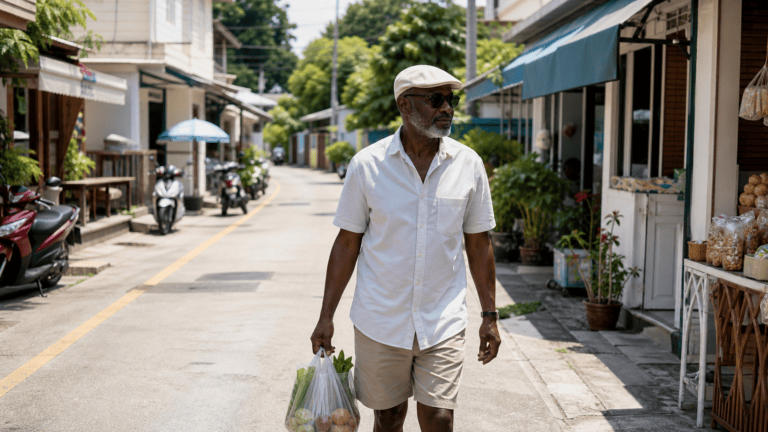
Because that hustle is the opposite of normal Thai culture. The tourist zones attract the small slice of people working the tourist system and that’s it. But it’s entirely unrepresentative of the broader society. Step into a local neighborhood and the whole feeling flips. Nobody’s aggressive and nobody approaches you. You get smiles, patience, and a quiet warmth that defines the real country. The only way to find it is to leave the bubble, even for an afternoon. So, plan your trip, stay somewhere central that makes the city easy to move through and see all the famous attractions because they’re genuinely worth it. But take a little time to step away from all of it and just explore a local area because that’s when you start to understand this city and the different layers that exist here.