Ways Tourists Waste Money in Thailand
Thailand is one of the most visited countries in the world. And with that title, you’ll find plenty of hidden costs, tourist traps, and overpricing. In this guide, I’ll cover the worst money-wasting mistakes that travelers make when coming to Thailand, and how to avoid them.
Flight Booking Mistakes
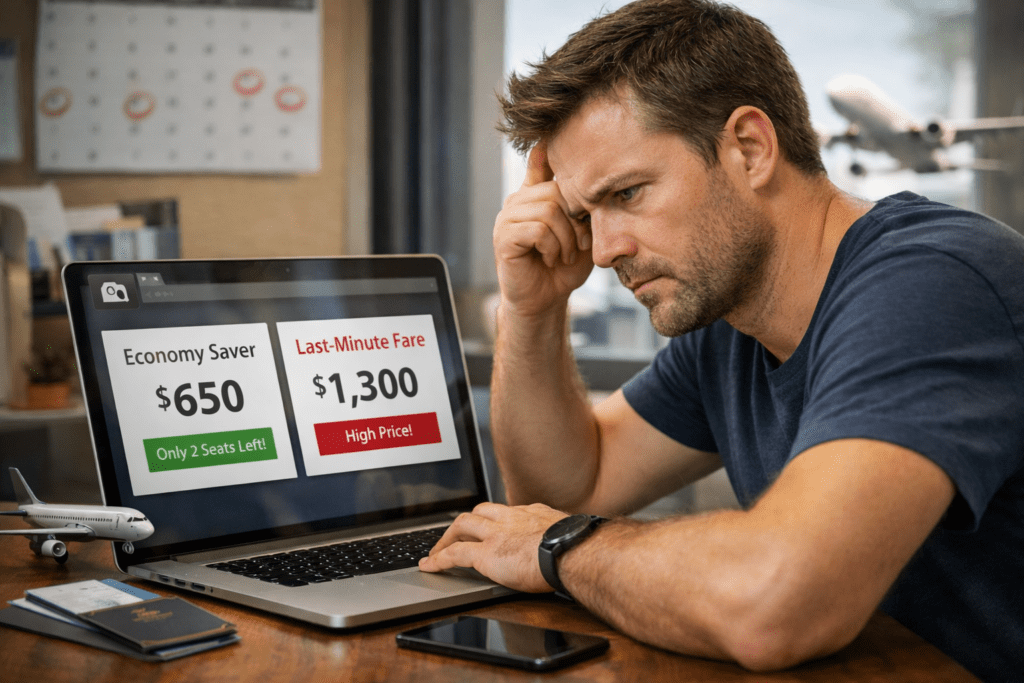
When it comes to booking a flight, the biggest trap you can fall into is assuming you’ll find a last-minute discount for a long-haul flight. Airlines use a tiered system called fare buckets. When a flight is first listed, the algorithm opens up a limited number of discount seats. These seats are typically only available in the 120 to 180-day window because as they sell out, the airline automatically moves to the next more expensive tier. By the time you hit the 21-day mark, you’re facing a hardcoded price spike.
Airlines add a convenience penalty here because they know last-minute travelers are price inelastic meaning they’re flying for business or emergencies and will pay whatever the screen says, which is often double the price of the earlier discount seats.
Conversely, if you’re flying within Asia, the logic flips. Low-cost carriers use a high-volume model where prices often hit their floor 30 days out to ensure the plane is 100% full. It’s two completely different business models. If you’re crossing an ocean, you’re an early bird. If you’re hopping a border, you’re a late mover. Mix those up and you’re just donating money to the airline.
And algorithms are also driven by perceived interest. If you’re browsing flights, switch to incognito mode to avoid cookie tracking as repeated interest can cause the displayed price to climb.
Hotel Booking Strategies
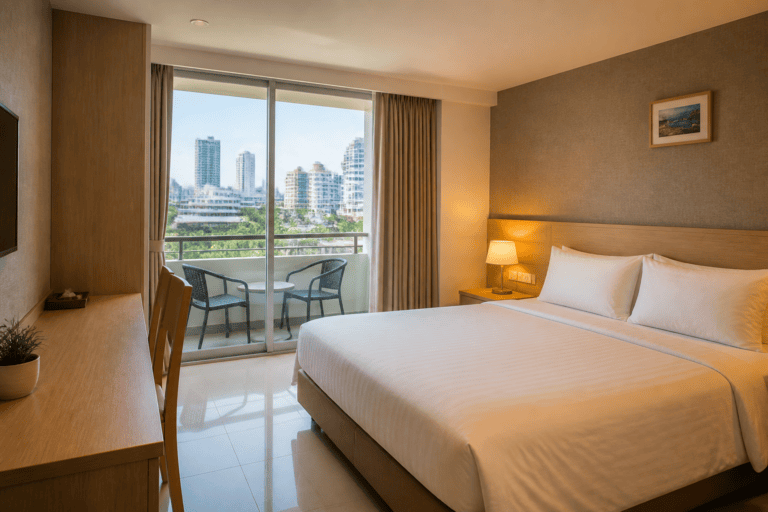
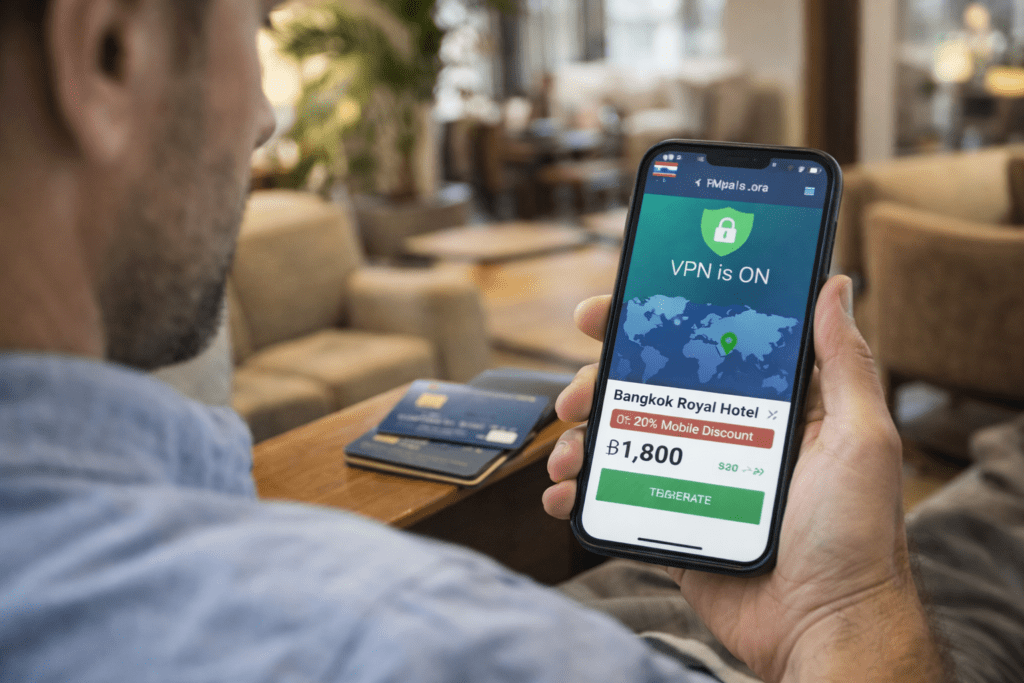
Hotels operate under a similar logic, but customers can also save money by using the mobile app, as sites like Agoda typically offer 10 to 20% discounts that are only available via mobile. The best practice is to compare pricing in the app, including discounts, against a browser in incognito mode.
But even inside the app, there’s another quiet cost that most people overlook. Pricing will typically default to your home currency. But when booking a hotel in Thailand, the payment is actually made in Thai baht, and most platforms apply their own internal exchange rate when converting to your home currency. Instead, switch the display currency to baht and allow your travel-specific credit card to handle the conversion for the best rate.
Finally, location is a major hidden price trap. Whether you’re looking for a flight or a hotel, most booking platforms use dynamic pricing structures that display higher prices to users browsing from high-income countries. This is where a VPN becomes useful, allowing you to switch your browsing location to Thailand and access local market pricing.
I use NordVPN, which adds an extra layer of protection against data theft and credit card fraud. This includes shielding you from man-in-the-middle attacks on unsecured airport, cafe, or hotel Wi-Fi, blocking malicious copycat booking sites, and 24/7 web monitoring for any leaks of your personal data. {prefix}posts
Take three additional steps to protect yourself:
- Pack an RFID-resistant wallet for greater security on the ground
- Turn on transaction alerts with your bank to keep track of spending
- Use a service like Apple or Google Pay when making purchases online to keep your personal data private
Packing Mistakes
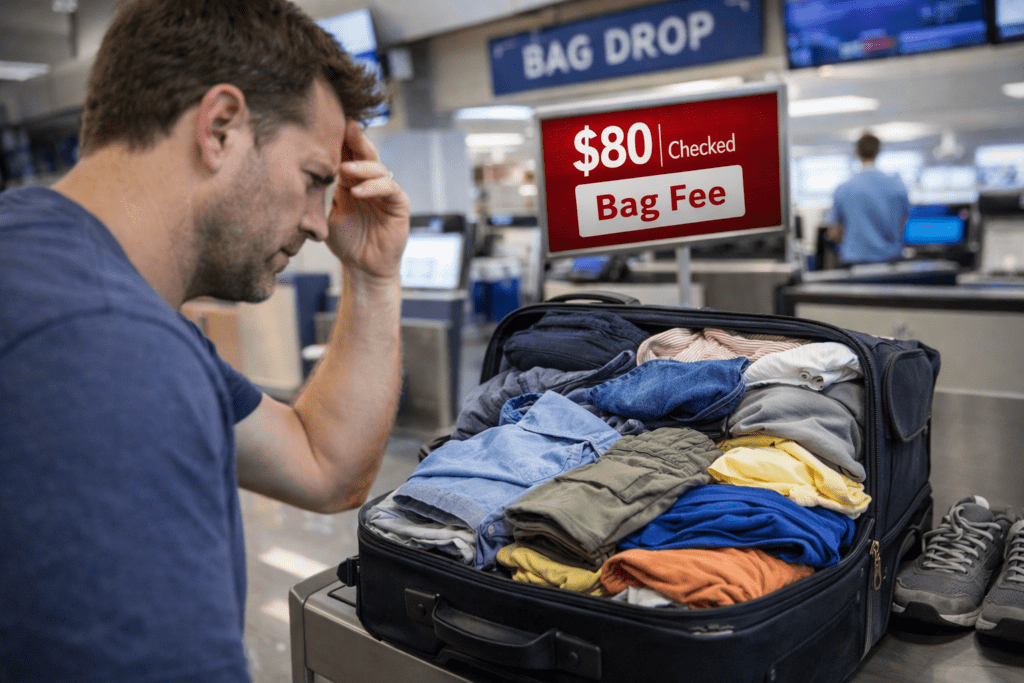
Speaking of packing, many travelers pay $60 to $100 to fly with checked bags filled with clothing they never wear and products they don’t need. Those checked bag costs can add up throughout your trip, and overpacking is a very common mistake.
In Thailand, laundry typically costs less than $2, and it’s very easy to purchase suitable clothing at inexpensive prices in local markets if you need something after you arrive. The cost-effective strategy is to pack minimally and buy clothes as you go.
If you’re conscientious about potentially wasting clothes at the end of your trip, stop off at the Bangkok Community Help Organization or similar charities and donate anything you don’t need to support low-income families.
Currency Exchange and ATM Fees
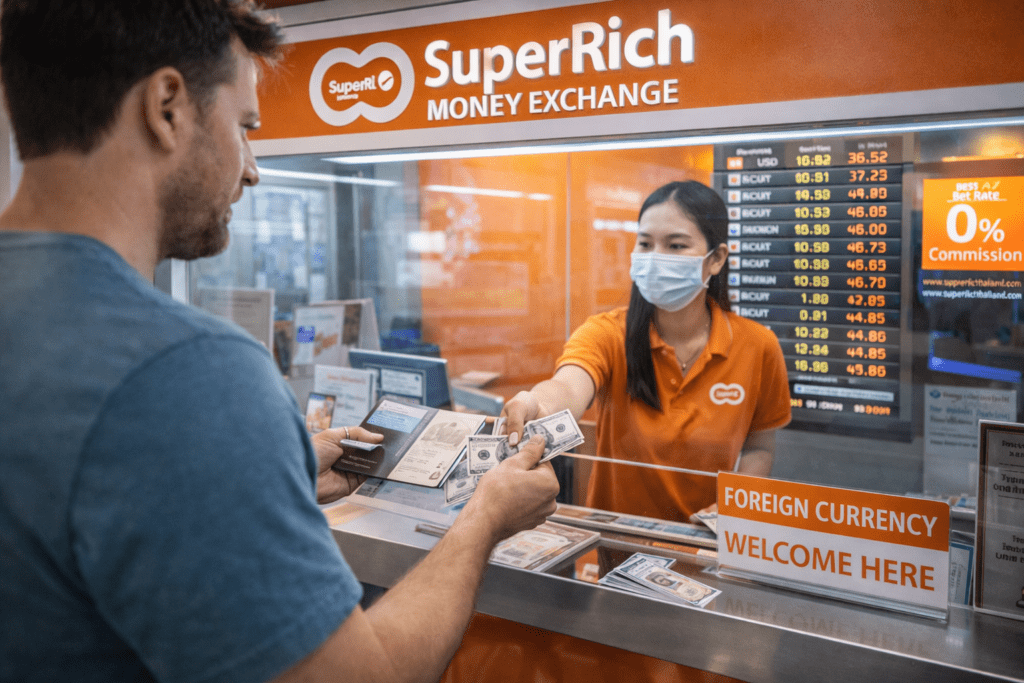
Traveling in Thailand typically requires access to the local currency. And this is where travelers commonly waste money. Normally the single biggest mistake is exchanging for Thai baht while you’re still in your home country.
For the best rates, wait until you arrive, but skip the standard bank booths. Instead, go to the so-called “Rich” chains, which include Super Rich, Happy Rich, Oh Rich, and Vasu. And you can even exchange money at the airport on the basement level. Just make sure to bring new currency notes as Thai exchange counters routinely reject bills with even minor damage. You’ll need your passport. To find the absolute best location or to compare rates with banks in your home country, check the Super Rich website.
Or you may prefer the simplicity of withdrawing money at an ATM. But this can be costly. Foreign cards are widely accepted, but banks tack on a standard 250 baht fee per withdrawal. If you plan to use ATMs, it’s best to withdraw the maximum allowed, which is 30,000 baht at the yellow machines. Alternatively, use a travel-focused debit card such as Charles Schwab that refunds foreign ATM fees entirely.
But the flat withdrawal charge isn’t actually the most expensive decision on that ATM screen. After entering your PIN, the machine will often ask whether you’d prefer to be charged in your home currency. If you accept, it allows the ATM operator to apply its own exchange rate, which includes an embedded markup. Instead, select Thai Baht, which allows your home bank to process the transaction at interbank rates.
VAT Refund
With money in hand, there’s another costly mistake that tourists often overlook entirely. When you purchase items at normal stores or malls, the displayed price includes a 7% value-added tax (VAT). But as a foreign tourist, you are eligible to reclaim that VAT upon departure.
If you spend over 2,000 baht in a store, request the PP10 form at the time of purchase. At the airport, before you check in, visit level 4, entrance 10 for a mandatory customs inspection of the goods and stamp on your PP10 form. After you pass through immigration, go to the refund office at concourse D to collect your refund.
Transportation: Taxis, Tuk Tuks, and Ride-Hailing Apps
Let’s shift to travel inside the country after you land, because transportation mistakes are extremely common. Most taxi drivers are honest. But the ones concentrated around tourist hubs often aren’t, because they know a portion of travelers will default to convenience. They’ll quote you a flat price of 400 or 500 baht for a ride that should cost 100 on the meter.
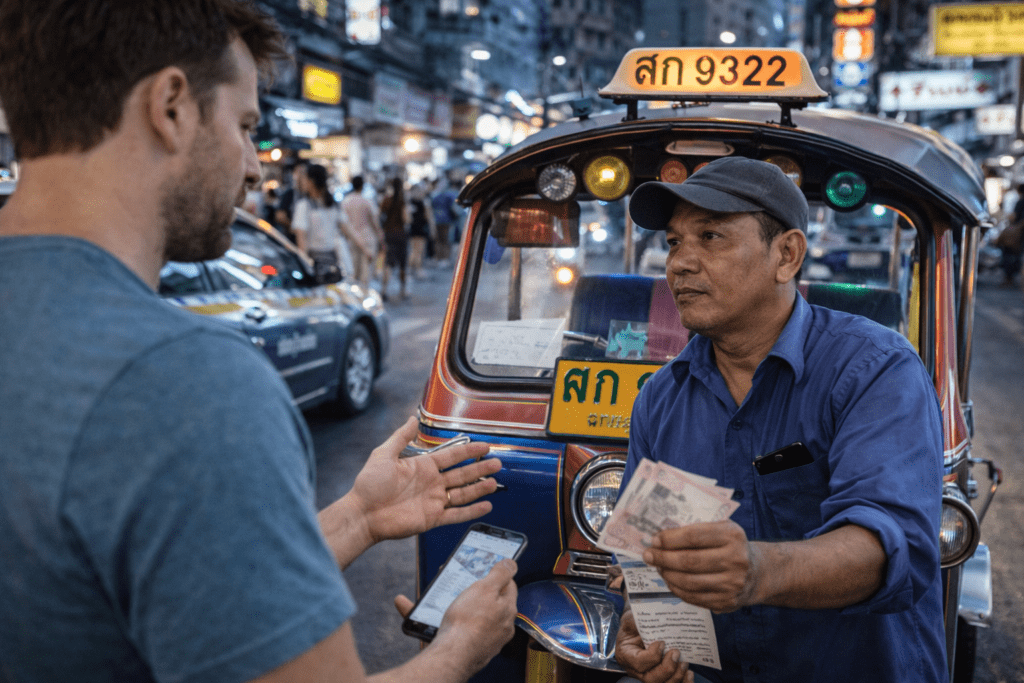
Tuk tuks are even more notorious. They’re iconic and part of the typical Bangkok postcard, but as actual transportation across the city, they’re normally extremely overpriced, and drivers often operate scams. If you do take one, make sure to negotiate the price before you start the ride and make sure it’s for the full trip, as some drivers will attempt to charge you per person once you arrive.
And in practice, it’s typically better to skip both taxis and tuk tuks and use ride-hailing apps instead.
- Grab is the most popular option, but it’s also now the most expensive.
- Bolt is often cheaper, but with slightly fewer drivers depending on time and location, which means you may wait longer or see fewer options in some areas.
- InDrive is the real money saver for longer trips. InDrive lets you offer a price to drivers and negotiate the fare more directly while the app takes a lower overall cut. For inner-city trips between Bangkok and Pattaya or Hua Hin, you’ll normally pay around 30% less than Grab.
Always compare prices across apps, especially for long-distance fares.
Location, Location, Location
Minimizing your time in cars can save even more money when you book your hotel. If you’re more than a 10-minute walk from a BTS or MRT, you’ve created a daily cost problem. You’ll end up trapped in Bangkok traffic on a daily basis, and whatever money you may have saved on the hotel will quickly evaporate along with the time lost in traffic.
Avoiding Tourist Traps and Scams
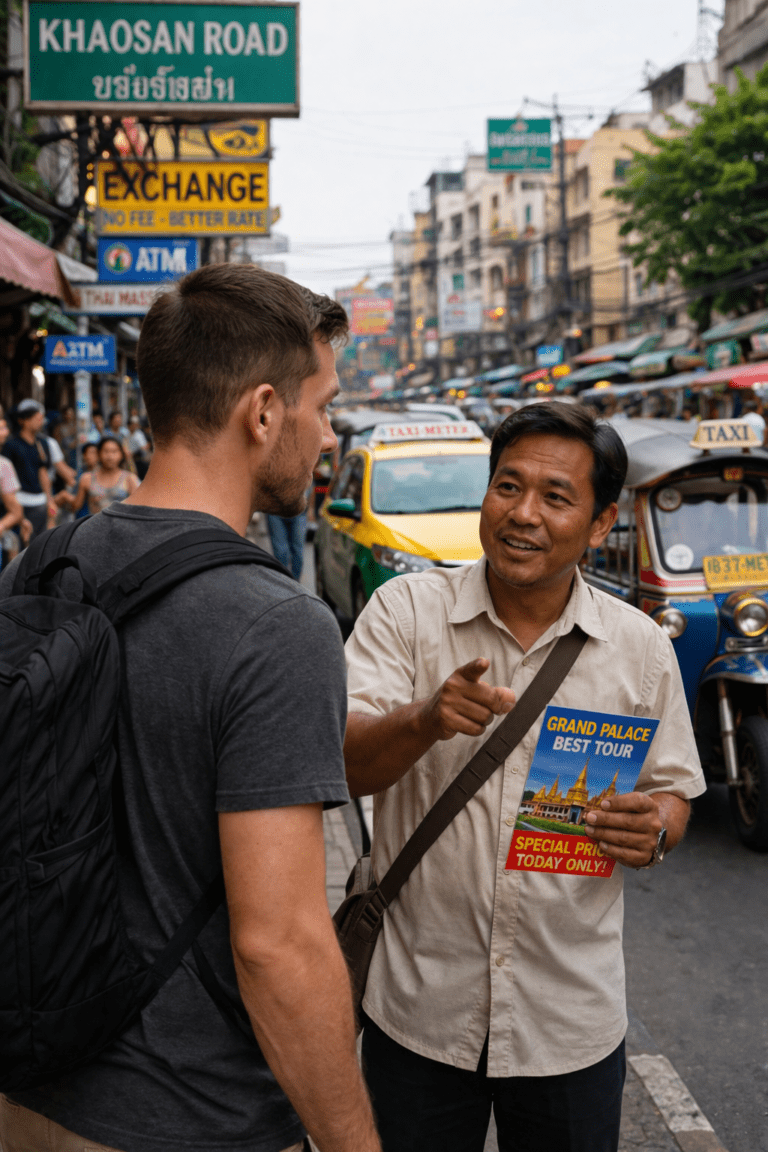
Let’s shift to tourist hotspots where there’s a recurring pattern that will slowly but surely drain your wallet, often while providing subpar experiences. These are businesses with staff members that aggressively approach tourists on the street. If you follow, you’ll normally pay higher prices for lower quality.
Instead, check Google reviews and online guides to find the places that are actually worth your time. You’ll notice a pattern: the good businesses are already busy, and they don’t have staff standing out front trying to drag people inside.
Ignoring people who hover on sidewalks is something of a necessity if you want to save money. And it also applies to any stranger who approaches you near a major tourist site. They may offer to bring you on a personal tour, attempt to show you a miracle cure, or ask to see your money. But in Thailand, ordinary citizens and travelers don’t station themselves in tourist zones offering unsolicited assistance without incentive. It’s almost always a scam, and perhaps the most frustrating way to waste money.

Tour Booking: Skip the Middlemen
Tourism typically comes with hustles, which can include travel agencies that frequently package excursions and day tours. But in many cases, these agencies function purely as middlemen. The exact same activities can often be booked on platforms like Klook for roughly 30 to 50% less.
And for full-day activities, it often makes far more sense to take a ride-hailing app directly to the venue and pay at the gate to reduce cost even further.
Food and Drinks: Timing and Bottle Service
Let’s talk food and drinks, because simply walking into a high-end restaurant or nightlife venue is often a money-wasting mistake. Hotel buffets, rooftop restaurants, and branded venues typically operate on yield management principles similar to airlines and hotels empty tables represent lost revenue.
To reduce that loss, platforms like Eatigo and Hungry Hub allow venues to discount heavily during off-peak windows. With a little flexibility and some advanced planning, you can reduce your bill by as much as 30 to 50%.
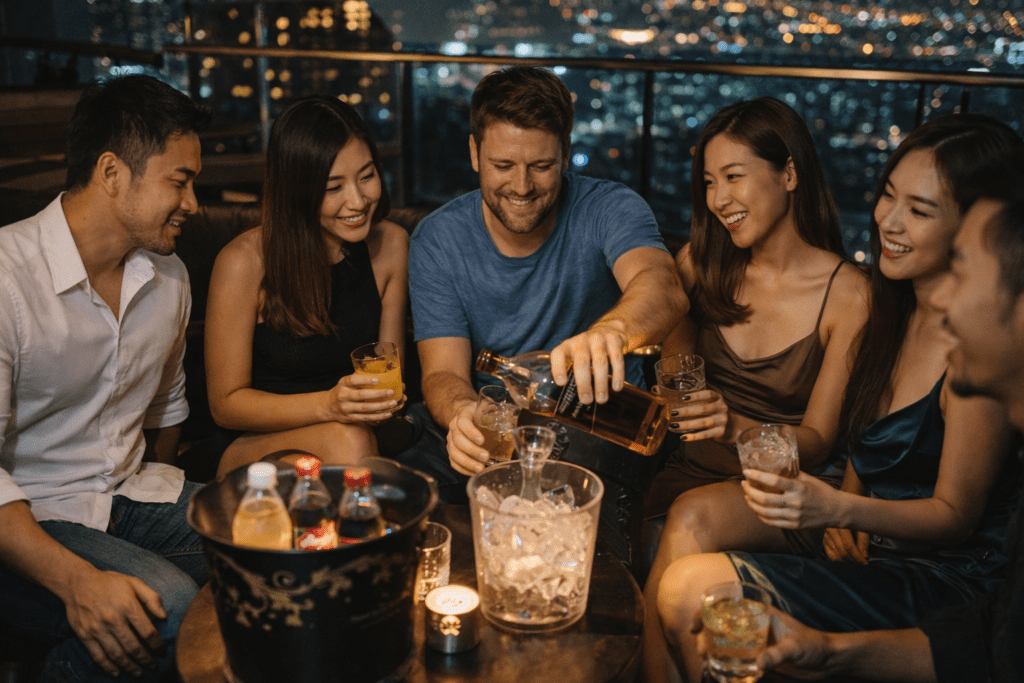
Or if you’re planning a night out with friends, skip the individual drinks. A single cocktail often costs 300 to 400 baht, while a one-liter bottle of vodka or whiskey often comes in at around 3,000 to 4,000 with mixers. If you’re out in a small group, it’s typically far more cost-effective to buy a bottle which comes with a designated table. And if you don’t finish it, you can store bottles for a set period of time for future visits.
Travel Like a Local
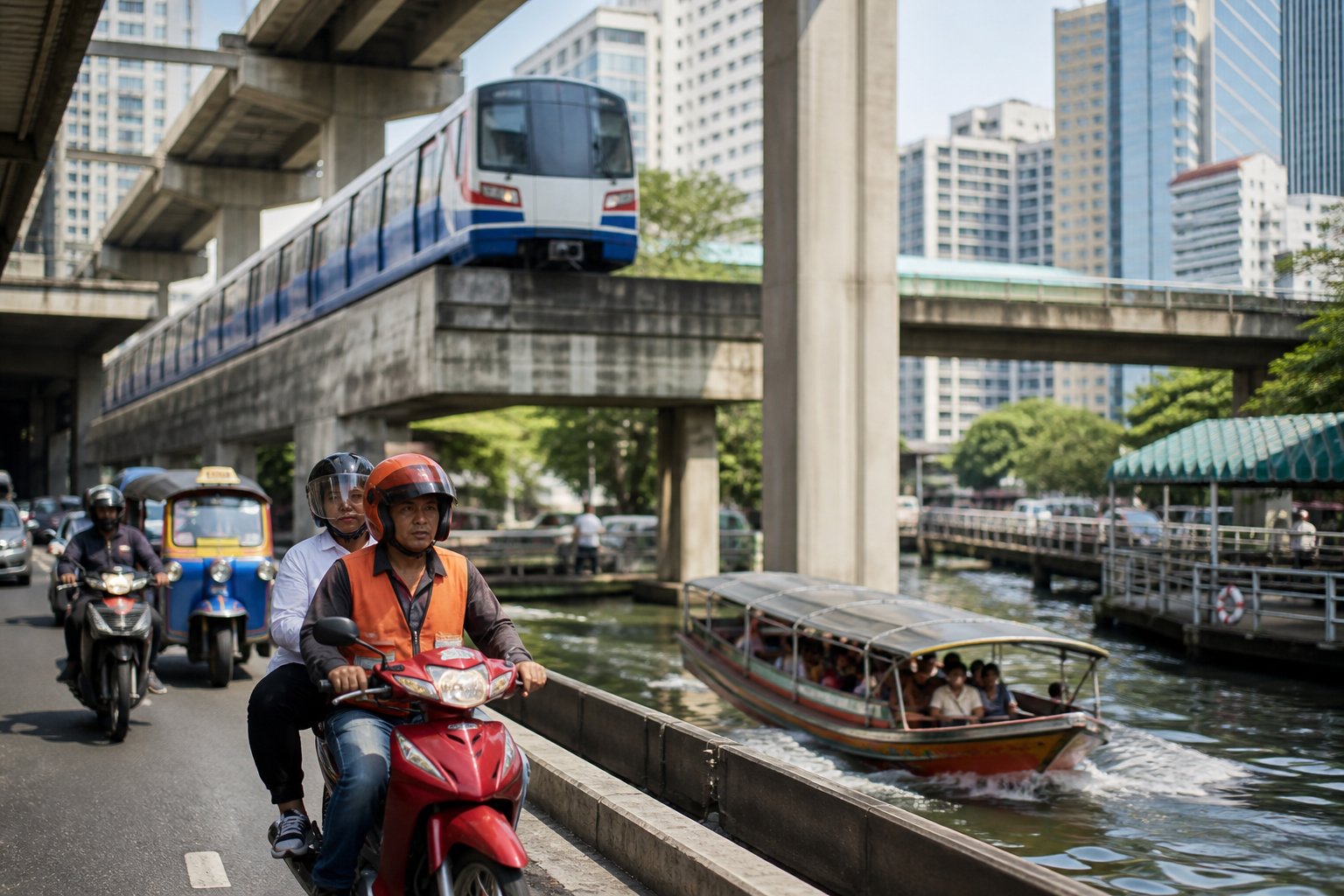
Use Bangkok’s BTS SkyTrain, MRT, motorbike taxis, and boats instead of relying on expensive taxis and tuk-tuks. Public transport can save time and money while providing a more direct way to see the city.
Between provinces, consider local buses. A local bus between places such as Pattaya or Hua Hin can cost around three dollars, compared with much more for a private taxi. One example from Sukhumvit to Pratunam cost about 13 baht by local transport, while a taxi could cost over 200 baht.
Choose Local Services
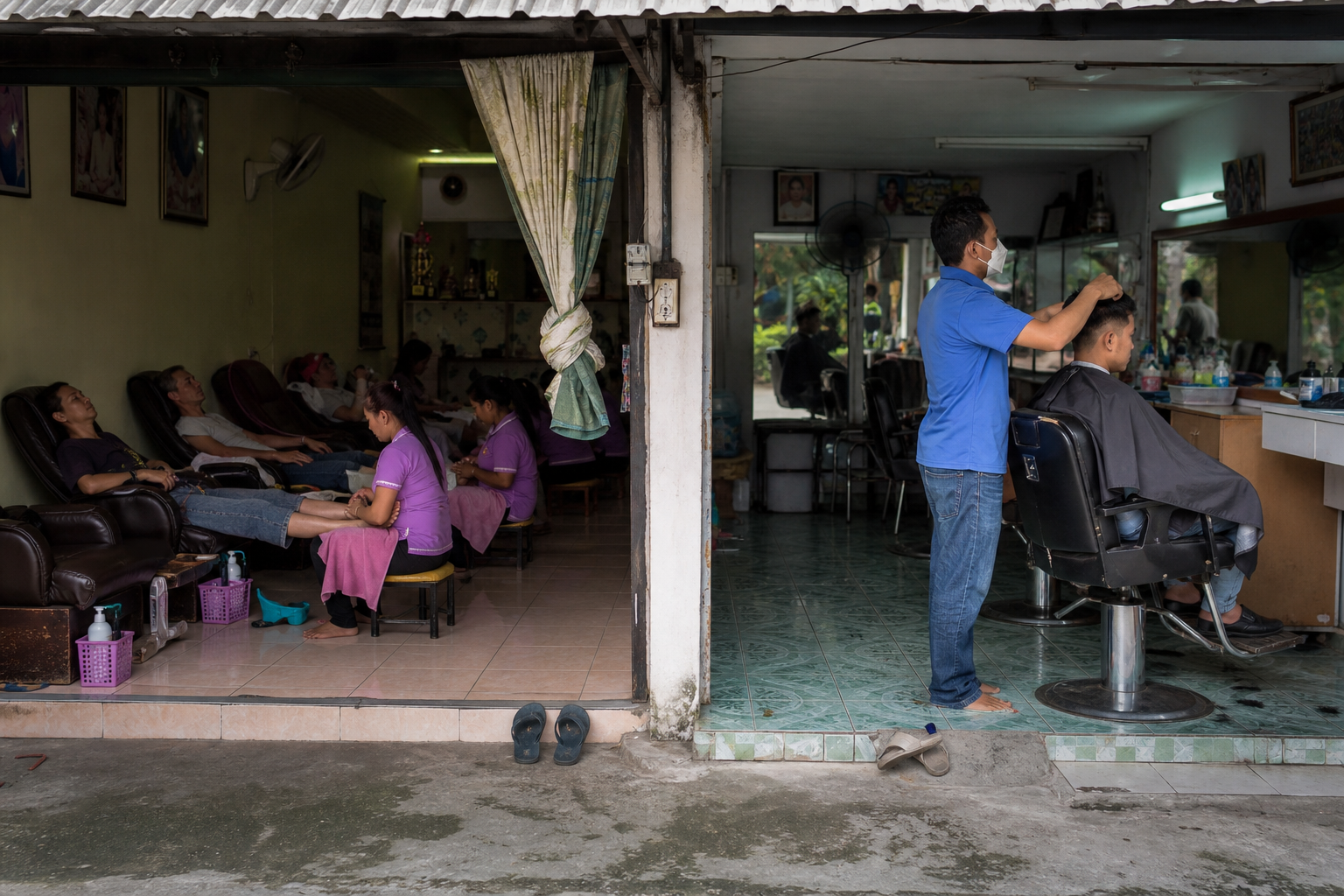
Higher prices do not always mean better service in Thailand. Affordable massage parlours, spas, and local haircuts can provide good service without the cost of a luxury venue.
Look around the neighbourhood instead of assuming that the most expensive option is the best one.
Eat Street Food and Shop Local Markets
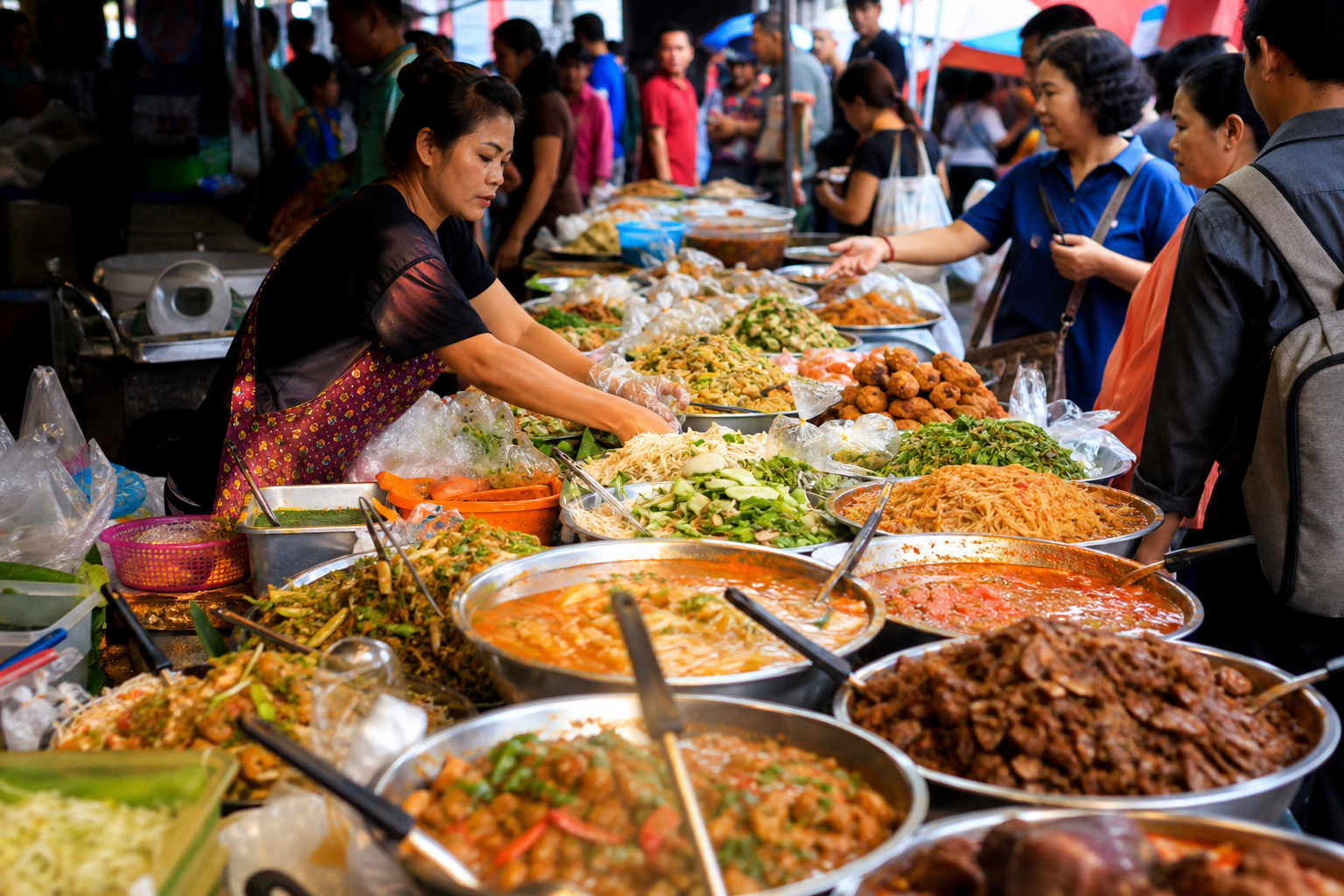
Street food and local markets are practical ways to spend less. International restaurants, high-end bars, and tourist markets can cost as much as or more than similar places at home.
Buy only what you need. Souvenirs and clothing can often be found more cheaply in local shops than in floating markets, where visitors may pay more for hats, trousers, and other items they later do not use.
Travel in the Low Season
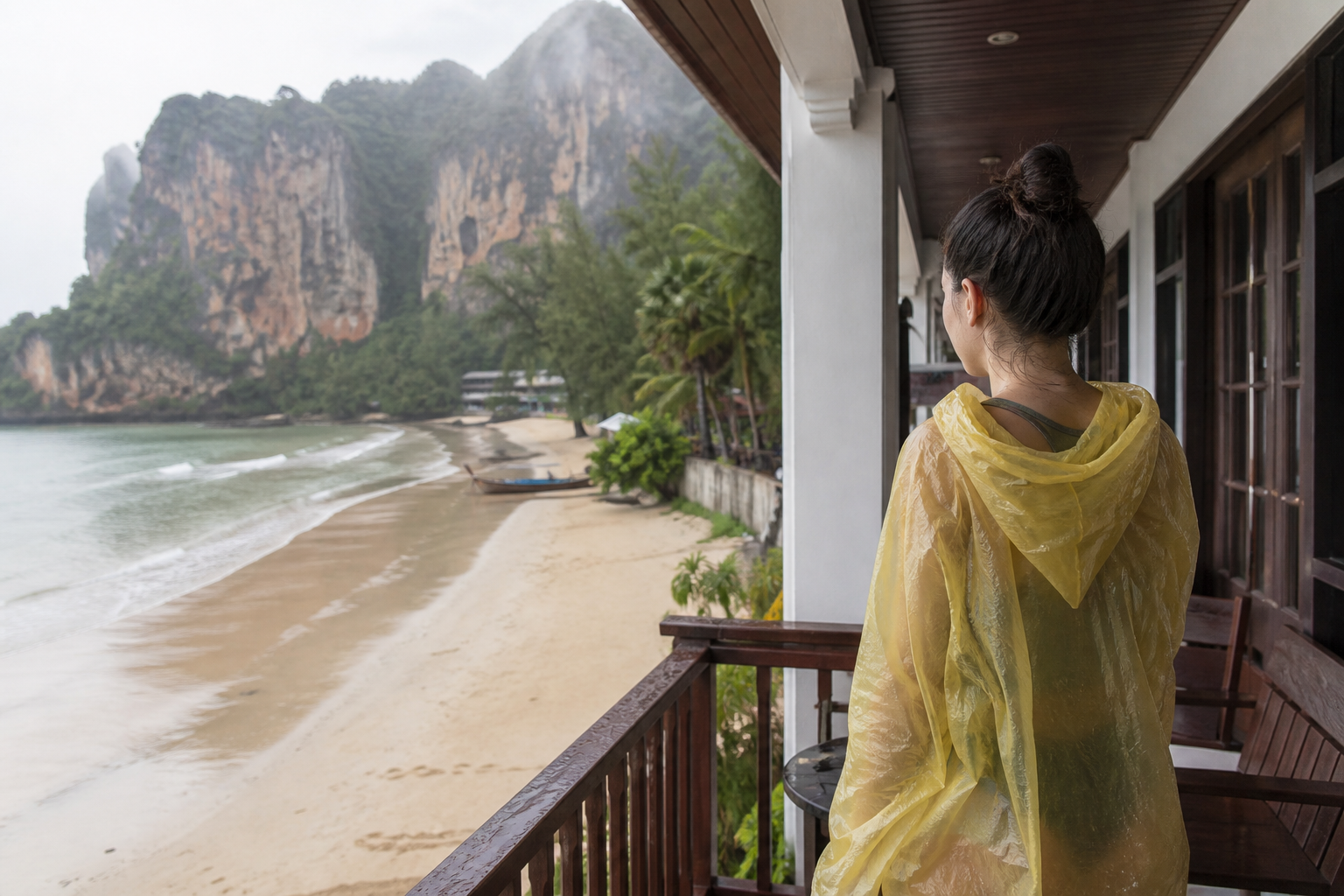
Travelling at the end of high season or during low season can reduce the cost of flights, hotels, activities, and trips. There may be hot or rainy days, but lower prices and more choice can make the trade-off worthwhile.
Book Affordable Flights and Hotels
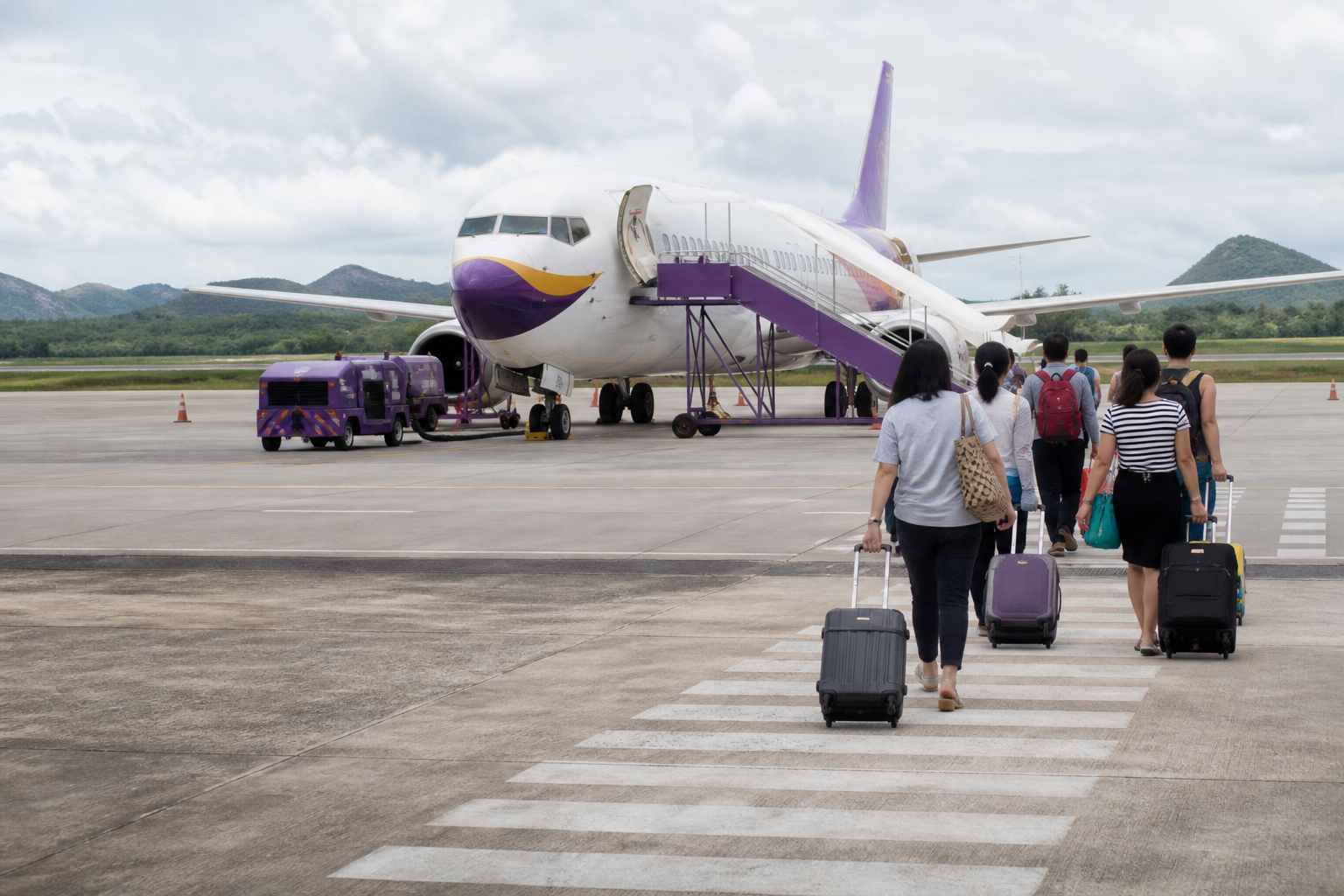
Low-cost airlines such as VietJet, AirAsia, and Nok Air offer domestic flights at lower prices when booked carefully. Check which airport each flight uses and whether luggage is included.
For accommodation, a hotel slightly away from the centre can cost half as much as a five-star property in the busiest area. Walking ten minutes or taking a low-cost motorbike taxi can still provide access to the main attractions.
Follow Locals and Find Free Activities

Local residents often know which places offer the best value. Talking with people and following local recommendations can lead to better food, nightlife, and activities at lower prices.
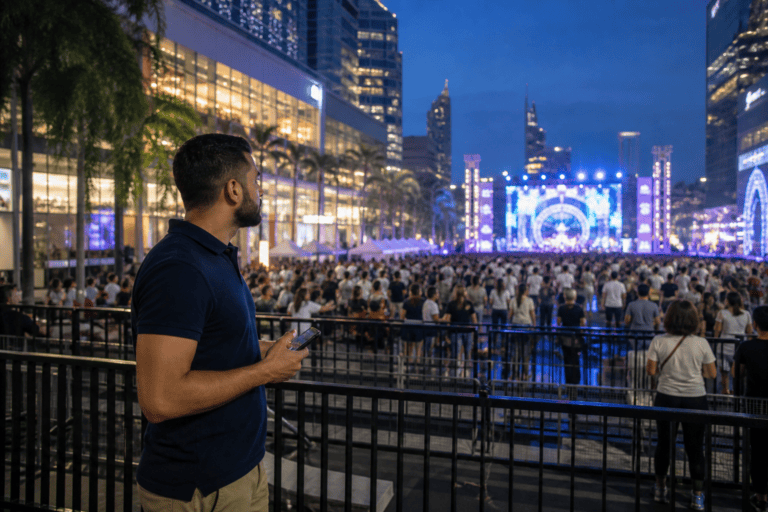
Thailand also has free events, markets, cultural activities, and other daily options. Follow local news and community information to find them without opening your wallet.