Thailand Laws Tourists Need to Know
Thailand has rules that are easy for visitors to miss. Some are criminal laws, some are controls on restricted goods, and some are venue or public-place rules. Enforcement varies, but seeing locals ignore a rule does not make it safe or legal for a visitor. Check the official source linked in the relevant section when a rule affects your trip.
Vaping and E-cigarettes
Do not bring an e-cigarette, vape, device, cartridge, or refill liquid into Thailand. Official government guidance describes import, sale, and possession of electric cigarettes as prohibited. Do not assume that seeing vapes sold openly means they are permitted. The consequences can be serious, and public smoking restrictions may apply as well. Keep vaping advice separate from ordinary cigarette rules, which are regulated differently.
Official reference: Thailand government guidance on electric cigarettes.
Cannabis: Do Not Assume It Is Recreationally Legal
Thailand’s cannabis rules changed after the 2022 decriminalisation period. Current government guidance says cannabis flower is a controlled substance and tourists should not buy, carry, transport, or use it unless they have the required prescription from an authorised Thai medical professional. Do not take cannabis flower, seeds, or plant parts across the border, and do not treat a shop display as proof that a product is lawful for you.
Public consumption, driving after consumption, advertising, and unauthorised sales create additional risks. Check current government guidance before travelling because the regulatory framework can change.
Official reference: Thailand government cannabis notice for tourists.
Alcohol: Age, Places, and Sale Restrictions
The minimum legal drinking age is 20. Alcohol sales can also be restricted by time, location, public holidays, election periods, licence conditions, and venue-specific rules. Do not assume that a shop or bar serving alcohol is evidence that every sale or public-consumption situation is lawful. Follow signs, venue instructions, and current local announcements.
Do not drink in places where it is prohibited, including many temples, schools, government premises, parks, and transport facilities. Never drink and drive, and do not carry open alcohol in situations where local transport or venue rules prohibit it.
Filming, Photography, and Privacy
Ordinary street photography is not automatically illegal. The legal risk increases when filming is intrusive, unwanted, commercial, harassing, or presented in a way that harms someone’s reputation. Ask before filming identifiable people, especially in nightlife venues, private premises, sensitive situations, or when children are involved. Do not provoke people for online content or publish accusations with identifying details.
Separate rules may apply to restricted government or military locations, drones, commercial filming, and personal-data use. A complaint, privacy issue, or defamation claim can arise even when a camera was used in a public place.
Defamation and Online Speech
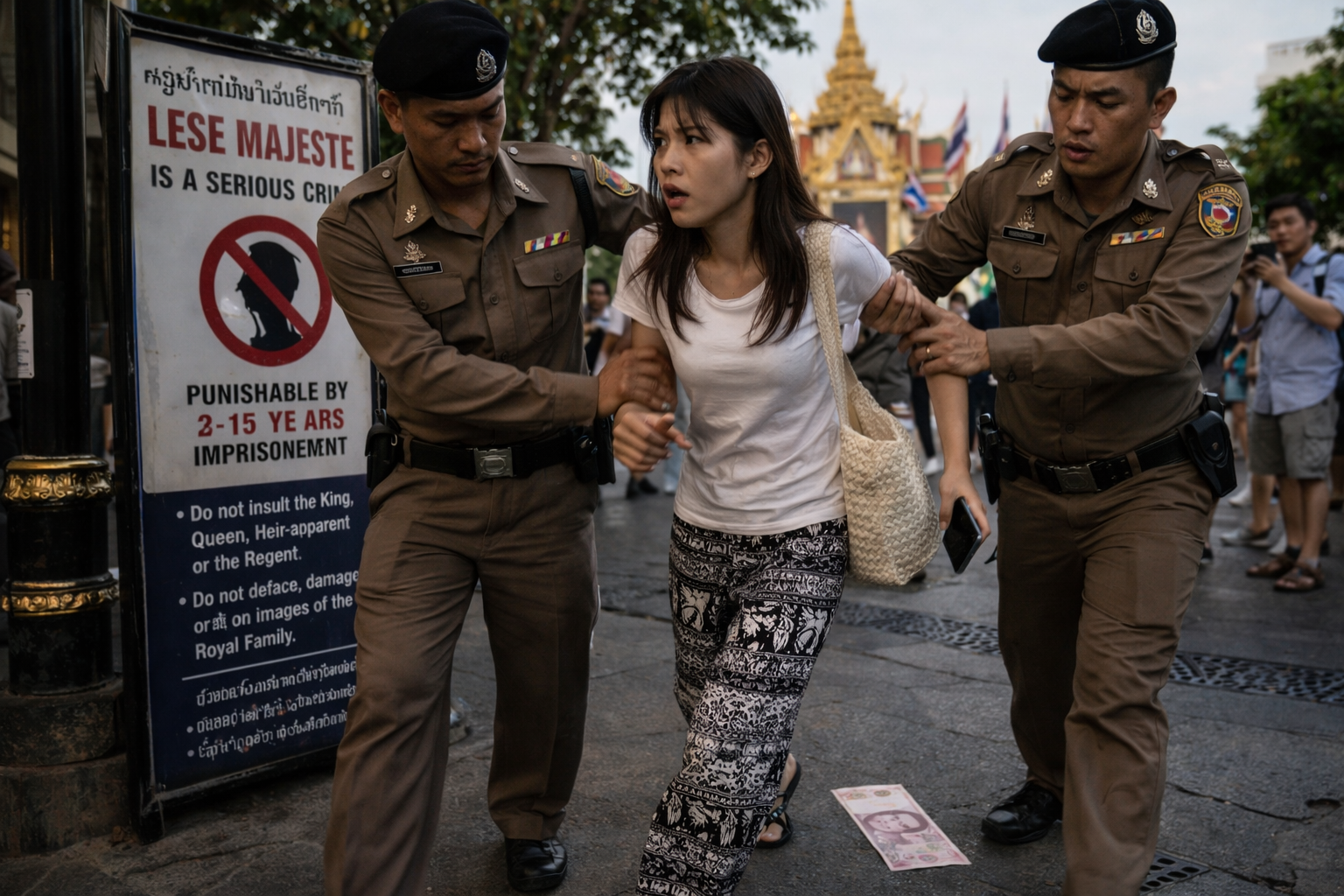
Thailand recognises criminal defamation as well as civil remedies. A negative experience is not automatically unlawful, but statements presented as fact can create risk when they are false, abusive, identifying, or published in a way that damages a person or business. Write carefully, distinguish opinion from verifiable fact, retain evidence, and avoid personal attacks. Lèse-majesté laws and other laws concerning the monarchy are exceptionally sensitive; visitors should not post jokes, accusations, or provocative material about the royal family.
Driving, Motorbikes, and Helmets
If you drive, carry the licence and permit documents required for the vehicle you operate. A normal car licence does not authorise riding a motorcycle. Visitors commonly discover after a crash that a rental agreement is not a driving licence and that insurance may not respond when the rider lacks the correct entitlement.
Wear a helmet on every motorcycle journey, use seatbelts, obey signs, and never drive after drinking or consuming a substance that affects reaction time. Do not ride on pavements or treat local rule-breaking as permission to copy it.
Medicines and Controlled Substances
Do not assume that a prescription from your home country is enough for every medicine. Thai FDA rules differ by substance and quantity. Some ordinary medicines may be carried for personal use with appropriate documentation, while controlled narcotic and psychotropic medicines may require a permit, a medical certificate, original packaging, declaration, or advance application. Some substances are prohibited.
Check the medicine by its active ingredient through the Thai FDA traveller permit system before departure. Keep medicines in original labelled packaging and carry the relevant prescription or certificate.
Gambling and Playing Cards
Gambling is regulated in Thailand and casual does-not-count assumptions are unsafe. Do not organise or join gambling games, and do not rely on old anecdotes about private card clubs. If carrying playing cards or equipment for an event, check the current rules and any required authorisation.
Temples, Public Conduct, and National Symbols
Dress modestly at temples and religious sites, remove shoes when instructed, and do not climb on statues or use sacred spaces as a backdrop for provocative content. Keep your voice controlled during disputes. Do not damage, misuse, or deliberately show disrespect toward Thai national or royal symbols. These are both cultural and, in some circumstances, legal concerns.
Restricted Places and Drones
Do not fly a drone, film a protected facility, or enter a restricted area without checking the current permission requirements. Drone registration and aviation rules are separate from ordinary photography rules. Follow visible warnings and official instructions rather than relying on a social-media post or another traveller’s experience.
Before You Travel
Rules change, and enforcement can depend on the facts, location, and current orders. Check official Thai government, police, FDA, customs, transport, and aviation information for the issue that affects you. This page is a practical tourist warning, not a substitute for legal advice. When in doubt, leave the restricted item behind, stop the activity, and ask an official authority.