Worst Chiang Mai Mistakes to Avoid in 2026
Chiang Mai can feel simple on the surface small, calm, and walkable. Many visitors take a “figure it out as you go” approach. But this is often a mistake.
From when to visit and where to stay, itinerary, getting around, nightlife, and scams, understanding this city will help ensure you have the best trip possible.
In this guide, I’ll walk you through everything you need to know before you visit Chiang Mai.
Choosing the Right Season
Let’s dive in with timing your trip. Chiang Mai has three main seasons, and perhaps more than any other city in Thailand, choosing the right time of the year is essential.
The cool season runs from November through February. It offers the best weather with pleasant temperatures, clearer skies, and more comfortable days for walking and outdoor activities. But it’s also when the city is busiest and most expensive.
Late in the dry season, smoke episodes can affect air quality, often becoming more noticeable from February into April. Conditions vary by year and location, so check current PM2.5 readings and health guidance before deciding when to visit, especially for people with respiratory or cardiovascular issues.
Conversely, the rainy season runs from May through October, and the early months from May through August are often underrated. Crowds thin out and prices drop while the air clears. This period is typically defined by short, predictable daily downpours.
But the months of September and October tend to bring heavier and more persistent rain. You’ll find the lowest prices of the year, but conditions are not ideal.
There are also two major holidays to be aware of. Songkran, which takes place in mid-April, is the Thai New Year festival marked by a nationwide water fight. Chiang Mai is one of the best places to experience it.
Yi Peng and Loy Krathong are famous for lantern releases and cultural events and take place in November. Both events are fantastic, but crowds are dense and prices often hit their highest point of the year.
There’s no universally wrong time to visit Chiang Mai, but choosing the right season and knowing what you’re walking into makes a huge difference.

Where to Stay
Some Chiang Mai trips feel smooth from day one, while others feel oddly inefficient. In most cases, the reason traces back to choosing the right or wrong location and accommodations.
Chiang Mai looks compact on a map, but walking distances are deceptive. Typically you have three options.
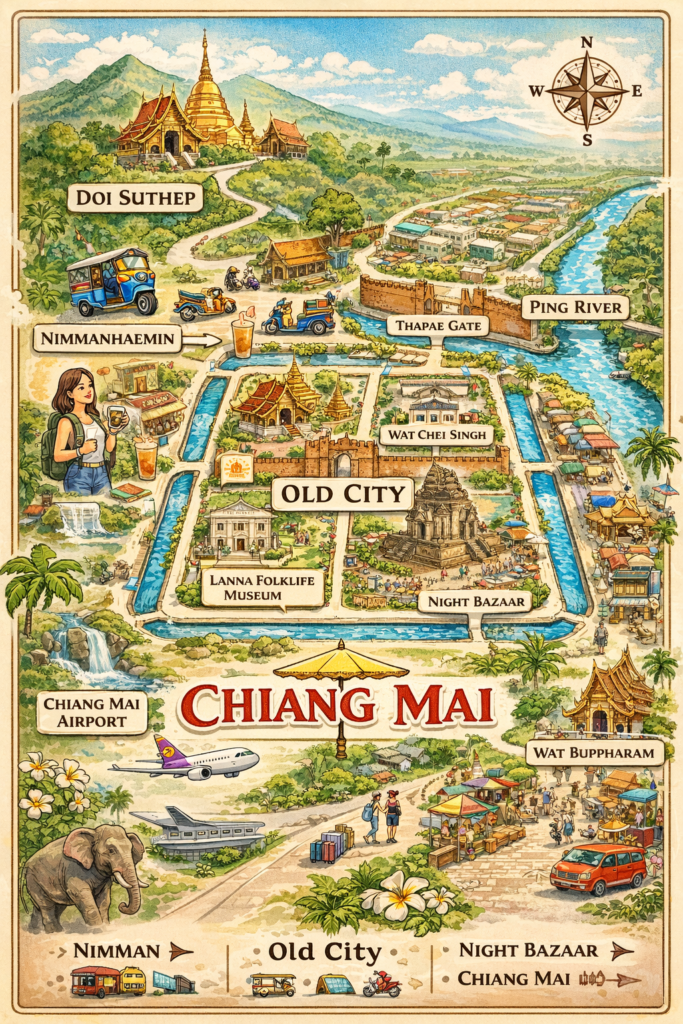
Staying inside the old city moat puts you close to temples, cafes, and walkable streets. It’s atmospheric and convenient for sightseeing, but the area has a very limited nightlife.
In contrast, Nimman is a modern, cafe-heavy area that attracts digital nomads and younger travelers. It has better sidewalks, newer buildings, and a high concentration of restaurants and bars, but it’s a little bit further from the major attractions.
Finally, the river and night bazaar area tends to offer larger hotels, but it’s less pleasant to explore on foot, and the nearby bar and red light strip along Loy Kroh Road may not suit everyone.
Accommodation Mistakes
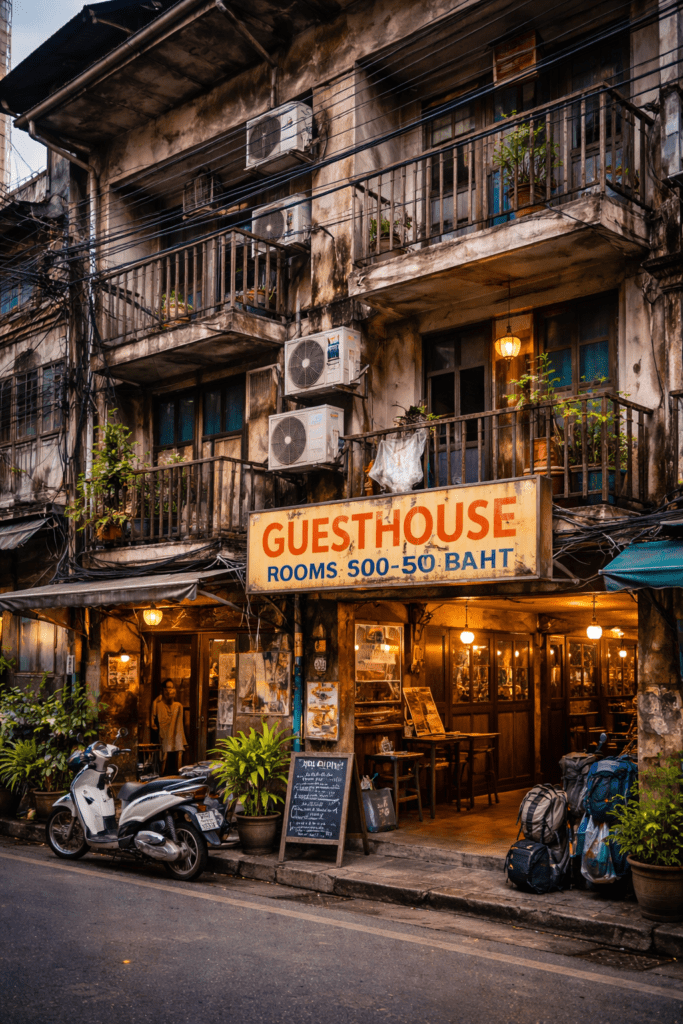
You also have a choice when it comes to accommodation type. For short stays, hotels are usually the right move due to sheer simplicity. People typically default to Airbnb for anything beyond a week or two, but this can be a mistake.
The platform doesn’t reveal exact locations in advance. Listing photos can be deceptive, and bait and switch situations are not uncommon.
In Thailand, short-term condo rentals for under 30 days are technically illegal. Many condos have strict anti-Airbnb policies to protect long-term residents, but you’ll still find listings in these buildings on the site, often accompanied by instructions on how to avoid security shortly before you arrive.
This is not ideal. Service apartments tend to offer better value and fewer surprises. These are buildings with a single owner, and they can legally rent out units for short, medium, and long-term stays, often at far better rates than you’ll find on Airbnb.
You can check out listings on RentHub and simply walk into the building, view units in person, and rent directly.
Doing Too Much (Or Too Little)
Itinerary mistakes are also very common, and it’s normally the difference between people who love Chiang Mai and those who don’t quite get it.
The first mistake is assuming you should try to see everything. Chiang Mai has a high density of temples, viewpoints, cafes, nature spots, and nearby excursions. When you see them listed online, they all sound individually reasonable.
But if they’re stacked together, they create days that feel rushed, disjointed, and oddly unsatisfying, even though you technically did a lot.
Temples are the clearest example. There are dozens within the city alone, and they’re generally all beautiful and historically significant. But seeing 10 temples doesn’t make the experience 10 times better. Instead, it leads to temple fatigue and an odd blurring of the entire day.
A better approach is to choose a few representative attractions and visit them at a slower pace. Wat Phra Singh and Wat Chedi Luang inside the old city give you scale and history, while Wat Phra That Doi Suthep outside the city adds elevation, views, and broader context if you have time for an excursion. The same logic applies to side trips.
Chiang Mai functions best as a hub surrounded by adventure activities, mountains, national parks, waterfalls, and elephant sanctuaries. But some visitors try to fit in too many side activities, which quickly turns the trip into constant transit, especially since distances can be deceptive.
Make sure to leave enough room to take in the experience and recover.
Conversely, others fail to plan at all and inevitably find the city boring by day two or three. The key is to plan enough, but not too much. Your planning should be deliberate, especially when it comes to tour packages.

Tour Scams & Overloaded Packages
There are many fantastic operators throughout the city, but you’ll also find plenty of subpar tours with rushed activities, early endings, excessive time at stop-off points, or misleading descriptions.
Some are sold as packed full-day excursions that start early and feel productive at first. But operators will add time-consuming activities like ATV rides or ziplining. They receive a commission for bringing you.
By the time those activities are finished, you’re told there’s no longer enough time to visit the places you actually wanted to see. It often feels like poor planning, but it’s actually a hidden scam.
For many destinations around Chiang Mai, you don’t need a tour at all. National parks, waterfalls, or full-day activities are usually far cheaper and often more enjoyable if you take a Grab or rental car and buy tickets on site.
This keeps control over pacing, lets you leave when something isn’t working, and removes the pressure to extract value from activities you didn’t care about.
If you want to book a tour, an app like Klook allows you to compare hundreds of operators with thousands of reviews to ensure that you get exactly what you pay for.

Transportation Mistakes
Transportation in Chiang Mai can be simple or confusing. Mostly it comes down to understanding your options and how they work.
For most visitors, ride-hailing apps are the most straightforward option. Grab, Bolt, and InDrive work reliably across the city and well beyond the moat. Rides are fast and affordable. Pricing is transparent, and destinations are clear, helping you avoid most of the friction that comes from miscommunication, price negotiation, or route disputes.
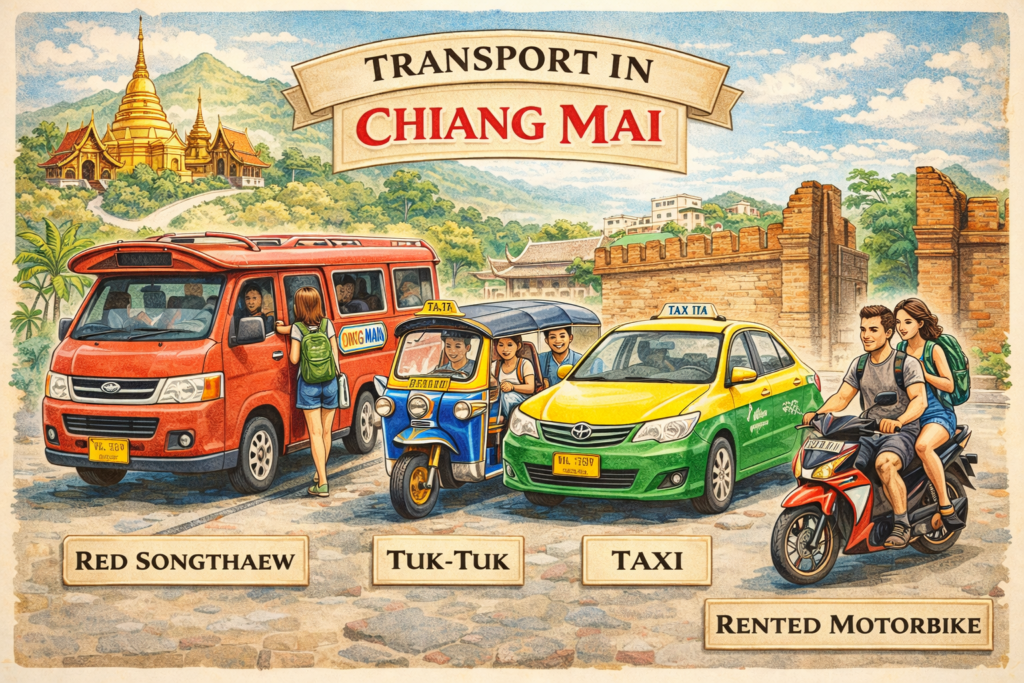
But if you want a little more adventure at a lower price, songthaews are converted pickup trucks that act as shared taxis. They’re divided into six colors which indicate specific routes. Red songthaews are the most common as they operate within the city.
To hail one, simply stand at the roadside and raise your arm as it approaches. If it stops, tell the driver where you’re going. If he’s heading in that direction, he’ll nod and usually state the fare.
Within the city, rides are typically inexpensive, but foreigners may be quoted higher prices. They’re also not the quickest option, as drivers may stop to pick up additional passengers, take detours, or decline trips altogether.
For longer journeys, yellow songthaews can be useful as they operate fixed routes to many major tourist attractions and depart from the bus terminal. Orange, blue, white, and green trucks serve less common fixed routes.
Just remember to follow one simple rule: always make sure the fare is clear before starting the ride to avoid any issues.
There are also modern and air-conditioned RTC city buses running fixed routes throughout the city. Simply wait at a stop, hop on, and pay the fare, Routes and fares can change, so check the current service information before boarding. You can track the journey using the Via Bus app.
Finally, there are traditional taxis and tuk-tuks. If you take a taxi, confirm the driver will go to your destination and ensure the meter is turned on, or agree on a flat fare before starting the journey.
For tuk-tuks, you’ll always need to negotiate the price, and they’re usually the most expensive transportation option, providing a novelty experience.
Always make sure to clearly establish the price before you begin the ride, and ensure that it’s for the trip, as some drivers may claim that it’s per person once you arrive.
With both taxis and tuk-tuks, be wary of potential scams. Many drivers receive commissions for bringing customers to subpar businesses, and short-change scams are not uncommon.
Renting Cars & Motorbikes
Some visitors may also consider renting a car or motorbike. Major international car rental brands operate at the airport, and the process is straightforward and typically aligned with Western countries.
You need a proper license with an international driver’s permit (IDP) to drive legally in Thailand.
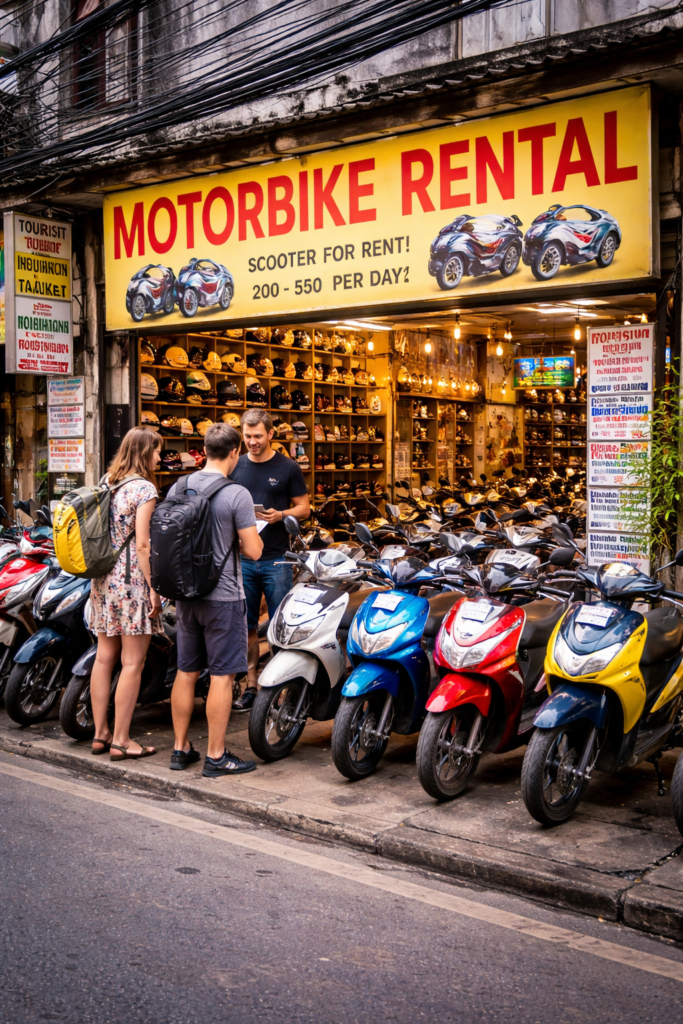
Conversely, motorbike shops will often rent bikes without checking your license, which technically must have the IDP with a motorcycle specification. If you’re involved in an accident without a proper license, insurance will typically refuse coverage.
Scams can also occur. Some shops will conceal existing damage and later blame the renter, demanding exorbitant repair fees, while others have used spare keys or tracking devices to steal the bike, leaving the renter responsible for the loss.
These cases are relatively rare, but they do happen. It’s best to check Google reviews closely before you rent to check for any red flags.
And never leave your passport as a deposit. A photocopy and cash should always be sufficient.
Nightlife Expectations – Don’t Assume Too Much
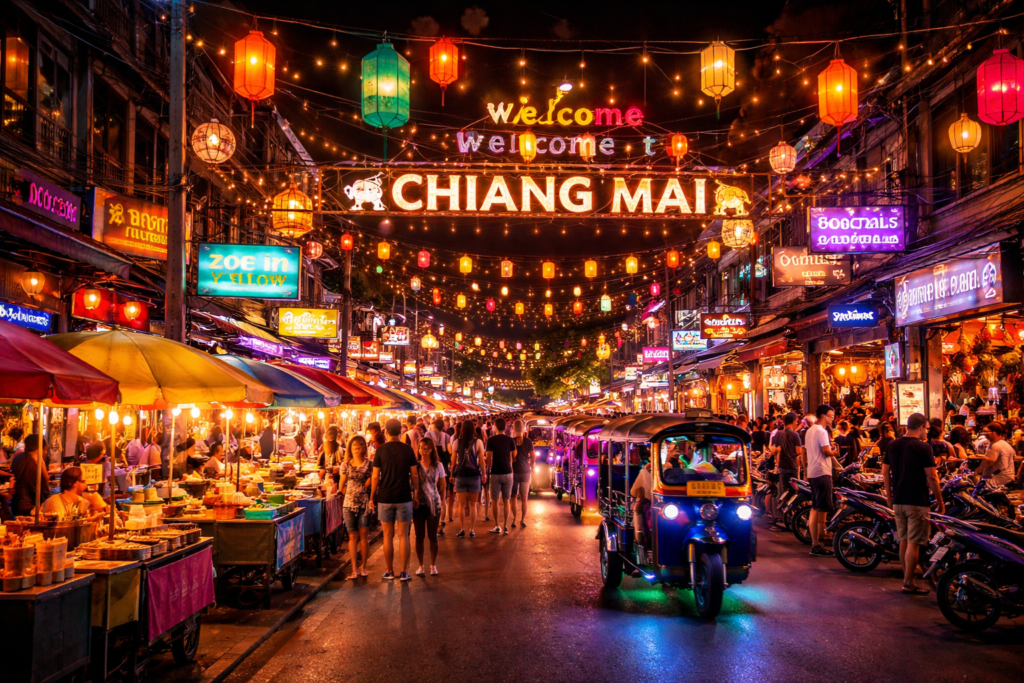
Chiang Mai has a very limited nightlife, and it’s one of the aspects of the city that visitors can find disappointing. Understanding how it works will help you set realistic expectations.
Chiang Mai may be Thailand’s second largest city, but when it comes to nightlife, you probably wouldn’t realize it. Much of the city shuts down early, often around midnight. Even on weekends, it can feel very quiet, especially if you aren’t sure where to go.
Nightlife zones are fragmented with long stretches of quiet, dead space in between.
Given the early closures, it’s best to avoid wasting time walking between different areas. Instead, plan ahead and choose your area wisely to match your preferences.
Loy Kroh Road is a bar-heavy strip that runs from the old city toward the night bazaar. It’s technically the red light district, but it’s a far cry from Pattaya or Bangkok and is generally fairly relaxed. However, it won’t appeal to many visitors.
Zoe in Yellow is a popular backpacker hangout with a cluster of bars inside the old city. It stays open late, and the energy typically doesn’t pick up until past 10.
If you head west, Nimman is the trendier modern area with nightclubs and cocktail bars, but most venues follow an Asian-style setup with plenty of tables and relatively small dance floors.
Groups usually arrive together and reserve tables, which can surprise visitors from Western countries who expect open dance floors and spontaneous social energy.
Timing also matters for most venues. Arrive too early and it may be empty, but show up too late and it may already be winding down.
Nightlife Scams
This can lead to a common nightlife scam. You might find yourself at a slow venue or leaving a bar as it closes and be approached by someone unusually friendly who suggests a cool place or a local bar.
You arrive, order drinks, and when the bill comes, it’s dramatically higher than expected. Bouncers may block the exit and demand payment.
This scam isn’t unique to Chiang Mai. It exists in cities around the world, but given the city’s subdued nightlife, it can catch visitors off guard.
Be cautious about following recommendations and check the Google reviews before you enter.
As with taxis or tuk-tuks, carry small bills to avoid any short-change scams in nightlife venues.
It’s best to avoid running tabs to preempt any bill padding. These aren’t particularly common issues, but an ounce of prevention is worth a pound of cure.
The same is true for a few other potential hustles that may occur simply walking around in popular tourist areas, which can be broadly described as the friendly stranger scam.
Someone starts a conversation and eventually tries to pull you into a private tour, sell miracle cures, or ask to see your money. They may be local or foreign.
The solution is simple: ignore and walk away.