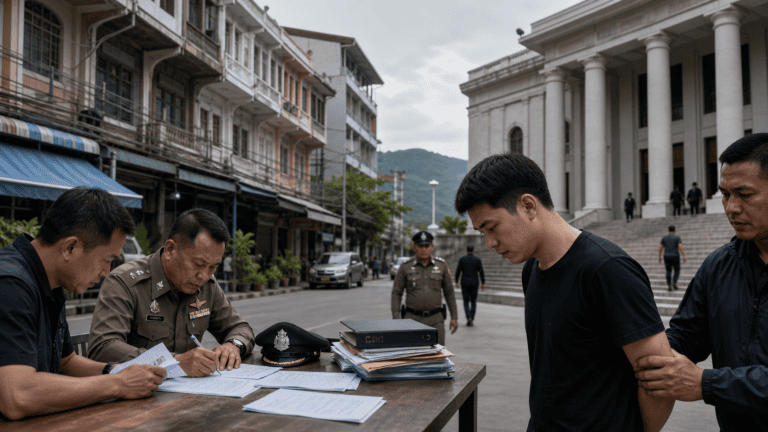
13 Foreign Men Arrested In Thailand Scam
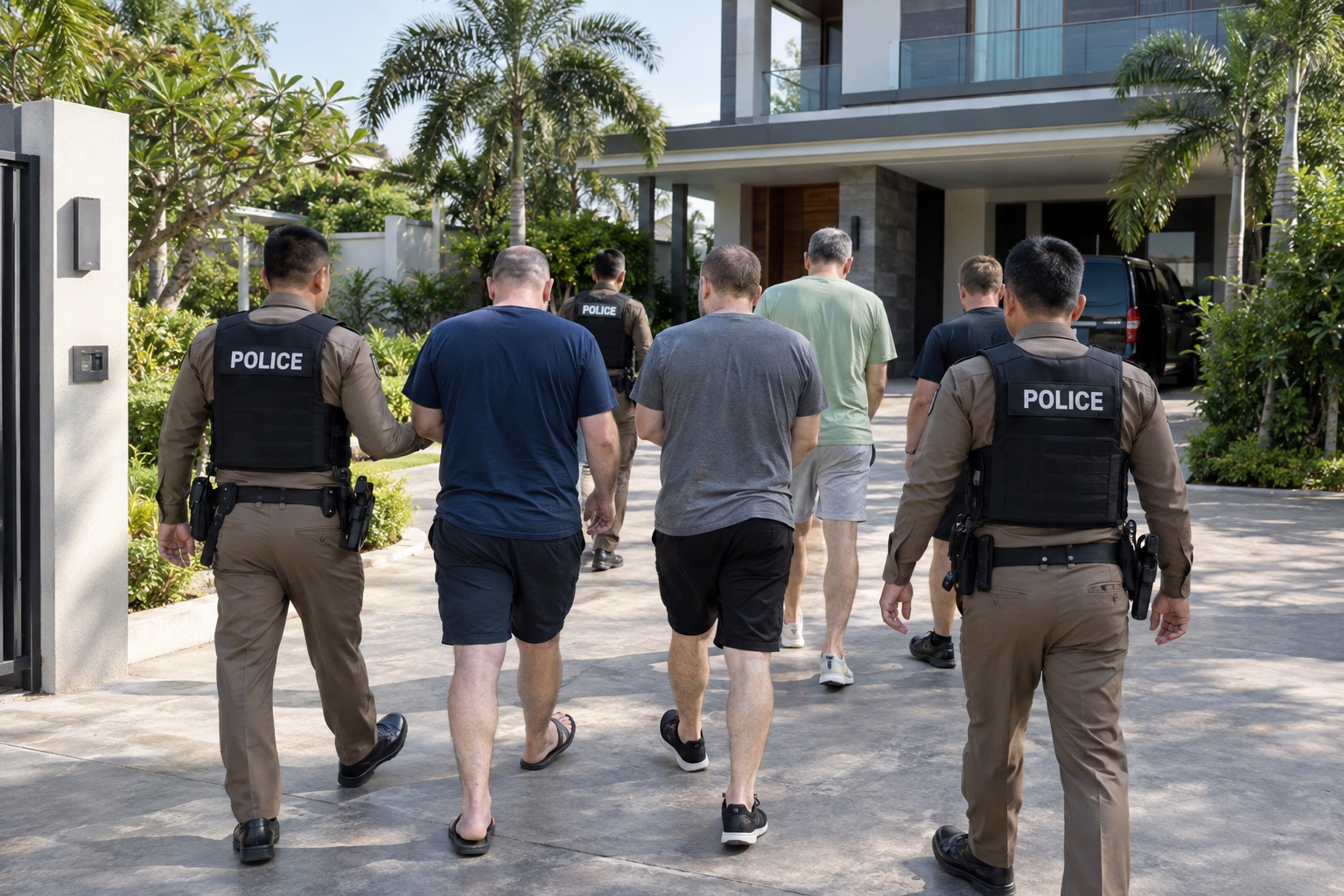
A group of foreigners were staying in a large rented house just outside Bangkok. But according to Thai and Australian police, what was happening inside that house was anything but ordinary.
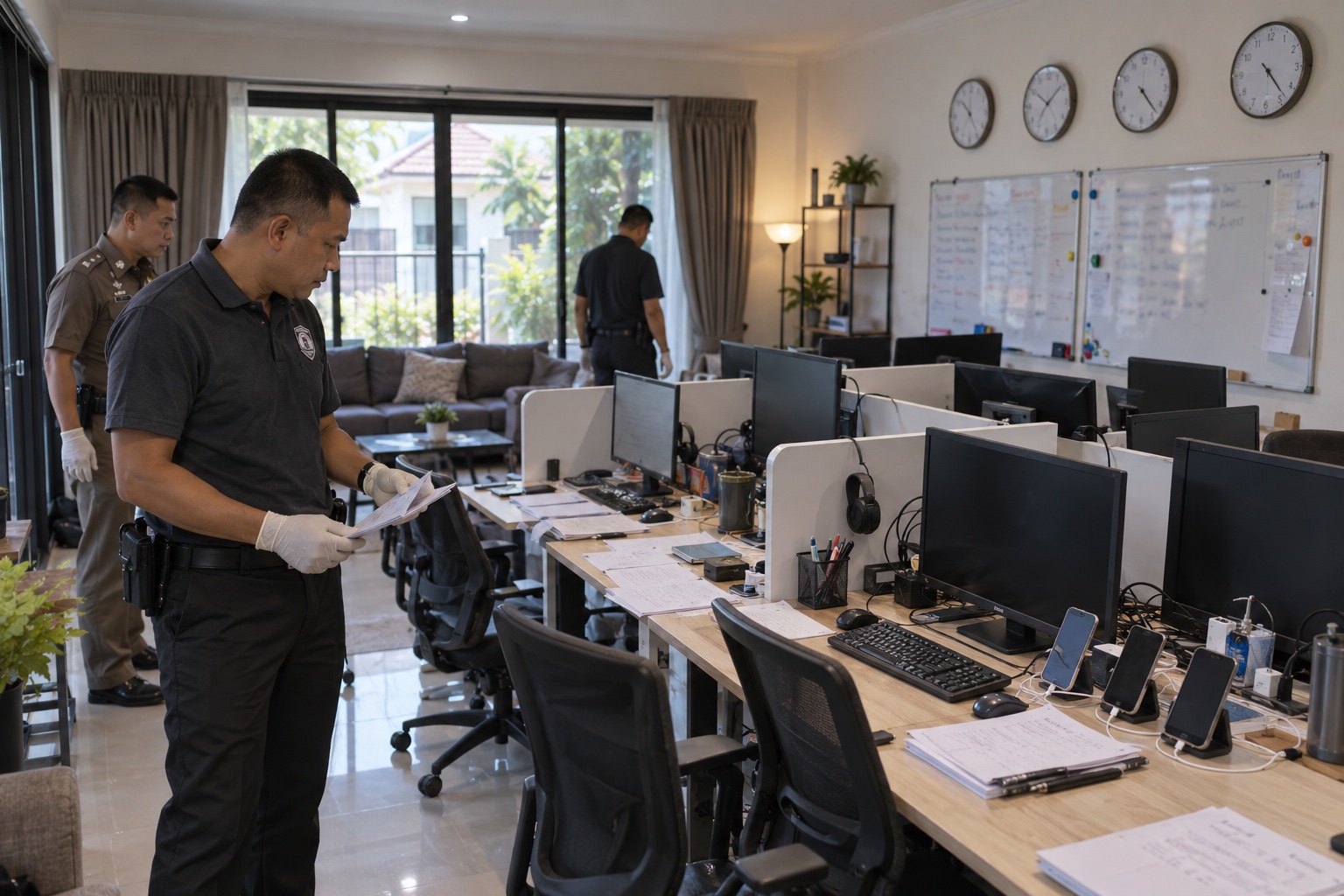
When officers eventually went through the door, they found 13 foreign men, a living room converted into an office, rows of workstations, computers, telephones, scripts, whiteboards, and even clocks showing different Australian time zones.
Police alleged that the house was being used as the base for an international investment scam targeting people thousands of miles away in Australia.
Five of the men arrested were Australian, six were British, one was Canadian, and one was South African. The suspects denied any wrongdoing and said they believed they were working legally for a legitimate investment company.
Thai and Australian Police Investigated the Samut Prakan Operation
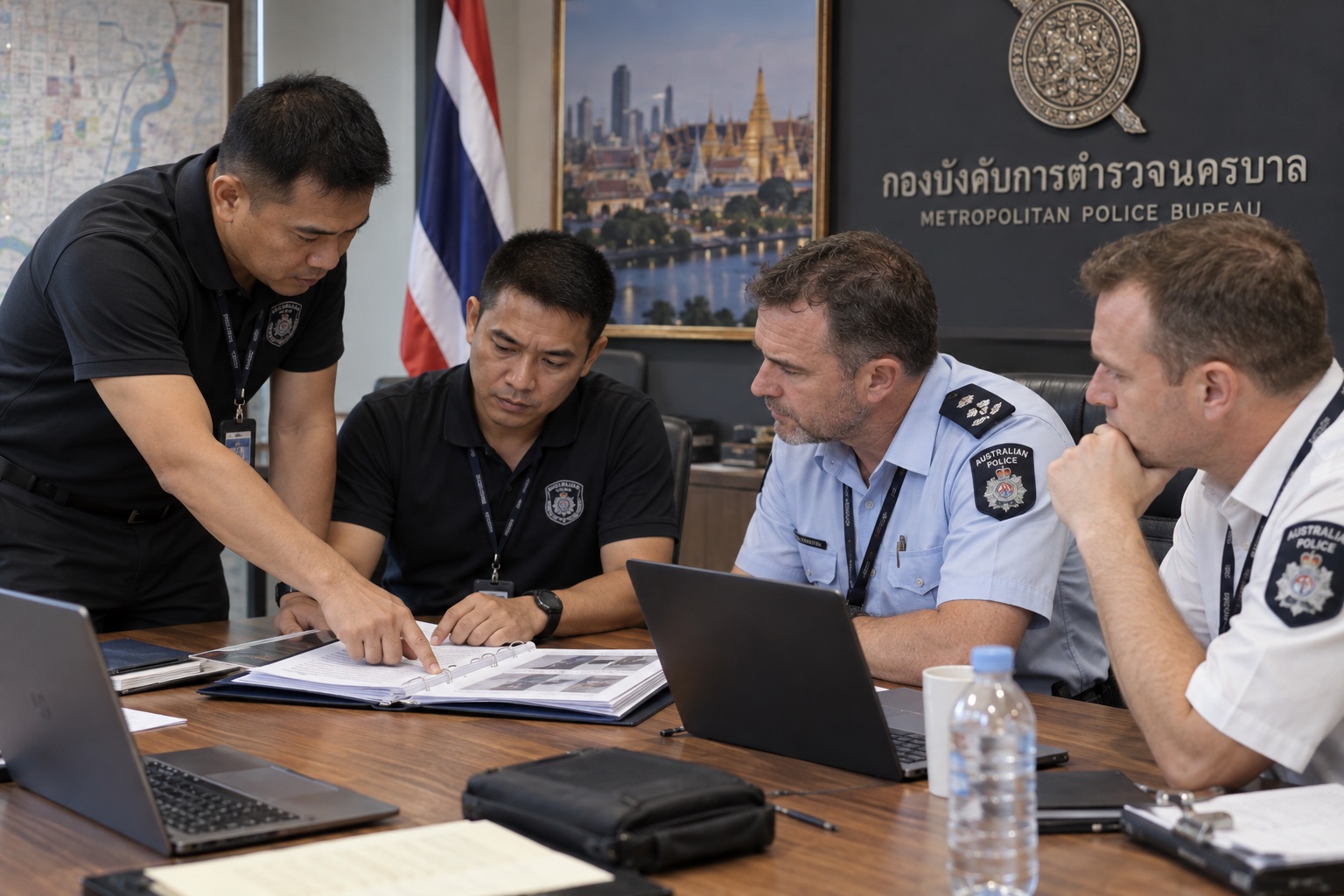
The raid happened on Monday, June the 16th, 2025, in Bang Phli district in Samut Prakan province, immediately to the east of Bangkok. At around 8:30 in the morning, officers from Thailand’s Central Investigation Bureau moved into a rented luxury house in Bang Phli Yai.
By that point, however, this wasn’t simply a police patrol that had noticed something suspicious. Thai authorities had already been working with the Australian Federal Police.
According to Thai police, the Australian Federal Police had alerted them the previous year to a suspected scam group led by an Australian and a British national. That information led to a joint investigation.
Australian authorities believe the people behind the operation had been involved in scams for years and had operated in several countries. Thai police said the alleged leaders had previously operated in Indonesia and had avoided arrest there before eventually being located in Thailand.
According to Thai reporting, after arriving in Thailand, the group initially stayed in Pattaya. They later moved their activities towards Bangkok, and police said there had been a planning meeting at a hotel in Bangkok‘s Prawet district. Eventually, investigators focused their attention on the house in Samut Prakan.
Surveillance at a 120,000 Baht Luxury Rental
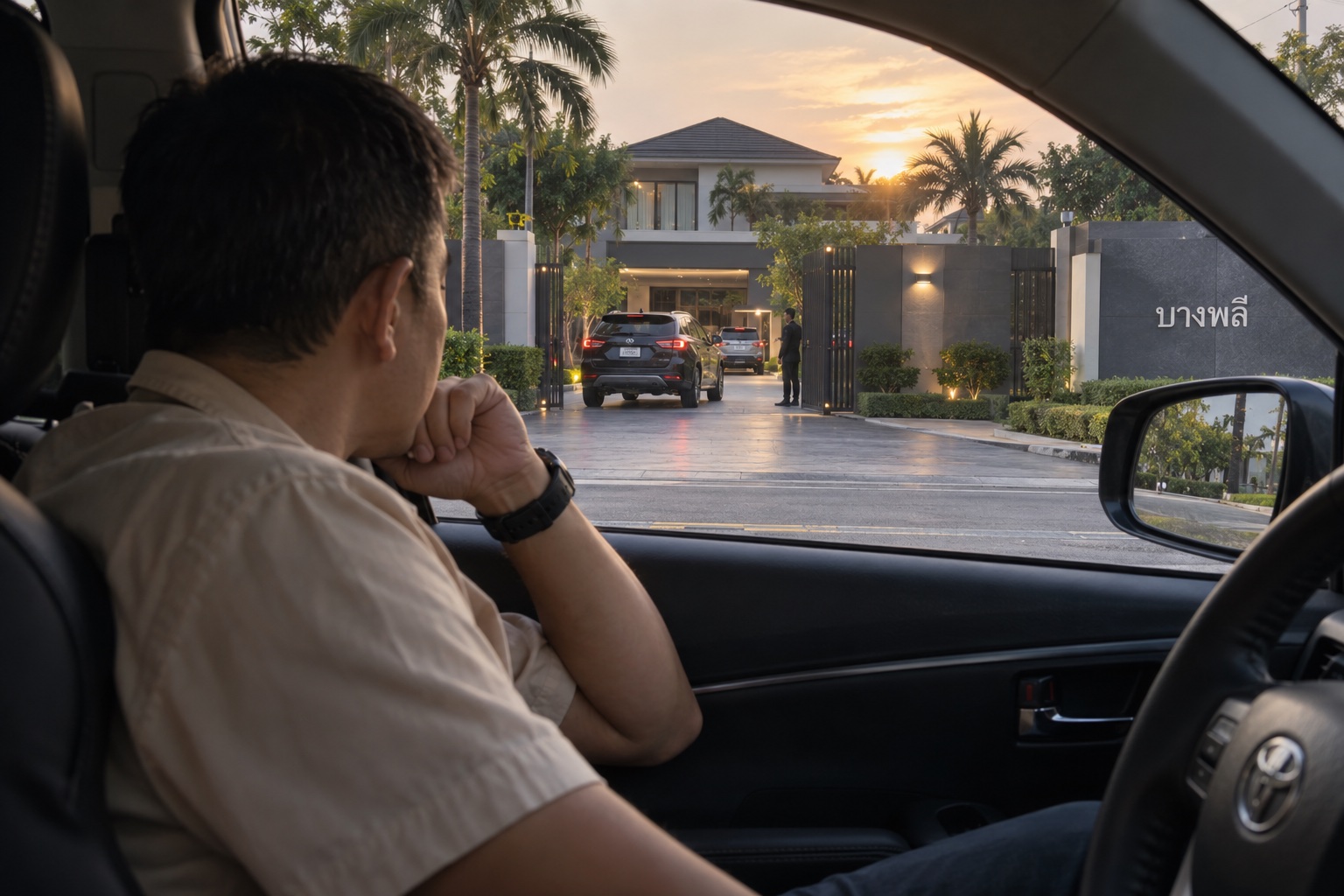
And this wasn’t a cheap little house hidden down a back street. Thai reports described it as a luxury rental property costing approximately 120,000 baht per month.
To anybody outside, it could simply have looked like a group of foreigners living in an expensive rented house. But the police surveillance began revealing a pattern.
Officers watched people arriving and leaving the house. One Thai report said vehicles were entering at around 5:00 in the morning and leaving at around 5:30 in the afternoon.
Those are unusual office hours in Thailand. But look at those hours from Australia and suddenly they make considerably more sense. Police said the pattern corresponded with Australian working hours and that became particularly significant when officers later entered the property and saw what was hanging on the wall.
Australians Targeted With Promises of Bond Returns

Investigators alleged that the operation was targeting Australians through online advertisements and telephone calls. The investment being offered involved what was described as long-term bonds. Potential customers were allegedly promised attractive annual returns. Thai reporting put the promised returns at around 7 to 10% a year.
Imagine receiving that approach as an ordinary person in Australia. You might see an advertisement online. You might make an inquiry or your details somehow enter the sales process and then you speak to somebody who sounds knowledgeable and professional. They’re talking about investments. They’re discussing bonds. They’re talking about annual returns. They may be speaking English with an accent completely familiar to you. And crucially, the person calling you doesn’t sound as though they’re sitting in some obvious criminal operation on the other side of the world.
According to investigators, the people making those calls were sitting inside a rented house in Thailand. That geographical separation is one of the things that makes modern scams so difficult to understand from the victim’s point of view. The person you’re speaking to could be anywhere. A professional-sounding phone call, a website, and online advertising can create the impression of an established financial business. The person receiving the call has no way of simply looking across the room and seeing where that caller really is.
Police alleged that money was being obtained from Australians who believed it was being legitimately invested. And the figures released after the arrest were substantial. At the Bangkok press conference following the raid, Australian Federal Police Detective Superintendent Chrissy Lee Cressy said at least 14,000 Australians had fallen victim to the scam. Authorities said the group had amassed at least 1.9 million Australian dollars from Australian victims during the period being investigated.
That is a huge amount of money, but perhaps the number that really stands out is 14,000 people, because behind every number is somebody who believed they were dealing with a genuine investment opportunity.
Investment scams can be particularly damaging because the money being transferred isn’t necessarily a small payment. People may believe they’re putting savings into something that will provide an income or a return in the future. In some cases, victims of investment scams can lose money they’ve accumulated over many years. Australian authorities were sufficiently concerned about this particular operation that the information was passed to their Thai counterparts and the two countries worked together.
Computers Scripts and Australian Clocks Found During the Raid
Back in Samut Prakan, police continued building their case. Then on the morning of June the 16th, officers went in.
Once inside, the appearance of the property changed completely. The living room had been converted into a makeshift office. Workstations had been created using partitions, giving individual workers their own desk areas. There were desktop computers and locked laptop computers. There were mobile phones and paperwork.
According to Thai reporting, police seized 58 items of evidence including computers, phones, and scripts. Photographs released after the raid showed just how organized the room appeared. This wasn’t simply a couple of people sitting around a kitchen table with their laptops. The workstations were divided up. Papers were attached around the desks. Police said some of those papers contained scripts and workflows allegedly used during calls.
Think about why a script would be useful in an operation like this. If several people are contacting potential investors, the organization needs consistency. Workers need to know what to say, how to explain the supposed investment, what questions might be asked, and how to respond.
Police also found whiteboards which they said were being used to track progress. And then there were the clocks. On the wall, there were clocks displaying different time zones across Australia. That small detail tied in almost perfectly with what officers had observed outside: the early morning arrivals in Thailand, the afternoon departures, and inside, clocks showing Australian time. According to police, the people inside the house were effectively organizing their working day around people living thousands of kilometers away. The target market wasn’t the neighborhood outside the front gate. It was Australia.
Police confiscated computers, phones, and other electronic devices, materials which could potentially provide investigators with records of calls, communications, and the way the alleged operation was organized.
The Arrests Work Permits and Suspects’ Denial
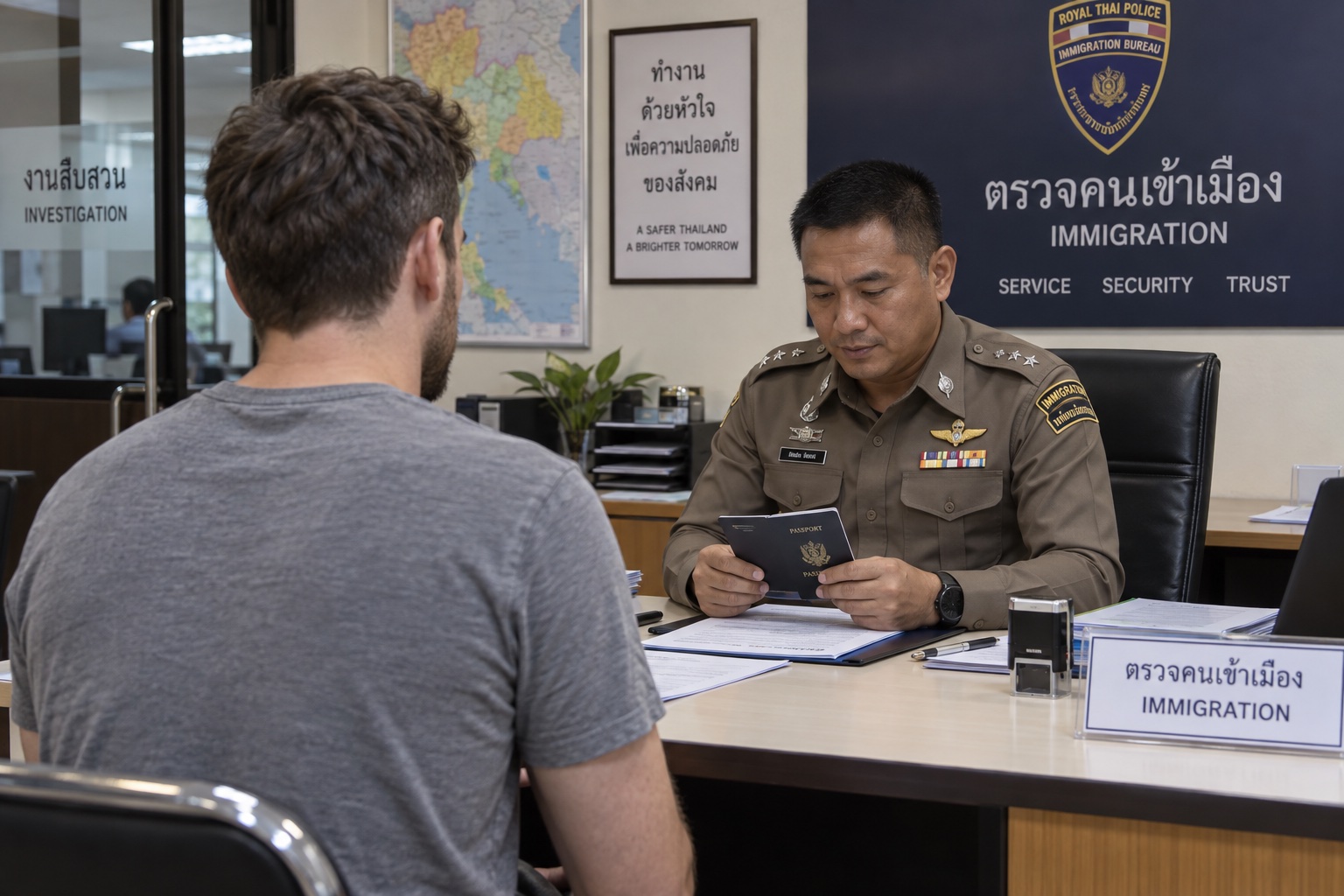
All 13 men inside were arrested. The nationalities attracted considerable attention. Six were British, five were Australian, one was Canadian, and one was South African. Two men were identified by Thai police as the alleged leaders of the operation, one Australian and one British.
According to The Nation, the workers told police they were being paid around 3,000 Australian dollars per month, plus a commission of around 2.5% of money they persuaded people to invest. If accurate, that commission structure is another important point in understanding the allegation. The more money brought into the operation, the more money somebody could potentially earn.
But there is another side to this story, and it’s important to include it. The suspects denied wrongdoing. Officials said the men told investigators they believed they were working legally for a legitimate investment company. That distinction matters. An arrest is not the same thing as a conviction, and allegations made by investigators still have to go through the legal process.
But regardless of the larger fraud allegations, Thai authorities said there was another immediate issue facing the men, permission to work in Thailand. Foreigners living in Thailand will know that permission to enter or remain in the country is not the same thing as permission to work.
Reports said members of the group had entered Thailand on different types of visas. Immigration officials referred to visas including retirement and education categories. Thai authorities said the men did not have permission to perform the work police alleged they were doing.
Initial charges included offenses relating to unlawful association or racketeering, depending on how the Thai charge was translated in different reports, along with working without permission. Police also said the continuing investigation could lead to more serious allegations, including fraud and involvement in transnational organized crime. Thai reporting at the time also said immigration authorities intended to revoke the suspects’ visas and blacklist them.
Electronic Evidence and Cross-Border Police Cooperation
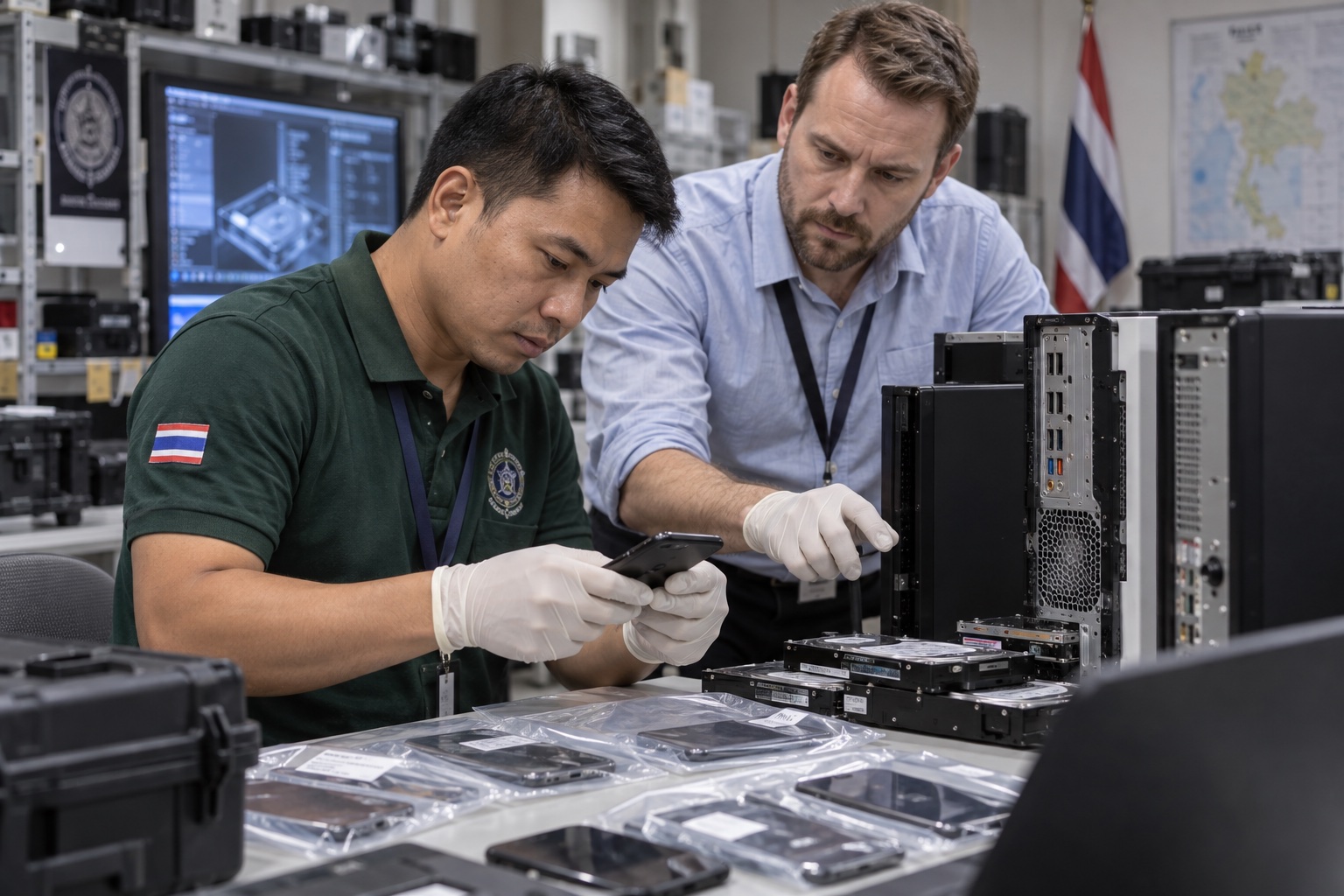
The raid itself was really only one stage of a much bigger investigation. Once computers and phones are seized, investigators can begin looking at electronic records, communications, financial information, and other evidence.
And because the alleged victims were in Australia while the alleged operation was physically based in Thailand, this was never going to be purely a Thai investigation. The Australian Federal Police were directly involved. At the press conference in Bangkok, Australian officers appeared alongside Thai authorities.
The operation demonstrates something that’s becoming increasingly obvious about this type of crime. National borders don’t mean very much when the contact takes place online or over the telephone. Somebody in Sydney, Melbourne, Brisbane, or Perth can be approached by someone sitting at a computer in Thailand. The advertisement can be online. The conversation can take place over the telephone. Documents can be sent electronically. Money can be transferred without the two people ever meeting.
And the person sending the money may have absolutely no idea where the person at the other end of the conversation is physically sitting. In this case, according to police, they were sitting in a luxury rented house in Samut Prakan.
That is why the pictures from inside the property are probably the most interesting part of the whole story. If you removed the police officers from those pictures and didn’t know the background, part of the room could look like an ordinary sales office: desks, computer monitors, phones, paperwork, whiteboards, people working at individual stations. But according to investigators, those ordinary office tools were being used as part of an operation designed to persuade people in another country to send money for investments that police say were not genuine.
The clocks on the wall make the international nature of it particularly obvious: Thailand outside the window, Australia on the clocks, and Australian customers allegedly on the telephone.
Transnational Scam Operations and Their Impact on Thailand
There is also an interesting reason why cases like this matter to Thailand itself. Thailand attracts millions of foreign visitors and has a large expatriate population. The overwhelming majority are simply here traveling, retiring, living with family, or carrying out legitimate business.
But authorities have increasingly had to deal with transnational criminal operations that can use one country as a base while targeting people somewhere else entirely.
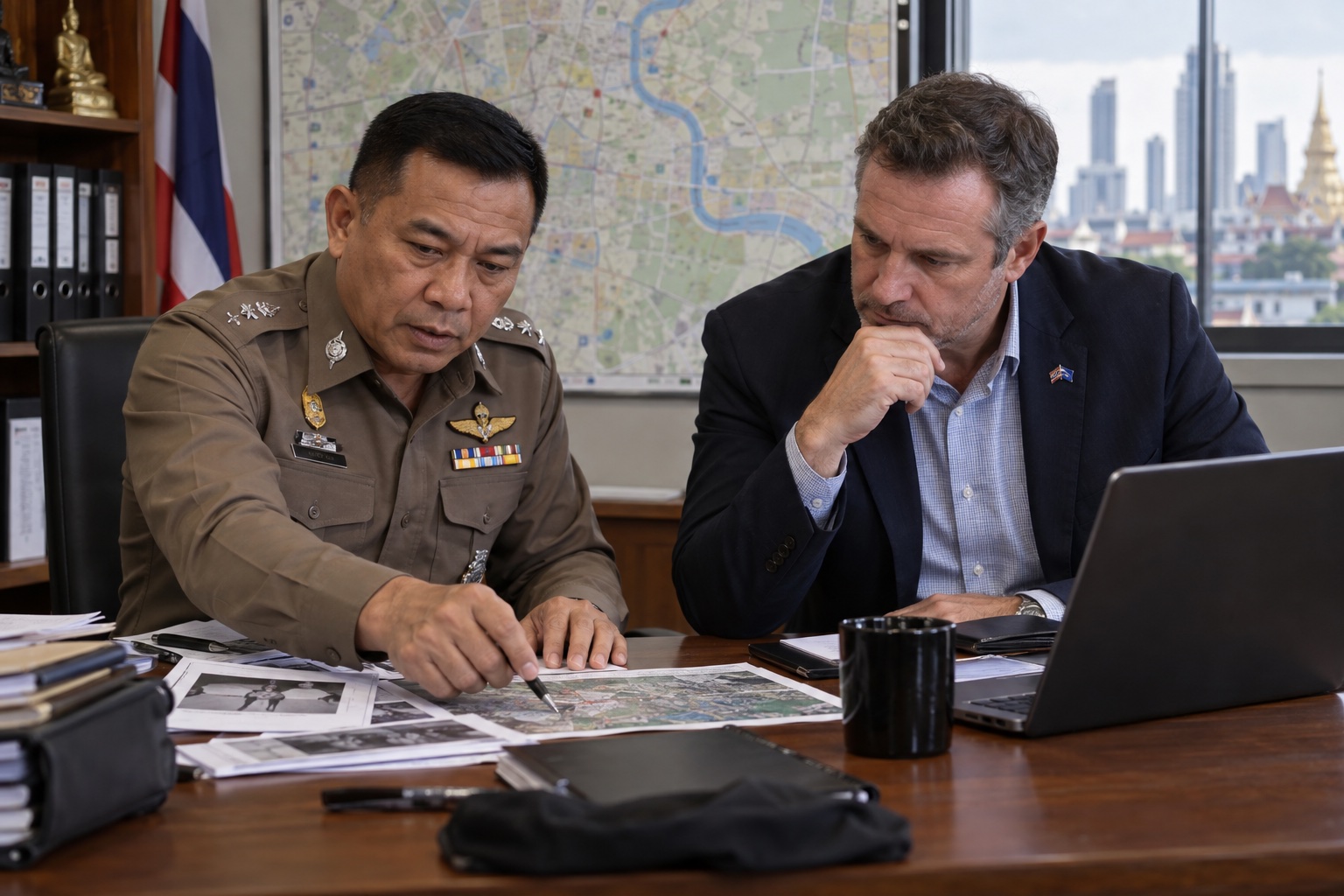
In this case, cooperation between Australia and Thai authorities was central to the investigation. The Australian Federal Police supplied information. Thai police carried out surveillance and the raid. Evidence was seized in Thailand, and the alleged victims were largely in Australia.
After the arrests, AFP Detective Superintendent Cressy described closing the center as significant for communities in both Thailand and Australia. She also placed the case within the much larger problem of online scams affecting Australians. At the time, Australian authorities said online scams had caused billions of Australian dollars in estimated damage over the preceding 4 years. So, although 1.9 million Australian dollars is a very large amount of money, this alleged operation was part of a far wider international problem.
And those operations can move. Police said the alleged leaders in this case had operated in other countries before Thailand. That mobility creates an obvious problem for law enforcement. Close an operation in one place and the people behind it may try to establish themselves somewhere else.
That is one reason international cooperation becomes so important. Information gathered in Australia can lead to surveillance in Thailand. Evidence found in Thailand can then potentially assist investigators in Australia. And electronic devices seized during a raid can contain information concerning people, accounts, and communications across several countries.
The Allegations and Legal Proceedings Following the Raid
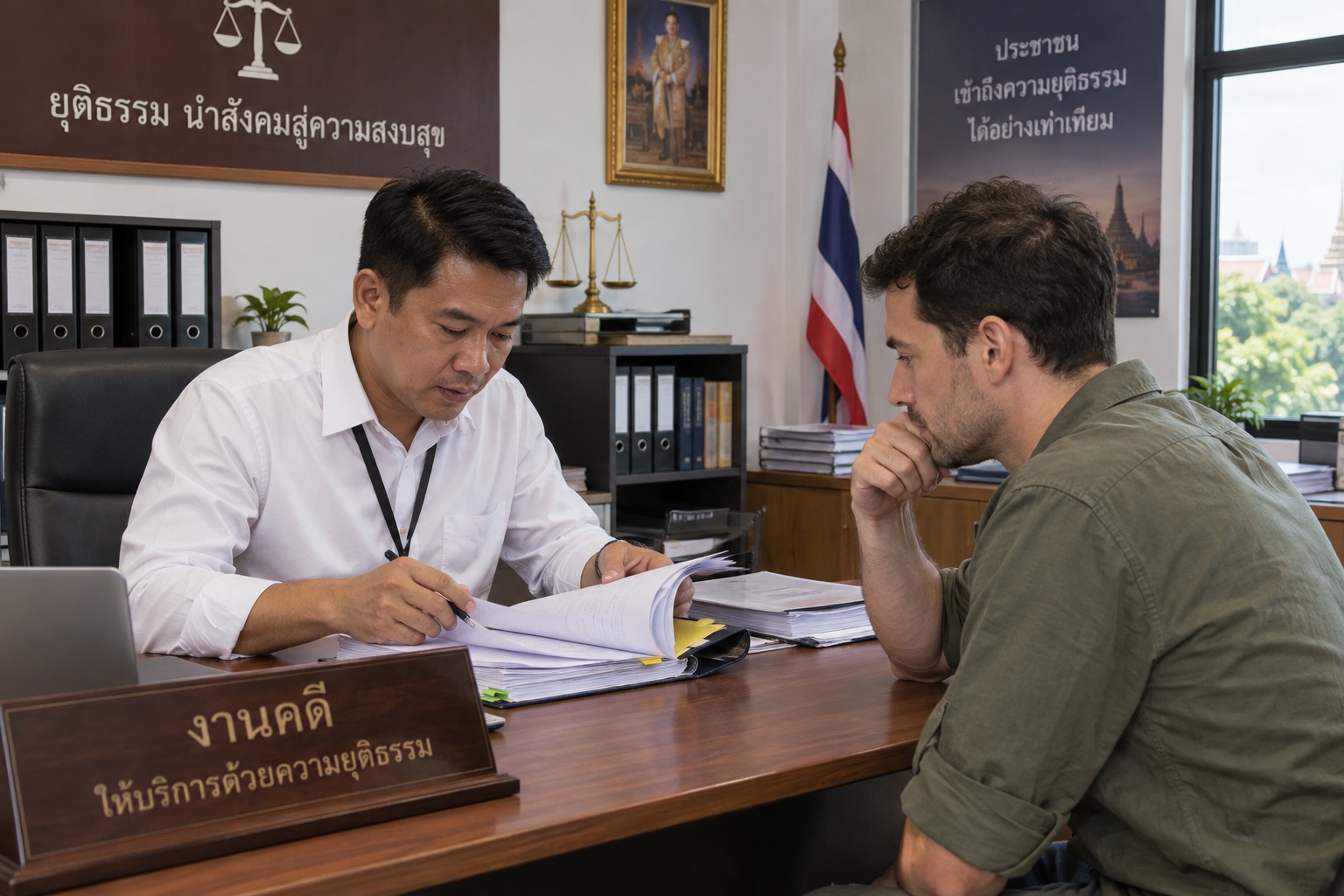
For the 13 men arrested in Samut Prakan, however, the immediate situation was much simpler. Their workplace, or what police alleged was their workplace, had been discovered. Their equipment had been seized, and they were in Thai police custody.
What happens eventually in a case like this depends on the evidence and the legal proceedings that follow. It’s worth repeating that the men denied wrongdoing and reportedly said they believed they were employed by a legitimate investment company.
What we can say is what Thai and Australian authorities publicly reported following the raid. A rented luxury house in Samut Prakan had been converted into an office. 13 foreign men were arrested there. Police found partitioned workstations, computers, phones, alleged scripts, workflow material, whiteboards, and clocks displaying Australian time zones.
Investigators alleged that Australians were being approached through advertising and telephone calls and encouraged to invest in supposed long-term bonds promising attractive returns. Australian authorities said at least 14,000 Australians had fallen victim to the scam and that at least 1.9 billion Australian dollars had been obtained from Australian victims during the period being investigated.
And the investigation that led officers to the house involved law enforcement agencies on both sides of the world.
How Surveillance Exposed an Ordinary-Looking Office
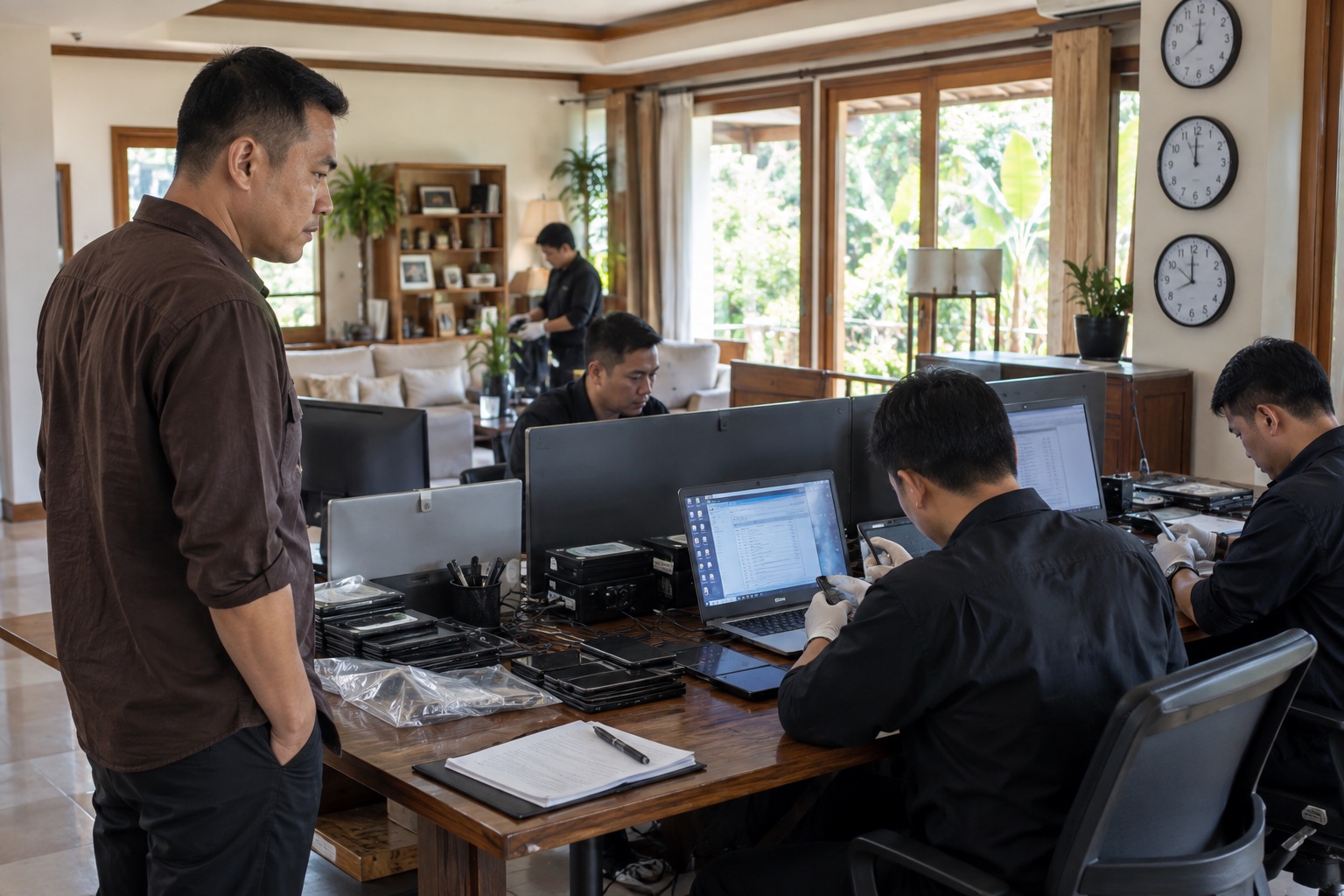
What I find particularly striking is how ordinary the physical setup looks. There doesn’t need to be some enormous secret underground headquarters. According to police, all of this was taking place inside a rented house.
From outside the gate, somebody passing by might have had absolutely no idea. Cars arrive early morning, people go inside, they sit at computers, they make telephone calls, then they leave later in the day. It could look completely mundane.
It was the pattern behind those activities, combined with the intelligence from Australia, that made investigators interested. And once officers entered the house, the desk scripts, phones, computers, and Australian clocks gave them a very different picture of what was allegedly happening inside.
What started with intelligence passed from Australia eventually led Thai police to a luxury rented house just outside Bangkok and to the arrest of 13 foreigners: six British, five Australian, one Canadian, and one South African.
The suspects denied wrongdoing and, of course, those allegations have to be dealt with through the proper legal process.
But whatever the eventual outcome for the individuals involved, the raid gives you a fascinating look at just how international these alleged operations have become. The people running an operation could be in one country, the people they’re speaking to can be in another, and the investigation can involve police forces thousands of miles apart.