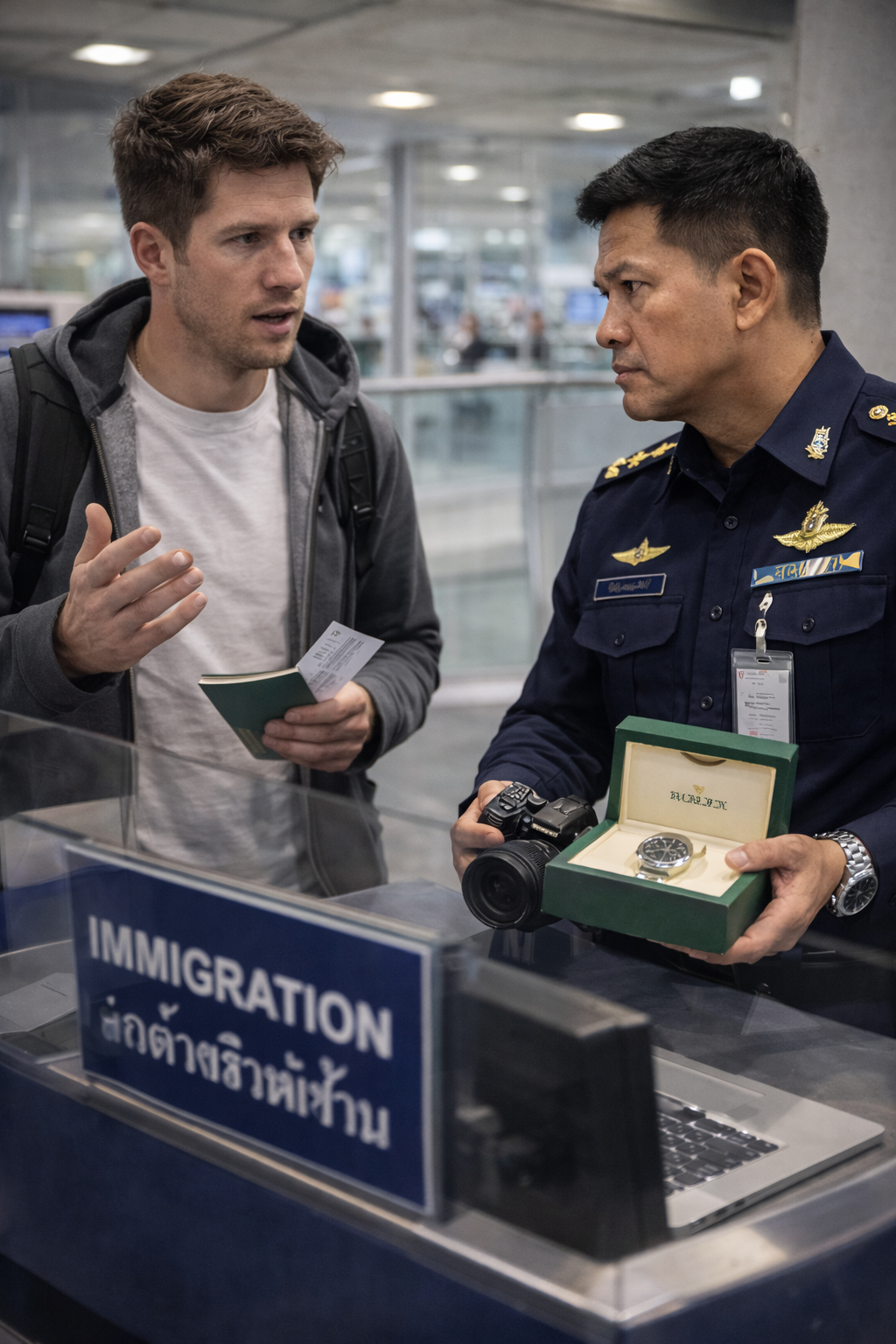
Prohibited and Restricted Items in Thailand – Don’t Bring These
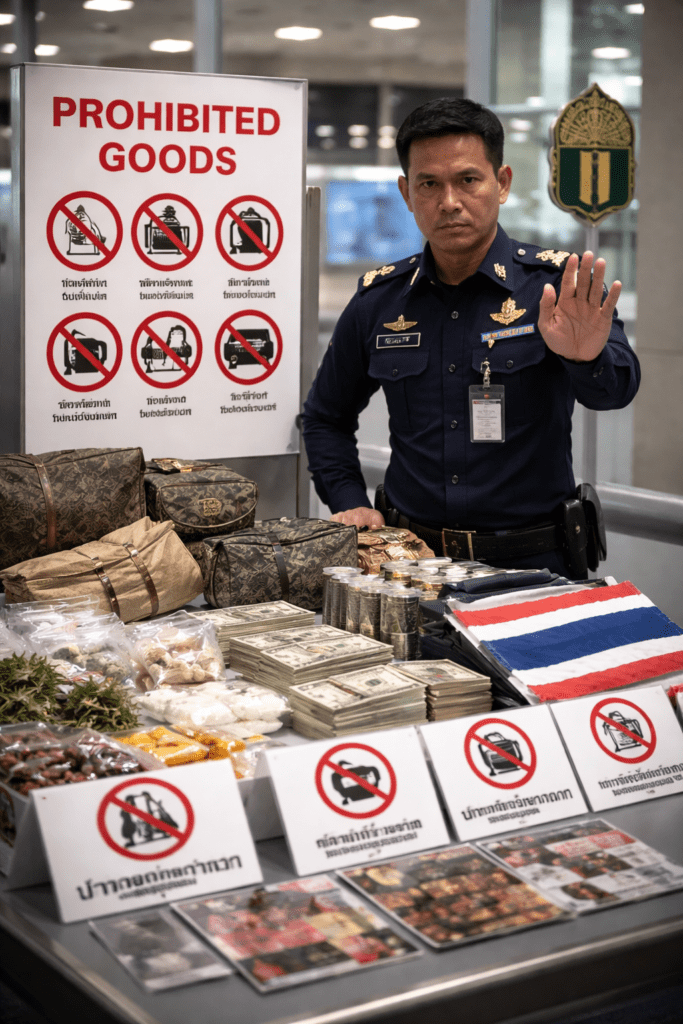
First, we have prohibited goods. As the name suggests, these items are prohibited in Thailand, and importing them can lead to significant fines even prison sentences. This includes:
- Illegal narcotics
- Counterfeit money
- Counterfeit trademarked goods
- Pornographic materials
- Any goods with the improper display of the Thai flag
Bringing prohibited goods into Thailand is a very serious offense. For example, importing illegal narcotics can lead to life sentences and even the death penalty. And although cannabis is technically decriminalized in Thailand, you can’t import any cannabis products.
It’s also important to be cautious with fake or counterfeit goods. You’ll find them in plenty of malls and markets here in Bangkok, but keep in mind that customs in your home country likely has strict regulations against importing these products, and you may face legal problems if you try to bring any of them back home from a holiday.
Restricted Goods That Require Ministry of Commerce Authorization
Next, we have a slightly less serious list, and these require permission from the Ministry of Commerce. But let’s be serious you’re probably not getting a Ministry of Commerce authorization, so these are essentially prohibited.
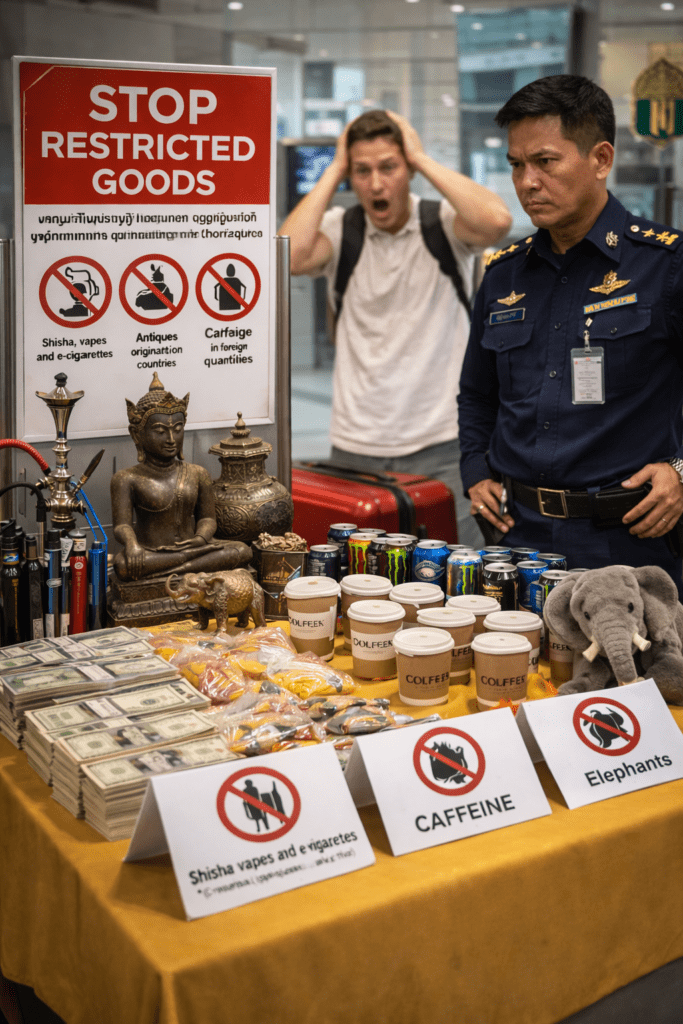
The restricted list includes:
- Shisha, vapes, and e-cigarettes
- Antiques originating in foreign countries
- Caffeine (in large quantities)
- Elephants (in case you plan to pack your elephant don’t do it)
The one product in this list that might surprise people is vapes and e-cigarettes. Despite widespread use in the country, vaping and smoking e-cigarettes is actually illegal. But they’re actually widely available for purchase in most entertainment areas. This is one of those laws in Thailand that can be very selectively enforced, and that does happen here.
Restricted Goods That Require Permits from Relevant Authorities
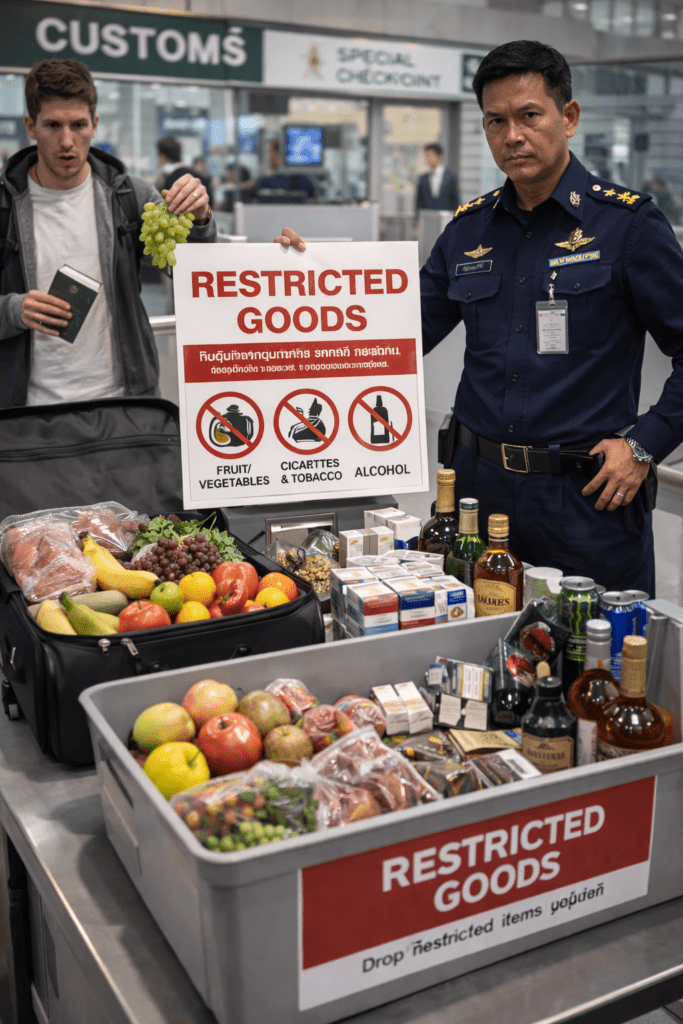
Next up, we’ve got a second set of restricted goods. These products require a permit from relevant authorities that needs to be presented at Customs. This includes any fresh fruit, vegetables, or meat products. You want to avoid packing these, as they can carry invasive species and are generally restricted.
Cigarettes, Tobacco, and Alcohol
Next, we’ve got cigarettes, tobacco, and alcohol. You’re permitted up to:
- 200 cigarettes
- 200 grams of tobacco (or 250 grams total of tobacco and cigarettes combined)
- Up to one liter of alcohol (which can be spirits or wine)
You must drop any amounts exceeding these totals in the boxes provided by Customs, or you can face prosecution.
Medicine, Cosmetics, and Food Supplements
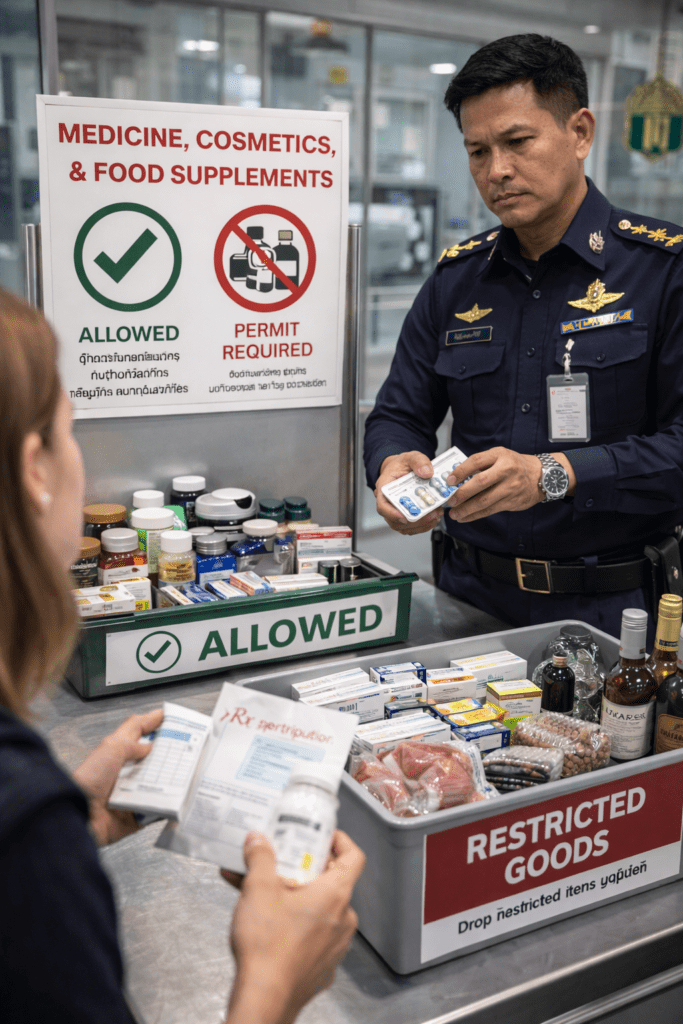
Finally, we’ve got medicine, cosmetics, and food supplements.
For most medications, you’re allowed to bring a 30-day supply into the country. You’ll need to bring it in the original packaging alongside your doctor’s prescription. For the majority of prescription medications, you won’t require any permits or authorizations.
But there are strict regulations against importing any products that contain opioids or opioid derivatives, and these products will require a permit from the Thai FDA. Obtaining the permit is a straightforward process, and I have an entire video on prescription medications. If you take any, I highly recommend you check it out the link is in the description.
For supplements, you shouldn’t have any problems. You’re allowed to bring a 90-day supply of herbal supplements for personal use without any special permits. Just make sure that the drug doesn’t contain any illegal substances like ephedrine.
Buddha Images and Artifacts
Permits are also required for Buddha images, statues, or artifacts. This also applies for leaving the country, which can be a little bit confusing as there are a lot of souvenirs of Buddha on sale here in Thailand. Technically, it’s illegal to bring them out of the country without a permit. This is one of those laws that’s largely ignored.
Guns, Explosives, Vehicle Parts, and Telecom Equipment
Next, we’ve got restrictions on bringing in guns, bullets, and explosives. This restriction makes a lot of sense it’s hard to get a permit.
We’ve got vehicle parts. In case you’re planning on coming to Thailand to rebuild cars, you’ll need a permit for the parts that you’re bringing.
Communication radio or telecoms equipment this includes drones. But you don’t actually need a permit to bring a drone into Thailand; you’ll need a couple to fly it if you want to use your drone legally in the country, but you can bring it with you without any special permits.
Customs Duties on Personal Items
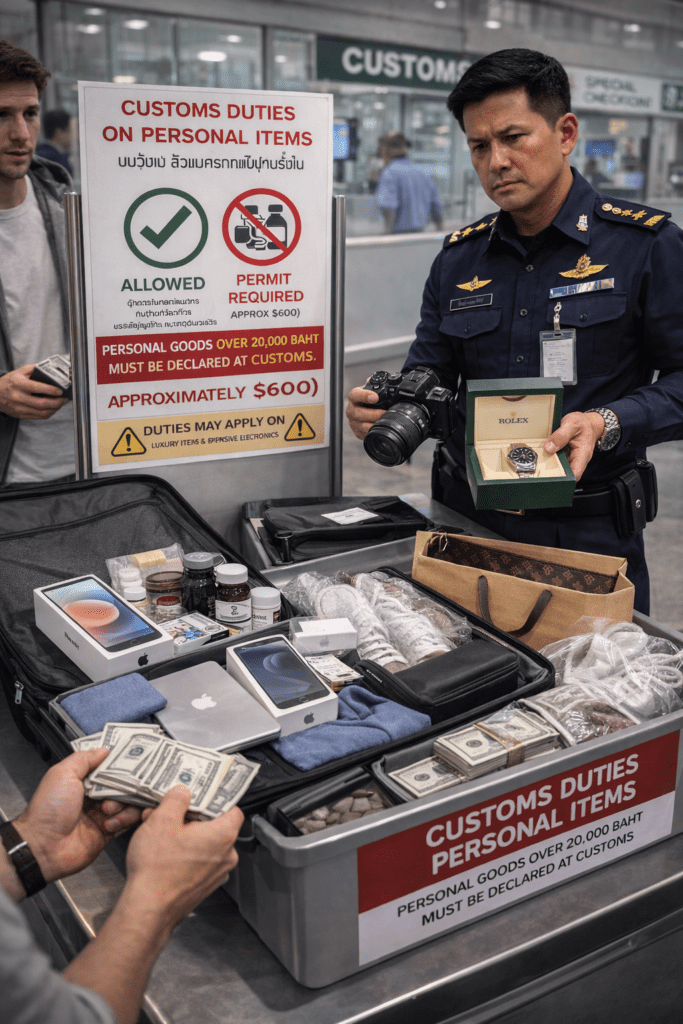
When bringing personal items into Thailand, you also risk facing high customs duties, as Thailand places tariffs on many luxury goods and expensive electronics.
Legally, travelers are only allowed to bring in 20,000 baht worth of personal goods that’s only about $600. You’re technically supposed to declare anything in excess of this value. But in practice, this rule is rarely enforced. After all, most travelers have personal-use cell phones that are worth more than $600 alone, let alone laptops, cameras, clothes. The vast majority of travelers enter Thailand with far more than $600 worth of personal goods.
But one thing you should avoid is bringing any expensive luxury items or electronics in original packaging, as this may lead Customs officers to suspect the items are for resale. And this is the real target of the enforcement system. Customs fees are exorbitant they can be as much as the value of the items in order to bring them into the country, or they face seizure.
While we’re covering Customs, be very cautious about ordering high-value items into Thailand, as this is where the customs and duties can really bite, and it’s the main target for Customs Enforcement.
The Green Channel vs. The Red Channel
When you approach Customs, there are two channels: the Green Channel and the Red Channel.
If you have nothing to declare that is, you have no prohibited or restricted items or dutiable goods you’ll go through the Green Channel. But as you pass through the Green Channel, Customs officers may stop you and X-ray or search your bags.
If you have any goods to declare or any restricted items, you’ll need to go through the Red Channel and declare them. You’ll need to present your passport, as well as any invoices or receipts for dutiable goods or prescriptions for medications. The Customs officer will calculate the total value of the dutiable goods, and you can make payment with cash, debit, or credit card.
And if you have any prohibited items, you can be arrested, fined, and prosecuted. Make sure you don’t have any of those.
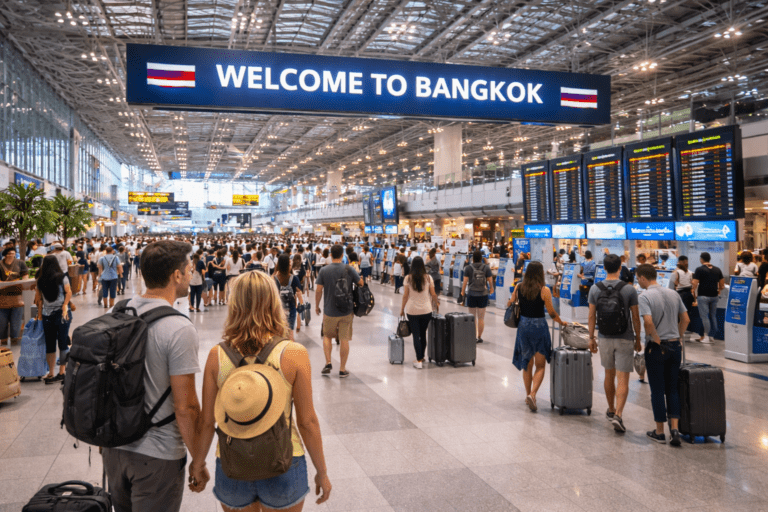
And that’s it you survive the Immigration and Customs process here at Suvarnabhumi or any airport in Thailand, and you’re ready to enjoy your holiday.
Have a great trip. I’ll see you next time.