How to Do Thailand & Vietnam Properly in Just 3 Weeks
Choosing Northern Vietnam and Southern Thailand

Most 3-week Thailand and Vietnam itineraries are way too ambitious to actually enjoy. If your route includes Hanoi, Ho Chi Minh City, Bangkok, Chiang Mai, Phuket, Koh Samui, and Da Nang, you’re going to spend a huge chunk of your trip packing bags and sitting in airports.
The first thing I do before looking at flights or booking a single hotel is accept that 3 weeks isn’t enough to see all of Thailand and Vietnam. I know that’s probably not what you wanted to hear, but both countries are easily 3-week destinations on their own. If you’re combining them, something has to give.
The mistake is trying to squeeze in every big-name destination like Hanoi, Hoi An, Ho Chi Minh City, Bangkok, Chiang Mai, Phuket, and all the other islands. On paper, it looks incredible, but in reality, you’re packing your bags and moving hotels every 2 or 3 days, and a huge chunk of your holiday disappears into airports, transfers, and travel days.
Instead of thinking in countries, think in regions. Pick one part of Vietnam and one part of Thailand and explore these properly rather than skimming across both countries.
Which two regions would I choose? For me, the answer is actually pretty clear. Northern Vietnam and southern Thailand. If I only had three weeks, northern Vietnam is the part of Vietnam I absolutely wouldn’t miss. I think it’s by far the most interesting part of the country. You’ve got Hanoi and the incredible landscapes around Ninh Binh and Ha Long Bay. And then further north, you’ve got some of the most dramatic mountain scenery anywhere in Southeast Asia. The food is incredible. There’s loads of culture. And visually, this is the part of Vietnam that blows me away.
And actually, there are quite a few similarities between northern Vietnam and northern Thailand. Both give you mountains, cooler climates, local cultures, and incredible food. But if I’m choosing between the two for this trip, northern Vietnam wins. The landscapes are just on another level. I completely skip northern Thailand this time around.
And then when you look at the south, I’d make the opposite decision. Whilst Vietnam does have nice beaches and islands, if that’s what you’re traveling for, southern Thailand wins hands down. The beaches are more beautiful, the water is more tropical, and you have a much bigger variety of islands to choose from. I just think the overall island experience is much better in Thailand.
Rather than try to squeeze in the whole of each country, I’d take what I think each country does well, the epic landscapes, food, and culture of northern Vietnam, followed by the tropical beaches and islands of southern Thailand, and make these two areas the focus of your trip.
What order should you travel them in? Once you pick the regions, I’d lock in the direction of travel. I’d fly into Hanoi, travel through Vietnam first, and fly home through Thailand, through either Bangkok, Phuket or Koh Samui, depending on the route.
The reason I do Vietnam first is simple. It’s the more active part of the trip. You’re going to be exploring more cities, moving between destinations, getting up early, and potentially trekking through mountains. Southern Thailand is where I’d slow things down. You’ve got beaches, boat trips, nice hotels, and just generally relaxing a bit more. I think a good holiday should end with you feeling relaxed at the end of it. That’s why I do the beaches last.
Hanoi Ninh Binh and Ha Long Bay in Seven Days
And there’s one more decision to make here. How heavily do you want to weight the trip towards Vietnam versus Thailand? I’ve basically got two versions of the northern Vietnam trip: a shorter 7-day Vietnam itinerary and a longer version that takes you closer to 2 weeks.
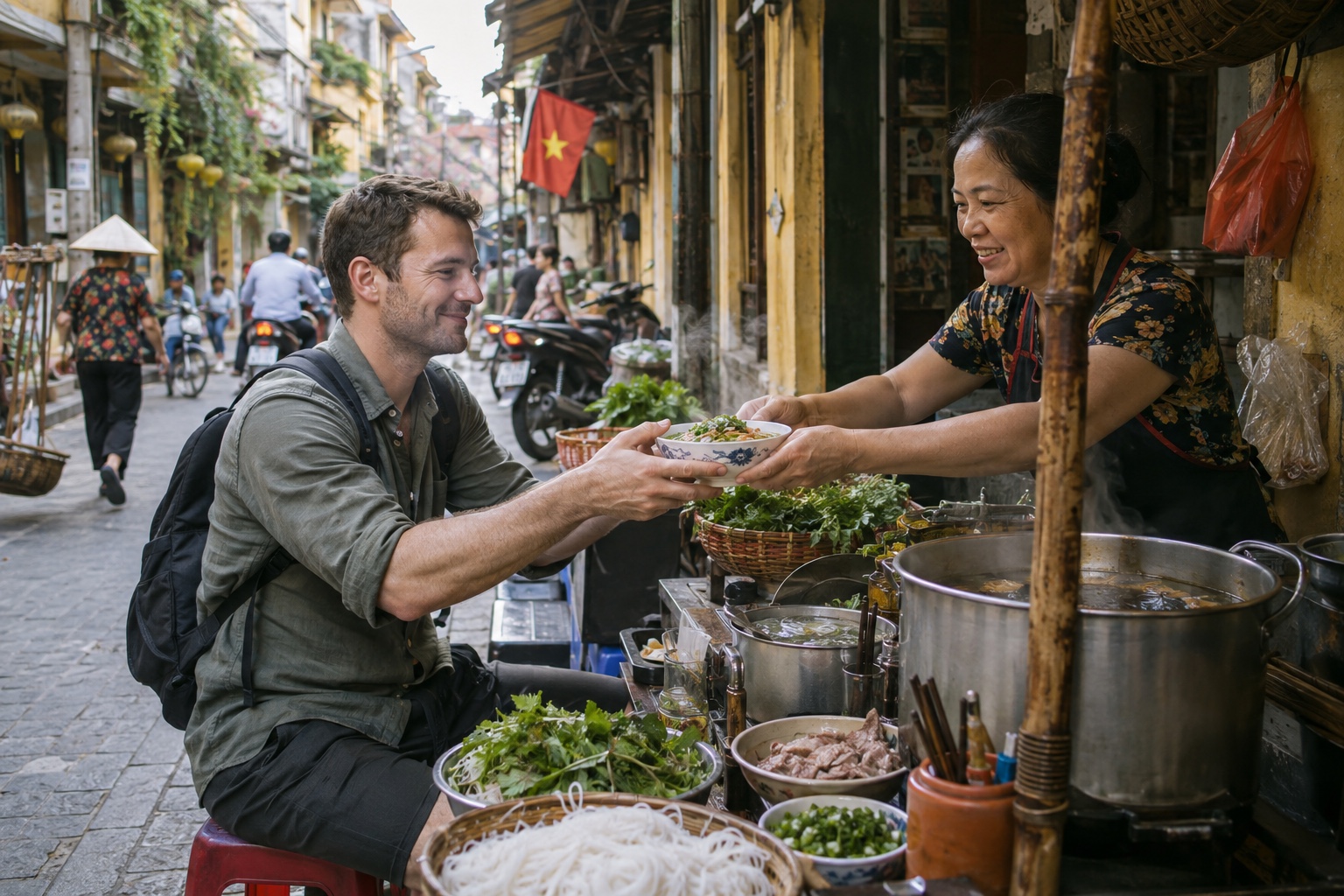
You’ll fly into Hanoi, and I’d spend my first couple of days here. Hanoi is one of my favorite food cities in the world. And if it’s your first visit, I wouldn’t overcomplicate where you’d stay. I’d stay in the Old Quarter. I think it’s the best part of the city with the most history and the best food nearby.
You’re right in the middle of the chaos and you’ve got street food everywhere and you can easily spend a couple of days just wandering around the old streets, visiting the main sites and getting used to Vietnam and getting over your jet lag.
And if you want a slightly more interesting way to explore, you can actually tour the city in an old military jeep with a local guide, which is a great way to cover a lot more ground.
From Hanoi, I’d head south to Ninh Binh. This is where you start getting into the scenery that makes northern Vietnam so special. Huge limestone mountains rise out of the rice fields, rivers wind through the cliffs, and temples are hidden out in the countryside.
I’d give myself around two days here. Climb up to Hang Mua viewpoint, take one of the little rowing boats through Trang An or Tam Coc and spend time cycling or riding through the countryside.
Then from Ninh Binh, I’d continue on to Ha Long Bay or Lan Ha Bay for an overnight cruise. This is probably northern Vietnam’s most famous landscape. It has thousands of limestone islands rising almost vertically out of the sea. You’ll spend a night or two cruising between them, usually stopping to do things like kayaking, cave explorations, swimming, and some smaller boat trips along the way.
You can comfortably do that in about seven days. The transfers are relatively short and you’re getting three completely different experiences without spending half the week traveling.
Extending the Vietnam Itinerary to Sapa and Ha Giang

But if Vietnam is the part of the trip that you’re most excited for, this is where I’d start extending it.
The first place I’d add is Sapa up in the mountains of northern Vietnam. It’s considerably further away. You’re looking at roughly six hours of travel from Hanoi, but the payoff is completely different scenery with these huge mountain valleys covered in rice terraces and villages belonging to the ethnic minority communities including the Hmong and Red Dao.
I’d spend a few days here, and rather than just staying in Sapa town, I’d definitely get out into the countryside and do some trekking. If you want to take the adventure even further than Sapa, you can add in Ha Giang.
This is where I do the famous Ha Giang Loop, spending three or four days traveling through some of the most dramatic mountain scenery in not just Vietnam, but in Southeast Asia.
You can ride a motorbike by yourself if you’re licensed and experienced, but I’d probably recommend doing what most people do and getting an easy rider, someone who knows the scenery quite well. You can hop on the back of their bike.
But this is where you need to understand the trade-off of adding Sapa and Ha Giang. Whilst they are incredible, they’re not quick additions. You’re adding long journeys and several more days of traveling through northern Vietnam. And that decision effectively determines the rest of your trip.
One week in Vietnam gives you roughly two weeks for Thailand. Two weeks in Vietnam gives you roughly one week for Thailand.
Flying From Hanoi to Thailand via Bangkok

The next step is getting from northern Vietnam to southern Thailand. And this is probably the trickiest transfer of the entire trip. Unfortunately, there aren’t actually many convenient direct flights from Hanoi to Thailand’s southern islands.
Realistically, you’ve got two options. The first, and probably the easiest, is to fly to Bangkok first, and spend a few nights there.
I’d give myself about two or three nights. Explore the temples, take a boat along the river, eat some of the food there, and head up to some of the rooftop bars that make the city so iconic. Then, when you’re ready, jump on a short domestic flight down to the islands.
The second option is to connect straight through Bangkok and get to somewhere like Phuket or Koh Samui on the same day. Now, when you land in Suvarnabhumi, you follow the signs for domestic connections and go through the dedicated transfer process.
The only issue here is that this is an international flight, so you do have to go through immigration, but luckily at Suvarnabhumi airport, they made this quite convenient. There’s a separate line that you’ll go through.
You’ll still do the immigration in Bangkok, but it’s a much quicker experience because they want to get you through to the next flight, and they’ll move all of your luggage onto the next flight.
Choosing Thai Islands and Planning Beach Days

Once you’ve got down to planning southern Thailand, you’ve got another major problem. There are almost too many islands to choose from.
Rather than trying to jump between different sides of the country, I’d pick one island group and stick to it. And you’ve basically got three options here.
On the Andaman side, you’ve got Phuket, Krabi, Koh Phi Phi, Koh Yao, and Koh Lanta. On the Gulf, you’ve got Koh Samui, Koh Phangan, and Koh Tao. Or if you want something a little bit more off the beaten path, head east from Bangkok towards the Trat Islands, Koh Chang, Koh Mak, and Koh Kood.
But before you start researching every island and deciding which one looks best, I’d actually look at the time of year that you’re traveling. As a general rule, the Andaman side is at its best from November to April. The Gulf Islands have a different weather pattern and can be a better option from January to July.
Don’t just pick your dream island and then discover you’re visiting right in the middle of its rainy season. Choose your dates first and then choose the island group that makes the most sense.
Once you’ve done that, I’d pick no more than three islands at most for your final week or 10 days. That’s enough time to give you some variety without turning the relaxing part of the trip into another mad rush. You’ve just spent a week or two traveling around Vietnam, potentially followed by a few days exploring Bangkok. By this point, you probably want to slow down and just chill on a beach.
And while every island has its own specific things to see and do, there’s also a lot of overlap in the experiences that you come here for. You can take a longtail boat around the island itself or out to some of the smaller nearby islands. You can spend some time exploring different beaches and make sure to go snorkeling or swimming. And you can even visit an elephant sanctuary or catch a fire show while you’re here, too.
But just as importantly, I would leave some empty space in the itinerary. I’d stay somewhere nice and spend some time by the pool just enjoying the beach because that’s really the point of finishing the trip here. Vietnam was the big adventure. Southern Thailand is where you get to unwind.
Thailand and Vietnam Travel Budget and Best Time to Visit
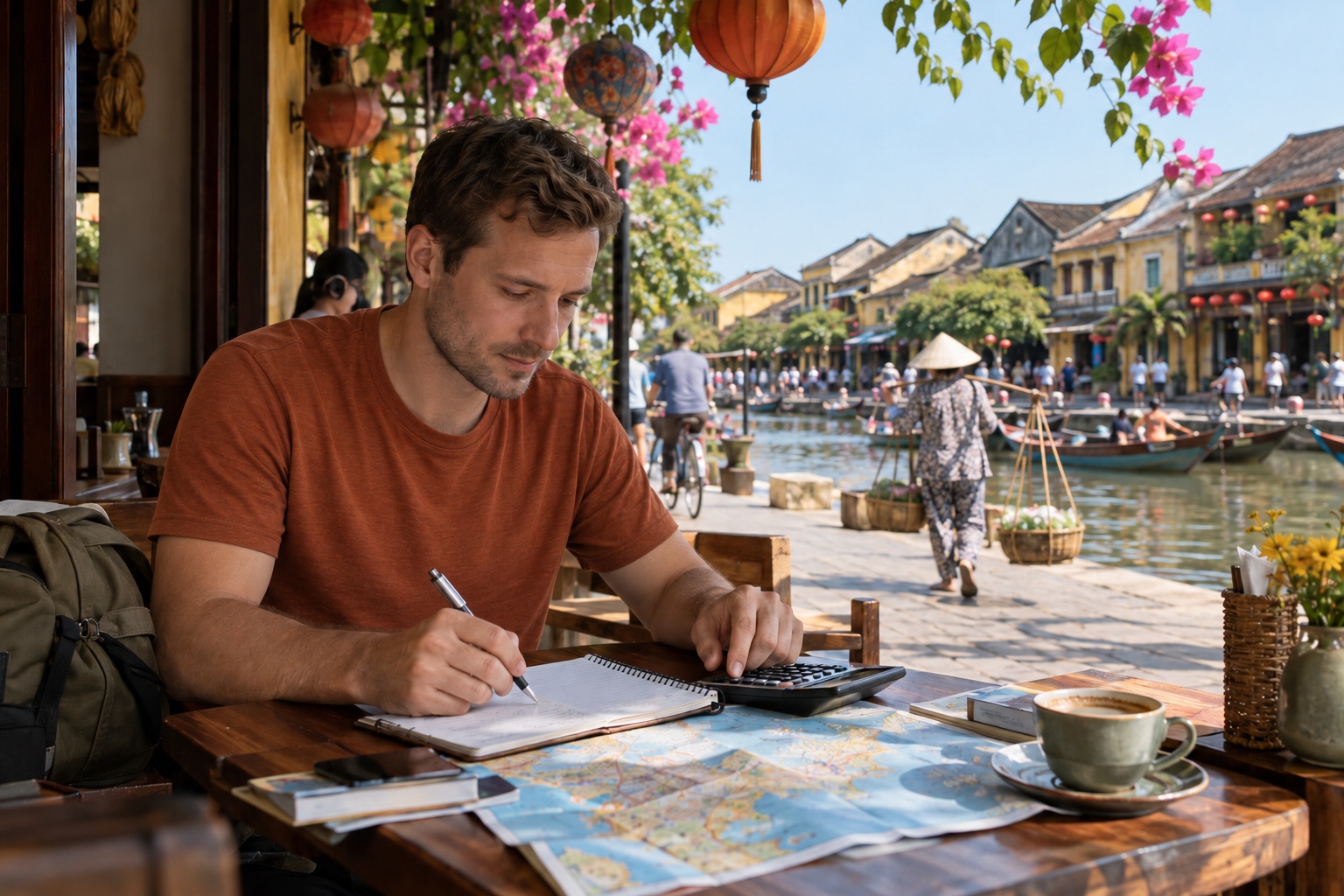
How much should you budget for your trip? At this point, we’ve got the basic itinerary, but before we can start booking any of this, there are a few practical things we need to figure out, starting with how much the trip is actually going to cost.
Luckily, after helping over 100 people plan their Southeast Asian adventures, I’ve got a pretty good idea of what an entire trip actually costs.
For two people, most of the 2- to 3-week Thailand and Vietnam trips we plan fall somewhere between $5,000 and $15,000.
At around the $5,000 US mark, you’re looking at more basic accommodations with group tours and shared transfers, but you can still put together a really good trip.
At the other end, the 15 grand gets you into five-star hotels through most of the trip, private tours, private transfers, and some really nice upgrades along the way, too. And obviously, there’s a huge amount of room in between.
But when planning the budget, I actually wouldn’t split it equally between the two countries. Vietnam is much cheaper than Thailand, so your money will go a bit further. The hotels are generally cheaper, eating and drinking are cheaper, and you can have some incredible experiences without spending a lot of money.
If you’re trying to keep the overall cost down, I’d consider weighting the trip more heavily towards Vietnam.
The other thing I think about before booking anything is when you’re actually going to travel. If you’ve got complete flexibility, I’d aim for late March into early April. This gives you a really good crossover between the spring weather in northern Vietnam and the dry season on many of Thailand’s southern islands.
And if you time it right, you can actually finish a trip in Thailand around Songkran in mid-April. That’s the Thai New Year and one of the biggest celebrations of the year.
Vietnam Visas and the Thailand Digital Arrival Card

And finally, before you book anything else, there’s one last practical thing you need to think about. That’s the visas. When you’re combining two countries, you’ve got two completely different sets of entry requirements to deal with.
Vietnam is the one I’d pay particular attention to. Americans and Canadians, for example, need a visa to visit Vietnam. As a British passport holder, I can currently visit visa-free. Vietnam does have an e-visa system, which is relatively straightforward, but don’t leave it to the last minute.
My wife is American and I’m British. We actually learned this the hard way on one of our trips to Vietnam. I didn’t need a visa. We just assumed that she didn’t either.
And it was only just before the trip that we realized Americans did need one. Suddenly we were scrambling to get her e-visa approved in time.
The night before our flight, it still hadn’t come through and we thought we were going to have to cancel the entire trip. Luckily, it arrived a few hours later, but that was not a fun evening.
Thailand is a little bit more straightforward for many travelers, but you still need to check the current entry rules for your passport.
There’s one extra thing to think about and that’s the Thailand Digital Arrival Card or TDAC. Every non-Thai traveler entering Thailand needs to complete one and you could submit it within 3 days before you arrive.
This means that you’ll actually have to do this when you’re on your trip in Vietnam. You might have to set yourself a reminder to make sure that you do it.
It’s only a small bit of admin, but it’s the kind of thing that’s easy to forget and can really slow you down once you arrive in Thailand. And finally, make sure your travel insurance covers you for both Thailand and Vietnam, too.