Everything You Need To Know About Moving To Thailand In 2026
If you’re reading this, you’re probably interested in moving to Thailand. It might just be a daydream, or you might be packing and ready to go. I’m going to share some lessons that I learned during my journey, and I hope that they’ll help you during yours.
How Much Money Do You Need to Move to Thailand?
The truth is that you can live on a wide variety of different budgets in Thailand, and it’s really based on your lifestyle, your preferences, and how much money you have. And it makes sense when you step back and think about it. Fixed costs like housing and food are generally tied to the average income levels in any given country, and the reality is that average incomes in Thailand are around $700 per month.
This means that if you want to live like a local, you can get by on a very low budget. You can find Thai-style apartments for as little as $100 per month and modern condos for as little as $200, while food at local shops, vendors, and even mall food courts will normally only cost you around $1 to $2 per meal.
Conversely, there’s also a large population of middle-class and wealthy Thai people, as well as plenty of foreign expats and investors, and there’s a thriving economy to meet their needs as well. This means you’ll find plenty of condos at literally every price range.
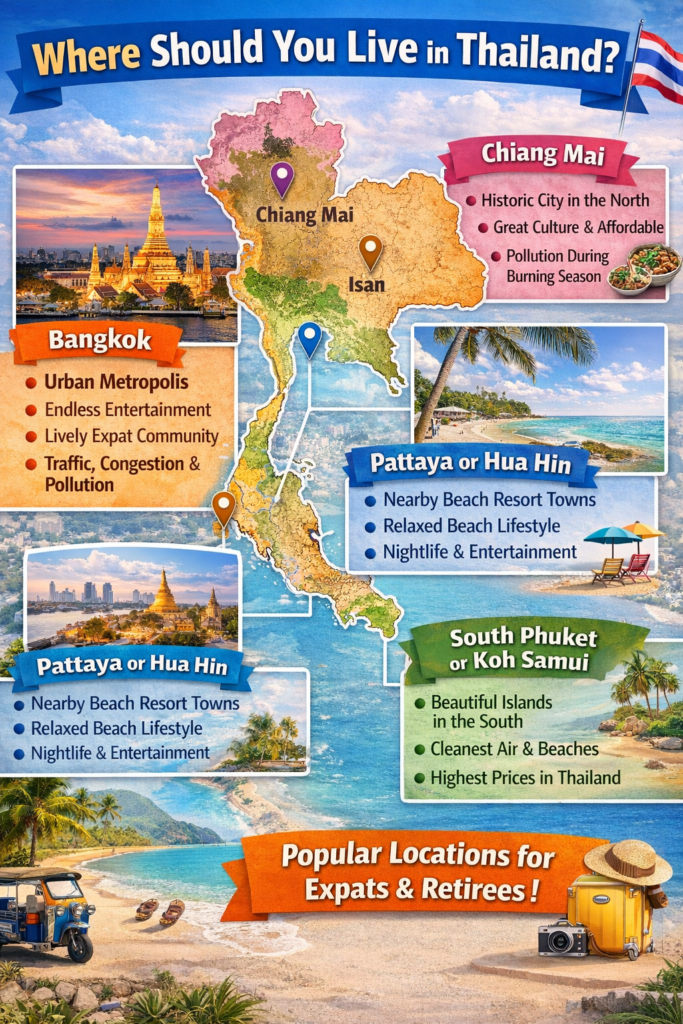
But this definitely differs by region. You’ll find the largest price variations in Bangkok, while in the south say Phuket or Koh Samui which are more tourism-oriented, will normally be more expensive. More local areas in the north around Chiang Mai or in the Isan region will definitely be less expensive.
Thailand accommodates almost any budget, and this is one thing that I absolutely love about living here. It all depends on how much money you have and how much you want to spend.
Before you move to Thailand, I recommend that you establish a clear monthly budget and break down all of your expenses. You can pick and choose where you might want to save money and where you might want to splurge. I regularly keep and update my budget, and it helps me to determine what provides the most value in my life at any given time.
My lowest budget was about $600 per month, and I lived on that budget for about 6 months while I was working and focusing on building online income sources. My current budget is around $1,700 per month, and it affords me a very comfortable lifestyle with plenty of travel, food, and going out for the occasional drinks.
In my opinion, in a city like Bangkok, anything between $1,500 and $2,000 per month is a sweet spot, whereas anything under $1,000 per month will definitely be more challenging and require considerable self-discipline.
Accessing Your Money
Before we finish up with money, let’s detail a couple of steps you should take in order to access your money once you arrive in Thailand.
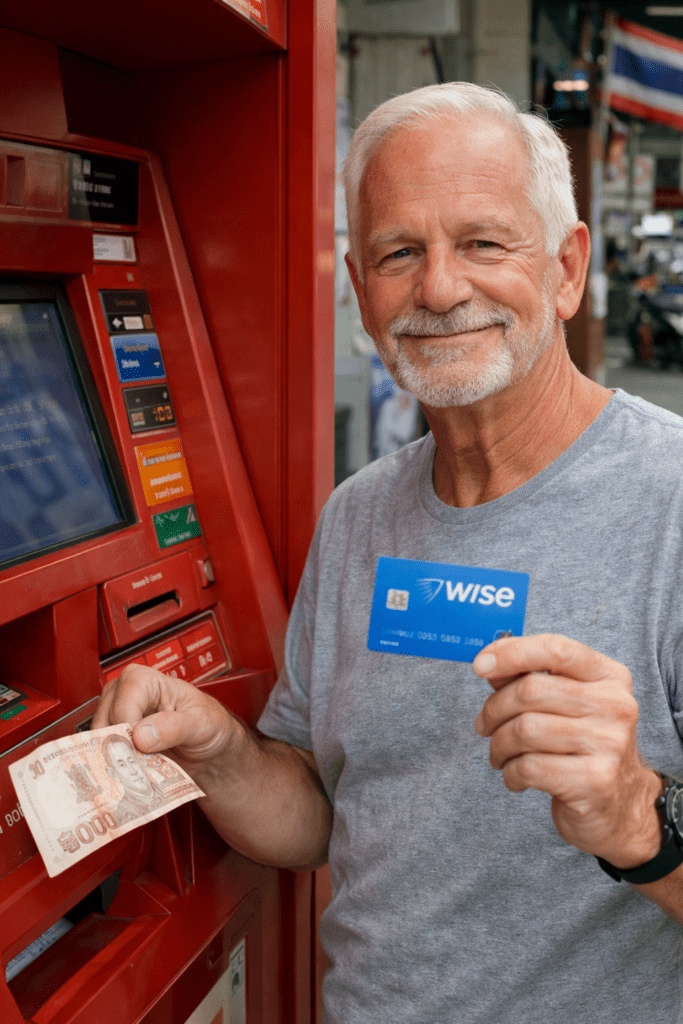
You can definitely take out money from ATMs here in Thailand using your bank card from your home country, but this will cost you around $6 per transaction. It’s not a bad option, and I actually used it for about 6 months when I first moved to Thailand, but you definitely have better options if you do a little bit of planning.
First, set up an international credit card that covers your foreign transaction fees. The ideal card will depend on your nationality. Do a quick Google search on international credit cards that are available in your country, and you’ll find great websites that list the pros and cons for each credit card option. And if you use a specific card or know of any good ones, let us know in the comment section.
Second, set up a Wise account and order a Wise credit card. Wise offers borderless accounts with automatic conversions to nearly any currency at excellent exchange rates. Simply transfer money from your home account into your Wise account, and you can use your Wise credit card here. But the Wise account will be especially valuable once you set up a Thai bank account. This will allow you to easily, quickly, and inexpensively transfer funds into your Thai bank account.
Opening a Thai Bank Account
Speaking of Thai bank accounts, opening a bank account will be one of the most important steps you need to take after you arrive in Thailand. But depending on your visa, it can also be challenging.
In the past, it was actually very easy to open an account on almost any visa, but just in the past year there’s been a significant tightening of rules around opening bank accounts. Let’s go through the process based on different visas.
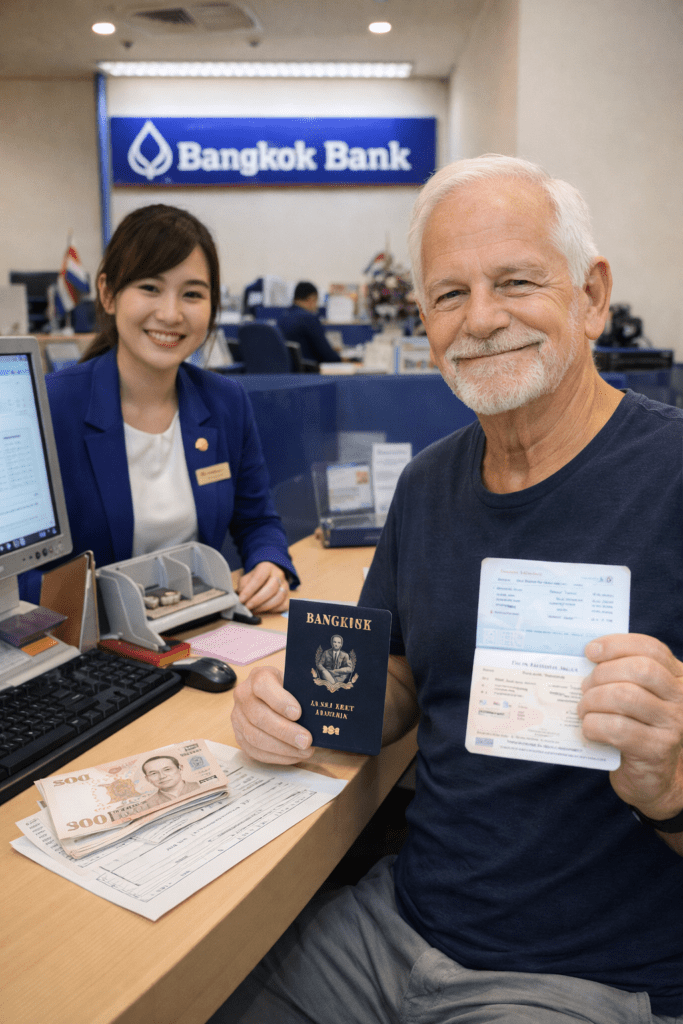
If you’re on a Non-B work visa, it’s very straightforward. Normally your employer will actually do all the legwork, but in case they don’t, or if you have your own business with a Non-B visa attached, simply go to a bank branch in a very central expat-oriented area. Bring your passport with the Non-B visa and the work permit. If you don’t yet have a work permit, bring a letter from the company stating that you’re in the process of applying for a work permit. You should also bring a copy of your lease agreement, and you might need a certificate of residence, which you can get from your home embassy.
Walk into the branch, tell them that you want to open an account and that you’re on a Non-B work visa. Just keep in mind that you might need to try a few different branches before you find one that will agree to do it. This is pretty standard because different bank branches follow different rules in Thailand. This is because many of the branch employees or managers simply don’t know how to open an account for a foreigner, and if they don’t know, they’ll probably tell you that it’s not possible. But it is. You just need to go to another branch and find an employee that knows how to do it. This is why you always want to go to bank branches in expat-oriented areas you’re much more likely to get an employee that knows what they’re doing.
If you’re on a different visa and I’m sure many of you are it’s still possible to open a bank account, and you have two options. First, you can work with an agent, and second, you can use the trial-and-error method and be prepared to do quite a bit of legwork.
These days, I think the agent approach is best, as many of the bank branches that were well known for opening accounts for foreigners in the past no longer do it. Agents will tend to have a relationship with a very specific branch and branch manager, and they’ll open the account for you while the same branch may not open an account if you were to walk in off the street. This is based on a personal relationship.
It also depends on what visa you’re using. If you’re on a Non-O retirement, marriage, or even education visa, it should still be possible to open one even with the walking-around method. Whereas if you’re on a tourist visa or visa exemption, it will definitely be much more difficult.
If you’re deciding on a bank, I would recommend checking Bangkok Bank as they tend to be more internationalized and have higher transfer limits that means you can transfer more money into the country.
It might seem difficult to set up a bank account, but don’t neglect it for too long. It will make your life much easier in Thailand. Banking apps and QR codes are used for virtually everything from paying your rent, utility, phone, and internet bills, to paying for 7-Eleven, groceries, as well as at restaurants. Thailand has a very well-developed digital payments system, and it’s well worth that extra effort to get the account set up.
And keep in mind, once you have a bank account, it’s unlikely that it will ever be closed. I first opened a bank account all the way back in 2015. I eventually returned to my home country for 2 years, and when I returned to Thailand, the account was still fully functional. This is simply a problem that you need to solve once, and you’re good to go.
Visas for Living in Thailand
We discussed the topic of visas in relation to bank accounts, but let’s discuss this subject a little bit more, as this is definitely a key factor that you need to consider before you move to Thailand.
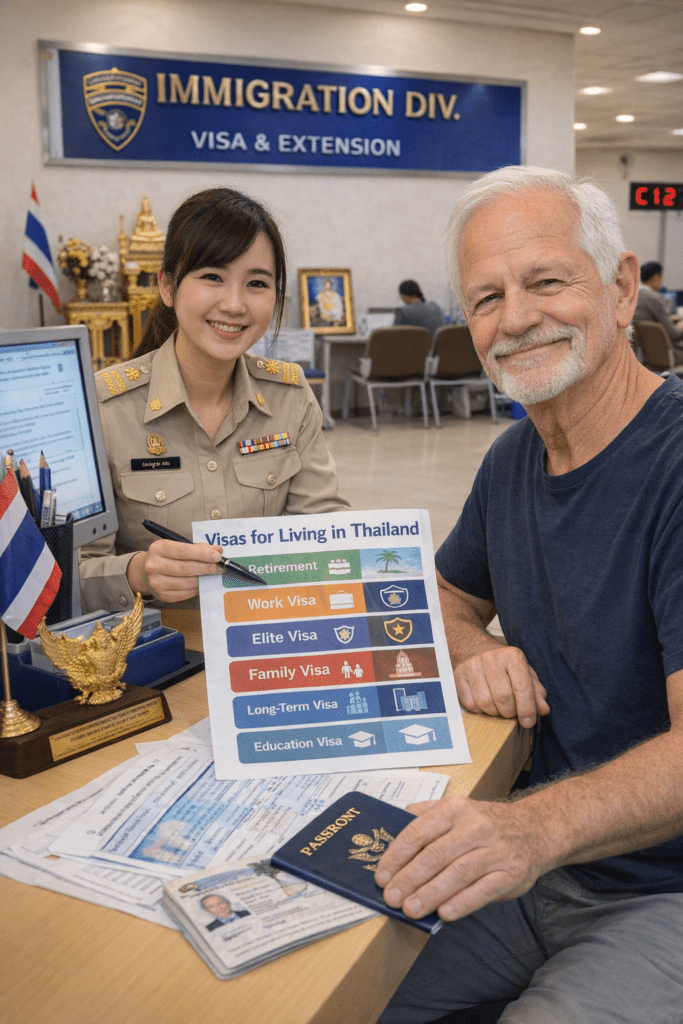
In order to live legally in Thailand long-term, you’ll need a valid residence visa, and you have five options: retirement, work, privilege, family, long-term residence visa. And for more intermediate stays, the education visa.
But not so fast. Before you sell all your belongings and pack up to move to Thailand, you should really test out living in the country and make sure it’s right for you. And you can easily do this using a tourist visa, and specifically the multiple entry tourist visa, which has a validity of 6 months and can be extended for up to 9 months if you’re a little bit strategic. This can also be a great long-term option for digital nomads or snowbirds who only want to spend 6 months of the year in Thailand and spend the other six months in another country. This avoids the hassle of dealing with the long-term residence visas or being considered a tax resident of the country.
For those of you who have already decided to make the move:
- If you’re over 50, you’ll have a very easy time getting a visa. This is the retirement visa, which requires proof of age and 800,000 Thai baht in a bank account or an income of 65,000 baht per month.
- For younger folks, things definitely get more complicated. First, you’ve got the work visa or Non-B with a work permit. This visa requires you to have a legitimate job with a company that’s registered in Thailand, but it can’t just be any job, as foreigners are prohibited from doing any jobs that a Thai person can do.
- Your second option is the privilege or Elite Visa, which is essentially a pay-to-stay option. The 5-year visa costs 900,000 Thai baht, 10 years is 1.5 million, and 15 years 2.5 million. If you have some cash to spare, this is definitely an easy option.
- Third, you have the family visas, which require you to have a much deeper connection to Thailand. This includes two types of visas: first, a marriage visa, and second, a caregiver visa. The caregiver visa applies if you have dependent children who are Thai nationals.
- Finally, you have the long-term residence visa, which requires holders to have significant investments in the country or a well-paid remote work agreement with a large multinational corporation.
And finally, you have the education visa, which is commonly used by expats, particularly to study Thai language classes. Just keep in mind that education visas have been subject to increased crackdowns lately. The visa requires renewal every 3 months, and renewals may be contingent upon showing progress in your course of studies, which normally involves passing exams.
Healthcare in Thailand
Let’s discuss health and healthcare in Thailand. Thailand has a mixed public-private healthcare system, and I’ve had fairly extensive experience with both.
When I first came to Thailand back in 2015, I suffered a head injury, and due to poor planning at the time, I lacked any health insurance. I went to Chulalongkorn Public Hospital in Bangkok. I had no idea what to expect. I walked up to a check-in desk in a busy waiting area. The administrator asked me plenty of questions about my injury. After a very short period of time, a doctor came to me she spoke excellent English and examined my head. I was sent for additional CT scans. I was prescribed medication. And if I recall correctly, it all cost about $50. Overall, the quality of the service was excellent.
After experiencing the head injury, I got health insurance, and since that time I’ve done regular checkups.
So what’s the difference in terms of quality of care? The difference isn’t that big, and that’s because doctors are required to split their time between the public and private systems. That means you’ll see the same doctors whether you visit a public or private hospital. Both systems have excellent modern, up-to-date equipment, diagnostics anything you need.
The main difference comes in the wait times and the quality of the facilities. If you visit a public hospital, you’ll normally have long wait times, especially for any specialist treatments. Conversely, the wait times at the private hospitals are near zero you can walk in and see a specialist on the spot. There’s definitely also a big difference between the facilities. Private hospitals often resemble five-star hotels with an excellent customer service approach.
When it comes to price differences between the two systems, it generally varies by procedure. But let’s compare a common colonoscopy as an example. At private hospitals, the procedure normally costs 20,000 to 30,000 Thai baht, while at public hospitals it’ll normally cost less than 10,000.
You’ll find an enormous array of different clinics for almost any specialist service, and of course plenty of dentists. This is one of the premier medical tourist destinations in the world, and that means you get excellent services at very affordable prices.
So if you’re concerned about your healthcare options here in Thailand, you shouldn’t be. Your main decision will come down to insurance. You have a wide range of different options. Some industrious expat friends of mine prefer to simply put away a little bit of money every month to create their own insurance fund. But overall, at minimum, it’s advisable to get coverage for any serious accidents or illnesses, if not a full comprehensive plan.
I currently work in Thailand, and my health insurance is part of a group employer package with a large insurance provider out of Japan called Tokyo Marine. I use Nomad Insurance from Safety Wing as my travel insurance when I’m out of the country. And of course, you have plenty more insurance providers to choose from. This includes very large providers like Cigna, or smaller and cheaper local companies like Pacific Cross.

Vaccinations For Thailand
When it comes to healthcare in Thailand, you also need to consider vaccinations. This is one of those steps that caught me off guard when I first came to Thailand. I booked an appointment with my doctor, and at the appointment he provided me with a lengthy list of recommended vaccinations and medications, including boosters for hepatitis, tetanus, rabies, and much more exotic vaccinations against Japanese encephalitis, as well as anti-malaria medications.
I did a little bit of research, and I opted for the tetanus, rabies, and hepatitis boosters, while I skipped the Japanese encephalitis vaccine and anti-malaria medication. Japanese encephalitis is quite rare and generally only occurs in very rural areas. And I also opted not to take any anti-malaria medications, and that’s because if you plan to actually live in Thailand, there isn’t much point in taking the medication unless you plan to take it in perpetuity. Anti-malaria medications are known for having strong side effects. When it comes to your risk level, it’s also quite rare in urban and built-up tourist areas.
While your risk level does increase in more rural areas, especially during the rainy season, even then this will put you at risk for malaria and dengue fever. Over the years of living in Thailand, I’ve never actually met anybody who’s caught malaria here, but I’ve met plenty of people who have had dengue fever. These are both mosquito-borne illnesses, and your best defense is to cover up and use lots of strong bug spray in those rural areas.
But this was just my thought process. I recommend that you do your own research and talk to your doctor. But if your vaccinations aren’t covered under a health insurance plan in your home country, you might prefer to wait until you arrive in Thailand and get them here. You can walk into a clinic and get your vaccinations almost immediately in a city like Bangkok at very inexpensive prices.
Pharmaceutical Medications
Before we move on from healthcare, let’s talk about pharmaceutical medications in Thailand. Many of you may take pharmaceutical medications and wonder if you can bring your medication with you or whether you’ll be able to buy it here in Thailand. I covered this subject in depth in a previous video. If you plan to bring any medications or you need to access anything here, I strongly recommend that you check that video out. The link is in the description.
That being said, if you plan to bring medications with you, you should check that it isn’t a prohibited or controlled substance. The most common controlled substances here in Thailand tend to be opioids or opioid derivatives, which even includes basic codeine. Legally, these are controlled substances in Thailand, and you need to fill out an online form which requests permission from the Thai FDA to bring any opioid drug into the country.
You’ll also have a tough time buying opioid medications in Thailand. These are only available through large hospital pharmacies, and you’ll require a prescription here in the country. These can be difficult to get. If you have a prescription in your home country, make sure to bring it. You’ll need to visit one of the hospitals and get a proper prescription.
In contrast, you can bring most other medications into the country without declaring them, and most medications which are prescription-only in Western countries are widely available at pharmacies in Thailand without a prescription. In addition, Thailand is a leading generic drug manufacturer, and most medications will be significantly less expensive if you buy them here in the country.
Just keep in mind that different pharmacies do follow different rules. It’s a bit like the banks. If one pharmacy doesn’t carry a medication, simply inquire at another. If you’re looking for a prescription medication, avoid going to the chain pharmacies that are located in the malls these are the Boots and Watsons. They normally won’t carry very many prescription drugs aside from opioids.
Accessing your prescription medications should not be a problem in Thailand, but don’t make any assumptions. Always make sure that a drug isn’t on a controlled substance list before you bring it into the country.
The Education System in Thailand
Let’s talk about the education system in Thailand. If you have kids or you plan to have kids, you’ll need to consider where to send them for school.
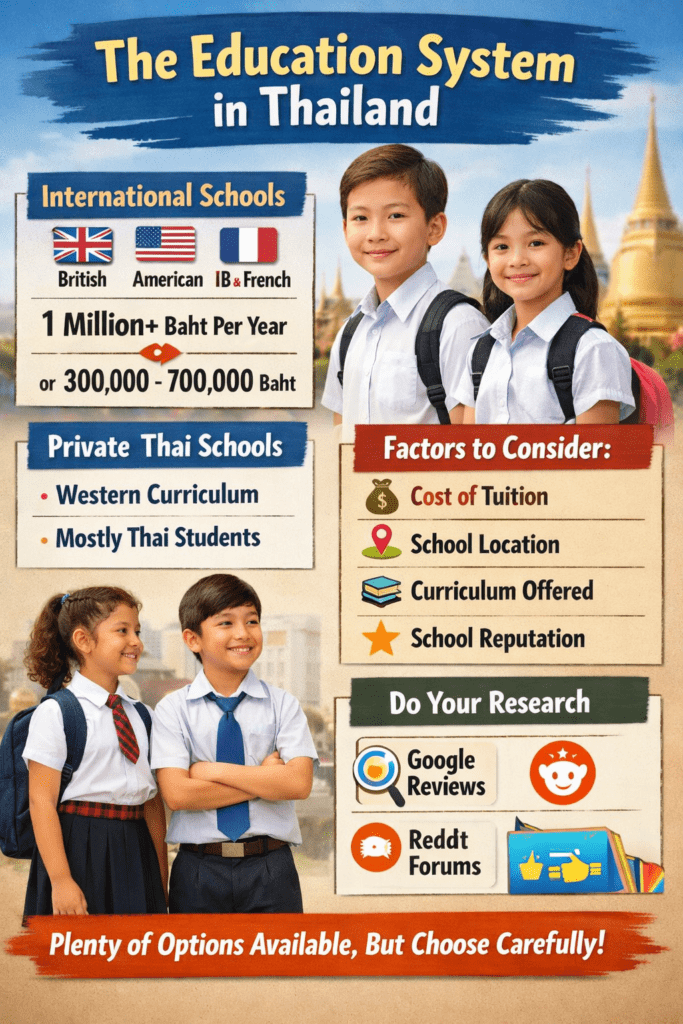
There are a wide range of options available, and it largely depends on your preferences and your budget. You have plenty of international schools which follow different national and international curricula. There are British schools, American schools, IB schools, even a French school. But these schools don’t come cheap, with tuition costing upwards of a million baht per year. But you also have plenty of international schools that cost between 300,000 and 700,000 baht.
Cost obviously factors into education, and one of the more common options that long-term expats take is sending their kid to private Thai schools. These schools generally follow a Western curriculum, but they primarily enroll Thai students.
Before deciding on a school, you should check out Google reviews and Reddit forums. It can be particularly helpful to read the reviews from teachers who actually worked at the school. In truth, there are plenty of great options, and it’s entirely feasible to move to Thailand with younger kids. But this is one area where you want to do plenty of research.
Safety in Thailand
Let’s talk about safety in Thailand. When it comes to crime and especially street crime, Thailand is very safe.
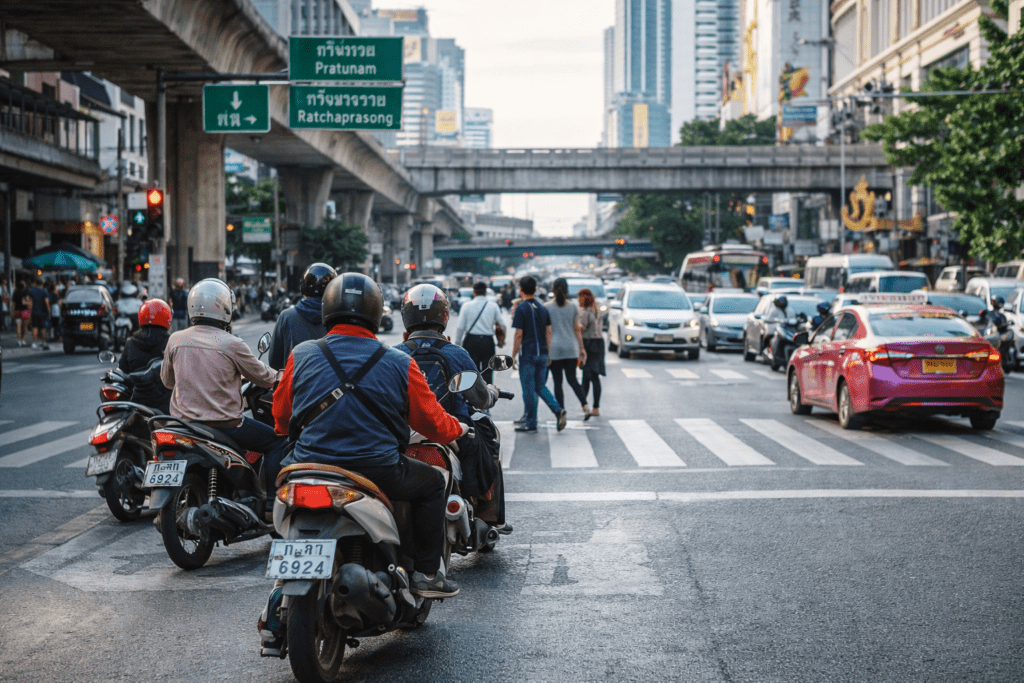
However, where Thailand can be less safe is on the roads. With a road death rate of 32 per 100,000 people per year, Thailand has some of the most dangerous roads in the world. This is largely due to a combination of a lot of scooters and cars on very busy streets, along with a general lack of adherence to the road rules and a lack of police enforcement. This extends to basic activities like crossing the street. It’s very common to encounter stories about pedestrians getting run over even while they’re crossing at designated crosswalks. So you definitely need to be more careful when it comes to the roads. But if you avoid riding motorbikes, your risk drops significantly.
Environmental Factors Pollution, Weather, and Traffic
Environmental factors can be a bit of a challenge when it comes to living in Thailand. I’m talking about pollution, weather, traffic, and general congestion in the cities.
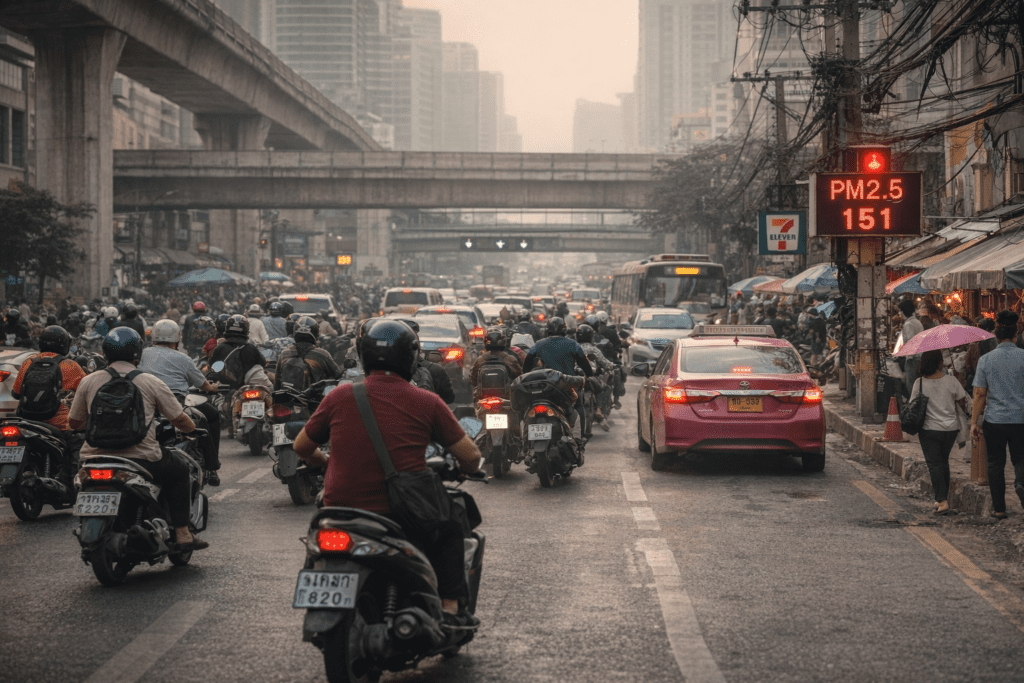
Air pollution is probably the single biggest negative for me when it comes to living in Thailand. For about four months of the year from around December through to March or April the air pollution can be very bad. This is the notorious PM2.5 pollution, which is caused by crop burning and affects Northern and Central Thailand.
If you’re considering living in Chiang Mai or Northern Thailand, you should be aware that this region experiences some of the worst air pollution in the world. When I first came to Thailand, I went to Chiang Mai during the crop burning season as I didn’t know anything about it. It was a strange experience, and I definitely wouldn’t return during the crop burning season.
Conversely, the air quality in the south is considerably better. So if air quality is a concern, or if you have respiratory illnesses like asthma, you may want to consider living in the south. But even if you opt for Bangkok, make sure to buy a high-quality air purifier for your condo.
Let’s talk a little bit about the weather in Thailand. There are three seasons: hot, hotter, and rain. If you struggle with heat, Thailand might not be the ideal destination for you. During the hot season from around March to May, temperatures regularly exceed 40°C, and with humidity they can reach into the 50s. Fortunately, nearly every condo and indoor space has air conditioning, so it is very easy to get out of the heat.
Besides the heat, there’s also a lengthy rainy season between June and November. The early rainy season in June and July is actually quite pleasant, as it clears out the heat and the air quality is very good. But in September and October, there are frequent torrential downpours that can last for hours and cause significant flooding.
If you plan to live in Bangkok, I recommend that you stay near a public transportation station. Rain can come out of nowhere, and once it hits you’ll have a very difficult time finding a taxi. You want easy access to public transportation, which will help you avoid dealing with Bangkok’s notorious traffic year-round anyway. I’d also recommend that you avoid living in low-lying areas, as these neighborhoods will have frequent flooding that can be a couple of feet deep.
Let’s talk a little bit about traffic and congestion in the cities. Cities like Bangkok have a very high level of traffic congestion, and this applies to both the roads and the sidewalks. If you’re not a big fan of crowds or you have mobility issues, you may find the sidewalks in the city a little bit overwhelming, as they are generally very crowded and sidewalks often have uneven surfaces and damages that can make it very easy to trip or twist an ankle. This can make walking difficult even for a fully fit individual, let alone somebody with mobility issues.
So when it comes to all these environmental factors, I recommend that you test out living in a variety of different locations and avoid testing out the locations during the best time of the year, which is around November to December when it’s a little bit cooler, the air quality is very good, and there’s no more rain. Every location will be great at this time of the year.
Instead, try it out at a time of the year that you might not like. Maybe go at the height of the pollution season like I did to Chiang Mai, and that ensured that I would never live there on a yearlong basis. Or if you think the heat might be a bit much, try living in a city like Bangkok in May and then decide if this is an environment that works for you. Or if you’re concerned about rain, check out different locations during the height of the rainy season between September and October. If you can accept the worst of times, the best of times will be fantastic anyway.
Infrastructure in Thailand
What about infrastructure? How developed is the infrastructure in Thailand? The answer to this question really depends on which part of the country you choose to live in.
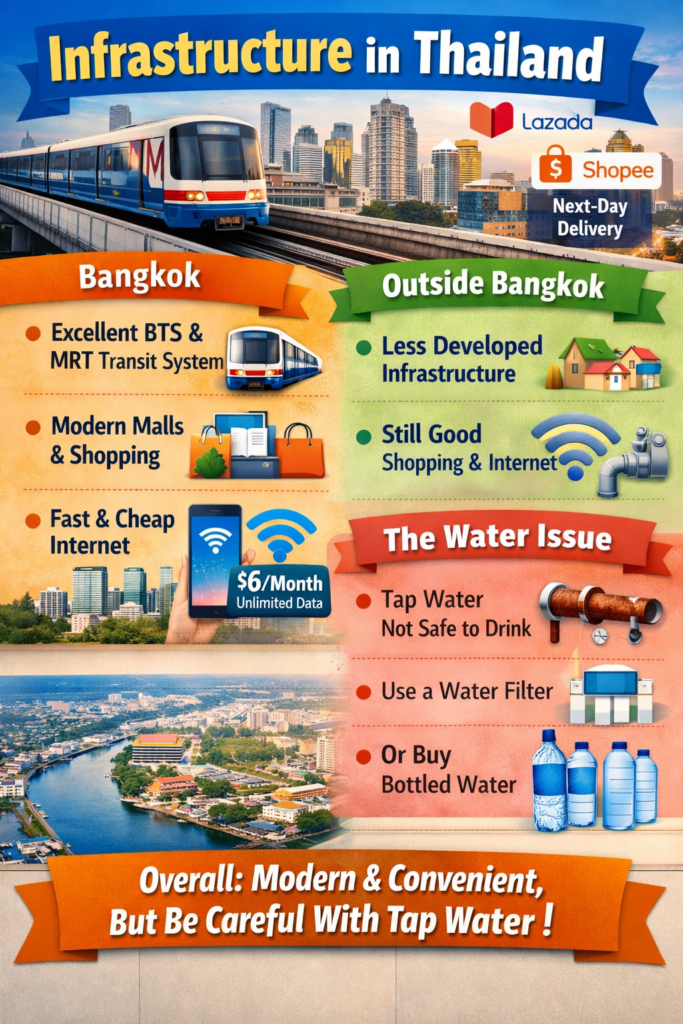
In Bangkok, the infrastructure is excellent. This is a very modern city. For transportation, the BTS and MRT rail systems cover nearly the entire city, and they’re expanding every single year. When it comes to power and electricity, I’ve been here for 8 years through multiple heat waves, and the electricity and air conditioning has always worked. For your daily needs, there are malls in virtually every neighborhood with a wide range of grocery and department stores where you can buy virtually anything you want. If you prefer to shop online, you can order goods from Lazada or Shopee, which normally provide next-day delivery services.
For telecommunications, internet and data plans are very fast and inexpensive. For example, I pay about $6 per month for my phone plan. It has unlimited data and calls. I also have a very fast internet connection, and it only costs me an additional $15 per month.
If you live outside Bangkok, infrastructure is less well-developed, but you’ll still find excellent shopping and internet and data infrastructure.
The one area of infrastructure that remains underdeveloped is access to clean water. While water in Bangkok passes regular international standards for testing, the pipes and storage systems in condos are notorious for corrosion and infiltration by bacteria. So it isn’t advisable to drink the water from the tap. However, this is easily remedied by purchasing a good water filtration system, or you can buy bottled water at the many convenience stores.
Where Should You Live in Thailand?
So what about locations? Where should you live in Thailand?
First, you have Bangkok, the urban metropolis, where you’ll find an endless supply of restaurants, nightlife, malls, galleries, night markets, parks, and events, and lots of different areas to explore, as well as a lively expat population. The great public transportation makes it very easy to get around the city. This is a great travel hub to explore the rest of Thailand and the surrounding region, while you can find great accommodations, food, entertainment on any budget. But you do have downsides, especially the traffic, the congestion, and the pollution.
If you want a more relaxed option while staying within a couple of hours of the metropolis, you can also choose Pattaya or Hua Hin. These are the nearby beach resort towns. Both cities offer a more relaxed beach vibe with great entertainment and nightlife options. Hua Hin tends to have a more family-friendly resort vibe, while Pattaya is famous for its nightlife.
Or you may prefer the south Phuket or Koh Samui where you’ll find the cleanest air, beautiful beaches, great food, and excellent nightlife. However, these islands are very tourism and expat-oriented, and you’ll find the highest prices in Thailand.
If you want to be immersed in a more Thai setting that has plenty of expats, enjoy some mountains, some history, Chiang Mai may be right for you. This city is rich in Thai history, has plenty of beautiful architecture, and a great cafe culture at very affordable prices. The main downside to living in the north is the extremely bad pollution during the burning season.
Finally, if you want a much more Thai lifestyle, fewer expats and tourists, and a very affordable cost of living, the Isan region might be right for you. There are several mid-sized cities which are popular for expats looking to escape the tourism-oriented environment that does dominate much of Thailand. But unfortunately, Isan also experiences significant pollution during the burning season. This is inescapable when it comes to living in Central and Northern Thailand.
And of course, you can find smaller cities and towns dotted throughout the country, and this will offer an entirely different experience, although you may find yourself somewhat cut off from an expat community if you opt for that path.
Finding a Condo
Once you’ve decided on a region or a city, you’ll also need to think about accommodations. How should you go about finding a condo in Thailand?
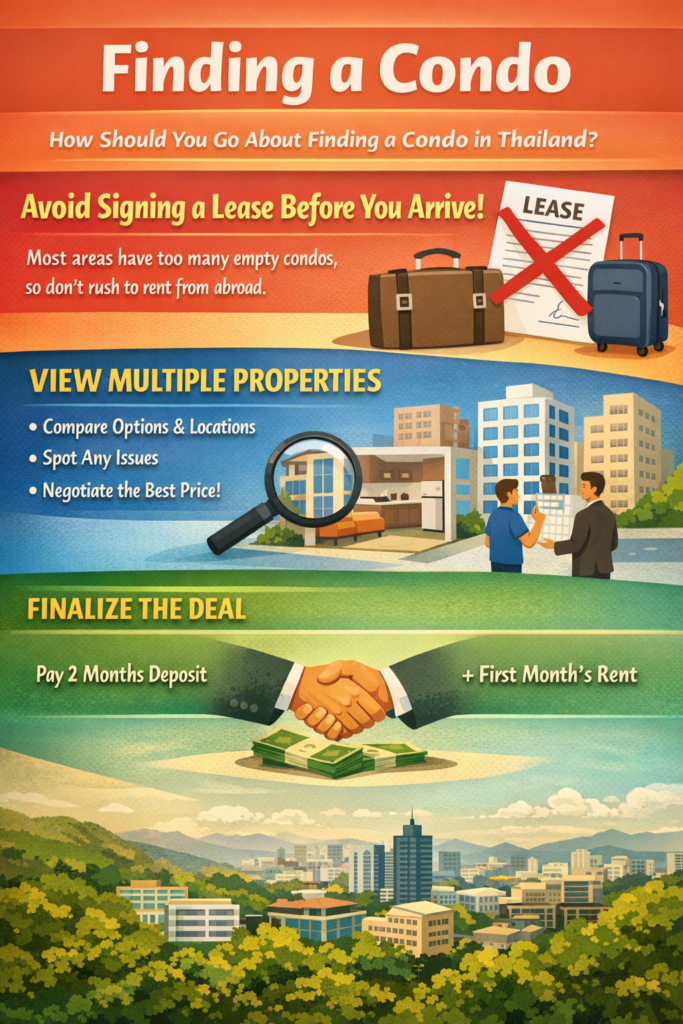
The first and most important piece of advice that I can give on this subject is to avoid signing a lease when you’re still outside of the country. Most areas of Thailand have a significant over-supply of housing. There are too many condos, and this means that you shouldn’t feel stressed out about finding a place before you arrive. There are empty condos everywhere.
Once you arrive, you can arrange to view a couple of dozen places within a day or two, and this will give you the opportunity to compare many different options, get a feel for the location, identify any problems or issues with the condo and you do encounter these and finally, you’ll actually save money because you can negotiate better prices once you’re on the ground.
When it comes to actually signing a lease, it’s normal to provide a two-month deposit plus the first month’s rent.
Shipping Your Belongings
What about shipping your belongings to Thailand? Should you bring your entire life with you from your home country? This is normally a mistake. This will weigh you down and make your move much more challenging, especially if you decide to explore four different locations.
Condos in Thailand are normally fully furnished, and even if you ultimately decide to move to an unfurnished condo or house, it’s very easy to find furnishings here. There are IKEAs here in Bangkok. You can order couches, any kind of furniture, on Lazada. Unless you have a very strong sentimental attachment to some of your furniture or belongings back home, it’s much easier to build a new life here. And at least in your initial move, always pack light. Give yourself the flexibility to move around and decide on the ideal place for you.
Language and Expat Community
What about the language? Do you need to learn Thai? If you’re living in one of the bigger cities, you’ll find that almost all the services are available in English. When it comes to visas, banking, or any official documents, you’ll always find an English version. So you can definitely navigate life here without speaking Thai. But if you’re in a smaller city or a more remote area, you might find life more difficult if you don’t speak Thai.
Speaking Thai will definitely open up an entirely different world, and you will feel more integrated within the society. Just keep in mind that this is a tonal language, and just because you learned a word doesn’t mean any Thai people will actually understand you. But Thai people are very forgiving of foreigners that attempt to use Thai, and they will appreciate the fact that you’re even speaking a little bit of Thai.
Even if you can’t speak Thai, so long as you stay in one of the major cities or in the south, you’ll have no trouble meeting lots of other expats. It’s quite easy to strike up a conversation at a bar or a restaurant, or you could attend one of the many meetup events. One of the best parts about living in Thailand is that expats are always coming and going, and this means that groups are generally very dynamic and welcoming of new members. This can differ substantially from friend groups back in your home country or city, which can often be very well-established, dating back to college or even high school.
However, if you choose to live in a smaller city or a more remote or rural area, you might have trouble meeting other expats. But to be honest, anytime I’ve met an expat who’s lived in a more rural area, they often don’t want to meet other expats. So that’s probably something that is up to you. If you choose a more rural location, you’re probably disconnecting.
Choosing Your Friends Wisely
Which brings me to another point. You’ll find an enormous range of different personalities amongst the expat population in Thailand, and this can be both good and bad. If I could give one piece of advice to a newcomer about expats, it’s to choose your friends wisely.
You have lots of great people here, and networking is a great way to build a community. Two of my jobs, as well as a lot of my online opportunities, have come through networking with very interesting, intelligent people who choose to make Bangkok their home.
But the freewheeling expat environment can also be a magnet for scammers and hustlers. You’ll definitely get people that try to befriend you very quickly, and they suddenly have a series of crises and need money, or they quickly push investments or business schemes. And of course, there are plenty of people with substance abuse issues, personality disorders you name it.
The truth is that you’re much more likely to encounter questionable characters here in the expat population than you are in your home country. You just need to be aware of that. Network widely, but choose your close friends wisely, and don’t trust anybody too easily.