How to Become a Digital Nomad in Thailand in 2026
Thailand is one of the most popular destinations for digital nomads, and for good reason. It offers strong internet infrastructure alongside low costs, world-class food, excellent health care, and a vibrant global community of remote professionals. But despite the allure, many digital nomads arrive unprepared.
Visas and Legal Stay In Thailand
The first big mistake that prospective digital nomads make is not securing a long-term visa. Passport holders from 93 countries, including all major Western countries, can enter Thailand for up to 60 days without a visa. This easy access can make it tempting to use these visa exemptions on a long-term basis to stay in the country. But this is a big mistake. Thai immigration tracks your arrivals and how long you stay in the country, and repeated use of back-to-back visa-free entries can and likely will raise red flags.
If you’re serious about staying in Thailand long-term, you’ll need a proper visa. The best option for digital nomads is the Destination Thailand Visa (DTV), which was introduced in 2024. It’s a 5-year multiple entry visa designed specifically for remote workers, entrepreneurs, and freelancers. But it can be a little bit confusing, so let’s run through how it works.
The DTV is a 5-year multiple entry visa, and it costs 10,000 Thai baht to apply. Each entry into the country allows you to stay for up to 180 days, and you can extend that stay once per entry for an additional 180 days at a cost of 1,900 baht. This allows you to stay in Thailand for up to 360 days without leaving the country. After that time, you need to leave and re-enter in order to reset that clock.
In order to apply, applicants must be 20 years of age or older, show proof of 500,000 Thai Baht in available savings, and provide documentation proving that you work online or remotely. This could be a client list, work contract, or business registration. However, each embassy may interpret the rules differently. Some may require more or less documentation, and wait times can vary significantly. Do a little bit of research before choosing where to file the application; it can make a big difference. You can also make use of a visa agency, which will definitely simplify the process.

90-Day Reporting and Bureaucracy
Once you’re in Thailand on a long-term visa, you’ll need to familiarize yourself with a little bit of the bureaucracy. Residents in the country are required to report to immigration every 90 days. This is called the 90-day report, and it requires a few steps.
First, your landlord needs to file a TM30 form stating your residence. Make sure that any prospective landlord agrees to do this before signing a lease, and make sure that the requirement is included in the lease agreement. You’ll need the TM30 receipt in order to file the TM47, which is the 90-day report.
You can do this at an immigration office, and the first filing needs to be done in person. Subsequent filings can be done online. You need to file this form every 90 days that you stay in the country continuously, and the deadline is strict. File no more than 15 days before or 7 days after your 90-day mark.
If you miss the 90-day report, you’ll be fined 2,000 baht, and you may have problems with your visa extension or renewal. If you happen to leave the country any time during that stay, it resets the 90 days. That is to say, you get a new 90 days starting at the date of entry. If all of this sounds like a headache, you can get a visa agency to handle the entire process.
Cost of Living and Budgeting As A Digital Nomad In Thailand
Let’s talk about budgeting and cost of living. I’ve done full cost of living videos in the past, so this is going to be a basic breakdown with specific advice for digital nomads. Thailand is affordable, but not universally cheap. Digital nomads tend to make one big mistake: spending like they’re still on holiday.
It’s important to work out your budget ahead of time and keep an eye on your costs in the first couple of months. Let’s quickly run through the basic costs that you need to consider.
Rent can generally be very affordable. In a city like Bangkok, one-bedroom accommodation starts at around 10,000 Thai baht and runs up to around 30,000, depending on your preferences. In Chiang Mai, Pattaya, and Hua Hin, you’ll find even cheaper prices, whereas Phuket and Ko Samui can be considerably more expensive.

Food can be very affordable if you eat locally. A meal at a local shop may cost you as little as 60 baht. High-speed internet will cost you between 500 and 1,000 baht per month. Your mobile data plan will be as little as 300 to 500 baht. Electricity for a one-bedroom condo will cost you between 1,000 and 2,000 baht per month. For public transportation, as well as ride-hailing apps and taxis, you can budget around 1,000 to 2,000 baht, depending on how much you get around.
Of course, we’ve got the DTV application at 10,000 baht over a 5-year period, and the extension at 1,900 baht once per year, alongside a border run in order to reset the visa.
In order to rent a condo, you’ll typically need to provide a deposit which is the equivalent of two months’ rent, plus the first month’s rent upfront. You’ll also need to maintain that 500,000 Thai baht in a savings account in order to extend or renew the visa. Think of this as a required financial cushion rather than disposable income.
Now, you’ll notice I left out plenty of expenses here. Western food, weekend travel and getaways, entertainment—these are all optional expenses, and they can really drive up your budget. The base cost of living in Thailand is very inexpensive. Entertainment and Western amenities are not. Be careful with your spending. Track all your expenses over the first couple of months and make sure you’re sticking to your budget.
Health Insurance
Finally, we have one additional expense: health insurance. Thailand has an excellent medical system, and trips to a doctor for minor issues can be very affordable. But without insurance, serious medical problems can be financially ruinous. Surgeries or long-term hospital care are not cheap, and it’s a mistake to skip health insurance.

Banking and Payments
If you’re planning to stay in Thailand long term, opening a bank account will definitely make your life easier. However, it’s not guaranteed that you can open one. Despite being a long-stay visa, the DTV is treated as a tourist visa by banks in Thailand. A recent crackdown on bank accounts linked to tourist visas means that you may not be able to open a new account here.
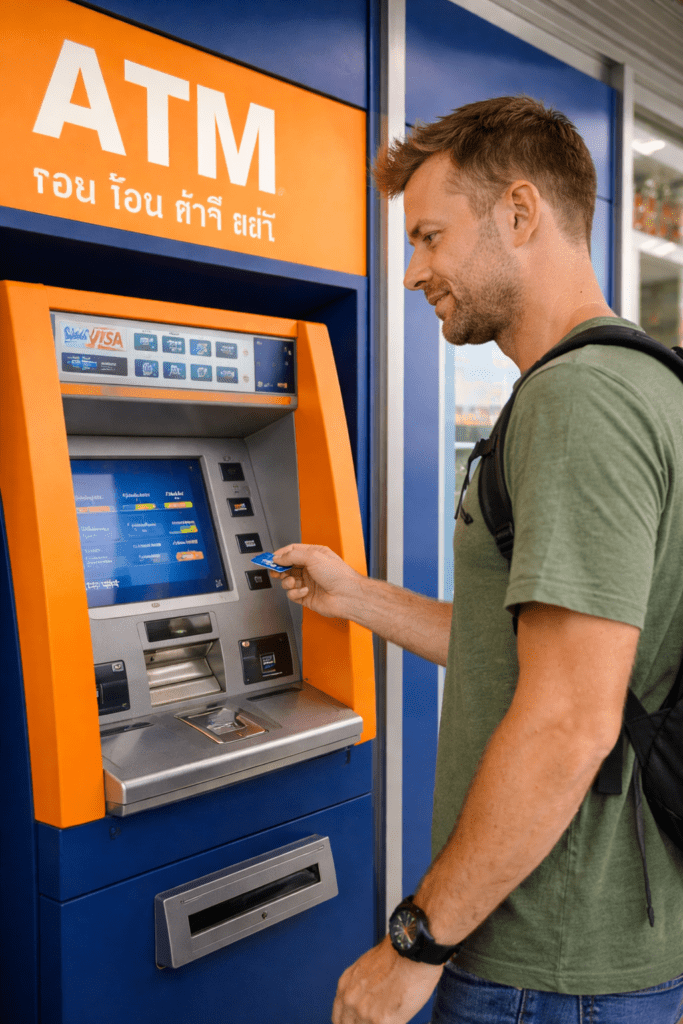
You can use foreign debit cards at ATMs here in Thailand, but you will be charged a 220 baht fee per withdrawal. You should minimize your fees by withdrawing larger amounts of money less frequently and bringing a travel-friendly debit card. The most popular options are Charles Schwab and Chase for Americans, Chase for Brits, Wealth Simple for Canadians, and City Bank for Australians. You also have good international payment systems like Wise and Revolut.
Make sure to bring plenty of spare debit cards. It’s very common for people to forget their card in the ATM here, as the order of operations is reversed. You get the money first, and then you receive your card back. This leads to a lot of forgotten cards, and it’s best to pack a few spares just in case this happens to you.
You can also make use of credit cards, which normally offer excellent exchange rates. Digital payment systems like Apple Pay and Google Pay are widely accepted. The main challenge comes with paying rent and utility bills. All your bills can easily be paid at a 7-Eleven or other big chain department stores, and this can be cash or credit card.
Rent is a little bit trickier. You can do an international bank transfer, or you can deposit cash at an ATM directly into your landlord’s bank account and simply send a copy of the receipt. This is a bit of a hassle, but we’re currently in a wait-and-see situation. I’ll let you know if we have any updates.
Taxes
If you stay in Thailand for 180 days or more, you’re technically considered a tax resident. This means you could be subject to Thai income tax. But there’s a nuance here. As of 2025, Thailand’s Revenue Department proposed a rule change stating that foreign income is not taxed if it’s brought into Thailand in the same calendar year that it’s earned, or in the year immediately following.
I covered this in a recent news update on the channel, and the proposal reverses an earlier change that sought to tax all foreign-earned income. Keep in mind that Thailand has double tax treaties with over 60 countries, including almost all major Western countries. If you’re getting paid into a bank account in your home country, chances are you’re still liable for taxes there.
If you plan to spend 180 days or more in Thailand and earn a substantial online income, it can be best to consult a tax advisor who understands both Thai and international tax law.
Work Restrictions
This brings me to work. DTV holders are only entitled to work remotely in Thailand. There is a restriction on doing any work for a Thai company or entity. That requires an entirely different visa called the Non-B with a work permit. From teaching English on the side to doing sponsored posts or content for Thai companies, working for or receiving any payment from an individual or entity inside Thailand is forbidden.

Avoiding Holiday Mode and Bad Influences
Let’s move on to a significant challenge that you’ll face once you’re on the ground in Thailand: avoiding holiday mode. It’s very easy to lose focus in Thailand. This is a premier holiday destination for a reason. There’s a lot to see and do, and it’s all designed to separate you from your time and money. This is why it can be ideal to set a rigid needs-based budget when you first move here as a digital nomad. Spending money is ultimately a distraction, and there are a lot of distractions here in Thailand. Cutting those optional expenses forces you to focus on work, and it may also keep you from going off the rails.
The next mistake that you need to avoid once you’re on the ground here is surrounding yourself with the wrong people. People who are in long-term holiday mode, drifting, drinking every day—here in Thailand, you’re disconnected from the social structures that keep you grounded in your home country. Your friend group here will exercise a much larger influence on the direction of your life. Choose your friends carefully, and be cautious about who you trust, because you’ll also find plenty of scammers and hustlers. Many will pitch business ideas, investment schemes, or simply ask to borrow money.
Exit Plan and Long-Term Thinking
Finally, you need an exit plan. Now, that might not be what you want to think about when you’re making an entry plan, but it’s very important. Maybe after a few months, a year, or several years, Thailand doesn’t feel right for you anymore. Maybe your online business falters, or things just drag on a little bit too long. You need to think both short and long term when you’re living in Thailand, because this can be the single biggest mistake that expats make here. Thailand can be a very “living in the moment” type of environment, and that can be a trap.
Long-term life is easy, affordable, and comfortable. But one of the things that you need to remember is that if you live in Thailand long term, you disconnect yourself from all the social safety nets that exist in the West. If you fail to plan and build for the future, there will come a day where you realize that you’ve made a huge mistake, and it will be too late. Here in Thailand, you won’t have a retirement plan, no free health care or education for your kids, no social security, no welfare benefits. You’re on your own, and you need to earn a pretty high income in order to invest and save for your future properly.
So yes, you can get by on that minimal budget that I discussed earlier, and it can be ideal for building online earnings. But that budget should not be your entire income. Over the years, I’ve met far too many expats who grew old and failed to plan for the future in the process. That’s why you need an exit plan. If you’re not doing well enough to provide for your future, you need to start to think about going back home. Outline your goals and set up a schedule. Keep yourself honest and accountable, and regularly assess whether you’re building for the future or just surviving in the present.