Worst ATM Mistakes In Thailand To Avoid
Using ATMs in Thailand
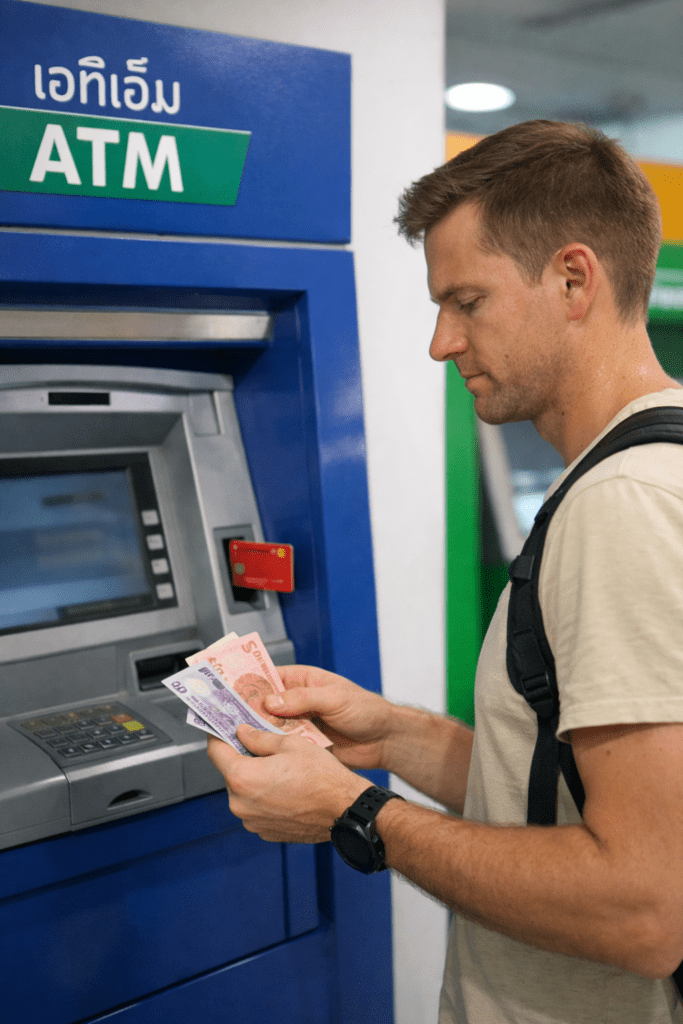
The easiest way to get Thai Baht once you’re here in the country is from one of the many ATMs that you’ll find absolutely everywhere.
ATMs here in Thailand will accept foreign debit cards and you can withdraw money directly from your home bank account.
ATMs provide excellent exchange rates as withdrawals in Thai Baht are converted using the mid-market rate, which is the fairest exchange rate possible.
Forgetting Your Card
Thai ATMs operate a little bit differently from ATMs in Western countries.
When you withdraw money from an ATM in the West, normally you’ll receive your card back first and then you’ll get the cash.
But in Thailand that order is reversed. You get the cash and then after a delay you’ll get your card back.
This reversed order causes many travelers to forget their cards in the ATM.
Withdrawing Small Amounts
When you withdraw money at an ATM in Thailand you’ll normally need to pay a 220 baht withdrawal fee for using a foreign debit card.
It’s a mistake to withdraw small sums of money as these fees will add up.
If you plan to use ATMs it’s normally better to make a few larger withdrawals.
Lower Fee ATMs
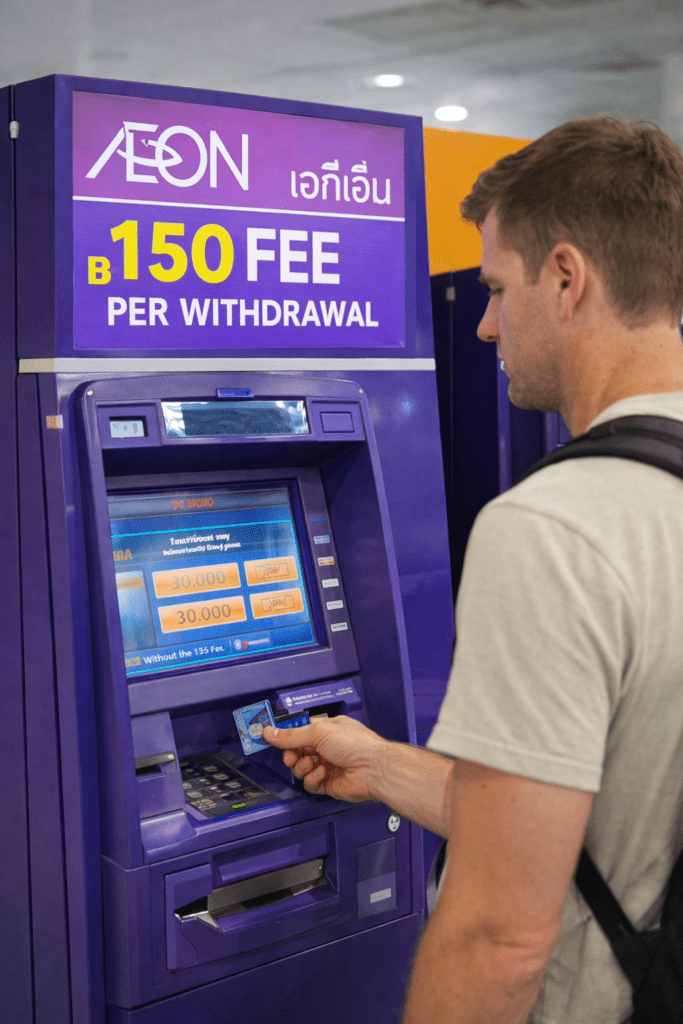
You’ll pay the lowest fee with Aeon ATMs which only charge 150 baht per withdrawal.
ATM Withdrawal Limits
The maximum withdrawal limit for ATMs depends on the specific bank and is between 20,000 and 30,000 baht.
The higher 30,000 baht limit is available from Krungsri Bank, which are the yellow ATMs.
Bangkok Bank and Krungthai have a 25,000 baht limit.
You’ll pay the same fee to withdraw 20,000 or 5,000 baht, so it may make sense to withdraw the maximum amount.
Check with your home bank prior to traveling to ensure that it won’t apply a lower limit.
Not Informing Your Bank
It’s best to notify your home bank of your travel plans as your bank may view withdrawals in Thailand as suspicious and freeze your card or account.
Home Bank Foreign Fees
Before you travel make sure to check your bank to see if it charges fees for foreign withdrawals.
Many banks charge an additional fee which will add up alongside the 220 baht fee.
For example, my bank in Canada charged me an additional $5 for any withdrawal in a foreign country.
Using Wise or Revolut
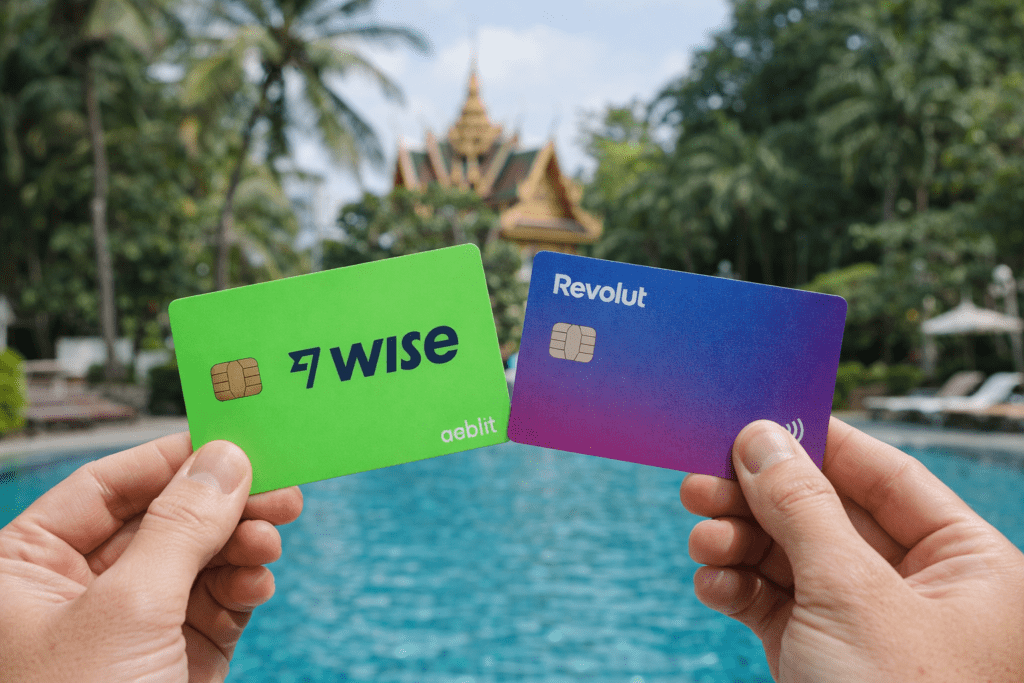
If your home bank charges fees for foreign ATM withdrawals you should set up a Wise account.
This will allow you to transfer money from your home account into a multi-currency account and exchange it for Thai Baht at the best rates.
You can then withdraw at an ATM without any home bank fees, but you’ll still pay the local ATM fee of 220 baht and you’re limited to $200 per month of free withdrawals. Any transaction over that value will cost 1% of the withdrawal amount.
Revolut is a similar card with a $200 limit as well, so you can make use of both accounts.
Travel Debit Cards
You can plan ahead and bring a travel debit card which covers foreign transaction fees.
For Americans, Charles Schwab and Chase have some of the best travel debit cards.
Each country will normally have a wide range of cards to choose from, so do a little bit of research and you can save plenty on withdrawal fees with much more convenient access to your accounts.
Dynamic Currency Conversion
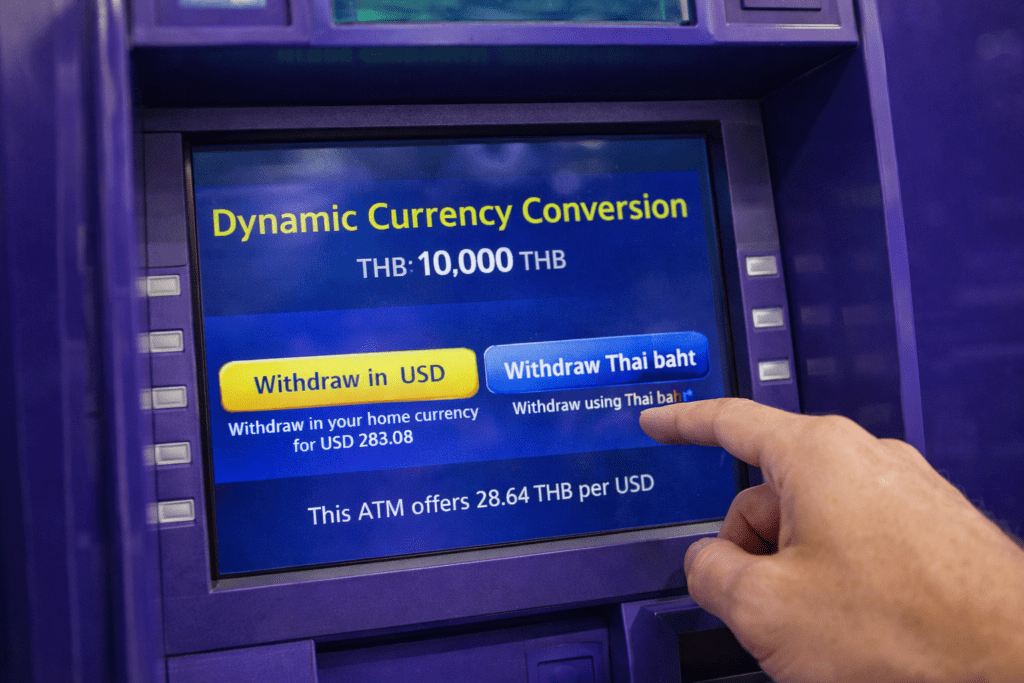
When you’re using an ATM it may ask you if you want the transaction to be processed in your home currency.
If you encounter this question at an ATM it’s best to select no and process the withdrawal in the local currency.
This is called Dynamic Currency Conversion.
If you select yes you skip the mid-market exchange rate and allow the ATM to determine its own rate, which will almost always provide you with a worse exchange rate.
Bring Multiple Cards
For added protection you should bring several cards with you, ideally connected to separate bank accounts.
If you leave your card in the ATM or simply lose it you’ll still have access to your money.
There’s a second risk to only having one card. When you use your debit card in a foreign country your bank may freeze the card or your account.
If your account is frozen you’ll need to call your bank and answer security questions to unfreeze it.
Having multiple accounts ensures that you always have access to money.
Card Skimming Risks
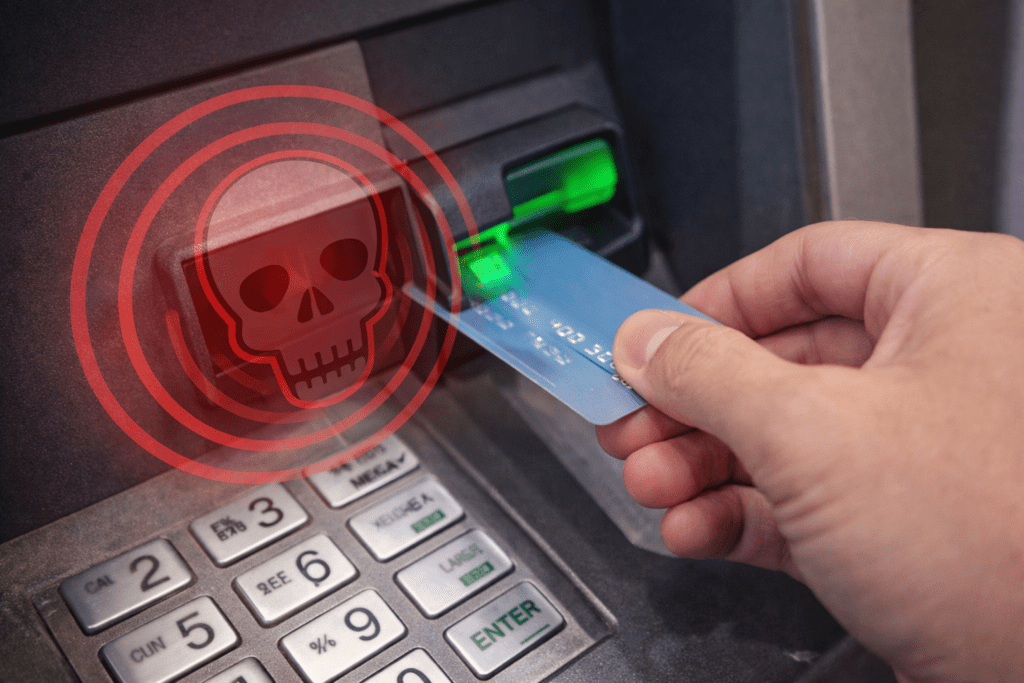
Card skimming and duplication is a real risk in Southeast Asia and it’s been on the rise in Thailand.
This is when your card information is stolen and allows scammers to make fraudulent purchases.
Skimming can occur at point of sale machines, ATMs, or when making online purchases.
It’s best to use one account as your main spending account and top it up regularly from savings or investment accounts.
Regularly check all your accounts for suspicious transactions.
Withdraw money in secure locations like malls and be cautious with online payments, as there have been reports of fraud even with large e-commerce and airline websites.
VOIP Apps for Bank Calls
In case you need to contact your home bank it can be useful to download a Voice over IP app that provides you with a phone number in your home country.
I use an app called Fongo which provides me with a Canadian phone number. It’s free and I’ve used it multiple times to contact my bank.
Check for the best apps in your country and download one before you travel.
Using Bank Branches
Another method to reduce or avoid fees is to use an actual bank branch.
This method bypasses ATM fees.
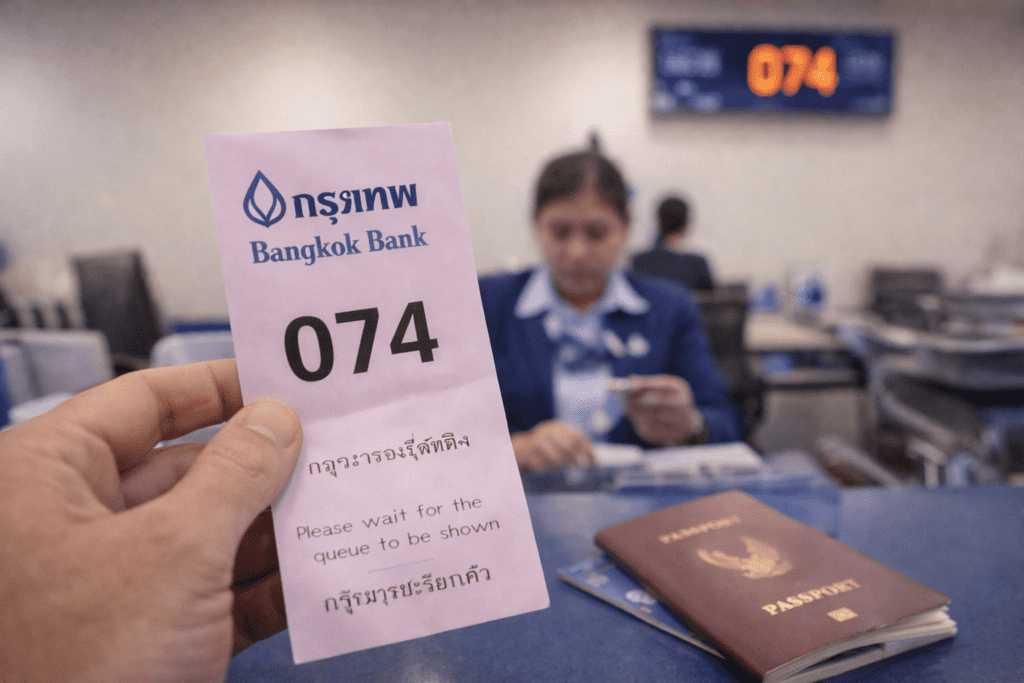
You’ll need to go into a bank branch and take a queue ticket. When your number is called you can ask the teller for a cash advance, provide your bank card as well as a passport for proof of ID.
Always ask if there are any fees for processing the request.
Some banks will charge a processing fee.
Check Bangkok Bank or Krungsri, but you may need to check multiple branches as some tellers may not understand the request and direct you to use the ATM.
Your home bank or card processor may also charge additional fees for the cash advance.
Using Credit Cards
It’s also best to bring and use credit cards that don’t charge a foreign transaction fee.
Credit cards are widely accepted at stores, restaurants, hotels, ride-hailing apps, food delivery apps, and even for payment on some Bangkok public trains.
Exchange rates offered by credit card companies are normally excellent and fraud protection is better than debit cards.
Before you use your credit card check for additional fees.
Avoid transactions that charge additional fees.
For example, Grab levies a 3% surcharge for foreign credit cards.
Apple Pay or Google Pay can also be good additional options as many larger stores and online merchants accept these methods.
Bringing Cash
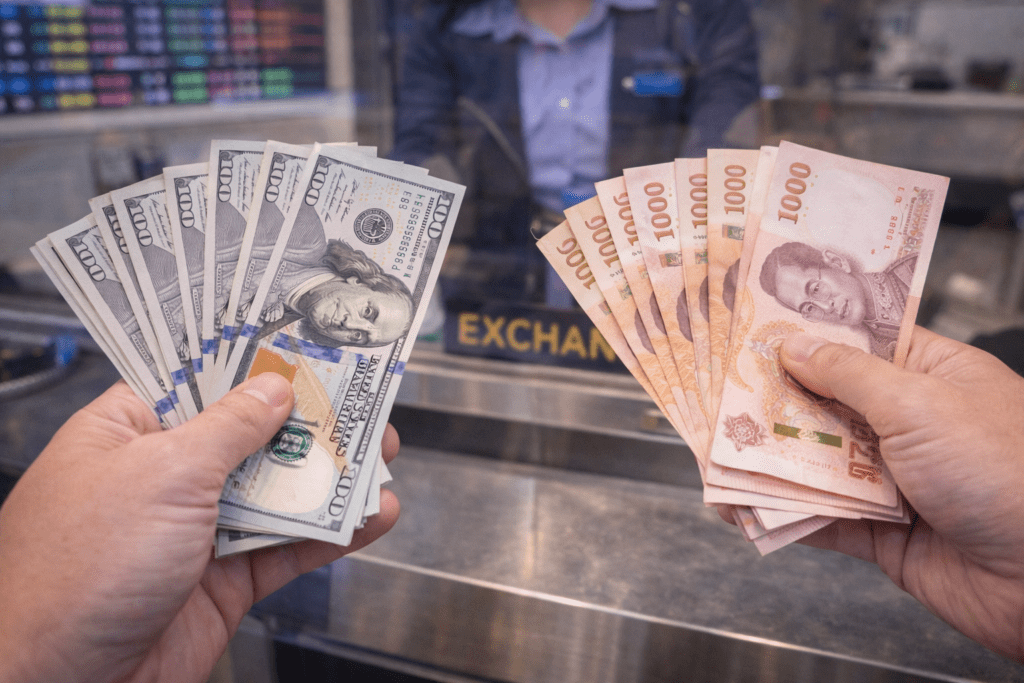
Your second option to get Thai Baht is to exchange it for your home currency.
You can bring up to $20,000 without declaring it at Thai Customs, although most Western countries require you to declare anything over $10,000 upon exiting.
It may be a mistake to bring this much money as people commonly lose money during their holiday.
Exchanging in Your Home Country
The biggest mistake travelers make is exchanging for Baht in their home country.
Thai Baht isn’t a global currency and exchange overhead costs are much lower in Thailand.
You’ll get the best exchange rates in Thailand.
Damaged Bills
Avoid bringing old or damaged bills as currency exchange booths only accept crisp new notes.
Large Denomination Bills
It’s ideal to bring large denomination bills which normally get better exchange rates, at least for major currencies like US Dollars.
Using the Right Exchange Booths
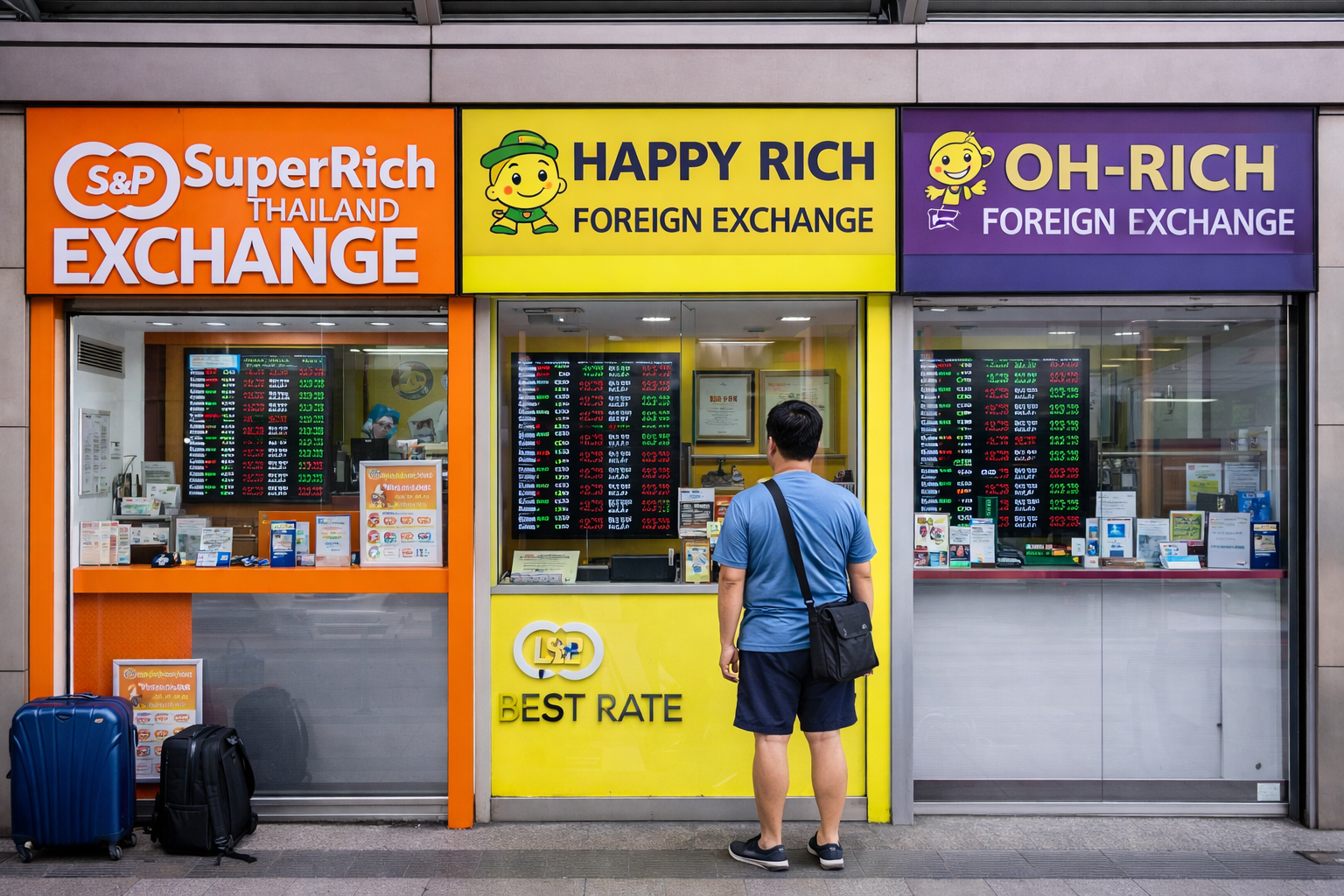
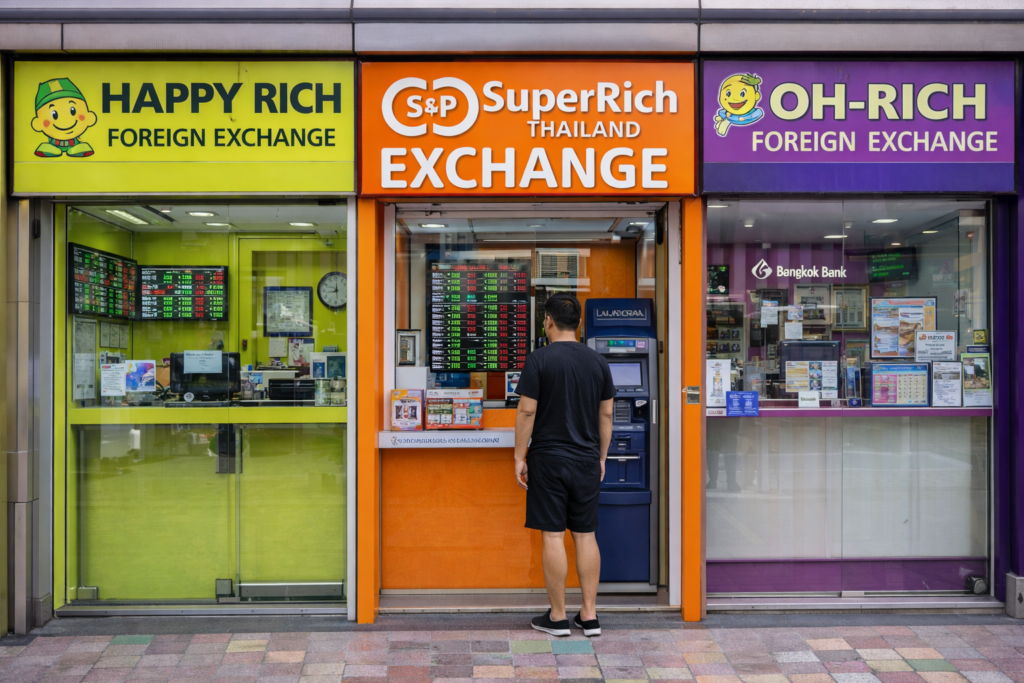
Skip big bank currency exchange booths and use established exchange chains for the best rates.
This includes Super Rich, Happy Rich, and Oh Rich.
You’ll find branches all over the city including at Suvarnabhumi International Airport.
If you’re exchanging a large amount of money it can be worthwhile to go to the main office branches where you’ll get the best rates.
Bring Your Passport
Don’t forget to bring your passport as you’ll need it to complete the currency exchange transaction.
Count Your Money
Always count the bills after you exchange money to ensure that you receive the correct amount.
That’s it. You’re ready to start your Thailand adventure while getting the best exchange rates and avoiding costly mistakes.
Have a great trip and I’ll see you next time.