How Much Do You REALLY Need To Retire in Thailand in 2026?
How much money do you really need to retire in Thailand?
Most people want a single neat number, but real budgets don’t work like that. They’re personal and shaped by how you choose to live and underlying market forces.
So, instead of pretending there’s one magic figure, I want to give you a clear framework. And by the end of this, you should be able to look at your own situation and determine how much you need to do that properly.
Inflation & Currency Risk
We need to start with the forces working underneath every budget. Inflation and currency fluctuations.
Over the past decade, inflation in Thailand has averaged around 1% per year, which is well below most Western countries. When you’re dealing with local goods, condos, food, and markets, prices in Thailand have moved slowly and predictably.
But there’s a huge exception, and that’s medical inflation. Health insurance premiums have been rising far faster than general prices. Insurance costs can rise significantly with age and policy changes, so retirees should obtain current quotes rather than rely on a fixed annual increase. So those increases compound and we’ll get to specific cost breakdown shortly.
Then there’s currency risk. If your retirement income comes from overseas in dollars, pounds or euros, your real cost of living here depends on how those currencies perform against the Thai baht.
And over the long run, the baht has shown relative strength against most Western currencies. This is an uncontrollable variable that will shape your purchasing power over time.

Setup Costs Before You Retire
We’ve covered our uncontrollable cost risks, but how much money will you need on hand immediately? Let’s talk about the setup costs.
Before you settle in, you’ll need to pay for flights and temporary accommodations, and this is normally at least a few thousand dollars.
And then you have your condo. Most rentals in Thailand require a two month deposit plus the first month’s rent up front. So if you rent a 30,000 baht condo, you’ll hand over 90,000 baht on day one.
But the good news is that the majority of condos in Thailand come fully furnished. So you don’t need to ship your entire life here in a container.
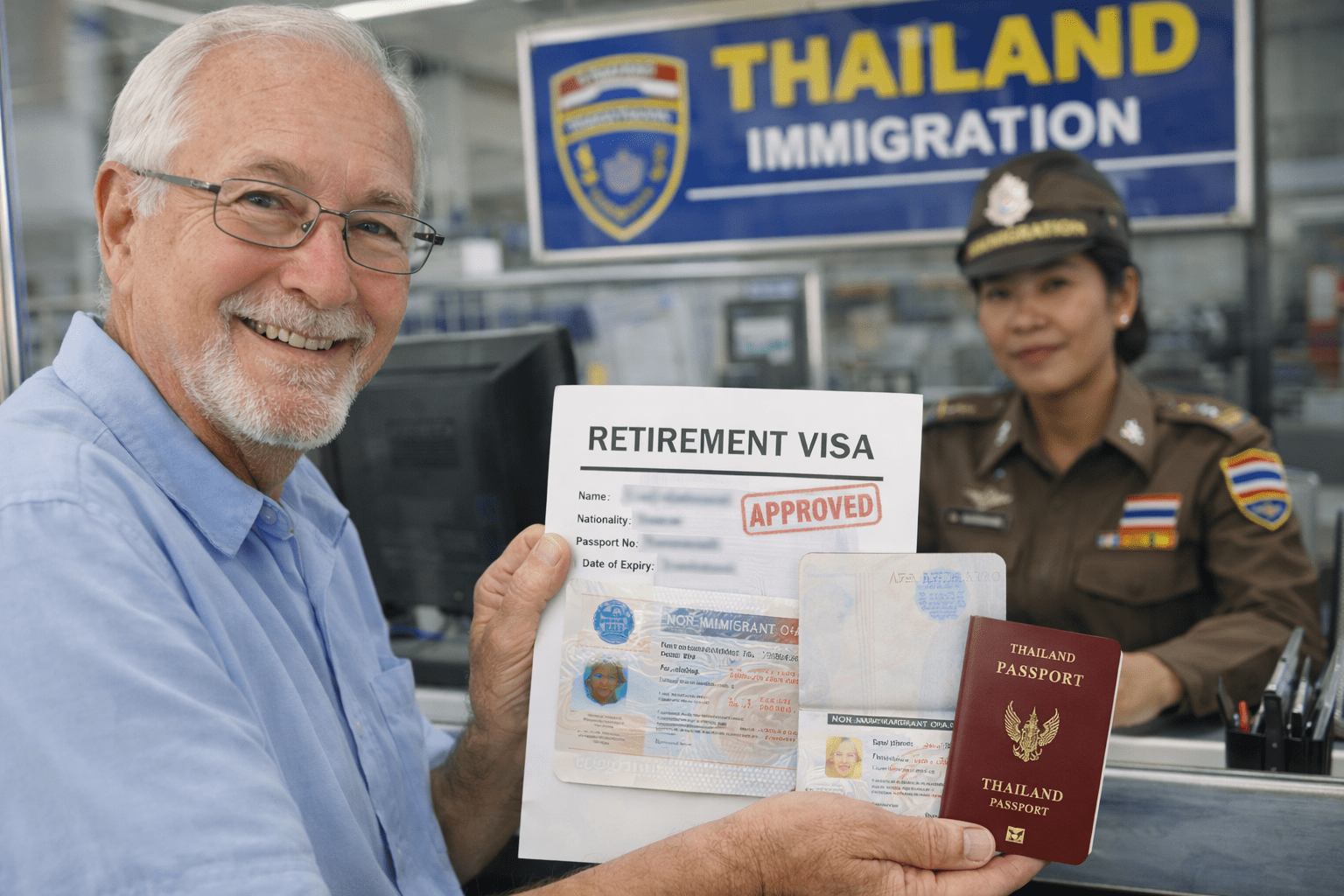
After housing, the next major cost is your visa. For a standard retirement visa, you’re expected to either keep 800,000 baht in a Thai bank account or prove a monthly income of at least 65,000 baht.
In theory, both routes work, but in practice, many retirees end up using the lump sum deposit because income verification can be tricky.
So, with the condo deposit and the retirement visa deposit, you’re already looking at 860,000 baht that’s locked up.
On top of that, you have the routine visa costs. These are annual fees, and many retirees opt to pay an agent to handle most of the bureaucracy, which adds another 5,000 to 15,000 baht.
If you add all of that together, it’s wise to have at least 1 million baht in cash on hand, but add an extra 200,000 for a comfortable cushion.

Basic Monthly Living Costs
We’ve covered your fixed setup costs, so let’s move on to your recurring monthly expenses.
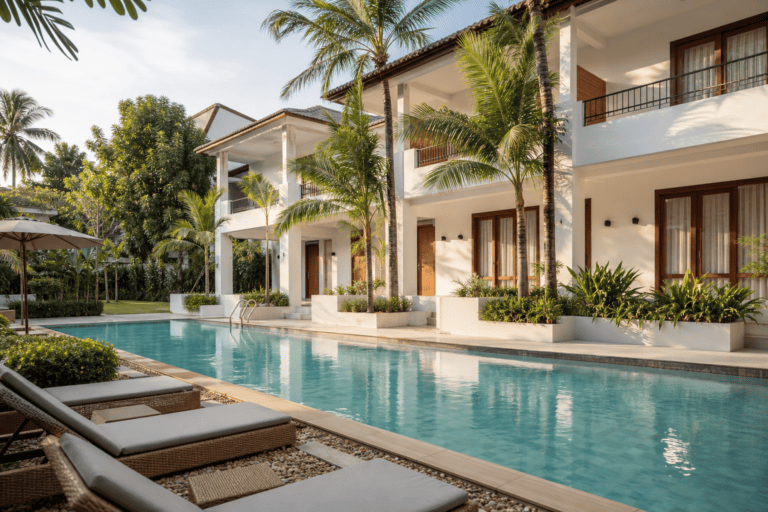
For some retirees, it may be possible to live on around 40,000 baht a month in Thailand. In many cities, you can find a clean studio or one-bedroom condo in the 8,000 to 15,000 baht range, normally with shared access to a pool and gym.
Utilities, phone, and internet can easily come in at under 3,000 per month. Thai meals from street vendors and local restaurants typically cost between 40 and 80 baht. While a basic coffee might be around 30 to 40, you can live very affordably if you’re content with a slower pace of life.
Health Insurance Costs
But let’s return to health insurance costs because they can shatter the low-cost illusion.
At around 50, premiums vary widely by insurer, policy, exclusions and medical history, so retirees should obtain current quotes rather than rely on a fixed monthly figure.
By 60, those premiums often double. And at 70, the curve steepens dramatically. Many insurers refuse coverage, and you need to get upfront quotes from major providers to determine your costs. Check out my full retirement health insurance guide for more information.
To save on premiums, many older retirees opt for catastrophic inpatient insurance, the kind that covers serious events and hospital stays and then pay for routine outpatient care out of pocket because day-to-day medical costs here are very reasonable.
But if you face higher premiums, a 50,000 monthly budget is a far safer minimum.

Lifestyle Creep & Comfort Levels
And lifestyle creep can also be hard to avoid. Imported groceries start to show up in the basket while expenses shift up on western restaurants, nights out, beach holidays, or rounds of golf.
Meanwhile, your 32 square meter box condo that felt minimalist when you were excited and fresh off the plane starts to feel cramped once you’ve settled into a long-term routine.
And the truth is that a 70,000 baht budget allows for a much more sustainable and comfortable long-term rhythm. It’s not luxury, but it’s not scraping by either.
Then there’s the more luxurious lifestyle with a larger modern condo, regular western restaurants, nights out, travel, and flights back home.
As you move up the value chain, global prices start to converge for luxury lifestyles and imported products. and a budget of 150,000 baht or more becomes realistic very quickly.
How Much Capital Do You Actually Need?
So, we’ve got our expenses, but let’s translate that into the capital you’ll actually need.
And a simple strategy is the 4% rule. If you’re unfamiliar, it comes from historical analysis of how balanced portfolios, a mix of stocks and bonds, behaved over long periods of time.
And the rule is simple. If you withdraw 4% of your portfolio in the first year and then adjust that dollar amount for inflation each year after, there’s a high probability your money will last at least 30 years.
And this is where Thailand offers a favorable situation because Thailand’s average rate of inflation is significantly lower than the 3% rate used as a baseline for the study.
And this gap generally helps to offset the added medical inflation costs and currency risks.
For our simple lifestyle at 40,000 baht a month, which is 480,000 baht per year, you’ll need a portfolio of about 12 million bot under the 4% rule.
While the more comfortable 70,000 baht lifestyle needs around 21 million bot in capital and the more luxurious 150,000 baht budget requires a portfolio of around 45 million bot.

Track Your Spending
And whichever budget you aim to follow, there’s one habit that matters more than any model.
Once you move here, track your spending in baht for at least the first year. Many retirees tell themselves they’re around a certain monthly number and are shocked when they finally look at the data.
Track early and adjust if you’re drifting and tighten if you need to.
Because the truth is that Thailand offers a genuinely exceptional quality of life at a fraction of western costs if you’re realistic about how much you’ll truly spend and careful about how much you need invested to support that.
And that’s it. If you budget correctly, retirement here can be relaxing, easy, and you can do it far sooner than you might in your home country.