Thailand Visa Rules And Crack Downs 2026
How is immigration actually enforcing entry rules in 2026? Is there a new long-term visa in the works? And what about airport changes, healthcare access, and transportation in Bangkok and Thailand more broadly?
Let’s start with entry rules because this is where most of the confusion lies right now. And to be honest, most of the time, most visitors to Thailand arrive using something called a visa exemption, which allows nationals from 93 countries to stay in the country for up to 60 days without applying for a visa in advance.
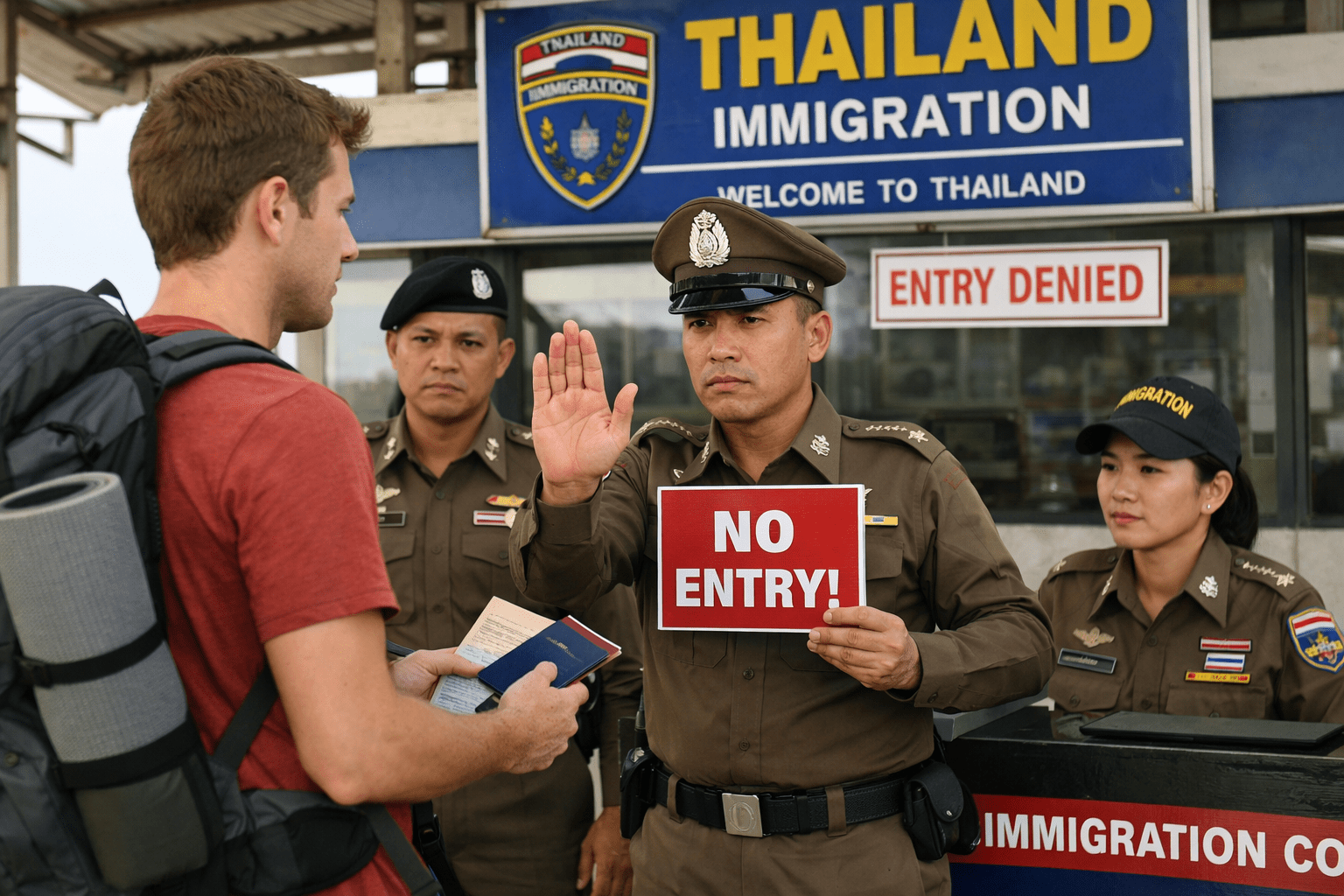
But over the past year, immigration authorities have stepped up enforcement against people who are misusing these exemptions to essentially live in the country long term. That enforcement has created a lot of confusion online and it’s led to three closely related questions that keep coming up.
Is there a limit on the number of visa exempt entries?
How long can someone stay in Thailand per year using visa exemptions?
And does immigration automatically reset those entries each year?
First, there is no official limit on the number of visa exempt entries within a calendar year. The idea that Thailand suddenly introduced a hard numerical cap is a rumor and it’s incorrect.
If you’re visiting Thailand multiple times per year for normal tourism, that alone is not a problem.
Where scrutiny begins is total time spent in the country. And there’s a soft limit of roughly 157 days within a calendar year when using visa exemptions.
And finally, your immigration profile does not automatically reset each year. A concentrated pattern that spans two calendar years can still raise red flags, especially if stays are back to back or a pattern of extended stays dates back for multiple years.
But if your recent stay didn’t exceed 157 days, you shouldn’t have any issues. Just remember to have a return or onward flight booked, a hotel reservation, and a straightforward tourism oriented explanation for your trip. It’s nothing elaborate, just something that fits a visitor profile in case you’re asked.
1 Long-Term Visa Options – DTV
If you exceed or near that soft cap, you should look into getting a proper long-term visa. And the destination Thailand visa or DTV has become probably the most accessible option.
The base requirement is proof of at least 500,000 Thai baht which must be held in a foreign bank account under your name.
Immigration doesn’t actually handle the issuance of the DTV which is done by each embassy or consulate separately and additional documentation is typically required.
This often includes proof of an online income or enrollment in a recognized soft power activity, but requirements can vary by location. So, you’ll need to check with the specific consulate handling your application.
Visa rules can and often do change quickly and abruptly, and it’s one of the reasons why this is probably the most frequently asked question on these Q&As.
And as always, I’ll keep you informed if there are any changes.
2 Property Visa Rumors
But with all the confusion, rumors about visa policies tend to spread quickly. And the most recent claim is that Thailand plans to introduce a long-term visa for people who buy or rent property in the country.
This claim originates from a single real estate agency advertisement circulating on Instagram and Facebook, which suggests that purchasing a property valued at 3 million baht or more, or signing a lease at 85,000 baht per month or higher grants eligibility for a one-year visa.
The proposal appears to be connected to police order 327/2557 section 2.5, which is an existing investment based visa category that typically requires a minimum investment of 10 million baht to qualify for a renewable one-year extension of stay.
Prior to 2006, the minimum investment threshold under this framework was only 3 million baht. And it appears that certain partners may be able to operate under this earlier threshold, potentially as part of an effort to stimulate the mid-tier property market through the Thailand long-stay management framework, which is partially owned by the tourism authority of Thailand.
But this is not a new visa and it appears to be tied to specific projects and legal intermediaries rather than representing a nationwide immigration change.
And caution is strongly advised. There have been no official government announcements confirming any policy shift. At present, the claim rests on a single online advertisement, and anything encountered on social media should be treated with skepticism.
Always wait for a formal policy announcement or verify the details with a reputable immigration law firm before making any investment or real estate decisions.

3 Retirement Visa – Non-O Process
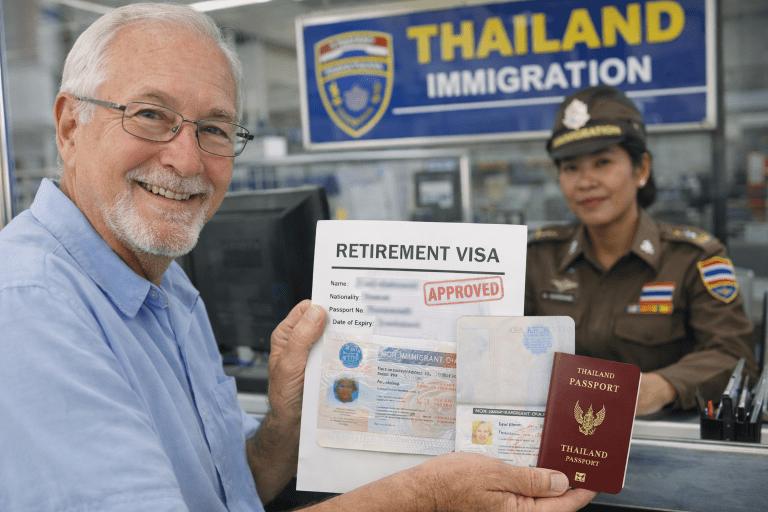
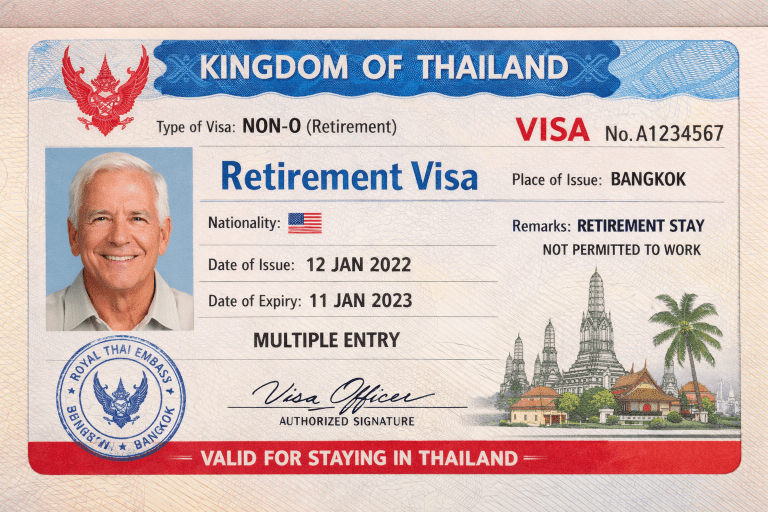
Before we move on from visas entirely, I briefly want to address the non-o process, which is typically used for retirement visas, and it typically involves an initial non-o entry followed by a one-year extension processed at immigration inside Thailand.
That extension is the actual long-term permission of stay.
And an important detail here is that the extension is dated from the expiration of your current permission, not from the day you apply or the day you entered.
So if you apply early, no time is lost. The new year simply stacks onto the expiration of your existing stamp.
4 Biometric Tracking & Second Passports
It’s also important to understand how immigration tracking works today. Thailand uses biometric data, including facial scans and fingerprints, and every entry is recorded under a single immigration profile.
That profile links all passports tied to the same biometric data, including old or expired documents as well as passports issued by a second country.
Using a second passport won’t bypass the 157 day soft cap or any other enforcement measures, and an officer may ask why you switched, but if you’re a dual national, just provide an honest answer and you should be fine.
5 Increased Scrutiny – Cambodia & Scam Networks
But entry from Cambodia has been under increased scrutiny in recent months. Thailand has been actively cracking down on regional scam networks and residents or frequent travelers from Cambodia and Myanmar may face questions about their occupation or source of income.
The objective is to identify people who are connected to scam operations and normal travelers shouldn’t encounter any serious problems.