Arriving in THAILAND Immigration Mistakes
If you’re planning a trip to Thailand, you’ll likely arrive right here in the arrival hall. But before you step into this hall, you’ll need to pass through Immigration and Customs.
I’m going to cover the worst mistakes that travelers make with immigration when they enter this country. From traveling with damaged documents to interacting poorly with immigration and customs officers, I’ll cover it all so that you can have a smooth and hassle-free entry into this beautiful country.
Damaged Passport and Document Issues
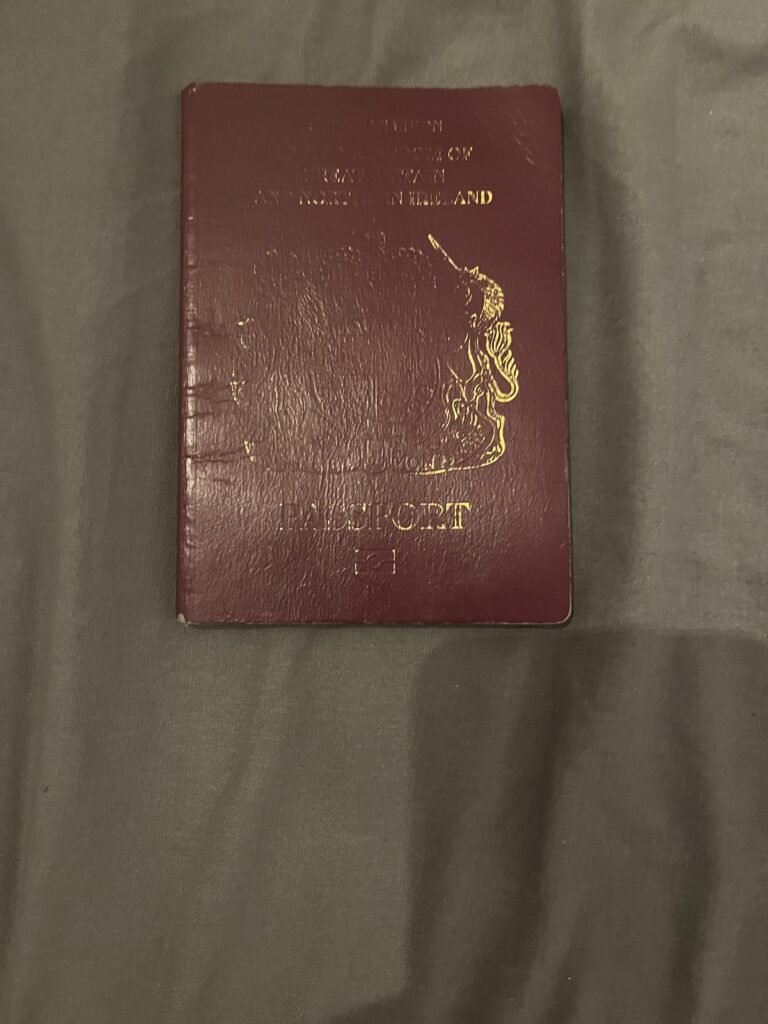
Let’s get started with our first mistake, and it can be a big one because it can be a cause for denial of entry into Thailand. That is traveling on a damaged passport.
Before boarding a flight to Thailand, you should make sure that your passport is in good condition. It shouldn’t be ripped, torn, or overly worn out, and most importantly, there shouldn’t be any damage to the barcode section of the passport.
This is used to scan your entry into Thailand. Even if you’ve used the passport to enter other countries, there’s no guarantee that it will be accepted here in Thailand.
If you have a damaged or worn-out passport, it’s best to get a replacement before you travel.
While we’re talking about passports, there shouldn’t be any non-official writing, stamps, or stickers in your passport. One common problem that immigration officers encounter is people who put souvenir stickers in the passport pages, and this can invalidate the document when entering Thailand.
Your passport should have at least 6 months validity remaining as this is a requirement for entry.
If you hold two passports, you should enter and exit using the same passport. If you use different passports, your exit may not be recorded on the passport profile that you use to enter the country, and this can cause data inaccuracies in the Thai passport system and raise a red flag when you try to re-enter the country at a later date.
Not Knowing Your Visa Situation
Our next mistake is quite common, and that is not knowing your particular visa situation.
Most travelers can enter Thailand for up to 60 days using a visa exemption. That is to say, you don’t need to get a visa; just show up and you’ll get stamped into the country.
But it’s always best to check the visa situation for your country prior to travel as it can change.
Remember, you must exit the country before the end of the 60-day tourist exemption period; otherwise, you’ll be overstaying your visa. This is bad, and it’ll cost you 500 baht per day that you overstay, up to a maximum of 20,000 baht total.
You’ll need to pay this fee at the airport prior to exiting the country, and lengthy overstays will result in automatic bans for set periods of time.
If you need to stay in the country for longer than 60 days, you can get a 30-day extension to your visa exemption. Simply go to a local immigration office, bring your passport with 1,900 baht, and you’ll get the extension done within a couple of hours.
This is a very straightforward process. Just remember that immigration offices are closed on weekends and holidays, so if you need to do an extension, make sure to plan it in advance.
Attitude at Immigration
Our next common mistake occurs during interactions with immigration officers, and this is adopting a negative or confrontational attitude.
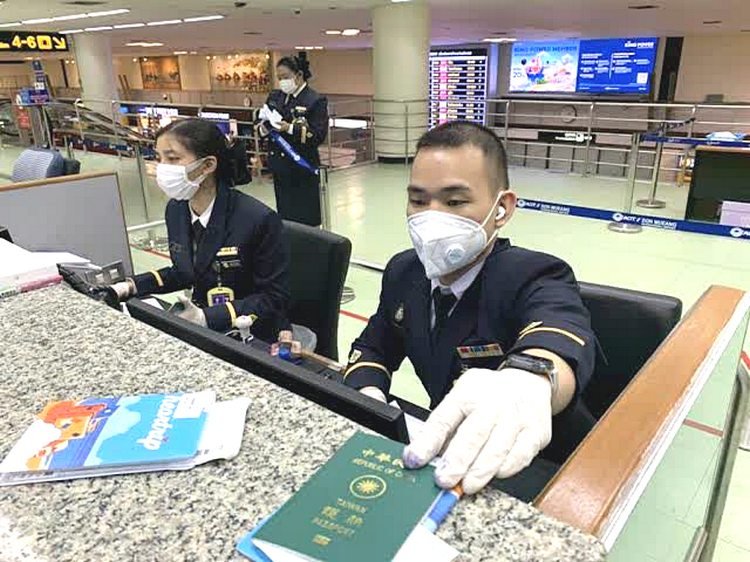
Immigration officers are police officers under the Royal Thai Police. Their role is to admit travelers into the country in accordance with immigration rules and laws, and they have the right and authority to question any traveler or deny them entry.
In order to participate in the visa exemption program, you may be asked to provide additional documentation. This includes a return or onward flight prior to the expiry of the 60-day visa exemption, funds of at least 10,000 baht per person or 20,000 baht per family, proof of temporary accommodations in Thailand (normally this is the hotel booking for the first night), and a basic travel itinerary.
Conversely, you won’t need any proof of insurance in order to enter Thailand. It’s recommended, but it’s not an entry requirement.
If you happen to get questioned, remain calm and polite. It’s just a routine protocol that officers have to follow for a set number of passengers on a daily basis.
Normally, you won’t be asked these questions as immigration officers process thousands of arrivals on a daily basis. If they asked every single passenger that comes through this airport, the lines would be exceptionally long.
But a small statistical sample will be asked these questions, and an even smaller sample will be sent for additional screening. This is the standard operating procedure for immigration officers here at the airport.
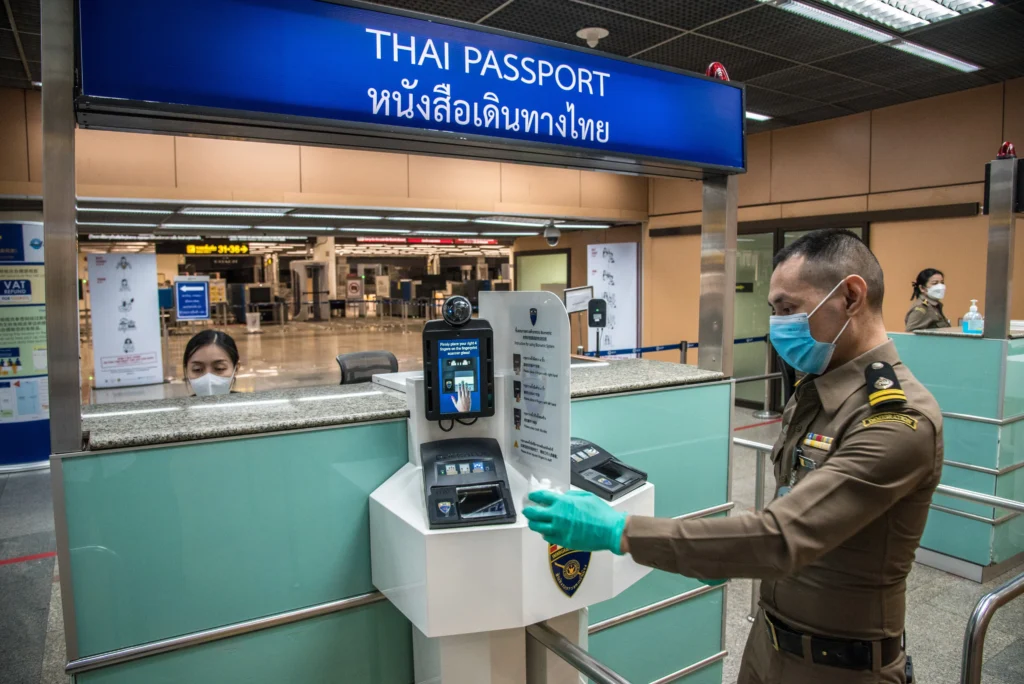
Reasons You Might Get Questioned
But what are the main reasons for getting questioned?
First, if you’re rude or hostile, you’re much more likely to get questioned. This may include things like yelling across the immigration hall or slamming your passport on the desk when you arrive at immigration, making negative or unnecessary comments.
After all, it’s up to each officer to decide who to question, so be polite and calm as they can also decide who to send to supervisors for extra screening.
Second, if you exit and re-enter Thailand frequently using tourist visas or visa exemptions, you’re much more likely to get questioned. This is normal and should be expected, as many people use visa exemptions and tourist visas to stay in the country long term, and this isn’t the intended purpose of these visas.
In these situations, officers will normally just give you a little bit of a hard time to let you know that they’re watching. Adopting a rude attitude is probably the quickest way to get sent for extra screening, and it’s entirely unnecessary.
Third, if you’re using an education visa to study Thai and live in Thailand, officers may quiz you in Thai, as this visa is also commonly used to stay in the country long term without actually studying the Thai language.
Conversely, if it’s your first time in Thailand and you’re polite and calm, it’s very unlikely that you’ll get stopped or questioned. But if you want to play it safe, it’s best to have answers to the questions that I’ve covered here.
If you haven’t booked an onward flight yet, normally a reasonable explanation would suffice if you’re asked the question.
Normally, when it comes to flights, you’ll actually have more difficulty with the airline when you check in in your home country, as the airlines are actually responsible for you if you’re denied entry, and they’ll often ask for a return or onward flight.
Proof of funds can be in any currency. 10,000 baht is about $300, and it can be best to bring some cash with you and exchange it here in Thailand, where you’ll get the best currency exchange rates anyway. No real downside there.
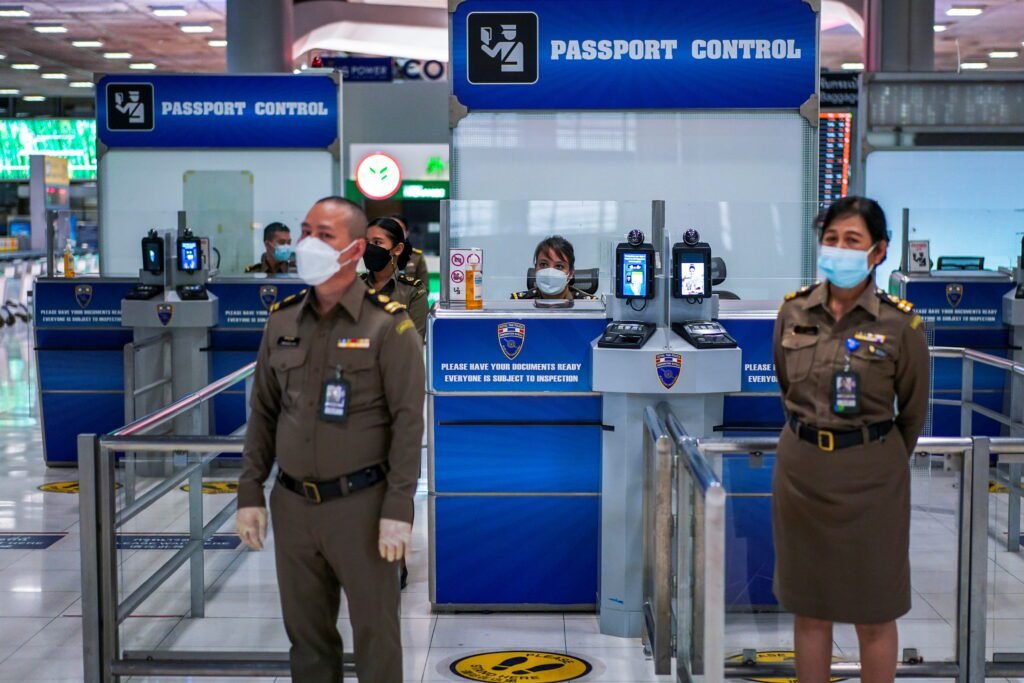
Working on a Visa Exemption
The visa exemption is intended for tourism purposes only. It doesn’t provide any authorization to work or study in this country, and this includes working remotely or volunteering.
If an immigration officer asks you about the purpose of your visit, you should never mention work, even if you plan to do a little bit of remote work on your holiday.
This is a gray area that’s emerged with online and remote work opportunities, and it’s best to simply not mention it. But don’t worry too much, as you’re unlikely to get asked this particular question.
Online Arrival Form
Starting on May 1st, 2025, visitors to Thailand are required to fill in an online arrival form prior to entry.
You’ll need to provide your personal information, flight arrival details, the purpose of your visit, and accommodations.
The implementation of the online arrival form may be delayed or changed, so make sure to check for updates before you fly.
Immigration Process Walkthrough
But what’s the immigration protocol? Let’s walk through the entire process so that you’re prepared in advance.
After you disembark the plane, you’ll walk to the immigration zone. During this time, you can connect to the airport WiFi.
If you require mobility assistance, you can ask the airline staff, and they’ll get you a wheelchair and help you.
You should keep your boarding pass, as some officers will ask for it in order to check your flight number. It can be best to hand over both your passport and your boarding pass when you approach immigration.
If you have a connecting flight which is part of your arrival flight that is to say, you booked one flight and you were given two tickets when you checked in you can proceed directly to the connection area without passing through immigration. Just follow the signs.
You’ll go through immigration and customs at your final destination. But if you book two separate tickets, you’ll need to go through immigration, pick up your bags, go through customs, and finally check in for your next flight.
This can be a lengthy process, so make sure to give yourself enough time. If you’re running late, you can tell the staff at the entrance to the immigration zone. You’ll need to show them the flight ticket, and they’ll bring you directly through immigration so that you don’t miss the check-in for your connecting flight.
Just remember that Bangkok has two major airports, and you’ll want to check that your connecting flight leaves from the same airport, as the second airport is almost an hour away.
The lineup at immigration can vary. If you’re arriving late at night or in the early morning, chances are the line will be relatively short, and you can normally get through immigration in under 10 minutes.
But if you arrive alongside many other flights, you could wait for up to an hour or even more.
When you enter the immigration area, avoid taking any pictures or filming. This is prohibited, and you’ll see plenty of signs letting you know. If you’re caught filming, you may be asked to delete the footage or sent for extra screening.
The airport and immigration zones are non-smoking. This includes both cigarettes and vaping, and e-cigarettes.
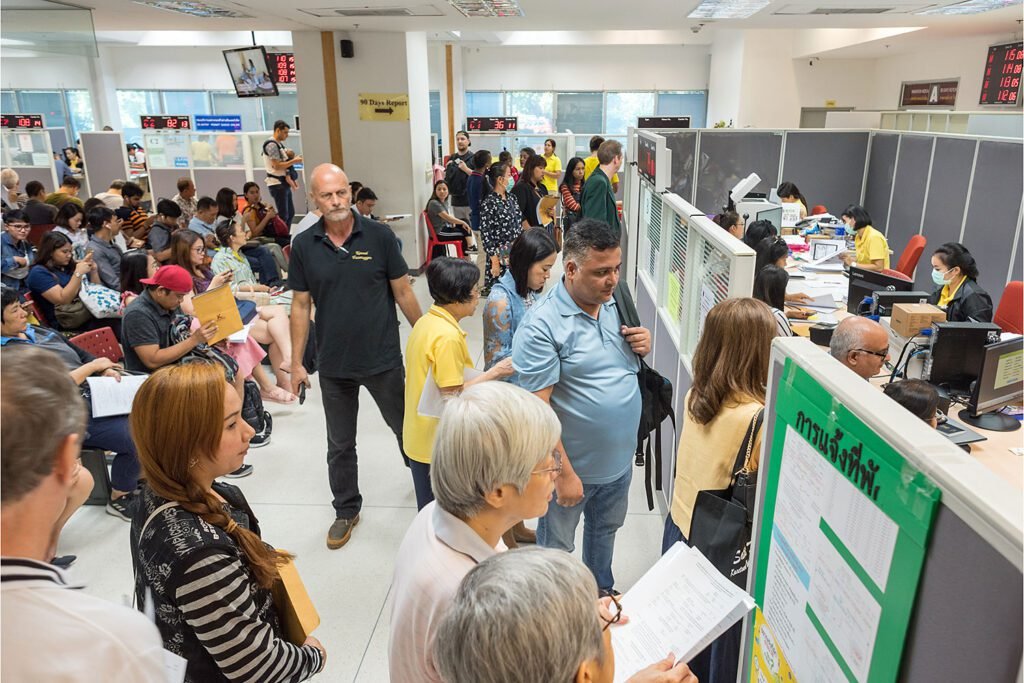
Immigration Lanes
When you arrive at immigration, there are three different channels.
Most travelers will go through the foreign passport line, and this can be the longest.
If you’re traveling with a Thai family, you can use the Thai national or priority lanes, and these are often much shorter.
Finally, you can pay and use the FastTrack lane. Normally, the lines and waits are much shorter, and you’re much less likely to encounter any questions, so it can be well worth that extra payment.
Fingerprints and Final Entry
You’ve chosen the right lane, and you’ll need to wait until you’re called to the immigration desk.
You’ll need to scan your fingerprints, rolling them slowly on the fingerprint scanner. You’ll need to remove any sunglasses or hats and take a photo.
Follow the process, and you’ll normally just get waved through.
The baggage claims are immediately outside the immigration zone; just follow the signs.
You passed through the immigration zone hopefully it was all hassle-free. You’ll need to collect your baggage and go through customs.