12 Things I Wish I Knew BEFORE Visiting Laos
Mekong River Cruise to Pak Ou Caves
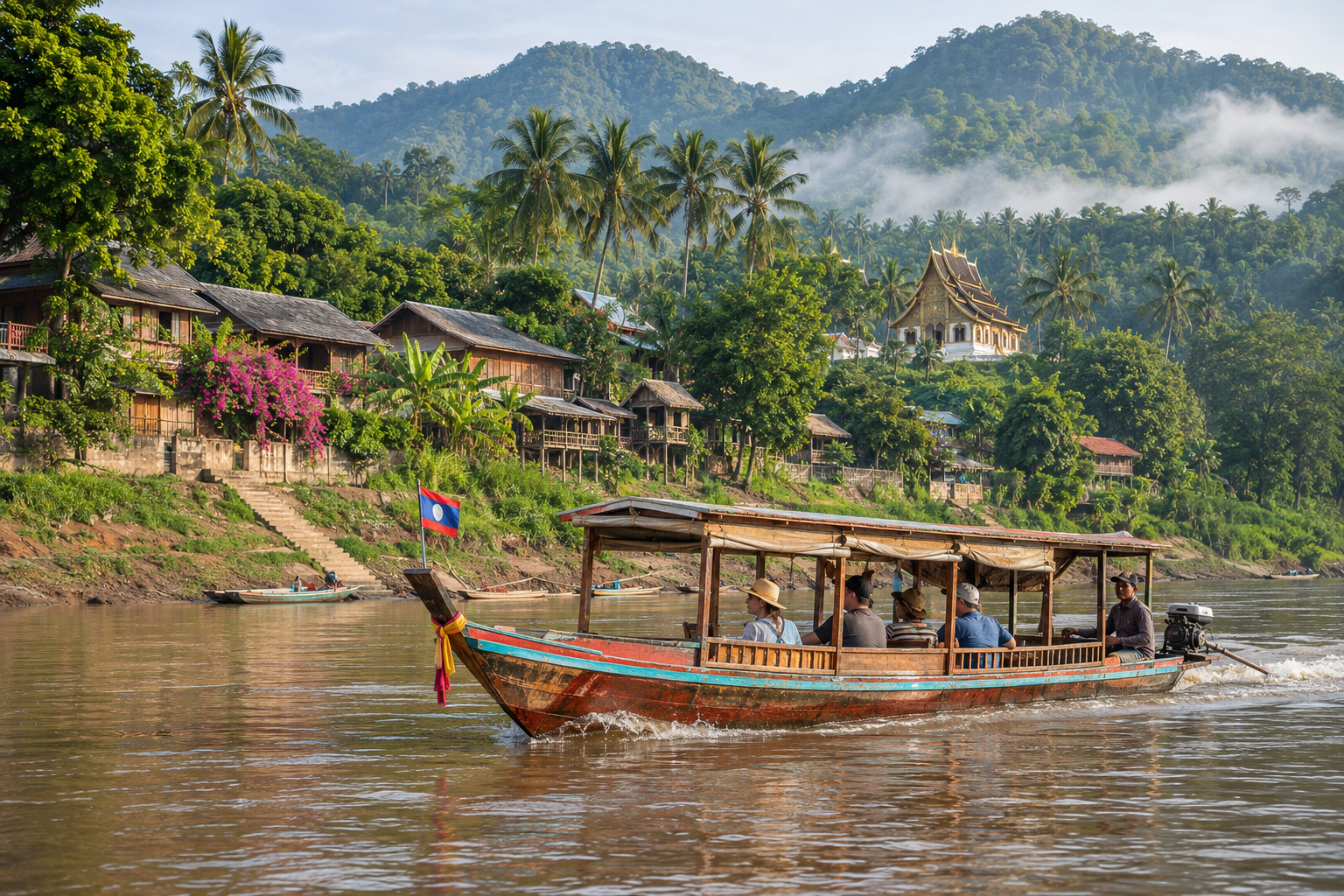
My favorite experience in 10 days was a Mekong River cruise from Luang Prabang to Pak Ou Caves, but we almost completely missed it. It would be very easy to overlook when planning your trip, too.
Around Luang Prabang, you’ll see plenty of signs advertising boat trips, but the ones we saw pushed the hardest for cheaper sunset cruises, which usually last around an hour to an hour and a half. I’m sure these are beautiful, but I wouldn’t have swapped what we did that day for a shorter trip because we got to experience so much more.
We set off early and visited three or four villages along the river, including Whiskey Village and Pottery Village. These were small, rustic communities built around traditional trades where we got to watch how people live and work along the Mekong.
At Whiskey Village, we sampled locally made whiskey and saw all sorts of unusual things, including snake whiskey, with a snake inside the bottle. At Pottery Village, we watched craftspeople making pieces to sell in the markets around town.
Between those stops, we spent hours on the boat, simply sitting back and admiring the scenery, which was some of the best in Southeast Asia. Coming from Bangkok, having that much time to slow down and take it all in was a real highlight.
Eventually, we reached Pak Ou Caves, riverside caves filled with thousands of Buddha statues. Both the caves and the surrounding scenery were worth the journey. Go for the longer day trip on the Mekong and enjoy much more than just a sunset cruise.
Luang Prabang Alms and Old Town
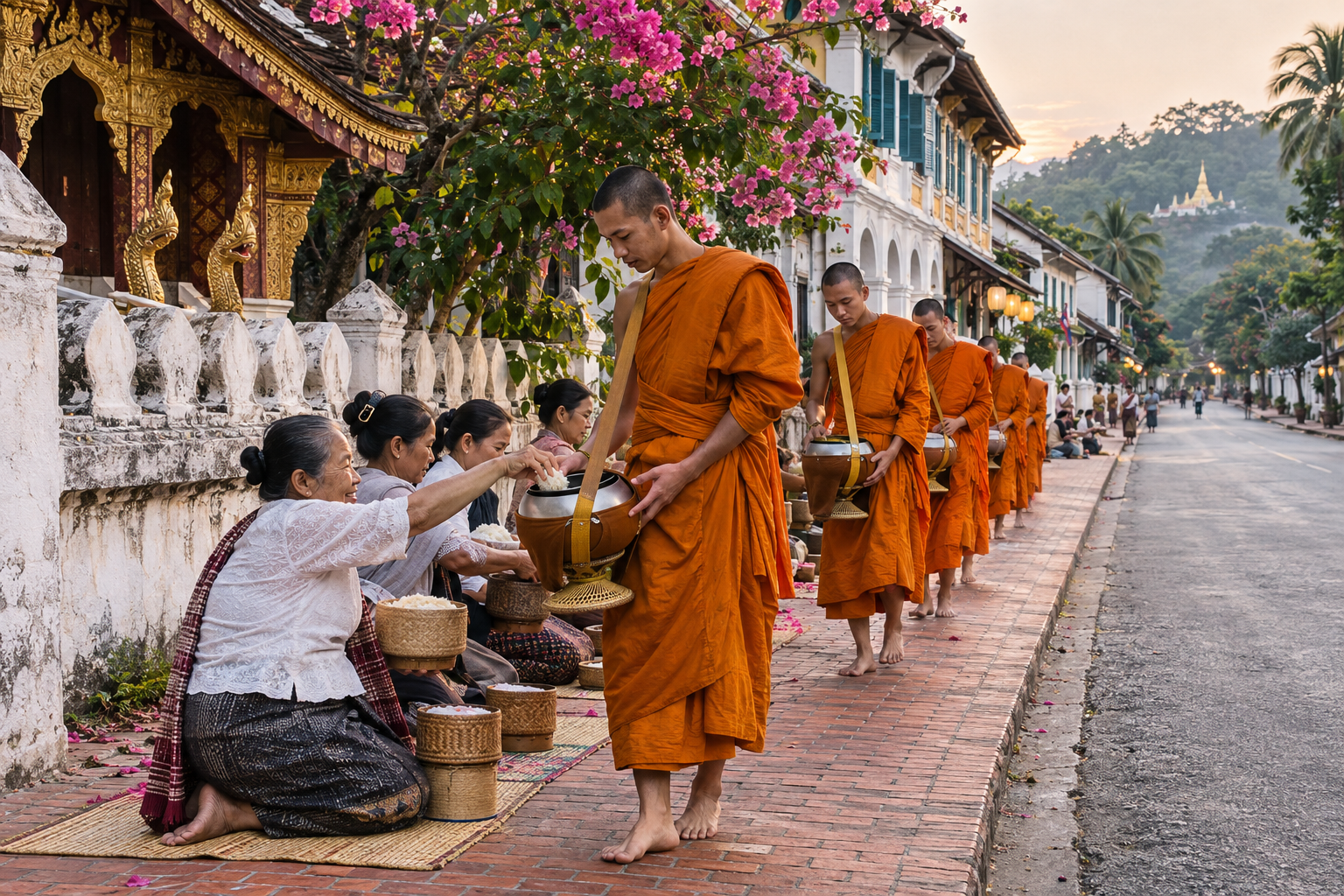
One of the most magical experiences we had in Laos was waking up at the crack of dawn to watch the morning almsgiving ceremony in Luang Prabang. Each morning, monks walk through the streets collecting food offerings from the local community. Seeing those lines of orange robes move through town as it slowly wakes up is well worth the early alarm.
What makes it even more special is the town surrounding it. Luang Prabang is filled with beautiful temples such as Wat Xieng Thong, French colonial buildings, and little streets that open up to views of the river and surrounding mountains. It’s easily one of the prettiest places I’ve been to in Southeast Asia.
On top of that, the coffee is unreal and the food is delicious. Some of my favorite moments were simply wandering around, stopping at cafes, and finding something new to eat.
Luang Prabang was my favorite place in Laos and somewhere I could happily have stayed longer. Give it a bigger share of your itinerary. You’ll want more time to enjoy the town as well as the day trips around it.
Kuang Si Waterfall Day Trip
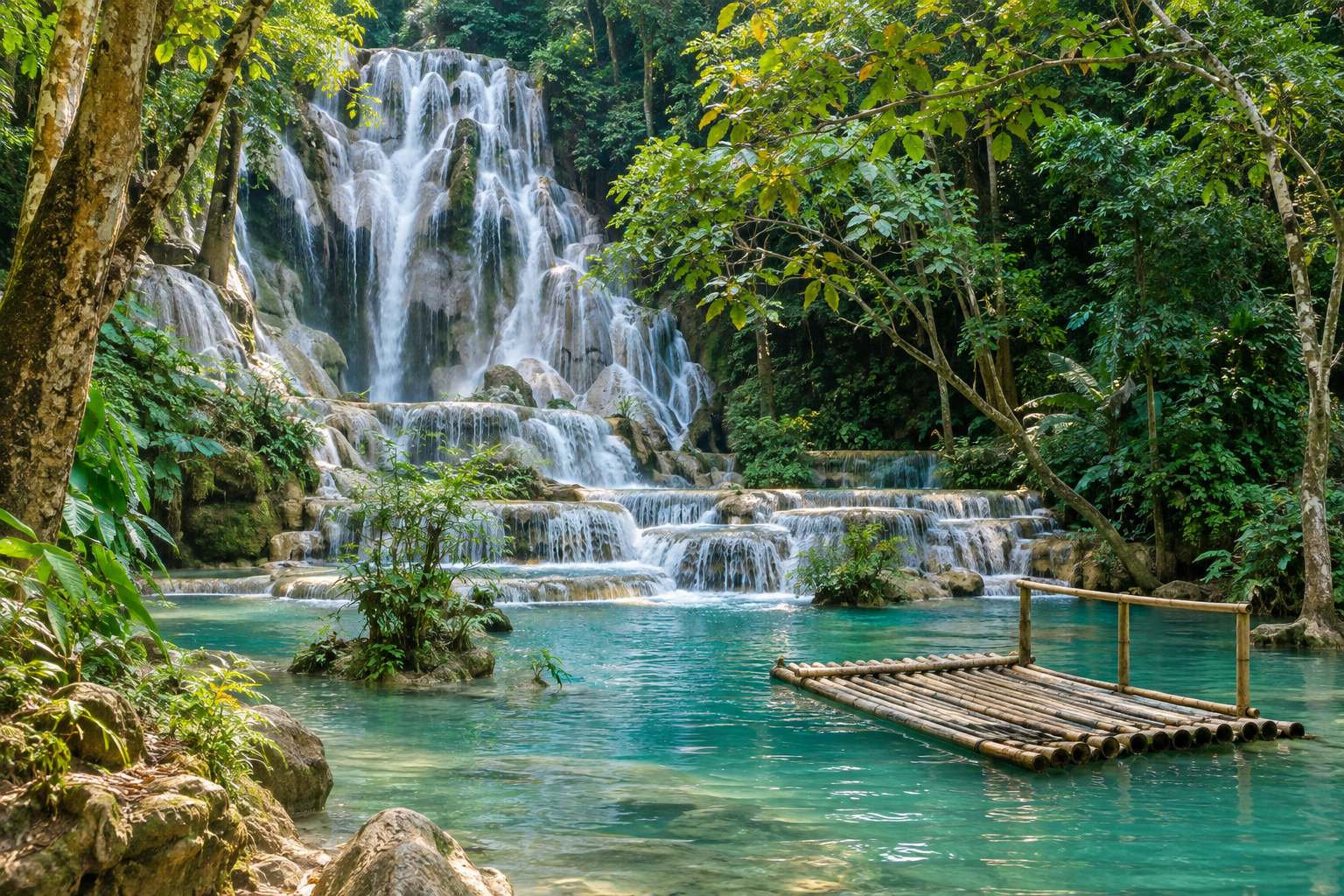
One of the best day trips from Luang Prabang is another that most people get wrong. Kuang Si Waterfall is one of the most beautiful waterfalls I’ve ever visited, but there’s much more to this day out than just the famous photo spot from the bridge.
When we visited, plenty of people seemed to grab a quick photo on the bridge and turn back. If you’re up for a climb, you can follow the trail above the main waterfall and explore the stream and river feeding into it.
When we got up there, a local boatman was offering short bamboo raft trips upstream. It felt like a whole extra experience beyond the main attraction. You can swim in the waters up here, too, so make sure to bring some swimming gear. It seemed to me that pretty much everyone else missed this.
Right next to the waterfall is the Sun Bear Rescue Center, home to rescued sun bears, the world’s smallest bear species, which are native to the Lao jungle. You definitely don’t want to skip this stop.
On the way back, we’d heard from people in Luang Prabang about another stop they highly recommended, and we do too: the Lao Buffalo Dairy Farm. It’s a unique project introducing water buffalo milk, cheese, and ice cream to the Lao diet.
You can tour the farm, meet the animals, and learn how the project works with local farmers. I even got to milk a water buffalo, which was just about as gross as it sounds, but a lot of fun, too. Turn Kuang Si Waterfall into a full day trip rather than just a quick photo stop.
Vang Vieng Town and Karst Valley
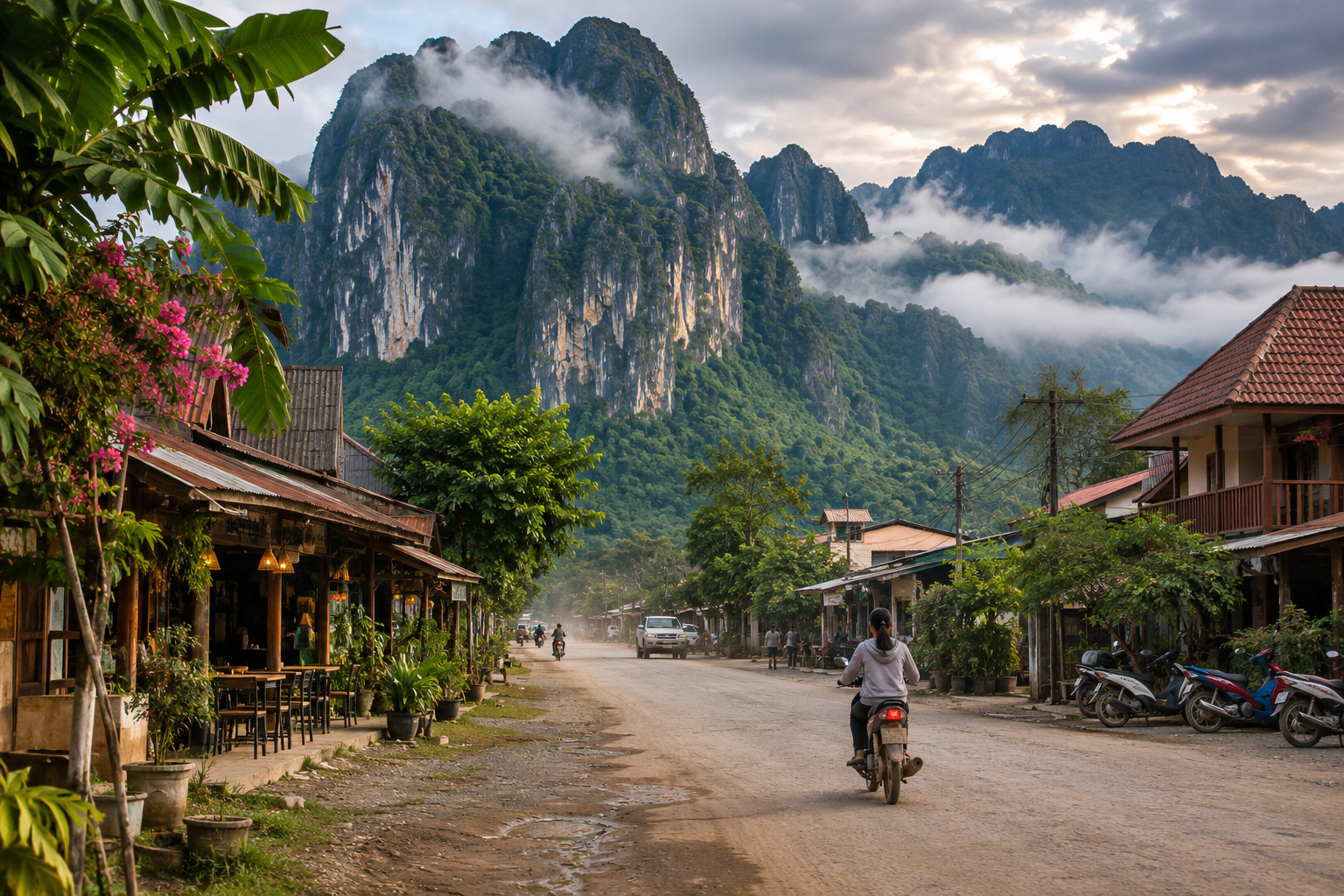
Before the trip, the place I was most excited about was Vang Vieng. I’d heard so much about this beautiful town, but in the end I left with mixed feelings. For me, the scenery absolutely lived up to expectations, but the town itself impressed me less.
The roads felt incredibly dusty. There seemed to be a lot of construction, and the town looked half-finished. Every time a car went past, it felt like I was inhaling a massive cloud of dust. The atmosphere also catered more towards a party crowd than I’d expected.
Vang Vieng has long been famous for tubing down the Nam Song River, floating in an inflatable tube and stopping at bars along the way. In the past, those riverside bars became notorious for big buckets of rum and magic mushrooms. Things got pretty wild, and rivers and intoxicated tourists are a bad mix.
A couple of years back, at its worst, 27 people died in one year on the river, so authorities cracked down. You won’t find most of the drugs now, and most of the riverside bars have closed, but drinking while tubing is still going on.
I’ll admit it was a good laugh, but it’s a strange mix: floating down this beautiful valley with music blasting everywhere and everyone drinking. We met a couple of people and had fun, but it did have a bit of a gap-year vibe. Even though I’m only in my mid-30s, I was noticeably one of the oldest people there, with most of the crowd around 18 to 25.
There was a big bar-crawl atmosphere in town in the evening as well. I walked into a bar at one point and was handed a menu that had crystal meth on it. It was a weird mix of beautiful scenery and backpacker party town.
If you’re into that kind of thing, stay in town. If you came for the scenery, I’d maybe stay more in the countryside, perhaps down by the river.
One of the most iconic photos you’ll see from Laos is the motorcycle perched above the mountains at Nam Xay viewpoint outside Vang Vieng. They dragged a motorbike up there, and you can get a photo with it and sometimes a flag. Getting up there was harder than I expected: it took about 30 to 40 minutes, up a steep, rocky trail.
The reward at the top is worth it. I was less interested in the photo opportunity than in the jagged limestone peaks surrounded by morning mist. Getting there early made a huge difference. We had a quieter experience and could take our time with the view. By around 10 a.m., the mist had cleared, it was getting hot, and the summit was crowded. Go early, before the mist disappears and it gets busy.
Vang Vieng Hot Air Balloon Safety
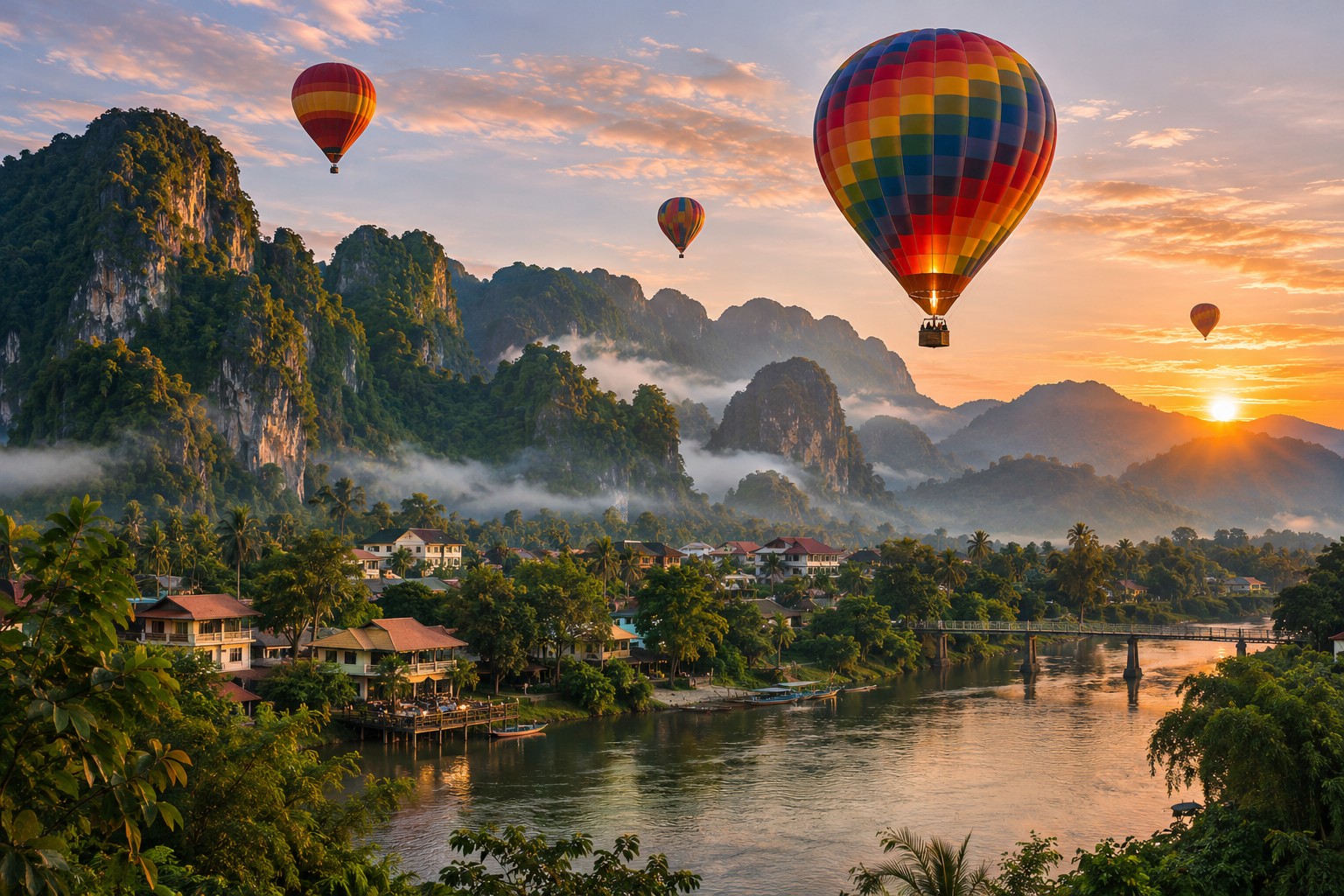
Climbing isn’t the only way to see those mountains from above. If you’ve looked into Vang Vieng, you’ve probably seen it described as one of the cheapest places in the world to take a hot-air balloon ride. This was the experience I was most excited about before coming, but when you’re hundreds of metres up in the air, the price tag is the last thing on your mind.
We booked a shared basket with about eight people, paying around $100 per person at the time. We woke up early, around 5 in the morning, were picked up from our hotel, and driven into the countryside.
Although it was an amazing experience, something about it felt a little off from the beginning. No one could speak English, everything was very rushed and frantic, and we were crammed in the back of a van. Once we arrived, it wasn’t clear what was going on or where we needed to be.
Once we got into the basket and up in the air, the views were absolutely incredible. It’s definitely a bucket-list activity. The beautiful mountains of Vang Vieng, with plenty of other hot-air balloons in the sky at the same time, made for a peaceful, picturesque experience.
Coming down was a very different story. The landing was rushed and frantic, with people alongside us trying to pull the basket down. It all felt chaotic, and most importantly, we seemed to be getting dangerously close to the other balloons.
Knowing what the safety record is like in Laos, that was the point when I wondered what I was doing there. I might have put it down to the experience itself, but the next day we watched another hot-air balloon crash-land into a petrol station. Its burner was firing, and the ground crew only just managed to pull it away. From where we were watching, it looked like a very close call. I don’t want to imagine what would have happened if it had hit the petrol station.
Luckily, we finished our own ride without a problem, but it wasn’t exactly the gentle ending I’d imagined. The balloon views are absolutely worth it, but I would research the company before booking and check its safety procedures.
Laos Railway and Vientiane

For the most part, Laos is one of the least developed countries in Southeast Asia. That is apart from its train system, which is very modern. China has connected Laos to its railway system, giving you an ultra-modern, high-speed railway between the major towns and making it quick and easy to travel around.
In fact, you can now go all the way from Vientiane to Beijing on that same railway. Some of the tracks pass directly through mountains, so there’s no messing around.
We did make one mistake that cost us an entire day of our trip. We checked out of the hotel, went to the train station, and expected to buy tickets for the next train. Instead, we were told there were no seats available until the evening. We ended up waiting around 10 hours to get on the next available train.
We’d already checked out of our hotel and had our bags with us, so we spent the entire day in the train station, which was not a fun way to spend the day. Use the railway, but make sure you book your tickets in advance.
One place the railway makes easy to reach is Vientiane, the capital. Compared with Luang Prabang and even Vang Vieng, I found it a little underwhelming. There were a couple of worthwhile stops. Patuxai Monument, for example, was very beautiful, but beyond those highlights, Vientiane didn’t draw me in the same way.
I found myself wishing we’d given more time to Luang Prabang or Vang Vieng. On a short trip, you can see the highlights of Vientiane in about 24 hours. I mostly used it as a base to get in and out of the country.
Laos Budget, Luxury and Itinerary
A local Lao meal can cost around 40,000 to 90,000 kip, roughly $2 to $4. A cold Beerlao at a bar or restaurant might be around 25,000 to 40,000 kip, roughly a dollar or two. Accommodation in general was also extremely cheap. Prices vary with the location and season, but for me Laos is one of the cheapest places I’ve visited in Southeast Asia, or anywhere else in the world. If you’re visiting several countries on a Southeast Asia trip, Laos is where you can ease off the budget and stretch your money further. You can allocate more to other places, such as southern Thailand, which is much more expensive.
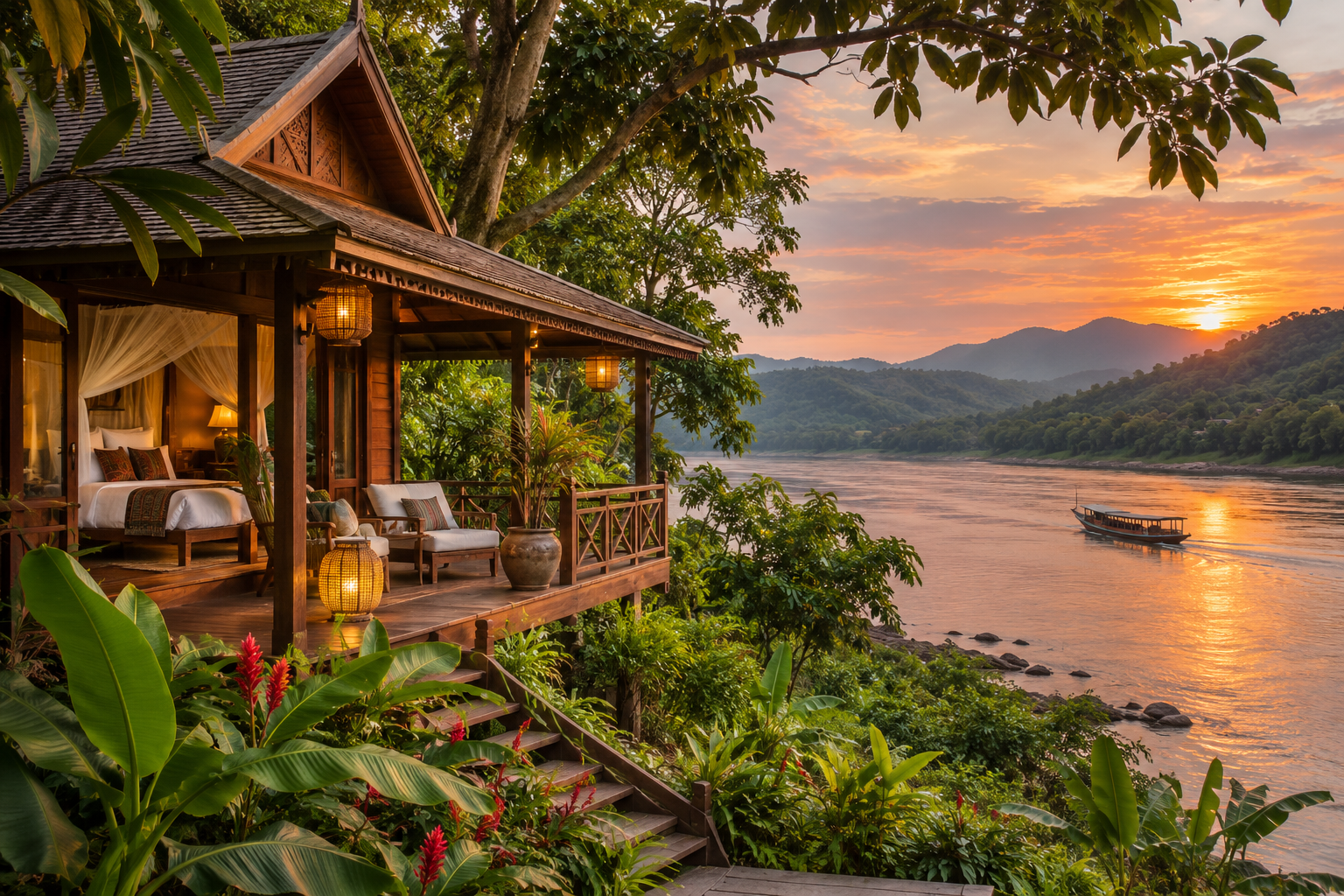
Hotels are cheap, but next time I visit, I think it’s worth spending more time in one of the handful of incredible luxury hotels in the country. There aren’t a lot to choose from, but some are particularly unique and beautiful. Rosewood Luang Prabang is the one that really jumps out to me. It’s just outside town, set in the rainforest around a natural waterfall, with everything from pool villas to luxury hilltop tents. It’s a kind of luxury glamping experience where you’d want to leave time to enjoy the hotel itself and be surrounded by nature. Then there’s Amantaka, set in a restored colonial-era building. It’s the most expensive hotel in the entire country, but at the same time, one of the cheapest Aman-brand hotels in the world. If you’re interested in experiencing that kind of place, this would be the cheapest way to experience an elite-level hotel.
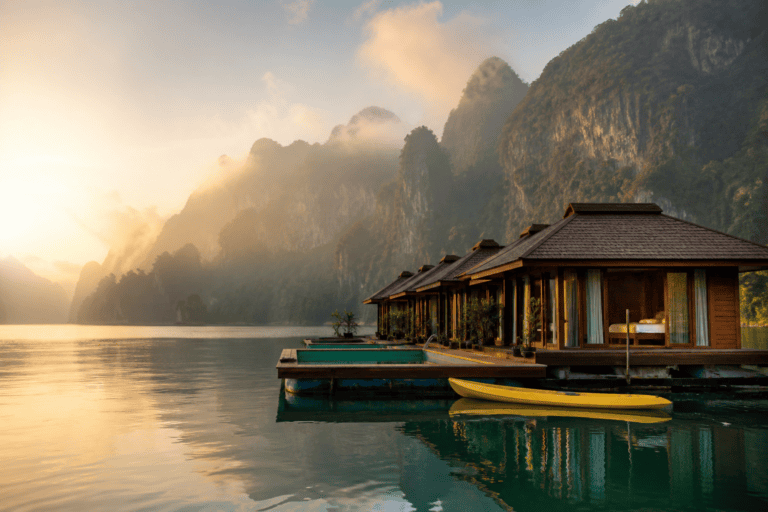
Outside Luang Prabang, The River Resort in Pakse has traditional wooden bungalows overlooking the Mekong, exactly the sort of setting where I’d happily spend the afternoon or evening watching the river. In Vang Vieng, Riverside Boutique Resort has a pool framed by mountain views. It looks like the perfect place to recover after a morning climbing the viewpoints. Consider setting aside part of your trip for a special stay where the hotel becomes part of the experience.
November to February is generally the best time to visit Laos. The weather is cooler and drier, perfect for exploring. You might want to avoid visiting later in the dry season, when temperatures get very high and the infamous burning season begins. At this time of year, farmers burn their fields, creating thick smoke that can ruin the spectacular mountain views and cause serious air pollution. There are also some incredible festivals worth planning your trip around. In Luang Prabang, the Festival of Lights, usually held around October, is a beautiful celebration with illuminated boats and lanterns lighting up the temples and the Mekong River. Then there’s Pi Mai, Lao New Year, around mid-April. Much like Thailand’s Songkran, expect massive water fights, colourful parades, and traditional temple celebrations.
I spent around 10 days in Laos, with four nights in Luang Prabang, four in Vang Vieng, and two in Vientiane. Looking back, I’d move one of those Vientiane nights to Luang Prabang, giving it five nights instead.
What I liked about this route was how straightforward it was. The railway connected all three stops, and each place offered a different side of the country. If you’re visiting Laos as part of a bigger Southeast Asia trip, you could condense it into a week, focusing on Luang Prabang and Vang Vieng. That gives you a taste of the country while leaving more time for neighbouring countries.
If you want to explore Laos in more depth, there are a few places I’d be looking to visit on my next trip. First, Nong Khiaw, a small riverside town surrounded by dramatic mountains, with hiking and viewpoints that look unreal. It would be a basic extension of travelling from Luang Prabang.
Further south, there’s Don Det in the 4,000 Islands region of the Mekong. Exploring by bicycle or staying beside the river looks like a great way to slow things down. And there’s the Gibbon Experience, where you spend time trekking through the jungle, ziplining through the trees, and hopefully spotting the elusive gibbons that live there. I haven’t visited these places myself yet, but they’re places I’d like to see on my next trip.
For a straightforward first trip, follow the route along the railway. If you have longer or want to explore deeper, there’s a lot more to Laos than just those three towns.