Buying a Bangkok Home – Costs, Fit-Out and Setup
Choose a Bangkok Home Near Transport
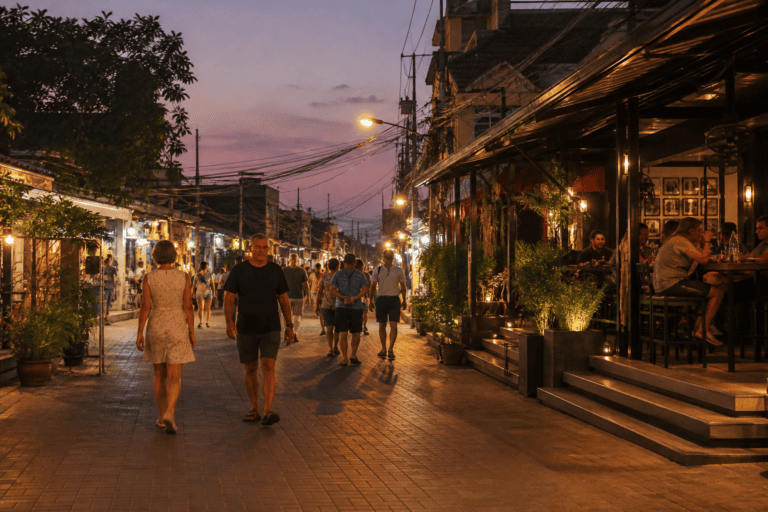
For this Bangkok home, proximity to public transport was one of the main reasons for choosing the community. A nearby MRT or rail connection can reduce dependence on taxis, tuk-tuks, and driving through traffic.
When comparing a home, check the walking route in daylight and at night, nearby shops, flood or drainage conditions, parking, and how long the trip takes at real commuting hours.
Check Security, Facilities, and Green Space
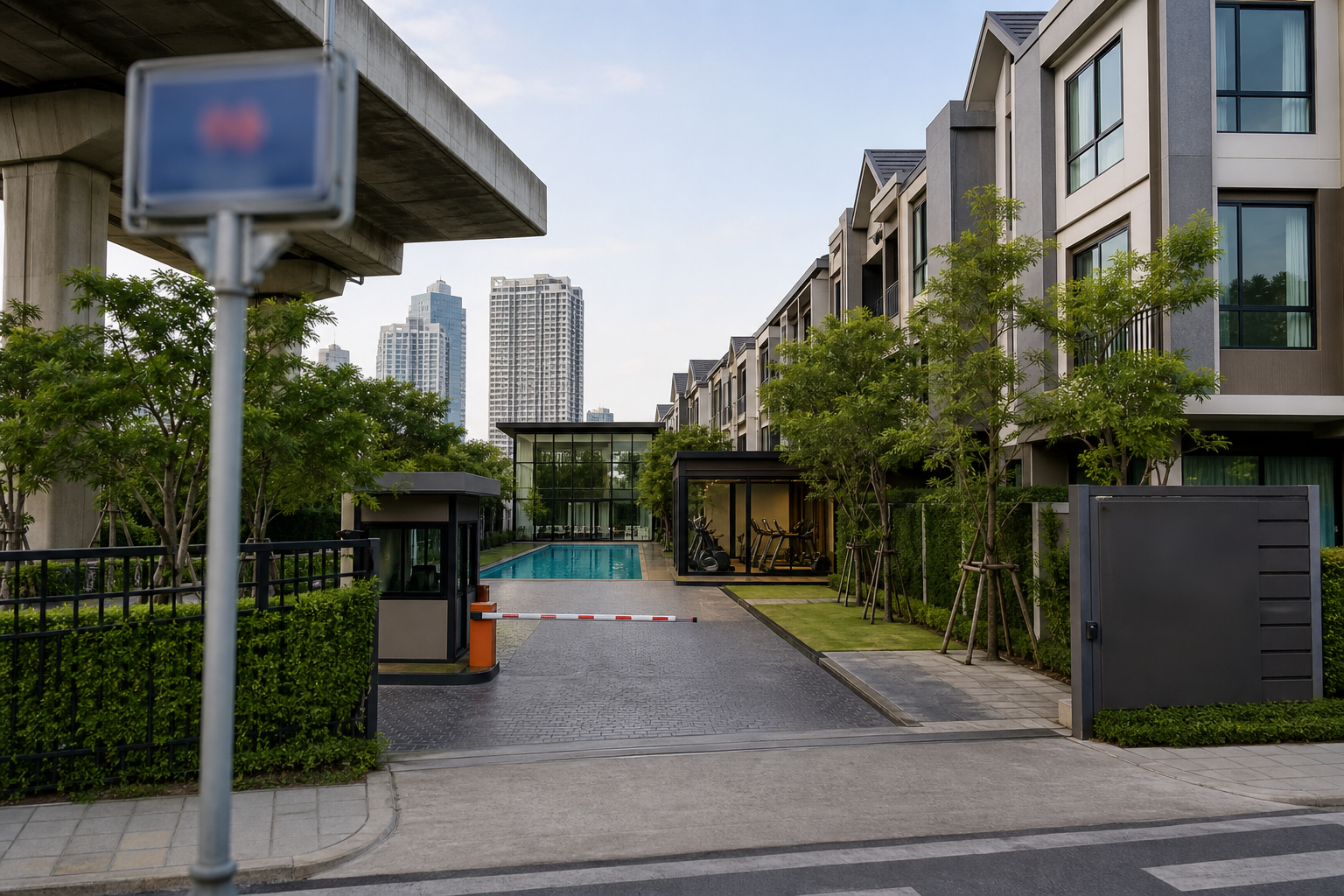
The community described in the source has round-the-clock security, a pool, a gym, green space, and a pet-friendly environment. These facilities can improve daily life, but they also affect fees and community rules.
Ask what the monthly maintenance charge includes, when facilities are open, whether guests can use them, and what restrictions apply to pets, parking, renovations, and noise.
Plan Storage, Parking, and Outdoor Shade
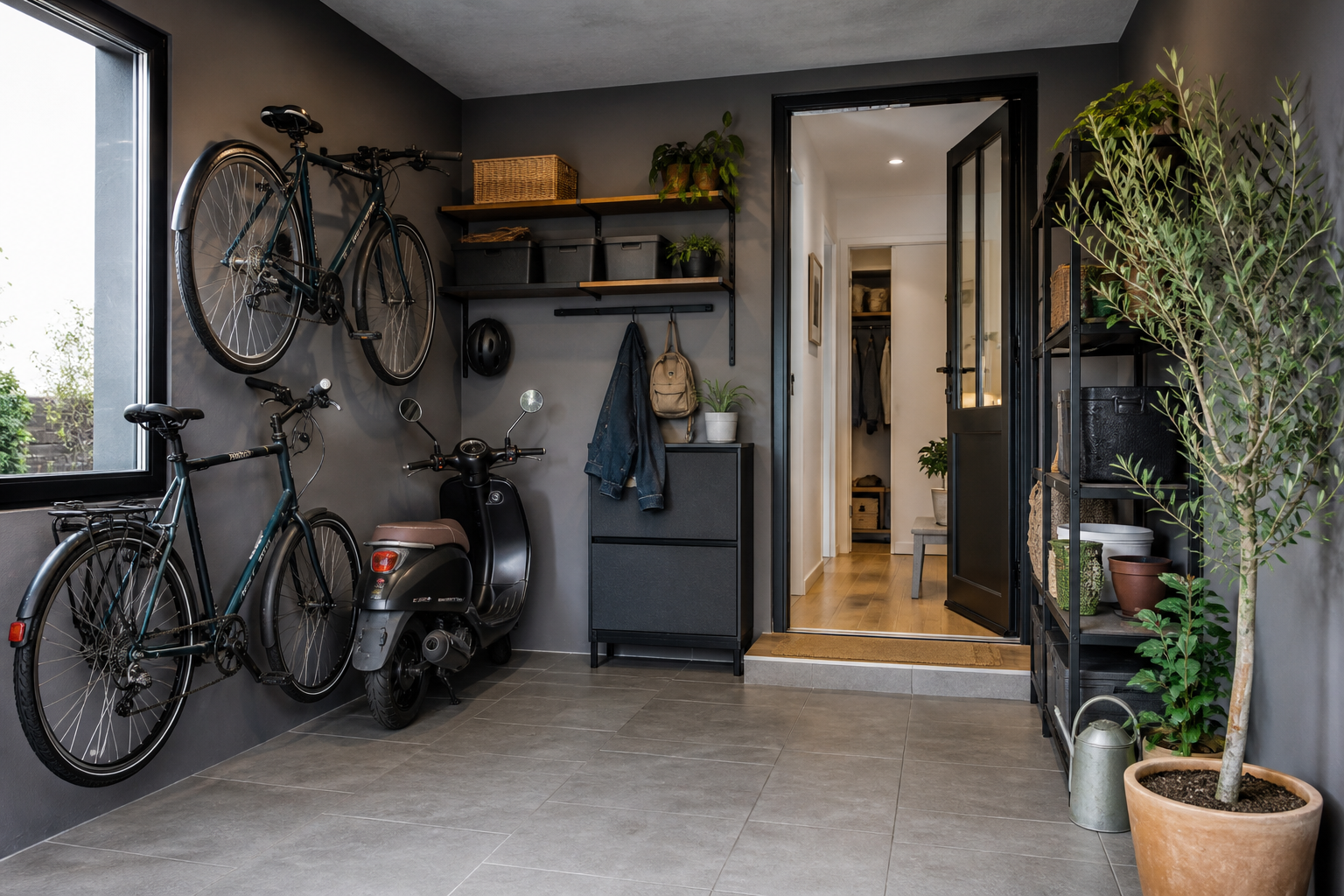
The house tour includes private doors, parking for two cars, storage, a small outdoor sitting area, and space for bicycles or a scooter. In Bangkok’s heat and rain, covered parking and shaded outdoor areas can be more useful than a large decorative garden.
Think about where bikes, cleaning supplies, luggage, tools, and seasonal items will go before filling the house with furniture. Check ventilation and drainage around any outdoor storage.
Make the Living Spaces Comfortable
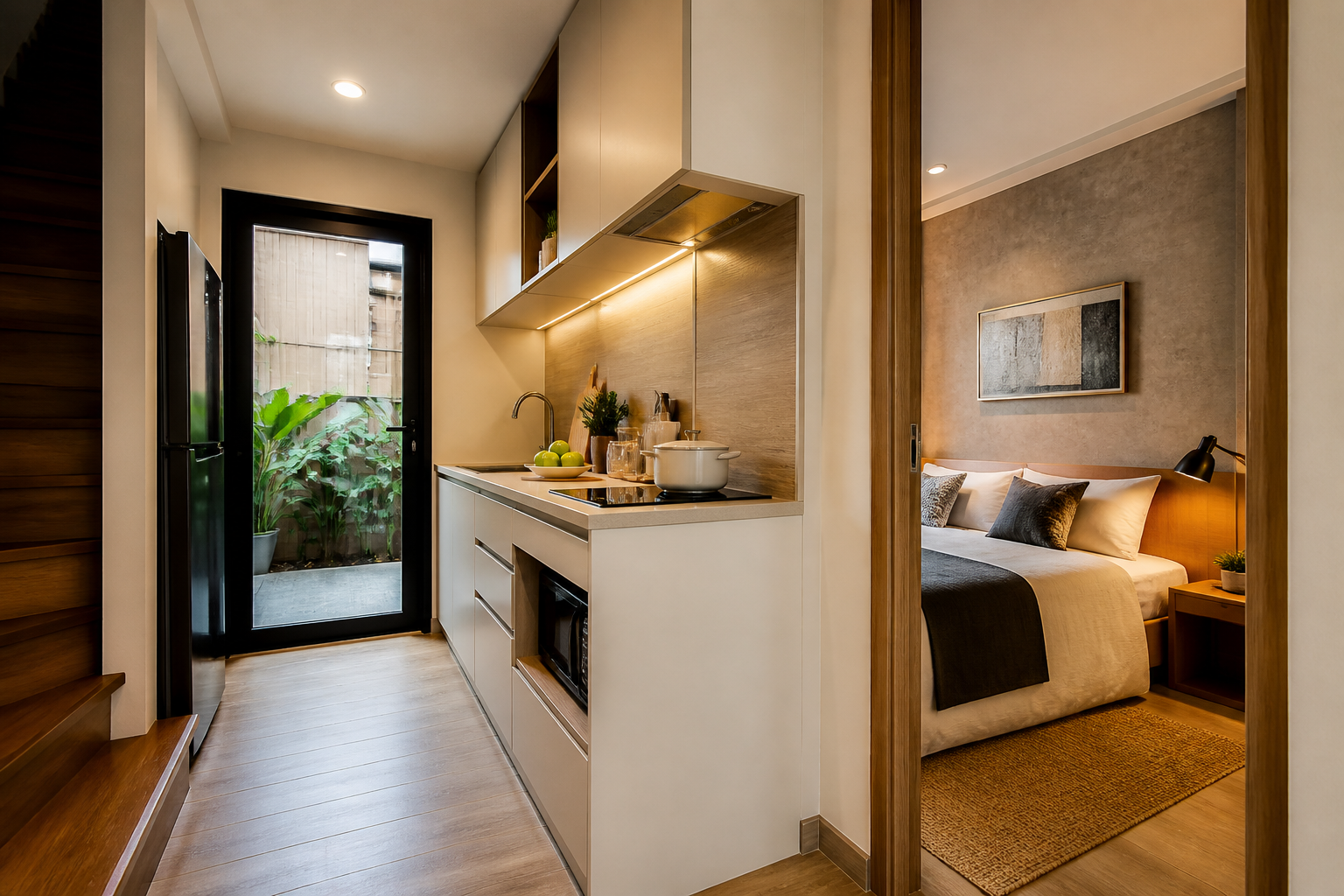
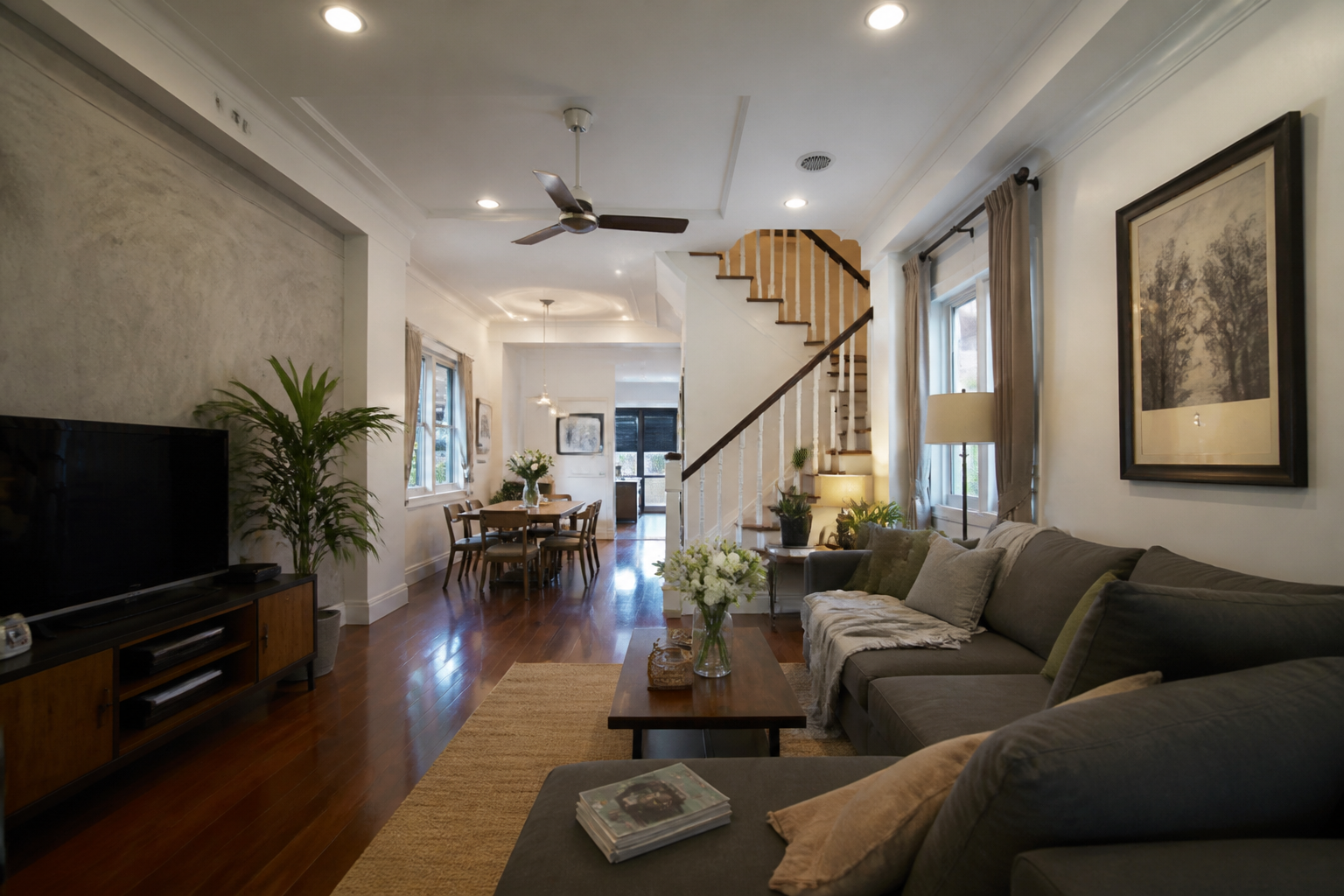
The interior was furnished after the house was purchased, including a large sofa, television, sound system, dining table, lights, artwork, and seasonal decorations. Curtains help with privacy and sunlight, while a practical layout matters more than filling every corner.
For kitchens, bedrooms, and bathrooms, prioritize ventilation, easy cleaning, storage, and reliable fixtures. Test sockets, water pressure, air-conditioning, and appliances before committing to additional renovation.
Budget the Full Cost of Buying and Improving a Home

The purchase price is only one part of owning a Bangkok home. Add transfer and legal costs, common-area fees, utilities, insurance, furniture, curtains, tiles, roofing, appliances, and future repairs to the budget.
Get written quotes from contractors, keep invoices, and reserve a contingency for work that appears after moving in.
Choosing Between a Bangkok Townhouse and Condo
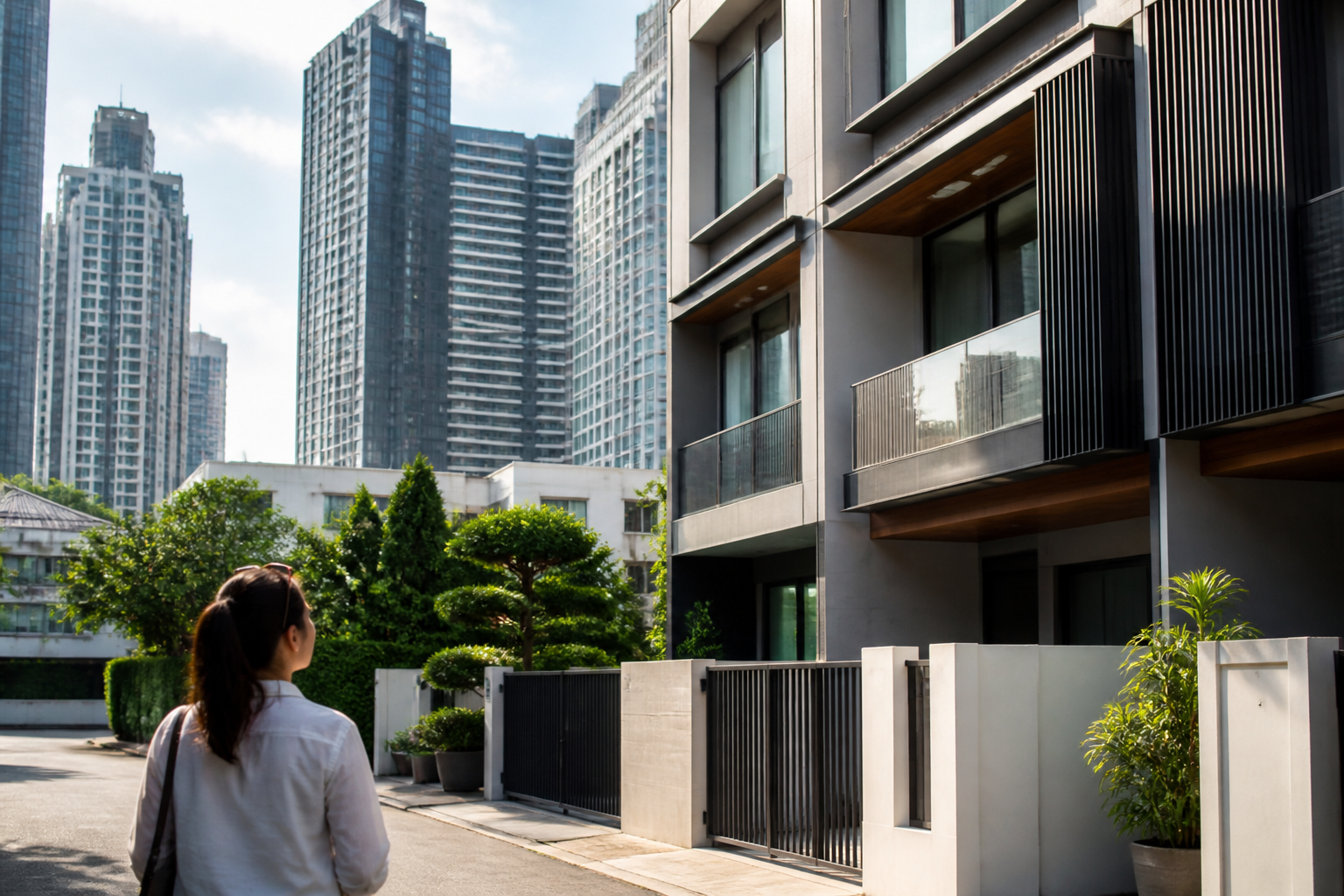
A Bangkok townhouse can provide more living space, a separate office, outdoor areas, and room for a kitchen or storage than a typical city condo. A condo, however, may offer a shorter commute and shared facilities without the same responsibility for maintenance, furnishing, or transport.
Compare the full monthly and annual cost rather than judging by floor area alone, and check ownership, lease, management, and transfer conditions through qualified local professionals.
Shared Facilities and Quiet Residential Communities
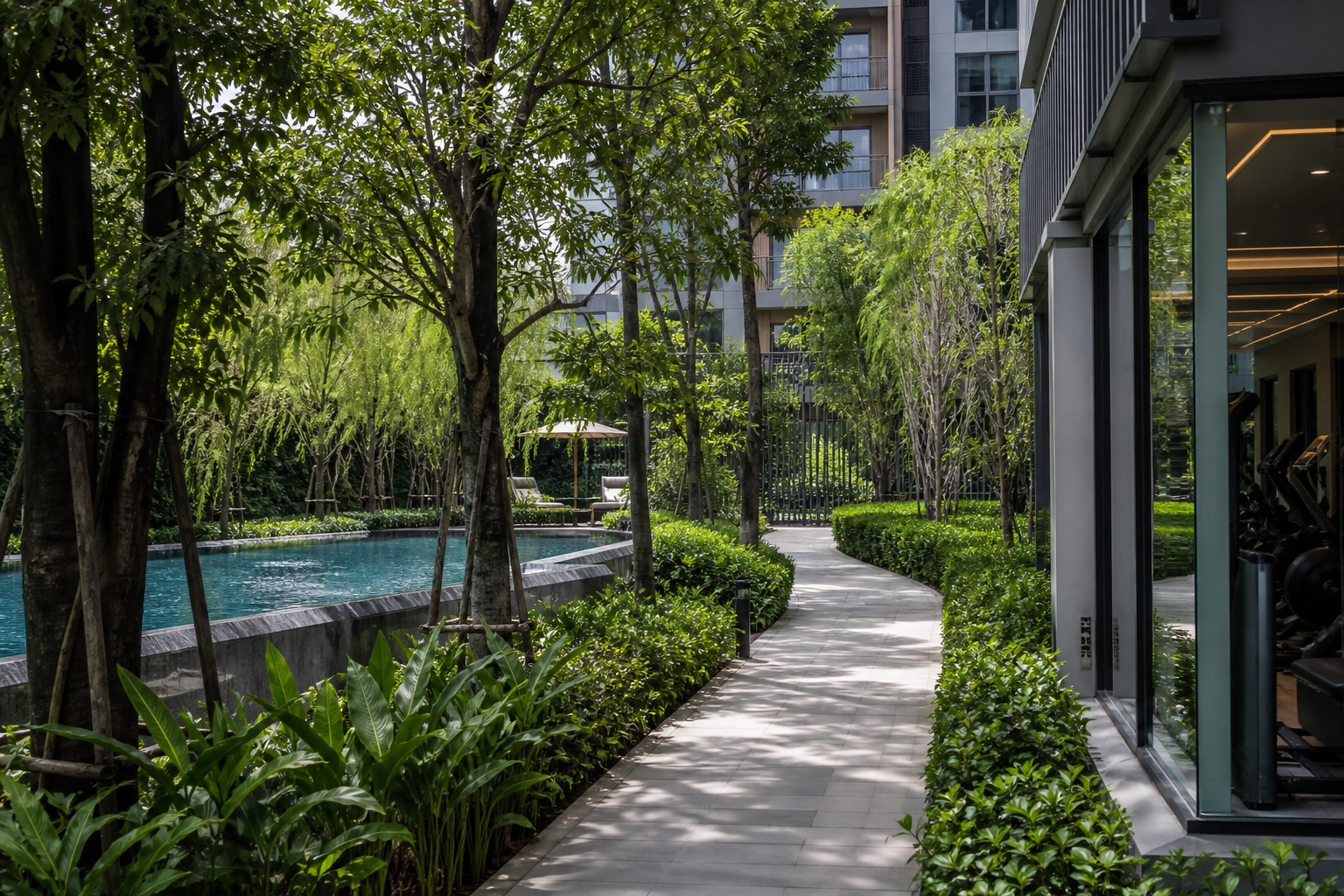
Many townhouse communities include a pool, gym, security gates, and landscaped shared areas. These facilities can make a residential development more comfortable.
Essential Townhouse Upgrades for Bangkok Living
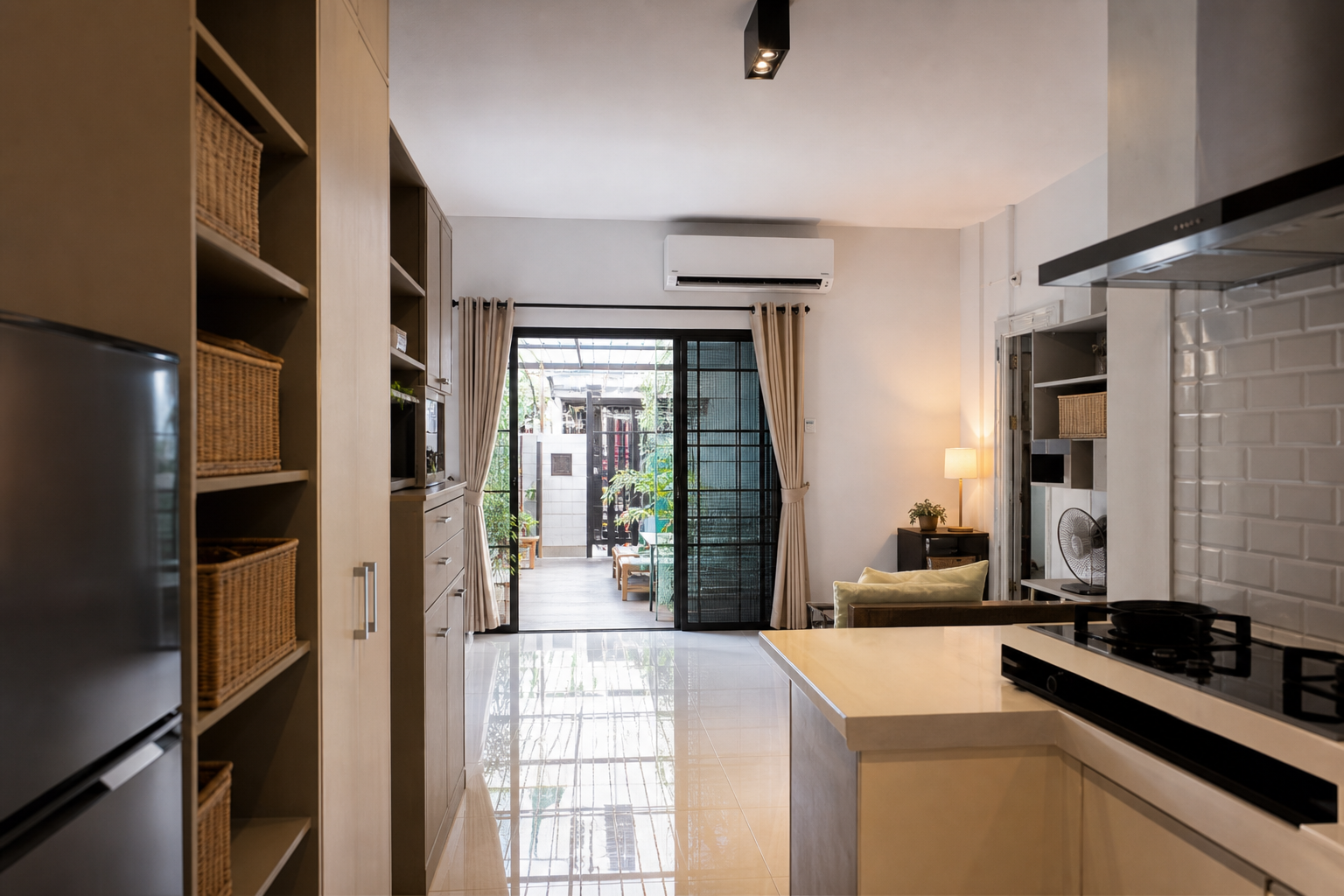
A newly purchased or empty townhouse may need practical work before it feels ready to occupy. Useful early upgrades can include a covered parking area, storage cabinets, mosquito screens, an alarm or camera system, air-conditioning, curtains, lighting, and a functional kitchen.
Prioritise ventilation, electrical capacity, drainage, water pressure, and heat management before decorative features. Obtain itemised quotations, confirm who supervises the work, and keep records of warranties and permits. Use reputable contractors and inspect completed work before making the final payment.
Bathrooms, Storage, and a Practical Home Office
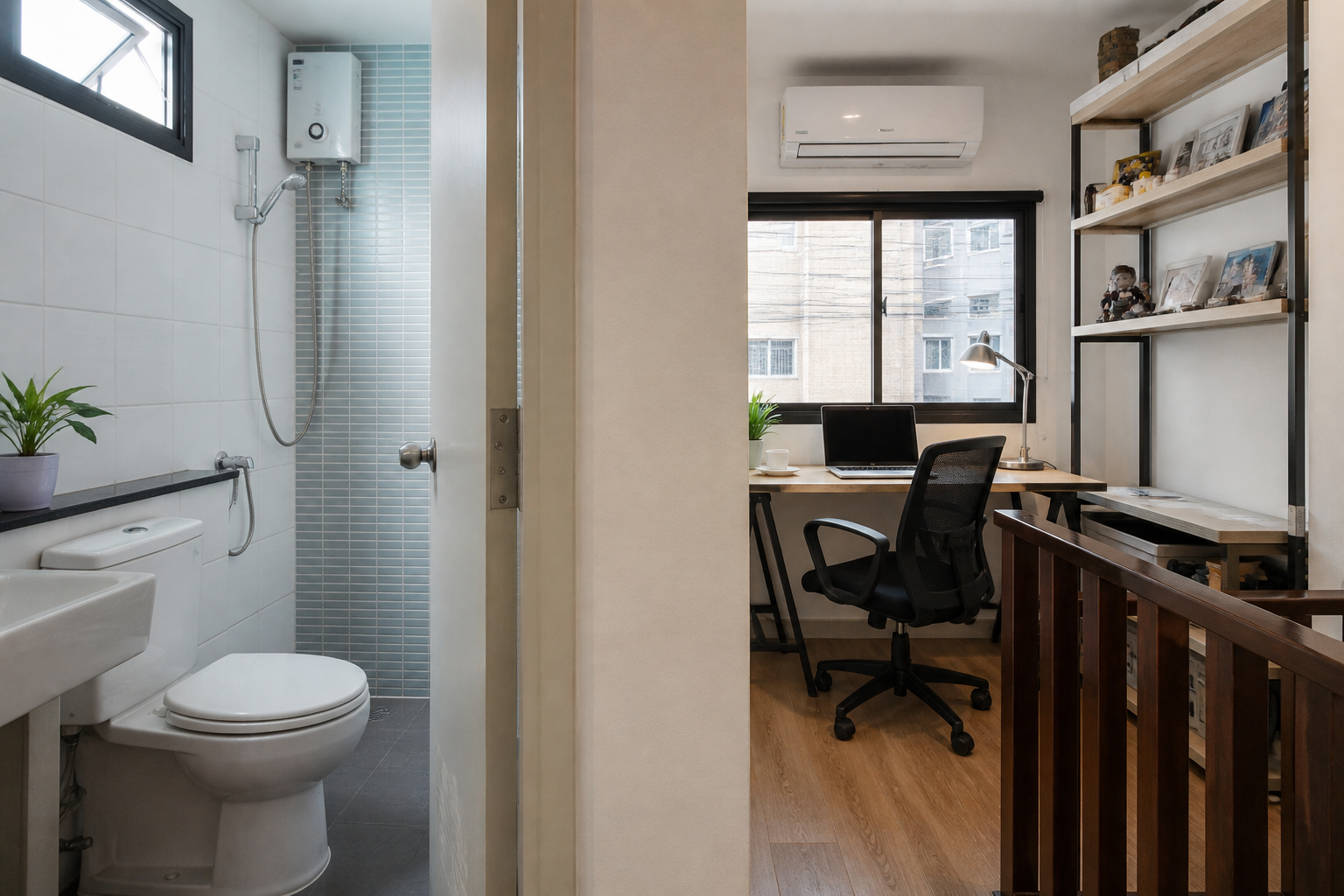
Bathrooms and utility areas need careful planning in Bangkok’s warm climate. Check hot-water heaters, ventilation, shelving, washing-machine connections, water tanks, and access for future repairs. Good storage near entrances and bedrooms also keeps a compact home easier to manage.
A spare room can become a useful office with reliable internet, enough electrical outlets, comfortable lighting, and a view or layout that supports focused work. Leave room in the budget for furniture and equipment rather than treating the purchase price as the complete cost of moving in.
Budgeting for a Bangkok Townhouse and Fit-Out
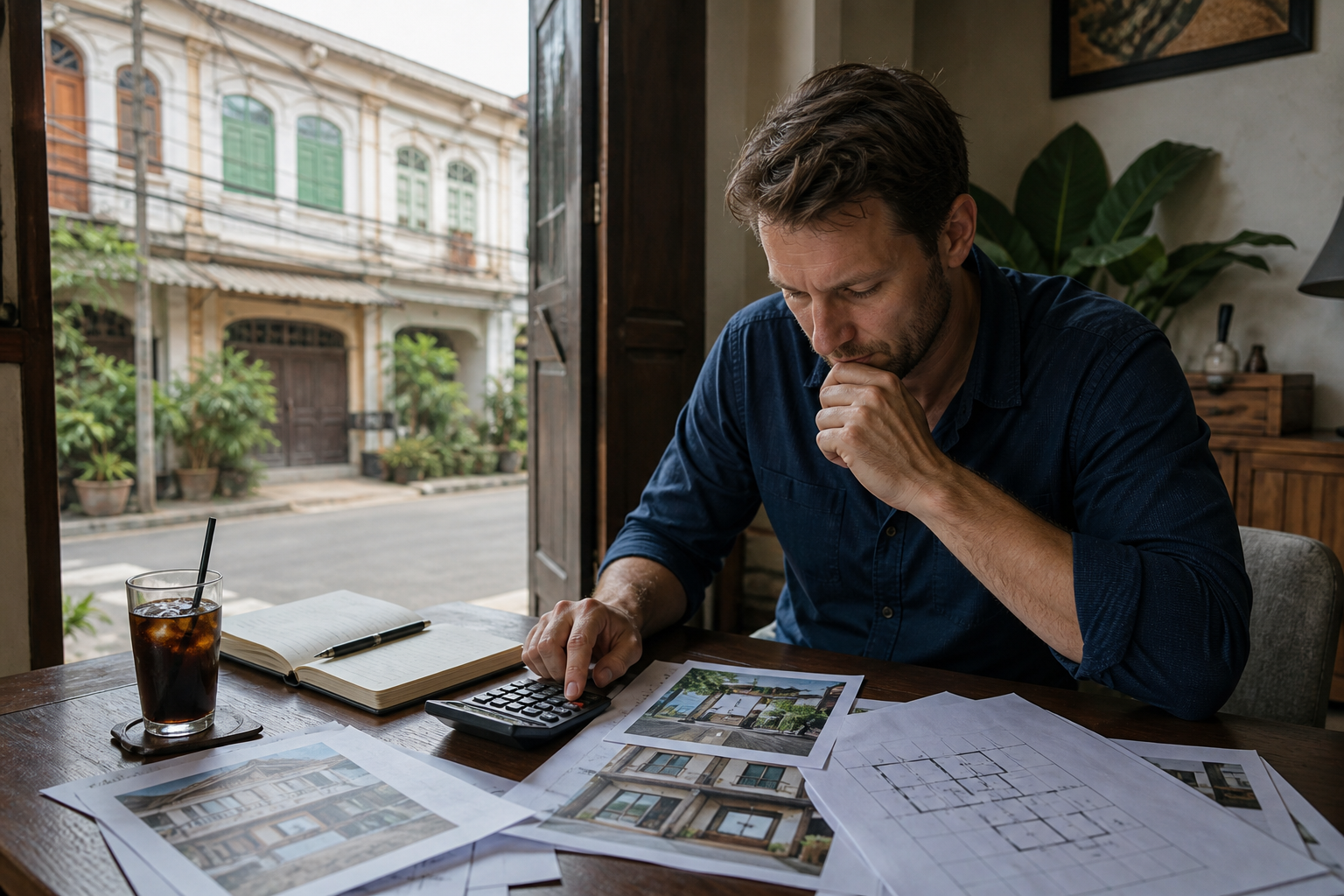
Separate the property price from renovation, built-in furniture, appliances, curtains, air-conditioning, security, legal fees, taxes, common fees, insurance, and ongoing utilities. A transcript example placed a basic move-in budget for a townhouse of this type at roughly ฿5 million, but that figure is not a market quote and can change substantially with location, size, land title, and specification.
Request current comparable prices and several written contractor estimates. Keep a contingency for plumbing, electrical work, water systems, and delayed deliveries, and confirm every cost in writing before signing or transferring funds.
Transport, Location, and Everyday Convenience
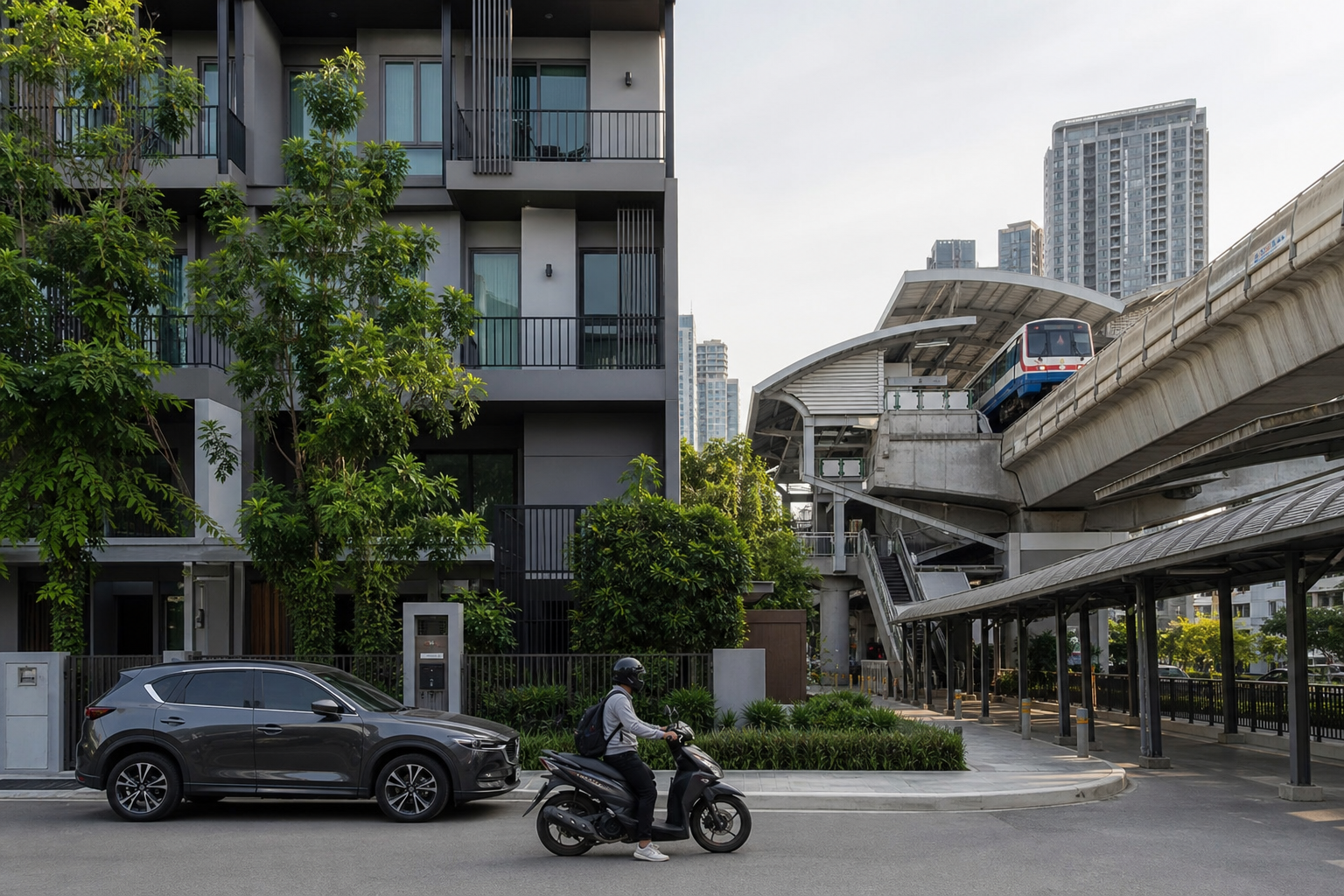
Townhouses outside central Bangkok can offer more space and a calmer atmosphere, but daily convenience depends on the route to rail stations, workplaces, schools, supermarkets, and hospitals. A home that is only fifteen minutes from one destination may still be inconvenient if traffic makes other journeys unpredictable.
Bangkok Condo Convenience and House Space
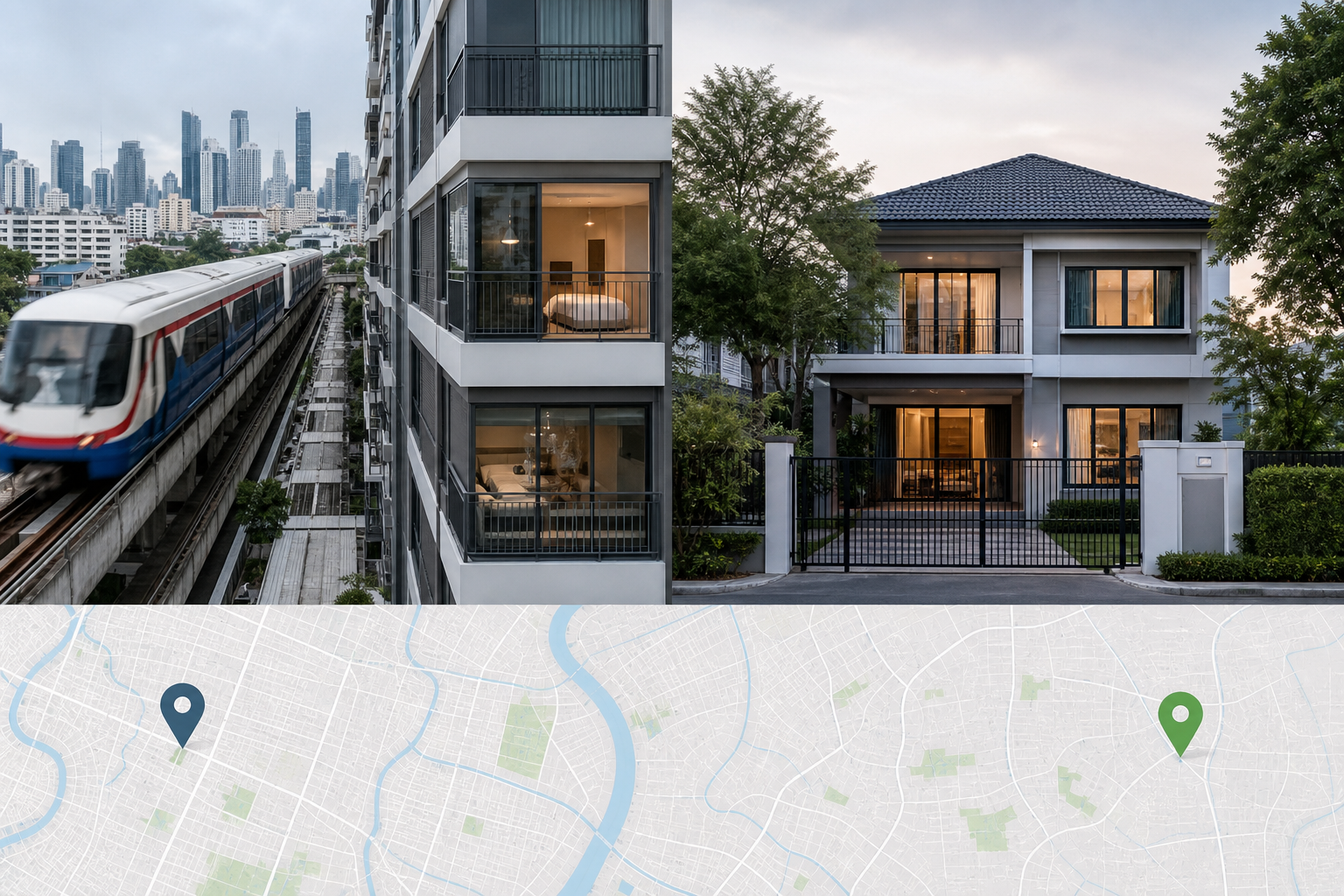
A townhouse or house generally provides more room for bedrooms, work areas, parking, and future upgrades, often in a less central setting.
Evaluating an Unfinished Bangkok House
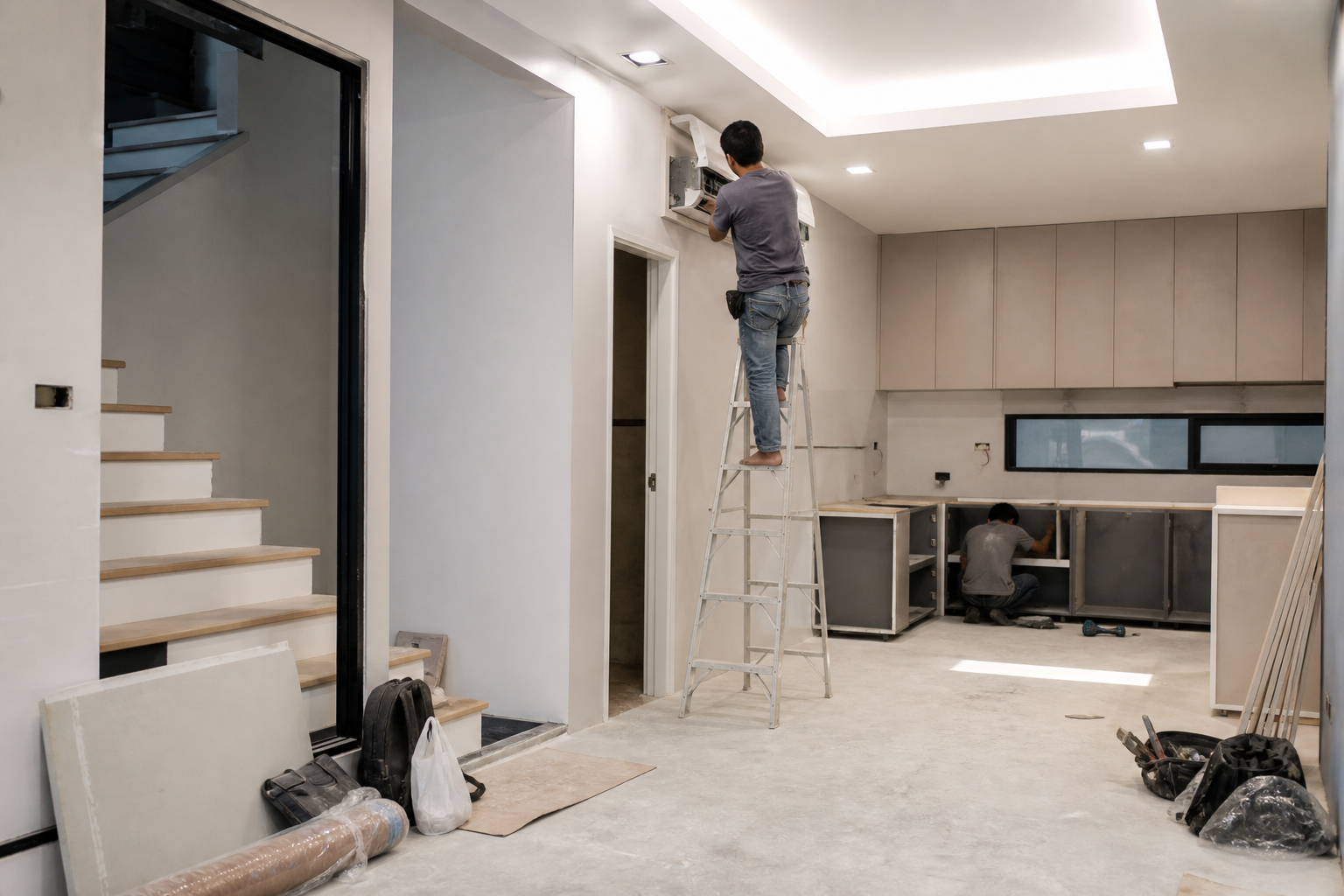
A new or recently purchased house may still need air-conditioning, curtains, kitchen work, storage, lighting, furniture, and finishing repairs before moving in. Walk through every room with a written checklist and distinguish essential safety or utility work from decorative upgrades.
Request itemised quotations, confirm electrical capacity and water pressure, inspect drainage, and record defects with photographs. Use reputable contractors and keep warranties, invoices, and completion dates together.
Pools Gyms and Shared Community Facilities
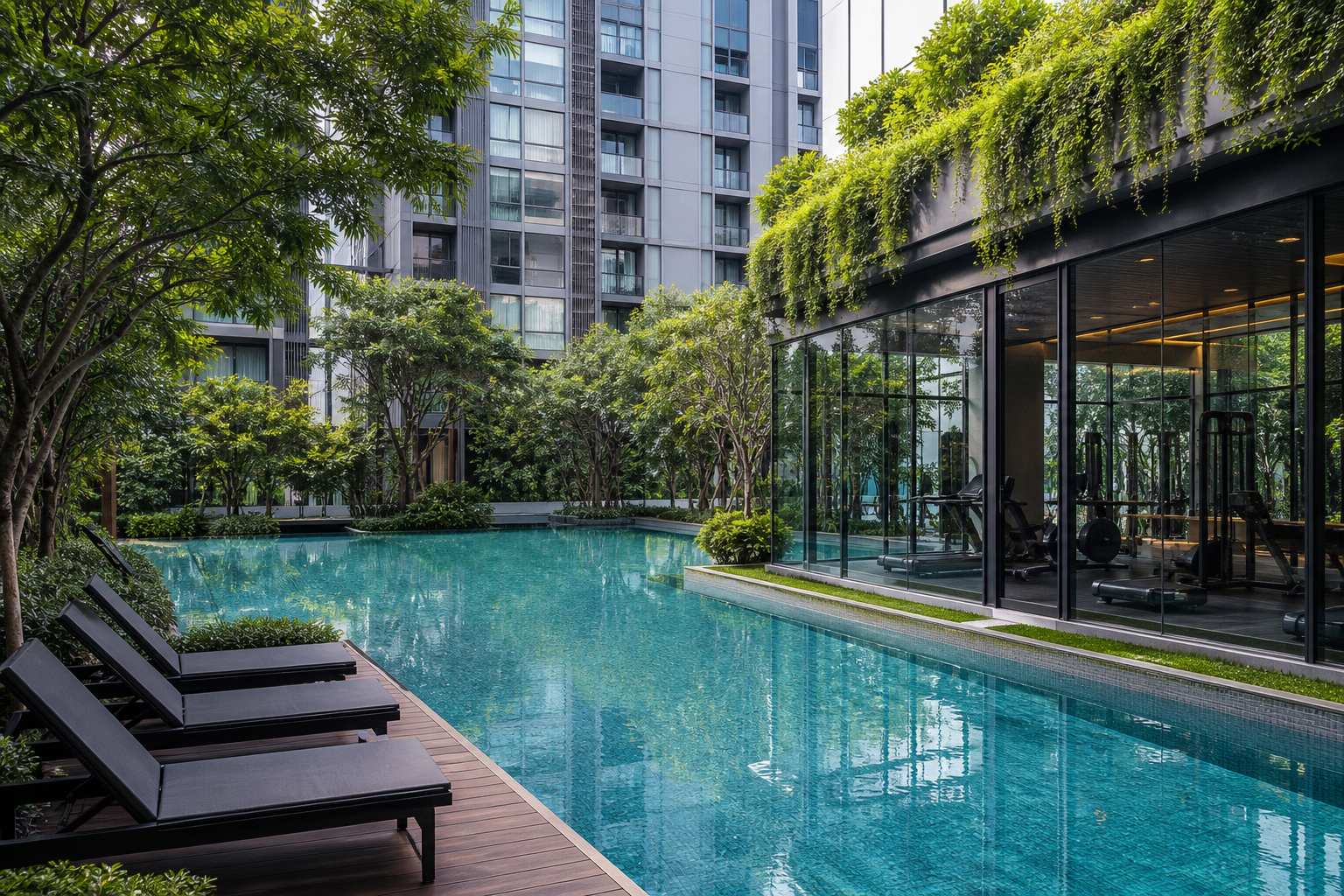
Residential communities may provide pools, gyms, gardens, parking, security gates, and shared meeting spaces.
Ask about opening hours, maintenance, visitor access, common fees, repairs, and rules for guests or pets.
Air-Conditioning Utilities and Security
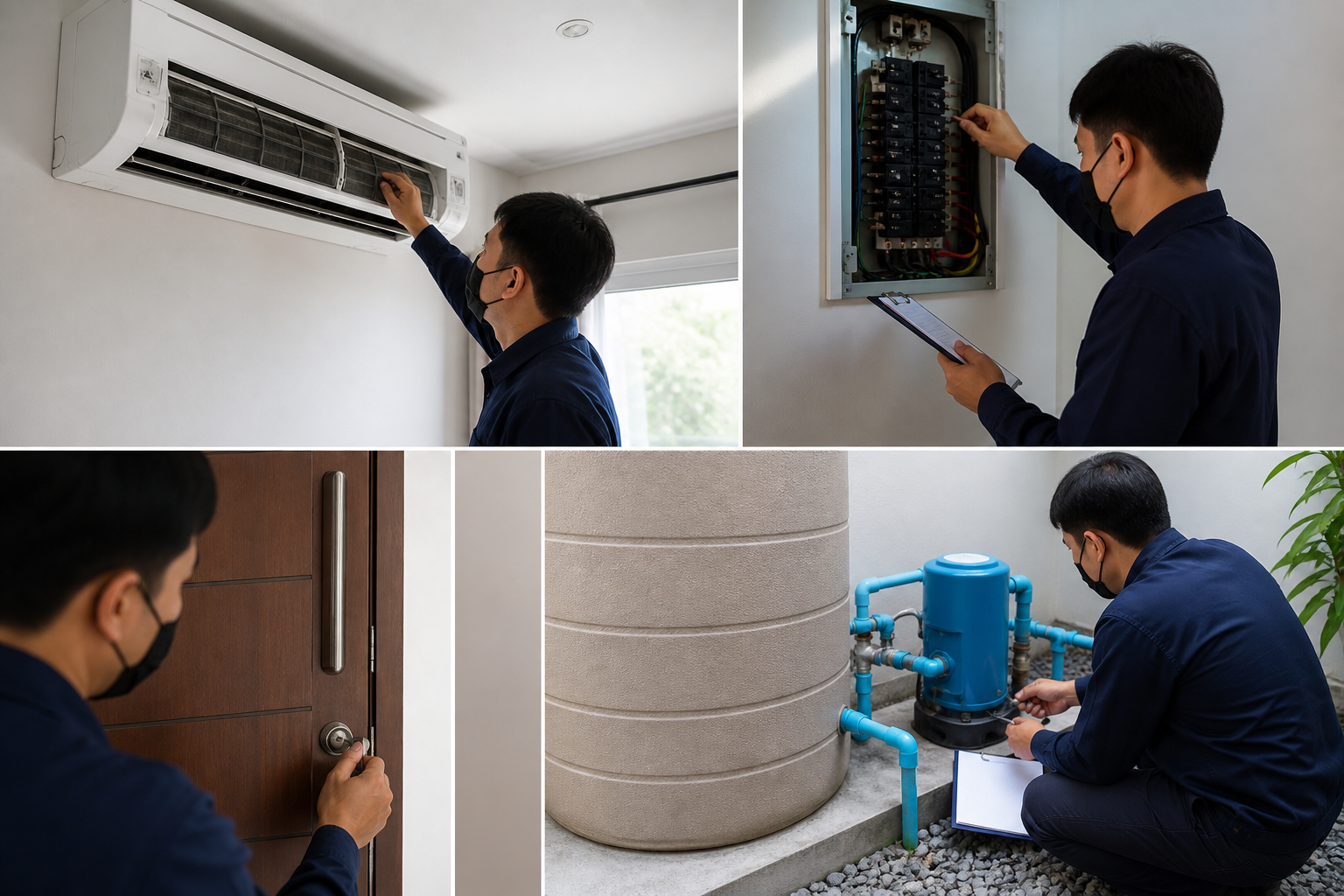
Bangkok’s heat makes air-conditioning, ventilation, curtains, and reliable electrical systems important practical considerations. Check where outdoor compressor units can be installed, how water tanks and pumps are maintained, and whether internet service reaches the rooms used for work.
Move-In Setup and Ongoing Home Costs
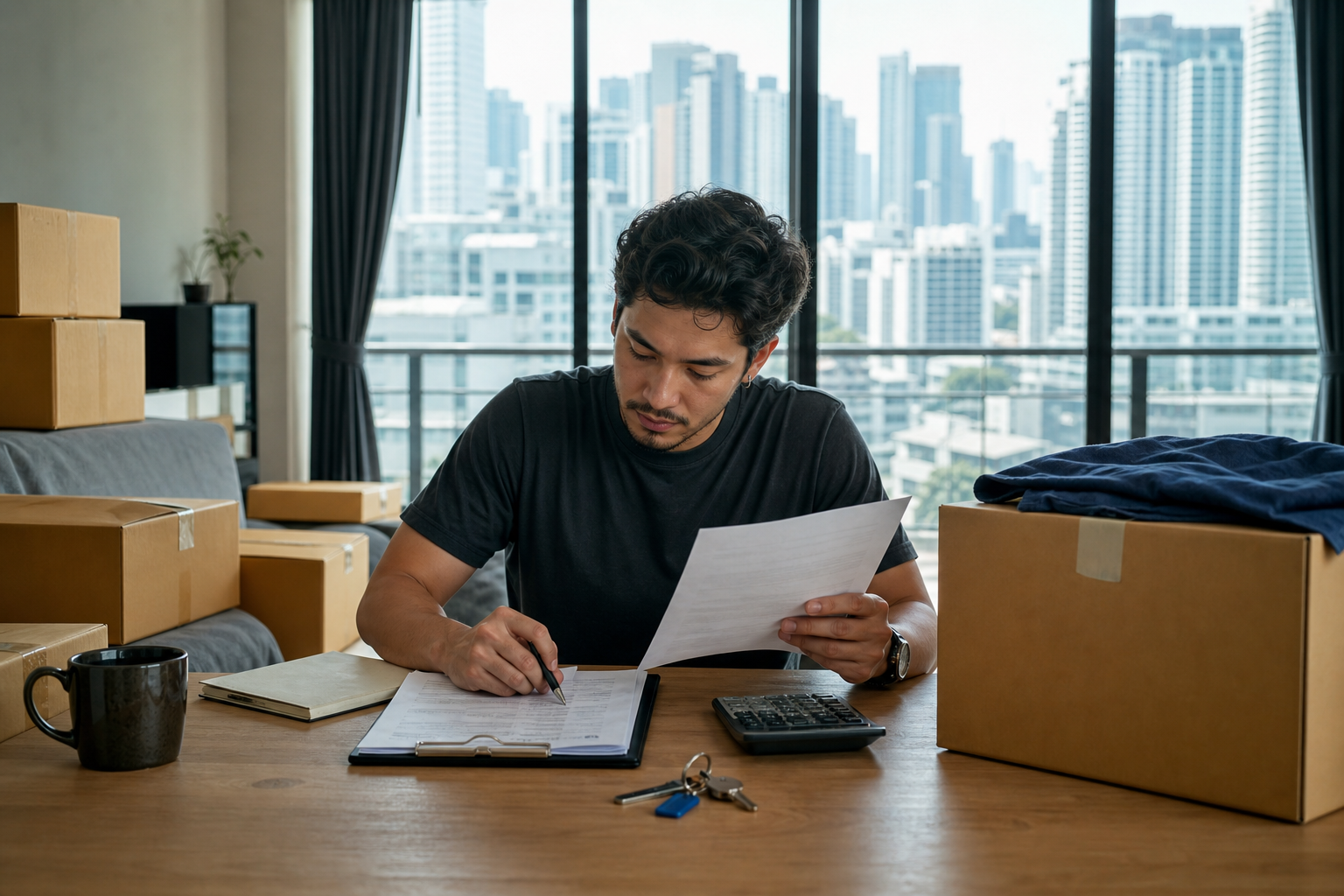
Budget for rent or purchase, common fees, utilities, internet, transport, furnishing, repairs, insurance, and the cost of moving between locations.
Budget for purchase, common fees, utilities, internet, furnishing, repairs, insurance. Keep a contingency for delays and unexpected installation work.
Before signing, confirm the contract, payment schedule, inventory, handover date, maintenance responsibilities in writing.