The 7 Natural Wonders of Thailand
Thailand has some of the most breathtaking natural scenery in Southeast Asia. But with everything from ancient rainforest and tropical islands to enormous waterfalls, which places are actually worth building your trip around?
Thailand’s Best Rainforest Khao Sok National Park
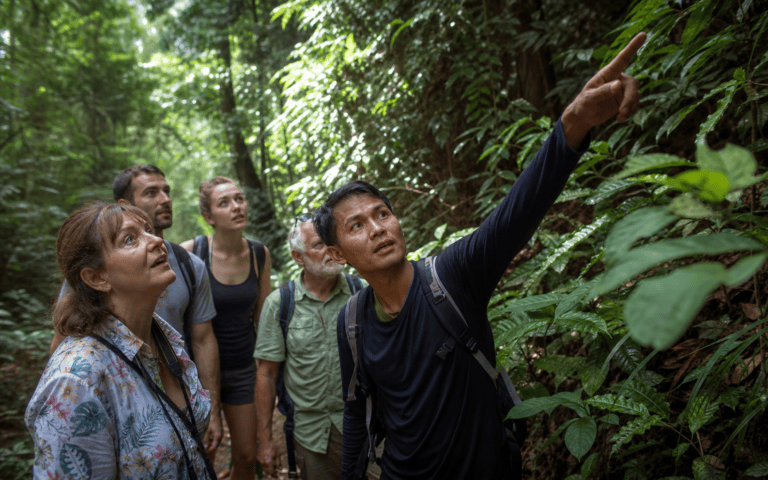
Thailand has more than 150 national parks, and some of the country’s most impressive landscapes are hidden inside of them. One obvious contender is Khao Yai. Just a few hours from Bangkok, it’s one of the easiest places to experience Thailand‘s jungle with waterfalls, hiking trails, and a real chance of seeing wild elephants. Further south though, you’ve got Kaeng Krachan, Thailand‘s largest national park, which is home to one of the largest populations of wild tigers in the country. But if I had to choose just one rainforest as a natural wonder of Thailand, there’s really only one winner. Khao Sok National Park. Khao Sok is home to one of the oldest rainforests on Earth.
But what really sets it apart for me is the incredible amount of wildlife that lives within the jungle. Every time I’ve visited, I’ve been completely blown away by what I’ve seen. Colorful lizards, enormous snakes, huge troops of monkeys, and even tarantulas. It feels like everywhere you look, there’s something moving in the jungle. And the great thing about visiting Khao Sok is that you can actually stay right in the middle of it. On my last trip, I stayed in a luxury treehouse overlooking the rainforest canopy. It was really cool having a restaurant and a swimming pool above the trees where you could sit and just watch the colorful birds and monkeys moving through the forest.
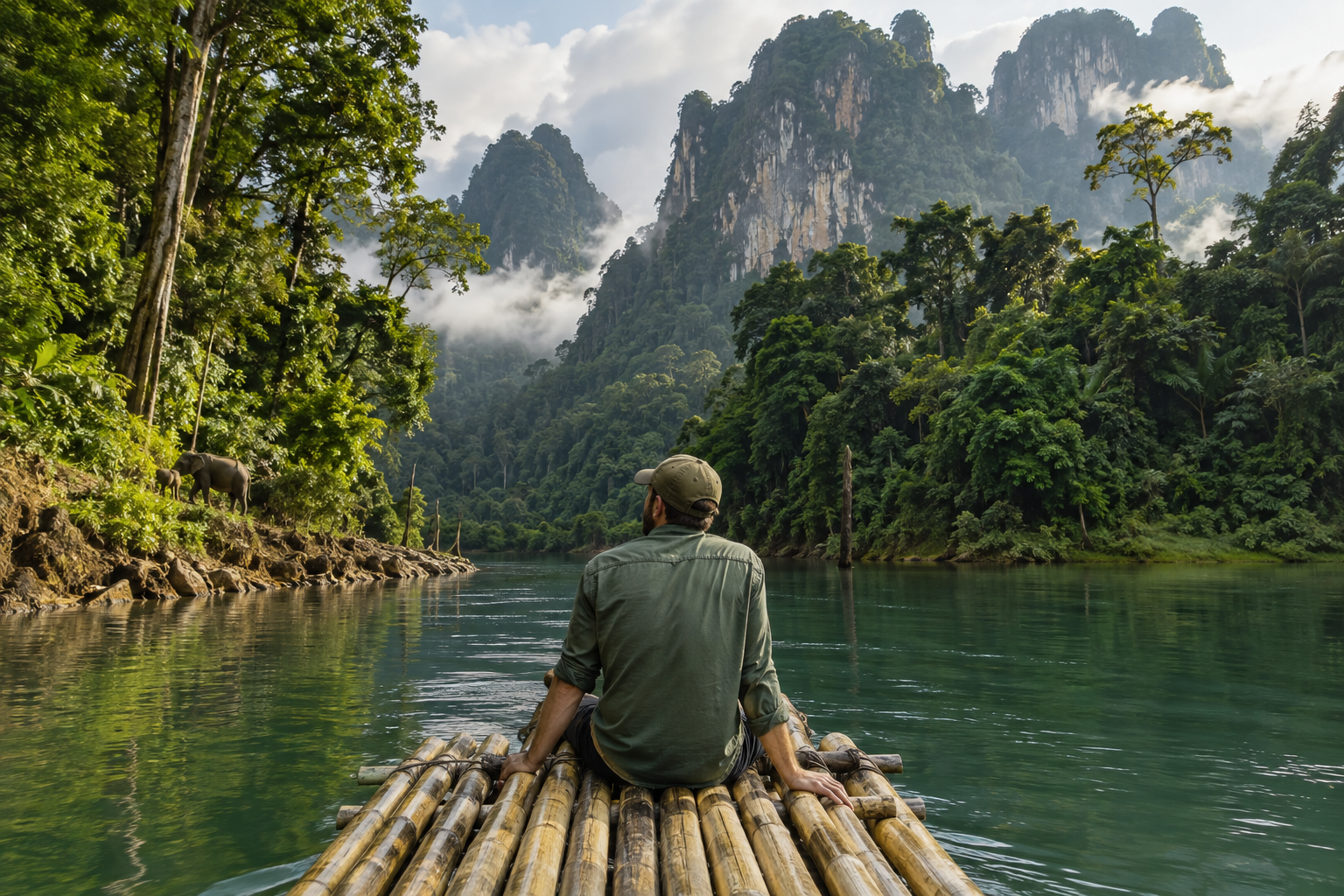
You’ll wake up to the sound of gibbons calling in the distance and it really feels that you’re completely immersed in nature. I’d also make sure to go bamboo rafting along the Sok River while you’re there. This is one of my favorite things that I did on my last trip. You basically just float slowly down the river surrounded by jungle and mountains on either side and it’s a much more relaxing way to experience the jungle than trekking through it. The only downside is that Khao Sok sits kind of awkwardly in the middle of southern Thailand. So you do have to go a little bit out of your way to get there. But luckily it’s roughly between Phuket and Krabi on the Andaman coast and Koh Samui and Koh Phangan in the Gulf, which means it can work really well as a stop between the two sides of southern Thailand.
I’d give yourself at least two nights here. And if you have more time, you can combine the jungle with a trip to Cheow Lan Lake.
Thailand’s Best Coral Reefs at Sail Rock
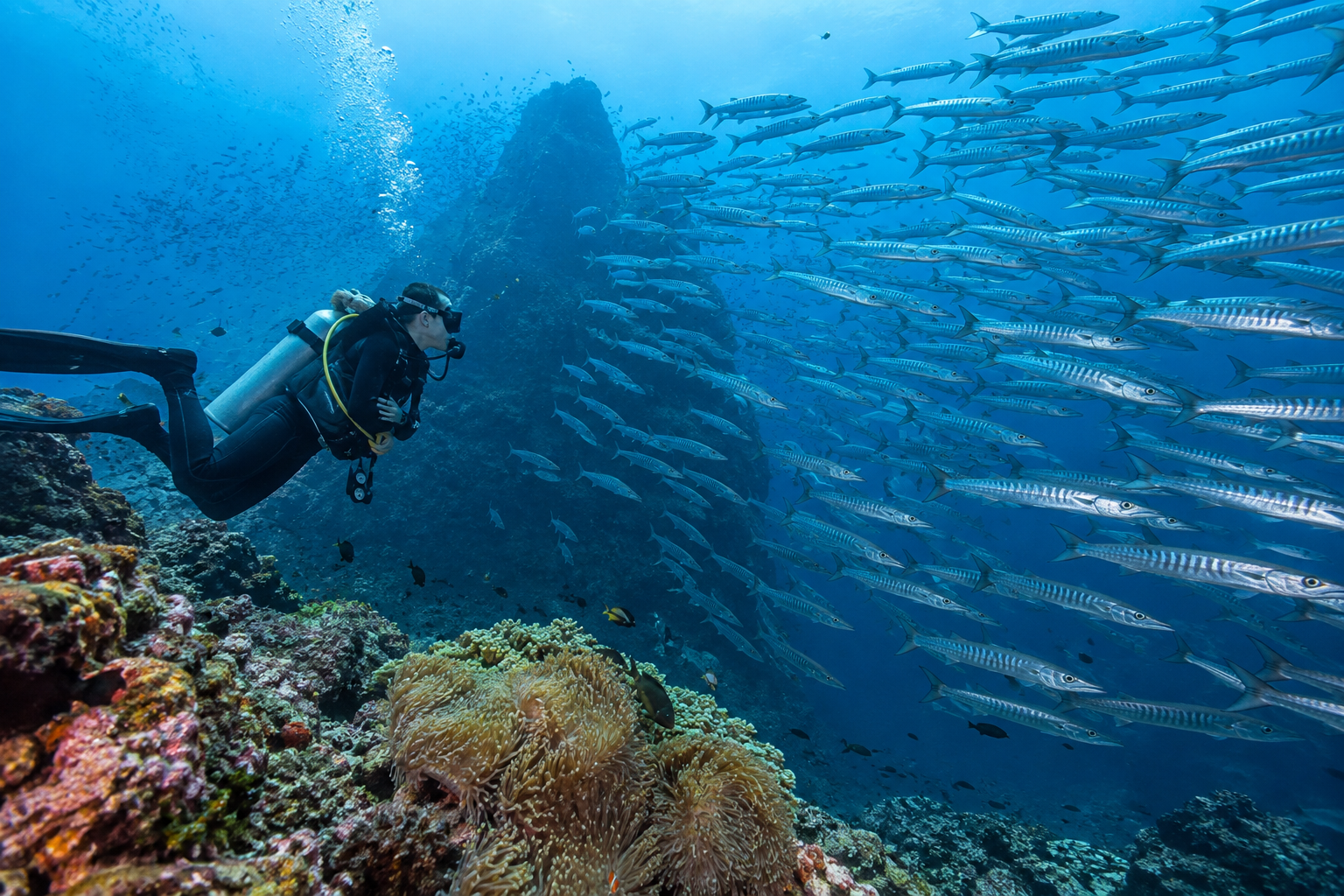
For our next natural wonder, we’re heading underwater to explore some of Thailand‘s incredible coral reefs. Thailand‘s marine biodiversity is unreal, and beneath the surface, you can find everything from colorful parrot fish and angel fish to moray eels, sea turtles, and even reef sharks. And while you can experience plenty of this on a snorkeling trip, if you really want to explore Thailand‘s underwater world, I’d recommend learning how to scuba dive. There are some incredible dive sites all around the country. The Similan and Surin Islands are some serious contenders here. The clear, relatively shallow waters around the islands are fantastic for both snorkeling and diving with a chance to see colorful reefs, sea turtles, and huge schools of tropical fish. Another major contender is Richelieu Rock in the Andaman Sea.
It’s regarded as one of Thailand‘s best dive sites, and there’s a real possibility of seeing whale sharks here. But of all the sites that I’ve dived, one of the best underwater natural wonders has to be Sail Rock. Sail Rock sits out in the Gulf of Thailand between Koh Tao and Koh Phangan. And if you’re staying on Koh Samui, you can visit it as part of a diving trip. Koh Tao in particular is one of the best places in Thailand to learn how to dive. There are dive schools all over the island and loads of people come here specifically to complete their first diving certification. The waters around Koh Tao are really beginner friendly and I remember being surprised how easy and relaxed my first dives felt.
I’ve since dove in other parts of Thailand, and trust me, it’s been considerably more challenging and a bit more scary. There are loads of dive sites around Koh Tao, but Sail Rock is the standout. It sits much further out in the Gulf and depending on where you’re traveling from, it can take about an hour or more to reach by boat. And when you get there, there’s basically this enormous vertical rock formation rising up from deep beneath the ocean. What I remember most from diving here were the huge schools of barracuda. At one point, I was just surrounded by what felt like an enormous wall of fish. And then as you descend deeper, the whole atmosphere changes.
So this is the first time that I’d gone this far down, down to 30 m, which is the maximum depth on an advanced diving course. And I was just struck by how much darker and colder the water became. It felt completely different to the bright shallow tropical dives that I’d done. And if you’re really lucky here, whale sharks are also spotted around Sail Rock, which would take the experience to a whole other level.
Doi Chiang Dao and Thailand’s Northern Mountains
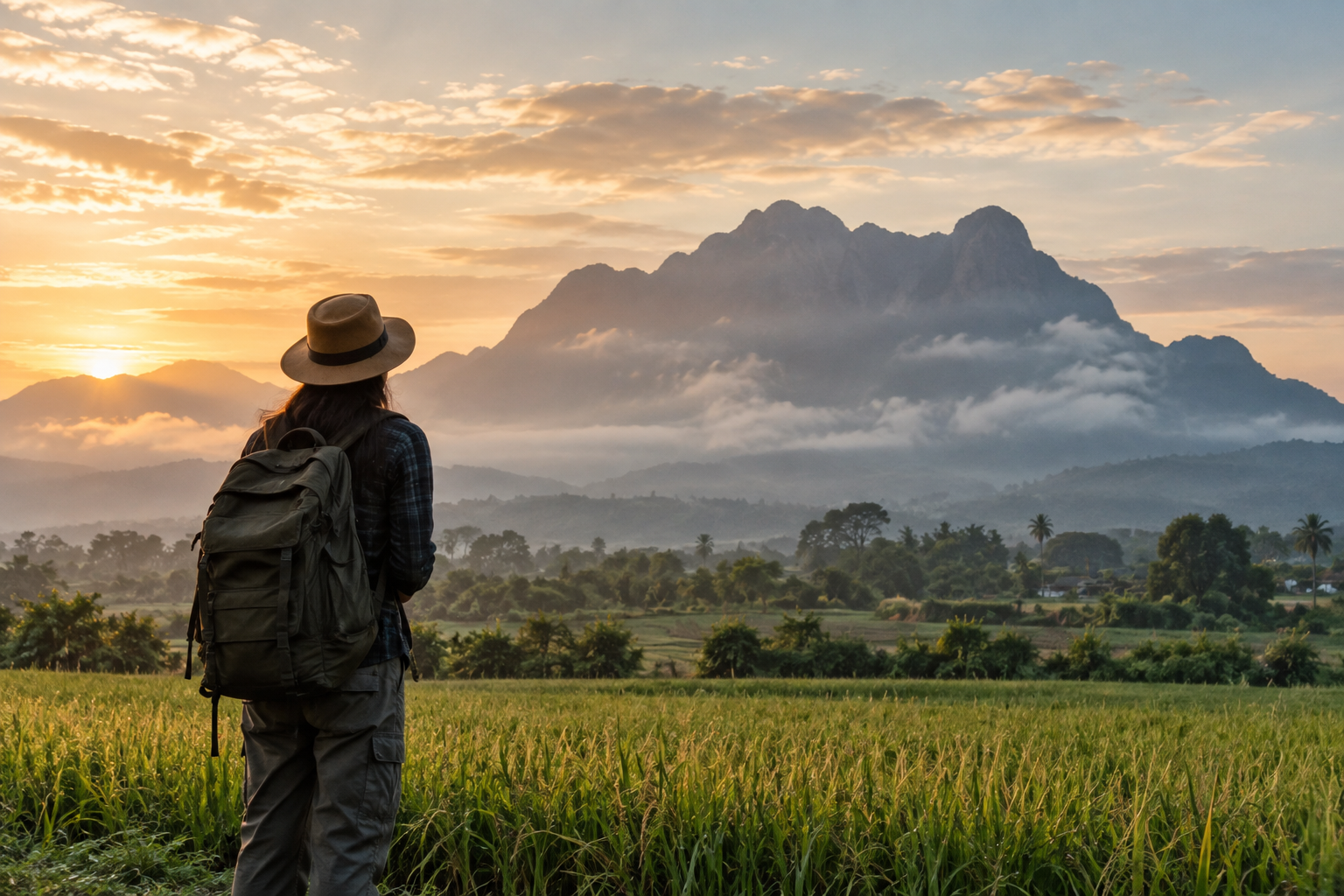
The obvious contender in Thailand here is Doi Inthanon. This is Thailand‘s tallest peak, sitting around 2,565 m. It’s around about a 2-hour drive from Chiang Mai, so it’s really easy to visit on a day trip. You can even just hop on a tour and these tours will take you into the national park to see the famous twin pagodas with some incredible waterfalls and then you also get to see some of the local culture and local communities that live around the mountain too. But while it might be the highest mountain for me it’s not the most beautiful. That has to be Doi Chiang Dao. Doi Chiang Dao towers over the town of Chiang Dao around about an hour and a half north of Chiang Mai and you can see it from miles away.
Once you’re in the town itself it just feels like this huge mountain is looming over the town. And one of the things I love about Doi Chiang Dao is just how different it looks depending on when you visit. I’ve been here in December during the dry season when the skies were incredibly clear and the mountain would turn these incredible fiery colors around sunrise and sunset. But I’ve also visited during the rainy season when clouds and mist wrap themselves around the mountain and give the whole place a completely different almost eerie atmosphere. There are plenty of places around the town where you can get incredible views of the mountain. So instead of just visiting as a day trip from Chiang Mai, I’d actually recommend spending a couple of nights here. My personal favorite place to stay is Ya Teeka Boutique which is built amongst the rice paddies and each room faces the mountain.
In the morning you can wake up with Dong Chang now right outside your room and in the evening it’s the perfect place to grab a drink or dinner and watch the sunset over the mountain.
Erawan Falls and Thailand’s Best Waterfalls
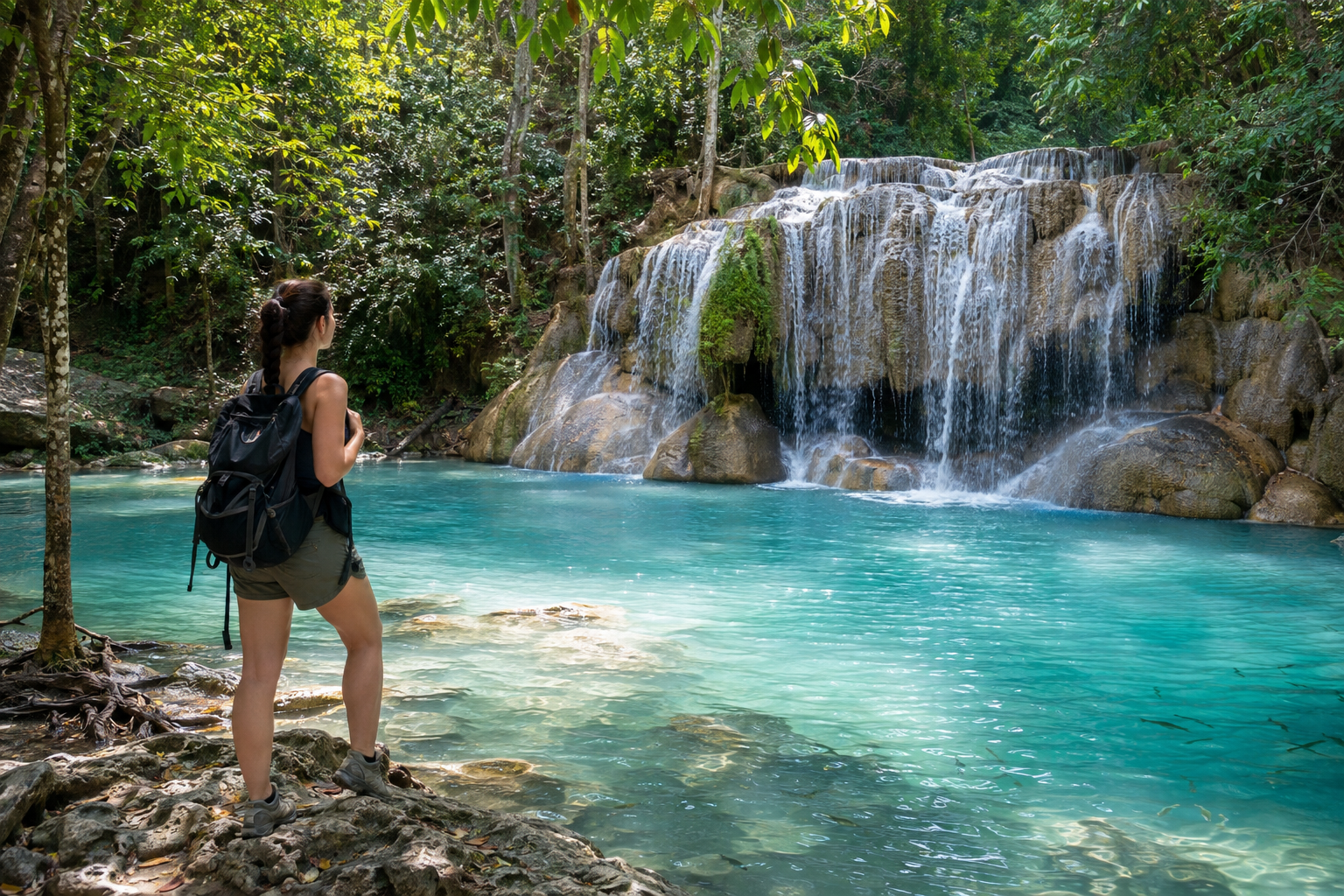
Thailand has plenty to choose from. If you’re looking for sheer size and power, Thi Lo Su Waterfall in Tak is one of the biggest and most impressive in the country. Although its remote location does make it quite difficult to reach, then there’s Wachirathan Waterfall inside Doi Inthanon National Park. This is another enormous powerful waterfall and it’s much easier to visit as part of a day trip from Chiang Mai. But personally, I think Thailand‘s most unique waterfall has to be Erawan Falls. What makes Erawan so special is that it isn’t actually just one waterfall. It’s a series of seven different cascades spread throughout the jungle, each with its own natural swimming pool.
the waterfalls flow over the layers of limestone and rock, which over thousands of years have created these smooth terraces, pools, and cascades. What really makes Erawan stand out though is the color of the water. On a good day, these pools have incredible bright turquoise color to them. This is caused by the dissolved minerals from the limestone rock, which scatter the light and give it this distinctive blue green appearance. Erawan is located in Kanchanaburi Province around about 3-hour drive from Bangkok. And whilst you can visit as a day trip from Bangkok, I think it’s worth spending a couple of nights in Kanchanaburi which has other incredible scenery as well as some fascinating and dark history. Once you arrive at Erawan, there’s a trail that follows the waterfalls up through the jungle.
It takes roughly about an hour and a half to reach the seventh tier and it’s a really beautiful walk. But the best part is you can stop and swim in many of the pools along the way. Just be careful though, it’s filled with fish and they do like to nibble your toes.
Koh Phi Phi and Thailand’s Best Island
And honestly, I think this is going to be my most controversial pick yet. Thailand is famous for its islands. And even though we’re looking at them from a purely natural wonder perspective, there are so many that could make this list. Right down in the south, you’ve got Koh Lipe and Koh Kradan, surrounded by incredibly clear water, white sand beaches, and stunning coral reefs just off the shore. You got some beautiful islands like the Trang Islands and in particular Koh Mook‘s Emerald Cave where you have to swim through a dark sea cave before emerging into a hidden beach completely enclosed by a limestone cliff could easily win it here. You got the Similan Islands, famous for this enormous boulders and white sand beaches with great snorkeling. You’ve got Koh Chang, one of the larger islands filled with tropical jungle and waterfalls.
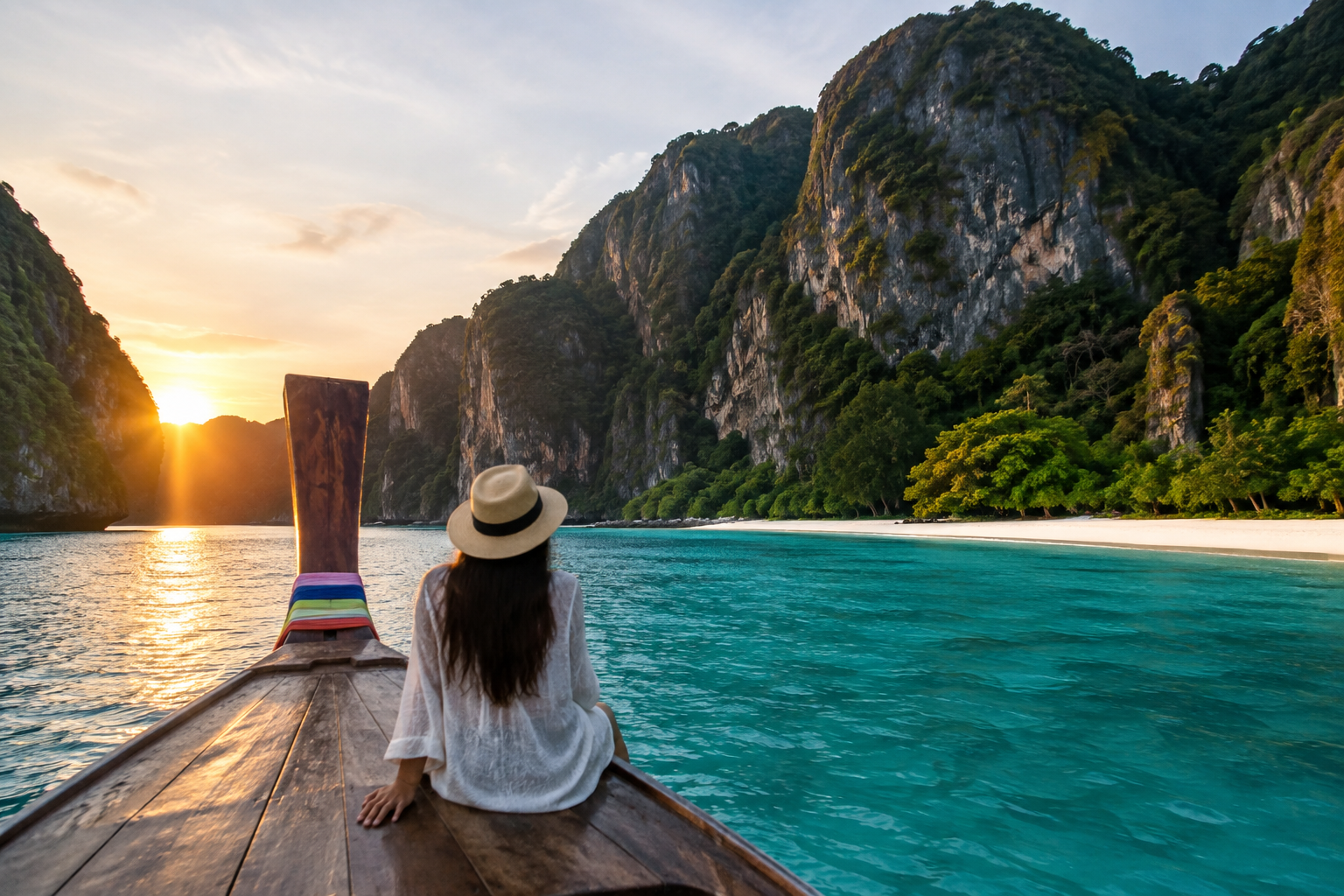
And then you got Koh Nang Yuan just off Koh Tao. It’s actually these three tiny islands connected by this incredible Y-shaped sandbar, making it one of the most distinctive looking islands anywhere in the world. But if I could choose one island as a natural wonder in Thailand, I’m going to go with one of the country’s most popular. Koh Phi Phi sits just south of the main inhabited island, Phi Phi Don. And despite how busy it can get, I think the landscape here is almost impossible to beat. There are a few places in particular that make this island so special. First, there’s Pileh Lagoon, also known as the Emerald Lagoon.
This area is famous for its emerald turquoise waters that are just unmatched in Thailand. Then, of course, there’s Maya Bay. This is the beach made famous by the movie The Beach with Leonardo DiCaprio. And when you actually see it, you can understand why they chose it. It’s got a perfect strip of white sand. It’s an enclosed bay, so it’s just got mountains on either side. The waters around Phi Phi Leh are incredibly clear, and they’re perfect for snorkeling, too.
Here I’ve seen some colorful reef fish and starfish as well as blacktip reef sharks as well. Along the way you can stop off at Monkey Beach, a stunning beach as well and it’s just filled with monkeys. Now Koh Phi Phi is popular. There’s absolutely no getting around that. But it’s popular for a reason. It’s one of the most stunning places in the world. The combination of these huge limestone cliffs, hidden lagoons, and perfect beaches just makes it one of the most beautiful places in Thailand.
So how can you do this and still beat the crowds? Well, there’s only really one way to do it. They open up PP Lake and Maya Bay very early in the morning. I think the first boats arrive around 6:00 a.m. So, you can do a sunrise tour either from Phuket, from PP itself, or from Krabi. These will leave from Phuket around 4:30 a.m. getting you to Maya Bay at 6:00 a.m., which is the only way to experience it without the crowds.
There might be quieter islands in Thailand, but from a pure natural wonder perspective, Phi Phi is unbeatable.
Phang Nga Bay and Thailand’s Limestone Karsts
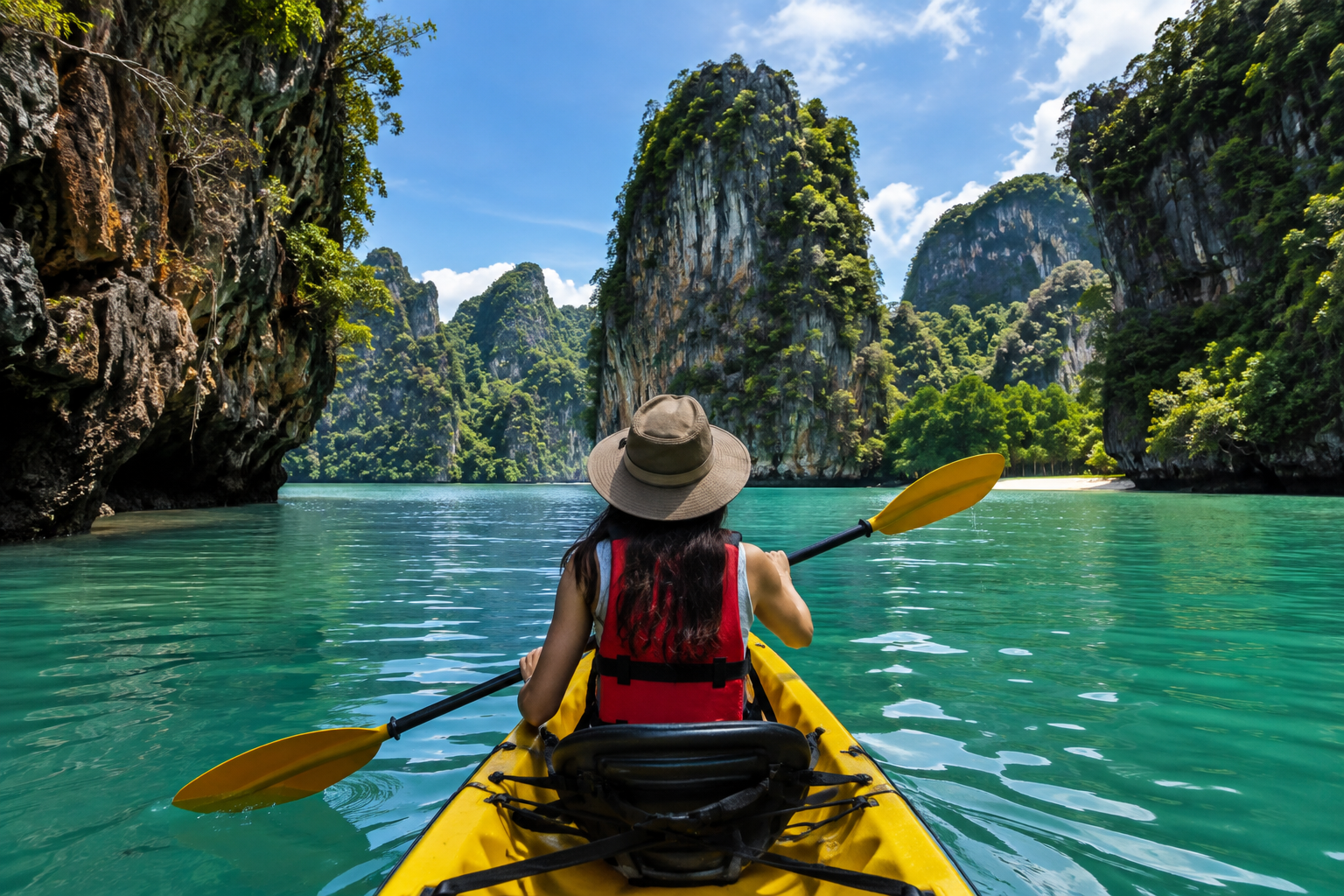
that Thailand is probably most famous for, but you won’t find in many other places around the world. That’s karsts. You’ll find these enormous limestone cliffs all over southern Thailand. And there are a few places that could easily have taken this spot. Krabi is home to some of the most epic beaches in the country, largely because its coastline is dotted with these towering limestone formations. Railay Beach in particular has enormous karsts riding up on either side, while Phra Nang Beach and Koh Poda are famous for their giant limestone formations rising straight out the ocean. Then you got Cheow Lan Lake, which feels like you’ve entered a real life Jurassic Park.
You can even stay in a floating hotel here on the lake and spend your days exploring its different corners by longtail boat. I was actually tempted to put this as my top pick for Thailand‘s cast, but there’s one problem here. The lake itself isn’t natural. It was created by the construction of a local dam. So technically it’s cheating to call this a natural wonder. It is however still extremely beautiful. Luckily though there’s one place where the sheer scale of the landscape is on another level.
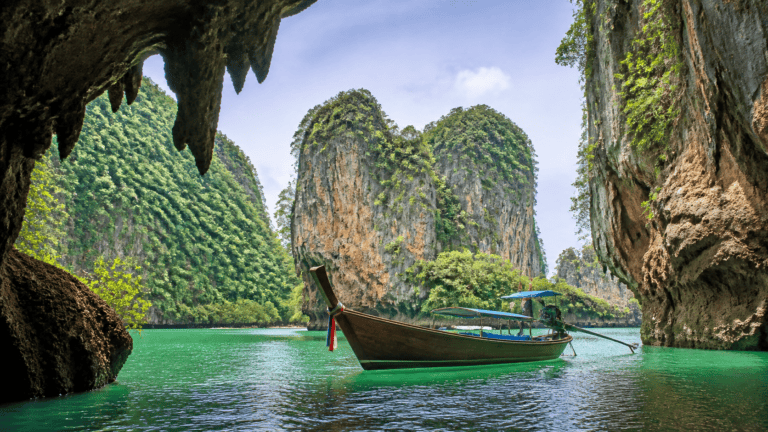
Pangna Bay. Pangna Bay is filled with hundreds of limestone formations rising out the ocean. Some of them are tiny rocky pillars whilst others are enormous jungle covered islands with caves and hidden lagoons inside of them. The bay lies just a short boat ride from Phuket, so you can visit it from there. But it’s also quite easy to explore from Co Yao or Krabi as well. One of the best ways to experience the island is by boat because you can weave your way in between the enormous limestone formations. Most boat trips will take you around the best spots like Kot Tapoo, but they’ll also take you kayaking through the narrow caves and lagoons as well, which is a really unique experience.
There’s even a really unique floating village called Koh Panyee. This is a small floating village built into the cast itself out in the ocean. It’s famous for its stunning mosque and its floating football pitch and it’s a really unique place to visit. For me though, the best view of Pangna Bay is See Nangshi. On my last trip, I stayed at Samet Nangshe Boutique, which is a beautiful, stunning luxury hotel located on the bay. You get these unbelievable panoramic views across the entire bay, and I think it’s just one of the best views in Thailand. You can spend the afternoon swimming by the pool or in the restaurant, looking out on the cast, and you never really get bored of looking at it.
This place is famous for its sunrises as the sun rises directly over the bay.
The Mekong River and Thailand’s Great Rivers
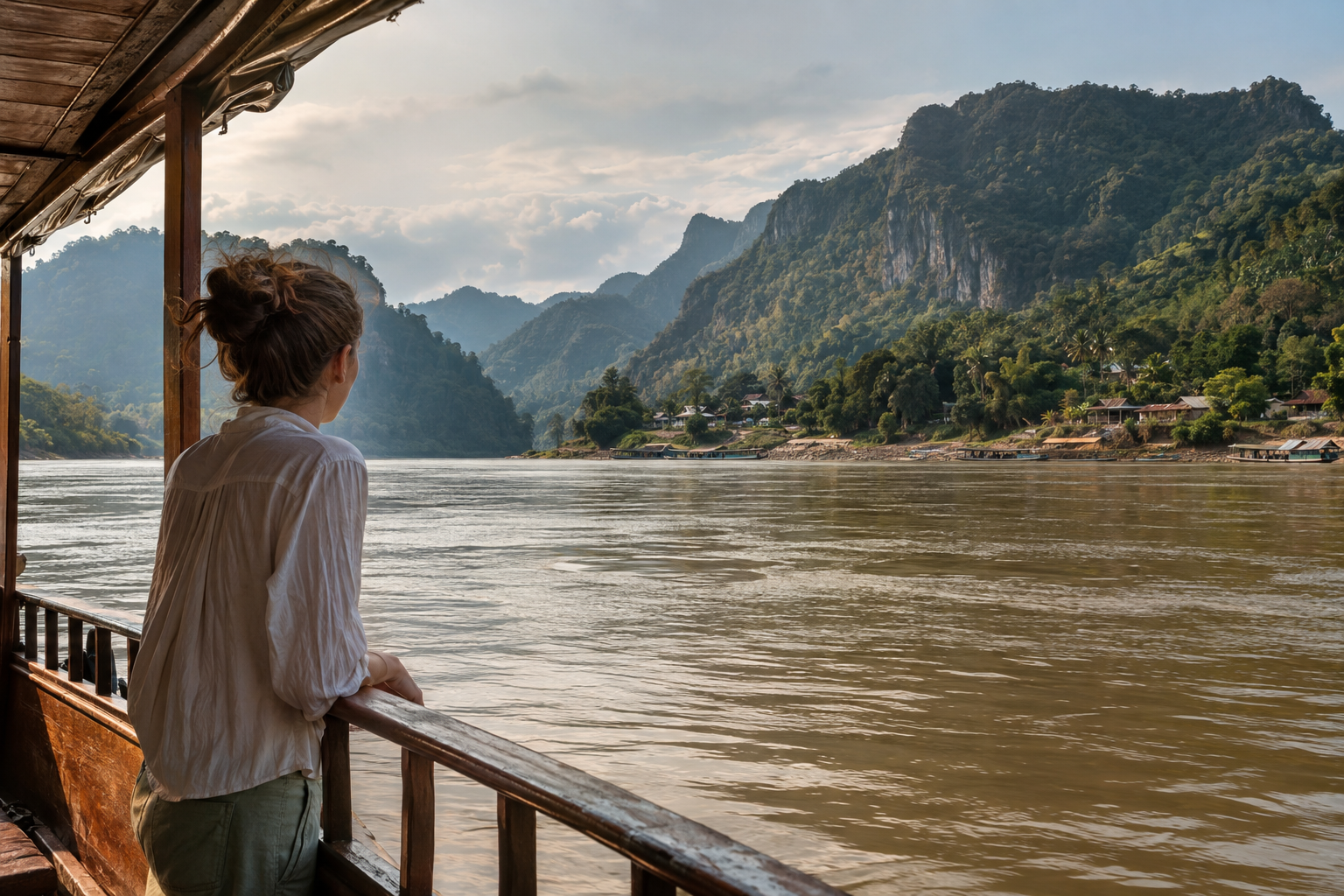
Probably the most important river in Thailand is the Chao Phraya. It begins in Nakhon Sawan and runs south through Thailand‘s central plains before eventually passing straight through the heart of Bangkok and emptying into the Gulf of Thailand. One of the best ways to experience it is simply hopping on a boat in Bangkok. And this is completely different from everything else that we covered in the video because rather than traveling through jungle or mountains, you’re cruising through the middle of this enormous mega city, passing temples, skyscrapers, local communities along the way. If you want a slightly quieter or more historic experience, you can head north to Ayutthaya where you can head on the same river through the old city and pass centuries old temples. Another major contender is the River Kwai in Canabari. This is much more the natural river experience you might imagine.
You’re going to wind through jungle covered mountains west of Bangkok. You can even stay in a floating hotel built directly on the river surrounded by the jungle. And because Kanabe is also home to Erawan Falls, which we mentioned earlier, you could actually experience two natural wonders on the same trip. But for sheer scale, there’s one river that beats them all, the Mekong. The Mekong is one of the great rivers of Asia. It begins high in the Tibetan plateau in China and travels south through Southeast Asia before eventually reaching the sea in Vietnam. Along the way, huge sections of it form the natural border between Thailand and Laos.
And for me, one of the best ways to experience the Mekong is by taking the famous 2-day slowboat into Laos. From northern Thailand, you can travel towards Chiang Kong across the border in the Laos town of Huay Xai. And from there, boarded a slow boat that takes you down the Mekong River towards Lang Pabang. The journey takes 2 days, usually with an overnight stop in the small riverside town of Pakbeng. And this is where you really start to appreciate the scale of the Mekong. For hours, you’re slowly traveling through this incredibly rural landscape surrounded by mountains and dense jungle, passing tiny villages along the river banks that feel completely cut off from any major tourist destination. It’s a side of both Thailand and Laos that most travelers never get to see.