Thailand 2026 New Visa Policies and Updates
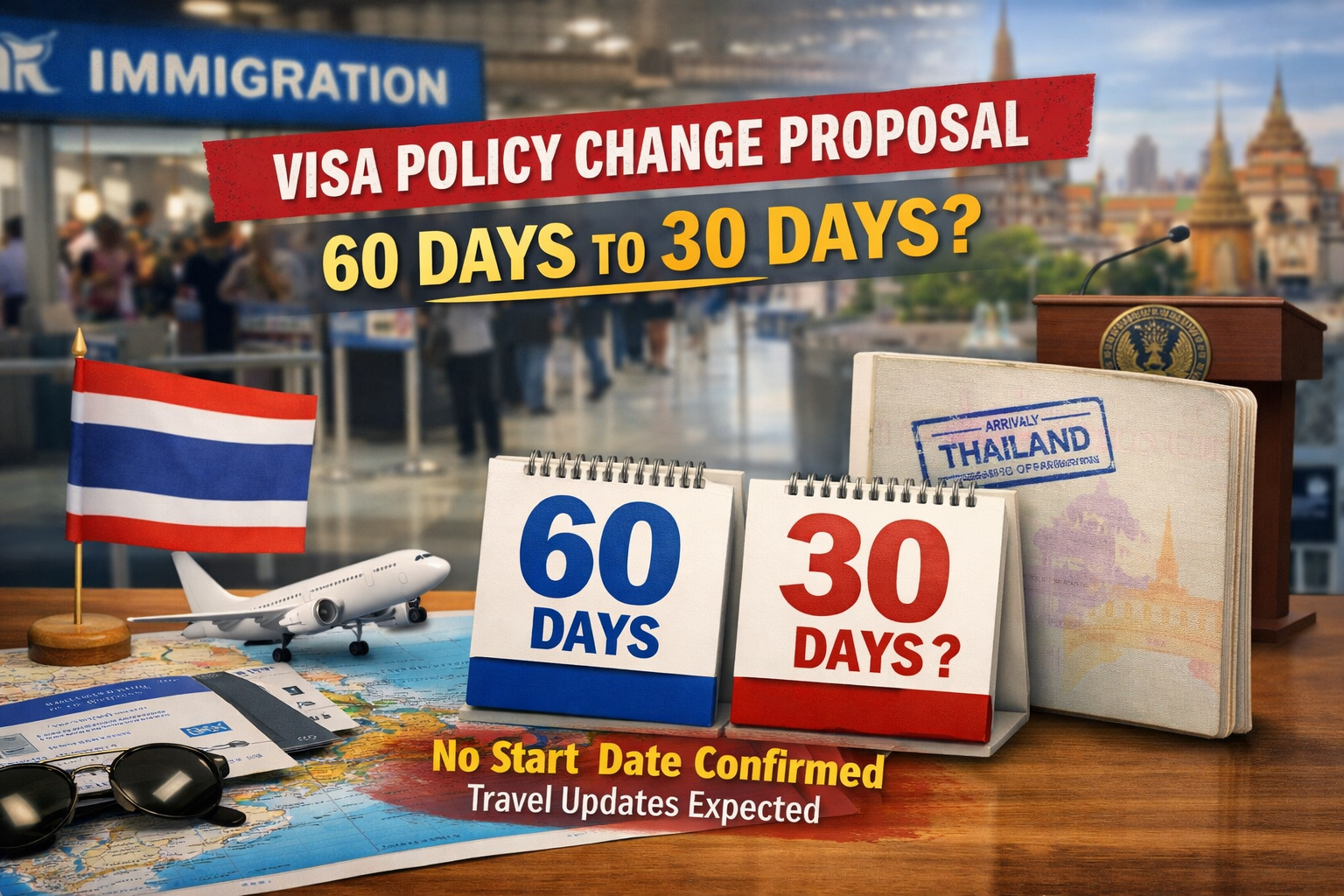
The tourist visa exemption allows visitors from 93 countries to enter Thailand without applying for a visa. Simply hop on a plane, arrive in the country, and you’ll be stamped in. The Minister of Foreign Affairs has officially proposed reducing the visa exempt period from 60 days back down to 30.
We’ll break down what this change actually means, go through the current entry rules and how they’re being enforced, and then walk through the short and long-term visa options available to both visitors and prospective residents.
But it’s important to be clear here: this change is still a proposal, and there’s currently no confirmed start date.
And normally, visa policy shifts are announced well in advance to avoid any travel disruptions. But a shift does look to be coming, and this means that prospective visitors should keep an eye out for any updates in the weeks and months ahead.
Current Entry Rules And Enforcement
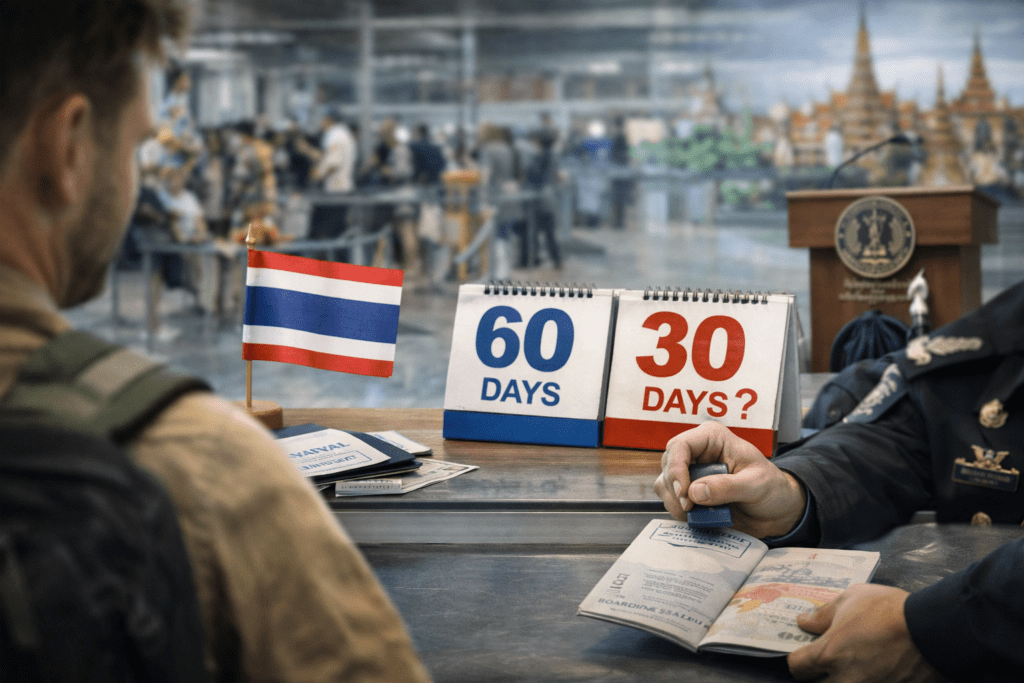
At the same time, enforcement on entry has already tightened.
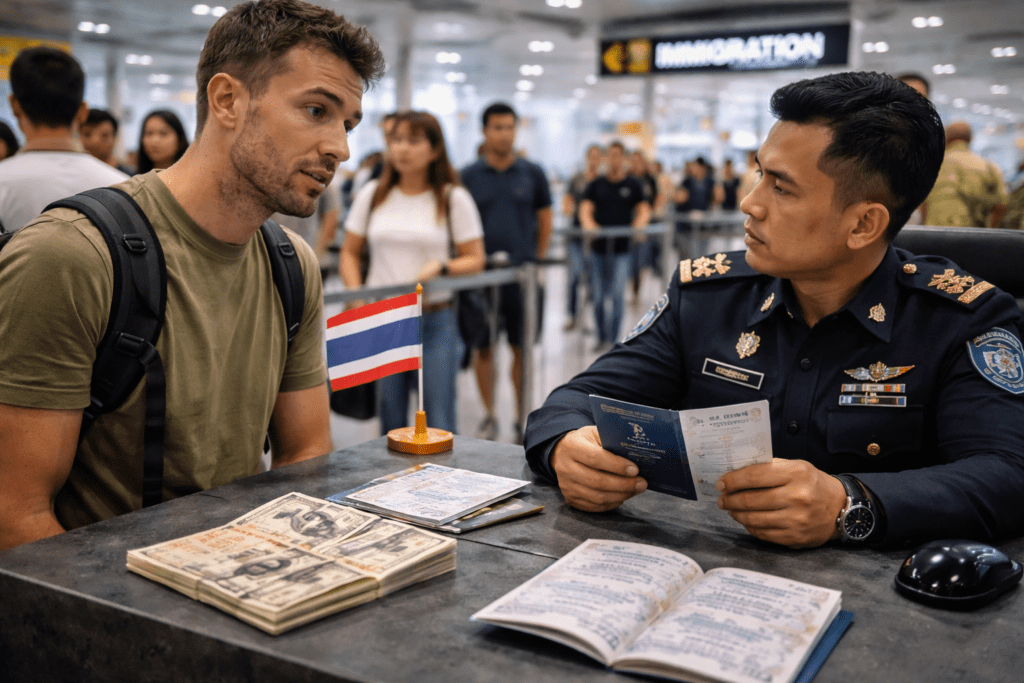
All visitors should be prepared to show:
- An onward or return ticket
- Proof of accommodation
- Proof of funds (typically 20,000 baht per person or 40,000 per family)
- A basic travel plan or itinerary
Your passport must also have at least six months of validity and be in pristine condition. This means no damage to the ID page or missing pages.
And while this may sound fairly normal to you, these are issues that immigration officers encounter every day.
Visitors from Cambodia or Myanmar may receive additional scrutiny as the Thai authorities are cracking down on large-scale scam networks that operate throughout the region.
Filming Is Strictly Prohibited
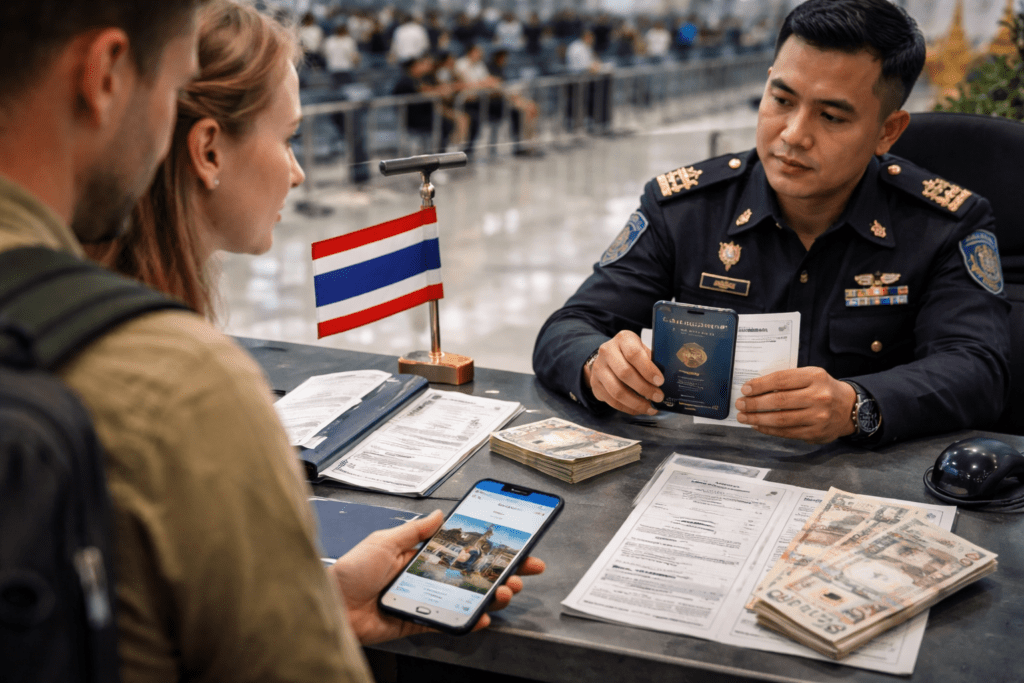
Another issue that’s been coming up more frequently is filming inside secure immigration zones, which is strictly prohibited.
Some travelers are using GoPros, phones, or even meta glasses to record their arrival, often switching off filming indicators to mask their activities. Security and officers monitor for this specific behavior.
Filming inside the immigration area can result in fines, detention, or even denial of entry.
Travel Behavior And Scrutiny
There’s also increased scrutiny of travel behavior, and there’s been a lot of confusion about this, so let’s clear it up.
There’s no official cap on the number of entries into Thailand. Instead, officers are watching for behaviors that don’t resemble normal tourism, and there are two soft cut-offs.
First: Spending 60 days or more within a year or concentrated period using visa exemptions will normally result in more detailed questioning on your next entry.
You’ll likely still be allowed in, but you may be asked why you’re staying so long, what you’re doing in the country, and how you’re supporting yourself. This group is far more likely to be asked for detailed proof of funds in hard cash, but that can be in any currency.
In contrast, casual or first-time visitors are unlikely to be asked any questions at all.
Second: Spending more than 157 days in the country within a year may result in denial of entry. This simply isn’t deemed to be normal tourism-oriented behavior, which is the intended purpose of the visa exempt entry.
And to be honest, none of this is unusual.
I traveled to the United States last year. I’m Canadian and we have one of the easiest border relationships in the world. And I was still asked about my plans, my accommodations, and how much money I had with me. Travelers from other countries were asked far more detailed questions.
I also visited the UK two years ago and I was asked almost the exact same set of questions.
So, what Thailand’s doing here isn’t unique. It’s aligning with what most other countries already do.
And that’s because Thailand is dealing with many of the same issues: illegal work, transnational crime, and visa abuse.
The Proposed Policy Change: 30 Days
Now, coming back to the proposed policy change, the 30-day visa exempt entry was actually the norm for decades.
The shift to 60 days only happened in 2024 to boost tourism following the pandemic, and we’re essentially returning to the old system after a trial period.
So, this isn’t a radical new restriction.
From there, it’s important to understand the options you have available depending on your length of stay.
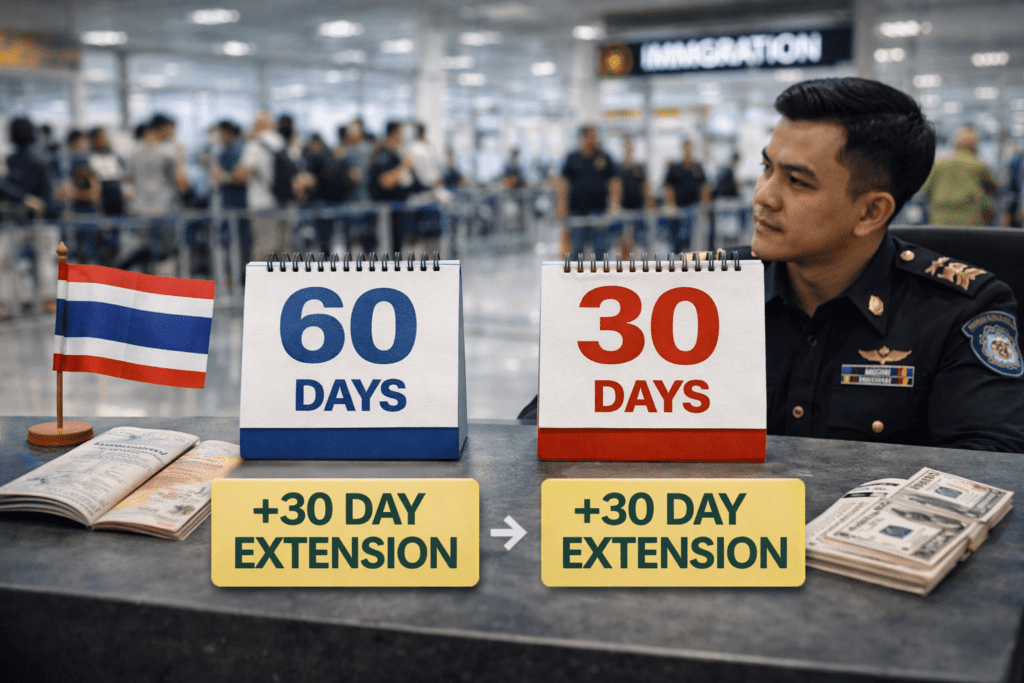
Right now, the visa exemption gives you 60 days plus an optional 30-day extension inside Thailand. But if the change goes through, that will shift to 30 days with the optional 30-day extension.
Short-Term Visa Options
If you plan to stay longer, you can opt for the single entry tourist visa, which gives you 60 days plus a 30-day extension. Prior to 2024, this was a very popular option with a simple and inexpensive online application.
Then there’s the multiple entry tourist visa, which is valid for 6 months upon issuance.
But there’s a catch. Visitors need to leave the country every 60 days (or up to 90 days if they extend for that additional 30 inside the country).
Historically, there’s a loophole that was commonly used to stretch the visa to around eight months by entering just prior to the expiry. But whether that continues under tighter enforcement is something we’ll have to watch for.
Long-Term Visa Options
For longer stays, there are much more structured options.
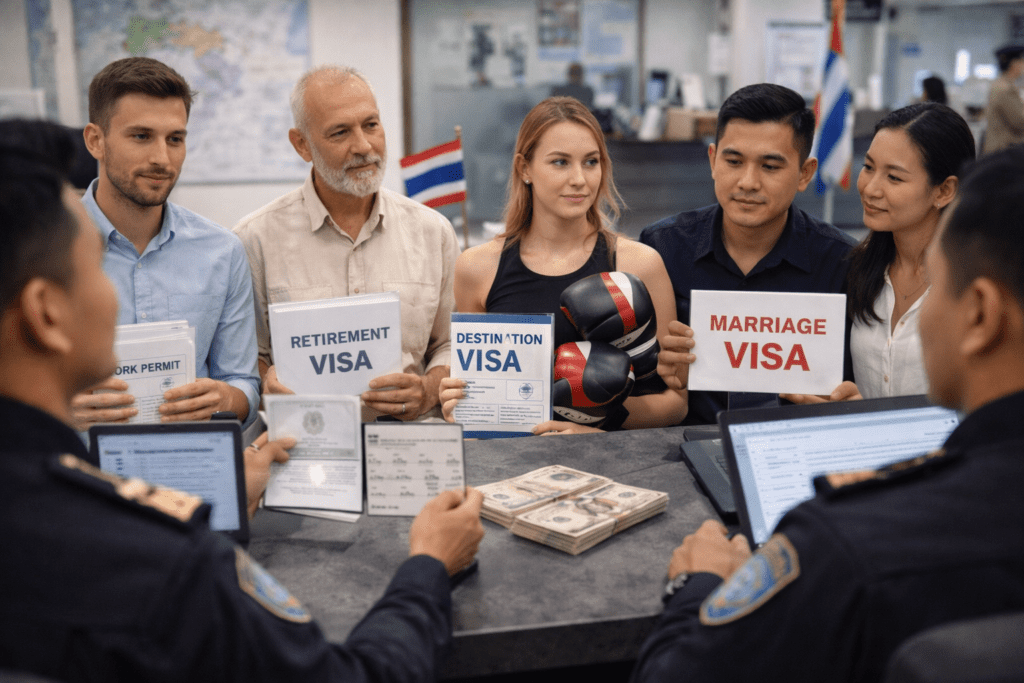
The DTV (Destination Thailand Visa) is a 5-year visa designed for people with online income or those participating in approved soft power activities like Muay Thai.
You need at least 500,000 baht in a home bank account and you must leave and re-enter every 180 days. However, it’s technically a tourist visa, so it may not be possible to open a bank account.
If you’re using it with soft power activities like Muay Thai or cooking classes, the course length should be at least 6 months long, and attendance is mandatory.
Education visas are another route, but enforcement has tightened here as well. If you’re studying Thai, immigration officers may actually test your language skills when you enter the country, and in-class attendance is required.
Next, there’s the work visa, which is one of the most practical ways to get your feet on the ground here in Thailand.
Historically, teaching English has been one of the easiest entry points for younger people. I actually started out teaching here, as did many other successful content creators and entrepreneurs. It simplifies the bureaucracy of visas while providing a modest income and immersing newcomers in Thai culture and society.
Then you have the retirement visa, which requires applicants to be at least 50 years of age or older and keep 800,000 baht in a bank account, which is viewed as a kind of emergency fund. Alternatively, there’s a second option: proof of income of at least 65,000 baht per month, or a combination which totals 800,000 per year.
Finally, for people with Thai family connections, there are marriage or caregiver visas. These require only 400,000 baht in funds or proof of income of 40,000 baht. But of course, they require much stronger ties to the country.
Final Advice For Visitors
Long story short, if you’re actually living here in Thailand, you’ll need a long-term visa.
If you’re planning a visit in the near future, keep an eye out for any changes to the visa exempt period.
And remember that you need to fill in the Thailand Digital Arrival Card (TDAC) within a 3-day window prior to arrival. It’s mandatory regardless of the visa you use. It’s simple and free, but make sure to use the official website, as there are scam sites that will attempt to charge you for it. The link is in the description.
As always, I’ll keep you up to date with any changes here on the channel.
Have a safe and enjoyable trip.