Is Thailand Too Expensive in 2026?
Thailand has long been seen as a budget friendly destination. Cheap food, affordable living, and a tropical climate for a fraction of the cost of a western country. But lately, more travelers and expats are asking the same question.
Has Thailand become an expensive destination in 2026? The truth is more complicated than a simple price hike.
Inflation vs Tourism Prices
When it comes to everyday prices, inflation in Thailand has been remarkably low.
Thailand’s consumer price index has been very mild in recent years. Aside from a spike in 2022 driven by global food and fuel prices, headline CPI rose only 0.40% in 2024 and core CPI rose 0.56%. But the tourism economy tells a different story, where prices have surged. Hotels are the clearest example.
The most common metric for hotel price increases is the average daily rate or ADR. It’s not just what the hotel lists, it’s what guests actually pay for an occupied room.
Thailand’s luxury hotel ADR increased 42.7% from 2019 to 2024, while recent official inflation remained low.
I had travelled here seven times before actually making the move out here. I used to come basically every single year.
I would come with my tax return every year, which was like 2,000 or 3,000 Australian dollars. Nowadays, that would not get you very far at all.
Supply and Demand
So, what’s pushing these higher prices? The answer is simple: supply and demand. Thailand welcomed 32.97 million international visitors in 2025, down 7.23% year-on-year.
And these visitors have generally opted for luxury hotels where occupancy rates have been very high, especially in tourist hotspots like Phuket, Koh Samui, and the central areas of Bangkok.
Budget vs Luxury Hotels
ADR can be a little bit misleading because it doesn’t mean that the budget rooms have actually disappeared. While demand and prices have surged in the luxury market, you can still find excellent value with plenty of inexpensive hotel rooms for under $15 per night in Bangkok and even lower prices in less popular tourist destinations. So, if you follow the tourist crowds, expect high prices.
If you want to get off the beaten path and explore more local Thailand, this is still a very inexpensive destination.
Restaurants and Nightlife
Let’s talk a little bit about restaurants and night life because this is where we see the emergence of a very bifurcated market. 20 years ago, your options for food and night-life were largely based on local demand. Street stalls, simple shops, and a few mid-range restaurants.
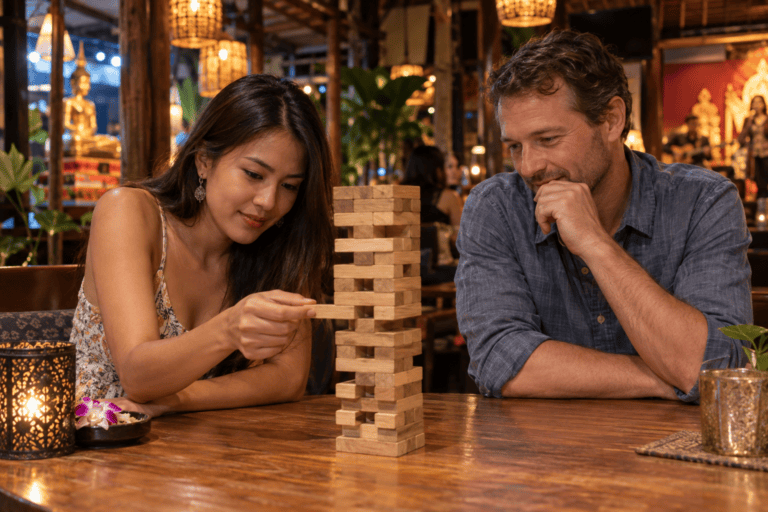
Now the middle and upper end of the market has exploded. Rooftop sushi at 2500 baht, $20 drinks at a sky bar or $10 lattes in air-conditioned bistros.
Explosive tourism growth and a growing middle class in Thailand has led to an entirely new market that simply didn’t exist 20 years ago. When we’re talking about increased prices, we’re not talking about the same market anymore.
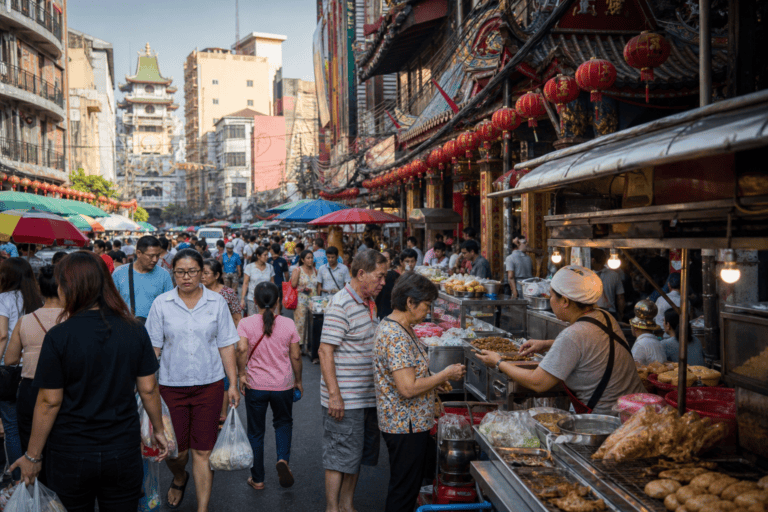
The variety of choices and price points is much wider now than it used to be, which can make Thailand feel more expensive. But the reality is you can still find a cheap meal or drink at a local restaurant or shop.
The prices you pay really come down to which side of Thailand you choose to interact with. The more local authentic Thai world or the more globalized manufactured tourism experience, the choice is up to you.
Housing and Condos
Housing shows the same bifurcation. In Bangkok, new luxury builds keep pushing the average prices higher every year. It’s normal to see launch prices above 200,000 Thai baht per square meter in places like Thonglor.
These prices rival major western cities. But many of these new buildings sit half empty and real estate listings are dominated by these units in part because there’s so many available due to the over supply. This gives the impression that average prices are up sharply. But when we look at individual buildings, you’ll quickly notice that they’re not.
I’ve rented in Bangkok for years. So, let’s look at two examples of condos that I rented in the past. First, we have a small studio at a condo called Villa Sathorn, which I rented back in 2016 for 12,000 Thai baht per month. Today, you’ll find listings for exactly the same price. We can check a second condo called the Parkland.
I rented a one-bedroom unit for 11,000 Thai baht back in 2019, and I find listings for the exact same price today. The truth is that prices have remained relatively stable throughout the city as more and more new condos have oversaturated the market.
The Bigger Picture
Thailand today is simply more stratified. The gap between the local and premium has widened. It’s not just inflation. It’s about what’s on offer. The cheap version hasn’t vanished, but the premium version is far more visible.
more rooftop bars, craft cocktails, high-end accommodations, and imported Wagyu beef, and more high-value tourists and affluent expats chasing the same experience and paying for it.
The bifurcated market in Thailand is aimed to reproduce a commercial tourism experience, which is widely available around the world. The truth is, if you choose to live like a local and enjoy more local experiences, you can spend very little and have a great time here in Thailand. Or you can opt for a more luxury tourism oriented experience and spend a lot more. It’s not just that prices have gone up in Thailand. There’s a lot more on offer.
Gentrification and Cultural Change
But there’s something bigger to think about, too. The constant layering, the rising luxury options, and the influx of new money changes more than just the prices. It also changes the neighborhoods. And this is slowly eroding and erasing what made Thailand special in the first place. Not just for tourists and expats, but also for locals.
More layers of luxury options slowly erase the more local options as everything begins to look the same and target the same affluent spenders. A Starbucks on every corner, a cordoned off food vendor space and plenty of malls.
And this is a process of gentrification that’s played out around the world. Here in Thailand, gentrification often mirrors the Singapore model.
Bustling streets and markets once filled with street vendors are gradually cleared out and replaced by malls and designated vendor zones.
This has long been the preferred approach of the Bangkok Metropolitan Authority and commercial developers. So, the days of Thailand’s vibrant street culture may be numbered in tourist hot spots. For now, though, visitors can and should support the local economy to experience a more authentic side of Thai life.
And with relatively low inflation, you’ll quickly find that prices are still very reasonable.